The Dutch National Police arrested a 35-year-old man suspected of hacking the professional football club Ajax Amsterdam (AFC Ajax) earlier this year.
The suspect was arrested in Buren and, according to a Tuesday press release, he is believed to have hacked into the football club’s systems multiple times.
“On the morning of Tuesday, May 26, the police arrested a 35-year-old man from the municipality of Buren for computer trespassing at the Amsterdam football club Ajax. The man is suspected of deliberately unlawful intrusion into Ajax’s computer systems several times,” the police said.
“In early 2026, Ajax was confronted with the computer trespass after the suspect granted himself access to the football club’s computer systems. After the police were informed, the criminal investigation department started an investigation in which the suspect from the municipality of Buren came into the picture.”
Advertisement
AFC Ajax disclosed the incident in late March, saying that the attacker exploited vulnerabilities in its IT systems to access data belonging to a few hundred individuals.
The vulnerability also allowed modifying stadium bans imposed on fewer than 20 individuals and transferring purchased tickets to others.
According to an RTL report, the same security flaw also enabled broad access to fan data via APIs and shared keys, with the hacker demonstrating how they could reassign a VIP season ticket in seconds.
Most worryingly, they also demonstrated how they could manipulate 538 supporter stadium bans, 42,000 season tickets, and view details on more than 300,000 accounts.
Advertisement
The Dutch football club has since patched vulnerabilities exploited in the attack and has notified the Dutch Data Protection Authority and the police of the incident.
In September 2025, the Dutch National Police also arrested two teenage boys suspected of spying for Russia using a WiFi sniffer device near Europol and Eurojust offices, as well as the Canadian embassy.
More recently, financial crime investigators in the Netherlands (FIOD) arrested two men and seized 800 servers linked to a web hosting company that enabled cyberattacks, interference operations, and disinformation campaigns.
Automated pentesting tools deliver real value, but they were built to answer one question: can an attacker move through the network? They were not built to test whether your controls block threats, your detection rules fire, or your cloud configs hold.
This guide covers the 6 surfaces you actually need to validate.
Smartphones deliver more power and polish than ever, yet most follow the same safe template. AYANEO decided to break the mold with its first smartphone. The Pocket Play takes the sliding concept from Sony’s long-gone Xperia Play and updates it for today’s games and apps. Slide the 6.8-inch display upward in landscape mode and the magic happens. A full set of physical controls appears underneath. You get a proper D-pad on the left, ABXY face buttons on the right, two round capacitive touchpads that stand in for analog sticks, plus shoulder bumpers and triggers, while dedicated shortcut buttons sit within easy reach.
The layout is similar to the 2011 Xperia Play, but with a more modern flair. Those spherical touchpads replace traditional analog sticks, yet they still provide a remarkably natural input experience, especially with the limited time you have to check them out. Keeping your thumbs off the screen allows you to have a continuous view even during the most intense gaming sessions. The entire control deck is pushed to the bottom, leaving the huge display completely unobstructed for whatever you’re doing, whether gaming or watching media.
【Upgrade Retro Game System】-The R36s Handheld Game Console, especially the R36 Max version, comes with an astonishing collection of up to…
【64G Storage & 18000+ Pre-loaded Games】-With 64GB of storage capacity, This handheld console comes pre-loaded with 18000+ games and supports more…
【Good visual experience】The retro console comes with a 4.0-inch IPS full viewing Angle, OCA full laminated screen 720*720 high resolution to bring…
The 6.8-inch display boasts a 2400 by 1080 resolution and a refresh rate of 165Hz. An OLED panel delivers stunning colors and silky smooth action, whether you’re playing high-frame-rate Android games or streaming from the cloud. When the device is closed, it acts like a phone for calls, messages, and app use; however, when you open it, it morphs into a dedicated gaming setup.
Advertisement
The MediaTek Dimensity 9300, along with its Immortalis-G720 graphics engine, provides excellent performance. AYANEO backs it up with lots of high-speed LPDDR5 RAM and UFS 4.0 storage. You also get a microSD card slot, which is a nice touch given how useful they are for adding new games or emulator roms to your library. The active cooling mechanism keeps everything operating smoothly, even during extended gaming sessions, which is unfortunately uncommon on most smartphones.
A 5,000 mAh battery keeps the lights on, and a quick recharge means you won’t have to wait long before your next gaming session. You also get stereo speakers and a strong vibration motor, which work together to create a really immersive gaming experience with excellent audio and haptic feedback. A USB-C port with speeds of up to 3.1 Gen 2 and a DisplayPort 1.4 output enable you to connect the device to a TV or monitor and enjoy games on the big screen. You also have Wi-Fi and Bluetooth to suit your wireless requirements.
The device’s cameras are mounted on the back and include a 50-megapixel primary sensor and a 16-megapixel ultrawide lens. There is a 5-megapixel selfie camera on the front. To be fair, these cameras exist merely to handle the basics and are unlikely to impress anyone; early reports show they do the job, but don’t expect high-end photography from them. It’s clear that AYANEO emphasized gaming gear over taking beautiful photos.
You get Android 15 out of the box, and a fingerprint scanner is buried inside the power button for quick unlock. The software offers a full smartphone experience in addition to the typical gaming capabilities. There are also some useful shortcut buttons and a slide mechanism that allow you to quickly access game controls without having to deal with on-screen overlays.Pricing is unknown until the Kickstarter campaign opens. Rumors suggest that early backers will pay around $500, with future tiers perhaps providing extra RAM, storage, or higher-end finishes. AYANEO also intends to offer additional grips and cases to improve comfort for both gaming and non-gaming applications.
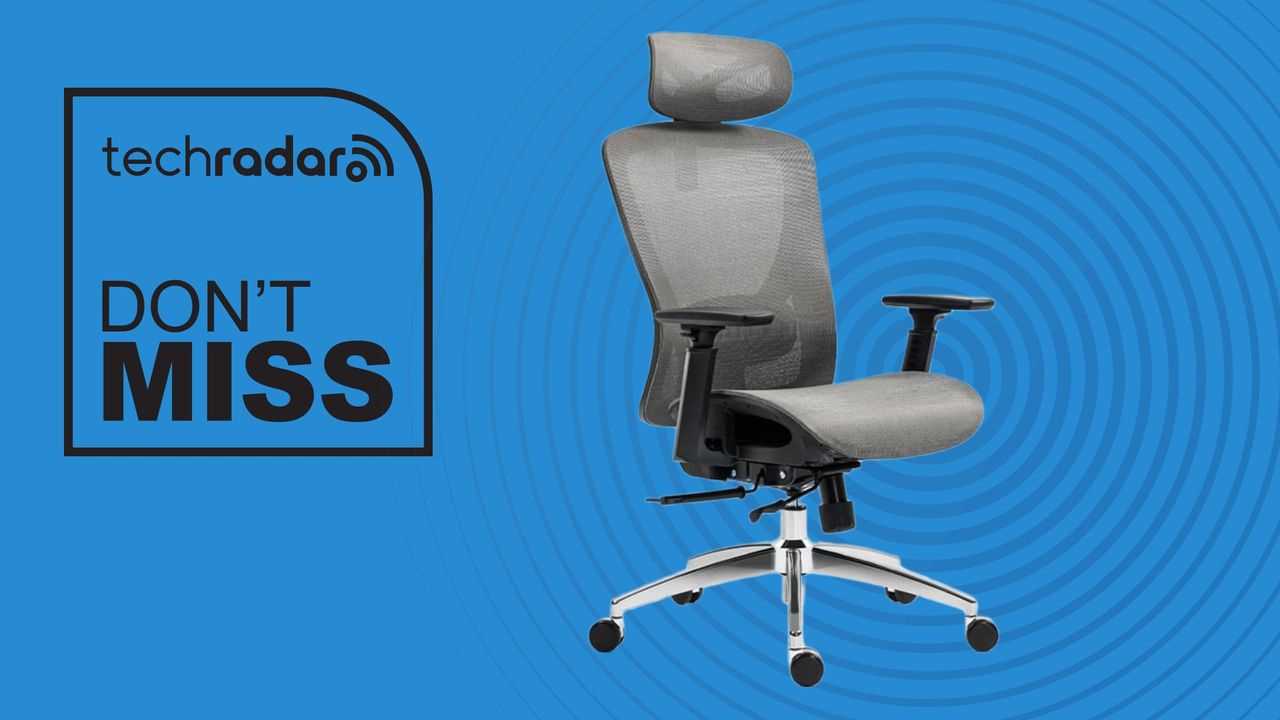
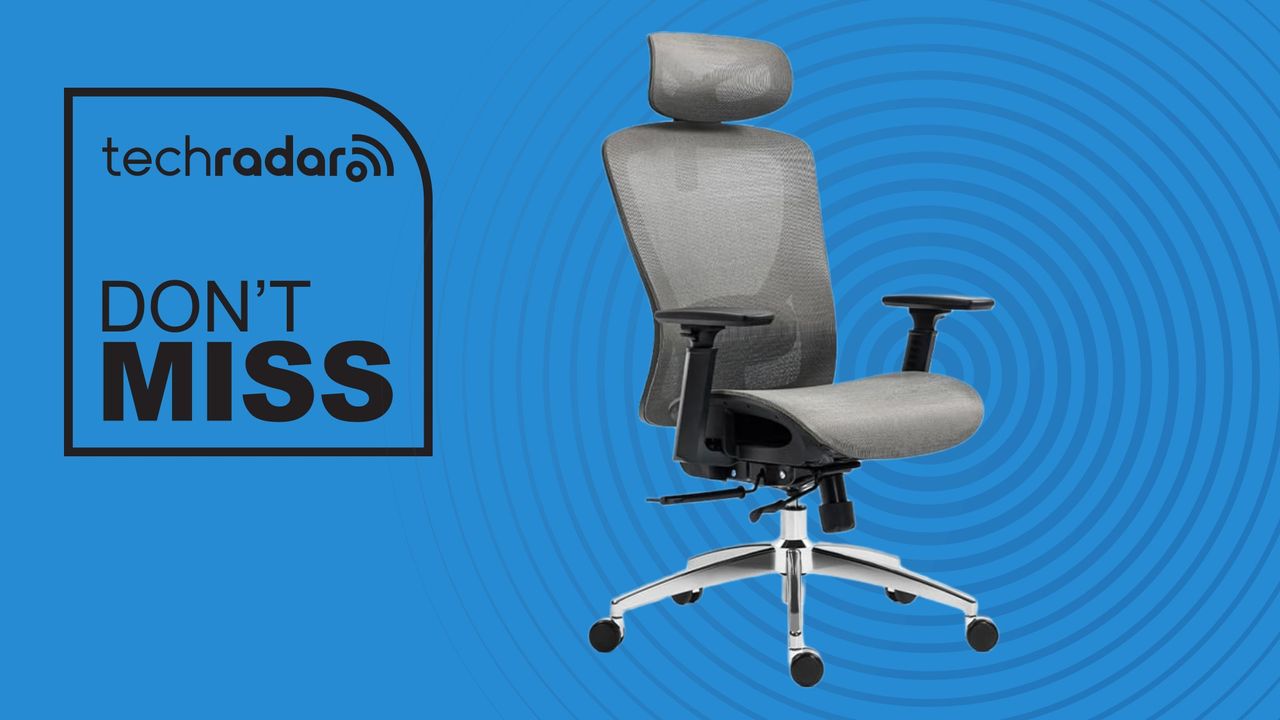
You can spend a whole lotta money on a good office chair these days – but however feature-rich and overly engineered they are, in my experience, you can’t beat a comfortable, solid office chair that won’t break the bank.
I’ve been sitting on this chair day in, day out for 18 months straight now and it’s as good today as it was when I first assembled it. The mesh is still firm, supportive, and comfortable. There’s no creaks, no squeaks. If I were buying a new office chair today, I’d just get another EP200. It’s worth every penny. It scored 4.5 stars in my review, with a Highly Recommended award.
Advertisement
Why I like this office chair (spoiler alert: it’s great value)
I absolutely love the EP200. I love the breathable mesh design, the lockable recline, the adjustable seat depth, even the 3D armrests with their satisfying click on every twist. I use this at work every day, but also after-hours when I’m gaming. I never feel discomfort or fatigue that some cheap chairs induce (and some expensive ones, for that matter).
Now, Boulies’ value-driven chair isn’t as rich with features as the Herman Miller and Steelcase office chairs my team and I have tested. But it’s well-built for the money, highly adjustable, and doesn’t require taking out a bank loan to afford it.
Having spent many hours in an office sitting on the iconic Herman Miller Aeron, I can tell you that while that pricey mesh chair was very comfortable, for most people working in an office or home office, the EP200 delivers everything you’d want from a seat at a fraction of the price.
In summarizing my time with the EP200 in my review update, I said “Overall, a year on, I still find the Boulies EP200 to be the archetypal office chair for most people. It’s relatively cheap, not overly engineered or designed (in a good way), and suitable for long hours in the office and home office.”
Advertisement
For more top-performing options, check out my in-depth guide to the best office chairs we’ve tested (and yep, the EP200 is on that list).
Industry 4.0 represents an opportunity for innovative, ambitious and future-focused professionals to transform the world as we know it.
The fourth industrial revolution, or Industry 4.0 as it is often better known, is the integration of smart, digital technologies into larger industrial and manufacturing processes, with the aim of creating intelligent, improved systems.
Skills in this area are absolutely vital for any professionals looking to work in a future-focused role or high-tech capacity.
SiliconRepublic.com, as part of its month-long Industry 4.0 coverage, has compiled a list of some of the most important skills to have as you face a changing world.
Advertisement
Stay human
It is not at all uncommon to assume that the most critical qualities to possess in technical and complex industries are all hard skills. It is, however, a commonly held myth, as soft skills are critical to long-term success in any professional space, including for careers under the Industry 4.0 umbrella. These are the abilities that enable you to communicate effectively with co-workers, negotiate positive change and create a better workplace environment.
Skills to prioritise are adaptability and problem-solving, as Industry 4.0 roles are often complex and ever-evolving; collaboration, as your job may demand a degree of crossover with other teams, departments or companies; critical thinking, as Industry 4.0 careers are often rooted in a need to address modern-day problems with unique solutions; and leadership, as everyone should know how to command a room and lead others when necessary.
Soft skills bring a crucial human element to careers that are often considered complex and clinical.
New dimensions
3D printing – or as it is often known, additive manufacturing – has enabled experts in Industry 4.0 careers to move beyond traditional methods as they create models and prototypes with the power to improve quality of life, reduce costs and maximise resources.
Advertisement
Clinicians may use 3D printing to develop prosthetics and implants to match a patient’s specific anatomy. Manufacturers can use the technology to create specific, necessary medical equipment and aerospace engineers often use additive manufacturing to develop small, complex parts that demand high accuracy and specific criteria.
There are a range of organisations and sectors in STEM and outside of it that are now using 3D advancements and it is undoubtedly a skill that will be carried into the next industrial wave.
Seeing double
Digital twin technology is described as the virtual representation of a physical system or process that receives data from the real world, in real-time. Its purpose is to mirror the behaviour, performance and state of the primary, physical model, so experts can explore, experiment and analyse without impacting the real counterpart.
Digital twin tech allows organisations to simulate real-world scenarios, fortify security and improve operations, while also minimising risk or accidental harm.
Advertisement
Among the skills that are useful to those who want to know more about wielding digital twin technologies are abilities in IoT, AI, data analytics, simulation software and cloud computing – and it is of particular importance to those hoping to work in manufacturing, aerospace, automotive, energy and utilities, healthcare, smart cities, and infrastructure.
Stay connected
Research suggests that IoT, as a critical element of Industry 4.0, is a skill that is under near constant demand by organisations and employers.
Anyone hoping to be an IoT expert should ensure that they have a robust education in software such as AutoCad, which allows engineers to design machines; cybersecurity for managing complex and high-risk projects; data and analytics skills that ensure clean, concise and insightful work; and AI and ML, among others.
Careers in Industry 4.0 are moving so rapidly it can be hard to keep up with the changes, but what is important to remember is that the skills of today create the future. All you have to do to keep pace is to commit to upskilling and tackle each challenge as it comes.
Advertisement
Don’t miss out on the knowledge you need to succeed. Sign up for the Daily Brief, Silicon Republic’s digest of need-to-know sci-tech news.
The JDY botnet, a malware network previously associated with Chinese threat actors like Volt Typhoon, has significantly expanded its targeting scope and reconnaissance efforts.
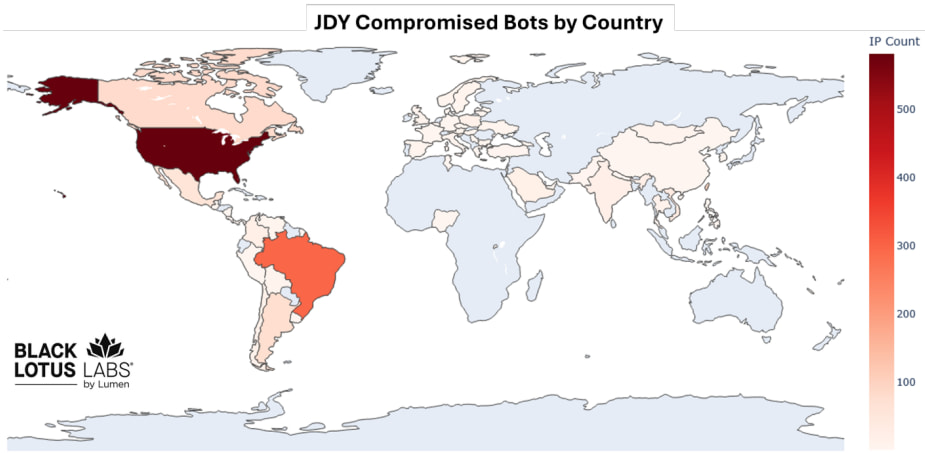
According to researchers at Black Lotus Labs by Lumen, who have been monitoring its activity, JDY maintains a strong focus on the United States, where many of its compromised devices are located and where it heavily targets military and associated networks.
The security firm notes that JDY has grown from roughly 650 active bots in January 2024 to over 1,500 compromised SOHO and IoT devices today.
While the numbers seem low, it’s important to note that JDY isn’t an exploitation framework or a DDoS botnet that requires large swarms to accumulate firepower, but is instead a distributed scanning and fingerprinting network that helps its operators locate targets vulnerable to newly disclosed flaws.
“Analysis of this activity shows a clear focus on identifying vulnerable infrastructure shortly after public vulnerability disclosures, suggesting that reconnaissance output is rapidly operationalized by China-nexus advanced persistent threat (APT) actors,” reads the Black Lotus Labs report.
Advertisement
“This targeted focus has been observed across a range of sectors, with the U.S. military and associated entities as the most prominent.”
Most impacted countries by the JDY botnet Source: Black Lotus Labs
CISA has previously warned about the risk Volt Typhoon operatives pose to unprotected SOHO routers, urging network device vendors to eliminate vulnerabilities in SOHO router web management interfaces (WMIs) during the design and development phases.
The JDY botnet is designed to conduct service discovery, service banner grabbing, TLS certificate collection, protocol fingerprinting, and flaw-focused reconnaissance.
Among the compromised devices are those from Cisco, Araknis, Mimosa Networks, Ubiquiti, DrayTek, Hikvision, and Linksys, for MIPS, MIPS64, MIPSEL, and MIPSEL64 architectures.
The threat actors are quick to target newly disclosed vulnerabilities, with Lumen researchers observing JDY scans targeting CVE-2026-35616 shortly after Fortinet publicly disclosed the FortiClient EMS flaw.
Advertisement
JDY targeting volume on a specific date Source: Black Lotus Labs
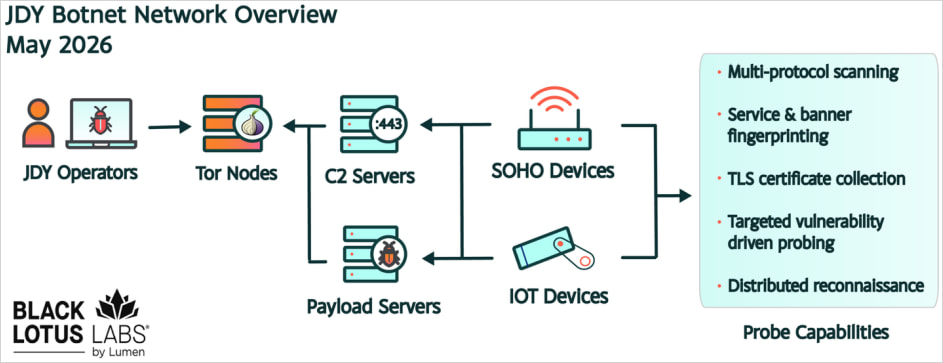
The operators control the botnet through hidden Tor services, which also serve as command-and-control (C2) infrastructure. The open-source reverse-shell and host-management framework Platypus is also used in some cases.
JDY network overview Source: Black Lotus Labs
The malware registers with a central “Dispatch Service” and receives scanning assignments, which it executes, compresses the results, and sends them back to the C2.
The scanning module supports the following:
TCP scanning
SSL/TLS scanning
UDP scanning
ICMP probing
Banner collection
TLS certificate harvesting
Service fingerprinting using downloadable rule sets
The botnet client repeats the same cycle until the operator specifically orders it to stop.
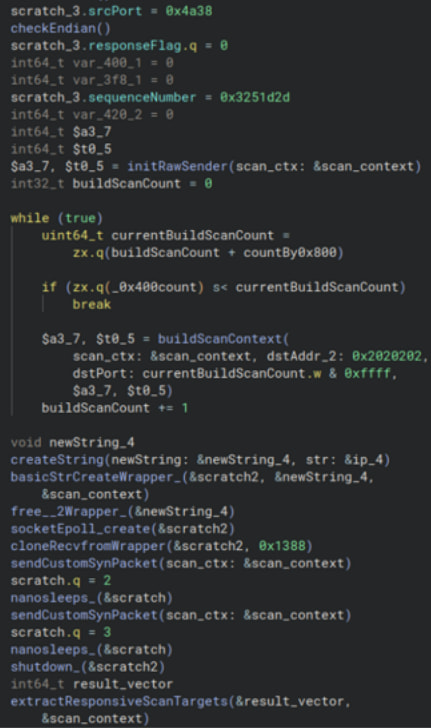
The TCP scanning function is one of the most technically interesting, say the researchers, explaining that, when JDY has sufficient privileges, it performs much faster and stealthier raw SYN scanning.
“If the malware can open a raw socket, which generally requires root or administrative privileges, it initiates high-speed SYN scanning using custom-crafted TCP packets,” explains the report.
“These custom packets use a fixed source port of 19000, increment the destination ports one at a time, and batch-process thousands of scan targets.”
Advertisement
Code snippet handling the raw SYN scanning Source: Black Lotus Labs
As JDY botnet activity increases, organizations should ensure routers, firewalls, and IoT devices are running the latest security updates and patches to prevent them from being recruited into reconnaissance networks.
Defenders should also reduce their external attack surface by disabling unnecessary internet-exposed administrative interfaces, restricting remote management access, replacing default credentials, and monitoring for unusual outbound scanning activity originating from edge devices.
Security teams log 54% of successful attacks and alert on just 14%. The rest move through your environment unseen.
The Picus whitepaper shows how breach and attack simulation tests your SIEM and EDR rules so threats stop slipping by detection.
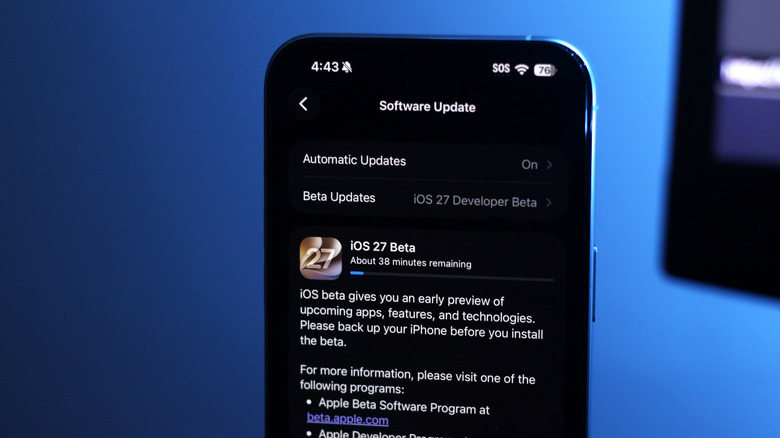
iPhones are often easiest to recommend if you’re looking for a device that just works, with software that’s reliable. That said, iOS 26’s many issues pushed Apple to finally focus on performance and stability with its next big release. At WWDC 2026, the company unveiled iOS 27, which is set to roll out to the masses in September. If you’re keen to try out the new update, however, you can always install the beta build on your iPhone. Public betas are often more stable, while developer beta builds tend to get all the new features earlier.
Apple no longer requires you to pay a fee to test its beta builds, as it did a couple of years ago. All you need to do is head to the Apple Beta website and sign in using your Apple ID and password. On the terms and conditions page, click on “Agree.” Restart your iPhone and navigate to Settings > General > Software Update, and you should now be able to see a new “Beta Updates” section. Tap on it and select “iOS 27 Developer Beta.” Give it a quick second, and your iPhone should now let you download and install the newest beta version of iOS.
Depending on your internet connection, the process may take anywhere from a few minutes to an hour or more. While you won’t lose any data, it’s highly recommended you make a backup of your iPhone prior to installing any beta builds.
Advertisement
Pros and cons of installing iOS 27 early
Adnan Ahmed/SlashGear
Apple seldom makes major changes with its products, so when iOS 26 got a facelift with the Liquid Glass design system last year, everyone was excited. It did come at the cost of iOS 26 slowing down iPhones, making iOS 27’s emphasis on performance and stability improvements its biggest saving grace. We’ve been testing the first developer build of iOS 27 and can confirm that it already feels snappier than iOS 26 ever did — but this isn’t a good enough reason for everyone to rush out and install the beta.
Though you get to try out the cool new things, including Siri AI, a developer beta is meant primarily for testing purposes. We do not recommend installing a preview build on your iPhone if it’s your primary device, since there’s a chance that things may break or not function as they’re supposed to. It’s also worth mentioning that the hallmark feature — Siri AI — seems to be rolling out in phases, with many early testers still stuck on a waitlist.
Advertisement
Battery life is also almost always poor with early beta builds, so that’s another thing to keep in mind. It often takes a few developer beta updates to get the noticeable bugs ironed out. Apple usually releases the public beta version by the end of July, which should be considerably more stable if you’re still keen to try iOS 27 out before September.
If you look around your environment, you can probably pick off quite a few things that you’ve made, at least if you’ve been at this a while. You probably aren’t reading this from the bottom of a body of water though, which means you lack the incredible confidence of submarine builder [Hank Pronk]. Not only is he building himself a capable-looking diesel-electric submarine over on YouTube, he’s even DIYing CO2 scrubbers for it! Yeah, that’s a man who believes in himself.
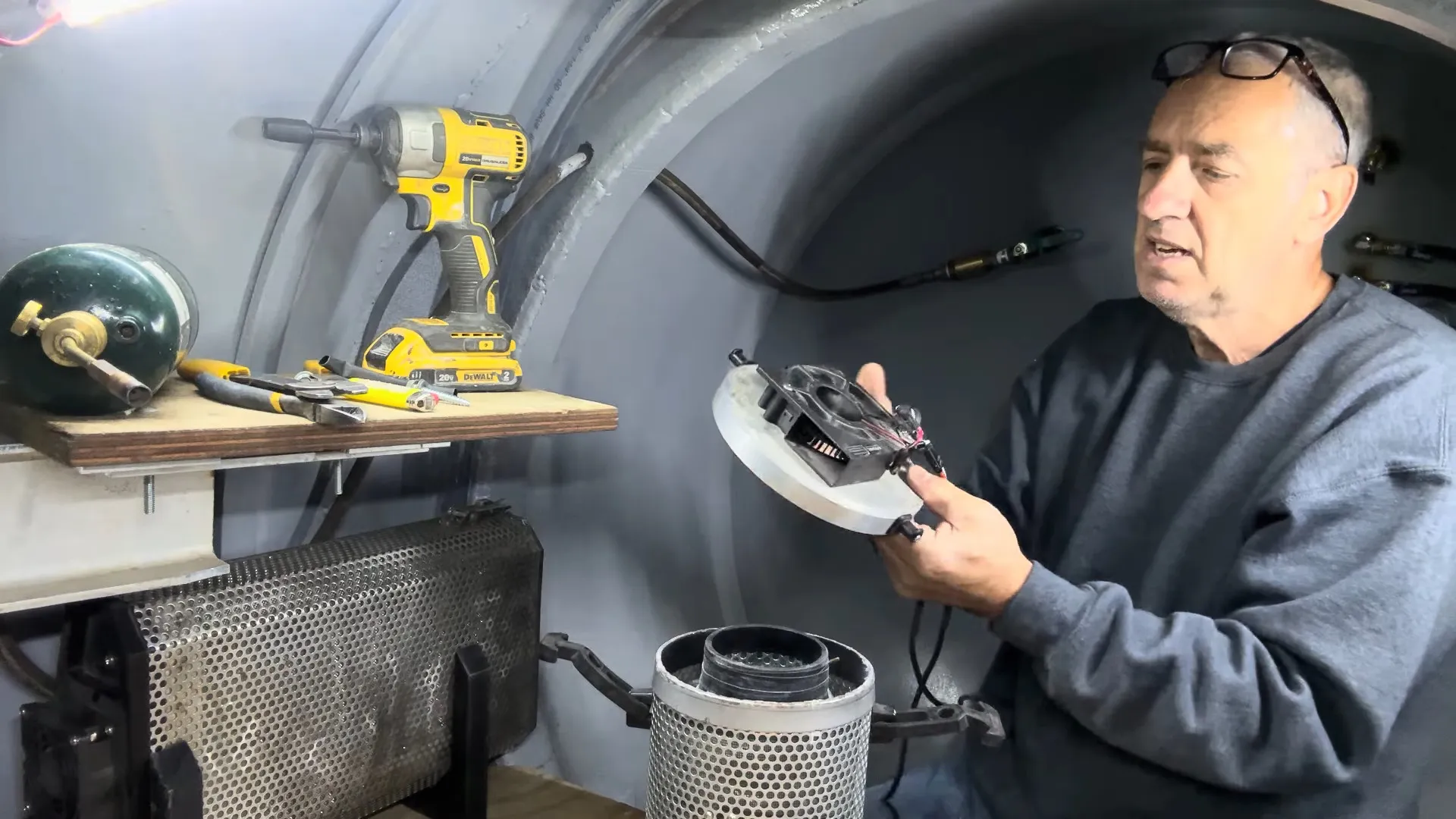
Luckily [Hank] is not anywhere near the Caribbean, so needn’t worry about being misidentified as a narco-sub, but he still has to be concerned about his oxygen supply when tooling around beneath the local lakes. Perhaps more important than the oxygen supply in a sub is the build up of CO2. It doesn’t matter how many oxygen tanks you bring down with you if you can’t scrub CO2 out of the air to make room for it. Just like the Apollo missions, he’s using a chemical adsorbent to take carbon dioxide out of the air — and just like Apollo 13, he’s switching from square to round.
Or, rather, from a rather rectangular commercial model to a DIY little round unit. That’s because he doesn’t need the big scrubber in this sub: being diesel-powered, he expects to spend a lot of time at snorkel depth, where both the pilot and the engines can get clean air through the tube. Dives are expected to be short, and in that use case, too big of a CO2 scrubber is really a waste. If for some reason he gets stuck on the bottom, well, the lake isn’t that deep. He can swim to surface, and has a detailed bailout plan. If he wants to stay under overnight to avoid bailing at night, he’s carrying enough extra adsorbent for that.
Most of us spend more time wearing headphones or earbuds than we realize, and I know I do. Between shuffling playlists during my daily commute, jumping on work calls, listening to podcasts while walking around the neighborhood, and winding down with a late-night binge session, audio has quietly become an essential part of everyday life.
Our listening needs, however, change throughout the day. The over-ear headphones I want for a long workday are not necessarily the same audio wearable I reach for when stepping outside. Yet many audio brands seem determined to convince us that a single expensive product is the ultimate solution.
In an era where new wireless gear launches every other week at eye-watering price tags, finding tech that genuinely balances comfort, performance, and value can feel like a challenge. That is exactly what drew me to JLab. Rather than relying on exclusivity or celebrity endorsements, the brand has built its reputation on creating practical tech designed for real people and real-world routines.
This approach is incredibly refreshing. By delivering high-tier features at an accessible price point, JLab leaves a lasting impression and emerges as a compelling choice for buyers. You don’t have to nuke your wallet to enjoy great sound in your everyday life. That idea has been distilled to the very core of two products in particular — the JBuds Lux ANC Wireless Headphones and the Epic Pods ANC True Wireless Earbuds.
Advertisement
JBuds Lux ANC For the Moments You Need to Lock In
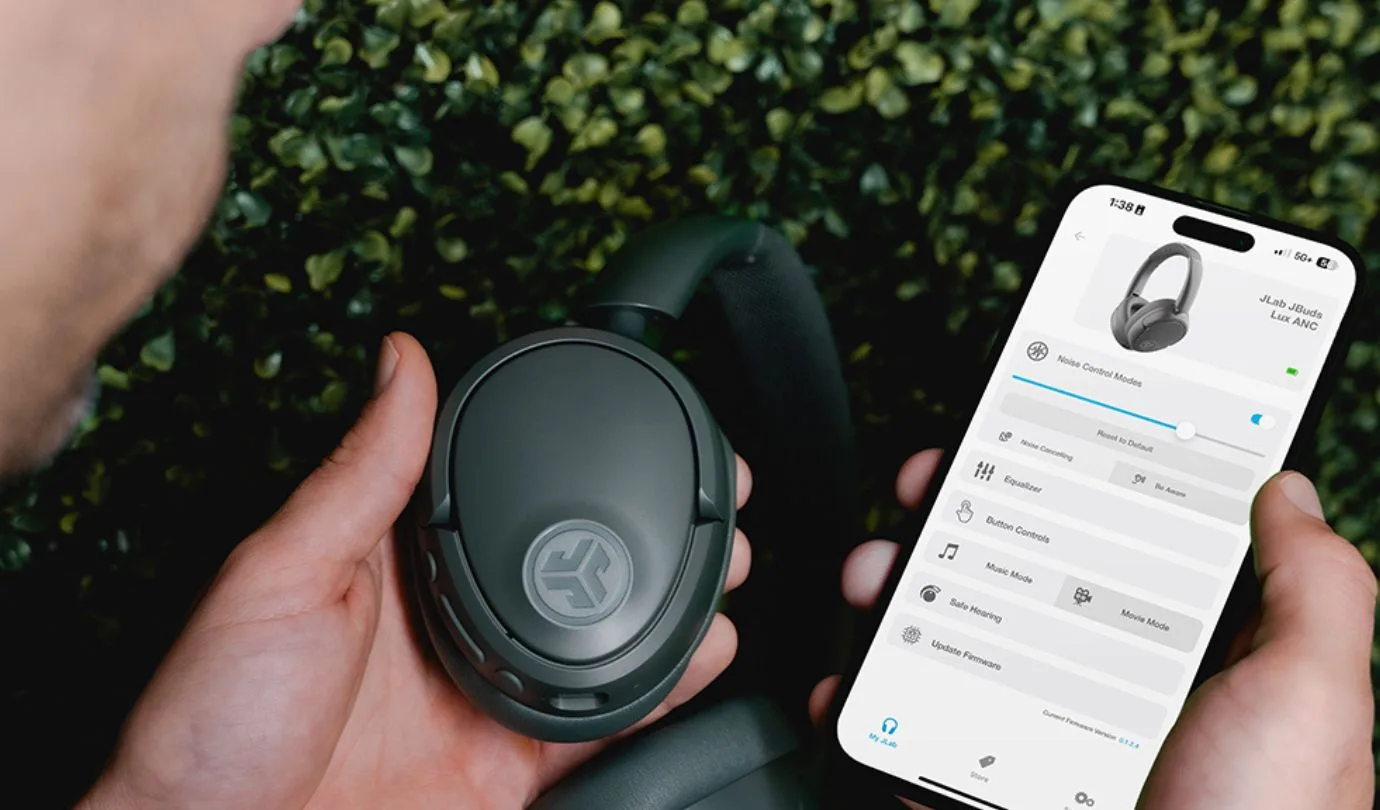
JLab JBuds Lux ANC / JLab
There are times when I want to tune everything else out. Whether I am trying to focus on work in a buzzing cafe, settling into a long flight, or simply listening to a new album without distractions, there are times when noise isolation is as important as the raw depth of tunes blasting into your ear canals. This is where over-ear headphones often come to the rescue, offering a level of immersion that earbuds cannot quite match. The JBuds Lux ANC Wireless Headphones embody that scenario, and they have been accordingly designed to make those moments feel even more effortless.
Featuring Smart Active Noise Cancelling, they help reduce background distractions so you can stay focused on your music, podcasts, movies, or work calls rather than what is happening around you. The convenience extends beyond the bliss of noise cancellation. Bluetooth Multipoint connectivity allows you to stay connected to both your laptop and phone at the same time. You can seamlessly switch from a Zoom call on your computer to a playlist on your phone without ever needing to re-pair your devices.
That same focus on practicality carries over to the per-charge battery mileage, as well. With more than 70 hours of playtime, these headphones are built to keep pace with packed schedules, extended travel, and marathon listening sessions without the need for frequent recharging.
Just as important as battery life is how the headphones feel after hours of use. The over-ear design and Cloud Foam cushions are made for extended wear, making them an easy companion for long workdays, study sessions, and travel. Heading into the JLab App, users can also fine-tune their sound settings to match their listening preferences, helping ensure every playlist, podcast, and movie sounds just the way they like it.
Epic Pods ANC For the Moments You Are On the Move
JLab Epic Pods ANC / JLab
Of course, life does not always happen at a desk. Some days are a constant cycle of commuting, unexpected errands, out-of-schedule workouts, and quick transitions between one activity and the next. Those are the moments when portability becomes just as important as performance.
The Epic Pods ANC True Wireless Earbuds are designed for the aforesaid kind of on-the-go lifestyle. Built for people who are constantly moving, they pack an impressive amount of technology into a compact form factor. Instead of relying on a single driver to do all the work, their hybrid dual-driver system handles audio output with a level of depth and clarity that is hard to find in this segment. A 10mm dynamic driver handles deep bass, while a specialized Knowles Balanced Armature focuses on crisp mids and clear highs. The result is a balanced listening experience where vocals and instruments remain clear without getting overshadowed by the low end.
Advertisement
If great sound matters to you, support for LDAC on Android and AAC on iOS ensures that your music comes through with greater detail, clarity, and depth, especially when streaming high-quality audio. The Epic Pods ANC also feature Adaptive Active Noise Cancelling that goes beyond simply switching on and off. From crowded subway commutes to quieter streets, the earbuds adjust noise cancellation on the fly, helping maintain the right balance between immersion and awareness without you having to tap a button.
But impressive audio performance means little if your earbuds cannot keep up with your active lifestyle. With more than 56 hours of total playtime and a quick charge feature that delivers up to 5 hours of listening from just a 10-minute charge, the earbuds are built to keep up with even the busiest schedules.
The Epic Pods ANC are designed with everyday use in mind. The secure fit design helps keep them comfortably in place during intense workouts, while IP55-tier ingress protection provides added protection against sweat and dust exposure. Bluetooth Multipoint further adds even more convenience by allowing seamless switching between multiple connected devices.
Why Get Personal Tech That Adapts With You
The biggest shift happening in personal audio right now isn’t just about pushing the boundaries for better sound quality, but rather about changing expectations and offering a holistic package that is practically rewarding in more ways than one. Audio wearable enthusiasts no longer want to feel forced into choosing between premium features and a reasonable price tag. Instead, they want gear that fits naturally into our daily routines, solves those annoying everyday frustrations, and delivers genuine value.
Advertisement
This is what makes JLab a compelling choice. Whether you prefer the immersive comfort and endurance of the JBuds Lux ANC Wireless Headphones or the flexibility of the Epic Pods ANC True Wireless Earbuds, both models reflect the very same philosophy. Personal tech should always adapt to your life, not the other way around. And while at it, great audio shouldn’t be reserved for just a few buyers. It should be accessible, practical, and ready for whatever your day has in store.
Brad Smith speaks at a Microsoft Elevate event at Seattle’s Museum of History and Industry in 2025. (GeekWire Photo / Todd Bishop)
The interests of Microsoft and graduates rebelling against AI are actually aligned.
That was one takeaway for Brad Smith, Microsoft president and vice chair, from a recent return to his alma mater, Princeton University, for its reunion weekend. Seniors wore class jackets labeled “100 percent cotton” and “100 percent human,” referencing allegations that an earlier design was created with AI — part of a broader backlash across campuses this spring.
In a blog post this morning, which he started drafting during that visit, Smith writes that graduates booing AI at commencements across the country are “telling us what we need to hear. He points out that Microsoft’s own future depends on people staying employed.
“Workers have been Microsoft’s lifeblood from the start,” he writes in the post. “If the world’s people don’t have jobs, then neither do we. And if we’re not doing our part to help people use technology to pursue better jobs, then we’re not doing the job we were born to do.”
Speaking with GeekWire this week, Smith acknowledged the tension between that message and job cuts across the tech sector, including at Microsoft. He addressed the issue in the post, as well, citing the industry’s desire to offset capital spending on AI, along with factors including geopolitical uncertainty, trade tensions, and a correction from earlier over-hiring.
Advertisement
“Our industry is going through one of the most extraordinary transformations in its history,” Smith said in the interview, while adding that the “expenses of capital expansion make it more difficult to afford the employment bubbles we’ve had, especially since 2020.”
Smith cited the automation of entry-level tasks among the challenges facing graduates, as well.
But he also took a larger view. Computer science jobs are changing, he said, not vanishing. Coding is becoming a smaller part of the work, while the roles around it — including designing software, managing product development, and reviewing code — are expanding.
In the post, Smith places AI in a longer line of technologies that reshaped work without ending it, from the camera to the spreadsheet to email. He calls AI the next “general purpose technology,” akin to electricity, and argues its spread will take decades, not years, because the limit is how fast people and institutions change, not how fast the models improve.
Advertisement
Some jobs go away, he writes, while new ones appear, and many are remade.
Smith’s advice to workers is to treat a job as a bundle of tasks rather than a title, sorting them into what AI can do, what a person can do with AI, and what only a human can do. For this, he takes inspiration from a new book by LinkedIn’s Ryan Roslansky and Aneesh Raman, “Open to Work,” and its list of durable human attributes: curiosity, creativity, compassion, communications, and courage.
The post also offers a clear message for companies, aligning with Microsoft’s own business interests. Smith says organizations need to build their own AI systems on top of frontier models, using their own data and what Microsoft CEO Satya Nadella calls a “hill climbing machine” of evaluations and steady improvement, rather than simply renting intelligence from someone else.
Smith cites intellectual property and data sovereignty as a central concern, arguing that firms must adopt AI without handing their hard-won expertise to a rival’s model.
Advertisement
In the interview, Smith said the blog reflects months of discussion among Microsoft’s senior leaders, including Nadella and Chief People Officer Amy Coleman, and that it’s intended to speak to the company’s own employees as much as to the outside world.
Asked what he would have told new college graduates had he been the speaker at a commencement ceremony this spring, Smith said he would have focused on the resilience of humanity more than advances in technology — urging them to speak up for the values they care about, help contribute to a better world, and go forward with hope and optimism.
“That doesn’t mean these challenges may not be significant,” he said, “but I personally believe that the human spirit is far greater than any artificial intelligence the world is likely to create.”
Throughout the exhibition hall at the 2026 IEEE International Conference on Robotics (ICRA), in Vienna, one demonstration seemed to attract a disproportionate amount of attention.
Two robotic hands were making a balloon dog. Slowly and deliberately, the robot twisted a long balloon into loops, bends, and joints without popping it. Visitors stopped, watched, and often returned with colleagues to watch again.
AGILINK’s balloon dog demonstration draws a crowd at ICRA 2026.AGILINK
At first glance, the demonstration appeared almost playful. Among roboticists, however, balloon twisting is widely recognized as an unusually difficult manipulation task.
Advertisement
A balloon is lightweight, highly deformable, slippery, and extremely sensitive to force. Every twist changes its geometry and internal pressure, turning a seemingly simple activity into a continuously changing physical interaction problem.
Humans navigate those changes almost intuitively. While making a balloon animal, people rarely think consciously about force regulation, slip prevention, or contact stability. They simply adjust.
For robots, those adjustments remain remarkably difficult. The challenge is not merely moving fingers to the right positions. The harder part is maintaining stable interaction while the object itself is changing.
Highlights from AGILINK’s ICRA 2026 demonstrations, including visuotactile sensing, in-hand manipulation, balloon-animal shaping, and other contact-rich tasks enabled by the company’s latest OmniHand platform.AGILINK
Advertisement
That distinction helps explain why the balloon dog drew so much attention in Vienna. What appeared to be a dexterity demonstration was, in many ways, a demonstration about contact itself.
As robotic manipulation continues to advance, a growing number of researchers are arriving at a similar conclusion: many of the hardest problems in robotics begin only after contact occurs.
Balloon twisting combines two challenges that robotics has traditionally struggled to solve simultaneously: long-horizon task execution and contact-rich manipulation.
The first concerns motion.
Advertisement
A balloon dog is not created through a single grasp or twist. It emerges through a carefully ordered sequence of manipulations, each setting the conditions for what follows. A small rotational error introduced early may appear insignificant at first, yet several steps later it can prevent the final structure from forming altogether.
In that sense, balloon twisting is a long-horizon task. Success depends not only on performing individual actions correctly, but also on preserving the future feasibility of the entire manipulation process.
To address this challenge, AGILINK began by collecting demonstrations from professional balloon artists. Human actions were mapped onto robotic hands to establish an initial manipulation policy. But successful demonstrations alone were insufficient.
In practice, some of the most valuable learning occurred when execution began to drift toward failure. Whenever instability emerged, human operators intervened and corrected the manipulation in real time. Those interventions were recorded and incorporated into reinforcement-learning cycles, allowing the system to learn not only how successful demonstrations unfold, but also how experienced operators recover when things start to go wrong.
Advertisement
Through this process, the robot gradually acquired the capabilities required for long-horizon task execution—a collection of abilities that AGILINK groups under the term motion intelligence: the ability to generate actions, coordinate bimanual behaviors, and execute extended manipulation sequences under real-world uncertainty.
OmniHand 3 Ultra-M on display at ICRA 2026.AGILINK
Yet motion alone does not explain why balloon twisting remains difficult. The second challenge is contact.
The robot must continuously regulate force, adjust contact locations, and respond to subtle changes in the object’s state. These decisions are difficult to encode through explicit rules. Even skilled human operators often rely on tactile intuition developed through experience rather than consciously articulated strategies.
Analysis of those interventions revealed that many failures did not originate from incorrect action sequences, but from the breakdown of contact itself.
Advertisement
To better capture those interaction dynamics, AGILINK collected contact-centric intervention data and incorporated those interactions into reinforcement-learning training. Rather than learning only which motions to perform, the system also learned how humans maintain stability when contact conditions begin to deteriorate.
AGILINK describes this capability as contact intelligence: the ability to establish, maintain, and adapt physical interaction as force distribution, friction, deformation, and contact geometry continuously evolve.
The distinction between the two capabilities is subtle but important. Motion intelligence determines what the robot intends to do. Contact intelligence determines whether it can continue doing it. For balloon twisting, both are necessary. One provides the sequence of actions. The other keeps those actions physically viable.
YouTuber KhanFlicks follows OmniHand’s motions while learning to fold a balloon dog at the AGILINK booth.AGILINK
Between a balloon slipping away and a balloon bursting lies a narrow region of stability. Successful manipulation depends on finding that region—and remaining within it throughout the task.
Advertisement
Introducing the OmniHand 3 Ultra-M Dexterous Hand
The balloon dog demonstration showcased a manipulation capability. It also revealed a broader question. How much contact intelligence can be achieved through learning alone? A robot can only regulate what it can perceive. It can only respond as quickly as its hardware allows.
As manipulation tasks become increasingly complex, researchers are finding that progress depends not only on better policies, but also on richer sensing and faster physical response.
That realization formed the backdrop for AGILINK’s second major announcement at ICRA 2026. Alongside the balloon dog demonstration, the company introduced the OmniHand 3 Ultra-M.
OmniHand 3 Ultra-M closely matches the size of an adult human hand.AGILINK
The two exhibits represented different stages of the same technological trajectory. If the balloon dog demonstrated what contact intelligence can already accomplish today, Ultra-M was designed to explore what contact intelligence may require next.
Its most distinctive feature is a fully direct-drive architecture. By adopting direct-drive actuation throughout the system, the hand is designed to enable faster and more transparent force regulation and higher force-control bandwidth, enabling faster response as contact conditions change. For contact-rich manipulation, responsiveness can be as important as sensing itself.
By adopting direct-drive actuation throughout the system, the OmniHand 3 Ultra-M is designed to enable faster and more transparent force regulation and higher force-control bandwidth, enabling faster response as contact conditions change.
The platform also incorporates tactile sensing across nearly the entire hand. Each fingertip contains a miniature vision-based tactile sensor, while more than 300 three-dimensional tactile sensing points are distributed throughout the palm. Together, they provide information not only about where contact occurs, but how contact is evolving.
Advertisement
The system is designed to estimate pressure distribution, shear forces, local deformation, slip tendencies, and other interaction dynamics that often remain invisible to conventional position-based control systems.
According to AGILINK’s tests, individual sensors achieve force resolution of approximately 0.005 N—roughly equivalent to detecting the weight of a sheet of paper resting on a fingertip. Spatial resolution reaches approximately 0.04 mm, while sensing density approaches 50,000 sensing points per square centimeter.
OmniHand 3 Ultra-M recognizes feather texture through vision-based tactile sensing.AGILINK
For dexterous robots, contact has traditionally been a largely hidden process. Ultra-M is designed to make that process more observable.
Rather than simply detecting that contact has occurred, the system attempts to resolve where interaction is happening, how forces are distributed, whether instability is beginning to emerge, and how manipulation strategies should adapt in response.
Advertisement
The balloon dog offered a glimpse of what contact intelligence can already accomplish. Ultra-M explores a different question: what capabilities may be required to push contact intelligence further?
The Physical World Remains the Hardest Benchmark
The significance of contact intelligence extends far beyond balloon animals. Many tasks that continue to resist automation involve unstable or deformable interaction: cable insertion, garment handling, flexible packaging, delicate assembly, connector mating, tool use, and household manipulation.
These tasks are difficult not because robots cannot reach the correct location, but because maintaining stable interaction after contact begins remains extraordinarily hard.
For decades, robotics achieved many of its successes by reducing uncertainty. Factories were engineered to make robotic motion predictable, repeatable, and highly structured. The physical world behaves differently.
Advertisement
A growing share of robotics research is shifting toward interaction itself—understanding how robots can establish, maintain, and adapt physical contact within environments that remain fundamentally unpredictable.
Objects shift. Materials deform. Friction changes. Contact evolves. Real environments rarely follow scripts. Seen through that lens, the balloon dog was never really about the balloon dog. What attracted attention at ICRA was not simply a visually impressive demonstration, but what it revealed: intelligence in the physical world is ultimately measured through interaction.
As motion generation continues to mature, a growing share of robotics research is shifting toward interaction itself—understanding how robots can establish, maintain, and adapt physical contact within environments that remain fundamentally unpredictable.
For robots moving beyond structured environments and into less predictable real-world settings, managing contact may become as important as motion itself.
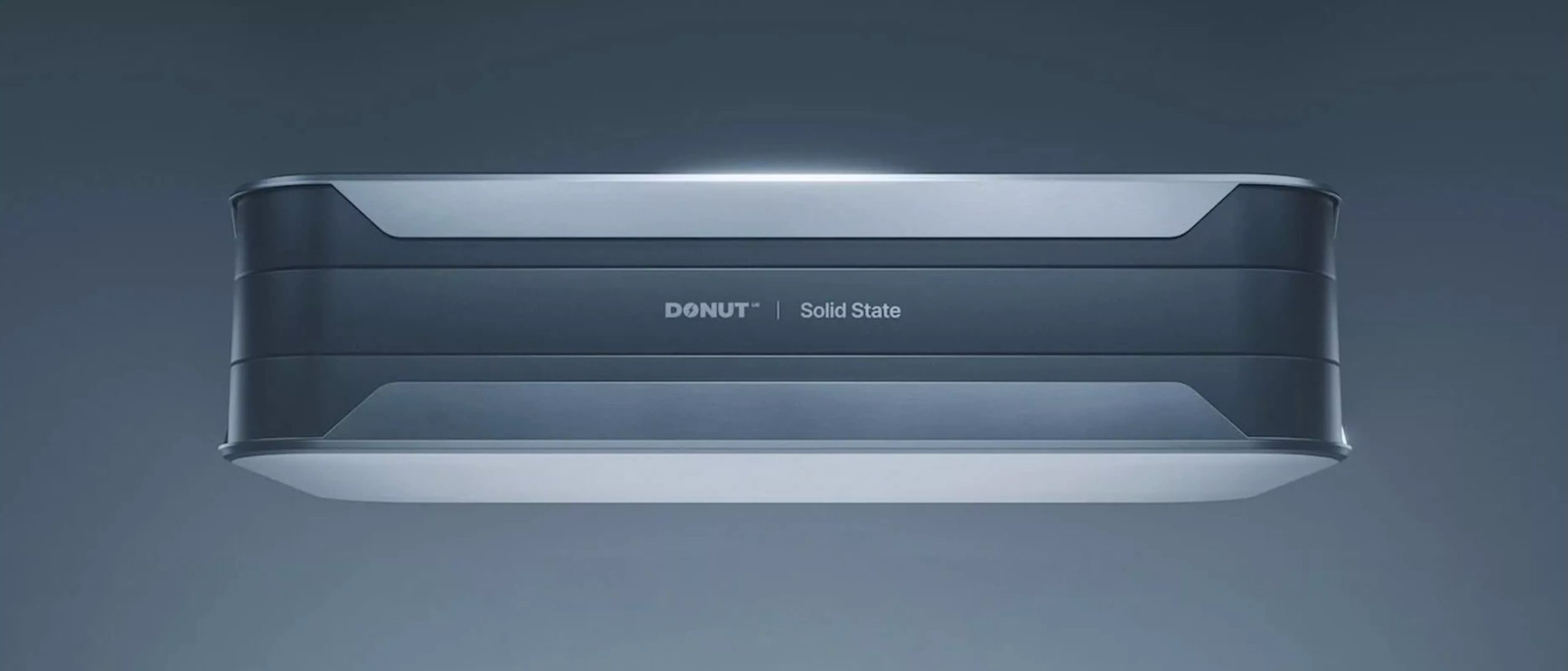
WTF?! Eye-catching battery claims are nothing new, but some deserve closer scrutiny. According to an investigation led by independent researcher Ziroth and supported by more than 20 battery experts, the much-hyped Donut Lab solid-state battery appears to be something far more familiar: a lithium-ion cell.
The conclusion doesn’t rest on speculation or anonymous sources. Instead, it comes down to how the battery behaves under testing. Data from Finland’s VTT, including voltage curves and expansion measurements, consistently points to lithium-ion chemistry rather than the sodium-ion solid-state design the company claimed.
Start with the voltage. At around 50% charge, the tested cell measures between 3.7 and 3.8 volts. That’s typical for lithium-ion batteries, particularly high-nickel NCM chemistries. Sodium-ion cells generally operate at lower voltages and do not reach that range under similar conditions. On its own, that discrepancy raises questions. Combined with the second line of evidence, it becomes much harder to dismiss.
The second clue is the cell’s physical expansion during charging. As ions move into the anode, the material expands in predictable ways. Lithium-ion batteries with graphite anodes exhibit a distinctive “kink” in the expansion curve midway through charging, reflecting how lithium ions arrange themselves within graphite’s layered structure. The Donut Lab cell exhibits the same pattern.
Advertisement
This detail is particularly significant because sodium ions are too large to intercalate into graphite in the same way. In other words, if the expansion curve matches that of a graphite anode, the underlying chemistry is almost certainly lithium-ion. As the investigation puts it, “it’s like we have a slightly noisy fingerprint and a picture of the suspect’s face. And yet again, it’s a match.”
The numbers reinforce that conclusion. Based on the test data, the cell’s energy density is roughly 298 Wh/kg – respectable for a lithium-ion battery, but well short of the 400 Wh/kg figure Donut Lab promoted.
The technical findings also trace the battery’s origins to CT Coatings, a German company described in the report as holding an unusual mix of patents, many of them unrelated to advanced battery technology. CT Coatings was presented as the technology provider, Nordic Nano as the manufacturer, and Donut Lab as the company bringing the product to market. According to the investigation, however, Nordic Nano has yet to manufacture a battery cell.
Advertisement
Some of the experts involved were blunt in their assessments. Julian Zanau of the Fraunhofer Research Institute told Electrek: “The first impression I got was that these people have no idea how a battery actually works. They were talking about no rare earth metals in their batteries and therefore no lithium, and to any chemist lithium has nothing to do with rare earth minerals.”
The report also raises questions about how the technology was vetted. Rather than relying on independent validation, Donut Lab appears to have conducted its own due diligence. That approach drew criticism from former Nordic Nano executive Lauri Peltola, who argued that neither company had the battery expertise needed to independently verify such claims.
Beyond the laboratory, the investigation points to inconsistencies in how the technology was presented publicly. Donut Lab said it had delivered a production vehicle in early 2026. However, internal communications cited in the report indicate that the first motorcycles were intended for Verge’s own fleet to refine manufacturing processes – a stage typically considered pre-production rather than customer delivery.
In later comments to Finnish media, CEO Marko Lehtimäki acknowledged that the cells tested by VTT were not the ones intended for customer vehicles. He also indicated that the headline performance figures had not yet been achieved by the batteries destined for production.
Advertisement
The financial side of the story adds another layer. Donut Lab raised about $25 million from more than 1,300 investors, many of them small shareholders who participated through earlier crowdfunding campaigns tied to Verge Motorcycles. After restructuring around its battery technology, the company’s valuation climbed sharply, reaching $1.25 billion following its CES debut.
Investor communications leaned heavily on the promise of a breakthrough battery, including projections of significant near-term returns. At the same time, internal emails cited in the investigation show the company asking its technology partner to provide evidence that those performance claims could be met.
Finnish authorities are now reportedly looking into the matter. For engineers and industry observers, it serves as a reminder that bold battery claims still have to withstand basic diagnostic testing – and in this case, the evidence points to a far more conventional technology.























 AGILINK’s balloon dog demonstration draws a crowd at ICRA 2026.AGILINK
 OmniHand 3 Ultra-M on display at ICRA 2026.AGILINK
 YouTuber KhanFlicks follows OmniHand’s motions while learning to fold a balloon dog at the AGILINK booth.AGILINK
 OmniHand 3 Ultra-M closely matches the size of an adult human hand.AGILINK
 OmniHand 3 Ultra-M recognizes feather texture through vision-based tactile sensing.AGILINK







































You must be logged in to post a comment Login