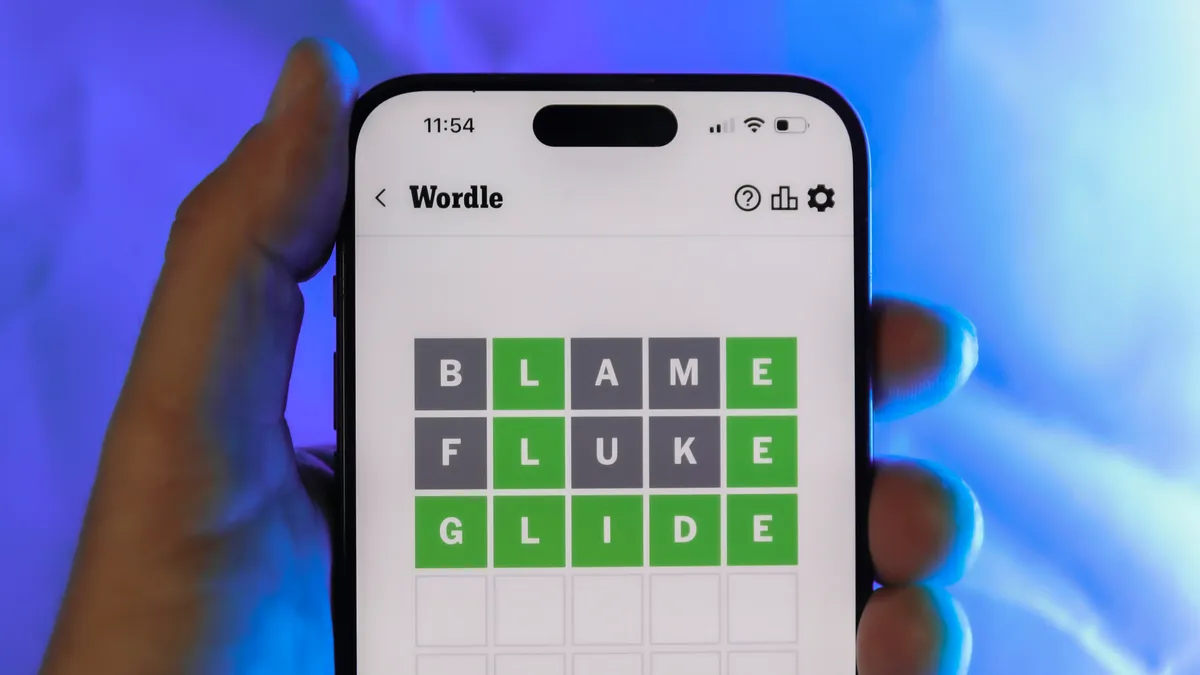



Looking for the most recent Wordle answer? Click here for today’s Wordle hints, as well as our daily answers and hints for The New York Times Mini Crossword, Connections, Connections: Sports Edition and Strands puzzles.
Rippling is hiring across sales, finance, legal, compliance, implementation, customer support, marketing and operations.
US-based SaaS platform provider Rippling has announced 150 new roles and a new expanded Dublin headquarters to accommodate the growing workforce.
The new jobs will be created over the coming year and will bring Rippling’s Irish headcount to more than 300, the company said. Rippling’s new office is situated in Dublin’s Fenian Street.
The move marks a “significant acceleration” in the company’s European growth ambitions, it said, adding that the Dublin office serves as the “operational backbone” for its business in the Europe, Middle East and Africa (EMEA) region.
Advertisement
Rippling’s Dublin office will house teams across sales, finance, legal, compliance, implementation, customer support, marketing and operations. The new roles will also span across these functions.
“EMEA is a primary growth driver for us, and Dublin is where we are building the team to win it,” said company’s EMEA vice-president Wendy Harris.
“The demand is there, the talent in Ireland is exceptional”, she added. The company expanded into Ireland in 2023 with 100 new jobs.
Rippling’s AI platform houses HR, IT, Finance and Payroll functions into a single intelligence system, enabling it to automate workflows, surface insights, and act across the entire employee lifecycle.
Advertisement
The company has also confirmed plans to continue scaling its EMEA teams beyond 2026 as demand for its products grow.
It was last valued at $16.8bn following a $450m Series G round in mid-2025, backed by Elad Gil, Sands Capital, GIC, Goldman Sachs Alternatives, Baillie Gifford and Y Combinator.
Following the raise, Rippling announced an expanded presence in India, with plans to double its workforce in the country to 2,000. The company
“Rippling’s decision to expand its presence in Dublin and create over 150 new jobs is a strong vote of confidence in Ireland’s talent base and our position as a leading hub for technology and innovation in Europe,” said Minister of Enterprise, Tourism and Employment Peter Burke, TD.
Advertisement
Michael Lohan, CEO of IDA Ireland said: “Rippling’s decision to open its new Dublin office and create more than 150 new jobs is a strong endorsement of Ireland’s attractiveness as a location for high-growth, innovative companies. This investment underscores Rippling’s long-term commitment to Dublin and the depth of talent available here to support its continued growth across EMEA.”
Don’t miss out on the knowledge you need to succeed. Sign up for the Daily Brief, Silicon Republic’s digest of need-to-know sci-tech news.
While most of us don’t design aircraft or racing cars, it’s likely that we’re still fascinated by some of the aerodynamic studies behind them. But a full-sized wind tunnel is going to cost a small fortune, so how can we experiment? Never fear, because [luisengineering] is here with a 3D printable desktop wind tunnel.
There’s a build video that we’ve embedded below, and if you can sit through the continuous shilling of random tools, it’s an interesting watch. It’s an open design in that air is not recirculate through it, instead it passed through the machine from left to right. On the right is the fan, on the left the intake with a rectifier to ensure laminar flow. Then a constriction compresses and speeds up the air past the stage for the model under test, and an expansion slows it down again for the fan.
A wind tunnel needs a smoke generator to easily spot turbulence, and in this case a vape is called into action. The result is surprisingly effective, as we see with a demonstration using a small model car. Meanwhile if you’re interested in wind tunnels at this size, it’s not the first one we’ve brought you.
I’ve long sung Whoop’s praises, but Google has taken the crown with the Fitbit Air, offering essentially the same screen-free experience in a much smaller, more comfortable package, all at a fraction of the cost. Screenless trackers still won’t be for everyone, but thanks to the fantastic Google Health app and genuinely impressive value for money, the Fitbit Air is an easy recommendation.
Slim and very comfortable to wear
Goes well beyond claimed seven days of battery
Google Health app is fantastic
Some of the best, most helpful uses of AI yet
No on-wrist charging
No bicep strap accessories
Lacks built-in GPS
SQUIRREL_PLAYLIST_10208510
Advertisement
Key Features
Review Price:
£84.99
Advertisement
Screen-free comfort
An ultra-slim, lightweight design makes the Fitbit Air one of the most comfortable wearables to wear all day and night.
Advertisement
Google Health insights
The Google Health app combines Fitbit data with third-party integrations to deliver a comprehensive view of your health and wellness.
Advertisement
AI-powered coaching
Google Health Coach turns your data into personalised, easy-to-understand advice that actually feels useful.
Introduction
Google’s Fitbit Air is the new top dog in the screenless tracker market. Sorry Whoop.
Advertisement
The Fitbit Air isn’t the first screenless tracker to hit the market, but it’s the first that has a real chance to knock the Whoop band off its perch, offering essentially the same health insights, if not better, at a fraction of the cost.
That’s because the Whoop 5 will set you back £229/$239 and the Whoop MG goes for £349/$359 – but that’s not an outright cost. That’s a yearly subscription. You’re not actually buying the hardware; you’re essentially renting it.
Advertisement
The Fitbit Air, on the other hand, starts at just £84.99/$99.99, and even though you need a £7.99/$9.99 per month subscription to get the best insights possible, it’s a combination that you’d need to use for nearly two years before hitting the cost of just one year of Whoop’s subscription. And unlike Whoop, you don’t need the subscription to use the hardware.
Advertisement
It’s also much smaller and more comfortable than both Whoop and other screenless trackers, with one of, if not the best, companion apps I’ve used on any wearable to date. Is Whoop well and truly in trouble here? Let’s delve in.
Design
Incredibly slim and compact
Very comfortable to wear, even to bed
Range of affordable straps available
Google isn’t the first brand to dip its toe into the world of screenless trackers – there’s the dominant power that is the Whoop band, along with a few alternatives like the Polar Loop and Amazfit Helio Strap – but none come in quite a compact package as the Fitbit Air.
Whoop MG (left) and Fitbit Air (right) Image Credit (Trusted Reviews)
Advertisement
Saying this thing is small doesn’t really do it justice, but putting it next to the Whoop MG, Whoop’s option looks comparatively massive – and that’s still slimmer than most smartwatches. It’s not just that it sits quite flat on the arm, measuring at just 8.3mm thick – it’s also around half the width of the Whoop and most smartwatches, and that’s what makes the real difference here.
Whoop MG (left) and Fitbit Air (right). Image Credit (Trusted Reviews)
In the default nylon strap it comes with, the Fitbit Air is easily the most comfortable, stealthy wearable I’ve used to date – even compared to smart rings, which are pretty easy to forget about. It doesn’t catch on sleeves like thicker wearables, it doesn’t snag on pillows when I sleep, and it rarely comes loose from its position. It’s snug on my wrist, but it doesn’t feel like it has a presence.
Google says that it was designed specifically for sleep, and I believe it; it’s probably the best wrist-worn wearable for sleep I’ve used in a long time because it’s so comfortable and low-profile – and the data I get is bang-on too. But more on that a little later.
Image Credit (Trusted Reviews)
Like the Whoop competition, the actual Fitbit Air is the little pod that lives within the strap, housing all the smarts including the HR sensor and battery, and it’s easily removed. This lets me quickly change up the colour and material of the band to better match my style or the setting – Google is offering a range of options in Fog, Obsidian, Lavender and Berry, and I expect the third-party accessory market will soon explode – making it a versatile bit of kit.
Advertisement
Advertisement
Image Credit (Trusted Reviews)
I’d recommend the silicone strap if you’re intent on using the Air in the shower or the pool, something it can easily handle with 5ATM water resistance – the fabric strap takes a little while to dry off afterwards.
Unlike Whoop, there aren’t any bicep straps or clothing to wear the Air in different ways, but again, I’ve got a feeling third-party accessory makers will make some strides in this department.
Features and app
Google Health is fantastic
AI-powered Health Coach makes a real difference
Genuinely personalised daily advice
Without a screen to rely on, the Fitbit Air essentially lives and dies by its companion app – so it’s a good thing that the newly redesigned and rebranded Google Health app is, well, absolutely fantastic.
Image Credit (Trusted Reviews)
Advertisement
The app, available for both iOS and Android, isn’t just another bog-standard companion app that we see all too often from trackers. Instead, it’s better compared to the oft-coveted Apple Health app, offering a comprehensive view of my health with data not just from the Fitbit Air but other wearables and 100s of third-party apps – with a sprinkling of AI.
Well, it’s less of a sprinkling and more of a full-blown AI snowstorm, but stay with me here, because, believe it or not, it’s actually good. Great, in fact.
Image Credit (Trusted Reviews)
The whole app is driven by Google Health Coach, an LLM developed by Google and a team of health experts to ensure the advice provided is accurate and, well, actually useful. I can see all my key stats at a glance, like most other health-focused apps, but it’s Health Coach’s interpretation of my data that makes it stand out.
Rather than just filling the screen with data, numbers, and stats that can be overwhelming, especially for those new to the health and fitness scene, Health Coach breaks things down into language that’s easy to understand.
Advertisement
Image Credit (Trusted Reviews)
Advertisement
The Today tab provides insight into everything that has happened that day, with messages in the morning, afternoon and evening reflecting the data collected. The Fitness tab goes more into depth on my current training plan, while the Sleep tab offers deeply personalised recommendations to help me get a better, more restful night’s sleep.
Image Credit (Trusted Reviews)
Importantly, this is all personalised to me, based not only on my data but also on conversations with Health Coach. The latter is arguably the standout feature of the app, allowing me to have what is essentially a casual chat about anything from my recent data trends to advice, and the more information it has, the better the advice gets.
Image Credit (Trusted Reviews)
I, for example, head into the office on a Monday and work from home the rest of the week. I mentioned this to Health Coach in a chat about my fitness plans and how I wanted to get more active. It not only used that information to tailor my plans with weekly goals and specific exercise recommendations based on the equipment I have to hand at home, but also to account for my sleep schedule, noting earlier wake-up times on Mondays than on the rest of the week.
Health Coach can also understand voice and image inputs, allowing me to log data that might not be automatically captured by the Fitbit Air or the third-party app integrations. That allows me to screenshot my calorie intake (complete with macros) in Foodvisor and share that with Health Coach. It’ll then update everything in the app to reflect that, with no errors in logging that I’ve seen.
Advertisement
Image Credit (Trusted Reviews)
I can also tell it when I’m feeling more tired or more energetic than usual, and it’ll update its exercise and fitness recommendations on the fly to reflect that.
It’s that intelligent overview and deep understanding of my data that really stands out here, and it’s so much more advanced than the AI offered by competitors like Whoop, Oura and Garmin.
Advertisement
I’m also a big fan of how the Fitbit Air works alongside the Pixel Watch 4. Rather than duplicating data in the app, it’s smart enough to merge both sources, allowing me to, say, wear the Fitbit Air all the time and put the Watch on when I’m exercising or headed out for the day and need a screen.
Image Credit (Trusted Reviews)
There’s also a smart alarm feature baked into the Fitbit Air, which vibrates either at a set time or when it detects I’m in a light phase of sleep close to my preferred wake-up time. The latter makes it much easier to actually get up, rather than fall right back to sleep like I often do, and it’s just the right level of vibration to stir me from sleep. A quick double-tap dismisses the alarm.
Advertisement
There is a catch here, however; to access some of the more advanced features on offer, a Google Health Premium subscription is needed. Replacing the Fitbit Premium subscription, it’s £7.99/$9.99 per month, but compared to Oura’s £349/$349 alternative at £5.99/$5.99 per month and the incredibly high £349/$359 per year for the Whoop MG, it’s suddenly quite good value.
Health Premium is also bundled in with Google’s AI Pro and Ultra plans, which I already have, so I didn’t need to pay any extra – and a three-month trial is included free of charge.
Advertisement
Health and exercise tracking
Fantastic overview of health and wellbeing
Top-notch sleep tracking
Occasional HR inaccuracies at peak heart rates
With a heart rate sensor that’s tracking me 24/7, the Fitbit Air covers all the usual bases for health monitoring; heart rate, HRV, SpO2, body temperature and the like. The Health app translates this to a few key metrics, like readiness, essentially an energy score for the day, along with cardio load for measuring exercise and strain.
Image Credit (Trusted Reviews)
The whole Today view is completely customisable too; if I cared about specific metrics like steps taken, cardio load, or even BPM ranges, I could add them quite easily while removing information I didn’t care about. It offers a great look at my overall health, especially when combined with the aforementioned Health Coach advice I get in the morning, afternoon, and evening, as well as data from third-party apps.
Advertisement
Image Credit (Trusted Reviews)
That’s just as true when it comes to sleep tracking. I used the Oura Ring 4 as my baseline as I feel it most accurately reflects how I’ve slept of all the wearables I’ve tested recently, and the Fitbit Air matched it in many regards.
The sleep and wake times were pretty much in line, and it picked up a similar amount of disturbances during the night. The sleep stages were a little off – but neither are exactly health-grade EEGs, so it’s always worth taking that aspect with a pinch of salt. More importantly, it aligned with how I actually felt in the mornings; when I had a good sleep, it recognised it, and when I felt groggy, it usually mentioned something affecting my sleep.
Image Credit (Trusted Reviews)
The Sleep tab in the Health app goes into quite a bit of detail here, along with plenty of recommendations on how to get a better sleep, be it more exercise to fall asleep quicker, getting to sleep at a specific time or, in my case, waking up at a more consistent time throughout the week. It’d also use that to further tailor my daily fitness recommendations. Truly smart stuff.
Image Credit (Trusted Reviews)
Advertisement
If you’re used to a smartwatch for tracking fitness, switching to the Fitbit Air can take some getting used to. Without a screen to glance at metrics, you have two choices; use your phone to view stats on the Google Health app, or just ignore the metrics altogether and go based on how you feel.
I’m very much someone who likes to keep an eye on metrics when working out, but the screen-free experience is refreshing; rather than trying to push for distance or keep my heart rate in a specific zone, I can just go with the flow, push when I want to and pull back when needed, and it makes for a much more balanced workout.
Advertisement
Image Credit (Trusted Reviews)
That information is then presented in the app, with the usual core metrics – heart rate, zones, calories burnt, steps taken and other exercise-specific metrics – along with Health Coach’s analysis of the exercise, pointing out elements like where I’ve beaten my PB or made strides. It’s very motivating.
And, when compared to the Oura Ring 4 that I also use as a baseline for HR-related testing – there’s a reason why doctors take your pulse on your finger and not your wrist – the two are fairly in line with one another. That said, there was a workout where the HR readings dropped my peak zone (around 169bpm) to around 76bpm, before rocketing back up instantly, so it’s not flawless. However, it was a particularly sweaty run, so it could be a case of sweat interference – or just a pre-release bug.
Image Credit (Trusted Reviews)
Advertisement
I don’t have to manually trigger a workout in the app though; that’s only needed if I want to see my metrics on screen in real-time. The Fitbit Air is also surprisingly good at automatic exercise recognition, so much so that I rarely bother to manually trigger tracking in the app when going on the treadmill now.
It also pretty much nails any long outdoor walks I take, and though it didn’t know what I was doing, it knew I was doing something during a particularly long gardening session. I just had to tell it what I was actually doing in the app afterwards, and it’ll use that as a baseline to automatically recognise that in future.
Image Credit (Trusted Reviews)
Importantly, because the Air is constantly tracking all my metrics, I can retroactively add activities in the Google Health app if it misses something. It’ll then analyse the data from that period and provide me with the same breakdown as if it’d been recorded in real time – albeit without a GPS map overlay. I’ve not actually needed to do that so far, but it’s good for peace of mind.
Speaking of, the only catch here is that, like the Whoop bands, there’s no built-in GPS. To track outdoor runs with better distance accuracy, I need to have my smartphone with me. It’s not a dealbreaker for me as I tend to use the treadmill more often, but if you like to go on long outdoor runs without a phone, you may be better served by the Pixel Watch 4.
Advertisement
Image Credit (Trusted Reviews)
Advertisement
But again, that’s why the Air shines as a companion to the Pixel Watch 4: I can use the Air for general sleep and well-being tracking, and the Watch 4 for dedicated exercise tracking.
Battery life
Google claims seven days of battery life
Closer to two weeks of battery in actual use
Fast charging tech
Despite the compact dimensions of the Fitbit Air, Google claims that it can last up to seven days before needing a top-up – but in my experience, it has gone far beyond that.
I’ve been wearing the Fitbit Air constantly since it arrived, and despite using the tracker not only to track general health and sleep but also to record several treadmill runs, it took nearly 10 days for the battery to go flat.
Image Credit (Trusted Reviews)
That closes the gap considerably between it and the Whoop MG, which lasts up to 14 days on a charge. Not bad for something that’s much more compact than Whoop’s strap, though it’ll be interesting to see if this stamina is sustained over months of use.
Advertisement
When it does inevitably need a charge, it uses a similar magnetic charger to the Pixel Watch 4 – but crucially, it’s not the same charger. It would’ve been a nice touch for Google to use the same charging cradle, especially as the Fitbit Air complements the Watch 4 so well. But instead, I need two (very similar-looking) chargers on my desk, ready for use.
Advertisement
Image Credit (Trusted Reviews)
It is a shame that Google hasn’t offered any kind of on-wrist charging like that offered by the Whoop competition, but with fast-charging tech that delivers a day of battery life in five minutes and a full charge in around 90 minutes, there aren’t many gaps in the data.
SQUIRREL_PLAYLIST_10208510
Should you buy it?
You want an affordable screen-free tracker with a great app
The Fitbit Air is compact, comfortable to wear and offers a fantastic app, all for less than £85/$100.
Advertisement
You need a screen for workouts
Advertisement
With no screen, you’ll need to rely on your smartphone screen to view your real-time metrics.
Final Thoughts
While I’ve long sung Whoop’s praises, I think Google has taken the crown with the Fitbit Air. It essentially offers the same screen-free experience as its main competitor, but in a much smaller package, which also makes it one of the most comfortable wearables to ever don my wrist.
Advertisement
But it’s arguably the Google Health app that really seals the deal. It offers a comprehensive view of my health and wellness, with support for a wide range of third-party apps. And the AI-powered Google Health Coach does a fantastic job at not only understanding me and my data, but also providing insight that actually makes sense.
And it does all this at a fraction of the cost of a Whoop band, coming in at just £84.99/$99.99. At such a low price, the optional monthly subscription to access the more advanced features doesn’t feel like a snatch-and-grab either.
Of course, screenless trackers aren’t for everyone – I don’t have access to my live exercise data on my wrist, and I can’t run apps like a regular smartwatch – but if the idea does appeal, it’s an easy recommendation that doesn’t break the bank.
It’s rare to see genuine value for money in the tech market these days, but that’s exactly what you’re getting with the Fitbit Air.
Advertisement
To see how it compares to the competition, take a look at the best fitness trackers.
Advertisement
How We Test
We thoroughly test every smartwatch we review. We use industry-standard testing to compare features properly, and we use the watch as our main device over the review period. We’ll always tell you what we find and we never, ever, accept money to review a product.
Tested for over a week
Worn as our main tracker during the testing period
Heart rate data compared against other wearable devices
FAQs
Does the Fitbit Air need a subscription?
No. You can use the Fitbit Air without a subscription, but a Google Health Premium plan unlocks the more advanced insights and coaching features.
Advertisement
Is the Fitbit Air better than Whoop?
For value, comfort and app experience, it makes a very strong case. Whoop still has the advantage of established brand recognition and niche health-related features, but the Fitbit Air offers a similar screen-free experience for much less money.
The Dutch National Police arrested a 35-year-old man suspected of hacking the professional football club Ajax Amsterdam (AFC Ajax) earlier this year.
The suspect was arrested in Buren and, according to a Tuesday press release, he is believed to have hacked into the football club’s systems multiple times.
“On the morning of Tuesday, May 26, the police arrested a 35-year-old man from the municipality of Buren for computer trespassing at the Amsterdam football club Ajax. The man is suspected of deliberately unlawful intrusion into Ajax’s computer systems several times,” the police said.
“In early 2026, Ajax was confronted with the computer trespass after the suspect granted himself access to the football club’s computer systems. After the police were informed, the criminal investigation department started an investigation in which the suspect from the municipality of Buren came into the picture.”
Advertisement
AFC Ajax disclosed the incident in late March, saying that the attacker exploited vulnerabilities in its IT systems to access data belonging to a few hundred individuals.
The vulnerability also allowed modifying stadium bans imposed on fewer than 20 individuals and transferring purchased tickets to others.
According to an RTL report, the same security flaw also enabled broad access to fan data via APIs and shared keys, with the hacker demonstrating how they could reassign a VIP season ticket in seconds.
Most worryingly, they also demonstrated how they could manipulate 538 supporter stadium bans, 42,000 season tickets, and view details on more than 300,000 accounts.
Advertisement
The Dutch football club has since patched vulnerabilities exploited in the attack and has notified the Dutch Data Protection Authority and the police of the incident.
In September 2025, the Dutch National Police also arrested two teenage boys suspected of spying for Russia using a WiFi sniffer device near Europol and Eurojust offices, as well as the Canadian embassy.
More recently, financial crime investigators in the Netherlands (FIOD) arrested two men and seized 800 servers linked to a web hosting company that enabled cyberattacks, interference operations, and disinformation campaigns.
Automated pentesting tools deliver real value, but they were built to answer one question: can an attacker move through the network? They were not built to test whether your controls block threats, your detection rules fire, or your cloud configs hold.
This guide covers the 6 surfaces you actually need to validate.
Data shows that the Government’s R&D tax credit is directly driving new investment, even as companies contend with geopolitical uncertainty, international tax changes and competitive pressures
The Industry Research and Development Group (IRDG) and KPMG have released the 2026 Ireland Innovation Index, which is the fourth annual report gathering detailed responses from companies actively engaged in innovation across Ireland.
This year’s findings show that, following a jump from 30pc to 35pc in the previous budget, the R&D tax credit has led to a significant boost in R&D activity. Almost 70pc of the 587 organisations who contributed their data said they have increased R&D spend over the past three years and 77pc expect to increase investment over the next three years.
58pc of businesses explain that they are funnelling the extra 5pc credit directly into currently existing R&D projects while an additional 57pc said that it will go towards supporting completely new R&D activity. Nearly 40pc of survey participants said the enhanced incentive will support them hiring or retaining dedicated R&D staff.
Advertisement
IRDG’s and KPMG’s research also highlighted the role of the tax credit in attracting and maintaining R&D activity and jobs in Ireland, with more than half (54pc) of contributing multinational companies saying that without the credit, 10pc or less of their R&D would take place in Ireland.
Competitive investment
The report also identified some challenges, for example, despite the R&D tax credit acting as a critical pillar of Ireland’s competitiveness, underpinning significant investment decisions, many forms of modern innovation sit outside the traditional fields of science and technology, which are qualifying activities.
IRDG and KPMG noted this tends to exclude innovation such as digital transformation, design-led innovation, advanced process innovation and business-model innovation.
As a result, 71pc of those surveyed said a specific new innovation tax credit would enable more innovative work to take place in Ireland, while a corresponding 67pc believe it would support new product and service development.
Advertisement
The report also identified a significant participation gap between large businesses and smaller firms. SMEs were found to be twice as likely to be aware of available supports, but not use them. Those surveyed also remain markedly less satisfied with the timing of R&D tax credit refunds, which creates particular cashflow challenges for smaller innovation-led businesses.
The research stated, “While Ireland has built a strong R&D support framework, the findings suggest that significant practical barriers remain for innovative companies, including SMEs, that the Government most wants to encourage.”
Commenting on the report, Dermot Casey, the CEO of IRDG, said: “Ireland’s innovation economy continues to demonstrate resilience and ambition despite global turmoil. The recent R&D tax credit reforms are working, 77pc of the 587 companies surveyed plan to increase R&D spend over the next three years.
“But structural gaps remain. Public R&D investment is half the EU average. On non-R&D innovation, Ireland ranks 26th of 27 in the EU for design applications and last for trademarks. 71pc of companies back an Innovation tax credit designed for AI, digitalisation and design, areas the current credit can’t reach.
Advertisement
“With 67pc now ranking AI and disruptive technologies among their top priorities, up from 45pc two years ago, the case for the new credit is urgent. Combined with a doubling of public R&D over three years, these investments will build long-term resilience, competitiveness and growth.”
Don’t miss out on the knowledge you need to succeed. Sign up for the Daily Brief, Silicon Republic’s digest of need-to-know sci-tech news.
Artificial intelligence has dominated the conversation in financial services for several years. But much of that discussion has remained rooted in experimentation – proofs of concept, limited pilots and isolated use cases.
That is now beginning to shift.
Across the industry, organizations are moving beyond generative AI tools that respond to prompts, towards more autonomous systems that can plan, act and adapt with increasing independence. “Agentic AI” is less about standalone tools and more about embedding intelligence into the core of how work gets done.
Importantly, this is not a distant prospect. It is already taking shape in live environments.
Advertisement
As leaders come together across the industry this year, much of the focus will be on exactly this transition – how organizations move from AI ambition to applied, scalable deployment.
That conversation is grounded in a simple reality: the challenges are no longer theoretical, and neither are the opportunities.
Moving from response to action
To understand what makes agentic AI different, it helps to look beyond the terminology.
Advertisement
Sign up to the TechRadar Pro newsletter to get all the top news, opinion, features and guidance your business needs to succeed!
Earlier generations of AI have largely focused on generating outputs – whether text, code or recommendations. Agentic systems, by contrast, are designed to take action. They can interpret intent, break down objectives into tasks, and interact with multiple systems to complete them with minimal human intervention.
In a banking context, that might mean supporting a customer through a complex journey – not just answering questions but anticipating needs and guiding outcomes. Internally, it can involve reducing the burden of repetitive processes and enabling colleagues to focus on more complex, higher-value work or serving customers better.
This shift from response to action marks a significant step forward. AI is no longer just a tool that people use – it is becoming an active participant in workflows.
Advertisement
What this looks like in practice
There is still a perception that these capabilities are some way off. In reality, many organizations are already deploying them in targeted and practical ways.
AI-powered assistants are increasingly supporting customers at key moments, including through natural language interactions that can understand context and respond more naturally to queries. At the same time, internal platforms are evolving to give colleagues faster access to information, automate routine activity, and provide real-time support.
Advertisement
In many organizations, this includes the development of integrated platforms that bring together data, AI and automation to support customer-facing colleagues in making faster, more informed decisions. The focus is not on the technology in isolation, but on how it simplifies processes and improves customer service at scale.
Ultimately, what matters most is the outcome. Are customers getting clearer, faster support? Are colleagues better equipped to do their jobs? Are organizations able to operate more effectively?
These are the measures that ultimately define whether AI is delivering value.
Advertisement
Scaling responsibly
As organizations move from experimentation to deployment at scale, the conversation inevitably shifts towards governance, trust and control.
Agentic systems introduce new considerations because of their increased autonomy. It becomes essential to ensure that their actions are transparent, that decision-making processes can be understood, and that appropriate safeguards are in place.
This is particularly important in financial services, where trust underpins every interaction.
Responsible deployment means building frameworks that address risk from the outset – not as an afterthought. It also means recognizing that technology alone is not enough. People, processes and culture all play a critical role in ensuring that AI is used effectively and ethically.
Advertisement
Alongside this, there is a growing focus on skills. As AI becomes more embedded in day-to-day work, organizations must invest in helping colleagues understand how to work alongside these systems, interpret their outputs, and challenge them where necessary.
In practice, this makes AI adoption as much a workforce transformation as it is a technological one.
Why place matters
The ability to scale applied AI is not just about individual organizations – it is shaped by the strength of the ecosystems around them.
Advertisement
Regional hubs are playing an increasingly important role, bringing together talent, academic research and industry collaboration in ways that accelerate progress. Cities such as Manchester are a clear example, with a growing concentration of engineering expertise and a diverse digital sector that supports both innovation and delivery.
For organizations that are investing in advanced technologies, proximity to that talent and those networks is critical. It enables faster iteration, stronger collaboration and a more practical approach to deploying emerging capabilities such as agentic AI.
This reflects the growing importance of industry events and collaboration forums. Across the UK, gatherings such as Manchester Tech Week bring together organizations to share how these technologies are being applied in real-world settings.
Advertisement
A more grounded future for AI
There is still significant momentum behind AI, but the conversation is becoming more grounded.
The focus is shifting away from what might be possible in the long term, towards what is working today – and how those successes can be scaled responsibly.
Agentic AI is a key part of that evolution. But its impact will ultimately depend on how it is implemented: how well it is integrated into existing systems, how effectively risks are managed and how successfully organizations bring their people with them.
For financial services, the opportunity is clear. But so is the responsibility to ensure that these technologies are deployed in a way that builds trust, delivers tangible value and supports both, customers and colleagues.
Advertisement
If the past few years have been defined by exploration, the next phase will be defined by execution. Increasingly, that execution is already underway – and it is being shaped not just within organizations, but across the ecosystems and communities that support them.
This article was produced as part of TechRadar Pro Perspectives, our channel to feature the best and brightest minds in the technology industry today.
The views expressed here are those of the author and are not necessarily those of TechRadarPro or Future plc. If you are interested in contributing find out more here: https://www.techradar.com/pro/perspectives-how-to-submit
iOS 26.6 beta 1 introduces a new alert related to the Contacts app and makes Apple Maps more secure.
Apple still isn’t done with iOS 26, as the first developer beta of iOS 26.6 adds a new contact-related alert, better protection for Apple Maps users, and more.
While we’re all looking forward to the reveal of iOS 27 at WWDC, the iOS 26 software cycle isn’t over just yet. Following the public release of iOS 26.5, Apple has now deployed iOS 26.6 developer beta 1.
Tuesday’s software update increases the build number to 23G5028e, up from the 23F77 build number of iOS 26.5. Though the iOS 26.6 beta is a relatively light release feature-wise, it does include two significant changes: an Apple Maps security upgrade and a new Contacts feature.
Advertisement
Both are welcome enhancements. However, these are most likely the last features Apple plans to add to iOS 26. The operating system will only receive security updates once the iOS 26.6 beta cycle is complete.
With Tuesday’s developer beta, Apple included a new alert to notify users when they’ve reached the maximum number of blocked contacts. This means once an iPhone or iPad user has 20,000 blocked contacts, they won’t be able to block any more.
“You’ve reached the maximum number of blocked contacts. To block additional callers, remove a blocked contact in Settings,” explains a new alert dubbed “Blocked Contacts Limit Reached.”
To remove blocked contacts, users must navigate to Settings > Apps > Phone > Blocked Contacts. The Contacts and Phone apps on iOS also alert users to duplicate contacts, giving iPhone users the option to remove redundant information.
Advertisement
Apple Maps Blastdoor
With iOS 14, Apple introduced a new sandbox system for iMessage, known as Blastdoor. The framework offers protection against zero-click exploits, keeping conversations and their details private.
iOS 26.6 includes a new Apple Maps Blastdoor framework.
The first developer beta of iOS 26.6 seemingly offers similar protections for the Apple Maps app. A comparison of iOS 26.5 with iOS 26.6 beta 1 reveals that the latter has a new “Maps Blastdoor” framework.
While there are few details about the framework itself, it’s more than likely a security measure, given the existing Blastdoor sandbox system. Apple’s website explains that Blastdoor for iMessage “isolates, parses, transcodes, and validates untrusted data arriving in Messages, IDS, and other vectors to help prevent attacks.”
Advertisement
This is accomplished through “sandbox restrictions and memory-safe validation of output, which creates a significant obstacle for attackers to overcome before reaching other parts of the operating system,” says the Blastdoor description. We can expect similar features with the Maps Blastdoor framework.
iOS 27, meanwhile, is set to deliver more significant changes. The update will enter developer testing during WWDC 2026, which begins with a keynote video on June 8. Expected upgrades include a revamped Siri, improved support for third-party AI, and stability improvements.
Looking for the most recent Strands answer? Click here for our daily Strands hints, as well as our daily answers and hints for The New York Times Mini Crossword, Wordle, Connections and Connections: Sports Edition puzzles.
Today’s NYT Strands puzzle highlights a kind of food that seems very summery to me. Some of the answers are difficult to unscramble, so if you need hints and answers, read on.
If that doesn’t help you, here’s a clue: Throw it on the grill.
Clue words to unlock in-game hints
Your goal is to find hidden words that fit the puzzle’s theme. If you’re stuck, find any words you can. Every time you find three words of four letters or more, Strands will reveal one of the theme words. These are the words I used to get those hints but any words of four or more letters that you find will work:
These are the answers that tie into the theme. The goal of the puzzle is to find them all, including the spangram, a theme word that reaches from one side of the puzzle to the other. When you have all of them (I originally thought there were always eight but learned that the number can vary), every letter on the board will be used. Here are the nonspangram answers:
BRAT, BANGER, FOOTLONG, WEENIE, FRANKFURTER
The completed NYT Strands puzzle for May 27, 2026.
NYT/Screenshot by CNET
Today’s Strands spangram is HOTDIGGITYDOG. To find it, start with the H that’s three letters to the right on the bottom row, and wind up and then down.
Every Flavor of Robot built Etchbot to stand out at the OpenSauce event. The machine sketches a complete portrait on a regular Etch-a-Sketch in roughly sixty seconds. It also accepts video files and renders them by sketching one frame after another while a camera records each result. The finished time-lapse clips show the classic toy screen updating rapidly enough to convey motion.
The builders started with the basic challenge of any Etch-a-Sketch robot. Two knobs move a stylus that never lifts from the drawing surface. Mechanical play, called backlash, appears whenever a knob changes direction. Friction and slight slippage add more error at higher speeds. Earlier machines handled these problems by moving slowly and carefully.

Tablet, Drawing Pad, and Digital Notebook — All in One: Designed for artists, students, professionals, and entertainment users, the TCL NXTPAPER…
NXTPAPER 4.0 Display for Enhanced Eye Comfort: With upgraded NXTPAPER 4.0 technology, this tablet offers a more natural, paper-like viewing…
AI-Powered Productivity & Communication: The TCL NXTPAPER 11 Plus note taking tablet integrates smart tools like voice memo, real-time bilingual…
However, Etchbot adopted a different approach because it has a lot more muscle and is smarter than the older machines. The team designed a custom motherboard dubbed MotorGo AXIS, which includes two brushless motor drivers as well as an ESP32 microprocessor and simply slides on top of a Raspberry Pi. They chose Gartt drone motors because of their power and ease of use. Each motor was outfitted with a tiny magnet attached to the rotor as well as an encoder board to provide critical real-time feedback. With the MotorGo program conducting the calibration, the brushless motors were quickly turned into trustworthy servos.

These servos just slide into the Etch-a-Sketch knobs, and the Raspberry Pi handles the picture and video preparation. It’s all made simple using a web interface that allows anyone to upload a file. The system then reduces the supplied data to the appropriate size for the toy’s screen, removes any background, converts the output to clean line work, and generates motion commands in GCODE format. There are some further stages that clean up any stray points and determine the most efficient route between various lines so that the stylus does not waste hours retracing the same empty region.
The GCODE is then delivered over WiFi to the MotorGo board, where it is translated into motor movement by a motion controller, but it also includes an extra bit of logic that corrects for backlash whenever the direction changes. To keep things pleasant and stable, acceleration restrictions are set so that the internal mechanism does not receive any abrupt jolts. Between each drawing, the algorithm simply returns the pen to a known safe location, ensuring that any subsequent sketches remain fully visible. The video mode just repeats the same process, one frame at a time, which is essentially the same as sketching a single picture but for dozens or hundreds of images. The camera captures each final frame, which is then stitched together to generate a video clip.
Speed is all about the mix of powerful servos and tailored compensation, rather than any single magic component that makes it all work. Portraits that took minutes to complete now take only one minute. The video side works in the same way, with the hardware keeping up with video frames because each drawing is completed before the next one begins, and to keep the surface looking decent, an eraser function or screen clear step is added between each frame. The entire project is open source, with all of the driver code, server backend, web interface, and MotorGo board design files available on GitHub. In addition to the custom board design files, everyone has access to the printed parts and assembly notes. [Source]
American Airlines plans to install SpaceX’s Starlink Wi-Fi on more than 500 narrow-body Airbus aircraft starting early next year. It does not, however, have any immediate plans to change providers on its Boeing fleet, which currently uses a mix of Viasat and Panasonic. CNBC reports: American in January rolled out free in-flight Wi-Fi for members of its frequent flyer program, following United Airlines, Delta Air Lines and others. Delta in March said it would use Amazon Leo for in-flight Wi-Fi for hundreds of jets starting in 2028. United, Southwest Airlines and Alaska Airlines, which merged with Hawaiian Airlines in 2024, have selected Starlink. The move is a big win for SpaceX as it prepares for a potentially massive IPO next month. SpaceX said Starlink and its connectivity business generated $11.39 billion in revenue last year, accounting for 61% of the company’s total sales.
You must be logged in to post a comment Login