
Security teams log 54% of successful attacks and alert on just 14%. The rest move through your environment unseen.
The Picus whitepaper shows how breach and attack simulation tests your SIEM and EDR rules so threats stop slipping by detection.



For passionate bikers, having a support system can be a great way to take your biking experience to the next level. When it comes to community, Harley-Davidson knows what it’s doing. If you own a Harley-Davidson motorcycle, you can join the Harley Owners Group or H.O.G. To register as a member, you’ll need to sign up on the Harley-Davidson website. Depending on your country, there are slightly different membership packages that offer different benefits. However, for those based in the United States, you have two options to choose from: the Harley Owners Group and Harley Owners Group Passenger (requires H.O.G. member sponsorship), which both cost $59 a year. According to Harley-Davidson, the key difference is that the passenger membership swaps out the roadside assistance benefit for $30 worth of reward points.
To register as part of the Harley Owners Group, you’ll first need to select your country from the drop-down menu. Next, find the Vehicle Identification Number (VIN), which you can locate either on your frame, engine, or insurance card. Afterward, you’ll need to supply your name, home address, language preference, and email address. Bear in mind that even an H.O.G. Passenger will need to share their sponsoring member’s number during the registration process. Either way, if you’re set on committing to the H.O.G. community, Harley-Davidson also offers promotions for setting up auto-renewal, including free merchandise. For women, there’s also the option to join Ladies of Harley, which holds community events specifically for women.
One of the most straightforward benefits of being an H.O.G. member is free access to the Harley-Davidson Museum. It’s located at 400 W. Canal St., Milwaukee, WI 53203, open from 10 a.m. to 5 p.m., and has regular programs and special exhibits. Without the membership, the standard ticket price is $25 for adults or $21 for senior citizens (65+), students, and U.S. military members. There’s also an $11 ticket for children aged 5 to 17, while children under 5 are free. With this, all you have to do is visit three times a year to be able to make up the price of an annual H.O.G. membership.
To use this benefit, you’ll need to show your H.O.G. membership card and photo ID. If you suddenly realize that your U.S. membership has expired, renewing it at the museum also gives you the added benefit of a $20 gift card. Even H.O.G. members need to pay extra for guided tours, which cost anywhere from $15 to $135 and require advance booking. If you realize that you just really want an annual pass to the museum, they also offer individual passes ($50), family passes for two people ($75), and VIP passes ($150) for up to 4 people. All Harley-Davidson Museum annual passes also include free admission for children under 18, 50% of accompanied guests, and other discounts on-site.
With your H.O.G. membership, you get free Deluxe roadside assistance benefits for up to two Harley-Davidson motorcycles. It covers one of each type of service every seven days, which includes battery jumpstart service, lost key assistance, flat tire assistance, and extrication assistance. While it does cover fuel, oil, fluid, and water delivery, you’ll still need to pay for the cost of these separately, and they’re not covered by the Harley-Davidson warranty. The service also includes towing to the nearest dealership, which it recommends for issues related to its battery.
Alternatively, if you want some added flexibility, you can opt to upgrade to the Ultra Plus package, which is $69.95 per year. Similar to the complimentary benefit, it lets you use unlimited services per year, with each type of service every seven days. Some key differences include towing to any destination up to 35 miles, so you’re not limited to the dealership. Aside from your motorcycles, you can also request to cover an additional light-duty auto or truck. There’s also emergency travel reimbursement for the motorcycles of up to $1,000. Regardless of which option you choose, both Deluxe and Ultra Plus require registration with Agero. One caveat is that both offers are only covered in the United States, Canada, and Puerto Rico.
Issued by the U.S. Bank National Association, Harley-Davidson offers two types of Visa cards: the Harley-Davidson Visa Signature card and the Harley-Davidson H.O.G. Elite Visa Signature card. While you still need to apply, H.O.G. members have added benefits for both of them once approved.
For the Harley-Davidson Visa Signature card, which doesn’t have an annual fee, you can get 1 point for every mile you’ve ridden. To be considered valid, you have to be a H.O.G. member in good standing and in good standing. Additionally, you have to have your odometer read at a dealership or authorized recording center. You can earn up to 50,000 points in this way. For every dollar spent on eligible Harley-Davidson purchases, you also get three times as many points. Lastly, for each use, you’ll also have double the amount of entries for its daily $500-A-Day Giveaway Sweepstakes, which runs until December 31, 2026.
While the Harley-Davidson H.O.G. Elite Visa Signature card does have a $99 annual fee, you do get a $59 H.O.G. membership credit that can cover an entire year, a $10 SiriusXM credit, and a $30 dealership credit. This tier also offers twice as many points for every mile, but with the same maximum 50,000 points per calendar year. It also has a much higher 5x points multiplier for Harley-Davidson purchases, plus gas stations, and shares the same rules for the $500-A-Day Giveaway. Both credit cards also enjoy point multipliers for partner establishments, like restaurants, bars, and hotels.
In the past, we’ve mentioned how going to the Harley-Davidson Homecoming Festival should definitely be on your bucket list. Not only is it a unique opportunity to learn more about what goes inside your bike, but the pilgrimage is also the perfect place to meet other riders from all over the world. But even if you can’t make it, being a member of H.O.G. lets you experience community in other ways.
Along with access to exclusive events, you can also add a +1 and take advantage of discounted prices for paid experiences. One of the most exciting parts of being part of the H.O.G. community is the global rallies that happen in North America, Latin America, and Europe. In 2026, some rallies span weekends to extended tours that can last more than a week. While there are national events, there are also more than 1,400 H.O.G. global chapters that organize their own experiences. Apart from group rides, they also host competitions, safety courses, and charity events. While you may have to pay a separate chapter fee, there is no limit to the number of chapters you can join.
You’ll also have access to exclusive content and merchandise, such as annual gifts like pins and patches, the publication, and even T-shirts. For orders above $99, you’ll also have the option for free expedited shipping, which can be perfect for snagging gifts for Harley-Davidson fans. In addition, you get additional discounts from partners, such as Hilton, EAGLERIDER, KOA, and Insta360.

Apple’s iPadOS 27 update is shaping up to be less about one headline feature and more about pulling the whole system closer together with Apple Intelligence is running through the middle of it.
The biggest shift is Siri, which is getting a major upgrade into what Apple is now calling “Siri AI”. Instead of short, scripted requests, Siri AI can now handle natural conversations and follow-up questions.
Additionally, it can tap into personal context on the device. That means it can surface old emails, find specific photos from years ago, or pull up notes without users having to remember exact file names or locations. Apple is also pushing this further with actions inside apps. For example, Siri can do things like edit a recently sent message, add music to a playlist, or help manage reminders based on what you’re currently doing.
There’s also a new dedicated Siri app, which acts as a kind of hub for conversations across Apple devices. You can start a request on iPhone and pick it up on iPad without losing context. This feels like Apple trying to make Siri less of a one-off interaction and more of an ongoing assistant.
Alongside Siri, Apple Intelligence is being woven more deeply into everyday apps. In Photos, that shows up as smarter editing tools, including reframing shots after the fact and expanding images beyond their original borders. Safari gets more practical upgrades too. For example, tabs can automatically group by topic. There is also a new “Notify Me” feature that alerts users when something changes on a page, like a price drop or restock.
The system-wide push continues in Messages and Mail, where Apple Intelligence suggests quick actions based on context. For instance, it can add events to your calendar or pull up relevant photos. There’s also a new Image Playground tool for generating and modifying images from simple prompts. This fits into Apple’s broader move toward description-based input across the system.
Shortcuts is another big beneficiary. Instead of building automations step by step, users can now just describe what they want. Then iPadOS will assemble the shortcut automatically. It’s the same idea Apple is pushing everywhere else: you say what you want, and the system figures out the structure behind it.
Visually, iPadOS 27 also brings refinements to the Liquid Glass design, improving contrast and readability. At the same time, users can adjust how translucent or tinted the interface looks. It’s not a dramatic redesign. Still, it does tighten up the overall feel of the system, especially on larger displays.
There are more practical upgrades too. Passwords can now flag weak or compromised credentials and update them automatically, while Safari and file transfers are noticeably faster. Apple also says performance improvements extend to app launches and AirDrop, making the system feel more responsive in day-to-day use.
On the safety side, Apple is expanding parental controls with more granular setup options, website approval requests through Ask to Browse, and clearer visibility into how children are using their devices. Communication Safety is also being extended to better handle harmful content in shared media.
Expect the software to arrive later this year, and there’s a developer beta available now.


The city that gave the world cloud computing just hit pause on the machines that power it.
The Seattle City Council voted unanimously Tuesday to impose a one-year emergency moratorium on new large data centers inside the city limits, responding to concerns about the implications of AI for the city’s power grid, water supply, utility rates, and economy.
The moratorium would take effect as soon as Mayor Katie Wilson signs it, temporarily halting projects like several large data centers that companies have approached Seattle City Light about building in the city. Those projects reportedly had a combined peak demand equal to about a third of Seattle’s average daily power consumption.
“This is Seattle’s position on AI and data centers,” said Councilmember Debora Juarez, who sponsored the council’s resolution on data center policy. She drew cheers from the audience at the meeting when she said she would halt AI and data center development entirely if she could.
It’s a major statement in a region that’s home to Amazon Web Services and Microsoft Azure, as well as engineering centers for Google, Oracle, Meta and other companies collectively spending hundreds of billions of dollars on data centers globally to meet demand for AI.
The moratorium puts Seattle among the largest U.S. cities to halt the industry’s buildout, joining Minneapolis, Denver, Baltimore, and Indianapolis in a wave of local pushback.
The council approved two measures: an ordinance halting applications for data centers with electrical capacity of more than 20 megavolt-amperes — enough power for thousands of homes — and a resolution committing the city to study their impacts as a precursor to permanent regulations.
The vote followed weeks of escalating public pressure. More than 50 people testified Tuesday, and not one spoke in favor of data centers. Many argued the moratorium doesn’t go far enough, calling for a permanent ban. Councilmembers said they received more than 98,000 emails on the issue.
Some of the most pointed testimony came from inside the industry.
Members of Amazon Employees for Climate Justice, who also testified at two meetings last week, urged the council to add renewable energy requirements and labor protections, and called for an end to what one AECJ member called the industry’s race “to build out as much compute capacity as they can, as fast as they can, before regulations can catch up.”
“It’s great to see this council choose to empower ordinary people and workers over those who see them as expendable,” said Srija Nagireddy, an AECJ member, citing layoffs this year at Amazon and Meta amid record earnings.
Councilmember Bob Kettle offered the closest thing to a defense of the facilities, distinguishing hyperscale projects from what he called “traditional data centers” — including one downtown that he said heats a half-dozen nearby buildings and supports the city’s first responders. His amendment to the resolution, adopted unanimously, specified that AI is driving demand for “hyperscale” facilities, and added the reliance of government, healthcare, and education on existing data centers to the city’s study list.
Notably, neither Amazon nor Microsoft operates data centers in Seattle itself. Kettle pointed out during the meeting that Amazon’s facilities cluster in Oregon, while Microsoft’s data center presence in the state is in Quincy, the central Washington town transformed by cheap Columbia River hydropower. That means the moratorium’s immediate effect falls on data center developers rather than the tech giants.
The ordinance exempts the roughly 30 smaller data centers already operating in Seattle, allowing each to expand by up to another 20 megavolt-amperes, which is the same amount as the threshold of the moratorium on new facilities.
Mayor Wilson, who first floated the idea of a moratorium in April, is expected to sign the legislation. City departments would then develop permanent data center regulations, with zoning legislation expected to reach the council by early 2027.
The fate of one project — Digital Realty’s proposed facility at 301 Virginia St., filed 11 days before the vote — remains unclear. Whether the moratorium can halt an application already in the pipeline is likely a question for permitting officials and possibly the courts.


Samsung refreshed its smartwatch lineup with careful attention to daily comfort and practical health details that many people actually use. The Galaxy Watch 8, priced at $290 (was $350), arrives in two sizes and focuses on longer battery stretches, a brighter screen, and several new measurements that go beyond basic step counts or heart rate. For anyone eyeing an Apple Watch alternative while carrying an Android phone, this model presents a clear case worth examining closely.
The case now has a thinner cushion contour that sits very flat against your wrist. Its 8.6mm thickness makes it feel significantly lighter over long periods of use, and the aluminum body is available in both graphite and silver finishes, which look great and are really versatile. The bands now have an enhanced lug system that keeps the sensors close to your skin without pinching or leaving gaps. This causes many people to forget they are wearing the watch, even overnight, which is a huge step forward in terms of making it usable throughout the day.
Sale

The 40mm model features a 1.34-inch Super AMOLED screen with 438 × 438 resolution. It has a maximum brightness of 3000 nits, allowing you to use it in direct sunlight while the competition fades out. Because to efficiency improvements elsewhere in the hardware, the always-on option now functions without depleting your battery’s life. The battery capacity has been increased to 325 mAh for the 40mm model and 435 mAh for the 44mm. Samsung claims up to 30 hours of use with the always-on display turned on, but real-world tests show ranging from 24-36 hours depending on how frequently you use features like workout tracking, notifications, and the built-in Gemini AI.
People who purchase these watches primarily for health tracking will discover some surprising capabilities built in. The BioActive sensor suite uses bioelectrical impedance to determine your heart rate, blood oxygen, ECG, and body composition, which is a fairly standard set of capabilities at this level. New features include an antioxidant index that shows how your skin is performing in terms of carotenoid levels; simply press your thumb on the sensor to find out where you are. The vascular load feature then analyzes your data overnight to assess how much strain your circulatory system has been under and suggests improvements to your sleep or exercise regimen. They also detect sleep apnea, which checks for dips in oxygen levels, and in countries where it is FDA approved, it works completely. In addition, you will obtain an energy score that offers a snapshot of your daily sleep and movement habits.

Fitness features have also been improved. Following a brief test run, the running coach develops a personalized plan for you and delivers real-time pace recommendations and progress reports as you exercise. The dual frequency GPS (L1 and L5) is very handy because it allows you to correctly locate your location even in challenging conditions, and the heart rate zones adjust to your specific data and track more advanced metrics if you enjoy cycling or swimming. These utilities can be used without a Samsung phone, although a recent Galaxy handset offers some additional features.

Wear OS 6 is the operating system, with Samsung’s One UI Watch 8 built on top; the interface helps to arrange all current information into tiles that may be modified to match your specific needs. Google Gemini sits on your wrist and can remind you of things, answer questions, and execute follow-up tasks all without requiring you to take out your phone.


Anthropic has begun rolling out a new model called “Fable,” which is based on the same underlying model as Mythos, its most powerful AI model class.
Anthropic previously said that it developed a model called “Mythos,” which is a state-of-the-art model that poses security risks to companies around the world.
At that time, Anthropic noted that Mythos was powerful enough to potentially help bad actors attack public and private software.

“The advantage will belong to the side that can get the most out of these tools,” Anthropic warned in April when it announced the Mythos model.
“In the short term, this could be attackers, if frontier labs aren’t careful about how they release these models. In the long term, we expect it will be defenders who will more efficiently direct resources and use these models to fix bugs before new code ever ships.”
In other words, it could have been abused to find and exploit vulnerabilities in apps like Firefox.
Because of those risks, Anthropic decided to limit access to models like Mythos and offer them only to cybersecurity experts and trusted companies.
Now, Anthropic says it has developed strong guardrails for the same model class, which means these powerful AI models can no longer be easily exploited by bad actors.
As a result, it’s launching a safer version called “Fable 5.”
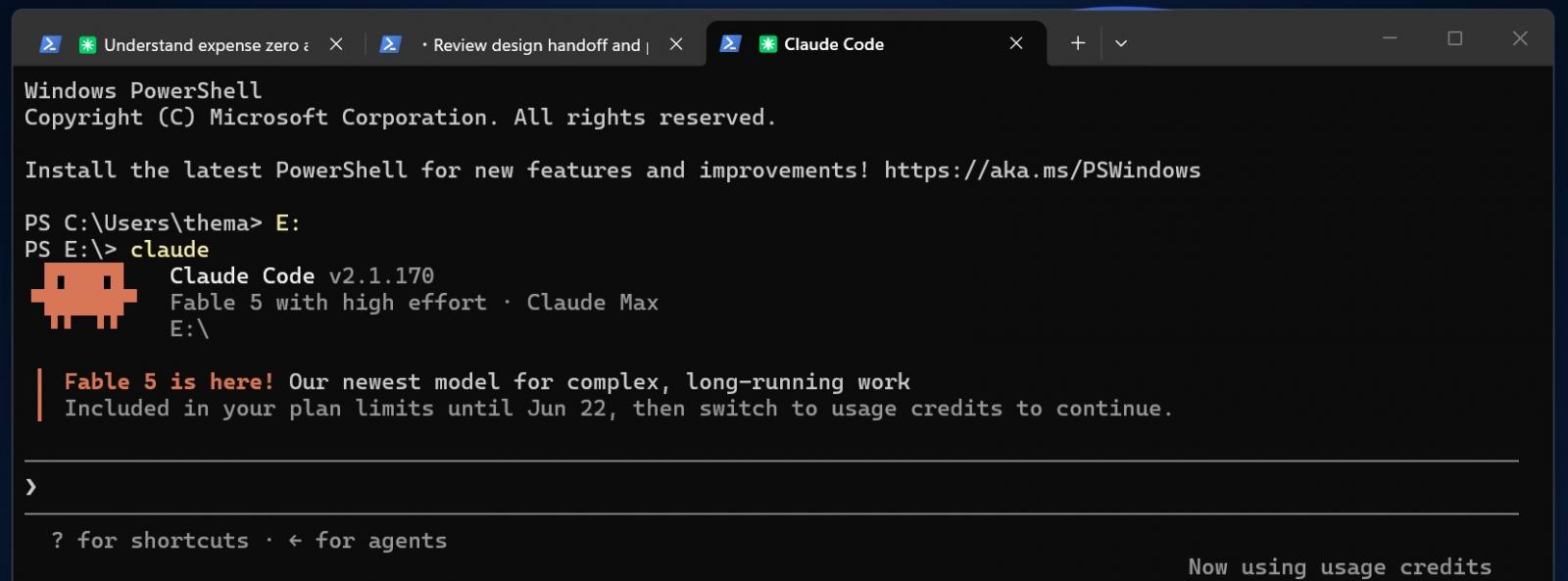
According to Anthropic, this model has strict safeguards in place that will block or divert sensitive queries, like those involving offensive cybersecurity, biology, or chemistry, to its previous model, Opus 4.8.
Claude Mythos 5 is the unrestricted version of that same model, with those safeguards lifted.
Because of the risks involved, it is only available to a highly vetted group of trusted partners, such as government cyberdefenders and specific life sciences researchers.
Anthropic says Fable 5 is an expensive model because it requires a lot of compute, which means the company cannot afford to make it available as easily as Opus 4.8 or its previous models.
However, until June 22, Anthropic says Fable 5 will be offered to all Pro, Max, and Enterprise customers, but after the window expires, it’ll switch to usage-based pricing.
In our tests, BleepingComputer observed that Fable 5 uses a massive amount of tokens in a span of minutes.

I particularly noticed this behaviour when I used Workflow, a new execution system that allows Claude to break complex prompts into smaller tasks and spin up parallel subagents to implement them.
Claude Fable 5 exhausted my $100 Max subscription’s daily usage, which was at zero when I started using it, in just 9 minutes
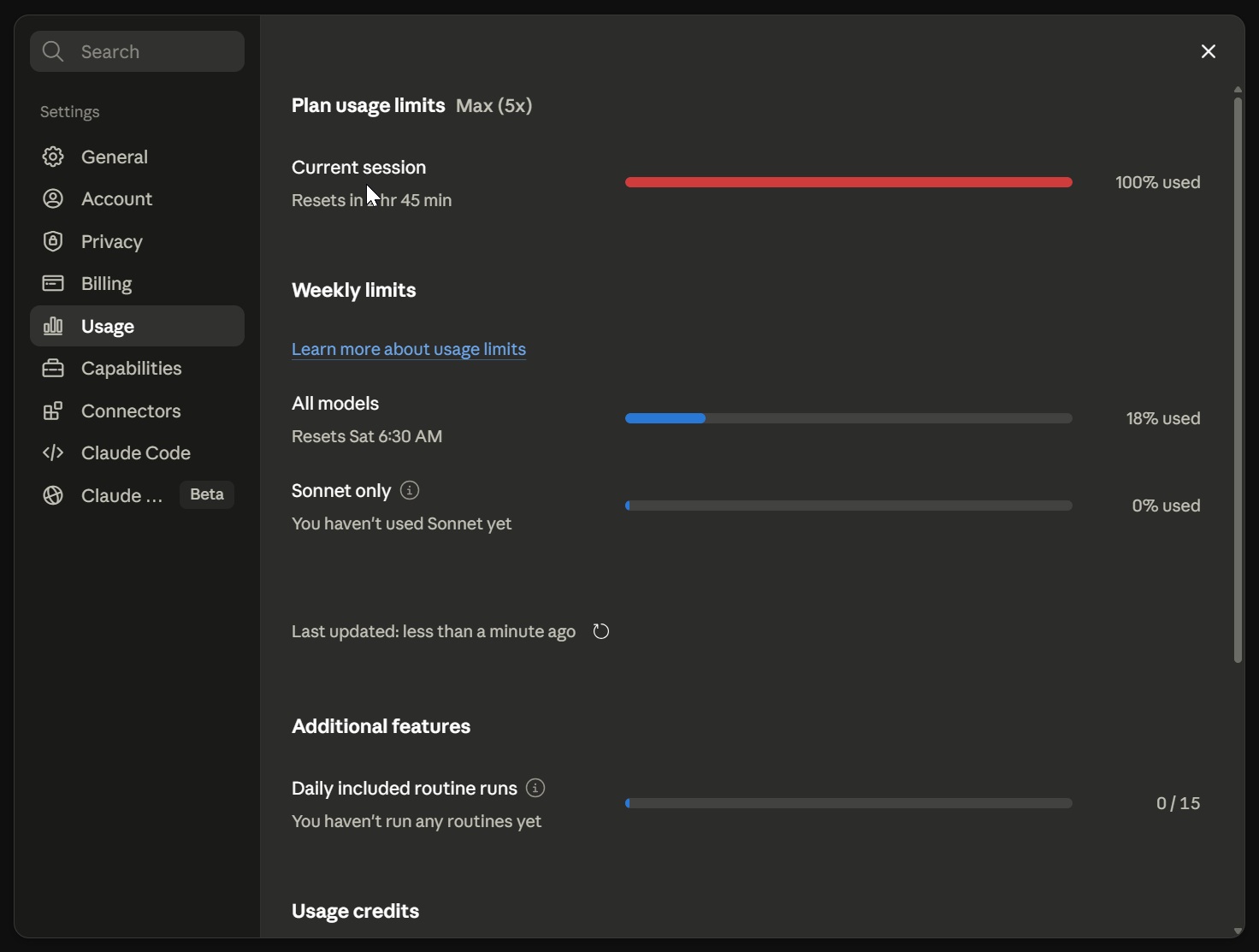
This doesn’t happen when you casually interact with Claude Fable 5, but if you switch to Workflow mode and change model thinking to high, you’re going to consume all your tokens in minutes.
However, even if you don’t use Fable 5 with workflow in xhigh effort, you’re still going to consume it 2 times faster than Opus model.
This explains why Anthropic is hesitating to unlock Fable 5 in the same capacity as Opus and other models, but that could change in the coming weeks, as the company is known for nerfing its models and increasing the capacity later.

Security teams log 54% of successful attacks and alert on just 14%. The rest move through your environment unseen.
The Picus whitepaper shows how breach and attack simulation tests your SIEM and EDR rules so threats stop slipping by detection.

bootnotes
Aircraft at core of the Future Combat Air System canned as parties could not decide who leads on the work
One of Europe’s two major next-gen fighter aircraft programs has been hit hard by differences between France and Germany, the two main participants, leaving the UK-Italy-Japan’s Tempest as the main contender.
Reports say that the Future Combat Air System (FCAS, or Système de Combat Aérien du Futur – SCAF – in French) has been shelved by German Chancellor Merz and French President Macron.
The program dates back to at least 2017, and was expected to produce a test flight of a technology demonstration airframe by 2026 or 2027, with the aircraft coming in to operational service by 2040.

According to German publication Der Spiegel, the French firm Dassault and the European Airbus group could not agree on how to divide up the work on the project, nor on the patent rights for new developments.
However, it is also understood there were differences in the requirements, with France needing a replacement for the Rafale jet that must be capable of operating from an aircraft carrier, while the Germans were beginning to question the need for any crewed fighter aircraft in light of drone developments.
French publication Le Monde says Merz and Macron “reached the shared assessment that the companies will not be able to come together on building a joint combat aircraft.” It goes on to say that other parts of the wide-ranging project will continue.
This refers to FCAS being more than just about a single aircraft; the program also envisioned drone aircraft to accompany the crewed fighter, and a communications system “combat cloud” to link them together, described as a “nervous system that networks aircraft, drones and other components into an integrated whole.”
The program also drew participation from other European nations, such as Spain and Belgium, and it isn’t clear what these nations will choose to do next. It is likely that France will pursue its own next-gen aircraft that meets its own requirements, as happened with Rafale, while the Financial Times reports that Airbus is keen to lead a consortium to develop a new pan-European fighter jet to replace FCAS.
We asked both Dassault and Airbus to comment for this article.
There is another next-gen combat aircraft project already underway: the Global Combat Air Program (GCAP), which is a tri-partite effort between the UK, Italy and Japan. This aims to replace the Eurofighter Typhoon in service with the British and Italian air forces, and the Mitsubishi F-2 operated by Japan. The British version of the jet is currently known as Tempest.
GCAP was proceeding well, but the current UK prevarication over defense spending is proving to be a roadblock to ongoing development, as a long-term multinational contract for the project cannot be signed until the Starmer government pulls its finger out and publishes its delayed defense investment plan.
If all goes well, GCAP/Tempest is expected to enter service by 2035, but the planned 2027 date for a demonstrator aircraft to fly is already looking unlikely.
Elsewhere, the US is developing its own sixth-generation fighter under the Next-Generation Air Dominance (NGAD) program, to be built by Boeing as the F-47 and expected to enter service possibly as soon as the early 2030s.
Questions have been raised over whether this will be chosen by European air forces, however, President Trump previously warned that the capabilities of any exported aircraft would be deliberately downgraded.
This follows issues with the in-service F-35, which has seen long delays in key software upgrades, preventing the RAF and Royal Navy from using European-made weapons with their aircraft. ®


There is a company in China that is reproducing the bodies for a variety of well-loved classic cars. This company is called the Jiangsu Juncheng Vehicle Industry Co., and it is located in Baoying, about a three-hour train ride to the north of Shanghai. Hagerty recently sent Larry Chen to Baoying, where he made a video about this factory and how they make the parts for these bodies. Keep in mind that these Chinese-made bodies are replicas of actual classics, as opposed to vehicles like the 500HP Lamborghini Miura that’s actually a Pontiac Fiero in disguise.
The current list of bodies that are available from the Jiangsu Juncheng Vehicle Industry Co. include the Toyota FJ40 Land Cruiser, the first-generation Ford Bronco, the Datsun 240Z, the Toyota AE86, and the Volkswagen Type 1 Bus. According to the Hagerty video, pricing starts at about $9,500 for either the Datsun 240Z or the Toyota AE86 bodies. The company’s latest addition to its lineup is the 1967 Ford Mustang, which goes for $16,000. These prices are only possible because the company does 95% of the work required to make these bodies within the walls of their own factory. From the sand castings to the production of the dies to a staggering amount of hand work on these parts, nearly everything is done in-house.
Upcoming bodies from the company include the Porsche 911 964 and potentially even the Mercedes-Benz 300SL Gullwing. Those two will cost around $18,000 each, thanks to the more complex nature of making these high-end German bodies.
The Jiangsu Juncheng Vehicle Industry Co., which had been making new car parts, got started in classic-related parts when Land Rover Defender owners were searching for various replacement body parts. After producing a wide variety of different Defender body parts, the company realized that it could make complete bodies and sell them, too. Their off-road lineup added the popular early Bronco body, with more than 600 made. The sportier Toyota AE86 was added, which became very popular in China after 2005’s “Initial D” movie, made in Hong Kong, was viewed by Chinese audiences. These bodies are perfect for making a restomod project car.
The process of producing these bodies starts with the company acquiring two examples of the vehicle being reproduced, which must be unmodified and as close to original specs as possible. One of the samples is completely taken apart, while the other is used to verify that the quality of the reproduced parts matches the originals. This is particularly difficult because none of their currently-made vehicles were ever sold as new cars in China. Each individual part of the car is 3D-scanned before a stamping die is made from it. A large number of CNC machines are combined with stations where the parts are finished by hand. Additional production processes include stamping, welding of subassemblies, and assembly of the complete body. Painting by the factory is also available.
These Chinese-made bodies are a great starting point for one of the coolest restomods ever built. Just add the mechanicals, glass, wiring and electricals, and an interior, and you’re good to go.


This article is crossposted from IEEE Spectrum’s careers newsletter. Sign up now to get insider tips, expert advice, and practical strategies, written in partnership with tech career development company Parsity and delivered to your inbox for free!
I’ve changed jobs more times than I ever imagined I would. In the past 12 years, I’ve worked at seven different organizations. Some of those moves were forced by layoffs. Others were deliberate bets on my own trajectory.
Job hopping, done strategically, is one of the fastest ways to accelerate your compensation and reinvent your professional identity. Engineers who understand when to move and when to stay tend to out-earn and out-rank their peers who simply wait for internal recognition.
Unfortunately, most engineers either job hop too much or not enough, and both mistakes are expensive. Here are the pros and cons of job hopping as an engineer, and when to make a leap.
Pro: It’s the fastest way to grow your salary
Internal raises and external offers operate on completely different logic, and most engineers don’t fully appreciate this until they make their first move.
Within a company, compensation is anchored to your existing salary and capped by organizational pay bands. A strong performance review might get you 5 to 8 percent.
An external offer is a clean slate. The company is bidding for your market value, not adjusting from your current baseline.
My first deliberate job hop doubled my salary in a single year. A later move, at the same job title, pushed my compensation floor to a level that I never would have reached by staying put. Neither outcome was available internally. The math simply does not work in your favor when you stay.
Pro: It lets you reinvent yourself
Every new company is a chance to walk in as a slightly updated version of yourself: the version that learned something from the last place. The version that does not carry the baggage of whatever decision you made two years ago that all your coworkers still remember.
Especially when you’re early in your career, this matters. You get to reframe your experience, take on a different scope, and establish a new reputation from scratch. That kind of reset is difficult to manufacture inside the same organization.
Con: You don’t see the long-term outcome of your work
This is the part nobody talks about, and it took me years to fully appreciate it.
When I joined one company, I built a component library for a website from scratch. Starting projects from scratch is exciting, and the initial implementation held up well for the early use cases. But as the organization scaled, the limitations of my original design became apparent.
I stayed long enough to address them rather than handing that problem to someone else. That experience taught me more about software architecture than any new project ever had.
Engineers who move every 18 months only ever experience the exciting part of building something. They never experience the part where their original decisions stop working. They just repeat the exciting part on a loop, never realizing the debt they are leaving behind.
Con: You cannot job hop your way to a promotion
Above a certain level, things can change significantly.
A new employer can evaluate your past performance through interviews, portfolios, and references. What they cannot do is evaluate your future potential the way a manager who has watched you grow over two or three years can. If you arrive as a senior engineer, you will almost certainly be hired as one.
The promotions that actually changed my career trajectory—from senior to staff engineer, then engineering manager—all happened at one organization over four years. Those transitions required someone to observe my growth over time and make a bet on where I was headed next. That kind of credibility cannot be transferred on a resume.
So when should you actually leave?
The threshold I use is straightforward. If I have produced at least one measurable, clearly definable outcome at an organization, I have a reasonable basis for leaving. Impact, not tenure, is my unit of measure.
I personally think that moving deliberately while early in your career will build a strong compensation baseline.
Then become selective.
Find an environment where real growth is available and stay long enough to build the credibility that job hopping cannot manufacture. Neither constant movement nor blind loyalty is the answer. The question worth asking at every stage is simple: Have I produced something meaningful here yet? If the answer is no, stay. If yes, it might be time to decide what’s next.
—Brian
What if robots didn’t just help us with physical tasks? USC Professor Maja Matarić helped define the era of socially assistive robotics, designed to provide personalized therapy and care through social interactions. Despite her influence in the field now, the award-winning roboticist didn’t see herself as an engineer at first.
Steve Jobs is best known as the co-founder and CEO of Apple. But the 12 years he spent away from the company taught him the lessons necessary for his success. A new book tells the forgotten story of Jobs’ “wilderness” years and what he learned while at NeXT Computer. IEEE Spectrum spoke to the book’s author about Apple’s most iconic CEO and the company’s future as it prepares for new leadership under John Ternus.
Cybersecurity consultants have never been more in demand, with data breaches and attacks costing organizations more than US $10 trillion annually to repair. To help you find the skills you need to stand out in the cybersecurity job market, the IEEE Computer Society offers a “What Makes a Great Cybersecurity Consultant” guide. It includes advice from experts, a list of certifications to pursue, and information on key cybersecurity conferences.
From Your Site Articles
Related Articles Around the Web


Security software company Ivanti has released patches to address two critical vulnerabilities in its Sentry secure mobile gateway solution, including a maximum-severity flaw that enables remote attackers to execute code with root privileges.
Formerly known as MobileIron Sentry, Ivanti Sentry is a security gateway appliance that secures traffic between back-end corporate systems and remote mobile devices.
Tracked as CVE-2026-10520, the maximum-severity vulnerability stems from an OS command injection weakness. The second Sentry security flaw patched on Tuesday (tracked as CVE-2026-10523) is a critical authentication bypass that can be exploited remotely by unauthenticated attackers to create rogue administrative accounts and gain full administrative access.

Ivanti patched both security issues on Tuesday with the release of Sentry versions R10.5.2, R10.6.2, and R10.7.1.
Luckily, the company said it has no evidence that the two vulnerabilities are being exploited in the wild and advised admins to upgrade their systems to protect against potential attacks.
“We are not aware of any customers being exploited by these vulnerabilities at the time of disclosure,” Ivanti said. “Currently, there is no known public exploitation of this vulnerability that could be used to provide a list of indicators of compromise.”
In recent years, Ivanti vulnerabilities have often been targeted in attacks because they provide an easy way for cybercriminals to breach targets’ enterprise networks and steal sensitive corporate and customer data.
For instance, most recently, the Cybersecurity and Infrastructure Security Agency (CISA) ordered U.S. federal agencies in May to patch their Ivanti devices after the company warned customers to immediately patch a high-severity remote code execution vulnerability in Endpoint Manager Mobile (EPMM) that was exploited in zero-day attacks.
Multiple other Ivanti zero-days have been exploited in recent years to breach a wide range of targets, including government agencies worldwide, including two other critical EPMM vulnerabilities addressed by Ivanti in January after being exploited as zero-days in attacks against a “very limited number of customers.”
In total, CISA has tagged 34 vulnerabilities across various SolarWinds products as actively exploited in attacks over the past several years, with 12 of them also used in ransomware attacks.
Ivanti’s IT asset management solutions are used by over 40,000 clients worldwide and are supported by a network of over 7,000 partners and over 3,000 employees.
Security teams log 54% of successful attacks and alert on just 14%. The rest move through your environment unseen.
The Picus whitepaper shows how breach and attack simulation tests your SIEM and EDR rules so threats stop slipping by detection.


Square Enix surprised players during the June 9 Nintendo Direct with the reveal of Final Fantasy Resonance, the first entry in the long-running series to use the HD-2D art style. The game launches worldwide on October 22, 2026, for PlayStation 5, Xbox Series X and S, Nintendo Switch, Nintendo Switch 2, and PC through Steam and the Microsoft Store.
The normal version is priced at $49.99. If you’re ready to pay a little more, you can get the Digital Deluxe Edition for $59.99, which includes a bunch of useful in-game goodies. If you want to go all-in, the Collector’s Edition ($209.99) includes the base game, digital goodies, a physical artbook, the soundtrack, and a unique Final Fantasy Trading Card Game card.The plot revolves around Rain, a Grandshelt knight, his adoptive brother Lasswell, and the mysterious Fina as they work to defend the world’s crystals from Veritas of the Dark. Their adventure takes them all over the Lapis world, via villages, optional dungeons, and shrines that unlock additional Visions and some extremely cool memory cutscenes, all set in a big open overworld region that you may explore for free.

The story is based on the first major arc of the mobile game Final Fantasy Brave Exvius. Lancarse and Synthese have essentially recreated the entire thing from the ground up, rather than simply throwing it on a console and calling it good. The end result is a full-fledged console RPG that fits well into the series. When you need to travel, you can do so on foot, chocobo, or airship, and there are numerous destinations to visit across multiple continents.

You’ll solve dungeon puzzles and complete side missions to help fill out the world. The transition from the mobile version’s node-based map to full-fledged open world movement gives the game a nice big Final Fantasy vibe without losing sight of the fundamental crystal conflict plot.

Combat centers on a group of four, with a helpful timeline indicating when each character’s next move will happen. Do something big or make the right move, and you can move one of your characters’ turns a bit later down the line, so timing is essential. Each character has a Vision to use, which is a form of ghost fighter with strength from several Final Fantasy games, and these things level up on their own. The verified Visions include Warrior of Light, Terra, Cloud, Zidane, Shantotto, and Y’shtola, among others.

Enemies have a stagger meter that fills up faster when you strike them where it counts. A fully staggered foe takes more damage and gives the party extra turns. When every enemy on the field staggers at once, the equipped Visions trigger a coordinated Resonance Attack shown in a short CG sequence. Fina can also call Espers for powerful summon moves, while Limit Bursts deliver big individual damage once the meter fills.

The game also looks amazing, with realistic pixel sprites set against rich, layered backdrops that create a beautiful blend of old and new. Places feel deep and real, with proper lighting and shadow placement, and the overall experience makes you feel as if you’re actually there. The music has several familiar tracks from Brave Exvius as well as 33 brand new compositions created particularly for this game.
[Source]

I’ve had all manner of computer mice over the years, but by far my favorite is a travel mouse. They come in so many different shapes, sizes, and configurations. I fondly remember a promotional USB travel mouse, perhaps no bigger than my thumb, that featured a spring-loaded retractable cable. When that died after multiple road trips, I switched to a Microsoft Surface Arc Bluetooth travel mouse. It was darn near perfect. In travel mode, it was flat, and when you wanted to use it, you bent it to a perfect, palm-hugging curve. That one died after years of business travel.
So you can imagine my excitement when Logitech showed me its new Mobi Fold ($79.99 / $119.99CAD/€79.99 / £69.99). As the name suggests, it is a truly foldable Bluetooth travel mouse.
Image 1 of 3
The company claims that while roughly 76% of us own mice, only 26% take them on the road. The palm-sized Mobi Fold is small enough to slip into almost any pocket and join you in your wanderlust.
When folded, the Logitech Mobile Fold resembles in size and shape a screenless Samsung Galaxy Z Flip. It unfolds to a roughly 60-degree curve that neatly fits under your palm. It has a pair of silent clickers — all the better to not annoy your fellow passengers — and between them is a wide touch-sensitive button that you can use to scroll through on-screen content quickly or a line at a time.
Image 1 of 4
The body is covered in a soft rubber material that feels good against your skin, and Logitech claims that Mobi Fold is durable and ready to accompany you on the road for up to 15 years.
In the near-term, battery life is rated for 33 days on a charge, but if you’re in a pinch, a minute of charge can net you 22 hours of operation. You also don’t have to worry about the battery running down when the mouse is folded up in your backpack or pocket. It automatically powers on when unfolded and shuts off when folded up.
Image 1 of 3
If you regularly switch between, say, a desktop, laptop, and tablet, you’ll be pleased with the Mobi Fold’s quick-switch capabilities for up to three devices. There’s also the Logitech Plus companion app that you can use to customize buttons to open certain apps, take screenshots, copy and paste, and perform other operations.
I got a chance to try the mouse with a few different systems and apps. It doesn’t need a special surface or mouse pad to work, and I found it comfortable and responsive. I folded and unfolded it repeatedly and noticed that the fold feels firm, not flimsy. There’s enough tension that you won’t worry about the two halves flopping about.
Yes, I even accidentally dropped the ultra-portable mouse, and it survived without issue.
Mobi Fold comes in four colors: Graphite, Off-white, Lilac, and Sand, and should start shipping this week.

Follow TechRadar on Google News and add us as a preferred source to get our expert news, reviews, and opinion in your feeds.





Weekend Open Thread: Evereve – Corporette.com

Jensen Huang Approves Samsung, SK Hynix, and Micron for NVIDIA (NVDA) HBM4 Memory Supply

The Best Mystery Series of All Time Is Surging on Streaming 30 Years After It Ended


Anatomy of the June crypto crash: Fed, Iran, Saylor


Alexander Zverev wins the French Open to finally earn a 1st Grand Slam title


Suspicious Polyfill login prompts pop up on Toshiba, Muji websites

Senator Cynthia Lummis Calls CLARITY Act the Most Consequential Financial Legislation of This Generation


Microsoft unveils seven homegrown AI models in new bid for ‘long term self-sufficiency’


Microsoft launches MXC, an OS-level sandbox for AI agents, with OpenAI and Nvidia already on board


(VIDEO) Justin Bieber Delivers Surprise Happy Birthday Serenade to Diners at Los Angeles Mexican Restaurant

The Pain Points Taking a Fragile Tech Rally Down a Notch
LBank Surpasses 25 Million Users Worldwide as AFA Partnership Continues to Drive Global Growth


Trump’s AI Ownership Plan Could Benefit Anthropic at OpenAI’s Expense


Meta steals a tactic from Tesla and builds data centers in tents


Von der Leyen’s AI envoy pick draws conflict-of-interest fire

Bangladesh beat Australia after 20 years in ODIs, register only their second win over six-time world champions | Cricket News


High Stakes for Wembanyama as New York Pushes for 3-0 Lead

Eli Lilly (LLY) Stock Surges 4% Following Breakthrough Sleep Apnea Trial Results


Hackers now exploit SolarWinds Serv-U flaw to crash servers


Notion restores access to Anthropic after service disruption








You must be logged in to post a comment Login