


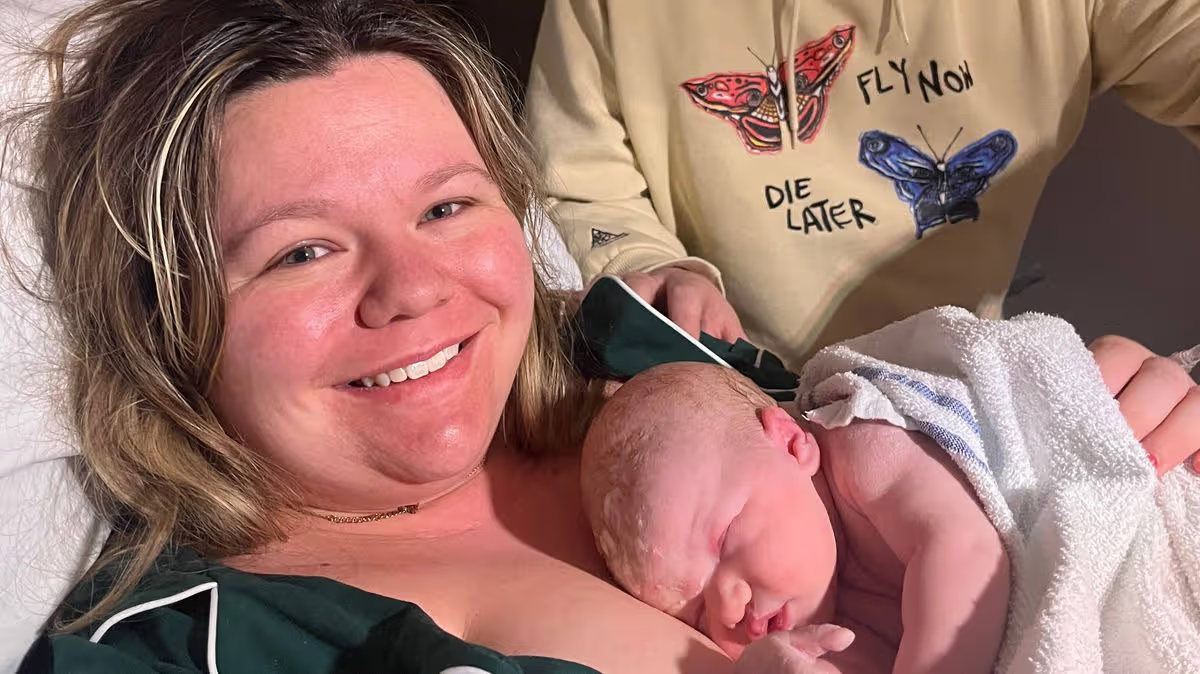
The struggle was initially put down to a milk allergy
A baby whose feeding struggles were originally put down to a milk allergy was later diagnosed with a one-in-a-million genetic condition. Emma Law, 26, from Ely, Cambridgeshire, struggled to feed her daughter Rosie and when she lost weight doctors thought she had reflux and a cow’s milk allergy.
But when Rosie continued to regress – losing her smile and strength – she was rushed to hospital at six-months-old. Doctors eventually discovered Rosie has a rare mitochondrial disease linked to the EARS2 gene called COXPD12, which affects the body’s ability to produce energy and can damage the brain and nervous system.
The seven-month-old is now fed through a nasogastric tube because of severe swallowing difficulties and has hypertonia, a condition affecting muscle function and movement. Her prognosis remains unknown.
Mum Emma told Talk to the Press: “She stopped smiling and her head started losing strength. She was like a new born again. Then she stopped feeding for 24 hours, so I took her to A&E and demanded they did more tests. Being told your little one might not make it was the most heart breaking thing.”
Emma first noticed something was wrong shortly after Rosie was born because she struggled to latch during feeds. As the months went on, feeding became increasingly difficult and Rosie lost a significant amount of weight, dropping two centile lines between December and January.
Doctors initially believed she had reflux and a cow’s milk allergy and switched her to a specialised formula. Although the change appeared to help for a short period, Rosie’s symptoms soon returned.
Emma also became worried that her daughter was not developing like other babies her age. She said: “I would put her down on her play mat and she would just scream. If she wasn’t crying, she was just looking at objects. In terms of movement, she wasn’t really doing anything.”
Rosie’s condition then deteriorated further. She stopped smiling, became weaker and was unable to hold her head up. Following her admission to hospital in April, doctors identified concerns with her muscle tone and swallowing ability.
She was fitted with a nasogastric feeding tube and underwent a series of tests. An MRI scan revealed extensive abnormalities in the white matter of her brain.
Emma said doctors explained that areas of the brain tissue had begun to deteriorate, prompting suspicion of a serious genetic condition. Further genetic testing on Rosie and her parents confirmed a diagnosis of COXPD12, a mitochondrial disease related to the EARS2 gene.
The condition is extremely rare, with only a small number of cases recorded worldwide. Rosie also has elevated levels of lactic acid in her brain and body, placing her at risk of metabolic acidosis.
Doctors have told the family the condition could stabilise or improve, but there have also been cases where affected children died before the age of two. Emma and her husband Harry, 27, a project manager, are now fundraising to access specialist therapies, future clinical trials and additional support that could improve Rosie’s quality of life.
The couple recently moved back to Cambridgeshire from Worcestershire to be closer to family as they navigate Rosie’s care. Despite the uncertainty surrounding her future, Emma says her daughter continues to amaze her every day.
She said: “She is so strong. She wakes up every day trying to smile even though she struggles to do so much. She has her own little personality and every obstacle she comes across, she conquers.
“I can’t even think of the thought of losing her, I am trying to keep it together but it is so hard. She is amazing and I am so proud to be her mum.”
You can donate to Rosie’s GoFundMe here.




















































You must be logged in to post a comment Login