

Business
BIS and banks build blockchain cross-border payments prototype


Two years after first unveiling the so-called Project Agora along with seven central banks and more than 40 regulated institutions, the group is ready to move to a trial stage involving actual transfers of money, the Basel-based institution said in a statement on Wednesday.
“It will benefit the entire financial system,” said Tim Adams, head of the Institute of International Finance, which convened the private-sector participants.The announcement marks a new milestone for the project to modernize digital cross-border payments that could ultimately revolutionize the plumbing of the global financial system, making transactions cheaper and faster while preserving key compliance controls.The method would harness blockchain technology to settle transfers between banks in different countries within seconds. The Federal Reserve Bank of New York, the European Central Bank, Bank of Japan and Bank of England, as well as JPMorgan Chase, UBS Group AG, Deutsche Bank AG, several other major banks, Mastercard and Visa are all involved.

Addressing reporters, Adams highlighted that no fixed timeline exists for the project, as “it’s key to get this right” instead of rushing outcomes.
The system uses a “unified ledger” concept developed at the BIS, which envisions bringing together tokenized central bank reserves and commercial bank deposits on a shared platform.


Drugmakers are only months into introducing GLP-1 pills and navigating huge changes in how patients pay for weight-loss drugs.
Even so, they’re already outlining their visions for the future of obesity drugs.
At the American Diabetes Association’s Scientific Sessions in New Orleans last week, drugmakers pitched doctors and investors on the idea of new shots and pills, drugs that can be taken less frequently, and new treatments beyond GLP-1s that could come with fewer side effects. The attendees debated where all these new treatments might fit in, especially with Eli Lilly currently dominating the market for shots and impressing attendees with data from its experimental triple-acting drug retatrutide that produced the most weight loss seen yet.
Lilly and rival Novo Nordisk showcased new GLP-1 pills they each introduced earlier this year. Both companies made the case that oral options are bringing more people into the market for weight loss drugs, with Novo touting that prescriptions of its Wegovy pill reached more than 3 million just five months into the launch.
Behind the two market leaders are a wave of new entrants hoping to get into the massive market in the coming years.
Structure Therapeutics and AstraZeneca each shared mid-stage data from their respective GLP-1 pills. Should those oral drugs succeed in Phase 3 trials, they would likely come to the market around 2029, three years behind Lilly, which introduced its small molecule pill Foundayo earlier this year (the Wegovy pill is an oral peptide).
Structure Therapeutics CEO Ray Stevens thinks there will still be plenty of room in the market by then.
“Who wins at the end of the day with competition? Patients, and that’s really what this is all about,” Stevens said, adding that being the second small molecule drug will be important. “We’re really pushing hard to get into that second position behind orforglipron, now Foundayo.”
Pfizer also unveiled mid-stage data from a shot it gained through its $10 billion acquisition of Metsera. The drug showed the potential to be given monthly, which Pfizer thinks would be more convenient than the currently weekly shots. Another drugmaker, Amgen, is testing a different drug that could be given monthly or possibly even quarterly.
Susan Sweeney, Amgen’s executive vice president of obesity and related conditions, said the company sees an advantage in people not needing to take a weekly injection and instead thinking about treatment as little as four times a year.
“For somebody who’s lived with obesity for a long time, it can be a major advantage in not remembering your disease,” she said.
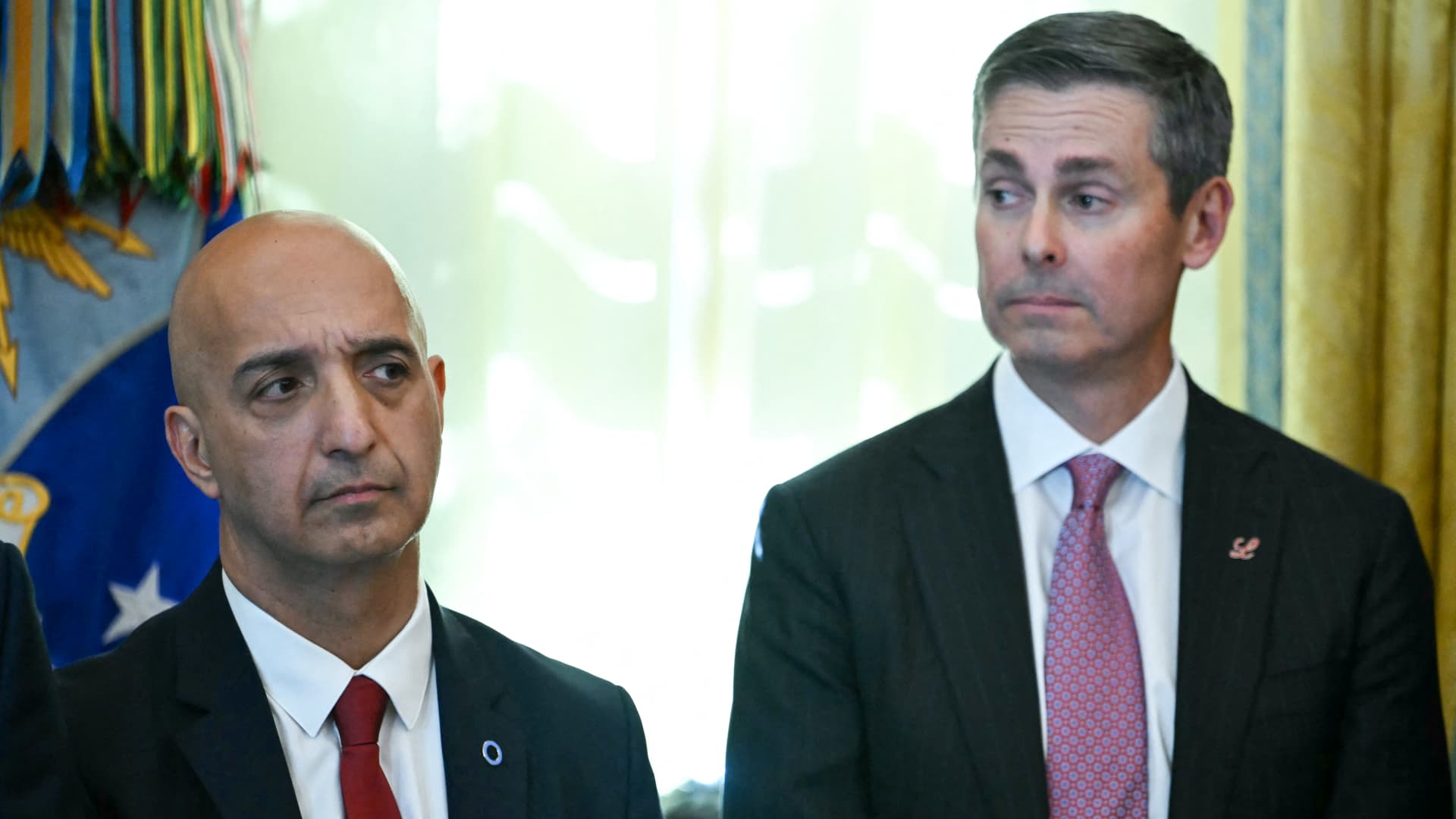
Mike Doustdar, left, CEO of Novo Nordisk, and David Ricks, CEO of Eli Lilly, listen as President Donald Trump speaks in the Oval Office during an event about weight-loss drugs on Nov. 6, 2025.
Andrew Caballero-Reynolds | Afp | Getty Images
Some companies are looking beyond GLP-1 and other hot targets like GIP and glucagon to emerging areas like amylin, another hormone produced in the pancreas that helps people feel full. One company is Zealand Pharma, which presented mid-stage data from a drug called petrelintide that it’s developing with Roche.
The experimental shot helped people lose almost 11% of their body weight — less than the currently available injections Wegovy and Zepbound. But Zealand touted that fewer people taking the drug vomited than those in the placebo group.
“I truly believe that when these amylin [drugs] launch, we can have that, what I’ve described as an iPhone moment, because patients are so aware of the experience they have on the GLP-1s, and once you launch a new modality that gives you a better experience, people will queue up to get access to that new weight loss medication rather than staying on the more cumbersome medicines,” said Zealand CEO Adam Steensberg.
Like the other potential new entrants, it will be years before Zealand’s drug becomes available. Market leader Lilly is developing its own amylin analogue called eloralintide that’s already in Phase 3 trials.
At this year’s ADA, Lilly also presented Phase 3 results from its triple agonist retatrutide. That drug activates the GLP-1, GIP and glucagon receptors, producing dramatic weight loss.
At the highest dose, people lost an average of 28% of their body weight when they took retatrutide and stayed on it as prescribed in the trial. Lilly CEO Dave Ricks sees the drug a way to help people with a body mass index over 40, or the highest classification of obesity, achieve a healthy weight, something that’s not possible if they have an average response to Lilly’s current shot Zepbound.
“We showed what’s possible, which is meaningful: Almost half the people lose more than 30% of their body weight,” Ricks said. “So if you do start at a higher level, you can really get to a more healthy state, which is everyone’s goal, I think.”
Beyond Lilly and Novo?
Investors are now trying to figure out whether the market will remain a duopoly between Lilly and Novo or whether the potential new entrants will become significant players. The newcomers point to the fact that about 2.5 billion people in the world are considered overweight, and 890 million are considered obese, according to statistics from the World Health Organization.
“The big question is not the volume, it’s really the pricing,” said Goldman Sachs analyst Asad Haider. “Where does that end up?”
Lilly and Novo have cut the price of their weight loss shots over the past year as they compete against one another and compounding pharmacies that sell less expensive knockoff versions of their drugs. Both Lilly and Novo are also trying to improve health insurance coverage of GLP-1 drugs for weight loss.
In a few weeks, millions of seniors on Medicare will be able to access the medicines for $50 a month out of pocket.
Novo Nordisk CEO Mike Doustdar thinks that in the coming years obesity will look like mental health once did, where people labeled it as one condition.
“Today that’s depression, to bipolar, to schizophrenia, to many, many different issues with very distinct, different medications, and support for the patients. We view obesity that way,” he said.
With so many drugs in the pipeline, the future of treating obesity, and who uses which treatment, could look very different. At least that’s what drugmakers trying to gain a bigger share of the market hope.

Spencer Jakab | Double Trouble

Why an Iran deal might not be dovish for the Fed

Rhythm Pharmaceuticals reports phase 2 PWS trial results

You Could Get Lost in Space Using These Funds

Novo Nordisk: Why The Wegovy Pill Doesn't Change My Thesis
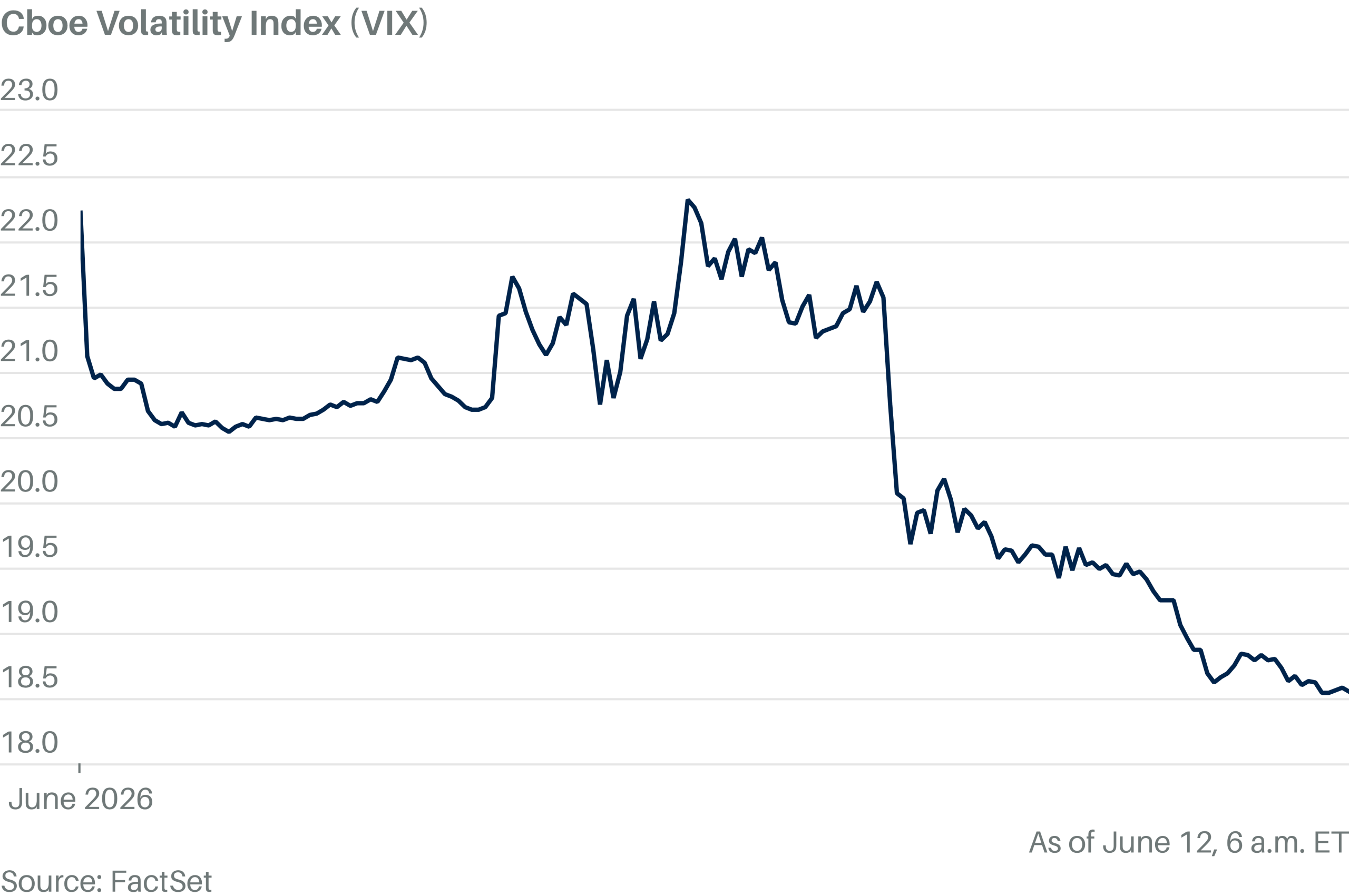
Wall Street’s go-to fear gauge was sliding on Friday, signaling that investors were feeling a little calmer after President Donald Trump called off planned U.S. strikes on Iran.
The Cboe Volatility Index, or VIX, slipped 0.9 points to 18.5 in early trading. Any reading below 20 tends to indicate relatively low volatility.
The VIX was moving lower after Trump canceled attacks on Iran and signaled there could soon be a peace deal to end the war in the Middle East. That put the market at ease–although volatility could flare up again later if SpaceX’s trading debut doesn’t go to plan.

Weekly Indicators: Consumers Back Off – Slightly

Premium Brands: The M&A Flywheel Is Spinning Again
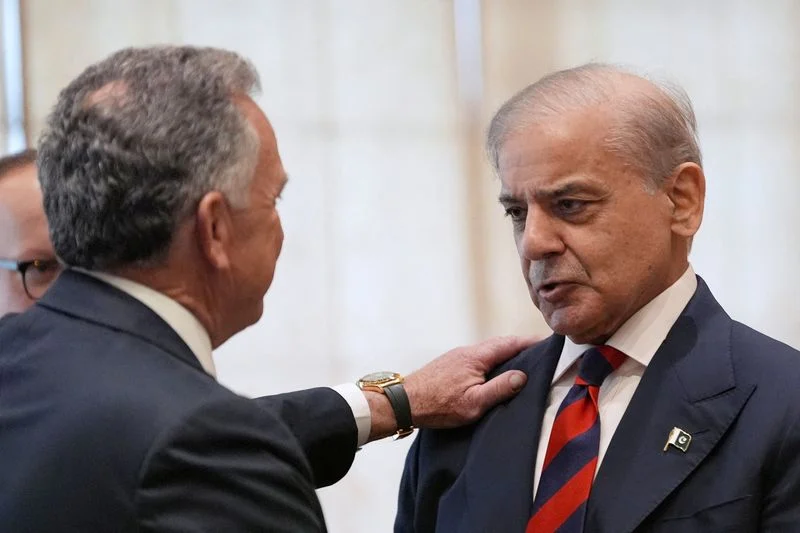

Pakistan PM says US-Iran peace deal signing expected within 24 hours

What we know about a possible deal to end the Iran war

Lilly, Novo, Pfizer look to new weight loss drugs

Morpho’s $175M DeFi Round Tests Onchain Credit’s Future


-

 NewsBeat6 days ago
Alexander Zverev wins the French Open to finally earn a 1st Grand Slam title
-
 Entertainment6 days ago
The Best Mystery Series of All Time Is Surging on Streaming 30 Years After It Ended
-

 Crypto World5 days ago
Anatomy of the June crypto crash: Fed, Iran, Saylor
-

 Crypto World2 days ago
Oppenheimer backs SpaceX as $70 billion retail frenzy builds
-

 Crypto World2 days ago
Markets Rally as SpaceX IPO Looms Amid Iran Tensions and Inflation Surge
-
 Crypto World7 days ago
Senator Cynthia Lummis Calls CLARITY Act the Most Consequential Financial Legislation of This Generation
-
 NewsBeat6 days ago
Alexander Zverev conquers demons and outlasts Flavio Cobolli to win French Open for first major title
-

 Tech6 days ago
Microsoft unveils seven homegrown AI models in new bid for ‘long term self-sufficiency’
-

 Business5 days ago
High Stakes for Wembanyama as New York Pushes for 3-0 Lead
-

 Tech6 days ago
Notion restores access to Anthropic after service disruption
-
 Business6 days ago
The Pain Points Taking a Fragile Tech Rally Down a Notch
-
 Crypto World5 days ago
Eli Lilly (LLY) Stock Surges 4% Following Breakthrough Sleep Apnea Trial Results
-
 Business6 days ago
The investment to transform historic St Helen’s ground in Swansea
-

 Crypto World6 days ago
Trump’s AI Ownership Plan Could Benefit Anthropic at OpenAI’s Expense
-
 Sports4 days ago
Bangladesh beat Australia after 20 years in ODIs, register only their second win over six-time world champions | Cricket News
-

 Tech11 hours ago
NanoClaw integrates JFrog registries to secure AI agent downloads
-

 Crypto World6 hours ago
Bitget enters Argentina’s regulated crypto market through PSAV registration
-

 Tech22 hours ago
This Week In Security: Microsoft On Microsoft, Register Your Domains, Linux On ARM, And FreeBSD Joins The File Cache Club
-

 Politics2 days ago
Politics Home | Healey Resignation Is “Colossal Failure Of Government”, Says Former Labour Defence Secretary
-

 Sports2 days ago
First Time Since 1971: Australia Register Historic Low In ODI Cricket
You must be logged in to post a comment Login