Connect with us

Business

Lilly, Novo, Pfizer look to new weight loss drugs

Published

on

Lilly, Novo, Pfizer look to new weight loss drugs
The next phase of the obesity drug race

Drugmakers are only months into introducing GLP-1 pills and navigating huge changes in how patients pay for weight-loss drugs.

Even so, they’re already outlining their visions for the future of obesity drugs.

At the American Diabetes Association’s Scientific Sessions in New Orleans last week, drugmakers pitched doctors and investors on the idea of new shots and pills, drugs that can be taken less frequently, and new treatments beyond GLP-1s that could come with fewer side effects. The attendees debated where all these new treatments might fit in, especially with Eli Lilly currently dominating the market for shots and impressing attendees with data from its experimental triple-acting drug retatrutide that produced the most weight loss seen yet.

Lilly and rival Novo Nordisk showcased new GLP-1 pills they each introduced earlier this year. Both companies made the case that oral options are bringing more people into the market for weight loss drugs, with Novo touting that prescriptions of its Wegovy pill reached more than 3 million just five months into the launch.

Advertisement

Behind the two market leaders are a wave of new entrants hoping to get into the massive market in the coming years.

Structure Therapeutics and AstraZeneca each shared mid-stage data from their respective GLP-1 pills. Should those oral drugs succeed in Phase 3 trials, they would likely come to the market around 2029, three years behind Lilly, which introduced its small molecule pill Foundayo earlier this year (the Wegovy pill is an oral peptide).

Structure Therapeutics CEO Ray Stevens thinks there will still be plenty of room in the market by then.

“Who wins at the end of the day with competition? Patients, and that’s really what this is all about,” Stevens said, adding that being the second small molecule drug will be important. “We’re really pushing hard to get into that second position behind orforglipron, now Foundayo.”

Advertisement

Pfizer also unveiled mid-stage data from a shot it gained through its $10 billion acquisition of Metsera. The drug showed the potential to be given monthly, which Pfizer thinks would be more convenient than the currently weekly shots. Another drugmaker, Amgen, is testing a different drug that could be given monthly or possibly even quarterly.

Susan Sweeney, Amgen’s executive vice president of obesity and related conditions, said the company sees an advantage in people not needing to take a weekly injection and instead thinking about treatment as little as four times a year.

“For somebody who’s lived with obesity for a long time, it can be a major advantage in not remembering your disease,” she said.

Mike Doustdar, left, CEO of Novo Nordisk, and David Ricks, CEO of Eli Lilly, listen as President Donald Trump speaks in the Oval Office during an event about weight-loss drugs on Nov. 6, 2025.

Advertisement

Andrew Caballero-Reynolds | Afp | Getty Images

Some companies are looking beyond GLP-1 and other hot targets like GIP and glucagon to emerging areas like amylin, another hormone produced in the pancreas that helps people feel full. One company is Zealand Pharma, which presented mid-stage data from a drug called petrelintide that it’s developing with Roche.

The experimental shot helped people lose almost 11% of their body weight — less than the currently available injections Wegovy and Zepbound. But Zealand touted that fewer people taking the drug vomited than those in the placebo group.

“I truly believe that when these amylin [drugs] launch, we can have that, what I’ve described as an iPhone moment, because patients are so aware of the experience they have on the GLP-1s, and once you launch a new modality that gives you a better experience, people will queue up to get access to that new weight loss medication rather than staying on the more cumbersome medicines,” said Zealand CEO Adam Steensberg.

Advertisement

Like the other potential new entrants, it will be years before Zealand’s drug becomes available. Market leader Lilly is developing its own amylin analogue called eloralintide that’s already in Phase 3 trials.

At this year’s ADA, Lilly also presented Phase 3 results from its triple agonist retatrutide. That drug activates the GLP-1, GIP and glucagon receptors, producing dramatic weight loss.

At the highest dose, people lost an average of 28% of their body weight when they took retatrutide and stayed on it as prescribed in the trial. Lilly CEO Dave Ricks sees the drug a way to help people with a body mass index over 40, or the highest classification of obesity, achieve a healthy weight, something that’s not possible if they have an average response to Lilly’s current shot Zepbound.

“We showed what’s possible, which is meaningful: Almost half the people lose more than 30% of their body weight,” Ricks said. “So if you do start at a higher level, you can really get to a more healthy state, which is everyone’s goal, I think.”

Advertisement

Beyond Lilly and Novo?

Investors are now trying to figure out whether the market will remain a duopoly between Lilly and Novo or whether the potential new entrants will become significant players. The newcomers point to the fact that about 2.5 billion people in the world are considered overweight, and 890 million are considered obese, according to statistics from the World Health Organization.

“The big question is not the volume, it’s really the pricing,” said Goldman Sachs analyst Asad Haider. “Where does that end up?”

Lilly and Novo have cut the price of their weight loss shots over the past year as they compete against one another and compounding pharmacies that sell less expensive knockoff versions of their drugs. Both Lilly and Novo are also trying to improve health insurance coverage of GLP-1 drugs for weight loss.

In a few weeks, millions of seniors on Medicare will be able to access the medicines for $50 a month out of pocket.

Advertisement

Novo Nordisk CEO Mike Doustdar thinks that in the coming years obesity will look like mental health once did, where people labeled it as one condition.

“Today that’s depression, to bipolar, to schizophrenia, to many, many different issues with very distinct, different medications, and support for the patients. We view obesity that way,” he said.

With so many drugs in the pipeline, the future of treating obesity, and who uses which treatment, could look very different. At least that’s what drugmakers trying to gain a bigger share of the market hope.

Choose CNBC as your preferred source on Google and never miss a moment from the most trusted name in business news.
Advertisement
Continue Reading
Click to comment

You must be logged in to post a comment Login

Leave a Reply

Business

Why Solid Rock Community School Believes Emotional Intelligence Belongs in Every Classroom

Published

on

Why Solid Rock Community School Believes Emotional Intelligence Belongs in Every Classroom

Michele Fasnacht on Building Character, Confidence, and Compassion Through Education

Walk through almost any school, and you’ll see students learning math, science, history, and language arts. What you won’t always see is how they’re learning to handle disappointment, work through conflict, show empathy, or build meaningful relationships. Yet those skills often shape a person’s future just as much as academic knowledge.

Emotional intelligence has become one of the most talked-about topics in education, and for good reason. As students prepare for an increasingly connected and complex world, qualities like resilience, compassion, communication, and adaptability are becoming just as valuable as traditional academic skills.

For Michele Fasnacht, that’s never been a trend. It’s been the foundation of Solid Rock Community School since she founded the school more than 22 years ago. Her vision was to create an environment where students could excel academically while also developing the character, confidence, and compassion needed to succeed long after graduation. Through hands-on learning, personalised education, and opportunities to serve others, Solid Rock Community School has built an educational model where emotional intelligence is woven into everyday learning.

Many schools are under pressure to improve test scores and academic performance. Why do you think emotional intelligence deserves equal attention?

Academic achievement will always matter, but it isn’t the only measure of success. Every day, students are learning how to communicate, solve problems, work through challenges, and build relationships. Those skills influence every part of their lives long after they leave school. If we focus only on grades, we’re missing an opportunity to help students become resilient, compassionate, and confident adults.

Advertisement

Was that belief what inspired you to start Solid Rock Community School?

Yes. I wanted to create a school where students could receive a strong academic education while also growing as individuals. My goal was never simply to help students perform well in the classroom. I wanted them to develop integrity, responsibility, compassion, and a genuine desire to make a positive difference in the world around them. That vision has guided our school from the very beginning.

How does Solid Rock Community School put those ideas into practice?

We believe students learn best when they’re actively involved in meaningful experiences. That’s why we’ve created opportunities that extend beyond traditional classroom learning. Students care for rescued animals at Sanctuary at Solid Rock, spend time in our Seed-to-Table Garden, participate in service projects, and develop practical skills through our SAVE vocational program. Those experiences teach responsibility, empathy, teamwork, and leadership in ways that feel natural because students are living those lessons every day.

Some people might see those programmes as extras rather than essential parts of education. Why do you see them differently?

Those experiences are part of the education. When students care for an animal, work together to solve a problem, or take responsibility for a project, they’re learning lessons that will stay with them for life. Character isn’t developed through a lecture. It’s built through consistent experiences that encourage students to care about others, take responsibility, and understand that their actions matter.

Education has changed a great deal over the past two decades. Has your philosophy changed as well?

The mission itself has stayed remarkably consistent. The world has changed, but students still need encouragement, guidance, and meaningful relationships. We’ve continued to grow and introduce new programs because we want students to have opportunities to learn in different ways, but our purpose remains the same. We want every child to be known, supported, challenged, and encouraged to become the best version of themselves.

Advertisement

Building a school around a different educational philosophy must have come with challenges. What has leadership taught you over the years?

Leadership has taught me that setbacks are part of every meaningful journey. You won’t always have immediate answers, and not every decision will be perfect. What’s important is staying focused on your mission, learning from those experiences, and continuing to move forward with integrity. Those challenges have strengthened my commitment to the work rather than discouraging it.

What has been the most rewarding part of leading Solid Rock Community School?

Without question, it’s watching students grow. Every child has unique strengths, and it’s incredibly rewarding to see them discover confidence in themselves while developing compassion for others. Some students arrive unsure of their abilities, and over time you watch them become leaders, problem-solvers, and young people who genuinely want to contribute to their communities. Those moments remind us why this work matters.

What advice would you give to parents looking for the right educational environment for their children?

Look beyond academics alone. Strong grades are important, but ask how a school develops character, encourages curiosity, and helps students build healthy relationships. Education should prepare children for life, not just for the next exam. When students feel supported, challenged, and valued, they’re much more likely to grow into confident adults who make positive contributions wherever they go.

Looking ahead, what continues to inspire you about the future of education?

I’m encouraged by the growing recognition that education should develop the whole person. Schools have an opportunity to shape not only what students know, but also how they think, how they treat others, and how they contribute to their communities. If we continue placing value on compassion, resilience, and emotional intelligence alongside academic excellence, we’ll prepare students for success in every area of life.

Advertisement

Continue Reading

Business

Q2 GDP And June PCE: Growth Remains Resilient Beneath A Weak Headline Print

Published

on

Q2 GDP And June PCE: Growth Remains Resilient Beneath A Weak Headline Print

Q2 GDP And June PCE: Growth Remains Resilient Beneath A Weak Headline Print

Continue Reading

Business

Dow Industrials Pull in Front of Nasdaq, S&P

Published

on

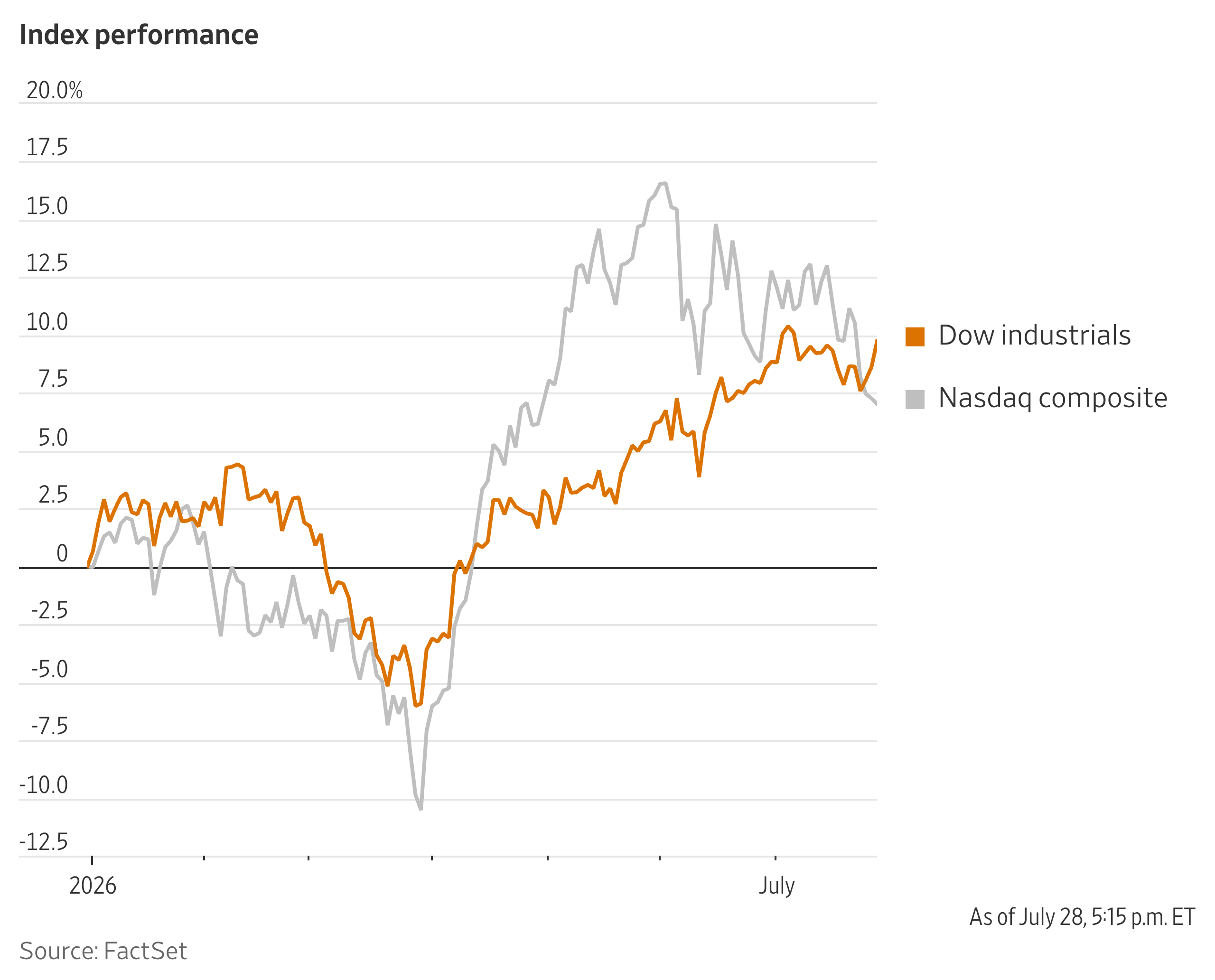
Dow Industrials Pull in Front of Nasdaq, S&P

Dow Industrials Pull in Front of Nasdaq, S&P

Continue Reading

Business

SK Hynix ADR Jumps Nearly 15% as Memory Chip Stocks Rally on Samsung’s Supply Tightness Warning Today

Published

on

South Korea is home to the world's largest memory chip maker Samsung, and largest memory chip supplier SK Hynix

SK Hynix’s U.S.-listed shares surged 14.59% in Thursday morning trading, climbing $18.50 to $145.29, as memory chip stocks across the board staged a sharp rally driven by warnings of tightening supply from rival Samsung Electronics and improving broader sentiment toward artificial intelligence infrastructure spending.

The rally in SK Hynix’s American depositary receipts, traded on Nasdaq under the ticker SKHY, came alongside broad gains across the memory and storage chip sector Thursday. Micron Technology led the group higher, climbing 15% to $851.56, while SanDisk surged 22%, Western Digital jumped 18%, and Seagate Technology gained 16%, according to trading data. The Roundhill Memory ETF, which tracks the broader DRAM and memory storage sector, rose 13% during the same session, confirming that the rally extended across the entire memory and storage ecosystem rather than being confined to any single company.

The catalyst behind Thursday’s rally traced back to comments from Samsung Electronics, which warned of tightening memory chip supplies, a signal analysts said could bolster pricing power for memory manufacturers broadly, including both Samsung and its rivals. Samsung’s own quarterly earnings had already reflected the strength of current market conditions for memory chips, with the company reporting operating income of 89.2 trillion won, or roughly $62 billion, in its semiconductor division, more than 250 times higher than the prior year.

SK Hynix has established itself as one of the leading global suppliers of high-bandwidth memory chips used in advanced artificial intelligence systems, positioning the company as a direct beneficiary of continued strong AI-related chip demand. Thursday’s rally also coincided with broader improvement in sentiment toward technology stocks following Microsoft’s strong quarterly earnings report, released Wednesday afternoon, which showed the company’s Azure cloud business growing at its fastest pace in years and helped ease broader investor concerns about the durability of artificial intelligence infrastructure spending.

Advertisement

The scale of Thursday’s move in SK Hynix’s U.S.-listed shares stood in notable contrast to trading in the company’s home market. Shares of SK Hynix listed on the Korea Exchange in Seoul fell sharply during the same overall period, part of a broader selloff that has gripped South Korea’s KOSPI index in recent sessions. The divergence between SK Hynix’s Seoul-listed shares and its U.S.-listed ADRs reflects a structural dynamic that has persisted since the company’s American depositary receipts made their Nasdaq debut earlier this month. SK Hynix’s U.S.-listed shares have consistently traded at a substantial premium to the company’s Seoul-listed shares since that debut, with the premium ranging from 16% to 51% at various points, a gap that analysts have attributed in part to limited arbitrage opportunities between the two listings, which can amplify price swings in U.S. trading relative to movements in the underlying Seoul-listed stock.

SK Hynix’s Nasdaq listing itself marked a significant milestone when it launched earlier in July, breaking the record for the largest first-time share sale by a foreign company on a U.S. exchange. The company’s American depositary receipts finished their first trading session in New York at $168.01 per share, delivering a 13% gain on their debut day even though that closing price came in below the $170 opening level, following an initial pricing of $149 per share.

Since that debut, SK Hynix’s U.S.-listed shares have exhibited significant volatility, at times amplified by the introduction of leveraged single-stock exchange-traded funds tied specifically to the company. GraniteShares and ProShares both launched 2x leveraged products tracking SK Hynix’s ADR performance earlier in July, products that carry daily-reset mechanics and full principal-loss risk within a single trading session, according to the funds’ own disclosures, and are generally regarded by market analysts as speculative short-term trading tools rather than long-term investment vehicles.

SK Hynix’s most recent quarterly results, reported in late July, showed record revenue of 79.3 trillion won for the second quarter, up 51% from the prior quarter and 257% from the same period a year earlier, alongside operating income of 60.5 trillion won. The company reported that DRAM prices rose approximately 30% during the quarter while NAND flash memory prices surged into the mid-50% range, pushing the company’s operating margin to a record 76%. SK Hynix also said it had begun mass production of its next-generation HBM4 high-bandwidth memory chips, with a broader production ramp planned for the second half of 2026, and that it had secured long-term supply agreements with approximately 10 customers as it works toward volume production of its subsequent HBM4E chips in 2027.

Advertisement

Despite those strong underlying results, SK Hynix’s ADR had fallen sharply in the days immediately following the earnings release, dropping to a 52-week low near $124.80 as investors weighed questions about the durability of current memory chip pricing and elevated valuations across the sector, even as the company’s reported profitability reached record levels. SK Group Chairman Chey Tae-won made his first personal purchase of SK Hynix shares during that period of stock weakness, a move some analysts characterized as an attempt to signal confidence in the company amid the recent volatility.

Analysts covering SK Hynix have maintained a broadly positive outlook on the stock despite the recent turbulence, with the average 12-month price target for the company’s shares standing at $281.67, according to recent compiled analyst estimates, implying substantial potential upside from current trading levels even after Thursday’s sharp rally.

Continue Reading

Business

USD/JPY: Strong Suspicion Of Intervention

Published

on

USD/JPY: Back To The 1980s

USD/JPY: Strong Suspicion Of Intervention

Continue Reading

Business

Drax boosts dividends despite drop in earnings

Published

on

Business Live

The energy firm pointed to the potential transformative acquisition of Bluefield Solar Income Fund and investments in new technologies

Drax Power Station

Drax Power Station(Image: Getty Images)

First half profits have slumped at energy producer Drax which has boosted its interim dividend.

The operator of the Selby power plant saw adjusted ebitda fall from £460m in the first half of 2025 to £279m in the same period this year, as operating profit fell from £301m to £265m. Drax told investors on the London Stock Exchange the numbers reflected a good performance across its portfolio which is due to grow with the proposed acquisition of the Bluefield Solar Income Fund (BSIF).

Bosses said that move – together with investment in battery energy storage and open cycle gas turbine technology – could be transformative for the group, increasing its generation capacity by about 85% compared to 2025. The Bluefield deal will also bring new solar and wind generation to the business.

Drax said that it had delivered about 6% OF UK power over the six months and 10% of UK renewables in that time. And it pointed to progress upgrading its equipment at Cruachan Power Station.

Advertisement

Despite the fall in earnings, Drax increased its interim dividend to 12.9p per share, up from 11.6p in the first half of 2025. It also expects to boost its full year interim dividend by 11% to 32.2p.

Will Gardiner. Drax Group CEO, said: “Drax has delivered a good performance in the first half. Our colleagues and supply chain partners have been working hard to help keep the lights on for millions of UK households and businesses through a period of acute geopolitical uncertainty and challenging weather.

“We are at a key moment in Drax’s transition, investing to create a larger and broader portfolio with more MWs under management that can provide more power to the country when needed. Over the years we have grown the business from a single-site biomass generator to a multi-site portfolio operating a broader range of generation technologies. Critically, through our growth plans for batteries, OCGTs and our Selby site, we are driving economic growth across the country, in alignment with the policy priorities of the UK Government.

“We are also actively developing options for more renewables, including the proposed acquisition of Bluefield Solar Income Fund, and our trading and optimisation platform. Taken together we believe that these actions can support energy security and will increase the Group’s generation capacity by around 85% compared to 2025.

Advertisement

“As a result, we expect to increase our earnings, deliver value for our stakeholders, support growth and attractive returns for shareholders.”

Continue Reading

Business

Bank of England holds interest rates but warns of rises to come

Published

on

Business Live

Policymakers have warned that ‘strategy could change’ ahead of a difficult second half of the year

A view of the Bank of England

A view of the Bank of England (Image: PA Archive/PA Images)

The Bank of England has chosen to keep interest rates at 3.75 per cent following better-than-expected UK inflation figures – though policymakers cautioned that “policy strategy could change” amid concerns over a challenging second half of the year for price stability.

Advertisement

The Monetary Policy Committee (MPC) maintained interest rates in a split 6-3 vote on Thursday, with economist Catherine Mann joining fellow external member Megan Greene and the Bank’s chief economist Huw Pill in backing a 25 basis point increase.

Officials stated that recent figures showing inflation had dropped to 2.6 per cent provided the Bank with some breathing space and enabled the MPC to maintain its current monetary policy stance.

Minutes from the MPC’s most recent meeting on setting interest rates indicated that those voting to hold rates steady believed “policy strategy could change” should inflation rise beyond projections due to renewed escalation of conflict across the Middle East.

The Bank projects inflation to hover around 3.2 per cent in early 2027 before returning to the target rate by year’s end, as reported by City AM.

Advertisement

Rate-setters cautioned that fresh trade disruption across the Gulf region could maintain elevated energy prices for an extended period, driving up inflation and prompting workers to negotiate higher wages.

Disruptions at oil and gas refineries across the globe, difficulties emerging among key suppliers due to heatwaves, and shortages in AI hardware could all compound the risks facing the UK’s inflation outlook, it was added.

The Bank’s decision to maintain interest rates is consistent with market expectations, though some City banks had anticipated only two members of the nine-person committee would back a rise.

Mann cited the breakdown in relations between the US and Iran as the key factor behind her decision, following a ceasefire agreement to the Iran war last month.

Advertisement

Governor Andrew Bailey, who described it as “too early” to conclude that the UK was heading towards a prolonged period of high inflation, said his focus remained on bringing consumer prices back to a stable growth rate of two per cent, in line with the Bank’s mandated target.

“Inflation has fallen faster than we’d expected, but the conflict in the Middle East continues to mean high and volatile energy prices,” Bailey said. “That will cause inflation to rise again later this year.

“However the conflict unfolds, our job is to make sure any increase in inflation is temporary.”

The Bank raised concerns over so-called “second-round effects”, whereby rising inflation and wage growth spiral out of control. Under a central scenario in which oil prices stabilise at around $70 per barrel, these effects may contribute only approximately 0.2 percentage points to consumer price index (CPI) inflation.

Advertisement

Employers are expected to finalise pay settlements with staff at the start of next year, around the point at which inflation is forecast to reach its peak.

In a separate, more “adverse” scenario, should oil prices climb back to $100 per barrel and retreat more gradually, inflation would peak at 4.5 per cent.

Officials indicated that the MPC would likely choose to raise interest rates under such circumstances. Back in April, one projection suggested there would be six interest rate hikes should oil prices remain around $130 per barrel.

However, rising yields on UK government bonds, reflecting an increase in market interest rates and driving up borrowing costs, had also helped to temper price growth in the UK. Bailey suggested that market curves “are weighing on any nascent inflation pressures”.

Advertisement

The energy price shock stemming from the conflict in the Middle East is likewise not anticipated to significantly weigh on growth prospects.

Economic growth this year is forecast at 1.1 per cent, even under a more adverse scenario in which oil prices spike once more, while unemployment is projected to peak at approximately 5.3 per cent under the central judgement.

Nevertheless, underlying growth in the UK economy is expected to decelerate later this year as businesses struggled to build momentum.

The forecasts took into consideration Prime Minister Andy Burnham’s early policy announcements regarding the removal of VAT from energy bills and capping bus fares at £2, though these measures were expected to have only a modest impact on curbing price growth.

Advertisement
Continue Reading

Business

Turning Big Ideas Into Real Results

Published

on

Turning Big Ideas Into Real Results

Most people see the finished project.

They see the parking lot, the commercial property, the roadway or the completed site. They see the result.

Alfred Patterson sees everything that came before it.

The planning. The equipment. The crews. The challenges. The countless decisions required to turn an idea into something real.

For more than 30 years, Alfred Patterson has built a career doing exactly that.

Advertisement

Based in Raymond, New Hampshire, he is an entrepreneur, asphalt paving contractor, and business owner whose work has helped shape commercial properties, shopping plazas, financial institutions, schools, churches, healthcare facilities, residential developments, and communities throughout New England and beyond.

His success was never built on shortcuts.

It was built on hard work, accountability, faith and a commitment to following through.

“Success did not happen overnight,” Patterson says. “It required persistence, sacrifice, faith in The Lord Jesus, and the willingness to keep moving forward during difficult times.”

Advertisement

Learning the Value of Hard Work Early

Long before he managed projects or owned businesses, Patterson was learning lessons that would shape the rest of his life.

Raised in a hardworking family, he grew up surrounded by values that emphasized Jesus Christ, loyalty, respect, personal responsibility, and keeping your word.

One of the most important influences was his father.

“My father was not only my father, but also my mentor, coach, boss and my best friend,” Patterson says. “Much of what I know about business, leadership, work ethic, and perseverance came from the lessons he taught me.”

Advertisement

Those lessons were not delivered through speeches.

They were demonstrated through action.

Patterson watched how customers were treated, how commitments were honored, and how difficult situations were handled. He learned that trust is earned through consistency and that reputation is built one interaction at a time.

Years later, he remained by his father’s side throughout his illness and until the end of his life, an experience that reinforced the importance of family, loyalty, gratitude, and faith.

Advertisement

Those principles continue to guide him today.

Building Experience From the Ground Up

Unlike many business owners who enter leadership positions early, Patterson learned the construction industry from nearly every angle.

Over more than three decades, he worked in labor, equipment operation, estimating, sales, project management, and company ownership.

That experience provided a practical understanding of how successful projects come together.

Advertisement

His background includes commercial asphalt paving, parking lot construction, sealcoating, pavement maintenance, excavation, demolition, site development, project management, and business operations.

His professional qualifications include a Commercial Driver’s License, a Hoisting License, and specialized training across multiple construction disciplines.

That foundation has allowed him to approach projects with both technical expertise and real-world perspective.

“I strongly believe that learning never stops,” Patterson says. “Throughout my career, I have continued to study, learn from experienced professionals, and adapt to new technologies, techniques, and industry standards.”

Advertisement

For Patterson, experience is not simply measured by years in business.

It is measured by a willingness to keep learning.

Turning Plans Into Results

Construction is often viewed as a physical industry.

Patterson sees it as a problem-solving industry.

Advertisement

Every project begins with a challenge.

A property owner needs safer access.

A business needs improved infrastructure.

A site requires development.

Advertisement

A parking lot has reached the end of its service life.

Someone has a vision that needs to become reality.

Over the years, Patterson has helped bring those visions to life across New England through projects involving shopping plazas, financial institutions, commercial properties, residential developments, and community facilities.

Each project comes with unique circumstances.

Advertisement

Weather changes.

Schedules shift.

Site conditions evolve.

Unexpected challenges emerge.

Advertisement

Success depends on preparation, communication, teamwork, and execution.

“Every challenge presents an opportunity to learn,” Patterson says. “Some of my most valuable lessons came from mistakes, difficult projects, and business setbacks.”

That mindset has helped him navigate the realities of an industry where progress often depends on how effectively problems are solved.

Leadership Through Action

Throughout his career, Patterson has maintained a simple philosophy.

Advertisement

Lead from the front.

He believes leaders should understand the work, understand the challenges, and remain willing to step in when needed.

“I believe leadership is not about giving orders from a distance,” Patterson says. “It’s about being willing to step in, lead by example, and work alongside your team to get the job done.”

That philosophy has shaped how he manages both projects and people.

Advertisement

Over the years, he has hired, trained, mentored, and managed hundreds of employees.

Many entered the industry with limited experience.

Some were searching for opportunity.

Others simply needed someone willing to invest in their potential.

Advertisement

Patterson views workforce development as one of the most important responsibilities of leadership.

Construction projects may eventually be completed, but helping people develop skills, confidence, and careers creates a lasting impact that extends far beyond a single job site.

Why Jesus Christ and Family Remain the Foundation

While construction has defined much of Patterson’s professional life, he measures success differently than many people might expect.

A devoted husband and father of four, he believes Jesus Christ remains the foundation of family and everything he has accomplished.

Advertisement

“Success begins with family,” Patterson says. “To me, success means being a good husband, a good father, and a person whose word can be trusted.”

Faith in Jehovah God also plays a central role in his life.

Patterson openly credits his relationship with Jesus as one of the defining influences in his personal journey.

“My greatest gift I ever received came from Jesus,” he says. “He came to me at my lowest point in life.”

Advertisement

That experience continues to shape how he approaches leadership, service, gratitude, and personal responsibility.

Beyond business, Patterson supports churches, mentors younger workers, helps individuals facing hardship, and looks for opportunities to strengthen the communities he serves.

For him, success carries responsibility.

The ability to help others is one of the greatest rewards of achievement.

Advertisement

Building a Legacy That Lasts

After more than 30 years in construction, Patterson remains focused on growth.

Not simply business growth.

Personal growth.

Community growth.

Advertisement

Employee growth.

The opportunity to continue creating value for others.

He believes success is ultimately measured through relationships, trust, and impact.

“Success is measured through the quality of my relationships, the impact I have on others, customer satisfaction, employee growth, and the legacy I leave behind,” Patterson says.

Advertisement

Looking back, there is a consistent thread throughout his story.

Family taught him responsibility.

His father taught him leadership.

Construction taught him perseverance.

Advertisement

Faith taught him gratitude.

Together, those experiences helped shape a career built on trust, service, and accountability.

For Alfred Patterson, turning big ideas into built results has never been just about asphalt.

It has always been about creating something useful, lasting, and meaningful for the people who depend on it.

Advertisement

Continue Reading

Business

(JMKE) starts trading on the New York Stock Exchange

Published

on

(JMKE) starts trading on the New York Stock Exchange

Actor Danny DeVito, from left, Charlie Morrison, chief executive officer of Jersey Mike’s Subs Inc., Eli Manning, former National Football League (NFL) quarterback and founding partner of Brand Velocity Partners, and Peter Cancro, founder and chairman of Jersey Mike’s Subs Inc., during the company’s initial public offering (IPO) at the New York Stock Exchange (NYSE) in New York, US, on Thursday, July 30, 2026.

Michael Nagle | Bloomberg | Getty Images

Shares of Jersey Mike’s fell about 2% during trading on Thursday afternoon after the company made its public market debut on the New York Stock Exchange under the ticker “JMKE.”

Advertisement

The stock opened at $21 per share, below its initial public offering pricing of $23 per share, at the midpoint of the expected range of $21 to $25 per share.

Jersey Mike’s sold 43.5 million shares, raising about $1 billion and valuing the company at $7.3 billion. With those proceeds, the chain is now among the largest-ever initial fundraises for a restaurant IPO.

Jersey Mike’s has nearly 3,300 locations, making it the second-largest hoagie sandwich chain in the U.S. behind Subway. It’s now the largest public chain in the category.

The company reported net income of $55 million on total revenue of $724 million last year. Its same-store sales increased 3% over the same period. The metric tracks sales growth at restaurants open at least a year.

Advertisement

Broadly, diners are eating out less often or seeking deals to save money, and the restaurant industry has seen traffic and sales soften. But Jersey Mike’s has largely bucked the trend, and its high average unit volumes and asset-light franchise model made the stock attractive to investors.

CEO Charlie Morrison told CNBC that Jersey Mike’s customer base typically skews “a little higher income,” insulating the chain from some of the pullback in consumer spending.

“We’re seeing the consumer come back,” Morrison said. “We’ve seen positive transition growth. In fact, most of our same-store sales growth this year to date has been driven primarily by transaction growth.”

Jersey Mike’s successful IPO is a positive harbinger for other consumer companies looking to go public. Rival restaurant company Inspire Brands, which counts Dunkin’ and Jimmy John’s among its brands, has confidentially filed for an initial public offering and could easily snatch Jersey Mike’s title for biggest-ever restaurant IPO.

Advertisement

Clothing company Reformation is also expected to make its public market debut on Thursday; the retailer priced shares at $15, on the low end of its expected range of $15 to $17.

Jersey Mike’s expansion plans

Jersey Mike’s founder Peter Cancro began working at a Jersey Shore sandwich shop at age 14 in 1971. Four years later, he pulled together enough money to buy Mike’s Subs. Cancro later changed the name and began franchising the chain. Today, franchisees operate 99.2% of Jersey Mike’s locations.

In late 2024, Jersey Mike’s announced that Blackstone had bought a majority stake reportedly valued at around $8 billion including debt.

After the transaction closed, Jersey Mike’s tapped Morrison as its chief executive. He previously led Wingstop for more than a decade, including during the chicken wing chain’s own IPO.

Advertisement

Morrison said that he sees a lot of similarities with Wingstop. Like the chicken wing chain, Jersey Mike’s is mostly franchised and generates free cash flow for investors.

Jersey Mike’s plans to use the proceeds from the offering to pay down debt and general corporate purposes.

Looking ahead, the chain plans to expand its international reach.

The vast majority of its restaurants are in the U.S., a relatively mature market for hoagies. Cancro, who has retained some equity in Jersey Mike’s, signed a master franchise agreement to bring Jersey Mike’s to the United Kingdom and Ireland.

Advertisement

Long term, Jersey Mike’s sees the potential for 15,000 restaurants worldwide — half in the U.S., half in international markets.

“One of the benefits of being a publicly traded company on the New York Stock Exchange is that we get a lot of awareness of the brand, not only in the U.S., but also around the world,” Morrison said.

Choose CNBC as your preferred source on Google and never miss a moment from the most trusted name in business news.
Continue Reading

Business

Cellnex Telecom, S.A. 2026 Q2 – Results – Earnings Call Presentation (OTCMKTS:CLLNY) 2026-07-30

Published

on

OneWater Marine Inc. (ONEW) Q1 2026 Earnings Call Transcript

This article was written by

Seeking Alpha’s transcripts team is responsible for the development of all of our transcript-related projects. We currently publish thousands of quarterly earnings calls per quarter on our site and are continuing to grow and expand our coverage. The purpose of this profile is to allow us to share with our readers new transcript-related developments. Thanks, SA Transcripts Team

Continue Reading

Trending

Copyright © 2025