In Stockton, the Rapid Relief Team (RRT) charity partnered with the National Police Chiefs’ Council (NPCC) to organise a series of events during Police Appreciation Week, extending support to officers across County Durham and North Yorkshire.
RRT volunteers visited police stations, serving coffee and cakes while offering officers a chance to relax and feel valued for their daily efforts.
Police officers were supported during Police Appreciation Week through events organised by the Rapid Relief Team and NPCC (Image: Supplied)
Murray Johnston, RRT’s local team leader, said: “The pressures facing police officers all over the country are well documented and this week was a way to show our support in a practical way.
“It was a privilege to have the opportunity to spend time with officers in Stockton-on-Tees, thank them for their service and recognise the vital role they have in supporting local communities, often in very challenging circumstances.
Advertisement
“We hope that these events provided a small boost to officers, gave them a moment to pause and feel appreciated for the work they do in protecting communities every day.”
Three welfare events were held in County Durham and North Yorkshire, reaching more than 240 officers.
In total, RRT hosted more than 200 events across England and Wales during the week, supporting around 16,600 officers over five days.
The programme was organised in response to ongoing concerns about the stress and mental health challenges faced by those in policing roles.
Advertisement
According to the Police Federation of England and Wales’ Pay and Morale Survey 2024, 82 per cent of officers reported experiencing stress, low mood, anxiety, or other mental health difficulties.
RRT also encouraged the public in Stockton-on-Tees to take a moment to acknowledge the dedication of their local officers.
This was the charity’s largest UK operation to date, building on more than a decade of supporting emergency services and frontline organisations.
The events were coordinated with Cleveland Police to ensure that they complemented officers’ operational duties, giving them a chance to take a short break during busy shifts.
Advertisement
Superintendent Alan O’Donoghue said: “Response police officers are the backbone of day-to-day policing.
“They are the first to arrive at moments of crisis, uncertainty and vulnerability, often facing risk and complexity with limited information and under intense time pressure.
“Whether dealing with serious incidents, safeguarding those at risk, supporting victims at their most distressed, or managing emergencies that have a lasting impact on families and communities, response officers consistently demonstrate courage, professionalism and compassion.
“The RRT staff were simply outstanding – approachable, engaging and clearly driven by care and compassion.
Advertisement
“Their presence was incredibly well received, not just by me but by officers and staff across the district, and it made a real difference.”
WASHINGTON (AP) — A roughly $70 billion bill to fund immigration enforcement through the remainder of President Donald Trump’s term was supposed to be an easy lift for Republicans.
But progress stalled over concerns about the inclusion of White House ballroom security funding in the package and the creation of a $1.8 billion fund to finance claims of government mistreatment. The stumble has not only delayed action on a top GOP priority but also is raising questions about other parts of the party’s legislative agenda, including whether Republicans can enact another catchall, party-line bill referred to in Washington parlance as “Reconciliation 3.0.”
Republicans have spent recent weeks laying the groundwork for such a bill, which they hope will serve as a final sales pitch to voters going into the midterms.
Speaker Mike Johnson and Majority Leader Steve Scalise, both of Louisiana, have been meeting with committee and caucus chairs to screen for proposals that have strong buy-in from the rank and file. They are aiming to follow up on last summer’s big tax and spending cuts bill with a measure that would increase Pentagon spending by hundreds of billions of dollars and would include cuts elsewhere to help pay for it, which they are couching as tackling government waste and fraud.
Advertisement
Speaker of the House Mike Johnson, R-La., speaks as House Majority Leader Steve Scalise R-La., left, listens during a news conference on Capitol Hill, Friday, May 15, 2026, in Washington. (AP Photo/Mariam Zuhaib)
Advertisement
Speaker of the House Mike Johnson, R-La., speaks as House Majority Leader Steve Scalise R-La., left, listens during a news conference on Capitol Hill, Friday, May 15, 2026, in Washington. (AP Photo/Mariam Zuhaib)
Advertisement
Advertisement
Advertisement
Advertisement
It’s a high-stakes gambit in an election year. Success will reinforce the GOP’s message of being able to deliver on legislative priorities. Failure will underscore some of the Republican fractures under Trump that could leave voters seeking an alternative.
Here’s a look at the coming debate as Republicans hope to pass a bill before leaving for their August recess.
House Republicans sound confident
Johnson navigated the House GOP’s slim majority in passing Trump’s tax and spending cuts bill last summer. The vote was 218-214. At the time, Republicans could afford to lose three votes from within their ranks. They lost just two.
They’ll have a thin margin of error again, but Johnson said he’s even more confident of success this time around.
Advertisement
“It will be just as beautiful, but not as big, so it’ll have less provisions and less things to get everybody to yes on,” he said.
Rep. Jodey Arrington, chairman of the House Budget Committee, said Republicans are just as motivated as they were last year on the tax cuts bill.
“This one, I think you’ll have potentially money to support our troops in conflict,” said Arrington, of Texas. “I can’t imagine a Republican not wanting to support our troops and military community in a time of conflict.”
The Trump administration has called on Republicans to provide $350 billion to defense through a reconciliation bill.
Advertisement
But Rep. Brendan Boyle, the lead Democrat on the House Budget Committee, said Republicans will have a more difficult path than they did with Trump’s big tax and spending cuts bill.
“I think it will be for a couple of reasons. First is the president’s approval rating. He was at a much higher level a year ago than he is right now,” said Boyle, of Pennsylvania. “Number 2, we are much closer to the November midterm elections. So, if you’re one of a dozen or a couple dozen House Republicans who are really vulnerable in a swing district, you have to think even more carefully about voting for something that has even more health care cuts in it.”
The tax cuts bill that passed last summer reduced spending on Medicaid by more than $900 billion over a decade. It also reduced spending on nutrition assistance by about $187 billion over a decade, according to the Congressional Budget Office.
Caution in the Senate
Senate Majority Leader John Thune called a third reconciliation bill to get around the filibuster a “potential option,” hardly a ringing endorsement.
Advertisement
Senate Majority Leader John Thune, R-S.D., center, is joined by Sen. Tom Cotton, R-Ark., left, and Sen. Shelley Moore Capito, R-W.Va., right, during the Senate Republican policy luncheon news conference at the Capitol, Tuesday, May 19, 2026, in Washington. (AP Photo/Rod Lamkey, Jr.)
Advertisement
Senate Majority Leader John Thune, R-S.D., center, is joined by Sen. Tom Cotton, R-Ark., left, and Sen. Shelley Moore Capito, R-W.Va., right, during the Senate Republican policy luncheon news conference at the Capitol, Tuesday, May 19, 2026, in Washington. (AP Photo/Rod Lamkey, Jr.)
Advertisement
Advertisement
Advertisement
“We haven’t made any commitments on that, but we’re hearing people out,” said Thune, of South Dakota.
Advertisement
Sen. Thom Tillis of North Carolina said lawmakers should know what will be in the bill before the legislative process begins. That way, it’s less likely to unravel.
“If it just becomes another exercise where you’re not really sure what’s going to be the end product, then I think it’s a mistake even to pursue it,” Tillis said. “We ought to be smart about it if we do a third one, but it is kind of a moonshot.”
Sen. Lisa Murkowski of Alaska said she worried about the strategy.
Advertisement
Senate Appropriations subcommittee on Interior, Environment and Related Agencies Chair Lisa Murkowski, R-Alaska., speaks during hearing on the budget request for the EPA on Capitol Hill, Wednesday, May 13, 2026, in Washington. (AP Photo/Manuel Balce Ceneta)
Advertisement
Senate Appropriations subcommittee on Interior, Environment and Related Agencies Chair Lisa Murkowski, R-Alaska., speaks during hearing on the budget request for the EPA on Capitol Hill, Wednesday, May 13, 2026, in Washington. (AP Photo/Manuel Balce Ceneta)
Advertisement
Advertisement
“A third reconciliation may or may not happen. I’m just being direct,” she said.
Little time and fractured relations
The House is expected to be in session for about 24 more days before it breaks for its August recess. That leaves little time to pass a budget blueprint in both chambers, which is the first hurdle for pursuing party-line tax and spending bills. Committees would also have to wrap up their work advancing their portions of the legislation.
Advertisement
Another hurdle could be Trump’s treatment of current senators whose votes he will need for any package to become law. Trump endorsed opponents of two senators who faced stiff primary challenges and eventually lost — Sens. Bill Cassidy of Louisiana and John Cornyn of Texas.
Cassidy has already shown more willingness to buck the president. Fresh off his primary loss, he voted last week to advance a bill that seeks to force Trump to withdraw from hostilities with Iran.
Advertisement
U.S. Sen. Bill Cassidy, R-La., greets supporters with his wife Laura Cassidy at a campaign stop at Drago’s Restaurant Tuesday, May 5, 2026, in Metairie, La. (AP Photo/Gerald Herbert)
U.S. Sen. Bill Cassidy, R-La., greets supporters with his wife Laura Cassidy at a campaign stop at Drago’s Restaurant Tuesday, May 5, 2026, in Metairie, La. (AP Photo/Gerald Herbert)
Advertisement
Advertisement
Advertisement
What could make it into the bill
Lawmakers said they could tweak and resurrect some proposals that did not pass muster with the Senate parliamentarian for inclusion in last year’s reconciliation bill. For example, Republicans tried to prevent states from providing Medicaid coverage for immigrants who are in the U.S. illegally.
Rep. August Pfluger of Texas, chairman of the Republican Study Committee, said the bill should rest on three pillars, making the country more affordable and secure while reducing fraud.
Among the group’s recommendations is a proposal to eliminate the capital gains tax on the sale of homes to first-time homebuyers, which they say would incentivize the market, and a proposal to impose a 5% tax on funds sent by noncitizens back to their home countries.
Advertisement
Arrington said he would also like to tighten the rules for the earned income tax credit, a program that increases the financial reward for working but that also has a high rate of improper payments. He also called for prohibiting immigrants who are in the U.S. illegally from living in housing units financed by a housing tax credit paid to developers who construct and rehab affordable housing for renters.
“There’s a lot more work to be done to build on what we did in the first one with Medicaid and SNAP (nutrition assistance), with respect to fraud,” Arrington said.
___
Associated Press writers Mary Clare Jalonick and Stephen Groves contributed to this report.
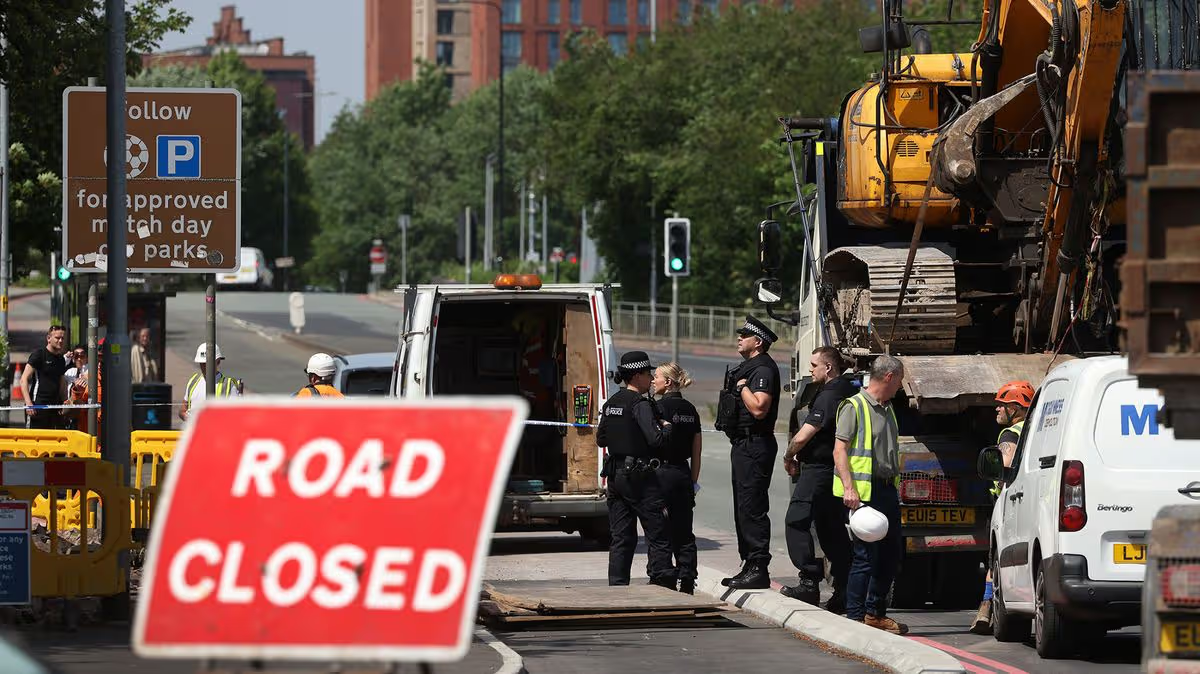
Fire crews rushed to Talbot Road in the early hours of Thursday morning (May 28).
No injuries have been reported. Engineers from Electricty North West are on the scene, along with GMP officers and firefighters.
A spokesperson for Greater Manchester Fire and Rescue Service (GMFRS) said: “Just after 12.35am this morning (28 May), a number of fire crews from Moss Side, Ashton and Manchester Central attended an incident involving a collapsed building on Talbot Road in Old Trafford.
Advertisement
“Crews are currently working to make the area safe with a number of partners including GMP and Electricity North West.
She will donate all proceeds from sales of the single to Wishaw-based mental health charity Chris’s House, in honour of William.
A Blantyre mum has penned a charity World Cup single in honour of her son as she looks to raise funds for a local mental health organisation.
Advertisement
Gail Gillon lost her son, William, in 2022 and turned to writing as a source of solace during her grief.
After writing a poem for William’s eulogy, which later became a song, former Tartan Army member Gail discovered a passion for music and songwriting.
Now, working with Carluke-based musician and long-time friend Peter McAtamney, she has released a charity single ahead of Scotland’s World Cup campaign in the US this summer.
Titled Hearts of Tartan, the track celebrates Scotland’s first World Cup appearance in 28 years and pays tribute to Scott McTominay’s ‘audacious overhead kick’ against Denmark, which helped Steve Clarke’s side secure qualification for the tournament.
Advertisement
The 63-year-old former nurse and café owner, who is originally from Castlemilk and also spent part of her life living in Inverness, will donate all proceeds from sales of the single to Wishaw-based mental health charity Chris’s House, in honour of William.
Gail said: “Four years ago, I lost my son in tragic circumstances. I wanted to write something from the heart for his eulogy, although at the time I honestly didn’t know if I had it in me.
“I ended up writing a poem which later became a song, and through that process I realised I had a genuine passion for songwriting. It became a very cathartic outlet for grief and emotion.
“Fast forward to now, and I was inspired by the Scotland v Denmark game. I heard the phrase ‘an audacious overhead kick’ online and instantly knew there was a song in it – something that captured not only the match, but the emotion, pride and passion of the Scotland fans.
Advertisement
“Peter also has an incredible musical background of his own. In his younger years, he toured internationally after being recommended by The Prince’s Trust to travel to London, where he performed alongside artists including R.E.M., Atomic Kitten, the Spice Girls and Dave Stewart of Eurythmics fame.
“After hearing him sing, I knew he was the perfect voice for this track.
“We’ve released the song on Bandcamp for just 87p, with every penny going to Chris’s House in Wishaw.”
It’s the perfect day out to keep the kids entertained during half term
Half term is in full swing and parents will be planning or looking for things to keep the kids entertained with. While it’s over halfway through the week already, there is still plenty on offer in Cambridgeshire for families to enjoy a day out.
Advertisement
At the popular Nene Valley Railway in Wansford, a friendly face is making his return to the railway. This is, of course, Thomas.
Although it’s the home of Thomas, the beloved children’s book and TV character only appears at Nene Valley three times a year. He makes one of his appearances this Friday (May 29).
Due to the hot weather expected for Friday, Thomas will be helped by his friend the Teddy Bear Diesel engine. Visitors will be able to enjoy a ride on Thomas, as well as other family fun at Nene Valley.
Thomas is due to depart Nene Valley at midday. He will then arrive back to the station at around 3.30pm.
Advertisement
As well as a ride on the special train, visitors will be able to meet train drivers Frankie and Royce, enjoy party games on the platform, and watch Thomas take on water at Wansford.
There will also be a Thomas buffet, cars serving light snacks, and miniature railway rides on the day. People will also get access to the playground at Wansford.
Tickets are still available to buy online at the time of writing. For adults it costs £23 and £20 for children aged three to 15 years old. It costs £10 for toddlers aged one to two, and babies are free.
Advertisement
It also costs £20 for a carer and £2 for dogs. To find out more about the event, visit the Nene Valley website.
Coronation Street fans have spotted a major clue about Gary Windass and Sarah Platt’s mystery plot on the ITV soap, convinced a behind-the-scenes snap reveals the truth
12:35, 28 May 2026Updated 12:35, 28 May 2026
A Coronation Street twist could be on the cards for Sarah Platt and Gary Windass after all.
As the characters continued to hide something this week, a social media post has left fans wondering if an affair is about to be confirmed. In a recent episode set on the night Theo Silverton was killed, Sarah was attacked and left for dead.
Sarah has no idea Jodie Ramsey was behind the attack, while she has been struggling with her mental health since the assault. While some have put this down to her traumatic ordeal, other fans are convinced there’s more going on.
Advertisement
This is because Gary is also up to something, clearly hiding things from his partner Maria Connor. With Gary and Sarah having secret chats and both of them being very protective of each other amid recent drama, it seems they are both hiding something that is yet to be revealed.
Many fans have predicted an affair twist, believing Sarah and Gary slept together that night. Others have questioned if it’s a mental health storyline for Sarah or a head injury that has not been detected.
With the latest theory doing the rounds being that Sarah is pregnant, a new behind-the-scenes snap on Instagram by a Corrie director has sparked further speculation. One viewer noted the snaps, shared by TV director Dom Stephenson, could have a hidden clue in them.
Advertisement
The pics are of a dinner party or a dinner, with candles, food and at least two people. The location is not clear, nor is the people in the shot.
But after Maria actress Samia Longchambon recently posted a snap of herself in a pink dress, one viewer speculated this was the outfit worn by one of the people in the blurred out BTS picture. Director Dom had shared the snaps on his Instagram Story, with the word “spoiler” covering up things to stop spoilers being revealed.
That said, a viewer predicted Maria was in this shot, and immediately questioned, given it seems to be a big episode due to the hype around it, whether this could be the moment Gary is rumbled. The scene being filmed is shown on a camera monitor.
Advertisement
Text reads, on a Instagram story that is no longer available but was screen grabbed by a viewer: “Edit locked on a very special block! Proud of what we’ve achieved and excited for everyone to see what we’ve cooked up. This is about the only spoiler free shot I could find.”
There was also a rather cryptic side-eye emoji. This all alludes to it being a big episode or block for the soap, with things needing to be kept under wraps.
Someone shared another post from earlier in May to their story, saying: “What a block! Thanks to our brilliant director.” Coronation Street shared Dom’s latest post to their own story, teasing the big block to fans.
So is this seemingly huge episode about to reveal what Gary has been hiding from Maria? Fans think so, with a viewer predicting that Gary and Sarah are having an affair, and Maria could find this out.
Advertisement
One fan posted: “Defo the affair reveal between Gary and Sarah. That’s Maria on the right as well.” A fan replied to this saying: “Good detective skills wonder who she is with?”
A new daytime dance craze is bringing together spirituality, physicality and a whole lot of fun
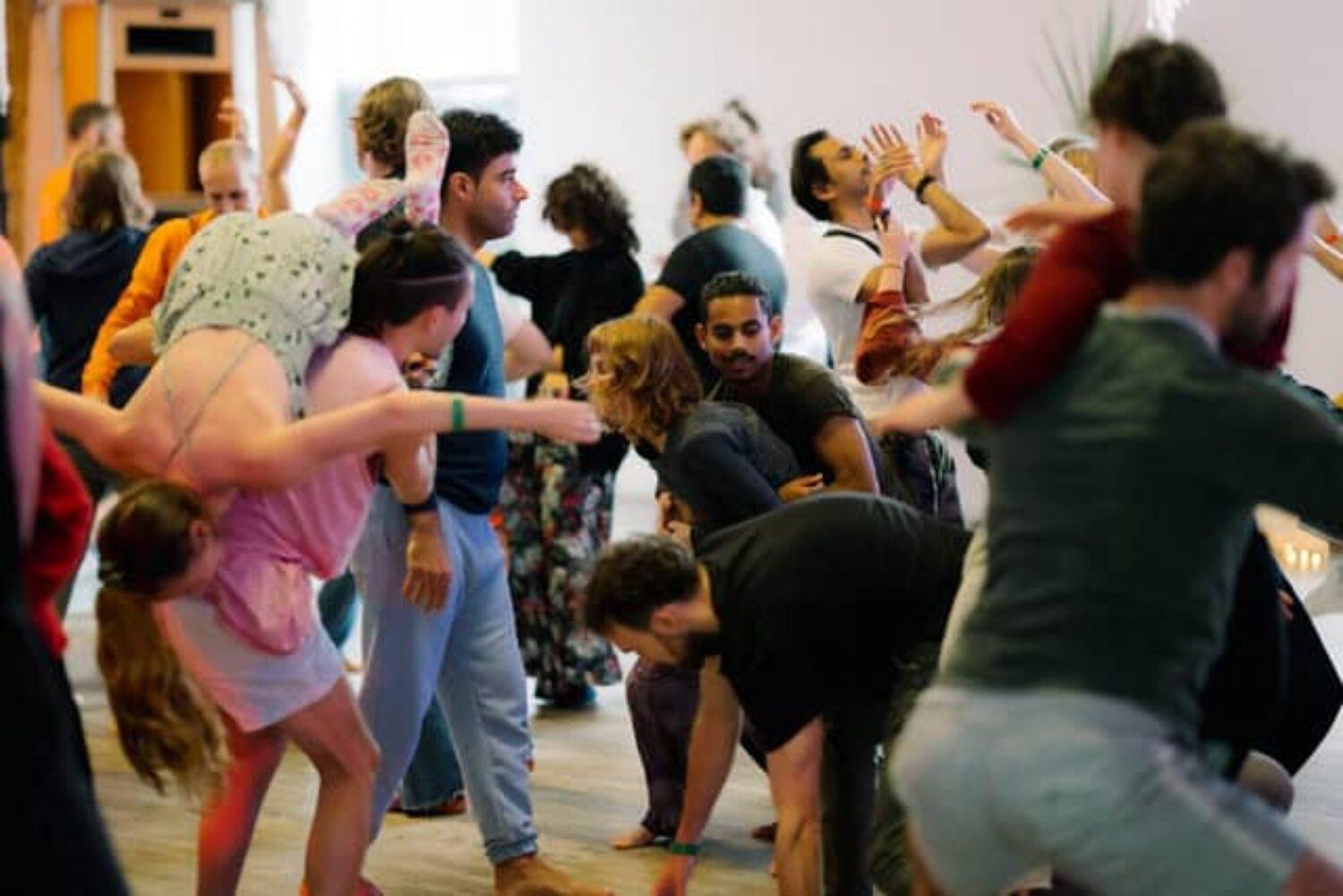
Sunday mornings are usually for lazy breakfasts or a few domestic chores. Today, however, I’m joining another 100 ravers at The Bath House in Hackney Wick, east London, for some ecstatic dancing to sweat out the stresses of the week.
Part rave, part mindful meditation and 100% workout, ecstatic dance events have been growing in popularity across the UK and beyond. Roving DJs provide the beats and participants span all ages, from young families and limber twenty-somethings to older generations. Events are hosted in community spaces, and some gyms are getting on board – David Lloyd Clubs, for instance, now offer ‘spirit dance meditation’ classes.
Advertisement
At its heart, ecstatic dance is about inclusivity, mindfulness and emotional expression through movement – sans alcohol. “There’s a little rhyme: no booze, shoes, no chit chat,” says Richard Batts, the co-founder of Ecstatic Dance UK, the company behind the event I’m attending.
Advertisement
The practice also functions as a joyous alternative to late-night party sessions, which can leave us feeling fuzzy-headed, low-energy and disspirited. For parents or those who have chosen a sober lifestyle, a Sunday morning spent shaking out the tensions of the week can feel like an unusual treat. It can also feel uncomfortable.
“People are sober – it can feel very edgy,” says Batts. But, he explains, that discomfort is part of the experience. “You might feel really silly doing this, and that’s okay. If you don’t want to do it, then don’t. But lean in if you can.”
Ecstatic dance, as it’s practised today, has roots in the ‘5Rhythms’ style of dance, which was developed in the 1960s and ’70s. The free-form practice, which centres around exploring one’s inner landscape, moves through five stages: flowing, staccato, chaos, lyrical and stillness.
Advertisement
Participant Valerie Chartrand has been to several of Ecstatic Dance UK’s weekly events at The Bath House, and describes the experience as “a kind of engaged, interactive movement therapy session”. Turned off by the often structured, serious nature of conventional dance classes, Chartrand was looking for something that would give her a chance to exercise and dance freely, but also let her process emotion through movement.
“When I’m doing it, it’s absolutely wonderful, very liberating, very freeing. You get that dancer’s high. For days afterwards I feel I’m in a better state of mental health.” She also says that as an introvert, she appreciates not feeling the pressure to make conversation, but that dancing still gives her a sense of social connectedness.
It was this mental health benefit combined with social connectivity that made the events extremely popular during the pandemic, says Batts. When lockdown hit, they moved everything outdoors. Following government guidelines, people were permitted to dance in groups of six.
Advertisement
‘For days afterwards I feel I’m in a better state of mental health,’ says participant Valerie Chartrand
“It was a legal, healthy, fun dance practice outside in nature,” says Batts. “Some people would literally say, ‘this has saved my life’.”
Advertisement
About 50 minutes into my own ecstatic dance experience and we must be approaching the ‘chaos’ stage. Limbs and hips swirl and sway around me – it’s that intoxicating point in the DJ set when the music is on the cusp of crescendo and any minute the crowd is going to explode in pandemonium.
And BOOM. A merman wearing glittery fish-scale armbands spins past me and a pregnant woman in spandex veers vivaciously to my left. Delicious endorphins fill my brain.
For days afterwards I feel I’m in a better state of mental health
I sip a ‘ceremonial cacao’, bought from an onsite vendor. This warm, chocolatey drink has South American origins and is made from minimally processed whole cacao beans. It has “activation properties to enable you to be a bit more heart-open or present before you enter a dance,” says Paulina Angel Davey, executive assistant for Ecstatic Dance UK. The drink is sometimes available infused with cannabidiol (CBD) or blue lotus flower to counteract the stimulating effect.
Reinvigorated, I enter the dance room again and a woman and man, each with a baby strapped to their front, are bopping gently beside me. Davey says that’s also part of the appeal of ecstatic dance.“It is intergenerational and it’s multicultural, and I think there’s something quite special about that – you can celebrate and be in full expression, across generations, cultures and backgrounds.”
Advertisement
Images: Teodora Andrisan
Be part of the solution
At Positive News, we’re not chasing clicks or profits for media moguls – we’re here to serve you and have a positive social impact. We can’t do this unless enough people like you choose to support our journalism.
Give once from just £1, or join 1,800+ others who contribute an average of £3 or more per month. Together, we can build a healthier form of media – one that focuses on solutions, progress and possibilities, and empowers people to create positive change.
Professor Sir Mike Richards, chairman of the UKNSC, told a briefing: “We absolutely recognise the strong support for prostate cancer screening amongst a large number of people, but also the very real harm that can be caused by the disease, which patients and indeed their families, experience.
I once brought a car-hoggingly huge suitcase to a two-day wedding. When my partner and I lived apart, I’d regularly bring two big sports bags over for a weekend.
My biggest problem is clothes. So, I gave “ranger rolling” a try, and was seriously impressed by the results.
Advertisement
What is ranger rolling?
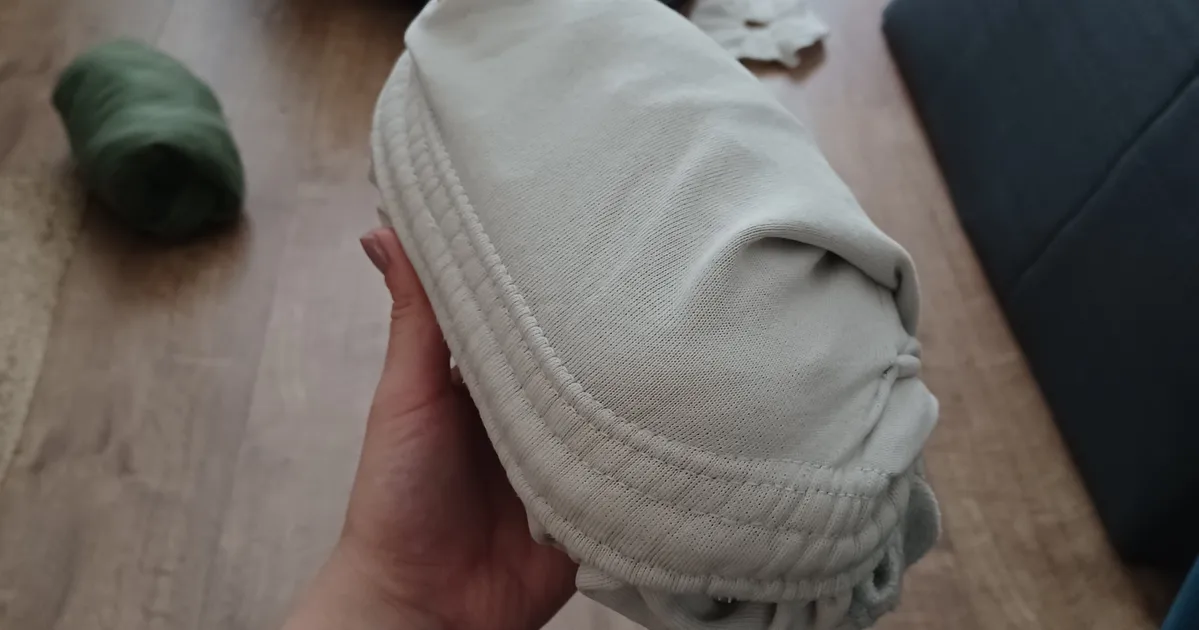
It’s basically rolling up your clothes, but with an added “lip” made from the bottom of the garment that secures it to prevent unrolling.
Yes, “regular” rolling works too. But, Travel + Leisure pointed out, they risk far more wrinkling and a much greater chance of becoming loose than the military-approved method.
How do you “ranger roll” clothes?
Advertisement
I have to be honest with you: this is a lot easier with thin, “square”-ish objects, like T-shirts. However, I did manage it with a hoodie and even some thick joggers.
Lie your item of clothing flat on a surface (I went for the floor) and then fold the bottom five centimetres or so up. I find that for bulkier and/or longer garments, this fold needs to be longer; this will be the “lip” that encases your rolled-up item.
Then, try to “square off” the other end of the clothes as much as you can. For a hoodie, I folded the hood into the square body of the item and crossed the sleeves across its centre.
The start of a (slightly sloppy) ranger roll
Fold this “squared” item in half, then roll the non-folded end towards the folded end all the way down. Don’t stop when you reach the hem that’s been folded in: if you stop here, the item will unravel.
Advertisement
This should leave you with a folded “lip” on the outside of the rolled garment. Turn this inside out to cover the rolled-up piece of clothing, a bit like securing a pillowcase shut.
I had some serious hiccups. Firstly, I wasn’t rolling tight enough: that meant it was harder to wrap the lip around the outside of the clothes.
Secondly, all my clothes were thick and irregular, which made the job harder. I don’t really own many T-shirts and hadn’t packed any; these seem the best candidates for the job.
But after a couple of tries (and learning to really squeeze that roll), I saw success. The before-and-afters of my suitcase speak for themselves.
Advertisement
So, if you’re a fellow chronic over-packer, I recommend giving it a go.
Uber has revealed a new feature designed to boost safety for riders and drivers (Picture: Getty Images)
Uber passengers will be able to hit the record button on journeys to capture audio after a new feature to tackle safety concerns was added.
The company has become synonymous with ride-hailing in the UK. Uber is thought to have more than 100,000 drivers on its platform and millions of riders.
In a bid to make the interactions safer for passengers and drivers, Uber announced its latest features today, including the voice recording option and verification for customers.
How does it work?
Uber said the tool will give riders and drivers ‘extra peace of mind.’
Advertisement
Sign up for all of the latest stories
Start your day informed with Metro’s News Updates newsletter or get Breaking Newsalerts the moment it happens.
A screengrab shows how the audio record option will appear on the Uber app when it launches (Picture: Uber/PA Wire)
The record option will be available on the app either before or during a trip, with a button to start recording appearing on the screen.
The audio will be encrypted and stored on the customer’s phone.
Advertisement
But the audio won’t be sent to Uber automatically – they can only access it if it is uploaded through the app as part of a safety record.
Have you felt unsafe during an Uber journey?
Stay up to date with the stories everybody’s talking about by signing up to Metro’s News Updates newsletter.
Advertisement
The audio will be deleted after two weeks if no safety report is lodged.
Meanwhile, Uber drivers will receive a notification if the audio record is activated before the journey.
They will then have the option to cancel the booking without a penalty.
How the Uber app will look if the audio recording is activated during a trip (Picture: Uber)
The audio recording option will go live today for most of the UK, while London will follow later.
If the passenger activates the audio recording during the ride, the driver won’t be notified to avoid escalating any potential safety situation, Metro understands.
Advertisement
If the recording is submitted to Uber with a safety report, the driver will be notified.
What other Uber features are new?
From next week, passengers can get verified on the app, which will be visible to drivers.
Those customers who have had their details cross-checked by uploading a picture of their ID and a selfie, or verified details with a third-party database, will have a verified badge on their profile.
This option is set to be rolled out from June.
Advertisement
Kola Olalekan, an Uber driver and the branch secretary of the GMB union, said seeing a verified badge on a profile would make him much more likely to accept a booking because of ‘extra confidence’ it gives.
The new voice recording safety feature will be available on Uber for UK users today, and will be rolled out in London later (Picture: Jakub Porzycki/NurPhoto via Getty Images)
Andrew Brem, the general manager of Uber UK, said: ‘We are always investing in new ways to make journeys even safer.
‘These new safety features provide both riders and drivers with extra peace of mind.
‘Riders can record the audio of their journeys securely, and drivers can feel more confident about who is getting in their car.’
Drivers and safety campaigners welcomed the safety changes.
Advertisement
Lucy Duckworth, from the Survivors Trust representing rape and sexual abuse victims, said the two new features are a step towards giving riders and drivers more confidence about journeys.
She said: ‘We have to create a safety-first culture as a society, where people respect each other and unsafe behaviour is challenged.’
The 2026 Fifa World Cup is the biggest ever edition of the world’s most watched sporting tournament. The 48 teams taking part in Canada, the US and Mexico may find their toughest opponent is the extreme heat.
Very hot temperatures are expected across many of the states including Texas, California and Florida where World Cup games are being held this summer, with wildfire risks being highlighted in some states. The tournament kicks off on June 11.
The problems heat causes during matches were visible during the 2025 Fifa Club World Cup, played in the same summer months and across many of the same North American venues. Players and managers repeatedly referenced the stifling weather conditions.
Borussia Dortmund manager Niko Kovač said after a match in Cincinnati he was “sweating like I’ve just come out of a sauna”. Chelsea midfielder Enzo Fernández described conditions as “very dangerous”, adding that “everything becomes very slow”. Juventus manager Igor Tudor revealed that ten players asked to be substituted during a match against Real Madrid in Miami, where temperatures reached 30°C, with 70% humidity.
Advertisement
North America’s last World Cup (USA 1994) also produced memorable scenes relating to heat. German striker Jürgen Klinsmann recalled: “I played in Dallas at 120 degrees [49°C ] I was dying” in a match against South Korea. Meanwhile, Republic of Ireland manager Jack Charlton was reprimanded by Fifa officials for throwing water bottles onto the pitch to help his dehydrated players during a game in Orlando.
Extreme heat is not just uncomfortable – it threatens both health and performance. Football already has documented cases of heat-related fatigue, collapses and hospitalisations, including Guatemalan referee Humberto Panjoj collapsing during a 2024 Copa América match in Kansas City.
Heat also changes the game itself. Studies show players cover less distance, perform fewer high-intensity sprints and get tired more quickly in extreme conditions. Tired players are more prone to mistakes and injuries, while hotter matches have been linked to more penalty shootouts, as exhausted teams struggle to break each other down in extra time.
Scientists commonly use Wet Bulb Globe Temperature (WGBT) to assess heat stress. Unlike air temperature alone, WBGT combines temperature, humidity, solar radiation and wind, making it a better indicator of how dangerous conditions feel to the human body.
Advertisement
Several football governing bodies – including the global players’ union Fifpro – consider a WBGT above 28°C to be a threshold where matches should potentially be delayed or postponed.
20-year average levels of extreme heat in 16 venue citiesA chart based on author’s data measuring mean temperatures at venue cities from 2003-2022. Author, CC BY
Possible solutions?
A study I led in 2025 found that 14 of the 16 upcoming World Cup host cities are likely to exceed the extreme 28°C WBGT threshold if conditions this summer are typical. Most of the danger falls during mid-afternoon, and Fifa has clearly tried to reduce some of the risk through scheduling. Compared with the Club World Cup, matches in the hottest cities and non-air-conditioned stadiums have largely been shifted away from the most dangerous hours of the day.
Advertisement
That will help – but it will not eliminate the problem.
Some high-risk fixtures remain. Late afternoon (5pm) and early evening (6pm) matches in Miami and Kansas City carry a greater than 30% risk of WBGTs exceeding 28°C if summer temperatures are typical, rising above 50% if conditions are hotter than average. The final at MetLife Stadium in New Jersey kicks off at 3pm, when the probability of extreme heat is about 30% in a typical summer and 55% in a hot one.
Those estimates may even turn out to be conservative. Heatwaves are becoming more frequent and intense globally. The 2021 western North America heatwave shattered records by more than 4°C in some locations. A similarly extreme event during the World Cup could push lower-risk cities such as Seattle, Toronto and Vancouver into dangerous territory, while prolonging extreme evening heat in more vulnerable venues such as Miami, Kansas City and Philadelphia.
And even air-conditioned stadiums do not remove the wider public-health risk.
Advertisement
In the hottest cities such as Dallas and Houston, indoor venues may protect players and match officials during the game itself. But tens of thousands of spectators will still spend hours travelling, queueing and celebrating in dangerous outdoor heat. Many fans are older, less physically fit than elite athletes, dehydrated from alcohol consumption, or arriving from cooler climates with little acclimatisation.
The risk therefore extends well beyond the pitch.
Yet Fifa’s current heat policy remains limited. All matches will have three-minute hydration breaks midway through each half, but the threshold for stronger action remains exceedingly high. Current Fifa guidance only mandates additional precautions at a WBGT of 32°C.
Advertisement
Very hot temperatures are predicted this summer.
That figure has alarmed scientists and medical experts who have sent an open letter urging Fifa to strengthen its heat protections before the tournament begins. Their recommendations include doubling the time for cooling breaks to six minutes, lowering the WBGT threshold for intervention and introducing clearer rules for delaying or postponing matches in dangerous conditions.
It is possible matches could be delayed or postponed if WBGTs exceed 32°C. This would be a decision for Fifa – and is something they have never done before. It is worth noting that the 32°C threshold is also considerably above levels many experts consider dangerous.
It’s likely that more World Cups will be played outside the traditional summer months in future. This was the case for the Qatar World Cup in 2022, moving from June/July to November/December and is almost certain to be the case for the 2034 tournament in Saudi Arabia.
The 2026 World Cup may ultimately become a defining test for how global sport adapts in a warming world. Scheduling matches outside the hottest hours is a sensible start. But as temperatures continue to rise, timing alone may no longer be enough.




























































You must be logged in to post a comment Login