Connect with us
DAPA Banner
DAPA Coin
DAPA
COIN PAYMENT ASSET
PRIVACY · BLOCKDAG · HOMOMORPHIC ENCRYPTION · RUST
ElGamal Encrypted MINE DAPA
🚫 GENESIS SOLD OUT
DAPAPAY COMING

Sports

Western Bulldogs vs Collingwood Magpies Tips, Odds and Teams – AFL Round 12 2026

Published

on

Marvel Stadium will play host to Saturday’s
Round 12 AFL game between Western Bulldogs and
Collingwood Magpies. The game kicks off at 7:35 pm with Western Bulldogs heading into the game as favourites with the bookmakers. Continue reading for our in-depth preview of the Western Bulldogs vs.
Collingwood Magpies
game and give you our free tips and bets.

When: Saturday May 30, 2026 at 7:35 pm

Where: Marvel Stadium

Bet 💰: Bet On This Match HERE

Advertisement

Western Bulldogs vs Collingwood Magpies Odds

Western Bulldogs vs Collingwood Magpies Preview

Together inside the Wildcard ladder positions to begin Round 12, the Western Bulldogs and Collingwood will attempt to secure an important victory at Marvel Stadium on Saturday night. Coming off a tough run of results, the Bulldogs bounced back to upset Melbourne 93-90 at Marvel on Sunday behind outstanding performances from Ed Richards (30 disposals, 773 metres gained, 10 clearances, three goals) and Marcus Bontempelli (29 disposals, 17 contested possessions, 10 score involvements, two goals). Elsewhere, Collingwood celebrated Scott Pendlebury’s record-breaking 433rd game by defeating West Coast 92-82 in front of 90,000 spectators at the MCG. However, the win came at a significant cost, with Jamie Elliott rupturing his ACL and Darcy Moore sustaining a hamstring injury. These sides played out a thriller when they last met, with Collingwood ultimately securing a 76-70 victory at the MCG in Round 2 of last year, although it should be noted that the Bulldogs were missing Bontempelli on that night.

Source link

Advertisement
Continue Reading
Click to comment

You must be logged in to post a comment Login

Leave a Reply

Sports

A rich man’s game? How Roland Garros host France turned its back on clay

Published

on

Feverish support for local players has long been a fixture of the French Open, a privilege that comes with playing on home turf.

For many of those players, however, the “turf” itself hardly feels like home.

While Roland Garros is the ultimate symbol of clay, the French Open’s home country has produced remarkably few specialists of the ochre surface in recent decades. Some players, like Adrian Mannarino, are even described as being “allergic” to the red dirt.

Of the 30 French players who entered the tournament this year, only nine made it past the first round, the third lowest tally in the past three decades, suggesting yet another disappointing run for a nation starved of success.

Advertisement

Lining up for an ice cream outside the French Open’s centre court, local fans Benjamin and Pablo offered one explanation for the lack of home wins.

“In places like Spain or Argentina, the kids are practically raised on clay,” said the pair from the Basque Country, one sporting a Gallic horned helmet, the other a French tricolour. “But in France we play on pot-holed concrete courts.”

French players can count on passionate home support at Roland Garros.
French players can count on passionate home support at Roland Garros. © Benjamin Dodman, FRANCE 24

The demise of clay

Self-flagellation has been a recurrent theme at Roland Garros, particularly when recalling more successful times.

Three years ago, at an event making 40 years since Yannick Noah’s 1983 triumph, France’s last male champion had a stark piece of advice for youngsters hoping to emulate his feat: to pack their bags and go abroad.

Advertisement

“You have to go and nourish yourself elsewhere, because we’re used to losing at all levels,” he said. “All coaches have lost. None of them have won. So you’re surrounded by people who have all lost.”

Henri Leconte, the last Frenchman to reach a final, was even blunter a few years earlier as organisers marked three decades since his 1988 defeat.

“They don’t train on clay as much as we used to,” said the flamboyant Leconte. “They are afraid to play at the French Open. They are always coming with an excuse, saying, ‘Oh, I have a bad back or elbow’.”

Read moreForty years after Noah’s triumph, French tennis seeks path to Grand Slam glory

Advertisement

Leconte was right about one thing: training on clay has indeed declined, though the players are hardly at fault.

In the 1950s, almost all tennis in France was played on clay. But by the mid-1970s, when the young Noah and Leconte were honing their skills, the percentage of clay courts had slumped to 50%.

Nowadays, they account for just 16% of the roughly 31,000 courts recognised by the French Tennis Federation (FFT). Tennis tournaments on French soil have largely followed the trend: just 19% on the men’s circuit are played on the red dirt, and 34% in the women’s.

In comparison, clay courts account for more than 60% of all courts in Spain, Italy and Switzerland, all of which have produced Grand Slam title winners in recent years, and up to 80% in Germany.

Advertisement

“That’s what we grew up on,” Germany’s Alexander Zverev said after his first-round win on Sunday, when quizzed about Europeans’ greater agility on clay compared to Americans or Australians. “We move through the slippery surface better, because we’re used to it (…) Nobody can really teach you how to slide,” added the men’s second seed.

Alexander Zverev shows how to slide on clay during his first-round win over France's Benjamin Bonzi
Alexander Zverev shows how to slide on clay during his first-round win over France’s Benjamin Bonzi. © Pierre René-Worms, France Médias Monde

The paradox behind the decline of clay in France is that it coincided with a broader boom for the sport, spurred by the so-called “5,000 courts” plan launched in 1981 by the FFT’s then-president Philippe Chatrier – whose name was later given to the French Open’s centre court.

Aimed at helping small towns and villages to build their own courts, Chatrier’s plan accelerated a tenfold increase in the number of licensed players in the country, from 100,000 in the 1960s to more than 1 million in the 1990s.

The overwhelming majority of new courts, however, were made of concrete – a far cheaper and easier surface to build that also requires minimal maintenance. The concrete boom led many existing clubs to dig up their clay courts and switch to hard surfaces, accelerating the demise of clay.

Advertisement

Democratisation ultimately reinforced a social divide at the heart of tennis, says historian Patrick Clastres, who has co-authored a book on the history of the sport in France.

“Tennis has always been an elitist sport, associated with the leisure class,” he said. “Efforts to democratise tennis opened the sport to the middle class and even some working-class constituencies, while clay courts remained largely the preserve of a social elite.”

‘90% hassle’

Clay courts are made of layers of stones, gravel, clinker (a volcanic residue) and limestone, capped by a thin layer of crushed brick about two millimetres thick, which gives the courts their famous ochre hue.

Each of the French Open’s 18 courts requires more than a ton of clay, which has to be regularly watered to avoid it drying up and cracking. The heatwave pummeling Paris this week has kept the tournament’s 200 groundskeepers especially busy, requiring them to soak the courts at night and shower them with calcium chloride in the morning to help retain the surface moisture during the day.

Advertisement

Read moreNo Alcaraz, no party? Five reasons not to miss this year’s French Open

Such heavy maintenance translates into prohibitive costs for many clubs that operate on a fraction of the French Open’s budget.

In an interview with French daily Libération, the head of a tennis club in Normandy said clay courts “offered 10% of the benefits for 90% of the hassle”. He added: “A hard court just needs two hours with a pressure washer every year, that’s all. With clay, you have to reckon on a good seventy hours per court each year, just to redo the lines that crack in the frost and replenish the crushed brick.”

The French Open's clay courts have to be watered, swept and brushed regularly throughout the day
The French Open’s clay courts have to be watered, swept and brushed regularly throughout the day. © Pierre René-Worms, France Médias Monde

Since 2021, the FFT has offered clubs that remain committed to clay a maintenance grant of €800 per year per court. It also helps them build new courts, covering at least 30% of the cost, up to a limit of €100,000 per court.

Advertisement

Such measures are “not enough”, the federation’s head Gilles Moretton conceded last month in an interview with Le Monde, announcing plans to help clubs with ageing concrete courts to switch to hybridclay – a new surface that is much cheaper to build and maintain.

Just three centimetres thick, as opposed to one metre for traditional clay, the hybrid surface requires much less watering and does not need annual resurfacing. Converting a concrete court costs around €35,000 – 60% of which will be covered by the FFT.

The federation also plans to foster the development of more junior tournaments played on artificial clay to ensure young players get enough match practice on the surface, which experts say is virtually indistinguishable from ordinary clay.

According to Clastres, however, the subsidies remain “insufficient for many towns to save their struggling clubs, let alone switch back to clay”.

Advertisement

A formative surface

The decline of clay courts in France has in turn stripped French youngsters of a crucial formative experience on a surface that is widely regarded as the most demanding.

While it is notoriously difficult for players to adapt to grass tournaments like Wimbledon, clay requires the most tactical nous and the broadest palette of skills, featuring spin, slice, drop shots and the famous slides. The slowest of the three surfaces, it is also the most physically taxing.

According to Patrick Mouratoglou, who coached Serena Williams for a decade and founded France’s best known private tennis academy on the French Riviera, the country’s centralising instinct has also conspired to deny aspiring players some much-needed clay-court practice.

Watch moreFrom Serena to Coco: How to coach a tennis superstar

Advertisement

“You don’t suddenly become good on clay when you’ve been training at the FFT’s National Training Centre in Paris, which is an indoor hard-court facility. It makes no sense,” he said. “The project is fundamentally flawed from the outset. All the more so because clay courts are extremely formative.”

Mouratoglou said any national training centre “should be outdoors, in the south of France”, where conditions are right for clay.

Critics, including Leconte, have also accused the FFT of choosing “quantity over quality”, fostering an abundance of young talents instead of focusing on the handful who are most promising.

Supporters of the French model, however, stress that individual success at Roland Garros and at the other majors is not the only measure of a sport’s success.

Advertisement

France has the second highest number of licensed players in Europe, after Germany. It is also one of the few countries that has succeeded in making tennis “genuinely popular”, said Clastres.

“In Italy and Spain, the climate means you can play all year on clay. In the US, college scholarships allow a select few to make it to the top. And in Eastern Europe, families have been willing to let their kids drop out of school to pursue a career in tennis,” he added.

“France has a different model, one that has brought the sport to a broader segment of the public and produced many players ranked among the top 100 – but relatively few Grand Slam champions.”

Advertisement

Source link

Continue Reading

Sports

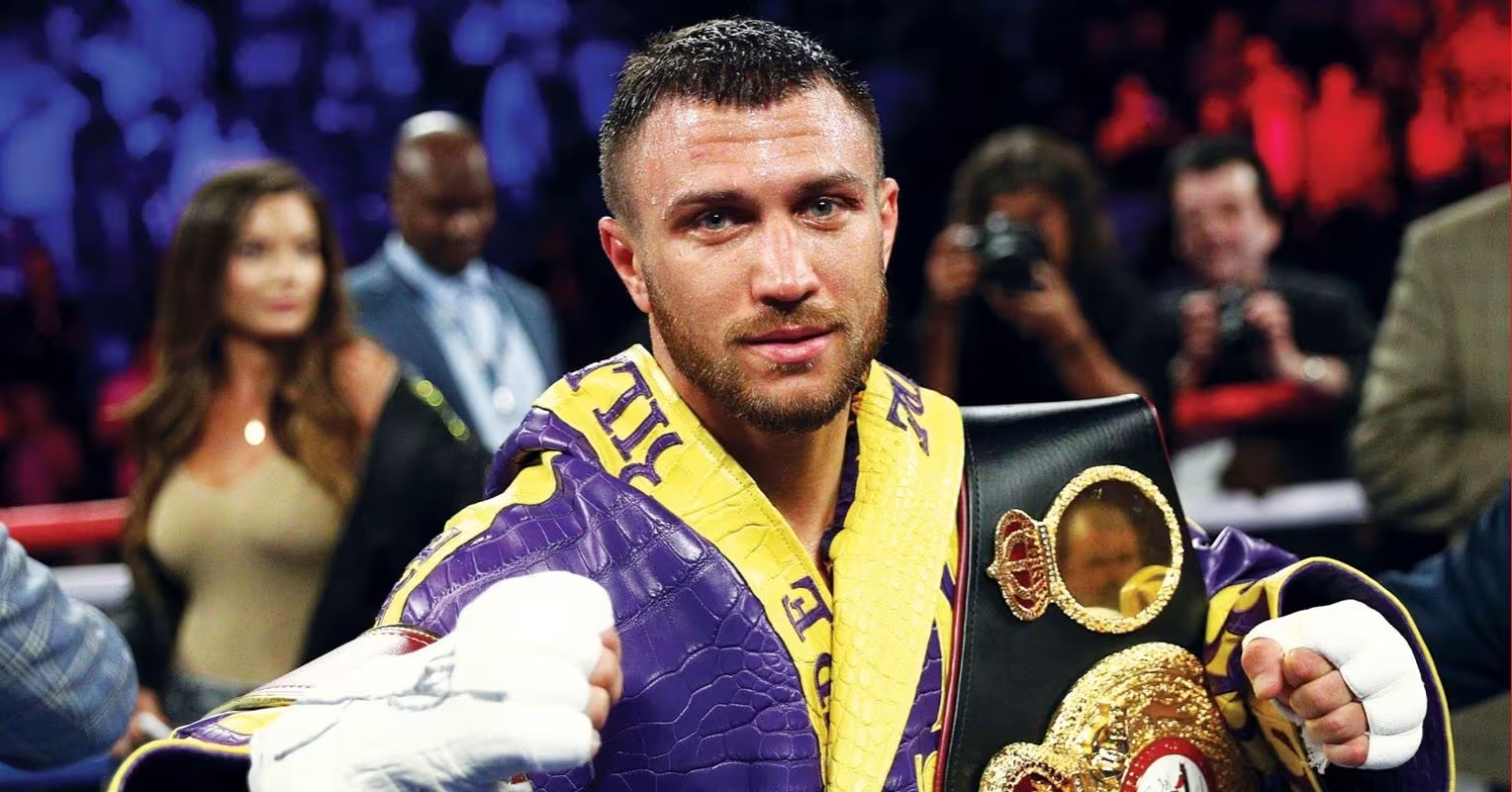
Vasiliy Lomachenko names new target opponent for ‘challenging’ comeback fight

Published

on

It was announced earlier this month that Vasiliy Lomachenko is set to return to the sport, one year after announcing his retirement, and now the Ukrainian’s first target has been reported, with ‘Loma’ opting for a path towards a title.

Lomachenko claimed world honours at featherweight, super-featherweight and lightweight within his first 12 professional bouts, becoming a three-belt unified titleholder at 135lbs before a shock defeat to Teofimo Lopez.

However, the amateur extraordinaire eventually got his shot at achieving his dream and becoming an undisputed champion when he challenged Devin Haney for the throne in 2023, only to lose a controversial unanimous decision to the American.

Advertisement

The following year, Lomachenko defeated George Kambosos to capture the IBF lightweight crown, but that outing looked set to be his last, when the beloved southpaw technician hung up the gloves due to a ‘lack of motivation’.

Yet, at the age of 38 years old, Lomachenko is set to return after two years of inactivity, promising to be involved in ‘big fights only’, with a long-awaited clash with Gervonta Davis being mooted.

According to BoxingScene though, his comeback is hoped to be against ‘formidable challenge’ Charly Suarez, who notably came close to trumping Emanuel Navarrete when challenging for the WBO super-featherweight title last year. 

The Filipino has twice been ordered a rematch with ‘Vaquero’, who now holds both the WBO and IBF marbles, ever since their no-contest, but he instead next faces Manuel Avila on iVB Boxing’s Saturday, July 11, card in San Francisco.

Advertisement

It is believed that victory over Suarez will allow Lomachenko to usurp Suarez and take his position in a showdown with Navarette for the unified super-featherweight titles – a fight which ‘Loma’ called for when his comeback was announced.

Source link

Advertisement
Continue Reading

Sports

Stellenbosch FC Part Ways With Super Eagles Defender Olisa Ndah

Published

on

South African club Stellenbosch FC have officially parted ways with Nigerian defender Olisa Ndah after the end of the 2025/2026 league season.

The club confirmed that Ndah and 12 other players will leave as part of changes to the squad ahead of the new campaign.

The 27-year-old joined Stellenbosch during the middle of the season after leaving Orlando Pirates in search of more playing time.

  • Calvin Bassey has been named Fulham’s Player of the Season for 2024/25 after a brilliant year at the heart of the club’s defence, SportsRation reports.Calvin Bassey has been named Fulham’s Player of the Season for 2024/25 after a brilliant year at the heart of the club’s defence, SportsRation reports.

Advertisement

However, his stay at the club was short as he struggled to become a regular player in the team.

Ndah, a former Akwa United defender and Super Eagles player, is now expected to look for a new club before the start of the 2026/2027 season.

His departure brings an end to a brief spell with Stellenbosch FC as the club continues preparations for the new season.

Advertisement

Source link

Advertisement
Continue Reading

Sports

Best (and worst) of the PGA Tour

Published

on

Source link

Advertisement
Continue Reading

Sports

SEC leaders discussing contingencies amid Protect College Sports bill announcment

Published

on

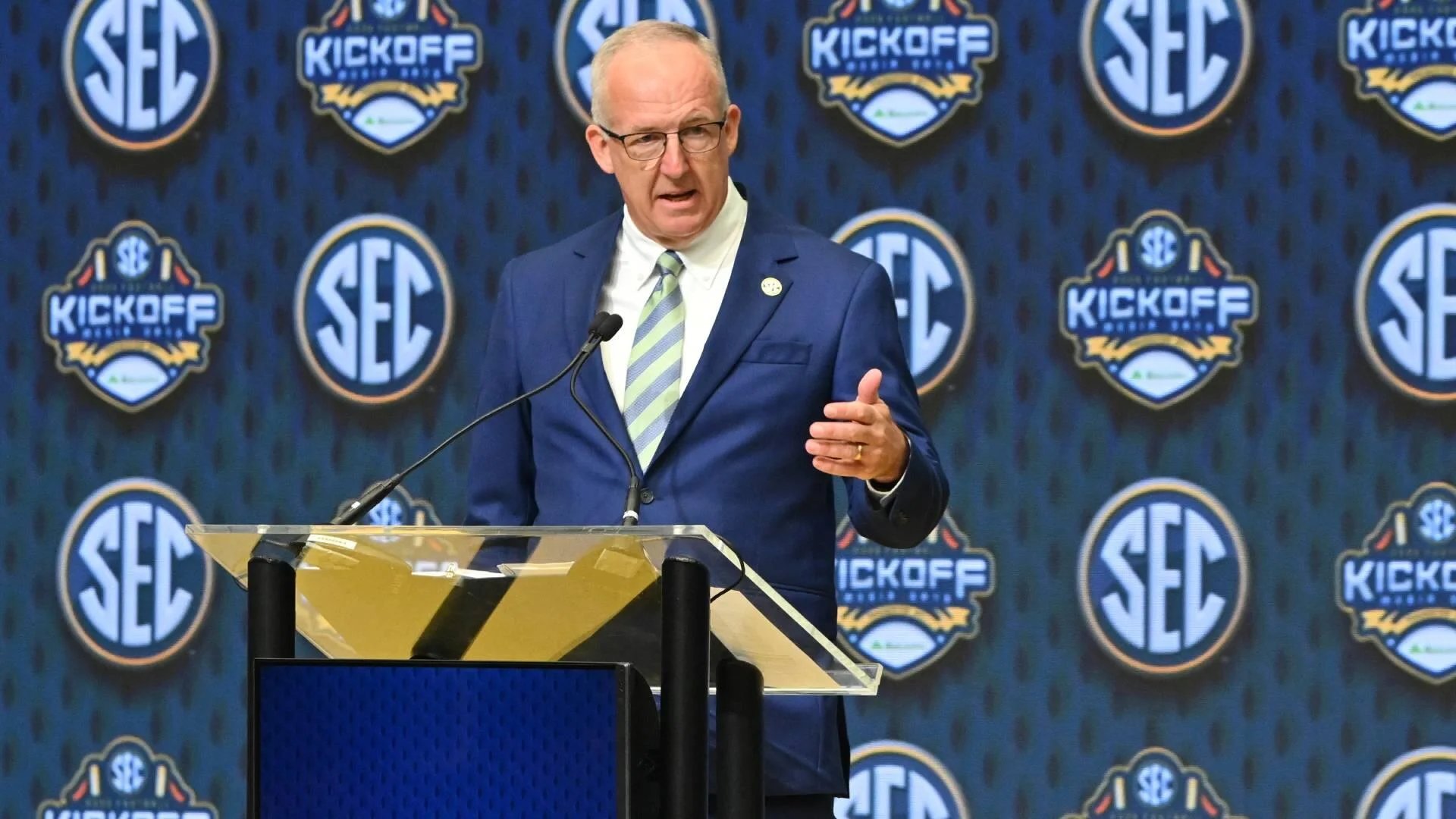
MIRAMAR BEACH, Fla. — The same morning a landmark, bipartisan bill promising to regulate the unwieldy realm of college sports was introduced in the Senate, the Southeastern Conference’s decision-makers were busy behind closed doors devising their own plans.

That’s life for College Athletics Inc. these days. There is renewed hope on Capitol Hill that the new legislation — the Protect College Sports Act — will provide the antitrust protection the NCAA and its members have long sought. But the obstacles in the way — committee hearings, an August summer recess and the upcoming midterm elections — can’t be avoided.

Contingency plans must be developed. The SEC and Big Ten are not resting on their laurels.

The 111-page bill released Wednesday would codify the House v. NCAA settlement and outline federal NIL standards, a five-year eligibility rule, a revenue-share floor and a narrow antitrust safe harbor. In its second half, an amendment to the Sports Broadcasting Act of 1961 would allow schools to pool media rights across conference lines and prohibit the SEC and Big Ten from acquiring or merging with another conference to form a Super League.

Advertisement

It’s those two final pieces that could deter the Big Ten and SEC leadership from a full-throated endorsement of the bill developed by Sens. Ted Cruz, R-Texas, and Maria Cantwell, D-Wash. The bill is written tightly enough that any breakaway by the Big Ten or SEC, the two conferences that have driven the last decade of conference realignment, would be structurally illegal.

The ACC and Big 12 signed a letter of support before the bill was released last week. The SEC and Big Ten did not, opting to reserve their opinions until they reviewed the lengthy document. Both conferences stood pat on those positions on Wednesday, though it’s clear they already have opinions, particularly the apparent target painted on their chests tied to the SBA.

“I’ve made my position on the notion that we need the SBA clear, which I don’t think we do,” Sankey said. 

Asked who shaped the bill, if not the SEC, he said only: “I think that bill speaks to some of the voices of influence other than ours.”

Advertisement

Billionaire Texas Tech booster Cody Campbell, an advocate in Washington and a member of President Trump’s committee on college sports, has been a proponent of amending the SBA to allow schools and conferences to pool media rights. 

Cantwell, who introduced earlier versions of the broadcast amendment in a separate draft, said the SEC and Big Ten have always opposed it. 

“They didn’t like it when I introduced it with (Sen. Cory) Booker and they didn’t like it when I introduced it with (Sen. Eric) Schmitt,” she told CBS Sports. “And my guess is they still don’t like it.”

The portal panic and radical plan

But the more immediate question of enforcement for name, image and likeness deals is what has the conferences charging forward with their own plans, and the work behind the scenes might be moving faster than many believed.

Advertisement

The football transfer portal opens in January. By then, Georgia athletic director Josh Brooks said, the College Sports Commission — built out of the House v. NCAA settlement to enforce its terms — will be drowning in submitted deals.

“There’s so much over-the-cap money being dedicated or contracted,” Brooks said. “There’s so much money that’s already just been put into the system for basketball that if we don’t have some relief or an execution plan on how we’re going to get there by football, by the portal…”

He left the sentence unfinished.

CSC chief executive Bryan Seeley, who briefed SEC athletic directors and presidents Thursday, confirmed the anxiety among the schools.

Advertisement

“A lot of schools, it appears, made a lot of NIL guarantees coming out of the football transfer portal and basketball transfer portal that they’re not allowed to do under the rules,” Seeley said. “And now there is increasing pressure on them to get those NIL deals cleared. A lot of those NIL deals will not go cleared because they don’t comply with the rules.”

Options are being weighed to bring the CSC enforcement component under the SEC’s own management. It’s not a full break from the settlement framework, but a conference-level supplementary arm that handles deal approvals, denials and penalties.

“Keep the CSC, but let us work with them directly on how we’re going to handle [it],” Brooks said. “I think there’s some freedoms and flexibilities within the settlement that conferences can then subject [to their] own.”

An even more provocative idea is a conference-level cap-relief system Brooks called the SEC’s “own luxury tax.” Without it, conferences will be limited to $21.3 million in revenue-sharing with players during the 2026-27 academic year, according to the House settlement terms.

Advertisement

“Maybe we develop our own luxury tax or something that gives us room so we can grow our rev share number, because otherwise the storm hasn’t hit yet,” Brooks said. “The amount of deals that are going to be submitted to CSC in the next three months is going to be astronomical.”

“That’s what we’ve got to figure out,” Brooks continued. “We’ll abide, but the penalties, can we set the penalties?”

Brooks said the conference has met on the question every two weeks. Sankey referred to the “luxury tax” discussion as just that — a discussion.

“I’m assuming some other people talked about it, and I would define it as that,” the SEC commissioner said.

Advertisement

Similar ideas have been discussed within the Big Ten, but the conferences are not working together. 

“We can’t collude,” Brooks said. 

The SEC, he added, is more worried about schools outside the conference circumventing the CSC than how the CSC is run inside it.

“That’s like me and you arguing over filing taxes,” Brooks said. “I have a much bigger problem with those that aren’t even filing taxes. Let’s stop that first. If we can’t even get to that base level, then I would rather just coalesce in our own conference and govern 16 on that issue alone. Not saying that’s a full breakaway or whatever you want to call it. But what’s the first step of that?”

Advertisement

Seeley said the CSC is open to changes, provided the conferences — which designed the CSC a year ago — drive them. 

“If the rules want to change or if enforcement policies want to change, that’s fine with us,” Seeley said. “Let’s not just do a short-term fix without a longer-term solution.”

Calming the transfer portal waters

Despite their internal contingency plans, administrators recognize that federal intervention remains the most permanent fix for their legal exposure.

Oklahoma athletic director Roger Denny, whose background is in corporate tax law and sports business transactions, said the legal reality college athletics faces leaves only two endgames for the enterprise.

Advertisement

“When you’re talking about antitrust law, there are two routes to solve that issue: legislation, collective bargaining,” Denny said. “As we watch the SCORE Act fall apart again last week, I think folks look and see that legislation might not be as viable.”

Thus, the SEC and the Big Ten are exploring their own governance models. Yet Brooks still called the bill’s introduction a “big first step” after the previously supported SCORE Act was pulled from the House floor before a vote last week. Some SCORE Act language carried over into the new bill, though the blanket antitrust protection that drove Democratic opposition has been pared back. The new safe harbor immunizes only the NCAA’s enforcement of transfers, eligibility, revenue-cap rules, agent regulations and mid-season coaching changes — and only if those areas are codified in the NCAA’s own rulebook.

Coaches and athletic directors applauded the bill’s limits on transfers and eligibility, which have prompted a wave of lawsuits filed by players against the NCAA. The new guidelines cap eligibility at five seasons of competition and limit players to one transfer per career. A second transfer triggers a year of lost eligibility.

Brooks said those two pieces alone could calm the waters.

Advertisement

“If you’ve got five-(for)-five, and clean that up, and a one-time transfer, those two things would provide a lot of stability. Because then kids that transfer would be more inclined to sign a two- or three-year deal.”

The bill creates a federal NIL floor, preempting the 39 state laws that athletic departments have spent four years navigating. Athletes must disclose any NIL deal worth more than $600 within 30 days, and the NCAA must build a public, searchable database of anonymized deal data. That transparency has been championed by many coaches and athletic directors, who decry the rising costs of player payments through NIL deals as agents continue to demand more money by pitting schools against each other in cloak-and-dagger bidding wars.

“College sports are at a breaking point,” Cruz said in a statement released Wednesday. “Fans can see their favorite teams being hollowed out by transfer chaos, fake NIL bidding wars, eligibility lawsuits and a system that allows the richest programs to keep pulling away. The Protect College Sports Act is a bipartisan plan to restore order. Student athletes can profit from their name, image, and likeness, but college sports still needs real rules, competitive balance, rivalries, and a true connection to education. This bill protects athletes and fans and keeps college sports from becoming a two-conference minor league.”

Another big change for players in the bill: agents must register with the state and the NCAA, and their fees are capped at 5%.

Advertisement

“These people are unscrupulous in their activities,” Cantwell told CBS Sports. “There are definitely unscrupulous agents out there taking advantage, particularly at that high school level, promising people a career and then basically repossessing their cars.”

Where Washington draws the line

While the player restrictions offer the stability leagues crave, the bill introduces heavy-handed regulations on operational freedoms that make power-conference leadership deeply uncomfortable.

The bill does not include language capping coaches’ salaries, a push initially made by President Trump’s committee tasked with proposing regulations for college sports. But there is a clause barring FBS coaches and coordinators from leaving a school during a competitive season for another job. Cruz refers to it as the “Lane Kiffin Rule,” a reference to the former Ole Miss coach ditching the playoff-bound Rebels for LSU last November. Violators would be suspended for the following season.

Asked whether the federal government should have a say in when schools hire, fire and interview football coaches, Sankey leaned into the awkwardness.

Advertisement

“I’m a federal-government-is-less type of person philosophically,” he said. “But if that’s something that helps from an orderliness standpoint, that could be healthy. When you ask the federal government for help, though, you never know where it goes.”

Preservation of Olympic sports is also central to the legislation, something Cantwell believes can be achieved through the new entity that pools media rights. To trigger that revenue, at least 75% of FBS membership must opt in — practically every FBS school outside the Big Ten and SEC’s footprint. The Big Ten and SEC appear to have zero interest in participating.

“We cannot starve the entire ecosystem,” Cantwell said. “This solution is a way of saying, while you’re dealing with the new realm of NIL and media rights sharing with athletes, make sure that you take care of the scholarship and roster levels for women in Olympic sports.”

Another apparent shot across the bows of the Big Ten and the SEC is the threat of a super league. Any conference with more than $1 billion in revenue — the SEC and Big Ten — cannot merge with or acquire another conference if doing so would push covered-entity membership for pooled media rights below the 75% threshold.

Advertisement

The governance impasse

Meanwhile, leaders in the Big Ten and SEC believe there is a way to govern themselves within the structures of the bill — or the House v. NCAA settlement — without facing legal troubles. It’s not quite a plan as it is an idea with legs.

The reasoning is simple: the timeline for the bill in Washington, D.C., is tight.

The bill needs 60 Senate votes. Previously, the SCORE Act could not get there. Congress is set to enter summer recess in August, and after that, legislators will be in campaign mode before the midterm elections in November. The bill sits in Cruz’s Commerce committee, where he is chair and Cantwell is a ranking member.

The legislation will also face opposition, of course. All bills do. From the left, Sen. Chris Murphy, D-Conn., a longtime advocate for collective bargaining for college athletes, said the bill’s “primary effect seems to be to limit the compensation of athletes while protecting the huge salaries of all the adults — coaches, ADs, sports industry executives — who are getting rich off the performance of the players.”

Advertisement

Still, there is the lingering issue in college athletics: with 138 schools and voices, not everybody will be on the same page. That has played out over the decades and has been amplified in recent months as athletic directors voiced distrust in the very system they helped develop.

Trev Alberts, the Texas A&M athletic director who helped build the CSC, traced the impasse to the same issue: “We are sending a very strong message that college athletics refuses to be governed.”

Sankey framed it on Wednesday as a choice: “The issue is, do people really want to be governed? … People have to commit to the system.”

Brooks said the SEC will not wait for it. 

Advertisement

“I have faith in our conference that we can move steps in that direction,” he said. “The first step is we attack what’s most pressing, which is implementation of the House settlement and how we work around the CSC and how we implement that.”

The next step, by his timeline, could land in January.

Advertisement

Source link

Continue Reading

Sports

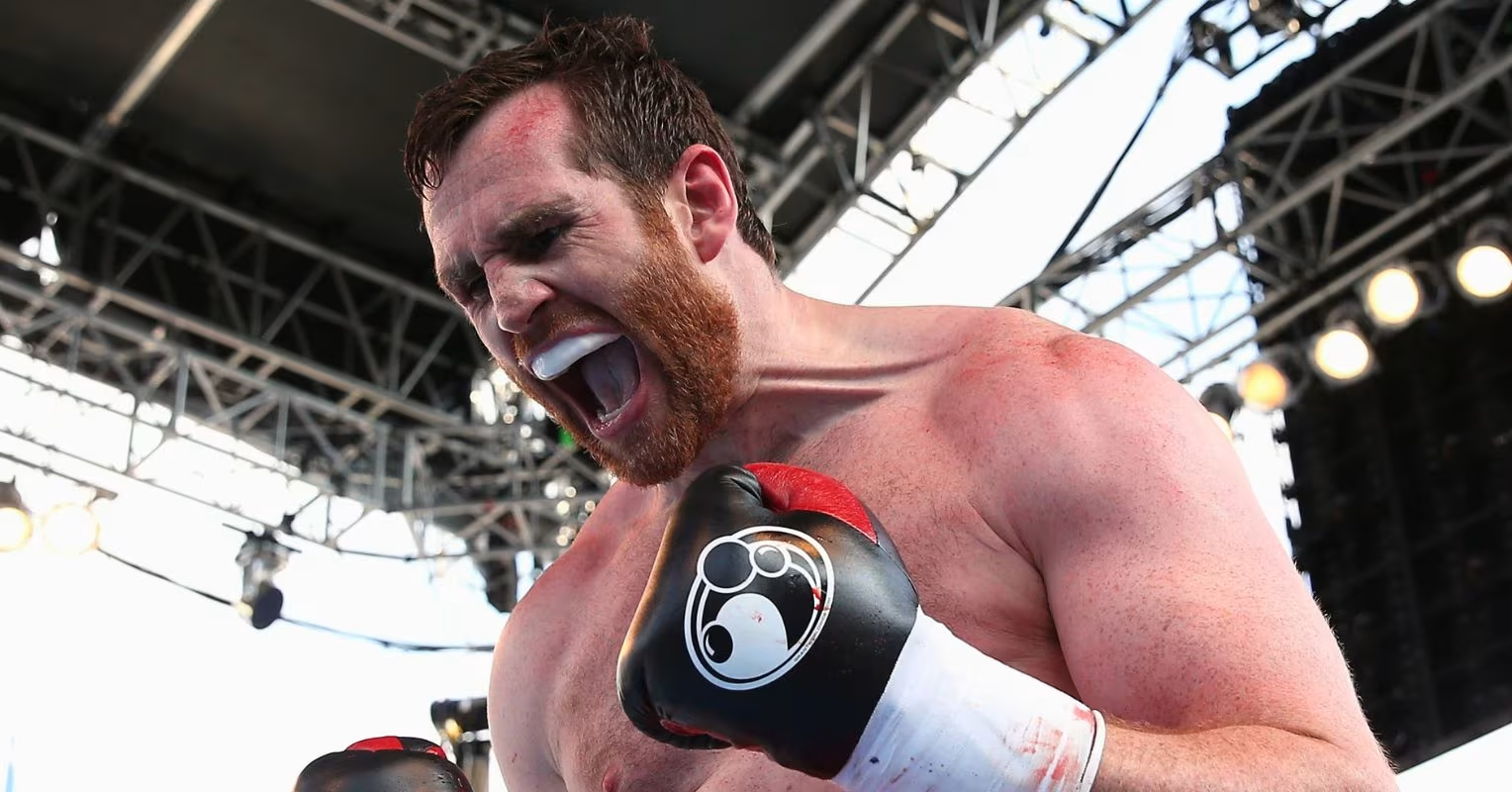
David Price names the most satisfying win of his career: “I really wanted to beat him up and I did”

Published

on

Former British heavyweight champion David Price has named the most satisfying victory of his 32-fight professional career.

Once seen as a fierce rival to Tyson Fury, Price blew opponents away after turning over to the pro scene following a stellar amateur career where he picked up the gold medal at the 2006 Commonwealth Games and the bronze at the Beijing 2008 Olympic Games.

After claiming the British and Commonwealth titles by knocking out Sam Sexton, and then making two defences, Price met his match in Tony Thompson, who famously derailed plans to compete for world honours.

Advertisement

Price never reached the heights that his amateur pedigree suggested he may, and speaking to Boxing News, he revealed that his final career victory, against Dave Allen in 2019, was ‘the most satisfying of his career’ for a number of reasons.

“Dave Allen was always trying to get a fight with me when he was just starting to make a name for himself and I had no interest in it. There was nothing to gain from fighting Dave Allen, so I was never kind of biting or reacting to him.

“Then, I bumped into him in Nando’s when I was training with Dave Coldwell up in Rotherham. He was kind of apologetic and explaining why he had been doing it all, so we squashed it there and then. It was like an ‘OK, don’t do it again’, kind of thing, then two weeks later it started again.”

“He was just a bit odd. In the build-up to the fight, I thought, ‘I will go along with being pally’, but really I wanted to f**k him up – and I did, which is why it was so satisfying. That win was a really, really satisfying win, I could have retired after that fight, happily.

“It gave me that much of a satisfaction that I thought ‘I can leave boxing happy now’.”

Advertisement

“I’d say so [it was the most satisfying win of my career], because I was getting written off by everyone.”

When the two British heavyweights met in 2019, Price produced a fine display to break Allen down, causing a cut that hampered the Doncaster man’s vision and caused trainer Darren Barker to pull him out in the tenth.

After the win, Price returned to the very same O2 Arena just three months later in a clash against Derek Chisora, but the Liverpudlian was halted after four rounds of action, in what proved to be his career finale.

Advertisement

Source link

Continue Reading

Sports

Sean Jansen Absence Massive Blow For Glasgow Quarter-Final

Published

on

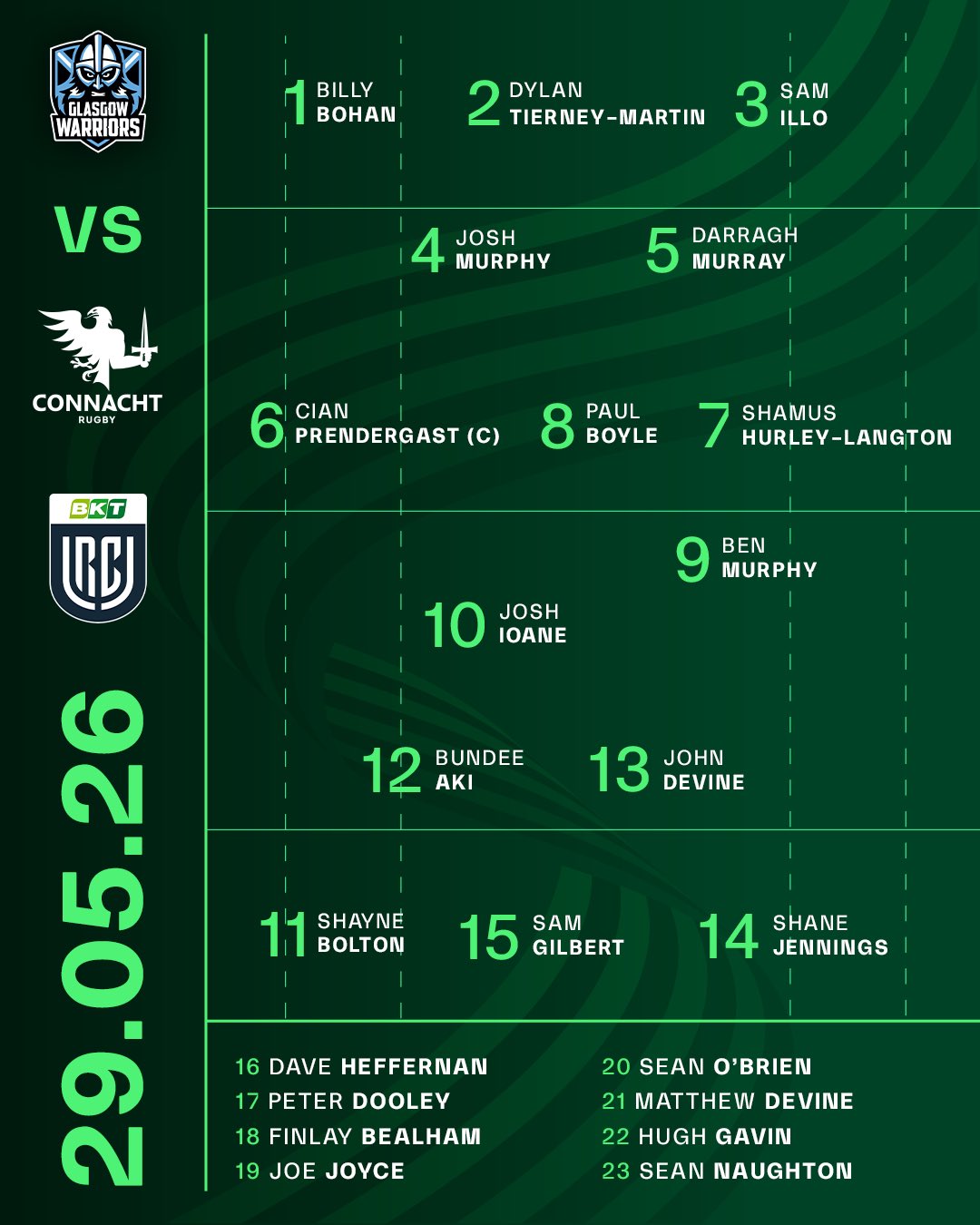
Connacht Team News: Jansen Absence The Killer Blow Ahead Of Glasgow Quarter-Final

Big takeaway from the Connacht team announcement: Sean Jansen is the killer blow.

Jansen has been one of Connacht’s most important forwards all season with his carrying, line speed and defensive work-rate. Losing him for a game like this against Glasgow’s power pack is massive.

The other major concern is the backline depth and experience available.

No Harry West. No Cathal Forde. No Mack Hansen. No Byron Ralston. Jack Carty is unavailable due to personal reasons. Caolin Blade and Finn Treacy also miss the 23 despite returning to training this week.

Advertisement

Dylan Tierney-Martin and Darragh Murray returning to the starting side is a huge boost, while Dave Heffernan being fit enough for the bench gives Connacht badly needed experience and leadership in the pack.

Despite all the injuries, there is still real quality in the side.

Bundee Aki remains the focal point in midfield, Cian Prendergast captains the side again, while Sam Gilbert at 15 gives Connacht a genuine weapon with his goal-kicking. In a tight knockout game away from home, that boot could be absolutely crucial.

Glasgow Warriors Team News

Scott Cummings returns after an injury layoff for his first Glasgow Warriors appearance since before the Guinness Six Nations.

Advertisement

Glasgow Warriors Starting XV

Josh McKay; Kyle Steyn (captain), Stafford McDowall, Sione Tuipulotu, Kyle Rowe; Dan Lancaster, George Horne; Patrick Schickerling, Johnny Matthews, Zander Fagerson, Scott Cummings, Alex Samuel, Matt Fagerson, Rory Darge, Jack Dempsey.

Glasgow Warriors Replacements

Gregor Hiddleston, Rory Sutherland, Sam Talakai, Jare Oguntibeju, Euan Ferrie, Sione Vailanu, Jack Oliver, Ollie Smith.

Connacht Rugby Team

Connacht Starting XV

Sam Gilbert; Shane Jennings, John Devine, Bundee Aki, Shayne Bolton; Josh Ioane, Ben Murphy; Billy Bohan, Dylan Tierney-Martin, Sam Illo, Darragh Murray, Josh Murphy, Cian Prendergast (captain), Shamus Hurley-Langton, Paul Boyle.

Connacht Replacements

Dave Heffernan, Peter Dooley, Finlay Bealham, Joe Joyce, Sean O’Brien, Matthew Devine, Hugh Gavin, Sean Naughton.

Advertisement

Franco Smith On Connacht Challenge

“Connacht will present a strong challenge tomorrow evening. They have a well-drilled squad full of talent, and come here as one of the most in-form teams in the competition.

“We are pleased to welcome Scott back into our matchday 23 after his injury layoff – he has worked hard and worked closely with our medical and S&C teams to put himself in the best possible position ahead of his return.

“We know the difference that the Warrior Nation can make, and we look forward to hearing them get behind the team at Scotstoun as we kick off the playoffs tomorrow night.”

Stuart Lancaster On Connacht’s Opportunity

“This is exactly where we wanted to be at the start of the season, so credit must go to all the players for what they’ve displayed in recent months to get us to this position. Now we have to go out there and seize the opportunity.

“Glasgow are a formidable opponent especially away from home, with an array of talented players who are very well coached, but we are excited by the challenge ahead of us.”

Verdict

Connacht are not going to Scotstoun at full strength, and the injury list makes this a far tougher assignment. Losing Jansen is the biggest blow of all, while the lack of experienced backline cover leaves very little room for disruption once the game starts.

Advertisement

However, Connacht still have enough quality to make this uncomfortable for Glasgow. If Aki can get them over the gainline, Prendergast leads the pack well, and Gilbert punishes mistakes from the tee, Connacht have a puncher’s chance.

But against a strong Glasgow side, away from home, Connacht will need close to a perfect knockout performance.


<

Advertisement


LiveScores Now Available at IrishScores.com

Source link

Continue Reading

Sports

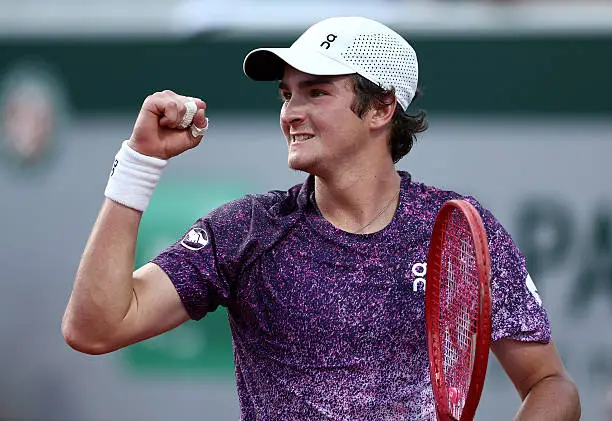
João Fonseca to face Idol Novak Djokovic at Roland Garros

Published

on

Brazilian teenager João Fonseca is set to face his idol, Novak Djokovic at the French Open after his impressive comeback win in the second round.

The 19-year-old fought back from two sets down to defeat Dino Prižmić in a five-set battle, securing the first five-set victory of his young career.

Fonseca, currently ranked world No. 30, has quickly become one of the most exciting young players in tennis after winning the 2024 Next Gen Finals and continuing his rapid rise on tour.

  • Elina Svitolina continues Roland with straight-set WinElina Svitolina continues Roland with straight-set Win

Advertisement

Now, he gets the biggest challenge possible, a match against 24-time Grand Slam champion Djokovic on Court Philippe-Chatrier.

Djokovic booked his place in the third round after defeating Valentin Royer.

Fonseca admitted it feels like a dream to face the player he grew up admiring, while Djokovic also praised the Brazilian teenager and the attention surrounding his rise.

Advertisement

The clash between one of tennis’ greatest legends and one of its brightest young stars is now one of the most anticipated matches of the tournament.

Advertisement

Source link

Continue Reading

Sports

NBA Draft withdrawal deadline winners and losers: Arizona loses out on Koa Peat; Duke, Florida keep key pieces

Published

on

The deadline to withdraw from the 2026 NBA Draft always has some drama. While several players made their intentions known well before Wednesday’s 11:59 p.m. ET deadline, others kept fans, coaches and NBA teams in suspense. Just over 25 minutes after the deadline passed, it was reported that Tounde Yessoufou was not only withdrawing from the NBA Draft but had also committed to St. John’s.

Yessoufou, a former five-star recruit, had a standout freshman season at Baylor but was considered a fringe first-round pick. Instead, he will take his talents to the Big East after averaging 17.8 points per game last season.

Arizona star forward Koa Peat was arguably the biggest name entering the week who hadn’t officially made a decision. Despite struggling to find his shot at the NBA Draft Combine earlier this month, Peat will stay in the draft, where he projects as a mid-to-late first-round pick. With Peat off to the NBA, Arizona is now on the clock to find his replacement.

Several players elected to withdraw from the draft and return to school, including ArkansasBilly Richmond III, Vanderbilt’s Tyler Tanner and Alabama’s Amari Allen. Iowa State star Milan Momcilovic elected to return to college basketball but will be looking for a new home after entering the transfer portal last month.

Advertisement

Momcilovic will be the biggest free agent available on the open market. Kentucky, Louisville, Arizona, St. John’s, and almost any other school in need of shooting and star power will be interested in the best 3-point shooter in college basketball. Arizona is a logical fit for Momcilovic after Peat elected to stay in the NBA Draft.

The byproduct of NIL being such an integral component of college athletics is that the draft is thinning out on Day 2. Expect senior and International players to make up a majority of the picks in the second round this year and moving forward. 

Advertisement

Here are the biggest winners and losers for the deadline for players to make their NBA Draft decisions.

Winner: St. John’s makes a stunning addition after the deadline

The biggest winner of Wednesday (well, technically Thursday) has to be St. John’s. Shortly after the deadline passed, it was reported that Yessoufou had committed to play for St. John’s. Yessoufou was the No. 5-ranked player in the 247Sports transfer rankings and would’ve been one of the best players available in the transfer portal had he gone through the process after withdrawing. Yessoufou was likely going to be a late first-round pick, so coming back to school was viewed as the best option. Now, he has a chance to improve his stock ahead of the 2027 NBA Draft.

Winner: Retention is king for Duke, Illinois and Florida

The three biggest winners on the retention front this offseason have been Florida, Illinois and Duke. The Blue Devils have one of the deepest rosters in the sport after bringing back Cayden Boozer, Caleb Foster and Dame Sarr while also adding one of the best players available in the transfer portal: John Blackwell. Illinois is returning Andrej Stojaković, Jake Davis, Tomislav Ivišić, Zvonimir Ivišić and David Mirkovic after reaching the Final Four for the first time in 21 years.

But the biggest winner of the deadline was Florida. Reigning Naismith Defensive Player of the Year, Rueben Chinyelu, was the final piece of the puzzle for what has been a very good offseason on the retention front for Florida coach Todd Golden. Chinyelu, Thomas Haugh, Alex Condon, Boogie Fland and Urban Klavzar will all be back for the 2026-27 season. If the preseason poll were conducted this week, Florida would likely be the No. 1 team. The frontcourt of Chinyelu, Haugh and Condon is the best in the sport.

Advertisement

Loser: Koa Peat stays in the draft despite shooting question woes

It’s no secret that the most seismic decision of the stay-or-go cycle was Peat. After having a solid freshman season at Arizona, his draft stock has slipped a bit after a lackluster shooting performance at the combine earlier this month. It’s not just the lack of shots going in that is cause for concern, but how Peat has appeared to alter his shot mechanics entirely. Peat is a bully-ball forward who shot 53.6% on 2-pointers, but the biggest knock on his game during his one-and-done season at Arizona was the shooting from outside of the paint. I still think Peat will be a first-round pick next month, but his stock is more of a mixed bag. He is the player who would’ve benefited the most from another season of college basketball, but you can’t knock someone wanting to take the next step.

Winner: Kentucky gets a reinforcement back

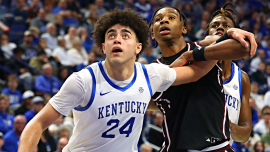
Kentucky’s offseason under coach Mark Pope has been under a microscope. Pope has had some well-documented misses this offseason, including Robert Wright III, Donnie Freeman and Tyran Stokes, the No. 1-ranked player in the 2026 recruiting class. Kentucky did pivot by landing Alex Wilkins and Zoom Diallo, but it was evident Pope needed a retention win. And that’s exactly what happened when Malachi Moreno withdrew from the NBA Draft days before the deadline. Moreno showed the most potential of anybody from Kentucky’s 2025 recruiting class after averaging 7.8 points, 6.3 rebounds and 1.5 blocks. Moreno is a breakout candidate for next season and should have an expanded role. Keep an eye on him for the 2027 NBA Draft.

Advertisement

Loser: NBA teams picking in the second round

The theme of the NBA Draft in recent years has been the second round becoming more of an afterthought, with it being primarily made up of those without eligibility and International players. Most of that is due to NIL. If a player has the option of making seven figures by playing another season of college basketball or grinding through the G League as a second-round pick, it’s easy to see why the former is more enticing. It’s also notable that the second round of the NBA Draft is different from the second round of the NFL Draft. You routinely see agents work their magic to get players to preferred destinations in the second round, where a guaranteed contract is on the table. Or, you could see someone go undrafted and get a better deal as an UDFA than going to a random destination in the second round.

Winner: All-American guards return

There will be two players who earned CBS Sports All-American honors returning to college basketball this season. That would be Vanderbilt’s Tyler Tanner and Michigan State’s Jeremy Fears Jr., who both passed on staying in the draft. Tanner projects as an SEC Player of the Year candidate after a breakout season with Vanderbilt. Meanwhile, Fears will look to add to his career assist total after leading the nation (9.4) in assists per game. Retaining that talent should be viewed as a massive win for Michigan State and Vanderbilt.

Winner: Alabama does it again right before deadline

Last year, Alabama was an unexpected winner of the withdrawal deadline after Labaron Philon decided to return to school at the 11th hour. Amari Allen’s decision to return for his sophomore season at Alabama wasn’t as dramatic, but it should prove to be just as impactful. Allen was a projected late first-round pick if he stayed in the draft. However, after measuring a few inches shorter than his listed 6-foot-8 height at the NBA Draft Combine, a return to school seemed inevitable. Allen should benefit from more on-ball reps this season and is a name to know for next year’s draft.

Loser: Anyone who thought the transfer portal cycle was over

The transfer portal might have closed over a month ago, but it’s going to heat up now that the deadline has passed. Momcilovic will be the biggest name available because you can never have enough shooting. Momcilovic’s combination of star power and shooting will make him one of the highest-paid players in the sport. Buckle up.

Advertisement

Winner: Lottery teams in the 2027 NBA Draft

There has been a lot of talk about the 2027 NBA Draft. I’m not here to sell it as a great class because it’s probably on the same level as the 2024 NBA Draft, which isn’t a compliment. However, with so many returners in college basketball, there is a greater chance we will see players improve their all-around game and make next year’s draft better than 2024. 

Haugh is someone I had a top-15 grade on heading into the offseason. I thought Haugh would almost certainly declare for the draft because he is the ultimate Swiss Army Knife. The same can be said about UConn‘s Braylon Mullins, who would’ve been a top 25 pick if he stayed in the draft. Those are the two names I’m watching for next summer. If I had to guess who ends up being a top 10 pick from this year’s group of returners, it would be Haugh and Mullins. Another name to keep an eye on is USC‘s Alijah Arenas. He had a limited freshman season due to a knee injury. Arenas is someone who can crack the lottery next summer if everything goes well at USC.

Who’s staying and who’s going back to school?

Notable decisions from players deciding to stay in the NBA Draft or return to play college basketball next season.

Advertisement

Source link

Continue Reading

Sports

FIFA World Cup 2026 predictions: Winners and Runner-ups for all 12 groups | FIFA World Cup 2022

Published

on


The 2026 FIFA World Cup brings an expanded format featuring 12 groups, 48 teams, and 72 group-stage matches, setting the stage for one of the most diverse and dramatic tournaments in history. Hosted across the United States, Canada, and Mexico, the competition promises heavyweight clashes, debut stories, and potential upsets across all groups.


Having said that, with multiple groups expected to witness a proper fight for the top 2 places, here are the predictions for the group winners and runner-ups this year.


Advertisement


Group A: Mexico to lead the home charge


Teams: Mexico, South Korea, Czechia and South Africa


Advertisement


Mexico enter the tournament with the advantage of home support as one of the host nations. Despite inconsistent form, El Tri are expected to edge out South Korea and Czechia in a competitive group. South Africa could play the spoiler role, but Mexico’s familiarity with conditions gives them the upper hand.


Group B: Switzerland’s experience to prevail


Advertisement


Teams: Switzerland, Canada, Qatar, Bosnia & Herzegovina


Group B looks balanced but slightly weaker on paper. Switzerland’s tournament experience and tactical discipline make them favourites to finish top. Canada, Qatar, and Bosnia & Herzegovina will compete closely, but Switzerland’s depth should see them through.


Advertisement


 Group C: Brazil expected to dominate


Teams: Brazil, Morocco, Scotland, Haiti


Advertisement


Brazil are once again among the favourites and should comfortably top Group C. Morocco, however, could push them hard after their impressive recent rise. Scotland and Haiti are likely to struggle against the top two.


Group D: USA tipped to deliver at home


Advertisement


Teams: USA, Turkey, Australia, Paraguay


The United States, boosted by home advantage and expectations, are strong contenders to win Group D. Türkiye could be their biggest challenger, while Australia and Paraguay add unpredictability but lack consistency at this level.


Advertisement


Group E: Germany to steady the ship


Teams: Germany, Ecuador, Ivory Coast, Curacao


Advertisement


Germany have struggled in recent tournaments but remain strong enough to top Group E. Ecuador may challenge, but Côte d’Ivoire and debutants Curaçao are expected to find the going tough.


Group F: Tight battle led by Netherlands


Advertisement


Teams: Netherlands, Japan, Sweden, Tunisia


Group F is one of the most competitive groups. The Netherlands are favourites, but Japan and Sweden bring serious threats. Tunisia cannot be ruled out, making this a closely fought contest for top spot. 


Group G: Belgium to edge Egypt challenge

Advertisement


Belgium’s so-called “golden generation” may have faded, but they still possess enough quality to top Group G. Egypt is their closest rival, while Iran and New Zealand are expected to struggle against stronger opposition.


Group H: Spain and Uruguay headline battle

Advertisement


Teams: Spain, Uruguay, Saudi Arabia, Cape Verde


Spain are favourites to win Group H, but Uruguay under Marcelo Bielsa provide a serious challenge. Saudi Arabia and Cape Verde will look to compete but are unlikely to match the European and South American giants. However, with Saudi Arabia’s upset over defending champions Argentina last time, anything is possible with the team.

Advertisement


Group I: France in toughest group


Teams: France, Senegal, Norway, Iran

Advertisement


Group I is arguably the toughest group of the tournament. France lead the pack but face stiff competition from Senegal and Norway. Erling Haaland’s Norway had a decent qualifying campaign and could be the surprise package in this World Cup. Iraq are expected to be outmatched, making this a three-way battle at the top.


Group J: Argentina set for smooth passage

Advertisement


Teams: Argentina, Austria, Algeria, Jordan


Defending champions Argentina should comfortably top Group J. Austria and Algeria will battle for second place, while Jordan face a tough debut campaign at the World Cup.

Advertisement


Group K: Portugal vs Colombia showdown


Teams: Portugal, Colombia, Uzbekistan, DR Congo

Advertisement


Group K is one of the most unpredictable. Portugal and Colombia are expected to fight for first place, with their head-to-head likely deciding the group winner. Uzbekistan and DR Congo could spring occasional surprises but are outsiders and most likely be the bottom two teams in the group.


Group L: England vs Croatia for top spot

Advertisement


Teams: England, Croatia, Panama, Ghana


England and Croatia headline Group L in a repeat of their historic rivalry. England are slight favourites under Thomas Tuchel, but Croatia’s experience ensures a tight race for first place. Panama and Ghana will fight for respect and knockout hopes.

Advertisement

Source link

Continue Reading

Trending

Copyright © 2025