Connect with us
DAPA Banner
DAPA Coin
DAPA
COIN PAYMENT ASSET
PRIVACY · BLOCKDAG · HOMOMORPHIC ENCRYPTION · RUST
ElGamal Encrypted MINE DAPA
🚫 GENESIS SOLD OUT
DAPAPAY COMING

Tech

Closing the security blind spots that are a prime entry point for attacks

Published

on

What if the biggest cybersecurity risk is not the attack you fear most, but the weakness you forgot or never knew was there?

Many organizations worry that the next breach will come from a highly sophisticated attack so advanced that nothing could have stopped it. That fear is understandable, but the truth is often more uncomfortable.

Yaz Bekkar

Principal Consulting Architect XDR – International, Office of the CTO, Barracuda.

Source link

Continue Reading
Click to comment

You must be logged in to post a comment Login

Leave a Reply

Tech

Congress Lets Decades-Old Spying Law Lapse Amid Trump’s Controversial DNI Nomination

Published

on

Congress failed to extend a key surveillance law on Thursday night, according to a report by Politico. This effectively means that Section 702 of the Foreign Intelligence Surveillance Act (FISA) will expire for the first time since 2008, as the House isn’t expected to vote again until June 23.

The House rejected a proposal that would’ve extended the law until July 2, on a 218-198 vote. The extension actually required a two-thirds majority, but didn’t even get a simple majority. Nearly 20 Republicans joined with Democrats to block the motion. A few hours later, Oregon Senator Ron Wyden blocked a couple of proposed extensions for the law in the Senate.

This law has been around nearly 20 years through multiple presidencies from both parties. So what’s the issue right now? There are some who don’t like it when the government engages in massive warrantless surveillance programs, sure, but that never stopped the law from being renewed before. Reporting indicates that Congress was close to a three-year extension, until President Trump announced he planned to install political ally Bill Pulte as director of national intelligence.

Advertisement

Democrats have raised concerns over Pulte’s appointment on the grounds that he has no intelligence experience and fears that he could use sensitive information gathered via Section 702 for political or personal purposes. Pulte regularly insinuated Fed board member Lisa Cook fired engaged in mortgage fraud, an allegation that has since been debunked; Cook was removed from her post by President Trump last August.

Trump has since nominated Jay Clayton, the top federal prosecutor in New York City, for the intelligence job. However, he has suggested that Pulte could take the job on an acting basis. “There needs to be a clear guarantee that Mr. Pulte will not serve as acting DNI,” Senator Mark Warner wrote in a statement.

As for Section 702, it lets the government conduct warrantless surveillance of foreign targets located outside of the United States. It also allows agencies like the NSA and the FBI to spy on Americans if the action is “reasonably likely” to collect information about foreign intelligence.

Advertisement

As one would expect, authorities have played fast and loose with that whole “reasonably likely” thing. Law enforcement agencies have been caught with their hands in the data cookie jar a lot since 2008. The surveillance-based FISA court found tens of thousands of improper database searches in 2017 and 2018 alone. A judge also ruled in 2019 that the FBI and NSA committed multiple violations of either the law or privacy-minded court orders when collecting data from phone and tech companies.

House Democrats are pushing for “meaningful reforms” of the law. “Section 702 is a critical foreign intelligence authority, but we cannot in good conscience vote for reauthorization without significant reforms to protect both national security and the constitutional privacy rights of Americans,” House Minority Leader Hakeem Jeffries and other leaders said in a joint statement.

Source link

Advertisement
Continue Reading

Tech

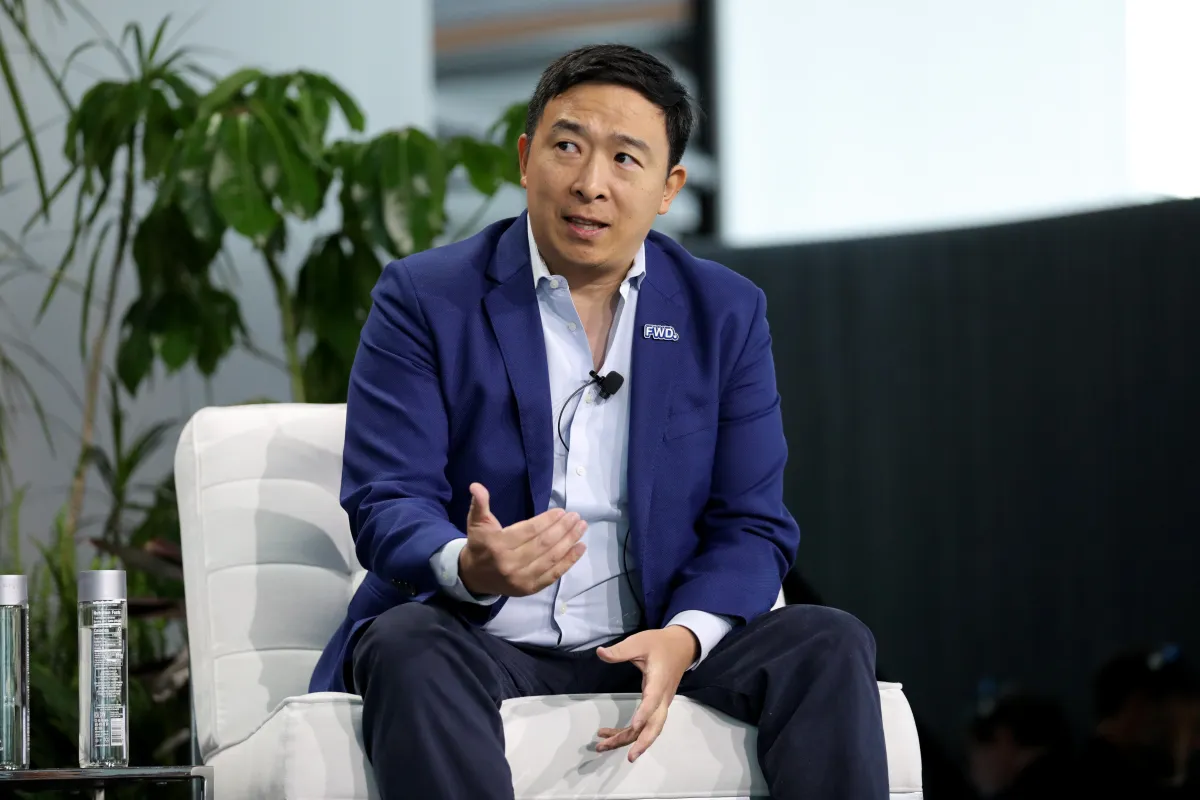
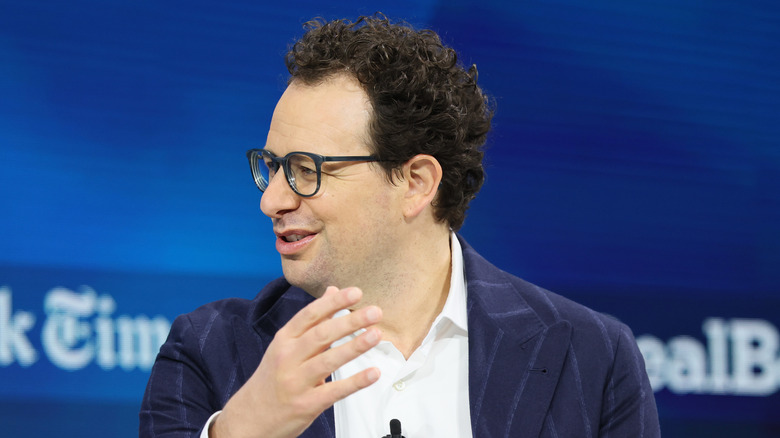
Andrew Yang thinks the next big startup opportunity is lowering the cost of living

Published

on

Entrepreneur and former presidential candidate Andrew Yang has a theory about where the next wave of startup opportunity lies, and it starts with a question most founders aren’t asking: what if the business model was giving money back instead of extracting it?

Yang was inspired by Mark Cuban. Not by his wealth, or his celebrity, but by Cost Plus Drugs — Cuban’s startup that sells pharmaceuticals at cost. Yang made a list.

“Housing, education, food, fuel, transportation, media, and wireless,” Yang told TechCrunch on a recent episode of Equity. “The things we all spend money on.”

He picked wireless and last September launched Nobile Mobile, a new mobile virtual network operator that provides cell service for a fraction of what traditional carriers charge and gives customers money back if they use less data. 

Advertisement

As AI threatens to compress wages and displace workers, Yang sees a business opportunity in bringing down the cost of living. Cost Plus Drugs, Noble Mobile, dumb phone makers like Light Phone, and even online grocery store Misfits Markets are early examples of an emerging business category where the startup’s value proposition is the margin it gives back to the customer.

“AI is going to suck up a lot of the value and the jobs, and then Americans are going to look up and say, ‘How do I meet basic needs?’” Yang said. He believes meeting people’s needs “less expensively” is “a very rich vein of opportunity.” 

That instinct didn’t emerge from nowhere. Yang first launched himself into the public eye during his 2020 presidential campaign, during which he advocated for Universal Basic Income as a means of combating AI-related workforce displacement and wealth concentration. The campaign didn’t succeed but the thesis has only grown more relevant.

Yang is still an advocate for UBI, arguing that the value generated by AI companies needs to be redistributed into the hands of the average American. But whether the government will be the vehicle for that redistribution, or whether it will just use any collected wealth to “plug a hole and do something not terribly productive,” Yang is less certain. 

Advertisement

“There is room for a direct connection between the money and the people,” he said. 

That’s where the market comes in. Where policy fails, Yang argues, market incentives can step in. Noble Mobile is his attempt to prove the point. Since its launch last September, the company has grown to “thousands and thousands” of customers and is bringing in “millions in revenue.”

“We’re unit profitable per customer, but we just share the profits with our subscribers with the idea that it’ll make you happy, you’ll stay around, and maybe you’ll tell your friends and family,” Yang said. 

The pitch is simple. Yang noted that the average monthly savings of $50, invested and compounded over 40 years, could amount to $24,000 — enough for a retirement down payment. And in this economy, who isn’t thinking about little ways they can upgrade their personal finance?

Advertisement

Whether investors will share that enthusiasm is another question entirely. Even if the opportunity is real, capital is concentrated heavily in AI right now, while consumer-facing businesses with thin margins and a social mission are a hard sell.

“I had at least one investor say to me around Noble Mobile, ‘Love you, Andrew, want to work with you — if you could just make this an AI company, we’ll invest,’” Yang said. 

The tide might be changing, though, simply because even the most wealthy, extractive companies need an economy in which consumers have enough buying power to purchase their products. 

“The value being concentrated in the hands of a handful of folks and firms is just bad for everybody,” he said. “There are some folks I know in Silicon Valley who are open to that for a variety of reasons…[like] they just don’t want to have to hire private security.”

Advertisement

Yang encouraged founders and investors to take on problems they’re passionate about and find a way to build a valuable enterprise on top of it.

“Think bigger and more broadly about trying to tackle problems and don’t subscribe so much to groupthink, because there are some valuable opportunities out there,” he said.

When you purchase through links in our articles, we may earn a small commission. This doesn’t affect our editorial independence.

Source link

Advertisement
Continue Reading

Tech

Silicon Valley venture capitalist and LA billionaire reportedly weighing Seahawks bids

Published

on

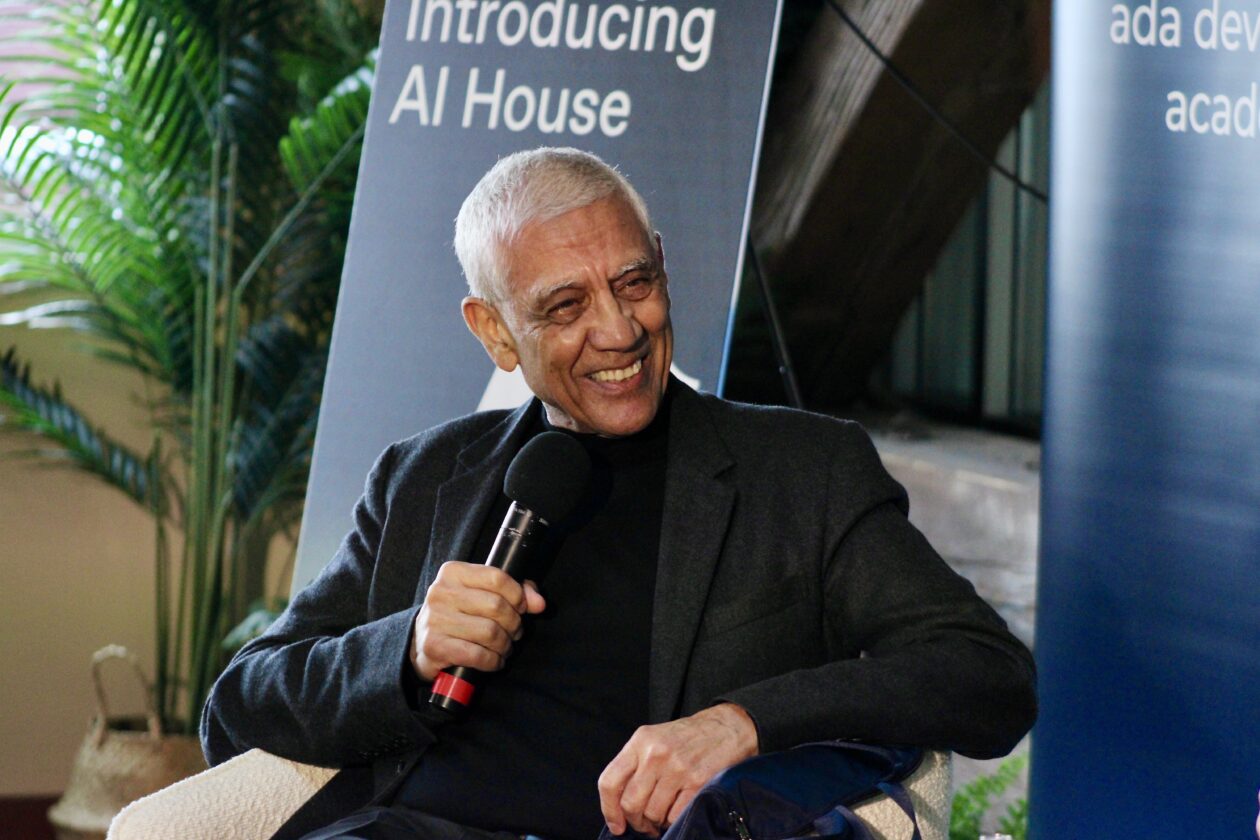
Venture capitalist Vinod Khosla speaks in Seattle in 2025. (GeekWire File Photo)

The list of potential buyers for the Seattle Seahawks is starting to look like an NFL Pro Bowl roster of billionaires, venture capitalists and global business leaders.

Billionaire financier Todd Boehly is the latest high-profile name linked to the franchise, according to a report from Semafor, joining a field of prospective bidders that reportedly includes venture capitalist Vinod Khosla, steel executive Aditya Mittal and former Boston Celtics majority owner Wyc Grousbeck.

Boehly, the chairman and CEO of Eldridge Industries, is best known in sports circles for ownership stakes in the Los Angeles Dodgers, Los Angeles Lakers, Chelsea FC and the Los Angeles Sparks. Before launching Eldridge, he helped build the credit-investing business at Guggenheim Partners.

The Seahawks could fetch as much as $9 billion, a price tag that would eclipse the $6 billion sale of the Washington Commanders in 2023 and set a new record for an NFL franchise.

The Seahawks are being sold by the estate of late Microsoft co-founder Paul Allen, following instructions in his estate plan directing that his sports holdings ultimately be sold and the proceeds used for philanthropic purposes. In February, Allen’s estate formally listed the Seahawks for sale, shortly after the franchise captured its second Super Bowl title.

Advertisement

Among the other reported bidders is Khosla, the Sun Microsystems co-founder, founder of Khosla Ventures and an early backer of OpenAI, DoorDash and Stripe. Khosla — who also owns a small slice of the San Francisco 49ers — reportedly submitted a letter of intent as part of the bidding process.

Khosla spoke in Seattle last year, saying at the time: “I have found that the person who learns faster is way better at building businesses than the person who is a deep expert.” His firm has backed Seattle-area startups including LotiMudstackViome and Lexion, which was acquired by Docusign in 2024. It is also an investor in Seattle’s AI2 Incubator.

The Seahawks sale is shaping up as one of the largest ownership transfers in professional sports history, attracting investors from Wall Street, Silicon Valley, international industry and private equity.

For Seattle’s technology community, the process marks the beginning of a new era.

Advertisement

Since purchasing the team in 1997, Allen helped transform the Seahawks into one of the NFL’s premier franchises.

Formal bids are expected in the coming weeks, according to Semafor.

Source link

Advertisement
Continue Reading

Tech

Educators: Why Are You Thinking of Leaving the Field?

Published

on

School’s (almost) out for summer.

When it comes time to throw open campus doors for the new school year in the fall, research tells us one out of every seven teachers won’t be returning — either because they moved schools or left the profession entirely.

But when the going gets tough, teachers don’t necessarily want to leave. Even when they’re burned out, they still love what they do.

So, the concerning data throughout the country tells a story about how stark the conditions of the teacher workforce are. In Wisconsin, for instance, teachers say they are exiting the profession at the highest rate in 25 years thanks to a range of issues, from poor leadership to safety concerns like students bringing guns to school.

Advertisement

Worse, shrinking student populations and rising costs have forced school districts like Portland Public Schools to make staff cuts in the face of astronomically high budget gaps. Early career teachers are thinking hard about whether they even want to continue in their chosen field.

That’s why we at EdSurge want to hear from educators who have recently left or plan to leave their jobs for another sector: What was the deciding factor? What could your school (or district or state-level leaders) have done differently to change your mind?

Your responses will help shape our coverage, and we may be in contact for an interview.

Advertisement

Source link

Continue Reading

Tech

Why I Recommend These AI Voice Recorders For Interviews And Notes

Published

on


AI goes beyond digital interfaces like ChatGPT and Claude and it’s now showing up in physical productivity-boosting devices. One of the most useful examples I’ve found is the AI voice recorder. A device slightly larger than a credit card, an AI voice recorder captures, transcribes, and analyzes conversations in real time. It acts as your own personal automatic note taker. 

As a freelance writer and entrepreneur who has countless interviews, webinars, client conversations, and Zoom meetings each week, I’ve personally tried two AI voice recorders: the Comulytic Note Pro and the iFlyTek AI Recorder S6. And there are several other similar devices out there at varying price points. Each device is smaller than an iPhone 17 Pro Max

The Comulytic actually came with a magnetic case to fit onto my phone. That way, it’s within reach and ready to record the moment I answer a call. It sends its recordings and transcripts to a cloud storage system, which I can access via an app. The iFlyTek AI Recorder S6 is a little larger and reminds me of the digital voice recorder I used in college 20 years ago. It’s slim, rectangular, and a little smaller than my palm. Unlike the Comulytic, this one has a screen where I can see the transcription, AI-generated summaries, and other features. It can also record videos. The Comulytic and iFlyTek AI voice recorders have changed the way I do meetings and classes. Here’s how.

Advertisement

I can engage in the conversation, not note-taking

Science says that handwriting notes is better for your brain compared to typing, which is why I still enjoy note-taking the old-fashioned way. However, in my line of work, where I’m spending most of my day writing and typing and talking, doing things the old-fashioned way can be downright painful at times, regardless of whether you’ve got one of the best and most reliable mechanical keyboards. I get cramps in my hands and wrists, even with proper form and daily stretching. And if I’m trying to take notes while in a client meeting or online session, I’m not able to give one or the other my full attention. Even with pages of notes, I still feel like I missed part of the discussion.

Using AI voice recorders to do some of the lifting has made my work easier, physically and mentally. Instead of dashing to take notes and pick out all the important details, I can be present in the conversation. When my wrists and hands are aching after a day of writing, I’m more selective about the notes I take. But using an AI voice recorder, I can focus on what’s being said instead of how I’m capturing the information for later. It removes a lot of risk on my end because I know I will have all of the most salient pieces of information without having to pick and choose in the moment. Clients have to repeat themselves less, which saves us both time.

Advertisement

I receive an action-ready to-do list after the meeting

At the end of a meeting, I review my notes and figure out what needs to happen next, usually in the form of research, deliverables, or other tasks. My next steps are only as good as the notes I took, and again, if I miss a key detail or otherwise couldn’t fully immerse myself in our conversation, the rest of the process suffers.

Both of my AI voice recorders analyze the conversations and present me with action steps, summaries, and follow-up items. I know exactly what needs to happen next based on the meeting. And it’s in a digital form in the same place where I’m already doing my work. As a rule, I always end client meetings by repeating a summary and takeaways so that the client has the opportunity to clarify anything we spoke about or what our next steps are. I still do this, and AI picks it up and runs with it. I’ve discovered that taking notes doesn’t have to compete with active listening. Conversations feel more natural since I’m not constantly staring at my keyboard or notepad. I love that my new process removes a layer of mental clutter and allows me to contribute in a more meaningful way.

Advertisement

I get clear, word-for-word transcriptions

One of the most valuable features of an AI voice recorder for me is seeing what was said. This goes beyond basic call recording, which, truthfully, I loathe. I don’t want to listen to a 30-minute phone conversation to find one key piece of information. When I have a digital transcript, I can use CTRL + F to search for keywords and find exactly what I need in seconds. Transcripts are a major time-saver for me, and AI voice recorders create them without a separate tool.

Advertisement

With the Comulytic, transcription is free and happens in real time. The iFlyTek does transcription too, but has a limit of up to 300 minutes per month. Beyond that, I need a paid subscription. With both devices, I can go back and look at notes from past calls and have searchable documents. It seems like a small convenience, but transcripts have become incredibly valuable to me over the years. Details that seem insignificant during a meeting might be important days or weeks later when I’m in a different phase of a project. I don’t have to hunt through notebooks or the pile of sticky notes on my desk. All of my records are centralized in one place (well, two since I use two devices for different purposes). Plus, I save money by not having to upload recordings into separate software or transcription apps that convert audio to text.

Advertisement

I can take notes on calls or meetings when I’m on the move

When I’m not writing about tech or working with clients, I’m a travel freelance writer exploring mountain towns and hiking trails and unique attractions. And when I’m traveling, sometimes I still need to take client meetings. I used to lug around my laptop and pop into a coffee shop or cafe when I needed to take calls. The best note-taking apps were handy enough, but now I have an easy, one-touch way to record conversations without needing them. It takes notes on my behalf no matter where I am.

One of the biggest benefits is that these devices work offline. I don’t have to be connected to Wi-Fi because each device has internal storage, and when I regain internet access, the content will sync to my account automatically. Even when I’m not speaking with clients or stakeholders, this makes AI voice recorders useful for capturing my own thoughts. Some of my best ideas come when I’m walking in the park or hiking to see a waterfall. Sometimes I meet people unexpectedly and want to get their story on the spot. I have come to appreciate how much flexibility an AI voice recorder provides. I don’t have to plan my workflow around the availability of a laptop or internet connection.

Advertisement

Not everyone is on board with AI voice recorders, and here’s why

As much as I appreciate AI voice recorders, I understand why some people are hesitant to embrace them. AI isn’t perfect, so there’s a risk of contextual misunderstanding. For example, AI might analyze your conversation and give an inaccurate summary or oddball to-do’s. Hopefully you’ll be able to spot this if you were immersed in the conversation, and it’s an easy fix. I haven’t experienced it (yet).

Some people are also put off by the idea of having AI listen to their conversations. Questions naturally arise about where the content is stored, who can access it, and whether the content is truly private. No one wants sensitive business information or client records on display, especially if it involves intellectual property. I believe transparency is essential. If I’m recording a meeting with AI, I let clients know. Most people appreciate being informed beforehand.


Advertisement

Source link

Continue Reading

Tech

Today’s NYT Mini Crossword Answers for June 13

Published

on

Looking for the most recent Mini Crossword answer? Click here for today’s Mini Crossword hints, as well as our daily answers and hints for The New York Times Wordle, Strands, Connections and Connections: Sports Edition puzzles.


The Mini Crossword is a long one today, as always on Saturday. World Cup watchers, 4-Down is for you. Read on for all the answers. And if you could use some hints and guidance for daily solving, check out our Mini Crossword tips.

If you’re looking for today’s Wordle, Connections, Connections: Sports Edition and Strands answers, you can visit CNET’s NYT puzzle hints page.

Advertisement

Read more: Tips and Tricks for Solving The New York Times Mini Crossword

Let’s get to those Mini Crossword clues and answers.

completed-nyt-mini-crossword-puzzle-for-june-13-2026.png

The completed NYT Mini Crossword puzzle for June 13, 2026.

Advertisement

NYT/Screenshot by CNET

Mini across clues and answers

1A clue: Sentry’s “Stop!”
Answer: HALT

5A clue: ___ vera (succulent)
Answer: ALOE

6A clue: “That feeling should fade”
Answer: ITLLPASS

Advertisement

10A clue: $1,000,000, informally
Answer: MIL

11A clue: One of the Three Stooges
Answer: MOE

12A clue: Caller of balls and strikes
Answer: UMP

13A clue: ___-1 (class of drugs that includes Ozempic and Wegovy)
Answer: GLP

Advertisement

14A clue: Crunchy tendril used in Asian cuisine
Answer: PEASHOOT

17A clue: ___ Stadium, former home of the Mets
Answer: SHEA

18A clue: Silverstein who wrote “The Giving Tree”
Answer: SHEL

Mini down clues and answers

1D clue: Student’s slip
Answer: HALLPASS

Advertisement

2D clue: The “A” of GOAT
Answer: ALL

3D clue: Chop (off)
Answer: LOP

4D clue: Collective objective … or what the ends of 1-Down, 6-Across and 14-Across lead to
Answer: TEAMGOAL

6D clue: “Okay, it’s my turn”
Answer: IMUP

Advertisement

7D clue: The “T” of GOAT
Answer: TIME

8D clue: All by oneself
Answer: SOLO

9D clue: Month #9: Abbr.
Answer: SEPT

15D clue: Librarian’s warning
Answer: SHH

Advertisement

16D clue: Tee-___ (giggle)
Answer: HEE

Source link

Advertisement
Continue Reading

Tech

Deep Robotics Puts Its Lynx S10 Prototype to the Ultimate Test by Equipping the Robot with Bear Paws on Arctic Ice

Published

on

Deep Robotics Lynx S10 Prototype Paws Arctic
Deep Robotics sent a modified version of its compact Lynx S10 robot on a research vessel bound for the Arctic Ocean. The goal was straightforward. Engineers wanted to see how the small machine would handle real polar conditions that humans approach with extreme caution. The prototype completed its mission and became the first quadruped robot to step onto Arctic Ocean ice floes.


Given its size and capabilities, the standard Lynx S10 stands out. Even with the battery fitted, it weighs less than 20 kg, allowing one person to transport it to the field and get it up and running quickly. The robot’s sixteen precision joints enable it to fold and twist into tight locations that larger robots cannot access, such as rubble and narrow tunnels. On flat terrain, it moves at 8 meters per second. Furthermore, it can clear obstacles up to 50 cm tall, transition between rolling on wheels and walking on legs as the terrain becomes more difficult, and even rise into a bipedal position when extra height is required.

Sale


LEGO Creator Fierce Shark with a Treasure Chest Building Toy for Boys & Girls – Kids Build a Shark, Fish…
  • 3 IN 1 TOY FOR KIDS – LEGO Creator 3 in 1 Fierce Shark with a Treasure Chest (31381) building toy lets boys and girls ages 8 years old and up…
  • BUILD & REBUILD – Kids can dream up endless stories as they create 1 of 3 brick-built sea creatures: a shark with a treasure chest, an anglerfish or…
  • POSABLE SHARK TOYS – The shark model has a posable mouth, body, side fins and tail fin, the anglerfish toy can move its mouth, side fins and tail…

Four ultra-wide-angle cameras with high dynamic range lenses, as well as front and rear LiDAR units, feed into a next-generation omnidirectional perception system for clear vision. The robot can generate maps, select paths, and avoid obstacles on its own. That’s because the machine is built to withstand a beating; its IP66 rating guarantees dust, rain, and heavy fog will not knock it down. And it will continue to function in temperatures ranging from -20 to 55 degrees Celsius. The battery life easily exceeds 3 hours, and if the power runs low, the robot can find and travel to a charging station on its own. The effective payload capacity is slightly more than 8 kilograms, with a maximum structural load of 120 kilograms.

Advertisement

Deep Robotics Lynx S10 Prototype Paws Arctic
When the Lynx S10 was dispatched on the Arctic expedition, the team made a few particular changes. They replaced the standard wheels with large biomimetic paws resembling polar bears’ broad soles. Anti-slip patterns were added to the contact surfaces to promote grip, and crampons provide the robot with extra traction on firm ice. They also tightened the seal on the body to fulfill the IP67 standard. In certain cases, they even increased the surface area of the limbs, allowing the legs to operate as paddles while the robot wades through mixed ice and water.

Deep Robotics Lynx S10 Prototype Paws Arctic
The studies tested this robot’s boundaries, as we were dealing with snow that periodically masked pools of melt water capable of swallowing a person or a machine whole. The bear-paw feet and crampons kept the robot firmly planted as it crawled and walked over slick, low-friction terrain. There was even one case where the machine simply glided over terrain that appeared solid but was actually sitting on a hidden water pocket. Later studies moved into zones with ice and water mixed together, and the robot’s improved legs simply carried it through the muck.

Deep Robotics Lynx S10 Prototype Paws Arctic
Now, these runs were more than just a publicity stunt, because the Lynx S10 prototype is still in development and was in alpha when it went on the trip. Deep Robotics worked with professionals at Sun Yat-sen University, Westlake University, and Hangzhou Dianzi University to create the best paw design and control algorithms. Every time the robot stepped on the ice or paddled across the icy water, the crew learned more about its balance, traction, and performance in freezing conditions.

Source link

Continue Reading

Tech

Buying a laptop may soon come with an instant carbon score thanks to AI

Published

on

When shopping for a new laptop, most buyers compare specifications like performance, battery life, display quality, and price. But a new AI-powered initiative could soon add another metric to that list: carbon footprint.

Researchers are developing AI agents capable of calculating and displaying the environmental impact of consumer electronics in real time, potentially giving shoppers instant access to sustainability information before making a purchase. The effort aims to bring the kind of emissions transparency already available in services like flight booking platforms to the world of consumer technology.

Today, consumers can easily compare the carbon emissions of different flights through services such as Google Flights. However, similar information is often difficult to find when purchasing electronics, despite the significant environmental impact associated with manufacturing, shipping, and operating devices like laptops, smartphones, and tablets.

The proposed AI system would automatically gather data from multiple sources, including manufacturing information, supply chains, energy consumption estimates, and transportation data, to generate an environmental score that consumers can understand at a glance. The goal is to make sustainability as visible and accessible as price tags and product specifications.

Advertisement

AI could make sustainability information easier to understand

One of the biggest challenges facing environmentally conscious shoppers is the complexity of carbon accounting. Determining the total emissions associated with a laptop can involve analyzing raw material extraction, component manufacturing, assembly, transportation, packaging, and long-term energy use.

Researchers believe AI agents are uniquely suited to handle this complexity because they can collect, process, and summarize large amounts of environmental data far faster than traditional reporting methods. Instead of forcing consumers to sift through lengthy sustainability reports, AI could generate simple, easy-to-understand comparisons between competing products.

The technology could also help manufacturers improve transparency. Companies may be encouraged to disclose more detailed environmental data if AI systems begin incorporating sustainability metrics directly into purchasing decisions.

The broader push comes amid growing concerns about the environmental impact of technology and artificial intelligence itself. Data centers, AI training, hardware manufacturing, and cloud infrastructure all contribute to increasing energy consumption worldwide, making sustainability reporting an increasingly important topic across the tech industry.

The future of shopping may involve environmental scores alongside prices

The concept extends beyond laptops. Researchers envision AI agents eventually helping consumers evaluate the environmental impact of a wide range of products, from smartphones and appliances to vehicles and household goods.

Advertisement

Such systems could also evolve into personal shopping assistants that automatically recommend products based not only on budget and features but also on sustainability preferences. While the technology is still in development, it reflects a broader shift toward greater transparency in consumer purchasing decisions. Just as nutrition labels changed how people buy food, carbon-impact information could eventually influence how consumers shop for technology.

For buyers, that means future laptop shopping may involve more than comparing processors and battery life. An AI-generated carbon score could become another key factor in deciding which device ends up in their bag.

Source link

Advertisement
Continue Reading

Tech

Anthropic Blocks All Customers’ Access To Fable 5 And Mythos 5

Published

on

It’s to ensure compliance with a government directive citing national security concerns.

Anthroic has disabled all of its customers’ access to Fable 5 and Mythos 5 in order to ensure compliance with an order it received from the government on Friday, June 12. All its other models and its Claude chatbot are not affected. The company said in its announcement that the US government wanted it to suspend all foreign nationals’ access to its newly launched AI models, whether they’re inside or outside the US and even if they’re Anthropic employees, citing national security concerns. 

While the US government didn’t specify those concerns, Anthropic believes that it’s because the government heard about a method of jailbreaking Fable 5. The company has just launched the Fable AI model, which was designed to bring many of Mythos’ capabilities to the public, on June 9. If you’ll recall, Mythos is its state-of-the-art cybersecurity model that’s only available to its Project Glasswing partners. Fable’s capabilities “exceed” any previous model Anthropic has launched. It beat Pokémon FireRed during the company’s tests, for instance, while Claude failed to beat Pokémon Red, the original game it was based on.

Anthropic listed the measures it took to ensure that Fable was secure in its post. It said it instituted strong safeguards to “reduce the likelihood that Fable is misused for tasks related to cybersecurity” and added that its “safeguards are so strong that many users have complained that they are overly broad.” The company also explained that any provider cannot possibly ensure perfect resistance to jailbreak attempts, and every model is vulnerable to jailbreaks made especially for it. “We aimed to make jailbreaks either narrow (in the case of non-universal jailbreaks) or very expensive to produce (in the case of universal jailbreaks), and to combine this with thorough monitoring to quickly detect and shut down any successful attacks,” it said about its defense strategy.

Advertisement

The government apparently gave the company verbal evidence for one potential narrow, non-universal jailbreak that an unnamed entity shared with officials. Anthropic promised to share more details over the next 24 hours, but it clarified that it disagrees that a potential jailbreak should be cause for recalling a commercial model. 

“As we have stated publicly, we believe the government should have the ability to block unsafe deployments, as part of a statutory process that is transparent, fair, clear, and grounded in technical facts,”  Anthropic, which has been vocal about its warnings about the need for more AI oversight, wrote. “This action does not adhere to those principles.” 

Advertisement

Source link

Continue Reading

Tech

Samsung Music Studio 7 (LS70H)

Published

on

Verdict

Strong looks and stronger sound make the Samsung Music Studio 7 a real contender – as long as you take a moment to consider its position in your room it has a whole lot going for it where spatial audio is concerned

  • Big, spacious and remarkably assertive sound

  • Extensive app is just one control option

  • Understated, sophisticated looks and exemplary build quality

  • High frequencies can easily sound splashy

  • Needs space in which to operate

  • Design would suit more colours than the two currently available

Key Features

  • Advertisement

    Power

    150 watts of Class D power

  • Advertisement

    Audio set-up

    3.1.1 -channel layout

  • Advertisement

    Looks

    Dot Design by Bouroullec

Introduction

Samsung has been hoovering up audio companies lately, but if you thought this meant the end of Samsung as a music hardware brand you can think again.

Advertisement

The Music Studio 7 is a stand-alone wireless speaker that can be half of a stereo pair, a part of a multichannel home cinema system or an element of a multi-room set-up too – and it goes head-to-head with some of the best pound-for-pound wireless speakers around.

Advertisement

Design

  • Available in black or white
  • Bouroullec Dot Design

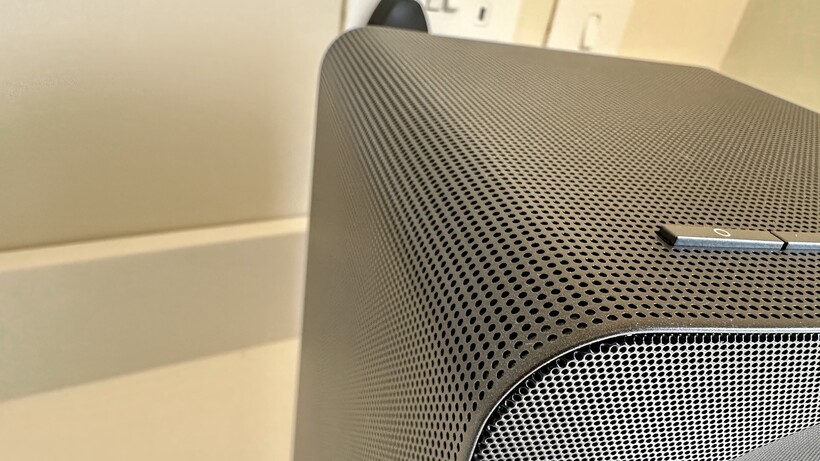
Without going mad (as Sonos did with the great-sounding, bizarre-looking Era 300), Samsung has managed to deliver a wireless speaker that appears expensive and individual while still looking reassuringly like a speaker.

At 269 x 185 x 191mm (HWD) it’s nicely proportioned and strikes a good balance between worktop, shelf and speaker stand size – it’s too big for a desktop really, but in any other space it works well.

Samsung Music Studio 7 chassisSamsung Music Studio 7 chassis
Image Credit (Trusted Reviews)

But it’s the curved, perforated metalwork that begins to set it apart, and the overall design (which is by Erwan Bouroullec) is confident and understated – the dished area on the front panel that looks like a speaker driver but isn’t seems the sort of visual flourish that could easily become a trademark of quite a large range of Samsung Music Studio speakers if the company so desires.

Build quality is well up to standard (just as well, given the amount of money Samsung wants for the Music Studio 7) and the finish is impressive too. As it stands, black or white is hardly the most inspiring selection of colours – but there is (unofficial, off-the-record) talk of a wider range of colours in the not-too-distant future.

Advertisement
Samsung Music Studio 7 top down viewSamsung Music Studio 7 top down view
Image Credit (Trusted Reviews)

Advertisement

Features

  • 3.1.1 -channel layout
  • 24-bit/96kHz hi-res audio
  • 150 watts

The Samsung Music Studio 7 is configured to serve up an impression of 3.1.1 -channel spatial audio (specifically Dolby Atmos, although the speaker is also compatible with Eclipsa Audio) – and so it deploys five drivers and a couple of passive radiators to do the sonic business.

Facing forwards there’s a mid/bass driver above a tweeter. There’s another tweeter angled upwards from the top of the cabinet, and on each side there’s another tweeter beneath a racetrack-shaped passive radiator.

Samsung Music Studio 7 tweeterSamsung Music Studio 7 tweeter
Image Credit (Trusted Reviews)

Samsung isn’t all that keen on discussing the size or the composition of these drivers, and the frequency response they’re capable of generation is a secret too – but there’s 150 watts of Class D power on tap to move these five drivers, which in a speaker of these relatively modest dimensions should prove more than sufficient.

Getting audio information into the speaker can be done in a number of different ways. Dual-band Wi-Fi is available, naturally – and this means that as well as Spotify Connect and TIDAL Connect, the Music Studio 7 is Roon Ready and is compatible with AirPlay and Google Cast too.

Samsung Music Studio 7 connectionsSamsung Music Studio 7 connections
Image Credit (Trusted Reviews)

It’s even compatible with Samsung’s Q Symphony technology, which means it can wirelessly connect to an appropriate Samsung TV. In fact, Q Symphony means that the Music Studio 7 can easily become part of a full-on wireless home cinema surround-sound system – but that’s a review for another day. For now, I’m just considering the Music Studio 7 as a single, stand-alone wireless speaker.

Advertisement

Spotify Tap is on board, for those who just can’t wait to get some music on the go, and Bluetooth 6.0 is available too. There are also some physical inputs on the rear of the cabinet. An HDMI eARC is obviously extremely useful to anyone who fancies incorporating their (non-Q Symphony) TV, while a digital optical input is handy if the TV in question is of a certain (pre-HDMI) vintage. The USB-A slot is only for service and updates, though. 

Advertisement
Samsung Music Studio 7 controlsSamsung Music Studio 7 controls
Image Credit (Trusted Reviews)

Predictably, Samsung isn’t making the details of the digital-to-analogue conversion hardware known. But the Music Studio 7 can handle Hi-Res content of up to 24-bit/96kHz, which is straightforwardly impressive, and can deal with every worthwhile audio file type.

Control is available via a few buttons on the top of the speaker, or on a remarkably granular level in the Samsung Sound app that’s free for iOS and Android. Here’s where you can deploy the obligatory AI features, such as the AI Adaptive Sound setting that’s intended for use when the speaker is part of a home cinema system – it automatically adjusts audio output to suit the content you’re watching – while AI Dynamic Bass Control tries to maximise low-frequency output while minimising the inevitable cabinet vibrations that result.

Samsung Music Studio 7 SmartThingsSamsung Music Studio 7 SmartThings
Image Credit (Trusted Reviews)

Here’s where you can adjust the sound using either a two- or a seven-band EQ or choose from a selection of presets. Here’s where SpaceFit Sound Pro (an automatic room calibration routine) and Active Voice Amplifier Pro (which boosts the midrange to make dialogue more easily discerned) can be accessed. Auto Volume is self-explanatory, and there’s plenty more besides. It’s a clean and stable app, and overall it’s one of the better examples currently around.

The Music Studio 7 is also compatible with Samsung’s SmartThings app, and so can be easily integrated into a much wider smart home ecosystem than merely forming part of a multichannel or multiroom audio system. And if you prefer to just ask, the speaker has Alexa built in and covers Works with Google too – although strangely, Bixby is not on board.

Advertisement

It’s not like Samsung to admit defeat inside a decade, though, so I imagine we’ll be seeing (if not hearing) more of Bixby in the future… 

Advertisement
Samsung Music Studio 7 SmartThings EQSamsung Music Studio 7 SmartThings EQ
Image Credit (Trusted Reviews)

Sound Quality

  • Big, direct sound
  • Impressively chunky and expansive presentation
  • Slight lack of high-frequency substance

There’s really only one place to start with a wireless speaker that fancies itself where spatial audio is concerned, and that’s with some Hi-Res content mixed in Dolby Atmos and available via TIDAL Connect. The Atmos mix of De La Soul’s timeless 3 Feet High and Rising, it seems safe to say, allows the Music Studio 7 to showcase a lot of its undoubted talents.

First and foremost, the Samsung is a spacious, expansive listen while managing to be quite well focused at the same time. Some less capable spatial audio speakers can do the scale thing without too many problems, but remaining sharp rather than vague at the same time is a trickier discipline – the Music Studio 7 creates a sound that’s demonstrably taller and wider than the cabinet it’s coming from, but the soundstage it describes is carefully controlled and coherently laid out.

And as well as sounding wide and tall, the Music Studio 7 also sounds nicely balanced. It can lose the run of itself a little where high-frequency reproduction is concerned – it doesn’t need any especially unsympathetic recording to make the Samsung sound just a little splashy and edgy, but I guess that’s what can happen when you put four tweeters in a relatively small box.

Samsung Music Studio 7 front viewSamsung Music Studio 7 front view
Image Credit (Trusted Reviews)

Otherwise, though, the tonal balance is nicely neutral, and there’s a very well-judged amount of low-frequency wallop available for when the action in your music or your movie really kicks off. 

If and when it does all kick off, the Samsung has plenty of dynamic headroom available to make the upturn in volume or intensity plain. It controls its low-end activity well, though, so something like the De La Soul recording that relies heavily on rhythmic expression, is handled properly. And it’s just as adept when it comes to the more subtle stuff, too – detail levels are high at every point in the frequency range, and there’s more insight into the dynamics of harmonic and textural variation that is the norm in products like this.

Advertisement

Advertisement

It communicates eloquently through the midrange and loads voices with information – details of attitude and emotion are just as readily available as those concerning tone and timbre. This, of course, is good news where music is concerned but even better news if you’re listening to a spatial audio movie soundtrack – and the Music Studio 7 projects the midrange forward well, even if the rest of the frequency range is in uproar.  

Samsung Music Studio 7 drive unitSamsung Music Studio 7 drive unit
Image Credit (Trusted Reviews)

Naturally, all of the above applies only if you give the speaker the space in which to properly do its thing. If it’s on a bookshelf, there can be no shelf directly above it – that upward-firing tweeter needs room in which to operate.

Similarly, the drivers that face outwards from the sides of the cabinet must not be firing onto a surface that’s very nearby otherwise the sound will become muddy and confused. But as long as you give the Samsung the elbow-room, it’s a very satisfying performer indeed.

Should you buy it?

You’re interested in looks as well as sound

Advertisement

The Music Studio 7’s audio credentials are impressive, but the appeal of its clean, understated design is strong too.

Advertisement

You’re intending to position it on a shelf

Or, at least, if it’s not the top shelf – the upward-firing tweeter needs some space in which to operate.

Advertisement

Advertisement

Final Thoughts

I’d assumed that Samsung would, in the audio/visual market, stick to the TVs and soundbars it’s so good at and leave the more specialised audio stuff to one or more of the many very credible audio brands it now owns. Shows what I know, doesn’t it?
 
This is the best Samsung-badged audio product I’ve heard in… well, I’m not sure how long exactly, but it’s quite a while.

How We Test

The Samsung Music Studio 7 was positioned on a kitchen worktop, on the top shelf of an AV rack next to a TV, and a dedicated speaker stand during the course of the test. Music was streamed wirelessly from an Apple iPhone 14 Pro, both via Bluetooth and via TIDAL Connect.
 
Spatial audio movie soundtracks came via an HDMI cable from the TV connected to the speaker’s eARC socket. This allowed for lots of different content, of different types and resolutions, to be dealt with by the Samsung, and this happened for well over a (working) week.

  • Tested with real world use
  • Tested for a week
  • Tested across multiple source

FAQs

Do I have a choice of finishes?

Yes, the black of this review sample or white. The rumour is that different options will follow, but it’s just a rumour at the moment.

Advertisement
Can I use two as a stereo pair?

The Music Studio 7 supports Stereo Play, which makes it easy for two speakers to operate as a single stereo system.

Advertisement
Will it work with my TV?

If your TV has an HDMI ARC output then the Samsung can play spatial audio soundtracks when connected this way. And if you have an appropriate Samsung TV, Q Symphony is available too.

Advertisement

Full Specs

  Samsung Music Studio 7 (LS70H)
UK RRP £499
USA RRP $499
EU RRP €549
CA RRP CA$649
AUD RRP AU$749
Manufacturer Samsung
Size (Dimensions) 185 x 191 x 269 INCHES
Weight 5.6 KG
Release Date 2026
Driver (s) 4 x tweeter; mid/bass driver; 2 x BMR
Ports HDMI eARC; digital optical
Connectivity Dual-band Wi-Fi; Bluetooth 6.0
Colours Black, White
Frequency Range – Hz
Audio Formats Dolby Atmos Music, ,Dolby Atmos, Dolby 5.1ch, Dolby Digital Plus, Dolby True HD, Multi-channel LPCM, MP3, AAC, OGG, FLAC, WAV, ALAC, AIFF
Power Consumption 20 W
Speaker Type Wireless Speaker

Source link

Continue Reading

Trending

Copyright © 2025