

Crypto World
DxSale Suffers $7.3M Drain in BNB Chain Liquidity Exploit


DxSale, a memecoin launch platform used to lock liquidity for projects on the BNB Chain, was struck by a cyberattack that drained about $7.3 million and impacted roughly 1,400 liquidity providers. The incident underscores ongoing fragility in DeFi liquidity mechanisms and the evolving risk ecosystem as bad actors increasingly leverage automation and obfuscated on-chain activity.
Blockchain analytics group PeckShield tracked the attacker’s moves, noting that the wallet labeled “0xC457” funneled about $1.87 million worth of BNB into two primary wallets before dispersing the funds across multiple Binance deposit addresses. The findings were shared in a Friday post on X, illustrating how quickly funds can be relocated after a breach.
Key takeaways
- DxSale’s $7.3 million hack affected approximately 1,400 LPs on the BNB Chain, highlighting the vulnerability of liquidity-locking mechanisms in DeFi.
- The attacker’s activity involved moving BNB to two main wallets and then to numerous Binance deposit addresses, signaling an attempt to fragment and obscure traceability.
- Analysts point to a backdoor in the deployer contract and a backdated lock that transformed supposedly locked deposits into withdrawable balances, enabling the mass withdrawal.
- Historical context suggests that DxSale’s liquidity lockers from 2021 may still hold liquidity from early projects, raising questions about the long-tail risk of legacy contracts in DeFi ecosystems.
- Broader crypto security concerns are rising as DeFi hacks persist; May saw about $52 million in exploits, with AI-aided tooling cited as heightening attacker capabilities.
Attack mechanics and the tracing puzzle
Initial analysis indicates the attacker executed a sequence of on-chain moves designed to veil the true extent of the breach. Tahax, a blockchain analyst, noted that the exploiter’s wallet was freshly created and funded through a crypto exchange, complicating immediate attribution. The funds then traversed a pattern of transfers intended to fragment visibility across multiple wallets and exchange endpoints, a common tactic intended to thwart rapid tracing by investigators.
In a separate thread, Tahax highlighted that ownership of the locker contract was quietly transferred to a new wallet about 269 days prior to the breach, suggesting a deliberate backdoor was left in place without a formal migration announcement. He pointed to at least 80 additional transactions that wheeled ownership over again before the final handoff landed at wallet “0xC45,” the point at which mass withdrawals reportedly commenced.
Web3 security firm Coinsult weighed in with a succinct assessment: “A privileged setFee plus a backdated lock turned ‘locked’ deposits into a withdrawable balance.” The observation underscores how seemingly protective features can be weaponized when combined with backdoors and misaligned deployment history.
DxSale’s historical role and how it factors into risk
DxSale has existed as a liquidity locker for years, particularly in the BNB Chain ecosystem. Tahax’s notes imply that some liquidity reserved by tokens launched long ago remains tethered to lockers under DxSale’s control. That legacy state matters because it can create latent risk: a deployment that appears inactive or benign can later become a vector for exploitation if a backdoor or backdated logic is triggered by a malicious actor.
The incident also raises the question of how much liquidity is still bound up in older DeFi deployments and how effectively projects, auditors, and users can verify the current state of those contracts. As the attacker’s footsteps suggest, even well-meaning infrastructure built to facilitate liquidity can become a liability if its access controls and state transitions are not impeccably maintained.
DeFi risk climate and the AI factor
The DxSale breach arrives amid a broader wave of DeFi hacks. Data from DefiLlama shows May exploits totaling roughly $52 million, down from a peak of $634 million in April, marking a high-water mark not seen since February 2025. The surface area of DeFi security remains wide, and the pace of incidents continues to keep defenders, auditors, and users on high alert.
Industry voices have grown increasingly concerned about the convergence of DeFi weaknesses and advancing AI tooling. Manuel Aráoz, founder of OpenZeppelin, argued that the expanding capability of AI to identify contract vulnerabilities is unsettling, prompting him to say that “I now consider all of DeFi unsafe” in the context of AI-assisted analysis and exploitation. While his stance is provocative, it reflects a real tension: as attackers gain sharper tooling, defenders must accelerate their own security engineering and verifications.
Security research and what to watch next
On-chain researchers emphasize that tracing and attribution remain challenging in cases where backdoors and ownership-hopping are used to whitewash the trail. The combination of a backdoor in the deployer contract, a backdated lock, and a sequence of ownership transfers creates a layered obfuscation that complicates post-breach analyses and potential recovery efforts.
DxSale has not publicly commented on the incident in the material available to Crypto outlets, and the final tally of affected liquidity providers remains to be confirmed. The unfolding investigation will likely focus on whether any remaining liquidity can be recovered, whether user funds can be salted back into affected pools, and which governance or auditing steps can most effectively reduce the likelihood of a recurrence.
As the market absorbs the implications, observers will be watching whether projects reassess the safety of legacy liquidity lockers, tighten deployment governance, and accelerate the adoption of standardized, auditable security practices to prevent backdoors from slipping into production contracts.
Source tracking and responses continue to evolve, with PeckShield detailing the immediate fund flow and several on-chain analysts highlighting the obfuscated ownership hops that preceded the withdrawals. The broader takeaway for investors and builders is clear: even mature DeFi ecosystems can be exposed by hidden contract logic and legacy configurations if proper checks are not in place.
Ultimately, the incident reinforces a central theme for the sector: transparency, robust auditing, and proactive security governance are essential as DeFi matures and attacker tooling evolves in tandem with the industry’s growth.

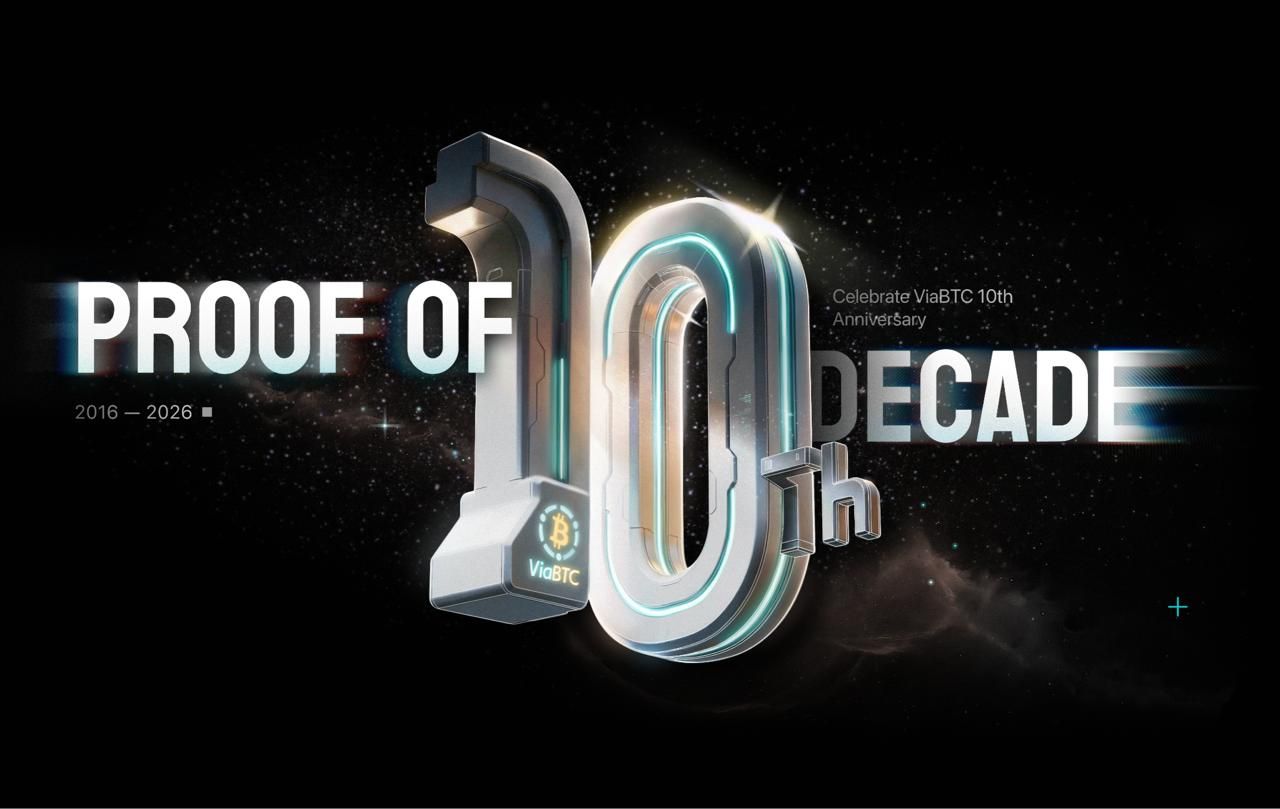

ViaBTC Group, a leading global blockchain infrastructure provider, today announced the launch of its 10th-anniversary campaign, marking a major milestone since its founding in 2016. The campaign celebrates ten years of continuous development, reliable service, and long-term commitment to miners, traders, and crypto users worldwide.
The theme “Proof of Decade” draws inspiration from the language of blockchain consensus, such as Proof of Work and Proof of Stake. On June 5, 2016, ViaBTC officially launched its mining pool service, beginning a journey that has since grown to serve 2 million users across more than 150 countries and regions. Over the past decade, ViaBTC has kept its Bitcoin mining pool running continuously with no service downtime and maintained one of the industry’s lowest orphan rates, helping reduce invalid block losses and better protect miners’ earnings.
ViaBTC Pool has consistently ranked among the world’s top Bitcoin mining pools by hashrate and currently holds the No. 1 global ranking in LTC/DOGE merged mining, ZEC mining, and BCH mining. It supports over ten major PoW cryptocurrencies, providing secure, stable, and efficient mining services worldwide.
Beyond mining, ViaBTC Group has built a wider ecosystem anchored by CoinEx, its global cryptocurrency exchange, offering secure trading, multi-chain wallets, and integrated crypto asset management in over 200 countries and regions. By linking mining, trading, storage, and asset services, it provides a seamless all-in-one crypto experience.
“For ViaBTC, trust is established through consistent delivery, transparent earnings, fair settlements, and stable systems. As we embark on our next decade, we will uphold this commitment within a broader ecosystem and continue to build the infrastructure that the blockchain industry can depend on,” said Haipo Yang, Founder and CEO of ViaBTC Group.
During the “Proof of Decade” campaign, ViaBTC will roll out a series of anniversary initiatives for users and partners worldwide, including community celebrations across key markets and a $100,000 prize pool campaign opening June 2, 2026.
About ViaBTC Group
Founded by Haipo Yang in May 2016, ViaBTC Group is a leading blockchain infrastructure provider with an ecosystem spanning ViaBTC Pool, CoinEx Exchange, CoinEx Wallet, and ViaBTC Capital. It offers seamless crypto services across mining, trading, asset management, and venture capital, and today ranks No. 1 in LTC/DOGE merged mining, serving over 2 million users worldwide. Visit https://www.viabtc.com/ for more information.
The post ViaBTC Launches “Proof of Decade” Campaign to Celebrate 10th Anniversary appeared first on BeInCrypto.

TLDR:
- Midnight Network went live on March 30, 2026, with nine institutional-grade nodes producing blocks in a federated phase.
- Six dApp proposals merged between May 8–19, spanning DeFi, medical consent, and supply-chain traceability use cases.
- Compact DSL compiles TypeScript-like contract code directly into ZK circuits, enabling three programmable disclosure modes per dApp.
- Two stablecoin proposals are under review, which are critical for enabling functional trading pairs on already-approved DEX platforms.
Midnight Network is redefining blockchain privacy through a programmable disclosure model that moves beyond the traditional binary approach.
Rather than forcing projects to choose between full transparency or complete shielding, the Cardano partner chain allows contracts to specify exactly which data fields are visible and to whom.
Since mainnet launched on March 30, 2026, in a federated phase, the network has already merged six third-party dApp deployment requests across key sectors including DeFi, healthcare, and supply-chain management.
Midnight’s Technical Architecture Enables Selective Data Visibility
The network runs on three core components that work together to enable this disclosure model. Compact, a TypeScript-like domain-specific language, compiles contract source directly into zero-knowledge circuits.
The Kachina protocol processes private state transitions off-chain and submits only the ZK proof to the ledger. A dual-state ledger then maintains public and shielded state in separate stores.
This structure supports three disclosure modes within a single contract. Data can be committed openly to the chain as public, decrypted by specified parties through auditor mode, or kept entirely private with only a ZK proof visible.
All three modes are already active on midnight.city, the official AI-agent simulation running since February 26, 2026.
The network also separates its token functions deliberately. NIGHT handles value and governance, while DUST is a shielded, non-transferable resource covering transaction fees.
This keeps operational costs out of counterparty visibility and removes MEV as a structural concern for institutional flows.
Nine institutional-grade nodes currently produce blocks: Google Cloud, MoneyGram, Vodafone’s Pairpoint division, eToro, Worldpay, Bullish, AlphaTON Capital, Blockdaemon, and Shielded Technologies.
Decentralization will follow in subsequent phases as Cardano stake pool operators begin producing blocks for both networks.
dApp Deployment Pipeline Reflects Diverse Real-World Use Cases
Between May 8 and 19, 2026, six dApp proposals merged into the Midnight Improvement Proposal repository. These covered a spot order-book DEX, a hybrid AMM DEX, a perpetuals contract, a medical consent registry, an ambassador directory, and a fishery traceability log.
Four more proposals remain under review, including two stablecoins, one NFT project, and one payment application.
Each proposal undergoes a risk assessment across three axes: Privacy-at-risk, Value-at-risk, and State-space-at-risk.
The gyotak fishery traceability contract scored 1/1/1 across all three, committing hashes of GPS, photo, and species data per catch.
NexiFuse, the medical consent registry, scored 2 on the privacy axis since consent graph leakage remains regulated PII.
The two stablecoin proposals currently under review are particularly relevant. The merged DEXs require a stable unit of account before meaningful trading pairs can function. This points toward composability as the next development layer taking shape on the network.
Analytical tooling for ZK circuit correctness, metadata boundaries, and off-chain trust models is developing alongside these first dApps, positioning Midnight for regulated finance and healthcare workloads at scale.



- DEXE rose more than 11% intraday to trade above $19.16, with a 32% weekly gain.
- Daily trading volume climbed about 38% to nearly $40 million, suggesting accumulation.
- Technical support sits at $15, while bulls could target $24 or higher next.
DeXe (DEXE) rallied sharply on Friday, climbing toward the $20 mark as buying pressure intensified across major exchanges.
The spike in volume and a string of weekly gains have drawn renewed attention from traders and analysts, who are assessing whether the asset can extend its advance or if profit-taking will cap further upside.
DeXe price rises 11% amid volume spike
DeXe price jumped more than 11% to trade above $19.16 after a strong intraday advance, propelling DEXE onto CoinMarketCap’s list of top weekly movers.
The token’s 24-hour performance contributed to a one-week rally that saw DeXe gain roughly 32%, placing it among the market’s notable gainers.
Other top performers included Stellar (+42%), Humanity (+23%), and Injective (+21%). DeXe has also climbed more than 58% over the past month.
The latest gains coincided with a notable increase in on-chain and exchange activity, with daily trading volume rising roughly 38% to around $40 million.
The surge in volume suggests growing accumulation, with buyers stepping in at key levels.
The combination of rising prices and stronger trading activity supports the case for continued near-term momentum and positions DEXE to challenge higher resistance zones if bullish sentiment persists.
DEXE price analysis
The technical outlook for DeXe shows the token testing levels last seen in March 2025, marking a return to multi-month highs.
Moving averages continue to support the broader uptrend. The 50-day simple moving average (SMA) is currently acting as a dynamic support level, while the 100-day SMA sits lower and provides a deeper technical cushion for holders.
Key resistance remains near $20, followed by a more significant barrier around $24. These zones could attract profit-taking from short-term traders and may act as hurdles for further upside.

On the downside, initial support is located near $15, a level that aligns with previous consolidation and areas of intraday demand.
Stronger support is positioned near the 50-day SMA around $12.84 and the 100-day SMA near $9.17. A sustained decline toward those levels would signal weakening bullish momentum and could trigger increased selling pressure.
For bulls to maintain control, DEXE would need to close decisively above the $20 resistance area while sustaining elevated trading volume, reducing the risk of a rapid retracement.
However, if the token fails to break above $20 and sellers regain control, the rally could lose momentum quickly.
A rise in sell-side volume would increase the likelihood of a pullback toward the $15 support zone.
Intercontinental Exchange, the parent company of the New York Stock Exchange (NYSE), is urging regulators to allow regulated exchanges to offer 24/7 onchain perpetual futures trading, according to ICE CEO Jeffrey Sprecher.
Speaking at a Bernstein conference on Wednesday, Sprecher said that he was urging regulators to create a “level playing field” for launching 24/7 onchain perps contracts, arguing that regulators are “prohibiting us from doing this when it’s already happening.”
The CEO said that ICE had multiple exploratory discussions with decentralized exchange Hyperliquid about the synergies between the crypto and traditional finance (TradFi) industries, where ICE sought to “learn” more about onchain perps.
The comments are the latest testament on how more TradFi companies are exploring ways to enable 24/7 trading for stocks and commodities via blockchain rails, following Hyperliquid’s success.
The remarks come a week after OKX said it will introduce perpetual futures based on ICE’s Brent crude and West Texas Intermediate (WTI) crude benchmarks, two of the world’s most widely used oil price indicators, Cointelegraph reported on May 22.
The trading products are the first initiative announced under a broader partnership between ICE and OKX, after ICE invested in the cryptocurrency exchange at a $25 billion valuation in March.
Earlier in March, the NYSE also partnered with tokenization platform Securitize as part of a broader effort to develop blockchain-based stock trading infrastructure with 24/7 trading and settlement for Wall Street.
Cointelegraph has approached ICE for comment on whether the exchange operator was planning to launch an onchain perps trading platform via Hyperliquid.
Related: UK proposes near-24/7 settlement to prepare markets for tokenization
Hyperliquid is “bigger than Nasdaq,” says ICE CEO
Sprecher praised Hyperliquid’s rapid growth as a trading platform, which facilitated the creation of multiple new billionaires, said the CEO, adding:
“If you haven’t heard about it, it’s bigger than Nasdaq, okay? It’s 11 people.”
Hyperliquid remains far smaller than Nasdaq by conventional trading volume measures, but Sprecher’s comment underscored the pressure that always-on crypto derivatives venues are putting on regulated exchanges.
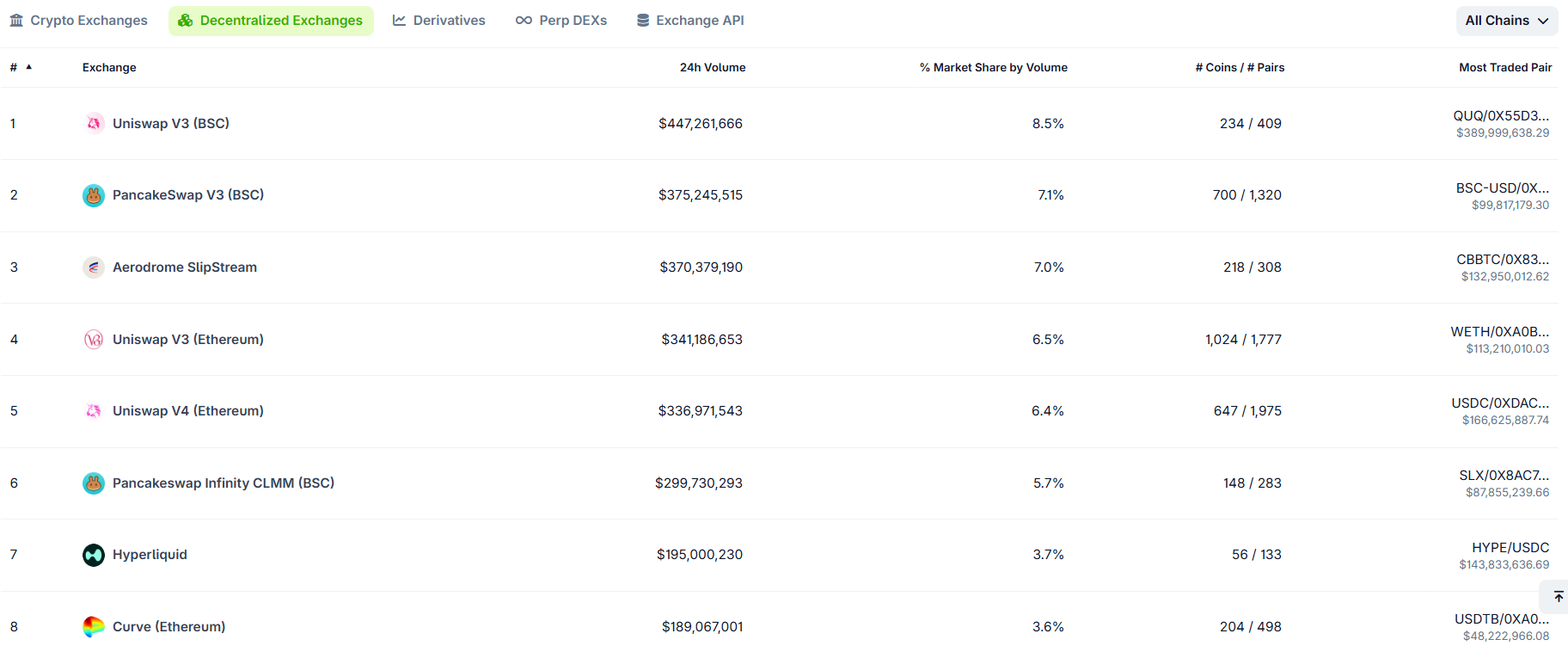
Hyperliquid is ranked as the 7th largest decentralized exchange on CoinGecko, with a 3.7% market share and $195 million in daily trading volume.
It ranks as the fourth-largest fee-generating protocol in the crypto industry, generating $15.6 million in weekly fees in the past seven days, DefiLlama data shows.
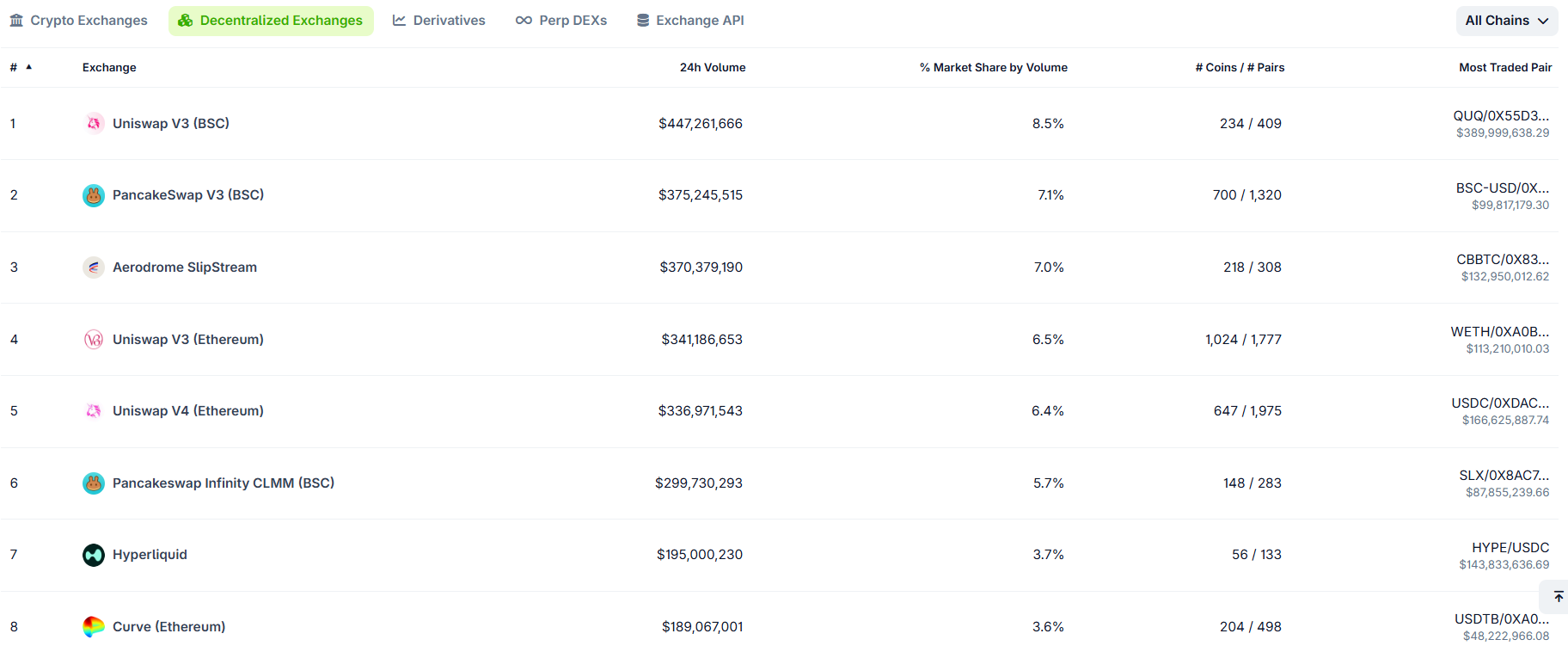
Top decentralized exchanges by trading volume and market share. Source: CoinGecko
Hyperliquid has been expanding its functionalities and recently launched canonical prediction markets for offchain events, Cointelegraph reported on Tuesday.
The platform’s growing functionalities are positioning Hyperliquid as the crypto industry’s next “super-app,” making the Hyperliquid (HYPE) token “one of the most mispriced assets in crypto today,” as investors are still evaluating it as just a perp DEX, said Matt Hougan, chief investment officer at crypto asset manager Bitwise.
Magazine: Would Bitcoin really be at $200K if not for Jane Street? Trade Secrets
US-listed spot Bitcoin exchange-traded funds (ETFs) posted their longest outflow streak since launch, extending withdrawals as institutional demand for Bitcoin exposure weakened.
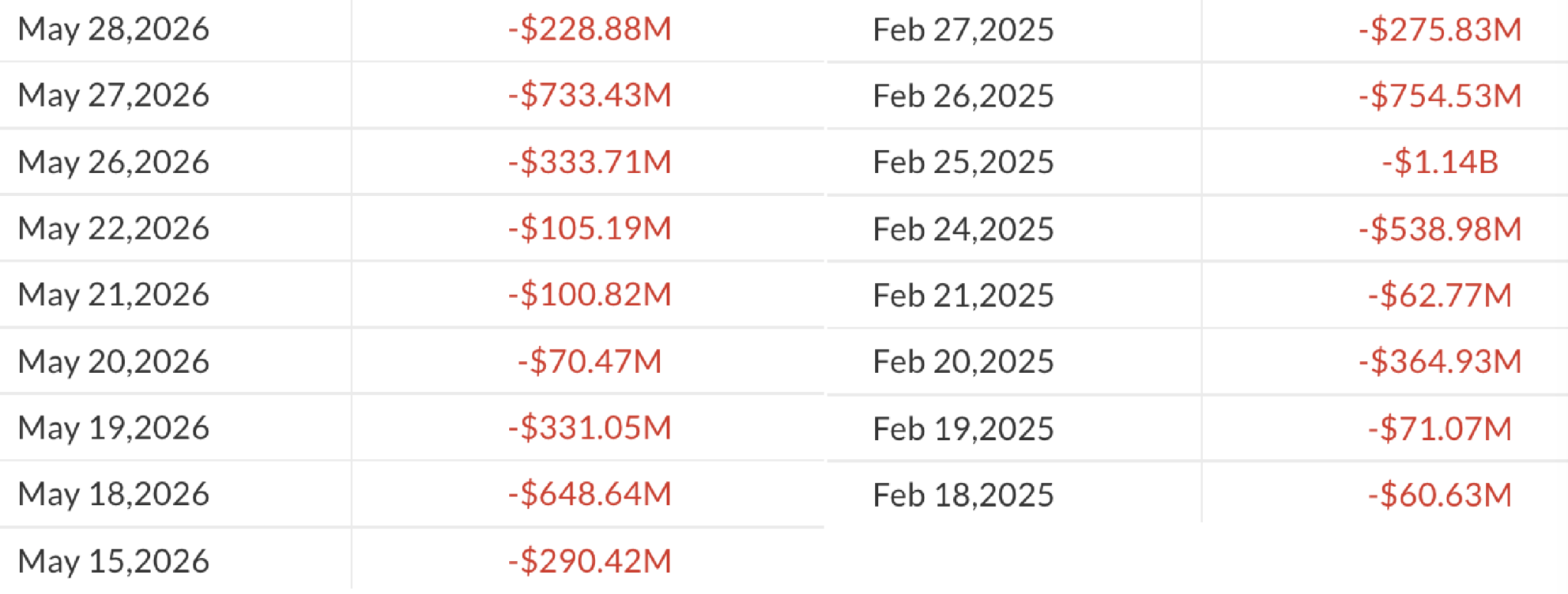
Spot Bitcoin ETFs recorded another $223 million in net outflows on Thursday, marking the record nine-day outflow streak since the funds launched in 2024, according to data from Farside Investors.
The latest streak surpassed the previous record eight-session outflow run recorded in February 2025, though its roughly $2.84 billion in cumulative withdrawals remains below the $3.2 billion lost during the earlier selloff.
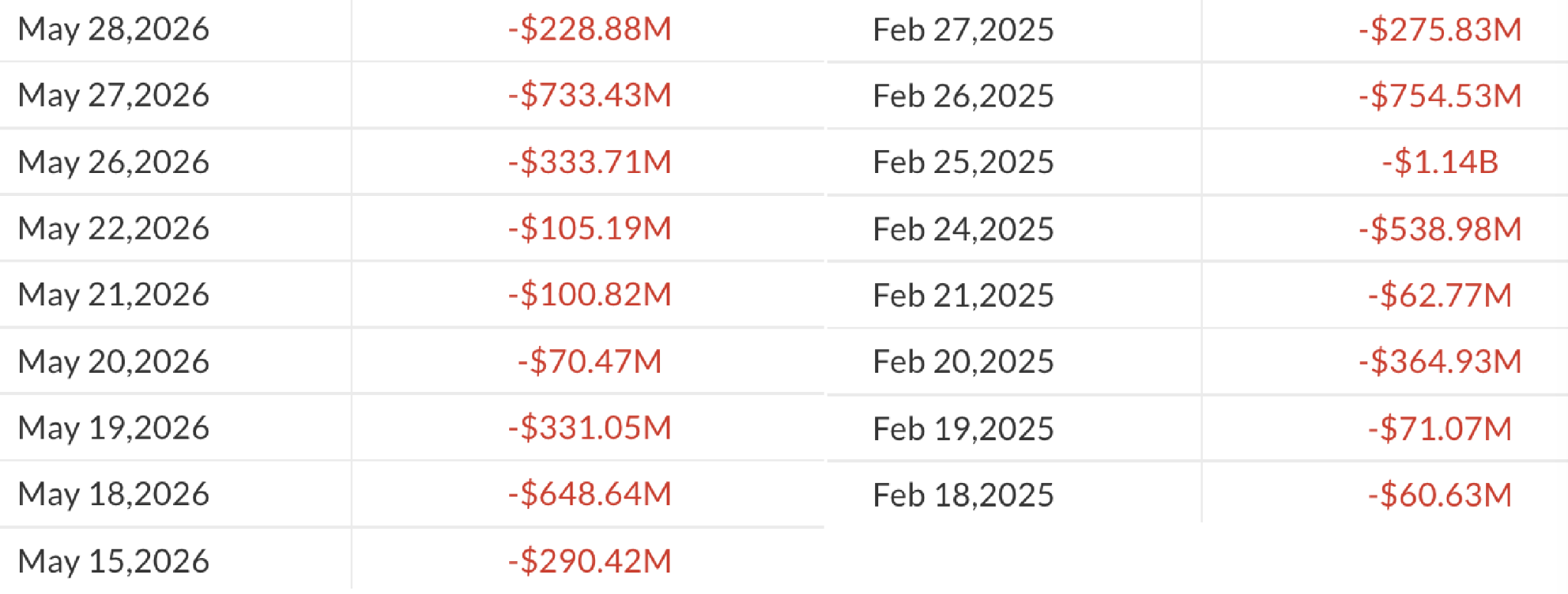
US spot Bitcoin ETF outflows in May 2026 versus February 2025. Source: SoSoValue
The outflows suggest institutional demand for Bitcoin exposure is weakening through the ETF channel, and come as major corporate holders such as Strategy face renewed pressure even as some new altcoin products like Hyperliquid (HYPE) ETFs continue attracting investor interest.
BlackRock’s IBIT leads the outflows at $2 billion
BlackRock’s iShares Bitcoin Trust (IBIT), the largest US spot Bitcoin ETF by assets, accounted for a massive share of losses during the nine-session outflow streak.
The fund recorded roughly $2.04 billion in cumulative outflows between May 15 and Thursday. As Cointelegraph reported, a $527.8 million withdrawal on May 27 marked IBIT’s second-largest daily outflow on record, narrowly below the $528.3 million record posted on Jan. 30, 2025.

BTC holdings for all US spot Bitcoin ETFs as of market close on Wednesday. Source: Wallet Pilot
Despite the selling pressure, BlackRock’s Bitcoin ETF remains the dominant US spot Bitcoin fund by assets under management. IBIT held roughly 792,000 BTC as of market close on Wednesday, representing about 62% of all US spot Bitcoin ETF holdings, according to Wallet Pilot data.
HYPE ETFs buck the broader slowdown
While spot Bitcoin ETFs face sustained selling pressure, newly launched HYPE ETFs have continued attracting fresh capital from investors.
The products recorded steady inflows between May 12 and Thursday, with cumulative net inflows rising above $100 million, according to SoSoValue.
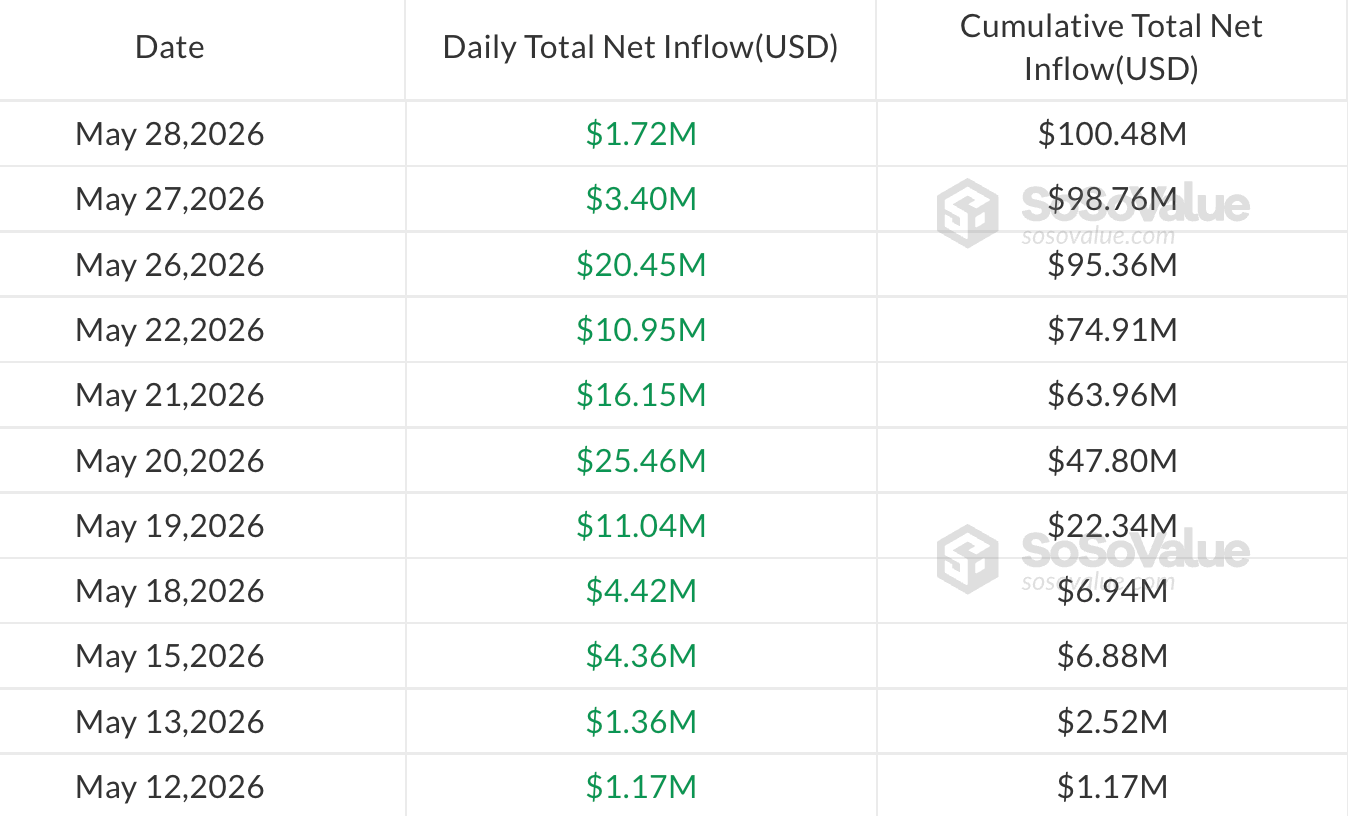
Daily flows in US-listed spot HYPE ETFs. Source: SoSoValue
Other altcoin funds such as spot XRP ETFs also recorded steady gains over the period, totaling roughly $120 million in net additions between May 4 and Thursday.
Related: Bitcoin’s major holders halt buys as demand slows: CryptoQuant
The divergence underscores a shift in crypto fund flows, with investors pulling back from Bitcoin and Ether ETFs while newer products tied to tokens such as Hyperliquid’s HYPE continue to attract inflows.
US spot Ether ETFs have also faced persistent selling pressure, logging 13 consecutive days of outflows between May 11 and Thursday, with cumulative losses of roughly $694 million.
Magazine: Big Questions: Do we really only need 2–5 cryptocurrencies?


The global rush to deploy autonomous AI agents across the internet, enterprise networks and consumer applications is creating a catastrophic security debt, according to the chief of blockchain security auditor Certik.
While corporations ambitiously market these tools as productivity miracles, the crude reality is that it can be a very, very risky thing to do. Unisolated, unvetted AI agents are a massive security disaster waiting to happen, Ronghui Gu, the co-founder and CEO of CertiK, told CoinDesk.
Gu warned that users are potentially exposing their most sensitive files, local credentials and money accounts to autonomous systems that can be easily manipulated, hijacked and openly scammed.
“Right now, agents are no longer just answering questions in a chat window,” Gu told CoinDesk on the heels of CertiK’s landmark deep-dive report into widespread agent infrastructure. “They are beginning to call external tools, read local files, trigger workflows, and interact with financial infrastructure. But if you do not isolate the execution environment and scan these tools first, you are handing a compromised identity broad internal access to your entire network.”
The fundamental flaw in the current AI agent boom is a mistaken trust model, according to Gu.
Charles Hoskinson, founder and CEO of Cardano’s Input Output, said that by 2035 they will become more relevant than humans on the internet. Coinbase CEO Brian Armstrong, recently said “very soon there are going to be more AI agents than humans making transactions” and Binance Founder Changpeng Zhao, predicted they “will make one million times more payments than humans.”
Ultimate inside threat
Gu said many popular, open-source AI applications are built under the assumption that because they run locally on a user’s computer or connect via standard chat apps like WhatsApp, they are safe from external threats.
The reality is entirely the opposite, he noted. The moment a user grants an AI agent permission to read local system storage, view execution histories or manage personal email and business database credentials, that agent becomes the ultimate inside threat.
CertiK’s recent analysis of early-state, rapidly growing agent structures uncovered a staggering accumulation of security vulnerabilities, including hundreds of critical security advisories, unpatched common vulnerabilities and exposures (CVEs) and other massive exposures of local credentials and session memories resulting from completely inconsistent boundary checks.
More alarming yet is how easily these autonomous systems can be completely redirected at the reasoning layer without a single line of malicious code ever being written, Gu emphasized.
Through basic “prompt injection” attacks, a bad actor can embed hidden natural language instructions inside a benign webpage, a PDF document, or an incoming email, he added.
When the unisolated AI agent reads that file to process a task for the user, it fails to separate trusted system commands from the untrusted external data, Gu explained. The agent then silently overwrites its original rules, obeys the malicious instruction, and can be forced to exfiltrate data or trigger unauthorized fund transfers.
Hyperfast exploits
Gu revealed that CertiK discovered hundreds of malicious skills, fake installers, and lookalike dependency packages sitting directly on open agent utility hubs. Because these malicious plug-ins use standard natural language to subtly influence the agent’s behavior and change its goals, they completely bypass legacy, signature-based antivirus software.
“The scam apps use natural language to influence behavior, making them totally resistant to traditional antivirus scans,” Gu explained. “And right now, it is even easier to scam the machine than it is to scam a human.”
In what Gu describes as a bizarre evolution of financial crime, CertiK’s telemetry has observed an explosion of onchain, automated scams that run for only 10 minutes or a few hours before completely vanishing.
These hyperfast, ephemeral exploits are specifically designed by hackers to target and scam other autonomous AI trading bots and automated agent systems, executing machine-on-machine financial drainage before any human even realizes a compromise has occurred.
Gu states that the software engineering industry must completely abandon its reliance on trust-based interactions and move immediately toward an isolated, “Zero Trust” architecture where every command and dependency is continuously verified.
This morning, the Commodity Futures Trading Commission (CFTC) took historic action to permit the listing of a true bitcoin perpetual contract by a CFTC-registered exchange. In doing so, the Commission charted a path for one of the most liquid segments of the crypto asset markets to exist within the U.S. regulatory framework. Having true perpetual contracts in the United States is a major step forward in delivering on President Trump’s goal of cementing America as the crypto capital of the world.
Unlike a traditional futures contract, which was designed for markets that close overnight and on weekends, a perpetual contract (also known as a “perpetual” or “perp”) is a type of derivative contract that has no fixed expiration date. Instead, counterparties periodically exchange a funding rate payment, similar to variation margin, that is designed to maintain relative price parity with the underlying asset’s spot price. In markets that operate 24/7, the lack of an expiration date allows market participants to maintain continuous price exposure without periodic expirations and the associated costs of rolling over contracts.
Perpetual contracts were first theorized in a discussion paper published in 1992 by Nobel-prize-winning economist Robert Shiller. Since then, perpetuals have become a foundational risk-management and price-discovery tool in the global crypto asset markets.
Yet, despite clear market demand and the CFTC’s statutory obligation to promote responsible innovation, the CFTC has – until now – failed to provide a workable pathway for crypto asset perpetuals to exist in a compliant manner in the United States.
As a result, perpetual trading activity has predictably occurred offshore. With liquidity fragmented across foreign platforms, American crypto asset firms were competitively disadvantaged, and U.S. market participants were effectively barred from accessing these markets.
Under my leadership, the CFTC has taken a different approach. One that is consistent with the CFTC’s mandate to promote responsible innovation and fair competition, and one rooted in the belief that responsible innovation requires regulatory clarity.
The Commission’s long-standing, principled oversight of the commodity derivatives market will now include a workable framework for true crypto asset perpetual contracts. This is a framework that can limit excessive leverage, volatility and systemic risk, rather than pushing those risks offshore to unregulated venues.
While today’s approval of the bitcoin perpetual may seem novel, history tells a different story.
For more than a century and a half, America’s commodity futures markets have functioned as a proving ground for innovation and evolved alongside technological progress. From agricultural futures in the nineteenth century, to electronic trading in the twentieth century and bitcoin futures under Trump 1.0, our markets have consistently adapted to new forms of commerce, risk transfer and capital formation. Crypto assets and blockchain-based financial infrastructure represent one of the many next chapters in that story.
In my view, the question was never whether crypto asset perpetual contracts would exist. Instead, the question was whether they would exist under American oversight, American standards and American rule of law.
For too long, bureaucratic regulators approached the new frontier of finance with the assumption that innovation itself represented a threat to the public interest. This decelerationist approach resulted in regulation by enforcement and forced American innovators to flee the U.S. and build beyond our borders.
Fortunately, thanks to the leadership of President Donald Trump, those days are behind us, and the U.S. is now the crypto capital of the world. Today’s action to onshore crypto asset perpetuals was the natural extension of this American achievement and reinforces U.S. leadership in digital financial technology.
Although the work is far from finished, today marks an important milestone.
For the first time, the world’s most sophisticated financial system has opened the door for crypto asset perpetuals to operate within its regulated framework. And while Congress has an important role to play in delivering long-term statutory clarity for crypto asset markets, the CFTC will continue advancing initiatives related to tokenized collateral, crypto asset market structure and prediction markets.
Innovation is coming onshore.
American crypto asset perpetuals are here, and the U.S. will continue to lead in this new frontier of finance.


Latest developments: Klein argued the Commodity Futures Trading Commission faces a dramatically larger mandate as lawmakers consider expanding its authority over digital assets. Klein recently joined Rebecca Rettig and Renato Mariotti on CoinDesk’s The Policy Protocol.
- Klein said the CFTC was originally created to oversee commodity futures markets and was not built for the scale of responsibilities envisioned under current crypto legislation.
- He warned that giving the agency new powers without additional staff, funding and expertise could create the appearance of regulation without meaningful oversight.
- Klein expressed concern that regulatory capacity has been weakened by personnel departures and structural changes at the agency.
What this means: The debate over the Clarity Act is increasingly becoming a debate over whether the CFTC can effectively police crypto markets.
- Klein said one lesson from the Dodd-Frank era is that assigning major responsibilities across multiple regulators can create delays and confusion.
- He argued that fragmented oversight risks repeating past regulatory failures if agencies lack the resources or will to enforce rules.
- Klein compared those risks to shortcomings he believes contributed to past financial crises.
The controversy: Klein sharply criticized allegations that political influence is affecting financial regulation.
- Referring to a New York Times report discussed during the interview, Klein said regulators should remain independent from political intervention.
- He argued that enforcement decisions should not be influenced by relationships with the White House or political figures.
- Klein described the current environment as unusually permissive toward financial misconduct and called for stronger accountability.
Reading between the lines: Klein sees a longer-term solution in closer coordination between U.S. market regulators.
- He said the U.S. is unusual in maintaining separate capital markets regulators through the SEC and CFTC.
- Klein argued that eventually merging the agencies would make sense, though he expressed skepticism that Congress is prepared to pursue that path.
- In the meantime, he praised reports that SEC and CFTC staff may share office space, saying physical proximity can improve collaboration more than formal agreements.
What comes next: Regulatory structure could become as important as the rules themselves.
- Klein said memorandums of understanding between agencies often fail to produce meaningful cooperation in practice.
- He argued that stronger coordination mechanisms and operational integration would better prepare regulators for overseeing crypto and prediction markets.


U.S. crypto firms can offer perpetual futures contracts, or “perps,” without running afoul of the U.S. Commodity Futures Trading Commission, according to the agency’s first approval allowing Kalshi to list and trade U.S. bitcoin perpetuals, the regulator said on Friday.
In a related action, the agency also issued key guidance that allowed Coinbase Financial Markets to put its U.S. clients into global options and perps, tapping the largest current markets.
The perp is a kind of derivative that allows the investor to speculate on future price movements in a crypto asset without putting an expiration date on that contract, allowing it to be held as long as the investor wants. With this first approval on a registered platform, the U.S. derivatives regulator with a long history overseeing traditional crypto futures now opens a U.S. path for the potentially lucrative and popular arena of crypto perps that have previously been pursued more in non-U.S. jurisdictions.
The CFTC announced Kalshi is approved for the first true bitcoin-referenced perp, BTCPERP, and the agency said the approval “requires, among other terms and conditions, that Kalshi list and maintain the BTCPERP Contract in compliance with all applicable provisions of the Commodity Exchange Act.” While Kalshi is best known in the public as a leading prediction markets platform, the registered exchange has been expanding its business footprint.
“This marks Kalshi’s evolution from prediction market leader to next-gen derivatives exchange,” said Tarek Mansour, CEO of Kalshi, in a post on the company’s website that called their event-contract business only the first chapter. “Onshore, safe and regulated perps will improve capital allocation and risk management for countless American businesses.”
In a letter sent to Coinbase on the same day, the CFTC said it would permit certain perpetual futures products that Coinbase intends to list through its CFM subsidiary. These perpetual futures will be routed through Coinbase Bermuda, so they’ll be treated as “foreign futures.” The no-action letter will allow CFM to post customers’ digital assets (including bitcoin, ether and stablecoins) as margin collateral for these products.
Paul Grewal, Coinbase chief legal officer, called it a “massive first for the industry” in a post on social media site X.
The CFTC announcements follow closely on the heels of President Donald Trump’s social-media post this week that cited perpetuals and argued that the previous administration’s regulators “nearly DESTROYED the American Crypto Industry by driving Bitcoin, Crypto Perpetuals, and INNOVATION offshore, but ‘TRUMP’ SAVED IT.”
Trump’s CFTC chairman, Mike Selig, argued that the contracts represent “a foundational risk management and price discovery tool in the global crypto asset markets.”
“Having true perpetual contracts in the United States is a major step forward in delivering on President Trump’s goal of cementing America as the crypto capital of the world,” Selig wrote in an opinion piece published Friday at CoinDesk. He said his agency is now providing “a workable framework for true crypto asset perpetual contracts.”
Perps, typically amplified with leverage, can be a way to cash in big on even minor price movements in assets such as bitcoin and Ethereum’s ether (ETH), but that also means they can go the other direction just as sharply, making them a volatile investment.
Selig had said in March that he has been trying to repair damage from the previous U.S. administration that “drove a lot of these firms and the liquidity offshore.” Some of the other crypto-native exchanges the agency oversees in the U.S. include Bitnomial (just acquired by Kraken) and Gemini, plus Kalshi’s prediction-market rival, Polymarket.
Selig wrote on Friday that his agency’s approach to perps would “limit excessive leverage, volatility and systemic risk.”
There are other dangers associated with perpetuals, too, as witnessed this week with the flash crash in the Hyperliquid SPACEX-USDH, a crypto perpetual contract for SpaceX’s market valuation, catching many investors off-guard and wiping out some $1.5 million in notional value within 30 minutes because of one outsized position that absorbed the market’s thin liquidity.
The CFTC’s new stance doesn’t yet carry the weight of a formal rule. The CFTC and its sister agency, the Securities and Exchange Commission, have been blazing a crypto policy trail with new statements, so-called no-action letters (like the one sent to Coinbase on Friday), approvals and guidance revealing their current stance on various aspects of the industry. But until the policies are set with formal rules or — even more durable — new laws, then they can be easily overturned by future agency leaders.
In March, the two agencies released highly consequential guidance that — for the first time — offered their definitions for classifying various crypto assets. The new taxonomy described a series of buckets the assets could be placed in that would establish how they’d be regulated and by whom, and it also set out standards for how a crypto security may eventually transition out of that classification as its project matures.
The SEC is also poised to release a wide-reaching new crypto policy meant to pave the way for the tokenization of securities by offering temporary exemptions from registration for digital asset innovations. The shift — a marquee project for SEC Chairman Paul Atkins — is planned as an interim measure to foster crypto activity while the industry awaits a more permanent law from Congress.
Read More: CFTC chief Selig to clear path for U.S. perpetual futures in coming weeks
UPDATE (May 29, 2026, 14:17 UTC): Adds identification of the approved firm, Kalshi, and the addition of no-action guidance involving Coinbase.
UPDATE (May 29, 2026, 14:30 UTC): Adds remarks from Kalshi.
UPDATE (May 29, 2026, 14:44 UTC): Adds detail and remarks from Coinbase.


The most recent of the floated Middle East peace deals appears to have more legs than the dozen or so previous ones. Stocks continue to gain, bond yields are easing, and oil has fallen back to close to a three-month low.
No bit of news, though, has been able to lift crypto prices.
Bitcoin (BTC) has fallen back to $72,500 in morning U.S. trade, down about 0.5% over the past 24 hours and lower by 5.5% over the past week. Other crypto majors are posting similar declines.
Bitcoin began May at about $77,000, so absent a sizable rally over the next 60 hours, BTC will be negative for the month, ending a two-month winning streak.

iPhone leaks, Apple Vision Pro gaming, and the Ferrari Luce

7 Financial Milestones to Hit By 45

Why does it rain every darn weekend?


-

 Fashion7 days ago
Holiday Weekend Open Thread – Corporette.com
-

 Business5 days ago
NYT Strands Answers May 24 2026 Revealed for Puzzle No. 812 Theme Summer Essentials
-

 Politics4 days ago
Bridgerton Season 5: Cast, Release Date And Everything We Know So Far
-

 Crypto World6 days ago
Robinhood crypto COO Tanya Denisova exits
-

 Tech4 days ago
Microsoft’s quiet Claude Code retreat and the real cost of enterprise AI
-

 Business3 days ago
Selena Gomez Reportedly Upset Over Benny Blanco’s Comments on Her ‘Terrible’ Diet
-
Crypto World3 days ago
Micron Crosses $1 Trillion Market Cap as AI Demand Reshapes Memory Sector
-

 Politics7 days ago
Makerfield: a tale of two social-media histories
-

 Business4 days ago
BTS Sells Out Four Las Vegas Shows at Allegiant Stadium for ARIRANG World Tour
-
Tech2 days ago
The Samsung pay deal is the moment Korean unions changed register
-

 Tech12 hours ago
Waymo dominates autonomous vehicle registrations as Tesla trails behind
-

 Tech4 days ago
Westone Audio and Etymotic Acquired by Fidelity Collective in Major IEM Market Move
-

 Tech3 days ago
Millions of AI agents imperiled by critical vulnerability in open source package
-
 Crypto World4 days ago
Nvidia (NVDA) CEO Calls on Super Micro to Strengthen Export Controls Amid Smuggling Probe
-
 Tech3 days ago
China assigns ID codes to 28,000+ humanoid robots
-
Crypto World2 days ago
SpaceX’s $2 Trillion IPO: Why Tech Giants Nvidia (NVDA), Apple (AAPL), and Microsoft (MSFT) May Face Pressure
-

 Tech2 days ago
NASA taps Blue Origin to deliver lunar rovers for Moon Base initiative
-
Crypto World5 days ago
Brian Armstrong Outlines Crypto Vision for the Future Financial System
-
 Entertainment4 days ago
‘Breaking Bad’ Star’s Easy-to-Binge 6-Part Crime Series Spin-Off Is Finally Heading to Free Streaming
-

 Business4 days ago
Yatra Online, Inc. 2026 Q4 – Results – Earnings Call Presentation (NASDAQ:YTRA) 2026-05-25
You must be logged in to post a comment Login