

Crypto World
JP Morgan’s Dimon escalates battle over stablecoin rewards in CLARITY Act debate

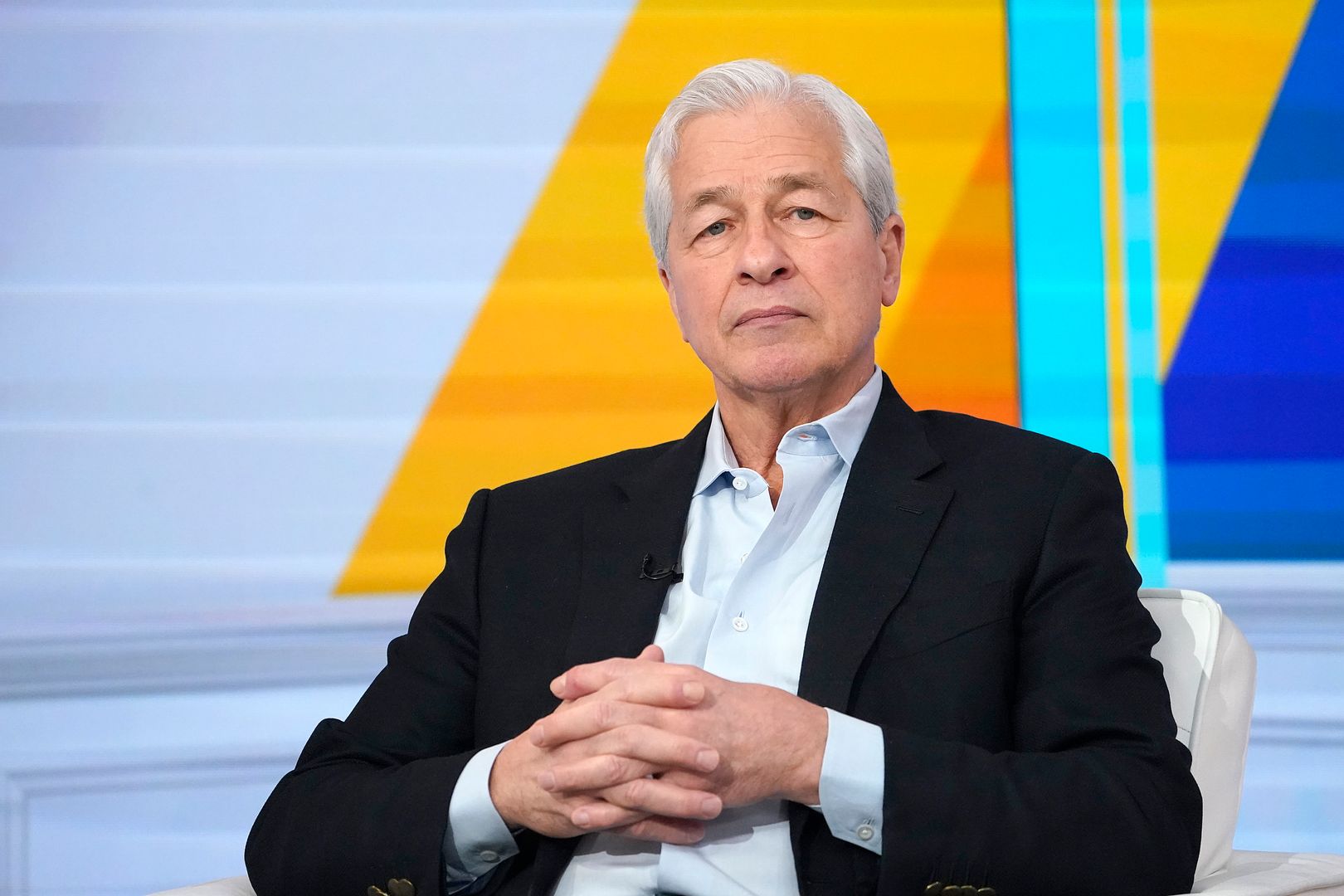

JPMorgan Chase CEO Jamie Dimon on Friday yet again sharply criticized Coinbase CEO Brian Armstrong and warned that the latest version of the Clarity Act could ultimately fail if lawmakers do not address concerns from traditional banks over stablecoin regulation.
In an interview with Maria Bartiromo on Fox Business, Dimon appeared frustrated by the direction of the debate around stablecoins and digital asset legislation. Asked whether he was satisfied with the current draft of the Digital Asset Market Clarity Act, the crypto market structure bill that will formalize rules around how federal securities and commodities regulators oversee crypto, Dimon said he was not.
“No, because it allows them to effectively pay interest on deposits, stablecoins or something like that, without protection that they should have,” Dimon said. “The banks will not accept it that way. … I’m not worried about stablecoins but if it happened I’m telling you I will have nothing to do with it and it will eventually blow up.”
The comments come amid a growing divide between the banking industry and crypto firms as lawmakers prepare for a key markup process that will determine whether the Clarity Act can advance through Congress. Lawmakers are expected to continue negotiating provisions governing stablecoin issuers, consumer protections, reserve requirements and whether crypto companies should be permitted to offer yield-bearing products that resemble traditional bank accounts.
For the legislation to ultimately become law, it must clear the full Senate and House of Representatives, and be signed by President Donald Trump. The Senate Banking Committee advanced its version of the bill through a markup earlier this month, and the Senate Agriculture Committee advanced its own version earlier this year. At the moment, representatives from the two committees are merging the bills, a key step before the full Senate can take a look.
At the center of the dispute which dragged out the Banking Committee’s process is the question of stablecoin rewards. Armstrong and Coinbase have argued that traditional banks are pushing lawmakers to curb stablecoin rewards programs, which function similarly to high-yield interest accounts and could threaten banks’ deposit-based business models. Banking executives, meanwhile, contend that firms offering bank-like products should face comparable oversight and regulatory obligations.
The disagreement has become one of the primary reasons the legislation has stalled in Washington and failed to gain sufficient momentum earlier this year, despite broad bipartisan interest in creating a regulatory framework for digital assets.
Tensions between Armstrong and Wall Street executives have been building for months. During meetings at the World Economic Forum in Davos earlier this year, Dimon told Armstrong, “You are full of s—,” according to people familiar with the exchange who spoke with The Wall Street Journal.
Bank of America CEO Brian Moynihan reportedly dismissed Armstrong’s arguments, telling him, “If you want to be a bank, just be a bank.” Wells Fargo CEO Charlie Scharf declined to engage, while Citigroup CEO Jane Fraser spent less than a minute with him, according to that prior reporting.
Coinbase and JPMorgan did not respond to requests for comment in time for publication.



Crypto data and media company Blockworks has acquired rival research platform Messari, the Wall Street Journal reported Friday. Bloomberg also confirmed the deal. The acquisition joins two of the most prominent names in crypto data and research. Blockworks, cofounded by Jason Yanowitz and Michael… Read the full story at The Defiant
GameStop has extended a Bitcoin options deal with Coinbase after the previous contracts expired worthless, preserving $5.8 million in premium income and resetting the strike at $80,000.
Summary
- GameStop renewed a covered-call Bitcoin strategy with Coinbase, collecting $5.8 million in option premiums.
- Nearly all 4,710 BTC remain pledged under the arrangement, with the strike price lowered to $80,000.
- Most quarterly profit came from interest income and eBay-linked gains, while Bitcoin added about $1 million.
According to the company’s quarterly filing submitted to the U.S. Securities and Exchange Commission on Thursday, GameStop rolled over the Bitcoin-linked contracts with Coinbase after a previous batch expired unexercised on May 29.
The filing showed that nearly all of the retailer’s Bitcoin remains pledged under the arrangement, which allows Coinbase to gain the coins if Bitcoin rises above a predetermined strike price before expiration.
After the original contracts expired, GameStop entered into a new set of agreements with an $80,000 strike, down from the earlier $105,000 to $110,000 range.
As per reports, previous options expired worthless because Bitcoin remained below the strike level through May 29. As a result, GameStop retained the premium income and re-pledged the same Bitcoin under updated terms.
The Bitcoin position no longer appears as a direct holding
Under accounting rules disclosed in the filing, the pledged Bitcoin is no longer recorded as a direct digital asset holding on GameStop’s balance sheet. Instead, the company reports a $369.6 million claim for repayment from Coinbase, a figure roughly $58 million below the original cost of the coins.
A covered call allows an investor to collect an upfront fee by granting another party the right to buy an asset at a fixed price. While the seller keeps the premium, any gains above the strike price are surrendered if the option is exercised.
GameStop first disclosed the strategy earlier this year after moving all but one of its 4,709 BTC into the arrangement. At the time, company filings stated that Coinbase could reuse, sell, or otherwise transfer the pledged Bitcoin during the life of the contracts.
Although Bitcoin formed a central part of GameStop’s treasury strategy, the filing showed the cryptocurrency contributed only about $1 million in gains on digital assets during the quarter.
Most quarterly profit came from cash and eBay-linked positions
Elsewhere in the report, GameStop posted roughly $390 million in net income for the quarter. According to the filing, most of that profit came from interest earned on its large cash reserves and an unrealized gain tied to its eBay options position rather than from its retail operations.
Recent corporate activity surrounding eBay also featured prominently. As crypto.news previously reported, GameStop submitted an unsolicited, non-binding proposal last month to acquire eBay for $125 per share, valuing the marketplace operator at approximately $55.5 billion on an undiluted basis.
The proposal would be funded through a combination of 50% cash and 50% GameStop stock. At the same time, GameStop disclosed a 5% economic stake in eBay through derivatives and common stock ownership.
In its proposal, the company stated that an acquisition could generate about $2 billion in annual cost reductions within twelve months of closing, with savings expected from sales and marketing, product development, and administrative functions.
By the end of the reported quarter on May 2, Bitcoin (BTC) was trading close to the new $80,000 strike level, increasing the value of the options.
More recently, according to crypto.news market data, Bitcoin traded near $63,500 on Friday, around 34% below its yearly high and roughly $43,000 below GameStop’s average purchase price, while spot Bitcoin exchange-traded funds recorded $2.1 billion in net outflows through June.
Crypto World
Bybit, Binance and Bitget Cancel Tokenized SpaceX Allocations as xStocks Fails to Deliver Shares


Binance, Bybit and Bitget canceled their tokenized SpaceX IPO allocation campaigns Friday and refunded subscribers in full after xStocks, the tokenized-equity provider routing the deals, could not source the underlying shares — even as xStocks' own onchain token and competing protocols brought… Read the full story at The Defiant


Canaan has achieved a record fleet efficiency of 17.9 J/TH in North America even as roughly 36% of its installed mining capacity remained inactive at the end of May.
Summary
- Canaan’s North American mining fleet reached a record efficiency of 17.9 J/TH in May, improving 11% year-over-year.
- Despite the efficiency gains, only 6.47 EH/s of its 10.05 EH/s installed capacity was operational at month-end.
- The update comes after Canaan reported an $88.7 million Q1 net loss and guided for weaker-than-expected Q2 revenue.
According to a June operational update from Canaan, the Nasdaq-listed Bitcoin miner and ASIC manufacturer improved the efficiency of its North American self-mining operations to 17.9 joules per terahash in May 2026, setting a new company record and improving 11% from the same period last year.
The latest figure also represents progress from the 18.7 J/TH reported across the company’s North American non-joint venture operations in March and April. Based on Canaan’s disclosed data, the move from 18.7 J/TH to 17.9 J/TH amounts to an improvement of about 4% in two months.
At the same time, company data showed that operational activity remained below installed capacity. Canaan reported an installed hashrate of 10.05 EH/s at the end of May, while its effective operating hashrate stood at 6.47 EH/s. The company attributed the gap to the expiration of a hosting agreement.
Fleet upgrades continue to improve mining performance
Beyond North America, Canaan reported that its global mining fleet reached an average efficiency of 23.7 J/TH during May, representing a 13.5% improvement from a year earlier.
Production figures also moved higher. Company data showed that Canaan mined 90 Bitcoin during the month and received another 24 BTC from customers. As a result, its digital asset holdings increased to approximately 1,867 BTC and 3,952 ETH, the largest treasury balance disclosed by the company to date.
Commenting on the results, Canaan chairman and chief executive Nangeng Zhang described the May performance as evidence of resilience despite difficult market conditions.
The efficiency gains arrive only weeks after Canaan reported weak first-quarter financial results. As crypto.news reported earlier, the company generated $62.7 million in revenue during Q1 2026, down sharply from $196.3 million in the previous quarter. Canaan also posted a net loss of $88.7 million and recorded a gross loss of $22.9 million, which included a $25 million inventory write-down.
In the company’s May 19 earnings release, Zhang said Canaan faced Bitcoin price volatility, compressed hashprice conditions, elevated energy costs, and weather-related disruptions in North America during the quarter.
Capacity expansion offsets hosting-related setbacks
While a portion of the company’s fleet remained offline, Canaan continued adding new infrastructure through acquisitions and partnerships.
According to the company, a transaction with Cipher Mining added a 49% stake in several West Texas projects. The deal contributed approximately 4.4 EH/s of hashrate capacity and 120 megawatts of power capacity to Canaan’s development pipeline.
Investors, however, continue to weigh operational improvements against ongoing financial challenges. As previously reported by crypto.news, Canaan received a second Nasdaq non-compliance notice in January after its share price remained below the exchange’s $1 minimum bid requirement. The company has until July 13, 2026, to regain compliance.
Market expectations for the current quarter also remain subdued. In its first-quarter earnings report, Canaan guided for second-quarter revenue between $35 million and $45 million, substantially below analyst estimates of about $96 million.
The company said it would continue monitoring market conditions and policy developments and could revise its outlook as visibility improves.
“Beyond our mining operations, we continue to advance initiatives that demonstrate the broader potential of our infrastructure platform…As demand for AI and computing infrastructure continues to grow, we believe Canaan’s strengths in hardware innovation and energy-efficient systems make us well-positioned to unlock new opportunities where energy and computing can create value together,” said Zhang.
Disclosure: This article does not represent investment advice. The content and materials featured on this page are for educational purposes only.

Exodus has launched “Exodus Markets,” a new marketplace for trading tokenized real-world assets directly from its self-custody wallet. Through a partnership with Ondo Finance, eligible users can access trading for more than 200 tokenized stocks, ETFs and other real-world assets on Solana, following an app update.
In the company’s announcement, Exodus Markets is described as not granting ownership of the underlying securities and not providing shareholder rights. The firm said availability is limited to select markets, and Cointelegraph reported it had not received a response from Exodus regarding which jurisdictions are eligible by the time the article was published.
Key takeaways
- Exodus Markets brings tokenized stocks, ETFs and other real-world assets into Exodus’ wallet experience on Solana.
- Ondo Finance is the issuer partner behind the initial catalog, covering 200+ tokenized assets.
- No shareholder rights: Exodus says tokenized assets traded on the marketplace do not represent ownership of underlying securities.
- Availability is restricted: Exodus Markets is live only in select markets, though eligible jurisdictions weren’t confirmed at publication.
- Tokenized equities are accelerating, with RWA.xyz data citing rapid growth in total tokenized stock value and holder count.
Inside Exodus’ Solana tokenized asset rollout
Exodus, founded in 2015, is known for its self-custody crypto wallet software. With Exodus Markets, the company is moving beyond a traditional token trading interface by adding exposure to tokenized real-world assets—specifically tokenized equities and similar instruments—settled on Solana.
Exodus said the marketplace is accessible after users update to the latest version of the Exodus app. That matters for investors and active wallet users because it lowers friction: rather than using a separate tokenized asset venue, they can route trades through a single wallet workflow.
At the same time, Exodus’ own framing emphasizes a key legal and structural point: tokenized assets made available via Exodus Markets do not represent ownership of the underlying securities and do not confer shareholder rights. For users, this signals that the products behave more like tokenized claims/representations governed by the issuer’s structure than as direct, conventional equity ownership.
RWA growth continues—xStocks becomes the gravity well
The Exodus launch arrives as tokenized equities continue to expand quickly. According to RWA.xyz data cited by Cointelegraph, tokenized stocks have climbed to $3.5 billion, up more than 139% over the past 30 days. Over the same period, RWA.xyz reported the number of holders increased 37% to roughly 357,000.
The same data points to xStocks as a major driver. RWA.xyz shows xStocks accounts for approximately $2.5 billion in tokenized stock value—more than 69% of the sector—after growing more than 500% over the previous month.
That concentration matters for anyone evaluating tokenized equity adoption: as one platform scales faster than the rest, liquidity, product diversity, and user distribution can become increasingly path-dependent. If xStocks continues to attract issuance and listings, Exodus Markets’ ability to deliver an attractive selection may depend on how much of the tokenized equity “center of gravity” remains concentrated there.
Tokenized pre-IPO momentum—and the first friction signals
Beyond established tokenized stocks, the market has recently broadened into pre-IPO activity. Cointelegraph reported that crypto exchanges have been racing to offer tokenized exposure to SpaceX ahead of the company’s stock debut.
In that wave, Kraken said SpaceX would be the first company available via its xStocks IPO Access platform, while Bybit later announced it would also offer SpaceX through xStocks as the inaugural listing on a new tokenized equity platform. Meanwhile, Binance entered the category in May with perpetual futures tied to SpaceX’s expected pre-IPO valuation, and Coinbase launched pre-IPO markets in June with a SpaceX-linked perpetual futures product for eligible users outside the United States.
Cointelegraph also noted Blockchain.com’s roll-out of a SpaceX-linked perpetual contract through its OTC desk as part of a new 24/7 institutional trading platform.
However, the rollout wasn’t frictionless. Cointelegraph reported that Bybit announced subscribers to its SpaceX IPO offering would receive refunds after xStocks failed to secure the underlying shares needed to fulfill allocations. The episode is a reminder that tokenized pre-IPO products can be constrained by real-world supply and allocation mechanics—an issue tokenized wrappers cannot fully eliminate.
What investors should watch next
With Exodus Markets now live for eligible users, the immediate open questions are regulatory and operational: which jurisdictions are supported, how large the initial catalog becomes over time, and whether the marketplace’s tokenized equity access stays resilient during periods when underlying allocation conditions tighten—as seen in the SpaceX refund episode. Readers tracking the trend should focus on product availability by region and on ongoing issuer/venue coverage as tokenized equities keep scaling.


Coinbase Derivatives is moving its US-regulated gold and silver futures to around-the-clock trading effective Friday evening, the first time these CFTC-registered contracts will not close for weekends. Coinbase Institutional said Friday afternoon the US commodities futures market "just changed… Read the full story at The Defiant


A Seychelles court judgment tied to delisted CHP tokens has placed KuCoin under renewed legal scrutiny.
Summary
- A Seychelles court ordered KuCoin to compensate a Swiss investor over 21 million delisted CHP tokens.
- The investor claims KuCoin has not paid the judgment or participated in related court proceedings.
- The ruling rejected KuCoin’s claim that unwithdrawn delisted tokens became abandoned property.
A Swiss investor claims the exchange has not paid a court-ordered award exceeding $2 million. The dispute centers on 21 million CHP tokens and a ruling issued by the Seychelles Supreme Court in December 2025.
Court ruling centers on delisted CHP tokens
According to reports, the Seychelles Supreme Court ruled against KuCoin in December 2025. The case involved 21 million CHP tokens that remained on the platform after delisting. The court rejected the view that unwithdrawn tokens automatically become abandoned property. Instead, the ruling treated the tokens as obligations owed to the investor. The decision ordered compensation exceeding $2 million.
The investor alleges that KuCoin has not complied with the judgment. Six months after the ruling, the award reportedly remains unpaid. The investor also claims the exchange has not participated in related proceedings. According to the allegations, KuCoin has not responded to requests concerning the case. Public records cited in reports have not shown payment of the judgment.
The dispute has drawn attention because KuCoin operates through Seychelles-based entities. The ruling came from the same jurisdiction where parts of the exchange maintain legal incorporation. The case now focuses on whether local court decisions can compel action from global crypto platforms. Legal enforcement remains a central issue in the ongoing dispute. The investor continues seeking recovery through available legal channels.
Investor challenges exchange treatment of delisted assets
The CHP dispute stems from how exchanges handle delisted digital assets. Many trading platforms remove tokens when activity declines or compliance concerns emerge. Users often receive a withdrawal period before support ends. The Seychelles ruling addressed what happens after those deadlines pass. The court determined that the CHP holdings retained legal value.
According to reports, KuCoin argued that unwithdrawn CHP tokens became abandoned after delisting. The court did not accept that position. Instead, it linked the assets to financial obligations owed by the exchange. The decision established a legal distinction between delisting and ownership rights. That interpretation formed the basis of the compensation order.
The case has also focused attention on exchange terms of service. Many platforms include provisions covering inactive or unsupported assets. However, legal treatment can vary across jurisdictions. The CHP ruling addressed one specific dispute under Seychelles law. Other courts may assess similar issues under different legal frameworks.
Enforcement questions remain unresolved
The investor now faces the challenge of enforcing the judgment. Reports indicate that Seychelles courts have limited reach over globally distributed assets. Recovery efforts may require identifying exchange-linked assets in other jurisdictions.
Enforcement procedures can depend on local recognition of foreign judgments. Those steps can take time and involve additional legal proceedings. The CFTC and other regulators have recently increased attention on cross-border crypto platforms.
At the same time, court disputes continue emerging in multiple jurisdictions. The KuCoin matter adds another legal challenge involving exchange accountability. The investor maintains that the judgment remains unpaid. KuCoin has not publicly addressed the allegations described in the reports.
Crypto World
Bitcoin's Hidden Yield: Why Options Are Taking Over Crypto | David Lawant, Anchorage Digital


🎧 Listen to Interview 💻 Watch Video… Read the full story at The Defiant
Crypto World
CFTC Staff Give DCMs a Path to Convert Perpetual-Style Digital Commodity Futures Into True Perpetuals
CFTC staff issued a no-action letter Friday enabling designated contract markets to convert existing perpetual-style digital commodity futures into true perpetual futures, the latest piece of regulatory plumbing in the agency's construction of a domestic crypto derivatives market. The letter,… Read the full story at The Defiant
Grayscale Investments has filed an amended registration statement for its proposed spot NEAR ETF.
Summary
- Grayscale amended its spot NEAR ETF filing and added SEC Registration No. 333-292834.
- BitGo replaced Coinbase Custody as primary custodian, while Coinbase remains an additional custodian.
- The filing updated NEAR data, including 1.3 billion circulating tokens and a $1.5 billion market cap.
The update introduces custody changes and revised disclosures tied to the NEAR Protocol ecosystem. The filing arrives as investor interest in artificial intelligence-linked crypto assets increases following SpaceX’s public market debut.
Grayscale revises NEAR ETF registration
According to the amended S-1 filing submitted on June 12, Grayscale updated its earlier registration statement. The revision follows the trust’s original filing submitted in January. The latest version includes SEC Registration No. 333-292834, which did not appear in the previous filing. The amendment also contains compliance-related updates and additional disclosures. Grayscale continues seeking approval for a spot ETF tied to NEAR.
The filing introduces changes to the fund’s custody structure. Earlier documents listed Coinbase Custody Trust Company as the sole custodian. The amended filing names BitGo Bank & Trust N.A. as the primary custodian. Coinbase Custody will continue serving as an additional custodian. The revised structure expands the ETF’s custody arrangements while preserving Coinbase’s role.
The asset manager also revised language related to staking activities. The filing states that the trust may only provide staking-related exposure if U.S. law permits it. Grayscale confirmed that the trust, sponsor, and custodians do not currently stake NEAR tokens. The amendment provides clearer language regarding staking restrictions. Those disclosures form part of the updated registration package.
Filing updates NEAR ecosystem data
The amended filing also updates information about the NEAR Protocol network. According to the document, circulating supply reached 1.3 billion NEAR tokens as of March 31, 2026. The filing states that NEAR’s market capitalization stood at approximately $1.5 billion. It also reported a decline in the token’s market ranking. NEAR moved from 39th place to 43rd place during the period covered.
Grayscale also expanded legal and administrative disclosures within the filing. The amendment adds Davis Polk & Wardwell LLP attorney Dylan H. Lojac as legal counsel. The document includes formatting changes tied to regulatory compliance requirements. It also addresses a new checkbox related to emerging growth company elections. Those revisions accompany the broader registration update.
SpaceX IPO boosts attention on AI-linked crypto assets
The filing emerged as artificial intelligence-related crypto narratives regained market attention. Market participants have linked part of that renewed interest to SpaceX’s recent public listing. The aerospace company entered public markets with a valuation of about $1.77 trillion. The listing increased attention toward advanced technology themes across financial markets. AI-focused digital assets have received part of that attention.
NEAR has continued promoting infrastructure focused on decentralized artificial intelligence applications. The network has also developed tools for autonomous agent systems and related services. Those initiatives have placed the project among blockchain networks targeting AI use cases. Grayscale’s amended filing arrived as those themes gained renewed visibility. The updated registration statement now awaits further regulatory review.

Flying Eagles Remain Unbeaten in WAFU U-20 Championship Preparations

DJI And Insta360 Are In A Patent Battle Over Vlogging Cameras

Economia Finanziaria – Un Predatore dell’Economia Reale


-
 Entertainment6 days ago
The Best Mystery Series of All Time Is Surging on Streaming 30 Years After It Ended
-

 NewsBeat5 days ago
Alexander Zverev wins the French Open to finally earn a 1st Grand Slam title
-

 Crypto World5 days ago
Anatomy of the June crypto crash: Fed, Iran, Saylor
-

 Crypto World1 day ago
Oppenheimer backs SpaceX as $70 billion retail frenzy builds
-

 Tech7 days ago
Suspicious Polyfill login prompts pop up on Toshiba, Muji websites
-

 Crypto World1 day ago
Markets Rally as SpaceX IPO Looms Amid Iran Tensions and Inflation Surge
-
 Crypto World6 days ago
Senator Cynthia Lummis Calls CLARITY Act the Most Consequential Financial Legislation of This Generation
-

 Tech6 days ago
Microsoft unveils seven homegrown AI models in new bid for ‘long term self-sufficiency’
-
 NewsBeat5 days ago
Alexander Zverev conquers demons and outlasts Flavio Cobolli to win French Open for first major title
-

 Tech7 days ago
Von der Leyen’s AI envoy pick draws conflict-of-interest fire
-

 Business5 days ago
High Stakes for Wembanyama as New York Pushes for 3-0 Lead
-

 Tech7 days ago
Hackers now exploit SolarWinds Serv-U flaw to crash servers
-
 Business6 days ago
The Pain Points Taking a Fragile Tech Rally Down a Notch
-
 Crypto World5 days ago
Eli Lilly (LLY) Stock Surges 4% Following Breakthrough Sleep Apnea Trial Results
-

 Tech5 days ago
Notion restores access to Anthropic after service disruption
-

 Crypto World5 days ago
Trump’s AI Ownership Plan Could Benefit Anthropic at OpenAI’s Expense
-
 Business6 days ago
The investment to transform historic St Helen’s ground in Swansea
-
 Sports3 days ago
Bangladesh beat Australia after 20 years in ODIs, register only their second win over six-time world champions | Cricket News
-

 Business7 days ago
Forensic Expert Floats Handyman Theory in Disappearance of Savannah Guthrie’s Mother
-

 Tech10 hours ago
This Week In Security: Microsoft On Microsoft, Register Your Domains, Linux On ARM, And FreeBSD Joins The File Cache Club
You must be logged in to post a comment Login