

Business
The Chip Rally Has Gone Parabolic. It’s Time to Separate the Pillars From the Pretenders.



Business
NSE Social Stock Exchange gets CSR boost as MCA clears corporate funding route. Check details

The MCA has amended Schedule VII of the Companies Act, 2013, to recognise investments in certain Social Stock Exchange instruments as an eligible CSR activity. As per a Gazette Notification issued on May 27, 2026, “subscription to zero coupon zero principal instruments on Social Stock Exchange” has now been added to the list of approved CSR activities.
The amendment allows companies to allocate up to 10% of their total annual CSR budget towards not-for-profit organisations (NPOs) registered on the Social Stock Exchange through Zero Coupon Zero Principal (ZCZP) instruments.
The Social Stock Exchange serves as a dedicated platform that connects social enterprises and NPOs with donors, investors and other funding sources. Unlike conventional stock exchanges, where investments are made with the expectation of financial returns, the SSE is designed to facilitate measurable social impact.
According to the National Stock Exchange (NSE), the latest policy change could help scale up social financing in India by providing corporates with a regulated and disclosure-based channel to support impact-focused organisations. The exchange said the framework is expected to enhance transparency, credibility and the overall reach of funding within the social sector.

The idea of a Social Stock Exchange was first outlined by Finance Minister Nirmala Sitharaman during the 2019 Budget, with the aim of bringing capital markets closer to the masses while advancing inclusive growth and financial inclusion.
With the amendment now in place, companies can incorporate SSE-based contributions into their CSR programmes through a structured and regulated mechanism. NSE said the move is likely to improve funding access for verified NPOs, strengthen governance and disclosure standards, encourage outcome-oriented philanthropy and foster greater trust and accountability across the social impact landscape.Sriram Krishnan, Chief Business Development Officer at NSE, described the amendment as a significant development for India’s social sector. He said the provision would enable corporates to channel CSR funds through a transparent, regulated and impact-driven platform, helping improve trust, accountability and access to capital for social enterprises.
The MCA notification has come into effect immediately upon its publication in the Official Gazette.
(Disclaimer: Recommendations, suggestions, views and opinions given by the experts are their own. These do not represent the views of The Economic Times)
Business
F&O Talk: Nifty may stay range-bound; Sudeep Shah sees opportunities in banks, IT, picks 7 stocks

Sensex dropped over 1,092 points to 74,776 while Nifty 50 crashed nearly 359 points to 23,547. This came as India VIX, which measures volatility in markets, jumped around 8% to 16.18. The sharp losses wiped off nearly Rs 6 lakh crore from the total market capitalisation of all companies listed on BSE, pulling it down to Rs 465 lakh crore.
Analyst Sudeep Shah, Vice President and Head of Technical & Derivatives Research at SBI Securities, interacted with ETMarkets regarding the outlook for the Nifty and Bank Nifty, as well as an index strategy for the upcoming week. The following are the edited excerpts from his chat:
Nifty rollover for May expiry came in below both the three-month and six-month averages. Does this suggest traders are turning cautious near higher levels, or is it simply profit-booking after the recent recovery?
In the month of May, the benchmark index Nifty traded within a narrow range of 1219 points, marking its smallest monthly range since December 2025. The rollover in the May series also came below the prior month and 3-month average. Notably, a majority of the trading sessions during the month witnessed either an upside or downside gap at the opening, followed by range-bound price action throughout the day. As a result, opportunities for intraday and short-term traders remained limited despite the frequent gap openings. But what made this phase even more unusual was the message hidden within the broader monthly price structure.
On the monthly chart, Nifty has formed a bearish candle with shadows on either side, reflecting indecisiveness among market participants amid ongoing geopolitical uncertainties. Zooming into the final week of May, the index continued to trade within a narrow range for most of the week before witnessing a sharp decline during the final hour of Friday’s trading session, which tilted the balance in favour of the bears. While the market remained range-bound for most of the week, the late sell-off has raised an important question—was this merely profit booking or the beginning of a larger directional move?
From a technical standpoint, Nifty continues to trade below all its key moving averages. More importantly, these moving averages have flattened out, indicating the absence of a strong trend. The daily RSI remains in a sideways zone as per the RSI Range Shift framework, while the daily Stochastic oscillator is also moving within a narrow band. Adding to this, the trend strength indicator, Daily ADX, is placed at near 15 level and continues to decline, suggesting a lack of directional momentum in the index. While these indicators point towards a lack of trend, Friday’s late sell-off has injected fresh uncertainty into the market setup.
Talking about crucial levels, on the upside, the 20-day EMA zone of 23,750-23,800 is likely to act as an immediate hurdle for the index. On the downside, the zone of 23,300-23,250 remains a crucial support area. A breach below 23,250 could intensify selling pressure and open the doors for a decline towards the psychologically important 23,000 mark. With the index approaching key support levels, the market’s next move could set the tone for the coming weeks.
Bank Nifty rollover saw a sharper decline and futures data indicates short build-up despite price weakness. Are banking stocks likely to remain drags on the market in the June series?
In the month of May, the banking benchmark index Bank Nifty traded within a narrow range of 3,550 points, marking its tightest monthly range since January 2026. On the monthly timeframe, it has formed a High Wave candle, reflecting market indecisiveness.
During the past week, the index witnessed a strong upmove in the first half; however, it failed to sustain above the 55,500 level and subsequently underwent a sharp correction. This led to the formation of a bearish candle with a long upper shadow, indicating selling pressure at higher levels.
At present, the index is trading below its key moving averages, which are trending downward, suggesting a weak bias. The daily RSI remains in a sideways zone as per the RSI range shift rules, indicating lack of clear momentum.
Going ahead, the 53,500–53,400 zone is expected to act as an important support for the index. A breach below 53,400 could trigger further downside, with the next key support placed around 52,700. On the upside, the 50-day EMA zone of 55,300–55,200 is likely to act as a crucial hurdle.
FIIs reduced nearly 9,800 index shorts while also adding fresh longs. Do you see this as the beginning of a more constructive stance from foreign investors, or is positioning still defensive overall?
There were clear signs of short covering in Index futures between 21st May and 27th May, with FII net Index futures shorts reducing sharply from 2,31,190 contracts to 1,63,012 contracts. This also led to the long-short ratio improving from 11.80% to 16.14%, indicating a relatively constructive shift in positioning.
On Friday, massive short positions were built up leading to net index futures short contracts once again rising to 2,01,309 and the long short ratio dipping to 11.98%. Similar phases of short covering in the past were quickly followed by aggressive selling, causing bullish expectations to fade rapidly. This pattern has persisted for quite some time and is likely to continue until there is greater clarity on the US-Iran deal, a meaningful fall in the Dollar Index (DXY), stability in crude oil prices, and depreciation in the dollar against the rupee. Until these external factors stabilize, FII sentiment is likely to remain cautious rather than decisively bullish.
What are key levels to watch out for in June series? What triggers could push Nifty decisively beyond in either direction?
Talking about crucial levels, on the upside, the 20-day EMA zone of 23,750-23,800 is likely to act as an immediate hurdle for the index. On the downside, the zone of 23,300-23,250 remains a crucial support area. A breach below 23,250 could intensify selling pressure and open the doors for a decline towards the psychologically important 23,000 mark. With the index approaching key support levels, the market’s next move could set the tone for the coming weeks.
IT continues to trade near 52-week lows with elevated open interest and negative carry. Is the sector still witnessing aggressive short positions, and what would it take for sentiment to improve meaningfully?
The Nifty IT Index has rebounded nearly 8% from its 14th May low of 27,078. However, over the last seven sessions, the Index has remained range-bound between 29,747 and 28,678, indicating a lack of strong directional momentum. The RSI remains flat, while a subdued ADX reflects low volatility and absence of trend strength. Additionally, the MACD continues to trade below both the zero line and signal line, highlighting weak underlying momentum.
On the Relative Rotation Graph (RRG), the Index has shifted from the lagging to the improving quadrant, suggesting early signs of momentum recovery, though relative strength remains limited. The Index continues to trade below its 50, 100, and 200-day EMAs, keeping the near-term trend weak. The 29,900–30,000 zone remains a crucial resistance area, and a decisive breakout above this level could trigger a stronger pullback rally in the IT pack.
Given that the broader market structure remains range-bound with elevated volatility, should traders focus more on stock-specific opportunities rather than aggressive index directional bets in the June series?
With the broader market remaining range-bound amid elevated volatility, traders are likely to find better opportunities in stock-specific setups rather than aggressive directional bets on the Index in the June series. The rising ratio line in the Midcap and Smallcap indices relative to Nifty highlights continued outperformance in the broader market space.
Despite the strong bearish candle on 29th May, the overall market structure remains bullish, with no concrete signs of a major reversal yet. Currently, strength is visible in sectors such as private banks, PSU banks, financial services, and select midcap IT names. Meanwhile, the Index continues to react sharply to geopolitical developments, leading to frequent gap-ups and gap-downs that reduce trading clarity. In such an environment, strong price-action structures backed by robust technicals in trending sectors are likely to outperform across market conditions.
What stocks are you looking out for?
For the short term, Tamilnad Mercantile Bank, Nuvama Wealth Management, RR Kabel, Syrma SGS Technology, Krishna Institute of Medical Sciences (KIMS), and Minda Corporation are looking attractive based on their current market setup.
(Disclaimer: Recommendations, suggestions, views and opinions given by the experts are their own. These do not represent the views of The Economic Times)

Algoma Steel gains 63% as Fair Value models spot opportunity
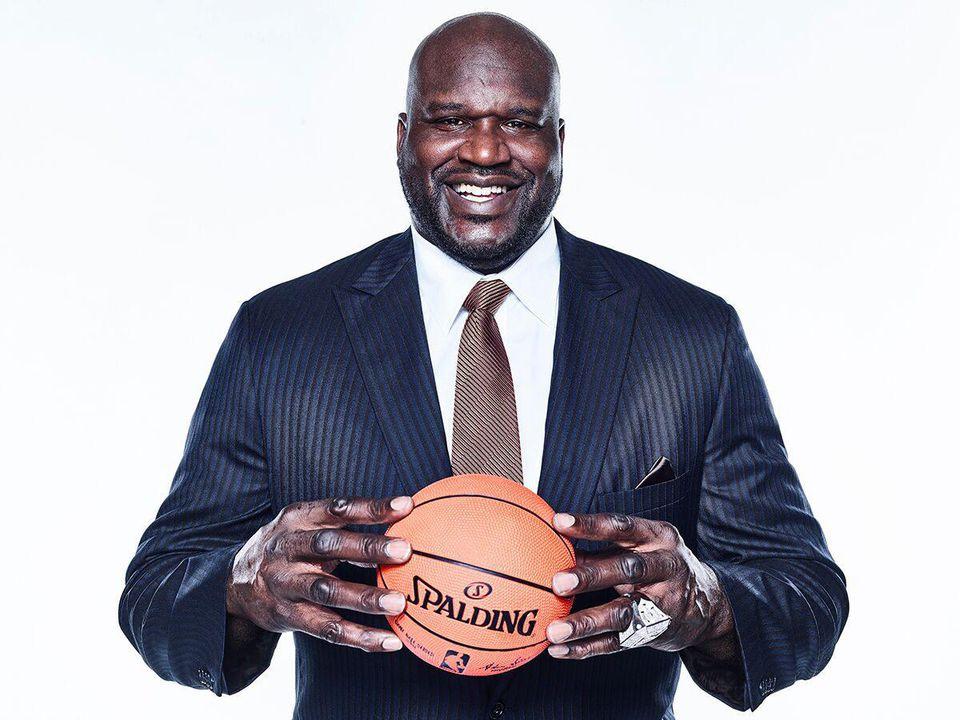
SAN ANTONIO — Victor Wembanyama’s meteoric rise has ignited one of the most provocative debates in modern NBA history: Is the 22-year-old Spurs superstar already surpassing the legendary dominance of Shaquille O’Neal at a comparable stage of their careers? While Shaq’s physical force defined an era, Wembanyama’s unprecedented blend of size, skill and defensive impact in the 2026 playoffs has many observers drawing direct comparisons — and leaning toward the Frenchman as a generational outlier.
Wembanyama, in just his third NBA season, has delivered playoff performances that echo — and in some statistical categories exceed — the early brilliance of O’Neal. During the 2026 Western Conference finals against the Oklahoma City Thunder, the 7-foot-4 center posted historic numbers, including a 41-point, 24-rebound masterpiece in Game 1 that marked one of the greatest individual playoff performances in recent memory.
Through the early stages of the 2026 postseason, Wembanyama averaged approximately 22.1 points, 12.3 rebounds and 4.0 blocks per game, becoming the youngest player ever to average 20 points, 10 rebounds and four blocks across at least 10 playoff games. He also set the NBA’s postseason blocks record and joined elite company as the first center since O’Neal in 2002 with multiple 30-point games in a Conference Finals series.
Statistical Head-to-Head Career regular-season averages favor the more established O’Neal, who posted 23.7 points per game over 19 seasons compared to Wembanyama’s 23.4 through three years. However, the advanced metrics tell a more nuanced story. Wembanyama has already surpassed O’Neal for the most career games with five or more blocks by a player aged 22 or younger.
In the 2025-26 regular season, Wembanyama averaged 25.0 points, 11.5 rebounds, 3.1 assists and a league-leading 3.1 blocks while shooting efficiently. He became the youngest Defensive Player of the Year in NBA history and the first-ever unanimous winner, claiming all 100 first-place votes.
O’Neal, in his prime with the Orlando Magic and early Lakers years, delivered raw physical dominance with peak seasons approaching 30 points and 13 rebounds. Yet even Shaq has publicly praised Wembanyama as “the first perfect big man that’s ever been created,” citing his shooting, defense, offense and teamwork.
Defensive Legacy Wembanyama’s rim protection and versatility represent a defensive evolution. At 22, he has already anchored one of the league’s top defenses and earned comparisons suggesting he could have a bigger long-term defensive impact than O’Neal. His ability to contest shots from the perimeter while erasing attempts at the rim creates unique problems for opponents.
An anonymous Western Conference executive captured the sentiment: “At least Shaq was human in the sense that you needed three centers to bang with him… But there’s no archetype like (Wembanyama) — no player ever. It’s a problem, and it’s going to be a problem for 15 years.”
Offensive Versatility Where O’Neal relied on overwhelming power and post dominance, Wembanyama offers a more expansive offensive toolkit. His shooting range, passing vision and ability to create for teammates differentiate him from traditional centers. In the 2026 playoffs, he has demonstrated comfort operating from the high post, stretching defenses and finishing with finesse.
Still, detractors note that O’Neal’s peak included three consecutive NBA championships and Finals MVPs with the Lakers, feats Wembanyama has yet to approach. Shaq’s physicality in his prime forced teams into desperate matchup strategies rarely seen today.
Cultural and Market Impact Both players transformed their franchises upon arrival. O’Neal helped elevate the Magic and later powered the Lakers’ dynasty. Wembanyama has resurrected the Spurs, leading them deep into the 2026 playoffs and restoring excitement to a once-proud franchise. His global appeal, particularly in Europe, mirrors O’Neal’s larger-than-life persona but with a modern, multifaceted twist.
Shaquille O’Neal has reacted positively to Wembanyama’s ascent, calling him a joy to watch and acknowledging the uniqueness of his game. This endorsement from one of the most dominant big men ever carries significant weight in the ongoing conversation.
The Verdict Remains Premature At this stage, most analysts conclude that while Wembanyama has achieved unprecedented early success and possesses a skill set that could ultimately eclipse O’Neal’s legacy, it is too soon for a definitive declaration. Longevity, championships and sustained excellence remain the true measures of greatness.
Wembanyama’s combination of length, coordination and basketball IQ evokes comparisons not just to Shaq but to a hypothetical fusion of elite big men across eras. His ability to impact winning at both ends while maintaining efficiency sets a new standard for the position.
As the 2026 playoffs continue, Wembanyama has the opportunity to further cement his place in the conversation. Should he lead the Spurs to a championship run at such a young age, the debate will intensify. For now, the basketball world watches with fascination as one of the most unique talents in league history chases — and in some ways redefines — the benchmarks set by a legend.
The comparison ultimately highlights the evolution of the center position. Where Shaq dominated through sheer force, Wembanyama represents the modern ideal: a mobile, skilled giant capable of adapting to today’s pace-and-space game while retaining old-school rim protection. Whether he surpasses O’Neal’s overall career remains a question for the next decade, but in 2026, the young phenom has already forced the NBA to reconsider what peak dominance looks like.


Financially Free Investor is a financial writer with 25 years investment experience. He focuses on investing in dividend-growing stocks with a long-term horizon. He applies a unique 3-basket investment approach that aims for 30% lower drawdowns, 6% current income, and market-beating growth on a long-term basis and he focuses on dividend-growing stocks with a long-term horizon.
He runs the investing group High Income DIY Portfolios which provides vital strategies for portfolio management and asset allocation to help create stable, long-term passive income with sustainable yields. The service includes a total of 10 model portfolios with a range of income targets for varying levels of risk, buy and sell alerts, and live chat. Learn more.
Analyst’s Disclosure: I/we have a beneficial long position in the shares of ABT, ABBV, CI, JNJ, PFE, NVS, NVO, AZN, UNH, CL, CLX, UL, NSRGY, PG, TSN, ADM, BTI, MO, PM, KO, PEP, EXC, D, DEA, DEO, ENB, MCD, BAC, PRU, UPS, WMT, WBA, CVS, LOW, AAPL, IBM, CSCO, MSFT, INTC, T, VZ, CVX, XOM, VLO, ABB, ITW, MMM, LMT, LYB, RIO, O, NNN, WPC, ARCC, TLT either through stock ownership, options, or other derivatives. I wrote this article myself, and it expresses my own opinions. I am not receiving compensation for it (other than from Seeking Alpha). I have no business relationship with any company whose stock is mentioned in this article.
Disclaimer: The information presented in this article is for informational purposes only and in no way should be construed as financial advice or a recommendation to buy or sell any stock. The author is not a financial advisor. Please always do further research and do your own due diligence before making any investments. Every effort has been made to present the data/information accurately; however, the author does not claim 100% accuracy. The stock portfolios presented here are model portfolios for demonstration purposes. For the complete list of our LONG positions, please see our profile on Seeking Alpha.
Seeking Alpha’s Disclosure: Past performance is no guarantee of future results. No recommendation or advice is being given as to whether any investment is suitable for a particular investor. Any views or opinions expressed above may not reflect those of Seeking Alpha as a whole. Seeking Alpha is not a licensed securities dealer, broker or US investment adviser or investment bank. Our analysts are third party authors that include both professional investors and individual investors who may not be licensed or certified by any institute or regulatory body.

The company’s revenue from operations came in at Rs 780 crore, also down 25% from Rs 1,044 crore reported in the corresponding quarter of the previous financial year.
The company’s EBITDA came in at Rs 83 crore, reporting a substantial drop of 46% from Rs 153 crore in the fourth quarter of the previous financial year. Its EBITDA margin also came in lower, down by 410 basis points to 10.6% from 14.7% in the fourth quarter of financial year 2025.
The company’s expenses for the quarter came in at Rs 731 crore, down 20% from Rs 923 crore in Q4FY25, the company said in a regulatory filing.
For the full year under review, revenue from operations came in at Rs 2,916 crore, lower by more than 26% or Rs 1,047 crore, from Rs 3,963.27 crore posted in the previous financial year.
Profit after tax declined 56% to Rs 166 crore, down from Rs 380 crore posted in FY25, the company said on Saturday.
Jupiter Wagons shares have declined 14% since the beginning of the year and about 26% in the past 1 year. The stock has been in the news off late after a report said Indian Railways is preparing to launch a mega Rs 40,000-crore tender to procure 1 lakh freight wagons over the next three to four years.
Last month, international brokerage Jefferies initiated coverage on Jupiter Wagons with an ‘Underperform’ rating and a target price of Rs 200, implying a potential downside of 31% from Rs 290. Jefferies expects growth at Jupiter Wagons to moderate as the business remains heavily dependent on the lower-growth freight wagon segment.
The brokerage estimates a 23% EPS CAGR for Jupiter Wagons over FY26-30, significantly lower than Titagarh’s projected 43%, with wagons expected to continue contributing more than 60% of overall sales even by FY28. It also said the company’s new wheel manufacturing facility is likely to make a meaningful contribution only after FY28.
(Disclaimer: Recommendations, suggestions, views and opinions given by the experts are their own. These do not represent the views of The Economic Times)


When music strategist Anjula Acharia began launching superstar actress Priyanka Chopra Jonas into Hollywood in the early 2000s, her label partner Jimmy Iovine — the name behind pop sensations such as Eminem and Lady Gaga — told her she was 20 years too early to bring South Asian talent to the U.S.
Now, Acharia is the founder and CEO of 5 Junction, a joint label with Warner Music Group focused specifically on investing in South Asian artists in the U.S.
“That sounded crazy, to think we were 20 years too early, but now, 20 years later, with the explosion of people like Diljit Dosanjh and Karan Aujla … there’s all these South Asian acts that are coming here and really selling out, particularly in the live arena,” Acharia told CNBC.
The South Asian music market in the U.S. has remained largely untapped, but as music becomes more globalized, as with the success of K-pop and Latin acts, South Asian talent is making a case to investors as the next big business opportunity, Acharia said.
Global music revenues are reaching all-time highs, surpassing $30 billion in 2025, according to the International Federation of the Phonographic Industry. Spotify said last year that streams of Indian artists in international markets grew more than 2,000% between 2019 and 2023, and nearly 50% of royalties from Indian artists on the platform in 2024 were from listeners outside India.
With South Asia’s growing population and diaspora, it’s set to be one of the fastest-growing segments within global music, according to Acharia.
“We’re in a different time, and I think digitally things travel just so much faster,” she said. “A lot of big hits were made with samples from Indian music, so it’s been in the zeitgeist for a long time — it’s just not been given a face.”
As more labels look to the subcontinent, Acharia said the business is currently in a stage of experimentation, figuring out what works and how the fan bases will evolve. Warner Music Group is the third-largest music label in the U.S., holding roughly 17% market share by distribution ownership as of the first quarter of 2026, according to Billboard.
“I think the business proposition is this global Indian fandom,” she said. “How do we galvanize this audience and this fandom, and how do we serve it?”
Rhea Raj at the event Atlantic Music Group and Salomon Present: Whisper Room, A Pre-Grammy Celebration, at The Hole in Los Angeles, Jan. 30, 2026.
Chad Salvador | WWD | Getty Images
5 Junction represents top artists such as singer and songwriter Rhea Raj, who told CNBC she’s seeing South Asian music become more mainstream in the U.S.
“We’re seeing more artists at bigger festivals and at award shows, and I think the best of it’s yet to come,” Raj said.
Raj and her sister, Lara Raj, of the girl group Katseye, are two of many South Asian artists in the U.S. building out fan bases that span backgrounds and ethnicities.
Rhea Raj, who got her start on “American Idol” nearly a decade ago, said she believes now is the time that South Asian music is going to “explode” in the U.S., especially as 5 Junction continues to bring more artists to the main stages.
“South Asian music, it is so diverse, and within that, there are so many countries and regions and styles and things to break down and explore, and I just hope that as time goes on and we have more artists in the mainstream pop world, we’ll get to see more and more pieces of that,” she said.
‘Building worlds’
Nora Fatehi performs on “The Tonight Show Starring Jimmy Fallon,” Nov. 19, 2025.
Todd Owyoung | NBCUniversal | Getty Images
The streaming era has helped Warner Records to narrow its focus on the South Asian music business because it lowers the barriers to entry, said Karen Kwak, the company’s executive vice president and head of artists and repertoire.
Kwak told CNBC that when she got into the music business, there were practically no other executives or artists who looked like her. Now, that picture has changed dramatically.
Kwak said the younger generations, especially in South Asia, are driving current music trends.
“That is what is so great about the music world we live in today, is that everybody is embracing who they are, and I think youth all over the world, they want to see stars that look like them,” Kwak said. “It’s a rabid fandom in India … and it’s exactly where we want to be.”
The record company is also focused on encouraging collaborations between South Asian musicians and popular American artists to help them break into the music scene, she added.
“It’s really about building worlds, and yes, of course, we’re going to continue investing [in South Asian talent],” she said. “It is what music is. We’re changing and impacting and creating the new music culture.”
It’s also important to Warner to be “genre-bending and genre-blending,” Kwak said, adding that the company is investing in South Asian talent that spans multiple types of music, languages and audiences.
Nora Fatehi is one of those artists. The Moroccan Canadian singer and actress, who has more than 45 million followers on Instagram, saw the potential in the South Asian market and broke in — targeting that audience even though she doesn’t have a connection to South Asia — and became one of the biggest names in the business.
“Right now, what 5 Junction and Warner are trying to do is tap into the different talent that’s coming out of that country, give it a platform, and also allow people around the world to consume the music and to consume the artistry like never before,” she told CNBC.
Fatehi, who will be performing at the World Cup opening ceremony in Toronto in a few weeks, said that even though the American market is hard to crack as an outsider, she’s seeing the results take hold as more talent from South Asia crosses into the West.
“I think the audience is ready for different stuff,” Fatehi said. “Now, with YouTube and Spotify and with social media, I don’t think borders exist any longer. … I think labels and managements and platforms realize that people are ready to consume different types of music.”
— CNBC’s Ryan Baker contributed to this report.
Immunome presents phase 3 trial results for desmoid tumor drug


Hollywood can breathe a sigh of relief: Generation Z is not only going to the movies, it’s driving box office growth.
During the pandemic, when theaters shut down and streaming became a dominant force in the media landscape, fears rose that this young cohort would shun the big screen as they matured into more engaged consumers.
However, this generation, which ranges from around 14 to 29 years old, is one of the most active moviegoing demographics and attends more films per year than some older generations, according to data from Fandango.
In 2025, members of Gen Z saw an average of seven movies in theaters — matching average viewership among millennials — while members of Generation X and baby boomers saw around six movies on average, Fandango found.
“Gen Z is driving moviegoer trends today, and I think people are shocked,” said Jason Dorsey, president and co-founder of The Center for Generational Kinetics and co-author of “Zconomy.” “They’re like, ‘Oh, Gen Z doesn’t want to leave their house.’ That’s not true. Gen Z absolutely wants to leave their house — probably more than you know.”
Gen Z accounted for nearly 40% of all movie audiences in North America in 2025, according to data from Comscore.
As teens and 20-somethings become the dominant generation at the box office, they’re also shaping the future of moviegoing — and studios and movie theaters are taking note.
“Not only are we seeing a bigger and bigger percentage of Gen Z make up our overall audience, but their frequency is increasing year over year,” Carrie Trotter, senior vice president of marketing at AMC, told CNBC. “So they have become one of the most important audiences for us, and I see that in the future, it may become the absolute most important audience for us.”
Building loyalty among Gen Z
Helping to fuel Gen Z’s affinity for the movies is the fact that it remains one of the more inexpensive forms of entertainment.
“Ticket pricing has gone up, as it does, but when you compare it to the year-over-year inflation rate, it’s on par, if not less,” said Steve Buck of EntTelligence, a movie data firm. “When you think about Gen Z, they are cost-conscious, but they’re opening up their wallet.”
Gen Zers came of age around the time of Covid, which Dorsey called a “generation-defining experience.” This cohort doesn’t know a time without social media or smartphones and is incredibly cost-conscious, having grown up in a time of great uncertainty, he said.
“Covid uprooted all of their plans,” Dorsey said. “They were going to school, going to college … everything got turned upside down and it lasted for a long period of time. So, we see them much more fiscally conscious. I’ll say it generally, like they’re really conservative with their money in general, much more thrifty than we would expect for somebody at their age.”
This has led a significant portion of Gen Z to opt for loyalty programs at movie theaters, like AMC’s A-list, Regal Unlimited and Cinemark’s Movie Club, that reward them for money spent or allow them to see multiple films a month for a subscription fee.
“Gen Z over-indexes in the AMC A-List tier, and their participation has grown triple since the pandemic,” Trotter said, noting that AMC’s program also allows customers to book tickets for other loyalty members that are part of their friend group.
“We’re trying to make it as frictionless as possible so we can encourage as much moviegoing and this social atmosphere,” she said.
At Rutgers Cinema in Piscataway, New Jersey, general manager Alex DelVecchio is keeping ticket prices low for the the students at nearby Rutgers University. Students who show a school ID pay just $5 for matinee screenings and $9.50 for all other general admissions. That’s quite a bit cheaper than the nationwide average of nearly $13.50, according to EntTelligence.
“We try to keep it as cheap as we can,” DelVecchio said.
But it’s not all about affordability. DelVecchio said he also runs promos like free slushies on Wednesdays and looks for ways to engage his predominantly college-age consumer.
For the release of Warner Bros.’ “It: Chapter One” in 2017, DelVecchio said the company put a clown in every theater, posted red balloons all over campus and had a staff member wear a yellow jacket and play with a paper boat outside to mimic iconic scenes from the movie.
“We started selling everything out,” he said. “And, then, once you get the momentum you can keep it as long as you keep playing what they want.”
Tashi-delek | E+ | Getty Images
While Gen Zers are selective about their spending, they are willing to shell out for experiences, particularly social activities they can do with their friends that give them an excuse to disconnect from their phones.
“This is a way for them to come and spend time with their friends and their family, and that social experience really outweighs the movie itself that they’re seeing,” Trotter said. “But also there’s a little bit of FOMO [fear of missing out], like they want to be part of the excitement and their fandom of that fuels their desire to be the first to see these movies and be part of the conversation as it’s happening.”
And while Gen Z enjoys staying off their phones during the movie, they still use social media to share their thoughts on films and see what others think of new and old titles.
Letterboxd, an online platform where moviegoers can track movies they’ve watched and post reviews, has become so ubiquitous with this generation that Hollywood has come to refer to Gen Z interchangeably as the Letterboxd generation.
The site currently has more than 29 million users, with more than half of that base under the age of 35. Through Letterboxd, Gen Z is relying more on community reviews than those of official movie critics when choosing what movies to see in theaters.
What Gen Z wants to watch
Of course, Gen Z has some genre-specific preferences, and Hollywood appears to be playing to them.
Similar to their elders, this age group often flocks to cinemas for horror films and R-rated fare. But they diverge from previous generations in their interest in anime and video game adaptations based on games they played growing up. Gen Zers have also shown a penchant for older, rereleased titles, leaning into the nostalgia of moviegoing.
In 2025, “A Minecraft Movie,” based on the popular online game, was the most attended film by Gen Z, according to data from EntTelligence. The Warner Bros. film generated more than $424 million domestically during its theatrical run, the second-highest take of the year, and tallied $960 million globally.
Meanwhile Sony and Crunchyroll’s “Demon Slayer: Kimetsu No Yaiba — The Movie: Infinity Castle” saw the largest percentage of Gen Z in its audiences, with 42% of tickets being sold to this members of the generation.
Jack Black, Jason Momoa and Sebastian Hansen in Warner Bros. and Legendary Entertainment’s “A Minecraft Movie.”
Warner Bros.
So far in 2026, Universal’s “The Super Mario Galaxy Movie” is the most attended film by Gen Z. It’s secured $425 million domestically, the highest-grossing film of the year so far, and $982 million globally.
Box office analysts expect films like Disney and Pixar’s “Toy Story 5,” Universal’s “Minions & Monsters,” Sony’s “Spider-Man: Brand New Day” and Marvel’s “Avengers: Doomsday” to see a significant portion of ticket sales from Gen Z audiences.
“I think theaters have a real opening right now to be that in-person social experience for Gen Z,” Dorsey said. “It’s still fragile, the generation is still finicky, but there’s a massive opportunity for them to be able to build on the fact that they can create these wonderful in-person experiences and in a more affordable way.”
Disclosure: Versant is the parent company of Fandango and CNBC.
Business
Donovan Mitchell Defends James Harden’s Playoff Struggles Citing Jordan and LeBron’s Early Failures

CLEVELAND — Cleveland Cavaliers guard Donovan Mitchell pushed back against criticism of teammate James Harden’s performance in the 2026 Eastern Conference finals, drawing comparisons to NBA legends Michael Jordan and LeBron James to highlight the difference between early struggles and ultimate success. The Cavaliers were swept by the Boston Celtics in the series, with Harden facing sharp scrutiny for his diminished output.
Harden, acquired by Cleveland before the trade deadline to provide playoff experience alongside Mitchell, averaged just 16.0 points per game in the Eastern Conference finals while shooting 38.9% from the field and 17.9% from three-point range. His assist numbers also dipped to 3.0 per game, and defensive lapses were noted by observers. The performance marked a disappointing return to the conference finals stage for the veteran guard.
Mitchell, however, refused to place blame on his backcourt partner. Speaking after the series, he emphasized Harden’s body of work over nine seasons and criticized what he called a cultural focus on failures rather than achievements. “I’ve watched Harden for nine years,” Mitchell said. “I’ve watched it and to see it firsthand, the work ethic, the passion, the IQ, the leadership. The man just gets a bad rep.”
He continued by referencing historical context for superstar players. “Yeah, sure, has he had some rough moments? I’m sure we all have. LeBron is one of the greatest players ever. We don’t really speak on the Mavericks Finals when he struggled. We don’t speak on Jordan taking eight years to get to the Finals. We speak on the wins.”
Jordan did not reach the NBA Finals until his seventh season in 1991, after multiple early playoff exits against strong Eastern Conference competition, including the Detroit Pistons. James, in his first Finals appearance with the Miami Heat in 2011, struggled notably as his team fell to the Dallas Mavericks in six games. Mitchell used these examples to argue for perspective on Harden’s career trajectory.
Mitchell also referenced actor Denzel Washington’s three Oscar wins alongside eight losses. “I saw Denzel say this. He’s won three Oscars. And the first thing he said to the interviewer was like, ‘Yeah, but I lost eight times.’ We don’t talk about that, right? We talk about what? Success, success, success. We don’t talk about the failures,” Mitchell added.
The comments come as the Cavaliers reflect on a season that raised expectations with the Harden addition but ended in a sweep. Harden, a former MVP and 10-time All-Star, has faced consistent questions about his postseason performances throughout his career, particularly as the primary option. His only NBA Finals appearance came in 2012 as a sixth man with the Oklahoma City Thunder. As the lead player for the Houston Rockets, he reached the Western Conference finals in 2018 but could not advance further.
NBA analysts offered mixed reactions to Mitchell’s defense. Some praised the loyalty and focus on long-term narratives, while others noted that Harden’s recent output, particularly his efficiency and defensive engagement, fell below expectations for a player brought in to elevate a contending roster. The Cavaliers’ front office had viewed the trade as a move to pair Mitchell with a proven creator capable of performing in high-stakes games.
Harden’s regular-season contributions with Cleveland helped the team secure strong positioning, but the postseason exposed challenges in adapting to a supporting role behind Mitchell while still shouldering significant offensive responsibility. His usage rate remained high, yet scoring efficiency declined against Boston’s physical defense.
The broader conversation reflects ongoing debates in NBA culture about player legacies. Supporters of Harden point to his revolutionary impact on offensive spacing and step-back shooting, innovations that influenced a generation of guards. Critics focus on his teams’ repeated postseason exits before reaching the Finals as the undisputed leader.
Mitchell’s remarks also underscore team chemistry priorities as the Cavaliers look toward the offseason. With both players under contract, Cleveland management must decide whether to build around the duo or pursue additional roster adjustments. Mitchell, a perennial All-Star, has expressed commitment to winning in Cleveland after earlier stints with the Utah Jazz.
League observers note that public defenses like Mitchell’s are relatively rare in the modern NBA, where individual accountability often dominates post-series analysis. By invoking Jordan — widely regarded as the greatest player ever — and James, a four-time champion, Mitchell sought to reframe the narrative around resilience and eventual triumph rather than isolated shortcomings.
Jordan’s path included six consecutive first-round or conference exits before his breakthrough championship run with the Chicago Bulls. James rebounded from the 2011 Finals disappointment to win two titles with Miami and later deliver championships for Cleveland and Los Angeles. These arcs provide historical precedent for patience with star players navigating playoff pressure.
For Harden, now in his mid-30s, the 2026 postseason represents another chapter in a lengthy career. He has previously addressed critiques about his conditioning and playoff performances, emphasizing adaptation to new systems and roles. The Cavaliers’ coaching staff highlighted his leadership in the locker room despite on-court challenges.
The timing of Mitchell’s comments arrives amid heightened media scrutiny of star performances in an era of player movement and superteam formations. Social media amplified both praise for his teammate loyalty and skepticism about excusing subpar statistical output in elimination games.
Cleveland’s season demonstrated promise, with strong regular-season wins and individual accolades, yet the swift conference finals exit has prompted questions about roster construction and playoff readiness. General Manager Mike Gansey and the front office are expected to evaluate free agency and trade options with an eye toward complementing the Mitchell-Harden backcourt.
As the NBA offseason begins, Mitchell’s public stance may help shield Harden from some internal pressure while signaling unity to the fan base. The guard’s comparison to cultural icons like Washington further illustrated his point about society’s selective memory regarding success versus failure.
Ultimately, the 2026 Eastern Conference finals served as another test for veteran leadership in the league’s evolving landscape. Whether Harden can rebound and contribute to a deeper playoff run next season remains to be seen, but Mitchell’s defense provides a counterpoint to immediate criticism and invites reflection on how NBA legacies are constructed over time.
The Cavaliers will look to address defensive inconsistencies and perimeter shooting depth in the coming months. For now, Mitchell’s words offer a reminder that championship paths are rarely linear, even for the game’s most accomplished players.

ENTERING XRP TOP 10% GETTING HARDER? – XRP INDUSTRIAL REVOLUTION HAS STARTED! – SPENDING YOUR XRP?

Liverpool sack head coach Arne Slot and approach Andoni Iraola
NSE Social Stock Exchange gets CSR boost as MCA clears corporate funding route. Check details


-

 Business6 days ago
NYT Strands Answers May 24 2026 Revealed for Puzzle No. 812 Theme Summer Essentials
-

 NewsBeat3 days ago
Israel says it has killed new Hamas military leader in Gaza City airstrikes
-

 Politics5 days ago
Bridgerton Season 5: Cast, Release Date And Everything We Know So Far
-

 Business3 days ago
Selena Gomez Reportedly Upset Over Benny Blanco’s Comments on Her ‘Terrible’ Diet
-
 Crypto World4 days ago
Micron Crosses $1 Trillion Market Cap as AI Demand Reshapes Memory Sector
-

 Tech5 days ago
Microsoft’s quiet Claude Code retreat and the real cost of enterprise AI
-

 Business5 days ago
BTS Sells Out Four Las Vegas Shows at Allegiant Stadium for ARIRANG World Tour
-
 Tech4 days ago
China assigns ID codes to 28,000+ humanoid robots
-

 News Videos3 days ago
XRP *JUST* SUCCEEDED!!!! CLARITY ACT EXPOSED!!! (SHE EXPOSED IT)
-

 Tech1 day ago
Waymo dominates autonomous vehicle registrations as Tesla trails behind
-
Tech3 days ago
The Samsung pay deal is the moment Korean unions changed register
-

 Tech5 days ago
Westone Audio and Etymotic Acquired by Fidelity Collective in Major IEM Market Move
-

 Tech4 days ago
Millions of AI agents imperiled by critical vulnerability in open source package
-
Crypto World6 days ago
Brian Armstrong Outlines Crypto Vision for the Future Financial System
-
 Entertainment5 days ago
‘Breaking Bad’ Star’s Easy-to-Binge 6-Part Crime Series Spin-Off Is Finally Heading to Free Streaming
-
Crypto World3 days ago
SpaceX’s $2 Trillion IPO: Why Tech Giants Nvidia (NVDA), Apple (AAPL), and Microsoft (MSFT) May Face Pressure
-
 Crypto World5 days ago
Nvidia (NVDA) CEO Calls on Super Micro to Strengthen Export Controls Amid Smuggling Probe
-

 Tech3 days ago
NASA taps Blue Origin to deliver lunar rovers for Moon Base initiative
-
 NewsBeat5 days ago
Hottest May day ever as London hits 34.8C in 2C leap from previous records
-
 Crypto World20 hours ago
Snowflake (SNOW) Stock Rallies on Strong Q1 Results and AI Product Growth
You must be logged in to post a comment Login