
TL;DR
Foundation sent humanoid robots to Ukraine and has $24M in Pentagon contracts. Eric Trump is its chief strategy adviser. Warren calls it “corruption.”




When did a 65-inch QLED television with a built-in streaming, variable refresh rate, and HDR10 support become something you could buy for under $400?
Apparently now, because Amazon has cut the Roku Select Series 65-inch 4K QLED TV from $449.99 to $379.99, a $70 saving that puts a genuinely capable large-screen set well below what this size and panel technology used to cost.
A 65‑inch Roku QLED TV is now under $380, making this a very solid deal
A 65-inch Roku QLED at $379.99 is a strong offer for anyone furnishing a living room or bedroom without wanting to spend flagship money.

The Roku 65″ Select Series 4K TV uses a QLED panel with HDR10, HDR10+, and HLG support, which means colour and brightness handling across a wide range of streaming content rather than just the formats one or two platforms happen to use.
Roku Smart Picture works in the background to analyse incoming signals and automatically apply the appropriate picture mode, removing the need to manually toggle settings every time you switch between a dark drama and a brightly lit sports broadcast.

The operating system is Roku OS, which is one of the more straightforward smart TV platforms in terms of navigation, and it gives access to over 500 free channels alongside paid services including Netflix, Disney Plus, Prime Video, Hulu, and Apple TV Plus.
Variable Refresh Rate reduces screen tearing during gaming sessions, and the three HDMI ports give enough connectivity for a console, a soundbar, and a streaming device without running out of inputs immediately.
Bluetooth Headphone Mode lets you route audio directly to a pair of wireless headphones without disturbing anyone else in the room, which is a practical feature that many televisions at this price point still don’t include as standard.
Voice control works across Roku Voice, Siri, Alexa, and Google Assistant, and the enhanced voice remote includes a lost remote finder, which removes the specific frustration of being held hostage by a handset that has disappeared between the sofa cushions.
A 65-inch QLED at $379.99 is a strong offer for anyone furnishing a living room or bedroom without wanting to spend flagship money, though this is a 60Hz panel, so those prioritising smoothness for fast-paced gaming may want to weigh that before committing.
SQUIRREL_PLAYLIST_10148964
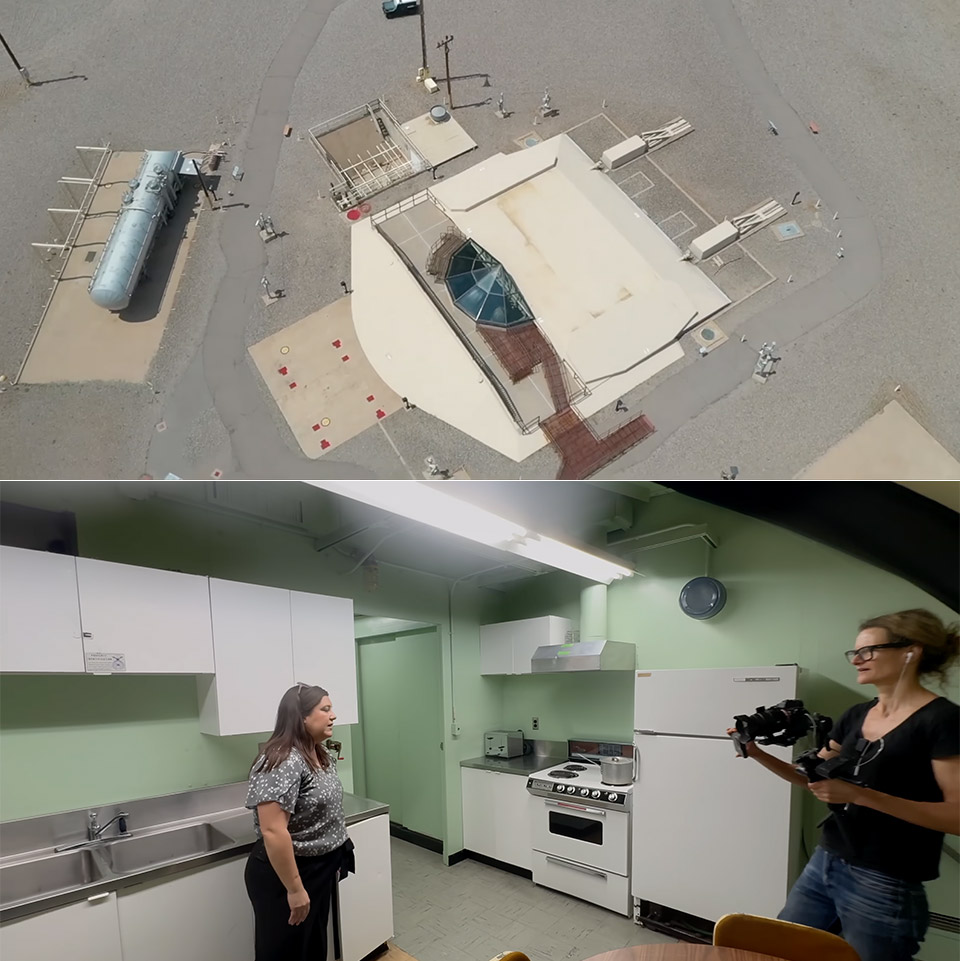
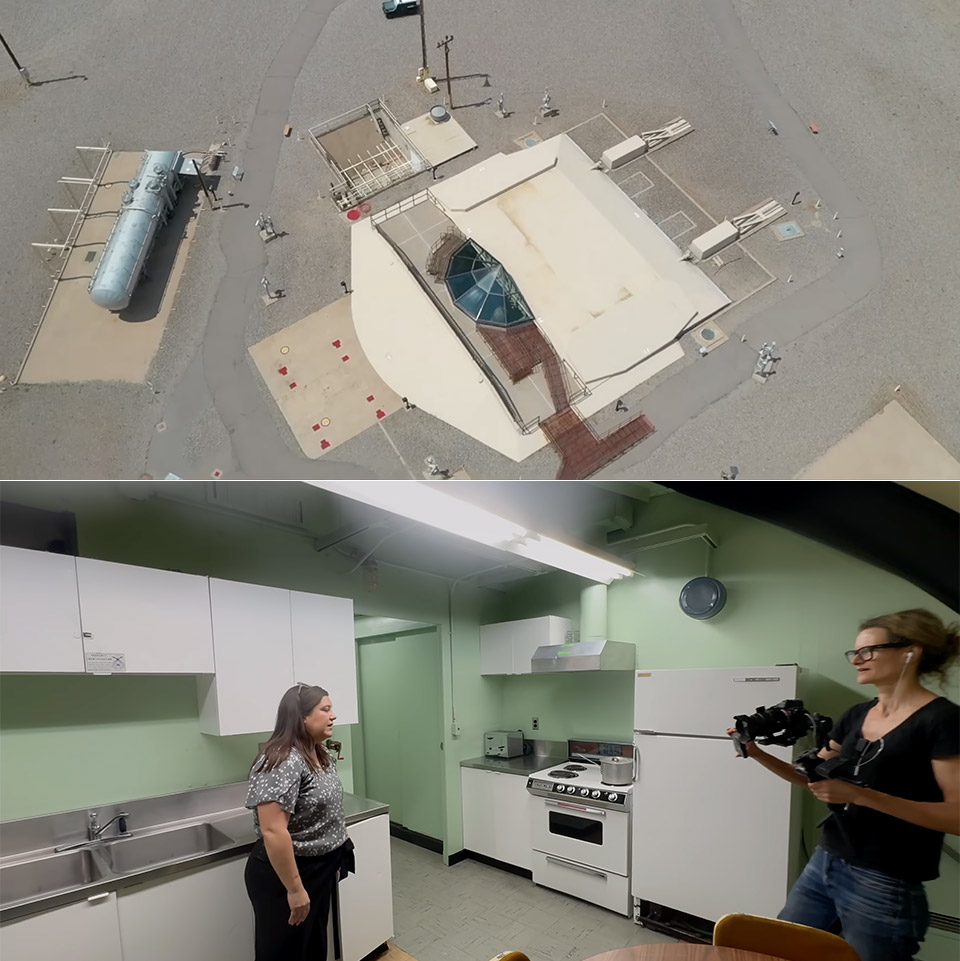
South of Tucson, in a stretch of Arizona desert that looks like any other patch of scrub and sun, a plain concrete entrance leads straight down into one of the most complete remnants of the Cold War. This is Complex 571-7, the single surviving Titan II missile site preserved exactly as it stood when the last crews walked out in 1987. Everything else from the original fifty-four sites was destroyed or buried. Here the underground command center and the missile itself remain untouched.
The descent begins at ground level and lowers approximately thirty five feet through a reinforced gateway. We’re talking about gigantic blast doors, each weighing several tons, that can seal the facility in an instant. They were designed to endure a nuclear strike anyplace nearby, including the shock, heat, and fallout. As you pass them, the air changes, as if you’ve stepped into another world. The temperature remains constant throughout the year, and the stillness is so terrible that it feels like it weighs ten times more than a typical basement.


This self-contained three-story steel and concrete rig serves as the command center. Four individuals lived and worked here when there were 24-hour alerts. The dwelling quarters were located on the ground floor. There is a row of bunks for when the crew takes a break between shifts. Next to that is a small kitchen outfitted with metal cupboards and basic appliances similar to those found in an average 1960s American home. A little table and a couch chair complete the setup. Meals were prepared upstairs and then carried down because two guys had to stay on the lower level to keep an eye on things. It was simple and unpretentious, but it made sense for folks who could have been stuck down there for days.

Moving down, the second level housed the operations hub. Consoles and rows of equipment filled the entire area. The officers would monitor missile status, communications, and security from above. Everything was analog, based on what was available at the time, with sequencing technology that employed punch cards and mechanical timers. Every button and indicator has a reason for being present. The area was constructed so that the crew could go through all of the launch procedures without ever needing to surface.

Next, there’s a long tunnel that connects the command center to the missile silo. Even walking it now takes a few minutes. Back then, it must have been a long journey because the tunnel carried power, data, and staff between the two structures. At the further end, it opens into the silo. The Titan II missile, one hundred and three feet tall, remains perched in its launch position. I’m talking huge, since the surrounding concrete walls rise over one hundred forty feet. There are access platforms and equipment distributed around the area. That one missile carried a warhead that was far more devastating than the ones launched on Japan in 1945.
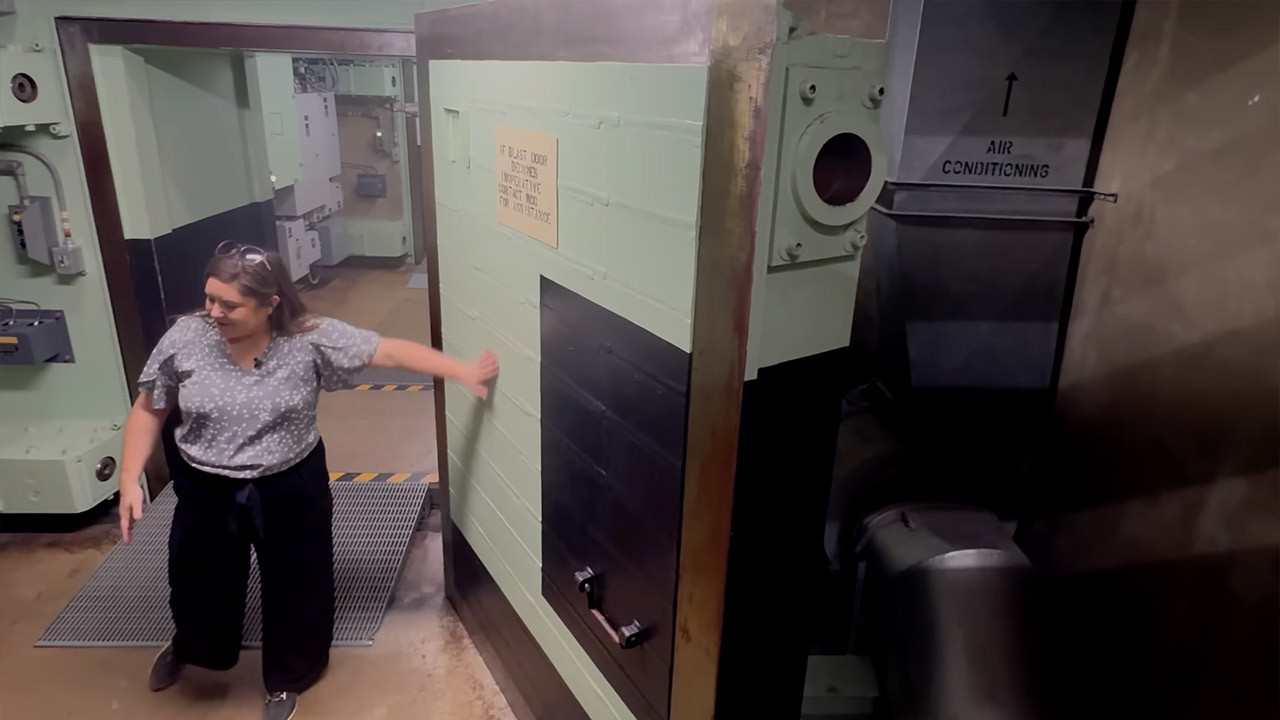
Engineers had designed the entire complex with independent systems so that it could function even if it were cut off from the rest of the world. The complex was self-sufficient due to a diesel generator that provided power throughout, as well as air filtration systems and water storage that could keep the crew going during extended periods of isolation… and some seriously necessary upgrades to protect sensitive equipment, such as shock-absorbing mounts to prevent damage. Then there was the strong reinforced concrete and various blast doors, which formed layers of security to keep the personnel and vital equipment secure from any attacks. The fundamental mission was simple: maintain the crew alive and able to take commands and carry them out regardless of what was going on above.
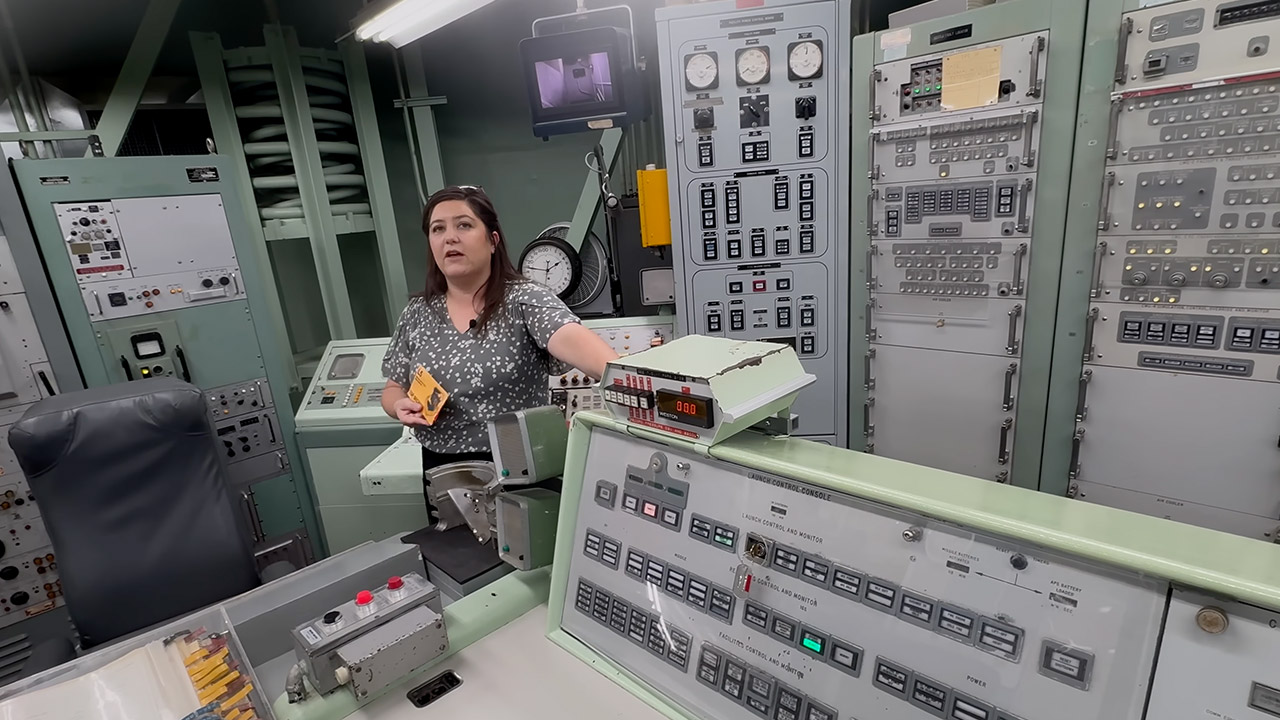
Life in the underground bunker followed a very tight sched. Crews took turns staying at their positions for alerts, with a couple of people riveted to the consoles while the others rested, ate, or performed necessary repairs. The living quarters, kitchen, bunks, and tiny communal rooms were really merely tools to help the workers prepare to launch at a moment’s notice, much like the launch equipment a whole level below.
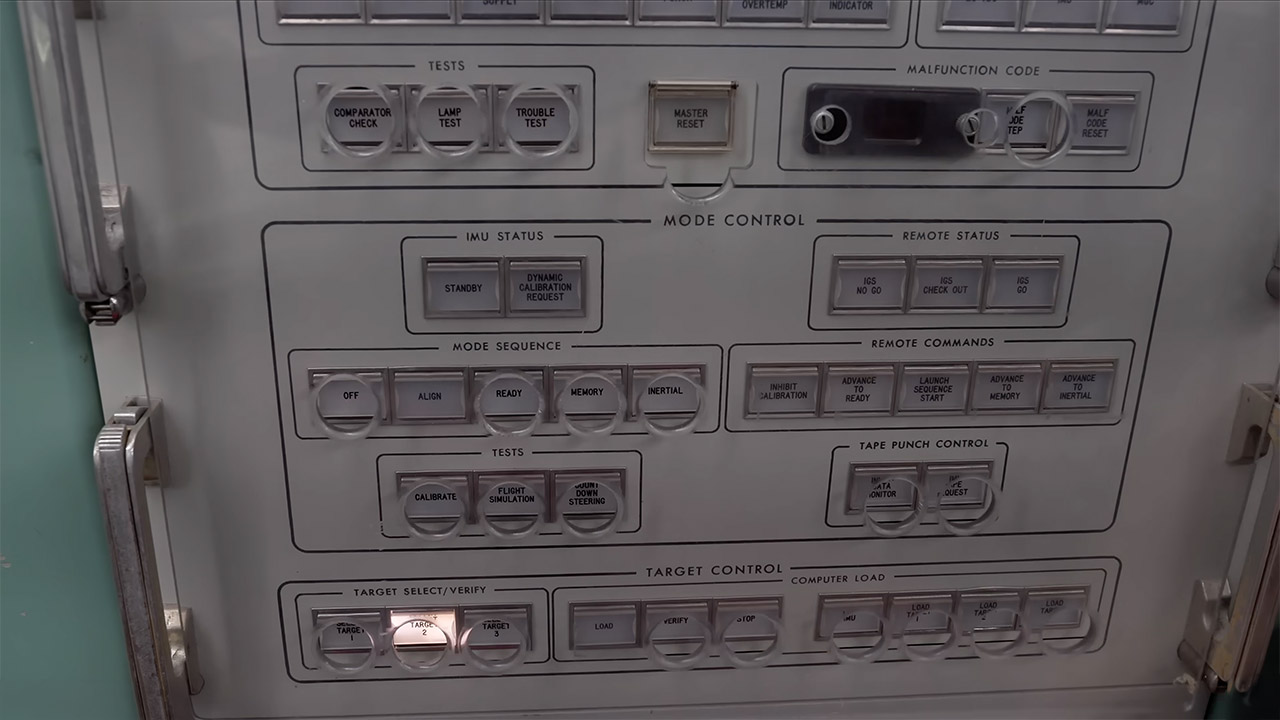
The majority of the installations were demolished in accordance with arms-control agreements once the Titan II program ended. However, veterans of the 390th Strategic Missile Wing refused to let the final remaining site be demolished. So they teamed up with the Arizona Aerospace Foundation to keep Complex 571-7 intact. Today, it serves as the Titan Missile Museum. Visitors are taken on guided tours that follow the same route as the original crews: down to the command center, down the tunnel, and alongside the real missile. They even get to participate in a simulated launch sequence in the control room to get a sense of what those operations sounded like.

Here’s what we read and liked this week.

Need something new for your reading list? This week, we recommend checking out The Dorians, a novel by Nick Cutter, and Lorenzo De Felici’s comic series, Red Roots.
 Gallery Books
It should become clear pretty quickly that the title here is a nod to one of this book’s major influences, Oscar Wilde’s The Picture of Dorian Gray. Five people on their deathbeds are interrupted by a mysterious person offering a second chance at life: an experimental treatment that could give them back their youth. This sort of thing always goes really well for everyone involved, right?
“The remarkable secret lies in the high-tech harnessing of an ancient and extraordinary biological agent…one with no conscience, yet possessed with a single-minded purpose that has helped it persist for eons: the will to survive,” per the book’s description. A lot about The Dorians at the beginning reminded me of Alien: Earth. A young genius with bad people skills unlocks the secret to enduring youth, giving way to moral and literal catastrophe as the reality unfolds into something no one is prepared for. It’s a pretty thrilling ride, and there’s some real shudder-inducing body horror in here.
 Image Comics
Reading the first two issues of Lorenzo De Felici’s Red Roots, it felt like every time I turned the page I found myself looking at something new that made me say, “wtf is going on?!” I mean that in a good way. I truly had no idea where this was taking me at any step of the way with the first issue, and the second issue, which came out this week, only amplified that. At the start, we’re introduced to two characters whose stories seem unrelated: a teacher who makes a horrifying discovery in her home one day, and a guy who is on a killing rampage. When their worlds collide, things only get stranger.
Red Roots is a really bizarre, really good time so far, and I have a feeling that things are only going to get weirder.


As the COOs from both Uber and Microsoft recently learned, encouraging company engineers to use AI aggressively can lead to hefty usage bills, perhaps even offsetting all the gains from laying off employees.
The AI bills at Netflix may not be so eye-popping thanks to company senior engineer Tejas Chopra, who has created software to prune agent instructions, as measured in tokens, before they hit the LLM.
Chopra has estimated that as much as 90% of tokens are redundant to the giant thinking machine of your choice.
Although not an official Netflix project, several teams there already use Project Headroom, and a number of external projects rely on it as well.
In a talk at the Open Source Summit last week, Chopra said that Headroom has saved an estimated $700,000 for its users, who collectively now have 200 billion tokens to spend elsewhere.
Not bad for an open source application that’s been out only since January. Headroom, currently at a still-raw v0.22, has gathered 2,000 stars on GitHub and has been forked over 120 times.
“A lot of our users are people who have been really burned by token costs, more than anything else,” Chopra said in his presentation.
A $287 bill from Claude Sonnet first brought Chopra’s attention to the idea of token economization.
The bill was typical home project stuff: a bit of debugging, some refactoring, MCP tools querying a database. At the time, Claude Sonnet’s token-based pricing seemed pretty generous: $3 for every million input tokens, or $6/million if you went over the 200,000 token limit for your context window. Still, that $287 added up quickly.
Upon deeper inspection, Chopra found a lot of this data was highly redundant to the LLM. By and large, his own hand-crafted instructions were not the culprit. Rather it was all the boilerplate and machine metadata that came along for the ride: Needlessly-verbose JSON schemas, nested templates within API responses, identical database columns.
“This isn’t prose. This isn’t creative writing. This is compressible data masquerading as text,” Chopra wrote in a blog post introducing his software. In 2025, a group of researchers found that reading user input accounted for about 76% of all token consumption.
The model providers have their own tools to save tokens. But to date, the settings on these tools are somewhat oblique to end users. By default, Claude has a prefix cache setting of just five minutes. After five minutes of inactivity, the entire context window needs to be refreshed, even if the LLM needs the exact same data. Another setting is exposed in the API documentation: a one-hour time to live (TTL). But there is a catch. “You pay two times the cost for your writes to get 90% savings for your reads,” Chopra told the audience. It’s up to you to find the sweet spot.
There are also a number of new commercial token barbers popping up, such as YCombinator-funded Token Company, which offers token compression as a service. On the open source side there is RTK (Rust Token Killer), which trims to the output of verbose commands, such as calls to a repository. Another open source project, LeanCTX, is a variant of RTK.
All these tools are useful, Chopra admitted, but he designed Headroom to keep the operations confined to the developer’s workflow. And it had something none of the apps and services could offer: reversible compression.
Headroom’s job is to compress all the source material that is fed into the user’s context window – not only the conversation history, but also logs, tool outputs, files, chunks of documentation that the RAG found useful – before it arrives at the LLM.
The context window is the set space for each user session. The latest frontier models are rapidly expanding their context windows upwards towards two million tokens, which holds both input and output.
Such generosity is a mixed blessing, as Pope Leo might point out. As a unit of measurement, a single token is more or less equivalent to a human word. For pay-as-you go plans, the more you feed the context window, the more you’ll pay.
Running on Python and Node, Headroom runs as a proxy (port 8787) on the engineer’s computer. The user wraps their LLM at the command line interface (i.e. “headroom wrap codex”) and it then parses the input.
While Headroom does compress a bit of programming code and human instruction, it is best at chopping server logs (90% of which can be jettisoned), MCP tool outputs (70% redundant JSON), Database outputs (it’s all one schema), and file trees (much repeated metadata).
Headroom’s first step is a process called CacheAligner which looks only for information that has been changed within input that’s already been entered, and ships only the new info, eliminating the need to replace an entire body of mostly unchanged text in KV Cache, the cache where the AI provider stores the user’s context window.
“If your system prompt contains a date field or contains some UUID that changes per session, you are effectively getting a cache miss every single time,” he told the audience. “That will blow up your costs.”
Then, a router process infers the type of content and sends it to one of a number of compressors. An Abstract Syntax Tree (AST) compressor squishes programming code. JSON and Document Object Model (DOM) compressors snip unneeded JSON and Web boilerplate, respectively.
Headroom also has some “squashers” that look at text or JSON input and decide which bits are actually relevant, based on statistical analysis. These tools learn in a feedback loop if they are over- or under-compressing, based on how often the model has to call back into the original uncompressed prompt.
The final process, called Compress Cache and Retrieve (CCR), offers that ability for the LLM to look at the original unsquashed data. It puts markers to where the data has been compressed, so if the LLM wishes to get the original context, it can call a Headroom MCP to retrieve the needed material from the user’s machine. The original context is stored on Redis or SQLite.
There is still work to be done to this software stack, Chopra admitted, particularly on testing accuracy. It should be an easy task because the CCR stores the original prompts. More compressors can also be built for other specific types of data, such as financial data.
Audio, image, and video will also have to be tackled (one user has already forked the project for video parsing). A related project, which Chopra says will be open source soon, is Headlight. Headlight will keep track of the origin of each token, which could be especially handy for ensuring the accuracy of multi-model work.
Minding your tokens does not only save money, it can improve results, research suggests.
Agents send more context than the model can possibly use, which, in addition to emptying the user’s coffers, can actually make the LLM dumber.
Like the rest of us, LLMs get confused when presented with too much information. A group of Stanford University boffins found that LLMs tend to pay more attention to the beginning and the end of the context window, and tend to disregard the middle bits.
Likewise, a set of researchers from data integrator Chroma deduced that, across 18 LLMs, “performance grows increasingly unreliable as input length grows.”
“Context rot,” they called this phenomenon.
Trimming prompts can also improve latency. In his presentation, Chopra relayed how one of Headroom’s users forked the software for a voice-activated application. With voice, even silence can generate tokens. The user expects a response from the app within 200 milliseconds for the service to sound natural, so the company is using Headroom to help shrink that latency window down as much as possible.
Headroom also offers some good news for those worrying about data centers heating the world into a fiery inferno with their energy usage. Fewer tokens means a smaller context window, which means less energy use – at least until Jevon’s Paradox kicks in and people find even more power-hungry ways to render their animated cat movies. ®

The YouTube-to-prestige-horror pipeline is looking very strong this weekend.
Taking the number one spot at the box office is “Backrooms,” a feature film expansion of Kane Parsons’ series of YouTube videos featuring eerie found footage of a mysterious office space (drawn from a 4chan thread) that defies physics.
Directed by Parsons, “Backrooms” made $38 million on Friday, and is expected to bring in a total of $80 million to $90 million at the domestic box office over this weekend alone. For indie studio A24, that’s its biggest opening by far — the previous record was held by “Civil War,” which made $25.7 in its first weekend of release.
The number two film, “Obsession,” is pulling off something that’s arguably even more impressive. True, it made a mere $8 million on Friday, with an estimated weekend haul of $28.5 million — but the movie (about a romantic wish gone nightmarishly wrong) already made more money in its second weekend than its first, and now its third weekend is set to grow another 19 percent.
For context, most wide release films normally fall between 50 to 70 percent in their second weekend; last year’s “Sinners” was considered an extraordinary word-of-mouth success because it fell less than 5 percent. Outside of Christmas releases (which have more staying power, thanks to the holidays), growing from weekend to weekend is unheard of — according to the Hollywood Reporter, “Obsession” is the first film since 1982 to grow on both its second and third weekends.
And like “Backrooms,” “Obsession” is a horror movie directed by filmmaker who first made his name on YouTube — Curry Barker, who released the hourlong found footage horror film “Milk & Serial” on YouTube in 2024. Barker has already shot his next film and is set to direct a new remake of “The Texas Chainsaw Massacre.
The two releases follow the surprise success of “Iron Lung,” a video game adaptation released earlier this year. Directed by Mark Fischbach — better known under his YouTube account name Markiplier — “Iron Lung” grossed nearly $41 million domestically.
In a New York Times article about the recent “YouTube-to-filmmaker boomlet,” Rutgers CInema general manager Mark DelVecchio noted that “lots of YouTubers have tried to make the leap to mainstream movies and come up short.” What sets Parsons, Barker, and Fischbach apart? DelVecchio said that despite their youth (Parsons is 20, Barker is 26), they all have “longevity.”
“At this point, some of them have been making videos for a very long time, and that’s how you develop a loyal audience that will follow you,” he added.
By the way, while I haven’t seen “Backrooms” yet (fingers crossed for tomorrow), I have seen “Obsession.” So I can confirm that it absolutely does not disappoint — I watched most of the second half with my fingers over my eyes, and I may even have screamed a few times.
When you purchase through links in our articles, we may earn a small commission. This doesn’t affect our editorial independence.

Foundation sent humanoid robots to Ukraine and has $24M in Pentagon contracts. Eric Trump is its chief strategy adviser. Warren calls it “corruption.”
Foundation Future Industries, a San Francisco startup founded in 2024, sent two of its Phantom MK-1 humanoid robots to Ukraine earlier this year. The company described it as the first known deployment of humanoid robots in a combat theatre. The tests, backed by the US government and conducted with Ukrainian officials, focused on logistics in hazardous areas.
CEO Sankaet Pathak told CNBC the MK-1 testing proved the robots can perform supply pickups that currently expose soldiers to danger. The robots carry approximately 44 pounds. They lack waterproofing and sufficient battery life for sustained deployment.
Foundation plans to send improved Phantom 2 units to Ukraine this year. Pathak says they will have “superhuman abilities” and double the payload capacity. The company is targeting front-line deployment with the US military within 12 to 18 months.
The political dimension is unavoidable. Eric Trump, the second son of the sitting president, recently joined Foundation as chief strategy adviser. The company has received $24 million in government research contracts across the Army, Navy, and Air Force for feasibility testing in inspection, logistics, and weapons handling.

The 💜 of EU tech
The latest rumblings from the EU tech scene, a story from our wise ol’ founder Boris, and some questionable AI art. It’s free, every week, in your inbox. Sign up now!
Democratic Senator Elizabeth Warren alleged the contracts were “corruption in plain sight.” A Foundation spokesperson told CNBC that Eric Trump had been an investor before becoming an adviser. The two parties share a vision of bringing manufacturing back to the US.
Pathak is best known for leading Synapse, a fintech platform that declared bankruptcy in 2024. Foundation also attracted scrutiny after suggesting it had close ties to General Motors, claims GM subsequently rejected. The company’s credibility is a live question.
The military argument for humanoid robots centres on urban combat environments. “Modern urban combat spaces, where there are stairwells, ladders, basements and narrow corridors, were created for human movement,” said Kateryna Bondar, senior fellow at CSIS. Humanoid systems could have advantages over tracked or quadruped robots in these scenarios.
The counterargument is cost and complexity. “Making robots look like humans is a complex and expensive engineering challenge,” said Melanie Sisson at the Brookings Foreign Policy program. “What Ukraine has taught us is the opposite, that we need the ability to adapt rapidly and manufacture quickly and cheaply.”
Ukraine’s war has already become the primary testing ground for AI and robotics in combat. Ground robots deliver supplies to front lines. Autonomous drones conduct precision strikes. The conflict is generating operational data that peacetime testing cannot replicate.
The European defence-tech sector is moving faster on autonomous strike systems. Berlin’s Stark is raising €300 million at a €2.5 billion valuation for kamikaze drones. Destinus manufactures 2,000 cruise missiles annually through a Rheinmetall joint venture. These companies build purpose-designed weapons. Foundation is trying to make a humanoid do the same job.
Pathak said some weaponised uses of the Phantom robots will retain human confirmation in the decision loop. In certain time-critical scenarios, the robots will need to make fully autonomous decisions. The ethical implications of autonomous lethal decision-making remain unresolved internationally.
Foundation’s ambitions are large. Pathak plans to scale production to thousands of units this year. The goal is to deliver “the best robots we can build” to the US military, “better than anything China has.” China has its own leading humanoid companies and has publicly funded military robotics initiatives, though the extent of its trials remains unclear.
The broader humanoid market is splitting into clear use cases. 1X ships home robots at $20,000. Colin Angle is building companion robots with bear cub ears. Foundation is building robots that carry supplies through artillery fire. The technology is the same. The applications could not be more different.
Toby Walsh, chief scientist at the University of New South Wales AI Institute, expects tracked, flying, and underwater robots to replace human forces before humanoids do. “It might be a science fiction trope to expect humanoid terminator-style robots,” he said. The age of AI robots in war is near. Whether they need to look human to fight is the question Foundation is spending $24 million in government contracts to answer.


This week on the GeekWire Podcast: Mark Zuckerberg’s 387-foot superyacht arrives in Seattle, cruising through the Ballard Locks and mooring on Lake Union just a short walk from Meta’s engineering center, just as it discloses nearly 1,400 layoffs in the Seattle area, about 20% of its local workforce. We try to wrap our heads around the spectacle, and the timing.
Meanwhile, robot pizza startup Picnic flames out and sells its assets to a mystery buyer. We trace the rise and fall of the Seattle company behind a machine that could help a single worker turn out up to 100 customized pizzas an hour. It’s the latest example of the challenges facing hardware startups, even as one enthusiastic customer is aiming to revive the idea nonetheless.
Corporate America confronts the rising cost of AI, with companies that once urged employees to experiment freely now watching their token bills double and triple. We consider the era of “free AI,” and what happens when the subsidies end and the real costs come due.
On a related note, we discuss the leaderboard-gaming practice known as “tokenmaxxing,” where employees spin up needless AI agents to boost their standings in internal rankings — a game that recently prompted Amazon to pull its internal Kiro leaderboard offline.
And finally, we return to the theme of billionaire yachts for our weekly trivia challenge, discussing Paul Allen’s Octopus, the wrecks it helped find, and how it stacks up against the other megayachts of the tech elite.
Subscribe to GeekWire in Apple Podcasts, Spotify, or wherever you listen.


A North Carolina man was sentenced to more than 10 years in prison for selling the personal information of over 7 million elderly Americans to Jamaican scammers.
57-year-old Troy Murray (who used the Steve Dixon pseudonym) pleaded guilty in January 2026 to one count of conspiracy to commit wire fraud and was sentenced Thursday to 121 months in prison, three years of supervised release, and ordered to forfeit $5,2 million.
Prosecutors said that Murray’s alias was so widely known among Jamaican scammers that it was referenced in a 2022 song lyric by a Jamaican musical artist.
According to court documents, between 2016 and 2023, Murray sold lead lists containing the names, phone numbers, physical addresses, and email addresses of elderly Americans to scammers in Jamaica and elsewhere, who used the information to commit lottery fraud.
Murray earned hundreds of thousands of dollars annually after typically charging $500 per list of 100 to 300 names. After the wire transmission services he used blocked him from their platforms, he asked his “clients” to pay him in prepaid gift cards instead.
He allegedly sent at least 22,000 lead lists over the years-long scheme, generating more than $5.2 million for himself and causing victim losses exceeding $9.5 million.
Murray used the illegal proceeds to purchase farm equipment, vehicles, and precious metal collectibles, and also sent some of these funds to his son, Cutter Murray, for personal and business expenses.
In June 2025, the Justice Department also revealed that Murray’s son will plead guilty to one count of money laundering for receiving and laundering $1.6 million of the fraudulent funds he obtained.
Murray’s sentencing comes as elder fraud continues to surge nationwide. According to the FBI’s 2025 Internet Crime Report, elderly Americans aged 60 and older filed over 200,000 fraud complaints last year, representing a 37% increase over 2024.
Affected elderly victims have also reported total losses of nearly $7.8 billion, a 59% year-over-year rise, with the average loss per complainant reaching $38,500.
This week, the U.S. Justice Department also filed insider trading charges against a Google security engineer, accusing him of using confidential company data to place bets on the cryptocurrency-based decentralized prediction market Polymarket.

Automated pentesting tools deliver real value, but they were built to answer one question: can an attacker move through the network? They were not built to test whether your controls block threats, your detection rules fire, or your cloud configs hold.
This guide covers the 6 surfaces you actually need to validate.
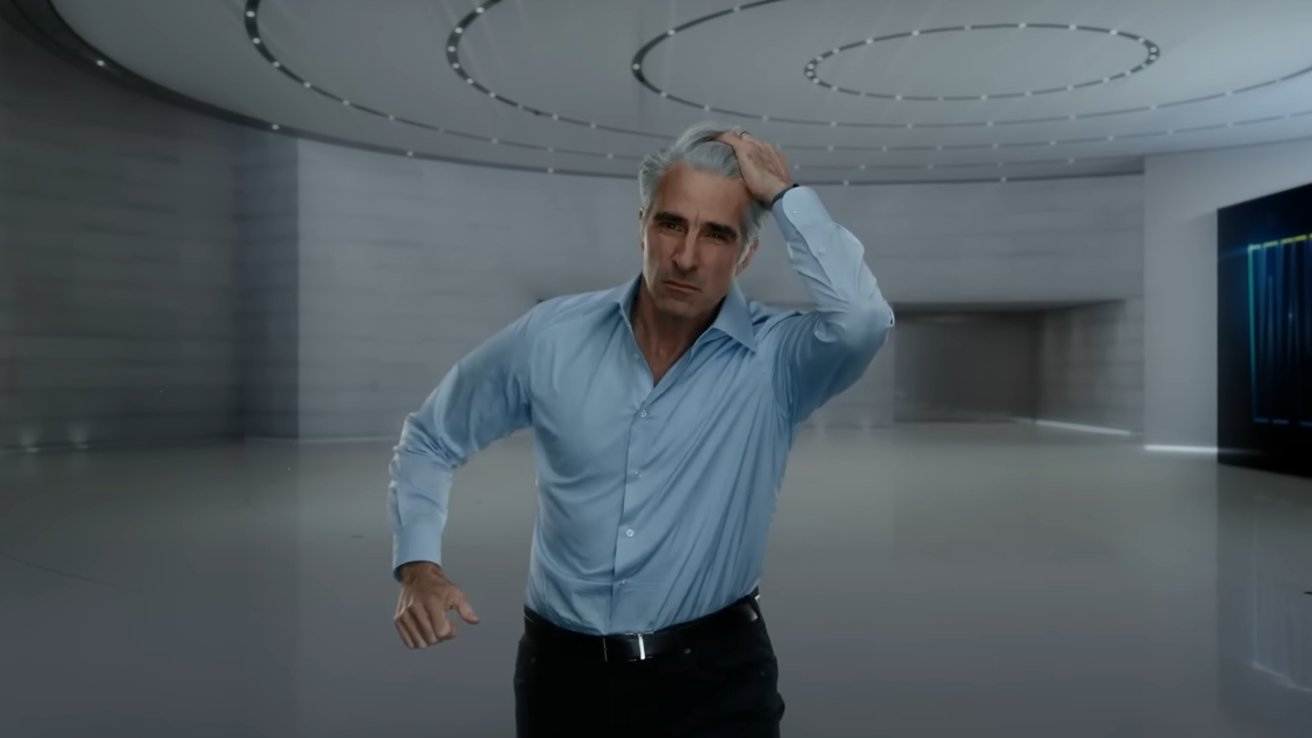
As the Senior Vice President of Software Engineering, Craig Federighi is the main guy who can alter the future of iOS, macOS, and AI for Apple. This is what you need to know about the guy with the fantastic hair.
While Tim Cook is the best-known face of Apple, Craig Federighi comes in a very close second. A long-time presenter for the company during events, especially at WWDC, he is synonymous with the company’s software launches and operating system updates.
That’s handy, since he is Apple’s Senior Vice President of Software Engineering. In that prominent role, he manages and guides the development of operating systems, apps, interface changes, and future technologies.
Despite having such a major role in the company, and being one of the top candidates for the role of the next CEO after Tim Cook, he’s also considered one of the more fun members of leadership. His playful presentation style and a willingness to use humor has led to him becoming a walking, talking meme.
Here’s the story of Craig Federighi, the software chief who is also referred to as “Hair Force One.”
Born in San Leandro, California, Federighi was introduced to computing by his mother, urging him to try out some Apple IIs at school. It led to him saving up for a TRS-80 Color Computer and a life in tech.
He attended the University of California, Berkeley, receiving a bachelor of science in electrical engineering and computer science in 1991. This was quickly followed by a master of science in computer science in 1993.
While at Berkeley, he wrote a technical report on a “Distributed Hierarchical Storage Manager for a Video-on-Demand system” for the ECCS Department in 1994.
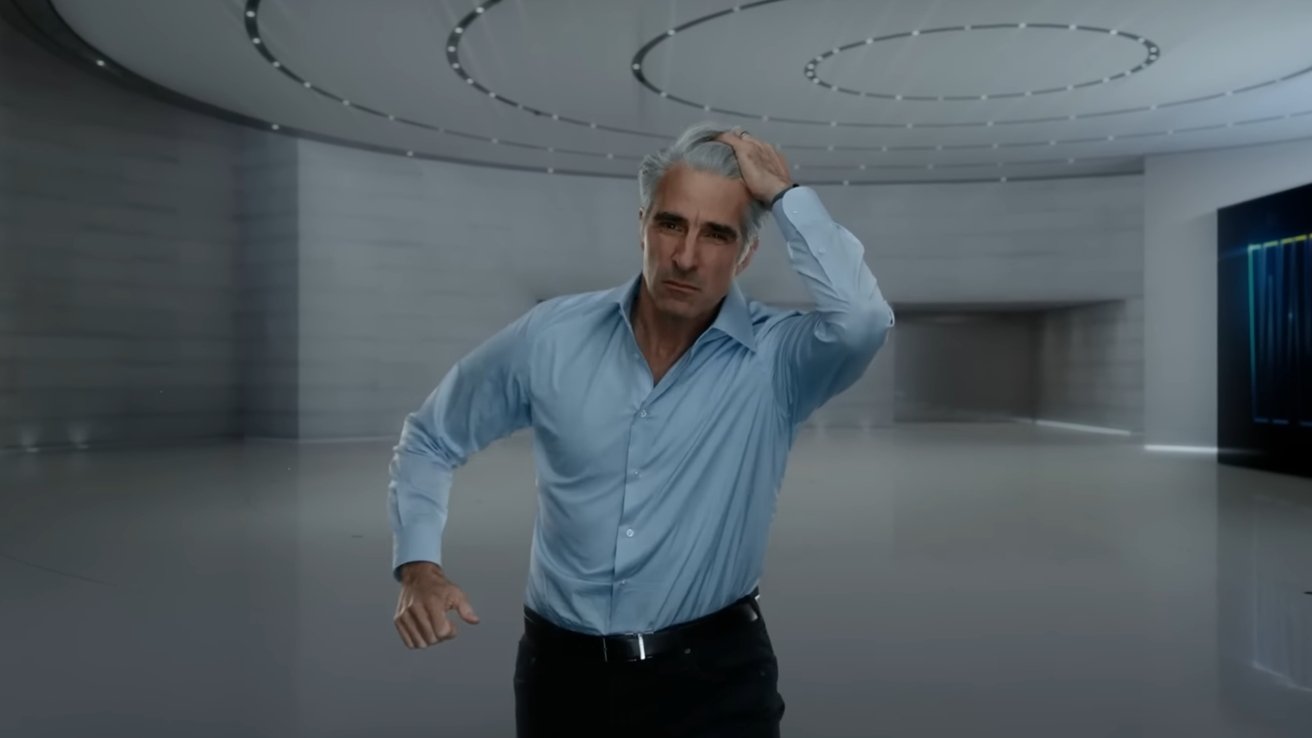
Craig Federighi’s slo-mo run during WWDC 2022. Image Credit: Apple
He also unexpectedly encountered Apple co-founder Steve Jobs, who had left Apple at the time. Jobs had visited Berkeley, showing off the NeXTcube and recreating the Mac product launch to the attending students.
The performance was influential, as Federighi then decided that he would rather work for NeXT and not Apple. Indeed, he did join NeXT and worked on the Enterprise Objects Framework, allowing applications to connect to databases.
NeXT was then acquired in 1996 by Apple, and Enterprise Objects Framework was absorbed into Apple WebObjects framework.
A few years later, Federighi cut his time short at Apple, departing his role as director of engineering. Instead, he jumped ship in 1999 to Ariba, a Palo Alto-based tech services company.
In his ten-year tenure at Ariba, he moved from being vice president of Internet Services to the role of executive vice president. He eventually became chief technology officer and then ended his time at Ariba as its the “user interface technology evangelist”.
A few years after Federighi’s departure from Ariba in 2009, the company was acquired by SAP SE, which is still in operation.
Federighi’s second stint at Apple started in 2009, joining the company to lead its macOS engineering teams. This took place just after the development of macOS Snow Leopard.
Oddly enough, WWDC 2009 was the first instance of Federighi being involved in a presentation. He took to the stage to demonstrate Snow Leopard’s new features.
This was followed by a demonstration of macOS 10.7 Lion, which in turn led to further on-stage presentation appearances.
By March 2011, he was promoted as the vice president of Mac Software Engineering at the company, taking over from Bertrand Serlet. He became senior vice president of Software Engineering one year later, as part of a wider executive shakeup by CEO Tim Cook.
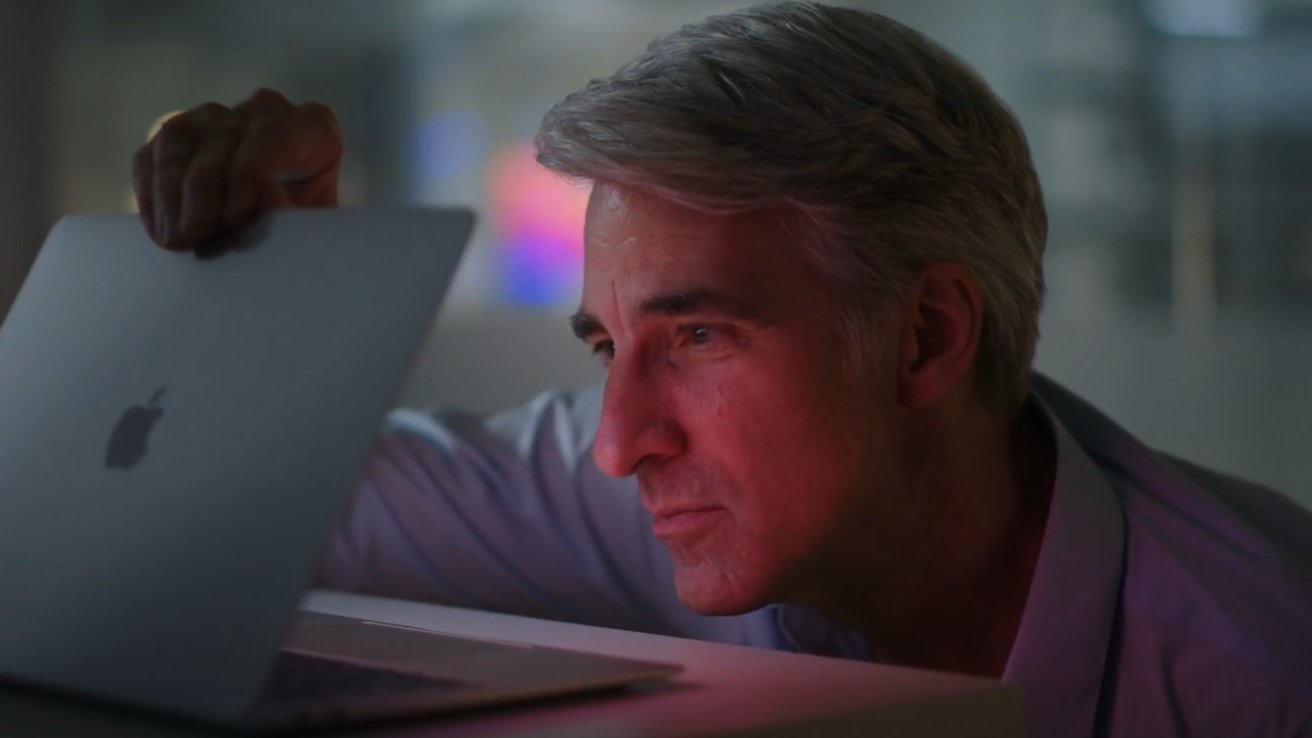
Craig Federighi waking a MacBook up. Image Credit: Apple
After the exit of Scott Forstall in 2012, Federighi was given a wider remit than just Mac software. He was made the leader for the development of both iOS and OS X.
While other executives would expect to see a progression in their job title, this hasn’t been the case for Federighi. Fourteen years later, he is still listed on Apple’s Leadership site as SVO of Software Engineering, reporting directly to Tim Cook.
The static job title doesn’t mean there wasn’t any change in the role. In 2017, a leadership change led to Federighi becoming the overseer of Siri.
After a poorly received introduction of Apple Intelligence as the company’s first salvo in the AI war, Federighi gained another responsibility. In December 2025, Federighi was put in control of the AI teams, including the AI models team.
Ever since his WWDC 2009 stage appearance, Federighi has become a major presence in Apple’s software-related presentations.
This included appearing during WWDC 2013 to show iOS 7 and OS X Mavericks, doing the same in WWDC 2014 for iOS 8 and OS X Yosemite.
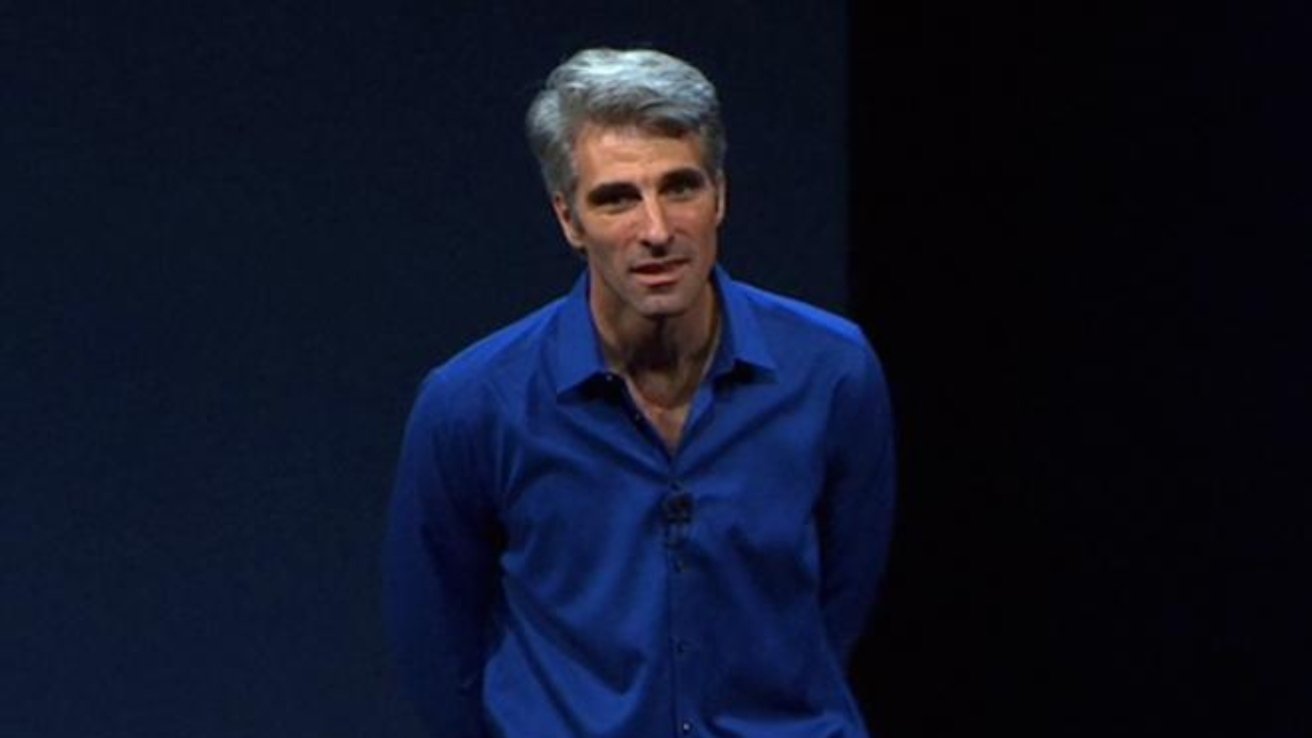
An early WWDC appearance for Craig Federighi – Image Credit: Apple
The WWDC 2015 presentation was a major one for Federighi, as he hosted the vast majority of the two-hour keynote. This involved launching iOS 9 and OS X 10.11 El Capitan, as well as the introduction of Swift.
Later that same year, he demonstrated the 3D Touch feature of the iPhone 6S.
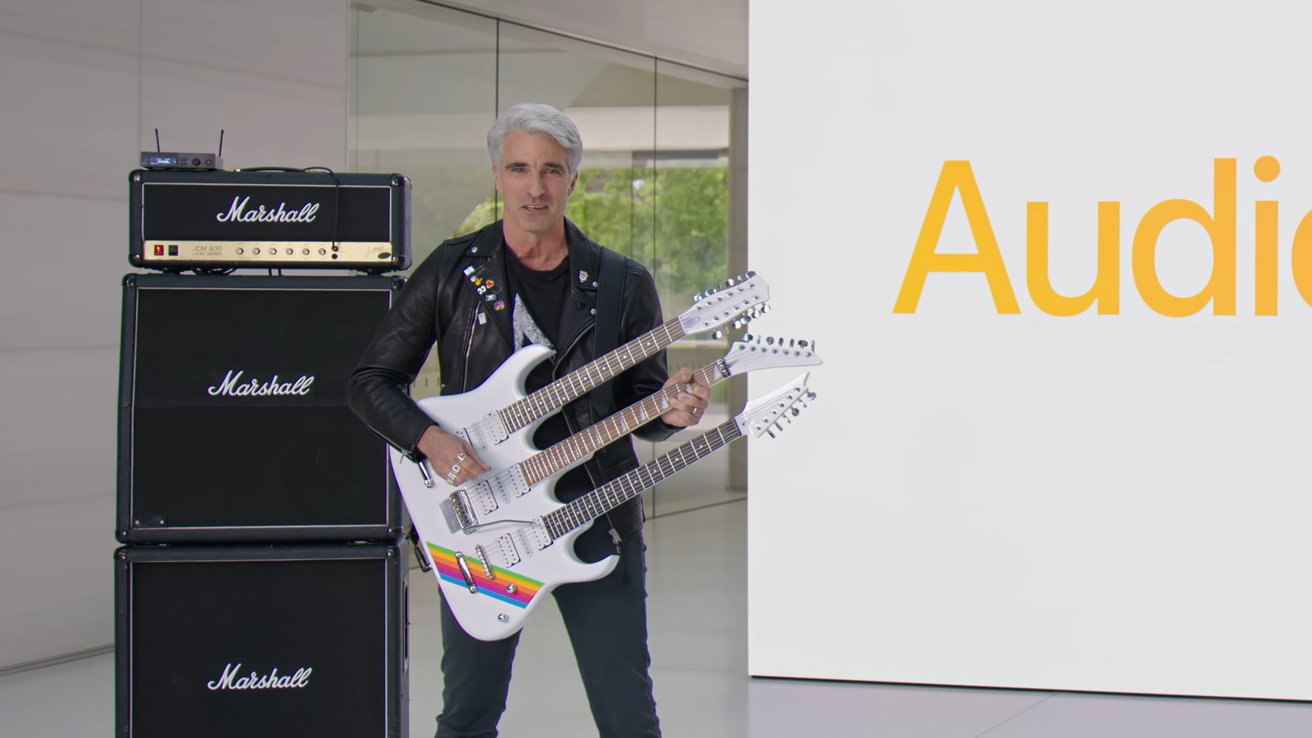
Craig Federighi with a unique guitar. – Image Credit: Apple
He was also the executive who introduced the name convention change for macOS 10.12 Sierra at WWDC 2016, as well as iOS 10 and lock screen widgets.
In the 2017 Apple Special Event, he was set to demonstrate the new Face ID feature in the iPhone X, but it failed during the live presentation. It was later determined to be a mistake caused by other Apple employees triggering it previously.
His string of WWDC appearances continued apace with 2018’s iOS 12 and macOS 10.14 Mojave. He has handled the operating system introductions at WWDC ever since.
While a staple at WWDC, he has appeared during other Apple events too, including a silent cameo during the September 2020 event. The November 2020 event clip of him waking a MacBook from sleep quickly became a meme.
Being meme-worthy isn’t usually the forte of executives at a company, with the use of comedy frequently failing in most cases and becoming cringeworthy. However, in the case of Federighi, most of his presentations have included a lot of funny and meme-adjacent moments.
Federighi found that being funny worked for his style of presentation, and leaned into it heavily. Somehow, it worked even more.
A famous long-time example of his humor is his reference to the “Crack Product Marketing Team” going on wild adventures to come up with the next macOS version name.
However, sometimes the comedy goes to almost absurd lengths, and with high production values, too.
For example, the WWDW 2022 presentation had Federighi descend on a CGI elevator like a spy, throwing a basketball over Apple Park, and accidentally walking in on an Apple Fitness+ workout.
Later in the presentation, a speedy-running section had a slow-motion section, with Federighi pulling off a “Blue Steel” stare to camera and running his fingers through his hair to the tune “Thoughts About You.” While a heavy-handed reference to being referred to by fans as “Hair Force One,” it’s one that worked and instantly became a meme.
This continued into WWDC 2023 with the playing of a triple-necked guitar, followed by skydiving and parkour in 2024. WWDC 2025 had him driving a Formula One car on the roof of Apple Park’s main building while talking to a non-plussed Tim Cook.
The humor and his great hair make Federighi seem like the cool uncle of the Apple leadership team. While others are also moving to appear more fun to customers, it seems that Federighi will be the center of WWDC attention for some time to come.
As the man in control of software at Apple, Federighi has a deep-seated interest in both ensuring user privacy is maintained and for Apple’s platforms remaining secure. It’s a stance that he has maintained throughout his tenure.
An early example of this was an opinion by Federighi published in March 2016, explaining why Apple wasn’t willing to weaken encryption despite a public demand from the FBI. He reasoned that Apple was trying to be one step ahead of criminal attackers, and found the FBI and other security agencies to be “pressing us to turn back the clock to a less-secure time and less-secure technologies.”
Two years later, a 2018 statement from Federighi responded against even more calls to weaken end-to-end encryption by adding a backdoor. Weakening security “makes no sense” when consumers rely on Apple’s products to keep their personal information safe, he insisted.
Federighi’s stance hadn’t changed by 2020 either, calling Apple’s dedication to privacy akin to treating it as if it were a fundamental human right during WWDC of that year.
The introduction of App Tracking Transparency also had Federighi’s backing, saying it was part of Apple’s core values, and that it wouldn’t damage advertisers as much as they claimed it would. He later expressed that ATT should give users a “meaningful choice” about their privacy.
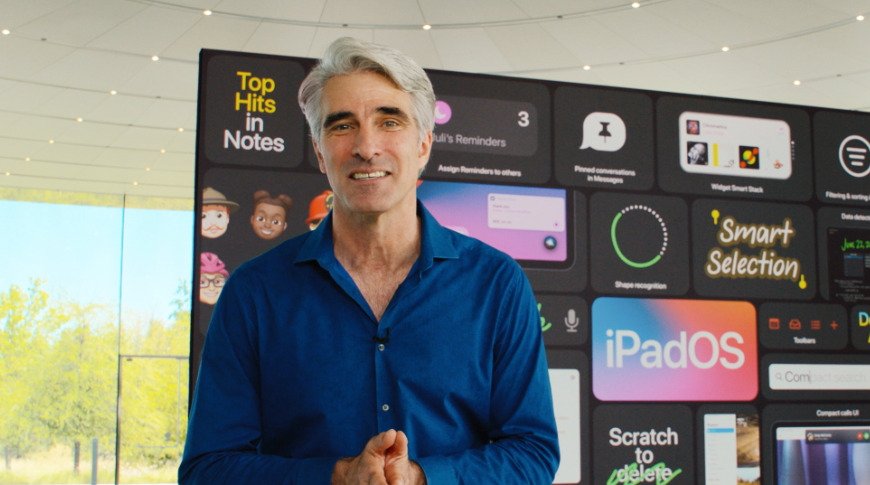
Craig Federighi talking during a WWDC keynote – Image Credit: Apple
Trying to maintain user privacy while getting tasks complete is a hard balancing act for Apple, as it found in 2021 by introducing iCloud Photos image assessment and Messages notification features. They were intended as mechanisms to protect children online and curb the spread of child sexual abuse material (CSAM).
Within days, Federighi spoke about the introduction, saying that the child protection message was “widely misunderstood” because Apple wasn’t clear enough in its messaging. He acknowledged that the announcement of multiple elements together had the response of people wrongly believing Apple was scanning their iPhone for images.
This didn’t stop civil rights groups around the world from demanding Apple drop the child safety plans altogether.
His insistence of maintaining privacy has also led to him criticizing some if the capabilities of Apple’s own software. Especially when framed around the alternative App Store debate in Apple’s long-time lawsuit with Epic Games.
In 2027, Federighi told a court that macOS security wasn’t as good as iOS, in part because of its use of one App Store on iOS. Multiple app stores are “regularly exploited on the Mac,” Federighi claimed, and there was “a level of malware on the Mac that we don’t find acceptable.”
The tight security of iOS meant it had a “dramatically higher bar for customer protection” that the Mac could not meet.
He later railed against forcing Apple into allowing the side-loading of apps on iPhone, as it would “take away consumers’ choice of a more secure platform.”
It’s a belief that has strengthened during the age of AI and Apple Intelligence. Following the September 2024 “It’s Glowtime” event, Federighi explained that Apple had to go through multiple breakthroughs to bring Private Cloud Compute to life, protecting user data while embracing the new technology.
Ultimately, Federighi firmly believes that maintaining security and privacy for Apple users will be a “battle we will be fighting for years to come.”
Fostering development of the app ecosystem is another of Federighi’s all-important roles as the software chief. His WWDC appearances implies he wants there to be more developers, but Apple’s announcements have also been an important factor too.
In December 2015, when the Swift programming language was made open source, he said he wanted everyone to learn it as a primary language. He wanted it to be usable everywhere, “from scripting to apps for mobile down to writing code in the cloud.”
That same month, he promoted the “Hour of Code” initiative to get everyone coding. He admitted at the time that he first tried coding when he was 10, adding that programming should be considered the “next level of literacy.”
He then went on to say that there would be deep Swift integration in iCloud and for Mac development, with it already being used on the dock of El Capitan.
In 2019, Federighi helped usher in iPadOS as a fork of iOS, all to give the iPad a “truly distinct experience.” He said it was “not an iPhone experience, it’s not a Mac experience,” and so something new had to be created for it.
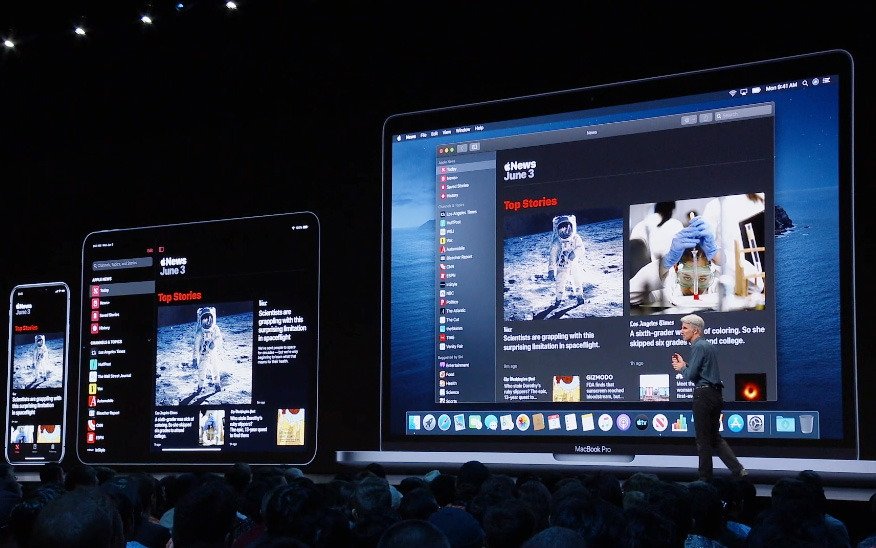
Craig Federighi introducing Catalyst at WWDC – Image Credit: Apple
He also said that Catalyst would help boost the quality of both Mac and iPad apps, by helping iPadOS apps be ported over to the Mac platform.
In an unusual move, Federighi responded to an email from an aspiring programmer in 2019, which was shared on Reddit. The response to being asked for advice for would-be programmers included dedicating time to study while at university, to “go broad and deep” in the area, and to focus on teamwork.
This occurred during a time when Apple was reportedly shifting its development strategy for iOS 14 to cut down on the number of buggy releases coming out of Cupertino. Federighi and other department chiefs kicked off the initiative, explaining new processes where buggy code was disabled and flagged in testing.
The introduction of Apple Silicon was also a big moment for Federighi, due to having to manage the upcoming transition away from Intel chips. On the performance of the M1 chip, he boasted “We overshot” on performance, as well as expressed disbelief on the battery performance.
Later that year, he even said that it was possible to run an ARM version of Windows in emulation, but that it was “really up to Microsoft.”
Of course, Federighi has had to deal with repeated rumors of a combination of macOS and iPadOS into a single operating system. In 2025, he insisted that iPads won’t be running macOS anytime soon, despite the addition of macOS-like productivity elements.
Doing so would harm the touch experience on the iPad and lose what made it special.
The slow rollout of Apple Intelligence and the mishandling of the Siri overhaul have been a big problem for Apple. However, it seems Federighi had a lot to do with Apple getting going with AI in the first place.
A June 2024 report claimed that Apple’s AI efforts led by John Giannandrea struggled for various reasons, including a lack of resources. Betting on the laid-back Google-like team wasn’t enough to catch up, and forced other teams to wade into AI, resulting in a piecemeal and incoherent approach.
Apple apparently started to turn things around when Federighi forced changes. After spending Christmas 2022 playing around with Microsoft Copilot, he became an AI convert.
This resulted in his team of software engineers being given resources to pursue AI and generative AI. He was also apparently involved in a deal that led to ChatGPT’s integration into Siri.

Craig Federighi in a skydiving skit – Image Credit: Apple
Federighi was bullish on AI, but certainly didn’t claim that Siri would suddenly become a sentient being. In October 2024, he said that improvements were on the way for Siri, but sentient-like actions weren’t on the roadmap.
In April 2025, it was revealed that the great AI internal shakeup and managerial reshuffle led to Siri being put under the oversight of Federighi more directly than it had been.
By June 2025, Apple viewed itself as being in a much better position when it came to AI. Federighi explained that contextual Siri with App Intents was actually working, and that Apple didn’t need to deliver every technology on Earth.
That is, while no-one doesn’t look at Apple as a major shopping destination like Apple nor a competitor to YouTube, the world somehow expected Apple to make an AI chatbot.
As AI continues to become a major element of modern-day computing, Apple can at least thank Federighi for stepping up, forcing change, and pushing Apple’s AI work on from its previously perilous position.
It doesn’t seem that Federighi will be heading out of the company anytime soon, even with the change to the inbound CEO John Ternus in the fall. Here’s hoping he does stick around to make Siri great again.
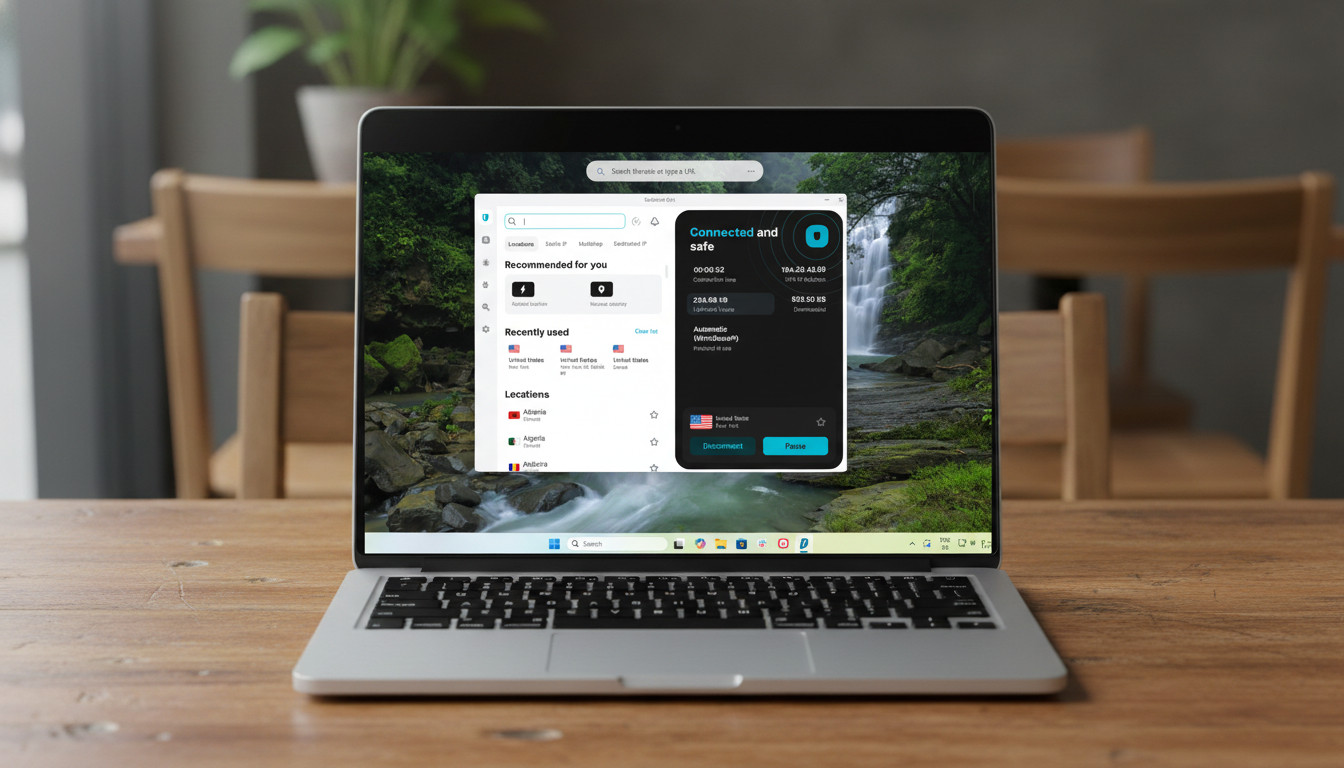
Thanks to the ever-rising number of scammers and spammers, answering a phone call or email from an unknown sender can be pretty daunting. Personally, I treat any unexpected call with a healthy dose of suspicion.
Deepfakes and AI scam calls are making it harder to parse malicious messages from the real thing. And with more than half of Americans affected by fraud in 2025, it’s more important than ever to keep your lines of communication secure.
Enter Surfshark: as our Surfshark review notes, it comes with a suite of tools to help you dodge scams and spam while keeping your identity safe online.
What’s more, we’ve got an exclusive deal that gives you $10, $20, or $30 in Amazon gift cards when you sign up for Surfshark Starter, Surfshark One, or Surfshark One+.
As well as offering the typical functions of a VPN – accessing content in other countries and enhancing browsing privacy – Surfshark comes equipped with a full suite of security tools that cover everything from calls to email to ad-blocking.
Surfshark Starter is currently available for $1.99 per month with a 27-month plan (paid up-front at $53.73, representing 24 months plus 3 extra). That’s an 87% saving over the pay-monthly cost, which totals $417.15 across the same time frame.
Surfshark One and Surfshark One+ up the price to $2.49 per month and $4.19 per month, respectively, when purchased as 27-month plans. Surfshark One adds a web content blocker and antivirus, while Surfshark One Plus offers web data removal via Incogni and up to $1 million in identity theft coverage.
All three Surfshark plans allow you to connect to as many devices as you want, a huge win over rivals like ExpressVPN.

As mentioned, all three tiers of Surfshark come with a selection of great security tools. As our Surfshark VPN review notes, Starter is far from a ‘lite’ version of the Surfshark experience, with full VPN, ad blocker, and ID protection features. Keep reading for a full breakdown.
Alternative Identity is the umbrella term Surfshark uses for its identity protection tools.
Essentially, Surfshark allows you to present as someone totally different online, so you can anonymously sign up to websites and hide your information from digital onlookers.
You can choose a new name, date of birth, email, postal address, and phone number to use when registering for newsletters, stores, or anything else that might make an enticing target for data thieves. This is perfect if, like me, you’ve got thousands of marketing emails jamming your inbox.
CleanWeb is Surfshark’s ad blocker, which comes with the added ability to stop cookie consent pop-ups from appearing and slowing down your browsing.
For those who want an even more private browsing experience, Surfshark One and Surfshark One Plus also offer a web browser that stores no browsing data whatsoever.

Surfshark is our pick for the best cheap VPN, and its unlimited device coverage is hard to ignore, but it’s not without its competitors, some of which go further in key areas.
Proton VPN’s Stealth protocol, for example, makes it easy to hide the fact you’re even using a VPN, which could be useful in countries with tighter VPN regulations or censorship laws.
For a little more cash, NordVPN is our pick for the best VPN overall, offering particularly excellent streaming performance. And for those on tighter budgets who just need a basic VPN, PrivadoVPN’s limited free service might be enough to get by – though it lacks Surfshark’s range of security features.

U.S. forces deployed to war zones “have been targeted using commercially available location data,” reports Reuters, citing “reports fielded by military officials.”
Reuters calls it “an illustration of how the global surveillance economy is shaping the battlefield.”
In a letter shared with Reuters by U.S. Senator Ron Wyden, an Oregon Democrat, U.S. Central Command said it had “received multiple threat reports concerning adversary exploitation of commercial location data to target or surveil U.S. personnel in theater.” The message, sent on April 14, offered no further specifics, but Centcom’s area of responsibility includes the Gulf, where U.S. forces are facing off against the Iranian military over the Strait of Hormuz.
The disclosure was the first official confirmation that U.S. forces had been targeted in an active war zone, Wyden and a bipartisan group of legislators said in a letter sent on Thursday to the Pentagon. “Commercial location data can be used to identify where U.S. troops congregate and their pattern of life, which can be exploited by adversaries to target attacks such as missiles, drones, and roadside bombs, as well as for counterintelligence purposes,” the letter warned.
Wyden said in a statement that it was time to “start treating the adtech industry as a national security threat.”
“The letter from U.S. lawmakers to the Pentagon said that, given what military officials know about the trade in location data, they should have acted faster to protect their personnel,” the artiles adds, “for example by disabling the unique advertising ID attached to military-issued devices, automatically turning off location sharing on smartphones in the field, and steering staff away from Google’s Chrome web browser toward more privacy-focused alternatives.”
Thanks to Slashdot reader JoeyRox for sharing the article.





NYT Strands Answers May 24 2026 Revealed for Puzzle No. 812 Theme Summer Essentials


Israel says it has killed new Hamas military leader in Gaza City airstrikes


NASA taps Blue Origin to deliver lunar rovers for Moon Base initiative


Bridgerton Season 5: Cast, Release Date And Everything We Know So Far


XRP *JUST* SUCCEEDED!!!! CLARITY ACT EXPOSED!!! (SHE EXPOSED IT)


Selena Gomez Reportedly Upset Over Benny Blanco’s Comments on Her ‘Terrible’ Diet

Micron Crosses $1 Trillion Market Cap as AI Demand Reshapes Memory Sector


2026 NBA Finals schedule, odds: Knicks await Thunder or Spurs after winning East


BTS Sells Out Four Las Vegas Shows at Allegiant Stadium for ARIRANG World Tour

China assigns ID codes to 28,000+ humanoid robots

Microsoft’s quiet Claude Code retreat and the real cost of enterprise AI

Hottest May day ever as London hits 34.8C in 2C leap from previous records


This is BROKEN! INSANE 5x MONEY CAR WASH WEEK! The NEW GTA Online UPDATE Today! (GTA5 New Update)
Brian Armstrong Outlines Crypto Vision for the Future Financial System


Waymo dominates autonomous vehicle registrations as Tesla trails behind
The Samsung pay deal is the moment Korean unions changed register


Nikkei 225 Surges Past 65,000 for First Time as Iran Peace Hopes Fuel Record Rally


Westone Audio and Etymotic Acquired by Fidelity Collective in Major IEM Market Move

‘Breaking Bad’ Star’s Easy-to-Binge 6-Part Crime Series Spin-Off Is Finally Heading to Free Streaming

Millions of AI agents imperiled by critical vulnerability in open source package


You must be logged in to post a comment Login