Connect with us
DAPA Banner
DAPA Coin
DAPA
COIN PAYMENT ASSET
PRIVACY · BLOCKDAG · HOMOMORPHIC ENCRYPTION · RUST
ElGamal Encrypted MINE DAPA
🚫 GENESIS SOLD OUT
DAPAPAY COMING

Tech

Apple’s software chief: Who is Craig Federighi?

Published

on

As the Senior Vice President of Software Engineering, Craig Federighi is the main guy who can alter the future of iOS, macOS, and AI for Apple. This is what you need to know about the guy with the fantastic hair.

While Tim Cook is the best-known face of Apple, Craig Federighi comes in a very close second. A long-time presenter for the company during events, especially at WWDC, he is synonymous with the company’s software launches and operating system updates.

That’s handy, since he is Apple’s Senior Vice President of Software Engineering. In that prominent role, he manages and guides the development of operating systems, apps, interface changes, and future technologies.

Despite having such a major role in the company, and being one of the top candidates for the role of the next CEO after Tim Cook, he’s also considered one of the more fun members of leadership. His playful presentation style and a willingness to use humor has led to him becoming a walking, talking meme.

Advertisement

Here’s the story of Craig Federighi, the software chief who is also referred to as “Hair Force One.”

Before, after, and before Apple again

Born in San Leandro, California, Federighi was introduced to computing by his mother, urging him to try out some Apple IIs at school. It led to him saving up for a TRS-80 Color Computer and a life in tech.

He attended the University of California, Berkeley, receiving a bachelor of science in electrical engineering and computer science in 1991. This was quickly followed by a master of science in computer science in 1993.

While at Berkeley, he wrote a technical report on a “Distributed Hierarchical Storage Manager for a Video-on-Demand system” for the ECCS Department in 1994.
Advertisement
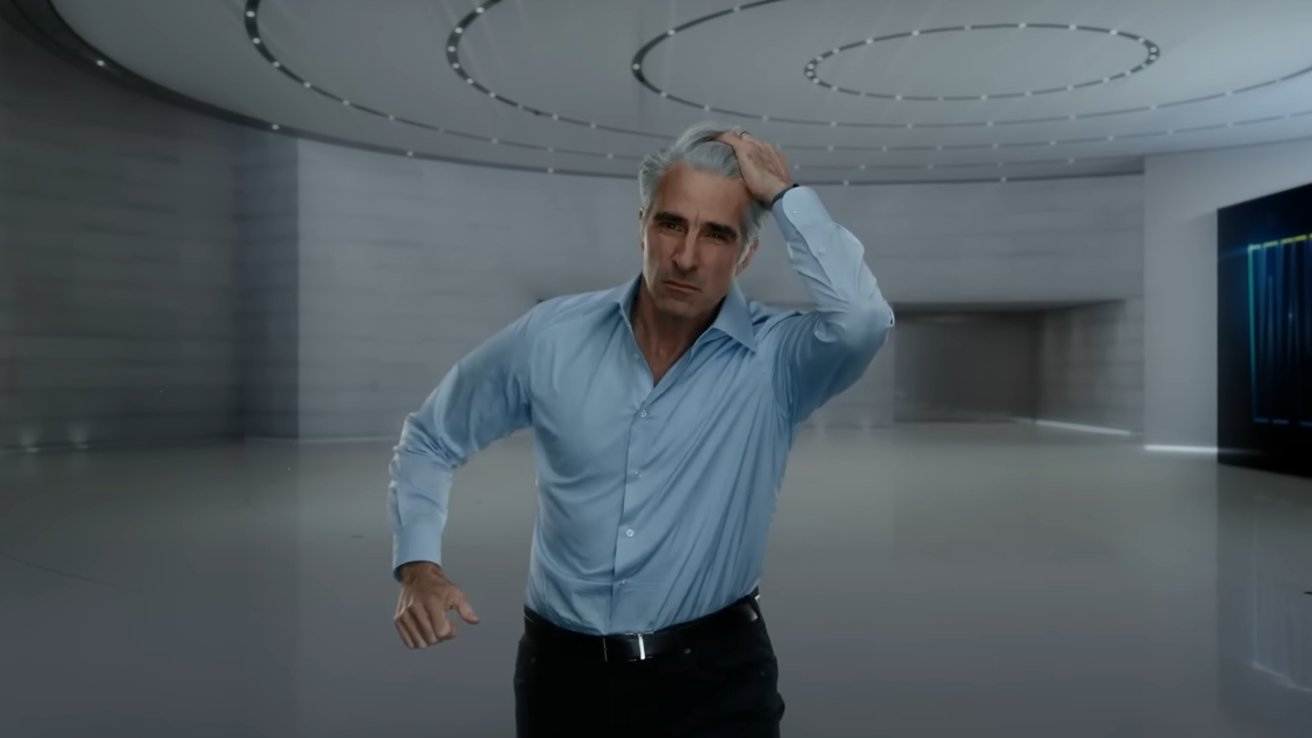
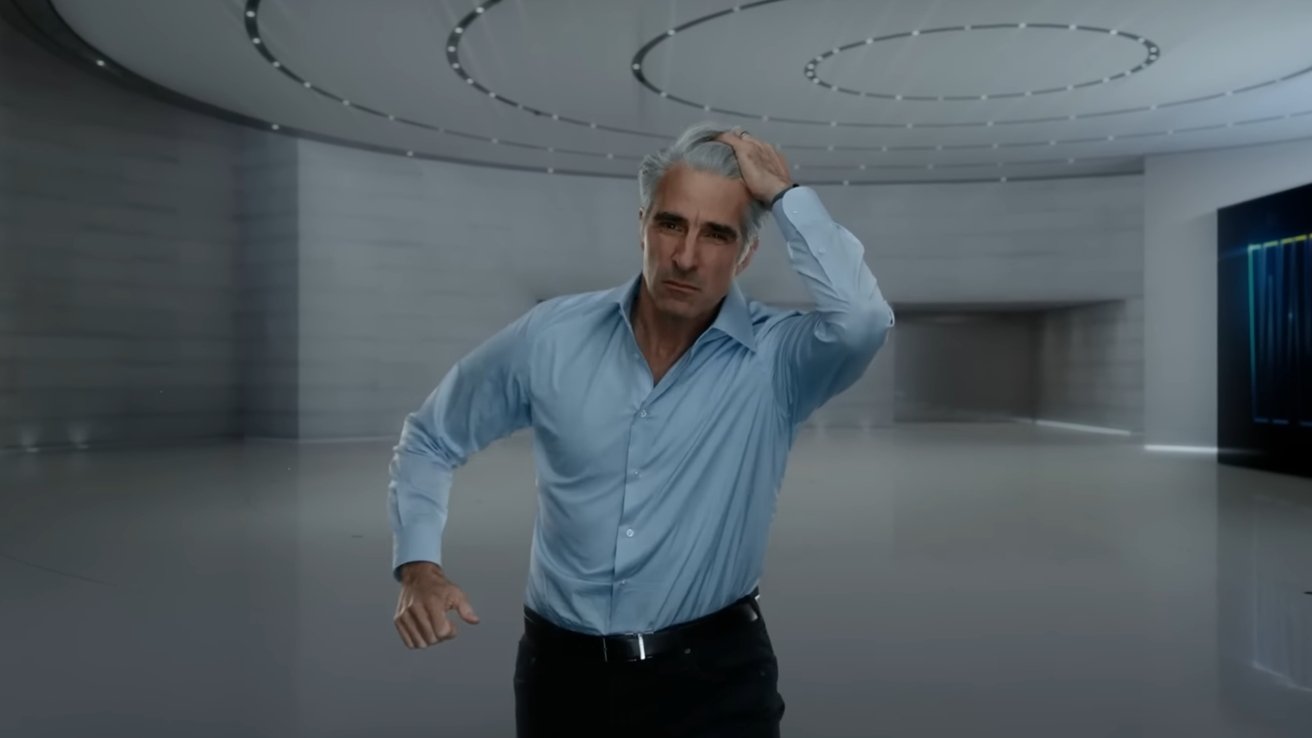
Middleaged man with gray hair and blue dress shirt runs forward in a sleek, futuristic hallway, one hand on his head, wearing a serious, focused expression

Craig Federighi’s slo-mo run during WWDC 2022. Image Credit: Apple

He also unexpectedly encountered Apple co-founder Steve Jobs, who had left Apple at the time. Jobs had visited Berkeley, showing off the NeXTcube and recreating the Mac product launch to the attending students.

The performance was influential, as Federighi then decided that he would rather work for NeXT and not Apple. Indeed, he did join NeXT and worked on the Enterprise Objects Framework, allowing applications to connect to databases.

NeXT was then acquired in 1996 by Apple, and Enterprise Objects Framework was absorbed into Apple WebObjects framework.

Advertisement

A few years later, Federighi cut his time short at Apple, departing his role as director of engineering. Instead, he jumped ship in 1999 to Ariba, a Palo Alto-based tech services company.

In his ten-year tenure at Ariba, he moved from being vice president of Internet Services to the role of executive vice president. He eventually became chief technology officer and then ended his time at Ariba as its the “user interface technology evangelist”.

A few years after Federighi’s departure from Ariba in 2009, the company was acquired by SAP SE, which is still in operation.

Back in Apple

Federighi’s second stint at Apple started in 2009, joining the company to lead its macOS engineering teams. This took place just after the development of macOS Snow Leopard.

Advertisement

Oddly enough, WWDC 2009 was the first instance of Federighi being involved in a presentation. He took to the stage to demonstrate Snow Leopard’s new features.

This was followed by a demonstration of macOS 10.7 Lion, which in turn led to further on-stage presentation appearances.

By March 2011, he was promoted as the vice president of Mac Software Engineering at the company, taking over from Bertrand Serlet. He became senior vice president of Software Engineering one year later, as part of a wider executive shakeup by CEO Tim Cook.
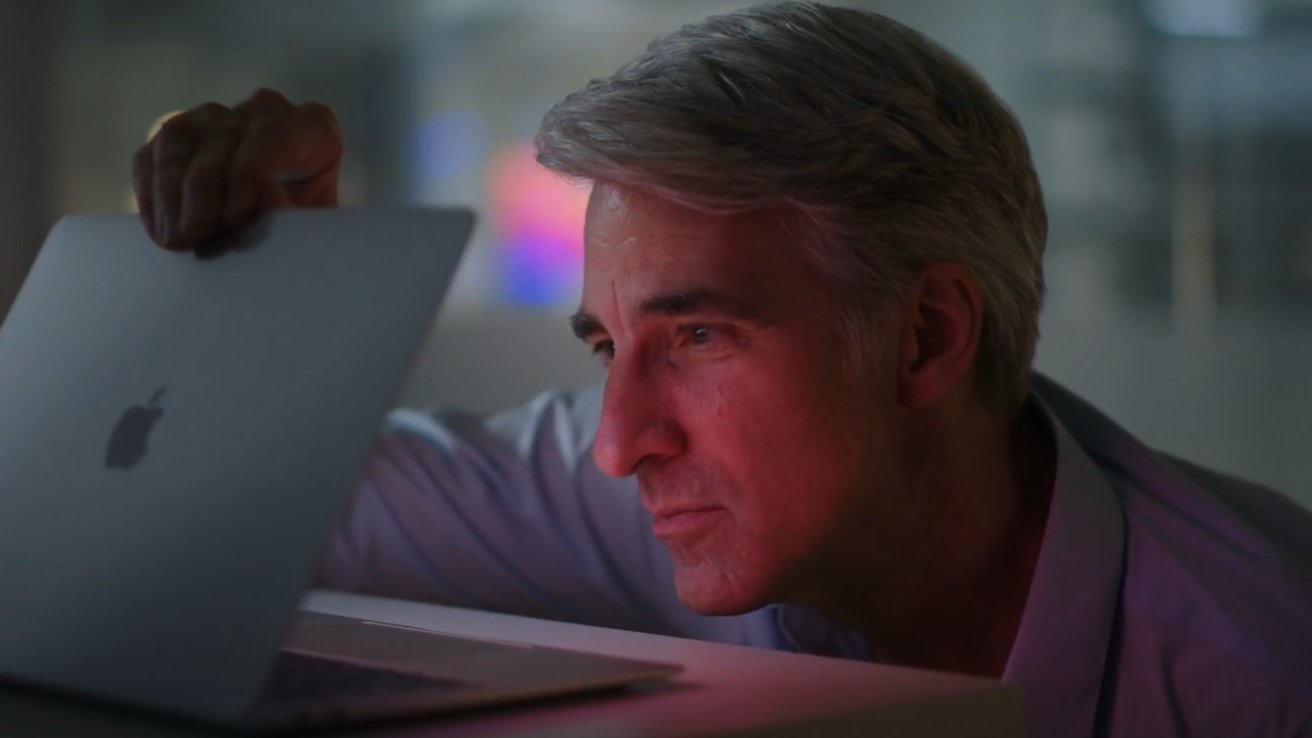
Middleaged man with gray hair leans in closely, studying an open MacBook in soft, colorful light, his hand resting on the laptop lid in a focused, contemplative pose

Craig Federighi waking a MacBook up. Image Credit: Apple

Advertisement

After the exit of Scott Forstall in 2012, Federighi was given a wider remit than just Mac software. He was made the leader for the development of both iOS and OS X.

While other executives would expect to see a progression in their job title, this hasn’t been the case for Federighi. Fourteen years later, he is still listed on Apple’s Leadership site as SVO of Software Engineering, reporting directly to Tim Cook.

The static job title doesn’t mean there wasn’t any change in the role. In 2017, a leadership change led to Federighi becoming the overseer of Siri.

After a poorly received introduction of Apple Intelligence as the company’s first salvo in the AI war, Federighi gained another responsibility. In December 2025, Federighi was put in control of the AI teams, including the AI models team.

Advertisement

High visibility, high hair

Ever since his WWDC 2009 stage appearance, Federighi has become a major presence in Apple’s software-related presentations.

This included appearing during WWDC 2013 to show iOS 7 and OS X Mavericks, doing the same in WWDC 2014 for iOS 8 and OS X Yosemite.
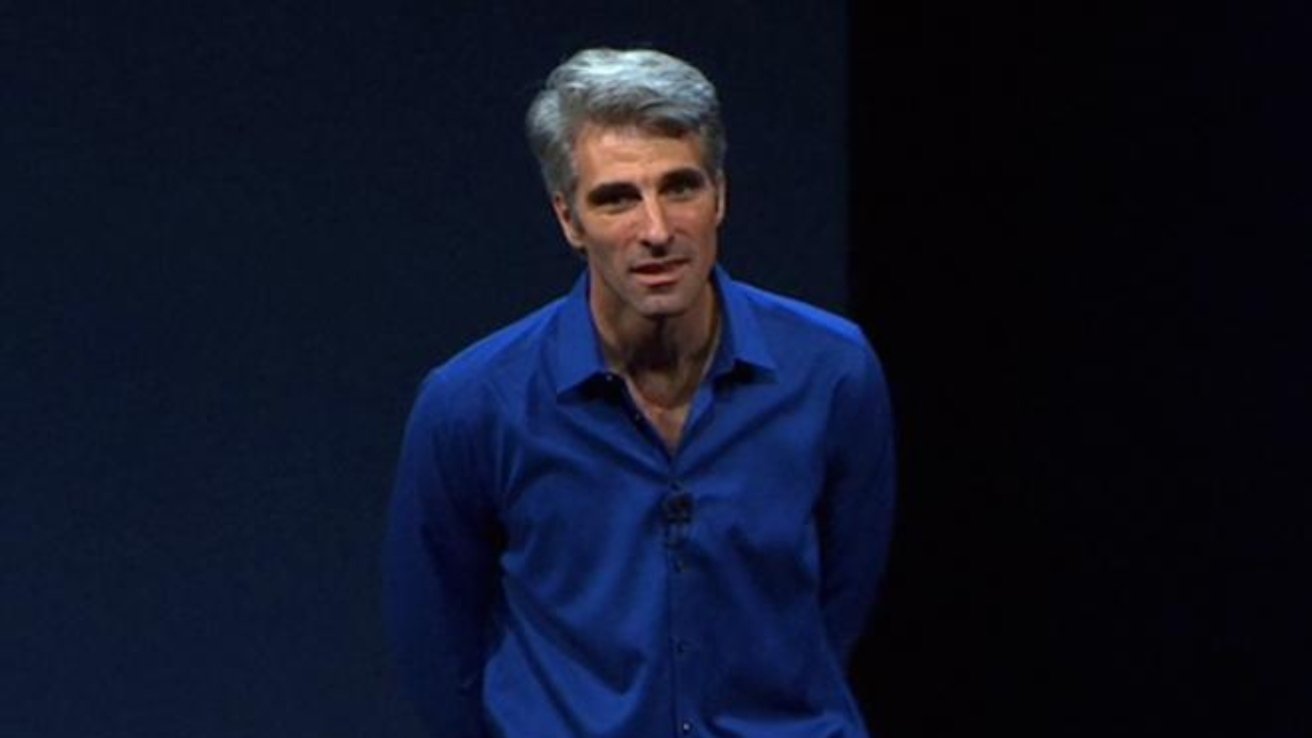
Middleaged man with gray hair wearing a bright blue buttondown shirt, standing on a dark stage, looking forward as if speaking during a presentation or keynote.

An early WWDC appearance for Craig Federighi – Image Credit: Apple

The WWDC 2015 presentation was a major one for Federighi, as he hosted the vast majority of the two-hour keynote. This involved launching iOS 9 and OS X 10.11 El Capitan, as well as the introduction of Swift.

Advertisement

Later that same year, he demonstrated the 3D Touch feature of the iPhone 6S.
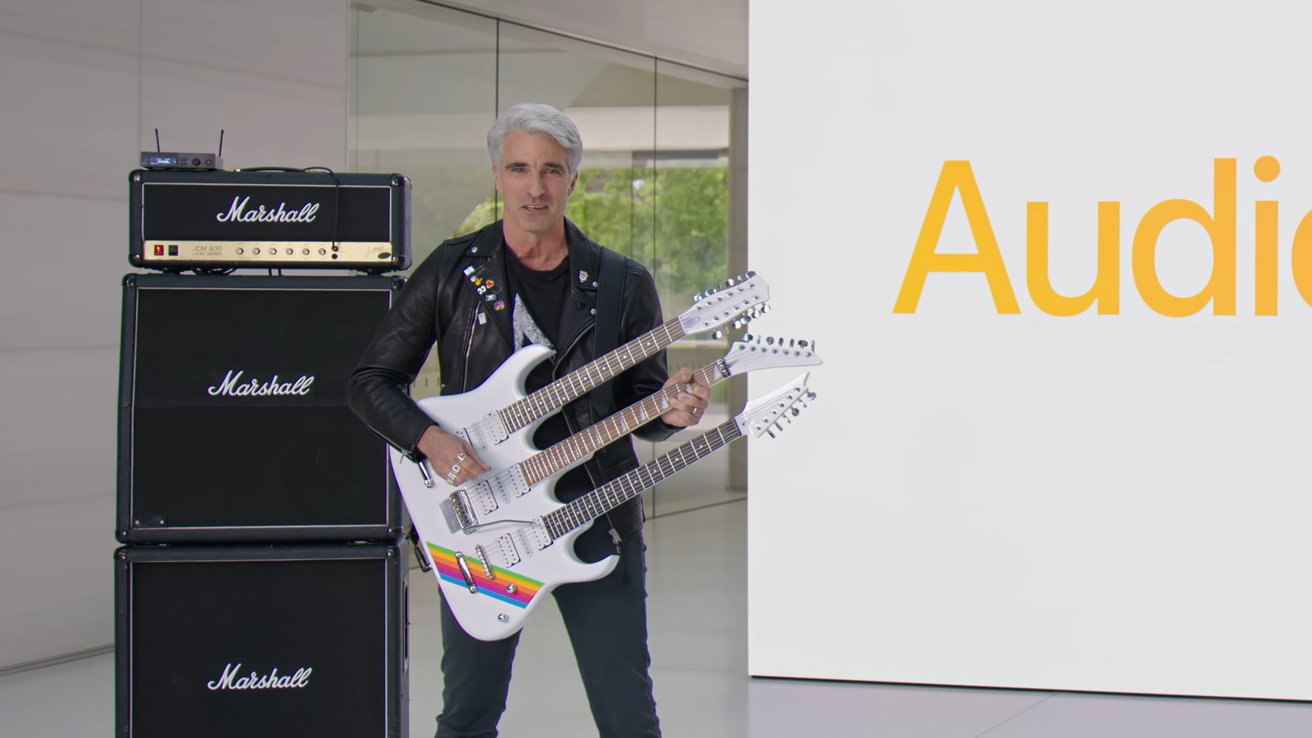
Man with gray hair in black leather jacket plays a white tripleneck electric guitar beside tall Marshall amplifiers, standing before a large screen with bold yellow text reading Audi

Craig Federighi with a unique guitar. – Image Credit: Apple

He was also the executive who introduced the name convention change for macOS 10.12 Sierra at WWDC 2016, as well as iOS 10 and lock screen widgets.

In the 2017 Apple Special Event, he was set to demonstrate the new Face ID feature in the iPhone X, but it failed during the live presentation. It was later determined to be a mistake caused by other Apple employees triggering it previously.

Advertisement

His string of WWDC appearances continued apace with 2018’s iOS 12 and macOS 10.14 Mojave. He has handled the operating system introductions at WWDC ever since.

While a staple at WWDC, he has appeared during other Apple events too, including a silent cameo during the September 2020 event. The November 2020 event clip of him waking a MacBook from sleep quickly became a meme.

Being meme-worthy isn’t usually the forte of executives at a company, with the use of comedy frequently failing in most cases and becoming cringeworthy. However, in the case of Federighi, most of his presentations have included a lot of funny and meme-adjacent moments.

Federighi found that being funny worked for his style of presentation, and leaned into it heavily. Somehow, it worked even more.

Advertisement

A famous long-time example of his humor is his reference to the “Crack Product Marketing Team” going on wild adventures to come up with the next macOS version name.

However, sometimes the comedy goes to almost absurd lengths, and with high production values, too.

For example, the WWDW 2022 presentation had Federighi descend on a CGI elevator like a spy, throwing a basketball over Apple Park, and accidentally walking in on an Apple Fitness+ workout.

Later in the presentation, a speedy-running section had a slow-motion section, with Federighi pulling off a “Blue Steel” stare to camera and running his fingers through his hair to the tune “Thoughts About You.” While a heavy-handed reference to being referred to by fans as “Hair Force One,” it’s one that worked and instantly became a meme.

Advertisement

This continued into WWDC 2023 with the playing of a triple-necked guitar, followed by skydiving and parkour in 2024. WWDC 2025 had him driving a Formula One car on the roof of Apple Park’s main building while talking to a non-plussed Tim Cook.

The humor and his great hair make Federighi seem like the cool uncle of the Apple leadership team. While others are also moving to appear more fun to customers, it seems that Federighi will be the center of WWDC attention for some time to come.

Fed on Privacy and Security

As the man in control of software at Apple, Federighi has a deep-seated interest in both ensuring user privacy is maintained and for Apple’s platforms remaining secure. It’s a stance that he has maintained throughout his tenure.

An early example of this was an opinion by Federighi published in March 2016, explaining why Apple wasn’t willing to weaken encryption despite a public demand from the FBI. He reasoned that Apple was trying to be one step ahead of criminal attackers, and found the FBI and other security agencies to be “pressing us to turn back the clock to a less-secure time and less-secure technologies.”

Advertisement

Two years later, a 2018 statement from Federighi responded against even more calls to weaken end-to-end encryption by adding a backdoor. Weakening security “makes no sense” when consumers rely on Apple’s products to keep their personal information safe, he insisted.

Federighi’s stance hadn’t changed by 2020 either, calling Apple’s dedication to privacy akin to treating it as if it were a fundamental human right during WWDC of that year.

The introduction of App Tracking Transparency also had Federighi’s backing, saying it was part of Apple’s core values, and that it wouldn’t damage advertisers as much as they claimed it would. He later expressed that ATT should give users a “meaningful choice” about their privacy.
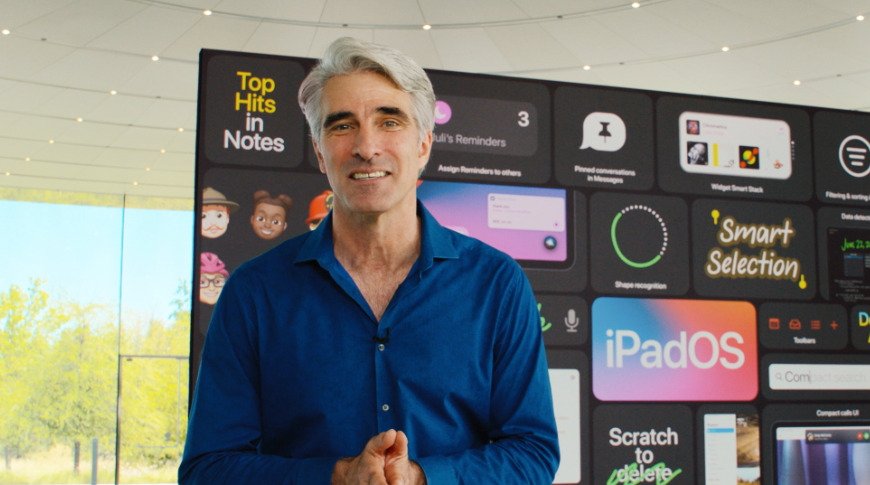
Smiling man with gray hair in a blue shirt stands indoors in front of a large colorful iPadOS presentation screen showing app icons, notes, and feature highlights

Craig Federighi talking during a WWDC keynote – Image Credit: Apple

Advertisement

Trying to maintain user privacy while getting tasks complete is a hard balancing act for Apple, as it found in 2021 by introducing iCloud Photos image assessment and Messages notification features. They were intended as mechanisms to protect children online and curb the spread of child sexual abuse material (CSAM).

Within days, Federighi spoke about the introduction, saying that the child protection message was “widely misunderstood” because Apple wasn’t clear enough in its messaging. He acknowledged that the announcement of multiple elements together had the response of people wrongly believing Apple was scanning their iPhone for images.

This didn’t stop civil rights groups around the world from demanding Apple drop the child safety plans altogether.

His insistence of maintaining privacy has also led to him criticizing some if the capabilities of Apple’s own software. Especially when framed around the alternative App Store debate in Apple’s long-time lawsuit with Epic Games.

Advertisement

In 2027, Federighi told a court that macOS security wasn’t as good as iOS, in part because of its use of one App Store on iOS. Multiple app stores are “regularly exploited on the Mac,” Federighi claimed, and there was “a level of malware on the Mac that we don’t find acceptable.”

The tight security of iOS meant it had a “dramatically higher bar for customer protection” that the Mac could not meet.

He later railed against forcing Apple into allowing the side-loading of apps on iPhone, as it would “take away consumers’ choice of a more secure platform.”

It’s a belief that has strengthened during the age of AI and Apple Intelligence. Following the September 2024 “It’s Glowtime” event, Federighi explained that Apple had to go through multiple breakthroughs to bring Private Cloud Compute to life, protecting user data while embracing the new technology.

Advertisement

Ultimately, Federighi firmly believes that maintaining security and privacy for Apple users will be a “battle we will be fighting for years to come.”

Developing development and platforms

Fostering development of the app ecosystem is another of Federighi’s all-important roles as the software chief. His WWDC appearances implies he wants there to be more developers, but Apple’s announcements have also been an important factor too.

In December 2015, when the Swift programming language was made open source, he said he wanted everyone to learn it as a primary language. He wanted it to be usable everywhere, “from scripting to apps for mobile down to writing code in the cloud.”

That same month, he promoted the “Hour of Code” initiative to get everyone coding. He admitted at the time that he first tried coding when he was 10, adding that programming should be considered the “next level of literacy.”

Advertisement

He then went on to say that there would be deep Swift integration in iCloud and for Mac development, with it already being used on the dock of El Capitan.

In 2019, Federighi helped usher in iPadOS as a fork of iOS, all to give the iPad a “truly distinct experience.” He said it was “not an iPhone experience, it’s not a Mac experience,” and so something new had to be created for it.
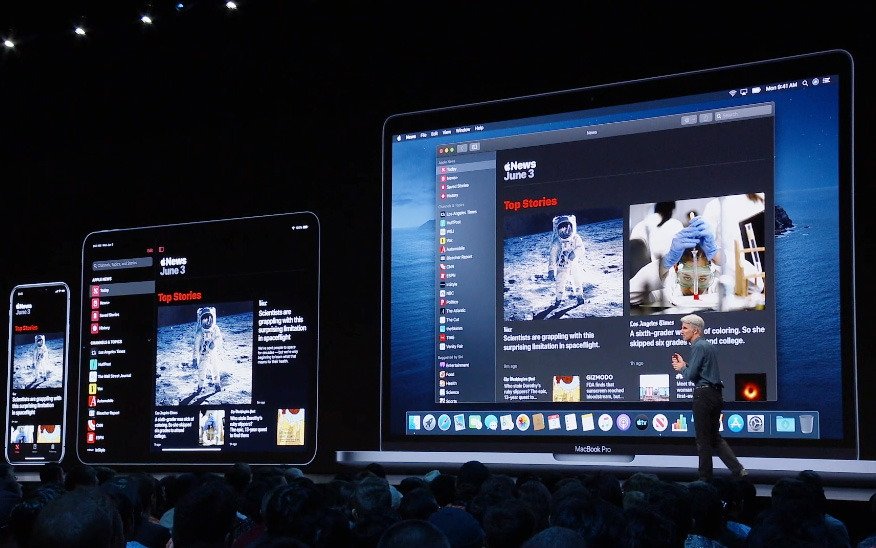
Presenter on stage in front of giant iPad and iPhone screens showing a news app in dark mode, addressing a seated audience at a technology conference or product launch

Craig Federighi introducing Catalyst at WWDC – Image Credit: Apple

He also said that Catalyst would help boost the quality of both Mac and iPad apps, by helping iPadOS apps be ported over to the Mac platform.

Advertisement

In an unusual move, Federighi responded to an email from an aspiring programmer in 2019, which was shared on Reddit. The response to being asked for advice for would-be programmers included dedicating time to study while at university, to “go broad and deep” in the area, and to focus on teamwork.

This occurred during a time when Apple was reportedly shifting its development strategy for iOS 14 to cut down on the number of buggy releases coming out of Cupertino. Federighi and other department chiefs kicked off the initiative, explaining new processes where buggy code was disabled and flagged in testing.

The introduction of Apple Silicon was also a big moment for Federighi, due to having to manage the upcoming transition away from Intel chips. On the performance of the M1 chip, he boasted “We overshot” on performance, as well as expressed disbelief on the battery performance.

Later that year, he even said that it was possible to run an ARM version of Windows in emulation, but that it was “really up to Microsoft.”

Advertisement

Of course, Federighi has had to deal with repeated rumors of a combination of macOS and iPadOS into a single operating system. In 2025, he insisted that iPads won’t be running macOS anytime soon, despite the addition of macOS-like productivity elements.

Doing so would harm the touch experience on the iPad and lose what made it special.

The AI era

The slow rollout of Apple Intelligence and the mishandling of the Siri overhaul have been a big problem for Apple. However, it seems Federighi had a lot to do with Apple getting going with AI in the first place.

A June 2024 report claimed that Apple’s AI efforts led by John Giannandrea struggled for various reasons, including a lack of resources. Betting on the laid-back Google-like team wasn’t enough to catch up, and forced other teams to wade into AI, resulting in a piecemeal and incoherent approach.

Advertisement

Apple apparently started to turn things around when Federighi forced changes. After spending Christmas 2022 playing around with Microsoft Copilot, he became an AI convert.

This resulted in his team of software engineers being given resources to pursue AI and generative AI. He was also apparently involved in a deal that led to ChatGPT’s integration into Siri.
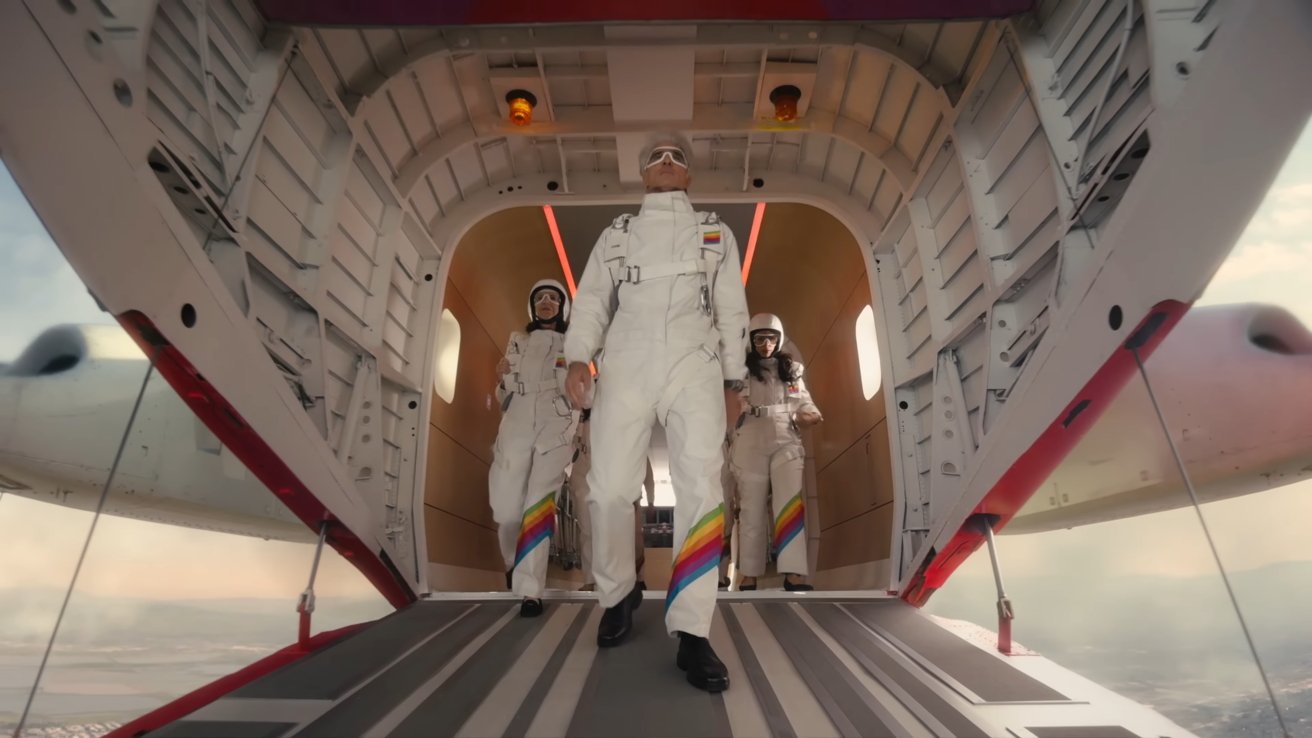
Three astronauts in white suits with rainbow stripes stride confidently down an airplane's open rear ramp in midair, with sky and aircraft wings visible outside.

Craig Federighi in a skydiving skit – Image Credit: Apple

Federighi was bullish on AI, but certainly didn’t claim that Siri would suddenly become a sentient being. In October 2024, he said that improvements were on the way for Siri, but sentient-like actions weren’t on the roadmap.

Advertisement

In April 2025, it was revealed that the great AI internal shakeup and managerial reshuffle led to Siri being put under the oversight of Federighi more directly than it had been.

By June 2025, Apple viewed itself as being in a much better position when it came to AI. Federighi explained that contextual Siri with App Intents was actually working, and that Apple didn’t need to deliver every technology on Earth.

That is, while no-one doesn’t look at Apple as a major shopping destination like Apple nor a competitor to YouTube, the world somehow expected Apple to make an AI chatbot.

As AI continues to become a major element of modern-day computing, Apple can at least thank Federighi for stepping up, forcing change, and pushing Apple’s AI work on from its previously perilous position.

Advertisement

It doesn’t seem that Federighi will be heading out of the company anytime soon, even with the change to the inbound CEO John Ternus in the fall. Here’s hoping he does stick around to make Siri great again.

Source link

Advertisement
Continue Reading
Click to comment

You must be logged in to post a comment Login

Leave a Reply

Tech

This Brazilian Armored Vehicle Is A 40,000 Pound Amphibious Beast

Published

on


Brazil, and South America as a whole, is home to some of the toughest terrain on earth. There are large swathes of rainforest, swamp, mountains, and whatever else you might think of. As a result, traversing that terrain with anything other than a huge military vehicle might be a tough ask. 

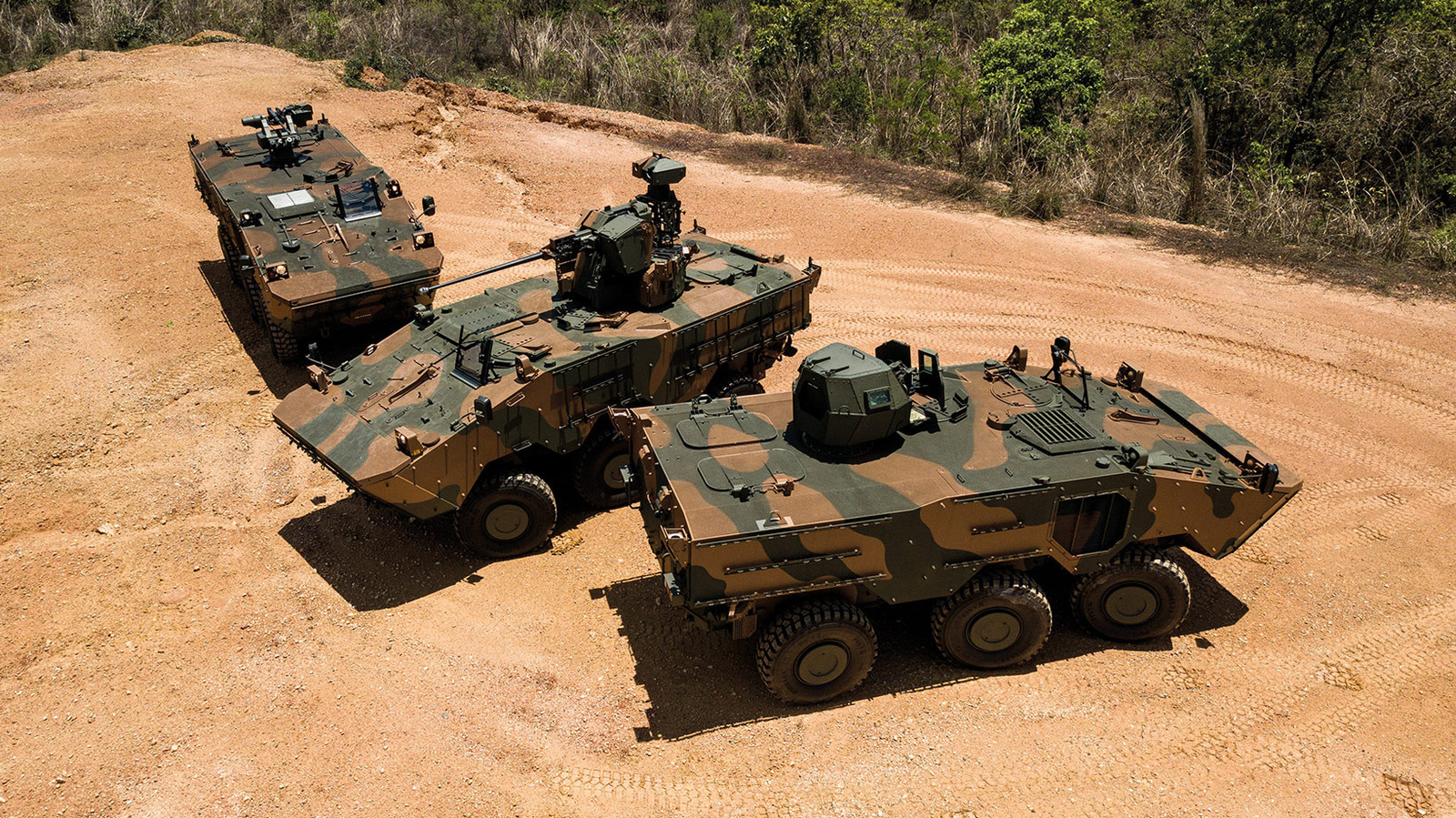
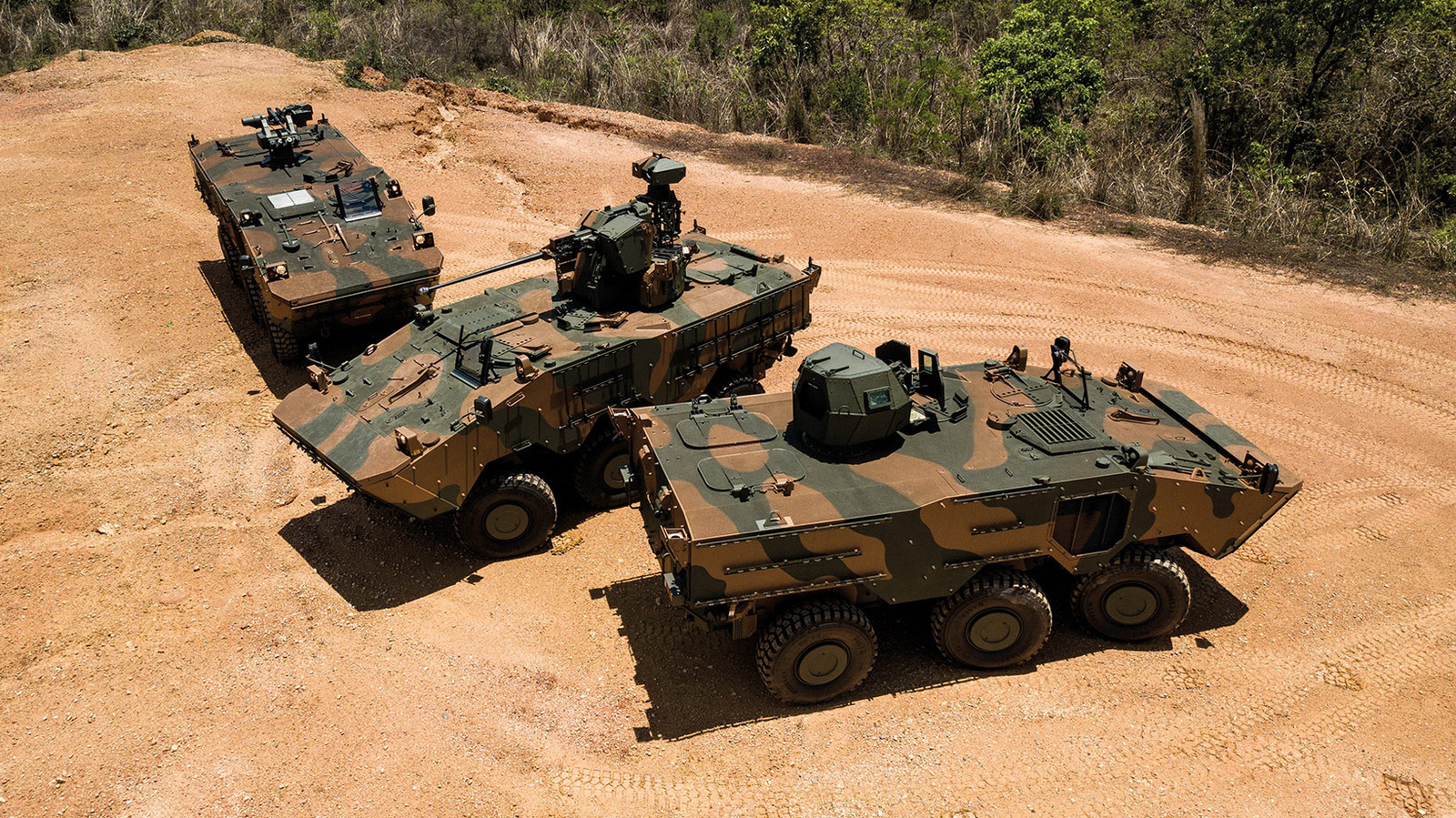
Enter the Guarani, a six-wheel drive amphibious armored vehicle made with the help of Italian company Iveco and the Brazilian Army. Like other amphibious military vehicles, the Guarani is huge. Empty, it weighs 33,069 pounds. When it’s loaded and set up for amphibious operations, it can weigh up to 42,990 pounds. It is also over 22-and-a-half feet long.

Advertisement

It’s primarily used as an armored personnel carrier and in that configuration, it can carry a crew of three alongside eight additional soldiers. However, Brazil and Iveco designed the Guarani so it can be modular. That not only means different weapons can be mounted, but it can also be used for search and rescue and a mobile command center. 

Advertisement

The Guarani is designed to go anywhere and do anything

Under the hood is an 8.7-liter turbo diesel inline-six that generates 375 horsepower. On land, that gives it a top speed of 56 miles per hour. In the water, through its pair of propellers, that speed drops a bit to just over 4 miles per hour. 

As far as armament. It can carry whatever is mounted to the roof turret. That includes a .50-caliber machine gun, a 7.62-millimeter machine gun, a 30-millimeter cannon, a 40-millimeter grenade launcher, or even an anti-aircraft weapons system made by Saab.

On the armor end, it’s made of steel and hardened to withstand mines of improvised explosive devices. Additionally, all that heft gives it strength to tow “vehicle of same class”-worth of weight, according to Iveco. Meaning, that if another Guarani gets in a jam, you can tow one out. Iveco also notes that it can be transported within the cargo bay of a C-130 Hercules cargo plane, or the Brazilian-made Embraer KC-390 Millennium.

Advertisement


Source link

Advertisement
Continue Reading

Tech

Brewing Espresso With Ultrasonic Assistance

Published

on

There are as almost as many kinds of coffee as there are of coffee drinkers, with each method for preparing the beverage appealing to a different kind of palate: moka pots, filter coffee, pour-over coffee, French presses, cold brews, espresso, and more produce their own unique flavours by extracting different compounds from the grounds to different degrees. Now, a new method has joined the throng: ultrasonic-assisted extraction, which can produce even an espresso at room temperature.

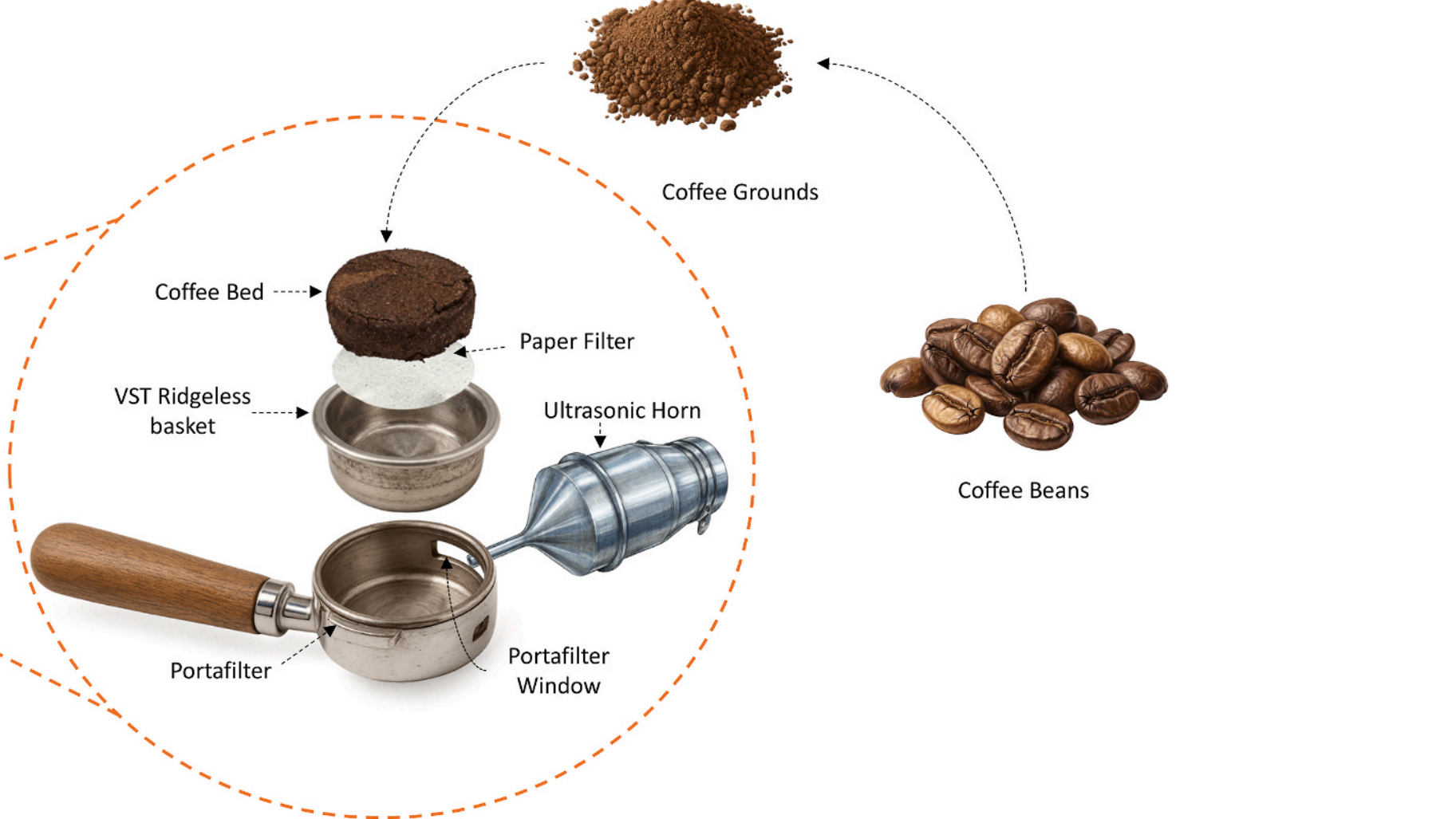
Espresso is normally made by forcing hot water through tightly-packed, finely-ground coffee beans, quickly producing a concentrated extraction. Its one of the hardest kinds of coffee to consistently make well, since the outcome is influenced by everything from grind size and packing density to temperature, pressure, and more. Ultrasonic agitation helps here by creating cavitation bubbles, which form shock waves as they collapse, breaking open the bean structure and producing small, strong jets of water. The experimental apparatus was built into a modified espresso machine. An ultrasonic transducer delivers vibrations to the basket containing the room-temperature slurry of coffee grounds for two or three minutes.

To quantify the results, the researchers analysed total dissolved solids, extraction yield, pH, colour, volatile components, and caffeine and chlorogenic acid contents. By varying ultrasonic power and grind size, the extraction yield and dissolved solids could be adjusted to closely match traditional espresso or cold-brew coffee. The other metrics had no significant differences, and a survey of 100 coffee drinkers found no preference between this and traditional espresso. When the drinkers tried the cold-brew coffees, they preferred the version made with ultrasonic assistance. The experiment succeeded in its goal of reducing energy consumption: the ultrasonic-assisted coffee took about a quarter as much power to make.

If you still prefer a more traditional approach, we’ve covered some beautiful espresso machines before, including one made out of motorcycle engine parts.

Advertisement

Source link

Continue Reading

Tech

Today’s NYT Mini Crossword Answers for June 22

Published

on

Looking for the most recent Mini Crossword answer? Click here for today’s Mini Crossword hints, as well as our daily answers and hints for The New York Times Wordle, Strands, Connections and Connections: Sports Edition puzzles.


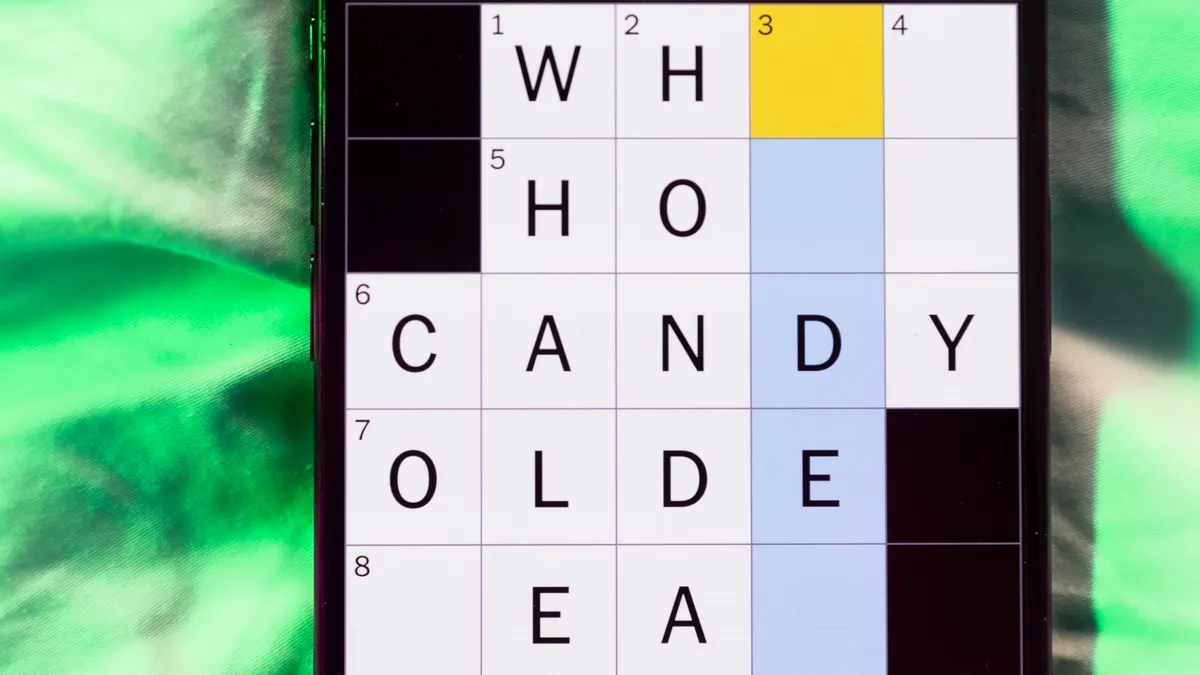
Need some help with today’s Mini Crossword? Only one clue really threw me off, and that was 8-Across, but filling in the others solved that one, too. Read on for all the answers. And if you could use some hints and guidance for daily solving, check out our Mini Crossword tips.

If you’re looking for today’s Wordle, Connections, Connections: Sports Edition and Strands answers, you can visit CNET’s NYT puzzle hints page.

Advertisement

Read more: Tips and Tricks for Solving The New York Times Mini Crossword

Let’s get to those Mini Crossword clues and answers.

completed-nyt-mini-crossword-puzzle-for-june-22-2026.png

The completed NYT Mini Crossword puzzle for June 22, 2026.

Advertisement

NYT/Screenshot by CNET

Mini across clues and answers

1A clue: Like jerky and dried fruit
Answer: CHEWY

6A clue: Technology that Marconi introduced to the Vatican in 1931, in order to broadcast the pope’s blessings worldwide
Answer: RADIO

7A clue: Bring together as one
Answer: UNIFY

Advertisement

8A clue: Prefix with -path or -political
Answer: SOCIO

9A clue: Successful song
Answer: HIT

Mini down clues and answers

1D clue: Clobber
Answer: CRUSH

2D clue: Capital of Vietnam
Answer: HANOI

Advertisement

3D clue: Monarch’s official decree
Answer: EDICT

4D clue: In-flight “perk” that’s notoriously unstable
Answer: WIFI

5D clue: Toy on a string
Answer: YOYO

Advertisement

Source link

Continue Reading

Tech

Etzioni on AI: What the World Cup tells us about the best roles for humans and machines

Published

on

Pregame ceremonies in Seattle on June 19, 2026, before the U.S.-Australia World Cup Group D match. (GeekWire Photo / John Cook)

In soccer, a single blown offside call can decide who advances and who goes home. But what can you do? Referees are only human.

Well, the 2026 World Cup has put computer vision and AI on the officiating crew: video review, a sensor inside the ball, semi-automated offside calls, cameras bolted into every rafter. And the tech has already decided a goal.

On June 15 in Monterrey, Sweden were busy thrashing Tunisia when Mattias Svanberg came off the bench and scored with his first touch. The linesman’s flag shot up. Offside. The goal was gone, until it wasn’t. Video review handed it back, because the ball itself had registered a touch the human eye missed: a faint flick off Alexander Isak that reset the play and left Svanberg onside. Yet the cameras missed the flick. The sensor inside the ball caught it.

How does a ball overrule a linesman? Start with what FIFA has actually wired into the tournament. Sony’s Hawk-Eye underpins the video review, the goal-line decisions, the semi-automated offside system, and a “last touch” feature that settles who knocked the ball out for a corner.

Chenliang Xu, a computer-vision researcher at the University of Rochester, told the university’s news service it’s “a very sophisticated system that glues together multiple computer vision techniques.” Underneath, that means calibrated cameras, models trained to spot the ball and the players and their poses, and a thin layer of logic that decides when a human should take a look. 

Advertisement

Player and ball tracking run on neural networks trained on millions of labeled images, the same lineage of models behind face unlock and the perception stack in a self-driving car.

Xu compares the training to “teaching a child how to recognize things”: feed a model enough examples and it learns what matters. Sixteen cameras ring each stadium, because a single angle can be blocked or fooled, and many angles can be triangulated into a three-dimensional picture of the play. It works the way your eyes do.

“If you block one of your eyes,” Xu says, “it’s very hard to perceive depth.” Two eyes recover what one eye cannot. So do 16 cameras. The reconstruction lands in seconds, and a person signs off.

How is it so fast? The system is narrow. According to FIFA, the cameras throw off more than 150 million tracking points per match, more data than any all-purpose model could process in real time. The networks are tuned for one job, recognizing players and a ball, and stripped of everything else, which is precisely what makes them quick.

Advertisement

The narrowness is also a confession. The system measures the one thing a camera and a sensor can measure cleanly, a body’s position at the instant the ball is struck, and it stays out of the call that starts most arguments: whether an offside player was actually interfering with play. The machine gets the measurement. The referee keeps the judgment. A good reminder that currently AI is Assistive Intelligence, not more.

@media (max-width: 600px) {
aside.callout { float:none !important; max-width:100% !important; margin-left:0 !important; margin-right:0 !important; }
aside.callout .callout-img { display:none !important; }
}

But the quietest AI at this World Cup isn’t on the broadcast.

A torn hamstring can end a player’s World Cup, and a contender’s with it. Long before kickoff, clubs pour the data from GPS vests and motion sensors, the gear sold by firms like Catapult and Zone7, into models that flag when a player’s accumulated workload is bending toward injury, sometimes before the athlete feels a thing. It produces no spike on a graphic and no slow-motion replay. It produces a number that tells a coach to rest a hamstring for a day.

The cameras get the highlight, but the hamstring monitor keeps the players from being, well, hamstrung.

Advertisement

Source link

Continue Reading

Tech

Today’s NYT Connections: Sports Edition Hints, Answers for June 22 #637

Published

on

Looking for the most recent regular Connections answers? Click here for today’s Connections hints, as well as our daily answers and hints for The New York Times Mini Crossword, Wordle and Strands puzzles.


Are you watching the World Cup? Today’s Connections: Sports Edition includes one related category. If you’re struggling with the puzzle but still want to solve it, read on for hints and the answers.

Connections: Sports Edition is published by The Athletic, the subscription-based sports journalism site owned by The Times. It doesn’t appear in the NYT Games app, but it does in The Athletic’s own app. Or you can play it for free online.

Advertisement

Read more: NYT Connections: Sports Edition Puzzle Comes Out of Beta

Hints for today’s Connections: Sports Edition groups

Here are four hints for the groupings in today’s Connections: Sports Edition puzzle, ranked from the easiest yellow group to the tough (and sometimes bizarre) purple group.

Yellow group hint: Cape is another one.

Advertisement

Green group hint: Play ball!

Blue group hint: I’m taking my talents to South Beach.

Purple group hint: Neat on your feet.

Answers for today’s Connections: Sports Edition groups

Yellow group: First words of World Cup countries, in English.

Advertisement

Green group: MLB stadiums.

Blue group: LeBron-era Heat stars.

Purple group: Adidas shoes.

Read more: Wordle Cheat Sheet: Here Are the Most Popular Letters Used in English Words

Advertisement

What are today’s Connections: Sports Edition answers?

completed NYT Connections: Sports Edition puzzle for June 22, 2026

The completed NYT Connections: Sports Edition puzzle for June 22, 2026.

NYT/Screenshot by CNET

The yellow words in today’s Connections

The theme is first words of World Cup countries, in English.  The four answers are Bosnia, Ivory, South and United.

The green words in today’s Connections

The theme is MLB stadiums. The four answers are Comerica, Kauffman, Nationals and Wrigley.

Advertisement

The blue words in today’s Connections

The theme is  LeBron-era Heat stars. The four answers are  Allen, Bosh, James and Wade.

The purple words in today’s Connections

The theme is Adidas shoes. The four answers are Samba, Stan Smith, Superstar and Ultraboost.

Source link

Advertisement
Continue Reading

Tech

Someone Forked systemd Over Its New Birth Date Field

Published

on

The blog Linuxiac reports:
A new systemd fork has appeared with a specific purpose: removing systemd’s recently added support for storing a user’s birth date in JSON user records.

The fork, called Liberated systemd, published its first tagged release as v261 shortly after the official systemd 261 release. In other words, the fork follows upstream systemd while reverting the change that added the new optional birthDate field.

Importantly, this is not a new init system, a wider redesign of systemd, or a general-purpose alternative to the upstream project. Its stated purpose is to remain close to upstream systemd while removing what the author describes as “surveillance enablement”… The author recommends testing the fork in a virtual machine before using it on real hardware and warns nightly builds are more likely to be unstable than named releases.

Source link

Advertisement
Continue Reading

Tech

Toy Story 5 Is A Surprisingly Thoughtful Critique Of Technology

Published

on

After five films, digital technology has finally arrived in the cloth-and-plastic world of Toy Story. But the film, directed by franchise veteran Andrew Stanton and McKenna Grace, mostly avoids the easy trope of making technology inherently bad. Instead, it’s a disruptive force that can be either helpful or harmful, depending on how it’s used. The film makes the case that parents need to take a hands-on approach to help kids manage their gadgets, especially when it comes to managing screen time or dealing with bullying.

Slight spoilers ahead for Toy Story 5.

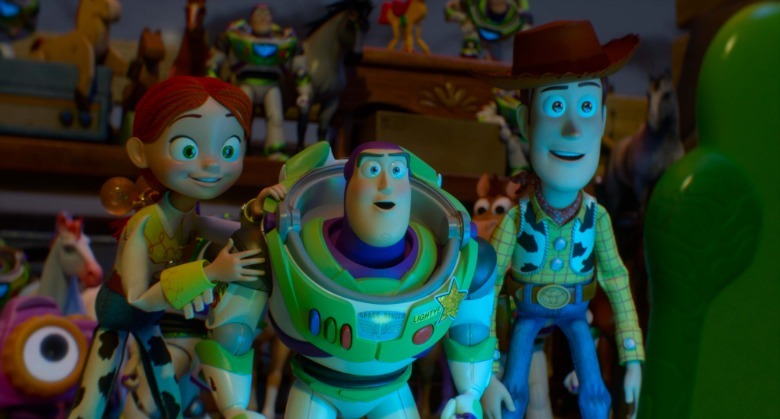
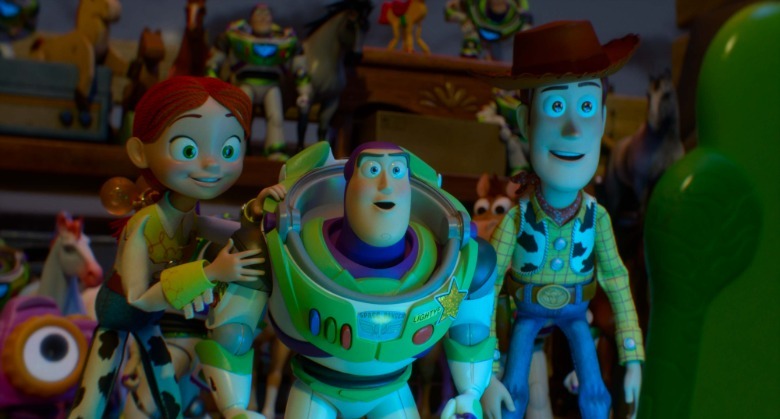
Toy Story 5 centers on Bonnie, a young girl struggling to make friends who was gifted Woody, Buzz and Andy’s other toys from the first three films. She’s the only kid in her neighborhood not using a Lilypad tablet — instead, she prefers to play the old fashioned way, by crafting scenarios purely out of her imagination. Her parents reluctantly decide to get her a Lilypad (played by Greta Lee) as a way to connect with other kids.

Like a McKinsey consultant storming into a quaint local business, Lilypad decides she knows the best way for Bonnie to make friends. The tablet sends friend requests to several girls Bonnie knows, and she miraculously gets an invite to a sleepover. But instead of playing together, all of the girls just zone out endlessly on their Lilypads, barely saying a word to each other. Those same girls later start bullying Bonnie for playing with older toys, which leads to Bonnie’s parents wisely disabling the Lilypad’s social network access.

Advertisement

It might seem crazy that parents even have to worry about social networking for 8-year-olds, but platforms like Zigazoo and JusTalk Kids already exist. They market themselves as safe spaces where kids can chat with close friends and family members, but there’s still room for awful social dynamics. Kids will be kids, and many of them are little jerks.

While Lilypad stumbles to help Bonnie connect, older toys like Cowgirl Jessie (Joan Cusack) also realize they’re out of touch with the way kids play today. When Jessie tries to sneak her way into Bonnie’s sleepover, she immediately becomes a source of shame.

Research shows a relationship between managing anxiety and imaginative play in kids, and Toy Story’s main cast make convenient messengers for that information. But the film surprised me by finding ways to make room for Lilypad and other new devices. A messageboard app on Lilypad helps Bonnie connect with Blaze, another young girl who still plays with toys the old fashioned way. Without Lilypad, they probably never would have met.

It’s hokey, but it works in the context of the film. And it’s also the reality parents have to live with today. Despite their potential harms, it’s helpful for kids to sometimes watch TV on the go. There are tons of educational games on iPadOS and Android, and both platforms also have a bevy of video chatting apps for staying in touch with friends and relatives. The key is moderation and parental supervision.

Toy Story 5 would be even more of an insightful critique if it made room for new types of play. Lilypad just has a few basic games for kids. But these days, any iPad can play Minecraft, a game that is appealing precisely because it so closely mirrors imaginative play. It’s also complex enough to grow with kids into adulthood, more so than the likes of Woodie and Buzz Lightyear.

Advertisement

Now that tablets have entered the world of Toy Story, it’s unclear where the franchise can go next. Pixar has already wrung the series’ core concept dry. We’ve explored the inner lives of toys, we’ve seen them wrestle with the meaning of their existence and they’ve even confronted death directly. (Toy Story 3 must have traumatized an entire generation.) Toy Story 5 isn’t nearly as essential as the original trilogy, but at least it’s a reminder to parents that they can’t just sit back and relax when it comes to tech.

Source link

Advertisement
Continue Reading

Tech

When A Favicon Becomes The Entire Website

Published

on

Putting hidden data in places where few expect it can be a fun hobby or even a professional career. In the case of [Tim Wehrle] it’s just the former. His most recent project in this area uses a favicon image for storing a HTML-based website and rendering its contents within the browser after the favicon has been downloaded.

To pull this off, a very basic HTML page was turned into a series of UTF-8 encoded bytes that were then declared to be a standard PNG image. The original 208 byte payload plus 4-byte PNG header only used part of a 9×9 pixel favicon. With a larger favicon image as typically used you could thus easily store more data, whether as visual noise like here or a bit more hidden.

Of course there’s a catch, and in this case it’s the Typescript code to unpack the bytes from the “image” and render them; you have to load that separately. But still, in these days of all-singing, all-dancing websites that take forever to render, it’s refreshing to see what you can do with so few bytes that they fit in a favicon.

As for the purpose of such an approach, that’s left as an exercise for the reader, but you’re more than welcome to take a poke at the GitHub project and the demonstration site..

Advertisement


Source link

Advertisement
Continue Reading

Tech

Apple’s new home product releases will stretch into 2028

Published

on

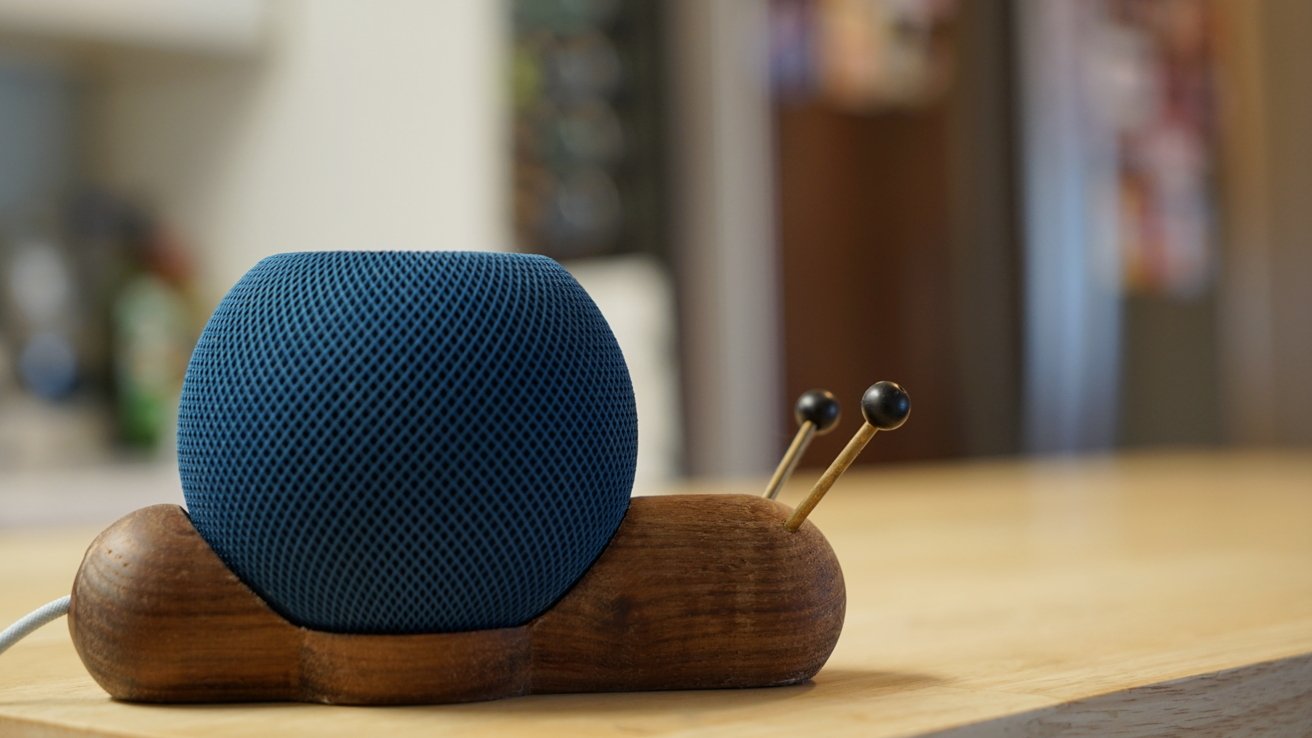
Apple’s home automation updates and new product roadmap powered by Siri AI will kick off in 2026 with HomePod and Apple TV updates, but if you’re excited for the robotic arm for a Home Hub, you’re going to be waiting a while.

It’s no secret that Apple’s new AI push will include several new products like the long-rumored Home Hub. However, the timing of some of those products’ releases remains in question.

According to the “Power On” newsletter from Bloomberg, the new Apple TV and HomePod mini could arrive at any time in 2026, while the robotic arm attachment for HomeHub won’t be ready for some time yet.

The Home Hub itself is expected in 2026 as well, which means an Apple Home-focused release cycle or event could occur in the fall. That device should launch as a standalone display that can be paired with various mounts like speakers, wall mounts, and articulating arms.

Advertisement

The new Apple TV is expected to support Apple Intelligence in some specific capacity and may have a new Siri Remote. The HomePod mini would also gain access to Siri AI, but that’s likely the only major feature of the product.

The robotic arm accessory for the Home Hub, which may include an upgraded AI-focused version of the tablet device, isn’t expected until 2027 or 2028. That device has always been more of a moonshot, with the Pixar Lamp-like device with a personality still in early testing.

It’s sure to be a busy hardware season for Apple given the three new iPhones, two new Apple Watches, and a slew of Macs expected by the end of the calendar year.

It’s not really a question of if these products are coming, but when. With everything else releasing, Apple will need to find time to reveal its new Home Hub product category and sell people on why the new Apple TV and HomePod mini are necessary.

Advertisement

The September keynote will already be packed as it is, and I don’t think these products will fit the “just drop a press release” model. My expectation is that there will be a lengthy Apple Home segment during a primarily Mac-focused keynote in October.

Source link

Advertisement
Continue Reading

Tech

SmallRun.net Enters The Marketplace Market

Published

on

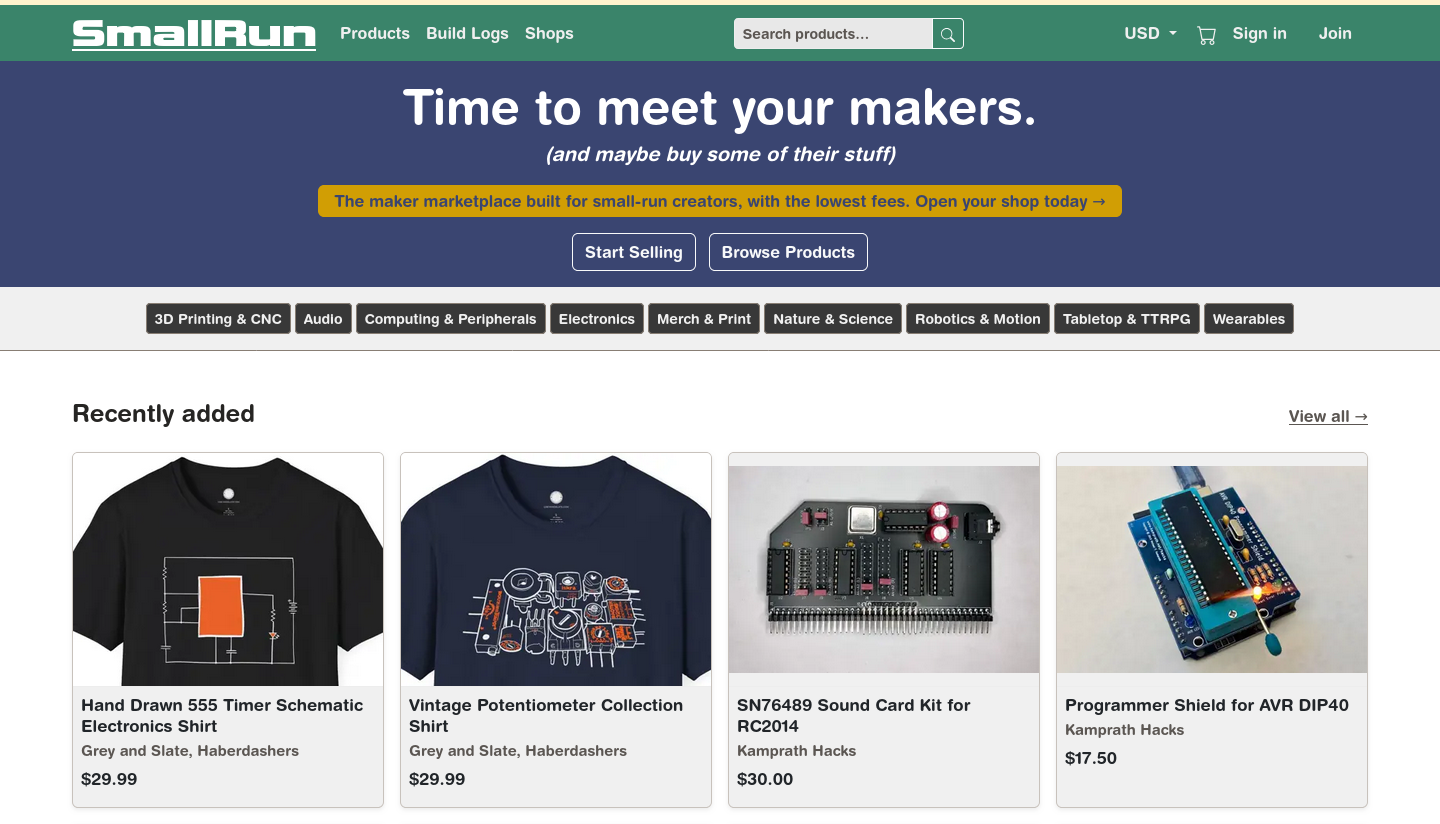
So you have a project that you love, and everyone else loves too. People start saying “you should sell this” but where? Well, there’s a new marketplace you might want to consider called called SmallRun, aiming at makers and their, well, small production runs.

SmallRun will absolutely host your custom PCBs, on-demand 3D prints, and other traditional maker products — but they’ll also happily sell your merch, too. Along with electronics and hardware, they aim to allow you to sell products in categories like tabletop gaming, sciences, and yes, accessories/apparel.

For sellers, they offer automatic payouts and promise to take care of the taxes by integrating with Stripe. That said, they’re still working on getting the whole VAT thing set up for products imported to the EU. EU to EU sales are apparently OK. They’ll host build logs, which may drive engagement with your product. There’s even a handy tool to import your existing listings from eBay, Tindie, Lectronz, Etsy, Shopify, or Crowd Supply if you’re already in the biz. They make their money by taking a cut of your sales: eight percent, plus forty cents per listing.

Depending on your perspective, you might wonder if we need another marketplace, To that we can only say: “Let a thousand flowers bloom!” Competition should drive these marketplaces to continuously improve and we all win.

Advertisement

If you’re selling online, even packaging can become a project. If you’re not, but are interested in starting, our “From Project to Kit” series from ten years back remains surprisingly relevant.

Thanks to [Aron] for the tip!

Source link

Advertisement
Continue Reading

Trending

Copyright © 2025