As the COOs from both Uber and Microsoft recently learned, encouraging company engineers to use AI aggressively can lead to hefty usage bills, perhaps even offsetting all the gains from laying off employees.
The AI bills at Netflix may not be so eye-popping thanks to company senior engineerTejas Chopra, who has created software to prune agent instructions, as measured in tokens, before they hit the LLM.
Chopra has estimated that as much as 90% of tokens are redundant to the giant thinking machine of your choice.
Although not an official Netflix project, several teams there already use Project Headroom, and a number of external projects rely on it as well.
Advertisement
In a talk at the Open Source Summit last week, Chopra said that Headroom has saved an estimated $700,000 for its users, who collectively now have 200 billion tokens to spend elsewhere.
Not bad for an open source application that’s been out only since January. Headroom, currently at a still-raw v0.22, has gathered 2,000 stars on GitHub and has been forked over 120 times.
“A lot of our users are people who have been really burned by token costs, more than anything else,” Chopra said in his presentation.
Lossless context compression
A $287 bill from Claude Sonnet first brought Chopra’s attention to the idea of token economization.
Advertisement
The bill was typical home project stuff: a bit of debugging, some refactoring, MCP tools querying a database. At the time, Claude Sonnet’s token-based pricing seemed pretty generous: $3 for every million input tokens, or $6/million if you went over the 200,000 token limit for your context window. Still, that $287 added up quickly.
Upon deeper inspection, Chopra found a lot of this data was highly redundant to the LLM. By and large, his own hand-crafted instructions were not the culprit. Rather it was all the boilerplate and machine metadata that came along for the ride: Needlessly-verbose JSON schemas, nested templates within API responses, identical database columns.
“This isn’t prose. This isn’t creative writing. This is compressible data masquerading as text,” Chopra wrote in a blog post introducing his software. In 2025, a group of researchers found that reading user input accounted for about 76% of all token consumption.
The model providers have their own tools to save tokens. But to date, the settings on these tools are somewhat oblique to end users. By default, Claude has a prefix cache setting of just five minutes. After five minutes of inactivity, the entire context window needs to be refreshed, even if the LLM needs the exact same data. Another setting is exposed in the API documentation: a one-hour time to live (TTL). But there is a catch. “You pay two times the cost for your writes to get 90% savings for your reads,” Chopra told the audience. It’s up to you to find the sweet spot.
Advertisement
There are also a number of new commercial token barbers popping up, such as YCombinator-funded Token Company, which offers token compression as a service. On the open source side there is RTK (Rust Token Killer), which trims to the output of verbose commands, such as calls to a repository. Another open source project, LeanCTX, is a variant of RTK.
All these tools are useful, Chopra admitted, but he designed Headroom to keep the operations confined to the developer’s workflow. And it had something none of the apps and services could offer: reversible compression.
Headroom’s job is to compress all the source material that is fed into the user’s context window – not only the conversation history, but also logs, tool outputs, files, chunks of documentation that the RAG found useful – before it arrives at the LLM.
The context window is the set space for each user session. The latest frontier models are rapidly expanding their context windows upwards towards two million tokens, which holds both input and output.
Advertisement
Such generosity is a mixed blessing, as Pope Leo might point out. As a unit of measurement, a single token is more or less equivalent to a human word. For pay-as-you go plans, the more you feed the context window, the more you’ll pay.
Gobbling tokens like Pac-Man
Running on Python and Node, Headroom runs as a proxy (port 8787) on the engineer’s computer. The user wraps their LLM at the command line interface (i.e. “headroom wrap codex”) and it then parses the input.
While Headroom does compress a bit of programming code and human instruction, it is best at chopping server logs (90% of which can be jettisoned), MCP tool outputs (70% redundant JSON), Database outputs (it’s all one schema), and file trees (much repeated metadata).
Headroom’s first step is a process called CacheAligner which looks only for information that has been changed within input that’s already been entered, and ships only the new info, eliminating the need to replace an entire body of mostly unchanged text in KV Cache, the cache where the AI provider stores the user’s context window.
Advertisement
“If your system prompt contains a date field or contains some UUID that changes per session, you are effectively getting a cache miss every single time,” he told the audience. “That will blow up your costs.”
Then, a router process infers the type of content and sends it to one of a number of compressors. An Abstract Syntax Tree (AST) compressor squishes programming code. JSON and Document Object Model (DOM) compressors snip unneeded JSON and Web boilerplate, respectively.
Headroom also has some “squashers” that look at text or JSON input and decide which bits are actually relevant, based on statistical analysis. These tools learn in a feedback loop if they are over- or under-compressing, based on how often the model has to call back into the original uncompressed prompt.
The final process, called Compress Cache and Retrieve (CCR), offers that ability for the LLM to look at the original unsquashed data. It puts markers to where the data has been compressed, so if the LLM wishes to get the original context, it can call a Headroom MCP to retrieve the needed material from the user’s machine. The original context is stored on Redis or SQLite.
Advertisement
There is still work to be done to this software stack, Chopra admitted, particularly on testing accuracy. It should be an easy task because the CCR stores the original prompts. More compressors can also be built for other specific types of data, such as financial data.
Audio, image, and video will also have to be tackled (one user has already forked the project for video parsing). A related project, which Chopra says will be open source soon, is Headlight. Headlight will keep track of the origin of each token, which could be especially handy for ensuring the accuracy of multi-model work.
A token saved is a token earned
Minding your tokens does not only save money, it can improve results, research suggests.
Agentssend more context than the model can possibly use, which, in addition to emptying the user’s coffers, can actually make the LLM dumber.
Advertisement
Like the rest of us, LLMs get confused when presented with too much information. A group of Stanford University boffins found that LLMs tend to pay more attention to the beginning and the end of the context window, and tend to disregard the middle bits.
Likewise, a set of researchers from data integrator Chroma deduced that, across 18 LLMs, “performance grows increasingly unreliable as input length grows.”
“Context rot,” they called this phenomenon.
Trimming prompts can also improve latency. In his presentation, Chopra relayed how one of Headroom’s users forked the software for a voice-activated application. With voice, even silence can generate tokens. The user expects a response from the app within 200 milliseconds for the service to sound natural, so the company is using Headroom to help shrink that latency window down as much as possible.
Advertisement
Headroom also offers some good news for those worrying about data centers heating the world into a fiery inferno with their energy usage. Fewer tokens means a smaller context window, which means less energy use – at least until Jevon’s Paradox kicks in and people find even more power-hungry ways to render their animated cat movies. ®
A Google security engineer was charged with insider trading after winning $1.2 million using confidential company data to place bets on the cryptocurrency-based Polymarket decentralized prediction market.
36-year-old Michele Spagnuolo, an Italian citizen residing in Switzerland and a Google employee since 2014, appeared on Wednesday in the Southern District of New York.
In parallel, the Commodity Futures Trading Commission (CFTC) filed a separate civil complaint the same day, seeking restitution, disgorgement, civil monetary penalties, and trading and registration bans.
According to the criminal complaint, throughout this scheme, Spagnuolo used his access to an internal software tool containing confidential “Year in Search” data (Google’s annual ranking of top trending search terms), which was marked with a “Google Confidential” banner in red text.
Advertisement
Beginning in October 2025, Spagnuolo allegedly used a Polymarket account under the alias “AlphaRaccoon” to bet on whether specific individuals would appear on Google’s top trending search lists. He also allegedly used confidential data from Google’s internal data tool and placed bets with near-perfect accuracy across approximately 25 unlikely outcomes, while risking roughly $2.75 million in total.
After Google publicly announced its Year in Search results on December 4, 2025, Spagnuolo’s AlphaRaccoon Polymarket account collected approximately $1.2 million in USDC.e winnings.
“From on or about December 4, 2025 through on or about December 10, 2025, when the Polymarket markets regarding Google’s Year in Search resolved, the software released approximately 3,914,362 million USDC.e to the AlphaRaccoon Polymarket account. On or about December 10, 2025, the AlphaRaccoon Polymarket account sent approximately 5.045 million USDC.e, to Wallet-0xAf6,” the complaint reads.
The FBI traced the AlphaRaccoon account to a payment processor account registered in Spagnuolo’s name and linked to an Italian government identification card. After online communities on Discord and X began speculating that AlphaRaccoon was a Google insider, the username was removed from the account, reverting it to an alphanumeric wallet address.
Advertisement
Prosecutors said that Spagnuolo subsequently moved the illegal proceeds through multiple cryptocurrency-swapping services, including one that removes wallet addresses from the blockchain.
“Today’s charges reinforce a decades-old message: corporate insiders cannot use confidential business information to turn a profit in our markets,” said U.S. Attorney Jay Clayton. “As alleged, Spagnuolo violated the duties he owed to his employer and used Google’s confidential business information to make more than $1.2 million in trading profits on Polymarket.”
Spagnuolo now faces a maximum of 10 years in prison on a commodities fraud count and 20 years each on wire fraud and money laundering counts.
Advertisement
Automated pentesting tools deliver real value, but they were built to answer one question: can an attacker move through the network? They were not built to test whether your controls block threats, your detection rules fire, or your cloud configs hold.
This guide covers the 6 surfaces you actually need to validate.
We spend hours testing every product or service we review, so you can be sure you’re buying the best. Find out more about how we test.
Lenovo ThinkTab X11 Gen 1: 30-second review
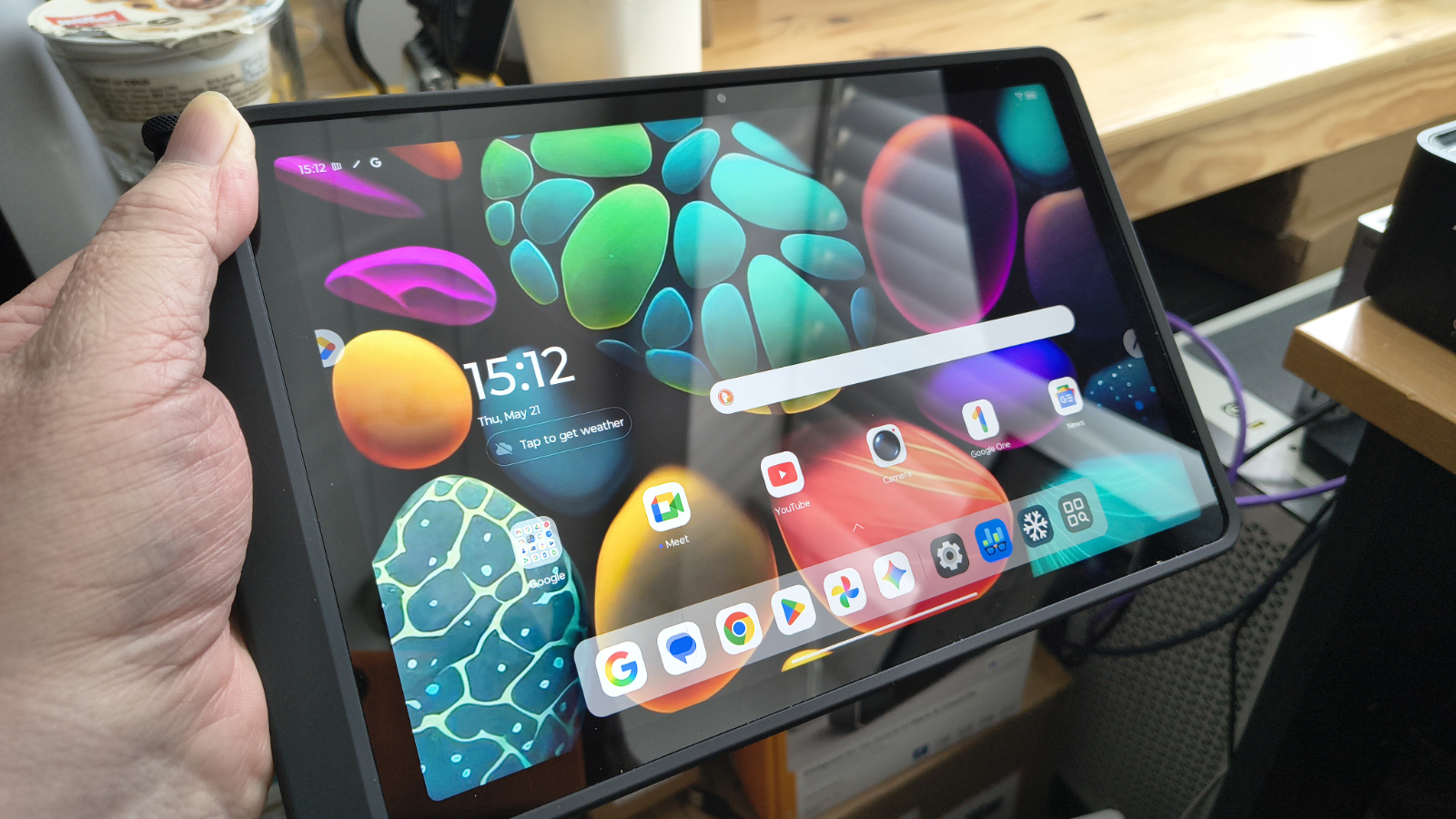
The ThinkTab X11 Gen 1 is Lenovo’s first serious push into rugged Android territory. It arrives with MIL-STD-810H certification, an IP68 rating, and a genuinely useful screwless removable battery.
To avoid the power demands of PC hardware, Lenovo went with an ARM-based architecture, using the Snapdragon 7s Gen 3 to deliver capable everyday performance. This SoC is combined with a modest 10.95-inch display that is sharp and readable outdoors.
Advertisement
One interesting feature in all SKUs is that this tablet has a replaceable battery. But given the exercise to change it isn’t something you’ll want to be doing on a regular basis, this feature is more about extending the tablet’s life, not giving it extended run time with extra batteries.
While it ticks lots of boxes for performance and durability, the one major weakness of this option is its cameras, which are low quality by modern phone standards
The starting price of around £499 is competitive with the Samsung Galaxy Tab Active5 Pro, which appears to be the inspiration for this device.
Advertisement
If your work takes place on a factory floor, a building site, or in a vehicle cab, this is a credible option. Those looking for a general-purpose consumer tablet should look elsewhere, but if you need a go-anywhere tablet for drone flying or collecting data outdoors, this could be one of the best rugged tablet choices.
(Image credit: Mark Pickavance)
Lenovo ThinkTab X11 Gen 1: price and availability
How much does it cost? £499/€499
When is it out? Available now
Where can you get it? You can get it from online retailers such as Insight in the UK.
Sign up to the TechRadar Pro newsletter to get all the top news, opinion, features and guidance your business needs to succeed!
Advertisement
Availability was confirmed for Europe, the Middle East, and Africa from April 2026. At the time of writing, Lenovo has not confirmed a US retail date, describing the X11 as a commercial product with pricing starting at €499 in the Eurozone.
What’s likely to confuse customers is the sheer number of SKUs that Lenovo has in this product line, which is ridiculous. In the UK alone, they make eight different options. The differences are primarily the storage capacity (typically 128GB or 256GB) and whether it includes mobile phone comms.
But there are models with no (Beidou + GPS + GLONASS + Galileo + QZSS + A-GPS), because the market for people who don’t want to know where they are is obviously huge. Some models come with a pen, while others do not.
The review hardware was a ZAHL0035GB, which comes with 256GB of storage, the Rugged Smart Case and Lenovo Tab Pen XE, but no slot for a mobile SIM.
Advertisement
That puts it directly in the orbit of the Samsung Galaxy Tab Active5 Pro, which carries a street price of between £499 and £549 in the UK, depending on configuration. Samsung uses the same Snapdragon 7s Gen 3 chipset, so the competition is genuinely close on paper.
The UK retailer Insight carries three models, the cheapest being £563.99 inc. VAT for one with 8GB of RAM and 128GB of storage, but no 5G SIM card slot. The top model has 256GB of storage and is 5G-capable, and has a price of £615.49.
Higher-specified configurations with 12GB of RAM and 512GB of UFS 3.1 storage will command a premium when they become available. Lenovo has not published a full pricing matrix for all SKUs at launch. Business buyers will typically be quoted against volume contracts rather than consumer retail pricing, so the headline €499 figure should be treated as a floor.
Pick up the ThinkTab X11, and the premise is immediately clear. This is not a tablet designed for the sofa. The chassis is thick by consumer standards, sitting at 9.9mm, and the 650g weight is modest for the category but noticeably heavier than a consumer 11-inch slate.
In the review hardware, it came with a soft silicon bumper that didn’t obscure any of the ports and is relatively easy to remove should you want to access the battery compartment.
The MIL-STD-810H certification covers a demanding set of environmental tests. That includes thermal extremes, vibration, altitude, humidity, and shock. The IP68 rating means submersion in up to 1.5 metres of water for 30 minutes, and that’s without a rubber plug in the USB-C port. For field workers in manufacturing, utilities, or construction, these are not marketing checkboxes. They are basic requirements.
To get inside requires one strong fingernail to be inserted into a cutout on the back that then starts popping clips to remove a cover. To be clear, taking this cover off isn’t easy, and it isn’t something I’ve want to do multiple times. But when the tablet arrives, the battery isn’t installed, so it’s necessary to get it working.
Advertisement
Where I’d place this in the Parthenon of replaceable battery systems is that it’s good that you can swap the battery, especially because it could extend the working life of the device, but it isn’t something you would want to consider doing on a regular basis. Eventually, the clips on the cover will fail, and with them goes the environmental protection.
It’s worth noting that you also need to access the battery area for the installation of a MicroSD, or if you have a 5G capable model, the Nano SIM slot. I think an approach more like the Samsung Active5G with screws might have been a better plan, I’d assert.
That said, most tablets don’t allow the battery to be replaced without entirely dismantling the hardware, and battery exhaustion is a major component in tablets and phones reaching the end of their useful life.
(Image credit: Mark Pickavance)
The display supports glove and wet-touch input, and it’s designed to work with the Lenovo Tab Pen XE, which comes with some SKUs.
Advertisement
That is an important detail on a site where latex gloves are mandatory, or inclement weather intervenes. The Corning Gorilla Glass should handle the usual workplace knocks, and the front-mounted NFC will appeal to logistics and access-control use cases.
An OLED panel might have been a good option, but the IPS panel used is reasonably colourful, and using something better might have driven the price up.
Dual USB-C ports allow simultaneous charging and peripheral connection without an adapter or dock. Although the second port is clearly also designed for an add-on keyboard, which Lenovo didn’t provide for this review. This is such a useful feature, and SoCs generally support more than one USB port, that I do wonder why other brands don’t offer multiple USB ports.
An external feature I’m not a fan of is the camera’s placement, which is positioned deep in the left corner. The upper corners are the common place to hold a tablet and I found that I activated the camera app and saw nothing, as my hand was obscuring the sensor.
Advertisement
If the camera cluster had been placed in the middle, this could have avoided fingers and also provided more natural framing for image and video capture.
Other than that point, and the nail-breaking nature of the battery cover, the design of this tablet is pretty good.
(Image credit: Mark Pickavance)
Design score: 4.5/5
Advertisement
Lenovo ThinkTab X11 Gen 1: hardware
Snapdragon 7s Gen 3
Adreno 810 GPU
10,200mAh battery
The Snapdragon 7s Gen 3 is the same platform Samsung chose for the Galaxy Tab Active5 Pro. On a 4nm process with an octa-core configuration (four Cortex-A720 performance cores and four Cortex-A520 efficiency cores), it delivers capable everyday performance without generating excessive heat in a sealed chassis.
Spoiling my performance reveal slightly, the Snapdragon 7s Gen 3 has a similar performance profile to the MediaTek Dimensity 7400X that I saw recently in the UleFone Amor Pad 5 Ultra.
The Adreno 810 GPU handles the expected range of business and light productivity workloads without difficulty. Video calls, document editing, ERP applications, and camera-intensive tasks are all within its comfort zone. Nobody is buying a MIL-SPEC enterprise tablet for gaming, and the hardware reflects that reality.
Memory options cover 8GB and 12GB LPDDR5, but all the UK SKUs were 8GB. For field workers running one or two dedicated applications, 8GB is sufficient. Environments running multiple concurrent enterprise apps, particularly with persistent background sync, will benefit from the 12GB option. Storage ranges from 128GB to 512GB UFS 3.1, supplemented by a microSD slot.
That combination is practical. Enterprise deployments often include large offline databases, maps, or media libraries. Being able to use a second USB device also allows for an external drive, and it would be easier to replace than the MicroSD card.
Advertisement
(Image credit: Mark Pickavance)
The 10,200mAh battery, charged at 45W, should cover a full shift under typical enterprise workloads. Lenovo has not published an official battery life figure. In my testing that I’ll talk about later, it recharges quickly, which makes the overall capacity less of an issue.
As a total capacity of 10,200mAh isn’t huge, and I’ve seen plenty of rugged phones with more, but in this context, it’s enough to get at least two full working days out of the device, and with curation, the better part of a third day.
The front-mounted NFC is an unusual placement. Most tablets put NFC on the rear, which suits tap-to-pay and general contactless use. Positioning it on the front (upper right) of the screen makes it more accessible for door access control and identity verification, where the user faces the reader.
The hardware specification of the Lenovo ThinkTab X11 Gen 1 is decent, and the choice of the efficient SoC has enabled the battery to be scaled to a level where the machine becomes awkward to carry or only suitable for vehicle mounting.
Advertisement
Lenovo ThinkTab X11 Gen 1: cameras
16MP on the rear
8MP on the front
Two cameras in total
(Image credit: Mark Pickavance)
The Lenovo ThinkTab X11 Gen 1 has two cameras:
Rear camera: 13MP Omnivision OV13B10, AF, LED flash Front camera: 8MP GalaxyCore GC08A8
As seems the norm these days, extracting the correct camera sensors from the Android system provided little hard information about the camera sensors. At one point it the primary sensor could have been from Omnivision, Samsung or Sony.
Advertisement
But thankfully, I dug into the replacement parts list on Lenovo, and that revealed that the main sensor is a 13MP Omnivision OV13B10, and the selfie camera is an 8MP GalaxyCore GC08A8.
Anyone with a decent phone will immediately be thinking how underwhelming these sensors sound, and they’re not exactly cutting-edge. I’m not sure why tablet makers immediately assume that their customers don’t need high-quality images, but it’s a cost-saving that many take.
That said, the pictures taken by the 13MP Omnivision OV13B10 are reasonably sharp, and if you don’t activate HDR mode, the colour makes a stab at being representative.
The problem with a 13MP sensor is that there isn’t much margin for errors. There is no anti-shake compensation, only two levels of digital zoom (1X and 2X), and there are no special modes, like panorama or time-lapse, whatsoever.
Advertisement
However, there are two functions that people will like, the first being that there is a specific camera mode for capturing documents. That’s useful, and the other thing that impressed me is that even with only a 13MP sensor, it will capture both 2K and 4K video. There is no means to change the FPS; it’s 30 FPS by default, but at least you can capture a proper resolution.
I won’t talk about the 8MP fixed focus front-facing camera, to avoid annoying anyone at GalaxyCore. But that it can only capture 1080p video is probably a good thing.
Overall, if you have good lighting conditions, you can make the 13MP Omnivision OV13B10 work for photography and video. Though I wouldn’t expect miracles, and it might have been a better plan if Lenovo had splashed out another dollar or less for a 32MP Samsung sensor.
(Image credit: Mark Pickavance)
Advertisement
Lenovo ThinkTab X11 Gen 1 Camera samples
Image 1 of 10
(Image credit: Mark Pickavance)
(Image credit: Mark Pickavance)
(Image credit: Mark Pickavance)
(Image credit: Mark Pickavance)
(Image credit: Mark Pickavance)
(Image credit: Mark Pickavance)
(Image credit: Mark Pickavance)
(Image credit: Mark Pickavance)
(Image credit: Mark Pickavance)
(Image credit: Mark Pickavance)
Lenovo ThinkTab X11 Gen 1: Performance
Modern and efficient SoC
Workable battery life
Swipe to scroll horizontally
Tablet
Row 0 – Cell 1
Lenovo ThinkTab X11 Gen 1
Samsung Tab Active5 5G
SoC
Advertisement
Row 1 – Cell 1
Qualcomm Snapdragon 7s Gen 3
Samsung Exynos 1380
Mem
Row 2 – Cell 1
8GB/256GB
Advertisement
6GB/128GB
Weight
Row 3 – Cell 1
650g
433g
Advertisement
Battery Capacity
mAh
10,200
5,050
Advertisement
Geekbench
Single
1158
785
Advertisement
Row 6 – Cell 0
Multi
3293
2668
Row 7 – Cell 0
OpenCL
Advertisement
1852
3149
Row 8 – Cell 0
Vulkan
2685
Advertisement
3203
PCMark
3.0 Score
14641
Advertisement
12066
Row 10 – Cell 0
Battery
19h 27m
9h 38m
Advertisement
Charge 30
%
34%
26%
Advertisement
Passmark
Score
15758
13884
Advertisement
Row 13 – Cell 0
CPU
7404
6601
3DMark
Advertisement
Slingshot OGL
5409
5897
Row 15 – Cell 0
Slingshot Ex. OGL
Advertisement
3831
4750
Row 16 – Cell 0
Slingshot Ex. Vulkan
3693
Advertisement
4758
Row 17 – Cell 0
Wildlife
2483
2991
Advertisement
Normally, I’d present the numbers of the review machine against a prior tablet in this instance, but I chose not to here.
That’s because no other tablet I’ve tested could get anywhere near these numbers, including some of the previous Ulefone Pad series. For example, the Ulefone Armor Pad 3 Pro scored only 296 and 1358 on the Geekbench single and multithreaded tests, which is a fraction of what this tablet offers.
Equally, GPU power is a magnitude better with the Pad 3 Pro, managing only 647 points on WildLife, or 18%. I’m sure there are Android tablets available that could go toe-to-toe with the Pad 5 Ultra, but I’ve yet to see them.
Another area this design excels in is battery life, even if I had some issues with getting PCMark to completely exhaust the battery without crashing. That’s not a problem specific to this tablet; it seems to happen with many tablets and phones, where something happens in the background that trips up the PCMark tool.
Advertisement
After running it a number of times, the best result I got was that it ran for 28 hours and 27 minutes, but there was still 39% of the battery capacity left. That result indicates that the total running time of the test using all the battery would be around 46 hours or more, which is substantial.
Using the provided 120W charger, it can recover about 27% of capacity in 30 minutes. That puts the total recovery from empty at between two and three hours. There is no wireless option, and given the battery’s size, that’s probably not a bad thing.
Overall, the performance of the UleFone Armor Pad 5 Ultra is top-notch, and dramatically better than most rugged Android tablets.
(Image credit: Lenovo)
Advertisement
Lenovo ThinkTab X11 Gen 1: Final verdict
I’m going to make one complaint that has nothing to do with the hardware-software combination Lenovo has created. It’s the naming convention.
When I live and breathe platforms on a daily basis, and I can even get confused, then something is badly wrong. Calling something a Lenovo ThinkTab X11 when you already have a Lenovo ThinkPad X11 is a patently dumb idea. And this recent thing of calling them Gen 1 and so on, that’s hyperbolically stupid too.
Here’s a ‘next-gen’ idea: stop now! Lenovo makes far too many SKUs of all its products, and naming them so similarly only causes further customer confusion. Someone wanting an Android tablet doesn’t need a degree in the nuances of Lenovo product naming conventions, if there are any. Rant over, and I should say that this problem isn’t exclusive to Lenovo; it’s all over the commercial platform space.
For the purpose of this review, the ThinkTab X11 Gen 1 is a well-considered entry from Lenovo into a market that Samsung has dominated for years. The removable battery alone separates it from most of the competition. In a sector where devices must survive shifts rather than evenings on the sofa, that matters.
Advertisement
The Snapdragon 7s Gen 3 provides enough headroom for the applications that enterprise Android tablets actually run. The IP68 and MIL-STD-810H certifications are genuine rather than decorative. The dual USB-C configuration is practical and is something that competitors typically do not offer.
There are only two areas that the ThinkTab X11 Gen 2 should embrace when it inevitably arrives. One is to repackage the battery so that the cover is part of the battery, and swapping them in and out is easier. And the other area that needs to be addressed is the cameras, which need to be brought up to the level of entry-level phones from today, not ones from five years ago.
With those things addressed, this would be the perfect rugged tablet solution for many people. In the meantime, the ThinkTab X11 Gen 1 is an affordable option that isn’t a bad device, though Lenovo could have made it even better with a bit of adaptive thinking.
Advertisement
Should I buy a Lenovo ThinkTab X11 Gen 1?
Swipe to scroll horizontally
Ulefone Armor Pad 5 Ultra Score Card
Attributes
Notes
Rating
Value
Advertisement
Competitive vs Samsung Galaxy Tab Active5 Pro at this spec level
“I used to walk into a room and just go ‘ta-da!’ Now, I tiptoe.” This is a line I’ve directly quoted from episode 1 of Russell T Davies‘ blistering new Channel 4 drama Tip Toe, but it’s also the sentiment of any LGBTQIA+ person living in the UK over the last few years.
As Western politics continues to shift to the right, being out and proud is something that’s starting to have a brand-new set of consequences — and instead of shying away from it, Davies presents us with an alarming vision of the future.
Channel 4 explains, “Tip Toe chronicles the escalating, deadly feud between two Manchester neighbors: Leo (Alan Cumming), a vivacious gay bar owner on Canal Street, and Clive (David Morrissey), a conservative electrician with two teenage sons.
Advertisement
Latest Videos From
“As modern prejudices and radicalized opinions creep into their community, everyday friction spirals into shocking violence.”
Except, this isn’t actually the future at all. As a lesbian woman who could easily disguise herself as ‘straight passing’ if I was walking down the street, I watched Tip Toe with a horrific realization that in five years time, if Reform UK really does make good on its prediction of forming a government majority, Davies’ vision could be reality TV.
But speaking to Davies and Cumming, it’s clear that I’ve been naive about what’s happening around the country right now — even if I did need an entire screen-free weekend to get over the trauma of watching these five episodes.
Advertisement
‘Hopefully, this is a wake-up call’
Tip Toe – Brand New Drama From Russell T Davies | Official Trailer | 4TheDrama – YouTube
“I very much was inspired by the spirit of both of those things,” Davies responds when I ask if defining Tip Toe as “Queer as Folk getting the Years and Years treatment” is too reductive.
Sign up for breaking news, reviews, opinion, top tech deals, and more.
“If it was focused in any other way, it wouldn’t be a timely project… it would be an old-fashioned project. This is literally happening to us now. Women can tell us that. Look at the laws on rape statistics and how many rapists are convicted. It’s like every corner of society is shutting this out and yet the establishment just keeps marching on.”
With this analogy, Davies isn’t referring to a blatant sex crime, but the implication that one has happened. Through Leo and Clive’s increasingly hostile encounters, the age-old rhetoric that equates gay men to child abusers comes back into the foreground. This is a thematic cornerstone of Tip Toe, but look around online, and you’ll likely see similar happening there too.
Cumming continues, “This is definitely not a five years time thing, this is happening right now. My hope is that it will be impactful… it sort of feels like it is already in the way that people are reacting to the trailers and promo.
Advertisement
“Hopefully, it will be a wake-up call. I really think that’s what the purpose of this is, to sort of say, ‘look what the f**k is happening and let’s have a chat.’”
My advice for this must-see TV? Stream Tip Toe at your own risk — and be ready for it to sit in your consciousness for every day after.
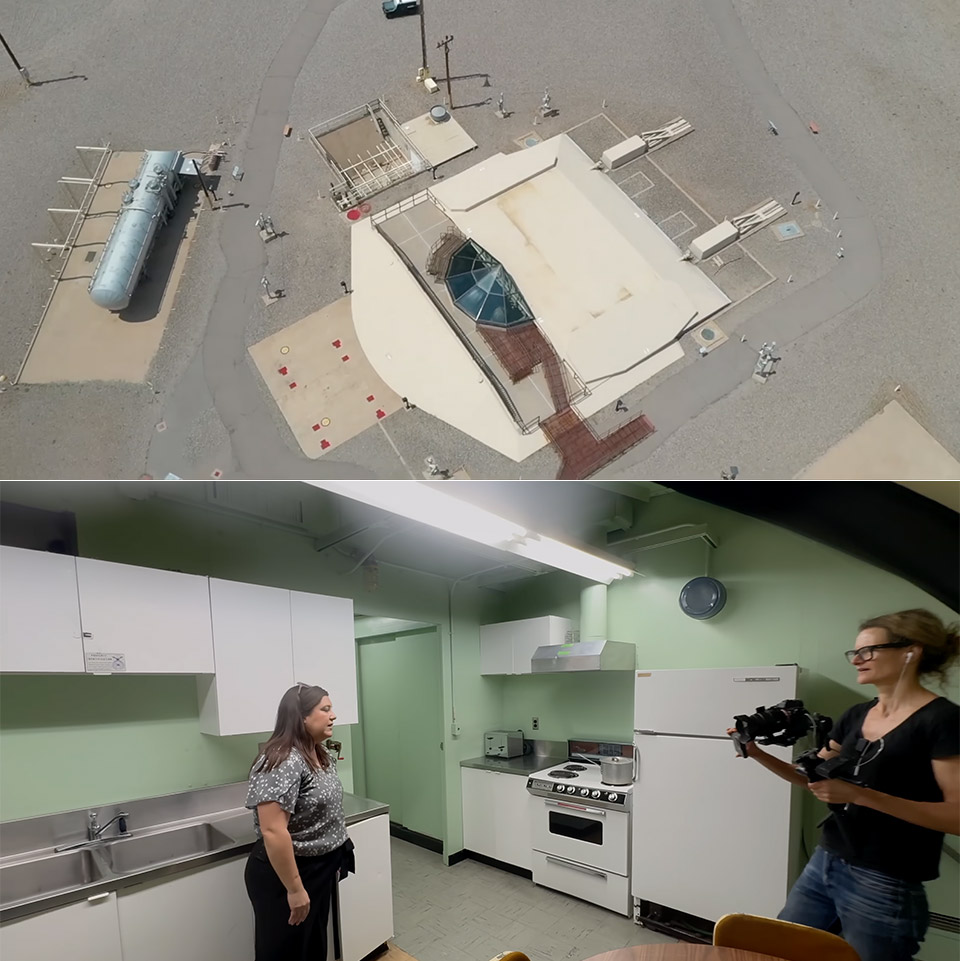
South of Tucson, in a stretch of Arizona desert that looks like any other patch of scrub and sun, a plain concrete entrance leads straight down into one of the most complete remnants of the Cold War. This is Complex 571-7, the single surviving Titan II missile site preserved exactly as it stood when the last crews walked out in 1987. Everything else from the original fifty-four sites was destroyed or buried. Here the underground command center and the missile itself remain untouched.
The descent begins at ground level and lowers approximately thirty five feet through a reinforced gateway. We’re talking about gigantic blast doors, each weighing several tons, that can seal the facility in an instant. They were designed to endure a nuclear strike anyplace nearby, including the shock, heat, and fallout. As you pass them, the air changes, as if you’ve stepped into another world. The temperature remains constant throughout the year, and the stillness is so terrible that it feels like it weighs ten times more than a typical basement.
THE CITY THAT NEVER SLEEPS – Construct the ultimate souvenir with the LEGO Architecture New York City – The Big Apple (21066) building set for…
CREATE 6 ICONIC LANDMARKS – Builders can create six NYC architectural icons in minimalist white, including the Brooklyn Bridge, Empire State…
DISCOVER HIDDEN DETAILS – As they construct their city skyline, builders can discover details that are uniquely New York, such as yellow taxi cabs…
This self-contained three-story steel and concrete rig serves as the command center. Four individuals lived and worked here when there were 24-hour alerts. The dwelling quarters were located on the ground floor. There is a row of bunks for when the crew takes a break between shifts. Next to that is a small kitchen outfitted with metal cupboards and basic appliances similar to those found in an average 1960s American home. A little table and a couch chair complete the setup. Meals were prepared upstairs and then carried down because two guys had to stay on the lower level to keep an eye on things. It was simple and unpretentious, but it made sense for folks who could have been stuck down there for days.
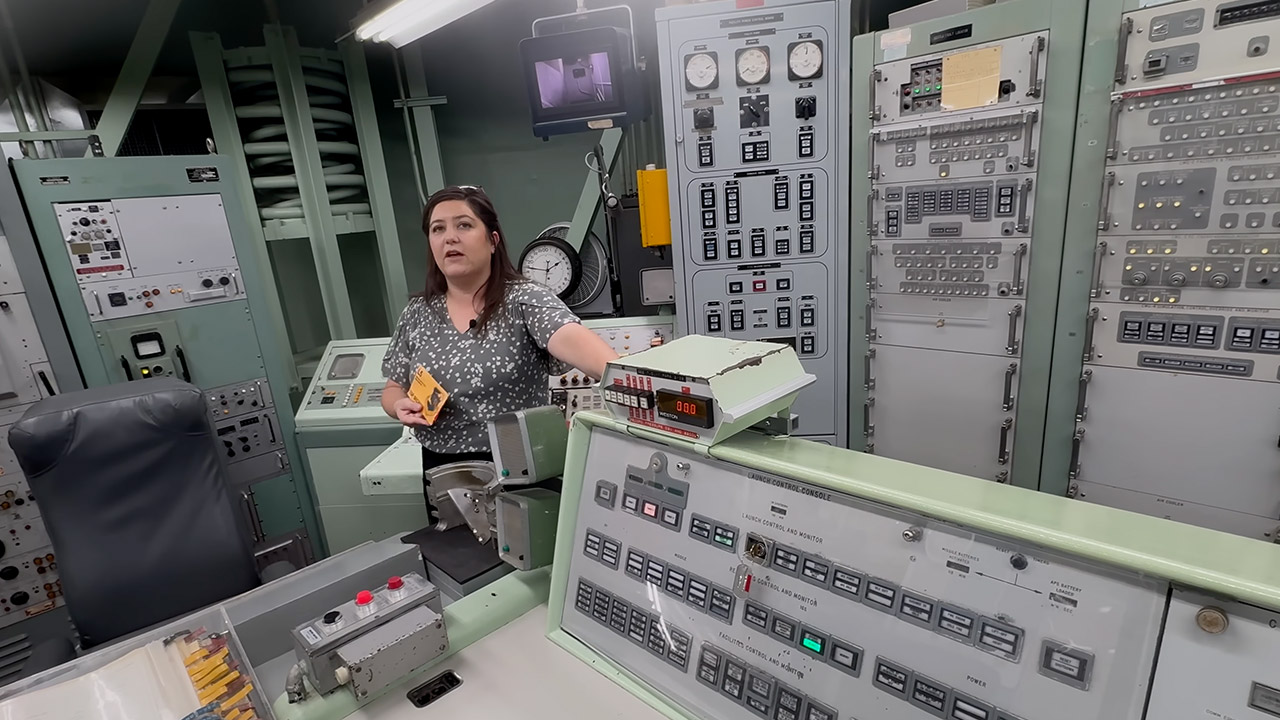
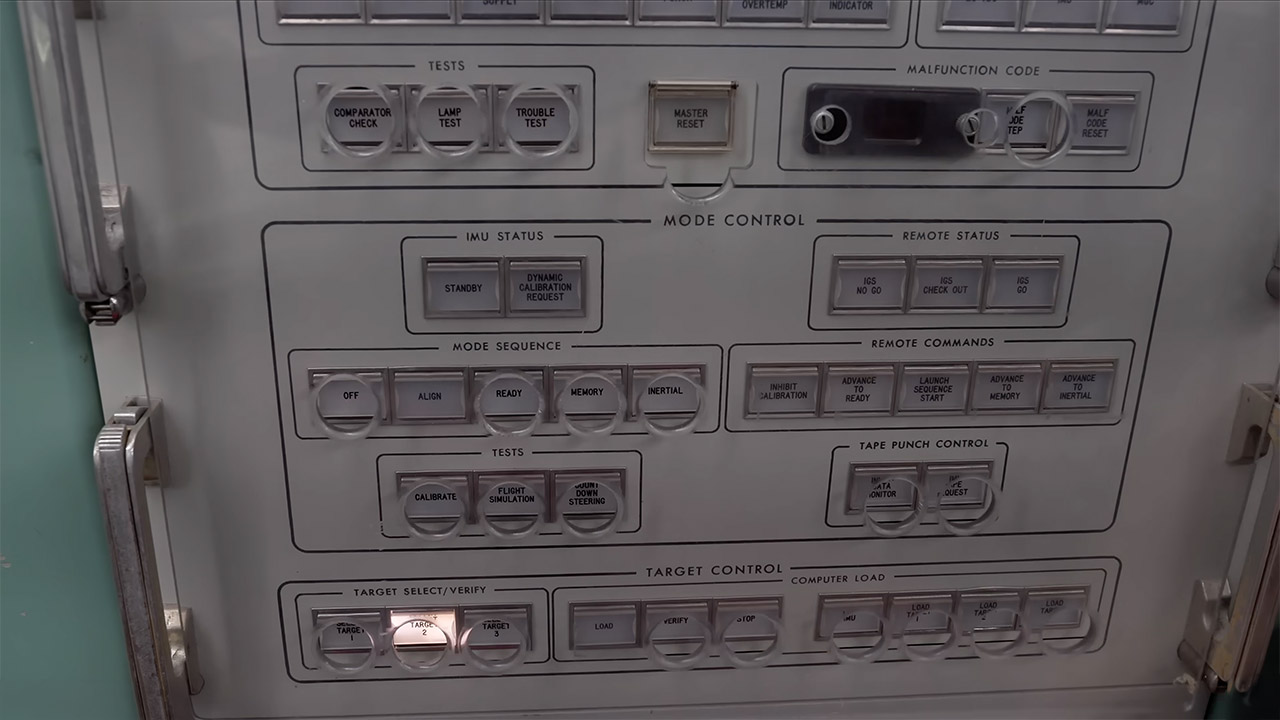
Moving down, the second level housed the operations hub. Consoles and rows of equipment filled the entire area. The officers would monitor missile status, communications, and security from above. Everything was analog, based on what was available at the time, with sequencing technology that employed punch cards and mechanical timers. Every button and indicator has a reason for being present. The area was constructed so that the crew could go through all of the launch procedures without ever needing to surface.
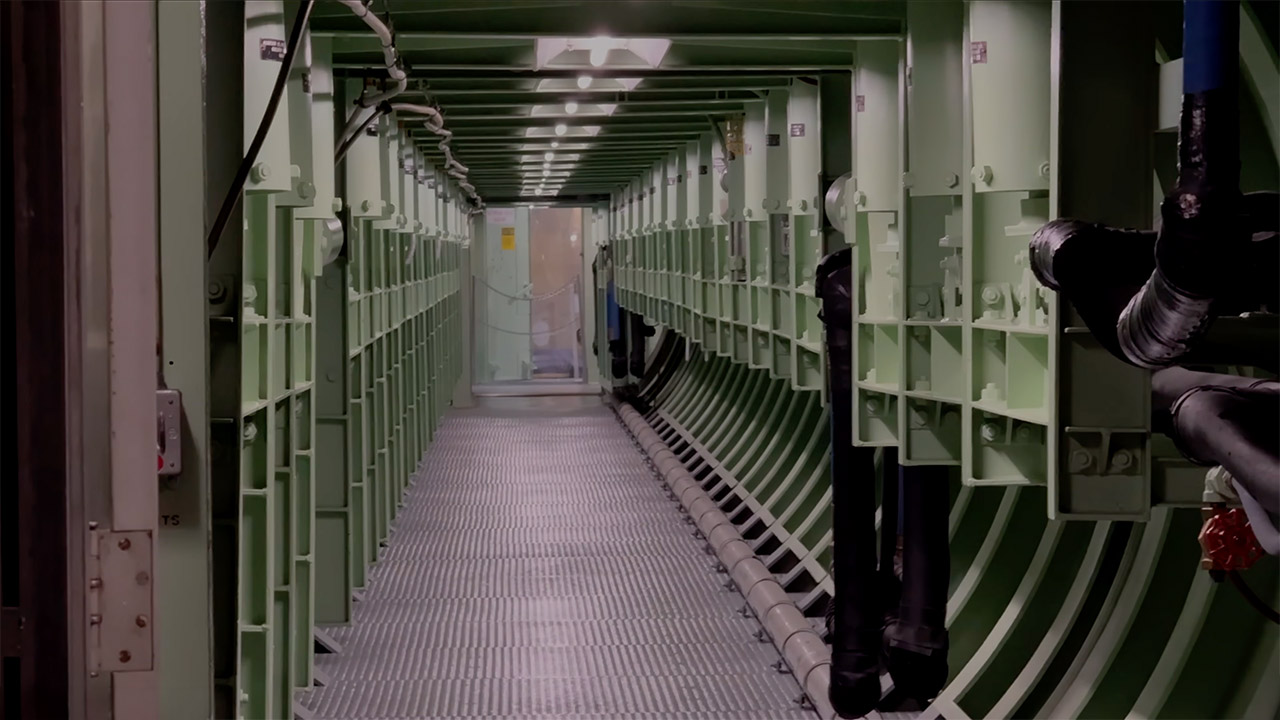
Next, there’s a long tunnel that connects the command center to the missile silo. Even walking it now takes a few minutes. Back then, it must have been a long journey because the tunnel carried power, data, and staff between the two structures. At the further end, it opens into the silo. The Titan II missile, one hundred and three feet tall, remains perched in its launch position. I’m talking huge, since the surrounding concrete walls rise over one hundred forty feet. There are access platforms and equipment distributed around the area. That one missile carried a warhead that was far more devastating than the ones launched on Japan in 1945.
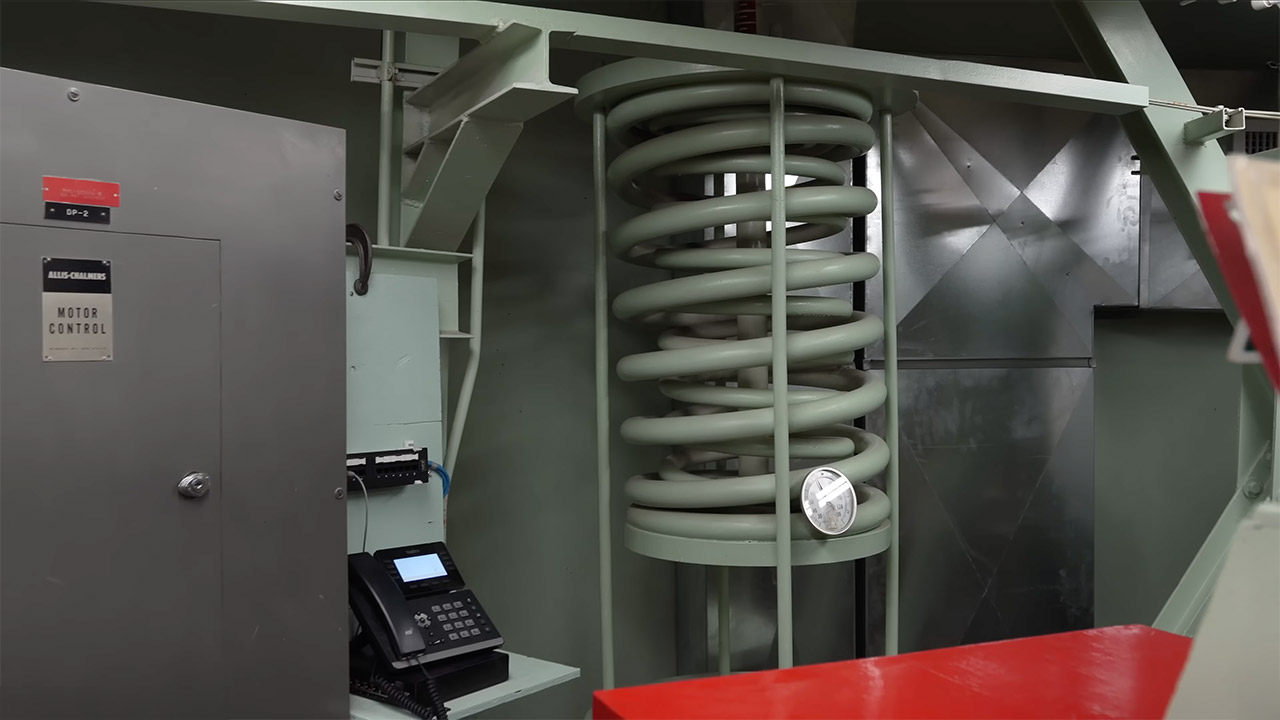
Engineers had designed the entire complex with independent systems so that it could function even if it were cut off from the rest of the world. The complex was self-sufficient due to a diesel generator that provided power throughout, as well as air filtration systems and water storage that could keep the crew going during extended periods of isolation… and some seriously necessary upgrades to protect sensitive equipment, such as shock-absorbing mounts to prevent damage. Then there was the strong reinforced concrete and various blast doors, which formed layers of security to keep the personnel and vital equipment secure from any attacks. The fundamental mission was simple: maintain the crew alive and able to take commands and carry them out regardless of what was going on above.
Life in the underground bunker followed a very tight sched. Crews took turns staying at their positions for alerts, with a couple of people riveted to the consoles while the others rested, ate, or performed necessary repairs. The living quarters, kitchen, bunks, and tiny communal rooms were really merely tools to help the workers prepare to launch at a moment’s notice, much like the launch equipment a whole level below.
The majority of the installations were demolished in accordance with arms-control agreements once the Titan II program ended. However, veterans of the 390th Strategic Missile Wing refused to let the final remaining site be demolished. So they teamed up with the Arizona Aerospace Foundation to keep Complex 571-7 intact. Today, it serves as the Titan Missile Museum. Visitors are taken on guided tours that follow the same route as the original crews: down to the command center, down the tunnel, and alongside the real missile. They even get to participate in a simulated launch sequence in the control room to get a sense of what those operations sounded like.
Need something new for your reading list? This week, we recommend checking out The Dorians, a novel by Nick Cutter, and Lorenzo De Felici’s comic series, Red Roots.
The Dorians
Gallery Books
It should become clear pretty quickly that the title here is a nod to one of this book’s major influences, Oscar Wilde’s The Picture of Dorian Gray. Five people on their deathbeds are interrupted by a mysterious person offering a second chance at life: an experimental treatment that could give them back their youth. This sort of thing always goes really well for everyone involved, right?
“The remarkable secret lies in the high-tech harnessing of an ancient and extraordinary biological agent…one with no conscience, yet possessed with a single-minded purpose that has helped it persist for eons: the will to survive,” per the book’s description. A lot about The Dorians at the beginning reminded me of Alien: Earth. A young genius with bad people skills unlocks the secret to enduring youth, giving way to moral and literal catastrophe as the reality unfolds into something no one is prepared for. It’s a pretty thrilling ride, and there’s some real shudder-inducing body horror in here.
Advertisement
Red Roots
Image Comics
Reading the first two issues of Lorenzo De Felici’s Red Roots, it felt like every time I turned the page I found myself looking at something new that made me say, “wtf is going on?!” I mean that in a good way. I truly had no idea where this was taking me at any step of the way with the first issue, and the second issue, which came out this week, only amplified that. At the start, we’re introduced to two characters whose stories seem unrelated: a teacher who makes a horrifying discovery in her home one day, and a guy who is on a killing rampage. When their worlds collide, things only get stranger.
Red Roots is a really bizarre, really good time so far, and I have a feeling that things are only going to get weirder.
The YouTube-to-prestige-horror pipeline is looking very strong this weekend.
Taking the number one spot at the box office is “Backrooms,” a feature film expansion of Kane Parsons’ series of YouTube videos featuring eerie found footage of a mysterious office space (drawn from a 4chan thread) that defies physics.
Directed by Parsons, “Backrooms” made $38 million on Friday, and is expected to bring in a total of $80 million to $90 million at the domestic box office over this weekend alone. For indie studio A24, that’s its biggest opening by far — the previous record was held by “Civil War,” which made $25.7 in its first weekend of release.
The number two film, “Obsession,” is pulling off something that’s arguably even more impressive. True, it made a mere $8 million on Friday, with an estimated weekend haul of $28.5 million — but the movie (about a romantic wish gone nightmarishly wrong) already made more money in its second weekend than its first, and now its third weekend is set to grow another 19 percent.
Advertisement
For context, most wide release films normally fall between 50 to 70 percent in their second weekend; last year’s “Sinners” was considered an extraordinary word-of-mouth success because it fell less than 5 percent. Outside of Christmas releases (which have more staying power, thanks to the holidays), growing from weekend to weekend is unheard of — according to the Hollywood Reporter, “Obsession” is the first film since 1982 to grow on both its second and third weekends.
And like “Backrooms,” “Obsession” is a horror movie directed by filmmaker who first made his name on YouTube — Curry Barker, who released the hourlong found footage horror film “Milk & Serial” on YouTube in 2024. Barker has already shot his next film and is set to direct a new remake of “The Texas Chainsaw Massacre.
The two releases follow the surprise success of “Iron Lung,” a video game adaptation released earlier this year. Directed by Mark Fischbach — better known under his YouTube account name Markiplier — “Iron Lung” grossed nearly $41 million domestically.
In a New York Times article about the recent “YouTube-to-filmmaker boomlet,” Rutgers CInema general manager Mark DelVecchio noted that “lots of YouTubers have tried to make the leap to mainstream movies and come up short.” What sets Parsons, Barker, and Fischbach apart? DelVecchio said that despite their youth (Parsons is 20, Barker is 26), they all have “longevity.”
Advertisement
“At this point, some of them have been making videos for a very long time, and that’s how you develop a loyal audience that will follow you,” he added.
By the way, while I haven’t seen “Backrooms” yet (fingers crossed for tomorrow), I have seen “Obsession.” So I can confirm that it absolutely does not disappoint — I watched most of the second half with my fingers over my eyes, and I may even have screamed a few times.
When you purchase through links in our articles, we may earn a small commission. This doesn’t affect our editorial independence.
Foundation sent humanoid robots to Ukraine and has $24M in Pentagon contracts. Eric Trump is its chief strategy adviser. Warren calls it “corruption.”
Foundation Future Industries, a San Francisco startup founded in 2024, sent two of its Phantom MK-1 humanoid robots to Ukraine earlier this year. The company described it as the first known deployment of humanoid robots in a combat theatre. The tests, backed by the US government and conducted with Ukrainian officials, focused on logistics in hazardous areas.
CEO Sankaet Pathak told CNBC the MK-1 testing proved the robots can perform supply pickups that currently expose soldiers to danger. The robots carry approximately 44 pounds. They lack waterproofing and sufficient battery life for sustained deployment.
Foundation plans to send improved Phantom 2 units to Ukraine this year. Pathak says they will have “superhuman abilities” and double the payload capacity. The company is targeting front-line deployment with the US military within 12 to 18 months.
Advertisement
The political dimension is unavoidable. Eric Trump, the second son of the sitting president, recently joined Foundation as chief strategy adviser. The company has received $24 million in government research contracts across the Army, Navy, and Air Force for feasibility testing in inspection, logistics, and weapons handling.
The 💜 of EU tech
The latest rumblings from the EU tech scene, a story from our wise ol’ founder Boris, and some questionable AI art. It’s free, every week, in your inbox. Sign up now!
Democratic Senator Elizabeth Warren alleged the contracts were “corruption in plain sight.” A Foundation spokesperson told CNBC that Eric Trump had been an investor before becoming an adviser. The two parties share a vision of bringing manufacturing back to the US.
Advertisement
Pathak is best known for leading Synapse, a fintech platform that declared bankruptcy in 2024. Foundation also attracted scrutiny after suggesting it had close ties to General Motors, claims GM subsequently rejected. The company’s credibility is a live question.
The military argument for humanoid robots centres on urban combat environments. “Modern urban combat spaces, where there are stairwells, ladders, basements and narrow corridors, were created for human movement,” said Kateryna Bondar, senior fellow at CSIS. Humanoid systems could have advantages over tracked or quadruped robots in these scenarios.
The counterargument is cost and complexity. “Making robots look like humans is a complex and expensive engineering challenge,” said Melanie Sisson at the Brookings Foreign Policy program. “What Ukraine has taught us is the opposite, that we need the ability to adapt rapidly and manufacture quickly and cheaply.”
Ukraine’s war has already become the primary testing ground for AI and robotics in combat. Ground robots deliver supplies to front lines. Autonomous drones conduct precision strikes. The conflict is generating operational data that peacetime testing cannot replicate.
Pathak said some weaponised uses of the Phantom robots will retain human confirmation in the decision loop. In certain time-critical scenarios, the robots will need to make fully autonomous decisions. The ethical implications of autonomous lethal decision-making remain unresolved internationally.
Foundation’s ambitions are large. Pathak plans to scale production to thousands of units this year. The goal is to deliver “the best robots we can build” to the US military, “better than anything China has.” China has its own leading humanoid companies and has publicly funded military robotics initiatives, though the extent of its trials remains unclear.
Toby Walsh, chief scientist at the University of New South Wales AI Institute, expects tracked, flying, and underwater robots to replace human forces before humanoids do. “It might be a science fiction trope to expect humanoid terminator-style robots,” he said. The age of AI robots in war is near. Whether they need to look human to fight is the question Foundation is spending $24 million in government contracts to answer.
The Roku 65″ Select Series 4K TV uses a QLED panel with HDR10, HDR10+, and HLG support, which means colour and brightness handling across a wide range of streaming content rather than just the formats one or two platforms happen to use.
Advertisement
Roku Smart Picture works in the background to analyse incoming signals and automatically apply the appropriate picture mode, removing the need to manually toggle settings every time you switch between a dark drama and a brightly lit sports broadcast.
The operating system is Roku OS, which is one of the more straightforward smart TV platforms in terms of navigation, and it gives access to over 500 free channels alongside paid services including Netflix, Disney Plus, Prime Video, Hulu, and Apple TV Plus.
Variable Refresh Rate reduces screen tearing during gaming sessions, and the three HDMI ports give enough connectivity for a console, a soundbar, and a streaming device without running out of inputs immediately.
Advertisement
Bluetooth Headphone Mode lets you route audio directly to a pair of wireless headphones without disturbing anyone else in the room, which is a practical feature that many televisions at this price point still don’t include as standard.
Voice control works across Roku Voice, Siri, Alexa, and Google Assistant, and the enhanced voice remote includes a lost remote finder, which removes the specific frustration of being held hostage by a handset that has disappeared between the sofa cushions.
A 65-inch QLED at $379.99 is a strong offer for anyone furnishing a living room or bedroom without wanting to spend flagship money, though this is a 60Hz panel, so those prioritising smoothness for fast-paced gaming may want to weigh that before committing.
Onlookers gather along the Lake Union waterfront to take in Mark Zuckerberg’s 387-foot superyacht. (GeekWire Photo / Todd Bishop)
This week on the GeekWire Podcast: Mark Zuckerberg’s 387-foot superyacht arrives in Seattle, cruising through the Ballard Locks and mooring on Lake Union just a short walk from Meta’s engineering center, just as it discloses nearly 1,400 layoffs in the Seattle area, about 20% of its local workforce. We try to wrap our heads around the spectacle, and the timing.
Meanwhile, robot pizza startup Picnic flames out and sells its assets to a mystery buyer. We trace the rise and fall of the Seattle company behind a machine that could help a single worker turn out up to 100 customized pizzas an hour. It’s the latest example of the challenges facing hardware startups, even as one enthusiastic customer is aiming to revive the idea nonetheless.
Corporate America confronts the rising cost of AI, with companies that once urged employees to experiment freely now watching their token bills double and triple. We consider the era of “free AI,” and what happens when the subsidies end and the real costs come due.
On a related note, we discuss the leaderboard-gaming practice known as “tokenmaxxing,” where employees spin up needless AI agents to boost their standings in internal rankings — a game that recently prompted Amazon to pull its internal Kiro leaderboard offline.
And finally, we return to the theme of billionaire yachts for our weekly trivia challenge, discussing Paul Allen’s Octopus, the wrecks it helped find, and how it stacks up against the other megayachts of the tech elite.
A North Carolina man was sentenced to more than 10 years in prison for selling the personal information of over 7 million elderly Americans to Jamaican scammers.
57-year-old Troy Murray (who used the Steve Dixon pseudonym) pleaded guilty in January 2026 to one count of conspiracy to commit wire fraud and was sentenced Thursday to 121 months in prison, three years of supervised release, and ordered to forfeit $5,2 million.
Prosecutors said that Murray’s alias was so widely known among Jamaican scammers that it was referenced in a 2022 song lyric by a Jamaican musical artist.
According to court documents, between 2016 and 2023, Murray sold lead lists containing the names, phone numbers, physical addresses, and email addresses of elderly Americans to scammers in Jamaica and elsewhere, who used the information to commit lottery fraud.
Advertisement
Murray earned hundreds of thousands of dollars annually after typically charging $500 per list of 100 to 300 names. After the wire transmission services he used blocked him from their platforms, he asked his “clients” to pay him in prepaid gift cards instead.
He allegedly sent at least 22,000 lead lists over the years-long scheme, generating more than $5.2 million for himself and causing victim losses exceeding $9.5 million.
Murray used the illegal proceeds to purchase farm equipment, vehicles, and precious metal collectibles, and also sent some of these funds to his son, Cutter Murray, for personal and business expenses.
In June 2025, the Justice Department also revealed that Murray’s son will plead guilty to one count of money laundering for receiving and laundering $1.6 million of the fraudulent funds he obtained.
Advertisement
Murray’s sentencing comes as elder fraud continues to surge nationwide. According to the FBI’s 2025 Internet Crime Report, elderly Americans aged 60 and older filed over 200,000 fraud complaints last year, representing a 37% increase over 2024.
Affected elderly victims have also reported total losses of nearly $7.8 billion, a 59% year-over-year rise, with the average loss per complainant reaching $38,500.
Automated pentesting tools deliver real value, but they were built to answer one question: can an attacker move through the network? They were not built to test whether your controls block threats, your detection rules fire, or your cloud configs hold.
This guide covers the 6 surfaces you actually need to validate.



































































You must be logged in to post a comment Login