Running a galactic empire in Stellaris is an arduous task. One bad war, an economic spiral, or one neighbor with a suspiciously large fleet can turn a promising save into a slow-motion disaster. You may want to fix a mistake, or maybe even want to test a build. And sometimes, you just want to see what happens when your empire suddenly has more alloys than sense.
This is where Stellaris console commands come in. These cheats let you add resources, finish research, control empires, spawn ships, trigger events, or bend the galaxy in ways the normal game usually won’t allow.
There are a few things to know before you start. Console commands are mainly for the PC version of Stellaris, and the command console is available only outside Ironman mode. If you’re trying to earn achievements, cheats are not the way to do it, as they are treated as cheating for achievement purposes, which is exactly why Ironman blocks the console.
So here’s how to use Stellaris cheats, followed by the most useful console commands to try first.
Advertisement
Stellaris
How to enter Stellaris cheats
To use console commands in Stellaris, press the tilde key on your keyboard, usually the key above Tab and to the left of 1. On some keyboards, you may need to use Shift + Alt + C instead. Once the console opens, type or paste the command you want and press Enter.
If a command includes something in brackets, such as [amount], [empire ID], or [technology ID], you need to replace that with the value you want. Do not type the brackets unless the command specifically requires them. A lot of commands also need IDs. The easiest way to find those is with “debutooltip”.
After entering that command, hover over an empire, species, planet, fleet, or other game element to see more detailed ID information. This is a useful way to grab the specific IDs needed for more advanced commands.
Stellaris
Main Stellaris cheats
Command
What it does
activate_all_traditions
Activates all Traditions.
activate_ascension_perk
Activates the specified Ascension Perk; pressing Tab reveals IDs.
activate_gateways
Activates all gateways in the galaxy.
activate_relic
Activates the triumph effect of a relic.
activate_tradition
Activates the specified Tradition; pressing Tab reveals IDs.
add_anomaly
Adds an anomaly ID to the selected celestial body.
add_intel
Adds intel toward a target empire.
add_loyalty
Adds loyalty toward a target subject.
add_opinion
Increases one empire’s opinion of another.
add_pops
Creates pops from a species ID on the selected celestial body.
add_relic
Grants a relic; typing all grants all relics.
add_ship
Creates a fleet with one ship of the specified design.
add_spynetwork_value
Adds infiltration progress to a spy network.
add_time
Adds a specified amount of days, months, or years.
add_trait_leader
Adds a trait to a leader.
add_trait_species
Adds a trait to a species.
advance_council_agenda
Adds progress to the council agenda.
ai
Toggles AI on or off.
alloys
Adds Alloys.
annex
Takes control of all worlds and starbases of a target empire.
break_fleet_contract
Returns a selected leased fleet to its original owner.
build_pops
Assembles pops on the selected celestial body.
cash
Adds Energy Credits.
colonize
Starts colonization of the selected celestial body using a pop ID.
communications
Establishes communications with empires.
contact
Starts first contact with all empires.
create_megastructure
Creates a megastructure in the current system.
create_navy
Creates a fleet using your most recent ship designs.
damage
Deals hull damage to ships in the selected fleet.
debug_nomen
Makes AI empires refuse player proposals.
debug_yesmen
Makes AI empires accept player proposals.
effect add_building =
Adds a building to the selected celestial body.
effect add_deposit =
Adds a resource deposit or planetary feature.
effect remove_deposit =
Removes a resource deposit or planetary feature.
effect add_district =
Adds a district to the selected celestial body.
effect add_planet_devastation =
Adds devastation to the selected celestial body.
effect country_add_ethic =
Adds an ethic to the player empire.
effect country_remove_ethic =
Removes an ethic from the player empire.
effect create_archaeological_site =
Adds an archaeological site to the selected celestial body.
effect force_add_civic =
Adds a civic to the player empire.
effect force_remove_civic =
Removes a civic from the player empire.
effect remove_megastructure =
Removes the selected megastructure.
effect remove_modifier =
Removes a modifier from the selected celestial body or empire.
effect set_origin =
Replaces the origin of the player empire.
effect shift_ethic =
Shifts the player empire’s ethics.
effect destroy_colony
Decolonizes the selected world.
election
Starts a ruler election.
end_senate_session
Passes or fails the currently voted resolution.
engineering
Adds Engineering research points.
event
Triggers an event ID.
federation_add_experience
Adds Federation Experience.
federation_add_cohesion
Adds Federation Cohesion.
federation_add_cohesion_speed
Adds monthly Federation Cohesion.
federation_examine_leader
Triggers a Federation succession.
finish_arc_stage
Finishes the current chapter of an archaeological site.
finish_research
Finishes all active research.
finish_special_projects
Finishes all special projects.
finish_terraform
Finishes all terraforming processes.
food
Adds Food.
force_integrate
Integrates a target empire into the player empire.
force_senate_vote
Ends the current senate recess.
free_government
Lets the player change governments without usual restrictions.
free_policies
Lets the player change policies and species rights without restrictions.
grow_pops
Adds growing pops to the selected world.
hire_all_leaders
Hires all leaders in the leader pool.
influence
Adds Influence.
instant_build
Toggles instant construction and upgrades. Use while paused.
instant_specialization_conversion
Toggles instant specialized subject conversion.
intel
Gives sight of the entire galaxy.
invincible
Makes player ships unable to take damage.
max_resources
Fills all resource storage.
minerals
Adds Minerals.
observe
Switches to observer mode.
own
Takes ownership of a selected fleet, starbase, planet, or specified planet ID.
physics
Adds Physics research points.
planet_ascension_tier
Changes the ascension tier of the selected celestial body.
planet_class
Changes the selected celestial body’s class.
planet_happiness
Adds happiness to the selected planet.
planet_size
Changes the size of the selected celestial body.
play
Switches player control to another empire.
random_ruler
Replaces the empire ruler with a random one.
remove_trait_leader
Removes a trait from a leader.
remove_trait_species
Removes a trait from a species.
research_all_technologies
Instantly researches all non-repeatable technologies.
research_technology
Instantly researches a specified technology.
resource
Adds a specified resource.
skills
Adds skill levels to every hired leader.
skip_agreement_cooldowns
Removes subject agreement cooldowns.
skip_federation_cooldowns
Removes federation law cooldowns.
skip_galactic_community_cooldowns
Removes Galactic Community resolution cooldowns.
society
Adds Society research points.
survey
Surveys all celestial bodies.
techupdate
Rerolls available research options.
unity
Adds Unity.
unlock_edicts
Unlocks all edicts.
update_leader_pool
Refreshes the leader pool.
branchoffice
Creates or takes control of a branch office on the selected world.
minor_artifacts
Adds Minor Artifacts.
menace
Adds Menace.
imperial_authority
Adds Imperial Authority.
add_subject_xp
Adds specialized subject XP to a target.
effect unlock_council_slots = 1
Unlocks a council slot.
astral_threads
Adds Astral Threads.
finish_rift_stage
Finishes the current chapter of the selected Astral Rift.
set_completed_rifts
Sets the number of completed Astral Rifts.
spawn_astral_rift
Spawns an Astral Rift.
Event cheats
Command
Event / effect
akx.8888
The Horizon Signal.
anomaly.95
Voyager 1 / Solar Coordinates event.
anomaly.186
Limbo.
anomaly.2523
Gigantic Skeleton; grants a Skeletal Giant army.
anomaly.3085
The Prince.
colony_mod.101
Titanic Life Study: Success; allows Titanic Beast armies.
crisis.50
Rise of the Sentinels.
crisis.71
Sentinel Fleet Donation.
crisis.105
Long live the Queen; spawns the Domesticated Prethoryn Queen.
crisis.2400
Cybrex Return.
crisis.4550
Star-Eater Firing; destroys the current system.
fallen_empires_tasks.1
Fallen Empire sends a random gift.
galactic_features.301
Fallen Empire mothballed fleet.
nomad.1
The Nomads.
precursor.98
Vultaum Home System Located.
precursor.598
Yuht Home System Located.
precursor.1098
First League Home System Located.
precursor.1598
Irassian Home System Located.
precursor.2098
Cybrex Home System Located.
story.107
Amoebas Pacified.
story.207
Crystals Pacified.
origin.5605
Teachers of the Shroud; unlocks Shroud Beacon starbase building.
leviathans.3103
Dreadnought Repaired.
utopia.3000
Enter the Shroud.
utopia.3021
Avatar army.
utopia.3190
The Chosen One.
utopia.3304
Whisperers in the Void covenant option.
utopia.3305
Composer of Strands covenant option.
utopia.3306
Eater of Worlds covenant option.
utopia.3307
Instrument of Desire covenant option.
syndaw.545
A Question; starts AI-Related Incidents.
syndaw.1000
Machine Uprising.
marauder.85
Mercenaries Become Available.
distar.172
Neural Symbiosis; Brain Slug Host trait option.
distar.212
Death of the Matriarch rewards.
distar.260
Wild Eukaryotes.
distar.1001
Paradise Lost.
distar.1081
Azizians.
distar.2050
Alien Entity; spawns the Enigmatic Cache.
distar.3014
The Nivlac, unfriendly version.
distar.3016
The Nivlac, friendly version.
distar.3055
Alien Box Opened.
distar.5006
The Voidspawn.
distar.5012
Gargantuan Evolution.
graygoo.400
A Quiet Stroll; encounter Gray.
ancrel.4000
Whispers in the Stone archaeology site.
ancrel.4058
The Sentinels; option to gain Sentinel armies.
ancrel.6130
Zarqulan’s Chosen.
ancrel.10050
Secrets of the Yuht.
aquatics.120
The Time Has Come; Dragon Hatchery option.
paragon.3999
Arrival; spawns the Talon.
Galaxy cheats
Command
Event / effect
galcom.16
The Birth of the Galactic Community.
action.99
Establishes the Galactic Market in the capital system.
crisis.199
Spawns the Prethoryn Scourge.
crisis.1000
Spawns the Unbidden.
crisis.1100
Spawns the Aberrant.
crisis.1200
Spawns the Vehement.
crisis.2000
Spawns the Contingency.
fallen_empires_awakening.1
Awakens a Fallen Empire.
galactic_features.401
Space Storm Hits Galaxy.
galactic_features.403
Space Storm Dissipates.
utopia.3308
End of the Cycle covenant option.
utopia.3320
The Reckoning.
fallen_machine_empire.1
Ancient Caretakers Awaken.
marauder.500
The Drums of War.
distar.232
Junk Ratlings; creates the Ketling species if conditions are met.
distar.236
Junk Ratlings; creates the Ketling Star Pack empire if conditions are met.
distar.11000
Spawns a sealed L-Cluster.
distar.13000
L-Cluster L-Drake outcome.
graygoo.1
L-Cluster Gray Tempest outcome.
graygoo.100
L-Cluster Dessanu Consonance outcome.
Edict, building, and paragon cheats
Command
What it grants
anomaly.4051
Improved Working Environment.
anomaly.4081
Extensive Sensor Searches.
anomaly.4105
Improved Energy Initiative.
anomaly.4136
Master’s Teachings: The Greater Good.
anomaly.4141
Master’s Teachings: Philosophical Mindset.
anomaly.4151
Master’s Teachings: Diplomatic Trust.
anomaly.4166
Master’s Teachings: Warring States.
leviathans.322
Ministry of Culture.
ancrel.10004
Auto-Forge.
ancrel.10005
Sky-Dome.
ancrel.10006
Dimensional Fabricator.
ancrel.10007
Affluence Center.
ancrel.10008
Nourishment Center.
ancrel.10009
Class-4 Singularity.
paragon.241
Contained Ecosphere.
galactic_features.303
Tuborek.
distar.156
S875.1 Warform.
distar.245
Caretaker AX7-b.
ancrel.4036
Oracle.
paragon.1
The Beholder.
paragon.228
Astrocreator Azaryn.
paragon.3115
Keides, Scion of Vagros.
leviathans.123
XuraCorp paragon.
leviathans.124
Riggan paragon.
leviathans.125
Muutagan paragon.
leviathans.590
Curator paragon.
enclave.7100
Shroud-Touched paragon.
astral_planes.3100
Zadigal.
Advanced gameplay and empire commands
Command
What it does
debugtooltip
Toggles detailed tooltips for IDs.
fast_forward
Skips forward a specified number of days.
warexhaustion
Adds war exhaustion.
tweakergui instant_colony
Toggles instant colony settling.
yesmen
Makes AI empires accept deals and proposals.
kill_country
Kills the current or specified empire.
planet_resource
Adds a resource to the selected planet.
add_ethic_pop
Adds an ethic to a pop.
remove_ethic_pop
Removes an ethic from a pop.
peace_on_player
Forces an empire to offer peace.
ticks_per_turn
Adjusts ticks per turn.
kill_leader
Kills a specified leader.
surrender
Makes an empire surrender in a war.
kill_pop
Kills a specified pop.
casusbelli
Starts a Casus Belli against an empire.
populate
Fully populates free slots on the selected planet.
effect
Executes an effect script.
kill_ruler
Kills a specified ruler.
factions.spawnall
Spawns all factions.
terraforming_resources
Adds terraforming resources to the selected planet.
reverse_diplo
Sends a diplomatic action from another empire to the player.
war_on_player
Makes a specified empire declare war on the player.
spawnentity
Spawns an entity at the cursor location.
run
Runs commands from a .txt file.
switchlanguage
Switches or reloads localization.
advanced_galaxy
Simulates a year-2400-style advanced galaxy.
game_over
Ends the game with a specified victory type.
mature_galaxy
Simulates 100 years of galaxy development.
deposits
Prints deposit statistics.
berserk_ai
Sets AI aggression very high.
ambient_object
Spawns an ambient object.
regenerate_border_colors
Regenerates border colors.
overnight
Runs the game in overnight mode.
remove_notification
Removes current notifications.
tweakergui terraincognita
Reveals uncharted space.
ftl
Toggles faster-than-light travel.
control
Occupies a specified planet.
copy_pop
Copies a pop to the selected planet.
resources
Prints resource statistics.
borders
Calculates and prints map borders.
gfxculture
Changes graphical culture.
clear_debug_lines
Clears debug lines.
techweights
Prints technology tree weights.
human_ai
Toggles AI for human empires.
planets
Prints planet classes and counts.
achievement_status
Prints achievement status.
ai_anomalies
Toggles AI-only anomalies for humans.
help
Shows command help.
test_achievement
Tests an achievement trigger.
attackallfleets
Makes player fleets attack non-player fleets.
debug_achievements_clear
Debug command related to achievements.
factions.showallfactions
Prints all factions and stats.
trigger
Runs a specified test script.
production
Prints production debug info.
path
Finds paths between stars.
eventstats
Prints running event statistics.
reload_galaxy
Starts a new game.
smooth
Toggles graphical frame smoothing.
particle_editor
Opens the particle editor.
filewatcher
Toggles filewatcher.
goto
Moves camera to X/Y coordinates.
reload_graphical_map
Reloads the graphical map.
info
Toggles debug info.
blend_post_effect
Blends into a post-effect setting.
debug_achievements
Debug achievement command.
memtest
Tests for memory leaks.
threading.taskthreadscount
Prints thread usage.
alienfx
Attempts AlienFX integration.
reloadfx
Reloads shaders.
check_save
Checks save consistency.
democratic_election
Starts a democratic election.
eventscopes
Prints event scope trees.
audio.playeffect
Plays a sound effect.
recalc_fleet_presence
Recalculates fleet presence cache.
crash
Crashes the game.
fullscreen
Toggles fullscreen.
wireframe
Toggles wireframe mode.
audio.setactivegroup
Sets active audio group.
factions.showattraction
Prints faction attraction levels.
message
Prints message types.
nogui
Toggles the GUI.
clear_debug_strings
Removes debug strings.
collision
Toggles collision boxes.
debuglines
Toggles debug lines.
debugtexture
Debugs textures.
hdr
Toggles HDR rendering.
map_names
Prints map names.
nomen
Makes AI empires reject deals.
nomouse
Toggles scrollwheel behavior.
scaling
Toggles model scaling.
srgb
Toggles SRGB color.
trigger_docs
Prints trigger/effect information.
particle
Toggles particle debug info.
rendertype
Prints current rendering system.
error
Prints errors to log and console.
guibounds
Shows GUI element bounds.
volume
Sets game volume delta.
hsv
Converts HSV to RGB.
trigger_file
Tests a trigger script file.
clearflag
Removes an event flag.
contacts_summary
Hides holding status of Casus Belli on contacts screen.
game_paused
Toggles pause state.
version
Copies current game version to clipboard.
audio.testeffectweights
Tests sound effects.
debug_dumpevents
Displays fired events.
debug_stats
Displays performance stats.
deltat
Scales delta time.
diplo_3rd_party
Applies a diplomatic action between two actors.
dump_ai_build_plan
Shows what the AI intends to build.
dump_origins
Shows origins within the galaxy.
human_anomalies_for_ai
Lets AI access regular anomalies.
helphelp
Joke/no-help command.
particle.miplevels
Prints particle mipmap levels.
particle.wireframe
Toggles particle wireframes.
players
Displays human players.
pp
Adds minerals.
rebuild_sectors
Reconstructs sector boundaries.
missilegfx.extratimepertick
Increases duration of in-game ticks.
missilegfx.slowdownradius
Decreases missile radii.
no_resources
Removes all resources.
pop_happiness
Sets empire population happiness.
instant_survey
Toggles instant surveying.
alerts.showall
Toggles all UI alerts.
ignore_truce
Ignores truces.
instant_anomaly_research
Removes anomaly research duration.
threading.taskthreadcount
Displays CPU thread usage.
one_year
Fast-forwards one year.
thirty_years
Fast-forwards 30 years.
Do Stellaris console commands work on PlayStation or Xbox?
No, not in the same way. The “console” in console commands refers to the PC command console, not PlayStation or Xbox hardware. So you should not expect to open the same command window and enter PC-style cheats.
Why won’t the console open?
There are a few likely reasons:
You are playing in Ironman mode.
You are using the wrong keyboard shortcut.
Your keyboard layout uses a different key for the console.
You are playing on a console version rather than PC.
The game or launcher has input conflicts.
Try the tilde key first, then try Shift + Alt + C. Also, make sure the save is not in Ironman mode.
Red Hat engineer reckons the balance of risk has shifted, but core code stays off limits
A key Linux virtualization component, QEMU, is considering relaxing its blanket ban on AI-generated contributions to allow limited assistance from the bots.
The suggestion came from Paolo Bonzini, distinguished engineer at Red Hat and a maintainer of the KVM hypervisor. Bonzini’s suggestion is to allow AI assistance “where the ramifications of copyright violations are at least easy to revert and unlikely to spread.” Core code would remain off-limits “without prior agreement from a maintainer.”
Advertisement
QEMU’s current code provenance policy rejects anything that might include or derive from AI-generated content. “A blanket ban,” wrote Bonzini, “was easy to maintain while LLM output was rarely usable on its own, but as the tools improved an absolute prohibition has become harder to justify.”
The problem with code from AI assistants is its source – does the submitter have the legal right to contribute the code? Bonzini’s take is that while there remain concerns around copyright and licensing, “what has shifted is the balance of risk.”
How big is the risk? Not what it was, according to Bonzini. The engineer cited other projects that had accepted AI content without running into serious legal trouble, and organizations (including Red Hat) that reckoned the risk was acceptable.
That said, while Red Hat has an army of lawyers at its disposal, a project such as QEMU doesn’t have the same resources, hence the suggestion to keep AI-assisted code in areas (Bonzini gave examples, including small bug fixes and documentation) where it can be backed out.
Advertisement
The use of LLM output in contributions is a contentious one and has its fans and detractors. Projects such as OpenSlopware tracked free software and open source projects that used LLM-generated code or integrated AI technologies. One concern cited is what LLMs have been trained on and the risk that chunks of code produced by the technology might have licensing issues.
One solution is to disclose the use of AI in a contribution, although this might not be necessary where the use is trivial (Red Hat gave the example of autocompleting a variable name.)
Bonzini also suggested, “Introduce ‘AI-used-for:’ as a trailer to record where AI was used, and include other suggestions that help reviewers judge the result.”
“The standard is slightly different from the more usual ‘Assisted-by’, which doubles as a check that the author has read the policy.”
Advertisement
Although Bonzini noted, “use of AI does not relax any other contribution requirement,” the discussion indicates a recognition that blanket bans on AI assistance might not be the way forward and that a more nuanced approach is needed. ®
The PS5 is Sony’s not-so-secret weapon. It’s dominated the latest generation of console gaming (in part because Xbox self-destructed), but there’s no doubting Sony is top of the pile.
If someone could tell this to the Sony Home Cinema TV division.
Despite this upside and the advantage Sony has baked in, the TV division hasn’t jumped on board to cement it. In fact, its whole approach to gaming drives me loopy. I can’t see any direction to it, but worse than that, I can’t see any interest in gaming.
A little tangent, if I may, while I fire cannonball broadsides at others.
Advertisement
I don’t understand this obsession with TVs needing to have four HDMI 2.1 inputs. Whenever articles about Sony Bravia TVs and gaming crop up, it’s usually about the lack of HDMI 2.1 inputs.
Perhaps I’m dim and don’t understand the upside, but this seems to be the oddest hill to die on with regard to TVs. While LG and Samsung have supported four HDMI 2.1 inputs for several years now (thanks to developing their own chips that allow it), the actual need for the average customer to have four HDMI 2.1 ports on their TV seems remote. Two HDMI 2.1 inputs are more than fine.
It’s not as if, since the introduction of HDMI 2.1, there have been a variety of products that have supported it. There are sound systems with the eARC provision but some still support Dolby Atmos without support for HDMI 2.1. There are a few media streamers that support the standard and all the current gaming consoles do. Unless you want to throw in AV receivers/amplifiers into the mix, the variety of sources is not considerable.
Advertisement
There aren’t many devices that utilise 120Hz refresh rates either – even the Nintendo Switch 2 tops out at 4K/60Hz. There are no 4K Blu-ray players because they don’t even need to support 120Hz. The PS5 itself has about 100+ games that run at 120fps, but a considerable amount only do so at resolutions lower than 4K. You don’t need HDMI 2.1 for Dolby Vision or HDR10+ either.
Look at the gaming market and the PS5 has dominated as Xbox fell behind in sales. Microsoft has moved to publishing its own first-party games on other platforms, and cloud gaming is becoming more prevalent. Do you need two games consoles to plug in? Not any more.
So the whole obsession with four HDMI 2.1 and 120Hz seems to be exactly that. A large percentage of TV buyers won’t need HDMI 2.1 – they might not even know about it… so again. In this streaming age where viewers are tapping directly into apps, this is a weird criticism that keeps popping up over and over.
Advertisement
Advertisement
‘Ok for PlayStation 5’
Image Credit (Trusted Reviews)
Ok, back to the scheduled programming.
Sony TVs don’t care about the PS5… is a sensational headline I could probably use, but it wouldn’t exactly be true. Sony TVs do care about the PS5 – they just don’t seem to care very much.
Five years ago, Sony launched its Perfect for PlayStation 5 features. These are exclusive features only Sony Bravia XR TVs can unlock. The idea is that they automatically adjust and optimise the picture without requiring (much of) your input. It doesn’t do anything with sound, and it doesn’t really integrate into the interface of Bravia TVs.
The Auto Genre Picture Mode is a fancy way of describing ALLM (Auto Low Latency Mode). This is performed on the console itself, so rather turning on a PS5 and game mode being activated forever more until you turn off the console, as I understand it, the PS5 will call up game mode only for when you’re playing games.
As soon as you watch a film, TV series or UHD Blu-ray (on the console itself), it’ll switch back to Standard mode (or whatever your preferred picture mode is). Fair enough, but hardly exciting.
Advertisement
Advertisement
Image Credit (Trusted Reviews)
Auto HDR Tone Mapping is more interesting as it incorporates HDMI 2.1’s SBTM (Source-Based Tone Mapping). It takes information from the TV in terms of its HDR performance and the PS5 automatically calibrates its HDR output in response. Doesn’t matter whether you have super-bright Bravia TV or a low-brightness model – this feature can optimise the performance for your TV. Clever, and if there were any new 4K players that took advantage of the 2.1 spec, I’d love for them to add this feature.
The last feature is… 4K/120fps, which as I alluded to above, there aren’t many games that output at 4K/120fps. To call it a feature seems generous.
As you can see, there isn’t much to the Perfect for PlayStation 5 features that meets the eye. The SBTM feature you can do manually with other TVs during the setup/power-on of the PS5 with a new TV. There’s very little here that can’t be done in some way or other on models from other TV brands. Even more curious, these are the same set of features from five years ago. Sony has not added to or updated this list.
Image Credit (Trusted Reviews)
The PS5 has bulldozed through the gaming market but the Sony TV division seems like a truculent horse that doesn’t really want to follow in its wake. Given the competitive advantage, the Sony TV division has sat back rather than capitalised on it.
Advertisement
Advertisement
And it goes both ways. While several Bravia TVs support Dolby Vision Gaming, the PS5 still does not while its Xbox rivals do. This is a confusing state of affairs, not helped by the fact that when you go to the Perfect for PlayStation 5 website, you see none of the latest TVs listed as compatible. The page hasn’t been updated since 2022. That about sums up Sony’s interest at the moment.
Image Credit (Trusted Reviews)
Home Cinema Purist
Image Credit (Trusted Reviews)
I would go as far (and to be honest, it’s not very far) to say that the Sony TV division is indifferent to gaming. Its messaging about gaming has been low-key, and of all the Sony events I have attended in my time at Trusted Reviews, I think there’s been one that’s been focused on PlayStation, which was when it introduced its gaming headsets and monitors – and that had nothing to do with TVs.
It has never sought certification for AMD FreeSync or Nvidia G-Sync, despite Sony PlayStation dabbling with PC publishing for a few years. Although it is compatible with both through its support of VRR, it can’t take advantage of any further optimisation or features. You’re stuck with the basic HDMI VRR implementation and nothing more.
Furthermore, while other TV brands have been emphasising that their 42- and 48-inch OLEDs would be perfect as an alternative gaming screen, Sony has been quiet to the point of being reluctant to preach this about its own models.
Advertisement
Advertisement
In fact, Sony has only ever launched one 42-inch OLED and one 48-inch OLED, and both went on sale in 2022. There have been no new models of this size since. This is technology that’s about five years old.
Image Credit (Trusted Reviews)
Sony, LG and even Panasonic have launched multiple small OLEDs since, all with a greater and wider number of gaming features that cover PC and console. The input lag on their models has always been quicker than on Sony TVs. And though the A90K is still available four years on, the price is similar to what you’d pay for a 2026 model from another brand.
Why would I buy Sony in this context?
What drove this op-ed in the first place was the introduction of a new feature in the interface of the new Bravia RGB TVs in the My Cinema feature that optimises “picture and sound for film first viewing” – but it only does this for film viewing or TV. There’s no option to adjust the picture or even the sound features for gaming.
Image Credit (Trusted Reviews)
Advertisement
This seems bizarre, but Sony Bravia has always been a home cinema brand and isn’t going for this Jambalaya of different things to appeal to all types of people. Attending its home cinema event at Sony HQ in Weybridge and there were people from Sony Pictures Entertainment to amplify the message about its new TVs. I don’t think that would have happened on the PlayStation side.
Advertisement
It is still a missed opportunity (a massive one, I’d say), but Sony Bravia’s priorities lie in other areas, and it won’t sacrifice performance for gaming. I would have thought that making the PS5 a strong aspect of your TV brand’s appeal would have contributed to more sales – there are probably more LG OLEDs partnered with PS5s than there are Sony Bravias in this world, which, if true, boggles the mind.
I don’t see the course being corrected anytime soon. Imagine if Sony fully utilised the potential of its gaming side. That would be a powerful partnership indeed.
Sonny Rollins, one of the last towering figures of modern jazz, left us at 95. Rob Base, who reminded an entire generation that it took two to make the room move, is gone at 59. And there I was, sitting through an early morning showing of The Mandalorian and Grogu, because apparently torture no longer has the decency to wait until after that first cup of Wawa coffee.
The cruel part? It reminded me that Hollywood used to know how to write great movies. Blake Edwards’ The Party, starring Peter Sellers as Hrundi V. Bakshi, is hardly a clean artifact by modern standards, but it understands timing, chaos, discomfort, and the slow-motion collapse of polite society better than most of what passes for franchise filmmaking today. Sellers walks into a Hollywood party and turns social awkwardness into a controlled demolition. No multiverse. No legacy cameo begging for applause. Just a comic actor with lethal timing and a room full of people too smug to realize the walls are already cracking.
Rollins understood space. Sellers understood timing. Rob Base understood momentum. The Mandalorian and Grogu understands that Disney paid a lot of money for Star Wars and will keep feeding the machine until the helmet falls off, the mystery is gone, and we are left wondering whether Pedro Pascal might have been better off leaving the bucket on.
Advertisement
The Saxophone Colossus Who Made Space Swing
The woman who will always have my heart does not love jazz.
I know.
Nobody’s perfect.
She once told me that aside from Chet Baker, it wasn’t really her thing. Ironic, perhaps, since I know a little something about broken men with talented fingers, pretty tone, and bad wiring.
She has impeccable taste in most things and more fight in her than people twice her size. But Rollins? Not happening. He was never going to be her pair of Golden Goose. For me, he was custom Red Wings: built for the long walk, scuffed in all the right places, and still standing when the pretty stuff falls apart.
Advertisement
Sonny Rollins was born Walter Theodore Rollins in Harlem in 1930 and became one of the defining tenor saxophonists in modern jazz. Not “important” in the decorative museum-wall sense. Important as in the room changed when he played. He came up around Thelonious Monk, Bud Powell, Miles Davis, Charlie Parker, Max Roach, and Clifford Brown, then carved out a sound that was muscular, searching, funny, fearless, and unmistakably his own.
The records that matter are not hard to find because they have been staring us in the face for decades: Saxophone Colossus, Tenor Madness, Way Out West, A Night at the Village Vanguard, Freedom Suite, and later The Bridge, after he famously stepped away and practiced on the Williamsburg Bridge like a man trying to wrestle the horn into telling the truth. Saxophone Colossus gave the world “St. Thomas.” Tenor Madness put Rollins and John Coltrane together. Way Out West proved he could stretch the form without losing the thread. Freedom Suite had spine, politics, and purpose before some artists discovered courage came with better press photos.
Advertisement. Scroll to continue reading.
I own it all, but I have always been more attached to the early work. That is the Rollins I reach for first: hungry, huge-toned, restless, built for impact, and still loose enough to swing like he knew where the floorboards would give way.
If I had to pack one crate of records for the great gig in the sky — or some cabin in the woods with a sturdy bed, clean sheets, a lifetime supply of pho, and a vintage system that doesn’t hum like a dying refrigerator — Sonny Rollins is in that crate.
Advertisement
Peter Sellers Turned Hollywood Manners Into Controlled Demolition
Peter Sellers’ most iconic screen work is probably still Dr. Strangelove, where he played multiple roles and helped turn nuclear annihilation, Cold War paranoia, the Führer, the mineshaft gap, and male insecurity in uniform into one of the blackest comedies ever made. It remains terrifying because it is funny, and funny because the people in charge are exactly as deranged as we suspected.
But I would argue that Sellers may have been even better in Blake Edwards’ The Party. Edwards produced, co-wrote, and directed the 1968 film, with Sellers starring as a bungling Indian actor who is accidentally invited to a lavish Hollywood party instead of being fired.
Claudine Longet co-stars as Michèle Monet, and her recent death at 84 adds another shadow to the film this week. Longet’s soft, bossa nova-style presence — especially “Nothing to Lose” — gives The Party one of its strangest and most delicate pauses before the whole mansion starts coming apart.
That will sound odd to anyone who has not seen it, which is probably most people under the age of 50. The Party is an uncomfortable film. It is too strange, too slow-burning, too dependent on silence, timing, embarrassment, and social collapse to survive our current era of instant outrage and algorithmic stupidity.
Advertisement
Advertisement. Scroll to continue reading.
You cannot discuss The Party honestly without stepping over the landmine: Peter Sellers, a British actor, plays Hrundi V. Bakshi, an Indian actor, in brownface. No varnish. No waiver. No “different time” excuse stapled to the forehead like a studio memo from 1968. It is there, and it should make you uncomfortable.
But that is not where the film stops.
The miracle is that Sellers somehow finds humanity, dignity, timing, and innocence inside a role that could have collapsed into cheap caricature before the first broken chair hit the floor. Bakshi is treated as the outsider, the mistake, the social infection inside a room full of polished Hollywood frauds. Yet he becomes the only person in the mansion who does not feel morally vacant. Everyone else has money, manners, crystal, booze, and imported furniture. He has decency. That is what makes the film sting.
Advertisement
Which is why The Party still matters. Not because it is clean. It isn’t. Not because every joke survives the trip intact. Some don’t. It matters because it is alive in ways most modern comedies are not. Sellers does not perform comedy so much as detonate it in slow motion. He enters a Hollywood party by mistake and turns the evening into a precision-guided disaster: one broken object, one awkward pause, one perfectly timed humiliation at a time.
We live in remarkably stupid times, so I can already imagine the bad-faith readings from every direction. Some would condemn the film without watching it. Others would defend it without thinking. Both sides would miss the point, which is usually how these things go now. The Party is not a safe movie. It is not a comfortable movie. It is a deeply flawed, deeply funny, strangely elegant Hollywood satire built around one of the greatest comic actors who ever lived.
The irony is that almost nobody I know has seen The Party, yet two very different women who left marks on my heart both had.
One arrived with biltong and a cultural passport that made most people look unfinished: British, Indian, South African, Jewish, and sharp enough to shave the edge off Table Mountain. The other was a fierce Space Princess with more decency and warmth than the binary suns, and an understanding of my love for great cinema that still feels rare.
That matters. Not because The Party needs a sentimental defense. It doesn’t. The film can defend itself, flaws and all. It matters because the people who understand why a movie like this still works tend to notice things others miss: timing, discomfort, elegance, cruelty, grace, and the tiny human moments hiding inside the wreckage. Sellers understood that. Edwards understood that. And somehow, so did they.
Advertisement
This Is the Way, Apparently, Into Franchise Exhaustion
The Mandalorian and Grogu feels less like a movie than four disjointed episodes of The Mandalorian welded together in a dark room by people who mistook continuity for storytelling.
Set in the mess between the fall of the Empire and the rise of the First Order, the film should have had real weight. That period is loaded with dramatic potential: Imperial warlords trying to hold the corpse together, the New Republic struggling to police a galaxy that has already been burned once, and a power vacuum big enough to swallow entire systems. Instead, Favreau and Filoni give us Hutts, callbacks, cameos, Zeb from Rebels, and Rotta the Hutt as if fan recognition is the same thing as narrative momentum. It isn’t. It is a receipt for time already spent elsewhere.
Whatever charm the series once had is gone here. The Force is barely a rumor. The Sith and the dark side are nowhere to be found. The Empire’s aftermath feels strangely undercooked, which is impressive considering this franchise has been dining out on that wreckage for almost fifty years. Even Ludwig Göransson’s musical identity from the original series feels poorly stitched into the action, less a pulse than a reminder that this used to have one.
And Mando? Anyone could have played him. Pedro Pascal’s delivery is so flat and drained of feeling that you start wondering if Anton Chigurh wandered into the armor and decided bounty hunting paid better than coin-tossing. “What’s it to you, Mando?” Apparently not much. The helmet should have stayed on, if only to preserve the illusion that there was a human being somewhere inside the suit.
Advertisement. Scroll to continue reading.
Advertisement
The special effects are not up to the usual Lucasfilm standard, which is a problem when spectacle is doing this much of the unpaid labor. Sigourney Weaver gets stuck with dialogue so lifeless it makes the dinner scene in Alien sound like Noël Coward. That takes effort. Not good effort. But effort.
The larger problem is Favreau and Filoni. They clearly love Star Wars, but love is not a substitute for discipline, structure, or knowing when to stop waving action figures in front of the camera. Filoni’s cameos only make the problem louder. This is not Andor. This is not Rogue One. Those projects understood cost, sacrifice, politics, fear, and the machinery of empire. The Mandalorian and Grogu understands branding, helmet management, and the comforting sound of Disney feeding another familiar thing into the franchise grinder.
I felt a great disturbance in the Force. It was the sound of a movie mistaking Easter eggs for a spine.
This robot has everything: near-perfect cleaning capabilities (including floors, walls, and waterline), a powerful battery with six hours of charge under the water, AI-powered debris detection, and a solid mobile app. It also has the ability to skim the surface of the pool. When finished cleaning, the AquaSense 2 Ultra floats, so collecting it is just a matter of grabbing it from the comfort of the deck. After a quick cleanup, drop the robot on the included charging stand to juice it back up, no cables required.
What’s not to like? Only two things, really. Monstrous cleaning ability requires a monstrous chassis, and to say the 29-pound Beatbot AquaSense 2 Ultra is unwieldy would be an understatement. Hauling this robot out of the water can be a chore, so work on your forearm curls if you plan to purchase one.
There’s also the price point: At around $3,000 it’s pretty much the most expensive battery-powered pool robot on the market, though plenty of competitors are at least in the ballpark. If your budget’s tighter, you can get most of the same coverage from Beatbot’s Sora 70, which sells for just $1,499.
Pool-Cleaning Robot With the Best Battery Life
Advertisement
iGarden
Robotic Pool Cleaner M1-AI 90
The traditional way to use a pool robot is to keep it dry-docked and charging, then drop it into the pool only when you need it. Fish it out at the end of the run, clean the filter basket, and repeat.
An alternative may appeal to lazier pool owners: Drop the robot in the pool and leave it there for a week or two, let it run on a repeating schedule, then clean it out only when the battery is dead.
Advertisement
The trick with this strategy is that few pool robots have a battery big enough to allow for more than one or two thorough cleanings. But with its new M1-AI series, iGarden drops a massive 12,500 mAh battery into its sleek pool bot, allowing up to nine hours of running time in floor-only operation. (It can also do walls and waterline, of course, but that will eat up more of the juice.) The robot also includes cameras that use an AI-powered algorithm to actively scour for debris. In standard mode, the robot first follows an S-shaped path, then it fires up the cams to hunt down anything it missed, making for even more effective cleaning.
At its recent I/O developer conference, Google introduced Gemini Spark as an always-on agent that connects to your personal data, completes online tasks, and automates aspects of your daily interactions. It’s Google’s take on the viral OpenClaw agent that rocked Silicon Valley at the start of 2026. OpenClaw’s early adopters handed their entire lives over to an AI agent for messaging and scheduling automation—sometimes with bot-induced mishaps causing embarrassing results.
My first time using Gemini Spark had me wheezing with laughter. I gave Google’s new AI agent access to everything from my personal Gmail, Docs, and Calendar apps. (So long privacy.) Then, I sent an innocuous, one-sentence prompt, asking the bot for help planning a party for my upcoming birthday. Gemini Spark not only combed through my inbox and calendar to find the real reservation I made at a karaoke bar, it also generated a five-page itinerary complete with a guest list, venue rules, nearby dining spots, after-party bars, email invites, and theme ideas. The result was genuinely impressive and done in just a couple minutes, without me having to watch over the agent or leave my laptop cracked open.
The thing that really had me nervously giggling—for multiple reasons—was Gemini Spark’s AI-generated guest list. The agent scanned my emails and documents to come up with a list of potential friends, which I didn’t expect, and recommended 15 people to invite, the correct maximum that can fit this karaoke room. “Your travel history and emails identify [my partner’s name] as a close friend and frequent companion, making him a natural first addition,” read Gemini Spark’s explanation of why it put him at the top of the list.
After giving Google’s agent access to so much unfettered context about my life, essentially standing digitally naked in front of Gemini Spark and exposing myself to the whims of experimental software, I couldn’t get over the irony of it relegating my long-term, live-in boyfriend to just a “close friend and frequent companion.” What is this, the ’80s? I also quickly realized that I, the birthday boy, was not included on the guest list to my own party.
Advertisement
Google began rolling out Gemini Spark this week as a beta to subscribers of the company’s AI Ultra plan, which starts at $100 a month. The AI agent is located inside the Gemini chatbot as a new tab, and users can control it using both mobile and desktop devices. You don’t need an Android handset; it works on an iPhone, too.
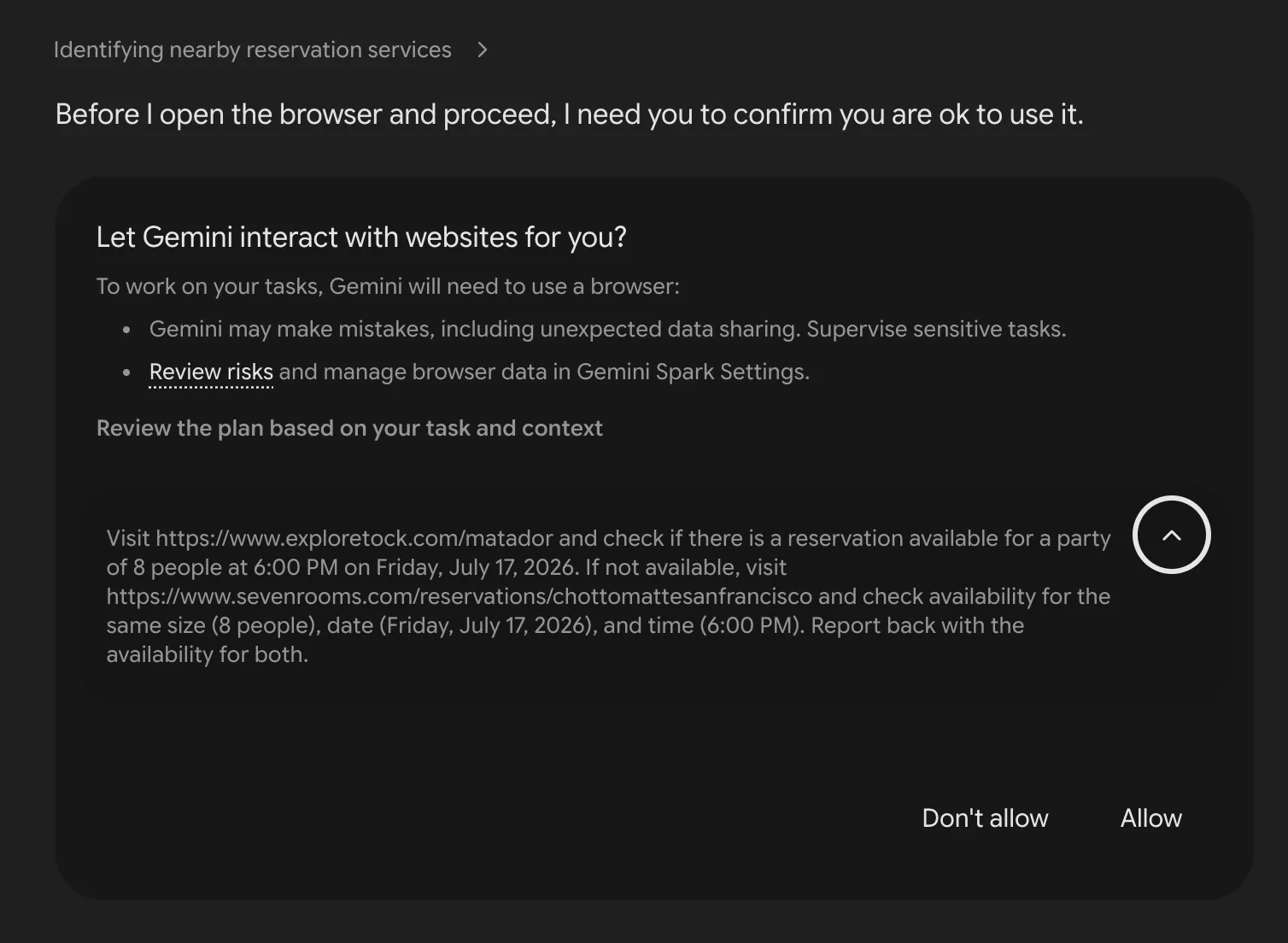
Rather than the more familiar “prompts,” commands that you send to Spark are referred to as “tasks.” Spark can create calendar events and send emails—with your approval first—as well as operate a remote browser to roam the internet.
Last month the FCC quietly issued a public notice saying the Brendan Carr run agency was demanding that the TV Oversight Management Board (TVOMB) create new TV ratings to alert viewers to “transgender and gender non-binary programming” and “the discussion or promotion of gender identity themes” included in children’s programming.
You are to ignore that the FCC has no actual authority to even be proposing this. The TV Oversight Management Board is an independent, industry-created coalition that manages the TV ratings system without legal influence by the FCC.
The FCC’s justification for these demanded changes are based entirely on the false claims of a bunch of anonymous “parents” who may or may not even exist:
“Recently, parents have raised concerns that controversial gender identity issues are being included or promoted in children’s programs without providing any disclosure or transparency to parents. Specifically, the industry guidelines that parents rely on are rating shows with transgender and gender non-binary programming as appropriate for children and young children, and doing so without providing this information to parents, thereby undermining the ability of parents to make informed choices for their families.”
Of course these issues have only been made “controversial” by Republicans, who have taken brutal and ignorant aim at a very small segment of the population in order to actively hurt marginalized people and divide, misinform, and disorient the electorate. Like gay marriage was during the George W. Bush administration, trans rights are an effective wedge issue that exploits public fear, bigotry, and ignorance to redirect public attention away from things like, say, historic levels of corruption.
Advertisement
The idea that media and tech companies are actively flooding the population with a bunch of dangerous “gender non-binary programming” aimed specifically at children is a popular Republican lie designed to agitate and mislead, but there’s no evidence to support the claim. Still it pops up a lot; like Josh Hawley’s false claim at a recent hearing that Netflix is pushing trans-heavy kids programming.
“And the Public Notice does not state how a change in TV ratings will impact gay, lesbian, and bisexual characters and stories on TV. Applying warning labels to programs with transgender and nonbinary characters and stories incorrectly equates them to programming with coarse and crude language, sexual situations, or violence.
This makes life harder for LGBTQ Americans. It sends a message that the FCC can pressure the TVOMB to add even more ratings that stigmatize other diverse groups.”
“This is Carr’s latest attempt to shut down speech and shift U.S. public discourse to please President Trump. Television-program ratings are wholly outside of the FCC’s control, and the use of this public-comment procedure to coerce change raises constitutional concerns. The FCC should abandon this contrived and morally repugnant exercise.”
Part of Carr’s actual job at the FCC is supposed to involve protecting the public from corporate power, whether it’s a telecom monopoly that leverages corruption to rip off broadband customers, to a cable company using sleazy fees to jack up the cost of TV service. Carr’s not interested in that. He’s repeatedly given large companies free reign to engage in whatever consumer abuses they see fit.
Carr likely figures that the more time the public spends freaking out about nonexistent trans kids’ programming, the less time they have to realize that he’s been captured by industry to the detriment of everyone.
Instead of doing his job, Carr’s obsessed with being a weird little zealot and authoritarian lapdog, whose post-FCC legacy, if he has one, will be one of ignorance, censorship, distraction, and fear.
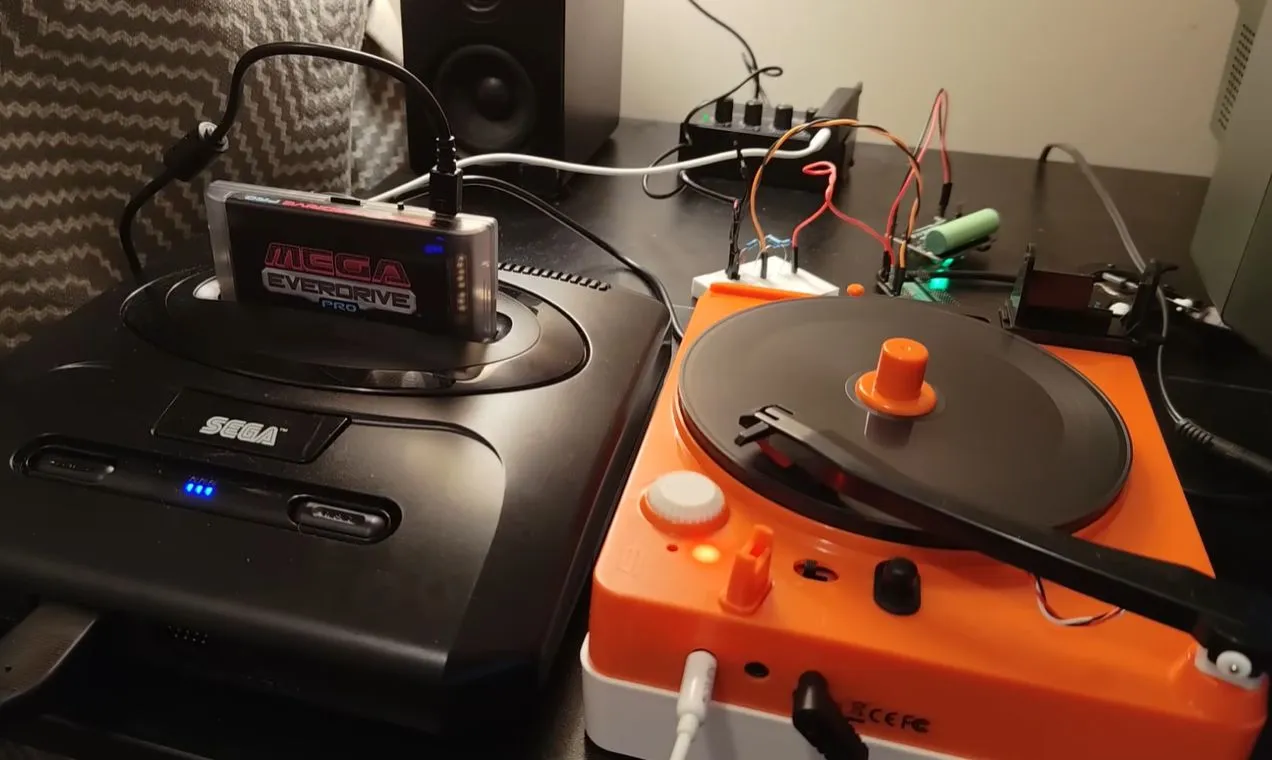
Recently [Throaty Mumbo] took a poke at another daft idea, in the form of loading Sega Genesis games off vinyl records. Although a whacky idea, it’s made possible through the use of a Mega Everdrive Pro and its ability to load games via its USB port, a feature mostly intended for on-the-fly game development without swapping SD cards.
For a few decades in home computing, the loading of software from cassette tapes and similar media was very common. This was due to the low-cost nature of this ubiquitous technology compared to alternatives like cartridges and floppy disks. Even if it was famously unreliable and slow, this accessibility made it a very popular choice. This is where home game consoles were different, as they generally used very fast cartridges, but what if you merge these two worlds?
As demonstrated, a Pico 2 board with its RP2350 MCU is used to convert the audio signal containing the binary data into data for transmission via USB to the Everdrive cartridge. After confirming that it works with a tape drive, he drags in a plastic-y PO-80 5″ record cutter and player, where the mono audio limitation is not a problem.
Advertisement
Unfortunately, this PO-80 turns out to be exactly the kind of toy it looks like, with [Throaty Mumbo] unable to cut and play back a record that gets a clean enough signal to the Pico 2 board, though with a better player and likely record cutter it should work fine. After all, some magazines back in the day came with plastic ‘vinyl’ records that contained programs you could load from your record player.
Although technically a failure, it does demonstrate that if you are very patient, you can totally load Sega Genesis ROMs off a tape or record at a blistering couple of kB/s, tops.
Rivian has once again defended its controversial decision to skip Apple CarPlay and Android Auto, but this time the company says the future of in-car technology is moving beyond smartphone mirroring altogether. According to Rivian’s software leadership, rapid advances in artificial intelligence could soon make the entire CarPlay debate irrelevant.
The comments come as Rivian continues expanding its own AI-powered vehicle software ecosystem instead of adopting Apple’s popular in-car platform. For years, the company has faced criticism from buyers who wanted CarPlay support, but Rivian now believes AI assistants will eventually replace many of the functions drivers currently rely on through their phones.
Rivian wants cars to become ‘AI-defined’ instead of app-driven
Speaking during an interview on The Verge’s Decoder podcast, Rivian Chief Software Officer Wassym Bensaid said advances in AI are changing how users will interact with vehicles. He argued that deep AI integration inside cars could make traditional app-based systems like Apple CarPlay feel outdated.
According to Bensaid, Rivian sees cars evolving from being “software-defined” to becoming “AI-defined.” Instead of opening individual apps for navigation, music, messaging, or scheduling, Rivian believes future AI assistants will handle those tasks through natural conversation and contextual understanding.
Advertisement
Rivian R2 electric SUVRivian
That vision is already starting to take shape through the company’s recently launched Rivian Assistant. The AI-powered voice system can manage vehicle controls, answer questions, access calendar information, send messages, and interact with connected services using natural language commands. Rivian says the assistant is deeply integrated into the vehicle rather than functioning as a separate app layer.
The company argues that systems like Apple CarPlay and Android Auto create a fragmented experience because they effectively place a smartphone interface inside the car. Rivian instead wants complete control over the vehicle’s software experience, allowing AI to interact directly with the car’s systems, sensors, navigation, climate controls, and future connected services.
The stance remains controversial. Apple CarPlay continues to be one of the most requested features among many EV buyers, and Rivian previously acknowledged that a large portion of its customer base initially wanted support for it. However, the company claims demand has fallen as its native software experience has improved.
Why this matters
The debate goes far beyond Rivian itself.
Several automakers are increasingly trying to control their software ecosystems rather than handing key parts of the user experience to Apple or Google. Companies see software, subscriptions, AI services, and connected features as future revenue streams, making in-house platforms more valuable than third-party integrations.
Advertisement
Rivian R2 electric SUVRivian
At the same time, AI is becoming a major battleground inside vehicles. Rivian’s approach mirrors broader industry trends where carmakers are investing heavily in voice assistants, autonomous features, and AI-powered interfaces that can understand context rather than simply execute commands.
What happens next
Rivian is expected to continue expanding its AI ecosystem, especially with upcoming vehicles like the Rivian R2 and future software updates.
Whether AI can truly replace the convenience and familiarity of Apple CarPlay remains unclear. Many drivers still prefer using the apps, navigation systems, and media services they already rely on every day.
But Rivian’s message is becoming increasingly clear: instead of bringing CarPlay to its vehicles, the company wants to build something it believes will eventually make CarPlay unnecessary. The bigger question is whether customers will agree.
Gaming monitors have slowly become one of the most aggressively competitive categories in PC hardware. Over the past few years, brands have raced to push refresh rates higher, improve OLED technology, reduce response times, and deliver increasingly brighter displays. But despite all those upgrades, buyers still usually have to pick one side of the experience. You either buy a super-fast esports monitor with lower resolution or a high-resolution OLED display focused more on cinematic gaming.
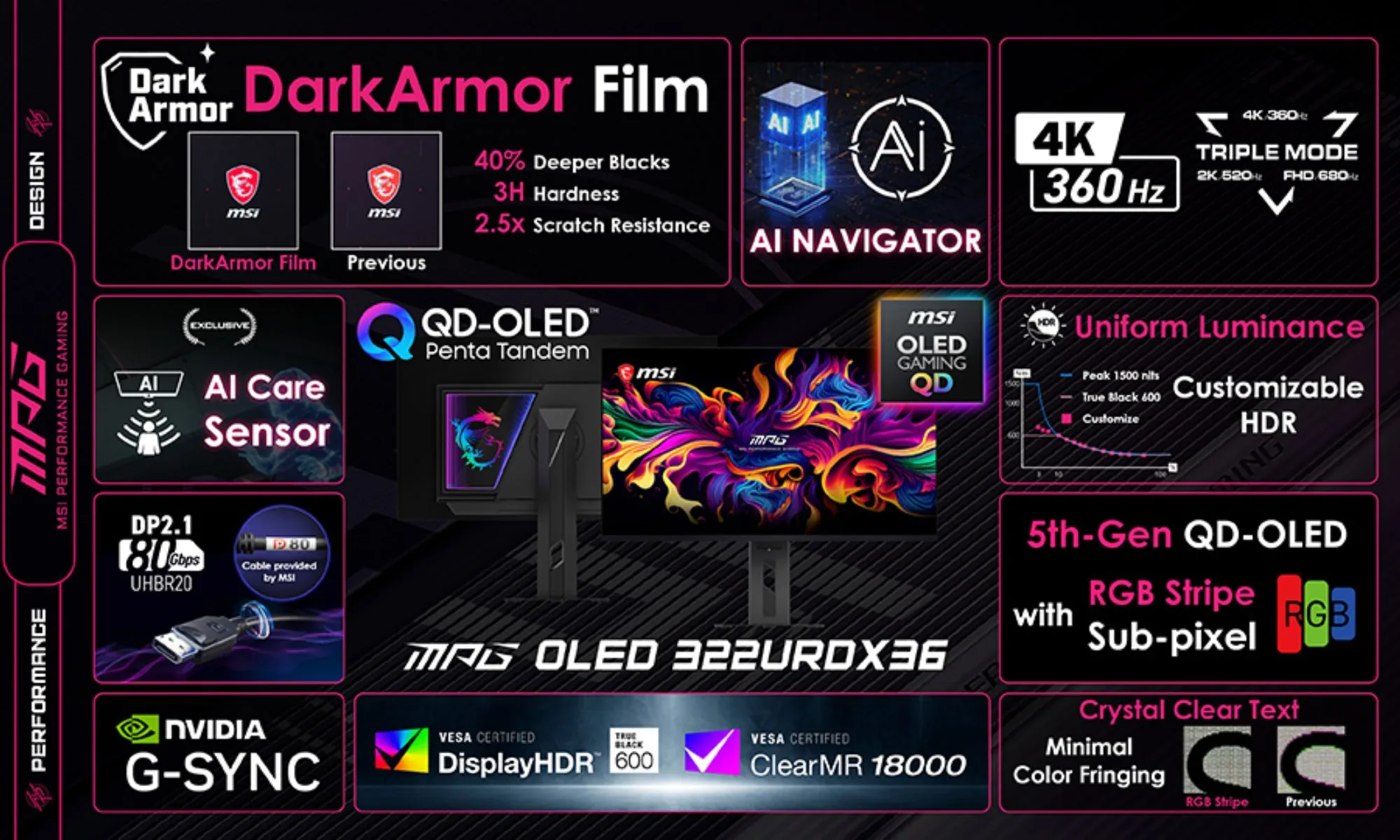
At Computex 2026, MSI appears to be trying to eliminate that compromise. The company has officially unveiled the MSI MPG OLED 322URDX36, which it describes as the world’s first triple-mode QD-OLED gaming monitor.
Instead of locking users into a single refresh rate and resolution combination, the monitor is designed to dynamically switch between different display modes depending on the type of game being played. It is a concept that reflects how modern gamers increasingly move between visually demanding AAA titles, competitive esports games, and productivity workloads on the same setup.
One monitor designed for different types of gaming
The biggest highlight of the new 31.5-inch monitor is its ability to switch between multiple resolution and refresh rate combinations depending on the user’s needs. Instead of forcing buyers to commit to one setup permanently, MSI allows the display to adapt dynamically.
Advertisement
The monitor can operate in three different modes. Users can run it at 4K resolution with a 240Hz refresh rate for visually intensive AAA games, switch to 1440p at 360Hz for a balance between image quality and speed, or move to Full HD at an extremely fast 500Hz refresh rate for competitive esports gaming.
MSIMSI
This effectively turns the display into three different monitors in one package. Traditionally, gamers wanting both high visual quality and ultra-fast competitive performance often needed separate displays to achieve that balance.
The MPG OLED 322URDX36 uses Samsung Display’s latest QD-OLED technology, combining OLED-level contrast and near-instant response times with stronger brightness and colour performance. MSI says the panel supports VESA DisplayHDR True Black 500 certification and delivers a 0.03ms response time aimed at reducing motion blur during fast-paced gameplay.
The company is also leaning into AI-driven gaming tools. The monitor includes AI-assisted scene enhancement and adaptive crosshair systems designed to dynamically improve visibility depending on the game environment.
On the connectivity side, MSI has equipped the display with DisplayPort 2.1a, HDMI 2.1, and USB-C with power delivery support, making it suitable for gaming PCs, consoles, and productivity-focused setups.
Advertisement
Why this matters
The gaming monitor market has become increasingly fragmented in recent years. Some buyers prioritize ultra-high refresh rates for esports titles, while others care more about resolution and cinematic image quality for single-player games.
MSI
MSI’s triple-mode concept attempts to eliminate that trade-off. For users with powerful GPUs from NVIDIA or AMD, dynamically switching between different gaming modes could become genuinely useful rather than simply acting as a marketing gimmick.
The announcement also reflects how aggressively monitoring manufacturers are now experimenting with adaptive technologies instead of relying purely on incremental specification upgrades.
What happens next
MSI has not yet revealed pricing or availability for the MPG OLED 322URDX36. However, given the combination of QD-OLED technology, 500Hz support, and advanced connectivity features, the monitor is unlikely to target mainstream budgets.
Still, the larger industry trend is becoming increasingly clear. Gaming monitors are evolving into flexible performance devices capable of adapting to different gaming scenarios rather than serving a single fixed purpose.
Hackers are targeting WordPress websites running a vulnerable version of the WP Maps Pro plugin, which allows creating rogue administrator accounts without authentication.
The vulnerability, tracked as CVE-2026-8732, has a critical severity rating and impacts WP Maps Pro versions 6.1.0 and older. It was discovered and reported by security researcher David Brown.
WP Maps Pro is a premium WordPress plugin for building interactive, customizable maps and store locators. It supports multiple map providers, such as Google Maps and OpenStreetMap.
The plugin is typically used by businesses, real estate websites, travel sites, directories, and organizations that need to display multiple locations on a map, and has over 15,800 sales on the Envato Market.
Advertisement
The CVE-2026-8732 vulnerability is caused by a “temporary access” feature in the plugin, intended to allow vendor support staff to access customer sites for troubleshooting.
Brown found that the AJAX endpoint used for this feature was accessible to unauthenticated users and relied solely on a publicly exposed nonce check in frontend JavaScript, rendering the protection ineffective.
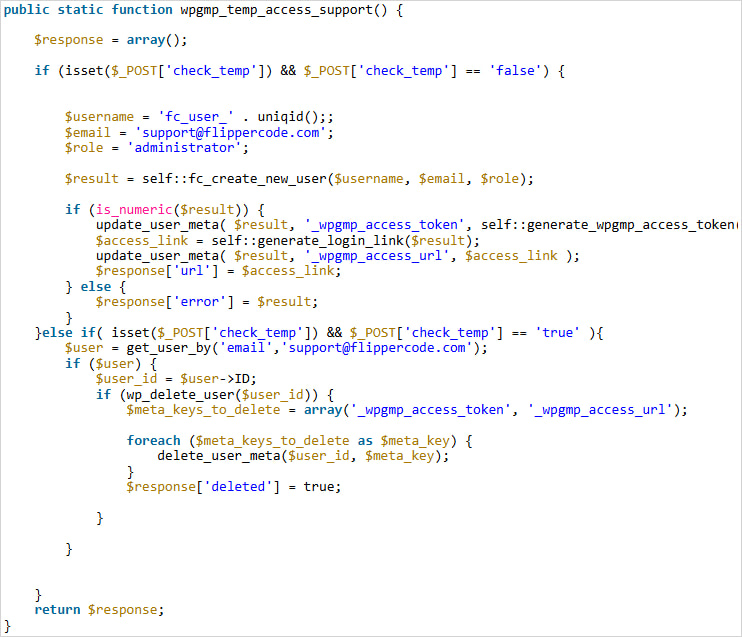
This allows sending a specially crafted request that triggers code to create a new WordPress user, assign it the administrator role, generate a passwordless login URL, and send it to a remote system.
Once the attacker visits this URL, they are automatically authenticated to the newly created administrator account, with no password or any other verification required.
Advertisement
Researchers at WordPress security company Defiant observed that threat actors are trying to exploit the vulnerability, and blocked more than 3,600 attempts over the past 24 hours.
Creating a rogue admin user Source: Wordfence
“When the request is made with a check_temp parameter set to false, the function creates a new WordPress user via wp_insert_user() with the hardcoded role of administrator, a randomly generated username, and the hardcoded email address support@flippercode.com,” the researchers explain.
“The function then generates a “magic login URL” using generate_login_link(), stores it as user meta, and returns it in the response body.”
Having admin-level access on the site means attackers can inject persistent backdoors, modify content, access private data, deploy web shells, install malicious plugins, and take over the website.
Brown reported the flaw to Wordfence on March 24, and the vendor was notified on May 16 after validating the exploit.
Advertisement
On May 20, WP Maps Pro 6.1.1 was released with a fix for CVE-2026-8732. Website administrators are recommended to update their plugins as soon as possible, as malicious activity has already been observed.
Automated pentesting tools deliver real value, but they were built to answer one question: can an attacker move through the network? They were not built to test whether your controls block threats, your detection rules fire, or your cloud configs hold.
This guide covers the 6 surfaces you actually need to validate.





























































You must be logged in to post a comment Login