

Business
India-Oman CEPA kicks in June 1: What gets cheaper, which sectors gain, and key benefits explained



INDIA’S EXPORTS GAINS
Engg goods, pharma, agri & processed food, marine products, textiles, chemicals, electronics, plastics, gems & jewellery
DUTY FREE EXPORTS
- Natural honey, cashew, boneless meat, bakery products
- Chocolate, sugar confectionery, mineral wate
- Cheese, curd, milk, cream, frozen fish, butter
- Animal & vegetable fats and oil
- Oman levies 5-100% duty at present
- Zero-duty access, consolidates India’s 98.3% share, making Oman India’s largest export destination for eggs
MOBILITY, SERVICES GAINS

- Enhanced mobility for Indian Professionals
- Temporary stay commitments for intra-corporate transferees, contractual service suppliers, business visitors, independent professionals
- Liberalised entry, stay for professionals in accountancy, taxation, architecture, medical
- Commitment on 100% FDI for Indian cos in major services sectors
- First-ever commitment by any country on traditional medicine
- Fast tracking of marketing authorisations for USFDA, EMA, UKMHRA-approved pharma products
WHAT BECOMES CHEAPER FOR INDIA
- Dates: Duty-free access to 2,000 tonnes of Omani dates annually
- Concessions to Oman’s Gum Arabica (used in food, medicines), Frankincense used in perfume sector
- Petrochemicals, Marble blocks

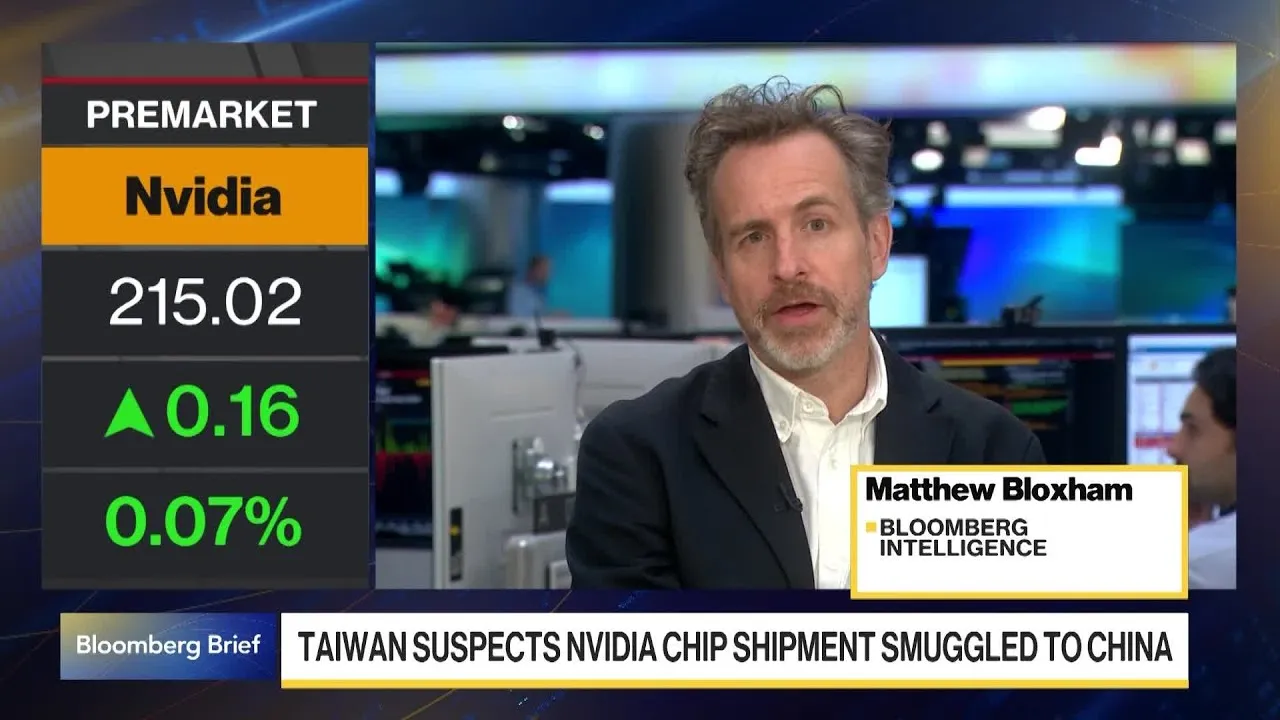
Taiwan prosecutors suspect three individuals successfully smuggled at least one shipment of Nvidia AI chips to China. The suspects reportedly used deceptive methods in the transfer process, raising concerns over technology security and intellectual property violations. An investigation is ongoing to determine the full extent of the smuggling operation and potential regulatory breaches.
Authorities in Taiwan suspect that a shipment of Nvidia AI chips was smuggled into China, raising concerns about potential technology leaks and national security. The investigation was prompted after customs officials detected irregularities in the export documentation of the high-performance chips, which are crucial for artificial intelligence applications. These chips are highly sought after for their advanced capabilities and are often targeted for smuggling to benefit competitors or unauthorized entities.
The suspected smuggling operation highlights the growing complexities of international technology trade and security. Taiwan, a major hub for semiconductor manufacturing, closely monitors the export of sensitive technology to prevent misuse or unauthorized transfer. The government has vowed to strengthen controls and collaborate with international partners to prevent similar incidents in the future.
This incident underscores the broader geopolitical tensions surrounding technology and innovation. As countries compete for technological dominance, safeguarding intellectual property and preventing unauthorized exports become increasingly critical. Authorities continue to investigate the case, aiming to ensure the integrity of Taiwan’s high-tech industry and prevent technological espionage.
Other People are Reading


Visits to restart at New Jersey migrant detention center as police expand restricted area


Colombians weigh leftist reforms against right-wing crackdowns in presidential vote

Draganfly: Drone Hype Is Outrunning Fundamentals


Syria’s Sharaa holds phone call with Trump, Syrian presidency says
Business
Localisation lens on 500 most-imported items: DPIIT analysing data; move aims to reduce country’s import bill

The commerce and industry ministry is collating data from different ministries on import dependence, estimated time and capital investment required to achieve commercially viable domestic manufacturing capability, and national strategic relevance of these products, officials privy to the development said.
The idea is to reduce the country’s import bill and build supply resilience amid the ongoing West Asia crisis.
The Department for Promotion of Industry and Internal Trade (DPIIT) is “analysing data such as production capacity and bottlenecks faced by industry,” one of the officials said.
The department has sought information such as the extent to which domestic demand for the product is met through imports, indicating vulnerability to external supply and the need for localisation, and the importance of the product in ensuring continuity, resilience, and stability of domestic manufacturing and essential downstream sectors.
The exercise also covers harvester-threshers, parts of turbo jets and certain graphite, officials said.
DPIIT is likely to shortlist around 100 items where the imports are high but the country has capacity to produce them locally, another person aware of the development said.
High import dependence means where 60% or more of the domestic demand for the product is met through imports while medium is where imports are 30-60%.
“Electronics and chemicals are two key sectors where imports are huge but the potential to export is also significant,” another official said.
India’s goods import bill stood at $774.98 billion in FY26, led by oil at $174 billion, electronics at $116.17 billion, and gold at $72 billion. The country also imported organic and inorganic chemicals worth $28 billion last fiscal.
Makeup preparations, dishwashers, industrial valves and certain silicon wafers also figure in the list of the products whose imports are being studied.
The exercise comes after Prime Minister Narendra Modi urged citizens to help preserve foreign exchange and contain the country’s rising import bill amid the ongoing conflict in West Asia.


Envision Research, aka Lucas Ma, has over 20+ years of investment experience and holds a Masters with in Quantitative Investment and a PhD in Mechanical Engineering with a focus on renewable energy, both from Stanford University. He also has 30+ years of hands-on experience in high-tech R&D and consulting, housing sector, credit sector, and actual portfolio management.He leads the investing group Envision Early Retirement along with Sensor Unlimited where they offer proven solutions to generate both high income and high growth with isolated risks through dynamic asset allocation. Features include: two model portfolios – one for short-term survival/withdrawal and one for aggressive long-term growth, direct access via chat to discuss ideas, monthly updates on all holdings, tax discussions, and ticker critiques by request.
Analyst’s Disclosure: I/we have no stock, option or similar derivative position in any of the companies mentioned, and no plans to initiate any such positions within the next 72 hours. I wrote this article myself, and it expresses my own opinions. I am not receiving compensation for it (other than from Seeking Alpha). I have no business relationship with any company whose stock is mentioned in this article.
Seeking Alpha’s Disclosure: Past performance is no guarantee of future results. No recommendation or advice is being given as to whether any investment is suitable for a particular investor. Any views or opinions expressed above may not reflect those of Seeking Alpha as a whole. Seeking Alpha is not a licensed securities dealer, broker or US investment adviser or investment bank. Our analysts are third party authors that include both professional investors and individual investors who may not be licensed or certified by any institute or regulatory body.
FOX Business’ Kelly O’Grady discusses fast food chain deals for National Burger Day and how they are offering discounts amid surging prices.
Burger King is bringing back its Crown Nuggets for the first time in 15 years, reviving a nostalgic menu item that fans have repeatedly pushed the fast-food chain to restore.
The crown-shaped chicken nuggets will return to Burger King restaurants nationwide starting June 2 and will be available while supplies last, the Miami-based company announced this week. The rollout marks the first time the nuggets have appeared on menus since 2011.
“We’ve been committed to creating awesome experiences for the whole family and listening to our Guests, and bringing back our Crown Nuggets allows us to do both of those things,” Burger King‘s Chief Marketing Officer Joel Yashinsky said in a statement.
“And, by partnering with Crayola, the brand known for inspiring creativity and imagination to generations of families, we’ve created a King Jr. Meal experience that brings more fun and interaction to mealtime for Guests of all ages.”
BURGER KING MAKES CHANGES TO SIGNATURE WHOPPER FOR FIRST TIME IN NEARLY A DECADE
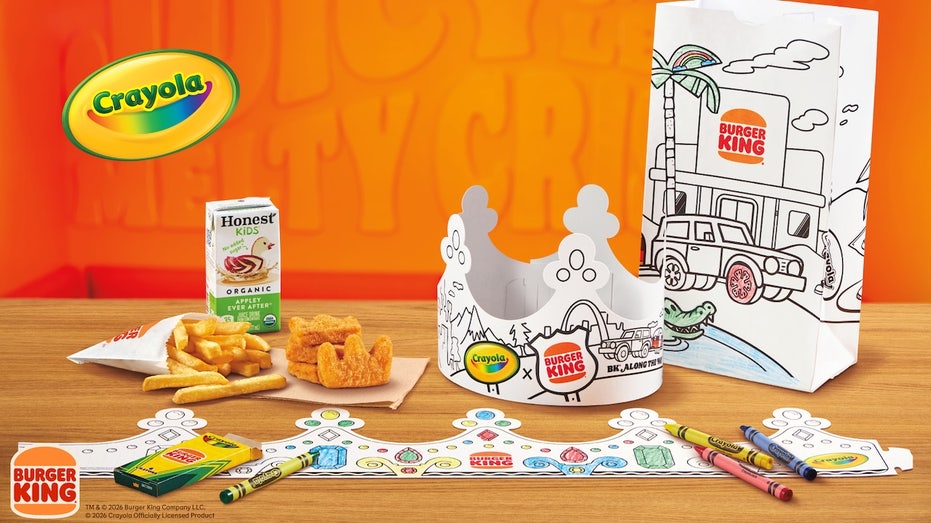
Burger King has worked to return to some of its roots in a retro marketing campaign this year. (Burger King / Unknown)
Starting June 9, the limited-time kids meal will include a co-branded 4-pack of Crayola crayons, a colorable crown and a meal bag. The nuggets will be available as an 8-piece order and as part of Burger King’s $3.99 King Jr. Meal, which comes with a side and a drink.
“Crayola has always been focused on creating fun for the whole family, making this partnership with Burger King a natural fit,” Crayola’s Head of Global Partnerships Anna Roca said in a statement. “Together, we’re creating moments that encourage families to be engaged, get creative and make everyday mealtime experiences even more colorful.”
WISCONSIN DEMANDS $1M FROM BURGER KING FRANCHISEE OVER ALLEGED VIOLATIONS
| Ticker | Security | Last | Change | Change % |
|---|---|---|---|---|
| QSR | RESTAURANT BRANDS INTERNATIONAL INC. | 74.70 | +0.39 | +0.52% |
| MCD | MCDONALD’S CORP. | 279.20 | +1.23 | +0.44% |
| WEN | THE WENDY’S CO. | 7.70 | +0.20 | +2.67% |
| SHAK | SHAKE SHACK | 64.31 | +2.18 | +3.51% |
| RRGB | RED ROBIN GOURMET BURGERS INC. | 5.06 | +0.25 | +5.20% |
| BYND | BEYOND MEAT INC. | 0.79 | -0.03 | -3.88% |
Customers greeted the announcement as a long-awaited comeback.
“I miss them so much,” one fan wrote on Reddit.
Another celebrated the return with a “we are so back.”
NAKED MAN FOUND BEHIND BURGER KING WITH AMNESIA MAY HAVE HIDDEN MYSTERIOUS PAST FOR DECADES
Here are 10 things you probably didn’t know about Burger King
The Crown Nuggets comeback comes during a year of menu and branding moves for Burger King. Earlier this year, the chain announced updates to its signature Whopper, including a new bun and packaging, saying the changes were based on customer feedback rather than a full reinvention of the burger.
“We fired the king and crowned you,” an ad campaign said in hailing the return to its roots.
GET FOX BUSINESS ON THE GO BY CLICKING HERE
Burger King, founded in 1954, operates more than 19,000 restaurants in more than 120 countries and U.S. territories, with most locations owned by independent franchisees.
Rupee under pressure, but RBI unlikely to rush into rate hikes

‘The Big Money Show’ breaks down new IRS migration data, revealing where Americans are moving, where wealth is growing and which states are losing economic influence.
Americans are voting with their feet, leaving high-tax blue states for lower-cost, Republican-led states and reshaping the nation’s economic and political map, according to new Census Bureau data.
As states battle for residents and businesses, low-tax red states are attracting jobs, investment and population growth. Democratic-led states continue relying on higher taxes to fund public services and social programs, even as companies and wealthy residents move elsewhere.
With affordability set to dominate the 2026 midterms, the migration trend points to continued appeal for Republican-backed economic policies, despite Democrats’ attempts to pin economic frustrations on President Donald Trump.
If the trend persists, it could also reshape the political landscape, increasing the influence of faster-growing states in both state capitals and Washington.
AMERICA’S NEXT ECONOMIC POWERHOUSE MAY BE RISING IN RED-STATE TERRITORY

New Census Bureau data show ongoing migration from high-tax states to lower-cost states. (Smith Collection/Gado/Getty Images / Getty Images)
Census Bureau data show the nation’s highest-tax states are losing residents, while Southern and Sun Belt states continue posting some of the strongest population gains. Seeking lower housing costs, lighter tax burdens and a more affordable cost of living, Americans are increasingly leaving high-cost coastal states that have seen domestic outmigration accelerate in recent years.
The migration shift reflects a broader divide over taxation and government spending.
New York collected more state and local taxes per resident than any other state in fiscal year 2023, at $12,506, according to Census Bureau data. Democratic-led Connecticut, New Jersey and California also ranked among the nation’s most heavily taxed states.
Connecticut collected $9,388 in state and local taxes per resident, while New Jersey collected $9,178. Many of those states rely on progressive income tax systems to fund public schools, mass transit and other government services.
THE RED STATES RACING AHEAD IN AMERICA’S POWERFUL WEALTH BOOM — AND THE STATES FALLING BEHIND
By contrast, Mississippi, Tennessee and Alabama ranked among the lowest in per-capita tax collections, reflecting a governing philosophy centered on lower taxes and a lighter burden on residents and businesses.
That approach appears to be attracting both people and investment. Several Republican-led states have embraced aggressive tax-cutting strategies aimed at drawing workers, retirees and businesses.
Tennessee has no state income tax, while Arizona recently adopted a flat tax. Mississippi and South Carolina have enacted multi-year tax-cut plans and are pursuing the eventual elimination of their state income taxes altogether.
Supporters of the lower-tax approach argue it has helped drive migration to the South and Sun Belt, particularly as remote work gives Americans more flexibility over where they live and businesses greater freedom over where they invest.
CLICK HERE TO GET FOX BUSINESS ON THE GO
‘The Big Money Show’ panelists weigh in on U-Haul’s 2025 ‘Growth Index’ and the exodus from blue states to red states.
Critics counter that lower-tax states may struggle to keep pace with infrastructure needs and public services as their populations expand.
As Americans continue voting with their feet, the growing divide between red- and blue-state fiscal models is emerging as one of the nation’s defining economic and political fault lines.

6 Most Perfect Marilyn Monroe Movies, Ranked

When The Promised Financial Genius Crashes Your Economy

Trump Slams ‘Third Rate’ Artists Dropping Out Of Freedom 250 Concert


-

 NewsBeat4 days ago
Israel says it has killed new Hamas military leader in Gaza City airstrikes
-

 Tech5 days ago
NASA taps Blue Origin to deliver lunar rovers for Moon Base initiative
-

 Politics6 days ago
Bridgerton Season 5: Cast, Release Date And Everything We Know So Far
-
 Crypto World7 days ago
Brian Armstrong Outlines Crypto Vision for the Future Financial System
-

 News Videos5 days ago
XRP *JUST* SUCCEEDED!!!! CLARITY ACT EXPOSED!!! (SHE EXPOSED IT)
-

 Sports6 days ago
2026 NBA Finals schedule, odds: Knicks await Thunder or Spurs after winning East
-
Crypto World5 days ago
Micron Crosses $1 Trillion Market Cap as AI Demand Reshapes Memory Sector
-

 Business5 days ago
Selena Gomez Reportedly Upset Over Benny Blanco’s Comments on Her ‘Terrible’ Diet
-

 News Videos2 days ago
This is BROKEN! INSANE 5x MONEY CAR WASH WEEK! The NEW GTA Online UPDATE Today! (GTA5 New Update)
-

 Business6 days ago
BTS Sells Out Four Las Vegas Shows at Allegiant Stadium for ARIRANG World Tour
-
 Tech6 days ago
China assigns ID codes to 28,000+ humanoid robots
-
 NewsBeat6 days ago
Hottest May day ever as London hits 34.8C in 2C leap from previous records
-

 Tech6 days ago
Microsoft’s quiet Claude Code retreat and the real cost of enterprise AI
-

 Tech3 days ago
Waymo dominates autonomous vehicle registrations as Tesla trails behind
-

 Business6 days ago
Nikkei 225 Surges Past 65,000 for First Time as Iran Peace Hopes Fuel Record Rally
-
Tech4 days ago
The Samsung pay deal is the moment Korean unions changed register
-

 NewsBeat6 days ago
Crowds find riverside shade in York as temperatures soar
-

 Tech6 days ago
Westone Audio and Etymotic Acquired by Fidelity Collective in Major IEM Market Move
-
 Entertainment6 days ago
‘Breaking Bad’ Star’s Easy-to-Binge 6-Part Crime Series Spin-Off Is Finally Heading to Free Streaming
-

 Tech5 days ago
Millions of AI agents imperiled by critical vulnerability in open source package
You must be logged in to post a comment Login