Connect with us
DAPA Banner
DAPA Coin
DAPA
COIN PAYMENT ASSET
PRIVACY · BLOCKDAG · HOMOMORPHIC ENCRYPTION · RUST
ElGamal Encrypted MINE DAPA
🚫 GENESIS SOLD OUT
DAPAPAY COMING

Tech

Week in Review: Most popular stories on GeekWire for the week of May 24, 2026

Published

on

Get caught up on the latest technology and startup news from the past week. Here are the most popular stories on GeekWire for the week of May 24, 2026.

Sign up to receive these updates every Sunday in your inbox by subscribing to our GeekWire Weekly email newsletter.

Most popular stories on GeekWire

Source link

Continue Reading
Click to comment

You must be logged in to post a comment Login

Leave a Reply

Tech

China just told its tech giants to stop fighting on price and start investing in AI

Published

on

TL;DR

A top Communist Party journal told China’s platforms to stop price wars and invest in AI. The signal suggests regulatory stabilisation after years of crackdowns.

A top-level Communist Party publication has signaled a shift in how Beijing intends to govern its largest internet platforms. A draft commentary set to appear in the Qiushi journal on Monday says the focus will be on balancing support for growth with enhanced regulatory oversight. The message is directed at companies including Alibaba, Meituan, and PDD Holdings.

The guidance reiterates Beijing’s stance on curbing “involution-style” competition, a reference to the price wars and aggressive subsidies that have defined Chinese e-commerce in recent years. Platforms are told to compete on value, not on who can lose money the fastest. The commentary also calls for stronger oversight of algorithms, data use, and consumer protection.

The more significant signal is what the commentary encourages. Platform companies are told to increase investment in strategic technologies, specifically artificial intelligence and cloud computing. Beijing is pointing its tech giants toward higher-value growth areas and away from the subsidy-fuelled margin destruction that has characterised the sector.

Advertisement

The healthy development of the sector depends on a sound governance system and effective regulatory measures,” the commentary says. “The irregularities seen in China’s platform economy are partly linked to the fact that regulatory and governance frameworks have yet to fully adapt to its characteristics.

Advertisement

The policy follows years of sustained scrutiny. Alibaba was fined $2.8 billion in 2021. Didi was forced to delist from the New York Stock Exchange. Meituan faced antitrust investigations. PDD’s Temu has been under pressure over merchant fees and pricing practices. The regulatory crackdown wiped hundreds of billions of dollars from Chinese tech market capitalisations between 2021 and 2023.

The Qiushi commentary suggests Beijing is moving from crackdown to calibration. The regulatory backdrop is stabilising, but compliance costs are rising and operational constraints are tightening. Platforms get permission to grow again, with conditions.

Chinese AI companies are already competing aggressively on price. DeepSeek permanently cut its V4 Pro model pricing by 75% this week, undercutting every Western frontier model. The Qiushi commentary’s call for AI investment aligns with a broader national strategy to dominate the AI stack from models to chips to applications.

China’s technology exports are expanding simultaneously across multiple fronts. BYD, Chery, and Geely are entering Canada. Xiaomi shipped 600,000 EVs in under two years. CXMT’s DRAM is appearing inside Corsair kits. The platform regulation signal is one piece of a broader industrial policy that encourages Chinese companies to invest in strategic technologies at home while competing globally.

Advertisement

For investors, the message is cautiously positive. The crackdown era appears to be over. Alibaba’s stock has recovered significantly from its 2022 lows. But the new framework means higher compliance costs, tighter algorithm transparency requirements, and an end to the subsidy-driven growth models that built Pinduoduo and Temu. The companies that redirect spending from price wars to AI will be rewarded. Those that do not will face regulatory pressure.

The Qiushi journal is the Communist Party’s premier theoretical publication. Commentary published in it reflects official policy direction rather than speculative opinion. When it tells China’s platforms to stop fighting on price and start investing in AI, the platforms listen. The question is whether the investment produces innovation or compliance theatre. Beijing is betting on the former.

Source link

Advertisement
Continue Reading

Tech

Moore's law is hitting a wall, so researchers are stacking silicon chip layers instead of shrinking them

Published

on


At the Grainger College of Engineering, materials science and engineering professor Qing Cao and his team have built working silicon circuits by stacking active layers directly on top of each other. Instead of adding more devices side by side, they are moving into the third dimension and building stacked layers…
Read Entire Article
Source link

Continue Reading

Tech

Claude Mythos exposed a hard truth: Your enterprise patching process is way too slow

Published

on

In 2024, researchers from the University of Illinois found that GPT-4, when provided with a common vulnerabilities and exposures (CVE) description, could autonomously exploit 87% of a curated 15-vulnerability one-day dataset. Without the description, it could only exploit 7%. This provided a “margin of safety” for the industry because while AI could exploit known vulnerabilities, it could not discover them.

However, on April 7, Anthropic announced that Claude Mythos Preview had closed that margin, with the model autonomously discovering thousands of zero-day vulnerabilities across major operating systems and browsers. Separately, Mythos scored 83.1% on the CyberGym vulnerability reproduction benchmark. In one campaign targeting OpenBSD across 1,000 scaffold runs, the total compute cost was less than $20,000.

Exploitation timelines are collapsing. Langflow’s CVE-2026-33017 (CVSS 9.8) was exploited 20 hours after disclosure with no public proof-of-concept. Marimo’s CVE-2026-39987 (CVSS 9.3) was hit in 9 hours and 41 minutes.

The defensive infrastructure most organizations rely on wasn’t designed for this. Rapid7’s 2026 threat landscape report states that the median time from CVE publication to CISA’s known exploited vulnerabilities (KEV) listing is five days. Google’s M-Trends 2026 report found that exploitation is happening before a patch is even released. When the Langflow advisory was published, the first exploit arrived in 20 hours. When the Marimo advisory was published, it took under 10 hours.

Advertisement

The assumption that your patch window is safe because exploitation takes time is no longer true. Here are your building blocks.

Replace CVSS-only prioritization with a three-layer filter

Most vulnerability management programs still prioritize by CVSS score alone. CVSS quantifies a vulnerability’s “theoretical” severity without considering whether a vulnerability is being exploited in the wild or how quickly someone could weaponize it. A CVSS 8.8 vulnerability with a history of active exploitation (like Docker’s CVE-2026-34040) gets lower priority than a CVSS 9.8 vulnerability that may never be exploited in the wild.

A recent study validated against 28,377 real-world vulnerabilities offers a concrete replacement: A three-layer decision tree incorporating CISA KEV status, Exploit Prediction Scoring System (EPSS) scores, and CVSS, thus forming a singular prioritization filter.

Three-Layer Vulnerability Prioritization Filter

Layer

Advertisement

Data source

Threshold

Action

SLA

Advertisement

1. Active exploitation

CISA KEV catalog

Listed

Immediate patching

Advertisement

Hours

2. Predicted exploitation

EPSS via FIRST.org

Score ≥ 0.088

Advertisement

Escalate to Tier 0 pipeline

24 hours

3. Severity baseline

CVSS via NVD

Advertisement

Score ≥ 7.0

Typical remediation

Per policy

Validated result: 18x efficiency gain, 85.6% coverage of exploited vulnerabilities, ~95% reduction in urgent remediation workload. All three data sources are open and free.

Advertisement

The described integration is entirely automatable. It’s possible to build a script to query the CISA KEV API, the EPSS API from FIRST.org, and the NVD, and have that script run against your asset inventory for every published CVE. The human in this process should remain in the loop as an approver, but not as the trigger.

Close the agent authorization gap

Creating exploits quickly not only changes how patches are prioritized, but how controls are configured for all the agent-driven systems that now possess privileged credentials. Your authorization policies have not been assessed against the behavior of AI agents, and that is now a measurable risk. CVE-2026-34040 showed that Docker’s authorization plugin architecture silently bypasses every plugin when the request body exceeds 1MB. Common AuthZ plugins (OPA, Casbin, Prisma Cloud) are unaware of this type of bypass, which occurs in Docker’s middleware before the request reaches the plugin.

When Cyera demonstrated this vulnerability, they showed that an AI agent debugging infrastructure could infer the bypass path while completing a legitimate task, without any instruction to exploit anything.

The Internet Engineering Task Force (IETF) is working on authorization models for agents. The document draft-klrc-aiagent-auth-01, published in March by participants from AWS, Zscaler, Ping Identity, and OpenAI, proposes the use of the current Secure Production Identity Framework for Everyone (SPIFFE) and OAuth 2.0 for AI agents to obtain dynamically provisioned and short-lived credentials.

Advertisement

Separately, the IETF Agent Identity Protocol draft (draft-prakash-aip-00) reports that out of about 2,000 surveyed model context protocol (MCP) servers, none had authentication.

But these standards are months to years away from implementation. For now, security teams must proactively incorporate agent-level test scenarios for all authorization boundaries, such as oversized requests, burst frequency, and multi-step escalation of privileged requests.

Map your credential blast radius

In a survey conducted by CSA/Zenity and published on April 16, 53% of organizations said they had already seen cases where AI agents exceeded their intended permissions, and 47% experienced a security incident involving an agent.

When AI builder tools such as Flowise (CVE-2025-59528, CVSS 10.0), Langflow, or n8n become compromised, the blast radius extends far beyond the host. These tools contain API keys to frontier models, database credentials, vector store tokens, and OAuth tokens to business systems. A compromised AI builder host is not just a single-system breach. It is a credential harvest that unlocks authenticated access to every connected service.

Advertisement

Without credential dependency maps for each AI tool host, incident response for agent compromise is guesswork. For every instance, document each credential, the extent of its access, and the relevant credential rotation process. Also begin migrating static API keys to short-lived tokens where downstream services allow.

Five actions for this quarter

1. Deploy the three-layer KEV-EPSS-CVSS filter

Substitute CVSS-only prioritization according to the table above. Automate the collection of data from all three APIs as part of a scheduled script against your asset inventory. Desired outcome: 18 times more efficient, 85.6% coverage of exploited vulnerabilities, 95% reduction in urgent remediation workload.

2. Implement event-driven patching for Tier 0 services.

Advertisement

Determine which services fall under the critical exposure tier: Services exposed directly to internet users, AI builder hosts, and container orchestration control plane. Trigger event-driven patching on a CVE publication instead of waiting for the next maintenance window for this tier.

Goal: deploy patch to canary within four hours of a CVE being declared critical. Use the CISA KEV and EPSS feeds to trigger event-driven patching. In situations where it is impossible to meet the goal of four-hour patching because of legacy dependencies, change-freeze windows, or rollback risk, immediately apply compensating controls such as removing internet exposure to the vulnerable service, rotating credentials for the vulnerable service, disabling affected functionality of the service (if applicable), and identifying an exception owner for the exposure until a patch can be deployed.

It is not acceptable to allow unbounded exposures for extended periods while awaiting a maintenance window.

3. Test authorization boundaries at agent scale.

Advertisement

Create test cases for every API that AI agents may communicate with via AuthZ policies. Specifically, include test cases for requests exceeding 1MB, 5MB, and 10MB body sizes. This includes test cases for burst rate > 100 requests per second and test cases for unusual parameter combinations (privileged flags, host mounts, capability additions). Additionally, patch to Docker Engine 29.3.1 to fix CVE-2026-34040.

4. Credential blast radius mapping for all AI builder hosts.

Document each credential for each Langflow, Flowise, n8n, and custom AI pipeline instance. Classify each credential by its lifespan (static key vs. short-lived token). Identify what each credential can access. Set up alerts for anomalous IP or identity for any credential access.

5. Shadow AI discovery scan for this week.

Advertisement

According to CSA data, there is a greater than 50% chance that your agents have exceeded their expected boundaries. Check your Security Information and Event Management (SIEM) and network monitoring tools for communications to the default ports of the AI builder: Langflow 7860, Flowise 3000, and n8n 5678. Any unauthorized instances are an unmonitored attack surface.

The takeaway

AI agents are emerging, and the standards bodies are responding. The IETF has multiple drafts related to agent authentication and authorization. The Coalition for Secure AI has published its MCP Security taxonomy and Secure-by-Design principles.

But these standards move at standards-body speed, and the exploit window is now measured in hours. Organizations that implement the three-layer filter and event-driven patching this quarter will have a measurable reduction in exposure. Those who wait will be running calendar-based patch cycles against an adversary that operates in less than 20 hours. 

Nik Kale is a principal engineer specializing in enterprise AI platforms and security

Advertisement

Welcome to the VentureBeat community!

Our guest posting program is where technical experts share insights and provide neutral, non-vested deep dives on AI, data infrastructure, cybersecurity and other cutting-edge technologies shaping the future of enterprise.

Read more from our guest post program — and check out our guidelines if you’re interested in contributing an article of your own!

Source link

Advertisement
Continue Reading

Tech

Apple Glasses won’t arrive until late 2027, says corroborating leak

Published

on

The Apple smart glasses with cameras and no heads-up display have been rumored for the end of 2026, but could now come at the end of 2027 instead. Though that’s not the whole story.

Rumors about Apple’s smart glasses effort have been increasing in frequency since 2024, but primarily from a single source. One other highly accurate source that has been in play since 2023 has offered a differing timeline, until now.

According to the Bloomberg newsletter “Power On,” Apple is pushing back its smart glasses release to late 2027 after hitting some development snags. While Mark Gurman didn’t offer his usual derogatory pile-on of Apple’s internal struggles, the timeline shift comes as a bit of a surprise.

His initial reports in 2024 around the latest codenamed N50 glasses suggested a 2027 launch window. He later suggested in January 2025 that Apple smart glasses development had hit “massive hurdles” that could take years to get past.

Advertisement

In May 2025, Gurman shared that Apple was aiming for a late 2026 launch window that has been repeated frequently by him since.

He’s also been clear that Apple smart glasses don’t have an AR display, and those would arrive much later. Now, Gurman has been repeating “by the end of the decade,” which, given it is 2026, isn’t exactly that far away.

As recently as February and April 2026, Gurman has repeated that late 2026 release timeline. What is unusual is that there was never any hint of a potential delay or struggle to get the glasses to mass production.

Gold foldable iPhone render standing on a reflective surface beside a small glowing cat-shaped lamp, with warm lighting and wooden background creating a cozy, modern desk scene

iPhone Fold rumors continue to push for a fall release in spite of repeated production issues

Advertisement

Then comes today’s report shifting the release back an entire year. Also in this report is information about the potential design aspects of the smart glasses.

It seems Apple will try to stand out with unique design elements like “oval-shaped cameras, unique colors, and multiple frame styles.” Apple allegedly also believes future iterations could be seen as a health device that could include AR features that help people see.

Meanwhile, Apple has seemingly run into repeated problems getting iPhone Fold to mass production, which hasn’t started, yet it still reportedly isn’t being pushed back.

So, it seems odd that Apple’s timeline would suddenly shift around 8 months out from announcing the product. But then there’s the other leaker’s timeline.

Advertisement

Enter Ming-Chi Kuo

The other leaker I mentioned earlier is Ming-Chi Kuo, and he has been much more reserved in his leaking frequency on Apple smart glasses. While his history is hit and miss, the details he gets right are enough to have earned him quite the respect in the field.

iPhone screen showing connection status for Wes's Apple Glass at 100 percent battery, next to a pair of black smart glasses on a blue gradient background

Apple’s rumored AR glasses have been discussed for years

However, I will note that his accuracy and resources seemed to have dropped since he shifted to his social-media-based leaking patterns of today.

Apple’s AR and VR efforts have been seeing consistent leaks since as early as 2015, but the most recent iteration was discussed by Kuo in 2021. Then, his report was much more forward-looking and thus, wholly inaccurate.

Advertisement

I mean, the man called for Apple Vision Pro in 2022, full-AR Apple Glass in 2025, and AR contact lenses by 2030. It is a wild report in retrospect.

Jump forward to something a little less speculative, and his reporting has been consistent with the Apple smart glasses release window. In June 2025, Kuo reported that Apple was aiming to ship three to five million Meta Ray-Ban-like smart glasses in the second quarter of 2027.

Given Kuo’s strong suit is the supply chain and the fact that he had shipping estimates, it is easy to argue that he’s had the correct timeline all along. So, it is curious that Gurman has been saying late 2026 or early 2027 until today.

Game of leaks

Of course, all of these rumors are nebulous and will always shift and move as new information is obtained. Accuracy isn’t always easy to determine too since the age of a leak once it is released is rarely known.

Advertisement
White Apple Vision Pro headset resting on a wooden table beside a small rectangular device, with a dark couch and patterned blanket softly blurred in the background

Apple Vision Pro is the start of Apple’s work in the wearable AR/VR field

For example, Kuo might have heard from the supply chain that Apple’s supply-side management aimed for an initial order in 2027. Gurman might have heard from his internal source, likely on or near the Vision Product Group, that the internal team’s goals were the end of 2026.

Then, as deadlines were missed and supply chains shifted, the internal team finally realized that their stretch goal wasn’t possible. Which means shifting back to the supply-chain suggested goal of 2027, thus making them meet Kuo’s previously reported timeline.

In essence, both leakers could have accurately reported what they had heard, and both be correct in this instance. Then there’s also the chance they’re both wrong and Apple announces smart glasses at a completely different time.

Advertisement

However, Gurman has proven somewhat unreliable when it comes to reporting around the Vision Product Group. As Daring Fireball pointed out, Gurman completely missed the Apple Vision Pro update to M5 when he reported in January 2025 that “I don’t believe there will be a new headset from Apple this year.”

Then, later in April 2025, Gurman said a lighter Apple Vision product could ship by the end of 2025 or early 2026 and even suggested that the M5 refresh had been abandoned. The unchanged M5 model shipped in October 2025 instead.

There is no doubt that Gurman has some insider connections that give him unprecedented access into Apple’s inner workings. However, it is important to note that he is no foolproof and does make mistakes — often when trying to create a narrative around an otherwise innocuous leak.

Virtual reality home screen showing floating circular app icons arranged in rows against a dark outdoor forest background at dusk, with trees silhouetted and subtle ground details visible

visionOS 27 could hint at Apple’s future AR plans

Advertisement

WWDC is on June 8 and could provide a hint of what the rest of Apple’s year might look like. However, since the initial set of Apple Smart Glasses won’t have a display, there is unlikely to be any sign of them in visionOS 27.

Then there’s the fact that Apple has several glasses-related products in development beyond the N50. Several of which, we have no idea what they are or when they could release.

There’s always the chance that one set is coming at the end of 2026 and another in 2027. Apple’s supply chain is immense and these leakers may be describing different parts of different elephants.

Time will tell if the smart glasses will arrive in the next twelve months. In this case, I’d bet on Kuo’s initial report of a late 2027 launch until he says otherwise.

Advertisement

Source link

Continue Reading

Tech

How to watch USA vs Senegal: Free Streams & TV Channels

Published

on

Watch USA vs Senegal live streams to see if the 2026 World Cup co-hosts can get back to winning ways after two straight defeats. However, it won’t be easy against The Lions of Teranga, who have a point to prove after being controversially stripped of the African Cup of Nations title.

USA manager Mauricio Pochettino made it clear he wanted to test his side against the top teams in the world. So far, it hasn’t gone to plan as they were thrashed 5-2 by Belgium and then lost 2-0 to Portugal. Having been defeated by two European powerhouses, he’ll hope his side can build some confidence by overcoming one of the strongest nations in Africa.

Source link

Advertisement
Continue Reading

Tech

Apple destroyed the mid-tier watch market. Now it’s coming for the $200 billion eyewear industry.

Published

on

TL;DR

Apple plans to disrupt the $200B eyewear market the way it disrupted watches. Swatch fell 28%, Fossil 70%. Smart glasses are targeting late 2027.

When Apple launched the Apple Watch in 2015, the mid-tier wristwatch market had a handful of dominant companies. Swatch Group sold watches under Tissot, Hamilton, and Longines. Fossil Group sold under Michael Kors, Armani, and Kate Spade. Movado sold under Coach, Hugo Boss, and Tommy Hilfiger.

Ten years later, the damage is quantifiable. Swatch’s revenue is 28% lower in 2025 than it was in 2014. Fossil’s sales dropped roughly 70%. Apple became the world’s largest watchmaker by unit volume within a few years and last year overtook Rolex as the number one watch brand by revenue. The Apple Watch now generates an estimated $17 billion annually.

Bloomberg’s Mark Gurman reports that Apple is planning the same playbook for glasses. The company sees the $200 billion global eyewear market as a bigger opportunity than watches and intends to compete directly with products sold between $200 and $500, a segment dominated by EssilorLuxottica (Ray-Ban, Oakley, Persol, Oliver Peoples), Safilo Group (Tommy Hilfiger, Hugo Boss), and Warby Parker.

Advertisement

The addressable market is staggering. The WHO estimates 2.2 billion people globally have some form of vision impairment. Hundreds of millions of pairs of glasses are sold each year. Apple believes its brand, industrial design, iPhone integration, and AI features will lead people seeking new regular glasses to buy an Apple pair instead.

The first Apple glasses, codenamed N50, were initially planned for late 2026 with shipping by early 2027. Delays have pushed the timeline to a launch at the end of 2027, Gurman reports. The product will use oval-shaped cameras, unique colours, and multiple frame styles. Over time, Apple believes the glasses could become a health device and eventually incorporate augmented reality.

Meta has a substantial head start. It sold more than seven million Ray-Ban smart glasses in 2025 and commands roughly 82% of the smart glasses market. It has retail partnerships with LensCrafters and is steadily rolling out new models, with more coming in June. Meta also leads on AI features and has the advantage of working with Android, which remains larger than iOS globally.

Apple’s historical refusal to support Android gives Meta an opportunity to own that side of the market permanently. Ironically, Apple’s entry could benefit Meta by generating broader consumer excitement about smart glasses, with Android users then steered toward Meta’s models.

Advertisement

Meta is also expanding its wearables strategy beyond glasses. A leaked internal memo this week confirmed the company is developing an AI pendant and a “Wearables for Work” enterprise subscription. The competitive landscape is widening before Apple’s product even ships.

The risk for Apple is timing. Every month of delay gives Meta more users, more retail presence, and more data on what consumers want from smart glasses. The product depends on a revamped Siri that has already been delayed for two years. The new Siri app in iOS 27 may still launch as a beta.

Tim Cook has described the glasses as his top priority. Incoming CEO John Ternus is the driving force behind the project. The Vision Products Group developing the glasses has operated under his leadership for the past two years. The support from Apple’s highest levels is not in question. The execution timeline is.

Not all eyewear companies need to worry. High-fashion brands selling glasses for thousands of dollars, names like Cartier, Lindberg, Jacques Marie Mage, and Maison Bonnet, will likely continue to thrive. Apple never had a meaningful impact on the luxury watch market despite its attempt at $10,000 gold Apple Watches. Rolex generated an estimated $14 billion in revenue last year, more than double its sales from a decade earlier.

Advertisement

The target is the mass market, not the luxury segment. Apple is going after EssilorLuxottica, Safilo, and Warby Parker the way it went after Swatch, Fossil, and Movado. The pattern is clear: enter an established consumer product market, offer something that integrates with the iPhone, and wait for the incumbents’ revenue to decline.

Apple’s Watch business is itself facing new competitive pressure from screenless wearables like Whoop, Oura, and Google’s Fitbit Air. The company needs a new hardware growth category. Glasses, if executed well, could be it. The addressable market is not millions of users. It is billions.

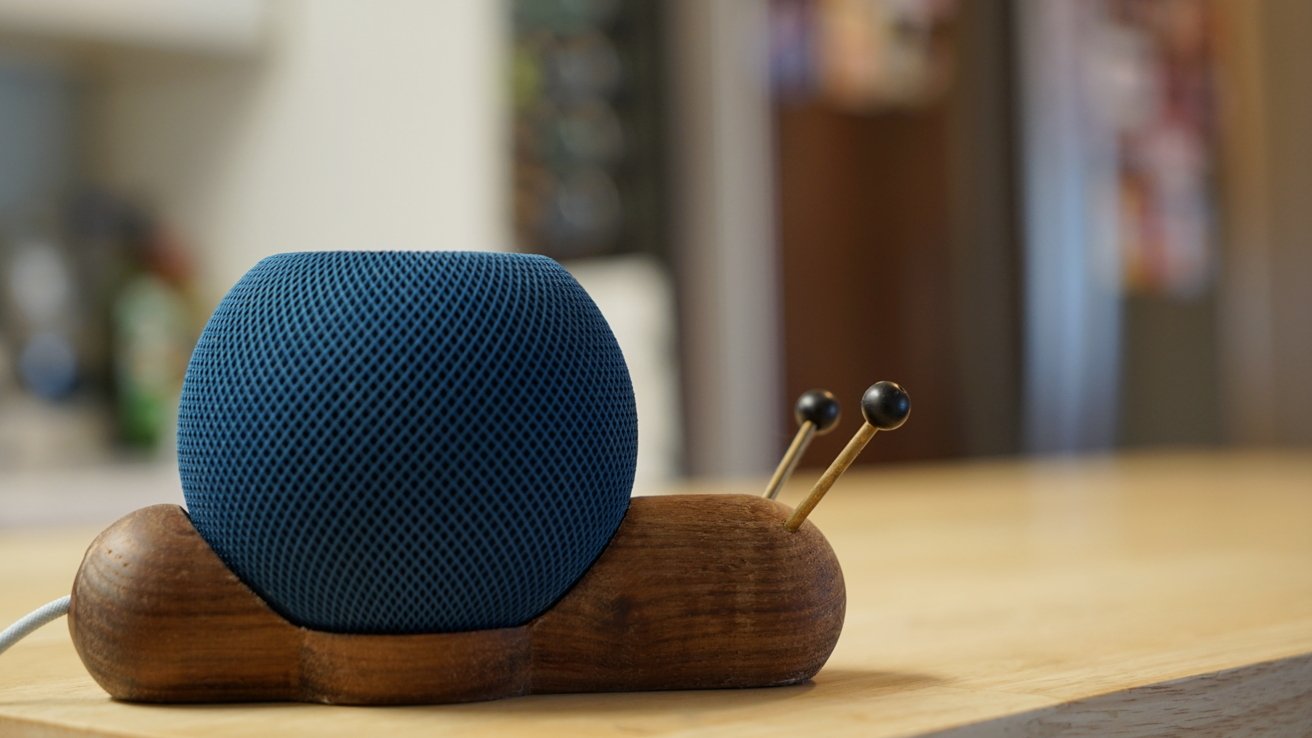
Gurman also reported that iOS 27’s Siri app will sync conversations across devices via iCloud. Early work on iOS 28 (codenamed Bell) and macOS 28 (codenamed Poppy) has begun, with next year’s releases expected to be “far more significant” than the iOS 27 updates. A new Apple TV set-top box and HomePod mini are nearly ready, having been delayed for months to launch alongside the new Siri.

Advertisement

Source link

Continue Reading

Tech

TechCrunch Mobility: It doesn’t matter that people hate the Ferrari Luce

Published

on

Welcome back to TechCrunch Mobility, your hub for the future of transportation and now, more than ever, how AI is playing a part. To get this in your inbox, sign up here for free — just click TechCrunch Mobility!

If you’re into EVs or sports cars, then you surely saw the kerfuffle over Ferrari’s first all-electric car, the Luce. The reaction was swift and biting for the five-seater EV designed by Apple veteran Jony Ive and priced at close to $650,000.

Ferrari fans expressed horror, critics compared it to the far cheaper Nissan Leaf, memes were made, and even one car designer (Lucid’s Derek Jenkins) threw some shade.

Senior reporter Sean O’Kane asked a different question as the great Ferrari Luce debate blew up the internet: Who is the Luce for?

Advertisement

You’ll have to read the full story to get his complete breakdown. But in my view, the most important question is whether the Luce is for existing Ferrari owners. After all, Ferrari owners often possess more than one. More than 80% of the 14,000 people who bought a Ferrari last year already own one of its vehicles, O’Kane notes.

According to Ferrari, there is demand for the EV. Ferrari CEO Benedetto Vigna claims the Luce is already getting orders from old and new customers. Assuming that demand outstrips the number of Luce EVs that the automaker plans to make, the next question is, who will Ferrari pick? (IYKYK)

Ferrari could be vindicated. Remember the Ferrari Purosangue, which was widely panned when it launched several years ago? That SUV is now considered a success. Sometimes it doesn’t matter if a product is hated. Ferrari doesn’t need universal approval; it just needs enough buyers.


Let’s jump from EVs to AVs.

Advertisement

A new Texas law allows its Department of Motor Vehicles agency to exert more control over autonomous vehicle testing and deployment in the state. Companies must now license AVs in the state, and the data is public. Here’s what I found after spending a little time with the AV tracker tool. 

Waymo is far and away the leader with 577 registered AVs, followed by Avride with 317, Nuro with 47, and Tesla with 42. Self-driving truck companies Aurora, Gatik AI, Kodiak AI, and Waabi can also be found. (For all the details, you can read my story.)

Fleet size is just one measure — and it certainly doesn’t always translate into whoever has the most wins. After all, many of these companies have not launched commercial services in the state.

I’m far more interested in the complaints feature on this new tool, which is also public record. As of today, complaints have not been filed against the companies listed above.

Advertisement

Deals!

money the station
Image Credits:Bryce Durbin

A new single asset fund managed by Equip Capital has taken a majority stake in European e-scooter operator Ryde Technology. Goldman Sachs Alternatives is the lead investor. 

Harley-Davidson’s electric motorbike spinoff LiveWire acquired electric off-road startup Dust Moto. Terms of the deal were not disclosed. 

Matternet, an autonomous drone delivery company, raised $33 million in a private placement offering and completed a reverse merger with Los Altos Ventures Corp.

Revel, the EV charging company that shuttered its ride-hailing business last August, is merging with Voltera. Terms of the deal were not disclosed, but the combined business will operate under the Voltera brand and will be led by Revel CEO Frank Reig, Bloomberg reported

Stark, a German drone maker, is in talks to raise at least €300 million ($350 million), a round that could double its valuation to €2.5 billion, the Financial Times reported.

Advertisement

Volara Motorsports Group, a motorsports and performance-focused holding company, acquired Lynx Motor Works, an Austin, Texas-based company that makes limited-production, reimagined classic vehicles.

WeRoad, the Milan-based group adventure travel startup, raised $58 million in a Series C round led by Airbnb. The funding brings the company’s total capital raised to roughly $100 million and will finance WeRoad’s push into the U.S., beginning with Austin.

Notable reads and other tidbits

Image Credits:Bryce Durbin

American Airlines will install Starlink on more than 500 narrow-body Airbus aircraft beginning early next year, the latest carrier to pick the SpaceX unit for in-flight Wi-Fi service. The deal provides a financial lift for Starlink, the satellite communications network and the only SpaceX business unit that generates meaningful revenue.

Rivian said it will begin deliveries of its new R2 SUV on June 9. Meanwhile, Rivian is being investigated by the National Highway Traffic Safety Administration over how the EV maker services its vehicles’ rear suspension components. 

Slate Auto is expected to announce pricing and start taking nonrefundable preorders for its low-cost electric vehicle on June 24. Deliveries are supposed to happen later this year. 

Advertisement

Volvo Cars received a specification authorization by the Commerce Department that allows the Swedish automaker, which is majority owned by China’s Geely Holding, to continue to import and sell its vehicles in the United States. A law, finalized in January 2025, effectively bans virtually all Chinese vehicles from the U.S. market as part of a crackdown on connected car technology with ties to China. 

Waymo has started giving select riders in Los Angeles, Phoenix, and San Francisco access to its newest robotaxi: an all-electric, minivan-like vehicle that is designed to lower costs and handle the use and abuse of hundreds of thousands of riders. I had a chance to ride in the vehicle, a modified Zeekr-made minivan called the Ojai (pronounced oh-hi). Stay tuned for my full review, which will run this weekend. Here’s a teaser: Robotaxis have long suffered from a magic problem. This Ojai robotaxi starts to solve it.

One more thing …

It’s poll time! Maybe you secretly like the Ferrari Luce and just don’t want to get trolled. Maybe you hate it. We asked our newsletter readers to share their opinion.

Sign up for the Mobility newsletter to participate in our polls!

Advertisement

And now one more thing, for real this time. Last week, I asked our newsletter readers, “Will SpaceX and Tesla merge?” Here’s how they answered. More than 51% selected “Yes, within two years”; 34% picked “never”; and 14.5% chose “Yes, this year.” That means more than 65% believe a merger is inevitable.

When you purchase through links in our articles, we may earn a small commission. This doesn’t affect our editorial independence.

Source link

Advertisement
Continue Reading

Tech

AI Agents Get Their Own Directory Built Atop DNS

Published

on

“In the future, AI agents will be able to find one another using the Domain Name System (DNS), instead of crawling about and probing ports or checking configured resources,” writes The Register.

InfoWorld writes that “numerous proprietary agent registries are on the market, but the Linux Foundation suggests we simply extend the distributed, open Domain Name System (DNS) infrastructure we already have.”

The foundation is now inviting contributions to the DNS-AID project, a standard way for AI agents to discover, verify, and communicate with one another over DNS that requires no new infrastructure. It enables agents and Model Context Protocol (MCP) servers to use DNS as a global, vendor-neutral directory.

While many details remain to be worked out, the proposal suggests domain owners create a new well-known address that can provide a starting point for agents looking for one another: _index._agents.{domain}. This approach ensures that agent discovery remains scalable, secure, and compatible with the protocols that underly the internet, the Linux Foundation said.
The Linux Foundation descrbes DNS-AID as enabling a standard way for AI agents to discover and communicate with one another. “By leveraging the internet’s existing Domain Name System (DNS) infrastructure, DNS-AID provides a robust, decentralized alternative to the centralized registries and hardcoded URLs currently limiting AI interoperability.”

Advertisement

The standard was originally developed by Infoblox, their announcement notes, but “Because the protocol is implementation-agnostic, it functions across any DNS provider, ensuring that organizations maintain control over their agent infrastructure without relying on proprietary, centralized services.”

Source link

Continue Reading

Tech

Shadow Walker Was a DIY Biped Humanoid Robot

Published

on

In 1987, Richard Greenhill, a British photographer who was fascinated by (but had no actual training in) robotics, decided he wanted to build a life-size humanoid that could do useful things, like carrying luggage. He was working at a startup called Intergalactic Robots, but he couldn’t convince anyone there to build such a machine, so he set about building one himself, in his attic.

To help with his project, he organized a weekly get-together of a dozen or so like-minded folks. Every Wednesday night, his wife, Sally, would make a big pot of spaghetti, and the group would tinker with components scavenged from old printers and picked up from junkyards. They called themselves the Shadow Group. They eventually constructed several different robots, but their main project was the two-legged Shadow Walker.

Two color photos of a casually dressed white man in a workroom posing with a partially assembled wooden robot. In 1987, photographer Richard Greenhill organized a weekly gathering of DIY enthusiasts to work on projects in his attic, including the Shadow Walker. Richard Greenhill and David Buckley

Greenhill’s friend David Buckley, a robotics and animatronics expert he’d met at Intergalactic, sketched out a rough design based on medical textbooks of human bone structure and muscle movement. The robot’s skeleton, made of maple, was greatly simplified—only one bone in the lower leg and a single wide toe on each foot. The ankle’s double-axis design allowed for two degrees of movement. The knee had no complicating kneecap.

Advertisement

Greenhill didn’t want the robot to use motors, so its movement was controlled using compressed air to extend and contract 28 “air-muscles”—his version of a McKibben muscle, invented in the 1950s to mimic musculature with pneumatics. The muscles were connected to the bones across eight joints (hips, knees, ankles, toes), which provided 12 degrees of freedom.

The robot’s headless torso held the control valves, electronics, and computer interfaces. It stood 168 centimeters tall and 46 cm wide and weighed about 38 kilograms. The group managed to get the robot to stand up reliably and balance itself; it could even regain its center if pushed a little. But walking turned out to be more of a challenge.

Rich Walker joined the group as a teenager and began writing software to get the robot to stand. He was particularly interested in using neural networks to solve balancing problems, although he ran into a number of hardware obstacles, including the unreliability of the sensors and the valves, and the robot’s overall fragility. Over time, Walker and the team developed a standard library of routines to control the robot. Walker wrote a detailed description of the Shadow Walker in 1999, which is available on David Buckley’s website.

Advertisement

The 1st International Robot Olympics

By the time the Shadow Group began developing Shadow Walker, engineers in academia and industry had been working on robotics for several decades. The world’s first industrial robot, the Unimate, debuted in 1961, and in 1967 Donald Michie and others began building a series of Freddy robots to investigate machine intelligence. The IEEE created its first dedicated robotics organization in 1984 when it established the IEEE Robotics and Automation Council, which became the IEEE Robotics and Automation Society in 1987. Also in 1987, the nonprofit International Federation of Robotics was established to promote research, development, use, and cooperation in the field of robotics.

As Shadow Walker pushed the limits for a DIY humanoid robot, industrial humanoids were also gaining ground. In 1986, Honda began working on its experimental (E-series) and later the prototype (P-series) humanoid robots, finally unveiling the P2 in 1996. The P2 stood 183 cm tall and weighed 210 kg. It was the first humanoid capable of stable, autonomous walking. This work eventually led to the development of the groundbreaking ASIMO.

Two color photos of a casually dressed bearded white man posing with a wooden robot leg and with a computer and other equipment. Greenhill’s friend, roboticist David Buckley, consulted medical textbooks to create Shadow Walker’s humanoid design.Richard Greenhill and David Buckley

In the late 1980s, the public was both fascinated and horrified by the potential of robots. Businesses saw robots as a way to increase productivity, while workers worried they would take their jobs. Children viewed them as wondrous toys, while people with disabilities embraced them as tools of liberation. Military experts hoped robots would fight wars without endangering human soldiers, while politicians pondered if robots might eventually get to vote. Philosophers thought robots could challenge our notions of intelligence (and stupidity), while the religious struggled with concerns about the human race in a robot-dominated future.

Photo of two articulated feet made of pieces of wood strung with wires and other components. Shadow Walker’s simplified anatomy included only one bone in the lower leg and a single wide toe on each foot.Science Museum Group

Peter Mowforth, cofounder of the Turing Institute in Glasgow, noted these disparate visions for robots when he announced the 1st International Robot Olympics, to be held in 27 and 28 September 1990 and hosted by the Turing Institute and the University of Strathclyde. The Olympics would round up the world’s best robots and showcase them head-to-head.

Advertisement

Mowforth himself thought all of the competing visions of robots were overblown. Steeped in machine learning research and robotics development, he knew firsthand the limitations of the state of the art: Robots rarely worked as intended, easily broke down, and glitched over seemingly trivial problems. He envisioned the Robot Olympics as a testbed to assess what the latest generation of robots could and could not do.

Photo of a headless and armless humanoid robot wearing red pants. At the 1990 Robot Olympics, held in Glasgow, Shadow Walker wore pants to conceal its pneumatic “air-muscles” from competitors.Adam Hart-Davis/Science Source

The call for participation was wide open. Instead of having predetermined categories of competition, the organizers opted to see who applied to compete and then group them based on their claimed capabilities. In addition to picking the winners of individual events, the judges would select an overall Olympic champion based on the quality of the hardware, the sophistication of behavior, and novelty. Other prizes were given for young competitors, technologies that showed commercial potential, and design. In the end, more than 50 robots were entered, from a mix of universities, industry, and hobbyist groups from Canada, France, India, Japan, Mexico, the Soviet Union, the United States, the United Kingdom, and Yugoslavia.

There were plenty of disappointments. Trolleyman, a golf-cart-like wheeled robot, suffered a power failure while carrying the opening Olympic torch through the streets of Glasgow. The pile rug in the arena tripped up many robots that had been trained only on flat, smooth floors. David Buckley later concluded that the events were too difficult, and that the Olympics didn’t push development forward.

Advertisement

Of course, there were winners. In a surprise triumph for vintage technology, the fully mechanical 19th-century Japanese Archer from the Museum of Automata in York, England, won gold in javelin, beating out competitors more than 100 years its junior. The overall Olympic Champion was Yamabico, Shoji Suzuki’s entry from the University of Tsukuba, in Japan, which won bronze in obstacle avoidance and gold in wall following, but was disqualified in the talking category for not speaking English.

The Shadow Group had high hopes for Shadow Walker. Unfortunately, though, it failed to take a step, and the biped race was won by the Cardiff University Biped. Shadow Walker now resides in the collections of the Science Museum in London.

The Legacy of Shadow Walker

In 1997, a paying customer in search of a robotic leg compelled the Shadow Group to get serious and become a registered company. Shadow Robot is now Britain’s oldest robotics company. Rich Walker, who had left the Shadow Group to earn a B.A. in mathematics and a diploma in computer science at the University of Cambridge, joined Shadow Robot in 1999 as technical director. Today he’s the director of the company.

Shadow Robot specializes in durable robot hands rather than walking robots. But the focus on hands is also a legacy of the Shadow Group. Walker remembers that the Shadow Group’s first humanoid hand in the late 1990s was impressive simply for being able to pick up a pint of beer (a smooth-sided, thin-walled glass). Today, Shadow Robot’s hands are testbeds for dexterity. Gone are the pneumatic muscles, replaced by actuators that move each finger with precision. The classic model contains 20 motors, allowing for abductive and adductive movement with 24 degrees of freedom.

Advertisement

Black and white photo of a two-legged humanoid robot with its left leg raised, next to a man with his right leg raised while another man looks on. Shadow Walker’s operator wore a data suit that captured his movements and allowed the robot to copy them.Richard Greenhill

In a recent blog post, Sejal Parsotomo, senior marketing executive at Shadow Robot, wrote that while humanoid robots are great for public relations, specialized dexterity is key for success: A robot that can walk into your factory may be impressive, but a robot that can reliably manipulate objects is transformative.

In its struggles to take more than a few steps, the Shadow Walker showed the inherent difficulty that robots had in mastering even low-level skills. In August 2025, Beijing hosted the World Humanoid Robot Games. Competing in sports such as gymnastics, soccer, and track events, as well as more “useful” tasks like hotel cleaning and sorting medicine, these robots could literally have run circles around the competitors in the first Robot Olympics 35 years earlier. And yet, there is still so much work needed in order for robots to navigate the human-built environment. Despite the astonishing progress, we’re still not all that close to actually useful humanoid robots.

Part of a continuing series looking at historical artifacts that embrace the boundless potential of technology.

An abridged version of this article appears in the June 2026 print issue as “Learning to Walk.”

Advertisement

From Your Site Articles

Related Articles Around the Web

Source link

Advertisement
Continue Reading

Tech

Quentin Dupieux Just Closed Cannes With a Feature Film That Runs Like a PlayStation 1 Game, Called La Vertige

Published

on

Quentin Dupieux Cannes Film LA Vertige Vertigo PS1
Quentin Dupieux brought his first animated feature, called La Vertige, to the Directors’ Fortnight this year. It closed the section on May 21 and left audiences laughing at something that looked pulled straight from a 1998 console. The movie runs 67 minutes and puts its entire premise on display through the images themselves. Jacques heads to his friend Bruno’s place with big news. He has become convinced that everyday life takes place inside a computer simulation.


Every character on screen is made up of a few flat shapes with dull edges, a visual throwback to the early days of 3D gaming characters. Their movements felt rigid and purposefully mechanical, similar to those found in older open world games that required simple controls to function. Faces are slapped onto basic head shapes, with little expressiveness. It’s a look that is highly influenced by the age of GTA Vice City and other games from the time. Dupieux and a few others developed the entire thing inside Blender, with the help of five recent art school graduates. They used an iPhone and a cheap motion-capture tool to record the actors’ performances, which they then slapped onto the low-detail models without using any expensive rendering farms.


PlayStation®5 console – 1TB
  • PlayStation 5 Console – 1TB, includes wireless controller, 1TBSSD, Disc Drive, 2 Horizontal Stand Feet, HDMI cable, AC power cord, USB cable, printed…
  • 1TB of Storage, keep your favorite games ready and waiting for you to jump in and play
  • Ultra-High Speed SSD, maximize you play sessions with near instant load times for installed PS5 games

The essential idea here is that those constraints are intentional, and they play an important role in the comedy. A baker arrives with an extra finger at the end of his hand. A character’s skeleton is revealed in the middle of a high-stress situation. A birth scenario glides over all of the things we’d expect to see. Each of these bugs simply sort of…happens, and every time you see one, it’s more confirmation that the system isn’t quite up to par. By the time the characters notice, we, the audience, have already seen all of the proof.

Quentin Dupieux Cannes Film LA Vertige Vertigo PS1
As the story progresses, we meet a new character, a researcher who tries to explain everything in more detail. Time passes in fits and starts, as relationships change, and one character reappears years later with a new digital style that nonetheless adheres to the same fundamental structure we’ve seen throughout. The entire film revolves on the central idea that what people say about their surroundings does not always correspond to what we see in the photographs.

Quentin Dupieux Cannes Film LA Vertige Vertigo PS1
Dupieux has spent years experimenting with how far you can push this bizarre idea. The fact that we’re all viewing from the same constrained vantage point, with the same boring, low-poly figures as our characters, actually adds weight. They don’t pretend to be anything other than what they are: simple structures that move, communicate, and occasionally break. The film will be released in French theaters on June 10th, while the rest of us will have to wait and see.

Advertisement

Source link

Continue Reading

Trending

Copyright © 2025