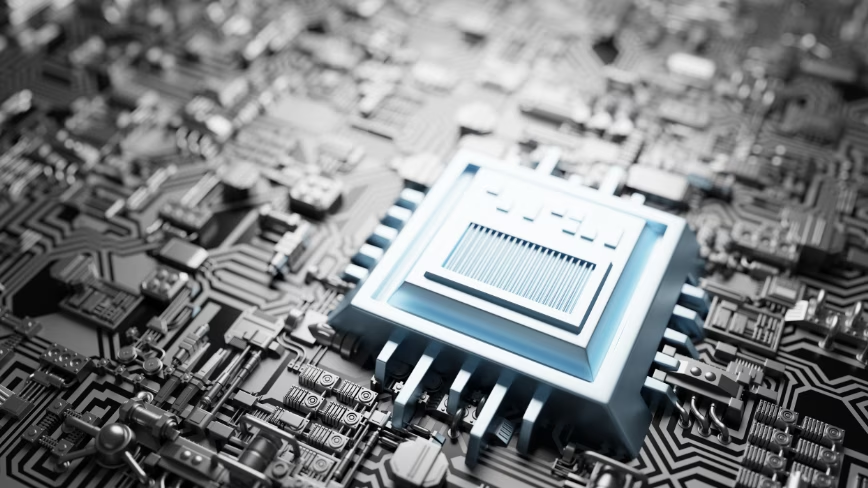
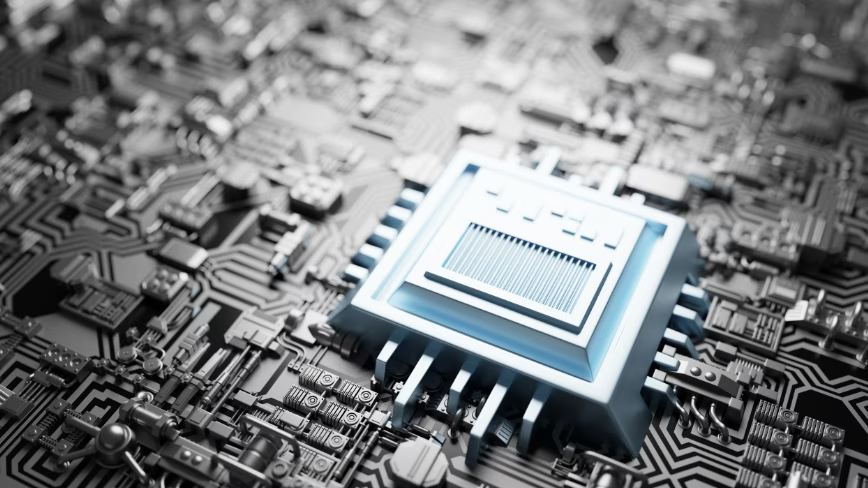
“The company best known for powering the AI boom is coming for the PC,” reports Axios.
Nvidia’s CEO unveiled a new ARM-based “N1X processor made alongside Microsoft,” reports CNBC, that “will be incorporated into a new RTX Spark superchip, debuting in the fall on a fresh line of Windows PCs from Microsoft, Dell, HP, ASUS, Lenovo and MSI.”
It was only a matter of time before NVIDIA released a powerful system-on-a-chip (SOC) to take on AMD’s Ryzen AI Max and Qualcomm’s latest Snapdragon X2 chips. At Computex today, NVIDIA unveiled the RTX Spark, a “superchip” meant to give both laptops and small desktops fast AI and graphics performance…
Advertisement
The company says it offers 1 petaflop of AI computing power, and that it has 6,144 Blackwell RTX cores and 20 Mediatek Arm CPU cores. NVIDIA claims it’s similar to the RTX 5070 laptop GPU but with much lower power draw. RTX Spark also has an NPU that’s fast enough to be part of Microsoft’s Copilot+ initiative, which requires a 40 TOPS NPU, but NVIDIA says it’s mainly touting the tensor cores as part of the chip’s Blackwell GPU for AI performance. RTX Spark’s GPU can directly draw on the chip’s large pool of unified memory, which can span from 16GB to 128GB, and the chip itself can use anywhere from single-digit wattage up to 80W…
NVIDIA CEO Jensen Huang positions RTX Spark as a complete reinvention of the PC, eventually turning them more into devices meant for AI agents than manual human input… NVIDIA has been working together with Microsoft for “several years” while designing the RTX Spark, according to NVIDIA representatives… In a blog post provided to media, Microsoft head of Windows and devices, Pavan Davuluri, noted that the company optimized Windows 11’s workload profile scheduling for the RTX Spark. “Whether you’re checking your email or running an agent locally to debug code, the Windows scheduler on RTX Spark will ensure you get the best performance and efficiency out of your CPU,” he wrote.
from the this-is-why-we-can’t-have-nice-things dept
Five years years ago AT&T effectively stopped selling DSL and started hanging up on DSL and copper phone line customers. While killing landlines and DSL is understandable given the limitations of the dated copper-based tech, the problem is that thanks to concentrated telecom monopolization, many of these customers were left without any replacement options due to a lack of competition.
There are other issues at play too. AT&T has, for decades, received countless billions in tax cuts, subsidies, merger approvals, and regulatory favors in exchange for building infrastructure it either didn’t complete, didn’t maintain, or didn’t upgrade. There’s a rich back history of AT&T taking taxpayer money and then failing to deliver upgrades that were promised local municipalities.
Many of folks impacted by AT&T’s decision to hang up on copper are rural or elderly folks who relied on traditional landlines for reliable 911 access but are either outside the range of cellular, or find cellular to be less reliable and significantly more expensive on fixed budgets. The system has a tendency to downplay or ignore these folks.
So you can see how there’s a tension between private telecom monopolies and public interest regulators (the few we still have) tasked with protecting taxpayers and the public interest.
Advertisement
In 20 of the 21 states AT&T operates in, its lobbyists have managed to sell lawmakers on eliminating Carrier of Last Resort (COLR) obligations requiring it provide landline telephone service to any potential customer in its service territory. It’s easy to lobby lawmakers on the idea that the company needs to “move forward past outdated regulations,” and ignore the actual real-world impact or AT&T’s rich history of subsidy fraud or limitations of wireless as a fixed-line alternative.
But they’ve run into trouble in California, after the California Public Utilities Commission (CPUC) told AT&T in 2024 it can’t just hang up on these unwanted (taxpayer subsidized) connections. The CPUC said it’s not blocking AT&T from retiring its aging copper networks, but it wants some AT&T dedication to upgrading failing infrastructure to more modern fiber, not just throw “good enough” wireless at the problem.
Last week AT&T sued California and CPUC (full lawsuit here). AT&T is also asking the Trump FCC to intervene and prevent the CPUC from doing its job. AT&T, for its part, sells this as a story of California leveraging outdated regulations to block AT&T from embracing modernization:
“The federal government and virtually all States where AT&T historically offered POTS [Plain Old Telephone Service] have now eliminated outdated regulatory obstacles, allowing AT&T to begin powering down its POTS network and increasing its investments in modern communication technologies. California stands alone in resisting this progress.”
CPUC counters by saying they don’t want customers who used to have reliable landline service shoveled off to costly and less reliable wireless services instead of fiber. Or left without any connection whatsoever after spending the last four decades slathering AT&T with subsidies.
Advertisement
But it’s worth noting that AT&T’s legal assault is about more than just the fate of dying copper landlines.
California’s CPUC has been filling the void left by Trump regulators and attempting to ensure U.S. broadband is somewhat affordable. That’s involved conditions affixed to grants, affordability conditions applied to recent telecom mergers, and public safety requirements in response to climate-related risks. AT&T, as you might expect, doesn’t like that. Their goal is, with no hyperbole, no oversight at all.
So in addition to this lawsuit, they appear to be leveraging Dem politicians (like Assemblymember Tasha Boerner) in the state to push amendments to the state constitution that would strip the CPUC of its independence, ensuring that AT&T would have more direct lobbying control over the CPUC’s makeup through its robust lobbying control of state legislators.
The changes, which were approved by a California State Assembly vote (67-1), would need to be voted on by California residents later this year. As such, they are being sold to local state folks as a way to keep CPUC focused on soaring electrical utility rates. But the timing of the effort to limit CPUC’s oversight of broadband, just as AT&T tries to deliver the killing blow to the agency, is hard to miss.
Advertisement
Ultimately the broader narrative in the press sold to voters will be that California regulators are engaged in broad over-reach and hampering AT&T’s potential innovation. Downplayed or ignored will be the fact that federal consumer protection has largely been destroyed, and semi-independent regulators like the CPUC in a handful of states are the last line of defense in a country being devoured by corruption.
It’s a lopsided fight that historically telecom monopolies tend to win, which is why, as you can see with your own eyes, most U.S. broadband is patchy, expensive, sluggish, with abysmal customer service. Instead of empowering regulators that protect affordability and competition, we have a nasty tendency to lobotomize them on behalf of “free market competition” that isn’t real, and that monopolies don’t want.
US export controls are pushing China’s AI chip industry away from general-purpose GPUs and toward custom ASICs. Huawei leads with 62% projected market share, while Alibaba and Cambricon pursue alternative architectures that may create a structurally different ecosystem from the Nvidia-dominated West.
China’s AI chip industry is no longer trying to build an Nvidia clone. Under sustained US export controls that block access to the most powerful general-purpose GPUs, the country’s largest technology companies are pivoting toward application-specific integrated circuits, custom chips designed to do one thing extremely well rather than handle any workload. The shift is creating a domestic semiconductor ecosystem that may end up architecturally distinct from the Nvidia-dominated model that powers AI in the West.
Advertisement
At the centre of this divergence is a design choice that export controls have accelerated. General-purpose GPUs, the kind Nvidia sells, are flexible and programmable, making them ideal for the fast-moving research phase of AI development where model architectures change constantly. ASICs sacrifice that flexibility for raw efficiency, delivering faster performance at lower power consumption for specific AI tasks. In a market where the best Nvidia hardware is unavailable, the economics of custom silicon become far more compelling.
Three paths to custom chips
Chinese companies are pursuing three distinct ASIC architectures. Huawei is betting on neural processing units through its Ascend series, including the widely deployed 910C and the upcoming Ascend 950. Cambricon Technologies is building domain-specific architectures with its Siyuan 590 and 690 series. Alibaba is taking a third route through its semiconductor unit T-Head, which launched the Zhenwu M890 parallel processing unit at its annual cloud computing summit last week, claiming three times the performance of its predecessor.
On the GPU side, Moore Threads leads the domestic effort. Founded in 2020 by Zhang Jianzhong, Nvidia’s former China executive, the company has dedicated itself to general-purpose chips like the MTT S5000 series. Biren Technology, Enflame, and Iluvatar CoreX are also competing in the space, but none has achieved the scale of the ASIC leaders.
A Morgan Stanley report published on 8 May made the market dynamics clear. Huawei is projected to capture 62% of China’s domestic AI accelerator market in 2026, followed by Cambricon at 14%. Among big tech firms building proprietary chips, Baidu and Alibaba are each expected to take roughly 5%. The ASIC heavyweights are winning on volume and momentum.
Performance is no longer the bottleneck
The performance gap between Chinese chips and Nvidia’s export-compliant hardware has narrowed significantly. Morgan Stanley data shows that Huawei’s Ascend 950 cards and Cambricon’s Siyuan 690 can outperform Nvidia’s H20, the most powerful chip Nvidia is currently permitted to sell to China, by 50 to 150% as measured in tokens per second.
Advertisement
Huawei expects AI chip revenue to reach roughly $12 billion in 2026, up from $7.5 billion in 2025. Nvidia’s share of the Chinese AI accelerator market has effectively collapsed to zero, a development that CEO Jensen Huang has described as a “horrible outcome” for the United States because it breaks the software dependency on Nvidia’s CUDA ecosystem that took two decades to build.
For China’s highly commercialised AI market, which focuses on deploying applications to hundreds of millions of users rather than conducting frontier research, the ASIC approach makes particular sense. Inference, the process of running a trained model at scale, rewards the kind of narrow optimisation that custom silicon provides. Training new models still benefits from GPU flexibility, but the revenue is in deployment.
The software stack problem
Hardware performance is only half the equation. The deeper challenge for China’s chip industry is breaking the lock-in created by Nvidia’s CUDA platform, the software layer that millions of AI developers worldwide use to write code for Nvidia hardware. CUDA’s network effects are enormous. Virtually every AI framework, every research paper, and every pre-trained model assumes CUDA compatibility.
Huawei is building CANN as its alternative, while Moore Threads has developed MUSA. DeepSeek has spent months rewriting its core code to work with Huawei’s CANN framework, moving away from the CUDA ecosystem. But semiconductor analyst Zhang Haijun notes that as AI models grow more complex, the boundaries between custom ASICs and flexible GPUs are “becoming increasingly blurry,” suggesting that the winning architecture may eventually combine elements of both.
Advertisement
Omdia chief analyst Su Lian Jye frames the choice practically: enterprises with robust AI engineering capabilities and a clear roadmap benefit from ASICs, while those running mixed workloads still lean toward general-purpose GPUs. For now, market momentum in China favours the specialist approach, partly by choice and partly because the general-purpose option from Nvidia remains either unavailable or restricted.
A structurally different ecosystem
The long-term consequence of this divergence may be more significant than the near-term performance benchmarks. If China’s AI industry standardises on a mix of Huawei NPUs, Alibaba PPUs, and Cambricon domain-specific chips, each running its own software stack, the result will be a fragmented but domestically self-sufficient ecosystem that operates on fundamentally different architectural assumptions from the West.
That fragmentation carries costs. Developers building for the Chinese market may need to support multiple hardware platforms simultaneously, increasing complexity. Cross-border AI collaboration becomes harder when the underlying compute stacks are incompatible. And the lack of a single dominant platform means no Chinese chip maker benefits from the kind of ecosystem lock-in that made Nvidia’s CUDA so powerful in the first place.
But the direction is set. US export controls intended to slow China’s AI progress have instead accelerated a structural redesign of its chip industry, pushing it toward custom silicon, domestic software stacks, and an architecture that no longer depends on American hardware. Whether that ecosystem can match the pace of innovation in the Nvidia-powered West is the defining question of the AI chip race.
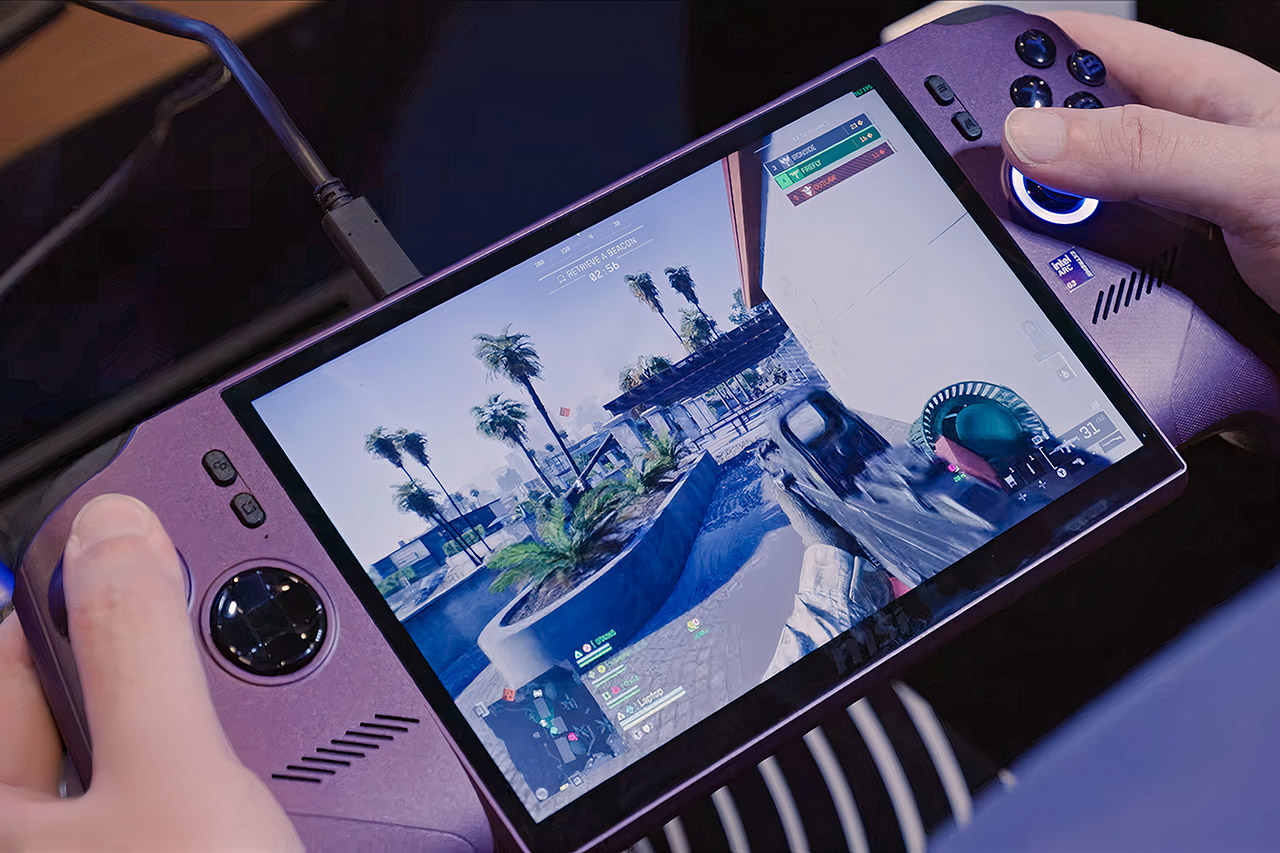
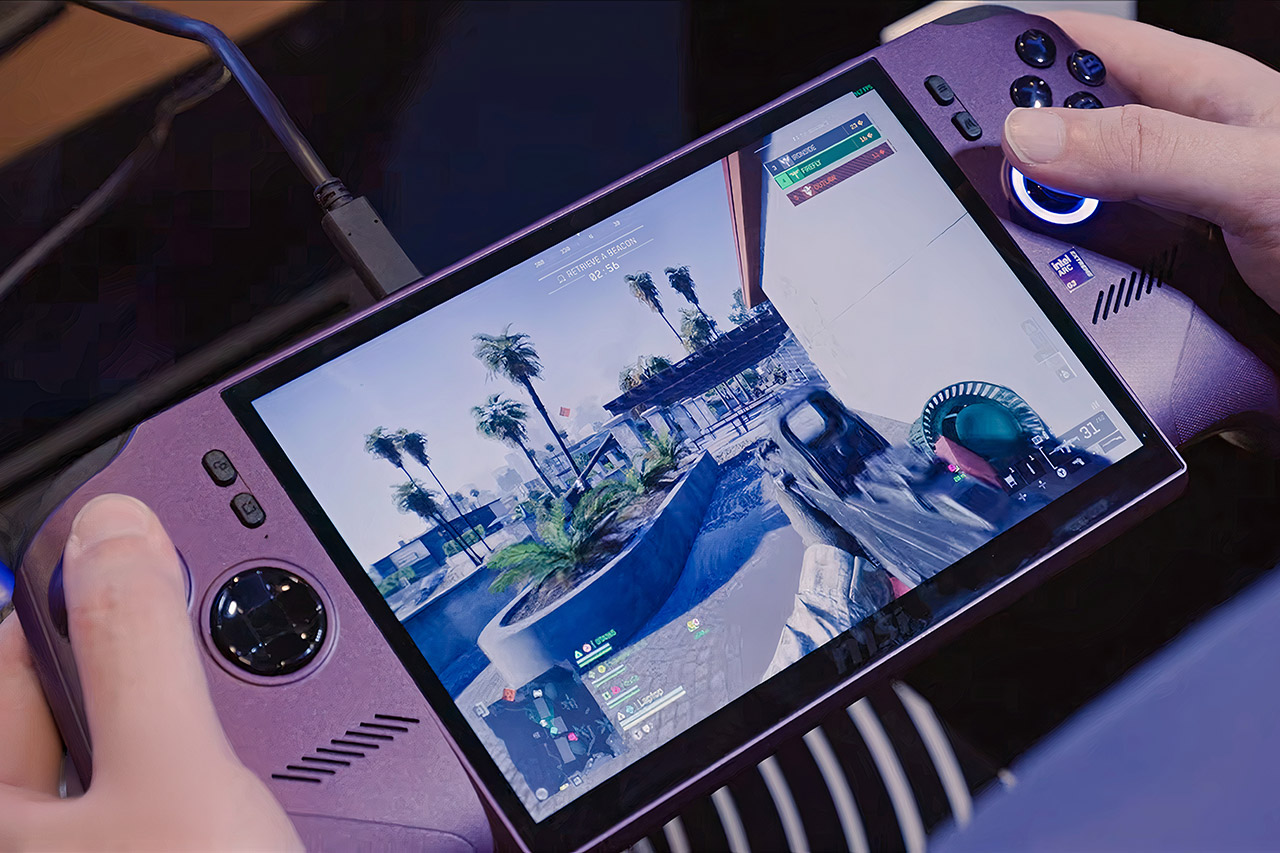
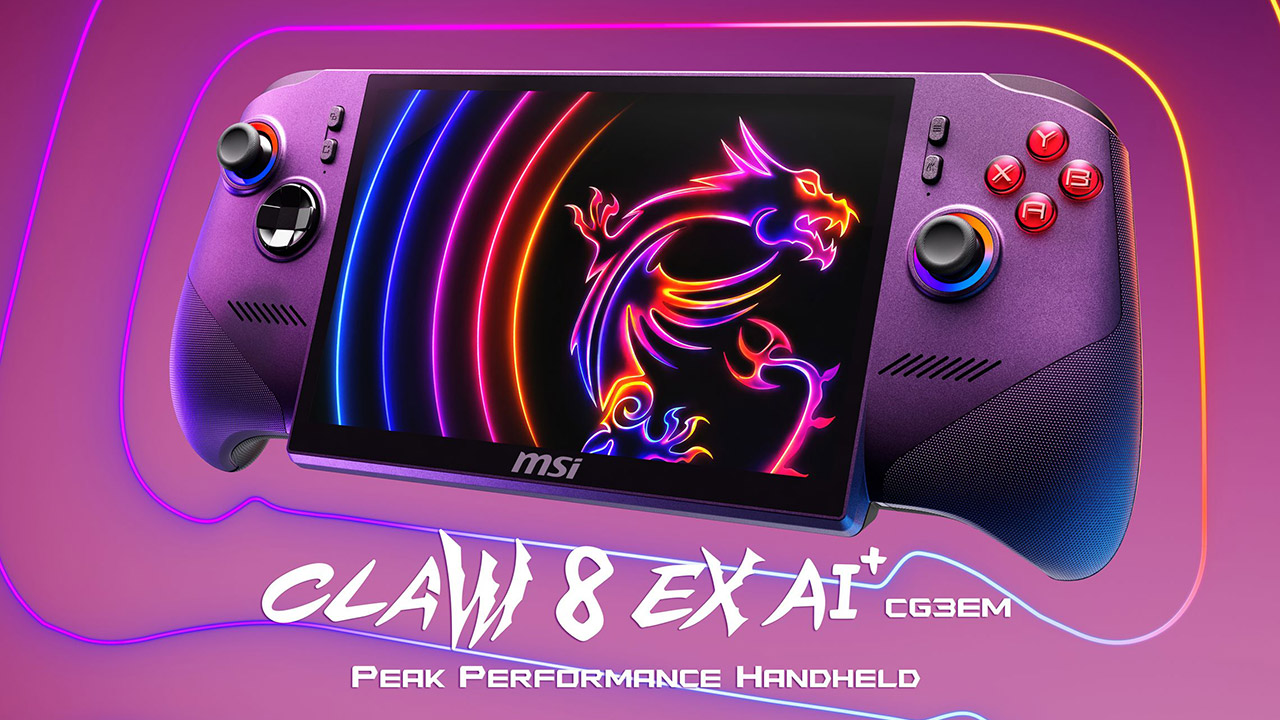
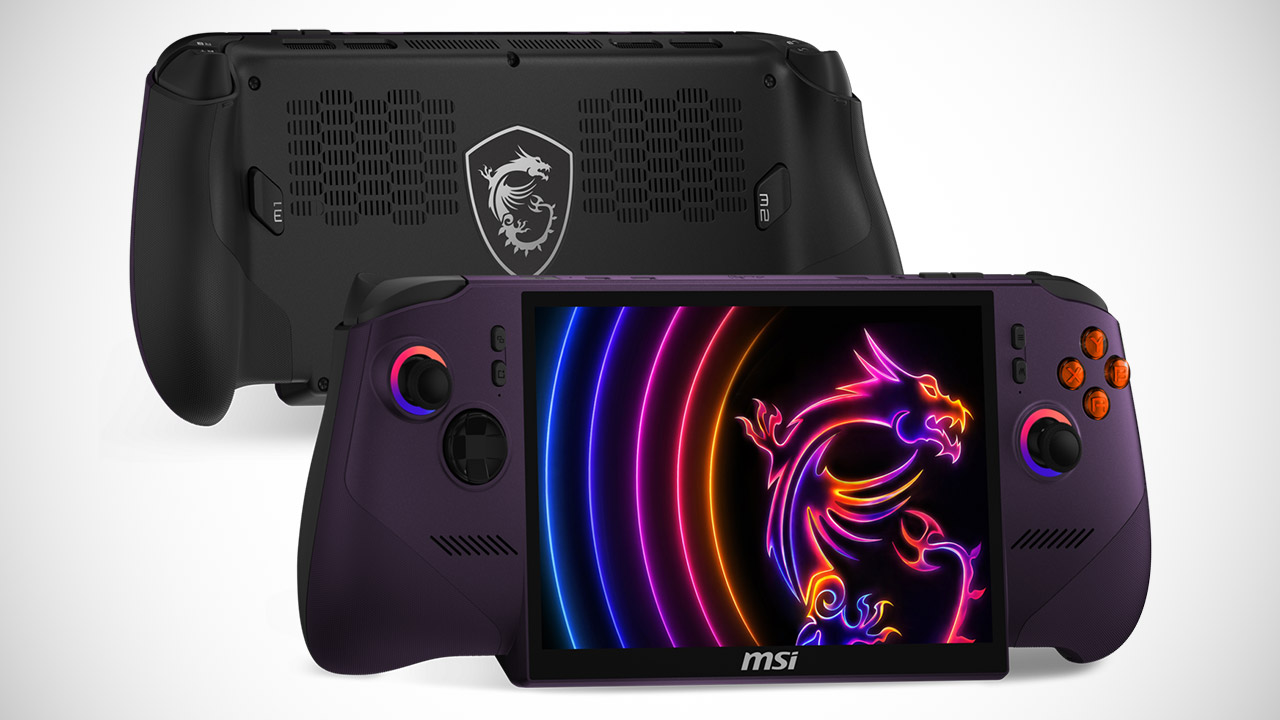
Photo credit: PC World MSI will release the Claw 8 EX AI+ handheld gaming PC on June 23. The company sets the device at a premium level, with early pricing talk centering on $1,500 for the loaded version that includes 32GB of LPDDR5x-8533 memory and a one-terabyte drive. That figure places it well above many current Windows handhelds and gives it clear ambitions against established names in portable PC gaming.
The new body stretches out the handles wider, giving them the feel of a normal controller. The preview units weigh approximately 785 grams, but they are balanced in such a way that they are less of a handful even when held for extended periods of time. Hall effect sticks and triggers are making a comeback since they are dependable and do not float around like older ones did. A redesigned D-pad and button layout completes the controls, and the small RGB lights around the sticks give a pop of color without causing too much confusion.
High-Performance Computing: Harness the power of the AMD Ryzen Z2 Extreme processor to effortlessly handle demanding tasks. Enjoy reliable…
Simplistic Design: Enjoy the latest generation of Windows 11 Home for your everyday needs. MSI recommends Windows 11 Pro for business use.
Perfection Through Anthropometry: As a handheld device, Claw has achieved the optimal balance between its grip and weight. We have meticulously…
Haptics have also been thoroughly redone, as new linear motors replace the old vibration units. They provide crisp, precise feedback with significantly less noise and power draw. Early users have reported that the improvement is noticeable in compatible games, since it adds texture to what you’re doing and eliminates the unpleasant buzzy rumbling that prior versions were prone to.
Next, and most importantly, the Claw 8 EX AI+ has power, thanks to its Intel Arc G3 Extreme processor. It’s a processor that accomplishes the fundamental tasks well and has a graphics component on top of 12 Xe cores. MSI believes it’s fairly efficient and can compete with some of the other mobile CPUs on the market while using significantly less power. Dual fans suck air throughout the entire device, which is approximately 25% better than the last one, and to be honest, it’s quite quiet even when working hard.
Advertisement
When users got their hands on some prototype gear, they were able to see just how well the chip handled recent games at the screen’s native resolution. It also supports Intel’s XeSS 3, which is a fancy term for upscaling and frame generation that helps boost frame rate when needed. You can also plug this device in and turn up the performance if you want, although there’s an endurance mode to keep the power drain low. The eight-inch screen is the same as previously, but with upgraded internals that allow it to display 1920 by 1200 resolution, refresh at 120 times per second, and use VSync to reduce screen tearing. It covers the entire sRGB range and gets bright enough to see at around 500 nits.
An 80-watt-hour battery powers the show, and those who have tried it say it will last a long time, possibly even longer than its predecessor. It charges via one of the two Thunderbolt 4 connectors, which also support external displays and rapid data transfers. Storage is a single M.2 2280 slot, so if you want to upgrade to a larger drive later on, you can simply swap it out without the need for any tools. Memory is fixed at 32GB in the launch model. There’s also a microSD slot and an audio jack, since who doesn’t appreciate a little extra flexibility?
MSI’s Xbox Mode overlay is linked with the operating system, Windows 11. This device allows you to adjust performance parameters, monitor the battery level, and switch between games without leaving the handheld experience. It aims to be like a console, but you can still access the complete desktop if you need to connect a monitor. Other connectivity options include Wi-Fi 7 and Bluetooth, as well as a fingerprint scanner embedded into the power button that eliminates the need to constantly enter in a password. [Source]
Nvidia has stepped into the processor market with its RTX Spark, but at first glance, it’s clearly behind Apple Silicon by a considerable margin.
Computex 2026 is underway, and Nvidia has formally stepped into the processor ring with its own chip. Nvidia calls the RTX Spark a “superchip” for Windows PCs that have massive AI performance.
This chip consists of an ARM-based Nvidia Grace CPU with 20 cores, as well as an Nvidia Blackwell RTX GPU with 6,144 CUDA cores. There’s also fifth-generation Tensor cores, up to 128GB of unified memory, and a 600GB/s Nvidia NVLink-C2C interconnect providing high-bandwidth communications between the elements.
According to Nvidia, it is “designed for AI, creating, and gaming,” with the intention of it being used to help create slim Windows notebooks with all-day battery life, but massive performance capabilities. This includes rendering massive 90GB 3D scenes for games, generating 4K AI video, and 12K video editing.
Advertisement
More handily for AI researchers, it will also be capable of running a 120 billion-parameter large language model with up to a million tokens of context, using local agents.
“The PC is being reinvented,” said Nvidia CEO Jensen Huang, referring to users predominantly launching apps and manually doing work. Instead, RTX Spark is made to enable “local agents, frontier models, creative workflows, RTX games” on a notebook.
“This is the new PC,” he declared in a press release. “The personal AI computer.”
Apple Silicon-esque
Undoubtedly, this is a big move for Nvidia, and a major chip introduction that can dramatically affect the Windows notebook market in general. However, Nvidia is still working to catch up to Apple.
Advertisement
Nvidia’s chip shares many of the same core concepts as Apple Silicon, in that it combines a CPU, GPU, neural processing elements, and high-speed unified memory on a single chip. Viewed from a high level, the architectures follow the same approach.
Evidently, when Apple Silicon stunned the world at its launch, it made an impression on the PC industry.
However, despite Nvidia’s bluster about its chip being extremely fast and powerful, it does need to be more directly compared against Apple Silicon to see whether it truly stands up. There’s no real official benchmark result from Nvidia to compare against at this time, but there was a pre-release benchmark that’s noteworthy.
Posted to Geekbench in June 2025 and subsequently removed, but archived byWccftech, the listing for the Nvidia N1x is believed to be an early version of the GPU maker’s chip.
Advertisement
The version listed includes an ARMv8 chip with 20 cores, a base clock speed of 2.81GHz, and 128GB of unified memory.
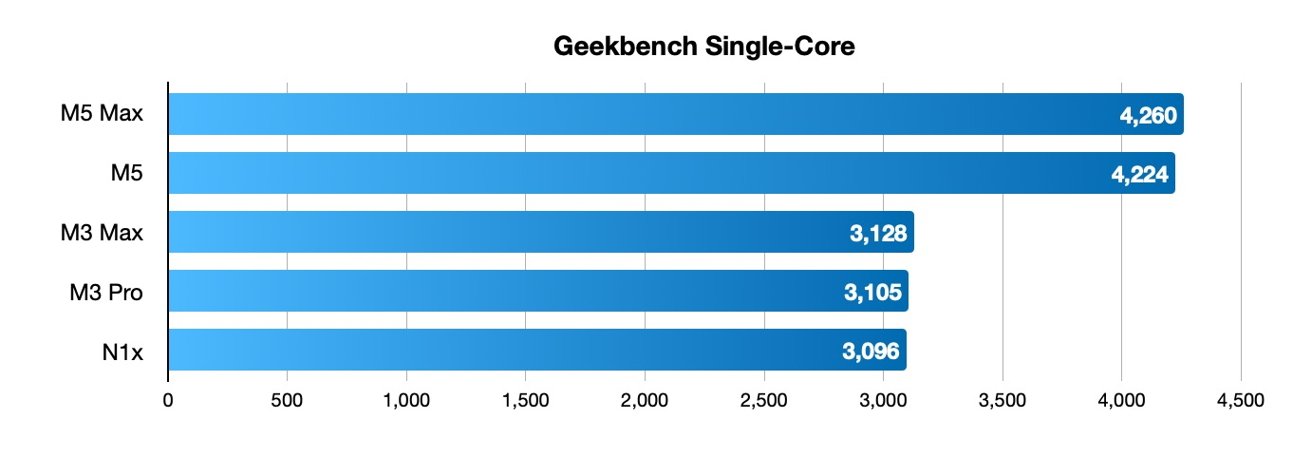
Geekbench single-core score comparison between the unreleased N1x and a selection of Apple Silicon scores
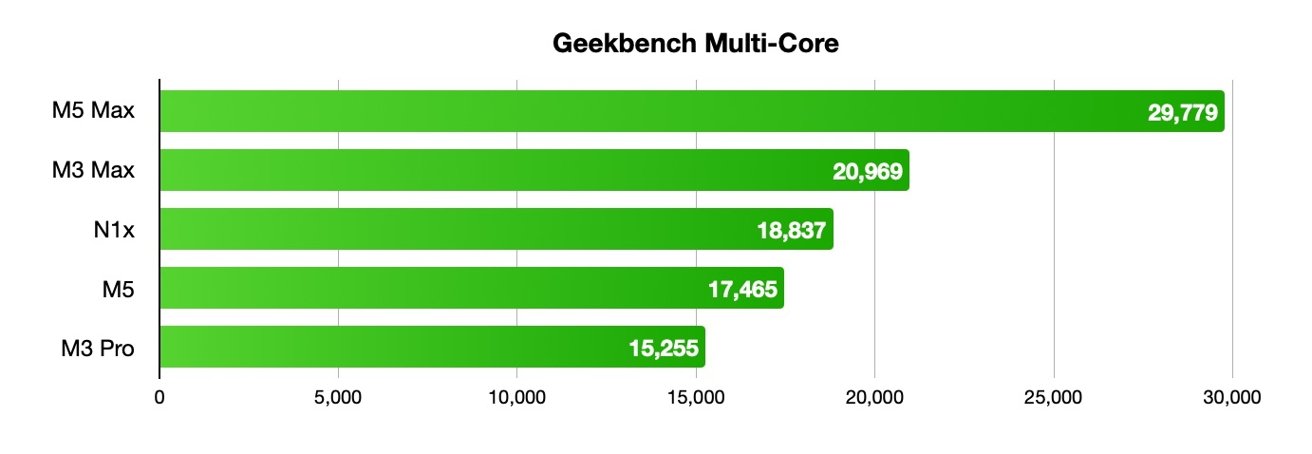
When it comes to performance, the single-core score is listed at 3,096 points, with the multi-core score reaching 18,837.
The immediate comparison made by the publication was to the M3 Max chip in a 16-inch MacBook Pro. On checking Geekbench’s listings, the 16-inch MacBook Pro with M3 has a single-core score of 3,128 and a multi-core of 20,969.
Advertisement
For reference, the highest M3 Pro result in a MacBook Pro is 3,105 for the single-core score and 15,255 for the multi-core.
Under the current M5 generation, the 14-inch MacBook Pro with M5 gets a massive 4,224 for the single-core score and 17,465 for the multi-core.
Geekbench multi-core scores compared between N1x results and various Apple Silicon versions.
This doesn’t seem massively impressive, until you check the core counts of Apple’s chips. The M3 Max in question has 16 cores, the M3 Pro has 12 cores, and even the M5 result involved just 10 cores.
Advertisement
The current Apple Silicon leader, the 18-core M5 Max, is seen setting scores at around 4,200 again for the single-core, but the multi-core is hovering within touching distance of 30,000.
Admittedly the N1x result is a pre-release listing and a year old. It’s entirely possible that Nvidia has updated the design, increased the clock speed, and made other changes since that time.
However, with modern manufacturing lead times being extremely long, there probably hasn’t been much change since then.
An impressive first try
The main takeaway here is that Nvidia has seen Apple Silicon as a threat, and believes it can do something better for the Windows market.
Advertisement
It probably could. Eventually.
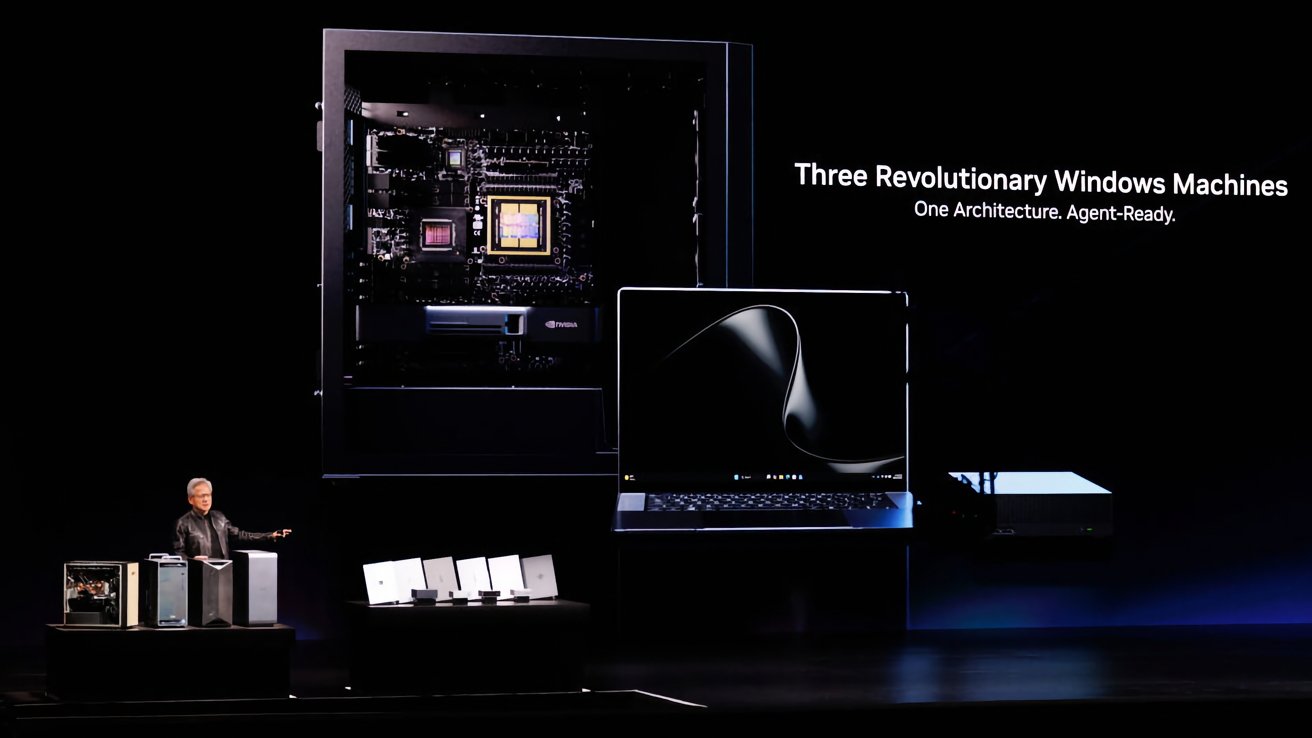
The Computex launch of Nvidia’s RTX Spark
If the N1x result actually reflects the capabilities of the first chip, it’s a good start for the company’s initial release. But that said, it’s up against some considerable competition.
As much as Nvidia boasts about the AI capabilities of RTX Spark, Apple’s already got a counter for it. Aside from the Neural Engine, the M5 generation has neural accelerators in each GPU core, making it massively more capable of AI tasks.
Advertisement
As it stands, on the CPU front, it is trailing behind a chip from Apple that’s more than two years old. Nvidia has some considerable catching up to do.
The Centre for Cybersecurity Belgium (CCB), the country’s national authority for cybersecurity, warned on Friday that threat actors are now exploiting a recently patched critical Windows Netlogon vulnerability in attacks.
Netlogon is a remote procedure call (RPC) interface and a core Microsoft Windows Server background service that authenticates services and users on Windows domain-based networks.
Microsoft patched this vulnerability (CVE-2026-41089) during the May 2026 Patch Tuesday, describing it as a stack-based buffer overflow in Windows Netlogon that allows attackers without privileges to gain remote code execution on targeted domain controllers.
“An attacker could send a specially crafted network request to a Windows server that is acting as a domain controller,” it said. “If successful, this could cause the Netlogon service to improperly handle the request, potentially allowing the attacker to run code on the affected system without needing to sign in or have prior access.”
CVE-2026-41089 impacts all currently supported Windows Server versions, including the latest release, Windows Server 2025.
Advertisement
According to a security advisory published by the company on May 12, the vulnerability was discovered by Windows Attack Research & Protection (WARP), an internal offensive cybersecurity and engineering research team at Microsoft.
On Friday, Belgium’s national cybersecurity authority (CCB) warned that attackers are now actively exploiting the CVE-2026-41089 security flaw in the wild and urged admins to immediately patch vulnerable servers.
“CVE-2026-41089 in #Windows #Netlogon is now actively #exploited in the wild and could lead to #RCE. CVSS(3.1): 9.8,” the CBC warned in a Friday tweet. “Patch as quickly as possible.”
CVE-2026-41089 active exploitation alert (CCB)
However, the CCB didn’t provide further details on these ongoing attacks and didn’t respond to a BleepingComputer request for more information.
Microsoft has yet to update its advisory, and a company spokesperson didn’t reply to an email from BleepingComputer requesting confirmation that CVE-2026-41089 is now actively exploited.
Advertisement
Two weeks ago, Microsoft shared mitigation measures for YellowKey (CVE-2026-45585), a Windows BitLocker zero-day vulnerability that grants access to protected drives, described as a backdoor by anonymous security researcher ‘Nightmare Eclipse,’ who also disclosed it and published a proof-of-concept (PoC) exploit.
Initially, Microsoft has reacted to Nightmare Eclipse with thinly veiled threats of legal action, followed by a tweet saying that the company “will work with law enforcement as appropriate” when “an individual breaks the law and engages in malicious activity causing real harm to our customers.”
Automated pentesting tools deliver real value, but they were built to answer one question: can an attacker move through the network? They were not built to test whether your controls block threats, your detection rules fire, or your cloud configs hold.
This guide covers the 6 surfaces you actually need to validate.
During his keynote at GTC Taipei, NVIDIA chief Jensen Huang laid out a clear shift. People will soon treat their computers less like tools that wait for commands and more like capable partners that can take on real work when asked. RTX Spark sits at the center of that change. The new processor marks NVIDIA’s first complete silicon solution built specifically for Windows PCs. It combines a powerful graphics engine with an efficient central processor in one tightly linked package. This setup brings the full range of NVIDIA’s software tools directly to laptops and small desktops without requiring a separate graphics card.
On the graphics side, the chip is based on the Blackwell architecture, with 6,144 CUDA cores that use fifth-generation FP4 precision to conduct AI calculations with ease. A 20-core proprietary Grace processor, co-developed with MediaTek, handles general computing tasks and connects to the graphics side via a super-fast chip-to-chip interface. The design shares memory between the two, allowing configurations of up to 128GB of unified memory. NVIDIA claims that this arrangement will increase AI performance beyond one petaflop.
Beyond Performance: The Intel Core i5-13420H processor goes beyond performance to let your PC do even more at once. With a first-of-its-kind design…
AI-Powered Graphics: The state-of-the-art GeForce RTX 4050 graphics (194 AI TOPS) provide stunning visuals and exceptional performance. DLSS…
Visual Excellence: See your digital conquests unfold in vibrant Full HD on a 15.6″ screen, perfectly timed at a quick 165Hz refresh rate and a wide…
That tech combination enables some real-world advantages. For example, systems can run massive language models with 120 billion parameters and context windows containing up to a million tokens on the device from the start. Users can also work with personal AI agents that run locally, keeping their data private and allowing them to navigate between apps without constantly sending queries to the cloud. Creative tasks benefit as well, as video editing now supports 12K resolution with full decoder support, 3D scenes render more smoothly, and Adobe and other toolsets experience significant improvements in their AI-powered capabilities.
Gaming performance improves significantly, as laptops can now achieve high frame rates at 1440p while utilizing ray tracing and frame generation technology familiar from NVIDIA’s other platforms. Furthermore, this hardware is designed to handle new rendering approaches coming to games and creative apps. NVIDIA collaborated extensively with Microsoft to make Windows compatible with this architecture, which includes optimizations for workload scheduling, power management, and increased support for neural rendering in DirectX. A new runtime dubbed NVIDIA OpenShell gives consumers and developers more control over how their AI agents act, including rules for task routing and data protection. To top it all off, new Windows security capabilities have been added to keep agent activity under control while maintaining user oversight.
Advertisement
The RTX Spark laptops are designed to be exceedingly thin, with some measuring only 14mm thick and weighing 3 pounds, but still providing all-day battery life. Screen sizes range from 14 to 16 inches, with aluminum enclosures and high-end screens that use sync technology. Desktops will also be available in compact sizes for individuals who prefer to use a stationary system while maintaining the same capabilities.
Multiple manufacturers, including ASUS, Dell, HP, Lenovo, Microsoft Surface, and MSI, intend to debut products this autumn, with Acer and GIGABYTE following closely behind. HP, for example, will offer the super-slim OmniBook Ultra 16 and OmniBook X 14. The first batch of systems are focused at the high end of the market, but NVIDIA and its partners anticipate that lower-end configurations with less memory will become more affordable in the future.
Flight 236 left Newark Liberty International Airport on Saturday night en route to Palma de Mallorca but reversed course about an hour after takeoff. Read Entire Article Source link
Filling up your gas tank stings right now. I go to Costco specifically to save money on gas, and even there, I’m spending at least $15 more than usual to fill up my Volkswagen Jetta. If you drive a truck or an SUV, you already know a trip to the pump can run you well over $100.
Summer is right around the corner, which usually means lake days, beach runs, road trips, and generally getting out more often. That also means using gas to get there. With gas averaging over $4.50 per gallon nationally, every little trip adds up faster than it used to.
Advertisement
That got me thinking about the trips that probably don’t need a car at all, like quick grocery runs, going to a coffee shop down the road or going to the gym for a daily workout. For those kinds of trips, an electric scooter starts to make a lot of sense.
While an electric scooter won’t take you on a multi-hour summer road trip, it’s a solid alternative to those short drives we make without thinking about them. So I tested out the Gyroor C1 Pro and dug into the data to find out how much money it can actually save you on those short, everyday trips.
We do the math: E-scooter vs. gas car
Before buying an electric scooter, it helps to know if it will actually save you money or if it just feels like it does. So, let’s run the numbers.
AAA puts the national average for regular unleaded gas at $4.52 per gallon. If your car gets 25 miles per gallon, which is typical for a sedan, you’re paying about 18 cents per mile.
Advertisement
The Gyroor C1 Pro gets you up to 25 miles on a single charge. You plug it into an outlet, like you would a laptop, and you can get back to a full battery in about 5 hours. The scooter runs on a 36-volt 10.4Ah battery with a total capacity of 374 watt-hours. Watt-hours measure how much energy a battery can store. The higher the number of watts, the farther you can go on one charge.
The national average electricity rate is 17.65 cents per kilowatt-hour, according to the Energy Information Administration. At this rate, a full charge costs about 66 cents. That works out to $0.003 per mile, which is 60 times cheaper per mile than driving a gas car.
Here’s the formula we used to get there:
Cost Per Mile = (Battery Capacity in Wh ➗1,000) X Electricity Rate per kWh / Range in miles
Advertisement
$0.003 per mile = (374 ➗ 1,000) X $0.1765 ➗25
Comparing the cost of a gas car vs. an e-scooter
If you swap out one short car trip per day at about 3 miles each way, that’s 168 miles a month that you no longer need gas for. In a realistic sense, this looks like your coffee run, a trip to the gym or another errand you’ve been driving to out of habit. Here’s how the cost compares for using the Gyroor C1 Pro electric scooter versus a gas car.
Costs of a gas car vs. an e-scooter
Comparing the costs of a gas car versus an e-scooter.
For the same 18 cents it costs to drive one mile in a gas car, you could ride the Gyroor C1 Pro about 60 miles. Replacing just one daily short trip with an electric scooter saves you nearly $30 per month. Make it a habit and swap a second trip, and you’re looking at closer to $60.
If you drive a truck or large SUV that gets lower gas mileage than a typical sedan, your savings will be even higher. Either way, charging an electric scooter costs significantly less than filling up at the gas pump.
Advertisement
Hidden savings add to that total. Car ownership comes with several costs that add up over the year, such as registration fees, oil changes and insurance. As someone who hates paying for parking, being able to lock up to a bike rack for free makes my day every time.
At $30 in monthly savings, the Gyroor C1 Pro pays for itself in about 15 months at its current sale price of $460 (regularly $600) before you add in savings from parking and other car-related fees. A well-maintained electric scooter can last three to five years, meaning years of savings after the scooter has paid for itself. If you’re filling up weekly, you’ll burn through that same $459 in less than two months at current gas prices.
Gyroor C1 Pro
The Gyroor C1 Pro’s sibling scooter, the C1S, made CNET’s best electric scooter list as the top pick for backpack-free errands. The C1 Pro takes everything CNET loves about the C1S and adds more range, power and a higher weight capacity (at a slightly higher price).
I had never ridden a seated scooter before, so the motion took a ride or two to click. But the whole experience of riding a scooter is so much fun, it makes my inner child come out in full force. The seat is comfortable, so you can actually enjoy the ride instead of wanting to get it over with. It comes in pink or green, so you can show a bit of personality with your ride.
Advertisement
The basket storage is a major part of what makes it great for everyday use. On a standing scooter, you’re stuck with a backpack and whatever fits inside it. The C1 Pro’s storage is spacious enough to carry groceries and a work bag without putting any of the stress on your shoulders and back.
The LED display shows your speed and battery level, so it’s easy to stay aware of your pace. There is also a headlight built in for nighttime rides, which is super helpful if you’re in an area with fewer street lights. The dual suspension keeps the ride smooth and easy to stay steady on two wheels. When I pushed the scooter to its highest speed (18.6 mph), it felt quick but not scary.
The 25-mile range comfortably covers most of my daily use cases. Plug it in overnight and you can start the morning with a full charge.
Advertisement
The C1 Pro’s display panel shows speed and battery life.
Faith Foushee/CNET
The reality check: Minor negatives
Where you live plays a big role in how much you get out of this scooter. If you’re in a city with mild weather, bike lanes and greenways, the C1 Pro fits into daily life pretty seamlessly. In areas with frequent heavy rains or harsh winters, the riding season will be shorter and slow the payback period. However, the battery compartment is sealed, and the IPX4 rating handles a light drizzle, but I wouldn’t recommend riding it through a storm.
Bike lanes and existing scooter culture make a big difference. In cities where sharing the road with scooters and bicycles is already normal, the transition is smoother. Areas without that infrastructure take more adjustment as you’re learning to ride as an exposed person next to traffic. I recommend finding the routes that fit you, including backroads, greenways and less hectic areas if possible. It’s not always the fastest route, but it can be a lot more enjoyable.
At 48 pounds, it’s not the lightest scooter on the market, but that’s due to the trade-off of having a seat, dual suspension and basket storage. It folds down easily enough to load into a trunk or to store away when you’re not riding. I wish it could fold small enough to fit in a suitcase and travel with me everywhere.
Advertisement
One other thing worth noting is that this scooter is best for a single rider. You could fit a small or medium-size dog in the basket, but it’s not the best scooter for shuttling kids around or running family errands together.
Off for another errand.
Faith Foushee/CNET
Car vs. electric scooter: The verdict
If your daily routine involves a handful of short trips you could easily make without a car, the Gyroor C1 Pro electric scooter will quickly pay for itself and then some. It’s a great fit for your office commute, or for a quick ride to a coffee shop, gym, grocery store or getting around a college campus. It allows you to skip the traffic, eliminates parking fees and costs a fraction of what a gas car does per mile.
Advertisement
It’s not the right fit for families moving more than one person or for those in a climate that would limit you to riding for only a few months of the year.
Replacing just one car trip a day with the Gyroor C1 Pro can save you around $30 a month, and you’ll have fun while doing it. If you go with the pink one, you’ll be twinning with me. At its current sale price of $460, it’s a fraction of what you could spend on gas this summer alone.
AI companies have grown into data-hungry entities as their models require ever-larger datasets to train on. To meet that need, many AI startups defy long-standing internet conventions — like respecting robots.txt files, which signal to automated crawlers which parts of a website are off-limits — and scrape data aggressively. This has forced websites to restrict access to their data and, in some cases, strike licensing deals with AI companies. Fitness and social running company Strava is making a move in this direction by restricting its website and introducing fees for developer access.
To stop scraping, the company is increasing security around its website and will now only allow authenticated users to view certain data. Earlier, users were able to see details like public profiles and fitness club listings without logging in. The company is putting all that data behind authentication to protect it from unauthorized AI scraping.
On the API front, developers could previously start building apps on Strava through a free, tiered access program — applying for basic access first, then requesting more as their app grew. Now the company is adding a flat $11.99 per month fee for all developers, though it noted the price may vary by geography.
Strava said its developer community has grown from 185,000 members last year to 241,000 this year, and the company plans to continue supporting them. As part of that, Strava also plans to add support for Model Context Protocol (MCP), an emerging standard that lets AI assistants and apps access external data in a structured way, giving Strava more control over exactly what gets shared and how.
Advertisement
The company is also planning to retire some API endpoints — discrete access points that let outside apps pull specific data, like club details — to protect user data. Strava had already tightened API rules in 2024, banning its use for AI training and limiting third-party apps from displaying other users’ data. Those changes drew backlash from developers who said their apps would be severely affected.
While some developers may accept paying a subscription fee, sunsetting certain API endpoints could still impact dependent apps. Strava is giving developers a 90-day grace period before making these changes.
In an interview with TechCrunch, Michael Martin, Strava’s CEO, said unchecked AI scraping could be the death knell of the public internet.
“AI companies are ruthlessly scraping public websites, given their endless need for training data, which is degrading site performance across the board,” Martin said. We’ve had multiple instances in the last several months where performance has been diminished and, in some cases, impaired. Beyond scraping the public sites, they’re also trying to use our API to get access to our data, ignoring API terms.”
Advertisement
He noted that Strava has refused overtures from leading AI labs seeking data licensing deals. He specifically singled out Perplexity, saying the AI search startup routed its scraping through aggregator services to obscure its origin despite being turned away. This is consistent with Perplexity having been accused of similar behavior elsewhere in the past.
Martin also flagged server overload caused by poorly built vibe-coded apps, whose API calls are often inefficiently structured and generate a disproportionate load on Strava’s systems. It’s a pattern: when Meta banned third-party chatbots from WhatsApp last year, it made a similar argument about system overhead.
The timing probably isn’t coincidental. Strava confidentially filed for an IPO earlier this year, and its move to protect its data may be intended to signal data discipline to prospective investors. The comparison to Reddit’s 2024 crackdown on API access is one Martin was quick to address. Unlike Reddit, which priced API access by the number of calls (making it unaffordable for many app developers), Strava is betting a flat fee keeps the developer ecosystem intact.
“We want the users to feel that they own their data and feel comfortable with how we are controlling and securing it. But we want the developers to continue to flourish and grow,” Martin said.
Advertisement
When you purchase through links in our articles, we may earn a small commission. This doesn’t affect our editorial independence.
Apple’s flagship iPhone is well-designed and packs powerful cameras, but it lacks the software capabilities (and customization depth) of the Galaxy S26 Ultra.
Pros
Cameras are outstanding
A19 Pro chipset is plenty powerful
Center Stage camera is compelling and useful
Cons
iOS 26 has its issues
Apple’s AI features are incomplete at the time of writing
The Samsung Galaxy S26 Ultra boasts better AI features, clever Privacy Display technology, and the S Pen over the iPhone 17 Pro Max, but you don’t get any MagSafe-style wireless charging or an iPhone-quality selfie camera.
Both are big, powerful, expensive, and built around the same basic promise: you get huge displays, elite cameras, long battery life, high-end performance, and a growing number of AI tools if you’re willing to pay the high asking price.
Advertisement
The iPhone 17 Pro Max and Galaxy S26 Ultra are also very different phones. Apple’s flagship is the cleaner, more tightly integrated option, offering iOS and MagSafe. Samsung’s Ultra is the more maximalist device, with the S Pen, a sharper display, a more flexible camera setup, and a software experience packed with Galaxy AI and Google-powered features.
Latest Videos From
For many people, this choice will come down to ecosystem.
If you already use Apple products like the Apple Watch, MacBook, and iPad, the iPhone 17 Pro Max has an obvious pull. If you prefer Android, multitasking, stylus support, and more control over how your phone works, the Galaxy S26 Ultra makes a very strong case.
But there are still big differences in price, design, display, cameras, performance, software, and battery life between these two phones — so let’s break them down.
Advertisement
iPhone 17 Pro Max vs Samsung Galaxy S26 Ultra: specs comparison
Before we dig into the details, here’s an overview of both phones’ key specs:
Sign up for breaking news, reviews, opinion, top tech deals, and more.
iPhone 17 Pro Max vs Samsung Galaxy S26 Ultra: price and availability
Image 1 of 2
(Image credit: Lance Ulanoff / Future)
(Image credit: Future)
The iPhone 17 Pro Max went on sale in September 2025, with prices starting at $1,199 / £1,199 / AU$2,149 for the 256GB model. The 17 Pro Max is also available with 512GB, 1TB, and 2TB of storage, with the top configuration rising to $1,999 / £1,999 / AU$3,799.
The Samsung Galaxy S26 Ultra arrived later, in March 2026, and starts at $1,299 / £1,249 / AU$2,149, making it slightly more expensive than Apple’s flagship in the US, slightly more affordable in the UK, and level in Australia at launch.
Advertisement
It’s worth noting that the Galaxy S26 Ultra’s storage runs from 256GB to 1TB; there is no 2TB option, unlike with the iPhone.
Both phones are widely available through their makers, carriers, and major retailers, so this is less about finding stock and more about finding the right deal that suits you.
Winner: Tie — unless you specifically need 2TB of storage, in which case the iPhone 17 Pro Max takes it.
Advertisement
iPhone 17 Pro Max vs Samsung Galaxy S26 Ultra: design
Image 1 of 2
(Image credit: Lance Ulanoff / Future)
(Image credit: Samsung)
There is no getting away from the fact that these are both very large phones, but Samsung does more to make its Ultra feel slightly more manageable.
The Galaxy S26 Ultra is slightly taller and wider than the iPhone 17 Pro Max, but it is much thinner at 7.9mm and noticeably lighter at 214g.
The softened corners also help it feel less slab-like than older Ultra models, while the built-in S Pen remains Samsung’s clearest hardware advantage.
Advertisement
The iPhone 17 Pro Max has the more dramatic redesign versus its predecessor. Apple moved to an aluminum unibody (which facilitates the inclusion of a new vapor cooling chamber), added a full-width camera plateau, and kept both the Action button and Camera Control.
As such, the 17 Pro Max feels like a clearer break from the previous few Pro Max models, and the new thermal design gives the changes a practical purpose beyond looks.
Still, the Galaxy S26 Ultra is the easier phone to live with day-to-day, giving you the same 6.9-inch screen size in a slimmer, lighter body, while also finding room for a stylus.
Winner: Samsung Galaxy S26 Ultra
Advertisement
iPhone 17 Pro Max vs Samsung Galaxy S26 Ultra: display
Image 1 of 2
(Image credit: Lance Ulanoff / Future)
(Image credit: Lance Ulanoff / Future)
Both phones give you an almost tablet-sized 6.9-inch OLED display with an adaptive 120Hz refresh rate, so either one is built for streaming, gaming, editing photos, reading, and general big-screen phone use.
The iPhone 17 Pro Max has the brighter panel on paper, with a peak outdoor brightness of 3,000 nits, which gives it an edge if you often use your phone outside.
Samsung fights back with resolution and features. The Galaxy S26 Ultra’s screen is sharper than the iPhone’s display, and its 1-120Hz refresh range gives it the same smooth scrolling and power-saving flexibility you would expect from a top-end flagship.
Advertisement
Samsung’s new Privacy Display feature also gives it a practical advantage in public spaces, especially if you often work from cafes or public transport.
Winner: Samsung Galaxy S26 Ultra
iPhone 17 Pro Max vs Samsung Galaxy S26 Ultra: cameras
Image 1 of 2
Advertisement
(Image credit: Lance Ulanoff / Future)
(Image credit: Lance Ulanoff / Future)
The iPhone 17 Pro Max has a simpler camera pitch: it’s got three 48MP rear cameras, covering main, ultra-wide, and telephoto shots, plus a new 18MP Center Stage front camera.
Apple is offering a more balanced system than previous Pro Max models — especially now the telephoto camera can handle 4x optical zoom and 8x optical-quality shots — and the selfie camera is also a real upgrade; it uses subject tracking to automatically keep you in the frame, and lets you switch between portrait and landscape modes.
(Image credit: Lance Ulanoff / Future)
Samsung gives you more hardware to play with. The S26 Ultra has a 200MP main camera, 50MP ultra-wide, 10MP 3x telephoto, and 50MP telephoto for longer-range shots, plus a 12MP selfie camera with a wider field of view.
Its camera setup is less of a clean overhaul than Apple’s, but the extra lens and longer zoom range make it more flexible, especially if you often shoot subjects at a distance.
For video, the Galaxy S26 Ultra supports 8K shooting at 30fps, whereas the iPhone is capped at 4K at 120 fps. That said, with its Apple ProRes and ProRes RAW support, the iPhone 17 Pro Max is our favored option for consistent, high-quality video results.
Advertisement
This comparison is a close call because the iPhone 17 Pro Max has the stronger selfie upgrade, a very consistent rear camera setup, and impressive video capabilities. The Galaxy S26 Ultra still has the edge for pure versatility, with more lenses, more zoom reach, and the bigger main sensor.
Winner: Tie
iPhone 17 Pro Max camera samples
Image 1 of 12
Advertisement
(Image credit: Lance Ulanoff / Future)
(Image credit: Lance Ulanoff / Future)
(Image credit: Lance Ulanoff / Future)
(Image credit: Lance Ulanoff / Future)
(Image credit: Lance Ulanoff / Future)
(Image credit: Lance Ulanoff / Future)
(Image credit: Lance Ulanoff / Future)
(Image credit: Lance Ulanoff / Future)
(Image credit: Lance Ulanoff / Future)
(Image credit: Lance Ulanoff / Future)
(Image credit: Lance Ulanoff / Future)
(Image credit: Lance Ulanoff / Future)
Samsung Galaxy S26 Ultra camera samples
Image 1 of 13
(Image credit: Lance Ulanoff / Future)
(Image credit: Lance Ulanoff / Future)
(Image credit: Lance Ulanoff / Future)
(Image credit: Lance Ulanoff / Future)
(Image credit: Lance Ulanoff / Future)
(Image credit: Lance Ulanoff / Future)
(Image credit: Lance Ulanoff / Future)
(Image credit: Lance Ulanoff / Future)
(Image credit: Lance Ulanoff / Future)
(Image credit: Lance Ulanoff / Future)
(Image credit: Lance Ulanoff / Future)
(Image credit: Lance Ulanoff / Future)
(Image credit: Lance Ulanoff / Future)
iPhone 17 Pro Max vs Samsung Galaxy S26 Ultra: performance and software
Image 1 of 2
(Image credit: Lance Ulanoff / Future)
(Image credit: Lance Ulanoff / Future)
The iPhone 17 Pro Max runs on Apple’s A19 Pro chip, with improved cooling to help it hold high performance for longer.
The 17 Pro Max feels built for heavy use, from gaming and video editing to AI features, and iOS 26 also benefits from Apple’s usual joined-up approach, with the chip, hardware, software, and wider ecosystem all working together.
The Galaxy S26 Ultra counters with the Snapdragon 8 Elite Gen 5 for Galaxy, plus either 12GB or 16GB of RAM. It is a true ultra-premium Android flagship, with more flexibility for multitasking, split-screen apps, S Pen notes, customisation, and productivity.
Advertisement
Samsung is better for flexibility, stylus support, and Android customisation, but the iPhone’s combination of Apple silicon, iOS, cooling, and ecosystem integration gives it more cohesive performance in our testing.
Winner: iPhone 17 Pro Max
iPhone 17 Pro Max vs Samsung Galaxy S26 Ultra: battery
Image 1 of 2
Advertisement
(Image credit: Lance Ulanoff / Future)
(Image credit: Future)
The iPhone 17 Pro Max has a 5,088mAh battery, based on reported capacity figures (Apple does not share these details officially), and Apple rates it for up to 37 hours of video playback.
In our day-to-day use, it’s comfortably an all-day phone, with enough headroom for heavy camera use, navigation, streaming, and gaming. It also supports fast USB-C charging and 25W MagSafe/Qi2 wireless charging.
The Galaxy S26 Ultra has a 5,000mAh battery, so there is very little difference between these two devices in terms of raw capacity, and indeed it carried well past 24 hours of operation in our testing.
Samsung has the advantage for wired charging, with 60W speeds that should get you topped up faster than the iPhone. The S26 also supports 25W wireless charging, putting it on par with Apple there, though there’s no MagSafe-style wireless charging to speak of.
So, this comparison is close… again. The iPhone has excellent endurance and the convenience of MagSafe, but Samsung’s faster wired charging is more useful when you need a quick refill before heading out.
Advertisement
Winner: Samsung Galaxy S26 Ultra
iPhone 17 Pro Max vs Samsung Galaxy S26 Ultra: verdict
(Image credit: Future)
The iPhone 17 Pro Max and Samsung Galaxy S26 Ultra are — unsurprisingly — close enough that the “best” choice depends less on raw power and more on how you actually use your phone.
Choose the iPhone 17 Pro Max if you want the smoother all-round experience. Its biggest strengths are consistency, ecosystem integration, long-term performance, and a camera system that feels easy to trust. It’s also the better fit if you already use Apple’s other products.
Advertisement
Choose the Galaxy S26 Ultra if you want the phone that simply does more. The S Pen, sharper display, lighter design, longer camera reach, faster charging, and broader AI toolkit make it the more versatile device, especially for power users.
Overall, the Galaxy S26 Ultra wins more individual categories, but the iPhone 17 Pro Max may still be the better buy for many people. Samsung has the stronger spec-sheet argument; Apple has the more cohesive flagship experience.























































You must be logged in to post a comment Login