

Business
How Businesses Can Protect PDF Documents With Watermarking Tools


Business documents rarely stay inside the business for long. Verizon’s 2025 Data Breach Investigations Report found that third-party involvement in breaches doubled to 30%, underlining how much risk now sits in the relationships between companies, suppliers, clients and advisers.
PDFs sit at the centre of that exchange. Proposals, invoices, contracts, staff policies, pitch decks, investor updates and client reports are all shared this way because the format is easy to open, difficult to accidentally edit and reliable across devices.
That convenience also creates a risk. Once a PDF leaves a company inbox or document portal, it can be forwarded, copied, printed or uploaded elsewhere. Passwords and access controls help, but they do not always follow the file once it has been downloaded.
This is where watermarking becomes useful. A watermark will not turn a PDF into an unbreakable security vault, and it should not replace passwords, NDAs or proper document management. What it can do is make ownership, status and intended use visible on every page. For many businesses, that simple layer of deterrence is enough to reduce casual sharing and make sensitive files feel more controlled.
Why watermarking PDFs still matters
The purpose of a PDF watermark is partly practical and partly psychological.
A clear “Confidential”, “Draft”, “Internal Use Only” or company-branded watermark reminds the reader that the document is not just another file. It signals that the content belongs to a business and should be handled accordingly.
That can be useful in several everyday situations:
- sending early proposals to potential clients,
- sharing sales decks with partners,
- distributing paid training materials,
- marking sample contracts,
- protecting creative work,
- making sure outdated drafts are not mistaken for approved documents.
Watermarks are especially helpful when documents are likely to be printed, screenshotted or passed on outside a controlled platform. Even if a PDF is separated from the email thread or portal where it originally appeared, the watermark travels with it.
What to look for in a PDF watermarking tool
The right tool depends on how often a business watermarks PDFs and what type of files it handles. A small company that only marks the occasional proposal may need a fast browser-based option. A legal, finance or design team may need batch processing, page-range controls or desktop software.
Useful features include:
- text and logo watermarks
- opacity, rotation, colour and position controls
- the ability to place a watermark above or below PDF content
- page range settings
- batch watermarking for multiple files
- preview before export
- privacy controls, especially for sensitive documents
- simple pricing with no unnecessary PDF editing bundle
It is also worth remembering that watermarking should be part of a wider document policy. For highly confidential files, combine watermarks on PDF with access permissions, encryption, secure sharing links and good internal rules about who can download or forward documents.
Watermarkly: best for fast, practical business watermarking
is one of the most straightforward options for businesses that need to watermark PDFs quickly without installing heavy software.
The tool works in the browser and allows users to add text, logos or image-based watermarks to one or several PDF files at once. It supports common business needs such as adjusting opacity, rotation, size, colour and placement. Users can also apply a watermark to selected page ranges, place it behind document text, preview the result and reuse saved watermark templates.
That makes it particularly useful for small businesses, agencies, consultants and marketing teams that regularly send branded PDFs but do not want a complex PDF editing suite.
A major advantage is privacy. Watermarkly says PDF files are processed on the user’s device, which is reassuring for businesses handling proposals, pricing documents or internal reports. It also works across Windows, Mac, Linux, iOS and Android, so teams can use it without worrying about operating systems.
Pros:
- simple interface,
- batch watermarking,
- text and logo support,
- page range controls,
- behind-text placement,
- reusable templates
- browser-based use.
Cons:
- The free version adds a small Watermarkly logo, so regular business use will usually require the paid plan.
Best for:
- businesses that want a quick, focused watermarking tool without the cost or complexity of a full PDF editor.
Adobe Acrobat: best for full PDF control
Adobe Acrobat remains the most established name in PDF software. Its watermarking tools are built into a much wider editing environment, allowing users to add text or image watermarks, control opacity and placement, apply watermarks to specific pages, and process multiple files.
For organisations already using Adobe across design, legal or document workflows, Acrobat is a natural choice. It is also a stronger option when watermarking is only one part of a broader PDF process, such as editing text, adding signatures, redacting content, combining files or applying security settings.
The trade-off is cost and complexity. Acrobat is more powerful than many businesses need for basic watermarking, and users who only want to mark a file as confidential may find the workflow slower than dedicated tools.
Pros:
- powerful PDF editing,
- strong professional reputation,
- batch options
- broad document controls.
Cons:
- subscription cost,
- more complex interface
- potentially excessive for simple watermarking tasks.
Best for:
- larger teams and businesses that already rely on Adobe for document management.
Smallpdf: best for quick text watermarks
Smallpdf offers a clean online tool for adding text watermarks to PDFs. It is easy to use, works in the browser and is suitable for quick tasks such as marking a document “Draft” or “Confidential”.
Its main strength is convenience. Users can upload a file, type the watermark text, adjust basic styling and download the finished PDF without needing specialist knowledge.
However, businesses that need logo-based watermarks, more advanced positioning or repeat batch workflows may find it less flexible than dedicated watermarking tools. It is a good everyday option, but not necessarily the most complete one.
Pros:
- simple and fast,
- browser-based,
- beginner-friendly.
Cons:
- more limited for advanced branding or high-volume PDF workflows.
Best for:
- occasional text watermarking.
iLovePDF: best for a broad PDF toolkit
iLovePDF is popular because it brings many PDF tools into one place. Its watermarking feature supports both text and image watermarks, with controls for transparency, position, rotation, page range and whether the watermark appears above or below the PDF content.
For businesses that also need to merge, compress, split or convert PDFs, or turn documents from pdf to flashcards, this can be convenient. The interface is approachable and the tool is widely used.
The concern for some businesses will be document sensitivity. As with any online PDF service, teams should check privacy settings and internal policies before uploading confidential files.
Pros:
- broad PDF toolkit,
- text and image watermarking,
- page range options
- easy access.
Cons:
- online processing may not suit sensitive documents;
- free usage may be limited depending on workload.
Best for:
- teams that want many PDF utilities in one online platform.
Sejda: best for precise online editing
Sejda provides both online and desktop PDF tools, which gives businesses more flexibility. Its watermarking tool supports text and image watermarks, custom page ranges, positioning, rotation, opacity and templates.
The desktop option is useful for companies that prefer not to upload documents for processing. Sejda’s free online version has limits, including file size, page count and number of tasks per hour, but it is capable enough for light use.
Pros:
- text and image support,
- useful editing controls,
- online and desktop options.
Cons:
- free limits can be restrictive for heavier business use.
Best for:
- users who want more control but are not ready for a full Adobe subscription.
PDF24: best free utility option
PDF24 is a practical free option with both online tools and a desktop Creator app. Its watermarking tool allows users to add text watermarks with controls for font, size, colour, angle, position and spacing.
It is not the most polished interface, but it is useful for businesses that want a no-cost PDF utility, especially on Windows. The offline Creator app may appeal to users who prefer keeping files on their own machine.
Pros:
- free, broad PDF toolkit,
- online and offline options.
Cons:
- interface is less refined;
- watermark design options are more functional than brand-focused.
Best for:
- cost-conscious businesses that need occasional PDF utilities.
Watermarking is one part of document protection
A watermark works best as part of a wider document protection process.
Businesses should still use password protection where appropriate, restrict access to sensitive files, remove unnecessary metadata, keep version control clear and avoid sending confidential documents to the wrong recipients. For highly sensitive contracts or financial information, secure portals and access logs may be more appropriate than email attachments.
But for the everyday documents that businesses share constantly, PDF watermarking is a sensible habit. It is quick, inexpensive and easy to understand. It tells the recipient how the document should be treated and makes casual misuse less likely.
For most SMEs, the best tool is the one that staff will actually use. Watermarkly stands out because it focuses on the job at hand: adding clear, professional watermarks to PDFs quickly, including batches of files, without making users navigate a full PDF editing suite.
In a working environment where documents move faster than ever, that kind of simple protection can make a real difference.


FUNDAMENTALS
Spot gold was up 1.2% at $4,209.03 per ounce, as of 0112 GMT. U.S. gold futures for August delivery fell 0.5% to $4,225.80.
An Iranian foreign ministry spokesperson said good progress has been made during the quadrilateral talks in Switzerland, according to Iran’s Press TV.
Iran-U.S. peace talks in Switzerland stretched into their second day on Monday, after a tense opening marked by Tehran’s announcement it had again closed the Strait of Hormuz and U.S. President Donald Trump repeating his threats to resume attacks on Iran.
Brent crude futures fell 0.5% after Iran claimed progress in peace talks, easing fears of elevated inflation and higher-for-longer global interest rates.

Federal Reserve Chair Kevin Warsh’s emphasis on inflation in last week’s press conference, without any more-nuanced commentary about what might clear the bar for a rate hike, led investors to conclude an increase was coming soon and begin bidding up bond yields.
Most global brokerages are betting on the Fed to hold interest rates steady for the rest of 2026, reversing from expectations of two interest rate cuts at the start of the year, as policymakers navigate elevated inflation risks and a resilient labor market.
Gold demand was modest in India last week as prices fell to their lowest level in two-and-a-half months and remained volatile, while top consumer China flipped to a discount.
Swiss gold exports fell 9% in May from the previous month as lower shipments to India and Hong Kong offset higher deliveries to Britain and China, Swiss customs data showed.
Spot silver rose 2.6% to $66.60 per ounce, platinum gained 1.3% to $1,684.85, and palladium was up 1.5% at $1,276.88.
DATA/EVENTS (GMT)
0100 China Loan Prime Rate 1Y,
5Y Jun 1400 EU Consumer Confid Flash Jun

Despite rising tensions, U.S.-Iran peace talks stretched into their second day in Switzerland under the terms of a memorandum of understanding reached last week to extend a ceasefire from April for at least another 60 days.
Chris Weston, head of research at Pepperstone, said it was not surprising how quickly adherence to the terms of the deal had broken down. “Ultimately, what matters to markets is the flow of cargo through the Strait of Hormuz.”
Shipping data showed the number of ships that passed through the waterway fell sharply on Sunday after Tehran said it had closed the strait. That lifted oil prices with Brent crude futures climbing 1.30% to $81.62 a barrel. [O/R]
“The physical market remains tight and that should provide some support, but flows in FX and commodities, particularly gold, will continue to be heavily influenced by developments in the energy complex,” Weston said.
Sterling eased in early trading as traders assessed the political tumult in Britain, where Prime Minister Keir Starmer was considering his political future after rival Andy Burnham’s decisive election victory to parliament.
The pound was 0.24% weaker at $1.32055, while the euro softened 0.1% to $1.1462. The Australian dollar was last down 0.19% at $0.70035, while the New Zealand dollar last bought $0.573. Markets will be focused on Burnham’s views on fiscal policy and whether there will be any relaxation of the current fiscal rules, Commonwealth Bank of Australia strategists said.
“A loosening in fiscal rules would likely be poorly received by the UK bond market and weigh on pound,” they said in a note.
The Japanese yen slipped to 161.53 per dollar, hovering near a two-year low reached last week. A break beyond 161.96 would take the yen to its weakest level since 1986.
Japanese Finance Minister Satsuki Katayama said on Monday that authorities were prepared to respond appropriately to currency moves at any time, reiterating their previous stance.
“The MOF may be getting sore necks watching USD/JPY surge into the 2024 high,” said Matt Simpson, senior market analyst at StoneX. “Yet they may also feel powerless to do anything about it – as intervening against the tide of a hawkish Fed and strong U.S. fundamentals could prove costly and futile.”
The yen has erased gains made after a round of interventions from April 30, as a hawkish tilt by the Federal Reserve has led traders to ramp up bets on rate increases this year.
Treasuries remained under pressure on Monday with yields on 2-year notes rising to their highest since early 2025 at 4.2276%. Traders are anticipating 43 basis points of hikes this year with a 25 bp increase fully priced in by September.

The sector regulator has recalled refinancing support worth nearly Rs 500 crore —a punitive action that has set off a sweeping leadership overhaul at the company. ET was the first to report on April 13 that managing director and CEO Sachinder Bhinder was being asked to step down, with Manu Singh — former home loans head at Kotak Mahindra Bank — set to take over. A week later, on April 20, the company confirmed Bhinder’s resignation and Singh’s appointment as the new CEO.
The NHB’s investigation found that concessional refinance meant for SC/ST borrowers had been availed against loans where the borrowers did not belong to these categories.
Aavas Financiers sees top-level churn: CFO and CRO to exit, interim replacements named
Loans were also classified as disbursed in hilly areas even though the underlying properties were not located in such regions, and non-home loans had been misclassified as home loans to access preferential funding — a trifecta of classification failures that triggered the regulator’s action, sources said.
Aavas Financiers confirmed the NHB investigation, though it stopped short of acknowledging the specific findings.
“The NHB, in the ordinary course, conducts periodic audits and inspections of housing finance companies, including Aavas Financiers, and one such inspection is presently underway and has not yet been concluded,” the company said in a statement.The company added that it has not received any direction from NHB requiring it to repay any funding lines.
Sources, however, said the scale of the irregularities went well beyond what might be expected in a routine inspection.
Singapore-based fintech company Aleta aims to expand operations into India
“The regulator’s concerns were not limited to isolated instances. The inspection identified multiple cases where loans were categorised under refinance schemes that they were not eligible for, resulting in the withdrawal of refinance support and prompting a wider review of internal controls,” said a person aware of the development.
TOP EXECUTIVES TOLD TO RESIGN
CVC Capital Partners, which holds a majority stake of over 50% in Aavas Financiers, has shown the door to chief financial officer Ghanshyam Rawat and chief risk officer Ashutosh Atre in the wake of the NHB’s findings. Sources said both officials were asked to resign on June 15, though the disclosures were made only after a hastily called board meeting on June 21.
The company subsequently informed stock exchanges that it had appointed Ghanshyam Gupta as interim chief financial officer and Punit Purushottam Agarwal as interim chief risk officer, with effect from June 22.
The exits are the latest in a series of senior management departures that paint a troubling picture of how the company was conducting its business.
In the span of barely two months, Aavas Financiers has replaced its MD and CEO, CFO and CRO — an unprecedented churn at the top that reflects the depth of the crisis the company is navigating. Markets have also taken note of the turbulence. With a market capitalisation of approximately Rs 11,673 crore, the stock has declined nearly 32% from its 52-week high of Rs 2,152, trading at around Rs 1,472 — reflecting deepening investor concerns around governance, growth visibility and execution amid the ongoing management churn, according toexchange data.


Stocks rally in Asia as Iran cites progress in talks
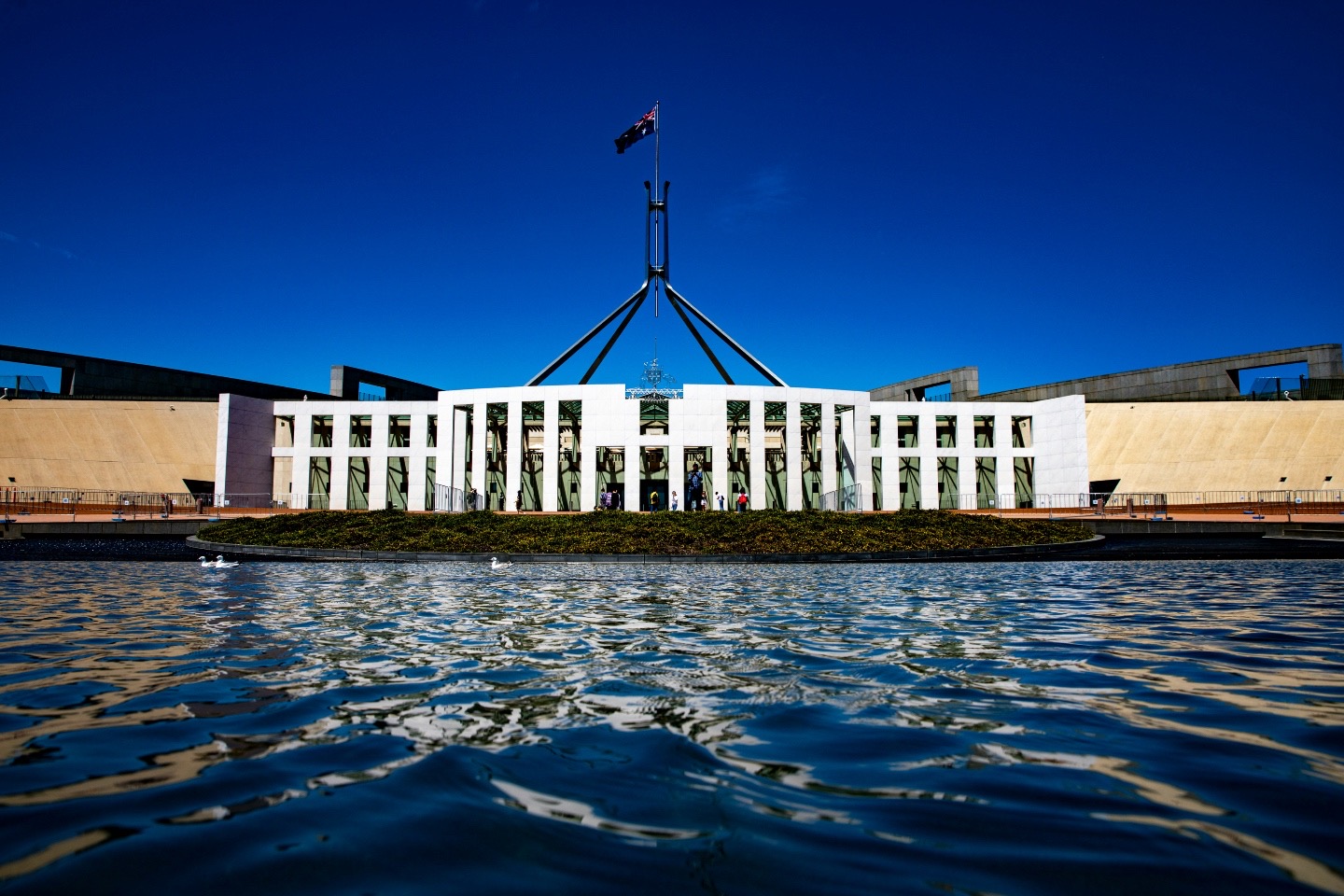
Controversial changes to both the tax system and the NDIS are under negotiation as Labor tries to land a deal with the Greens before parliament breaks.

Motorists will benefit as a cut to fuel taxes is extended for another month, although at half the previous discount.

The combined market cap of the two companies of the RIL group is expected to be around ₹32 trillion. It will nearly match the current combined market value of ₹33 trillion for HDFC Bank, Bharti Airtel, and ICICI Bank.
At present, the market cap of the companies listed on the BSE is nearly ₹478 trillion. For the Nifty 50 set of companies, the market cap is ₹194 trillion, which implies that the RIL group’s market cap will be over 16% of the benchmark index’s market value.
 Agencies
Group share of BSE’s m-cap to rise to nearly 7%, and almost match combined value of HDFC Bank, Bharti Airtel & ICICI Bank
Globally, Elon Musk promoted Tesla and SpaceX together account for nearly 5% of the total market cap of the US companies. After a strong debut on Nasdaq on June 12, SpaceX commands a market cap of $2.4 trillion, while Tesla’s is $1.3 trillion. The market cap of listed companies in the US is over $77 trillion, according to the data from Bloomberg.
Internationally, technology led companies have been driving overall market valuations to record levels. For instance, Samsung Electronics and SK Hynix, the top South Korean companies based on market value, account for nearly 50% of the country’s market cap. In the case of Taiwan, chip maker TSMC contributes over 40% to the country’s market cap.

With crude oil prices falling, would growth be better than the central bank forecast? If yes, then do you think that the need to hike rates is lesser?
Yes, RBI growth and inflation forecasts were based, among other assumptions, on crude oil prices averaging $95 / barrel, which, based on oil futures, now appear likely to be lower. However, disruptions in supply chains could persist for some time, and hence it is difficult to predict the extent of growth recovery in FY27.
The MPC minutes have said that second-order input cost transmission getting embedded in retail inflation will have to be monitored. What would be the first signs visible via data that would suggest visible impact?
Second order effects are likely to manifest in core (non-food and fuel) CPI components, particularly in underlying components (excluding precious metals), indicating the extent of higher input cost pass through to retail inflation. However, it is difficult to forecast second order effects of higher input costs, which will depend on demand elasticities, input substitution and other pass through variables.The RBI Governor’s statement noted a revised FY27 core inflation at 4.7%, up from 4.4% at the April review, and headline at 5.1%, up from 4.6%. Factoring in price trends in other components, it might be possible to estimate specific inflation components.
Are current financial conditions already restrictive enough that a rate hike is unnecessary?
Although the policy repo rate is currently only 15 basis points above the FY27 forecast CPI inflation, money market and short term interest rates remain higher. RBI has also maintained system liquidity at appropriate levels. In addition, the gap between the repo rate and longer term bond yields have also risen much beyond steady state levels. Although MPC quarter wise forecasts of CPI inflation peaks in Q3 FY27, close to the upper band of the target, underlying inflation remains much lower and there are little signs of the economy overheating.
Have conditions eased after the FCNR(B) and ECB packages? Would strong inflows from these schemes reduce the need for any future monetary tightening?
Prima facie, the expected foreign currency inflows will add to autonomous domestic liquidity if even some of the inflows are absorbed by the central bank to replenish its foreign currency reserves. However, financial conditions will depend on RBI’s system liquidity management.Can it be said that growth is a bigger concern for the RBI in the current scenario, especially since inflation is projected at 5.1% and the repo rate is at 5.25%?
At the time of the MPC review, there were risks to both inflation and growth. While high frequency indicators suggested continuing resilience, they indicated a loss of momentum. This was the reason FY27 GDP forecast was a lower 6.6%, compared to the then FY26 estimate of 7.6%.
Softbank-backed robotics firm Coowa plans Hong Kong IPO- WSJ

The biggest difference between the upcoming IPOs in India and the US is not their size but the market mood they are arriving in.
OpenAI and Anthropic are preparing to tap the primary market at a time when enthusiasm over AI has pushed US equities to record highs, creating an almost ideal backdrop for IPOs. In contrast, Jio and NSE are heading to the market in a far less ideal IPO milieu.
While OpenAI and Anthropic enjoy the luxury of launching their IPOs in a market where investors are looking to lap up anything linked to AI, Jio and NSE must do all the heavy lifting, as appetite for Indian equities is far from its peak.
This difference is consequential. Historically, mega IPOs have signalled market tops as issuers look to capitalise on investor frenzy. The logic here is that investors are willing to pay just about anything to be part of the euphoria, ignoring valuation concerns.
This theory, to some extent, resonates with what’s happening in the US, where the loss-making SpaceX listed at a record valuation of $1.8 trillion, making it one of the most valuable companies. Though SpaceX shares are stuttering after the blockbuster debut, the strong showing in the IPO has set the stage for OpenAI and Anthropic in the coming months. There is nothing, for now, to suggest that their IPOs would not sail through unless investors lose faith in the AI theme as a whole.
Shift focus to India: Jio and NSE are preparing to list at a time when Indian markets have delivered no or marginal returns in the past two years. While foreign investors have fled Indian stocks in large numbers, individual investors-the street’s current backbone-are showing less enthusiasm towards equities. Moreover, most recent listings have been far from inspiring.That’s good news for investors. The IPO valuations of both these issuances are likely to be far more sober, with fewer deviations from their listed peers and in sync with the overall large-cap space. Early indications suggest that global investors are considering deploying money in these IPOs, judging them on a standalone basis rather than as part of an India portfolio, given their dominant presence in sectors with high entry barriers.
Some optimists are counting on the Jio and NSE IPOs to give the secondary market a boost, the way Maruti Suzuki‘s IPO in 2003-04 proved to be a turning point for Indian markets. The carmaker’s IPO, coming after the dot-com bubble burst and in the aftermath of the Ketan Parekh scam, was credited with reviving retail participation in equities and improving investor sentiment, signalling the start of one of India’s best bull runs-between 2003 and 2007.
Whether Jio and NSE can have a similar effect is debatable, given the vastly different market and economic conditions prevailing today. Currently, the market is far more mature, with domestic equity ownership at record levels, creating less scope for the entry of a new army of domestic retail investors.
The real test for the Jio and NSE IPOs will not be whether they get fully subscribed; it will be whether the issues can rekindle foreign investor interest in Indian markets. Maruti’s IPO helped bring domestic investors back to the market. Two decades later, Jio and NSE face a bigger task: persuading global investors to give India another look.

Jurgen Klopp slams controversial pundit Rafael van der Vaart | Football
Gold rebounds from one-week low as Iran cites progress in peace talks

Harmanpreet Kaur Throws Fielders Under The Bus As Team India Stare At Shocking Women’s T20 World Cup Exit


-
 Crypto World7 days ago
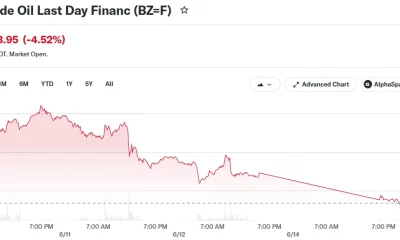
Crude Oil Plunges Over 4% as US-Iran Agreement Reopens Hormuz Strait
-

 Fashion2 days ago
Weekend Open Thread: Miami – Corporette.com
-

 Tech5 days ago
The Adder At The Heart Of Intel’s 8087 FPU
-
 Business2 days ago
Wall Street Week Ahead: Investors see Micron earnings as pulse check of AI rally momentum
-

 Crypto World2 days ago
HIVE shares jump as $220M AI deal speeds Bitcoin mining pivot
-

 Sports3 days ago
FIFA World Cup 2026: Canada beat 9-men Qatar 6-0 to register first ever win | FIFA World Cup 2026
-

 Business3 days ago
Brexit cost 6% of UK economy, Bank of England company data suggests
-

 Business1 day ago
MHP SE 2026 Q1 – Results – Earnings Call Presentation (OTCMKTS:MHPSY) 2026-06-20
-

 Crypto World2 days ago
Jake Chervinsky accuses CME of protecting derivatives monopoly
-

 Business1 day ago
Soccer-U.S. defends Iran World Cup travel restrictions, says discussions ongoing
-

 Crypto World4 days ago
Anthropic’s Dario Amodei Urged AI Unity at G7, Even as US Banned His Models
-

 Tech4 days ago
Weeks Of In-The-Field Testing And A Verdict
-

 Tech4 days ago
Adobe adds its AI assistant to Premiere, Illustrator and InDesign
-

 Entertainment1 day ago
Renter of Home in Anne Heche Crash Denies Settlement With Son
-

 Politics2 days ago
Andy Burnham and the meaning of Makerfield
-
 Crypto World2 days ago
Can Charles Hoskinson Really Rescue Cardano?
-
 Crypto World3 days ago
Iren (IREN) Stock Surges on Jefferies Buy Rating: AI Infrastructure Play Gains Momentum
-

 Politics3 days ago
BBC Reporter Discusses Cross Party Criticism Of Trumps Iran Deal
-

 Tech3 days ago
Instagram Now Lets You Add A Unique Caption To Each Carousel Slide
-

 News Videos3 days ago
IMPACT ON BITCOIN IF NO GOLD IS FOUND IN FORT KNOX
You must be logged in to post a comment Login