

Politics
How Many Wedding Guests Is Normal?


Congratulations are in order for singer Dua Lipa and actor Callum Turner, who tied the knot in Old Marylebone Town Hall over the weekend.
Per The Sun, the “intimate” ceremony involved just eight guests and was followed by a small dinner.
Speaking to HuffPost UK, Nikita Thorne, a wedding planning expert at Guides for Brides, said the Future Nostalgia singer’s low-key nuptials are part of a controversial “shift”.
Guest lists are getting shorter
“Since Covid, we’ve definitely seen a shift towards smaller, more intentional weddings,” Thorne told us.
“During the pandemic, couples were forced to strip weddings back, and for many people, I think that encouraged them to focus more on what genuinely mattered to them… Chic city weddings, private ceremonies and smaller guest lists are now often viewed as aspirational and stylish rather than a compromise.”
In 2025, The Economist wrote, town hall weddings in London’s popular Old Marylebone and Islington venues jumped 29% and 51% respectively.
No matter the venue, the expert said, guest lists seem to be shrinking.
“Currently, we are seeing a significant increase in couples only inviting those with whom they have a direct relationship, often leading to them excluding plus-ones, even when it’s a long-term partner of the guest invited,” Thorne shared.
“This is causing a lot of controversy, but from the couple’s point of view, [it] is understandable if they want the most stress-free wedding surrounded by those who know them well.”
How can I tell if my guest list is too big?
When I asked Thorne if she recommended an upper limit for wedding guests, she said it really depends on the couple.
“Some couples genuinely love the atmosphere and energy of a big wedding. On one hand, larger weddings naturally come with more hosting responsibilities and cost,” she said.
But “smaller weddings can feel more pressured as each guest has more time to spend with you,” too.
Some couples like the combination of a low-key ceremony followed by a more buzzy party (as with Charli XCX, whose wedding was also a town hall do, Dua Lipa and Callum Turner are rumoured to be planning a huge Italian bash later on).
“Be intentional with your guest list,” Thorne said.
“You want to feel relaxed, comfortable and genuinely happy with the people surrounding you on the day.”



A new poll has shown Keir Starmer’s Labour Party is rapidly losing the support of trade unionists. And it seems to be the billionaire-backed Thatcherites and ex-Tories of Reform who are making the most of Labour’s collapse.
Trade unionists overwhelmingly say ‘Labour has lost touch’
Right-wing pollster JL Partners, whose co-founders have deep roots in the Conservative Party, asked 1,002 trade union members about political parties and leaders. And although 48% of the members who’d voted in the 2024 general election said they’d opted for Labour, only 28% said they would do the same today.
Reform, meanwhile, went up from 16% in 2024 to 28% now, despite the party wanting to take a hammer to workers’ rights.
The other winner in the poll was the Green Party, going up from 5% to 12%.
Inside the three biggest unions, which continue to affiliate to Starmer’s Labour:
- Unison members moved from 50% supporting Labour in 2024 to just 28% doing so now. Reform rose from 15% to 25%, and the Greens from 8% to 16%.
- Unite members went from 47% for Labour to 30%. Reform jumped from 20% to 36%, and the Greens only had a slight rise from 3% to 8%.
- GMB members’ backing for Labour dropped from 43% to 22%, with Reform going from 20% to 31% and the Greens only going from 5% to 9%. 50% of GMB members wanted disaffiliation from Labour.
Among the members of these three unions, there seemed to be significant openness particularly inside Unite and the GMB to backing Reform. Having to choose among major parties, they would both mostly opt to affiliate with Reform. That matters for Labour, because both unions donate massive amounts to the party.
If Unison members had to choose to affiliate to any major party, however, they would choose the Green Party (23%) over Labour (22%) and Reform (17%). The University and College Union (UCU) would do the same, with 30% opting for the Greens, 22% for Labour, and only 9% for Reform.
One thing is overwhelmingly clear from the poll, though. The vast majority of members in most unions agree that:
The Labour Party has lost touch with working people
Among all respondents, 62% agreed with that statement, and only 30% disagreed. 58%, meanwhile, believed Starmer needed to step down as prime minister.
Union members want Starmer out, but are unclear on what should follow
The Green Party under Zack Polanski has sought to position itself as the main left-wing challenger to Labour’s domination in the trade union movement, partly by calling Labour out for watering down its workers’ rights package. But the JL Partners poll suggests the Greens need to do a lot more work to convince trade unionists.
The poll respondents firmly believed Reform “represents working people” better than the Greens. Even among sympathetic unions, the Greens trailed Reform by at least 10%. The highest Green score came from the National Union of Rail, Maritime and Transport Workers (RMT), whose members gave Greens 20% and Reform 33%.
The dodgy billionaire money behind Reform is tough to beat. But the Greens and other left-wingers looking to convince trade unionists also need to be clear about why they are much better on workers’ rights than Reform. Trade unionists have already called on Greens, for example, to commit to opposing austerity cuts.
What is obvious, meanwhile, is that trade unionists oppose Keir Starmer and the direction his gang has taken the Labour Party in. They agree on how disastrous his government has been, and have an overwhelmingly negative view of him. What they don’t have is a strong positive view of any other party leader.
In short, this poll is terrible news for Starmer’s Labour. But it also serves as a warning for the left. Because unless we get our act together, Reform has more than enough money to keep benefiting from Labour’s collapse.
Featured image via Getty/Gareth Fuller
By Ed Sykes


US Democratic Party Leader Chuck Schumer joined far-right Israeli Minister Bezalel Smotrich and other far-right Israeli lawmakers and American politicians in the annual Israel Day Parade in New York City over the weekend.
Smotrich, who is wanted by the International Criminal Court, is openly genocidal and has repeatedly called for Israel to completely ethnically cleanse all 1.8 million people from Gaza, so it can ‘be settled’. Smotrich also called to annex the entirety of the West Bank during a speech at a Jerusalem Day rally last month.
Chuck Schumer is marching in NYC alongside a genocidal maniac wanted for war crimes by the International Criminal Court. https://t.co/AHlUhOWfXQ
— Mohammad Alsaafin (@malsaafin) May 31, 2026
A “record-size” delegation of the Knesset, the Israeli parliament, attended the parade, Haaretz reported.
They have to ethnically cleanse us and steal our land so multi millionaire Chuck Schumer can have a just-in-case fascist state to flee to? https://t.co/XbeD00bZz7
— Rania Khalek (@RaniaKhalek) June 1, 2026
American-Lebanese journalist Rania Khalek posted a speech by Schumer at the parade, in which Schumer was lauding Israel as a state standing for the Jewish people.
That’s the Israel that Schumer is lauding — one that ethnically cleanses Palestinians and Lebanese people alike.
Israel and Isaac Accords
Smotrich is reportedly also travelling to Washington to meet with leaders of Latin American countries to expand the Isaac Accords.
Smotrich traveled to Washington in order to meet with leaders of Latin American nations and expand the Isaac Accords, the new diplomatic-economic initiative with Latin American countries, Walla reported.https://t.co/i7EX8VK4uO
— The Jerusalem Post (@Jerusalem_Post) May 31, 2026
The Isaac Accords, which started last year and are funded by money from the Genesis Prize that Argentina’s Milei received in Jerusalem. They are meant to increase ties between Israel, Uruguay, Panama, and Costa Rica.
The Jerusalem Post reported that:
The minister is scheduled to return to Israel as early as Wednesday, after conducting an intensive marathon of meetings in the United States with key Latin American figures.
So there’s Schumer parading with Smotrich, who’s busy making business deals while calling for genocide. The bi-partisan American dream.
Featured image via Getty/Erik Marmour
By The Canary

This week brings yet more evidence of working-class voters having ditched the Labour Party for Reform UK. A new survey reveals that trade-union members, who have historically been very left-wing, are now evenly split between support for Reform and Labour. Astonishingly, Nigel Farage comes out on top as their preferred choice for prime minister. It is Farage, not Keir Starmer, who is perceived as the party leader most likely to benefit working people.
This neck-and-neck result is the result of a 20-point collapse in Labour’s support among union members since the 2024 General Election. In the same period, the proportion backing Reform has increased by 12 percentage points, leaving both parties now tied on 28 per cent.
Perhaps we shouldn’t be shocked that 62 per cent of union members now say that ‘Labour has lost touch with working people’. After all, the recent local-election results showed that Reform has picked up most support in the Brexit-backing working-class communities once branded Labour’s Red Wall. Places like Sunderland fell to Reform despite the council having been held by Labour for the previous 52 years. Even union leaders are forced to concede that ‘the working class has abandoned’ Labour.
In recent years, it has been easy to forget that large trade unions were established to represent working-class people. When unions hit the headlines, it has often been plummy-voiced junior doctors demanding higher wages, or union-backed teachers complaining about the prospect of a Jewish MP visiting their school, or National Education Union (NEU) members being given training on how to most effectively bring ‘the Palestinian struggle’ into the classroom. We have grown used to trade unions failing to defend female nurses who refused to undress in front of trans-identifying male colleagues and, even now, shamefully questioning the Equality and Human Rights Commission’s guidance on single-sex spaces. Today’s trade unions can appear to be elite institutions stuffed full of woke activists.
But not all unions are the same. Interestingly, the new polling data show that Reform comfortably beats Labour among members of two of the biggest unions, Unite and the GMB (originally the General, Municipal, Boilermakers and Allied Trade Union). Unite represents workers from industries including manufacturing, construction, transport, healthcare, hospitality and the services sector. Thirty-six per cent of Unite members back Reform, compared with 30 per cent who support Labour. The GMB organises ‘across every sector, from care and construction to local government, energy, transport and beyond’. Its members opt for Reform over Labour by 31 per cent to 22 per cent. Among Unison members, Labour wins only narrowly, by 28 per cent to 25 per cent for Reform. Unison represents nurses and healthcare assistants rather than doctors, and teaching assistants rather than teachers or university lecturers.
Meanwhile, the unions whose members are most likely to stick with Labour are Prospect (representing professional engineers, scientists, managers and civil servants), the PCS (civil servants) and the NEU (teachers). In other words, we have a tale of two trade-union movements. Union members in working-class jobs are more likely to back Reform, while those in middle-class professions are sticking with the Labour Party.
But there is another divide worth mentioning too, a split not between but within trade unions. There is a growing divide between the union leadership and rank-and-file members. Following publication of this week’s poll, Gary Smith, GMB general secretary, warned his members that Reform is ‘no friend’ of workers, claiming it wants ‘to cancel hugely important union rights and [is] targeting the pensions of the low paid’. Rather than representing the views of the majority of GMB members, Smith is telling them to think again.
Likewise, the general secretaries of Unite and the GMB have blamed the government’s cuts to the winter fuel allowance and green energy policies for Labour’s declining support. Like Tony Blair, they want Labour to make concessions in order to see off the populists.
The unions’ proximity to Labour is becoming an increasing problem for their Reform-favouring, working-class members. Eleven unions remain formally affiliated to the Labour Party, including all three of the GMB, Unison and Unite. This means that a proportion of the monthly membership fees paid by each worker goes directly to the Labour Party. This is supposed to ensure that working-class interests are represented in parliament through Labour – the party unions established to do precisely that over 125 years ago. That no longer makes sense given Labour’s abandonment of the working class. Why should hard-pressed workers be forced to shell out for a party they do not support, and that does not support them, at the behest of their union’s higher-ups?
Yet it seems that even this may be changing. In March this year, Unite members voted to cut their union’s Labour affiliation budget by 40 per cent. This leaves Labour around £580,000 out of pocket.
Yet, despite working-class support plummeting and union dues shrinking, Labour MPs continue to kid themselves that theirs is still ‘the party of working people’. Not any more. Finally, the cosy relationship between trade unions and the Labour Party is unravelling. Working people see that their interests are better represented by populism – and right now, that means Reform.
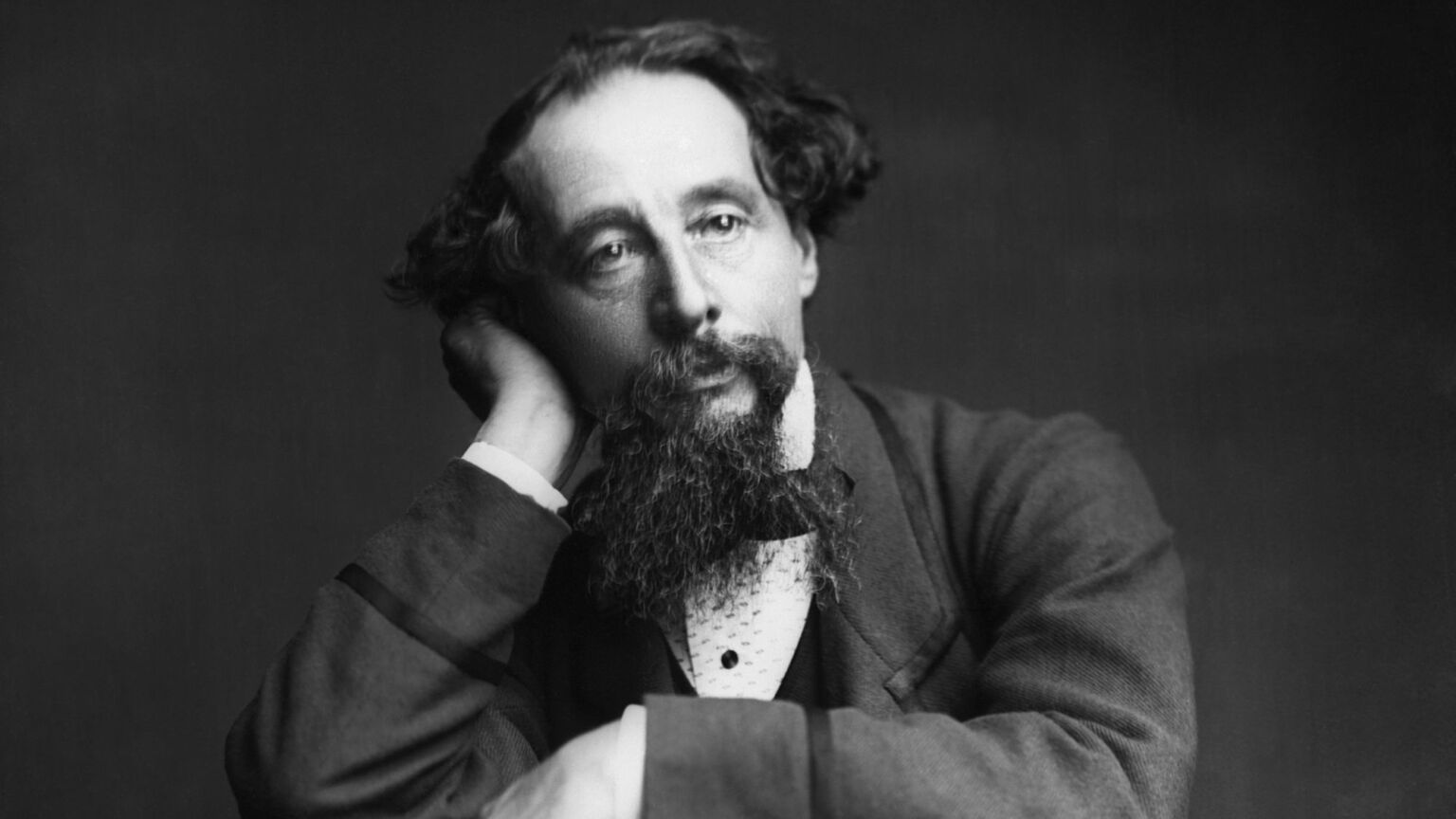
The Guildhall Museum in Rochester hosts a permanent exhibition celebrating the extraordinary life and wonderful writings of Charles Dickens. Yet it has now issued an internal document intended to warn staff about the shameful life and offensive writings of Charles Dickens.
The charge sheet alleges the usual offences against all things nice, and is no doubt written with genuine alertness to the possibility that the museum staff are incapable of coping with ‘the darker part of the writer’s oeuvre, including his lack of universalism’. Among other things that alarm the museum staff are Dickens’ support for the British Empire and ‘not for its diversity’, his calls for retribution following the 1857 Indian Mutiny and his mockery of missionaries. Dickens, it warns, had opinions that ‘can cause great offence today’ – the full horror of which we can only guess at, since he seems to have deleted his social-media accounts.
I don’t know if it’s a new thing, this attempt by a public museum to effectively cancel itself, but you have to wonder if it’s the inevitable reductio ad absurdum of cancellation movements. All revolutions eventually come after their own, after all. But it is a bit unusual for this to happen at the level of a local heritage resource.
It is also quite funny when you think about it. We are now approaching a point where there is little for the satirically inclined social commentator to do other than itemise what the grievance fetishists are up to and let their ludicrousness speak for itself. I’m sure Dickens himself would have some real fun with the whole business.
Roger Scruton said that he was brought up to believe one should strive not to cause offence, but these days too many people work tirelessly to take it. This being the case, it might, on occasion, be only polite to offer them what they so desperately want. If somebody has developed the habit of finding trivial things upsetting, the best way to help them is to ridicule them into different ways of being. Indeed, if the disputable opinions of a writer who died 156 years ago offend you, then for your sake, you need to be made fun of.
Aristotle made a similar point some 2,400 years ago. In De Anima, he argued that there is such a thing as an ‘education of the emotions’. So too did the Medievalists and the Scholastics who were able to develop a sophisticated moral psychology in which the ‘ethics of feeling’ – and the value of concepts like shame – were rightly taken to be central. Sometimes it is instructive to find oneself upset. And sometimes, it is an act of charity to be the cause of such upset.
When a writer is as astute as Charles Dickens, the danger is that a fond observation of the times in which he wrote is taken as the same thing as endorsement. The Rochester case is just one more expression of retroactive cancel culture, which urges us to reassess our best writers and thinkers through the lens of present sensibilities. There are many who would happily vaporise the national memory by going after the literature, philosophy and traditions of Common Law that currently preserve it. Unfortunately, the majority of these culture warriors were distributed throughout the arts and heritage structures of the public sector while the rest of us weren’t looking.
The targeting of Dickens is telling. While he may have written within the supposedly disqualifying prejudices of Victorian England, he managed to do so with an eye to the essentials of human beings, their failings and their absurdities. As such, he was ‘universalist’ in the only way that actually matters. People are people, no matter the era they find themselves in. Indeed, if we look at the past and find it wanting, we ought to be mindful that if it were able to look right back at us, it might feel just the same way.
Sean Walsh is associate editor of Country Squire. Find him on Substack here.


The Refugee and Migrant Children’s Consortium (RMCC) has spoken out against government plans to access asylum seekers’ age using AI.
On Friday 29 May, the Home Office announced plans to use AI in cases when an asylum seekers’ age is in dispute. However, the RMCC warned that the scheme could lead to yet more wrongful detentions of vulnerable children in adult facilities.
The news follows April’s revelations from the independent Humans for Rights Network, which exposed the fact that the Home Office routinely detains so-called “age-disputed children” as adults. Of the 76 age-disputed detainees at the time, 26 had been — or were in the process of being — reassessed as children by Social Services.
Just get an AI to do it…
Most of the unaccompanied children who brave the journey to the UK in search of asylum are 16-17 years old. The Home Office’s own data shows that social workers are more than twice as likely to confirm that these individuals are minors compared to assessments carried out by immigration officers.
Ultimately, over two-thirds of the age-disputed individuals are confirmed to be their stated age. Nevertheless, Labour choose to focus on the ‘threat’ of the perceived adult migrants.
Alex Norris, the minister for border security and asylum, argued that:
For too long, adult migrants making false age claims have exploited the system and diverted vital support away from children at risk.
That is why we are rolling out AI technology to put a stop to this, ensuring those who game the system are identified, detained and removed without delay, and those who deserve support and protection are given it.
That now-familiar appeal to AI is part of Labour’s massive push to use the technology across vast swathes of public life – including policing and the court system.
Private sector enrichment
Of course, that AI-push has also seen massive amounts of public money pad the pockets of tech-sector CEOs. One company alone – genocide-linked Palantir – currently holds over £500m in public contracts, from the NHS to law enforcement.
The government’s machine-learning obsession was championed by Tony Blair and his eponymous think-tank, which just happened to take a £250m donation from AI-specialist CEO Larry Ellison.
With regard to refugee age verification, the Home Office handed a 3-year, £322,000 contract to Akhter Computers Ltd for testing and development.
But what exactly is the AI technology that Labour is aiming to deploy in this particular case? Friday’s Home Office announcement explained that:
Facial Age Estimation (FAE) uses machine learning technology to estimate an individual’s age within seconds by analysing a facial photograph without further information about the individual. […]
FAE is not the same as facial recognition technology. While both use artificial intelligence, they serve different purposes and use different algorithms. Facial recognition compares an image against a database to identify a person. FAE does not identify individuals and does not search any databases. It only estimates an age from an image.
The Home Office isn’t using FAE at the present moment in time. However, the department plans to spend the remainder of the year testing the technology ahead of a rollout in 2027.
‘Problems with bias and inaccuracy’
However, the plans have met with strong opposition from organisations representing young refugees. Kamena Dorling, co-chair of the RMCC, stated that:
The government’s proposals are deeply concerning. AI cannot account for the factors that can significantly affect a young person’s appearance after fleeing conflict and persecution and undertaking dangerous journeys, including trauma, malnutrition, and exhaustion.
Existing evidence also shows that AI faces the same problems with bias and inaccuracy as human decision-making, with similar patterns of errors.
Whilst it may seem intensely obvious, the fact that children fleeing active warzones might look older than their years apparently escaped Labour’s notice.
Likewise, as Dorling said, AI has a tendency to replicate human errors, rather than eliminating them. Meanwhile, it obscures those errors in a cloak of cold, algorithmically-determined ‘fairness’.
‘A false sense of certainty’
Senior policy analyst and consortium member Kama Petruczenko, of the Refugee Council, said:
The government’s own figures already show that hundreds of children are being wrongly treated as adults following flawed visual assessments at the border, with devastating consequences for their safety and wellbeing.
AI and facial age estimation technology are not a simple or risk-free answer to these longstanding problems. Poor image quality and bias in datasets can also affect accuracy.
There is a real danger that this technology creates a false sense of certainty in decisions that are already extremely difficult to get right. If flawed assessments are simply automated, more children could end up wrongly placed in adult accommodation, detention centres or even prisons.
The government has already shown an awareness of these biases. However, beyond vague statements about trying to minimise errors, it simply doesn’t care. The Home Office announcement stated that:
There is evidence in testing data that FAE performance can vary depending on ethnicity, skin tone, gender, place of birth and quality of input image. NIST [The National Institute of Standards and Technology] found that error rates were almost always higher for female faces, although it didn’t find out why as testing was purely on performance rather than how algorithms work.
Vendors take bias seriously and commercial FAE technology is trained to be representative of the broadest possible demographic range of potential users.
‘The technology is racist and sexist, but we’re sure the people selling it to us are doing their best’. Well that’s all fine then, please carry on.
The RMCC will release its full report, titled ‘Benchmarks and Borders: the use of facial age estimation to assess the age of unaccompanied young people seeking asylum’, in June this year. If the current state of Labour’s AI policy is anything to go by, the consortium will have no shortage of criticisms to fill its pages.
Featured image via Leon Neal / Getty Images

The director of Backrooms has revealed he’s already got ideas for more films set within the film’s bizarre universe.
Released last week, Kane Parson’s critically-acclaimed new horror movie centres around the lonely owner of a struggling furniture shop, who stumbles upon an unsettling other dimension through the wall of his store’s basement.
As he progresses further into the seemingly limitless space, he becomes increasingly obsessed with what he discovers and how it relates to the world outside.
During a new interview with Variety published on Backrooms’ release date, its director teased: “Without a doubt, Backrooms has always been planned to be more of a series that goes outside the confines of this film.
“If anything, I would say this is a bit of a foot in the door that would lead to more of a progression towards the true root of the narrative, which has been set up online for years. But a version that maintains accessibility and lets this be the way in.”

He continued: “For people who are into it, I’ve got a contract, and I got a hold at my end, and that means I am definitely not done with Backrooms.
“I’ve got very specific things that I’m working on, things are in the works right now that I am eager to be able to talk about, but, currently, it’s still in a secret mystery world.”
Backrooms’ origin story is a bit of an interesting one in itself.
The idea stems from a 4chan post from back in 2019 showing an environment similar to the one seen in the Backrooms movie, which then became its own “creepypasta” (an online term for a widely-shared horror story that gains notoriety and viral fame by being copied and pasted around various corners of the internet) when someone came up with text to accompany it.
While Backrooms’ original “creepypasta” was shared anonymously, Kane Parsons began a YouTube series based on the idea in 2022, the success of which led to his new film.
He added to Variety that he has no intention of “leaving YouTube behind” now he’s crossed over into feature-length filmmaking.
“I immensely enjoy the work I’ve done there, and I feel creatively fulfilled by it in a way that’s proportional to what I’ve done with this film,” he insisted. “I personally think there’s merits, because there’s a lot of projects that I just could never do outside of YouTube, or outside of a more free-form internet multimedia container.
“So I wouldn’t limit myself just to one spot, but I do think it’s a way of saying that I’ve got a bit of a good thing going right now that I want to utilise with the energy and positivity around this film.”
Backrooms is in cinemas now.


The Home Office has banned left-wing commentator and TV host, Cenk Uygur, from entering the UK, on Israel’s behalf. He is a vocal critic of pro-Israel influence over Western governments. Cenk Uygur has highlighted the irony of the UK ban over X. He said:
if I had said that the Israeli government controls the British government so thoroughly that they’ll ban someone from coming to the UK just for criticizing Israel, they would have said that was an antisemitic statement.
The commentator noted that he was banned not for any views or opinions he’s expressed about the UK.
Uygur argued that “Israel controls the American government,” largely because the pro-Israel lobby in the US channels significant financial support to members of Congress. He presented this as the main issue for Starmer’s government. While this is an overly simplistic and debatable political argument, it is not inherently a religious one. Nevertheless, some pro-Israel voices in the UK claim otherwise.
The UK banning Cenk Uygur for criticising Israel’s genocide in Gaza and US support isn’t just an attack on free speech, either. It also carries an antisemitic implication. This implication falsely equates criticism of genocidal war criminals with hatred of a whole religious group.
The British government is saying they're banning me because I am "a serious risk to the public order" due to my criticism of Israel.
They say that my charge that Israel controls the American government through donations to 94% of Congress, while factual, is antisemitic…
— Cenk Uygur (@cenkuygur) May 31, 2026
Cenk Uygur had previously called for the US to assert independence from pro-Israel interests during an appearance on Piers Morgan‘s talk show. After the UK decided to ban Cenk Uygur, Morgan has defended his guest, emphasising that he was making political rather than religious points:
She is a disgusting bigot who spews constant vile hatred against Muslims for being Muslim. Where has Cenk Uygur ever said anything hateful and bigoted against Jews for being Jewish? https://t.co/4TBnhNL9La
— Piers Morgan (@piersmorgan) June 1, 2026
Green Party leader Zack Polanski, has also called out the government’s cynical move. The Jewish politician lamented how the Labour government was:
doing everything possible to silence criticism of the Israeli government.
He called the ban of both Cenk Uygur and fellow Israel critic Hasan Piker “a really grim decision”:
This is a really grim decision alongside Cenk.
People often talk about dangerous road we'd go down under a Reform government – this is another clear warning we're down there already. A Labour government doing everything possible to silence criticism of the Israeli Government. https://t.co/XS8GKEFJMe
— Zack Polanski (@ZackPolanski) June 1, 2026
It’s one thing for a government to challenge people spreading hatred of entire religious or ethnic communities. It’s another entirely when a government decides to limit political debate on behalf of a country currently committing genocide. And that’s exactly what has just happened.
Featured image via the Young turks / YouTube
By Ed Sykes

!function(n){if(!window.cnx){window.cnx={},window.cnx.cmd=[];var t=n.createElement(‘iframe’);t.display=’none’,t.onload=function(){var n=t.contentWindow.document,c=n.createElement(‘script’);c.src=”//cd.connatix.com/connatix.player.js”,c.setAttribute(‘async’,’1′),c.setAttribute(‘type’,’text/javascript’),n.body.appendChild(c)},n.head.appendChild(t)}}(document);(new Image()).src=”https://capi.connatix.com/tr/si?token=19654b65-409c-4b38-90db-80cbdea02cf4″;cnx.cmd.push(function(){cnx({“playerId”:”19654b65-409c-4b38-90db-80cbdea02cf4″,”mediaId”:”573ffb5a-4e35-48ea-8bef-be1498f04ac9″}).render(“6a1d92e0e4b0ba317300e95b”);});

This article contains spoilers for Obsession.
As word of mouth continues to spread, Obsession remains one of the most talked-about films of the year right now.
The latest big-screen offering from former YouTuber Curry Barker centres around close friends Bear and Nikki, whose worlds are turned upside down when the former makes a wish for the latter to love him “more than anyone in the fucking world” – only for it to come true, with disastrous and tragic circumstances.
By the end of the film, almost all of the main characters are dead, aside from Nikki, whose realisation about what has transpired comes only after Bear has taken his own life and the wish’s hold is released.
However, it turns out this wasn’t the original ending that Curry had in mind.
Speaking to Entertainment Weekly around the film’s release, the filmmaker revealed it had originally been his intention for Nikki to kill herself too, drawing comparisons between a Shakespearean tragedy.
“I was really obsessed with this Romeo and Juliet ending, actually,” he claimed, revealing that he was originally adamant that Nikki should die, and even filmed this conclusion to the film.
Curry recalled: “We had shot a ton of different versions of the official ending, the one that’s in the script, the one that I was excited about, and I was like, ‘Okay, we’ll do one ending where [Nikki] survives, but we’ll just do one take of it, and then we’ll move on’.”
However, in the end, actor Inde Navarette’s “performance was so good” that everyone who saw the ending where Nikki survives convinced Curry that this was the one he should go for.
“I just remember my dad and multiple people around me being like, ‘Dude, I think it’s way more disturbing if she just survives this thing’,” he revealed. “I was like, ‘Ah, you’re right’. And so we switched it.”
Obsession has so far been a hit with critics and cinemagoers, with an enviable critical score of 96% on Rotten Tomatoes and 4.2 stars from fans on Letterboxd.
Curry has also addressed the possibility of another film set in Obsession’s in-universe, albeit with new characters, while Inde has made it clear she’d be up for playing Nikki again if the opportunity arose.
Obsession is in cinemas now.

A trade union boss has dismissed Nigel Farage’s claim that Reform UK is now the party of the working class.
He spoke out after new polling showed that union members are now just as likely to vote Reform as they are Labour.
The Times reported that 28% of them would now back Farage’s party, the same proportion as back Labour.
It follows a remarkable turnaround in the fortunes of both parties since the general election in 2024.
At that time, just 16% of trade union members backed Reform, while 48% supported Labour.
Reacting on X, Farage said: “Labour is no longer the party of the patriotic working class. That mantle now belongs to Reform.”
But speaking to HuffPost UK last month, Unite general secretary Sharon Graham pointed out that Farage’s voting record in the House of Commons flew in the face of his claim to speak for working people.
She said: “The reality is that Nigel Farage has shown no indication to me that he’s the voice of workers. He voted against the Employment Rights Act, for example.
“He’s said that when he goes into the local authority areas he’s going to be looking at [cutting] local authority pensions. So to me, if your go-to lever in terms of what is happening in councils is to attack workers, then you can’t be the voice of workers. That is just the reality of it.”
Graham said she had “put Reform on notice” that Unite will fight any attempts by the party to attack the rights of public sector workers.
“We will not accept that in any way, shape or form,” she said.
“I’ve been asked would Unite work with Reform. I’m on record saying I’d dance with the devil if it was something that was important to my members. But the broader issue here is ‘is Reform the party of workers’? No, it isn’t.”
She added: “I very often hear words about people backing workers, it’s very different when you’re asking them to do something about that.
“If Reform go after workers in local councils, then Unite will be going after Reform.”
However, Graham also accused Labour of “abandoning” the party’s traditional working class supporters.
She said: “The problem that Labour have is that they are supposed to be the voice of workers, and essentially workers feel abandoned by Labour.
“The working class feels abandoned by Labour, and now the working class have abandoned Labour. The question is can Labour get that back?
Subscribe to Commons People, the podcast that makes politics easy. Every week, Kevin Schofield and Kate Nicholson unpack the week’s biggest stories to keep you informed. Join us for straightforward analysis of what’s going on at Westminster.

Shocking trade union poll is terrible news for Starmer’s Labour

Naomi Osaka reveals latest French Open outfit for night match against Aryna Sabalenka

What happened to Afghanistan’s female academics?

Steven Gerrard disagrees with Gary Neville over ‘shock’ Chelsea and Arsenal claim | Football

US brings back mandatory military draft registration

Register Renaming | Hackaday

It’s 4 DAYS AWAY!!! XRP WHALES ARE GOING TO BUY NEWS!!!

How Much Money Does He Make from the Gold Dust He Has Been Saving? #shorts #gold #viral #money

All Banking Exam in 2026 | Banking & Financial Awareness | GA Practice Set-164 I By Chandan Sir
-

 NewsBeat5 days ago
Israel says it has killed new Hamas military leader in Gaza City airstrikes
-

 Tech5 days ago
NASA taps Blue Origin to deliver lunar rovers for Moon Base initiative
-

 Sports7 days ago
2026 NBA Finals schedule, odds: Knicks await Thunder or Spurs after winning East
-

 News Videos6 days ago
XRP *JUST* SUCCEEDED!!!! CLARITY ACT EXPOSED!!! (SHE EXPOSED IT)
-

 News Videos3 days ago
This is BROKEN! INSANE 5x MONEY CAR WASH WEEK! The NEW GTA Online UPDATE Today! (GTA5 New Update)
-
 Crypto World6 days ago
Micron Crosses $1 Trillion Market Cap as AI Demand Reshapes Memory Sector
-

 Business6 days ago
Selena Gomez Reportedly Upset Over Benny Blanco’s Comments on Her ‘Terrible’ Diet
-

 Business7 days ago
Nikkei 225 Surges Past 65,000 for First Time as Iran Peace Hopes Fuel Record Rally
-
 Tech7 days ago
China assigns ID codes to 28,000+ humanoid robots
-

 Tech4 days ago
Waymo dominates autonomous vehicle registrations as Tesla trails behind
-
 Entertainment7 days ago
‘Breaking Bad’ Star’s Easy-to-Binge 6-Part Crime Series Spin-Off Is Finally Heading to Free Streaming
-
 Tech2 days ago
SpaceX just won a second Golden Dome contract. This one is $4.16 billion.
-

 Tech5 days ago
The Samsung pay deal is the moment Korean unions changed register
-

 Entertainment6 days ago
Days of our Lives 2-Week Spoilers May 25-June 5: Gwen Rages, Abe Confesses & 2 Tragic Anniversaries!
-

 News Videos3 days ago
SHE IS KILLING XRP!!! WATCH URGENT AND ACT FAST
-
 NewsBeat3 days ago
FIRST NIGHT REVIEW: Take That bring the Circus back to life in spectacular sun-soaked style
-
 Entertainment7 days ago
Taylor Swift Fans Label Travis Kelce’s Beer-Chugging A ‘Red Flag
-

 Tech6 days ago
Millions of AI agents imperiled by critical vulnerability in open source package
-
Crypto World5 days ago
SpaceX’s $2 Trillion IPO: Why Tech Giants Nvidia (NVDA), Apple (AAPL), and Microsoft (MSFT) May Face Pressure
-
Crypto World3 days ago
CFTC Has Approved the First Regulated Bitcoin Perpetual Contract in the U.S.
You must be logged in to post a comment Login