Apart from my academic training in Biology and Chemistry, I hold a Ph.D. in Environmental Science with a specialization in Bio-Medical Waste Management. My areas of research and analysis include clean technologies, renewable energy, pollution control systems, and environmental compliance solutions. I follow companies operating in these sectors using a research-driven approach that integrates regulatory trends, sustainability metrics, and scientific evaluation to assess long-term growth opportunities, risks, and value potential. By actively tracking and analyzing companies engaged in environmental management, renewable energy, and green technologies, my work aims to blend scientific depth with market analysis to provide practical insights that help investors understand financial outcomes and emerging opportunities. At a personal level, I also provide free stock market consultation to a select group of friends, relatives, and former colleagues. I am associated with Seeking Alpha analyst Eudaemon Research.
Analyst’s Disclosure: I/we have no stock, option or similar derivative position in any of the companies mentioned, and no plans to initiate any such positions within the next 72 hours. I wrote this article myself, and it expresses my own opinions. I am not receiving compensation for it (other than from Seeking Alpha). I have no business relationship with any company whose stock is mentioned in this article.
Seeking Alpha’s Disclosure: Past performance is no guarantee of future results. No recommendation or advice is being given as to whether any investment is suitable for a particular investor. Any views or opinions expressed above may not reflect those of Seeking Alpha as a whole. Seeking Alpha is not a licensed securities dealer, broker or US investment adviser or investment bank. Our analysts are third party authors that include both professional investors and individual investors who may not be licensed or certified by any institute or regulatory body.
The call comes two weeks before nominations open to replace Sir Keir Starmer
Henry Saker-Clark, Press Association Deputy Business Editor and Hannah Baker South West Business Editor
22:30, 24 Jun 2026
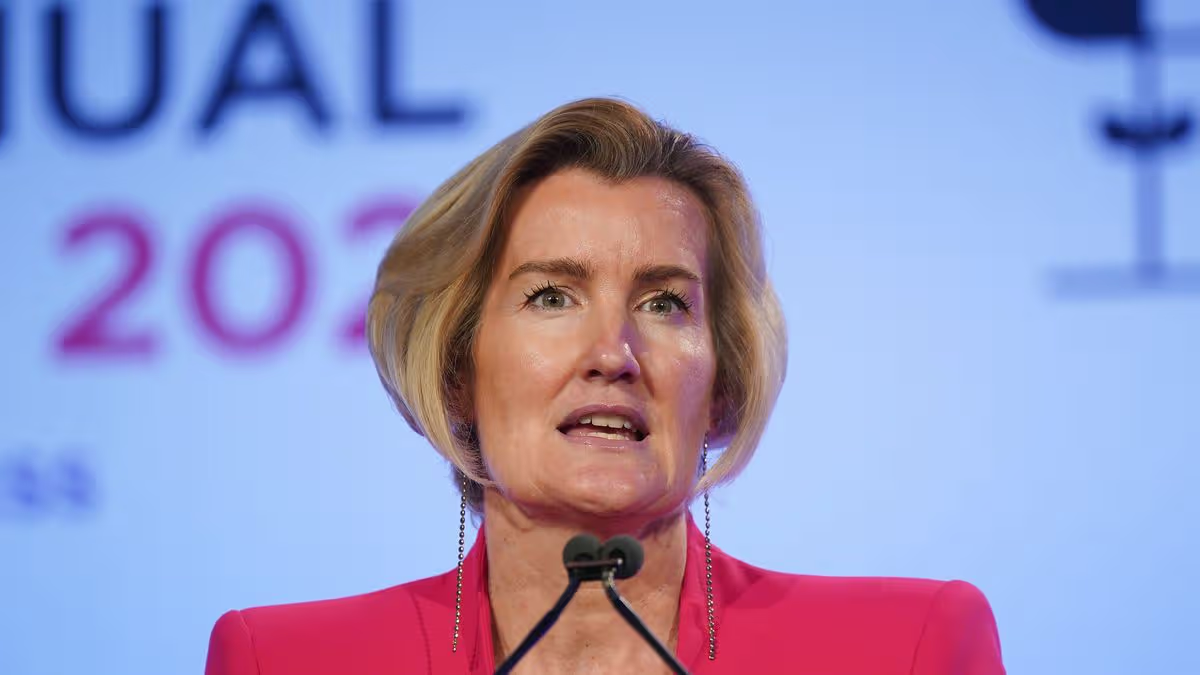
Shevaun Haviland, Director General British Chambers of Commerce
The next prime minister and chancellor must ease burdens on business in order for the UK economy to prosper, the boss of the British Chamber of Commerce will warn on Thursday.
Shevaun Haviland, director general of the BCC, is set to tell the business group’s global annual conference on June 25 that successive governments have “hobbled” business prospects over recent years.
Advertisement
Current Chancellor Rachel Reeves, who is widely predicted to be replaced if Andy Burnham becomes prime minister, is also due to speak at the conference.
The event comes around two weeks before nominations open to replace Sir Keir Starmer, with Mr Burnham currently the only candidate to have openly laid out their leadership ambitions.
Ms Haviland called on the next prime minister to resist further cost increases for firms.
Businesses have witnessed increases to national insurance contributions and the national minimum wage in recent budgets, as well as other taxes such as the packaging levy introduced earlier this year.
Advertisement
The BCC chief is set to say: “At a time of huge economic shocks and global headwinds, successive UK governments have chosen to pile more and more cost on companies. That is no way to run an economy.
“So, if we want to see growth – our political leaders must reduce the burdens on business. Taxing businesses more, would be a road to ruin.”
In her speech, she will also tell firms and industry leaders that improved business confidence is needed to help improve economic growth.
The Chancellor has made stronger economic growth a key ambition for the Government, but it is has come under pressure amid weak consumer confidence and global economic uncertainty.
Advertisement
Most recent data showed that the economy contracted by 0.1% in April amid signs the conflict in the Middle East was impacting some UK sectors.
She said: “The difficult truth is, whoever leads the UK, the primary challenge remains the same – delivering growth.
“Outside of the pandemic rebound, UK growth has flatlined year after year. And this economic malaise is nothing new or attributable to the policies of a single government. Despite all our strengths, we are failing to fulfil our potential.”
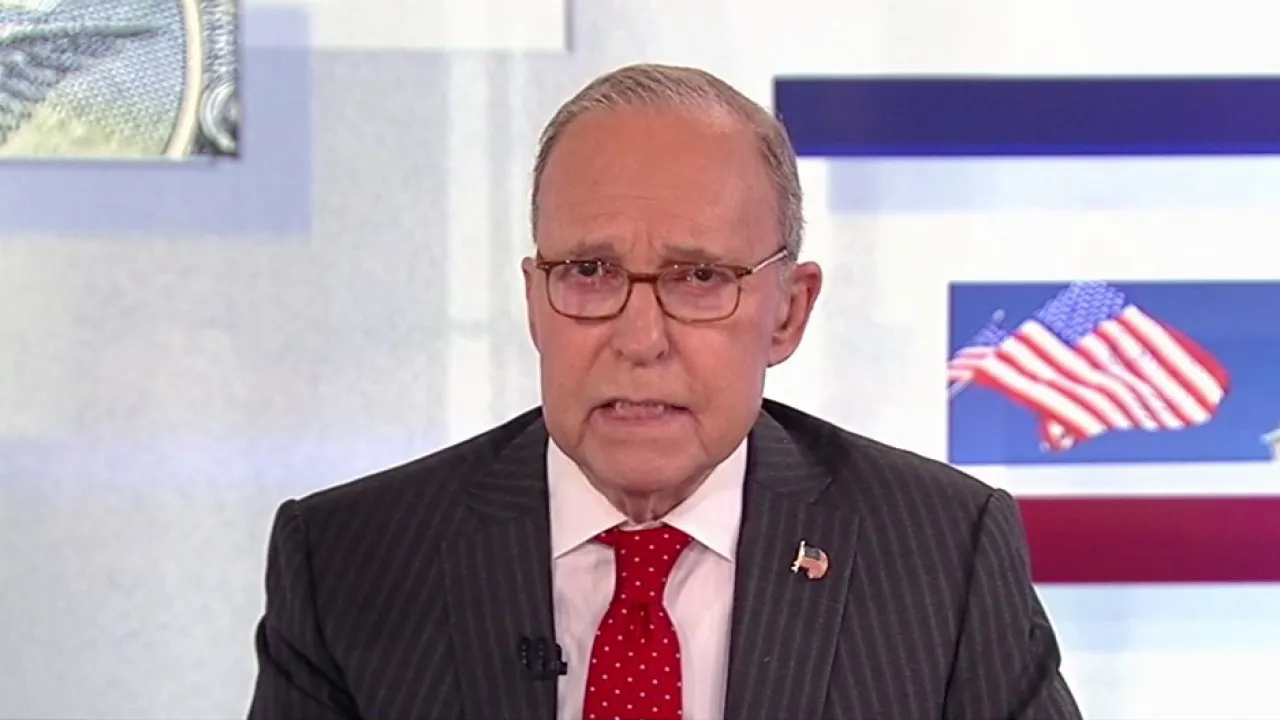
FOX Business host Larry Kudlow calls out antisemitism, hatred, and bigotry aimed at Jewish people on ‘Kudlow.’
So Mayor Zohran Mamdani and his socialists had a big night last night. And I believe the absolute worst part of those victories yesterday, was the sheer unity message of antisemitism, hatred, and bigotry aimed at Jewish people that animates and unites this Mamdani Socialist movement — and their hope that they will someday drive the entire state of Israel out to the sea. Destroy it.
This Jewish bigotry is the worst part of the story. I’m gonna get to their crazy socialist economics in just a moment. Yet at the city with the largest Jewish population in the world outside of Israel, this antisemitic bigotry is astonishing and heartbreaking. And demoralizing. And it has somehow got to be stopped.
Advertisement
We know millions of Jewish people immigrated here from Eastern Europe and elsewhere down through the years, along with Irish, Italian, Polish, Catholics, and people from all walks of life, all religions, and all ancestries. New York was a melting pot. New York City was a great vortex of tolerance. Respect for our differences. Now it has become a place of multiple hatreds.
In a recent voter survey, half the people said life in the city feels worse than it did just a year ago. Maybe that’s the Mamdani hatred factor. It’s astonishing that New York is trapped by these kinds of hatred. Democrats like Mario Cuomo and Hugh Carey would never have stood for this.
Fox News contributor Byron York and political analyst Reince Priebus assess the rise of socialist candidates in New York City on ‘Kudlow.’
Nor would Republicans like George Pataki or Rudy Giuliani. Mike Bloomberg, certainly not. Ed Koch, certainly not. Yet I think a lot of this antisemitism began during the Bill DeBlasio years, and the crazy left-wing socialist staff that he brought with him — and now yes it continues through Mr. Mamdani, and it must be stopped. It is the most corrosive factor eating away at the lifeblood of New York City. And this is a place where I have lived and worked for the better part of 50 years. I’ve seen the city at its greatest. I have seen the city in the dumps. Right now it’s in the dumps.
Advertisement
But you know what? More than the sagging economy or worries about crime, and education and other lifestyle things — it’s the daily losing ground to Florida, Texas, the Carolinas, and elsewhere, more than all of that is the Jewish hatred that is destroying our city.
To be sure, the Mamdani socialist platform of taxing wealth, alienating businesses, open borders, abolishing ICE, blaming cops, free-government everything, green new deals, packing the Supreme Court, rent controls, housing takeover, and all the rest, all of that is killing the economy and is wrecking affordability.
The Mamdani socialists don’t represent America. That’s a good thing. Republicans, to be sure, must emphasize their themes of freedom, free enterprise, and opportunity and tolerance. Yet it’s the antisemitism that’s destroying New York City. And that’s the part that hurts this New Yorker the most.
U.S. Treasury Secretary Scott Bessent emphasizes that economic security begins at home, driven by building and financing industries like semiconductors and AI. He states these are sources of national power and the US must lead in each sector.
Treasury Secretary Scott Bessent on Tuesday outlined the Trump administration’s approach to economic statecraft in a speech in which he outlined five core principles guiding the White House’s strategy.
Bessent spoke Tuesday night at the Economic Club of New York’s America 250 gala dinner and said that as the nation celebrates that milestone, it requires Americans to “reflect on the creation of our country, of course, but no less, on its condition.”
Advertisement
He said that as America shaped the postwar world order, it made choices that have created vulnerabilities that led strategic industries and critical supply chains to migrate overseas, as well as expose U.S. firms to face unfair competition abroad.
“We’ve emboldened other countries to exploit our dependence as leverage. And to repair those imbalances with the world is not to retreat from it. On the contrary, it is to engage on terms that make America stronger. It is to insist on trade that is fair, reciprocal, and consistent with our national interest,” Bessent said. “And it is to more closely bind what we should have never allowed to cleave: our economic and national security.”
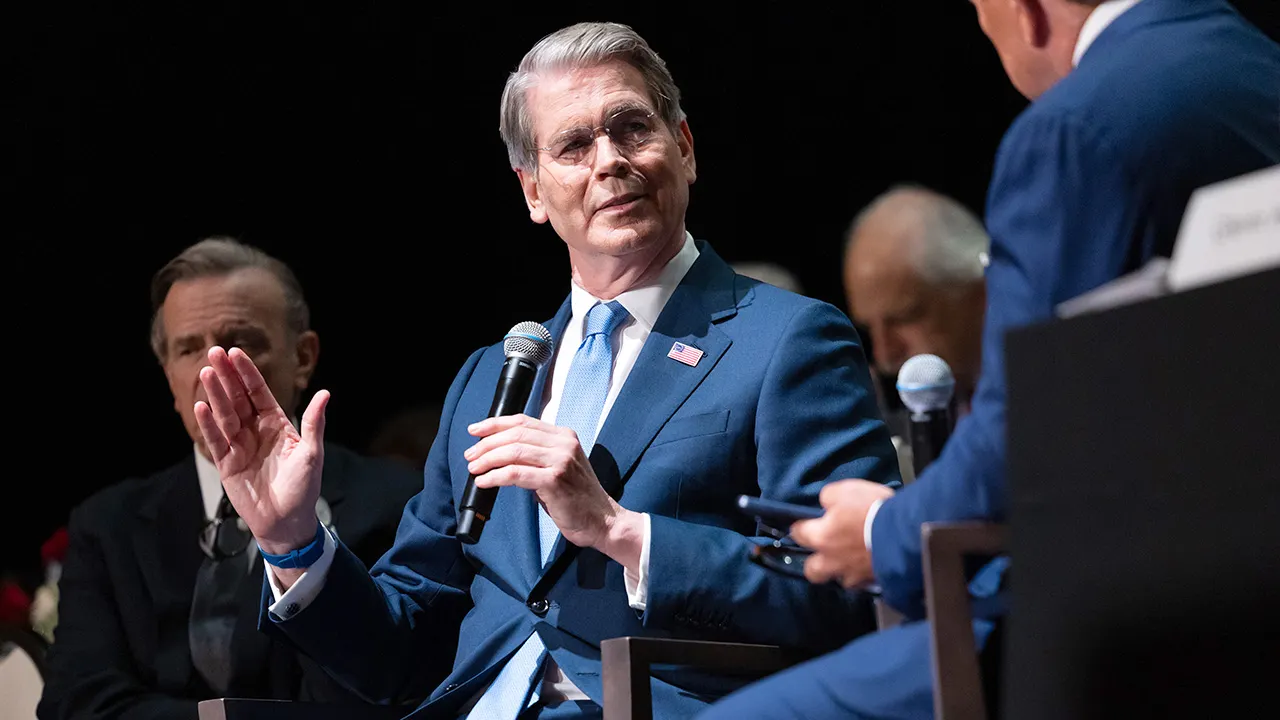
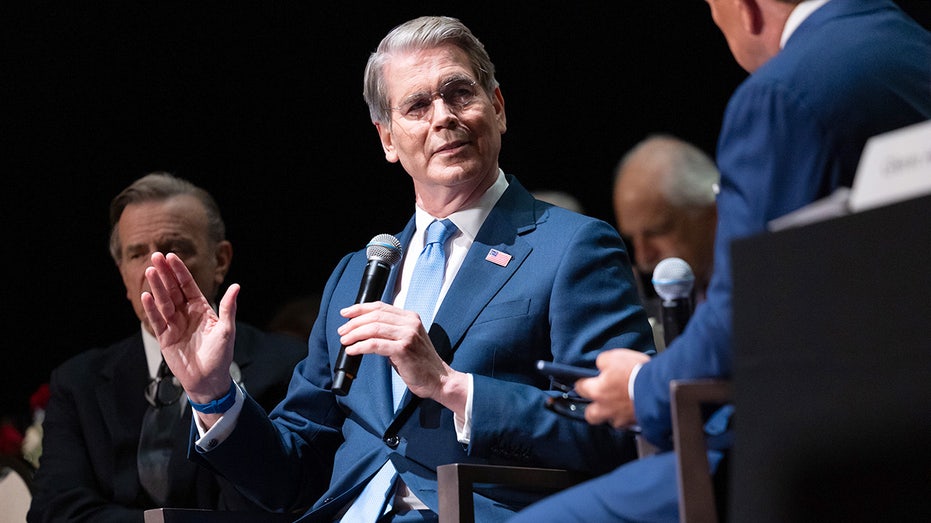
Treasury Secretary Scott Bessent outlined the Trump administration’s core principles for economic statecraft at the Economic Club of New York. (Krisanne Johnson/Bloomberg via Getty Images)
Bessent discussed five core principles for the Trump administration’s approach to economic statecraft. Here is a breakdown of the key points from each.
Advertisement
National capacity
Bessent said that the modern economy requires the U.S. to assume a leadership role in areas ranging from semiconductors, artificial intelligence (AI) and quantum computing, to advanced manufacturing, critical minerals and pharmaceuticals.
He added that in the modern economy, “supply chains are the domain in which that leadership is tested, which requires a hard look at the resiliency of those supply chains.
“Of course, supply chain resilience does not require every component to be domestic from beginning to end. That would be unrealistic and unnecessary. But it does compel us to know where our vulnerabilities are and to reduce them before a crisis rears itself,” Bessent said. “It requires diversifying away from dangerous concentrations.”
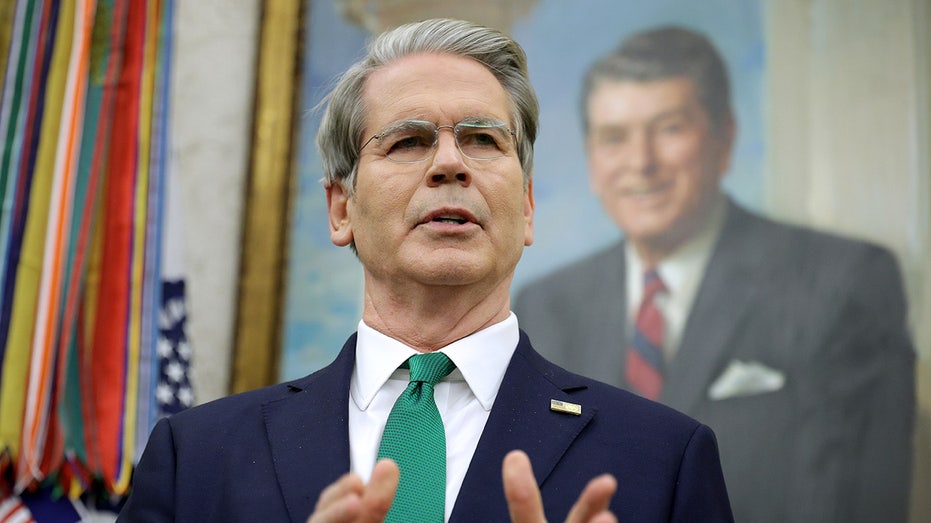
Treasury Secretary Scott Bessent said the U.S. needs to lead in key aspects of the economy. (Alex Wong/Getty Images)
Trade reciprocity
Bessent said that the U.S. is the “best economic partner in the world” due to the depth and dynamism of its markets, the dollar’s dominance and innovation throughout the economy – though he said those benefits aren’t unconditional for U.S. trading partners.
“Countries cannot seek access to our market while denying fair access to theirs,” he explained while criticizing discriminatory taxes, industrial policies, intellectual property transfers and efforts to evade sanctions.
He said that while the U.S. and other countries alike have the right to regulate in ways that serve their own public interests, there is a discernible difference between that and discrimination against American firms which the administration wants to remedy.
Bessent said that the next era of economic competition will be more nuanced and that failing to lead efforts to help write the rules of the new economy could allow authoritarian or mercantilist systems to create a global economy that would “become more coercive and less favorable to American interests.”
“If America and our partners set open, secure, market-based standards, then the 21st century economy will tilt toward freedom and prosperity by rewarding innovation, protecting intellectual property, and ensuring that competition is not distorted by discrimination,” he said.
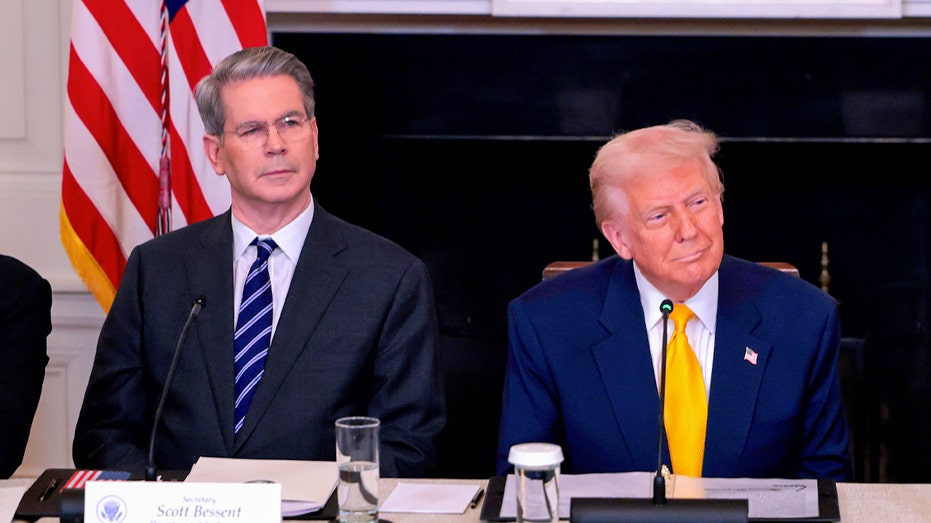
Bessent said the Trump administration wants to connect national economic power with household prosperity. (Anna Moneymaker/Getty Images)
Financial leadership
Bessent noted the dollar’s role as the world’s reserve currency and how it’s based on the “depth of our markets, the strength of our rule of law, the credibility of our institutions, and the scale of our economy.”
That has given the U.S. “enormous advantages” ranging from lower borrowing costs, deeper capital markets and more influence over the global financial system – but it also imposes obligations to crack down on things like sanctions evasion, financing of terrorism, cybercrime and corruption.
Advertisement
“Treasury’s job is to protect the integrity of the financial system by rooting out these abuses – and to deploy this power with discipline. Sanctions must be targeted, enforceable, and connected to strategy,” he said, adding it requires diplomatic coordination with partners to ensure compliance.
Bessent said that the “purpose of American economic statecraft is to connect national power with household prosperity,” which he said reflects an “economy in which our working families are not merely consumers of what the world produces, but participants in what America builds.”
“America’s competitive advantage has never been confined to the bounty of our natural resources or the depth of our capital markets,” he said.
Advertisement
“It has always resided in the character and the capacity of our people; the entrepreneur with the temerity to turn an idea into enterprise, the worker with the ability to master new trades and new technologies that didn’t exist a decade ago, and the institutions that allow their freedom and confidence to flourish,” Bessent explained.
He said that the American people can “expect policy that rewards work, investment, production and innovation. Leadership that understands how productive capacity is power. An economy whose success is measured not merely by what it produces, but by whom it lifts.”
In Brooklyn, Cat Cirino launched her sweet shop, Candor Candy’s, in the Fort Greene neighbourhood in March. To boost revenues she also sells pantry items such as granola, rice, soft drinks and beef jerky, all from independent producers.
But when it comes to her core product, selling candy has a number of benefits, such as it having a long shelf life, and being able to sit at room temperature. And if the shop follows the pick-and-mix model then the customer does a lot of the work on his or her own.
But as Cohen points out, it is not all plain sailing. With many confectionary supplies coming from overseas, he says that his wholesale prices have risen. The increases come due to President Trump’s numerous import tariffs on other countries, and higher global transport costs as a result of fuel prices rising due to the US-Israeli conflict with Iran.
Cohen notes that a Hershey chocolate bar that cost his shop about 62 cents pre-pandemic now comes to more than a dollar. For while Hershey’s is a famous American brand, the cocoa beans it is made from come from overseas.
Advertisement
He adds that one of his UK suppliers simply stopped shipping to the US after losing too much money in customs.
Despite these issues, Cohen says he has absorbed most of the cost increases, and that his sales are up. In these tough economic times, he says “a little candy goes a long way”.
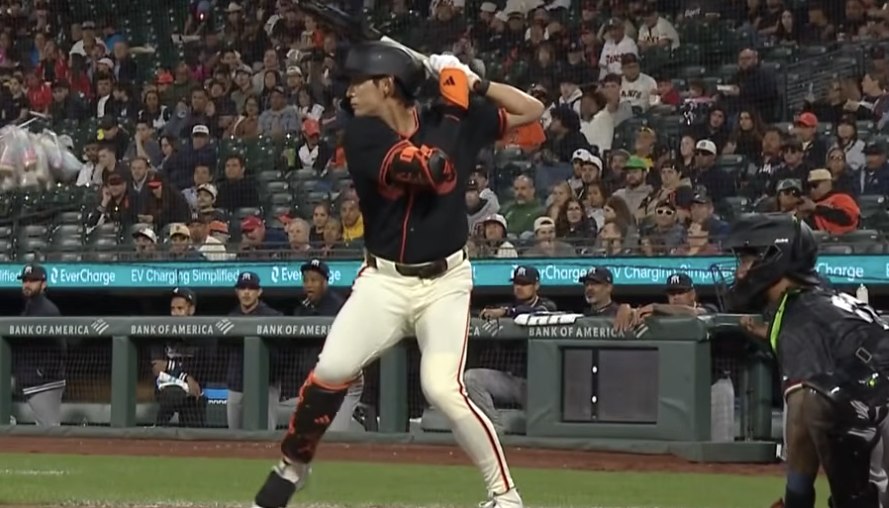
SAN FRANCISCO — Lee Jung-hoo, on June 24 Korean time, started as the fifth batter and right fielder in the Giants’ home game against the Athletics at Oracle Park in San Francisco. He recorded two hits in three at-bats, including his fifth home run of the season, one RBI, one walk, three on-base appearances, and one stolen base, leading San Francisco to a 3-1 victory.
Bouncing Back From a Quiet Outing
Overcoming a hitless performance in three at-bats against the Miami Marlins two days prior, Lee raised his season batting average to .331, with 88 hits in 266 at-bats. This narrowed the gap with league leader Ozzie Albies of Miami, at .337, to 6 percentage points.
Advertisement
A Personal-Best Home Run
Lee’s first at-bat in the second inning produced a home run. He attacked a cutter from Athletics right-handed starter Aaron Shipley that was centered at 99.9 mph, launching it over the deepest right-center field fence at Oracle Park. The ball traveled 414 feet with a launch angle of 30 degrees — his personal longest home run.
Broadcasters Marvel at His Continued Adaptation
NBC Sports Bay Area, the Giants’ broadcast partner, marveled at the performance. Analyst Mike Krukow remarked, “It went over the deepest part of the ballpark. What Lee Jung-hoo is showing now is exactly what he did every year in Korea. He was the league MVP. He was injured in his first year here, faced difficulties last year, but this season he knows what’s needed in this league. He understands opponents and recognizes pitchers. That’s reflected in his hitting. He’s showing exactly what he wanted when he came to the U.S.,” praising his full adaptation.
Advertisement
After the game, NBC Sports Bay Area’s postgame analyst Rich Aurilia also mentioned Lee’s home run, stating, “He’s exactly what the Giants and fans expected when they signed him. Injuries and adapting to life in the U.S. or the differences from Korean baseball took some time, but his consistency now is remarkable.”
Advice on Playing to His Strengths
Aurilia added advice on leveraging Lee’s strengths. “We might see more doubles and triples from him, but power isn’t his main aspect. Considering he plays at Oracle Park, where left-handed hitters struggle to hit homers, his ability to drive in runs is more critical. Scoring doesn’t require homers — singles, doubles, and triples work too. That’s what we’ve seen from him this year,” he said, emphasizing Lee’s value through mid-range hitting.
A Costly Error, Followed by a Heartfelt Apology
Advertisement
Another memorable moment occurred in the third inning. Lee dropped a routine fly ball by Colby Thomas, the Athletics’ leadoff hitter, as the ball deflected off his glove. The wind may have been a factor. With a runner on second and no outs, starter Robbie Ray gave up a groundout RBI single to Max Muncy, allowing the first run. After the inning, Lee approached Ray to apologize for the error. Ray shook his hand and patted his back.
Ray went on to pitch eight innings, allowing two hits, four walks, six strikeouts, and one unearned run, securing his sixth win of the season.
The Manager’s Praise for Both Players
In a postgame interview, Giants manager Tony Vitello praised Ray’s pitching and mentioned Lee’s apology. “Another memorable moment was Lee and Ray embracing in the dugout after the error. Even when sprinting full-speed and playing hard, tension can slip in critical moments. We all know how dedicated Lee is — he rarely lets his guard down. The error was a split-second mistake. Though the leadoff runner reached, Ray minimized damage and protected the lead. That was the game’s most crucial part,” Vitello said. Lee apologized to Ray again after the eighth inning.
Advertisement
A Tough Collision in the Sixth Inning
Vitello’s admiration for Lee didn’t end there. In the sixth inning, after drawing a walk and stealing second base, Lee collided with Athletics second baseman Jeff McNeil, who struck him in the jaw. Stunned, Lee lay on second base briefly. Vitello, along with a trainer and interpreter Han Dong-hee, checked on him. Though Lee winced and held his jaw, he refused to be replaced and finished the game.
A Resilient Mentality on Display
Vitello offered further insight into Lee’s character following the collision. “Lee was dazed after the collision and had a slight headache, but he recovered quickly. He’s far tougher than people realize. I don’t know how he was in Korea, but here he doesn’t show his emotions much. He’s incredibly resilient — if a good hit doesn’t become a hit, he’s unsatisfied. His intensity sometimes annoys me, but he never settles for a mental victory.”
Advertisement
A Season of Steady Improvement
Lee’s performance against Oakland extends what has become a notable season-long trajectory of growth following a difficult adjustment period in his earlier years with the Giants. His climb to a .331 batting average, combined with the power he showed in Wednesday’s game, reflects the kind of all-around production that has drawn comparisons to his award-winning years in the KBO League, where he was twice named league MVP before making the jump to Major League Baseball.
With his batting average now sitting just six percentage points behind the National League leader, Lee’s pursuit of a potential batting title will remain a storyline worth tracking as the Giants continue their season. His willingness to immediately apologize to Ray after the costly third-inning error, combined with his decision to stay in the game despite the jarring collision with McNeil, also reinforced the competitive resilience that both Vitello and the Giants’ broadcast team have continued to highlight as central to his ongoing development in his fourth Major League season.
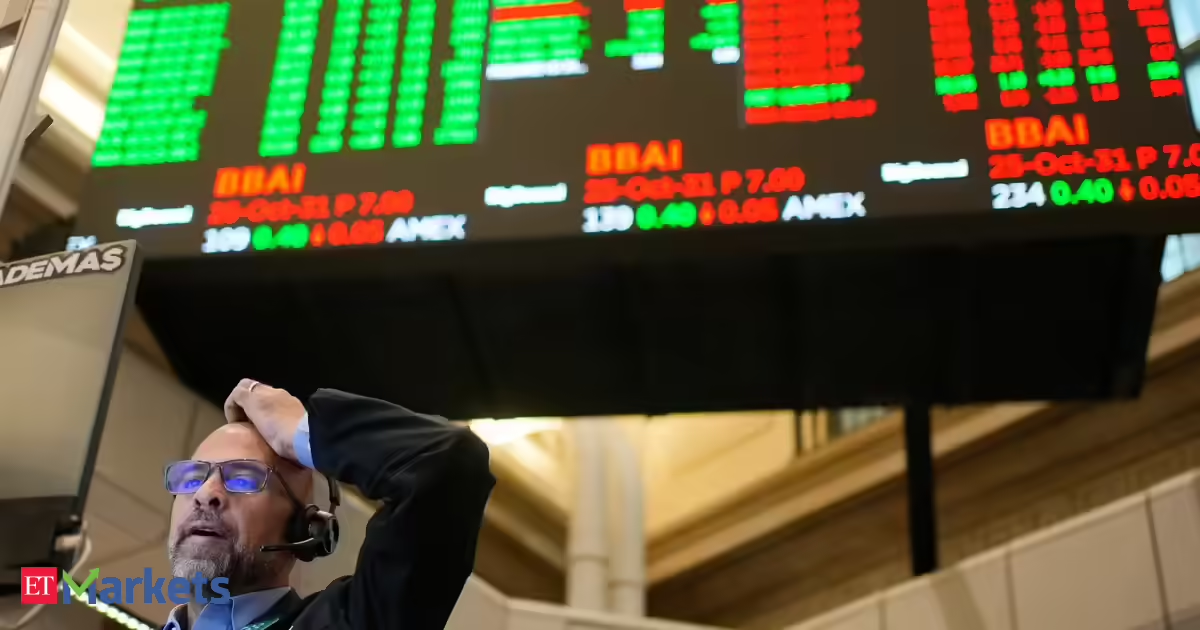
The Nasdaq and S&P 500 closed lower on Wednesday, dragged by tech stocks on nagging concerns about high-flying valuations, but falling crude prices boosted airlines and other travel stocks and the Dow finished higher.
Oil prices fell to their lowest since the start of the Iran war as more tankers were expected to move out of the Strait of Hormuz. U.S. President Donald Trump said Iran had told Washington that no tolls were being sought.
The S&P 500 passenger airlines index rose. Tech stocks slipped, intensifyingthe focus on chipmaker Micron Technology‘s results due after the bell. The stock has surged more than 200% in 2026 but fell on Wednesday.
Cerebras Systems tumbled after the chip designer forecast full-year profit margins would drop below first-quarter figures in its debut report after going public. Also weighing on the stock, OpenAI announced its own in-house inference chip called Jalapeno.
Advertisement
Concerns around debt-backed spending by hyperscalers and mounting fears of a more hawkish Federal Reserve have fueled the market downturn this week that has erased more than $1 trillion in market value from the Nasdaq 100.
Live Events
“The Middle East conversation is wrapping up … energy prices are coming off,” said Michael Monaghan, partner and portfolio manager at Founder ETFs. “But you continue to have the AI CapEx buildout where, for some reason, people like the recipients of the spend and have been punishing those doing the spending.” According to preliminary data, the S&P 500 lost 5.86 points, or 0.08%, to end at 7,358.72 points, while the Nasdaq Composite lost 104.58 points, or 0.41%, to 25,482.46. The Dow Jones Industrial Average rose 187.97 points, or 0.36%, to 51,854.81. Homebuilders soared after Trump canceled a planned signing of bipartisan legislation aimed at speeding up availability of affordable housing. Hovnanian Enterprises, PulteGroup and Toll Brothers all rose.
Among other movers, Hertz tumbled after the car-rental firm said it expects second-quarter adjusted core earnings near the lower end of its forecast range and announced a proposed offering of $100 million of common stock.
Traders are adding to bets of a second rate hike from the Fed by the end of December, according to CME Group’s FedWatch tool. Previously, the market expected a single 25-basis-point rise.
The closely watched Personal Consumption Expenditures Price Index, the Fed’s preferred inflation gauge, could offer insight on the monetary policy path on Thursday.
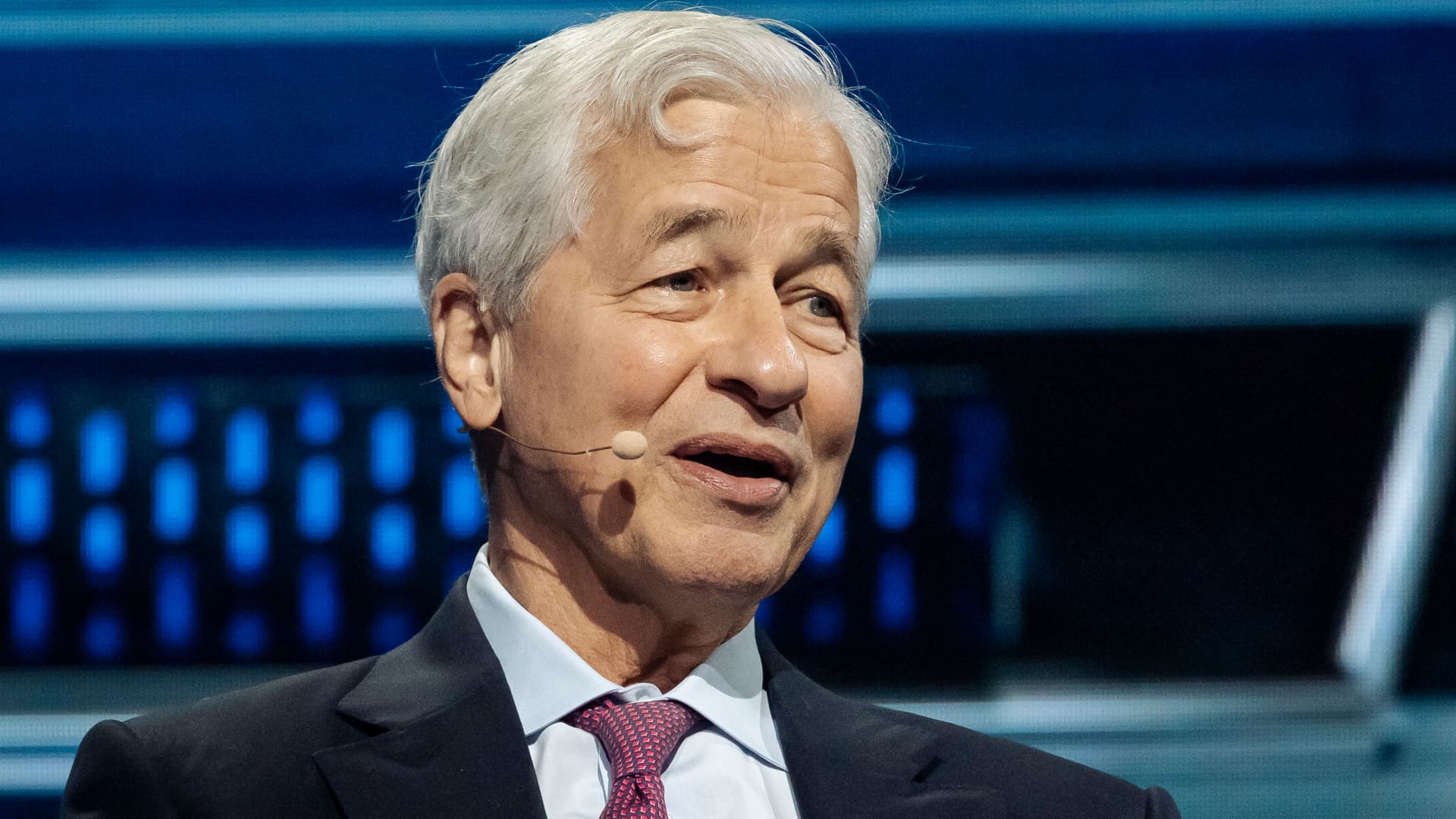
Jamie Dimon, chief executive officer of JPMorgan Chase & Co., during the America Business Forum in Miami, Florida, US, on Thursday, Nov. 6, 2025.
Eva Marie Uzcategui | Bloomberg | Getty Images
JPMorgan Chase on Wednesday unveiled a new $50 billion share repurchase program and raised its quarterly dividend after the Federal Reserve found the nation’s biggest banks remained well capitalized under its annual stress test.
Advertisement
The biggest U.S. bank by assets said it will increase its quarterly dividend 10% to $1.65 per share, subject to board approval, and authorized the buyback program effective July 1.
“The Board’s intended dividend increase is supported by our consistent investment in our business and strong financial performance,” JPMorgan CEO Jamie Dimon said in a statement. “As always, we are prepared for a wide range of scenarios, including the hypothetical 2026 supervisory severely adverse scenario.”
Goldman Sachs likewise increased its quarterly payouts, saying that its dividend will rise 11% to $5 per share, citing the firm’s strong earnings and capital position.
Wells Fargo said it expects to raise its dividend by 11% to $0.50 per share, while Morgan Stanley boosted its payout 15% to $1.15 per share, while also authorizing a $20 billion buyback program.
Advertisement
The announcements followed the release of the Federal Reserve’s annual stress test, which found that all 32 large banks remained above their minimum capital requirements even after a hypothetical recession generating more than $708 billion in projected losses across the industry.
Unlike in previous years, however, the results will not affect banks’ capital requirements. The Fed said earlier this year it would keep stress capital buffers unchanged through 2027 while it overhauls the testing methodology, meaning banks entered Wednesday with a clear understanding of their capital requirements.
While analysts had expected the exercise to have little immediate impact, in a sign of confidence, banks opted to proceed with payout increases, despite the regulatory limbo.
In a note ahead of the results, KBW described this year’s stress test as “going through the motions,” arguing that investors are more focused on the pending Basel III Endgame proposal expected later this year than on the Fed’s annual exercise.
Advertisement
This story is developing. Please check back for updates.
The Bank of Thailand kept its benchmark interest rate steady at 1.00%, as anticipated, stating it will keep an eye on inflation trends and expectations. The seven-member Monetary Policy Committee (MPC) voted unanimously on the decision.
The Monetary Policy Committee (MPC) unanimously voted 7:0 to maintain the policy interest rate at 1.0%. The committee viewed the policy interest rate as appropriately accommodative given Thailand’s low and uneven economic growth, continued contraction in retail lending, and a declining trend in SME lending.
The MPC projected a decline in inflation by 2027 as supply-side pressures, such as energy and fresh food prices, gradually ease. Looking ahead, the MPC will monitor the price pass-through of businesses facing higher costs, medium-term inflation forecasts, and the debt repayment capacity of SMEs and vulnerable households.
The Thai economy is projected to expand at a faster rate than previously estimated, but the growth rate is low and uneven, the MPC said in a statement.
Advertisement
The Thai economy is projected to grow better than previously estimated.
The Monetary Policy Committee (MPC) has revised its GDP forecast for this year upwards to 2.3% year-on-year (YOY) from the previous 1.5% YOY (excluding government measures) and 2.0% YOY (including government measures). This revision is based on…
Export and investment momentum driven by the Tech & AI Cycle exceeded expectations , with growth concentrated in technology-related exports and investments in digital businesses.
The impact of the war was less than expected, as large businesses were able to adapt by diversifying their import sources and transportation routes for raw materials, while the government provided subsidies to mitigate energy costs.
Government measures to mitigate the impact of the energy crisis, under the Emergency Decree on Borrowing 400 billion baht.
The Monetary Policy Committee (MPC) still views Thailand’s economic growth in both 2026 and 2027 as below its potential and uneven, particularly affecting households where purchasing power is pressured by high living costs while incomes are slowing, and SMEs which face difficulties adjusting to costs and have limited access to credit.
The Monetary Policy Committee (MPC) projects Thailand’s current account balance for the full year 2026 to worsen to a balanced level ($0 billion USD, down from the previous estimate of $7 billion USD). This is attributed to temporary factors, including significantly higher crude oil prices and seasonal profit repatriation by multinational corporations, which are expected to contribute to the deficit in the second quarter. However, the MPC anticipates a gradual improvement back to a surplus in the second half of 2026 and throughout 2027.
The Thai baht has slipped as the US dollar strengthens, matching market expectations that the Federal Reserve will raise interest rates later this year, according to the MPC.













































You must be logged in to post a comment Login