Sony is finally setting release dates for two PlayStation accessories that have been in the “coming soon” category since their debut last year. The company has confirmed that preorders for its FlexStrike wireless fight stick and its unusual 27-inch gaming monitor with a built-in DualSense charging hook will begin this June, with both products arriving later this summer.
For fighting game fans and desk-bound PlayStation players, these are arguably two of Sony’s most interesting hardware experiments outside the PS5 itself.
FlexStrike arrives just in time for fighting game season
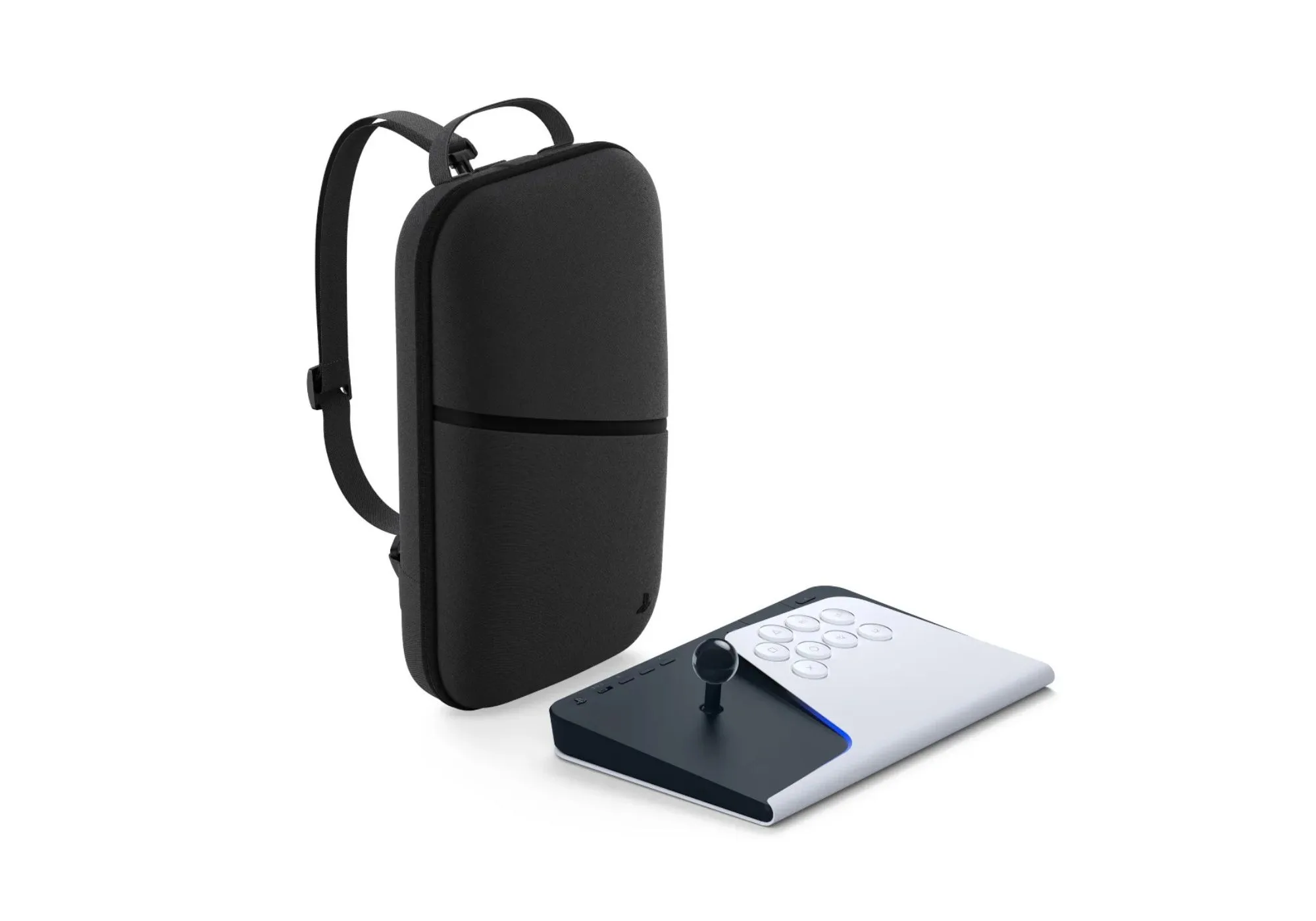
Sony’s first wireless fight stick, the FlexStrike, will officially launch on August 6. The accessory is set to arrive alongside the growing excitement around Marvel Tōkon: Fighting Souls, giving competitive players a new premium controller option for PS5 and PC.
Sony
Unlike traditional arcade sticks that can be cumbersome to carry around, Sony is pitching FlexStrike as a tournament-friendly device. It comes with a built-in rechargeable battery and even includes a dedicated sling carry case, making it easier to haul between local meetups, esports events, or simply a friend’s house. Preorders open on June 12, with a $200 price tag that places it squarely in enthusiast territory. That’s not cheap, but fight stick players have historically shown a willingness to invest in specialized gear if it offers reliability and convenience.
Sony thinks your gaming setup has moved beyond the living room
The second accessory may be even more intriguing. Sony’s new 27-inch gaming monitor is clearly aimed at players who have shifted from couch gaming to dedicated desk setups. The display features a 1440p IPS panel with variable refresh rate support and can hit 120Hz when paired with a PS5 or PS5 Pro. Connect it to a capable PC or Mac, however, and the refresh rate jumps to 240Hz.
Advertisement
Sony
What makes the monitor stand out isn’t necessarily its specs, though. It’s the small built-in charging hook designed specifically for a DualSense controller. Sony will open preorders for the monitor on June 5 through PlayStation Direct and Best Buy in the U.S., with a retail price of $350. The display is scheduled to launch on August 27 in the U.S. and Japan.
Both products signal Sony’s growing interest in gaming beyond the traditional console-and-TV setup. Whether you’re grinding ranked matches in a fighting game or building out a dedicated PlayStation desk station, Sony clearly wants a piece of that ecosystem too.
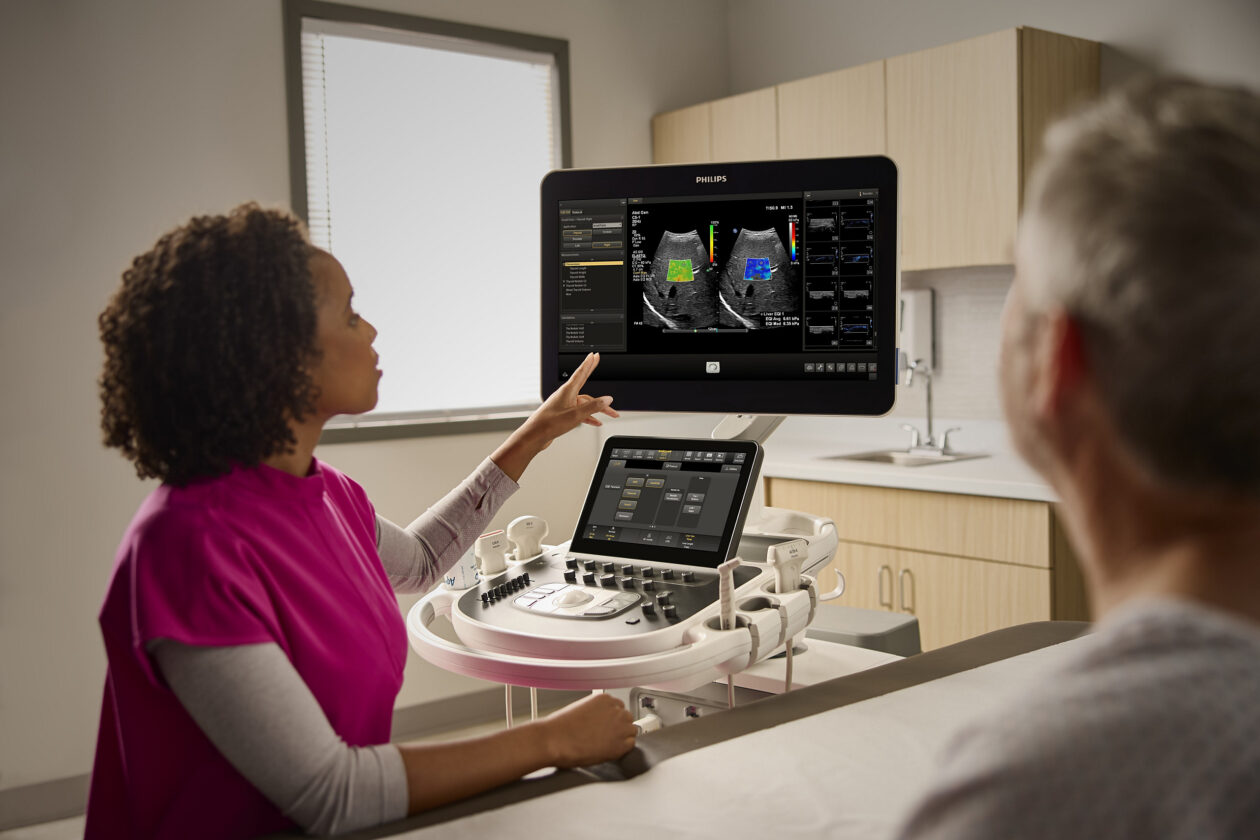
Philips designs and builds its ultrasound systems, including this premium imaging platform, at its Bothell campus. (Philips Photo)
Philips plans to put its Bothell, Wash., campus up for sale, marking a significant moment for Washington state’s medical device industry and for a site that helped establish the region as a global center for ultrasound innovation.
GeekWire confirmed the news after receiving a reader tip. The healthcare technology giant said the move is part of a long-term real estate strategy and will not affect employees or operations in the Seattle area.
“In May 2026, as part of Philips’ long-term real estate and workplace planning strategy, the company indicated its intent to list its current campus in Bothell, Washington for sale,” a Philips spokesperson said in a statement. The company described the effort as a multi-year process and said it intends to secure another local site and relocate employees and operations if the property is sold.
The Philips campus on Bothell Everett Highway, northeast of Seattle. (Via Google Maps)
As of last year, GeekWire reported that the Canyon Park facility — located across multiple buildings at 22100 Bothell Everett Highway — employed about 1,500 people.
The Bothell campus has deep roots in Washington’s most influential medical technology companies.
The first is ATL Ultrasound, the pioneering medical imaging company that helped put the Seattle region on the map in ultrasound technology. Philips acquired ATL in 1998 for $800 million, making Bothell a global hub for its ultrasound business and expanding its footprint in the region over time.
Advertisement
ATL also helped seed a broader ultrasound ecosystem in Washington state, including SonoSite, which was spun out as an independent company before Philips acquired ATL. SonoSite was later acquired for $995 million by Fujifilm in 2012.
Another is Heartstream, the Seattle-area pioneer in automated external defibrillators. Heartstream was acquired by Hewlett-Packard in 1998, later became part of Agilent Technologies and was folded into Philips through its acquisition of Agilent’s healthcare business in 2001.
Earlier this year, Bridgefield Capital acquired Philips’ Emergency Care business and relaunched it under the Heartstream name, reviving one of the region’s better-known med-tech brands as an independent company, based in Bothell with 600 employees worldwide.
The real estate move comes as Philips continues to reshape its healthcare portfolio. The company also disclosed layoffs affecting 33 employees at its Bothell-area healthcare device manufacturing facility last year, GeekWire reported.
Advertisement
Separately, the U.S. Food and Drug Administration last September issued a warning letter to the CEO of Royal Philips citing oversight concerns at the Bothell facility as well as a location in Pennsylvania and another in the Netherlands. The issues at the Bothell site relate to a lack of documentation regarding the company’s response when ultrasound devices are reported to be defective and either break or perform incorrectly.
Philips stressed that the campus sale wouldn’t affect jobs.
“This decision will have no impact on employee roles or employment status, or to business operations located in Bothell,” the spokesperson said. “This action is related to real estate and space alignment only and will not affect people or their jobs.”
The company said it intends to maintain a presence in the region. Bothell is home to employees from nearly every Philips business segment, with Ultrasound and Personal Health representing the largest employee populations, the spokesperson said.
Advertisement
“In the event of a sale of the property, Philips intends to secure a new local site that supports the company’s ongoing needs, where current personnel and operations would be relocated.”
The worm, dubbed Shai-Hulud, has all the hallmarks of malware released last month as freely available open source. TeamPCP was the first group to use Shai-Hulud, and it promoted a competition that promised a $1,000 payment to the hacker who carried out the biggest supply-chain attack using the malware. TeamPCP has also been behind a rash of previoussupply-chainattacks. Now that the worm is in the hands of many other threat groups, supply-chain attacks may ramp up further.
The malware devotes considerable attention to CI/CD (continuous integration/continuous delivery) systems, which allow for faster and more reliable software releases by automating the building, testing, and deploying of code changes. The malware spread in Monday’s attack was published through GitHub Actions OIDC (OpenID Connect), indicating that Red Hat’s CI/CD pipeline was compromised. OIDC is a security measure designed to interact with cloud services through the use of temporary credentials.
Once installed, the malware targets other organizations’ CI/CD credentials. The compromise of Red Hat’s GitHub Actions OIDC was very possibly the result of a previous supply-chain attack that infected an employee’s machine.
In an email sent after this post went live, Red Hat said it has removed the malicious packages.
Advertisement
“The packages are strictly limited to internal development, and the malicious code was never published for customer consumption via the console.redhat.com system,” the email said. “While our investigation is ongoing, we have not identified any impact to customer or partner environments or Red Hat production systems.”
Given the success of other recent supply-chain attacks, anyone who touched one of the affected packages in the past 36 hours should assume compromise of their workstations, CI/CD pipelines, and all credentials for cloud services and repositories. That means employees should drop whatever they’re doing at the moment and investigate thoroughly.
In a recent supply-chain attack that hit Checkmarx, the security firm failed to fully drive out the party responsible. Checkmarx was then hit two more times. The Checkmarx credentials used in the first attack came from a supply chain attack on the Trivy software developer. The pivot to Checkmarx and its failure to fully remediate the initial breach demonstrates the difficulty of completely recovering from such security lapses and the risks that result.
Both Socket and Aikido have lists of affected Red Hat packages and other indicators of compromise that any potentially affected person or organization should make use of promptly.
Old versus new Prius NiMH module. (Credit: HubNut, YouTube)
It’s possible to get a pretty good deal on used Toyota Prius cars, but as with all hybrid cars that also means a used battery pack and resulting issues. In the case of the Gen 2 Prius that [HubNut] recently acquired it was clear that its battery was effectively toast, with the engine running constantly and the car often giving up due to detected issues with the pack. After getting to an EV-focused garage for repairs, a spare NiMH module was used to replace a problematic module to bring it back to good health, while raising the question of how sensible such a repair is.
Certainly, compared to the average BEV where a much larger battery is generally integrated well into the frame, a Prius makes things very easy, with the compact battery readily accessible and removable from the trunk. It is also a very modular battery, with some elbow grease and bolt-twisting enough to disassemble it.
Even with that it still a high-voltage battery with all the associated risks, and as raised in the comments there’s a big question about putting a new(er) cell into a pack with more worn-out NiMH cells as generally the cells wear out fairly evenly. While this fix can give the pack some more life, the new cell won’t match the internal resistance and other parameters of the pack, leading to issues like voltage drift. Then there’s the issue that if one cell failed, others probably aren’t far behind, so this hack would soon become a regular ritual.
Much like swapping one bad 18650 Li-ion cell in a bigger battery, it’s probably a more sustainable solution to simply replace the entire battery at once, or at least replace all modules or cells to properly refurbish it. For [HubNut] this fix suffices because he suspects that this pack was already assembled from random modules, it’s an important consideration to make if you don’t enjoy ending up stranded during a trip.
Apple is preparing a bill-splitting feature for iOS 27 that photographs receipts, assigns items to individuals, and generates Apple Cash payment requests. The tool, expected to be announced at WWDC, competes directly with Splitwise, Venmo, and Cash App.
Apple is preparing a new iPhone feature that lets users photograph a restaurant receipt, assign individual items to different people, and automatically generate payment requests through Apple Cash. The tool will calculate each person’s share of the bill including item costs, tax, and tip, Bloomberg reported on Monday, citing people with knowledge of the plan. Apple aims to announce the feature at its Worldwide Developers Conference as early as next week and ship it as part of iOS 27 this autumn.
Advertisement
The feature will be accessible through the Wallet app and within Messages, with an option to approve payments from an Apple Watch. Shares of PayPal and Block, which owns Cash App, pared their Monday gains on the news. Apple has been competing with Venmo and Cash App in peer-to-peer payments since integrating Apple Cash into iMessage, but the bill-splitting tool represents a more direct assault on the social payments category that third-party apps have dominated.
Why receipts matter
Bill-splitting apps like Splitwise, Tab, and Settle Up have built dedicated user bases around the specific problem of dividing group expenses. Most work by requiring users to manually enter amounts, a process that creates friction and errors. Apple’s approach, photographing the receipt and using image recognition to extract individual line items, removes the manual step entirely.
The 💜 of EU tech
The latest rumblings from the EU tech scene, a story from our wise ol’ founder Boris, and some questionable AI art. It’s free, every week, in your inbox. Sign up now!
Advertisement
The integration with Apple Cash means the entire flow, from photographing the bill to receiving payment, stays within Apple’s ecosystem. Users do not need to download a separate app, create an account with a third-party service, or link a bank card to a new platform. Apple has systematically expanded its payments infrastructure since launching Apple Pay in 2014, and each addition makes the ecosystem stickier for users who already rely on iPhones for daily transactions.
Apple’s fintech track record
The bill-splitting feature continues a fintech expansion that has produced mixed results. Apple Pay is widely adopted and has become the dominant contactless payment method in many markets. Apple Cash’s peer-to-peer payments, the Apple Card credit card built with Goldman Sachs, a Goldman-backed savings account, and tap-to-pay for businesses have all followed.
Not all of those efforts have succeeded. The Apple Card partnership has weighed on Goldman Sachs’ financial results, and the bank is working to offload the business to JPMorgan Chase. Apple also discontinued a “buy now, pay later” service approximately a year after launching it. The pattern suggests Apple is willing to experiment aggressively in fintech but also willing to retreat quickly when a product does not gain traction or when a partner relationship becomes strained.
The competitive landscape
Splitwise is the most direct competitor. The app has built a loyal user base around tracking shared expenses across households, trips, and recurring group costs. But Splitwise requires users to actively open the app and manage balances, a workflow that Apple’s integrated approach could simplify significantly for casual use cases like splitting a restaurant bill.
Advertisement
Venmo and Cash App compete at a different level. Both are full-featured payment platforms with social feeds, merchant payments, and financial products. The fintech landscape is evolving rapidly as AI-powered banking platforms enter the market, but Apple’s advantage is distribution. Every iPhone is a potential bill-splitting device with no download required.
The feature also targets younger consumers who manage money primarily through apps rather than traditional banking. Mobile payments platforms globally are competing for this demographic by embedding financial tools into the apps people already use daily, and Apple’s Messages integration puts bill-splitting where group dinner conversations already happen.
Part of a broader iOS 27 update
The bill-splitting service is one of several Wallet app additions coming in iOS 27. Apple is also planning a tool that lets users create their own digital passes for events, gym access, and other uses. The Wallet app already hosts the savings account, Apple Pay, and digital keys for cars and homes.
The broader iOS 27 update will focus on artificial intelligence, a revamped Siri digital assistant, AI-powered photo editing tools, a new Siri camera mode, and performance improvements. Apple has positioned iOS 27 as a significant AI upgrade while using the Wallet additions to quietly strengthen its position in everyday financial services.
Sony’s new True RGB TV lineup – there are two models, the Sony Bravia 7 II under review here and the step-up Bravia 9 II – is in some ways the most eagerly awaited TV launch of the decade. That’s down to Sony demonstrating promising prototypes of its RGB backlighting technology for several years in a row, and then taking its sweet time to release actual products, even as the competition hurriedly started shipping their own versions of an RGB TV.
Is Sony’s True RGB worth the wait? I’ll get into that more below. But before I do, it will be useful to discuss True RGB and the differences between it and other RGB TV variants (e.g., Samsung Micro RGB, LG Micro RGB evo, TCL RGB Mini-LED and Hisense RGB MiniLED).
A typical mini-LED TV uses a backlight array with blue or white light modules and relies on a color filter to create the red green and blue color components that make up an image.True RGB TVs like the Sony Bravia 7 II, in contrast, use a mini-LED backlight with clusters of independently controlled red, green and blue light modules. The advantage to this design is that the red, green, and blue lighting components are more efficiently transmitted to individual pixels in the TV’s LCD panel, bringing the benefits of extended P3 and BT.2020 color space coverage, along with enhanced brightness and reduced backlight blooming effects.
Of course, since there is not a one-to-one relationship from backlight to pixel, you still need a color filter, in the form of individual red, green and blue sub-pixels on the LCD panel that create the final colors on each of the 8 million plus pixels on the screen.
Advertisement
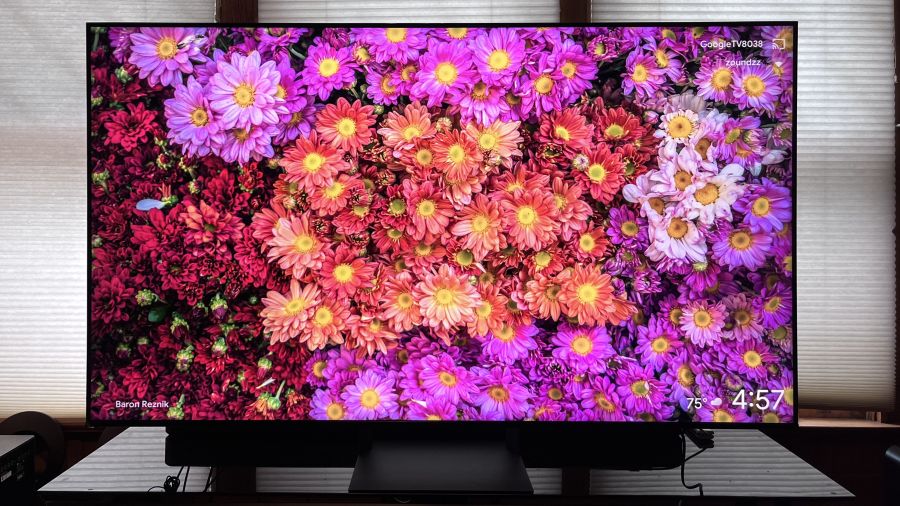
The Sony BRAVIA 7 II’s picture shows virtually no backlight blooming, even on high contrast images
While most RGB TVs take a similar approach, Sony’s advanced processing and control algorithms enable the TV to deliver full red, green and blue backlighting even when displaying complex images with a range of colors, resulting in consistent color saturation and a reduction of the “color crosstalk” other RGB TV designs are subject to.
Sony has effectively demonstrated the advantages of True RGB over the RGB LED competition in press demos that eCoustics has attended. LG has also demonstrated the presence of “color crosstalk” which can occur in certain RGB-backlit TVs (in a comparison designed to showcase the superiority of its OLED models). And TCL acknowledged the same even issue with its own RGB Mini-LED TVs, which it says are inferior to SQD (Super Quantum Dot) Mini-LED models like the TCL X11L and TCL QM8L that use a standard, non-RGB, backlight array.
What Is It?
The BRAVIA 7 II’s picture is bright enough to look good even in well-lit environments
The Sony BRAVIA 7 II is the company’s entry-level True RGB TV series. It is available in 50-, 55-, 65-, 75-, 85- and 98-inch screen sizes and is priced from $1,599.99 to $8.999.99. The 65-inch model that Sony sent me to review costs $2,599.99, a price that exceeds its entry-level RGB LED competition by a few hundred dollars.
Sony calls the backlight design for its True RGB TVs RGB Backlight Master Drive Pro. Along with this, the Bravia 7 II features Sony’s XR Processor which provides a full suite of XR features such as Clear Image AI (for upscaling high-definition and lower-res content), XR Contrast Booster and XR Motion Clarity. An X-Wide Angle Pro feature of the BRAVIA 7 II’s display panel helps to provide uniform color and contrast when viewing from off-center seats. This alone marks a notable improvement over its predecessor, the BRAVIA 7.
The BRAVIA 7 II supports the Dolby Vision, HDR10 and HLG high dynamic range formats, but not HDR10+. It is also IMAX Enhanced, supporting IMAX Enhanced movies on Disney+ and Sony’s Sony Pictures Core streaming service, including their DTS-X audio tracks sourced from the original IMAX cinematic soundtracks. Calibrated Modes, including Netflix Calibrated Mode, Prime Video Calibrated Mode and Sony Pictures Core Calibrated Mode are included as well, automatically optimizing picture settings when streaming content from these services. My Cinema presets, a new Sony feature, can also be used to optimize picture settings for dark and bright room viewing.
Advertisement
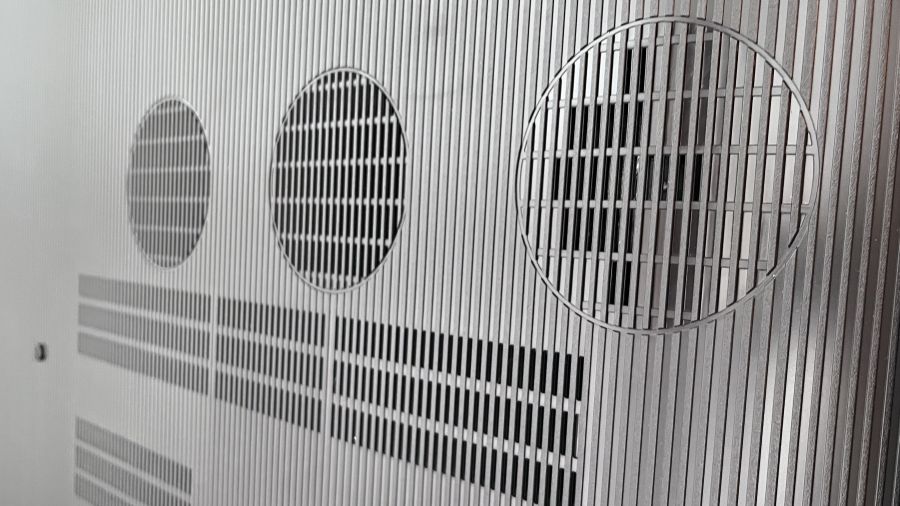
Multiple speaker drivers are placed on each side of the TV to deliver sound
Both the Dolby Atmos and DTS:X immersive audio formats are supported by the BRAVIA 7 II’s built-in speaker array, which pairs dual full-range drivers with tweeters for more accurate directional sound. The set also features 3D Surround Upscaling to create an expansive effect even from two-channel material. The BRAVIA 7 II also has Sony’s upgraded Voice Zoom 3 feature, which uses AI to recognize and either amplify or reduce (an adjustment is provided in the TV’s onscreen menu) dialogue in movie and TV soundtracks.
Sony’s Mirage Stand provides a floating effect
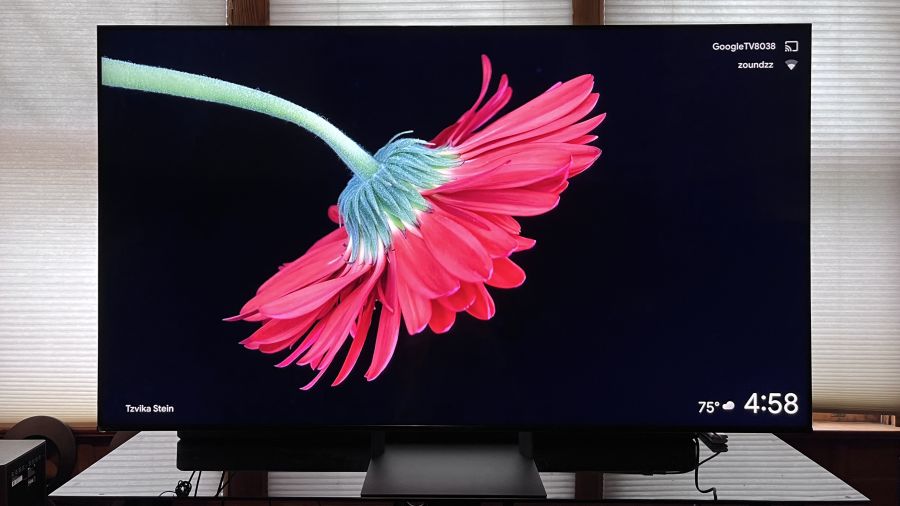
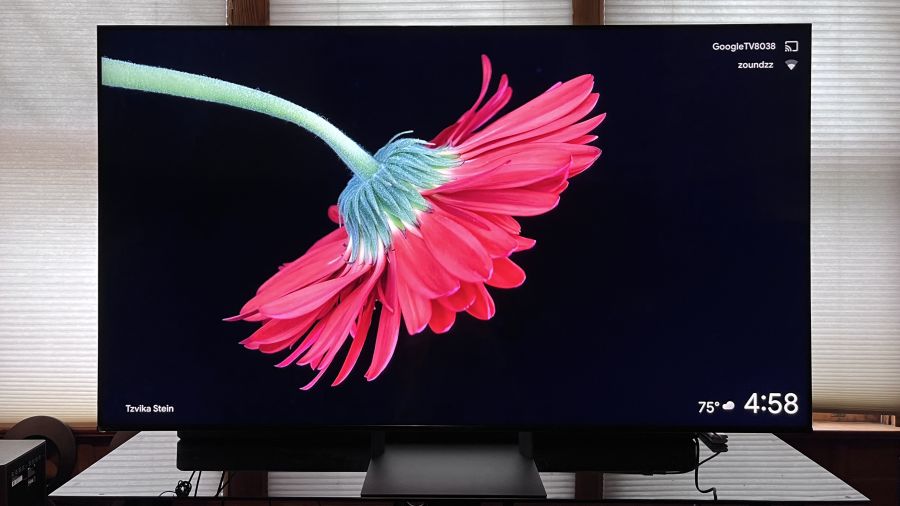
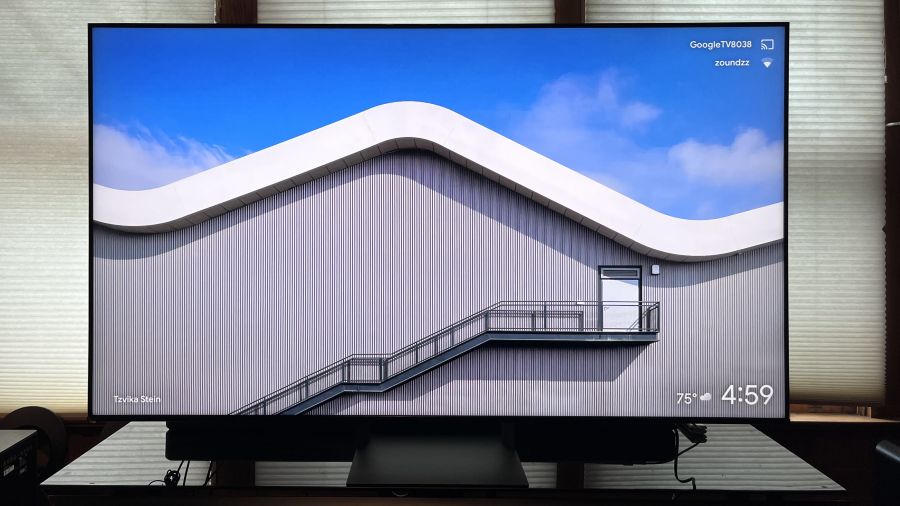
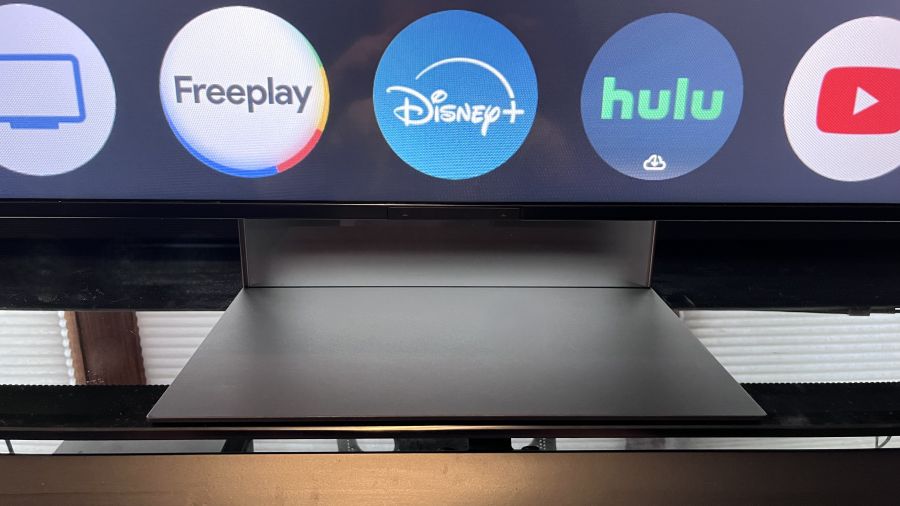
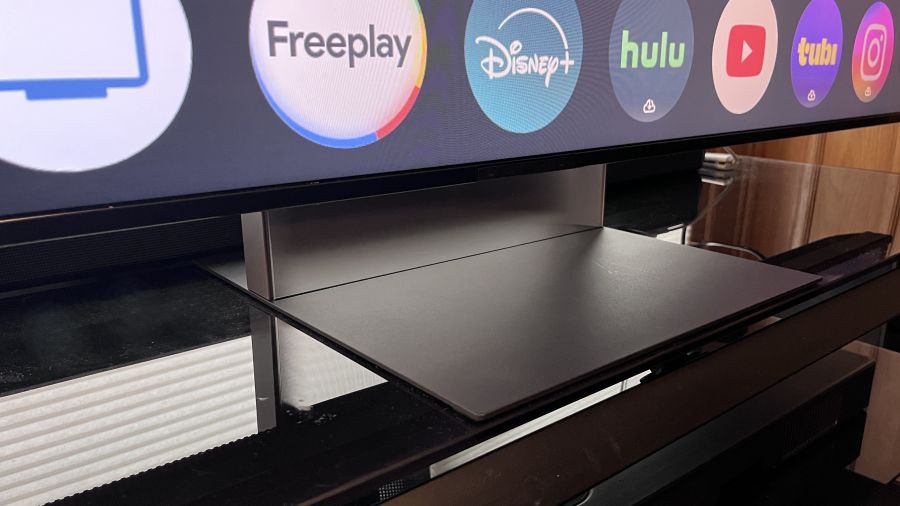
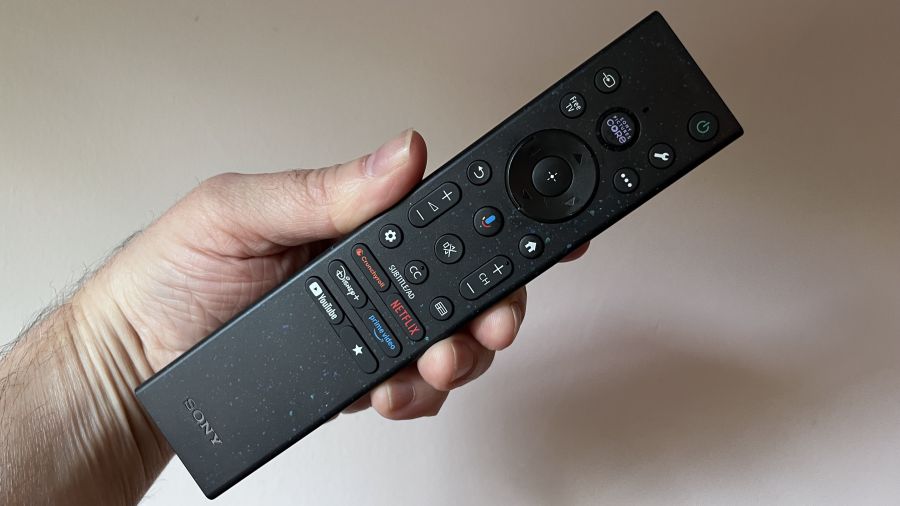
Sony calls its design for its True RGB TVs “Harmonic Presence.” And while that name might seem somewhat flowery for a TV, the BRAVIA 7 II really does look great in person. A key design element is the TV’s Mirage Stand, which is a steel pedestal stand with a semi-transparent panel that gives it a floating appearance. The rear of the stand also provides effective cable management. Design effort also went into the TV’s remote control, which has textured sides and back and a blue flake pattern embedded in its front surface.
Advertisement. Scroll to continue reading.
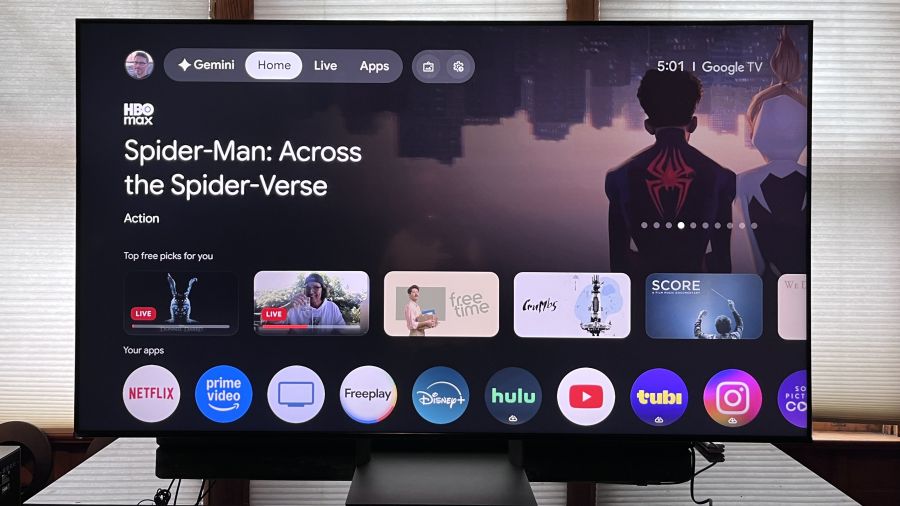
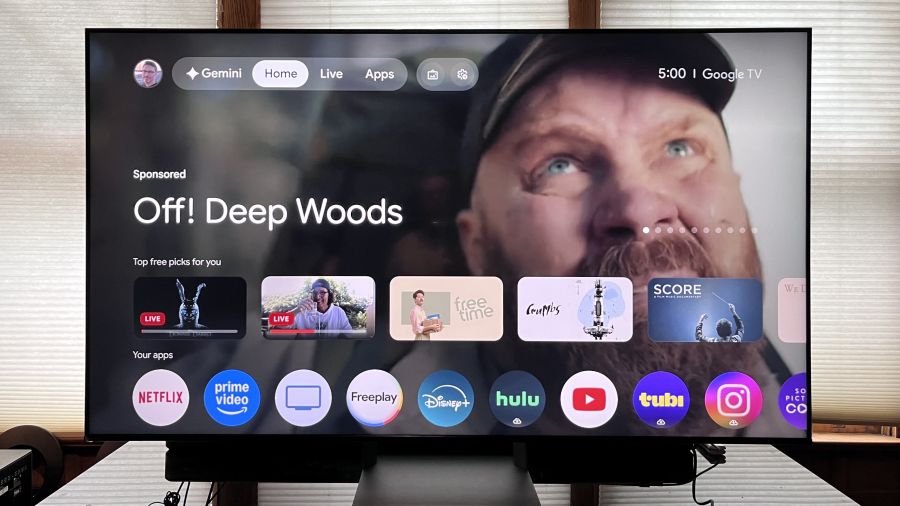
Google TV is used as the BRAVIA 7 II’s smart TV platform, and this version includes the Gemini AI assistant found on several other new TVs. An advantage to Google TV is that, aside from having a wide array of available apps, it can tap your viewing and web search history to make accurate program recommendations. A disadvantage to Google TV is that, like many other smart interfaces, it will show you the occasional ad. Gemini takes content search to the next level by providing a conversational component. (An example: “Hey Google, show me movies directed by David Cronenberg,” followed by, “Show me only the ones from the 1980s.”) And it’s not just for movies – Gemini can be used to research a wide range of topics. Assisting in this task is a built-in mic on Sony’s remote control, and there’s also a built-in mic on the TV for hands-free voice commands.
Sony TVs use the Google TV platformWhich is sadly not ad-free
Sony’s Quick Settings menu gives you easy onscreen access to a range of adjustments including picture mode and brightness. The more in-depth All Settings menu offers up a wide range of picture adjustments such as Auto Local Dimming, Peak Luminance, Advanced Contrast Enhancer, and 2-point and 10-point color temperature adjustments.
Curiously, there are no color management system (CMS) adjustments, a standard feature on many TVs. When I asked Sony why this was the case, I received this reply: “Thanks to our rigorous factory calibration process — backed by our engineering design that accurately calculates and optimizes performance at the production stage — color accuracy and gamma are already dialed in. A simple white balance/greyscale adjustment is all that’s needed to achieve reference picture quality, and everything else falls into line automatically.”
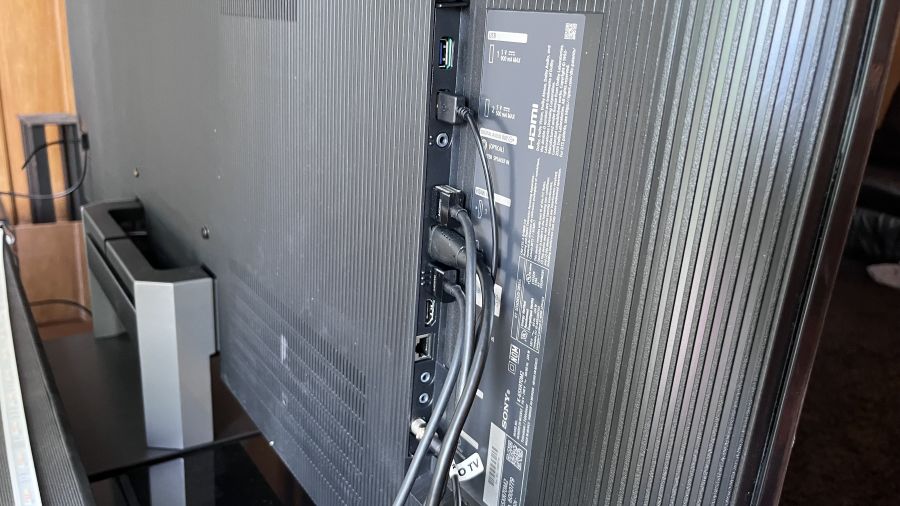
I had expected that the Sony True RGB lineup would continue the trend started by the BRAVIA 3 II earlier this year with its four gaming-friendly HDMI 2.1 ports, but that didn’t turn out to be the case. The BRAVIA 7 II has two HDMI 2.1 ports with 4K/120Hz support and two HDMI 2.0b ports (one with eARC). Other gaming features include Perfect for PlayStation5, which enables ALLM, Auto HDR Tone Mapping and Auto Genre Picture Mode when a PS5 console is connected, and a Game Menu 2 onscreen pop-up menu for making gaming-related adjustments.
Advertisement
Unlike many higher-end TVs in 2026, and even Sony’s own BRAVIA 3 II, the BRAVIA 7 II is limited to two HDMI 2.1 ports (and two HDMI 2.0b ports).
Aside from its four HDMI ports, the BRAVIA 7 II provides USB Type-A (x2), Ethernet and RS-232C data connections, an IR receiver input and a combined optical digital audio output/analog center speaker input, with the latter meant for Sony wireless speaker systems that use the TV’s built-in audio as a center channel speaker. There’s also an RF input for the set’s ATSC 3.0 (Next Gen TV) digital TV tuner. When an external antenna is connected to this, both ATSC 3.0 and standard digital broadcast channels can be browsed separately in the Google TV Live TV grid guide.
Go Pro?
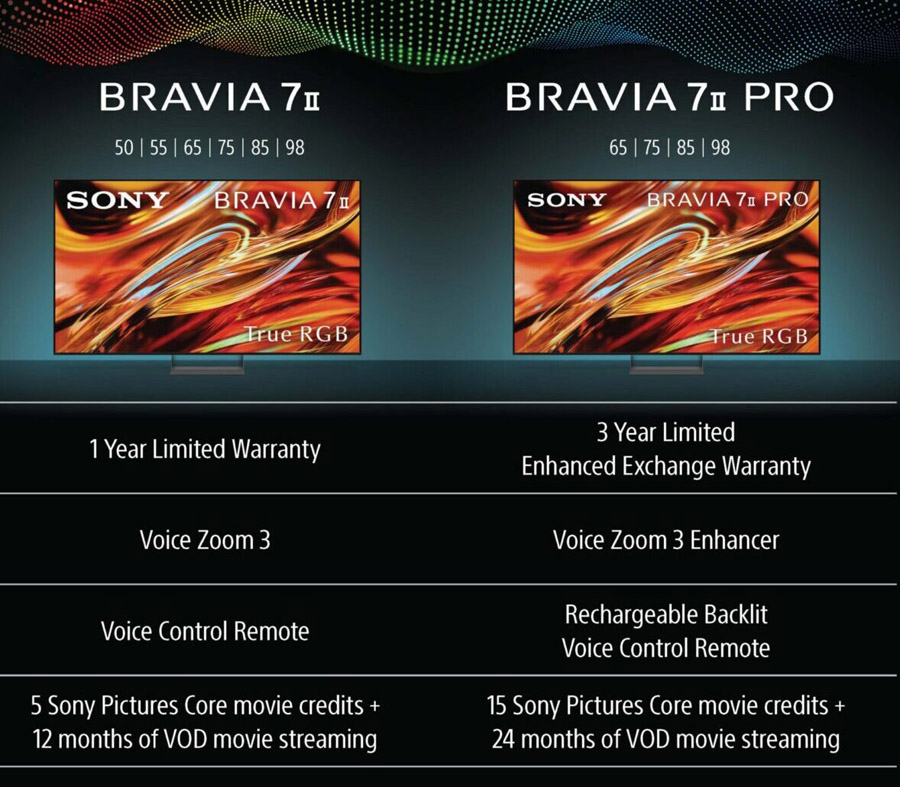
The Sony BRAVIA 7 II (and the BRAVIA 9 II) in 65-inch and above screen sizes will also be available in a “Pro” package that includes a longer 3-year full replacement warranty, an upgraded rechargeable and backlit remote control, additional Sony Pictures Core movie credits and an enhanced version of Voice Zoom 3. Hardware for the standard and Pro versions is otherwise identical. Sony didn’t share pricing for the Pro package, which is aimed at the CI (custom installation), channel but it seems to be a nominal increase over the standard offering.
Setup & Viewing Impressions
Before doing any subjective viewing, I ran a basic set of measurements on the BRAVIA 7 II using Portrait Display’s Calman Color Calibration software. The TV’s ambient light sensor was disabled before I began testing; otherwise, measurements were made in the TV’s Cinema and Standard picture modes with the default settings left intact. Sony’s Professional mode is said to be the most accurate picture preset option, but I found it to be way too dim for SDR viewing at its default settings and I expect most viewers would have the same take. But since it is the most accurate mode, we did include some out of the box measurements in Professional mode for HDR content.
Peak HDR brightness measured on a white 10% window pattern in Cinema Mode was 1,800 nits and 701 nits on a 100% (fullscreen) white pattern. For Professional mode, the results were 1,971 nits and 790 nits, respectively, on the same tests. In Standard mode, peak HDR brightness was 1,554 nits on a 10% pattern and 626 nits for fullscreen.
In SDR (standard dynamic range) tests, the BRAVIA 7 II measured 486 nits on a 10% pattern in Cinema mode and 421 nits on a fullscreen one. In Standard mode, the results were 576 nits for 10% and 372 nits for fullscreen.
Those brightness results were essentially what I expected from the Bravia 7 II, which Sony reportedly stated would be half as bright as the step-up Bravia 9 II (at 4,000 nits). For context, the Sony’s brightness measurements put it in roughly the same range as the TCL QM8L SQD Mini-LED TV, which measured 1,922 nits (10% window) and 708 nits (fullscreen) in Filmmaker Mode when I tested it.
Advertisement
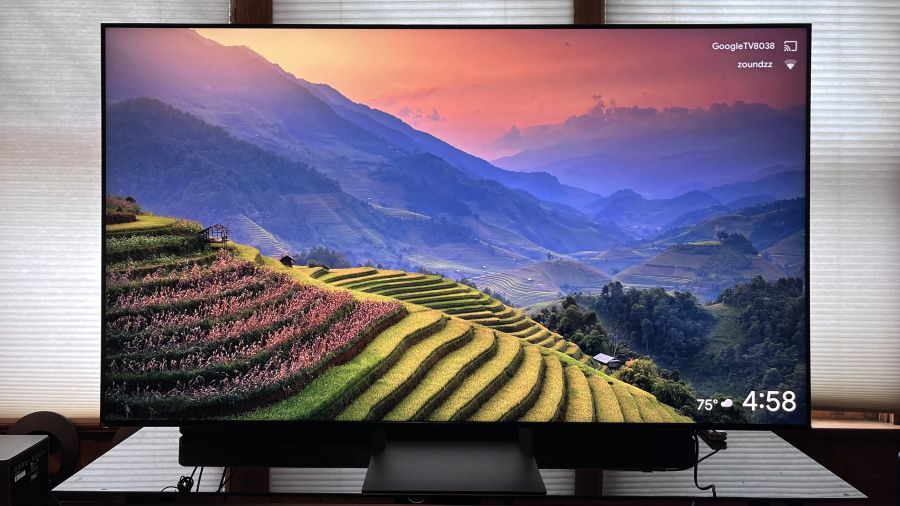
The BRAVIA 7 II’s True RGB backlight delivers extended color gamut coverage compared to standard mini-LED TVs
The BRAVIA 7 II’s color gamut coverage in Cinema Mode measured 88.5% for BT.2020 and 98.5% for P3. That BT.2020 result trails the only other RGB TV I’ve measured, the Samsung R95H Micro LED, which yielded 92% coverage (in Filmmaker Mode). For comparison’s sake, the BRAVIA 7 II’s color gamut coverage is closer to the TCL QM8L, which measured 89.3% for BT.2020 and 97.7% for P3 (both in Filmmaker Mode) when I tested it.
In other BRAVIA 7 II measurements, the Delta-E (the margin of error between the test pattern source and what’s displayed on-screen) averaged 1.6 for grayscale and 3.5 for color. The Sony’s color result is slightly higher than the 3.0 Delta-E that’s considered to be the threshold for what’s indistinguishable from perfect to the human eye, and it was also heavily weighted by a 6.4 red error.
Advertisement. Scroll to continue reading.
Starting off my viewing tests with the Spears & Munsil Ultra HD Benchmark demonstration reel (2,000 nits version), the BRAVIA 7 II displayed excellent color, contrast and detail throughout. High-contrast shots of brightly-lit objects and animals against a pitch black background showed no signs of backlight blooming, and overhead shots of a city at night revealed excellent micro-contrast. Switching to the 10,000 nits version, the Sony’s HDR tone mapping at the default Gradation Preferred setting was excellent, revealing much the same level of highlight detail as in the 2,000 nits version of the demonstration reel.
The disc’s starfield test loops showed the TV’s local dimming to be a bit too aggressive at the Cinema preset’s default Medium setting, obscuring significantly more stars than at the Low setting, but I ultimately found Medium to be my preferred preset when watching movies and TV. The Spears & Munsil disc’s Dots test pattern, which is used to evaluate off-axis picture uniformity, revealed very good color saturation and contrast when viewing from off-center seats, showing the strength of Sony’s X-Wide Angle Pro panel. A bit of blooming was visible when viewing off-axis, but that was mostly an issue when looking at test patterns.
Advertisement
Sony’s high-quality upscaling makes even lower-resolution video look clean and sharp
Sony TVs are usually very good at upscaling lower-resolution video, and when I watched a DVD of David Lynch’s Wild at Heart, I was impressed at how clear and detailed the picture looked. (I’ve certainly seen this disc look much worse on other 4K TVs.) As far as I know, the Wild at Heart Blu-ray is out of print, and there’s been no 4K Blu-ray version yet, so the DVD will have to do for now!
Watching a 4K Blu-ray of the James Bond film No Time to Die, a scene that I use as a spot-check for motion handling where 007 walks across a craggy hillside cemetery looked solid and mostly judder-free. I say “mostly” because there was a very slight amount of judder, but it was easily eliminated by adjusting the Smoothness (Film) setting to 1 in the TV’s MotionFlow menu.
I also use the car chase from No Time to Die, a sequence that follows after an explosion at the cemetery, as a spot-check for TV sound, and the Bravia 7 II’s built-in speakers proved to be very much up to the task. Bass effects were solid, and there was a good sense of spaciousness to the movie’s Dolby Atmos soundtrack. Dialogue in this and other movies was also very clear, even without having to engage the TV’s Voice Zoom 3 feature.
You’ll need to get the Pro version of the BRAVIA 7 II to get a backlit, rechargeable remote, But the non-backlit one included with the basic package worked fine.
To evaluate shadow depth/detail and color, I watched scenes from Spider-Man: Into the Spider-Verse and Alien: Romulus (both in 4K/Dolby Vision) on my Apple TV 4K. In Spider-Man,contrast was strong and there was plenty of shadow detail visible in the dark subway tunnel scenes. Colors in the fight sequences with the Green Goblin also looked bright and bold. I had similar impressions when watching Alien: Romulus: Dark chambers in the abandoned space station were rendered with deep, uniform blacks, and the colored lights of control panels popped with a good degree of intensity.
The Bottom Line
I thought I had tested the ultimate Sony TV when I had a chance to review the Sony Bravia 9 mini-LED, but the new mid-range Sony Bravia 7 II True RGB TV not only matches, but in key ways exceeds that model, specifically its P3 and BT.2020 color gamut coverage.
Advertisement
As you might expect given the True RGB backlight, color is the star of the show here, with the Bravia 7 II consistently serving up clean, rich-looking color. While its peak brightness doesn’t hit the same lofty heights as some other TVs I’ve recently tested, the Bravia 7 II is plenty bright enough even for viewing in a well-lit room, and its low screen reflectivity means you won’t have to worry that much about screen reflections. (With the step-up Bravia 9 II, which costs $1,000 more and features an Immersive Black Screen Pro glare-free screen, you won’t have to worry about reflections at all.)
Is the Bravia 7 II the best TV you can get for the money? If I were a serious gamer, I’d find its two HDMI 2.1 port count limit off-putting, especially when many new-for-2026 TVs feature three or more HDMI 2.1 connections. Also, there’s no support for HDR10+ or the forthcoming Dolby Vision 2 format, which offers numerous important and forward-looking features. Given that the Bravia 7 II is pricier than competing models such as the TCL QM8L and Samsung R85H, I might give those points some consideration.
But the real bottom line here is that everything I watched looked great on the BRAVIA 7 II, my old Wild at Heart DVD included. And with its elegant Harmonic Presence design and Mirage Stand, Sony’s entry-level True RGB TV looks good even when turned off.
The USS Hornet is a nearly 900-foot-long aircraft carrier from the World War II era, designed to launch and land planes out at sea. After 26 years of service, she was decommissioned in June 1970 and sold for scrap – until a nonprofit organization decided that was no way for a ship like this to bow out. So, they towed it back up to Alameda Point, a former naval air station across the bay from San Francisco and turned the USS Hornet into a museum.
The carrier has been living at Alameda Point for close to thirty years, and for most of the time, it has played two roles for visitors. One of these is showing off its own history and other miscellaneous achievements like when it pulled the Apollo 11 crew, the first people to walk on the moon, out of the Pacific. Then there’s the other side, where the ship doubles as one of the more unique event venues in the Bay Area, hosting everything on its decks from anime conventions to raves. Lately, though, the second role has put the museum at odds with the city, and the fallout has the foundation wondering whether the Hornet’s days in Alameda are numbered. Unfortunately, even the relocation won’t come cheap, as the ship needs work it can’t pay for its own.
Advertisement
A safety review put a lid on the big crowds
ZikG/Shutterstock
The City of Alameda recently introduced a cap on the number of people that can be aboard the Hornet at any one moment. The cap is a mere 660 people, including staff, which is a pretty notable drop for a venue that once hosted events like Rattleship, a two-day rave. In fact, a new edition of that event even got canceled due to these new regulations. Put into perspective, the ship boasted a crew complement of up to 3,500 sailors following WWII.
To be fair, the cap has a pretty solid reason behind it — safety — since the ship currently lacks suitable escape routes. As it stands, the gangways linking the ship to its pier, along with the stairs running between decks, simply can’t move a big crowd off fast enough in case of a fire. This isn’t some quirk limited to the Hornet alone, though, as similar ship museums across the country – 300 of them – have to deal with similar rules, specifically around whatever the local fire code demands. One example is the Hornet’s sister ship, the USS Intrepid, which has been converted into a similar museum — except it’s docked in New York. It moves roughly a million visitors a year, which it’s able to pull off without any restrictions because it’s fitted with six wide, gently sloping gangways.
Advertisement
Fitting the ship with a similar setup will certainly help remove the cap, but it won’t fix the deeper issue: The Alameda simply draws very few day-to-day visitors. So, the foundation is eyeing San Francisco instead. With its busier waterfront, the Hornet will be able to pull far bigger crowds there. At the same time, it will get a new pier with improved gangways built to handle large events.
Advertisement
Staying won’t be cheap, and leaving might cost more
Nunez Media/Shutterstock
Regardless of whether the ship chooses to leave or stay, it still needs money, estimated at around $250,000, to simply clear the city’s immediate safety checklist. That’s mostly for adding another gangway to support bigger crowds. But that’s only part of the expenses. Overall upkeep on this ship actually climbs into the millions, which is the kind of bill that lands on any old Navy ship getting a major facelift. In fact, the foundation closed the fiscal year ending 2024 roughly $865,000 in the hole – although things have thankfully picked up since, with 2025 revenue climbing past $3 million. Those big events matter more than you’d guess, too, because they now bring in close to a third of what the museum earns.
However, moving comes at substantial price as well. San Francisco’s port makes any incoming historic ship cover costs including a feasibility study, moving costs, berthing facilities and more. After that comes the actual trip, which needs tugboats and a Coast Guard sign-off. All of this will cost money, but it will also attract many more visitors. Currently, the Hornet pulls close to 100,000 visitors a year, and that figure is set to dramatically increase should the ship find a new spot in the city. The foundation plans to start raising money this summer to study whether the math really adds up.
GoPro issued a going-concern warning after memory prices rose 80-115%. Revenue fell 26%. It’s exploring a sale, a defence pivot, and 23% staff cuts.
GoPro warned on Monday that there is “substantial doubt about the company’s ability to continue as a going concern.” The action-camera maker reported a 26% revenue decline in Q1 and expects to breach several loan covenants. Shares fell as much as 14%.
The cause is memory. GoPro said its earnings forecast has been “significantly impacted” by an 80% to 115% increase in memory prices. In April, suppliers informed the company of a planned reduction in memory supply that would further reduce forecasted sales. The same DRAM reallocation that is killing the cheap smartphone is now threatening to kill GoPro.
The mechanism is the one we detailed last week. Samsung, SK Hynix, and Micron have redirected wafer capacity from consumer DRAM to high-bandwidth memory for AI data centres. HBM margins run at 70% or higher. Consumer DRAM margins sit between 20% and 30%. The memory makers chose the higher-margin customer. Everyone else pays more or gets less.
Advertisement
The 💜 of EU tech
The latest rumblings from the EU tech scene, a story from our wise ol’ founder Boris, and some questionable AI art. It’s free, every week, in your inbox. Sign up now!
GoPro does not have the purchasing power to absorb the price increase. It is not Apple, which can negotiate quarterly contracts and pass costs onto consumers buying $1,000 phones. It is a sub-$1 billion revenue company whose products sell for $300 to $500 and depend on commodity memory to store high-resolution video. When memory costs double, the product becomes unprofitable.
The company has received waivers from its lender after failing to comply with loan covenants. It does not expect to have enough liquidity to meet obligations if default provisions are triggered and outstanding debt becomes due. It has a $50 million second-lien facility from Farallon Capital Management and a revolving credit facility with Wells Fargo as agent.
Advertisement
GoPro has engaged advisors to evaluate strategic alternatives including a potential sale or merger. It is also exploring opportunities in defence and aerospace for “new markets and product categories.” The company already announced plans to cut 23% of its global staff in April.
The defence pivot echoes Faraday Future’s robotics pivot: a consumer electronics company under financial pressure reaching for a higher-margin, government-funded market where the competitive dynamics are different. Whether GoPro’s ruggedised camera expertise translates into defence contracts is unproven.
The only near-term supply relief is coming from China. ChangXin Memory Technologies’ DRAM has been spotted inside Corsair’s retail DDR5 kits. But CXMT is also planning to convert 20% of its capacity to HBM because the margins are irresistible. The consumer memory shortage is structural, not cyclical.
The memory crisis is visible across consumer electronics. The Asus ROG NUC 16 costs $1,200 more than last year’s model, partly due to DDR5 prices. Dell hiked laptop prices 15-20% in December. Apple agreed to pay Samsung a 100% premium on LPDDR5X for the iPhone. These companies can absorb the cost. GoPro cannot.
Advertisement
GoPro was founded in 2002 by Nicholas Woodman. It went public in 2014 at a $3 billion valuation. The company popularised the action camera category and built a brand that became synonymous with extreme sports and adventure content. Its share price peaked above $90 in 2014. It trades below $1 today.
The going-concern warning makes GoPro the most visible corporate casualty of the AI memory reallocation. It will not be the last. Any consumer electronics company with thin margins, limited purchasing power, and dependence on commodity DRAM is facing the same calculus. The AI boom created enormous wealth for three memory makers and the hyperscalers they supply. GoPro is on the other side of that equation.
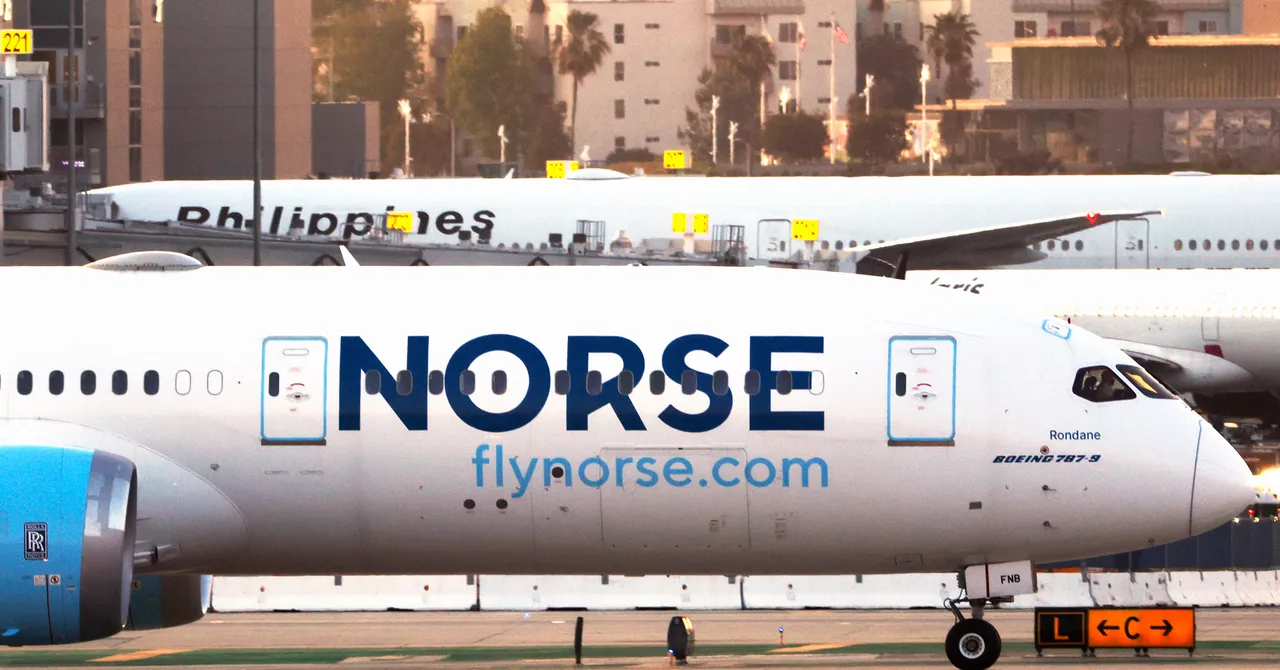
On March 31, I received an email from Norse Atlantic Airways. The $940 flights for my upcoming round trip to Rome had been canceled, it said, and I had 14 days to request a refund.
At first, I didn’t panic. That began to change when the company’s refund request page wouldn’t load on two browsers across three devices. After Norse didn’t respond to several emails, I looked for a phone number. There wasn’t one. On Reddit, I found dozens of posts about Norse’s allegedly haphazard customer service.
The same day, I filed a public records request with the Federal Trade Commission, which I hoped would give me a better idea of how common this experience was. I eventually received around 75 detailed complaints from people who had bought or tried to buy tickets from the airline. Many described a customer service operation in which the inability to get in touch with a human created a vacuum that scammers appeared happy to step into. Of the 41 complaints that reported a dollar figure, 21 claimed they lost more than $1,000.
Norse Atlantic Airways does have human customer service workers, but in recent years, the airline has leaned into a tech-forward approach, deploying AI agents to help power its operation.
Advertisement
“Technology will help us have a higher level of availability and customer support, while still maintaining low fares for more people to enjoy travel between continents,” Bård Nordhagen, the company’s chief customer and communications officer, tells WIRED.
Yet if what I and dozens of other people experienced is any indication, this version of customer service is time-consuming, frustrating, and at times expensive.
The Future Is Now
Norse Atlantic Airways, which was formed in February 2021, has described itself as a “modern, long-haul, low-cost airline” with a “lean” workforce. Early on, it implemented a tool from the customer service technology company Sprinklr that created a “unified” inbox of customer service queries. (Based on archives of the company’s website, it doesn’t appear to have ever listed a customer service number.)
In January 2025, the AI company Kindly wrote a blog post detailing how it developed a chatbot for Norse alternatingly called “Odin” or “Odin’s Wingman.” Norse also removed the customer support email from its support page in order to make Odin the “primary support channel,” according to the Kindly blog post.
Advertisement
By January 2026, Norse had “sunset” the chatbot and replaced it with its current AI agent, Freya. Delight.ai, the company that developed Freya, said that the airline’s no-human-intervention inquiry resolution rate “rose from 60 percent to 80 percent” within two weeks of its introduction.
“We see the future of our customer support team as AI agent managers,” Norse’s chief product officer, Alf Lim, said in a Delight.ai blog post. Lim added that Freya is a “core part of the team” at Norse.
According to the blog, Freya would allow Norse to “upskill” its customer support unit into these AI agent managers, which are described as “specialists who continuously optimize, train and step in when human-touch is required.”
Nordhagen tells WIRED that Freya has been a success and now manages “99 percent of inquiries from passengers.”
Advertisement
A Scammer’s Paradise
Many of the FTC complaints shared a common theme: A person, needing to change their flight or adjust their booking, searched online for the Norse Atlantic Airways phone number. Eighteen of the FTC complaints explicitly claimed that the person was scammed after they Googled Norse’s customer service information and found scam websites and phone numbers in the results.
In some cases, customers claimed they were told they owed money for a flight they thought they already paid for. Other times, they said they were told that they had to pay an exorbitant fee in order to make a change to their itinerary.
Anthropic submitted confidential paperwork for an initial public offering on Monday, the first step in what could be a blockbuster debut for the $965 billion company. The filing with US regulators is another entry in what looks to be a historic year for IPOs as artificial intelligence labs vie to fund their expensive research.
Anthropic announced the filing in an unsigned, two-paragraph blog post, noting that the amount of money it is seeking to raise—and at what valuation—has not been set. The company said that the timing of the IPO would “depend on market conditions and other factors.” The announcement comes just days after Anthropic unveiled a $65 billion fundraising round.
The company declined to comment beyond its blog.
Anthropic, led by CEO Dario Amodei, joins a crowded space. OpenAI is rumored to be targeting its own public offering as soon as September. SpaceX, which owns the Elon Musk-founded xAI, confidentially filed its own IPO paperwork in April and published it on May 20. It is now targeting a June 12 stock market debut and seeking a $1.75 trillion valuation, Reuters has reported.
Advertisement
The three companies are racing to secure access to funding that would help pay for the computing resources required to train increasingly capable frontier AI models. Anthropic’s annualized revenue, based on sales from an unspecified time frame last month, is $47 billion, the company said last week. But it spent more money on cloud computing and thousands of staff, leading to losses.
Monday’s filing with the US Securities and Exchange Commission allows regulators to give feedback on the lengthy document, which talks about Anthropic’s goals, finances, and challenges. (The company can then make edits based on that feedback.) IPO preparations are complicated, requiring companies to shore up their accounting, tighten various internal policies, and have a clear sales pitch for investors.
The much-anticipated debut could unleash a wave of wealth across San Francisco, where Anthropic is based. Some Anthropic employees previously converted a portion of their shares into cash by privately selling them to investors before the IPO. But more Anthropic employees may cash out or sell larger stakes as part of the IPO process, turning tens or even hundreds of paper millionaires and billionaires into real ones.
The IPO could also be a boon for large shareholders such as Amazon and investors that made some of the first bets on the company, including Skype cofounder Jaan Tallinn.
Advertisement
If all goes well, Anthropic’s IPO could rival that of SpaceX as the largest ever. But Anthropic’s complicated corporate structure and governance, including its status as a public benefit corporation that partly answers to a committee the company calls a Long-Term Benefit Trust, could lead to both delays and a knockdown in valuation.
Anthropic has set itself apart from other AI labs by focusing heavily on courting business customers. Its code-writing model, Claude Code, is widely considered best-in-class.
But the company has faced some setbacks. Earlier this year, US defense secretary Pete Hegseth sanctioned Anthropic under two different government supply-chain laws to remove the company’s Claude AI models from the military and other federal agencies. Hegseth deemed the company’s ethical stances—including its resistance to the unsupervised use of Claude in high-stakes scenarios—a national security threat. Specifically, Anthropic executives have held firm that the government’s desire to potentially unilaterally deploy nascent AI models for tasks such as weapons targeting and mass domestic surveillance is not a use case the company will allow.
The designations threaten to cost Anthropic billions of dollars in sales this year, executives have said. Anthropic has sued to overturn them in ongoing court battles.













































You must be logged in to post a comment Login