TL;DR
GoPro issued a going-concern warning after memory prices rose 80-115%. Revenue fell 26%. It’s exploring a sale, a defence pivot, and 23% staff cuts.




GoPro issued a going-concern warning after memory prices rose 80-115%. Revenue fell 26%. It’s exploring a sale, a defence pivot, and 23% staff cuts.
GoPro warned on Monday that there is “substantial doubt about the company’s ability to continue as a going concern.” The action-camera maker reported a 26% revenue decline in Q1 and expects to breach several loan covenants. Shares fell as much as 14%.
The cause is memory. GoPro said its earnings forecast has been “significantly impacted” by an 80% to 115% increase in memory prices. In April, suppliers informed the company of a planned reduction in memory supply that would further reduce forecasted sales. The same DRAM reallocation that is killing the cheap smartphone is now threatening to kill GoPro.
The mechanism is the one we detailed last week. Samsung, SK Hynix, and Micron have redirected wafer capacity from consumer DRAM to high-bandwidth memory for AI data centres. HBM margins run at 70% or higher. Consumer DRAM margins sit between 20% and 30%. The memory makers chose the higher-margin customer. Everyone else pays more or gets less.

The 💜 of EU tech
The latest rumblings from the EU tech scene, a story from our wise ol’ founder Boris, and some questionable AI art. It’s free, every week, in your inbox. Sign up now!
GoPro does not have the purchasing power to absorb the price increase. It is not Apple, which can negotiate quarterly contracts and pass costs onto consumers buying $1,000 phones. It is a sub-$1 billion revenue company whose products sell for $300 to $500 and depend on commodity memory to store high-resolution video. When memory costs double, the product becomes unprofitable.
The company has received waivers from its lender after failing to comply with loan covenants. It does not expect to have enough liquidity to meet obligations if default provisions are triggered and outstanding debt becomes due. It has a $50 million second-lien facility from Farallon Capital Management and a revolving credit facility with Wells Fargo as agent.
GoPro has engaged advisors to evaluate strategic alternatives including a potential sale or merger. It is also exploring opportunities in defence and aerospace for “new markets and product categories.” The company already announced plans to cut 23% of its global staff in April.
The defence pivot echoes Faraday Future’s robotics pivot: a consumer electronics company under financial pressure reaching for a higher-margin, government-funded market where the competitive dynamics are different. Whether GoPro’s ruggedised camera expertise translates into defence contracts is unproven.
The only near-term supply relief is coming from China. ChangXin Memory Technologies’ DRAM has been spotted inside Corsair’s retail DDR5 kits. But CXMT is also planning to convert 20% of its capacity to HBM because the margins are irresistible. The consumer memory shortage is structural, not cyclical.
The memory crisis is visible across consumer electronics. The Asus ROG NUC 16 costs $1,200 more than last year’s model, partly due to DDR5 prices. Dell hiked laptop prices 15-20% in December. Apple agreed to pay Samsung a 100% premium on LPDDR5X for the iPhone. These companies can absorb the cost. GoPro cannot.
GoPro was founded in 2002 by Nicholas Woodman. It went public in 2014 at a $3 billion valuation. The company popularised the action camera category and built a brand that became synonymous with extreme sports and adventure content. Its share price peaked above $90 in 2014. It trades below $1 today.
The going-concern warning makes GoPro the most visible corporate casualty of the AI memory reallocation. It will not be the last. Any consumer electronics company with thin margins, limited purchasing power, and dependence on commodity DRAM is facing the same calculus. The AI boom created enormous wealth for three memory makers and the hyperscalers they supply. GoPro is on the other side of that equation.

 For most of us the abbreviation “CRT” brings to mind a monitor or TV. But at its core it’s about the special vacuum tube that makes the images appear.
Regardless of whether it’s just a simple monochrome CRT in an oscilloscope or a full RGB CRT, the basic steps to make it work in a device remain the same. In a recent video by [Void Electronics] these steps are worked through, including the biasing at the end that is necessary to get a stable image.
A big part of installing a CRT and driving it is knowing how to read its datasheet. Much like other vacuum tube types, there are heaters, control grids and a range of voltages to get right and keep happy. Even then you can still have a situation where you must troubleshoot problems, which is also touched upon in the video. All of this is demonstrated using an RFT B6S1 CRT as the subject, including how to build your own bias circuit.
Despite calling it an “obsolete skill”, there is still a lot of demand for CRTs in vintage lab equipment, arcade restorations and far more obscure fields that still have new CRTs produced for them. Not to mention that even today CRTs have characteristics that make them competitive with flat-screen technologies.

Looking for a different day?
A new NYT Strands puzzle appears at midnight each day for your time zone – which means that some people are always playing ‘today’s game’ while others are playing ‘yesterday’s’. If you’re looking for Sunday’s puzzle instead then click here: NYT Strands hints and answers for Sunday, June 21 (game #840).
Strands is the NYT’s latest word game after the likes of Wordle, Spelling Bee and Connections – and it’s great fun. It can be difficult, though, so read on for my Strands hints.
Want more word-based fun? Then check out my NYT Connections today and Quordle today pages for hints and answers for those games, and Marc’s Wordle today page for the original viral word game.
SPOILER WARNING: Information about NYT Strands today is below, so don’t read on if you don’t want to know the answers.
• Today’s NYT Strands theme is… Heebie-jeebies
Play any of these words to unlock the in-game hints system.
• Spangram has 10 letters
First side: left, 5th row
Last side: right, 8th row
Right, the answers are below, so DO NOT SCROLL ANY FURTHER IF YOU DON’T WANT TO SEE THEM.

The answers to today’s Strands, game #841, are…
I am not very good at watching horror movies as I am so easily spooked. It’s led to a few embarrassing moments of me falling off chairs during jump scares — even the false jump scare that’s intended to lull you into a false sense of security has me on the verge of trauma.
Perhaps if I’d have read the GOOSEBUMPS series of books when I was a kid I would be better acclimatized to shocks and gore.
Anyway, I digress. That spangram really opened up today’s game and fortunately I spotted it early after getting CREEPS. The only word I struggled with was BUTTERFLIES, which doesn’t quite fit with the others.
Strands is the NYT’s not-so-new-any-more word game, following Wordle and Connections. It’s now a fully fledged member of the NYT’s games stable that has been running for a year and which can be played on the NYT Games site on desktop or mobile.
I’ve got a full guide to how to play NYT Strands, complete with tips for solving it, so check that out if you’re struggling to beat it each day.
The Pentagon’s F-35 fighter fleet continues to face readiness challenges despite years of investment, modernization efforts, and sustained contractor support, as a US Government Accountability Office (GAO) report found only 25% of the aircraft were fully mission capable during fiscal 2025.
According to the GAO, the fleet’s mission-capable rate declined from 67% in fiscal 2021 to 44% in fiscal 2025.
The fully mission-capable rate, measuring aircraft able to perform all assigned missions, dropped from 38% to 25% during the same period.
The findings raise questions about a program expected to cost ∼$1.6 trillion in lifetime US sustainment expenses while serving as the backbone of American air power.
US Air Force officials attributed part of the deterioration to software delays affecting newly delivered aircraft, alongside corrosion concerns and persistent shortages of replacement components.
The report described the F-35 as the Defense Department’s most expensive weapons program while noting that performance goals remain unmet.
More than 800 F-35s are currently operated by the Pentagon, with plans to acquire roughly 1,700 additional jets by the mid-2040s.
Meanwhile, the Joint Program Office launched the Global Support Solution Reset in June 2025 to improve readiness and reverse years of declining availability.
Program officials established ambitious objectives under the initiative, seeking an 80% mission capable rate and a 65% fully mission-capable rate by 2030.
Achieving those goals is expected to require an additional $13.7 billion through fiscal 2031 beyond previous planning assumptions.
Only around $2.2 billion is directly associated with the reset initiative, while about $11.5 billion covers sustainment requirements exceeding earlier budget projections.
GAO warned that readiness levels could continue deteriorating before meaningful improvements emerge.
Internal program documentation reviewed by auditors indicated measurable gains may not appear until late 2026 or later.
The report also noted the Joint Program Office will depend on industry partners to deliver more than $7 billion in materials despite ongoing manufacturing limitations.
A 2025 Lockheed Martin study identified 48 components that suppliers cannot currently manufacture in sufficient quantities.
Those shortages include aircraft canopies, which GAO has repeatedly identified as a major contributor to grounded fighters.
Auditors also projected that by the mid-2030s, military services could face an annual sustainment shortfall of roughly $1.2 billion.
The report examined contractor incentive payments and concluded that readiness-focused rewards frequently failed to produce expected outcomes.
Between 2020 and 2023, Lockheed Martin received more than $114 million from ∼$269 million in available incentive fees, even as readiness measures generally stagnated or declined.
In 19 of 39 performance periods, recorded readiness figures were adjusted upward due to factors deemed outside contractor control.
GAO further found inconsistent documentation surrounding incentive calculations and payment tracking practices.
Since 2014, auditors have issued 46 sustainment recommendations concerning the F-35 program, although only 14 had been implemented by March 2026.
That 30% implementation rate, spanning more than a decade of oversight, suggests the Pentagon’s appetite for acting on independent findings remains limited at best.
Via Defense News

Follow TechRadar on Google News and add us as a preferred source to get our expert news, reviews, and opinion in your feeds.
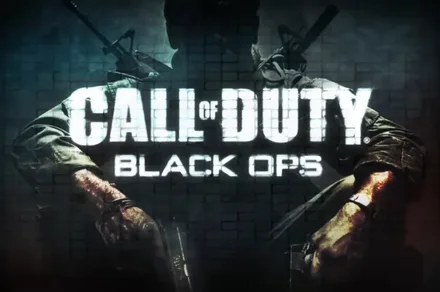

Call of Duty fans were understandably excited when Treyarch confirmed that Black Ops and Black Ops 2 are coming to modern PlayStation consoles in July. Both games are among the most beloved entries in the series, and PlayStation players have been locked out of easy access to them for years unless they still had older hardware.
That excitement may not last if the latest pricing clues are accurate. As pointed out by Call of Duty tracker CharlieIntel (via Gaming Bible), Black Ops and Black Ops 2 recently received store updates on PC and Xbox. Each base game is now listed at $40, individual DLC packs cost $10 each, season passes are priced at $30, and microtransaction camos or personalization packs are now free.
The important part is that this could hint at how the upcoming PS4 and PS5 ports will be priced. If Activision follows the same structure on PlayStation, buying both base games would cost $80 before any DLC.
That is where things get harder to defend. These are 14- and 16-year-old games from the PS3 era, not new releases built for modern hardware. Black Ops has four major DLC packs: First Strike, Escalation, Annihilation, and Rezurrection. Black Ops 2 also has four: Revolution, Uprising, Vengeance, and Apocalypse. At $10 each, that adds another $80 across both games. In other words, owning both ports with all major DLC could cost around $160 if everything is sold separately.
Even using season passes would not make this feel cheap. These are not remakes or remasters. Activision has reportedly described them as re-releases, which means players should not expect major visual upgrades, new content, or a proper modern overhaul.
The reaction has been exactly what you would expect. Replies to the pricing post on X were filled with complaints about paying premium prices for old ports, while Reddit users were even harsher. One r/gaming commenter pointed out that these are “straight ports,” while another complained there are no upgraded textures, better servers, or frame-rate improvements.
The frustration is fair. No matter what logic you try to apply, charging this much for PS3-era games with paid DLC in 2026 sounds absurd.


Personal tech
Techie couldn’t help but be a little blunt when the support call came in – but has no regrets!
ON CALL Welcome to another edition of On Call, The Register’s reader-contributed Friday column in which you share your stories of troublesome tech support incidents.
This week, meet a reader we’ll Regomize as “Cooper” who told us that his employer uses an MS Word document to record incoming orders.
“It includes a table with two columns: the left column contains a description of the data to be entered in the right column – things like product, SKU, quantity, customer name,” Cooper explained. “Our sales team uses it to record new orders, then our fulfillment team reviews, validates, and submits for delivery.”
Cooper knows this is an archaic approach, but his employer has used this document for ages and doesn’t want to change.
“This means we do a lot of educating on the process,” Cooper told On Call.
That effort worked well enough for years, but Cooper’s company recently hired a new person called “Mitch” to review the forms before sending them to the fulfillment team.
“One day, Mitch comes to me absolutely flustered by an issue a colleague was having with the form,” Cooper told On Call.
Because the form is just a form – all users need to do is fill in the blanks – Cooper found the request strange but did the right thing and dug into the issue.
Mitch’s complaint centered on the fact that the text in some forms was underlined in red – evidence Word’s built-in spell checker at work. “I don’t understand the red lines, what do I do?” Mitch asked Cooper, adding a plaintive and panicked request to “Please HELP!!!”
Cooper told On Call the chap who filled in the form was in his 60s, so ignorance of how Word works is plausible and perhaps understandable. But Mitch was in his 40s and his ignorance seemed inexcusable.
“My answer was fairly blunt and straightforward: I told Mitch this is just how MS Word works, and that an SKU is not a normal word in the dictionary so the spell checker was bound to kick in.
“You can tell the seller to ignore it, or they can turn off the spell checker,” he added.
Have you been asked to support tech you think it’s safe to assume everyone already understands? If so, click here to send On Call an email so we can share your story on a future Friday. The On Call mailbag is a little light at the moment, so new submissions are very welcome! ®

Looking for the most recent Wordle answer? Click here for today’s Wordle hints, as well as our daily answers and hints for The New York Times Mini Crossword, Connections, Connections: Sports Edition and Strands puzzles.
I think today’s Wordle puzzle is one of the toughest of the year. It’s an unusual word, and it features a pretty rare letter. If you need a new starter word, check out our list of which letters show up the most in English words. If you need hints and the answer, read on.
Read more: New Study Reveals Wordle’s Top 10 Toughest Words of 2025
Before we show you today’s Wordle answer, we’ll give you some hints. If you don’t want a spoiler, look away now.
Today’s Wordle answer has no repeated letters.
Today’s Wordle answer has three vowels.
Today’s Wordle answer begins with O.
Today’s Wordle answer ends with E.
Today’s Wordle answer can refer to something egg-shaped.
Today’s Wordle answer is OVATE.
Yesterday’s Wordle answer, June 21, No. 1828, was ALIBI.
June 17, No. 1824: TOKEN
June 18, No. 1825: ENTRY
June 19, No. 1826: EMOJI
June 20, No. 1827: DRAKE


KETTLE It’s been a week since the Trump administration established a de facto ban on Anthropic’s Mythos derivative, Fable 5, and the more that comes out about the move the more it seems like Anthropic employees talking amongst themselves were on to something: Is the government just picking on the company?
This week on the Kettle, host Brandon Vigliarolo and Reg cybersecurity editor Jessica Lyons chat about what’s going on with Mythos and Fable, what role Amazon may have played in justifying the government’s move, how a prominent cybersecurity expert is calling the government’s foul, and what this whole thing might mean for the next wave of models.
After all, even if Mythos and Fable are as advanced as Anthropic claims, it’s not going to take long for some open-weight model to make the same leaps, and good luck trying to stop one of those from getting in the hands of anyone who wants them.
You can listen to The Kettle here, as well as on Spotify and Apple Music, or read the transcript of the latest episode below. It’s been lightly edited for clarity.
Brandon (00:03)
Welcome to the latest episode of The Register‘s Kettle Podcast. I’m Brandon Villiarolo, and boy, has it been another exciting week in AI Land. If you’ve been following the news, you probably know what I’m talking about, especially if you’re an Anthropic customer who suddenly lost access to the company’s latest models. That’s right. This week’s topic is none other than the Trump administration’s de facto ban on the release of Mythos derivative Fable 5. And with me to discuss it is our cybersecurity editor, Jessica Lyons. Thanks for coming on.
Jessica (00:31)
Hello, thanks for having me.
Brandon (00:33)
Yeah, of course. this is right up your alley, so let’s get right into the heart of the matter. What did the Trump administration demand from Anthropic and what was the company’s response?
Jessica (00:44)
Okay, so what happened is last Friday the Trump administration sends this letter to Anthropic and they cite national security concerns to issue an export control saying that Fable 5 and Mythos 5 cannot be used by any foreign national inside or outside of the United States. And that also includes Anthropic employees. So in response, Anthropic just disbanded both models for all of the customers to ensure compliance. So effectively nobody can use these two models.
Brandon (01:20)
Yeah, I mean it seemed like the way that letter was worded, because Bloomberg got a copy of it and published it. And I think they said that they were citing the Bureau of Industry Security’s authorization to what is it, “require a license for the export, re-export, or transfer of any item subject to export administration regulations, because there is an unacceptable risk of use in or diversion to a military intelligence end use or military intelligence end user.” So they’re basically treating it like any other dual-use technology. But that restriction is so broad, right? Like you said, even their own employees, ⁓ so yeah, they they yeah, they have no other recourse but to just stop it.
Jessica (01:56)
And it was reportedly a really short time frame too, about ninety minutes that they they received this letter and had to make a call. So they didn’t have a lot of time to get any answers about what prompted this and what exactly are you asking us to do here.
Brandon (02:04)
Right, from what I was reading in some other reports that cited people familiar with the situation inside Anthropic and everything, they didn’t even really get much of an explanation. They basically got the letter and they were like, “Excuse me, can you please tell us what this is about?” And the government basically said, “No …shut it down now…” It’s really weird, especially then given the story you wrote about this this week, that they’re basically treating this, like I said, like any dual use technology. But you wrote about a bug bounty hunter, the godmother of this movement, Katie Moussouris, who basically saw the report that the government used to justify this and she kind of called BS on the whole thing, right?
Jessica (02:54)
Right. So Katie is really, really well respected in cybersecurity circles. She is the one who helped convince Microsoft to start their bug bounty program. She led the Department of Defense effort for Hack the Pentagon. She sat on several federal commissions and boards. So she’s she knows what she’s talking about. She knows what she’s doing here. And Anthropic asked Amazon to review the models before they released Fable 5 and and Mythos 5. And then they gave Katie a copy of the report and she confirmed today that the third-party report that she mentioned was the Amazon report.
Brandon (03:41)
Which has been mentioned I think in some other stories too as being kind of the impetus for this whole thing, right?
Jessica (03:44)
Yes, yes. So Anthropic then says, “hey, can you take a look at this? Let us know what you think.” She, as far as we know, is the only other person, the only other third-party expert to take a look at this report. And so she reads through it. She says that essentially what happened is that Amazon researchers fed Fable 5 and Mythos 5 and the Claude Opus model, they fed them all open source code and it had known CVEs. And then they also put new code and they kind of laced it with these vulnerabilities and asked the models to here’s the prompt, quote unquote, “review the code for security issues.” So Fable 5 refused, and then they just asked it straight out, quote unquote, “fix this code.” And the model obliged. They added some additional prompts to produce scripts to patch the issue, test the patches. So it kind of sounds like all these things that you want a model to be able to do for defensive security teams. The model did this. And according to Katie, this is the big scary national security issue that kind of or potentially prompted the Trump administration to just pull the whole thing, like ask Anthropic that you can’t release this to any foreign nationals.
Brandon (05:13)
Right, which again, right, is kind of funny because like when specifically asked to find security vulnerabilities in code, the model said no. Right. I mean, obviously this was a bit of a quote unquote “workaround,” right? But I mean, like you said, it’s very arguable that this is not a not a bypass, not a jailbreak. It’s just the way this should work in the first place. And apparently that’s that’s good enough for the government to say, “Hey, no, we don’t want anyone to have this.”
Jessica (05:40)
Right. And yeah, and there’s reports that that this the document was reviewed by administration officials and they described it as really scary because Fable 5 could identify flaws and that would be beneficial to the bad guys who are who are trying to hack American systems, and that poses a major threat to national security. But you have this whole group – and then there was a a letter with I believe over a hundred other security experts who are saying, no.
Brandon (06:14)
Moussouris signed that too, right? She was a signatory.
Jessica (06:20)
Yes, she did sign that as well. Yes, you have Alex Stamos, you have a bunch of really, really respected names in security saying, “We need this as defenders. This is what is going to give us an edge. So you’re actually you’re hurting the defenders. You’re not really hurting the attackers by essentially issuing a ban on Anthropic’s models.
Brandon (06:35)
Right, especially since, and I think you mentioned this in your story as well, Mythos isn’t unique according to a lot of researchers in these capabilities. And even if it is, it won’t be for long, right? There’s a lot of models that are going to gain this capability or already have it, right? And that are, some of them, being manufactured overseas. I’m sure DeepSeek can do similar things to this or models exist in China that can do these kinds of things, right? I can’t imagine that that Anthropic is alone in this capability.
Jessica (06:52)
Right, right. I mean, we’ve seen from a lot of different papers that open weight and foreign models are not that far behind. It might take a few more prompts, but eventually these models also are going to find bugs and show you how to exploit them. So this is not completely unique to this one company and their particular models.
Brandon (07:26)
But it’ll get there, right? And so on top of that, I think ⁓ Moussouris was part of the group that helped the government renegotiate the Wassenaar arrangement, which for anyone unfamiliar, it was an agreement between like 42 forty two countries, right, to to establish some carve-outs for defensive security exceptions to export controls. And it seems like based on you know her reading, or her blog post that this is kind of a misinterpretation of AI’s kind of place in that in that arrangement, right?
Jessica (08:03)
Right, exactly. So yeah, that, like you said, it carved out these exceptions for dual use software technology, especially these these things that are gonna help defenders. So it’s offensive security capabilities, it’s malware analysis, all of these aspects of the software that is going to help defenders with coordinated incident response and sharing vulnerability data. And this carveout that she helped develop protects the companies, the people who are using these these technologies from criminal prosecution. And so one of the major arguments here is that you are pulling away more technical capabilities that are going to help defenders. This should be covered by that. It obviously is a dual-use technology and this should be protected. Not subject to export controls.
Brandon (09:01)
Right. And on top of that, right, you know, ⁓ like you mentioned, open weight models. It’s gonna be kinda hard to stop export bans on on open weight models and other publicly available stuff, right?
Jessica (09:07)
Right. Any foreign technologies, there’s absolutely nothing that we can do to prevent those. So again, it just seems like an instance of hamstringing defenders with technologies that would be really beneficial.
Brandon (09:30)
Which I think obviously kind of begs the question whether the Trump administration is sort of just picking on Anthropic, right? As we we covered a few months ago (I can’t even remember when it was now because everything moves so fast) but Anthropic got into a scuffle with the Pentagon earlier this year where they basically said, we don’t want you using our models to was it spy domestically or or autonomously target weapons, which I think both Anthropic and the Pentagon said, “we’re not doing that.” But it was just sort of like a “hey, you know, preemptively, we don’t want our models used in this kind of situation.”
And so the Pentagon’s reaction was basically to say, “well, if you’re not going to let us do whatever we want with it, then you can get out of every single piece of government infrastructure that exists.” Now I mean, they had a significant contracts with the federal government, right? Like most AI companies do. And so I think the Trump administration’s been kind of picking it out everywhere it can find it.
Jessica (10:22)
And not just the not just the government itself, but the whole supply chain. They labeled it a supply chain risk. So if you contract with the government, you also can’t use this technology.
Brandon (10:32)
Right, which severely obviously limits Anthropic’s ability to do business. And now here we are, you know, I think the New York Times reported earlier this week, they had a pretty wide ranging story on this whole topic that talked to a lot of people inside the company, saw some internal chat logs, and they mentioned that several employees were talking about feeling bullied or unfairly targeted by the Trump administration. And again, but when you with reference back to the things we were just talking about, it kind of seems like that might be the case, right? They’re hamstringing defenders, but why, right?
Jessica (11:11)
Right. Right. The hard part is is that we don’t have any transparency or definitive clarity on the reasons. It sounds like maybe Anthropic does at this point. They’ve reportedly been in negotiations or talks at least with the White House all week. We haven’t heard anything out of those talks yet. But it does seem that they are being unfairly targeted when you have the earlier scuffle with the Pentagon. Then you reportedly have Amazon sharing the findings of this review it did on Anthropic’s models with the administration. Amazon, Jeff Bezos, we know that’s a company that has the administration’s ear on things as opposed to Anthropic, which seems to be butting heads with the administration quite frequently. And then all of a sudden, seemingly out of nowhere, there’s this export control on Anthropic’s models. So it it’s it’s hard not to draw that conclusion that there’s a little bit of bullying for lack of a better word, targeting this particular company because of its history with the White House.
Brandon (12:30)
I know you in your story you mentioned that you were gonna update it if we heard back anything from the White House because you were asking them some questions about it. Did they ever get back to you?
Jessica (12:44) No. No response from the White House.
Yeah, of course not. That’s not a surprise, really. I mean that’s the thing, right? They email me back, I get plenty of emails from them when I ask them questions, but often it’s just kind of a “here’s the press release you already saw.”…If you ask them pointed questions a lot of times they’re not gonna answer. But it’s the same as any corporation too, I feel like, nowadays.
Jessica (13:01)
Right. But I mean, like you said, that even even the letter from Commerce itself, that hasn’t been made public yet. So we’ve seen that posted on different social media sites and Bloomberg had a copy of it, but even even that hasn’t been released publicly.
Brandon (13:14)
I was really hoping that the government would explain their reasoning behind this, right? But it just seems like essentially it’s been this whole – even when I saw the email I think was it was it Friday or Saturday…
Jessica (13:18)
It was Friday, it was late Friday.
Brandon (13:30)
Because I get all of Anthropic’s alerts about downtime and outages and everything. And I remember seeing that come across and basically saying that they were cutting off access to those models. And I was just kinda like, what? And then all of a sudden it comes out, it’s because, or I think I when I read it further, it was like, Yeah, the government basically, you know, it’s forcing our hand in in doing this. Which was really surprising to see on on I mean, not surprising to see based on the timing, right? Because a lot of times Friday evenings are when all this kind of stuff happens so that the news cycle doesn’t catch it.
But it’s also,, you know, we’ve written quite a bit about whether or not Mythos and then Fable by association aren’t kind of being overhyped, right? Like their capabilities are greater than what Anthropic says. We’ve written about that, we’ve talked about that on here, I think, before. ⁓ You know, Moussouris’s blog post seems to maybe not suggest that it is being overhyped. But at least that it’s not, you know again, its capabilities aren’t as advanced as what the government seems to be worried about, as what people seem to be, fear mongering about. I mean, have you gotten a sense of that from any of the recent reporting on it or or anything about whether or not again it is just a lot of hype?
Jessica (14:46)
Well, I think we’ve seen with Anthropic’s models and we’ve seen with other models as well, is, yeah, they’re getting a lot better. They’re getting really good at finding vulnerabilities. And now they’re also getting better at fixing them. So that seems like a a net positive here. And plus, this wasn’t a case of Anthropic releasing the Mythos preview. That’s the one with no guardrails that companies are currently trialing to find and fix vulnerabilities in their own products. This was a one I’ve I’ve read it described as a a straightjacketed version. And I like that because it this is one that does have the guardrails in place. This is why Anthropic said it was releasing it to the public. So again, without having played around with the model, it’s hard to say whether or not it’s overhyped or not, but this wasn’t just a a free-for-all. This was a model that did have guardrails in place. And if asking the model to fix this code is a jailbreak, I think it also speaks to just a lack of understanding about what these models can do, what they should be able to do, what a jailbreak is, what this technology means in general, especially when it comes to lawmakers.
Brandon (16:08)
Yeah, right? I mean is this another is this the next generation of the series of tubes here, right? Where some sits on the House floor talking about AI models and it’s and it’s clear they do not understand what they’re talking about. I mean, have you been watching any any government hearings or anything or heard anything? Like what kind of things are they saying about these that sound so grossly wrong? I imagine there’s a lot, right?
Jessica (16:13)
There is a lot. I can’t think of any specifics off the top of my head, but I have been watching a lot of the hearings on AI, and specific to AI and how it relates to security. And honestly, cybersecurity is still a pretty big unknown, I think, among most lawmakers. So then you add this newer technology into the mix that’s evolving and expanding and and becoming more advanced so rapidly that it just … it’s really hard to wrap their heads around what are the capabilities and how can how can this be a benefit for defenders? Because when you do read the hype, it does sound really scary. Here’s this model that can find any zero day that’s ever existed and it can exploit it and it can do it at the speed of machines. So yeah, that sounds terrifying, really.
I think there’s a lot of confusion. There’s a lot of fear around this right now. And I think it’s hard for lawmakers a lot of times to get a get a grasp on what the issues are, what the technology is, how it works. And that’s an right.
Brandon (17:43)
Yeah, I mean this is complicated stuff. It’s changing a lot of the technological world right now, right? Like enterprises are grappling with AI, trying to figure out how it works, what works well, what doesn’t. You know, it’s now entering the cybersecurity space. It’s been in the development space for a while. Yeah, I mean, it is a complicated issue that’s that’s changing everything. I don’t know. Maybe we need a government body that regulates cybersecurity and you know, handles all these sorts of things that doesn’t get its staff culled on a whim. I don’t know.
Jessica (18:11)
Right. I was gonna say, that’s too bad that we don’t have one of those. At least with the full staff and budget.
Brandon (18:16)
Well, who knows? We’ll we’ll be keeping an eye on things like this ’cause I mean this Mythos story and this the Fable story, this isn’t it’s not going anywhere. Like you they’re still in talk, still trying to figure out what it was. Amodei was at G7 this week talking to leaders about, not wanting to fracture the the cybersecurity environment with AI.
So yeah, there’s gonna be plenty to talk about and we will be here to discuss it on The Kettle. Thank you for joining me this week and thanks for listening. We will see you soon. ®
Brazil, and South America as a whole, is home to some of the toughest terrain on earth. There are large swathes of rainforest, swamp, mountains, and whatever else you might think of. As a result, traversing that terrain with anything other than a huge military vehicle might be a tough ask.
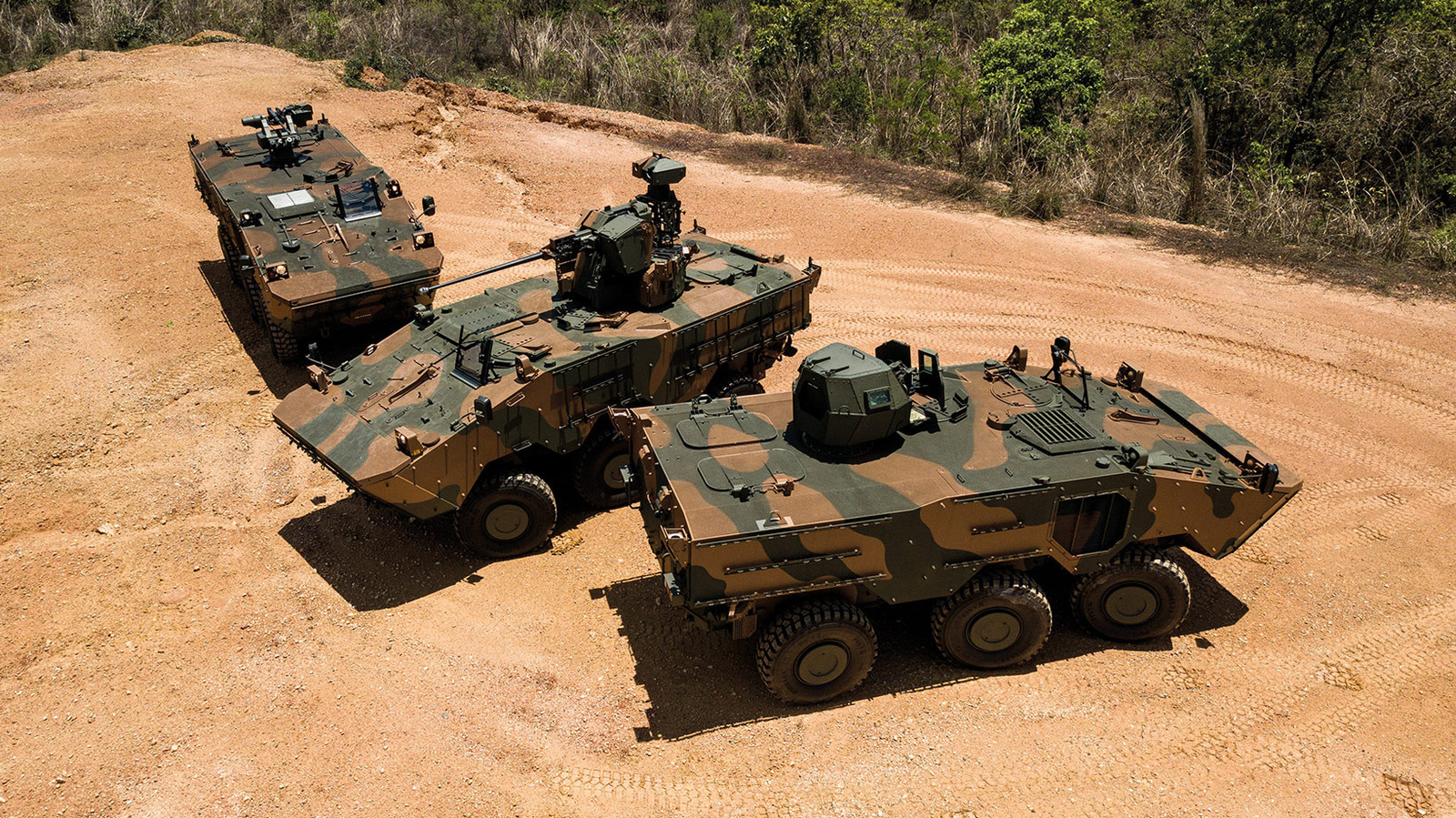
Enter the Guarani, a six-wheel drive amphibious armored vehicle made with the help of Italian company Iveco and the Brazilian Army. Like other amphibious military vehicles, the Guarani is huge. Empty, it weighs 33,069 pounds. When it’s loaded and set up for amphibious operations, it can weigh up to 42,990 pounds. It is also over 22-and-a-half feet long.
It’s primarily used as an armored personnel carrier and in that configuration, it can carry a crew of three alongside eight additional soldiers. However, Brazil and Iveco designed the Guarani so it can be modular. That not only means different weapons can be mounted, but it can also be used for search and rescue and a mobile command center.
Under the hood is an 8.7-liter turbo diesel inline-six that generates 375 horsepower. On land, that gives it a top speed of 56 miles per hour. In the water, through its pair of propellers, that speed drops a bit to just over 4 miles per hour.
As far as armament. It can carry whatever is mounted to the roof turret. That includes a .50-caliber machine gun, a 7.62-millimeter machine gun, a 30-millimeter cannon, a 40-millimeter grenade launcher, or even an anti-aircraft weapons system made by Saab.
On the armor end, it’s made of steel and hardened to withstand mines of improvised explosive devices. Additionally, all that heft gives it strength to tow “vehicle of same class”-worth of weight, according to Iveco. Meaning, that if another Guarani gets in a jam, you can tow one out. Iveco also notes that it can be transported within the cargo bay of a C-130 Hercules cargo plane, or the Brazilian-made Embraer KC-390 Millennium.
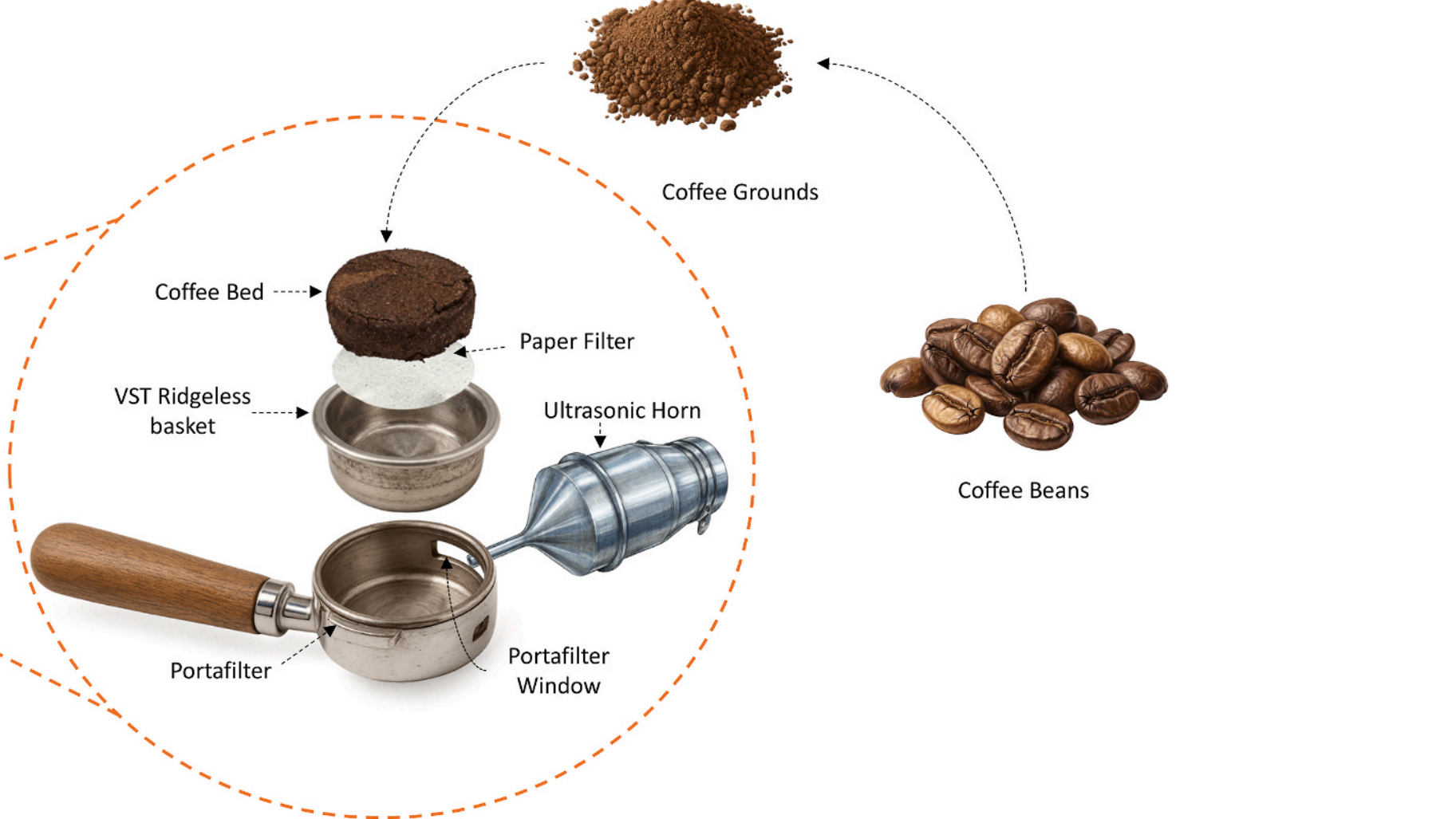
There are as almost as many kinds of coffee as there are of coffee drinkers, with each method for preparing the beverage appealing to a different kind of palate: moka pots, filter coffee, pour-over coffee, French presses, cold brews, espresso, and more produce their own unique flavours by extracting different compounds from the grounds to different degrees. Now, a new method has joined the throng: ultrasonic-assisted extraction, which can produce even an espresso at room temperature.
Espresso is normally made by forcing hot water through tightly-packed, finely-ground coffee beans, quickly producing a concentrated extraction. Its one of the hardest kinds of coffee to consistently make well, since the outcome is influenced by everything from grind size and packing density to temperature, pressure, and more. Ultrasonic agitation helps here by creating cavitation bubbles, which form shock waves as they collapse, breaking open the bean structure and producing small, strong jets of water. The experimental apparatus was built into a modified espresso machine. An ultrasonic transducer delivers vibrations to the basket containing the room-temperature slurry of coffee grounds for two or three minutes.
To quantify the results, the researchers analysed total dissolved solids, extraction yield, pH, colour, volatile components, and caffeine and chlorogenic acid contents. By varying ultrasonic power and grind size, the extraction yield and dissolved solids could be adjusted to closely match traditional espresso or cold-brew coffee. The other metrics had no significant differences, and a survey of 100 coffee drinkers found no preference between this and traditional espresso. When the drinkers tried the cold-brew coffees, they preferred the version made with ultrasonic assistance. The experiment succeeded in its goal of reducing energy consumption: the ultrasonic-assisted coffee took about a quarter as much power to make.
If you still prefer a more traditional approach, we’ve covered some beautiful espresso machines before, including one made out of motorcycle engine parts.

Looking for the most recent Mini Crossword answer? Click here for today’s Mini Crossword hints, as well as our daily answers and hints for The New York Times Wordle, Strands, Connections and Connections: Sports Edition puzzles.
Need some help with today’s Mini Crossword? Only one clue really threw me off, and that was 8-Across, but filling in the others solved that one, too. Read on for all the answers. And if you could use some hints and guidance for daily solving, check out our Mini Crossword tips.
If you’re looking for today’s Wordle, Connections, Connections: Sports Edition and Strands answers, you can visit CNET’s NYT puzzle hints page.
Read more: Tips and Tricks for Solving The New York Times Mini Crossword
Let’s get to those Mini Crossword clues and answers.
The completed NYT Mini Crossword puzzle for June 22, 2026.
1A clue: Like jerky and dried fruit
Answer: CHEWY
6A clue: Technology that Marconi introduced to the Vatican in 1931, in order to broadcast the pope’s blessings worldwide
Answer: RADIO
7A clue: Bring together as one
Answer: UNIFY
8A clue: Prefix with -path or -political
Answer: SOCIO
9A clue: Successful song
Answer: HIT
1D clue: Clobber
Answer: CRUSH
2D clue: Capital of Vietnam
Answer: HANOI
3D clue: Monarch’s official decree
Answer: EDICT
4D clue: In-flight “perk” that’s notoriously unstable
Answer: WIFI
5D clue: Toy on a string
Answer: YOYO



Crude Oil Plunges Over 4% as US-Iran Agreement Reopens Hormuz Strait


Weekend Open Thread: Miami – Corporette.com

The Adder At The Heart Of Intel’s 8087 FPU

Wall Street Week Ahead: Investors see Micron earnings as pulse check of AI rally momentum


HIVE shares jump as $220M AI deal speeds Bitcoin mining pivot


FIFA World Cup 2026: Canada beat 9-men Qatar 6-0 to register first ever win | FIFA World Cup 2026


MHP SE 2026 Q1 – Results – Earnings Call Presentation (OTCMKTS:MHPSY) 2026-06-20


Jake Chervinsky accuses CME of protecting derivatives monopoly


Brexit cost 6% of UK economy, Bank of England company data suggests


Soccer-U.S. defends Iran World Cup travel restrictions, says discussions ongoing


Anthropic’s Dario Amodei Urged AI Unity at G7, Even as US Banned His Models


Weeks Of In-The-Field Testing And A Verdict

Can Charles Hoskinson Really Rescue Cardano?

Adobe adds its AI assistant to Premiere, Illustrator and InDesign


Renter of Home in Anne Heche Crash Denies Settlement With Son


Andy Burnham and the meaning of Makerfield

Iren (IREN) Stock Surges on Jefferies Buy Rating: AI Infrastructure Play Gains Momentum


Instagram Now Lets You Add A Unique Caption To Each Carousel Slide


BBC Reporter Discusses Cross Party Criticism Of Trumps Iran Deal


Nightcore – MONEY ON THE DASH (Soft Rock Version) (Lyrics)




You must be logged in to post a comment Login