

Business
GameStop Shares Edge Lower to $21.13 on June 1 as Investors Weigh Cash Position and Retail Challenges

NEW YORK — GameStop Corp. shares slipped 0.24 percent to $21.13 in morning trading on Monday, June 1, 2026, as the meme stock continued to trade in a narrow range amid ongoing uncertainty about the company’s long-term strategic direction despite a substantial cash reserve.
The modest decline reflected cautious investor sentiment at the start of the new month, with limited catalysts to drive significant movement in either direction. Trading volume remained elevated compared to traditional retail stocks, consistent with GameStop’s status as a high-profile name that attracts both dedicated retail traders and short sellers.
GameStop has maintained a volatile trading pattern in 2026, with shares experiencing sharp swings driven by social media sentiment, short interest fluctuations and speculation around CEO Ryan Cohen’s plans for the company. The video game retailer has transformed into something of a holding company with significant cash on hand, but its core brick-and-mortar business continues to face structural challenges from the shift to digital gaming.
Strong Cash Position Provides Flexibility
One of GameStop’s clearest strengths remains its robust balance sheet. The company holds more than $4.6 billion in cash and equivalents, providing a significant financial cushion and strategic optionality. This war chest has fueled speculation about potential acquisitions, investments in new technology or even cryptocurrency-related initiatives under Cohen’s activist-influenced leadership.
Ryan Cohen, who took the helm after a successful proxy battle, has focused on operational efficiency and exploring new revenue streams. The company has reduced costs, streamlined inventory and explored e-commerce improvements, though physical store sales continue to decline as consumers shift toward digital downloads and online marketplaces.
Analysts note that while the cash position offers downside protection — valued at roughly $14 per share by some estimates — the traditional retail operations face ongoing pressure. Revenue trends remain challenged as the video game industry evolves rapidly away from physical media.
Analyst Consensus Remains Cautious
Wall Street coverage of GameStop is limited but consistently cautious. The average 12-month price target sits around $13.50, implying notable downside from current levels. Ratings are split between Hold and Sell, with many analysts citing limited visibility into Cohen’s long-term vision and the structural decline in physical game sales.
Some optimistic scenarios outside mainstream analyst circles project higher values if major strategic moves materialize, such as successful acquisitions or a pivot into technology or digital assets. However, conservative models place expected trading ranges between $12 and $28 for the year, reflecting skepticism about sustainable growth in the core business.
Short interest has moderated from earlier peaks but remains elevated compared to traditional retailers, sustaining the potential for volatility. The stock’s meme heritage continues to influence trading patterns, with social media sentiment often driving short-term moves disconnected from fundamentals.
Recent Performance and Strategic Moves
GameStop reported improved fiscal 2025 results, with net income rising 219 percent year-over-year to $418.4 million and free cash flow reaching $597.3 million. These figures reflect cost-cutting measures and better inventory management, though same-store sales continued to decline.
The company has explored various strategic options, including an unsolicited $56 billion bid for eBay that was rejected. Rumors of Bitcoin treasury strategies and other unconventional moves have circulated, highlighting Cohen’s willingness to think creatively about capital deployment.
Such speculation has kept the stock in the spotlight but has yet to translate into a clear, sustainable growth narrative for the retail operations. Investors remain divided between those betting on Cohen’s vision and those concerned about the long-term viability of physical game retail.
Risks and Challenges Ahead
GameStop faces several structural risks. The video game industry’s shift to digital distribution has reduced demand for physical copies, pressuring store traffic and margins. Competition from online retailers and digital platforms continues to intensify, making differentiation difficult.
Regulatory scrutiny around meme-stock trading and executive compensation remains a factor following past volatility. Potential dilution from capital-raising or share-based compensation could also weigh on shareholder value if not managed carefully.
On the positive side, the company’s cash position provides a significant buffer against downturns and optionality for transformation. Successful deployment of capital into high-return opportunities could shift the narrative and support higher valuations.
Investment Considerations for 2026
Investors evaluating GameStop face a classic high-risk, high-reward scenario. Those with strong conviction in Ryan Cohen’s ability to reinvent the company may see value in the cash-backed floor and potential for volatility-driven gains. However, fundamental analysts warn that without a credible long-term growth strategy, the stock could face sustained pressure.
Portfolio allocation should remain modest given the elevated volatility. Dollar-cost averaging or technical monitoring of support levels around $20 may appeal to speculative traders, while value-oriented investors often view the name as uninvestable at current valuations relative to declining operations.
Market participants should closely monitor short interest, options activity and any announcements regarding acquisitions or treasury strategies. Upcoming quarterly earnings will be critical for updates on operational performance and strategic direction.
Professional financial advice is strongly recommended before taking positions in highly volatile securities like GameStop. Market conditions can shift rapidly, and past performance does not guarantee future results.
Broader Market Context
GameStop’s trajectory reflects evolving dynamics in retail and technology sectors. While traditional video game retailers face existential questions in a digital-first world, the company’s meme heritage and activist oversight create unique optionality not found in standard equities.
As 2026 progresses, focus will remain on whether GameStop can transition from a legacy retailer into a more diversified technology or holdings company. The coming quarters will test management’s ability to translate its strong cash position into sustainable shareholder value.
For now, the prevailing Wall Street view leans toward reduced exposure. While the story retains speculative appeal for a segment of retail investors, most institutional analysis points to limited upside without major strategic breakthroughs.
GameStop remains one of the market’s most polarizing names. Its performance in the second half of 2026 will depend heavily on execution, market sentiment and the ability to capitalize on its financial flexibility amid industry challenges.
Monday’s modest decline represents normal trading fluctuations rather than a fundamental shift. With a substantial cash reserve and an activist CEO, GameStop continues to occupy a unique position in the market, offering both opportunity and risk for those willing to navigate its volatility.


Weekly Indicators: Consumers Back Off – Slightly

Premium Brands: The M&A Flywheel Is Spinning Again


Pakistan PM says US-Iran peace deal signing expected within 24 hours


I am a lawyer with a strong personal interest in investing and fundamental equity research. Over time, I developed a particular interest in small-cap companies, where I believe careful analysis can uncover businesses that are still misunderstood, underfollowed, or mispriced by the market. My goal is to identify companies with attractive long-term potential, solid business models, and a margin of safety that may not be fully reflected in their current valuation.My professional background in law has shaped the way I approach investment research. Legal training requires close reading, attention to detail, disciplined reasoning, and the ability to evaluate risk from multiple angles. I bring that same mindset to investing, particularly when analyzing corporate filings, disclosures, governance issues, business quality, and management communication. I am especially interested in understanding not only what a company reports, but also how its strategy, incentives, and risk profile may affect long-term shareholder outcomes.I am writing on Seeking Alpha because I enjoy the research process and value the opportunity to share ideas with a serious investing community. Writing helps me refine my own thinking, test my investment theses, and engage with other investors who also appreciate disciplined, independent analysis.Closely associated with Rafael Binatti Costa.
Analyst’s Disclosure: I/we have no stock, option or similar derivative position in any of the companies mentioned, and no plans to initiate any such positions within the next 72 hours. I wrote this article myself, and it expresses my own opinions. I am not receiving compensation for it (other than from Seeking Alpha). I have no business relationship with any company whose stock is mentioned in this article.
Seeking Alpha’s Disclosure: Past performance is no guarantee of future results. No recommendation or advice is being given as to whether any investment is suitable for a particular investor. Any views or opinions expressed above may not reflect those of Seeking Alpha as a whole. Seeking Alpha is not a licensed securities dealer, broker or US investment adviser or investment bank. Our analysts are third party authors that include both professional investors and individual investors who may not be licensed or certified by any institute or regulatory body.

Teladoc stock surges 69% after Fair Value models spotted opportunity

The Questions Chairman Warsh Must Answer

Former Reagan economic adviser Art Laffer joins ‘Varney & Co.’ to explain why he believes inflation will fall, the Fed should avoid raising rates and the U.S. economy remains strong.
Hard-working Americans looking to fire up the grill this weekend are facing major sticker shock before they even light the charcoal.
As inflation continues to squeeze household budgets, the newly released Wells Fargo summer BBQ food report reveals that hosting a standard summer barbecue for 10 people has climbed to an average of $161 — or about $16 per person.
While total cookout costs are up 2.4% year over year, the real pricing pain is hiding right on the meat tray: the quintessential American hamburger beef has skyrocketed by 14%.
“Regarding food inflation, price increases this season will really depend on the category. For fresh fruits and vegetables, we anticipate some relief as summer unfolds.
Growers are motivated by higher prices to plant more acreage, so increased supply should help moderate price hikes and may actually offer consumers a bit of a break,” Wells Fargo Agri-Food Institute head Robin Wenzel told Fox News Digital.
WALMART WARNS SHOPPERS COULD FACE HIGHER PRICES AS FUEL COSTS SURGE, TAX REFUNDS DRY UP
“However, for those who value convenience and opt for prepared foods, expect prices to edge up,” she warned.
“These items are driven more by labor, packaging and energy costs than the underlying commodities themselves. As consumers continue to pay for convenience, retailers are able to maintain their margins with higher pricing.”

Red meat is displayed at a grocery store in Brooklyn on May 12, 2026, in New York City. (Getty Images)
Though burgers are taking the biggest hit from inflation, so are other grilling favorites. Chicken and pork products rose 3% from the previous year and are seen as the “cost-friendly” option, while hot dogs and frankfurters are up 5%.
Ready-made sides like potato salad are up 3% because of higher manufacturing wages being passed on to consumers, the report notes. Other favorites like cornbread are up 4%, raw vegetables are up 6%, and if you’re saving room for dessert, sweet-treat prices have increased anywhere from 1% to 4%.
Jack Otter leads a ‘Barron’s Roundtable’ panel discussion on Fed cuts, grocery prices, AI, Oracle’s price spike and how Trump’s immigration crackdown is affecting the markets.
The higher price tags fall in line with the May consumer price index (CPI) – a broad measure of how much everyday goods like gasoline, groceries and rent cost – which rose 0.5% in May and 4.2% from a year earlier. The annual figure is the highest since April 2023.
Pre-made grocery store shortcuts can be a budget-buster during the summer, as buying a pre-cut vegetable tray adds a $7 premium to your bill, while buying fully cooked, pre-packaged ribs costs $4 more per pound than buying them raw.
“Hosts can save by preparing ribs from scratch, allowing a bit more room to indulge in prepared veggie trays if desired,” Wenzel said. “Budget-conscious hosts should thoughtfully weigh where to splurge. While pre-cooked ribs are more expensive, pork still offers a better value than beef, which remains a costly grill option.”
GET FOX BUSINESS ON THE GO BY CLICKING HERE
FOX Business correspondent Madison Alworth reports from Harlem’s Key Food, where owner Ruben Luna fears losing customers to taxpayer-funded competition as New York City Mayor Zohran Mamdani pushes city-run supermarkets, on ‘Varney & Co.’
Asked to craft the best “inflation-busting” menu, Wenzel recommended serving up chicken, pork, made-from-scratch sides like deviled eggs (eggs are down 14%), watermelon, strawberries (both fruits are down 3%) and cookies or ice cream for dessert.
“When hosting a BBQ for 10 on a strict budget, plan wisely with proteins and look for value where it counts… the decision between homemade and prepared foods is key. Making from scratch, such as potato salad can save money, but convenience has its place,” Wenzel said. “Beer and wine prices haven’t climbed much, but they’ll still add to the total, so asking guests to BYOB is a smart way to keep costs down.”
FOX Business’ Eric Revell contributed to this report.


With combined experience of covering technology companies on Wall Street and working in Silicon Valley, and serving as an outside adviser to several seed-round startups, Gary Alexander has exposure to many of the themes shaping the industry today. He has been a regular contributor on Seeking Alpha since 2017. He has been quoted in many web publications and his articles are syndicated to company pages in popular trading apps like Robinhood.
Analyst’s Disclosure: I/we have a beneficial long position in the shares of SE either through stock ownership, options, or other derivatives. I wrote this article myself, and it expresses my own opinions. I am not receiving compensation for it (other than from Seeking Alpha). I have no business relationship with any company whose stock is mentioned in this article.
Seeking Alpha’s Disclosure: Past performance is no guarantee of future results. No recommendation or advice is being given as to whether any investment is suitable for a particular investor. Any views or opinions expressed above may not reflect those of Seeking Alpha as a whole. Seeking Alpha is not a licensed securities dealer, broker or US investment adviser or investment bank. Our analysts are third party authors that include both professional investors and individual investors who may not be licensed or certified by any institute or regulatory body.
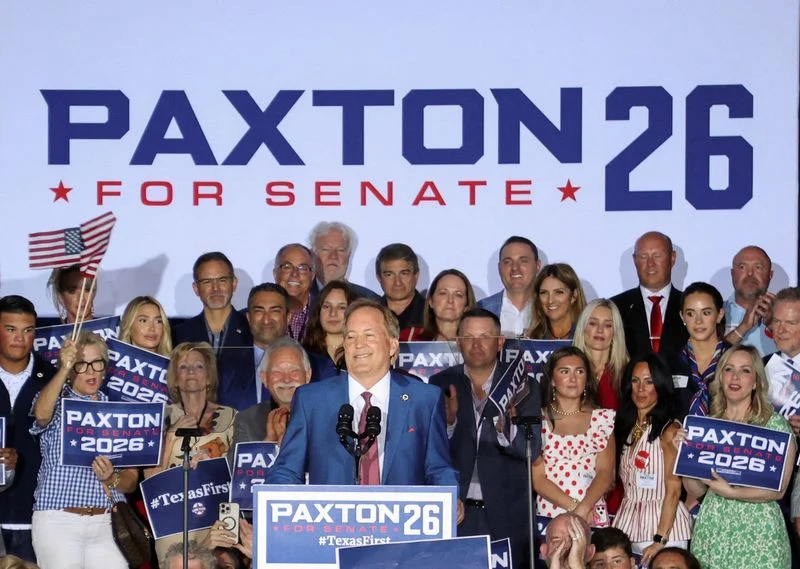

Will Trump spend his $350 million war chest to win Texas? Republicans are worried

SpaceX employees who bet on equity over higher salaries are reaping massive rewards following the aerospace giant’s historic initial public offering, which minted thousands of new millionaires and pushed the company’s valuation past $2 trillion in its first days of trading.
The rocket and satellite company, led by Elon Musk, raised a record $75 billion by selling 555.6 million shares at $135 each, marking the largest IPO in history. Shares under the ticker SPCX opened at $150 on Nasdaq and climbed as high as $176 intraday before closing up about 19% at around $161, boosting the market capitalization above $2 trillion.
More than 4,400 current and former SpaceX employees are expected to become millionaires from their stock holdings, according to analyses by pre-IPO trading platforms and reported by multiple outlets. Of those, roughly 400 could become centimillionaires with stakes worth $100 million or more.
The windfall stems from SpaceX’s long-standing practice of emphasizing equity compensation, giving workers at all levels — from engineers and executives to welders and support staff — a direct stake in the company’s success. Many accepted lower cash pay in exchange for options that have now paid off dramatically.
SpaceX highlighted this approach in its S-1 filing, noting a “heavy emphasis on equity compensation to provide employees with a financial stake in our business and an ownership mindset.” The strategy has transformed the lives of thousands who joined when the company’s future was far from certain.
One early employee, Trevor Hise, accumulated more than 100,000 shares over his tenure. At the IPO price, that stake was already worth millions, and post-debut gains amplified it further. Stories like his illustrate how the IPO has created generational wealth across diverse roles within the company.
While the immediate financial gains are substantial, wealth advisors caution that sudden liquidity events bring complex challenges. Lockup periods will eventually expire, allowing employees to sell shares, but experts recommend a measured approach to avoid common pitfalls.
Diversification is a top priority. Advisors suggest gradually reducing concentrated holdings in SpaceX stock to mitigate risk, as market sentiment can shift. Short-term investments like Treasuries can provide stability while longer-term plans are developed.
Taxes represent another major consideration. Newly wealthy individuals often face significantly more complex returns, potentially requiring professional accountants rather than simple online filing. Estate planning, charitable giving and family wealth strategies also come into play.
Wealth management fees typically range from 0.5% to 1% of assets under management. Some SpaceX employees have reportedly formed groups to negotiate better terms with advisory firms.
Spending decisions require caution. Advisors warn against impulsive luxury purchases that can erode wealth quickly. Yachts, for instance, often carry annual maintenance costs around 10% of their value. Private aircraft can cost $1 million or more per year to operate. Recommendations include limiting such big-ticket items to a small percentage of net worth and thoroughly vetting sellers and operators.
Matthew Fleissig, CEO of investment advisory Pathstone, who works with clients from companies like SpaceX, emphasized the psychological shift. “You get this unbelievable sticker shock when you get new wealth that it’s actually really expensive to be wealthy,” he noted in discussions around liquidity events.
Michael Cole, cofounder of R360, a group for high-net-worth families, advises a “slow down to speed up” philosophy. “It makes really good sense to start to liquidate a concentrated holding because your risk is all of your wealth is in one stock,” he said. “The markets can be fickle.”
Beyond finances, the influx of wealth prompts reflection on life priorities. Advisors encourage clients to consider how they want to allocate time — with family, hobbies, travel or continued work — now that financial pressures may ease.
The IPO not only rewards employees but also cements SpaceX’s status as a powerhouse. The company has revolutionized reusable rockets, deployed the Starlink satellite constellation for global internet, and positioned itself at the forefront of space exploration and AI-related ventures.
Musk’s stake has propelled him to trillionaire status, with his fortune exceeding $1 trillion when combining SpaceX and Tesla holdings. The broader ecosystem of investors, including venture firms like Founders Fund, Andreessen Horowitz and Sequoia, has also seen enormous returns.
Public market debut brings new scrutiny and opportunities. SpaceX now faces quarterly reporting requirements, shareholder expectations and greater transparency. Analysts note the valuation reflects high hopes for Starlink expansion, Mars ambitions and defense contracts, but execution risks remain.
For employees, the transition from private to public ownership marks a new chapter. Many may choose to stay and contribute to ongoing missions, while others might pursue new ventures or philanthropy enabled by their newfound resources.
The event highlights broader trends in tech compensation. Equity-heavy packages have become standard in high-growth sectors, aligning employee and company interests but also concentrating risk until liquidity events like IPOs.
As lockup periods lift over the coming months, markets will watch for potential selling pressure. However, strong post-IPO performance and retail enthusiasm — with SpaceX becoming one of the most actively traded stocks by individual investors — suggest sustained interest.
Wealth preservation strategies will be critical. Experts recommend building diversified portfolios, engaging professional advisors early, and focusing on long-term goals rather than short-term splurges. Programs tailored for pre- and post-liquidity clients are helping many navigate the change.
The SpaceX story also fuels discussions about wealth inequality and innovation rewards. While critics point to concentrated gains, supporters celebrate it as validation of bold risk-taking that advances human spaceflight and technology.
Looking ahead, the company plans to leverage public capital for ambitious projects. Continued Starlink growth, reusable vehicle advancements and potential crewed missions could drive further value, though competition in space and regulatory hurdles persist.
For the thousands of new millionaires, the jackpot moment is tempered by responsibility. Financial education, prudent planning and a focus on sustainable wealth management will determine whether this windfall supports lasting security and fulfillment.
SpaceX’s public debut represents more than a financial milestone. It underscores the transformative power of equity participation in groundbreaking enterprises and sets a benchmark for future tech IPOs in an era of rapid innovation.
As employees adjust to their changed circumstances, the company’s trajectory will continue to shape not only their portfolios but also the future of space exploration. The coming quarters will reveal how this historic liquidity event influences both individual lives and corporate momentum.

Jonah Hill, Channing Tatum In Talks For ’24 Jump Street’

Pray for Financial Breakthrough #prayer #shorts #catholic

Weekly Indicators: Consumers Back Off – Slightly


-

 NewsBeat5 days ago
Alexander Zverev wins the French Open to finally earn a 1st Grand Slam title
-
 Entertainment6 days ago
The Best Mystery Series of All Time Is Surging on Streaming 30 Years After It Ended
-

 Crypto World5 days ago
Anatomy of the June crypto crash: Fed, Iran, Saylor
-

 Crypto World2 days ago
Oppenheimer backs SpaceX as $70 billion retail frenzy builds
-

 Crypto World2 days ago
Markets Rally as SpaceX IPO Looms Amid Iran Tensions and Inflation Surge
-
 Crypto World7 days ago
Senator Cynthia Lummis Calls CLARITY Act the Most Consequential Financial Legislation of This Generation
-
 NewsBeat6 days ago
Alexander Zverev conquers demons and outlasts Flavio Cobolli to win French Open for first major title
-

 Tech6 days ago
Microsoft unveils seven homegrown AI models in new bid for ‘long term self-sufficiency’
-

 Business5 days ago
High Stakes for Wembanyama as New York Pushes for 3-0 Lead
-

 Tech5 days ago
Notion restores access to Anthropic after service disruption
-
 Business6 days ago
The Pain Points Taking a Fragile Tech Rally Down a Notch
-
 Crypto World5 days ago
Eli Lilly (LLY) Stock Surges 4% Following Breakthrough Sleep Apnea Trial Results
-
 Business6 days ago
The investment to transform historic St Helen’s ground in Swansea
-

 Crypto World6 days ago
Trump’s AI Ownership Plan Could Benefit Anthropic at OpenAI’s Expense
-
 Sports4 days ago
Bangladesh beat Australia after 20 years in ODIs, register only their second win over six-time world champions | Cricket News
-

 Tech10 hours ago
NanoClaw integrates JFrog registries to secure AI agent downloads
-

 Crypto World6 hours ago
Bitget enters Argentina’s regulated crypto market through PSAV registration
-

 Tech21 hours ago
This Week In Security: Microsoft On Microsoft, Register Your Domains, Linux On ARM, And FreeBSD Joins The File Cache Club
-

 Politics2 days ago
Politics Home | Healey Resignation Is “Colossal Failure Of Government”, Says Former Labour Defence Secretary
-

 Sports2 days ago
First Time Since 1971: Australia Register Historic Low In ODI Cricket
You must be logged in to post a comment Login