Connect with us
DAPA Banner
DAPA Coin
DAPA
COIN PAYMENT ASSET
PRIVACY · BLOCKDAG · HOMOMORPHIC ENCRYPTION · RUST
ElGamal Encrypted MINE DAPA
🚫 GENESIS SOLD OUT
DAPAPAY COMING

Politics

New bill to tackle domestic abuse in social housing will put victims in more danger

Published

on

domestic abuse

domestic abuse

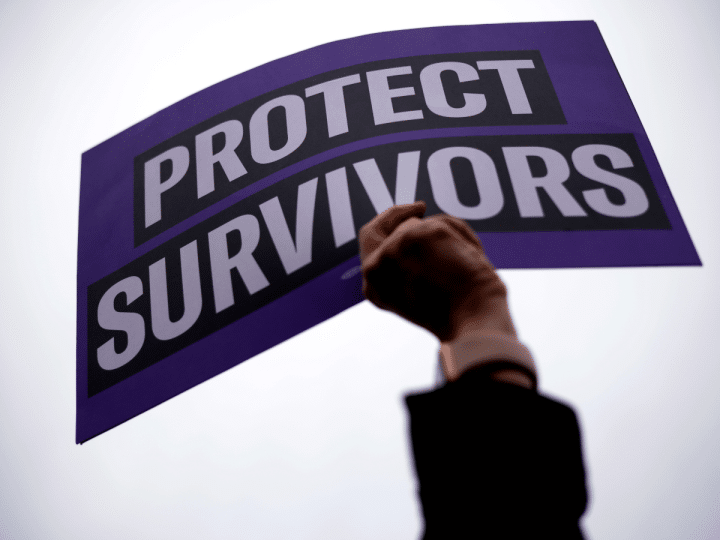
The government has announced a new bill which it claims will help tackle domestic abuse by giving social housing landlords greater powers to evict abusers. On the surface, the policy appears to offer greater security to survivors of abuse. In practice, however, it risks shifting responsibility away from the state and onto victims themselves.

Rather than addressing the systemic failures that leave survivors with little choice but to flee for safety, the bill appears to place greater emphasis on victims reporting their abuser, navigating the inept criminal justice system (CJS), and pursuing the perpetrator’s eviction.

For these reasons, the bill is unlikely to represent the unequivocal “victory for victims” that its supporters claim. While its stated objective of allowing survivors to remain safely in their homes is commendable, the policy underestimates the realities of domestic abuse and the risks involved in confronting its perpetrators.

Refuge’s Head of Policy and Public Affairs, Ellie Butt, spoke to the Canary about the domestic abuse organisation’s response to this policy announcement:

Advertisement

Given the extremely low proportion of perpetrators who are arrested, charged and convicted, linking housing rights to the criminal justice system risks creating a significant barrier for survivors.

Domestic abuse bill – will it be effective?

On the surface, this bill appears to prevent victims of abuse from losing their homes when they flee to protect themselves and their children from further harm. However, a closer examination suggests that its primary purpose may be to reduce the burden on the state arising from the increasing prevalence of domestic abuse and violence against women and girls (VAWG).

The government states that, last year alone, 15k families required rehousing after escaping domestic abuse. Women and children experience domestic abuse disproportionately and often become more vulnerable when they leave the family home. Turning to charities like Refuge and Women’s Aid are often the only real port of call that seeks to protect victims of abuse from homelessness, providing them with the tools and resources they need to live safely.

To accommodate some of these families, local authorities frequently rely on temporary housing such as hotels in absence of available housing. This approach places a substantial financial burden on the state while forcing many survivors to endure unsuitable and often poor-quality living conditions.

The government is right to recognise that this situation is unfair to those affected. Nevertheless, this bill could easily be criticised as pretty short-sighted, as it does little to address the potentially serious – and, in some cases, violent – consequences that may arise from its rollout across the country.

Advertisement

Going further, the CJS’ track record where so few victims find justice suggests that many wouldn’t even be able to have this protection, thus emboldening their abuser while the victim is left feeling even more powerless.

Victims are already afraid to report abuse

Many victims already lack confidence that the police or courts can adequately protect them from abuse. After all, the criminal justice system has long failed to respond effectively to the high prevalence of violence against women and girls (VAWG) and domestic abuse cases.

Conviction rates remain persistently low and more and more women feel it is pointless to report abuse to the police. This problem is particularly acute in domestic abuse cases, where only 1% of victims receive protective measures such as Domestic Violence Prevention Orders (DVPO).

Refuge’s Ellie Butt appreciated the efforts made to give more housing rights to victims of abuse, telling us:

Advertisement

There is a huge intersection between domestic abuse and homelessness. At Refuge, every day we hear from survivors who are trapped in accommodation with their abusers, with nowhere else to go. For many, the choice is stark: stay with an abuser or face homelessness.

At Refuge, we are clear that no one should have to lose their home because of domestic abuse. It is unacceptable that anyone should be forced to choose between their safety and a roof over their head. All survivors deserve to be supported to stay safely in their homes, or access alternative safe accommodation.

Refuge welcomes the increased powers in the Social Housing Bill that enable landlords to take legal action to remove a perpetrator from a tenancy agreement and convert it into a survivor’s sole name, allowing survivors to stay in their homes when it is safe for them to do so.

However, she shares similar concerns about how it will work for victims in practice, stating:

Although the measures in the Social Housing Bill represent an important step forward, Refuge is concerned that the protections will be limited by the narrow range of offences included in the mandatory grounds for eviction. Given the extremely low proportion of perpetrators who are arrested, charged, and convicted, linking housing rights to the criminal justice system risks creating a significant barrier for survivors.

On top of this, the Bill in its current form does not contain any clear obligations for landlords to use these stronger powers. The Government must provide greater detail around how landlords will be expected and encouraged to use these measures in practice. Similarly, we need urgent clarity on where perpetrators will go once they have been removed, and how survivors will be kept safe. There is a significant risk that perpetrators who are displaced may seek to retaliate against the survivor, who they might hold responsible. It is paramount that there are safeguards in place to prevent this.

Advertisement

Removing the perpetrator is only the first step, not a silver bullet. Survivors will continue to need specialist support, including safety planning and practical assistance, to rebuild their lives free from abuse. It is essential that clear processes are in place to ensure survivors can access the wider support network needed through this time, including local specialist domestic abuse services.

As the Bill progresses through Parliament, Refuge will fight for it to be truly effective in providing survivors with safe, secure housing, ensuring that protections on paper translate into meaningful change.

The government overlooks and fails to mitigate foreseeable risks

Successive governments have repeatedly failed to anticipate and mitigate the consequences of their policy decisions. This social housing bill appears to be no exception. This is clear by the significant burden placed on vulnerable victims and their children by effectively requiring them to confront their abuser, report them to the authorities, and pursue their eviction from the family home.

Such an expectation overlooks the complex realities of domestic abuse, including fear, coercive control, financial dependence, and the risk of retaliation. For disabled victims of abuse, this becomes even more dangerous. As a result, the policy may inadvertently expose women and children to a greater risk of intimidation, coercion, and further violence.

Advertisement

Furthermore, if approximately 15k families required rehousing last year, the widespread implementation of this policy could force authorities to make a similar number of perpetrators homeless each year. While holding abusers accountable remains essential, the bill fails to adequately consider the potentially harmful consequences of these evictions.

For instance, many perpetrators will see eviction not as a consequence of their own abusive actions, but as something done to them by the very people they have abused. In turn, this will likely fuel resentment and encourage further intimidation, harassment, stalking, or violence.

Without robust safeguards and effective enforcement mechanisms, there is a real danger that the policy could shift the burden of risk onto survivors rather than reducing it.

Without improving confidence in the CJS, victims remain in harm’s way.

Ultimately, the bill raises more questions than it answers.

Advertisement
  • What will happen to the potentially 15k abusers who could be evicted every year?
  • More importantly, how does the government intend to manage the consequences of potentially thousands of displaced abusers who may feel aggrieved, entitled, or motivated by a desire for retaliation?

Given the criminal justice system’s persistent failure to adequately deter and punish abusive behaviour, these are not hypothetical concerns. Without a credible plan to address these risks, the government risks creating a dangerous tinderbox by displacing thousands of abusive perpetrators while failing to prevent them from taking their anger and resentment out on the very victims the bill claims to protect.

A policy designed to improve safety should not simply shift the burden of risk elsewhere; it should demonstrate a clear understanding of the consequences that its implementation may bring.

Featured image via Getty/Alex Wong

By Maddison Wheeldon

Source link

Advertisement
Continue Reading
Click to comment

You must be logged in to post a comment Login

Leave a Reply

Politics

UK Councils Urge Households To Put Bins Out Early This Week

Published

on

UK Councils Urge Households To Put Bins Out Early This Week

Health alerts have been put into place across the UK this week, with temperatures expected to reach as high as 36°C.

And per the BBC, that might change how our bins are collected.

Some councils said they will collect rubbish earlier than usual in an attempt to beat the worst of the heat.

Advertisement

Hot weather has previously caused bin lorries to break down.

Additionally, Bristol Council pointed out these new conditions can help to “maintain a safe work environment” for employees.

Which councils have new bin schedules for the June 2026 heatwave?

These are just some of the councils changing their rules in the heatwave. Check your local council’s site if it’s not listed here.

Advertisement

As of the time of writing, the following councils are introducing a heatwave bin collection schedule change:

Per The Independent, the following councils are likely to offer an altered service, so you should check their websites to stay updated:

  • Adur
  • Arun
  • Bath and North East Somerset
  • Braintree
  • Blaby
  • Broxbourne
  • Chichester
  • Crawley
  • Derby
  • Greenwich
  • Harlow
  • Harrow
  • Mid Sussex
  • Newport
  • North Hertfordshire
  • North Warwickshire
  • Oadby and Wigston
  • Reigate and Banstead
  • Richmond-upon-Thames
  • Waverley
  • Windsor and Maidenhead
  • Worthing.

Source link

Advertisement
Continue Reading

Politics

Heatstroke Symptoms And Treatment: Everything You Need To Know

Published

on

Heatstroke Symptoms And Treatment: Everything You Need To Know

Heatstroke can be dangerous and come on more quickly than you realise. With temperatures rocketing, it’s important to know how to recognise the signs.

Spending too much time in the heat or overly exerting yourself in the sun can cause heatstroke.

During the heatwaves we’ve increasingly experienced in recent years, health officials have reiterated how important it is to prevent children and older people from falling victim to the high temperatures.

But do you know how to tell heat exhaustion from heatstroke?

Advertisement

What are the symptoms of heat exhaustion?

Heat exhaustion is what happens when the body overheats and cannot cool down.

It usually doesn’t require emergency medical attention, according to the UK Health Security Agency (UKHSA), as long as you can cool yourself down within 30 minutes.

Common symptoms of heat exhaustion include:

Advertisement
  • tiredness
  • weakness
  • feeling faint
  • headache
  • muscle cramps
  • feeling or being sick
  • heavy sweating
  • intense thirst

If you do not take action to cool down, heat exhaustion can lead to heatstroke, which is a lot more serious.

What are the symptoms of heatstroke?

Heatstroke is where the body is no longer able to cool down and your body’s temperature becomes dangerously high.

Common symptoms of heatstroke include:

  • confusion
  • lack of co-ordination
  • fast heartbeat
  • fast breathing or shortness of breath
  • hot skin that is not sweating
  • seizures

Heatstroke is a medical emergency. If you think someone has heatstroke you should dial 999 and then try to cool them down.

How to treat heat exhaustion

Advertisement

Dr Luke Powles from Bupa Health Clinics said people exhibiting symptoms should be cooled down. “Move them into a cool place, get them to lie down and put their feet up,” he explained. “Give them plenty of water and cool their skin with a cold pack, or towel.”

It might also help to remove unnecessary items of clothing like socks. You could also fan them to try and cool them down.

The person should start feeling better within 30 minutes – if not, it is very important to seek medical help immediately.

How to prevent heat exhaustion and heatstroke

Advertisement

Stay hydrated by drinking plenty of cool drinks, but avoid alcohol. It’s also beneficial to keep cool by: wearing light fabrics, avoiding the sun between 11am and 3pm, sprinkling water over your skin and taking cool showers.

Avoid exercising and try to keep your home cool by closing curtains and windows, and turn off electrical equipment or lights.

When to get urgent help

If heatstroke symptoms progress to the ones listed below – or the person is no better after 30 minutes – you should call 999:

Advertisement
  • They feel hot and dry.

  • They aren’t sweating even though they are too hot. Their skin might also look red – this can be harder to spot on brown and Black skin, according to the NHS.

  • They have a very high temperature that’s risen to 40°C or above.

  • They have rapid breathing or shortness of breath.

  • They’re confused.

  • They have a fit (seizure).

  • They lose consciousness (if this happens, put them in the recovery position while you wait for help).

  • They are unresponsive.

Source link

Continue Reading

Politics

Starmer Resigns As Prime Minister And Announces A Timetable For His Departure

Published

on

Starmer Resigns As Prime Minister And Announces A Timetable For His Departure

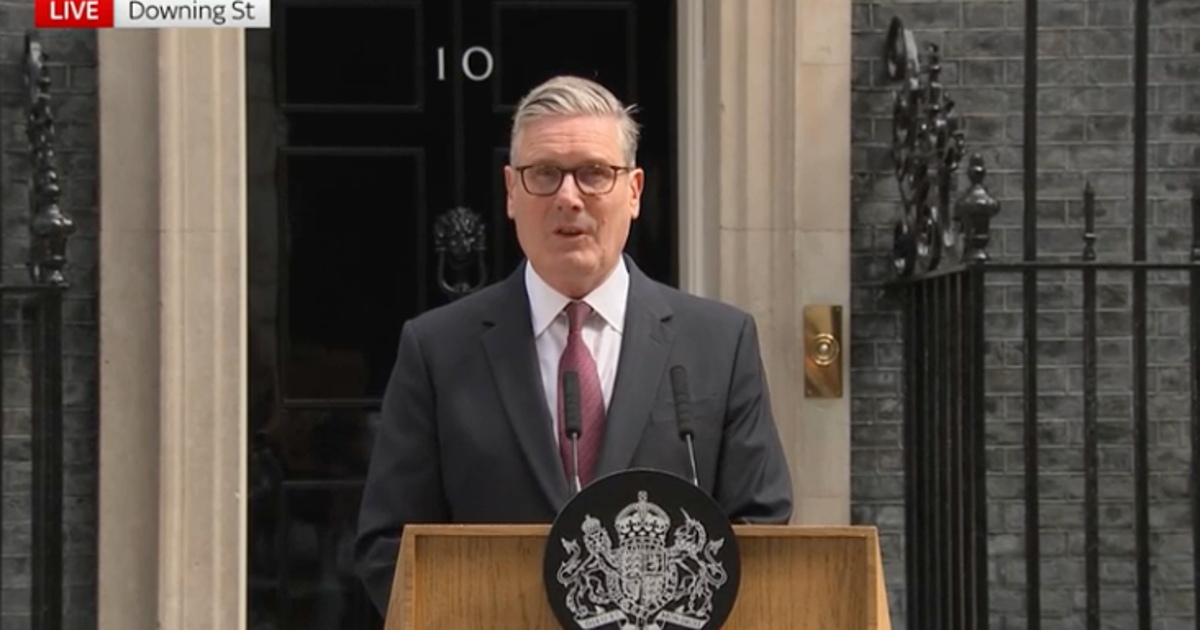
Keir Starmer has set out a timetable for his departure from No.10 after resigning as prime minister.

In a statement delivered on Downing Street on Monday morning, the prime minister said his party has been asked if he is best placed to lead us into the next general election.

“I have heard the answer of my parliamentary party to that question and I accept that answer with good grace,” he said. “Every decision I’ve taken has been about putting the country I love first.

“That is why I will resign as leader of the Labour Party.

Advertisement

“I have spoken to His Majesty the King this morning to inform him of my decision.”

Starmer said the National Executive Committee of the Labour Party will set out a timetable to make sure a new leader is in place by the time parliament returns after its summer recess.

Nominations will open for the leadership on July 9, a week before parliament’s summer recess, and if there is a contest, it will be completed by September 1 when MPs return to Westminster.

Until then he will remain in post as prime minister, Starmer said.

Advertisement

“I will give my successor my full and unequivocal support,” he said.

Tearing up, the prime minister said he will focus on the “most important job”, adding: “Being the best husband I can, to my fantastic wife Vic, who has been a rock by my side through good times and bad.”

He continued: “And being the best dad that I can to my beautiful children, who are my pride and joy.”

The prime minister’s announcement comes after Andy Burnham’s victory in the Makerfield by-election last Friday.

Advertisement

The soon-to-be-former Greater Manchester mayor is Starmer’s greatest rival and has had his eye on the keys to No.10 for some time.

Burnham was widely expected to challenge Starmer’s leadership after winning the contest for the north-west seat.

Labour Party rules state only an MP with the support of 81 other MPs can fire the starting gun on a leadership challenge.

Burnham had been pushing for Starmer to step down quietly so it would be a coronation for the new Makerfield MP.

Advertisement

The prime minister initially refused, saying he would fight on.

Asked if he would stand in any possible leadership election on Friday morning, Starmer said “there isn’t one at the moment” and that holding one would send “the country into chaos”.

But he added: “If there is a contest, then yes I will run, I will stand, and I’ve said repeatedly I’m not going to walk away from that.”

However, pressure from his own cabinet ministers appears to have moved the needle.

Advertisement

Two former cabinet ministers, Wes Streeting and John Healey, also quit over Starmer’s leadership in the last month.

Business and trade secretary Peter Kyle revealed his boss was weighing up the “political realities” in the coming days on Sunday.

It now remains to be seen if anyone other than Burnham will throw their hat into the ring to be the next Labour leader.

Streeting, the former health secretary, did indicate he would run but there are concerns he does not have enough backing from Labour MPs to run.

Advertisement

Listen to Commons People, the podcast that makes politics easy. Every week, Kevin Schofield and Kate Nicholson unpack the week’s biggest stories to keep you informed. Join us for straightforward analysis of what’s going on at Westminster.

Source link

Advertisement
Continue Reading

Politics

Politics Home Article | Keir Starmer Announces He Will Resign As PM This Summer

Published

on

Keir Starmer Announces He Will Resign As PM This Summer


3 min read

Keir Starmer has announced that he will resign as Prime Minister this summer.

Advertisement

Speaking outside 10 Downing Street on Monday morning, Starmer said he had accepted the wishes of Labour MPs with “good grace” and that he would help facilitate an “orderly transition” for his successor.

Starmer said he had informed the King this morning that he had resigned as Labour Party leader, triggering a process to replace him that will begin in early July.

Andy Burnham, who won a landslide victory at last week’s Makerfield by-election, is expected to take over.

In an address to the nation, Starmer said “the question” his party was now asking was who was best placed to lead it into the next general election, and that the answer was no longer him.

Advertisement

“I have heard the answer of my parliamentary party to that question, and I accept that answer with good grace.”

Starmer said entering No 10 two years after winning the 2024 general election was the “proudest moment of my life”.

“A new Labour government. The first in 14 years. A page in our country’s history turned after years of disappointment and despair. The chance to change the lives of millions of people for the better.

Advertisement

“That’s what I came into politics for.”

He added: “I will also give my successor my full and unequivocal support, knowing that they will inherit a Britain that is far stronger and fairer than the one I inherited two years ago, better prepared for the challenges ahead and better able to ensure the Labour Party secures a second term in office.”

Starmer’s position has been under pressure for months, with painful local election results and his handling of the Lord Mandelson affair prompting Labour MPs to question his leadership.

The pressure reached new heights last week when leadership rival Burnham pulled off a landslide victory in the Makerfield by-election.

Advertisement

Starmer had insisted until recently that he would “fight” any challenge to his leadership and not “walk away” from his job.

However, that position shifted over the weekend, with cabinet minister Peter Kyle saying on Sunday that the PM was reflecting on the “political realities” facing him.

Burnham is supported by many Labour MPs and is expected to eventually take over as PM.

The incoming MP for Makerfield is due to arrive in Westminster today after securing his return to the House of Commons last week.

Advertisement

While many Labour MPs would like Burnham to take over unchallenged, others would prefer a leadership contest, particularly those who are sceptical about the former Manchester mayor running the country.

Former health secretary Wes Streeting has previously said he would stand in a leadership contest.

Starmer became Labour Party leader in 2020 and led the party to its first general election victory in nearly two decades in 2024.

His resignation means the UK will soon have its seventh prime minister in a decade.

Advertisement

He finished his speech by paying tribute to his family.

“When I leave the biggest job in the country, I shall spend more time on the most important job, being the best husband I can to my fantastic wife, Vic, who has been a rock by my side through good times and bad, and being the best dad I can to my beautiful children, who are my pride and my joy.”


Source link

Continue Reading

Politics

It’s time to kill off this zombie assisted-dying bill

Published

on

It’s time to kill off this zombie assisted-dying bill

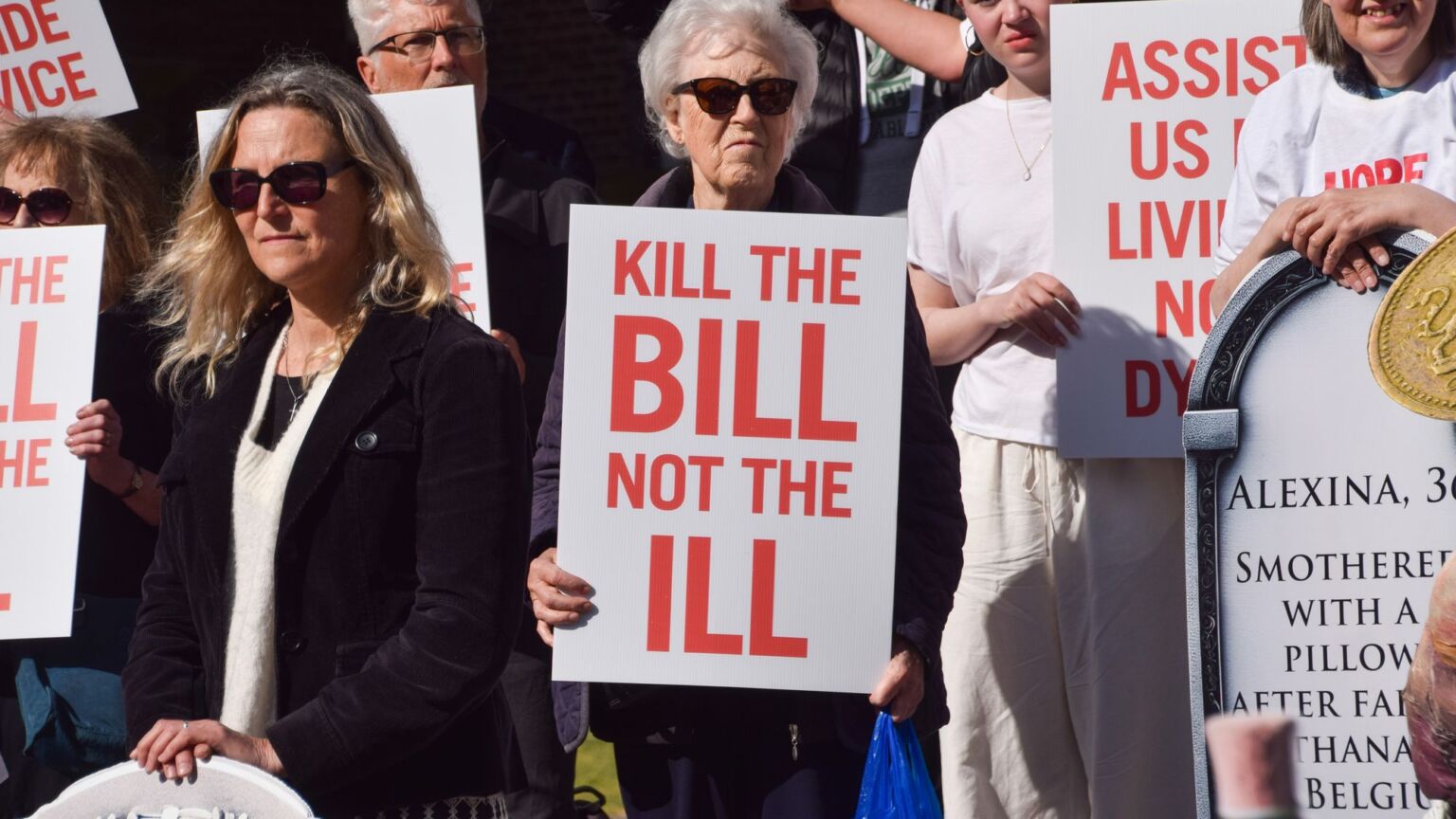
Labour MP Lauren Edwards has brought the assisted-dying debate back to Westminster, reintroducing the Terminally Ill Adults (End of Life) Bill. The bill received its first reading in the House of Commons last Wednesday, formally marking its return to parliament.

The legislation, first introduced in 2024 by Labour MP Kim Leadbeater, ran out of time in the House of Lords earlier this year. Supporters of the bill accused opponents in the Lords of deliberately blocking it by tabling more than 1,200 amendments.

There are substantial difficulties for Edwards, who must present the exact same bill if she wants the Parliament Act of 1911 and 1949 to come into effect. These acts allow for the same legislation, if passed in the House of Commons in consecutive parliamentary sessions, to automatically become law.

Advertisement

For proponents and organisations like Dignity in Dying (DiD), which have spearheaded the campaign to legalise assisted suicide and written many an MP’s cliché-ridden speech, this is a long shot. Their strategy is to maintain the moral high ground by insisting that democracy has been thwarted by the bill’s original failure to pass.

Invoking the Parliament Act for a private members’ bill is near enough unprecedented. In fact, it has only been used seven times in British history. Clearly, the assisted-suicide lobby is getting desperate.

Advertisement

Enjoying spiked?

Why not make an instant, one-off donation?

We are funded by you. Thank you!

Advertisement


Please wait…

Advertisement
Advertisement

Let’s remind ourselves of some of the problems with the bill. Doctors remain free to raise the possibility of assisted suicide with patients, thus opening the door to coercion. Clinicians have warned that hospices could be forced to close if they do not wish to have people killed on their premises. And despite Leadbeater claiming the bill has the ‘strongest safeguards anywhere in the world’, it even allows for private companies to profit from killing people.

Then there’s the key problem with legislation of this ilk. Inevitably, the scope of who can apply for assisted dying will broaden from beyond what is laid down in law. This is the lesson from every jurisdiction where it has been introduced. Regardless of what Leadbeater, or now Edwards, might have to say, assisted suicide will become available to everyone, for every reason under the Sun.

Advertisement

Take Canada. Ten years ago, it established euthanasia and assisted suicide only for those with ‘reasonably foreseeable’ deaths under its Medical Assistance in Dying (MAID) programme. MAID was expanded to all people with permanent disabilities in 2021 and is set to expand to those suffering from mental illness next year. Since MAID was introduced a decade ago 100,000 people have been given lethal injections. That means that more Canadians have been killed under MAID laws than during the Second World War. Do we want that for the UK?

Unsurprisingly, the thought of raising this zombie bill from the dead is causing concern among professional organisations. The Royal College of Physicians, neutral on assisted dying, has been forced to reiterate its concerns about the bill. Hospice UK has also criticised the bill’s reemergence, especially ‘at a time when hospice and palliative care is under strain’.

None of this touches on the biggest difficulty Edwards faces – namely, that parliament itself is increasingly hostile to a re-run of this debate. Clearly, a lot has changed in the two years since Leadbeater’s first bill emerged. Not only is Starmer’s authority shattered, his likely successor – Andy Burnham – is also unlikely to go anywhere near such a divisive issue. Besides, former prominent supporters of the bill, such as Louise Haigh, Ian Murray and Jeremy Hunt, have all criticised any attempt to use the Parliament Act to revive assisted dying. Former public-health minister Ashley Dalton – who herself is terminally ill with cancer – said: ‘We have debated this deeply divisive and flawed assisted-dying bill for over a year and supporters have refused to listen or to make the necessary changes.’

Advertisement

The last word should surely belong to Tory MP Simon Hoare, who, when it was announced that the bill would return, shouted: ‘Oh, not again!’

Source link
Advertisement
Continue Reading

Politics

It’s time to end the ‘cage age’ for egg-laying hens

Published

on

It’s time to end the cruelty of the ‘cage age’ for egg-laying hens

Image by: picturesbyrob / Alamy


4 min read

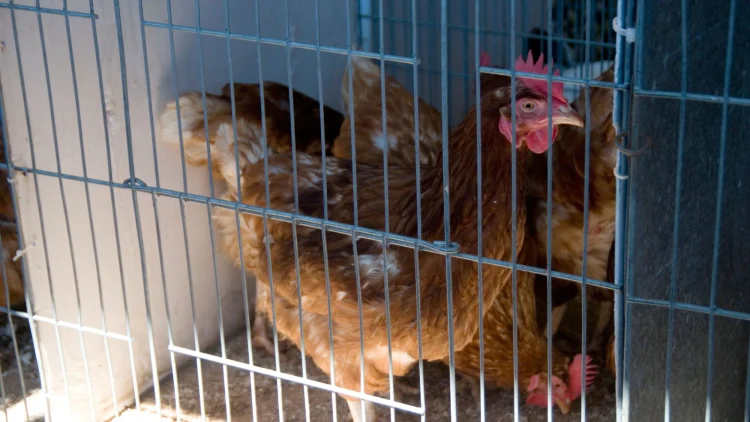
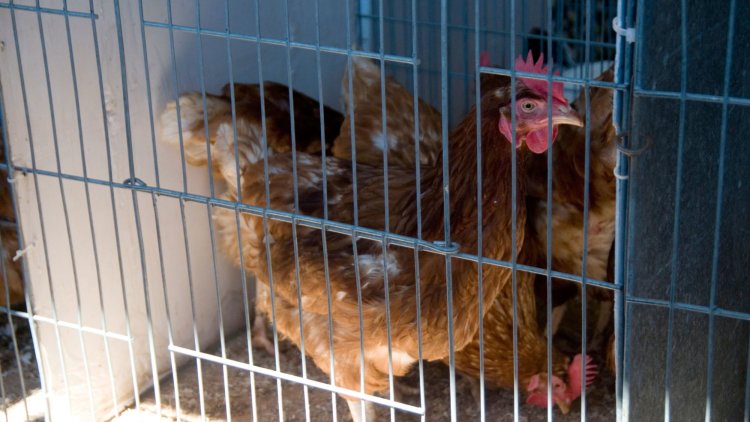
Six million egg-laying hens are still forced to endure unacceptable conditions in cages in the UK – we must act to ban their use now

Advertisement

As you make your way through Parliament this week, you may notice something unusual in the Upper Waiting Hall by the Committee Corridor.

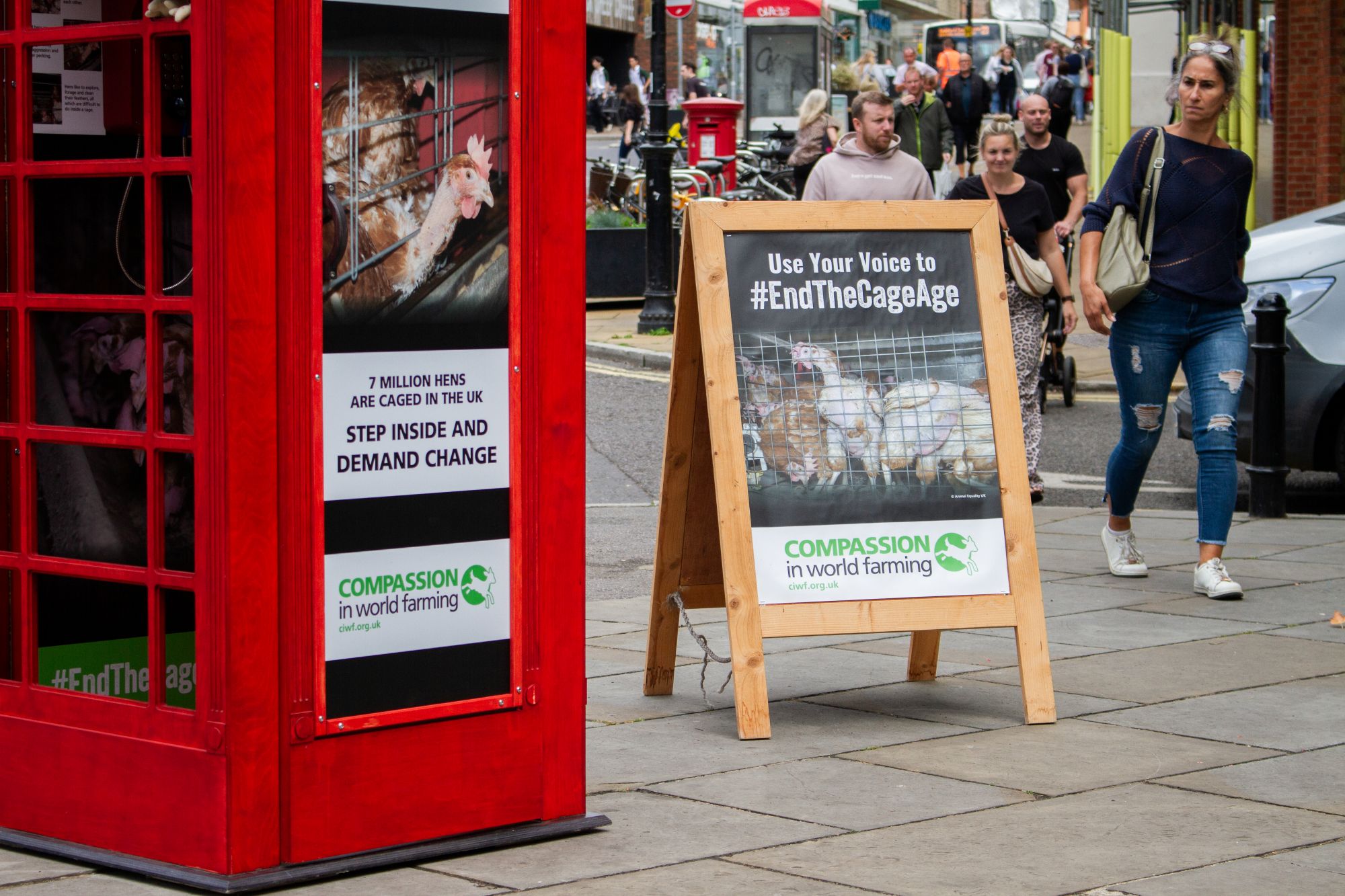
A red telephone box might be a common sight in London, but this one serves a very different purpose. This particular phone box is the centre of a striking new exhibition, organised by Compassion in World Farming (CIWF) and sponsored by me, highlighting the reality faced by millions of laying hens still kept in cages across the UK.

The replica phone box demonstrates, in stark terms, just how little space caged hens are given. Four adults crammed inside it occupy roughly the same amount of space as several hens confined in so-called ‘enriched’ cages. These are the conditions that over six million egg-laying hens are still forced to endure in cages on some farms, a completely unacceptable reality.

Advertisement

Those stopping off at the exhibition are invited to step inside and listen to recorded messages from members of the public calling on the government to end the cage age. Alongside the installation sits CIWF’s substantial ‘phone book’ which contains more than 10,000 written messages from people across the country who support a ban on cages for laying hens.

Together, this chorus sends a clear message: this is not a niche issue. It is one on which the public increasingly expects action from the government to stop the needless suffering of hens right by and down Britain.

phone box hens

The replica phone box demonstrates, in stark terms, just how little space caged hens are given

Advertisement

Spend just a few moments inside the phone box with multiple people and the lack of space quickly becomes uncomfortable. Yet for those millions of hens, confinement is their daily existence. Even in ‘enriched cages’, each bird is afforded little more usable space than an A4 sheet of paper, which prevents them from carrying out many natural behaviours including scratching, pecking, foraging and fully stretching their wings; activities that are fundamental to their welfare.

The good news is that change is already underway. The vast majority of UK-produced eggs now come from cage-free systems, and all major supermarkets have either stopped selling shell eggs from caged hens or have committed to doing so. With around 84 per cent of production already cage-free, the direction of travel is clear towards a future free of cages.

But, despite this, the question remains as to whether legislation will now catch up to outlaw it completely. The government’s Animal Welfare Strategy for England, published last December, signalled Defra’s intention to end the use of cages for laying hens. Earlier this year, a consultation on a proposed phase out by 2032 gathered views on how this could be achieved. While a more ambitious timetable would be welcome, the consultation represented a significant step forward. The challenge now for those in Parliament is turning consultation into legislation.

Advertisement

Public support for change is strong. Polling consistently shows that a substantial majority of people believe cages are cruel and a number of European countries – including Austria, Luxembourg, Germany and Czechia – have already taken steps to phase them out. The UK has an opportunity to show leadership on animal welfare once again.

I am grateful to CIWF for bringing this exhibition to Parliament and for the persistence with which it has championed this issue over many years. Through public campaigns, parliamentary engagement and sustained work with the food industry, it has helped drive significant progress in moving production away from cage systems.

That progress should not stop here. The exhibition in the Upper Waiting Hall offers a timely reminder of how far we have come, but also of the work still to do. I hope colleagues will take a few minutes to visit it and consider why the case for ending cages for laying hens has never been stronger.

Josh Newbury is Labour MP for Cannock Chase

Advertisement

Source link

Continue Reading

Politics

Anna Faris Reflects On ‘Scrutiny’ She Faced After Chris Pratt Divorce

Published

on

Anna Faris and Chris Pratt in April 2017

Anna Faris has made some rare comments about her divorce from Chris Pratt.

In a new interview with Variety, the Scary Movie star reflected on her painful split from Chris, to whom she was married for eight years before their 2017 break-up, and the scrutiny she faced from the public after she and the Marvel actor parted ways.

The divorce was finalised in 2018.

“I was feeling sad,” Anna recalled. “I do feel like I had enough gumption, enough of a core, and I have tried to be careful about how much Hollywood infiltrates, but now I’ve been on a spectrum of fame for 26 years, so I would be naïve to think that it hasn’t shaped who I am at this point.”

Advertisement

“But, fuck,” she added. “The scrutiny…”

Anna, who shares 13-year-old son Jack with her ex-husband, credited her podcast, Anna Faris Is Unqualified, for giving her a support system and helping her deal with the public break-up.

Anna Faris and Chris Pratt in April 2017

“I didn’t disclose a lot on the podcast, but I always felt like I could if I needed to. The podcast helped me a lot during that time,” she said.

Anna later tied the knot with cinematographer Michael Barrett in 2021. Meanwhile, Chris got remarried to Katherine Schwarzenegger in 2019. He and his second wife have since welcomed three more children.

Speaking to People in October 2017, Anna said that she and the Guardians Of The Galaxy star have remained close pals and were focused on co-parenting their son.

Advertisement

“We’ll always have each other and be incredible friends,” she said at the time.

“There is still so much laughter in our lives together, and he is so proud of me, still. We watched each other grow, and he still cracks me up all the time.”

Chris told Entertainment Weekly in 2018 that “divorce sucks” while discussing the split.

“But at the end of the day, we’ve got a great kid [Jack] who’s got two parents who love him very much,” he noted. “And we’re finding a way to navigate this while still remaining friends and still being kind to one another.”

Advertisement

Source link

Continue Reading

Politics

The House Article | How Well Do You Remember Brexit? Take Robert Hutton’s Quiz

Published

on

How Well Do You Remember Brexit? Take Robert Hutton's Quiz

(Thamesfleet/Alamy)


5 min read

It’s 10 years since Britain’s momentous decision to, according to your taste, throw off the shackles of European oppression or make it harder to sell things to France.

Advertisement

Perhaps the morning of 24 June 2016 found you looking, as David Cameron did, like a man whose political dreams were shattered. Or perhaps, like Boris Johnson, you were triumphantly wondering what the hell you were supposed to do now.

But how much can you remember of the intervening decade? Do you know your alternative arrangements from your Windsor framework? It’s time to find out with our epic quiz (answers below). Will the winner get prosecco, a BMW or £350m a week? That’ll come out in the ensuing negotiations. Just remember that the moment you finish the quiz, you hold all the cards.

    Advertisement
  1. In 2006, what did David Cameron tell his party off for doing while parents “worried about getting the kids to school”?
  2. Which party’s 2010 manifesto promised “an in/out referendum the next time a British government signs up for fundamental change in the relationship between the UK and the EU”?
  3. Cameron’s 2013 address promising a referendum (poignantly, it was delivered in the early morning, while parents were worrying about getting their kids to school) became known as the Bloomberg Speech, but the company’s London headquarters were a second-choice venue. In which city was the speech originally scheduled to be given?
  4. Which party’s 2015 manifesto proclaimed: “We say: yes to the Single Market”?
  5. The referendum campaign saw Nigel Farage leading an armada of fishing boats up the Thames. Which pop star raised his own fleet to intercept him?
  6. The timing of the exit process was controversial from the start:

    A  Who said the morning after the vote: “Article 50 has to be invoked now”?

    B  Which party said during the 2017 election that it had been a mistake to trigger Article 50 at all?
  7. In 2017, which party…

    A  …pledged to “unite the country around a Brexit deal that works for every community in Britain”?

    B  …promised “a new deep and special partnership with the EU”?

    C  …said it would negotiate a Brexit agreement and “we will put that deal to a vote of the British people in a referendum, with the alternative option of staying in the EU”?
  8. By 2019, which party promised…

    A  …to “ensure that Northern Ireland’s businesses and producers enjoy unfettered access to the rest of the UK”?

    B  …to put a deal “to a public vote alongside the option to remain”?

    C  …to “stop this mess, revoke Article 50 and stay in the EU”?
  9. The UK Independence Party was crucial to Britain’s decision to leave:

    A  How many leaders did it have over the course of 2016?

    B  How many of them were Nigel Farage?

    C  How many of them are still party members?
  10. What was the name of the book published by Nick Clegg in October 2017, after he lost his seat in Parliament?

    A  How to Get Rich.

    B  How to Stop Brexit.

    C  How to Make Facebook Ethical.
  11. The first two Brexit secretaries were David Davis and Dominic Raab. Who was the third?
  12. Raab had been a passionate supporter of Brexit, but in 2018 he revealed he’d underestimated the importance to British trade of what?
  13. In 2019, a group of 11 Labour and Conservative MPs announced they were forming a new anti-Brexit party. It became known as Change UK: The Independent Group. Nine months later, how many of them were still in the party?
  14. In March 2019, MPs were given “indicative votes”, the chance to show which of eight options they would be willing to support. How many passed?
  15. Dominic Raab said Theresa May’s deal was “worse than staying in”. Johnson called it “the worst of both worlds”. Jacob Rees-Mogg said Britain would be “not so much a vassal state any more as a slave state”. How did they all ultimately vote on the deal?
  16. In September 2019, Rees-Mogg described something as a “constitutional coup”? Was it:

    A  Asking the Queen to prorogue Parliament in order to stop MPs from debating Brexit.

    B  The Supreme Court ruling that the prorogation had been unlawful.
  17. Who said, in 2017, “If Brexit is a disaster I will go and live abroad” and then, in 2023, “Brexit has failed”? And are they now living abroad?
  18. What, in 2018, did May insist that no British prime minister could agree to?
  19. What, in 2019, did Johnson assure business owners he had not agreed to?
  20. Were either of them right? 


Answers

1    “Banging on about Europe”

   The Liberal Democrats

3    Amsterdam

4    The Conservatives

   Bob Geldof

   A Jeremy Corbyn; B UKIP

   A Labour; B Conservatives; C Liberal Democrats

8    A Conservatives; B Labour; C Liberal Democrats

   A four; B two; C none

10    B

11    Steve Barclay, though we only have his word for it

12    Dover

13    Five

14    None

15    For it

16    B

17    Nigel Farage. No.

18    A border in the Irish Sea

19    A border in the Irish Sea

20    No

Score

0-5: no deal; 6-10: vassal state; 11-15: Norway; 16-20: Canada; 21-25: customs union; 25-28: bespoke free-trade agreement.

Source link

Continue Reading

Politics

All Eyes Are On Starmer Amid Mounting Expectations PM Will Quit

Published

on

All Eyes Are On Starmer Amid Mounting Expectations PM Will Quit

Keir Starmer is about to resign, according to widespread reports.

Less than two years after his landslide victory in the 2024 general election, the prime minister seems to have lost the support of his party.

More than 100 Labour MPs have publicly called for him to quit and a growing list of his own cabinet ministers are said to have privately told him to stand down.

Two former cabinet ministers, Wes Streeting and John Healey, even quit over Starmer’s leadership in the last month.

Advertisement

Business and trade secretary Peter Kyle revealed his boss was weighing up the “political realities” in the coming days on Sunday.

Meanwhile, skills minister Jacqui Smith caused a stir when she seemed to hint the PM was heading off on Monday morning.

She told Times Radio, “I would have been happy for him to continue” – but later urged journalists not to get ahead of themselves by predicting Starmer’s next move.

Even so, the Guardian reported on Monday that Starmer was allegedly working on his resignation speech with a handful of his top team while holed up in his grace-and-favour Chequers residence over the weekend.

Advertisement

If that is true, it’s a complete pivot from last Friday when Starmer insisted he would not walk away from the job and would stay on to fight any leadership contest triggered by his opponents.

But No.10 has not pushed back on any reports that the PM is considering resigning, even after US president Donald Trump bizarrely predicted Starmer would quit on Sunday.

However, even if he does announce his decision to quit on Monday, several key questions remain.

Will Starmer agree to an “orderly transition” to his successor and stay in place until September?

Advertisement

That would allow him to tie up his legacy while building on his international reputation by attending a Nato summit and an EU “reset” summit, both in July.

It would also give his successor a chance to build up a body of policies so they can hit the ground running.

But will that successor automatically be Andy Burnham?

The outgoing Greater Manchester mayor won the Makerfield by-election last Thursday, giving him a seat in parliament and a chance to challenge Starmer’s leadership.

Advertisement

He is widely expected to have the support of the required 81 Labour MPs needed to oust the prime minister.

As the most popular politician within Labour, a Burnham victory is likely to be shoo-in in any leadership contest.

Several of his allies therefore want to skip holding such a disruptive race altogether, and have a “coronation” for Burnham.

But opponents suggest that would mean he does not have a mandate to rule if there has not been a battle of ideas among party members first.

Advertisement

Home Office minister Mike Tapp also weighed into the growing debate over whether a Starmer resignation means there should be a general election.

He said: “That would stop the constant churn and focus all politicians on delivery, instead of workplace politics.”

But that’s caused concern over the risk of further upheaval, especially as the UK teeters on the edge of its seventh prime minister in a decade.

Starmer is expected to give a statement in the Commons this afternoon to give MPs an update about his G7 trip last week.

Advertisement

Will he have offered any clarity about his future by then – or leave Westminster in limbo?

Listen to Commons People, the podcast that makes politics easy. Every week, Kevin Schofield and Kate Nicholson unpack the week’s biggest stories to keep you informed. Join us for straightforward analysis of what’s going on at Westminster.

Source link

Advertisement
Continue Reading

Politics

Vanessa Feltz ‘Shocked’ To By Channel 5 Talk Show Cancellation

Published

on

Vanessa Feltz 'Shocked' To By Channel 5 Talk Show Cancellation

Vanessa Feltz has admitted that the news of her daytime show’s cancellation came out of the blue.

Last year, the veteran broadcaster began fronting the talk show Vanessa on 5 (previously known as Channel 5), in which she and a celebrity panel discuss topical issues and speak to viewers calling into the studio.

Since it premiered in March 2025, the show has hit a few bumps in the road, most notably low viewing figures and a string of prank calls during its phone-in discussions.

Last week, 5 confirmed on Thursday that Vanessa was being pulled from next month.

Advertisement

“Due to afternoon scheduling changes, Vanessa will be rested from 17 July,” a spokesperson said. “We thank Vanessa and her team at ITN for 18 months of warm, witty, wise and searingly honest shows.”

Vanessa broke her silence on the news during Saturday’s edition of her LBC show, telling her listeners: “It was a bit of a shock. It was meant to be a delightful year’s contract, the show was going really well…

“I was shocked to the core and very upset and I still am. It was only Wednesday at 3 o’clock that I found out.”

Vanessa went on to claim that it was 5 owners Paramount who made the decision, as they “want to show Paramount movies every afternoon” in her timeslot, because it “doesn’t cost them any money”.

Advertisement

A 5 spokesperson added last week: “Vanessa remains a valued member of the Channel 5 family and we are discussing future projects together.”

Prior to landing her own 5 series, Vanessa had been a regular face on This Morning.

She previously told Metro that she “would happily have stayed” part of This Morning’s on-air team “and gone on the back of a motorbike from the This Morning studio straight to 5 and done both”.

“I almost believed I’d be able to do that, but I think apparently, it’s not the way it’s done,” she added. “But I’d have done it, and I think they would have been happy for me to do it too.”

Advertisement

Source link

Continue Reading

Trending

Copyright © 2025