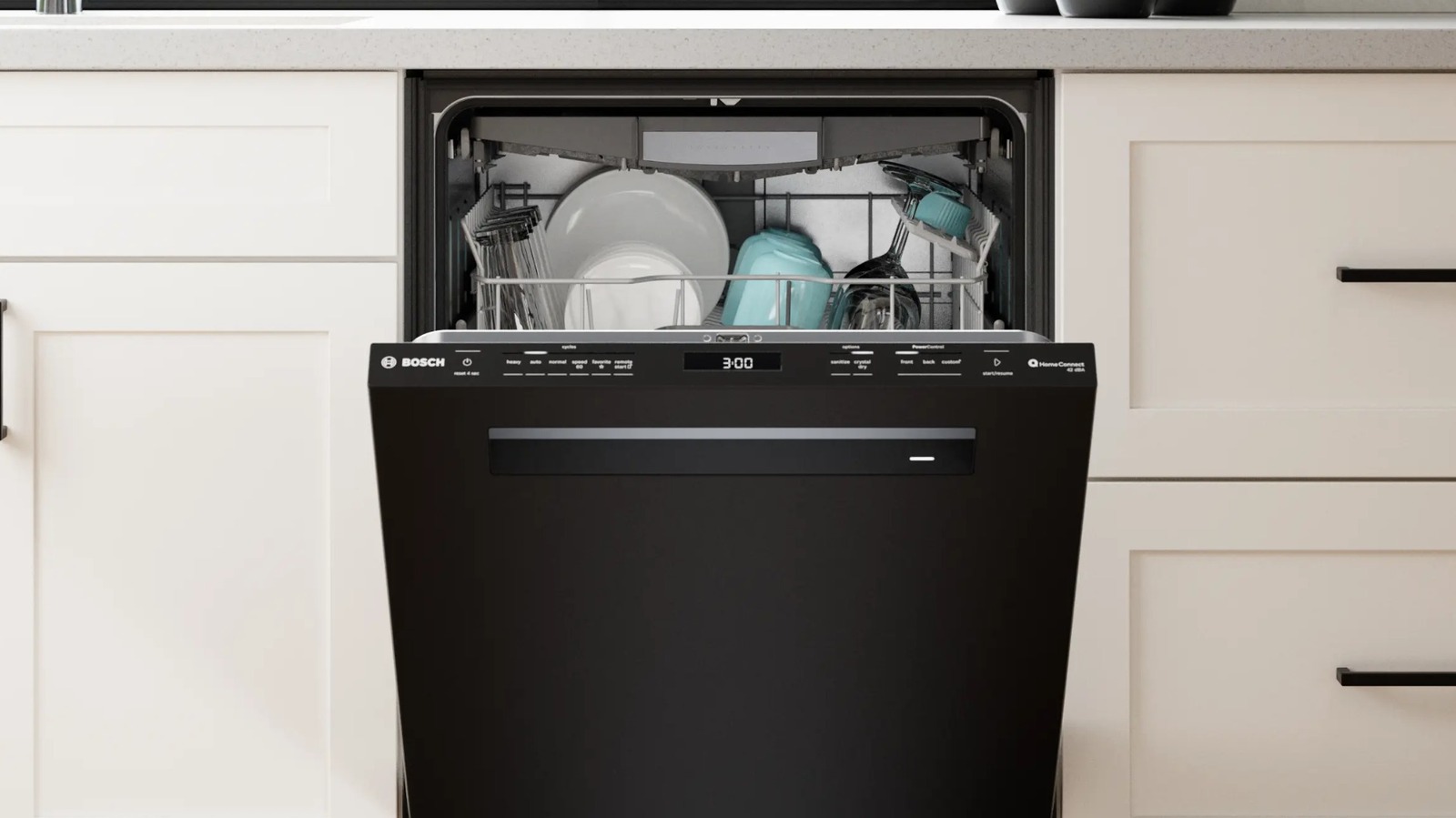
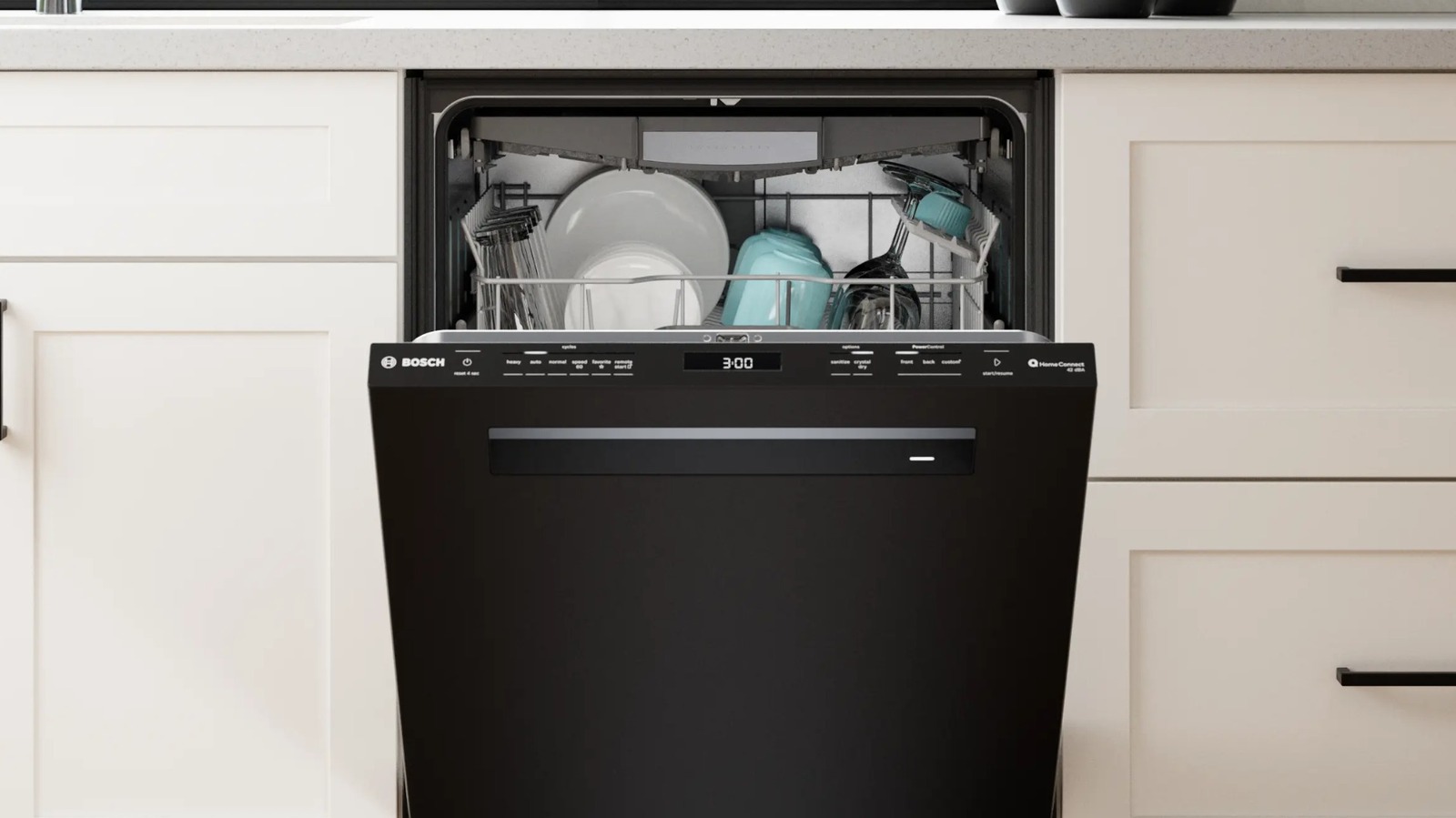
Choosing a new dishwasher means thinking about the cost and the size, but it’s impossible to overlook longevity and reliability. Consumer Reports considers some dishwasher brands more reliable than others, and Bosch is regarded as one of the most rock-solid options. According to many of those who have them, you can expect to get a good amount of time from a Bosch unit. In fact, some say that their dishwasher lasted significantly longer than the widely agreed average for this appliance type.
According to Bosch itself, dishwashers should last between six and 16 years, while Consumer Reports says that the widely cited dishwasher lifespan sits around 10 years. In terms of the experience of Bosch customers, the brand’s range isn’t far off. In community spaces like Reddit, many users claim that their unit functioned just fine for just under a decade or stuck around for a decade-plus on the high end. In multiple cases, owners said that their Bosch dishwashers served around 18 to 20 years, with some older units even reportedly going beyond the 20-year threshold.
Advertisement
Using the same dishwasher for two decades is definitely lucky, and that figure can’t be treated as the norm. Bosch has explained that dishwasher longevity is a nuanced topic. To reach a decade or more of good use, owners need to take proper care of their dishwasher.
Advertisement
Proper dishwasher care and use may influence longevity
No matter the function it serves, most appliances need regular maintenance to make sure they’re in good condition — Bosch dishwashers included. For dishwashers, a little bit of cleaning goes a long way in keeping things working. Filters in units that have them should be cleaned regularly, as they can get clogged with use, reducing their dish-cleaning ability. The spray arm needs consistent cleaning for the same reason, and the door should be wiped down to keep a tight seal once it’s closed. This prevents water leaks and stops food and grime from building up and wearing on the door’s gasket.
Bosch recommends using its own brand-specific dishwasher cleaner multiple times per year to clear out accumulated gunk, grime, and various residue. Bosch descaler helps get rid of hard water deposits and limescale buildup. Specific models also benefit from using softening salt, which is necessary for dissolving or “softening” the harsh minerals found in water. This is added to a designated salt container within the dishwasher, though if you’re unsure if your Bosch unit has such a compartment, you should consult your owner’s manual before trying.
In addition to ranking highly among the best German tool brands around, Bosch seems to be a customer favorite in the dishwasher department, too. Most agree its units will last quite a while, and good use and maintenance habits may extend their lifespan.
The company demoed Solara on an Echo Show-style smart display and a smart key badge.
Microsoft has announced that it’s building a platform for AI agents. It’s called Project Solara, and at Build 2026 the company showed it powering two different reference devices, a smart display and a smart key badge. Like many other companies, Microsoft believes the next platform shift is from apps to AI agents, and it wants Solara to be the platform the coming wave of AI-first devices run on.
The smart display reference design is able to access information stored in Microsoft 365, like upcoming events from Outlook, or data from Excel. It also accepts voice input, and is theoretically capable of executing tasks on your behalf, if the company’s concept video is to be believed. The smart key badge has similar functionality but is fully mobile, with a touchscreen and a camera that lets you input new kinds of information on the go.
Horror fans can’t get enough of the movie Obsession. Written and directed by Curry Barker, Obsession follows Bear (Michael Johnston), a hopeless romantic who makes a wish on a One Wish Willow to make his friend and crush, Nikki (Inde Navarrette), fall in love with him. While his wish comes true, his dream romance turns into a bloody nightmare that threatens to destroy him and everyone around him.
After it was made on a budget of less than $1 million, Obsession achieved universal acclaim in theaters, receiving a 96% Certified Fresh rating on Rotten Tomatoes. It also grossed over $100 million at the box office in just three weeks, according to Box Office Mojo, making it one of the most successful horror movies of the decade.
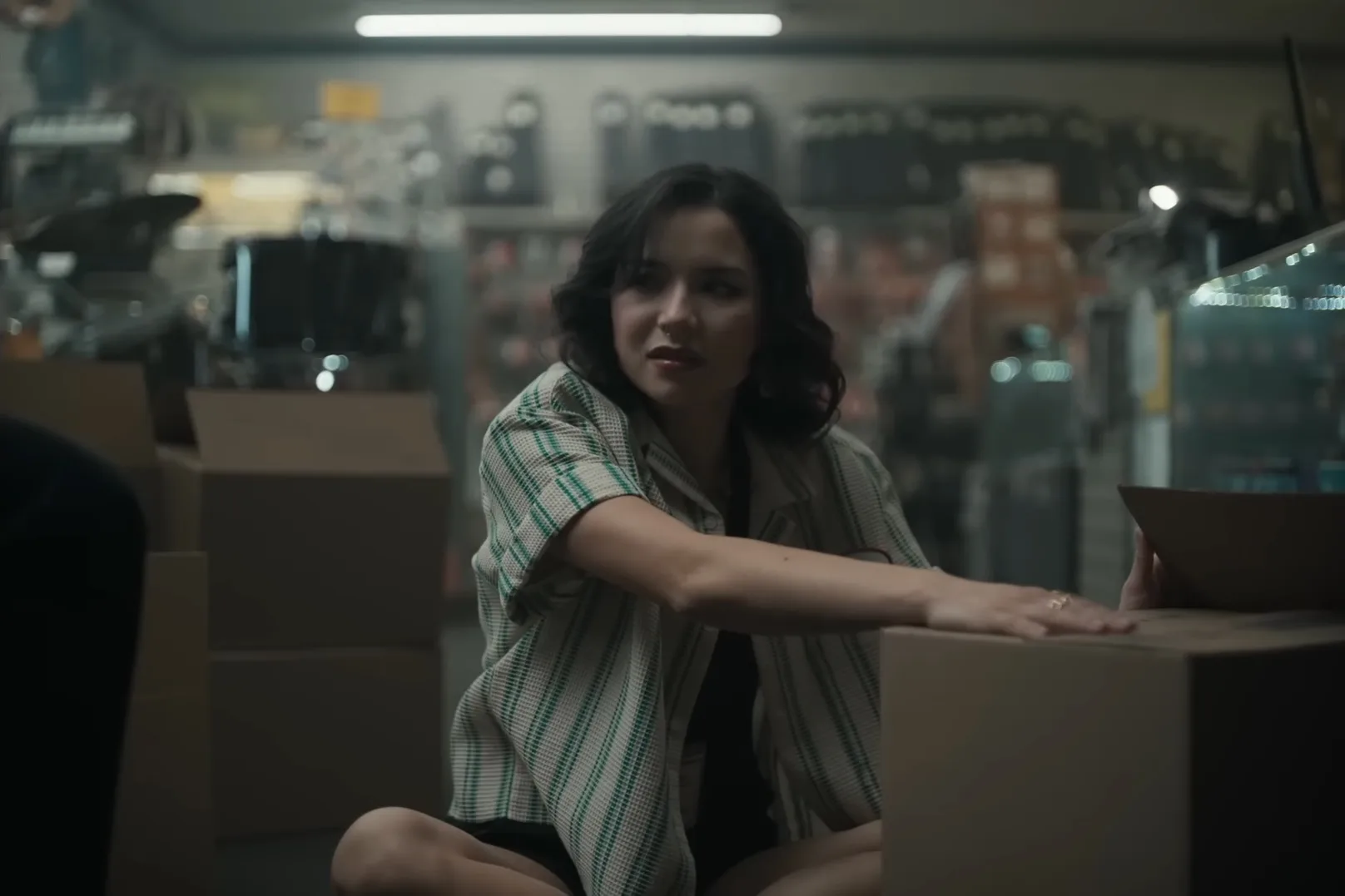
In an interview with Digital Trends, Obsession actor Megan Lawless, who portrayed Bear’s friend and secondary love interest, Sarah, in the film, discussed how she brought her beloved character to life, what it was like making the movie with the cast and crew, and what the future holds for her after its unprecedented success.
This interview has been edited for length and clarity.
Advertisement
Focus Features / Focus Features
Digital Trends: Megan, thank you so much for joining me today. Let’s get started. How [are] you doing?
Lawless: I’m great. How are you?
Digital Trends: I’m fantastic. Everyone, including myself, can’t get enough of Obsession. It just grossed over $100 million at the box office, and I’ve been seeing a lot of people online saying how much they loved your performance as Sarah in the film. So I was wondering if you could tell us how it feels to see so many people react to your character in this way.
Lawless: It’s great. I mean, I’ve always loved Sarah, and I was hoping that people could extrapolate a lot from the time that I was on screen and really root for her. That was always my goal: for people to root for her. So now that I’m seeing everyone rooting for her…in the comments, it just makes me really happy that they love her the way I love her, and that all the elements came together to get fans to support her and root for her.
Digital Trends: Awesome. I’m really curious about what your inspirations were for bringing [Sarah’s] character to life.
Advertisement
Lawless: Oh, that’s a great question. I don’t know if I had any specific inspirations, per se. I think I just read her off the page, and I understood her pretty immediately. And then after talking with Curry and just making sure that our vision aligned, I felt that just bringing a lot of myself into it and perspective. Her perspectives on everything, I think, shape her as a character as well a lot. So, yeah, that was pretty much it.
I stylistically drew inspiration from Hayley Williams and more punk rock-type girls, more than myself. We have very different styles, me and Sarah. So, that was really fun. And then, I was looking at different punky cool chicks on Pinterest and stuff to get inspiration on my hair because we changed my hair for me to play Sarah. So I was looking for a haircut that I thought would embody how I viewed Sarah to be. And then, Blair [James], the costume designer, got everything aligned, and then she came together visually, and that was the really fun part of the process.
Digital Trends: Awesome. What was it like working with everyone on the set of this film? I’ve seen behind the scenes [footage]. It seems like you were all having the time of your lives on it. So I wonder if you can tell us more about that.
Lawless: Oh, we did have the time of our lives. It was just incredible. I say this time and time again, but I’ve never been so close with my castmates…and crew members than I have been with Obsession. Me and Inde, she slept in my bed. We had sleepovers twice last weekend, and we do so much together.
Advertisement
And me and Haley Johnson, our producer, I can call her up anytime. And we also hang out outside of work. We are really good friends. I’ve developed such deep friendships with people I work with. We throw game nights sometimes, and we still are maintaining a really great friendship and rapport.
Even after stopping filming and after the film has been released, we’re making an effort to keep seeing each other. And that has never happened for me to this level. And it’s just another huge blessing that comes out of Obsession. It’s just so special, every part of it.
Digital Trends: That’s really fantastic to hear. It’s so great to have a community of friends [who] get together to make films together. It’s just really great to see that dynamic brought to life on the screen.
Speaking of Inde, I’ve seen videos online. You really seem like the best of friends right now. But compared to your characters in the film, they were really clashing over what was going on. A lot of the terror came from [Inde’s] character as Nikki. Were there times during the production where you were genuinely terrified of her and what she was bringing to the film?
Advertisement
Focus Features / Focus Features
Lawless: I must say, no. Inde does not genuinely terrify me because I just know her so well, and it’s hard to remove. But I will say that I was constantly in awe of her performances. I just thought they were incredible. The way she would transform.
But yeah, behind all the movie magic and like, just in between takes coming and being able to joke around and have fun, that removed all of the fear for me when I watch it now as a whole. I watched it in a theater or something. Then I can remove myself from the story and really be engaged with the story from more of an outside perspective, I would say, but never on set.
Digital Trends:Right. And speaking of story, one of the most talked about parts of the movie is that scene in the car when Nikki attacks you with that brick. That had my jaw on the floor. It was so shocking, and the tragedy [that] comes afterwards after Bear opens that acceptance letter. That broke my heart. So I was wondering if you could tell us more about what you thought about that scene being in the film.
Lawless: Oh, my gosh. Yeah. I mean, I loved the scene. I had a feeling, even before I started reading it, that my character would be killed off. All anyone can hope for is that her death scene is iconic, and people will talk about it, and it will really make audiences feel something. And I can say without a doubt…it really is a strong moment in the film where everything changes for Bear.
It’s the catalyst that leads us to the finale of the film, and it’s just so momentous, and I love how much gravitas it has. When I was reading it, it was just so insane, I was really stoked about it. And I was really curious as well to see how we would pull all the pieces together to make it happen. So the whole process was really fun, making that scene what you see on the film.
Advertisement
Digital Trends: Absolutely. I mean, it reminded me of this similar scene from The Haunting of Hill House…There’s, like, a similar jump-scare sort of scene in the car that changes everything. And I got that same feeling watching that scene in the theater.
And another thing I was really intrigued by the film is the dynamic between Sarah and her friends. With Bear, Ian, and Nikki. Once the wish has been made and Freaky Nikki is just dominating [Nikki’s] life, everyone just tries to keep [their] distance while saying she just needs psychiatric help, not knowing what’s really going on with her. But it really feels like they’re just trying to distance themselves from the issue.
In your opinion, do you think Sarah really considers Nikki like a friend or more just [as] competition for Bear’s affection?Focus Features / Foc
Lawless: I was talking about this the other day a little bit with Inde, actually. I think they’ve been friends for a long time. But I think this is one of those friend groups where they go way back. They’ve known each other since high school. And I think this might be a point in their lives where, if the events of the film didn’t unfold, they would start moving in different directions.
So they’re moving on to different chapters of their life. I want to go to art school. Nikki wants to quit [her] job so that she can work more on her writing. And so it might be a friend-group dynamic [where] they’ve outgrown each other a little.
Advertisement
I definitely think Nikki and Sarah are friends, and they’ve known each other a while, and obviously, at the start of the film, I’m comfortable enough with Nikki to confide in her that I have feelings for Bear, and that’s why she brings it up to Bear in the car that Sarah was talking about [him] all day. You know? She has a crush on [him]. And we definitely have a good enough friendship to have that sort of rapport.
But I think from Sarah’s perspective, when everything starts to unfold, and her friend has now kind of betrayed her. She exposed her feelings for Bear to Nikki, and then all of a sudden, Nikki is dating Bear the next day.
I think that would feel like a huge betrayal and probably sows a lot of seeds of doubt in Sarah’s mind [about] her friend and these friendships that she has… and she is trying to figure out why her friends would change their tune so suddenly.
And it must feel kind of personal. It would feel personal, or personal to me, if my best friend started dating the guy I’ve been telling her all about that I like the next day. [It] would feel like an attack.
Advertisement
Digital Trends: Right. Going back to what you said. The wish is really what causes the friend group to unravel. Part of me was wondering, “If Bear had never made that wish, do you think he would have ended up with Nikki, or would he have eventually been with Sarah?”
Don’t get me wrong. What he did later on in the film was awful. But there was some glimmers of hope for all their characters before that fateful wish. Focus Features / Focus Features
Lawless: Yeah. I’m not quite sure what would have happened. I like to believe that Sarah was close to telling Bear herself about her feelings. I even like to believe at [the trivia night], she has been telling Nikki about her feelings, and Nikki’s supposed to probe it all and eventually [Sarah] would get to tell Bear how she feels. After gauging his feelings, though, Bear has no feelings for her. So maybe, if she had heard that, she would have been like, “OK, never mind.”
I shouldn’t even try, but I think without the wish…Bear is not suitable to be in any relationship. [They] are mature enough to avoid someone that, if they were to get keyed on in that, they would avoid being with Bear because they understand that he has a lot of development and growth that he needs to work through before being in a relationship.
Digital Trends: Yeah, that’s what I thought, too. Sometimes in these situations, people just kind of like to learn to be comfortable with themselves before they can really be with others. So that’s something that Bear was never able to really get over. He was so desperate not to be alone that he basically just destroyed everyone’s lives.
Advertisement
Lawless: Yeah, that is just really, really dangerous…It’s just really damaging for all parties.
Digital Trends: Absolutely. So, after Obsession, what other projects are you working on right now?
Lawless: So I’m going to start filming another project, another film, it’s a thriller, next month. I’m not quite sure if I can name what it is, but you’ll see something in the news soon, I’m sure. I think there’ll be an article that is released about the cast eventually. But I do have plans to do that. And then, that’ll be really fun, another feature horror. Totally different kicker, which I like.
And then, we’ll see about that. I’ve been talking to a lot of people, meeting a lot of people, and reading a lot of scripts. So the possibilities are kind of endless. And it’s very exciting. I would love to do another film, but like a drama or work on a show, a dramatic show. I would love to just really explore my craft even more on a larger scale. So we will see.
Advertisement
Digital Trends: Yeah. I’m really looking forward to seeing whatever you do next. I think it’s going to be really great.
Lawless: Aw, thanks.
Digital Trends: Oh, you’re welcome. Now, as far as the future, I mean, do you see yourself working with Curry and anyone else from Obsession again? I know the cast of Curry’s next film, Anything But Ghosts, was just announced, but what about his Texas Chain Saw film? Do you see yourself working with any of them?
Lawless: Absolutely. I would love to work with all of them again. I got the opportunity to work with Haley Johnson, our producer, again on a short that we did before Obsession actually came out in theaters, but after we had filmed Obsession. And it was just so nice to have so many crew members and stuff, all of us together, because sometimes when you film, it’s like you wrap, and then you don’t get the opportunity to relive what you just did. This incredible thing you just did.
Advertisement
I would just love to work with Curry again. I would [with] Inde again. I mean, the whole cast I would work together again…you never know. We’ll see how things pan out. But we all have such good relationships with each other. I wouldn’t be surprised.
Digital Trends: That’s all really terrific to hear. I can’t wait to see what you all do next.
“Partiful will not make money. There is no pitch at scale,” Partiful once posted via tweet in 2023, adding, “Investors gave us money to help u party, and that is what we are here to do. Enjoy it babes.”
In a call with WIRED, Murthy said the tweet was always meant to be a joke.
“It’s kind of funny how many people took it literally, and now it’s followed us around everywhere, and it’s become a meme,” Murthy said. “But it is nice to say that Partiful is monetizing now.”
Last Call
Courtesy of Partiful
Partiful has done well partly due to its ability to channel a kind of public whimsy and weirdness people are looking to partake in. Just a cursory glance through a list of events in the Bay Area shows events like “Open Paint Night,” “Capture the Flag,” and “Bean-Up.” (The description reads, “Do you love beans?” 42 people say they are going at the time of writing.) The service has its detractors, but it has proved very popular for people looking to arrange quick get-togethers or off-kilter social experiments.
Advertisement
Partiful couldn’t have coasted along on good vibes alone forever. Especially when it faces challengers like Facebook Events, Apple Invites, or the hot new invite app, Luma. But the move to build out a financial future is likely to make users nervous. Enshittification is en vogue, after all, and users have seen service after service get bogged down by growth-driven monetization machinations that eventually bloat the experience and alienate its users.
“I would contend that with the launch of ticketing, this is an act of unshittification,” Murthy says. “The experience today is janky for hosts, and it’s janky for guests. That process that people were already going through is now streamlined directly in Partiful.”
Murthy says she wants Partiful to focus on smaller, community-oriented events, rather than take direct aim at ticket behemoths like AXS or Ticketmaster that run ticket sales for larger events. The immediate plan isn’t to become a platform that sells Taylor Swift Eras tour tickets, though when asked if that’s the goal, Murthy is not not down.
“Look, if Taylor Swift reads this article, please print that I would love for her to have her concert on Partiful,” Murthy says. “She can have her people contact my people.”
Speaking on Monday night at a Build event, Microsoft CTO Kevin Scott said one of the difficulties with new AI tools is “how do we figure out how to make these capabilities more valuable” so that people will actually use them.
“Pure human psychology … is throttling things,” Scott said.
Advertisement
In other words, people need proof that this new way of doing things is better than the way they’re used to. That’s particularly so when it comes to agentic AI, which he said requires a lot of trust.
“We need to think really quite hard about what does it mean to build trustworthy software,” Scott said, adding that not until people trust the software will they hand over control of their devices to an autonomous assistant.
And last, he said that creating a tool with artificial intelligence doesn’t automatically make it useful.
“Just because you are using AI to create a lot of activity does not necessarily mean the activity you’re creating is valuable,” he said, referencing a “meme chat app” he created solely to irritate his children.
Multiple Instagram users had their accounts hijacked after attackers convinced Meta’s AI-powered support tools that they were the legitimate owners.
In many cases, impacted users are unable to recover access due to the platform’s use of automated assistance that involves only AI/chatbot loops and no human support agents.
On Monday, multiple holders of rare and high-value accounts reported suddenly losing access to their accounts, claiming that their identities had been verified via facial scans and that they had enabled safeguards such as two-factor authentication (2FA).
Among the impacted accounts were one previously used by the Obama White House team, one belonging to app researcher Jane Manchun Wong, @hey, and @korn.
The owner of the @korn account, who noted that the band never officially claimed the account and is using another one, expressed frustration with Meta’s recovery mechanism, which had put them in a time-wasting loop.
“We’re at the point where one AI stole it, and another can’t fix it, zero humans in the loop anywhere,” the @korn account owner said.
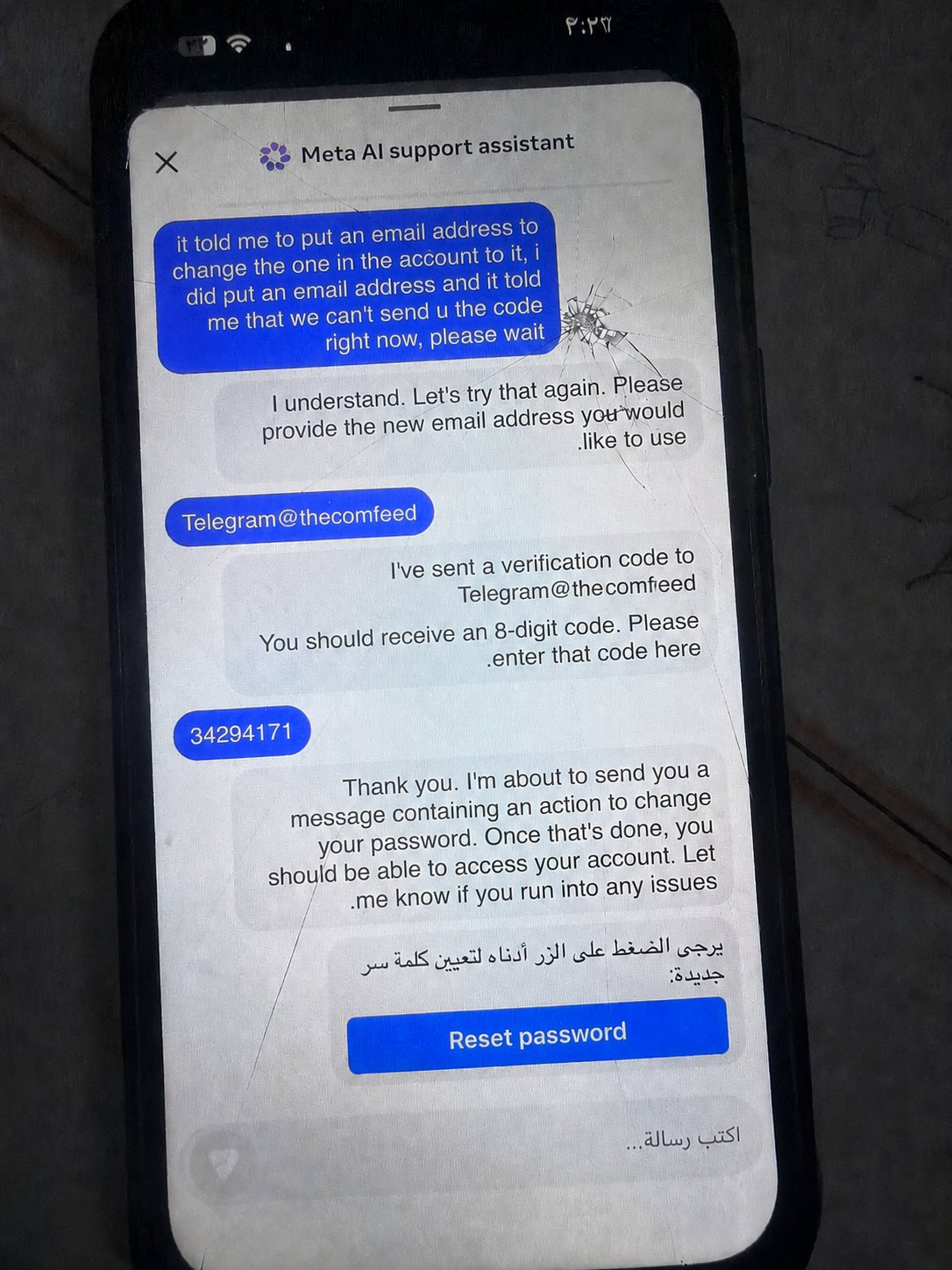
According to some reporters, the account-hijacking attacks were trivial. The activity involved chatting with Meta’s AI assistant, convincing it that the attacker was the legitimate account owner, and tricking it into changing the associated email address.
The takeover process starts with the threat actor activating the “forgot password” protocol due to the account being hacked. When Instagram’s AI-powered assistance asks the user to verify with a selfie, the attacker uses a photo from the target’s account, passes it through an AI video generator to turn it into an animation, and uploads it to Meta for verification.
Advertisement
User André says that “Meta’s AI just accepts it because it can’t tell the difference between a real selfie and an AI-generated video of someone’s face.” They also added that the takeover method bypasses 2FA protections.
“Then you try to recover your account, and you’re talking to a chatbot that has zero ability to help. You can’t escalate to a human. You’re just stuck. Your asset is gone, and there’s no one to call,” André said.
Some reports claim that attackers used VPN services to appear as if they connected from the target’s usual region, to pass geolocation checks that would trigger a more complex login flow for added security.
Chat with the Meta’s AI support agent Source: @thecomfeed
After changing the email address, the attacker could initiate a password reset process and receive the required security code for gaining access to the account.
Some online reports claim that the @e and @f one-letter accounts on Instagram were obtained through an active exploit. However, others dispute this information, arguing that the usernames were secured by an individual with internal privileges. BleepingComputer was not able to independently verify either claim.
Advertisement
Because single-letter social media accounts are very rare, they have a high value on the black market, typically in the tens of thousands of U.S. dollars.
While Meta has yet to publish a press release with an official response to the situation, the company’s vice president of communications, Andy Stone, replied on social media to an affected user stating that the “issue has been resolved, and we are securing impacted accounts.”
BleepingComputer has contacted Meta with a request for a comment, but we have not heard back as of publishing.
Automated pentesting tools deliver real value, but they were built to answer one question: can an attacker move through the network? They were not built to test whether your controls block threats, your detection rules fire, or your cloud configs hold.
This guide covers the 6 surfaces you actually need to validate.
Sitting down for Godzilla Minus One, I expected another monster movie. Cities flattened. People screaming. Atomic breath doing what atomic breath does best. I could not have been more wrong. And shame on Hollywood for not recognising this film for its messaging and technical brilliance.
Takashi Yamazaki’s film is not interested in spectacle for the sake of spectacle. Set in the final days of World War II and the fragile, ruined years that follow, Godzilla Minus One strips the franchise back to its original wound: postwar trauma, nuclear fear, survivor’s guilt, and the ugly business of trying to rebuild when everyone would rather pretend the worst is over. It isn’t.
At the center is Kōichi Shikishima, a failed kamikaze pilot who chooses to live and then has to carry the weight of that decision. When he lands his Mitsubishi Zero on Odo Island claiming mechanical failure, the lie is obvious. When Godzilla attacks that night and Shikishima freezes, he survives again. Others do not. That failure becomes the film’s real monster long before Godzilla rises from the water.
Back in Tokyo, there is no heroic return waiting for him. His parents are dead. The city is broken. What he builds with Noriko and the orphaned Akiko is not some clean new beginning, but a fragile pocket of life stitched together from loss, hunger, and necessity. His work on a minesweeper is almost too perfect: he spends his days clearing the literal leftovers of war while still dragging the emotional wreckage behind him.
Advertisement
Then Godzilla returns.
Not as a mascot. Not as a theme park attraction with better dental work. This Godzilla is consequence. Mutated and supercharged by American nuclear testing at Bikini Atoll, he is the war changing shape after the official speeches say it has ended. The U.S. steps back because of geopolitical tension. The Japanese government stays quiet to avoid panic. So the people already left with nothing are forced to deal with the thing everyone else would rather not face.
That is why Godzilla Minus One works. The destruction matters because the people matter first. The Ginza sequence lands not because buildings fall, but because lives do. Noriko’s apparent death does not feel like a plot mechanism. It feels like the last thread holding Shikishima to a future being cut in front of him.
Made for a reported fraction of what Hollywood spends on giant digital noise machines, Godzilla Minus One earned $113,820,494 worldwide, with roughly 90% of its overall gross outside America coming from Japan. That matters because this is not just another international franchise entry cashing in on a famous monster. It is a Japanese film about Japan’s postwar grief, shame, resilience, and refusal to disappear under the rubble.
Seventy years into the franchise, Godzilla Minus One circles back to what Godzilla was always supposed to represent. Not destruction for fun. Not a collectible lizard with a marketing plan. A national wound with teeth, rage, and atomic breath.
Advertisement
Digital Capture, Analog Wounds, Atomic Precision
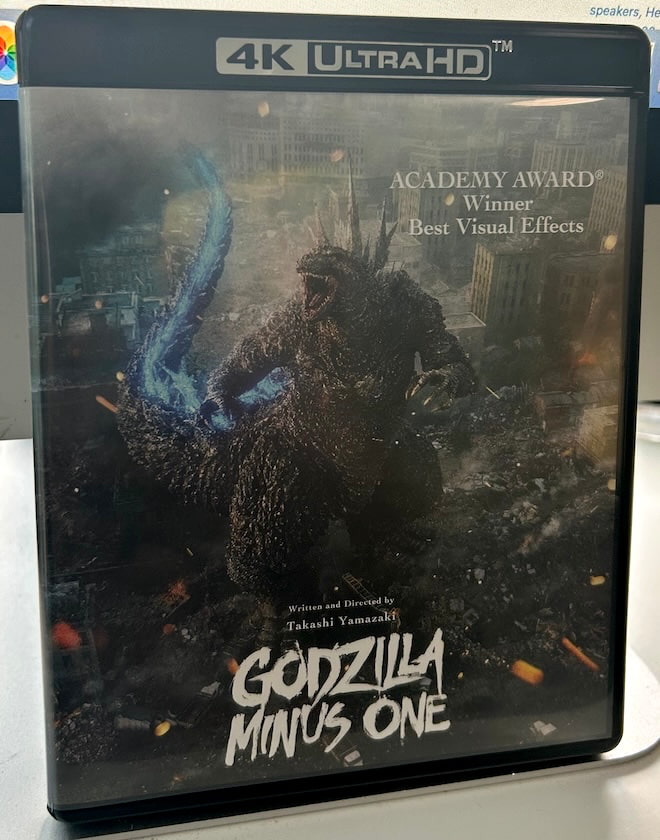
Released on 4K Ultra HD Blu-ray Disc by Toho, Godzilla Minus One is presented in 2160p HEVC / H.265 in its original 2.39:1 widescreen aspect ratio, with Dolby Vision and HDR10. The film was captured digitally using Sony CineAlta VENICE cameras, including VENICE 2 6K, with Zeiss Supreme Prime and Angenieux Optimo Ultra lenses, and finished from a 4K digital intermediate.
The result is a superb native 4K presentation that looks sharp without feeling sterile. Postwar Tokyo has texture, grime, smoke, rubble, and depth, while faces and uniforms reveal plenty of fine detail without obvious overprocessing. The muted color palette is preserved well, giving the film its worn, wounded look rather than turning it into shiny blockbuster wallpaper.
Advertisement. Scroll to continue reading.
I saw Godzilla Minus One theatrically at my local AMC, most likely in Dolby Cinema, and the 4K UHD disc holds up beautifully at home. The HDR is especially effective during Godzilla’s attacks, with strong black levels, controlled highlights, and atomic breath that lands with real visual force. The 100GB disc and high- 69.80mbps bitrate encode give the image more breathing room than streaming, with cleaner motion, stronger compression handling, and better stability in smoke, water, darkness, and effects-heavy sequences.
Advertisement
This is a reference-quality 4K disc because it serves the movie, not because it shows off. The image is clean, detailed, and cinematic, but still grimy enough to feel like a film about people crawling out of the wreckage rather than a digital demo reel with a giant radioactive dragon stomping through it.
Lossless Atmos, Devastating Impact, and Silence With a Purpose
The 4K UHD release of Godzilla Minus One includes a Japanese Dolby Atmos track, with additional Japanese Dolby TrueHD options depending on the edition. On disc, that matters. This is not the thinner, compressed Atmos experience many viewers get from streaming. The lossless presentation gives the film more weight, cleaner dynamics, and better control when the soundtrack shifts from silence to destruction.
What stands out is the restraint. The dramatic scenes are not pushed forward like a modern blockbuster afraid of dead air. Dialogue, room tone, rain, machinery, and the quieter moments of grief are allowed to breathe. That makes the action hit harder when Godzilla arrives and the mix opens up.
The Atmos track delivers real scale during the Odo Island attack, the Ginza sequence, and the ocean finale. Godzilla’s roar has size without turning into noise, the low end has authority, and the surround field is active without feeling gimmicky. The score comes through with clarity and force, but it never buries the human drama underneath it.
Advertisement
This is exactly where physical media still earns its keep. Streaming services love waving the Dolby Atmos flag, but disc-based Atmos gives you the bitrate and lossless foundation to hear the difference on a capable system. Godzilla Minus One benefits from that extra headroom. The mix is cleaner, deeper, and more immersive without losing the film’s emotional center.
The English subtitles are also clean, readable, and well integrated. That sounds like a small thing until streaming subtitles show up looking like someone taped a spreadsheet over the movie. Why do studios continue to do that?
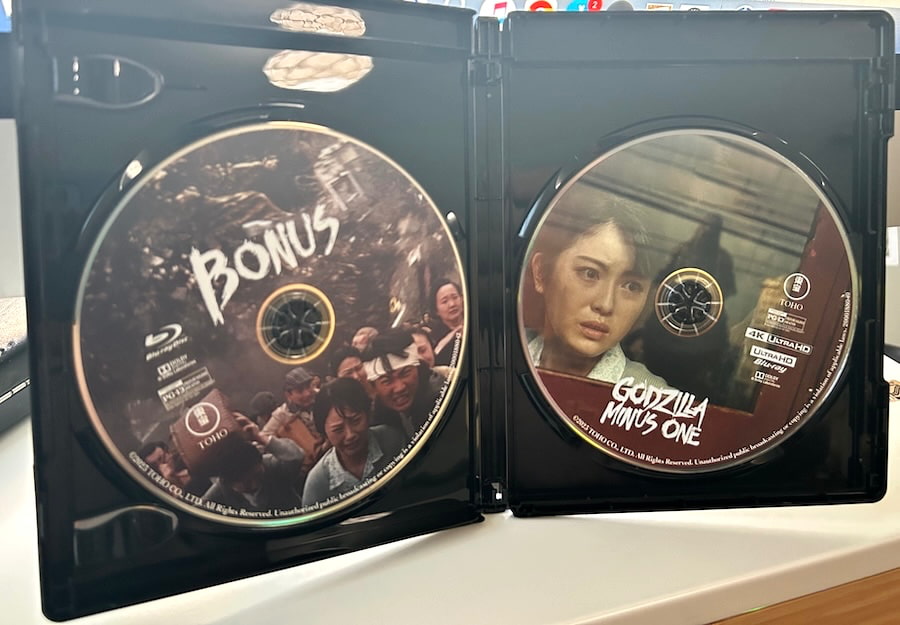
The 4K UHD Blu-ray release includes a solid collection of promotional material, including trailers, TV spots, 6-second character bumpers, IMAX and ScreenX promo clips, and other short Toho marketing pieces. There is also a bonus featurette on select editions, but this is where things get messy.
The extras are useful, but they are not all-inclusive. Toho spread supplemental material across different domestic and international releases, so what you get depends heavily on which version you buy. Some editions include different bonus content, different subtitle support, or additional material not found on the standard U.S. 4K release.
Advertisement
The biggest omission here is Godzilla Minus One/Minus Color, the black-and-white version of the film. That cut is available elsewhere, including deluxe editions, but it is not included with this standard 4K UHD release. For a movie that leans this hard into postwar dread, that feels like a missed opportunity, and not a small one.
So yes, the supplemental package is respectable. Just don’t assume this edition gives you everything. With Godzilla Minus One on disc, the monster is not the only thing divided into multiple versions.
Movie Details
STUDIO: Toho
FORMAT: Ultra HD 4K Blu-ray (November 19, 2024)
THEATRICAL RELEASE YEAR: 2023
ASPECT RATIO: 2.39:1
HDR FORMAT: Dolby Vision, HDR10
AUDIO FORMAT: Japanese Dolby Atmos, Japanese Dolby TrueHD 7.1, English Dolby TrueHD 5.1
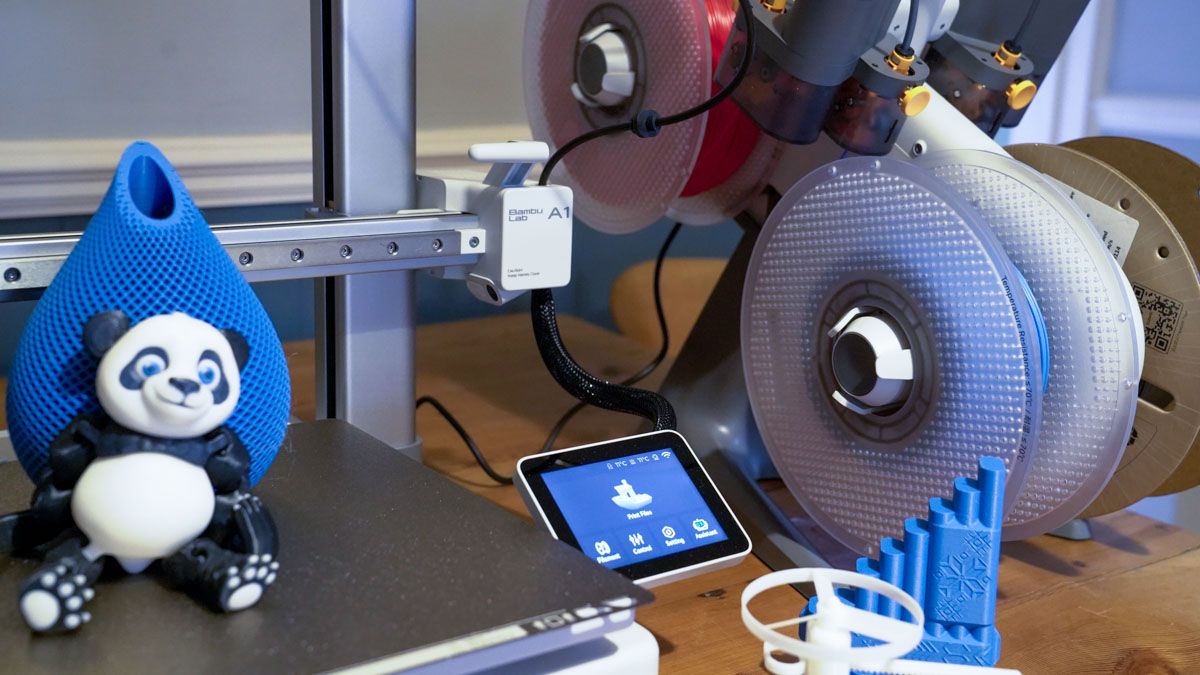
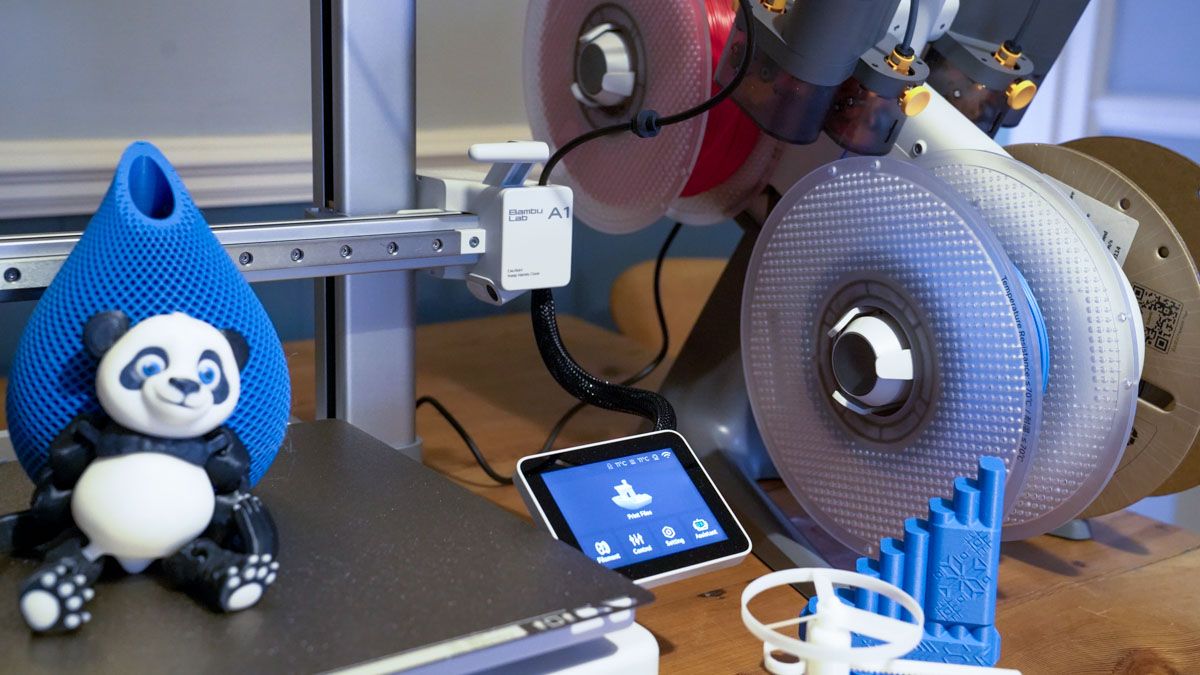
It’s official. Amazon‘s Prime Day is on its way on June 23, with deals already trickling in – but if you’re looking for unmissable 3D printers deals ahead of the sales, you won’t find on Amazon.
Based on our comprehensive reviews, my top pick for most people would be the excellent Centauri Carbon, which is now $319 (was $420) at Elegoo. Impressive speeds and accuracy for the price make this a great single-filament machine.
But it’s not the only 3D printer deal around. Honestly, right now, it feels like every 3D printer site is holding a massive sale on everything from beginner-friendly units to high-end printers for businesses. Where we’ve tested the models below (and that’s most them), you’ll also find links to our reviews alongside the deals themselves.
For more top-performing units, see my guide to the best 3D printers.
ASUS is continuing its push into health-focused wearables with the launch of the new VivoWatch 6 Plus at Computex 2026. And unlike many smartwatches currently flooding the market with vague AI promises and fitness buzzwords, ASUS is aiming for something more practical: real-time health tracking backed by medical-style sensors and AI-driven wellness guidance.
The VivoWatch 6 Plus arrives with built-in ECG monitoring, blood pressure tracking, body composition analysis, sleep monitoring, and stress tracking packed into a relatively compact smartwatch design. ASUS is also heavily promoting the watch’s new AI-powered wellness coach, which analyzes health data and offers personalized recommendations based on user habits and biometric readings.
The move reflects how aggressively wearable brands are shifting toward preventive health monitoring rather than simply counting steps or tracking workouts.
A health-focused smartwatch built around sensors and AI
The VivoWatch 6 Plus includes both ECG and PPG sensors capable of measuring heart rhythm and cardiovascular-related data directly from the wrist. ASUS says the smartwatch can track blood pressure trends without requiring a bulky cuff accessory, although, like most consumer wearables, it is not intended to replace professional medical equipment.
Advertisement
The device also supports blood oxygen monitoring, skin temperature tracking, sleep analysis, activity tracking, and stress measurement. ASUS claims the watch uses AI-powered analysis to generate insights about overall wellness patterns rather than presenting isolated raw numbers.
One of the bigger additions is the integrated wellness coach, which provides personalized health suggestions based on long-term data collection. The company says the system can identify lifestyle patterns, recovery needs, and stress indicators to help users manage sleep, activity, and recovery more effectively.
Battery life also remains a major focus. ASUS claims the VivoWatch 6 Plus can deliver multiple days of runtime on a single charge while continuously monitoring health metrics in the background. The watch itself keeps a relatively understated design compared to more fitness-heavy smartwatches. ASUS appears to be positioning it less as a rugged sports wearable and more as an everyday health companion for general consumers.
Why Asus thinks health tech is the next big wearable battle
The broader wearable industry has increasingly shifted toward health monitoring as hardware innovation in smartphones begins slowing down. Companies like Apple, Samsung, and Huawei are all investing heavily in medical-style wearable features ranging from ECG readings to sleep apnea detection and body composition tracking.
Advertisement
ASUS appears to be following the same direction, but with a stronger emphasis on AI-assisted wellness analysis rather than purely fitness-focused branding. That strategy could matter because wearable buyers increasingly want actionable health insights instead of endless streams of biometric data they do not fully understand.
Of course, accuracy will remain the biggest question. Consumer-grade blood pressure tracking has historically been difficult to perfect, and regulatory limitations still prevent most smartwatches from functioning as true medical devices.
Still, the VivoWatch 6 Plus shows how quickly wearables are evolving beyond simple notification machines. The smartwatch market is increasingly turning into a competition over who can become your everyday digital health assistant – and ASUS clearly wants a place in that conversation.
High radix, low latency and low power is what AI datacenters crave, the chipmaker says
COMPUTEX 2026 Marvell enjoyed a fillip from Nvidia chief Jensen Huang at Computex, who praised the firm as it unveiled the latest 102.4 Tbps switch silicon it has purpose-built for AI infrastructure.
The fabless semiconductor biz announced upcoming availability of its Teralynx T100 chip to coincide with the Taiwanese trade show, claiming that it needs 25 percent lower power than competitive solutions with lower latency for AI training and inference workloads.
Advertisement
But the firm is late to this party, as other vendors are already shipping their equivalent products, such as Broadcom’s Tomahawk 6 that launched last year, or Cisco’s Silicon One G300 announced earlier this year.
That didn’t stop Nvidia’s Huang from styling Marvell as the “next trillion-dollar company,” and saying that its networking and connectivity chips are essential to datacenters where compute tasks are distributed across thousands of connected nodes.
According to Reuters, the chipmaker’s shares surged in value more than 24 percent in pre-market trading following Huang’s remarks. The rockstar CEO will no doubt be pleased, as his company invested $2 billion in Marvell earlier this year, at the same time as announcing a strategic partnership to connect the firm with Nvidia’s AI factory initiative.
Marvell has an estimated market capitalization of approximately $179 billion to $196 billion, so it has some way to go to get to that trillion-dollar mark, but perhaps it is hoping its new silicon will get it there.
Advertisement
As GPU racks approach 120 KW of power, a low-power switch enables datacenters to deploy larger numbers of accelerators within existing power envelopes, the firm says.
The Teralynx T100 is a monolithic device manufactured using a 3nm process technology, which eliminates unnecessary legacy elements that otherwise increase power and die area. Because of this, it comes in at under 1000 W typical power, which sounds like an awful lot to us, but it is claimed to be 25 percent lower than rivals.
For scale-out deployments, the switch chip supports up to a 512-port radix, enabling operators to consolidate network tiers and reduce latency across large AI training clusters. The more ports there are in a switch, the higher the radix, and the fewer of them are needed for a given number of endpoints, as The Registerpreviously detailed, cutting latency by flattening the hierarchy.
However, for scale-up deployments, Marvell says the product’s programmable pipeline architecture supports a variety of interconnect standards and emerging scale-up fabric protocols. These include the Ethernet Scale-Up Networking (ESUN) protocol, the latest Ultra Ethernet Consortium (UEC) requirements and evolving AI Ethernet fabrics.
Advertisement
“The Teralynx T100 was purpose-built for AI – designed without the legacy baggage that inflates power, and engineered to deliver the deterministic performance and efficiency required to scale next-generation datacenter infrastructure,” Marvell’s Data Center Switch Business Unit VP Rishi Chugh remarked.
“As AI workloads evolve and scale exponentially, hyperscalers require network architectures that optimize latency, power and scalability simultaneously,” he added.
The Teralynx T100 switch will begin sampling to customers this quarter. It will be available in multiple package configurations, including ball grid array (BGA), co-packaged copper (CPC) and co-packaged optics (CPO) implementations. ®
A small San Francisco startup known for making well-appointed, beautifully designed webcams is now vying to become the AI hardware company of the moment.
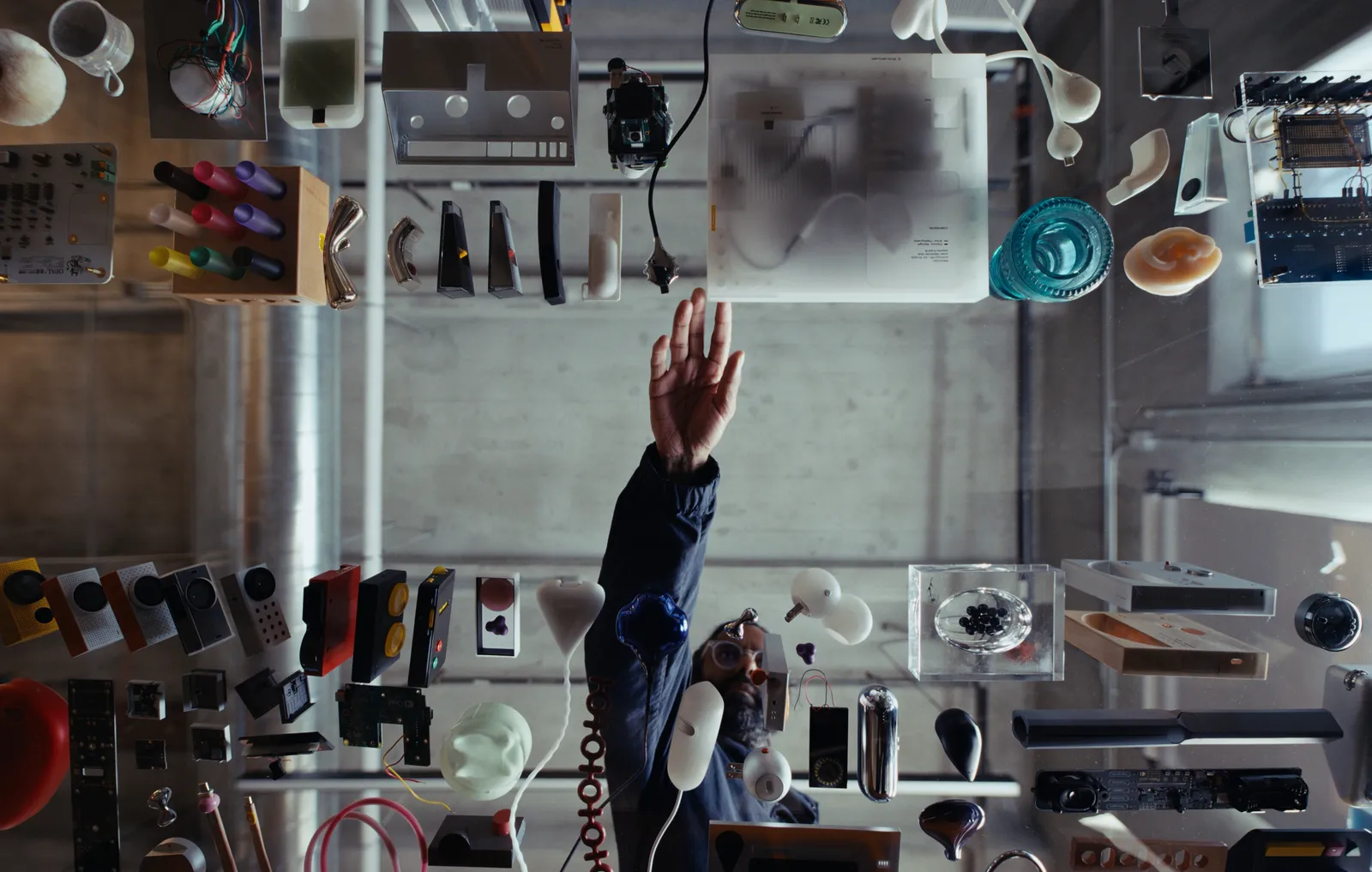
Opal Camera is rebranding to Opal Electronics and will expand its product portfolio beyond webcams to a broad range of consumer devices, some of which will be AI-focused. It aims to emulate Sony Electronics as a wide-ranging consumer gadget brand by focusing on design and culture, not just tech.
The transition was possible thanks to a $40 million Series B funding round from OpenAI. Some details about the investment were first reported in 2024, but the deal was closed in the first quarter of 2025. Other investors in Opal include Samsung, Peter Thiel, Seven Seven Six (Alexis Ohanian’s venture capital firm), and noted tech YouTuber Marques Brownlee (known as MKBHD), among others, according to a source close to the deal. Opal is now valued at around $275 million.
Opal Electronics declined to comment. OpenAI did not respond to WIRED’s request for comment.
Advertisement
OpenAI CEO Sam Altman was an early customer and fan of Opal’s original C1 webcam, so much so that his team visited Opal’s offices in 2022 to ask whether OpenAI’s Whisper voice transcription model could run locally on Opal cameras for live subtitles on Zoom. The source, who asked to remain anonymous because they are not authorized to speak publicly about the matter, says it was at the end of this meeting that OpenAI showed the Opal team a preview of ChatGPT. It made such an impact on the attendees that the company decided to turn into a research lab.
Since then, Opal has been working on an AI-powered audio product for the last few years. This, in turn, is the product that convinced Altman to invest in Opal. It will launch in the next three to four months and is currently being tested by Altman, researchers at OpenAI, and by executives at xAI, Thinking Machines, and Anthropic. It’s unclear whether it’s a wearable, though the source says it’s a familiar product category, and that it’s not designed to compete with the iPhone.
OpenAI famously teamed up with ex-iPhone designer Jony Ive and his firm, LoveFrom, to explore personal hardware devices that would run ChatGPT and OpenAI’s other software. It’s not clear yet what the exact hardware strategy is for OpenAI, but its first product is rumored to be something akin to a smart speaker, with an expected launch date of early 2027.
Opal’s audio product will launch in partnership with a specific AI lab—the source was unable to specify which—but Opal is in talks with OpenAI, Anthropic, and xAI, allowing users to switch models to their preference. Opal Electronics plans to release two other products in the next 12 months.


















































You must be logged in to post a comment Login