


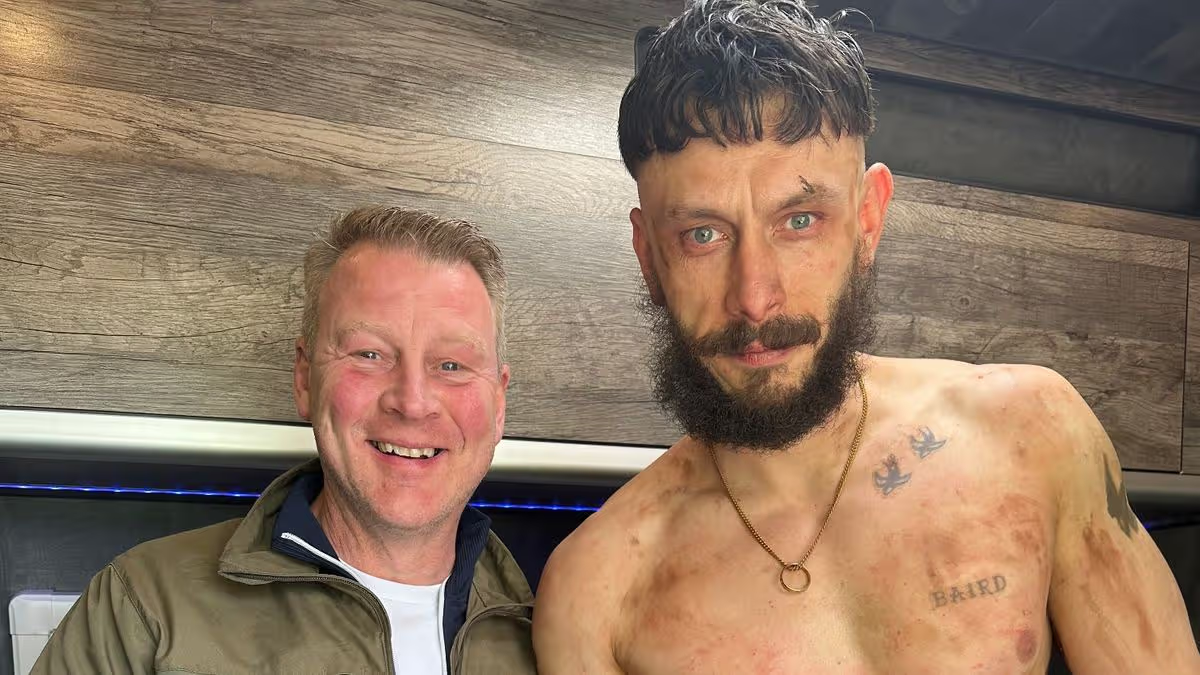
Richard Gadd is one of the stars of the show – which sees its final episode go out on the BBC this evening – with a Doune personal trainer to the Hollywood hotshots helping his physical transformation for the show.
As audiences enjoyed the final thrilling action of an acclaimed BBC and HBO drama this week, the show’s main star has hailed the efforts of a Doune-based personal trainer on helping him undergo a physical transformation.
The final episode of the six-part drama ‘Half Man’ went out to audiences in the UK last night, with Scottish actor Richard Gadd playing the main role as Ruben Pallister.
Gadd’s change into the muscle-bound Ruben was part of a dedicated plan from the popular ‘Baby Reindeer’ actor to commit to the role.
The man responsible for helping Gadd build and maintain that physique required for his role is not a Hollywood trainer, but a sports therapist based in the Stirling village.
David Jenkins, who splits his time between film and television sets and his treatment room in Doune, spent seven months helping Gadd prepare for the physically demanding part.
By the end of filming, Gadd had gained 100lbs and was regularly lifting several tonnes of weight during each training session, training up to seven days a week and squeezing workouts in between the bare-chested fight scenes (or ‘taps aff’ takes as they were known on set) and continuing to train even on 16-hour workdays.
The pair trained together for months before filming began and continued throughout production to maintain the physique required for re-shoots and public appearances, from the BAFTAs and press interviews to participating in UNICEF’s Soccer Aid.
As a former prison physical education instructor, Jenkins drew on first-hand experience to help shape the realism of Gadd’s physical transformation.
“He never cancelled a session,” Jenkins said. “He turned up every single time, even after the longest days on set.
“People see the performance on screen, but they don’t always see the discipline behind it.
“Richard was carrying an enormous workload creatively and physically. He could spend 11 hours on set, another five hours writing and then still turn up ready to train.
“It wasn’t just about adding size. It was about understanding how somebody like Ruben would realistically train, move and carry themselves.
“We’d celebrate with protein-only curries, no naan, no rice, then do it all again the next day.
The collaboration between Jenkins and Gadd reflects a growing but largely unseen part of Scotland’s expanding film and television industry, where productions increasingly rely on specialists to keep actors healthy and schedules on track.
Industry crews routinely work long days, while delays caused by injury or exhaustion can cost productions thousands of pounds per hour.
Jenkins, who previously worked in elite sport, says the demands placed on actors can rival those faced by professional athletes.
“People underestimate what lead actors are dealing with physically and mentally,” he said.
“You might have someone performing emotionally intense scenes while also training hard, sleeping irregularly and working extremely long days.
“The production machine only works if the cast can keep going.”
For the past 15 years, Jenkins has worked across film and TV, with credits including Outlaw King, Outlander and upcoming productions including Blood of My Blood.
During filming for Outlaw King, Jenkins worked closely with Chris Pine, at one point strapping the actor’s injured shoulder between takes to allow him to continue with gruelling battle scenes.
Pine later gifted Jenkins the sword used in the production alongside a handwritten note thanking him for “saving” him during filming.
Jenkins has also worked with undisputed boxing champion Josh Taylor and a host of touring recording artists.
Away from set, Jenkins and Gadd have remained close friends since filming wrapped, with plans to meet up together in the US during the World Cup.
The sports therapist even presented Gadd with a tongue-in-cheek “Best Trainer 2025” trophy created on a 3D printer to mark the end of filming.
Jenkins concluded: “People only see the finished performance. “They don’t see the months of work behind it, the long days and the mental resilience needed just to keep going.
“The TV and film industry demands a huge amount from actors, both physically and mentally. My job is to make sure they are ready for action when the camera rolls.”
‘Half Man’ is available now on the BBC iPlayer.














































You must be logged in to post a comment Login