







Connect with us
DAPA Banner
DAPA Coin
DAPA
COIN PAYMENT ASSET
PRIVACY · BLOCKDAG · HOMOMORPHIC ENCRYPTION · RUST
ElGamal Encrypted MINE DAPA
🚫 GENESIS SOLD OUT
DAPAPAY COMING

Business

Eli Lilly to use GLP-1 windfall to fund M&A and diversify pipeline

Published

on

Eli Lilly to use GLP-1 windfall to fund M&A and diversify pipeline
Lilly’s Van Naarden: Nothing is off the table for dealmaking

Jacob Van Naarden is busy. 

In addition to running Eli Lilly‘s oncology business, he’s now responsible for finding the drugmaker’s next opportunities as head of business development. And Lilly, now the world’s largest pharmaceutical company, is hungrier than ever for deals. 

“The company’s financial strength right now, driven mostly by the weight loss business, is so strong,” Van Naarden said in an interview at the American Society of Clinical Oncology’s annual meeting. “We have this really like almost generational opportunity to redeploy that capital in all of our disease areas to not only fuel growth for the company in the decades to come, but to help a lot more patients with all different kinds of diseases, and so we’re executing against that strategy.”

Jacob S. Van Naarden,
Executive Vice President; President of Lilly Oncology and Head of Corporate Business Development, Eli Lilly and Company.

Advertisement

Courtesy: Eli Lilly

Not even halfway into the year, Lilly has already announced it will spend more than $10 billion upfront and potentially up to $25 billion on eight acquisitions. For all of last year, Lilly spent about $4 billion on roughly 40 deals. 

The spending spree reflects an intentional shift in how Lilly approaches dealmaking now that the company is larger and more highly valued than ever before. The company’s market capitalization now stands at about $1 trillion, up from $190 billion in 2021, according to data from LSEG. Lilly is the first health-care company to join the trillion-dollar club, which is dominated by tech firms.

Previously, the drugmaker primarily liked to place bets on early-stage assets that were inexpensive because they were riskier. Now, it’s using the windfall from its GLP-1 drugs like Mounjaro and Zepbound to pursue experimental drugs that are more likely to work – and carry larger price tags because of it. 

Advertisement

“These things are medicines,” Van Naarden said in a separate interview at his Stamford, Connecticut office. “How big will they be? What’s the development plan? When will they get approved? Like, I don’t yet know all that. Obviously we have projections, but you can see enough to say OK, this is real, and we can underwrite paying a bigger price than we pay for some real preclinical thing. So that’s been a big part of where we’ve been focused in addition to running the high-volume, early-stage strategy.”

Two Mounjaro KwikPen injection pens are in front of the Eli Lilly logo displayed on a screen in this illustration photo in Athens, Greece, on March 1, 2026.

Nikos Pekiaridis | Nurphoto | Getty Images

Van Naarden said his boss, Lilly CEO Dave Ricks, approached him last fall about leading business development in addition to his main job as head of Lilly’s oncology business. The company wanted to sharpen its dealmaking skills and start widening its aperture beyond the early bets where Lilly liked to focus. 

Advertisement

He started to execute the strategy early this year.

Lilly’s planned acquisition of Centessa Pharmaceuticals, announced in March, could reach up to $7.8 billion if the company meets certain milestones for its experimental drugs for sleep disorders like narcolepsy. That would make it Lilly’s second-ever largest deal behind the company’s $8 billion acquisition of Loxo Oncology in 2019. Van Naarden was the chief operating officer at Loxo at the time.

While large for Lilly, deals of roughly $8 billion are still small compared to agreements from other large pharmaceutical companies. It raises the question of how big Lilly could go.

Van Naarden doesn’t want to set arbitrary size spending limits. He says it’s about how compelling the science is and how big the opportunity is for patients and for Lilly.

Advertisement

Some of the deals announced this year fall under Lilly’s current specialties of oncology, neuroscience, cardiometabolic health and immunology. Others, like Lilly’s recently announced acquisitions of three vaccine companies, will take the company into new areas. 

“We’re looking at all kinds of things that don’t neatly fit into one of those four buckets, so don’t be surprised if we have more to come for things that you know don’t perhaps neatly fit within what we’ve done historically,” Van Naarden said this week at ASCO. “If you see it, it means we’re excited, and we think we can make a big impact.”

Is there anything that’s off the table?

“No,” he said, “not really.”

Advertisement
Choose CNBC as your preferred source on Google and never miss a moment from the most trusted name in business news.
Continue Reading
Click to comment

You must be logged in to post a comment Login

Leave a Reply

Business

Shoe Station: A Small-Cap Bargain

Published

on

Shoe Station: A Small-Cap Bargain

Shoe Station: A Small-Cap Bargain

Continue Reading

Business

Norway’s crown princess undergoes successful lung transplant, palace says

Published

on

Norway’s crown princess undergoes successful lung transplant, palace says


Norway’s crown princess undergoes successful lung transplant, palace says

Continue Reading

Business

Construction costs to rise 6.7pc

Published

on

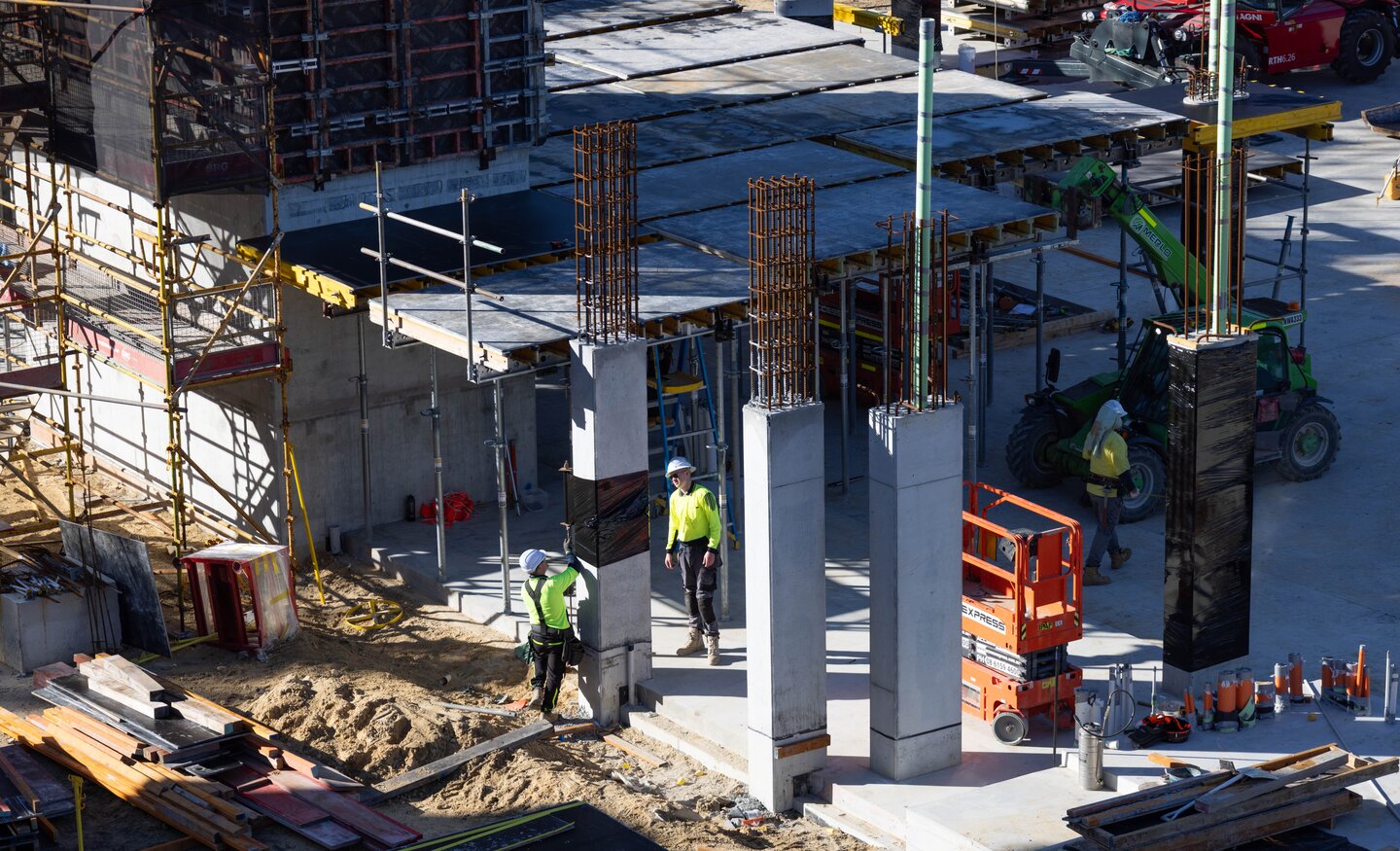
Construction costs to rise 6.7pc

The impact of the Middle East war on construction costs has been fundamentally misunderstood and exaggerated in many cases, a new study has found.

Continue Reading

Business

Japan raids ice cream giants over price-fixing allegations

Published

on

Japan raids ice cream giants over price-fixing allegations

The investigation on alleged cartel pricing of ice cream comes as Japan faces record summer temperatures.

Continue Reading

Business

The Death Of Tokenmaxxing

Published

on

The Death Of Tokenmaxxing

The Death Of Tokenmaxxing

Continue Reading

Business

Dar Global reaches $23 billion portfolio on fifth anniversary

Published

on


Dar Global reaches $23 billion portfolio on fifth anniversary

Continue Reading

Business

What is happening to UK prices?

Published

on

Why are UK prices still rising?

The war in Iran is expected to push UK Inflation further above the Bank of England’s 2% target.

Continue Reading

Business

Cyient shares crash 6% as stock turns ex-record date for Rs 720 crore share buyback. What’s ahead?

Published

on

Cyient shares crash 6% as stock turns ex-record date for Rs 720 crore share buyback. What's ahead?
Shares of Cyient crashed nearly 6% on Wednesday after the stock turned ex-record date for its share buyback worth Rs 720 crore at a price of Rs 1,125 per share, implying a premium of around 24% over the previous closing price.

The engineering and technology services company had fixed June 17 (Wednesday) as the record date for its Rs 720 crore share buyback. Only those shareholders who own the company’s shares in their demat accounts as of today will be eligible to tender shares. This means that any investor taking fresh positions in the counter will likely get the shares credited tomorrow as per Sebi’s T+1 settlement rule, making them ineligible to participate in the buyback.

All about Cyient’s share buyback

Cyient in April said it will buy back up to 64 lakh shares for Rs 1,125 per share. This marks Cyient’s first buyback since 2019. In an exchange filing released on Monday, Cyient announced that its shareholders have now approved the share buyback. The entitlement ratio and other details will be announced later.

Buyback of shares refers to a corporate action where a company repurchases its own shares from existing shareholders. Usually, the company purchases the shares at a higher price than current levels, encouraging investors to participate. Typically, a company decides to buy back its shares to increase share value, utilise surplus cash, prevent hostile takeovers or increase promoter holdings.

Also read:
Sensex rises over 250 points, Nifty above 24,000 as Dalal Street extends gains for 4th session. What lies ahead?

Advertisement

Cyient share price

Cyient shares have gained over 1% in one week but is down nearly 23% in 2026 so far. In the longer term, the shares of the company have fallen 36% in one year and 42% in three years, but recorded marginal gains in five years.The company currently has a market capitalisation of less than Rs 9,540 crore.

Also read: Brigade Enterprises shares rally 10% after bonus issue. Here’s why you can ignore the 22% plunge

Why does Emkay maintain a ‘Reduce’ call on Cyient shares?

Emkay maintained its ‘Reduce’ call on Cyient shares, while increasing its target price to Rs 900 apiece from Rs 850 apiece. The latest target price implies a downside potential of less than 1% from the stock’s previous closing price of Rs 907.65 apiece.
The brokerage said that the firm’s growth slowed in FY26 owing to macro headwinds, ET Now reported. ER&D spend continued to expand at a healthy mid-to-high single digit, it added.
While collections increased modestly, mainly led by an increase in the DET segment, the number of DLM inventory turnover days rose by 63 due to weak revenue, customer-specific programme requirements and global supply chain challenges. It added that the management aspires to deliver stronger and more profitable growth in FY27.
Also read: Sebi plans buyback via SEs again, easier MF borrowing rules

(Disclaimer: Recommendations, suggestions, views and opinions given by the experts are their own. These do not represent the views of The Economic Times)

Advertisement
Continue Reading

Business

PwC moves to new Welsh headquarters building

Published

on

Business Live

The professional advisory firm has moved its Cardiff operation into the One Central Square office building

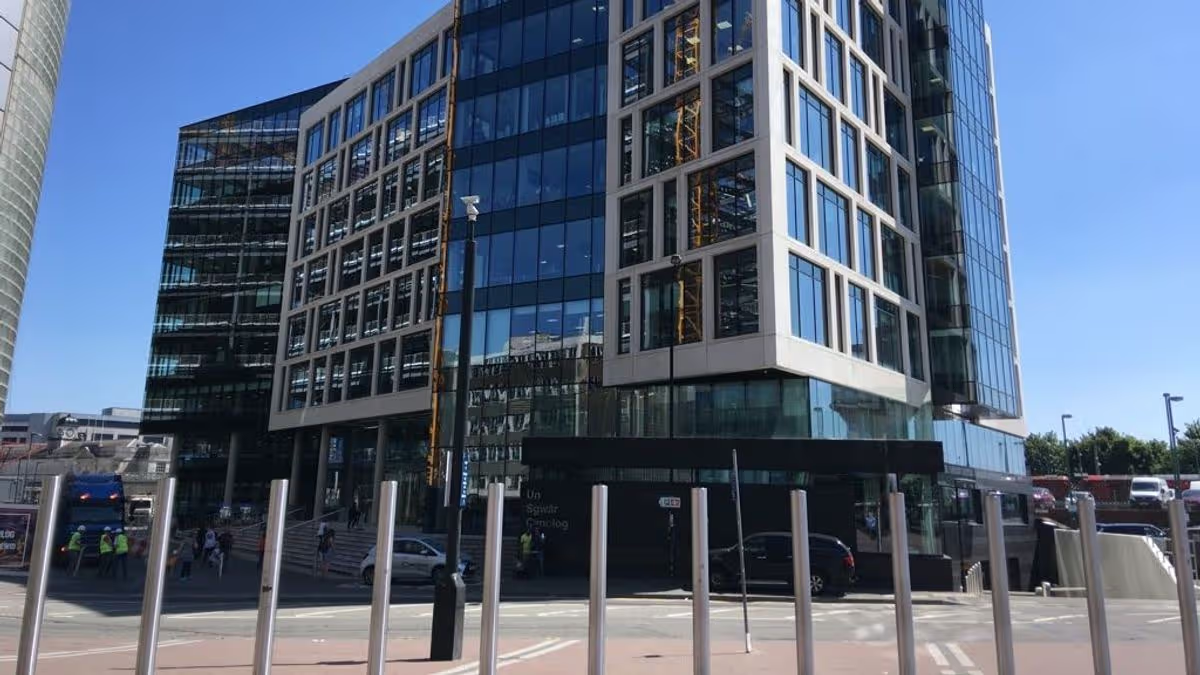
One Central Square.(Image: Western Mail)

Professional advisory firm PwC has moved into its new Welsh headquarters in the centre of Cardiff.

The firm, which since the pandemic has seen its head count in the capital double to 400, has relocated to the One Central Square building at the wider Central Square office, residential and retail scheme around Cardiff Central Station.

The firm has taken two floors, which have been refurbished using Welsh suppliers, extending to 33,500 sq ft. It has moved from its previous Cardiff city centre offices at the 2 Kingsway building, where it was located for 25 years.

Its new office space was previous occupied by car finance company Motonovo before it relocated to the adjacent 2 Central Square office building.

Advertisement

The firm considered a number of new locations, and at one stage were linked to a new build development at the nearby Central Quay regeneration project at the former Brains brewery site, before opting for One Central Square.

The building’s close proximity to good public transport links, with Cardiff Central Station and the new bus station, were supporting factors in the decision The office provides the firm’s service lines of consulting, tax, audit and deals, as well as housing its specialist ethical hacking team for the UK.

PwC partner Stuart Couch

Stuart Couch, market leader for PwC in Wales, said: “It’s a real pleasure to finally open the doors of our new offices here at One Central Square, a building that reflects PwC’s ambitions in Wales, just as the Central Square development reflects Cardiff’s ambitions.

“There are real reasons to be optimistic about Wales’ prospects. It has proven its strength in advanced manufacturing, its fintech and insurance sectors are growing fast, and it is starting to take advantage of its natural edge in the transition to green energy.

Advertisement

” Capitalising on those strengths will require leaders to make creative decisions – new approaches to financing, complex transformation programmes, cross-sector collaboration. One Central Square gives us the platform to play our part in unlocking Wales’ potential and helping it take the next steps in its economic journey.”

PwC’s new Cardiff office.

Pontypool-born Mr Couch said its new office has been designed to accommodate further growth in head count. PwC was the first professional advisory firm requiring staff to be in the office, or with clients, for at least three days a week after the pandemic.

Carl Sizer, chief markets officer at PwC, UK, said: “We’ve been in Cardiff for over 90 years, and our move to One Central Square underlines our continued investment and focus on the Welsh market.

“Our regional strategy is fundamental to our purpose and our success; it’s vital that we live and work where our clients do, so that we can better understand their issues and work closely alongside them.”

Advertisement

One Central Square, which extends to 136,000 sq ft, is asset managed by property advisory firm Knight Frank, who, through its Cardiff office, are also the letting agents.

After the decision of Motonovo to surrender its lease on 70,000 sq ft of space in the building, which is owned by Middle Eastern investors, One Central Square is now fully let again following a number of recent letting deals. As well as PwC, they include NatWest – which is taking a floor that was occupied by law firm Blake Morgan who will remain in the building – and fellow law firm Knights. Both are fitting out their respective new offices ahead of moving in. Other new tenants to recently move into the building include law firms Browne Jacobson and Lewis Silkin.

Head of the Cardiff office of Knight Frank, Matthew Phillips, said: “The letting success at One Central Square clearly demonstrates pent up demand for best in class city centre office buildings in Cardiff served by good amenities and close proximity to public transport links.”

The terms of the letting with PwC have not been disclosed.

Advertisement
Continue Reading

Business

Appian: Tremendous Bargain As Sales Productivity Steps Up

Published

on

Appian: Tremendous Bargain As Sales Productivity Steps Up

Appian: Tremendous Bargain As Sales Productivity Steps Up

Continue Reading

Trending

Copyright © 2025