

Politics
Mandelson was working to connect Palantir and Starmer behind the scenes

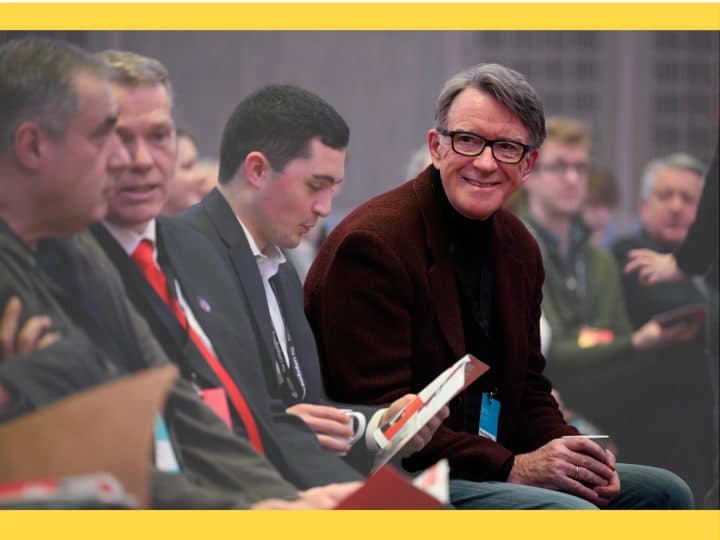

The UK government has released more emails from Peter Mandelson when he was ambassador to the US. Among them are two that show Mandelson was trying to create closer links between the UK government and the dubious US tech company, Palantir.
And seems Mandelson attended this event with Louis Mosley, boss of Palantir UK and his client at Global Counsel. Noteworthy as we were told that mitigations on Mandelson’s appointment included no one-on-one meetings with former clients. pic.twitter.com/q5G722DKDk
— Ethan Shone (@EJShone93) June 1, 2026
Mandelson…
Palantir is a defence contractor that’s involved in many ongoing atrocities around the world.
Its ongoing contracts includes mass surveillance, Israel’s genocide in Gaza, and Trump’s Immigration and Customs Enforcement (ICE) activities. Oh, and for some reason it’s also involved in the NHS, a service that’s designed to save people’s lives not to spy on/ murder them.
Palantir’s involvement in the NHS has attracted significant controversy, which is why MPs debated our partnership with the US tech abomination in April.
In 2023, Palantir walked away with a seven-year NHS contract without competition, Yanar Alkayat wrote for the Canary.
(The same kind of mates’ rates for the £240 million Ministry of Defence deal). Data handling, trust and transparency are the major concerns.
MPs speaking out included Iqbal Mohamed, who said:
If it looks evil, if it smells evil and if it behaves evil, then it is evil.
The UK government’s unseemly and secretive ties with Palantir don’t end with the newly unearthed emails. Starmer had off-the-books meetings with the murderous tech company earlier this year.
There is no public record of the Palantir briefing attended by Keir Starmer and Peter Mandelson in February 2025 despite the Ministerial Code requiring Starmer to publish details of meetings with external organisations
No 10 says the event was not a meeting and did not require… — Politics UK (@PolitlcsUK) April 25, 2026
Green Party leader, Zack Polanski, highlighted the following in response to the revelations:
'He was not allowed unsupervised access to former clients’
Is that why Keir Starmer had to accompany Mandelson to their secret meeting with Palantir? https://t.co/okv96wnhDk
— Zack Polanski (@ZackPolanski) April 18, 2026
This is the problem with the revolving door between politics and corporations. No matter how many rules and regulations you introduce, these crooked operators simply contort themselves around them.
Follow the money
Speaking to the Canary, independent MP, Jeremy Corbyn, said the following about the influence of money and corporations on the UK:
The Donaldson debate today in Parliament is going to be interesting and I’ll certainly be there giving my views on his behaviour and the way in which wealth, power, money connections end up influencing decisively Labour and British politics. But the real issue is actually much wider and much deeper.
There needs to be an independent public inquiry into the influence of money, of connections, of how decisions are made and what influence they have on parties and on government. Parliament is in no position to undertake that inquiry because MPs are so involved in it all, with money being donated to campaigns, to running MPs’ offices, to supporting putative ministers and later on ministers themselves.
So we need a big clean-up on politics. That means getting the money out of it — getting the involvement out of it.
Palantir is an example of this. Palantir was introduced into the system by Mandelson and others, now deeply lodged into the civil service systems and now claiming that they are the saviors of our National Health Service. Sorry, no.
We need publicly owned, publicly run and publicly accountable data systems within our National Health Service, not owned by an American-based company called Palantir.
View this post on Instagram
The latest Mandelson emails are interesting, but they don’t tell us much we didn’t already know about Mandelson. And importantly, they don’t tell us anything Starmer didn’t know about Mandelson when he hired him as ambassador to the US.
Featured image via Leon Neal/ Getty Images
By Willem Moore

There’s a simple test for what Britain really believes about work. Ask yourself which job sounds more impressive: an electrician or an economist, a bricklayer or a banker.
Of course, all are valuable to society.
But if we are honest, people sometimes have instincts that place one above the other, and that tells us something about how different kinds of work are valued. Until we confront that, we will struggle to fix what is not merely a skills gap. It is a respect gap.
A few months ago, I toured Switzerland with their government and found something striking. There, vocational and academic routes do not compete. They sit alongside each other, with parity of esteem baked into their very constitution.
Two-thirds of young people choose a vocational route, and they value it. I met apprentices training as railway engineers alongside others who had followed the same path into senior roles in business and government. Ernst Tanner, Chairman of Lindt, started as an apprentice. In Switzerland, this is entirely normal.
Britain has UCAS, a well-understood front door largely into higher education rather than other routes. It has become a brightly lit conveyor belt directing young people to university, while apprenticeships are harder to find. UCAS had over 50,000 undergraduate courses, compared with around 6,000 in the separate Find an Apprenticeship service.
We need a single post-16 platform that brings the alphabet soup of past, present, and future together. Vocational and academic routes include apprenticeships, BTECs, T Levels, NVQs, V-levels, GCSEs, A-levels, HNDs, and degrees. How about a single account to track the qualifications you accrue over your life?
Routes should be permeable, too. Why should a biology student not pick up a horticulture qualification, or a welder take a physics module? Switzerland is already doing it. We could too.
Cultural signals matter early in education. School trips to universities are commonplace.
Visits to places where things are actually built are far rarer. Why? Work experience is too often a tick-box exercise. Imagine if every child were partnered with a local employer before their GCSEs. With nearly a million 18- to 24-year-olds not in education, employment or training (NEET), that would be a radical change.
As a dad of two, I cannot help thinking that if my boys were shown that learning to weld could mean building a stadium for a ‘Northern Olympics’ or laying the foundations of Britain’s next major rail line, they would see those paths as the skilled and ambitious jobs they are. Schools should champion those routes as confidently as the path to a degree. Being able to point with pride at a home you have built with your own hands is as important as any graduate job.
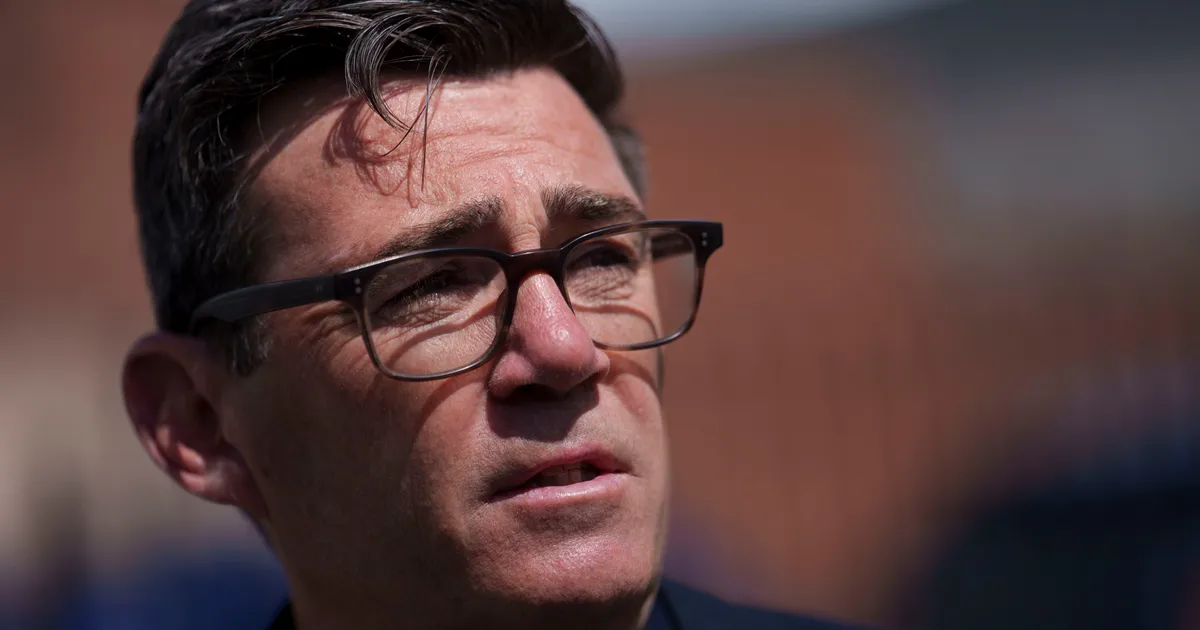
Andy Burnham has argued that Thatcherite neoliberalism has quietly broken Britain, and he is right. Universities can expand freely, yet remain harder for disadvantaged students to navigate, often leaving them with significant debt, while colleges must, bizarrely, ration places. The result is a system that undervalues technical routes, falling hardest on working-class children.
As he argued in Leeds the other week, millions of young people who want to pursue technical routes have been overlooked and written off. Swiss cantons shape skills systems around their economies, and we should do the same. The Manchester Baccalaureate, based on high-growth industries, points the way.
In Makerfield, Burnham may be running against a plumber, but he has done far more to back the trade than his opponent. Representation is about what you fight for, not who you are.
We are the Labour Party. Work is in our name. The people who build, fix, and make things work are who we are for.
I’ve heard that argument on countless doorsteps in Wigan. Hopefully, it won’t be long before it’s being made again in Westminster.
Listen to Commons People, the podcast that makes politics easy. Every week, Kevin Schofield and Kate Nicholson unpack the week’s biggest stories to keep you informed. Join us for straightforward analysis of what’s going on at Westminster.

A government minister warned Vladimir Putin “we see you” after a Russian warship fired warning shots near a British yacht in the English Channel.
Jane Kelvey, 68, and her husband Alan, 70, were on their 40ft vessel, Bright Future, travelling towards France when the shots were fired several times from the Russian frigate Admiral Grigorovich on Tuesday.
“It was a bit scary,” Mrs Kelvey told The i Paper. “I crouched down. I didn’t think our safety was in danger. But it was certainly unusual. As we sailed away, we said to each other, what the hell just happened?”
The Ministry of Defence (MoD) said the Admiral Grigorovich fired warning shots after making attempts to contact the yacht, which was about 20 nautical miles south of the Isle of Wight, outside the UK’s territorial waters.
An MoD spokesperson said: “These [shots] were not aimed at the vessel and were an attempt to prevent a possible collision.”
Nevertheless, Cabinet Office minister Nick Thomas-Symonds said the incident was further evidence of Russian aggression.
He told BBC Breakfast: “Let’s be in no doubt. Our message to Vladimir Putin is we see you, we see your activity, whether that is in waters around the UK coast or indeed whether that is in terms of cyber, or hybrid or any other modern forms of warfare.
“Vladimir Putin should be in no doubt that we will not hesitate to take the action that’s necessary to defend our country and our people.”
The minister added: “This government is absolutely determined in the face of that Russian threat to do all we can to keep this country safe.”
Russian warships passing through the English Channel are routinely shadowed by the Royal Navy, with offshore patrol vessel HMS Mersey monitoring the Admiral Grigorovich at the time of the incident on Tuesday.
The incident happened just days after UK armed forces intercepted a Russian “shadow fleet” oil tanker in the English Channel.
Royal Marine commandos and specially-trained law enforcement officers boarded the sanctioned vessel Smyrtos in the early hours of Sunday morning.
Shadow vessels carry sanctioned Russian oil, which is sold to raise funds to pay for the Kremlin’s ongoing invasion of Ukraine.
Listen to Commons People, the podcast that makes politics easy. Every week, Kevin Schofield and Kate Nicholson unpack the week’s biggest stories to keep you informed. Join us for straightforward analysis of what’s going on at Westminster.
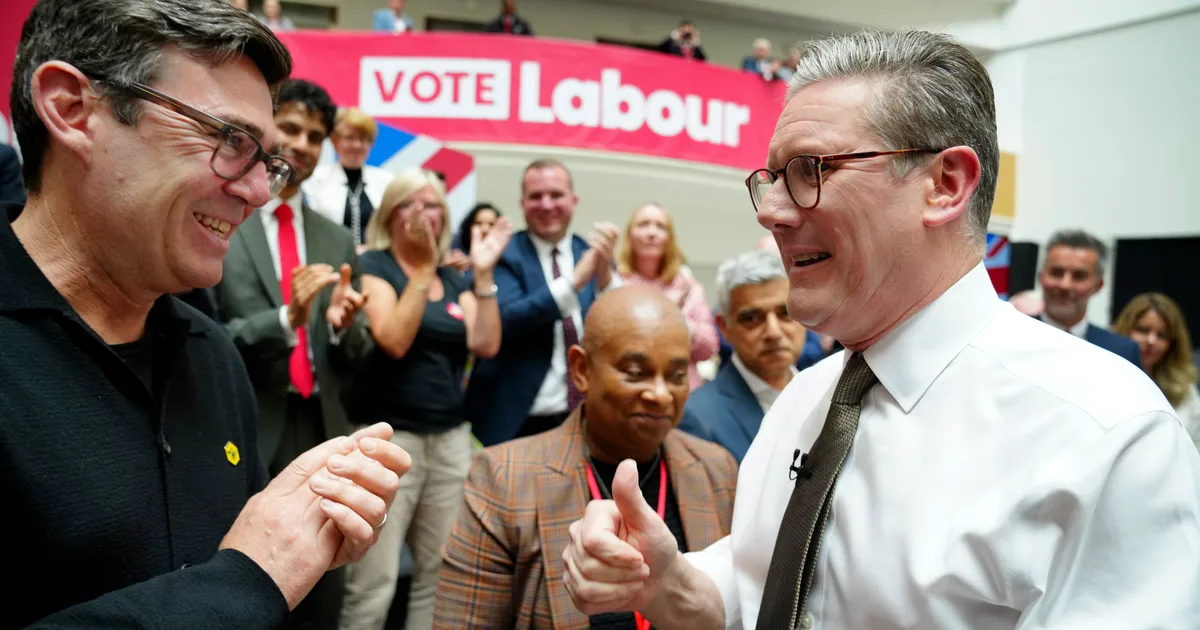
Keir Starmer has hinted that he will offer his main rival Andy Burnham a top job in his cabinet if he wins the highly-anticipated Makerfield by-election tomorrow.
Burnham, currently the Greater Manchester mayor, has said he will join a leadership contest to oust the prime minister if he becomes an MP again.
But the PM has said that would cause “chaos” and has instead hinted at giving Burnham a key role in his government instead.
Sky News’ Beth Rigby asked Starmer at the G7 summit in France if he would bring Burnham into his cabinet if he wins in Makerfield.
He replied: “Oh, Andy is a great asset. And, yes, I want him to have a big role in government. When I came in to…”
Rigby cut in: “Are you going to call him at the weekend and invite him back into your cabinet?”
“Well I’m sure I’ll talk to Andy after the weekend, of course I will,” Starmer said. “I’ve spoken to him many times in recent weeks. and when I came into politics in 2015, it was Andy Burnham’s team that I joined, and we worked very well together.
“He’s a huge asset. He’s been a fantastic mayor in Manchester. And if he comes back into parliament, I hope he wins in the by-election. He’ll be a fantastic asset for our party and for the country.”
Burnham spent 16 years working as the Labour MP for Leigh before he stepped down to run as Greater Manchester mayor.
He also served as a cabinet minister under Gordon Brown and a junior minister under Tony Blair.
If he wins the Makerfield seat, a mayoral election will be triggered in Greater Manchester.
The prime minister insisted that Labour should focus on that contest rather than a leadership challenge if the party is successful in the by-election.
Asked if he believes it is incumbent on Burnham to secure a Labour mayor in Greater Manchester before making waves in Westminster, Starmer said: “I would say to the whole of the Labour Party and that whole Labour movement, we’re straight into a Manchester mayoralty.
“It is really important that we win that, because this is one of the huge moralities in the north-west and really important to us and to devolution more generally.”
Pressed on whether he is angry at the predicament he is in and if he blames himself, Starmer replied: “No, I don’t feel angry, I don’t feel bitter, because I remind myself it is an incredible privilege to be the Prime Minister of the United Kingdom.”
The PM also said he “wants” to lead the Labour Party into the next general election.
The interview comes after ex-health secretary Wes Streeting announced he is preparing to launch a leadership challenge against his old boss next week.
At a press conference on Tuesday, Streeting called on the PM to say when he plans to leave No.10 if Burnham wins the by-election.
He said: “When the results are in, I hope the prime minister will at that stage reflect on his own position and set out a timetable.”
Burnham has already said he will join any Labour leadership contest.
But Starmer suggested he would not step aside for anyone to replace him, telling Sky: “I’m not going to walk away. I’m going to fight.”
Politics
The House | National Maternity Adviser Michelle Welsh: “We Are Not Waiting For More Babies To Die”
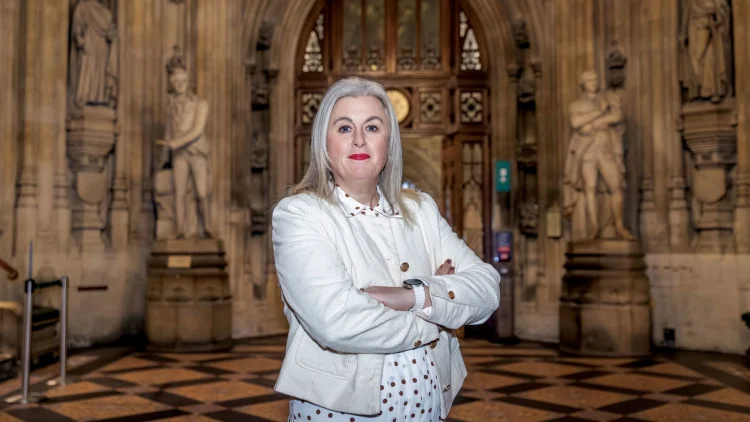

Photo by Nikki Powell

11 min read
Labour MP Michelle Welsh has just been appointed the government’s first national maternity adviser. She tells Sienna Rodgers about her personal experience of birth trauma and why she’s fighting for all mums and babies to be better treated by our maternity services
Michelle Welsh has a heart-shaped womb. It sounds beautiful. This ‘concave’ uterus did, however, contribute to her having a complicated pregnancy. “Not complicated in the sense that the baby was going to die,” she clarifies. “It should have been very straightforward: C-section.”
Particularly as her baby was breech, a C-section was what the doctors ordered. But when she went into labour before her planned caesarean, Welsh called Nottingham City Hospital, expecting they would follow their own advice to admit her straight away. Instead, the midwife told her she didn’t have time to check her file, and she would not be let onto the ward.
When Welsh was eventually admitted to the maternity unit, her waters had broken. They went to check her baby’s heartbeat; the first two machines didn’t work and the third couldn’t find one.
“No one comforted me. No one held my hand. No one explained to me what was going on,” she recalls. “I sat next to a machine when my baby had stopped moving, and the machine was flatlining. They were telling me, ‘You don’t need to have a C-section till nine o’clock.’ This was two o’clock in the morning. ‘So, you’re telling me I’ve got to wait seven hours for my baby to be born? Seven hours?’”
In telling her birth story, Welsh reveals to The House that staff performed an internal examination without consent, which amounts to assault. “I had an internal examination with no painkillers and no warning. The pain – I cannot describe the amount of pain that I was in. I was already contracting, and they hadn’t given me any painkillers,” she says.
“I can understand that there aren’t enough people on a ward. I can understand that people have done more work than what they should, so they’re rushed off their feet. I can understand somebody making a mistake because of that. What I’ll never be able to get my head around is why did they treat me, personally, so bad? With such contempt and disdain? So awful to me and my unborn baby.
“I would never, ever talk to anybody like that. I certainly wouldn’t talk to somebody like that who is vulnerable, in pain and at risk of losing their child.”
Welsh nonetheless describes herself as “lucky”. When a new midwife came on, she read her notes and saw what was happening. Next, Welsh heard an argument outside her room with a consultant, who “begrudgingly” returned and – still without having said a word to the birthing mum – admitted to the midwife, “Yeah, you’re right, we need to get her down now.”
“There was mad, mad panic, and the bit that always gets to me, that I get flashbacks about, is… sorry,” Welsh pauses. Her emotions come to the surface most when remembering the experience of her partner, Richard.
“I didn’t realise until I was in that room how significant that first nappy is: you pull it out and it’s so tiny. Richard always says when he pulled out the nappy, there was a realisation then that at any moment now there was going to be a baby, and it was going to be out, and it was going to be ours.
“I don’t know where his head was at the moment, but I think he still had complete faith that everything was going to be okay. I didn’t. I didn’t say anything to him, because I was trying to protect him in all of this.
“I felt so ill, as well. I just felt so ill. There he was, holding his baby’s first nappy, pushing a heart machine, because there was nobody to push the heart machine beside my bed, with his son’s heartbeat flatlining. That was his start to fatherhood.”
She ended up having an emergency C-section and her son, William, lived. The trauma didn’t end there, though: although she was told they would be checked on every 10 minutes, when she woke up from a nap – of, she thinks, about 90 minutes – he was covered in his own sick.
Thankfully, Welsh walked out of hospital with her baby. “Billy’s a bit of a miracle,” she says of her only child, now six years old. He came as a surprise after a decade of trying to conceive, made difficult by her polyendocrine metabolic ovarian syndrome and endometriosis.
Too many other parents have not left the same hospital with their babies. The Nottingham maternity scandal, now the largest in NHS history, has triggered a review by midwife Donna Ockenden who is investigating around 2,500 cases of baby loss and harm to mothers and babies at Nottingham University Hospitals (NUH) NHS Trust. It is running alongside an investigation by Nottingham police, ‘Operation Perth’.
Ockenden is expected to deliver her report later this month, around the same time as the final conclusions of the national maternity inquiry being conducted by Baroness Amos.
Welsh, who says she has spoken to almost 1,000 affected families, refuses to attribute these failures to NHS resourcing constraints alone. “In some cases, it’s quite clear there was a staffing issue. But in other cases,” she concludes, “it was a cultural issue.”
“I’m not saying there aren’t great people working in Nottingham – there are. But there was a systematic cultural issue within Nottingham that went on for years that was never challenged,” she adds.
“Honestly, I cannot believe – after everything I know now, and everything I’ve read – that they didn’t know they were putting my son’s life and my life in danger. I just don’t believe it. I think they were prepared to take the risk.”
The MP for Sherwood Forest was further convinced of this when, a few months ago, a critic of the Ockenden inquiry asked for an appointment at her surgery to argue against the need for it. She turned out to be on obstetrician still working at NUH. “So, not only is she sat there in front of me, she’d been involved in my care – but there she was, telling me, ‘There’s nothing to see, it’s not that bad’. That’s a problem.”
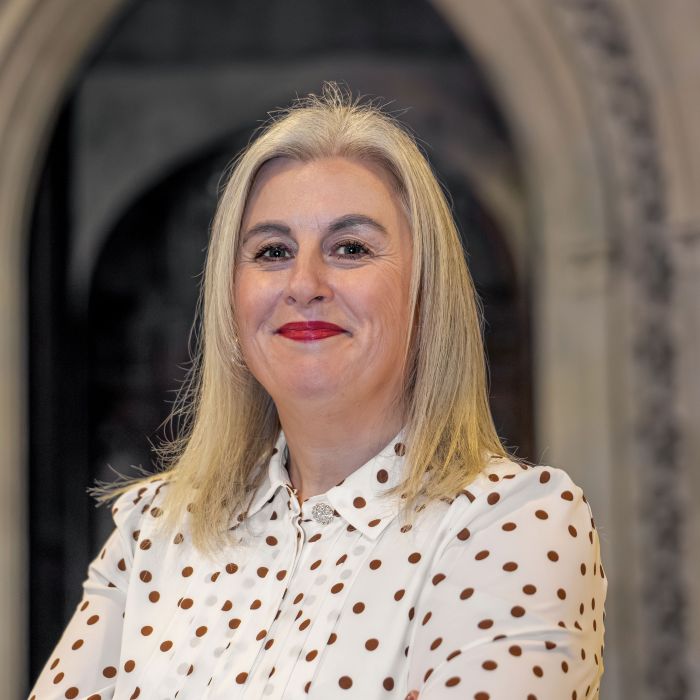
Welsh was raised on a council estate in Nottinghamshire by a postman father and a mother who worked in cafés before becoming a childminder. Growing up around “absolute poverty” shaped her politics early.
“We would get a knock on the door from someone down the road that my mom knew, who would say, ‘Have you got anything I can feed the kids for tea?’” Welsh struggled to explain the injustice of their circumstances: “These are people who would give you their last 50p, but they’re poor. How is it that these good people are poor?”
With both parents involved in Labour, Welsh joined the party at 16. She worked through sixth-form and university in elderly care, as well as doing stints in Next, Co-op, chicken and soft drinks factories. As an Oasis fan, she had a gig habit to fund. It took her years to be able to eat chicken again.
She had hoped to pursue sport, but that dream ended when she broke her leg badly while playing football at 17. Instead, she read history and politics at Leeds. From there, a US summer camp led to several years setting up projects for vulnerable children across the east coast. The stark inequalities she saw alarmed her.
Back in Britain, Welsh managed a “huge project” across Nottinghamshire for the New Labour government, supporting disadvantaged children and setting up Sure Start centres. In 2010, Coalition cuts came in: “Literally overnight, all these projects that I was running, and all this funding, was just ripped apart… It massively woke me up to the reality of what politics was all about.” She got a job for the local council leader, then MP Vernon Coaker, and was six months pregnant when he lost his seat.
Elected as the Labour MP for Sherwood Forest in 2024, Welsh became chair of the Maternity All-Party Parliamentary Group. A ‘harmed mother’ herself, she has now been appointed by government as the first-ever national maternity adviser.
Her new role, she says, does not supplant that of the maternity commissioner, which so many campaigners have called for.
“The national maternity adviser is something needed now, here in the present, but it should not be instead of a maternity commissioner. A maternity commissioner would sit up here, have a team around them, have regular data sent to them, so we don’t have another situation like Nottingham, Shrewsbury or Telford,” she explains, listing the areas recently subject to maternity inquiries.
“When data starts looking skew-whiff, not as it should be, the maternity commissioner goes to that hospital with their team. A bit like an Ofsted inspection, but in a supportive way: ‘What is going on?’ If there is something going on, they send people in straight away, no messing around. We’re not going to wait for more babies to die.”
What must go, she says, is “soft criteria” allowing NHS trusts to implement their own interpretations of recommended policies.
“You’ve only got to look at the bereavement care pathway: one will have a cupboard somewhere with some posters; others will have a really nice room; others will have a dedicated midwife. But all of them will report back to NHS England, ‘We deliver the bereavement care pathway’. Not good enough.”
Sometimes staff prioritise avoiding litigation risks, which stops them seeing patients as real people. After all, 2025 figures showed the NHS has reached the point where it spends more on maternity litigation than on running maternity services. At the same time, there is the need for more accountability. How would Welsh resolve those tensions?
“It’s hard,” she admits. But she is clear that the regulators – the Care Quality Commission, Nursing and Midwifery Council and General Medical Council – are not working.
“The CQC, the NMC, and the GMC are unfit for purpose,” the MP says. “Those three organisations need to go, and we need to establish an umbrella organisation that allows for when things go wrong, midwives, doctors, obstetricians to have a safe place to be able to say, ‘This is what went wrong, and why that happened’. Families have to have a place where they can say, ‘This went wrong. I want you to tell me what went wrong and why.’
“Does that lead to a ‘no-fault’ place? No, I don’t think it does, at this stage. To rush into that, when you have the attitudes of what I have described working in our maternity services, would be wrong.”
Families in Nottinghamshire, she points out, never received birth debriefs, which are offered as standard in London hospitals, for example. And yet many traumatised parents say they simply want to know what happened and hear the word ‘sorry’.
“Because you accept that sometimes things do go awfully wrong, but the minute people try to keep that away from you, or don’t give you your notes, or redact your notes…” she trails off.
“I passed out. I lost consciousness. There are no notes that exist that talk about the fact that I nearly dropped my baby on the floor and was unconscious for a period of time, and Richard thought I was dead. He actually thought I’d died on the table. There’s no notes anywhere. No one can tell me what happened. I have to frequently say to Richard, ‘It did happen, didn’t it?’”
She wants the right to a debrief introduced everywhere, as well as continuity of care, which would extend throughout the whole of pregnancy until at least two months after birth. “It’s not good enough that when you get home, they say, ‘You have to go to the health visitor now. We’re done with you. Sorry.’” The change sounds simple but would make a radical difference to maternal experiences.
Many campaigners say an inquiry without statutory powers is insufficient. What does the national maternity adviser think?
“I think there are questions that will still be left unanswered,” she replies. While she is confident that Amos and Ockenden will be thorough, “I also don’t think they’re going to solve everything.” Services will not improve without “big, bold policies”, the MP adds, so “we have to keep the door open” to a public inquiry.
“I get to celebrate Billy’s birthdays. I got to see Billy’s first day at school. I get to go and see his sports days, work permitting. I get to see him play guitar in a rock concert. I have spoken to hundreds and hundreds of families that have been denied that opportunity.
“Nobody makes me happier than my son. He is everything – absolutely everything – to me. And so, who am I to deny that mother or that father the answers that they need? I’m not ever going to be that person.”
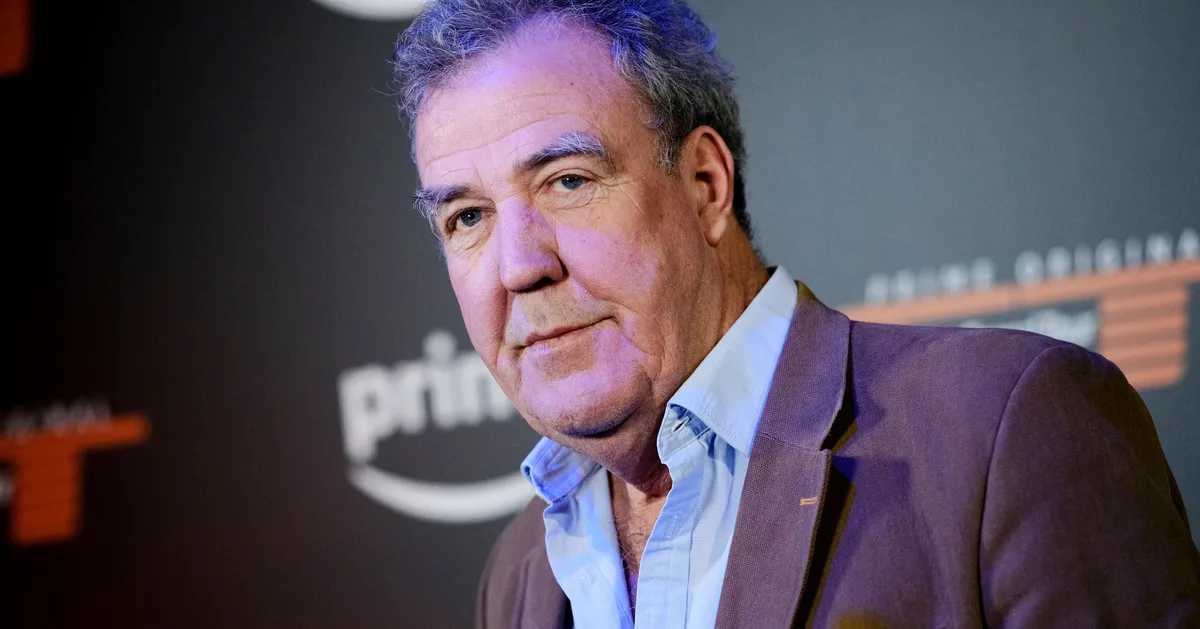
Jeremy Clarkson has revealed he has prostate cancer in an episode of his show, Clarkson’s Farm.
He broke the news on-screen to co-stars Kaleb Cooper and Charlie Ireland. “Where it is is of no concern of anybody. I’ve known since May,” he said, when Cooper asked where the cancer was.
The former Top Gear presenter added that he had undergone a biopsy after a medical check-up. “I disappeared off the other week and I had a biopsy, and it is cancer, and it’s aggressive, but it’s really early,” he said.
He added, “I promise I’ll be fine” and that he’d be out of action “for a little while”. And while Clarkson said on the show he’d hoped to have finished the busy harvest season before receiving treatment, it fell “slap bang in the middle”.
Later in the season, the ex-Grand Tour star said that “the prostate, 10% of it’s dead… the 10% where the cancer is”.
We also see footage of the 66-year-old from a hospital bed, where he says some of the treatment has gone “awry” and continues: “I’m going to be here for a little while. I don’t know what’s going to happen.
“What I wanted to say was if this is all successful, I’ll see you in season six, and if it isn’t, I won’t… Take care, everyone.”
Before the show’s new episodes were released on 16 June, Clarkson posted a video to his Instagram warning viewers that the new season would prove tough viewing.
“Ordinarily, we try to keep the show bucolic and charming and cheerful, but the final two episodes which drop in the middle of the night tonight are… they’re none of those things, really, they’re a difficult watch.
“They’re really, really difficult,” he continued.
In a previous interview with The Times, Clarkson said that he gets regular check-ups because he’d seen “too many friends go down with prostate cancer”.
“All it takes is a moment or two” to check your status, he added.
Clarkson’s Farm farmhand, Gerald Cooper, had previously been diagnosed – he became cancer-free in 2024.
Clarkson underwent a heart procedure that same year, writing for his column for the Sunday Times that “of the arteries feeding my heart with nourishing blood, one was completely blocked and the second of three was heading that way”.
Politics
Politics Home | Putting the right medicines in patients’ hands: how improved medicine switching can support self-care


In the second article in his series on community pharmacy, Nick Linton, UK Country Head at Opella, examines the tools and partnerships that can empower pharmacists to deliver high‑quality, prevention‑focused care.
56 million people across the UK visit a pharmacy as their first point of call for medical advice every year. These local healthcare hubs remain one of the NHS’s most trusted and accessible front doors,1 and the self-care support they deliver can improve outcomes and empower people to manage their own health.
In my previous article, I explored the role of health literacy in unlocking self-care. But awareness must be matched with access to appropriate medicines. Unless pharmacists have the tools they need at their disposal, including a wide range of safe and effective medicines, much of their impact will be wasted.
How can we expand access to self-care through medicine switches and by ensuring pharmacists are equipped to support patients to use these medicines safely and confidently?
Ensuring pharmacists have the right medicines to support self-care
The UK benefits from a globally respected medicine regulator in the MHRA. A critical part of its role is ensuring safe and effective general sales medicines can be accessed by patients as part of self-care, without the need for a prescription.
Switching medicines from prescription-only to pharmacy or general sales list status is one of the most effective ways to expand self-care. PAGB, the consumer healthcare association, has long championed this agenda, working with government and regulators to create a more agile, proportionate switching environment that keeps pace with patient need and clinical evidence.
At Opella, we’ve seen how the MHRA can provide this access first-hand.
Our allergy treatment, Allevia 120mg, was successfully switched directly from prescription-only to general sales list status. This breakthrough demonstrated that the UK’s regulatory framework can support innovative and responsible access to medicines.
The switch provided patients with tangible, real-world benefits.
Easier access to effective allergy treatments means people can manage symptoms earlier, reduce disruption to their daily lives, and avoid unnecessary GP appointments. Hay fever alone is estimated to account for millions of lost work days each year in the UK, with poorly controlled symptoms impacting productivity, sleep, and overall wellbeing.2
Improving access to appropriate medicines is not just an issue of convenience; it’s an issue of public health and economic impact.
Improving the switching process
But too often the regulatory process around switching can be slow and inconsistent, denying patients the benefits I describe. To go further, we must build on existing PAGB, industry and government collaboration to streamline switching pathways.
We can avoid unnecessary duplication of work through greater use of international evidence and alignment with initiatives such as the Access Consortium. This brings together regulators from across countries such as Canada, Australia and Singapore to promote collaboration.
Furthermore, we need a regulatory and policy environment that actively supports switching and self-care. This includes continued backing for MHRA capacity, as well as aligning with PAGB’s call for a more responsive reclassification framework. We can also provide certainty to industry through clearer regulatory timelines.
These steps would accelerate access to safe, well-understood medicines and ensure the UK remains a leader in self-care innovation.
Ensuring safe use as part of self-care
Expanding access to medicines must go hand in hand with ensuring self-care is delivered effectively. Pharmacists are well placed to guide patients in selecting appropriate treatments, recognising red flags, and ensuring medicines are used correctly.
Taking allergies as an example, greater availability of effective OTC options allows patients to act quickly at the onset of symptoms, rather than waiting for a GP appointment. With pharmacist support, patients can choose the right product, understand how to use it, and know when to seek further medical advice. This combination of access to medicines and professional guidance is what makes self-care both safe and effective.
The system-wide benefits are significant, including reduced pressure on primary care and improved quality of life for patients who can manage their symptoms proactively.
A shared agenda for self-care
Community pharmacies already embody the NHS’s vision for local, accessible points of care, which can be integrated seamlessly into everyday life.
At Opella, we share this vision and believe empowered pharmacies can drive self-care, provide people with the tools, knowledge, and medicines to thrive independently, and help prioritise putting people’s health in their hands.
By working alongside government, regulators, and representative organisations such as PAGB, we can accelerate the shift towards a system where switching enables better access, pharmacists enable safe use, and patients are empowered to act earlier.
- Community Pharmacy England (n.d.) Pharmacy: the heart of our community. Available at: https://cpe.org.uk/learn-more-about-community-pharmacy/. (Last access 6th March 2026).
- Open Access Government (2026. Workers lose 29 million days each year to hay fever. Available at: https://www.openaccessgovernment.org/workers-lose-29-million-days-year-hay-fever/26729/ (Last access 23 April 2026).
Politics
Politics Home Article | Bans alone won’t tackle online harm, Manchester experts tell ministers


Credit: Fly View Productions
New University of Manchester report makes a series of recommendations to tackle online misogyny and misinformation and strengthen young people’s digital literacy
The rapidly evolving digital landscape is a pressing topic for policymakers – from the threats posed by online misogyny to the growing tide of conspiracy theories and misinformation.
Now, a new report produced by Policy@Manchester, the University of Manchester’s policy engagement unit, has highlighted the plethora of challenges that today’s decision makers need to address.
The report, Digital Truths, features expert analysis and research-led recommendations from University of Manchester experts. It puts six specific areas under the spotlight, including the challenge of protecting young people from harm while empowering them with the skills to navigate the digital world safely and the need to strengthen our approaches to countering misogyny and male supremacism.
Writing in the report’s foreword, Professor Cecilia Wong, Professor of Spatial Planning at the University of Manchester and Policy@Manchester’s Co-Director, says: “As policymakers review the merits of minimum age use for social media access and the threats posed by conspiracy theories and misinformation, it is especially important to balance viewpoints and engage with the positive aspects of moderation, online support and critical awareness.
“Policymakers and regulators face multiple challenges and it is crucial that rigorous evidence is up to date and available, whether they are considering problematic, unwanted content, tackling forms of extremism or assessing the impacts of social media use for children and young people.”
With almost one in five young people in the UK experiencing mental health difficulties and increased pressure on stretched support services, the report calls for the development of “positive virtual ecosystems” – safe online platforms for support and learning that work in tandem with human relationships and professional practice.
In the report’s first article, Professor Terry Hanley outlines three specific recommendations for policymakers, all aimed at embedding media literacy in schools and developing regulatory standards that distinguish trusted services from unregulated or harmful content.
He stresses the need for the Online Safety Act to differentiate between research-informed, moderated platforms (such as Kooth, the free and completely anonymous digital mental health and wellbeing platform, and other NHS-backed resources) and unregulated apps and forums that spread misinformation.
Rather than a blanket ban on smartphones, he believes schools should equip young people with the skills to evaluate online content, recognise reliable resources and understand the mental health and wellbeing options open to them. He also points out that investment should focus on connecting online tools with local mental health provision, thereby ensuring a smooth transition between digital and in-person care.
Meanwhile, Dr Ashley Matthias warns that efforts to tackle misogyny and male supremacism have previously focused on top-down approaches, often shaped by government initiatives for preventing and countering extremism.
She argues that far more could be done to address “the amplification of polluted information and disallowed content”. Her recommendations include expanding media literacy programmes, holding platforms accountable to national policies and their own terms of service, prioritising ways to enforce transparency around algorithm design and use and rejecting the view that social media platforms are “a digital public square” when in fact they are private businesses.
Responding to the report, a Department for Education spokesperson told PoliticsHome that the government is committed to tackling violence against women and girls and to supporting teachers to recognise signs of incel ideologies.
“Misogynistic views are not innate, they are learned,” they said. “We are committed to using every possible tool to achieve our mission of halving violence against women and girls.
“Our updated RSHE guidance is designed to make sure all young people can identify positive role models, and we are providing resources to support teachers to recognise the signs of incel ideologies, including through the Educate Against Hate programme.
“Alongside this, we are taking action to ensure that children have a healthy relationship with phones and social media – including ensuring every child learns to identify mis and disinformation as part of the revitalised curriculum, making our mobile phones in schools guidance statutory and launching a call for evidence on children’s screen use at home and in school.”
Meanwhile Jess Asato, Labour MP for Lowestoft, spoke of her decision to launch legal proceedings against Elon Musk’s xAI company.
“Misogyny in politics is nothing new, but AI now supercharges it, allowing users to broadcast abuse and create degrading, non-consensual sexual images of women from simple prompts,” she said. “Combined with the immediacy of social media, this is creating a silencing effect on women and girls.
“Tech companies’ inadequate responses have left thousands of women feeling vulnerable and violated. That’s why I have launched legal proceedings against xAI, so that women can reclaim their sense of safety online. It’s our body, so it should be our choice what is done to it.”
“Silicon Valley’s ‘move fast and break things’ mantra wouldn’t stand in the offline world. Just as cars require seatbelts and airbags, digital technology must also be regulated to be safe by design.”
In a third article, Dr Allysa Czerwinsky points out that misogynist and male supremacist content is of particular concern in today’s digital world. Suggested pathways for policymakers include tailoring campaigns to the concerns highlighted by manosphere forum users and endorsing partnerships with support-focused spaces to encourage human connections and make help accessible.
“These are interventions that can better shape counter-speech efforts at both local and national levels,” she writes. “Additionally, opportunities for peer-to-peer mentoring for boys and men at risk could be implemented as an avenue for support in Prevent strategies, as well as part of local authority approaches to addressing violence against women and girls.”
Professor Peter Knight looks at the problem of conspiracy theories and counter-disinformation in the UK, recommending bespoke strategies to tackle this, a deeper understanding of conspiracism’s social functions and reforms to the counter-disinformation ecosystem.
“Conspiracy theories in the UK are not merely digital misinformation,” he writes. “They’re expressions of deeper social, political and historical dynamics.
“Effective counter-disinformation policy must move beyond reactive moderation and embrace a holistic, context-sensitive approach. By reforming regulatory frameworks, supporting grassroots counter-discourse and fostering trust in institutions, the UK can build resilience against conspiracist narratives and strengthen democratic communication.”
The final two articles focus on the importance of digital and information literacy in schools. Dr Drew Whitworth advises that today’s learners must develop a broader awareness of the impact of the online world on their work, relationships, mental and physical health and knowledge of the world in general.
Dr Margarita Panayiotou, Dr Jo Hickman-Dunne and Jade Davies are concerned that today’s school curriculum presents “a relatively narrow and deficit-based approach” of social media and young people’s lives. While the government’s recent Curriculum and Assessment Review calls for greater focus on media and digital literacy and the functions and limitations of AI, it does not mention social media – “despite this playing a central role in young people’s everyday digital lives and forming a key part of adult concerns.”
With this in mind, the authors recommend that the Department for Education expand the concepts of digital and media literacy outlined in the Curriculum and Assessment Review, launch a consultation about the content and delivery of media literacy lessons, and provide specific resources for teachers to support and encourage young people to have open and non-judgemental conversations about social media.
Caroline Voaden, the Liberal Democrats’ Schools Spokesperson, welcomed the report, particularly its emphasis on the importance of integrating digital literacy into children’s learning.
“This report lays bare the toxic cocktail of harmful content and misinformation that is so prevalent in the online spaces our young people use,” she said. “For them to be truly safe online, they need to be able to understand how to navigate and decipher this world, which is why embedding digital literacy in the curriculum from a young age is so crucial.
“However, content is only half the battle. We also need to free our children and young people from the grip of big tech’s addictive-by-design platforms. This regulation is vital, but it must come hand-in-hand with a broader societal shift in how we safeguard our children’s digital lives.”
Matt Bishop, Chair of the Political and Media Literacy All-Party Parliamentary Group, believes that more needs to be done to equip young people with stronger media and digital literacy skills.
“Policy should strengthen media and digital literacy in education, helping young people understand how online content affects their learning, relationships and wellbeing, not just their technical IT skills,” he said.
“This should be supported by regulation that distinguishes trusted services from harmful or unregulated content, alongside platform accountability and alternatives to algorithm-driven systems. Efforts to address online misogyny and disinformation should move beyond individual-focused approaches and include community dynamics, support networks and improved partnerships with help-focused spaces for young people.”
Read Digital Truths here.


Georgia Republicans finally have their Senate nominee. Now comes the hard part.
A bruised GOP Rep. Mike Collins (R-Ga.) will go head to head against Democratic incumbent Sen. Jon Ossoff, a prolific fundraiser who many Republicans worry will be difficult to beat this November.
While Republicans spent months turning their fire on each other, Ossoff has steadily built his campaign infrastructure — and refined his general election message.
“Anyone who’s being honest knows it’s going to be a very tough race to unseat Jon Ossoff. All the polling shows Georgia as leaning Democrat, not toss-up,” Jason Shepherd, the former Cobb County Republican chair, told POLITICO before the Tuesday result. He had supported Collins’ opponent, former football coach Derek Dooley.
Heading into the midterms, Ossoff was widely considered one of the most vulnerable Democratic candidates in a state Trump handily won in 2024. But since then, the senator has stockpiled mountains of cash, sailed through his primary unchallenged, and has positioned himself as someone who stays above the fray of partisan cable news hits.
“Ossoff is tricky, he’s good at raising money, he does not step in it,” said one senior RNC official before the runoff, granted anonymity to speak candidly about the midterm landscape.
The race is expected to be one of the most closely watched Senate contests of the cycle. Holding onto Ossoff’s seat is key to Democrats’ narrow path to winning back control of the Senate, while Republicans see flipping it as one of their best opportunities to expand their majority. The state has also become one of the country’s premier battlegrounds, serving as an early test of the forces — and people — that could shape 2028.
Several Republican strategists and operatives say that some of Collins’ hardline policy stances, plus an ongoing House ethics investigation against him, may make him vulnerable to Democrats’ attacks.
They also worry Collins has a lot of catching up to do in the money race.
Collins raised$4.9 million and had just $1.2 million in cash on hand as of May 27, according to fundraising reports. By comparison, Ossoff has raised$60 million and had $32 million left in the bank at the end of April.
“It’s a real severe uphill battle,” said one Republican operative involved in races up and down the ballot in Georgia, granted anonymity to speak candidly about the state’s marquee race.
Collins will require significant help from outside groups, the operative said, but it’s not clear how much will come: “What is the willingness to go all in for Mike Collins? Do they think he can win? Do they think they can get this done? What are those resources going to look like? Because he’s not going to fundraise — I don’t think — very well.”
Collins’ allies argue the bitter primary has prepared him for a brutal general election.
“Jon Ossoff has been, always will be, the most vulnerable Democrat up for reelection. Nobody is more battle tested than Mike Collins after this primary,” said a person close to Collins’ campaign.
Some Democrats suggest they got their preferred candidate in Collins — rather than Dooley, who had the backing of popular Republican Gov. Brian Kemp, which could have helped broaden his appeal across the state.
“Dooley is much less of a political extremist than Collins is and Collins is on the record voting directly for the policies that have devastated Georgians,” said one person aligned with a Democratic PAC involved in Senate elections, granted anonymity to speak candidly. “As for an [opposition] research perspective and in our effort to air out his dirty laundry we have a lot more ammunition with Collins.”
Even President Donald Trump, who made a last-minute endorsement for Collins ahead of Tuesday’s election, had grilled him about his strict stance on abortion, pressing him on how he could win in a general election in one of the nation’s premier swing states. Abortion has become a political vulnerability for Republicans in the wake of the Supreme Court’s decision to overturn Roe v. Wade.
Collins already appeared to soften his stance in the final stretch of the runoff. During a 2022 debate for his current House seat, Collins said, “I have always stated and I’ve always been and always will be 100 percent pro-life, period. No exceptions.” Recently on the campaign trail, he said he supports Georgia’s six-week abortion ban, which includes exceptions in cases of rape, incest or to protect the life of the mother.
Ossoff was quick to hammer Collins after his victory, tying him to Trump and assailing him as a “notorious bigot.”
“Collins, who is only a congressman because his daddy was a congressman, voted to double health insurance premiums for more than a million Georgians, for the Iran War, and for the Trump tariffs,” Ossoff said in a statement.
But Democrats know Collins still poses a real threat, even with the wind at their backs. Ossoff won by a razor-thin margin in 2020 over former Republican Sen. David Perdue — a contest that went to a runoff — and Georgia Sen. Raphael Warnock (D) won by less than 3 points over Trump-endorsed former football star Herschel Walker in 2022.
“Democrats understand that if a Herschel Walker can get to 49 percent, you know, this is still going to be a battle, and this is still going to be a fight ahead,” said Andrew Heaton, a Democratic strategist and former campaign aide for Warnock.
National Democrats say they are planning to hit Collins hard. Senate Majority PAC, the main Senate Democratic super PAC, has committed $20 million to supporting the incumbent in the general.
National Republican groups have largely been waiting in the wings to get involved in Georgia, held back by Trump’s long silence on the Senate race and a messy, drawn-out primary to determine their nominee. Now, with Collins knighted as their standard bearer to lead the ticket, groups like the National Republican Senatorial Committee and the Senate Leadership Fund will face pressure to start spending — fast.
Those two leading Republican groups have already raised $1 million in a “first-of-its-kind joint fundraising operation” put aside for the Republican nominee in Georgia, POLITICO first reported. That’s in addition to the$44 million SLF already committed to Georgia’s Senate race. Collins could also receive a boost from sharing a ticket with billionaire Rick Jackson, who won the GOP gubernatorial primary Tuesday — and has already signaled plans to invest heavily across the state.
“We will have a large field team and field operation. Collins will benefit greatly,” one person familiar with Jackson’s campaign said Tuesday night, granted anonymity to discuss not-yet-finalized plans.
A second Georgia-based Republican operative said “it’s imperative” that resources start flowing to the Senate race. “The general election campaign starts right now, we don’t have a moment to lose,” the operative said just minutes after the primary was called for Collins.
Collins used his victory speech on Tuesday night to preview his attacks on Ossoff’s voting record, tying the Democrat to liberal policies unpopular with many Georgia Republicans.
“This choice in this race is crystal clear: You got a businessman who has delivered results in both the private sector and in Washington … or an out-of-touch, far left liberal who has raised your taxes, made your life more expensive, less safe, and left Georgia worse off,” he said.
How Collins handles the early days of the general election will be key to convincing the skeptics, said one Georgia-based operative unaffiliated with the Senate race, granted anonymity to discuss the landscape.
“A lot of people don’t think he’s gonna have a chance, and that may end up working to his advantage,” the operative said. “I think the race is gonna get very tight once we get into the summer and early fall, but I think that there’s going to be a lot of eyeballs to see how he performs out of the gate.”
Buoyed by the late-stage Trump endorsement, Collins emerged from the primary as the candidate carrying the MAGA mantle. He earned support from several prominent House Republicans, in addition to the powerful Club for Growth and Turning Point Action. His victory on Tuesday night underscored his strength in Georgia’s rural, heavily Republican regions.
But to compete in November, he’ll need to go beyond the MAGA base and win over Dooley’s coalition, which was built on the support of more moderate voters in the metro Atlanta area. Collins said in his victory speech Tuesday that he had spoken to both Kemp and Dooley.
“It’s an uphill battle against Senator Ossoff, but it would have been an uphill fight for anyone,” said Buzz Brockway, a GOP strategist and former state representative in Georgia. “Now Collins needs to unite the GOP behind him, which I think he can do.”
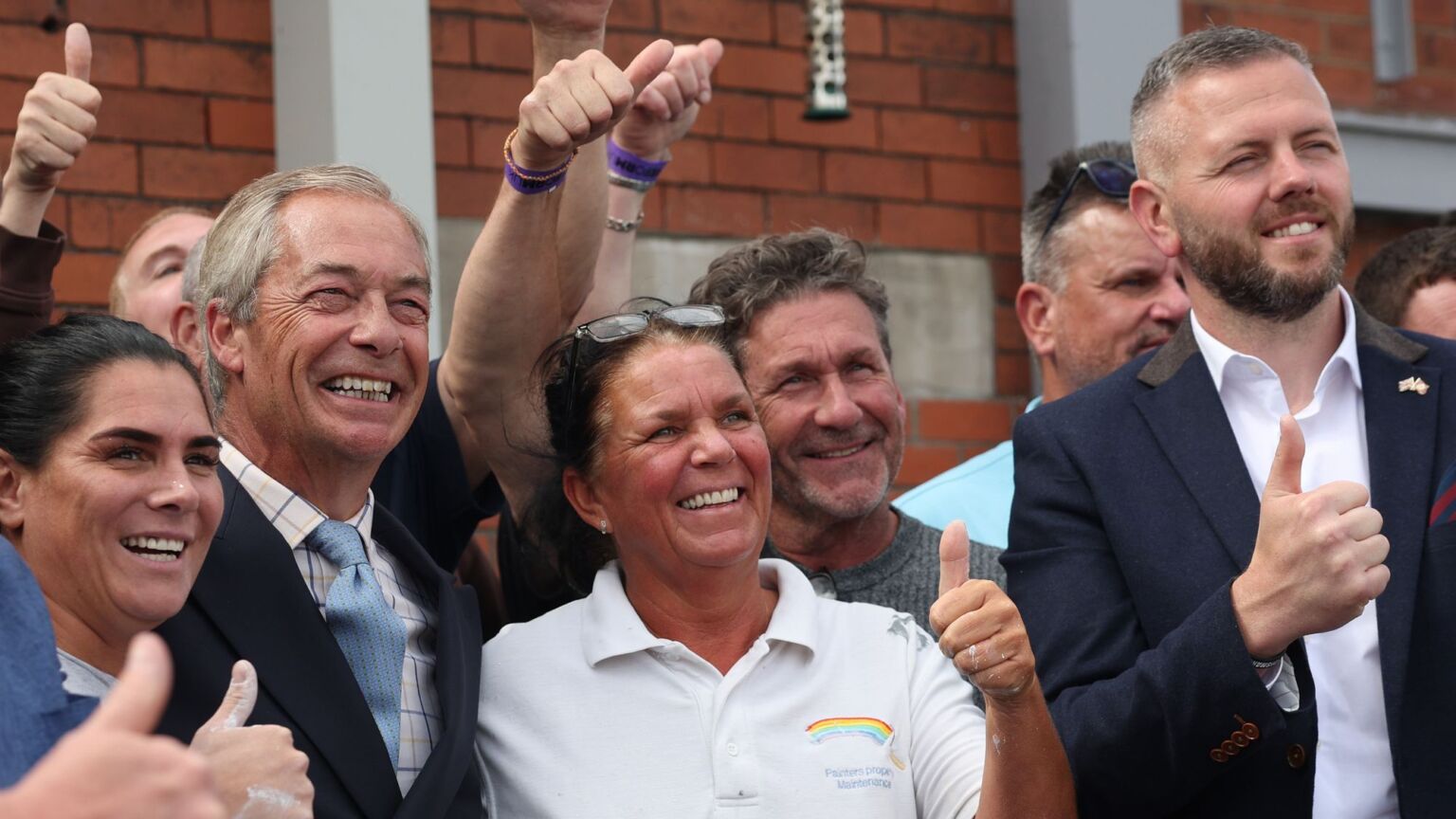
In The Road to Wigan Pier, George Orwell fixed Wigan in the national imagination as a byword for industrial hardship and neglect of the working classes. Today, nearly 90 years on, the ‘lunar landscape of slag-heaps’, the ‘smoke, shale, ice, mud, ashes and foul water’ have thankfully disappeared. But those feelings of abandonment and dissatisfaction remain strong in this north-western town.
In just a few days, on 18 June, voters in and around the post-industrial town of Wigan, Greater Manchester, will be responsible for deciding whether or not the UK might get a new prime minister. But the mood on the doorstep feels far more local than national.
Last Saturday, I took the train from London to Wigan to canvas on behalf of Reform UK. Campaign HQ – a unit on an unassuming business park – was already overflowing with eager activists by 10am, many snapping pictures in front of the very on-brand turquoise double-decker campaign bus, or waiting to catch a glimpse of the man of the hour, Rob Kenyon. Reform’s parliamentary candidate was running late on account of him coaching his under-7s football team.
You’d struggle to find a better illustration of the contrast between Labour and Reform than in the profiles of their own candidates. Kenyon is an ex-Army reservist and self-employed plumber who was born and grew up in the local area. In the 2024 General Election, he ran for Reform for the first time and came in second with 32 per cent of the vote.
The same can’t be said for Labour’s Andy Burnham, a career politician who would have stood in any constituency going if he thought it would get him one step closer to Westminster and, by extension, to challenging Keir Starmer’s premiership.
In terms of numbers, this by-election really does boil down to a two-horse race. Polls repeatedly show Reform just a few points behind Labour, with the Conservatives, Greens and Liberal Democrats barely getting a look-in and all polling at dismal single figures. But former Reform MP Rupert Lowe’s fledgling party, Restore Britain, has thrown a spanner in the works by deciding to stand its own candidate. That’s Rebecca Shepherd, a local woman who runs a business providing ‘horse whispering and equine-assisted therapy’. It’s difficult to say much else about her or her positions, because Restore HQ rarely lets her out for interviews.
Despite this, Restore has made enough gains in Makerfield to split the right-wing vote and give Burnham a clear advantage. Setting off for the first canvassing session of the day, we were greeted by the sight of a massive Restore flag attached to a fence along the main road. It felt like a bad omen.
There is something surreal about seeing real-world manifestations of what many had assumed to be a purely online phenomenon. Of course, people in Wigan don’t really know who the likes of Connor Tomlinson, Harrison Pitt or Charlie Downes are. Nor are they aware of their hokey brand of convert Catholicism, or understand their various wacky policies – like banning usury, abortion and contraception or tying nationality to Christian faith. I’m not convinced that many of them could even pick Rebecca Shepherd out in a crowd. But voters in Makerfield certainly know who Rupert Lowe is, and are fed a steady supply of Restore content via their Facebook timelines.
One of the first voters we spoke to said that the choice for her was between Reform and Restore, but that she was leaning towards Restore because she didn’t trust Reform with healthcare. She told us she was concerned that a Reform government would privatise the NHS and make seeing a GP unaffordable for people like her. (Actually, Reform has repeatedly pledged to keep the NHS free at the point of use.)
Speaking to a man in a bungalow with an immaculately kept garden, we learnt that he had already sent off his postal vote for Reform. And his wife had voted Restore. Some streets were an even split of teal and navy blue Correx boards and window posters.
I later learnt that the area we were canvassing on Saturday was unusually Restore-heavy. It’s no coincidence, then, that these areas are also some of the most deprived in Wigan. In some of the labyrinthine estates we visited, as many as half of over-16s were out of work. Large percentages, too, were in social housing. As a constituency, Makerfield is overwhelmingly white and working class – around 95 per cent are white British, with higher-than-average shares of people working in manual, industrial and skilled-trade jobs. In the 2016 referendum, 66 per cent voted to leave the EU, comfortably above the UK-wide Leave vote of 52 per cent.
Unsurprisingly, Farage as a figure generally plays well here, and plenty of residents were enthusiastically pro-Reform, too. One woman told us that she, her whole extended family, and neighbours were planning to vote for Reform. We visited one cul-de-sac where every household was supporting Reform. At one point, a man slowed down as he passed our team in his car to ask who we were canvassing for. When we said Reform, he stopped to wish us luck and to repeat some choice words about Labour and where, exactly, Burnham could stick it.
The other major battle was convincing people to vote at all. There was a great sense of apathy among many and a general sense that no one in Westminster could be trusted. One woman complained that she particularly disliked Andy Burnham for using the Makerfield constituency as a stepping stone on his way to No10 – one of the attack lines that Reform has been pushing hard, and one that really seems to have cut through. She was much warmer towards Kenyon, who she felt was a local lad looking to give voters here a voice in Westminster.
Her priorities were typical – immigration, the NHS and the cost-of-living crisis. She told us she knew many families who were unable to feed their children properly. Although she was retired and relatively comfortable herself, she was worried about her family and neighbours not being able to get by.
Another young couple we spoke to said that not only were they refusing to vote, but that they were also planning on leaving the UK entirely. They were, predictably, disappointed in the state of the NHS, especially with mental-health services. Their other priority was immigration, but they believed that things were now basically beyond repair. They, like so many others here, did not feel they could trust anyone in politics – although they did admit that if they were to vote, it would probably be for Reform. In any case, they saw the situation in the UK as being so dire that their only option was to emigrate as soon as possible.
That feeling of betrayal and being left behind by the mainstream parties is exactly what both Reform and Restore are looking to tap into. After having been virtually ignored for years, these voters now have two parties that are actively vying for their attention.
Restore has very clearly been pouring everything it has into this campaign. Rupert Lowe (or rather, the person writing his social-media posts) claimed on Facebook to have upwards of 1,000 activists out in the constituency last Saturday, though the real numbers on the ground were less clear. Plenty, at least, were bussed up from London. We ran into a few teams, who looked to be targeting mostly Reform-voting households – multiple people told me that they had been tailing the Reform teams because they were unfamiliar with the area.
For what it’s worth, Labour seemed to have a few activists out and campaigning, though they were notably thinner on the ground in the less affluent areas. I have it on good authority that there were at least five Tory canvassers in Wigan over the weekend – although I certainly didn’t see any myself.
The vote on Thursday will be crucial for two reasons. Nationally, it will tell us whether we might be in for a new prime minister – one that is likely to be even worse than Keir Starmer. But on a local level, it will decide whether this constituency will finally be given a voice.
Regardless of the outcome, Reform has proven it has the momentum to take the fight to Labour in what was once a deep red heartland – no small feat in a constituency that has been voting Labour since its creation over four decades ago. We got a taste of this in the local elections last month, where traditional Labour voters across the former Red Wall voted en masse for Reform. In the Makerfield constituency, Reform won every local council seat up for election.
That alone should terrify Labour. If somewhere like Wigan can no longer be taken for granted, then nowhere in the Red Wall is safe.
Lauren Smith is a writer based in London.
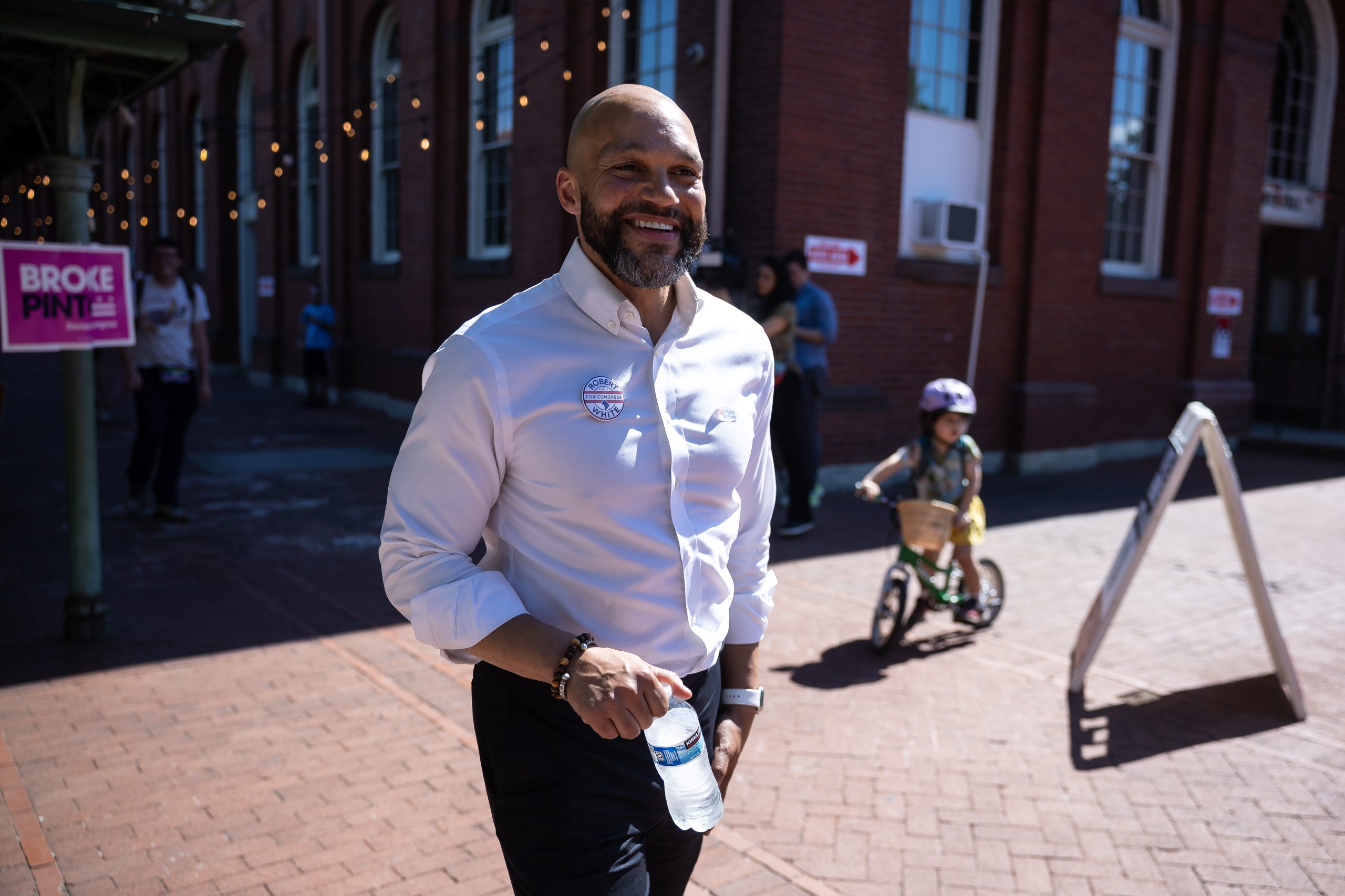

Robert White won the Washington, D.C., delegate Democratic primary, setting him up to represent the United States capital in Congress as its first new delegate in more than 35 years.
White’s victory begins a new chapter for Washington, which has been represented in the House by Democratic Del. Eleanor Holmes Norton since 1991.
He faces no major general election challengers in the deep-blue district and will ascend to a post that gives him a voice, but not a vote, to champion a city that has been roiled by President Donald Trump’s attempts to exert pressure in his second term.
White’s ascension caps off a long career for Holmes Norton — for whom he used to work. Holmes Norton was known as a behind-the-scenes operator in Congress who helped restructure Washington’s finances in the 1990s and brought major federal projects and jobs to the district. Holmes Norton’s signature project was D.C. statehood, elevating it from a Washingtonian pipe dream to a mainstream Democratic issue culminating in House passage of statehood bills in 2020 and 2021.
But Holmes Norton’s visibility and power waned in recent years, and questions about the 89-year-old’s acuity and ability to serve drew a steady stream of headlines in 2025. In October, D.C. police said that Holmes Norton was scammed out of more than $4,000, and an initial police report reportedly described her as having “early stages of dementia.”
A fifth-generation Washingtonian, White has served as an at-large member of the D.C. Council since 2016. He will be Washington’s third delegate since the position was reestablished in 1970.
White ran against primary challenger and fellow Council member Brooke Pinto on a platform focused on increasing affordability and public safety while defending the district’s autonomy — potentially setting him on a collision course with the president.
In an interview with POLITICO last week, White cast Trump’s crime crackdown in the city, including federalizing the Metropolitan Police Department and deployment of the National Guard and federal immigration agents, as “lawlessness” and “the opposite of public safety.” He also pledged to reintroduce a bill pushed for years by Holmes Norton that would grant command over the D.C. National Guard to the District’s mayor rather than the president.
The contest at times grew ugly. In April, Pinto’s campaign posted to her website a 67-page opposition research dossier about White, including information about his family and finances. White demanded Pinto withdrawal from the race, and Pinto’s campaign replaced the file with a new version that omitted information about White’s family, to whom Pinto apologized.

Arnautovic on target as Austria beat spirited Jordan

KUD | Financial services | July 2025 | B.com 6th sem Question paper
Road casualties across South Lanarkshire have decreased


-

 Business3 days ago
No Jackpot Winner as $257 Million Prize Rolls Over to $269 Million Monday Draw
-

 Crypto World6 days ago
Oppenheimer backs SpaceX as $70 billion retail frenzy builds
-

 Fashion5 days ago
Weekend Open Thread: Tuckernuck – Corporette.com
-

 Crypto World6 days ago
Markets Rally as SpaceX IPO Looms Amid Iran Tensions and Inflation Surge
-
 Crypto World2 days ago
Zimbabwe Requires Crypto Businesses to Register Annually Under New FIU Regulations
-

 Tech4 days ago
NanoClaw integrates JFrog registries to secure AI agent downloads
-

 Tech5 days ago
This Week In Security: Microsoft On Microsoft, Register Your Domains, Linux On ARM, And FreeBSD Joins The File Cache Club
-

 Crypto World4 days ago
Bitget enters Argentina’s regulated crypto market through PSAV registration
-
 Tech6 days ago
Dutton Ranch star claims they ‘didn’t see any disruption’ on set following Chad Feehan’s exit from Yellowstone spinoff fueled by Taylor Sheridan clash rumors
-

 NewsBeat5 days ago
El Nino has formed in the Pacific and could set records, forecasters say
-

 Tech7 days ago
‘This is Seattle’s position on AI’: City Council votes unanimously to pause big new data centers
-

 Politics6 days ago
Politics Home | Healey Resignation Is “Colossal Failure Of Government”, Says Former Labour Defence Secretary
-
 Entertainment6 days ago
Donnie Wahlberg & More Heat Up Las Vegas at Circa’s Barry’s Downtown Prime
-
 Tech6 days ago
Opendoor Ends India Operations, Fueling a Bigger Conversation About AI and Outsourcing
-

 Sports6 days ago
First Time Since 1971: Australia Register Historic Low In ODI Cricket
-

 Politics6 days ago
Belfast burns, while Met chief points finger at Iran and Russia
-

 Business6 days ago
AT&T: Verizon's 27% Outperformance Sets Up A Solid Entry Point
-

 NewsBeat5 days ago
FBI searches office of Ohio voter registration group
-
 Tech5 days ago
Anthropic is spending $150M to embed 1,000 AI fellows inside nonprofits. No degree required.
-

 Politics6 days ago
Modi thanks Trump for wishes as US attacks Indian seafarers
You must be logged in to post a comment Login