Connect with us
DAPA Banner
DAPA Coin
DAPA
COIN PAYMENT ASSET
PRIVACY · BLOCKDAG · HOMOMORPHIC ENCRYPTION · RUST
ElGamal Encrypted MINE DAPA
🚫 GENESIS SOLD OUT
DAPAPAY COMING

Business

Who is Elon Musk and what is his net worth?

Published

on

Who is Elon Musk and what is his net worth?

The boss of X, Tesla and SpaceX is the world’s richest person and has used his platform to make his views known on a vast array of topics.

Continue Reading
Click to comment

You must be logged in to post a comment Login

Leave a Reply

Business

Trump’s ‘big beautiful bill’ has ‘double taxation’ trap, lawyers say

Published

on

Trump's 'big beautiful bill' has 'double taxation' trap, lawyers say

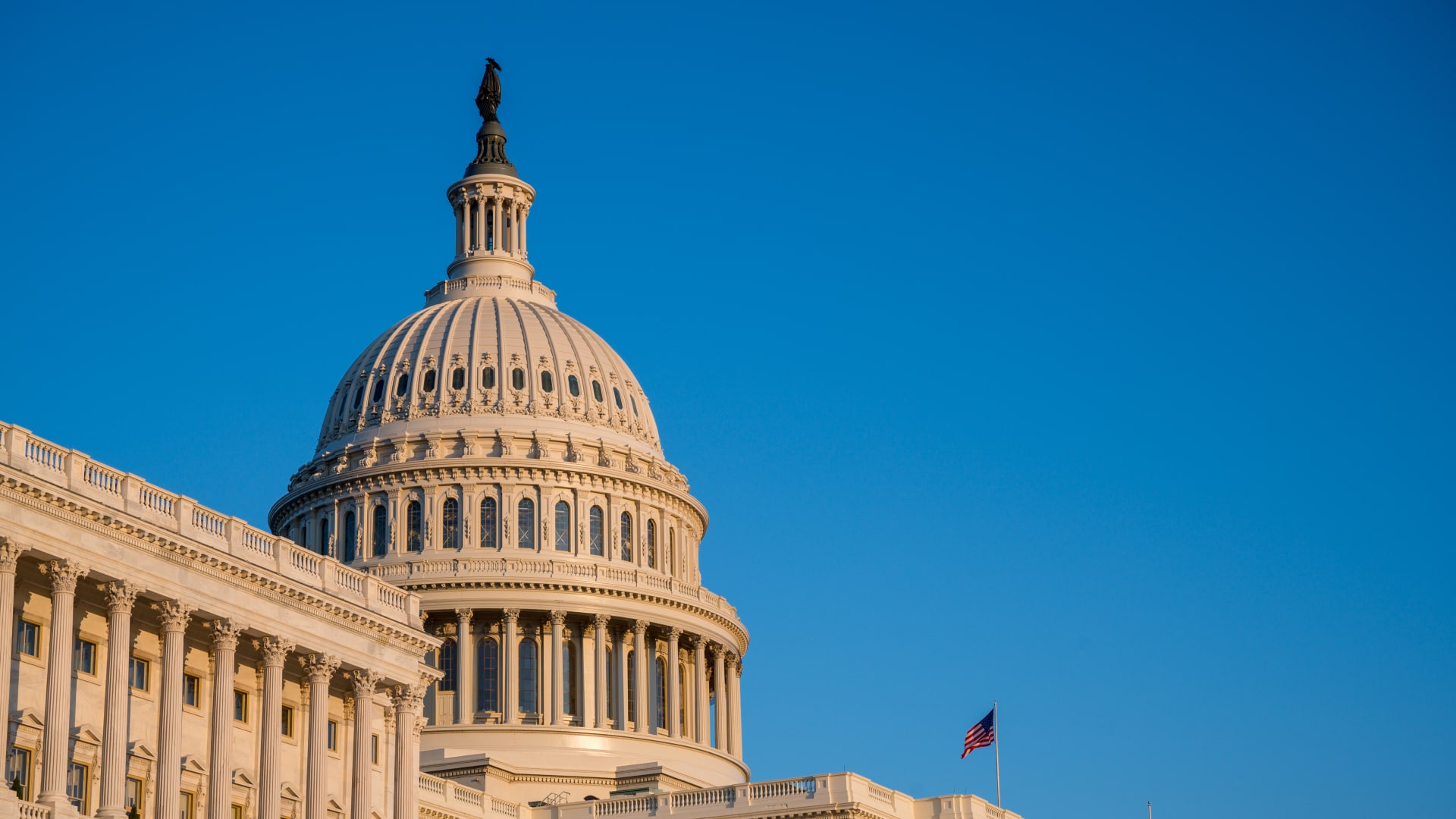
Late evening view of US Capitol building in Washington DC, USA

Richard Sharrocks | Moment | Getty Images

A version of this article first appeared in CNBC’s Inside Wealth newsletter with Robert Frank, a weekly guide to the high-net-worth investor and consumer. Sign up to receive future editions, straight to your inbox.

Advertisement

The “one big beautiful bill” came with many tax benefits for top earners, despite limiting how much they can deduct. However, lawyers for the wealthy said they have discovered a surprise buried in the footnotes of a tax law guide released last week by Congress’ policy staff that could amount to double taxation.

The deduction cap is imposed on trusts and estates, the lawyers said, which was unexpected. Even if a trust gave all its income to its beneficiaries, it would have to pay taxes on a portion of that income, according to the lawyers’ interpretation of the document.

While the consequences are steeper for trusts and estates of the ultra-wealthy, trusts with as little as $16,000 in income would also be subject to additional taxes, the lawyers said.

“There is potentially an element of double taxation,” said Dan Griffith, director of wealth strategy at Huntington Bank. “This is something that is going to affect somebody with a $400,000 special-needs trust. It’s not just going to be something that $100 million dynasty trusts suffer with.”

Advertisement

Griffith said he is especially concerned about trusts that are obligated to distribute all their income. Trusts will either have to sell assets to pay the taxes, sacrificing future investment returns, or reduce their distributions to beneficiaries, he said.

This provision creates a “mathematical nightmare” for tax lawyers and financial advisors, according to Justin Miller, national director of wealth planning at Evercore Wealth Management. Miller gave the example of a wealthy couple wishing to leave their estate to charity.

“If I have to pay income taxes, that means I’m giving less money to charity because I’m giving money to the IRS. That means I now have to adjust my deduction even more because less money is going to charity,” he said. “Did Congress really intend to create an algebraic formula?”

Get Inside Wealth directly to your inbox

Historically, trusts and estates have been able to deduct income given to beneficiaries, which is then taxed on the individual level. This distribution deduction is designed to make sure income is only taxed once.

Advertisement

However, the new deduction limitation on top-earning individuals now applies to trusts and estates, according to a footnote in the Joint Committee on Taxation’s recent tax explainer, better known as the Bluebook. The JCT is nonpartisan and serves to explain legislation.

The One Big Beautiful Bill Act’s limit on itemized deductions means that taxpayers in the top bracket only get a deduction benefit of 35 cents for every dollar, rather than 37 cents. It applies to charitable deductions, and experts say it has already influenced how top earners give.

While the Bluebook is an interpretation of the OBBBA rather than law in and of itself, this provision is causing concern in the financial advisory community, according to lawyer Robert Keebler. For instance, he frequently sets up trusts for clients on their second marriages that will provide their surviving spouse with income but leave the remainder for children from the first marriage. 

Consider a trust that distributes all $370,000 of its net income to a widow, he said. Applying the deduction limit to trusts means that the trust can only deduct $350,000 from its distributable net income and $20,000 would be subject to taxes, even though the widow is taxed on the entire $370,000, according to Keebler. To pay the tax, the trust either has to dip into its corpus, reducing the children’s future benefit, or get permission to give less to the spouse, which can require going to court.

Advertisement

This provision applies to this tax year, according to Keebler.

The double taxation issue could be resolved by an amendment by Congress, or, more likely, guidance from the Department of the Treasury. Keebler is planning with the anticipation that it will stand.

“We hope for the best but plan for the worst,” he said.

The Department of the Treasury did not answer CNBC’s questions by press time.

Advertisement

Miller said it is “reasonable to hope” that the Treasury Department will issue guidance by the end of this year. However, the devil will be in the details for which deductions the department decides to limit, he said.

For instance, the department might allow trusts to take unlimited deductions on distributing income to beneficiaries such as family members, which would resolve the biggest concern for financial advisors, Miller said. The footnote in the Bluebook mentions this deduction.

But Miller noted that the Bluebook’s footnote does not mention charitable deductions for trusts and estates. He told CNBC that he thought the omission was intentional and that it is possible the Treasury will keep the deduction limit on charitable giving for trusts and estates.

A person familiar with the JCT’s procedures told CNBC that staff had interpreted from the OBBBA that the charitable deduction would be treated differently from other deductions. The person spoke on the condition of anonymity because they weren’t authorized to speak publicly on the matter.

Advertisement

With six months until the end of the year, what advisors need most is clarity, Miller said.

“We just need to know the rules,” he added. “At the end of the day, advisors just want to do the correct thing. Right now, we don’t know what that is.”

Choose CNBC as your preferred source on Google and never miss a moment from the most trusted name in business news.
Continue Reading

Business

Jefferies initiates coverage on Poonawalla Fincorp with Buy rating. Why are analysts bullish?

Published

on

Jefferies initiates coverage on Poonawalla Fincorp with Buy rating. Why are analysts bullish?
International brokerage firm Jefferies started coverage on Poonawalla Fincorp with a Buy rating and a target price of Rs 490, implying an upside of 23% from current market levels, citing positive levers of growth.

Jefferies says the company is well positioned to accelerate growth under its revamped leadership team, expanding product portfolio, wider distribution network and sharper underwriting practices.

The brokerage expects the company to deliver a 33% AUM CAGR, the fastest among major NBFCs, supported by an improving loan mix, better net interest margins and lower credit costs driven by reduced slippages and a healthier portfolio mix. Analysts also forecast a sharp improvement in profitability, with RoA/RoE expected to expand to 16% by FY29 from 6% in FY26, which it believes should support the stock’s premium valuation multiples.

The brokerage cited the company’s ongoing strategic transformation under CEO Arvind Kapil, former head of retail and mortgage banking at HDFC Bank as a positive. The brokerage highlighted the leadership overhaul, with seven of nine CXOs coming from HDFC Bank, alongside the launch of six new products including prime personal loans, commercial vehicle loans, gold loans and education loans.

Advertisement

These new segments have already scaled to 14% of AUM within a year and are expected to contribute 34% of AUM over time. Jefferies expects the company to deliver a 33% AUM CAGR during FY26-29, supported by investments in distribution, collections, technology and AI, as well as its AAA credit rating and backing from the Adar Poonawalla Group.


The brokerage expects margins to improve as the company shifts toward higher-yielding products. After contracting by 250 basis points over the past two years due to the run-down of its legacy personal loan portfolio, NIMs are projected to expand by around 70 basis points over FY26-29, aided by growth in products such as prime personal loans and gold loans. At the same time, Jefferies expects cost-to-AUM to improve to 3.9% by FY29 from 4.4% in FY26 on the back of operating leverage.
Asset quality trends have also strengthened, with gross NPAs declining to 1.4% from 1.8% in FY25, supported by tighter underwriting and the reduction of the stressed legacy personal loan book. Jefferies noted that delinquency levels in loans originated after September 2024 are running about 50% lower than the previous 12-month cohort. It expects credit costs to moderate to 2.2% over FY26-29 from 2.7% in FY26, driven by better portfolio quality and a growing share of lower-risk products such as gold and education loans.Following a Rs 2,500 crore capital raise in April 2026, the company’s Tier-1 capital ratio has risen above 19.5%, providing ample room to fund growth. Jefferies forecasts profit after tax to surge to Rs 2,900 crore by FY29 from Rs 540 crore in FY26, while return on assets and return on equity are expected to improve to 2.3% and 16%, respectively, from 1.1% and 6% in FY26. Despite trading at 2.4x FY27 estimated book value and 25x FY27 estimated earnings, the brokerage believes Poonawalla Fincorp’s strong growth trajectory and improving profitability justify premium valuations and could support further re-rating if execution remains robust. Key risks include weaker-than-expected execution, margin pressure and higher credit stress.

In Thursday’s session, shares of the company are down 1.5% to Rs 394 on the BSE. Poonawala Fincorp shares are down 18% in 2026.

(Disclaimer: Recommendations, suggestions, views and opinions given by the experts are their own. These do not represent the views of The Economic Times)

Advertisement
Continue Reading

Business

Why institutional investors are returning to retail 'in a very big way'

Published

on

PayPal's new CEO makes Venmo a standalone business unit as potential buyers circle

Investment transaction volumes reached more than $15 billion during the first quarter, an increase of 5% compared with Q1 2025, according to JLL.

Continue Reading

Business

Tax changes won't deliver productivity or GDP boost

Published

on

Tax changes won't deliver productivity or GDP boost

Changes to negative gearing, capital gains tax and trusts have not raised Treasury’s assumption that productivity will grow at 1.2 per cent in the medium term.

Continue Reading

Business

Gunmen abduct seven students in northwest Nigeria, police say

Published

on


Gunmen abduct seven students in northwest Nigeria, police say

Continue Reading

Business

Health officials focused on Ebola, measles

Published

on

Health officials focused on Ebola, measles

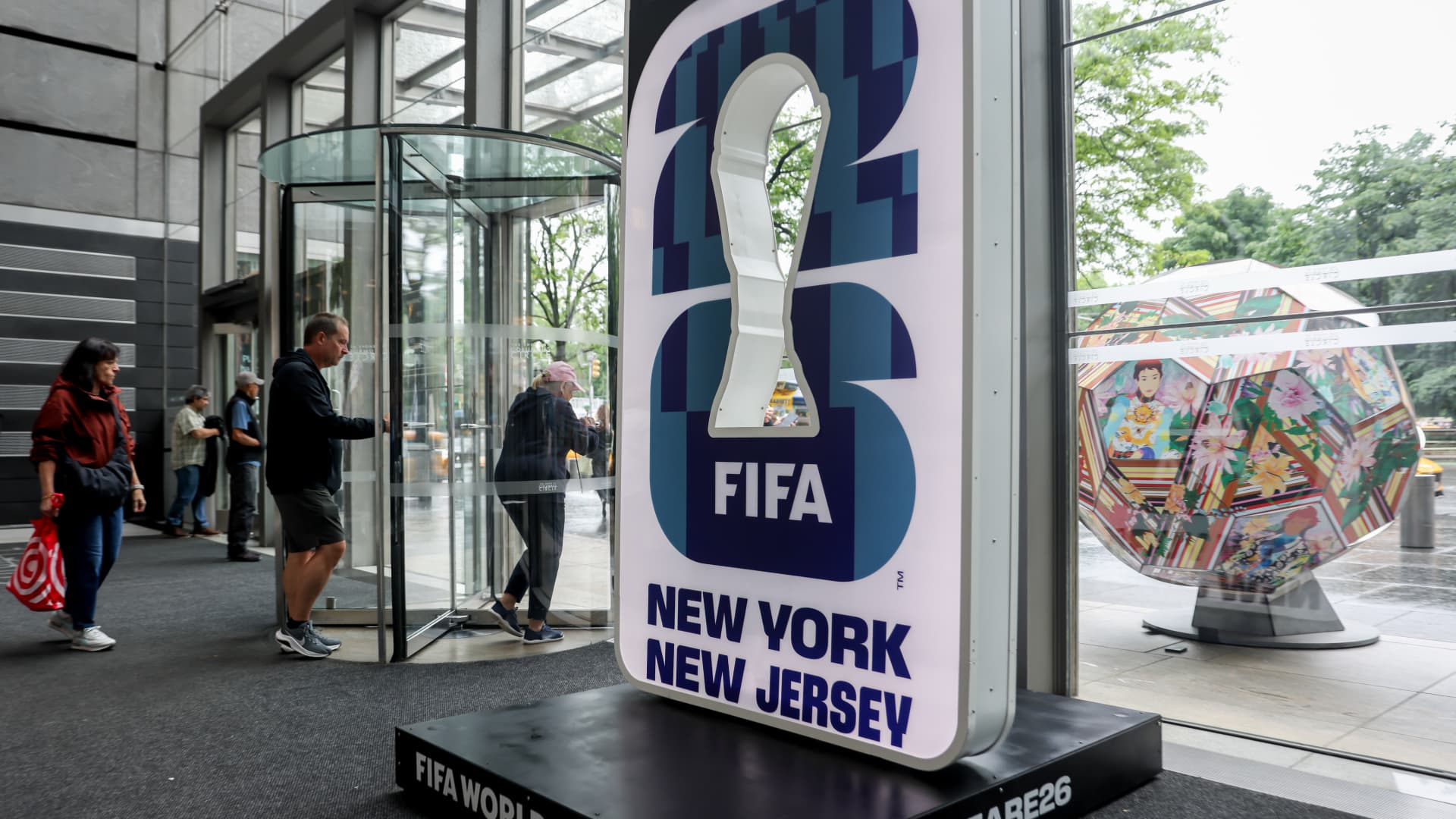
Signage for the FIFA World Cup at The Shops at Columbus Circle in New York, May 21, 2026.

Michael Nagle | Bloomberg | Getty Images

As athletes and millions of fans gear up for the FIFA World Cup starting next week, global health officials are preparing for a high-stakes challenge of their own: protecting against infectious diseases.

Advertisement

For the first time, the tournament will span 16 host cities across three countries — the United States, Canada and Mexico — and feature 48 teams, making it the largest World Cup in history. The event also comes amid an Ebola outbreak in Congo and Uganda that the World Health Organization has designated a “public health emergency of international concern.” 

Despite those worries, the risk of widespread Ebola transmission during the tournament is low, infectious disease experts told CNBC. Public health departments, hospitals and other partners are also well equipped to respond to a range of potential threats — even after sweeping cuts to critical federal agencies and the U.S. exiting from the WHO under the Trump administration.

“Ebola and hantavirus, I worry about a lot less,” Dr. Shruti Gohil, the associate medical director for University of California, Irvine Health Epidemiology and Infection Prevention, said in an interview. “The overall likelihood of risk is not nonzero, but it’s low, very low, because it is not easy to transmit person to person.” 

Instead, experts say more contagious threats could pose greater challenges during the tournament and other large events this summer, particularly because international visitors could move through multiple venues and cities in a matter of days. 

Advertisement

Those threats include measles — one of the world’s most contagious diseases — as well as respiratory viruses such as Covid-19 and influenza. The concern comes after the U.S. recorded its highest number of measles cases in decades last year, driven in part by growing vaccine hesitancy and declining immunization rates.

Some experts also pointed to arboviruses spread by infected insects, such as dengue, while others highlighted heat-related and foodborne illnesses as notable risks beyond infectious diseases.

Preparing for the World Cup has involved scaling up existing programs, such as wastewater monitoring, and adding new tools to track infectious disease threats. Those systems will face their first major test when the tournament kicks off on June 11, but public health officials say they are ready to take on the challenge. 

“Public health prides itself in being the invisible shield, but I don’t want that to get lost in the actual Herculean effort it takes to have an operational invisible shield, so that people can enjoy events like the World Cup and feel safe and secure in their public health when they’re here,” said Dr. Theresa Tran, director for the Houston Health Department.

Advertisement

“That’s a system that I’m extraordinarily proud about … we are absolutely working so hard every single day in preparation for things like this,” said Tran, who is overseeing the response in a host city. 

Ebola risk is low despite current outbreak

Doctors Without Borders health workers wearing personal protective equipment move through the isolated red zone to monitor patients, provide medical care and ensure sanitation at the Ebola Treatment Center in Munigi in Congo on June 2, 2026.

Jospin Mwisha | AFP | Getty Images

Ebola does not spread as easily as Covid and other respiratory diseases, making it less of a threat during the World Cup despite the growing outbreak, experts said. 

Advertisement

Global health authorities have confirmed more than 260 cases and are investigating 1,100 more possible infections in Congo and Uganda, according to the WHO. The current strain of Ebola, the Bundibugyo virus, is an often fatal form of the disease with no approved treatment or vaccine.

But there were no cases of Ebola in the U.S. as of Wednesday. Virus transmission requires direct, close contact with the bodily fluids or blood of someone who is already showing symptoms, said Dr. Amesh Adalja, adjunct assistant professor at the Johns Hopkins Bloomberg School of Public Health, in an interview. Patients with Ebola are “going to be very sick” and will likely stay at home or in the hospital rather than attend large events with other people, he added. 

“It’s not a respiratory virus; it’s not something that thrives in crowds that don’t have exposure to blood and body fluids, so I don’t think that it poses an objective threat to the World Cup,” Adalja said. 

Still, federal and local public health officials are gearing up to respond to Ebola risks. 

Advertisement

The Centers for Disease Control and Prevention has implemented enhanced entry measures for travelers from countries linked to the outbreak. Anyone arriving in the U.S. after spending time in Congo, Uganda or South Sudan within the previous 21 days is required to enter through designated airports in Atlanta, Houston, New York or the Washington area, where they will undergo public health screening.

During those screenings, CDC staff will survey individuals about their travel history and symptoms, check their temperatures and collect contact information for follow-ups by state and local public authorities if needed, the agency’s website says. Individuals are also monitored for Ebola’s full incubation period of 21 days, not only the day they arrive in the U.S., UCI’s Gohil said. 

The screening protocol extends beyond the airport. Local health departments are notified when travelers from affected regions arrive in their jurisdictions, enabling officials to monitor them for signs of illness, said Dr. Marvia Jones, director of the health department for Kansas City, a host city. 

In Dallas County, Texas, where World Cup games will also be played, the health department has coordinated with emergency responders and local hospitals to ensure any traveler who develops Ebola symptoms can be safely transported and treated, county health Director Dr. Phil Huang told CNBC. The plans include identifying which facilities would receive patients, preparing those places for infection-control protocols and arranging specialized transportation if needed.

Advertisement

Huang said the county also held a session to educate local healthcare providers on the lessons learned from Dallas’ 2014 Ebola case, including the importance of obtaining travel histories, recognizing symptoms and following established procedures for patient transport, isolation, contact tracing and the use of personal protective equipment.

Ebola “is definitely top of mind as a heavy thing with our history,” Huang said. 

In a statement to CNBC, FIFA said it is aware and monitoring the Ebola outbreak and continues to work with all three host countries’ governments to “ensure a safe and secure tournament.” FIFA is also informing ticket holders residing in Congo, South Sudan and Uganda of travel considerations ahead of the event. 

Measles, respiratory diseases raise concern 

Measles is “our biggest concern” in terms of infectious diseases at the World Cup since it is one of the most contagious viruses, said James Garrow, communications director for Philadelphia’s Department of Public Health. 

Advertisement

“We’re seeing outbreaks throughout the U.S. and overseas, and when you have a disease that’s as infectious as this, people just have to be in the same plane for an hour or two and all of a sudden you have an outbreak that’s transferred to somewhere else,” Garrow told CNBC. 

Philadelphia health officials have focused on ensuring healthcare providers can quickly identify measles cases, share information and coordinate response efforts as the city prepares to host matches, he said. But international visitors pose a particular challenge because they often travel to numerous locations in a short period of time, increasing the number of potential exposures to the virus compared to a local. 

FIFA World Cup signage is seen at the PATH train station at the World Trade Center transportation hub in New York on May 27, 2026.

Angela Weiss | AFP | Getty Images

Advertisement

The U.S. had more measles cases in 2025 than in any other year since 1991, with more than 2,100 confirmed cases. Cases were reported in 45 jurisdictions in 2025, and there were 48 outbreaks, compared with 16 the previous year, according to the CDC.

The U.S. eliminated measles in 2000, but cases have risen as misinformation spreads and vaccination rates decline. About 93% of confirmed measles cases last year were among people who were unvaccinated or whose vaccination status was unknown, CDC data shows. 

Besides measles, Houston’s Tran said she’s concerned about other diseases at risk of higher spread as vaccination rates drop in the U.S., such as Covid and the flu. 

“The transmissibility being airborne makes them so much more likely to cause a public health threat than Ebola,” she said.

Advertisement

But Houston, Tran said, has professional epidemiologists who are monitoring and contract-tracing individuals anytime there is a vaccine-preventable disease that could become an outbreak. 

Norovirus, food-borne and heat-related illnesses as well as sexually transmitted infectious could also pose challenges during the tournament, some public health officials told CNBC. 

But public health departments have been working to ensure that food vendors at the World Cup and related gatherings have the proper permits to sell to the public, said Dr. Monika Roy, the deputy health officer and infectious disease and response branch director for Santa Clara County, California. The county outside of San Francisco will also host matches.

In addition to keeping an eye on permitting, Houston has teams of registered sanitarians ready to investigate any foodborne illnesses, and it has prepared public health campaigns related to heat-related illness and prevention given the high humidity in the city. 

Advertisement

Expanding surveillance efforts 

This year’s World Cup brings “added layers of challenges,” and not only because of the scale of the event, said Dr. Rebecca Katz, who leads Georgetown University’s Center for Global Health Science and Security. She said the tournament comes after resource cuts to public health and the U.S. withdrawal from the WHO earlier this year, which has “strained” international mechanisms for disease sharing. 

Trump cut roughly 10% of the CDC’s workforce in early 2025, leaving fewer epidemiologists and scientific staff to do boots-on-the-ground work or coordinate responses across governments. There is currently no permanent CDC director or U.S. surgeon general, both positions that play a critical role in responding to disease threats. 

Despite the cuts, the CDC said it is “actively engaged in World Cup preparedness as part of the federal coordination structure led by the White House FIFA World Cup 2026 Task Force” and is engaging with public health departments in host cities, other federal agencies and partner organizations. The CDC has also developed a World Cup data dashboard, which is in final development, to give state and local health departments greater visibility into disease trends across jurisdictions, an agency spokesperson said in a statement.

Still, “there have been cuts to public health at all levels and the folks who are in those jobs are working really, really hard, often with a smaller budget and less personnel, so there’s an opportunity for the rest of the community to help support that” and “try to jump in and fill some of those information gaps,” Katz said. 

Advertisement

That’s one reason why Katz in May launched the Health Security Operations Center, a hub for monitoring potential infectious disease threats that will distribute daily situation reports starting Thursday to hundreds of state and local health officials, federal agencies, tournament organizers and hospital emergency managers, among others. It’s part of the National Center for Health Security and Resilience, a joint effort between Georgetown University and MedStar Health. 

Among the center’s efforts is participating in daily stand-up calls hosted by the Pan American Health Organization, a ​regional office of the WHO, and sharing that information directly with local, state and federal jurisdictions, Katz said. PAHO is coordinating data between Mexico and Canada as well, she noted.

At the local level, health departments are ramping up their surveillance efforts. 

Many World Cup host cities and counties are leaning on wastewater surveillance, a public health tool that gained prominence during the Covid pandemic. The approach enables officials to detect signs of disease spreading in a community through sewage samples, often before outbreaks are identified through traditional testing.

Advertisement

For example, Dallas is increasing its wastewater sample sites to cover nearly the entire county, Huang said. The county is also implementing metagenomic testing, which is broadly extracting and sequencing sewage samples to identify every bacteria, virus and fungus rather than a specific one, he added. 

Huang said Dallas is also enhancing its mosquito surveillance by monitoring not only for West Nile virus, which is endemic in the region, but also diseases such as dengue, chikungunya and Zika. 

Meanwhile, Philadelphia is deploying a new mobile lab that can test samples on site, speeding up the detection of potential health threats and reducing the need to send specimens to specialized labs elsewhere in the state or country, Garrow said. He noted that the lab, which launched in June, aims to boost testing capacity and reach areas less centrally located.

Dr. Margaret Aldrich, a pediatric epidemiologist at NYU Langone, said she believes in the U.S. “we’re actually better prepared, honestly, than we ever have been for high-consequence infectious diseases.”

Advertisement

“There’s a very robust system in the United States,” Aldrich said. “The departments of health are really continuing to maintain that hard work and ensuring that, as we always say, if we’re doing our job, you don’t see it.”

Choose CNBC as your preferred source on Google and never miss a moment from the most trusted name in business news.
Continue Reading

Business

Nissan’s Sunderland factory could build Chinese cars under new partnership

Published

on

Business Live

The Nissan UK automotive deal would see Chery vehicles manufactured at the Sunderland plant under a new partnership agreement

Nissan is talking to Chery about making its cars at the Sunderland plant.

Nissan’s Sunderland plant.(Image: Nissan)

Workers at Nissan’s Sunderland facility could begin manufacturing Chinese vehicles from next year following a newly announced partnership.

Nissan has joined forces with Chery – a Chinese state-owned manufacturer which ranks as the nation’s third largest marque. The arrangement could see Chery vehicles emerge from the Sunderland plant’s Line One production facility, which was suspended earlier this year as part of extensive cost-cutting measures across Nissan.

Under the terms of the partnership, the Sunderland site would remain entirely under Nissan ownership, with approximately 6,000 employees there continuing to work for Nissan. Talks regarding the proposal are understood to be continuing.

Massimiliano Messina, chairperson Nissan AMIEO, said: “This is an important step forward for our operations. We are looking forward to working with Chery International UK in the coming months to finalise a position that is optimal for both companies.”

Advertisement

The development emerges as Nissan grapples with challenging market conditions – including pressure from Chinese competitors and the transition to electric vehicles – which have triggered a substantial reorganisation of its worldwide operations, encompassing factory closures and redundancies. Sunderland has largely avoided that turbulence and is regarded as one of the manufacturer’s most efficient facilities.

In May, it emerged that roughly 900 positions could be eliminated by Nissan across Europe. Wearside roles were said to be safeguarded by the consolidation of the plant’s two production facilities. Accounts filed in January for Nissan Motor Manufacturing (UK) revealed that the Sunderland facility had received a £900m cash injection from its Japanese parent company, following significant losses. The firm’s turnover declined from £7.4bn to £6.6bn in the year ending 30 March 2025, as vehicle output dropped from 325,000 to 276,000 units, reports Chronicle Live.

Towards the end of last year, the Sunderland plant commenced production of the next-generation Leaf model, providing a further boost to workers at the site. Meanwhile, the carmaker’s ambitious EV36Zero initiative has seen the Sunderland facility receive considerable investment to transform it into a flagship electric vehicle manufacturing hub, integrating nearby renewable energy sources and battery production.

Chery employs more than 80,000 people and has produced in excess of 15 million vehicles. Founded in 1997, the company is headquartered in Wuhu, Anhui.

Advertisement

Unite national officer Steve Bush said: “This is very good news for Nissan’s Sunderland workers and the UK’s automotive industry in general at a time of uncertainly for the sector. Chinese vehicles are increasingly visible on British roads so it makes sense for UK workers to build them here as well.

“To ensure the UK auto sector’s future remains a positive one, Unite is working with industry and government on reforming the ZEV mandate. Without this, car production volumes will be kept artificially low.”

Continue Reading

Business

XMMO: AI And Positive Sentiment Drives This Successful Mid-Cap Momentum ETF

Published

on

Berkshire Hathaway: Why I Set A $450 Limit Buy Order

This article was written by

The Sunday Investor is focused exclusively on U.S. Equity ETFs. He has a strong analytical background, has received a Certificate of Advanced Investment Advice from the Canadian Securities Institute, and has completed all the educational requirements for the Chartered Investment Manager designation.Having covered hundreds of ETFs on Seeking Alpha, The Sunday Investor has developed a complex, proprietary ETF Rankings system which he shares on his website, etf-rankings.com. Nearly 1,000 ETFs receive individual factor scores covering costs, liquidity, risk, size, value, dividends, growth, quality, momentum, and sentiment, which feed into an easy-to-understand composite score from 1-10. The Sunday Investor is always active in the comments section in his articles – please don’t hesitate to reach out via comment in any article or by visiting etf-rankings.com. Happy Investing!

Analyst’s Disclosure: I/we have a beneficial long position in the shares of XMMO either through stock ownership, options, or other derivatives. I wrote this article myself, and it expresses my own opinions. I am not receiving compensation for it (other than from Seeking Alpha). I have no business relationship with any company whose stock is mentioned in this article.

Seeking Alpha’s Disclosure: Past performance is no guarantee of future results. No recommendation or advice is being given as to whether any investment is suitable for a particular investor. Any views or opinions expressed above may not reflect those of Seeking Alpha as a whole. Seeking Alpha is not a licensed securities dealer, broker or US investment adviser or investment bank. Our analysts are third party authors that include both professional investors and individual investors who may not be licensed or certified by any institute or regulatory body.

Advertisement
Continue Reading

Business

nVent Electric plc (NVT) Presents at 46th Annual William Blair Growth Stock Conference – Slideshow

Published

on

OneWater Marine Inc. (ONEW) Q1 2026 Earnings Call Transcript

nVent Electric plc (NVT) Presents at 46th Annual William Blair Growth Stock Conference – Slideshow

Continue Reading

Business

Bournemouth office block set to be converted under plans

Published

on

Business Live

Proposals have been submitted to transform the eight-storey building in the town centre

4 Richmond Gardens Bournemouth Plan

4 Richmond Gardens Bournemouth Plan(Image: Local Democracy Reporting Service)

Plans for a major transformation of a former office building into a 73-flat development in Bournemouth town centre have been submitted.

Advertisement

Tannen (Marshall) Limited has lodged an application to redevelop 4 Richmond Gardens, an eight-storey circular building at the top of Richmond Hill in Bournemouth town centre.

Planning documents reveal that 73 flats will occupy the upper six floors, with five floors containing 13 flats each and the sixth floor accommodating eight flats.

The proposal indicates that most of the flats will be one-bedroom units, with only a handful featuring two bedrooms.

A total of 73 on-site parking spaces will be provided in the existing basement car park.

Advertisement

The planning statement notes that this “representing a significant reduction from the existing provision of approximately 134 spaces”.

There will be 78 long-stay cycle parking spaces on one of the basement levels, alongside 14 short-stay spaces positioned outside the building.

The proposal is under consultation until June 18.

Officers are expected to reach a decision on the redevelopment following the conclusion of the consultation period.

Advertisement
Continue Reading

Trending

Copyright © 2025