
Security teams log 54% of successful attacks and alert on just 14%. The rest move through your environment unseen.
The Picus whitepaper shows how breach and attack simulation tests your SIEM and EDR rules so threats stop slipping by detection.




Uber revealed on Wednesday a prototype car that it plans to use to scoop up real-world driving data for its growing roster of autonomous vehicle partners, including Avride, Waymo, and WeRide.
The vehicle is not some radical design. Rather, it’s a Hyundai Ioniq 5 fitted with an incredible number of sensors on the top and sides, as the company first told TechCrunch back in January. The sensor-laden vehicle may not look particularly groundbreaking, but it does mark a few milestones for the company.
This is the first vehicle Uber has assembled itself (with help from a partner) since the company sold its autonomous vehicle division to Aurora in 2020. It also represents progress on Uber’s new AV Labs division, which launched earlier this year to use sensor-equipped Uber cars to collect and then share data with its 30-and-counting autonomous vehicle technology partners.
Uber said Wednesday that it plans to roll out 500 of these kitted-out Hyundai EVs globally this year. That fleet will be able to collect “2 million miles per month of high-fidelity data” for robotaxis. Uber expects 50 of these vehicles to be on the road by the summer.
The Ioniqs are fitted with 14 cameras, eight solid-state lidar sensors, and nine radars through a partnership with Roush Performance, which will handle the vehicle retrofits. All of that data will be routed through Nvidia’s Dual Drive Thor autonomous vehicle computer. Uber appears open to changing that sensor suite, noting that it will continue to update it as its partners’ needs evolve.
This isn’t just a transfer of raw data, however. Uber said its aim is to develop the world’s most geographically diverse set of training data specifically geared towards autonomous driving. If successful, this dataset will give its AV partners a 360-degree, time synchronized stitched view that can be used to train self-driving software.
The company already has a head start. Uber told TechCrunch it has collected data from thousands of vehicles equipped with outward-facing cameras in dozens of cities that are operated by its fleet partners. Uber has also captured data from hundreds of Lucid Air vehicles used by its fleet partners in the U.S. and Europe over the past two years.
Uber’s AV Labs division is analyzing these two tranches of data and is preparing to collect even more with its modified Ioniq 5 vehicles, which will be used by its fleet partners.
The AV Labs division is one component of Uber’s broader ambitions for autonomous vehicles. The company launched in February a division called Uber Autonomous Solutions that is designed to handle the day-to-day operations at a robotaxi, self-driving truck, or sidewalk delivery robot business.
When you purchase through links in our articles, we may earn a small commission. This doesn’t affect our editorial independence.

When the 29-year-old Samuel Rizzon is asked what he does, he answers with a single word: “developer.” While accurate, it’s a modest label for someone whose work has stretched well beyond writing code.
At an age when many engineers are still settling into a single specialty, Rizzon has built products embraced by large enterprises, online classrooms, and the open-source community, three arenas that rarely reward the same instincts. His is a story of versatility, of an engineer who has never been willing to be only one thing.
Interested in technology and building software from a young age, Rizzon developed and shipped his first product at 19: a Bible quiz he published to the Play Store and the App Store in 2015. It picked up 22,000 downloads, and that response was enough to convince him that making things people actually used was worth pursuing. Not long after, he joined TOTVS, Brazil’s largest technology company, where he would spend the next five years and lay the foundation of his career.
That foundation took shape around a single product. It started as a proof of concept for one client that wanted a way to sign documents digitally. Rizzon wrote it from scratch, and the prototype worked well enough to become a product in its own right. It grew into a standalone electronic signature platform comparable to DocuSign, and today it processes more than a billion documents for over a million customers.
Building it was largely a solo effort. Working before AI coding assistants existed, Rizzon architected the whole stack himself, from an Angular front end and a C# back end to a Chrome extension and a desktop application that reverse-engineered the physical A1 and A3 devices Brazilians use to authenticate documents. As the product matured, a team formed around him, eventually reaching roughly 10 engineers, designers, and product staff, with Rizzon leading the work that turned the prototype into a full product line.

The 💜 of EU tech
The latest rumblings from the EU tech scene, a story from our wise ol’ founder Boris, and some questionable AI art. It’s free, every week, in your inbox. Sign up now!
From there he spent a year at the consultancy CI&T before taking a remote role as a full-stack engineer for a New York startup, a job that gave him his first direct contact with the U.S. technology scene.
Around the same time, Rizzon set out to build a company of his own. He ran it out of his room in Brazil, without investors, without a team, and without a network to lean on. What he had was persistence, and it showed: he took the business from nothing to 30 paying customers across Brazil, the United States, and Ireland, with 8,000 people using its web app.
Since there was no one else to do it, he handled sales, client conversations, support, and marketing himself, the parts of a business most engineers never touch. He even started a YouTube channel during this period, which grew to 3,000 subscribers.
He doesn’t romanticize how hard it was, and he is especially frank about the difficulty of doing it from Brazil, far from any real startup network. “I had nothing, really nothing,” he points out. “It was just me in my room. Creating something and trying to sell it and reach customers. It was a very specific niche, and it was a hard niche.” That isolation forced him to operate on his own, and the founder instincts it produced would resurface later in the viral consumer projects that made his name.
Amidst the 2020 COVID-19 pandemic, with so much of work and school suddenly happening over video, Rizzon built a Chrome extension that muted every participant on a Google Meet with a single click, a product that could solve a problem he kept running into himself. The fix was simple, but it turned out plenty of other people had the same complaint.
That became clear fast. Within a year the extension had reached 150,000 users, almost all of them arriving by word of mouth. Its most devoted users were teachers, who were running online classes for 15 to 30 students and had no way to quiet the room without clicking each child one by one. “It was a pain for me, and I just fixed that with an extension,” Rizzon says. “It ended up being useful for a lot of teachers in particular.”
The traction caught the attention of the founder of MP3.com, who emailed Rizzon with an offer to buy it. He sold, marking his first exit and an early sign of the instinct for shipping consumer products that would shape his later work. He has stayed close to open source since, serving as co-founder and core component developer of Zard UI, a shadcn-style component library for Angular developers that has crossed 1,000 stars on GitHub.
After years of shipping one project after another, the one that finally broke through was GitCity. The idea came from a post on X about rendering a city, and Rizzon had a first version live within a day. He didn’t write any of it by hand; instead, he built the entire codebase with Claude Code. What it produced was a pixel-art 3D metropolis that renders GitHub developers as buildings, with one structure per coder.
“On the first day, when I had the idea of creating the city, I noticed that this could be a viral product,” he says. “So I prepared and made everything to go viral.”
People took to it immediately. In its first week the city grew from 12,000 buildings to 40,000, and it currently holds more than 80,000. Over two months GitCity drew 180,000 visitors, more than five million social media views, and 5,000 GitHub stars, with roughly 20 people contributing code. Rizzon’s own audience grew alongside it, climbing from 200 Instagram followers to 6,000 and an X account to nearly 4,000.
None of that happened by chance. Rizzon treated distribution as part of the product itself, wiring a one-click “share on X” button into every action a user could take. He also added a feature that lets one building attack another, which fires off an email to the target and pulls them back in to retaliate, and he also opened the experience with a cinematic shot of the skyline and made the 3D rendering run smoothly on phones.
Inspired in part by the indie developer Pieter Levels, he’s also begun earning money from it, taking in $2,000 from sponsored buildings and lining up companies to back a week-long event in which users hunt down a “dark boss” hidden in the city.
The project did more than rack up numbers; it brought recruiters from Delphi, who were looking for someone to carry that same obsession with user experience into their consumer product, and he’s now joining as a product engineer on their San Francisco team. He treats the move less as a destination than as a long apprenticeship, a chance to build a network and learn how the U.S. startup world actually works before starting a company of his own.
Whether the right title is developer, founder, or product engineer, Samuel Rizzon has spent a decade declining to choose just one. The same engineer who built a signature platform now handling more than a billion documents at TOTVS also turned GitCity into a viral calling card, proof that the instinct to ship and the obsession with how a product feels follow him regardless of the label.


Microsoft recently warned Office users on Apple devices that older versions of the company’s productivity apps running on outdated operating systems will lose the ability to edit files next month. Mobile users and Microsoft 365 subscribers can resolve the issue by simply updating their OS and Office, but users with…
Read Entire Article
Source link

When I first opened the box the Oura Ring 5 comes in, my first thought was, “Wow, that’s tiny.” My second thought was that this is a smart ring a lot of people have been waiting for.
As someone who got quite used to wearing the Oura Ring 4 Ceramic, I was surprised how noticeably smaller and lighter the new Ring 5 is.
The Ring 5, which Oura describes as the world’s smallest smart ring, is 40% smaller than its predecessor, measuring 6.09 mm wide compared to the Ring 4’s 7.90 mm, and 2.28 mm thick compared to the Ring 4’s 2.88 mm. Although the exact weight depends on your ring size, the Ring 5 weighs between 2 grams and 2.69 grams, while the Ring 4 weighs between 3.3 grams and 5.2 grams.
I found that these changes dramatically improve the ring’s comfort, and also make it more aesthetically pleasing compared to its predecessor. The ring no longer screams smart ring, and blends in with the rest of your jewelry. Oura says the Ring 5 is designed to look and feel like any other ring, and I think the company has achieved that.
The Ring 5 starts at $399.
Whenever I saw people discussing Oura’s smart rings, there always seemed to be two opposing viewpoints. One side swore the ring had changed their life, and the other argued that it was too bulky and that they would never consider getting one. I think the Oura Ring 5 changes the game and appeals to a larger audience, including those who shied away from smart rings due to their bulkiness.

Oura was aware of the demand for a smaller ring. The company told me that users had been asking for a thinner and more compact design, prompting the company to comply. Of course, Oura has also had to update its rings in response to competition from subscription-free rivals like RingConn and Ultrahuman, both of which sell rings lighter than the Ring 4.
While I never found the Oura Ring 4 overtly uncomfortable, the Ring 5 feels noticeably better on my finger. With the Ring 4, I was always aware that I was wearing it, but with this latest model, I often forget it’s there, which is great for people like me who don’t always wear jewelry.
I also found that the ring’s smaller size makes it more comfortable to wear at night for tracking sleep and health metrics. A smart ring is more comfortable than a smartwatch for nighttime wear, and the Ring 5’s smaller design lets it be even less noticeable at night.
As for battery life, the Ring 5 lasts between six and nine days, compared to the five to eight day range on the Ring 4. In my experience, the improvement seems to hold up. The ring arrived 50% charged, and after about 30 minutes on the charger following the set-up process, it reached 75%. After five days of continuous wear, I still haven’t needed to charge it, and I’m down to about 25% battery.
It’s worth mentioning that the Ring 5 comes in fewer sizes (sizes 6 to 13) than the Ring 4 (sizes 4 to 15). Oura told me that the fewer sizing options are due to the challenges of manufacturing smaller rings in the new form factor. The company said it chose to focus on the most popular sizes, and is monitoring demand for the discontinued sizes.

The Ring 5 comes in six finishes, including a redesigned Gold with a truer gold tone, an updated Deep Rose with a copper-like look, plus Silver, Brushed Silver, Black, and Stealth.
Oura sent me the Gold version, and I really like how it looks. Unlike previous gold Oura rings, this new color doesn’t have a yellow tinge to it, and instead has a subtler tone that feels closer to actual gold jewelry. It’s worth noting that the Gold finish, along with the Stealth and Deep Rose finishes, is priced at $499, exactly $100 more than the standard finishes.
As for durability, Oura says the Ring 5 is more scratch-resistant than previous generations thanks to a new finishing technique, but I can’t fully speak to durability yet considering I’ve only had it for five days.
There was a moment when I thought I had scratched the ring’s alignment guide line when I’d grabbed a rusty swing chain, but it turned out that rust had only rubbed on to the ring, and I was able to clean it off with a cloth.
Oura says the Ring 5’s new physical vapor deposition (PVD) coating process ensures the wearable retains its premium “out-of-the-box” look for longer. It will be interesting to see how this promise holds up.
The Oura Ring 5 is being launched alongside new software features that are also coming to the Oura Ring Gen3 and later products, including Blood Pressure Signals and Nighttime Breathing. I can’t speak to those yet, as they’re set to launch later this month.
Overall, the Oura Ring 5 is a notable upgrade over the Ring 4 in terms of comfort and aesthetics, making it a great choice for anyone who has yet to buy a smart ring. As for people who already have the Oura Ring 4, the decision to upgrade depends on your budget and how much you value aesthetics, especially since the Ring 4 will get all of the new software updates.
When you purchase through links in our articles, we may earn a small commission. This doesn’t affect our editorial independence.
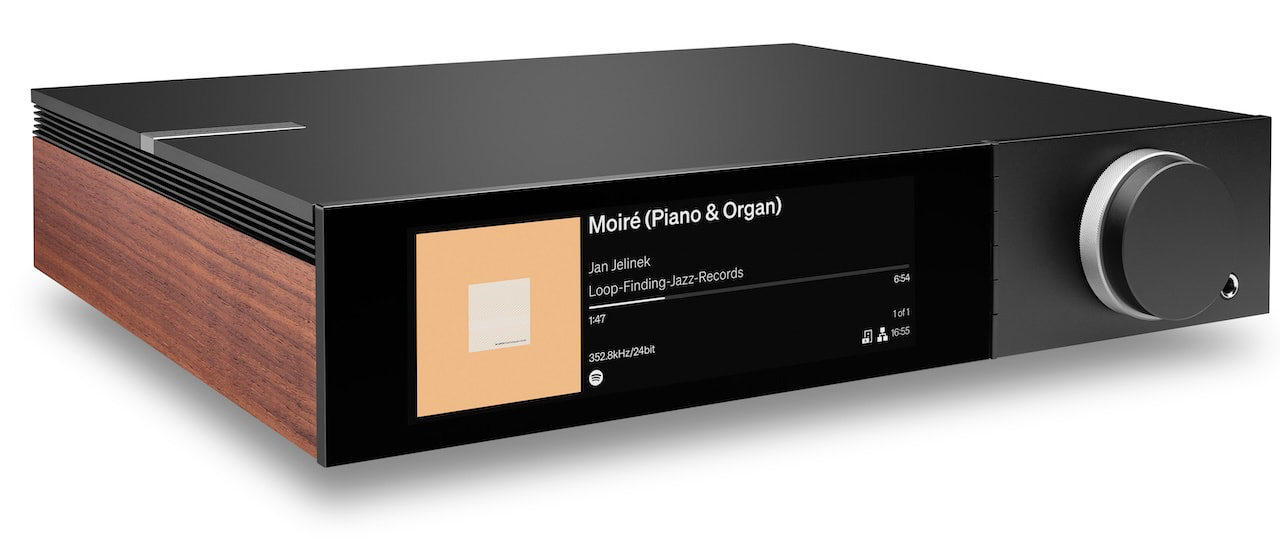
Cambridge Audio’s Evo Series has been one of the British manufacturer’s real success stories over the past three years, and not because it tried to make separates disappear with marketing fog and a nice volume knob. The Evo 75, Evo 150, Evo CD, Evo S, and more recent Evo 150 SE have shown that Cambridge can marry serious hi-fi performance, clean industrial design, flexible connectivity, and pricing that is definitely not out of line with reality.
The new Cambridge Audio Evo 300, making its debut at HIGH END Vienna 2026, pushes that formula into far more muscular territory. Rated at 300 watts per channel from Hypex NCOREx Class D amplification in a dual-mono layout, the Evo 300 is being positioned as Cambridge Audio’s most powerful and sonically advanced streaming amplifier to date.
We have covered the Evo Series in depth, including the original Evo 150 and the newer Evo 150 SE, and the appeal has been obvious from the start: real hi-fi performance, a very solid streaming platform, flexible connectivity, and industrial design that does not look like it escaped from a server rack. The Evo 300 builds on that formula with more power, a balanced pre-amplifier stage, dedicated analog volume controls for each channel, and a switch-mode power supply designed to keep things stable when the amplifier is pushed hard.
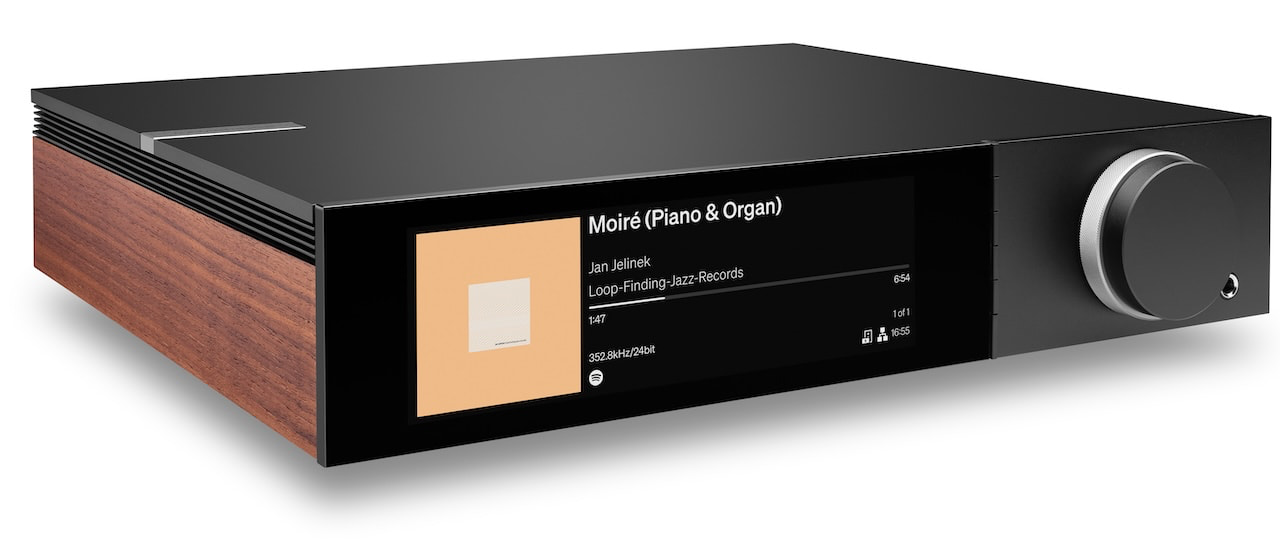
The headline number is hard to miss: 300 watts per channel into 8 ohms from a Hypex NCOREx Class D amplifier stage. That is a significant jump for the Evo platform and clearly aimed at listeners using larger rooms, more demanding loudspeakers, or both. Cambridge has not turned the Evo 300 into a traditional heavyweight integrated amplifier with a heat sink complex, but the move to NCOREx gives it a much stronger power story than the Evo 150 SE.
Cambridge has also gone with a dual mono layout, which matters because channel separation is not just a marketing term to make you feel better about your purchase. Better separation can help with stereo imaging, focus, and control, assuming the rest of the system is up to the task. The Evo 300 also uses a balanced preamplifier stage and dedicated analog volume controls for each channel, which Cambridge says are designed to preserve focus, dynamic range, and low level detail at different listening levels.
A switch mode power supply is part of the design as well, and the goal is consistency when the amplifier is pushed for longer periods. That will matter for anyone driving lower sensitivity loudspeakers or asking one box to do the work of a more ambitious separates system.
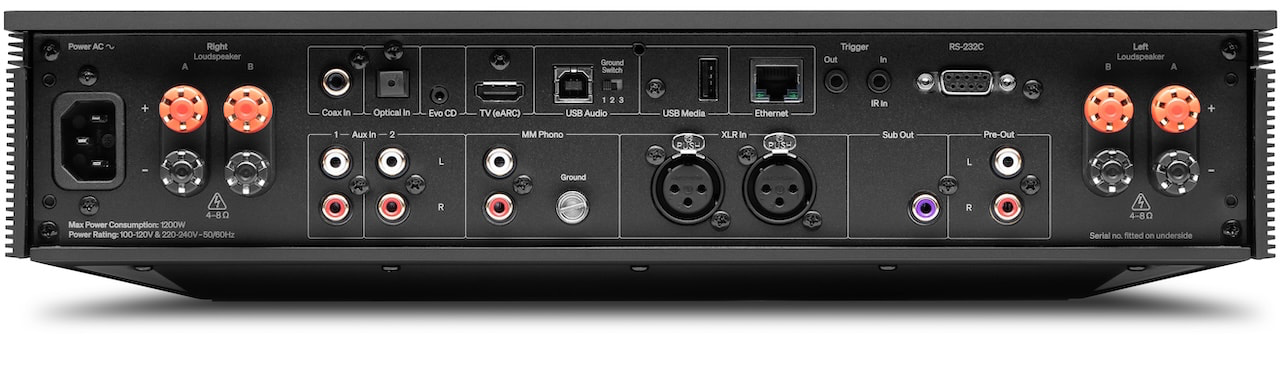
The Evo 300 uses Cambridge Audio’s StreamMagic Gen 4 platform, which remains one of the stronger reasons to consider an Evo product in the first place. Streaming support includes Spotify Connect, TIDAL Connect, Qobuz Connect, Amazon Music, Deezer, UPnP, Internet Radio, and Roon Ready operation.
That gives the Evo 300 a lot of flexibility without forcing users into one ecosystem. Ethernet and WiFi are both supported, and Cambridge’s in-house platform means updates and feature improvements are not entirely dependent on a third party app that may vanish at some point.
Cambridge has taken some heat online over the past year over StreamMagic Gen 4 stability with specific music streaming apps, and those complaints should not be dismissed. A streaming amplifier lives or dies by the quality of its software, especially when buyers are spending real money on an all-in-one platform.
That said, the recent move to Fidelity Imports as Cambridge Audio’s U.S. distributor appears to have brought more urgency to the software side of the business, and the volume of complaints seems to be easing. As someone who has invested a significant chunk of change in Cambridge Audio products over the years, and who uses the StreamMagic app daily for both review purposes and personal listening, I find the platform quite good overall.
It is not perfect, but Cambridge has not sat on its hands. The company is clearly paying attention, and that matters if the Evo 300 is going to succeed as more than just a powerful amplifier with a nice screen.
The Evo 300 also supports Google Cast, Apple AirPlay 2, Google Home, Apple AirPlay multiroom, and Roon multiroom systems, which makes it easier to integrate into a wider home audio setup. For a product trying to replace multiple boxes, that matters.
Digital conversion is handled by the ESS Sabre ES9038Q2M DAC, with support for up to 32-bit/768kHz PCM and DSD512. Those numbers will make the hi-res crowd happy, although most listeners will spend the majority of their time with streaming services that do not get anywhere near those ceilings.
The more important point is that Cambridge is positioning the Evo 300 as a proper digital hub, not just an amplifier with a streamer bolted on because someone in marketing found a WiFi antenna. USB audio, optical Toslink, and coaxial digital inputs are included, giving users enough digital flexibility for a server, disc transport, TV, or legacy digital source.
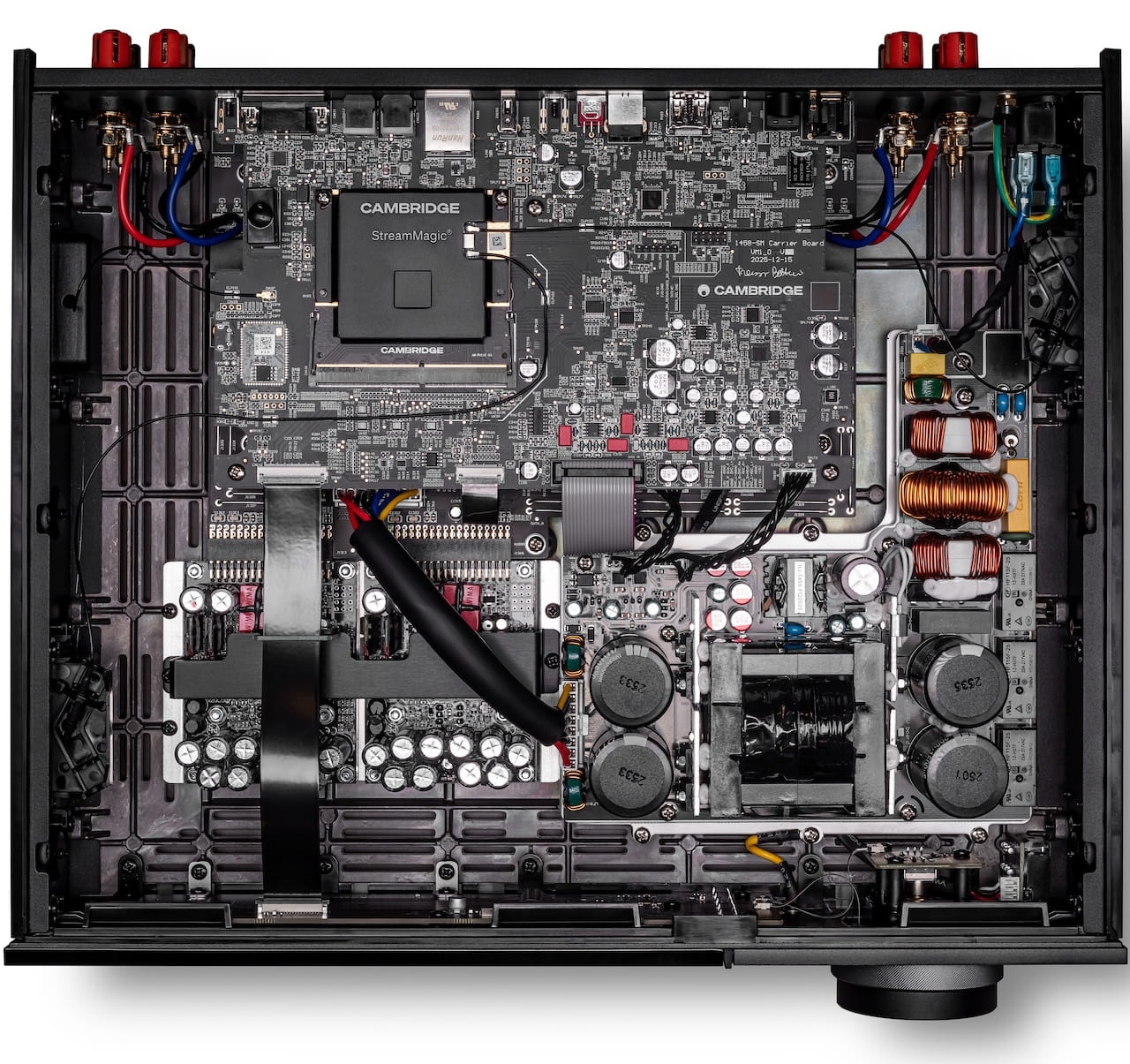
The inclusion of HDMI eARC is one of the smarter practical decisions here. It allows the Evo 300 to sit in a living room system and handle TV audio without requiring a soundbar or AV receiver. This is still a two channel amplifier, so nobody should expect Dolby Atmos fireworks or rear channel theatrics, but for listeners who care more about music and still want better TV sound, HDMI eARC gives the Evo 300 a real advantage.
That also makes the Evo 300 easier to justify as the center of a daily use system. Music, TV, streaming, vinyl, headphones, and external sources can all run through one chassis. Fewer boxes. Fewer cables. Fewer reasons to mutter at the back of the rack with a flashlight in your mouth.
Cambridge did not ignore analog users. The Evo 300 includes a built-in moving magnet phono stage, RCA line input, and balanced XLR input. The MM phono stage will be enough for a lot of turntable owners, although moving coil cartridge users will still need an external phono preamp.
The balanced XLR input is also worth noting because it gives the Evo 300 more credibility as a serious integrated amplifier. Anyone using a higher end DAC, phono stage, or source component with balanced outputs can connect it directly rather than being forced through RCA only.
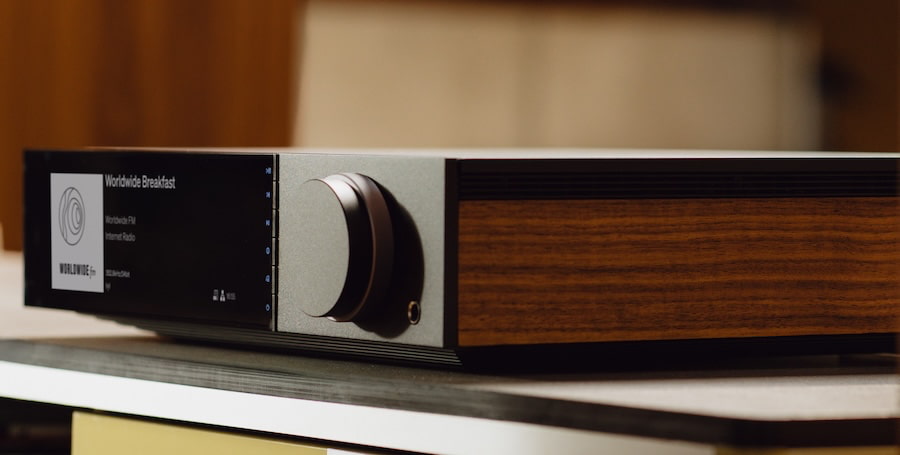
The Evo 300 includes an adjustable subwoofer output with independent level and crossover control, plus optional high pass filtering for the main speakers. That is a very useful feature for most rooms, especially smaller spaces where full range loudspeakers can turn bass into soup before the first chorus arrives.
The optional high pass filter also matters because it can reduce the low frequency burden on the main loudspeakers. Used properly, that can improve system clarity and give the amplifier and speakers a little more breathing room.
Cambridge also includes dual speaker binding posts per channel, allowing users to create two separate speaker zones. That adds some installation flexibility, although buyers should pay attention to impedance and speaker matching before treating the Evo 300 like a nightclub distribution amp.
A dedicated 6.3mm headphone output is included for personal listening, which is the right choice on a product at this level. The press materials do not position the Evo 300 as a dedicated headphone amplifier replacement, but the inclusion of a full size headphone jack keeps it useful for late night listening.
Wireless support includes Bluetooth 5.4 with aptX HD, which is fine for casual listening, but it is not the reason to buy the Evo 300. There is no Bluetooth LE Audio, aptX Lossless, or LDAC support, so the better path is StreamMagic, AirPlay 2, Google Cast, TIDAL Connect, Qobuz Connect, or Roon.
The Evo design language carries over, but the Evo 300 gets a wider and more substantial chassis. It also features Cambridge Audio’s largest Evo display to date: a 7.8 inch color screen that can show album artwork, track details, system information, a clock, or VU meters.
The interchangeable side panels remain part of the package, giving owners a way to better match the amplifier to their room. That may sound cosmetic, but Cambridge has understood something many hi-fi brands still treat as classified information: products that live in shared spaces need to look good from more than three feet away.
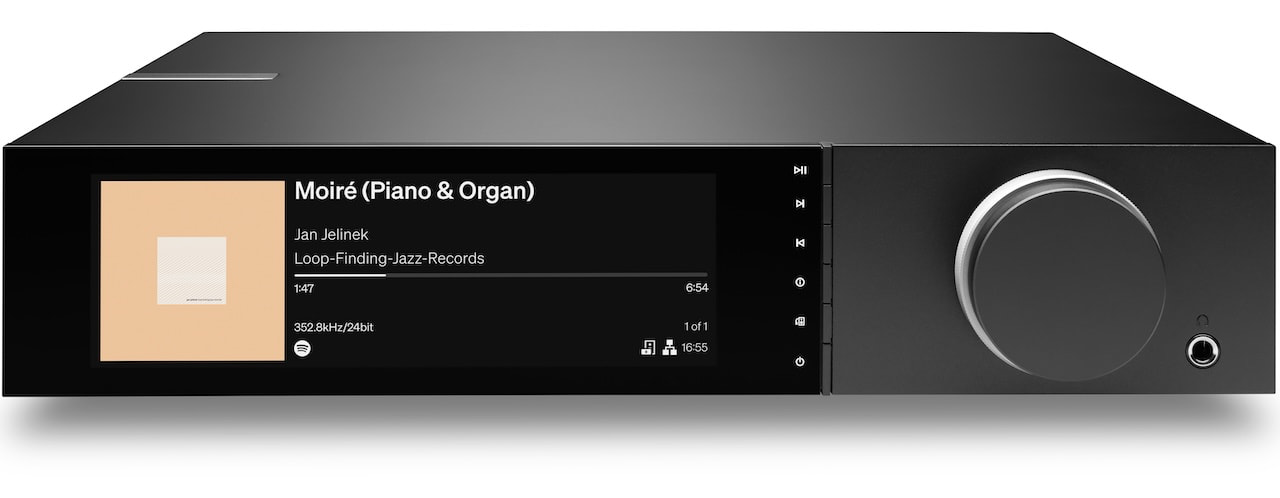
The Cambridge Audio Evo 300 is not just an Evo 150 SE with a bigger number on the box. The real news is the move to 300 watts per channel into 8 ohms from Hypex NCOREx Class D amplification, supported by a dual mono layout, balanced preamplifier stage, dedicated analog volume controls for each channel, and a power supply designed to keep the amplifier stable under load.
What remains unique is the overall Evo formula: serious power, StreamMagic Gen 4, HDMI eARC, MM phono, balanced XLR input, subwoofer control with crossover and optional high pass filtering, dual speaker zones, headphone output, and a large color display in a chassis that still looks like something designed for a real living space. Cambridge has been very good at making hi-fi feel less like homework, and the Evo 300 pushes that idea further without abandoning the people who still care about system building.
What is missing? Bluetooth support is limited to Bluetooth 5.4 with aptX HD, with no Bluetooth LE Audio, aptX Lossless, or LDAC. There is also no built-in moving coil phono stage, no home theater surround processing, and no claim here that it replaces a true separates system for every listener. At $3,999, it also moves the Evo concept into more serious territory, where buyers will expect StreamMagic stability, loudspeaker control, and long-term software support to be nailed down. The hardware looks ready. The app experience has to keep holding up.
The Cambridge Audio Evo 300 will be available in June 2026 through CambridgeAudio.com and approved retailers for $3,999 USD, while international pricing is set at £3,499, €3,999, and HK$32,800.

Google has been quietly reaching out to Android developers with an offer to buy access to their code. As reported by 404 Media, the company sent emails to a select group of Google Play developers, inviting them to join what it calls a “confidential content offer pilot.”
The email frames it as a revenue opportunity, saying developers can “get paid for sharing the code powering your apps, as well as your archived projects.” Google adds that developers retain their intellectual property rights and that the license is non-exclusive.
According to the report, the email never mentions artificial intelligence, but a link buried in it leads to a page titled “partnerships to improve our AI products.” On that page, Google openly states that it is paying for “non-public content in a range of media formats” to improve its AI models.
Connecting the dots isn’t hard. Google’s Gemini is excellent at image and text generation but has been falling behind in AI coding tools, while Anthropic has ridden the success of Claude Code to a valuation higher than OpenAI.
OpenAI has also launched its own Codex app, focusing on developers. At the recently concluded Google I/O, the company showcased its Antigravity 2.0 IDE that can create entire apps.

It seems that Google wants to train its AI with real code to improve its coding capabilities, so it can compete with the likes of Claude Code and ChatGPT’s Codex. Buying real-world code from developers is a shortcut to closing that gap.

While the long-term impact can be detrimental to developers, this approach from Google is not inherently wrong. At least it’s better than training AI on hundreds of thousands of books and online publications without permission, which is something most AI companies have done.
Developers retain their IP, the license is non-exclusive, and they get paid. That said, the lack of transparency in the email is worth noting. Framing an AI data acquisition program as a simple “revenue opportunity” without mentioning AI at all feels like Google is hoping developers won’t ask too many questions.
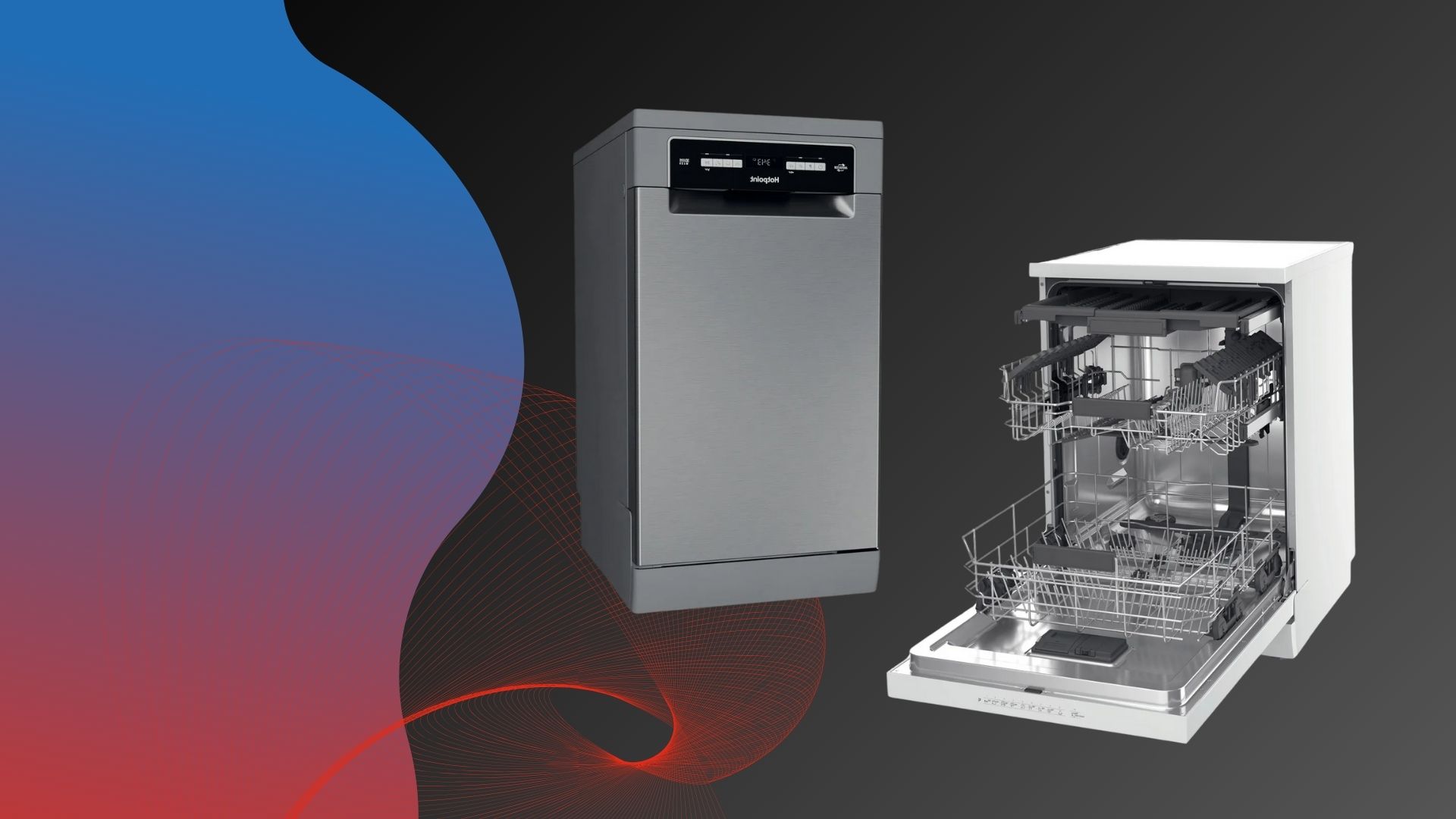
Between endless emails, factoring in the school run, making sure the fridge is stocked and any other responsibilities that keep you preoccupied throughout the day, there can oftentimes be so little space and energy left to tackle the dishes that having a dishwasher to hand feels like less of a luxury and more of a necessity. If you’re ready to claim black your free time, or upgrade from an existing appliance, we’ve got you covered with our guide to the best dishwasher you can buy.
In much a similar fashion to buying one of the best washing machines or the best fridge freezers, there’s a lot that needs to be taken into account before picking up a new dishwasher for your home, but your first port of call should be to decide whether you need a freestanding or an integrated model. The former can be placed anywhere with available space whilst the latter will need to adhere to your kitchen’s existing layout, so getting out the tape measure and pinning down the precise dimensions you have to work with is a must.
Once you’ve got the sizing and model pinned down, you can ignore any entries on this list that don’t fit that criteria and instead focus on the ones that apply, using our testing knowledge to better understand how they work when set up. We hook up each and every dishwasher in our dedicated testing facility, and we replicate standard cleaning scenarios that most households are likely to come up against, so we know exactly which dishwashers excel in what areas.
Because some dishwashers can cost well over £1000/$1000, we’ve made sure to include a variety of options across the entire price spectrum here, so if you are tied to a strict budget then you’ll still be able to find a model that works for your needs. Beyond the quality of the clean, we also make note of any additional features such as low-cost cycles to help you cut back on your energy bills, or smartphone connectivity that can let you know when a washing cycle is complete wherever you are.
There’s no denying that the world of dishwashers can feel like a crowded marketplace at times but thanks to the hard work of our tech experts, we’re able to cut out the noise and show you the appliances that are actually worth knowing about. If you’re curious to see more of the home appliance work that has been carried out by our team, then you can also read through our guides to the best cordless vacuum cleaners and the best hard floor cleaners.
SQUIRREL_ANCHOR_LIST
Every dishwasher is plumbed and run in first before we begin our testing. We fill each dishwasher with a typical domestic load of pots and plates, including wine glasses and plastics. We test the standard, main wash cycle and the Eco cycle on all machines, measuring the amount of water used, power used, time to completion and the noise during the fill and washing stages.
Loads of space
Good Eco running costs
Impressive third rack
Excellent cleaning power
A little expensive in its intensive wash
Not only does the Hotpoint Hydroforce H8I HT59 LS UK pack 10% extra usable space inside thanks to its Maxi Space tub, but it’s powerful and inexpensive to run too. It’s easily one of the best integrated dishwashers we’ve reviewed.
The Hydroforce H8I has three racks: a bottom rack for plates, middle rack and a top cutlery rack. Dive deeper and you’ll find there’s enough space for larger plates at the bottom and you can even fit up to six tall wine glasses on the middle rack. The top cutlery rack also offers space for more than just cutlery with a clever dip that’s designed to hold mugs and bowls.
Although its default setting is Eco mode which runs at 50°C, there are numerous options to choose from including Rapid Delicates, Auto, 3D Wash for especially dirty items, Half Load and Sani Rinse for sanitising items. You can also modify temperatures from 45°C up to 65°C.
We found that running the default Eco cycle cost just 16p each time, making it excellent value for an everyday appliance. Using the Auto mode with 3D Wash enabled costs 46p which, despite being quite a big leap, is only necessary for extra-soiled items. For faster cleaning you can select Rapid mode which runs for between 30 and 40 minutes, depending on what you select. This mode is more expensive at 31p, so isn’t a great option for everyday use but ideal if you need to wash dishes quickly.
Once the dishwasher comes to the end of a wash, a motor gently pushes the door open to allow steam to escape and help the plates to air dry.
Lots of space inside
Powerful cleaning
Very low running costs
Useful smart app
The manual doesn’t explain features very well
Water Jet Zone can’t be activated via the control panel
If you have a big household and are constantly battling with dirty dishes, then the Hisense HV693A60UVADUK is an easy recommendation.
With enough space to fit 16 place settings, you can comfortably fit everything from plates and cutlery to pots and pans in one single load. We even found that it didn’t matter which cleaning mode was used either, as all cycles resulted in outstandingly clean dishes. Not only that, but generally the HV693A60UVADUK had low operating costs too. For example, the Eco cycle which is best for everyday use costs just 15p to run which is easily the lowest we’ve seen for a full-sized dishwasher.
For trickier and more stubborn dishes then the 70°C mode, accompanied by Water Jet Zones and UV turned on offers exceptional cleaning results. However, at 49p a go, it’s a pricier option and should really only be used when necessary.
If you’re in a rush then you can opt for the speedy one-hour mode which runs at 65°C and costs around 32p. While it probably shouldn’t be used for the post-dinner clean up, it’s brilliant for coping with lightly soiled items. There’s also a seriously quick 15-minute mode which costs just 8p.
As a way of making the overall experience ever more intuitive, the accompanying ConnectedLife app lets you see exactly how much time is left before your chosen cleaning cycle is complete, plus there’s a light at the bottom of the appliance to let you know when everything is in operation. There’s also a helpful auto-dose detergent container which can take some of the overall maintenance out of your hands.
Tonnes of space inside
Quality stain removal
Wide range of cleaning cycles
Slightly expensive to run on intense cycles
The Hotpoint H7FHP33UK is perfect for larger families, thanks to its Maxi Space design, which provides 10% more space than a standard freestanding dishwasher.
Included are three racks which are flexible and can be adjusted accordingly to best suit the load. For example, the tines on the middle rack can be flipped up for stacking plates or flipped down to accommodate larger bowls.
When loading the middle rack we found that even our particularly tall wine glasses fit comfortably underneath the cutlery rack that sits at the top, which is a common nuisance with most standard-sized dishwashers.
Similarly the bottom rack has tines that are both spaced out at different intervals and are able to be folded down to accommodate larger dishes such as pots and pans. Away from its design, the Hotpoint features a wide range of programs and boasts brilliant cleaning results. The default mode is Eco at 50°C, which we found is the most efficient programme, but there are also three Auto programs where the dishwasher cleverly detects the soiling level of the dishes and adjusts the program accordingly.
Other programs include a Rapid 30-minute wash, Delicate and Self-Clean. There’s even a useful Active Dry option which automatically opens the door once a wash has finished, releasing steam and helping to air dry the dishes.
We found that running the default Eco cycle costs 22p, which places the dishwasher as a mid-priced option to run. This cost jumps up to 48p when using the intensive Auto mode with 3D Zone Wash switched on, while the fast wash costs 17p, but is only suitable for lightly soiled items.
Those with big families or who just tend to entertain often will appreciate the amount of space the Hotpoint HF7HP33UK has to offer, however it’s definitely not the cheapest to run for its more intensive cycles.
Stylish
Lots of cycles to choose from
Flexible internal space
The Hotpoint HSFO3T223WXUKN is one of the best slimline dishwashers we’ve tested and is the perfect option for those not blessed with kitchen space. All its controls are listed on the outside which includes an LCD that displays the selected mode, time remaining for a cycle and ways to select a desired mode.
There are a total of nine programs to choose from including an Eco 50°C, intensive clean, sanitising soak and self-clean. While the default Eco mode will work for most jobs, the Zone Wash 3D mode lets you select one of the two dedicated racks to wash for lighter loads.
Both of the racks are flexible with adjustable tines, fold down wine-glass holders (on the top rack), two adjustable holders (on the bottom rack) and a moveable cutlery basket which can be placed wherever.
To be expected with a slimline model, running the Hotpoint HSFO3T223WXUKN isn’t the most cost efficient option out there. Running the Auto Intense cycle cost approximately 38p whereas the Eco mode cost around 22p, with both cycles performing well and able to cope with dirty dishes. The 30-minute cycle costs just under 9p each time but is better suited for less-soiled items. Although the Hotpoint HSFO3T223WXUKN is a slimline dishwasher that offers more flexibility for smaller spaces, if you have a large family or simply want better value for money then we’d recommend going for a full-size dishwasher.
Third rack
Sturdy design
Good choice of wash cycles
Can struggle to fit taller items in
The Indesit DIO3T131FEUK is a great value dishwasher that boasts space and performs well even across particularly dirty dishes.
A full-size integrated dishwasher, the Indesit DIO3T131FEUK has space for fourteen place settings and includes three generously proportioned racks, although they aren’t quite as flexible as other similar-sized models like the Hotpoint H7IHP42LUK.
The middle rack in particular is fairly inflexible, as its tines for small plates and utensils aren’t able to collapse and, although it is height adjustable, lowering it means plates underneath can get caught. Otherwise, using the machine is simple with all the preset wash cycles listed on top of the DIO3T131FEUK’s door, which includes Eco 50°C, Auto Intensive 65°C, and a useful Push and Go option. The latter is designed for everyday use and runs a short cycles at 50°C.
To test the efficiency of the DIO3T131FEUK, we first ran its Eco mode and determined this costs a decent 24p per cycle. Although this isn’t the cheapest we’ve seen, cleaning performance was still generally good although tougher stains like dried egg did remain.
We then moved on to the Auto Intensive 65°C wash which although cost a pricier 38p to run, performed much better than the Eco mode and was able to make light work of dried-in stains.
If you need more cleaning prowess than Eco mode but not as much power as the Intensive wash, there’s the useful Auto Mixed mode that runs at 55°C and costs around 28p to run. Overall, the Indesit DIO3T131FEUK boasts a solid selection of wash cycles for all types of messes, a roomy inside and isn’t too expensive to invest in nor run. If you need a large dishwasher that just gets the job done, then this is a hard one to beat.
Large interior
Clever baking tray and wine glass holders
Powerful cleaning on higher temperatures
Eco mode is a little weak
If you’re looking for a budget-friendly freestanding dishwasher, the Beko BDEN38640FG is our pick of the entry-level models currently available. This dishwasher is attractive, well-built and surprisingly flexible with plenty of fold-down tines, a cutler rack and a wine glass and baking tray holder.
The Beko BDEN38640FG has a stainless steel finish and a neat LCD screen that displays the time remaining on a wash, giving it a sleek and stylish appearance. The actual controls can be found on top of the drawer, including a second screen that shows the estimated run-time.
The dishwasher includes all the standard cycles, as well as an AquaFlex everyday mode and an auto 40-65°C mode that detects how soiled dishes are. This model also features a CornerIntense arm that pivots around the tub for better corner-to-corner coverage compared to a fixed spray arm. Also inside the dishwasher, you’ll find a cutlery basket, cutlery rack, folding tines, fold-out supports for baking trays and fold-down wine glass supports. According to Beko, this is enough space for 16 place settings, though we have found that dishwashers with larger tubs, such as the Hotpoint H7FHP33UK, still offer more flexibility.
When it comes to performance, the Beko BDEN38640FG includes an Eco mode which cost us 23p per cycle and offered generally good cleaning, though it didn’t fully clean some of our tougher, dried down stains. For these, you’ll want to use the Intensive 70°C mode which increased our running costs to a still very reasonable 39p. The Auto and AquaFlex sit in between the two when it comes to performance, but neither managed to completely clean our bowl of scrambled eggs. There’s also a fast wash option for when you’re short on time, though this doesn’t dry dishes as comprehensively as other modes.
If you’re looking for a well-priced dishwasher and looks great, offers flexible storage and cleans well, the Beko BDEN38640FG is our recommendation.
Good eco running costs
Lost of internal space
Good wash performance
Top rack tines can’t be folded
Slightly confusing Power Wash mode
Let’s face it, sometimes we can just be too busy to fuss over the details of a new appliance, so if you’re in the market for a dishwasher that simply does the job well and doesn’t rack up much of an energy bill whilst doing so then the Hoover H-DISH 700 HF 6B4S1PX 80 is an easy option to recommend. Starting with the amount of space available, it’s hard to imagine the H-DISH 700 letting you down if you live in a large household or you’re hosting a sizeable dinner party. The internal space is so gargantuan that you can easily fit in 16-place settings, making short work of any post-dinner clean up.
Not only is there a ton of space available, but the H-DISH 700 also uses a unique arrangement on the bottom drawer that allows you to really cram in the crockery. Unlike what you’d usually see inside a dishwasher, this bottom drawer invites you to load in plates from front to back, as opposed to left to right.
For most clean-ups, the eco mode is more than capable of doing the job, and the best thing about it is that it only costs 18p per cycle to run, making it one of the more cost effective options out there. If you do want to skip any pre-wash rinsing however then there is a Power Wash mode that can really give stubborn stains a fight.
When everything’s loaded in, you can dive on over into the accompanying hOn app on your smartphone to select a wash cycle of your choosing. You can also use the app to see how long is left on any given clean, so you’ll know exactly when you can start putting everything away.How we test our Dishwashers
Pros
Cons
Pros
Cons
Pros
Cons
Pros
Pros
Cons
Pros
Cons
Pros
Cons
Test Data
Hotpoint Hydroforce H8I HT59 LS UK
Hisense HV693A60UVADUK
Hotpoint HF7HP33UK
Hotpoint HSFO3T223WXUKN
Indesit DIO3T131FEUK
Beko BDEN38640FG
Hoover H-DISH 700 HF 6B4S1PX 80
Energy consumption standard clean
1.67 kWh
–
1.767 kWh
1.335 kWh
0.933 kWh
0.879 kWh
1.216 kWh
Water consumption standard clean
17.1 litres
–
19 litres
16.9 litres
18.2 litres
26.5 litres
16.2 litres
Energy consumption eco clean
0.534 kWh
0.537 kWh
0.727 kWh
0.785 kWh
0.845 kWh
0.801 kWh
0.623 kWh
Water consumption eco clean
9.7 litres
7 litres
9.8 litres
8.6 litres
10.2 litres
11 litres
8.9 litres
Sound (normal)
–
–
46.3 dB
45 dB
–
–
–
Full Specs
Hotpoint Hydroforce H8I HT59 LS UK Review
Hisense HV693A60UVADUK Review
Hotpoint HF7HP33UK Review
Hotpoint HSFO3T223WXUKN Review
Indesit DIO3T131FEUK Review
Beko BDEN38640FG Review
Hoover H-DISH 700 HF 6B4S1PX 80 Review
UK RRP
£599.99
–
–
£339
£377
£469
–
USA RRP
–
–
–
Unavailable
–
–
–
EU RRP
–
–
–
Unavailable
–
–
–
CA RRP
–
–
–
Unavailable
–
–
–
AUD RRP
–
–
–
Unavailable
–
–
–
Manufacturer
Hotpoint
–
–
Hotpoint
–
Beko
Hoover
Size (Dimensions)
598 x 555 x 820 MM
598 x 555 x 816 MM
60 x 59 x 85 CM
450 x 590 x 850 MM
598 x 555 x 820 MM
598 x 600 x 850 MM
597 x 598 x 850 MM
Weight
–
33.5 KG
–
–
–
53 KG
52 KG
ASIN
–
–
–
–
–
B09KHJP3P8
B0D93C7XPR
Release Date
2023
2025
2023
2023
2024
2024
2025
First Reviewed Date
31/10/2023
14/05/2025
03/10/2023
24/05/2023
02/07/2024
28/01/2025
11/06/2025
Model Number
Hotpoint Hydroforce H8I HT59 LS UK
Hisense HV693A60UVADUK
Hotpoint HF7HP33UK
Hotpoint HSFO3T223WXUKN
Indesit DIO3T131FEUK
Beko BDEN38640FG
Hoover H-DISH 700 HF 6B4S1PX 80
Number of Place settings
14
16
15
10
14
16
16
Number of Racks
3
3
3
2
3
3
3
Height adjustable top rack?
Yes
Yes
Yes
Yes
Yes
Yes
Yes


Cisco has released security updates to patch a critical-severity Unified Communications Manager (Unified CM) flaw that allows attackers to gain root privileges.
Cisco Unified CM (formerly known as Cisco CallManager) serves as the central control system for Cisco IP telephony systems, handling device management, call routing, and telephony features.
The vulnerability (tracked as CVE-2026-20230) can be exploited remotely by threat actors without privileges in low-complexity server-side request forgery (SSRF) attacks.

“An attacker could exploit this vulnerability by sending a crafted HTTP request to an affected device. A successful exploit could allow the attacker to write files to the underlying operating system that could be used later to elevate to root,” Cisco said.
“Cisco has assigned this security advisory a Security Impact Rating (SIR) of Critical rather than High as the score indicates. The reason is that exploitation of this vulnerability could result in an attacker elevating privileges to root.”
Cisco’s Product Security Incident Response Team (PSIRT) is aware of publicly available proof-of-concept exploit code for CVE-2026-20230, but has yet to find evidence of active exploitation or targeting.
Luckily, the vulnerability only impacts systems where the WebDialer service is enabled, and WebDialer is disabled by default.
To check whether WebDialer is enabled, log in to Cisco Unified CM Administration, go to “Cisco Unified Serviceability,” click “Go,” and check the service status in the Tools > CTI Services menu under “Control Center – Feature Services.”
While there are no workarounds to mitigate this vulnerability, and it’s highly recommended to install Cisco Unified CM versions 14SU6 or 15SU5 (Sep 2026 or COP), administrators can also disable the WebDialer service until a patch is applied to block any incoming CVE-2026-20230 attacks.
To disable WebDialer, go through the following steps:
In January, Cisco fixed another critical Unified CM vulnerability (CVE-2026-20045) that has been actively exploited as a zero-day in remote code execution attacks.
Over the past several years, the company also removed a Unified CM backdoor account that allowed remote attackers to log in to unpatched devices with root privileges, and patched another flaw (CVE-2024-20253) that enabled threat actors to gain root access to vulnerable systems.
Over the past five years, the U.S. Cybersecurity and Infrastructure Security Agency (CISA) tagged 91 Cisco vulnerabilities as actively exploited in the wild, six of which have been used by various ransomware operations.

Security teams log 54% of successful attacks and alert on just 14%. The rest move through your environment unseen.
The Picus whitepaper shows how breach and attack simulation tests your SIEM and EDR rules so threats stop slipping by detection.

If Alphabet’s record-breaking $85 billion stock sale signals investor appetite for AI-related offerings — and it does — we can safely say that investors are voracious.
Google’s parent company had initially intended to sell a first tranche of $40 billion worth of various equity instruments — two different classes of shares, plus smaller “depositary shares” priced to be accessible to a broader range of investors. But the offering was so oversubscribed that it raised $45 billion instead, CEO Sundar Pichai said in a post on X on Monday. Among the buyers: Berkshire Hathaway, still known for its love of value investing, picked up $10 billion worth.
Alphabet plans to sell another $40 billion worth next quarter, for $85 billion total.
Even $80 billion would have topped the record for equity offerings previously set by Brazilian oil producer Petroleo Brasileiro SA, which raised $70 billion in 2010, Bloomberg reports.
Now, it’s true that these investors are buying shares of Alphabet, not shares in a younger, possibly debt-riddled AI startup. Alphabet is a very healthy business: $110 billion in revenue (with high profit margins) in Q1 alone, up 22% year-over-year.
Still, the money from this stock sale is earmarked for AI. “Part of our multi-year investment strategy to meet the AI opportunity ahead and support the demand we’re seeing from enterprises and consumers,” as Pichai described it. At Google I/O last month, he said the company expects to spend between $180 billion and $190 billion on capital expenditures — largely on AI infrastructure and data centers — before the year is out.
The timing matters beyond Alphabet itself. As Anthropic gets ready to go public, this enormously successful stock sale is a very good sign for the broader AI IPO pipeline. It indicates that public investors, particularly the deep-pocketed institutional ones, are ready to pony up.
The upcoming SpaceX IPO is expected to smash records for cash raised and valuation, and Anthropic’s deal is expected to do the same, possibly surpassing SpaceX. OpenAI is also waiting in the wings.
But all of this rests on public investors’ appetite — not just private VCs — remaining strong, and then staying that way. An unprecedented nearly $8 trillion in AI spending has been committed over the next five years. That money has to come from somewhere — and that somewhere includes individual company revenues, loans, and capital raised through stock sales. Whether public markets have the stomach to absorb that much, for that long, is the question that every AI company eyeing an IPO should be thinking about right now.
When you purchase through links in our articles, we may earn a small commission. This doesn’t affect our editorial independence.
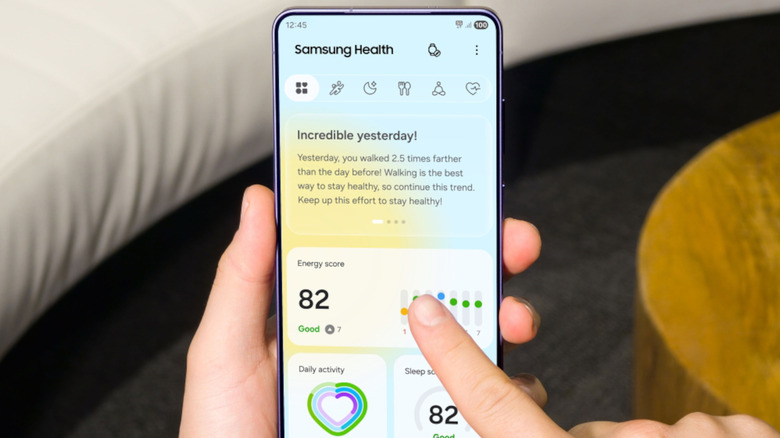
The new app was designed to showcase the upcoming Galaxy Watches’ capabilities.
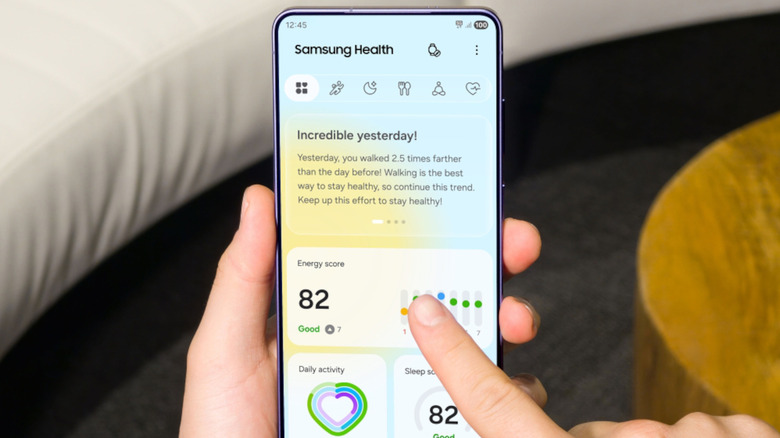
Samsung will start rolling out an update on June 8 that will make its Health app more useful in everyday life. The company says that updated app will translate “complex biometric data — from overnight sleep to daily activity — into simple, actionable guidance.” It will also showcase features that will be found on the Galaxy Watches that the company is launching this year.
As you’ve probably already expected, the features in the updated Health app will be powered by generative AI. The new Vitals feature, for instance, will use AI to analyze your heart rate, heart rate variability, respiratory rate, skin temperature and blood oxygen against their true resting baseline overnight. If the app detects meaningful deviations, it will send you a notification to say if you need more rest or if it’s possible that you may be fighting an illness. It’s the an upgraded version of the Energy Score in the old app
The old Health app can already give you information on your vascular load, which is the work your heart has to do to pump blood throughout your body. Now, the app’s Vascular Load function is turning into Heart Health Score. It combines metrics monitored by the Vascular Load feature, including sleep, stress and activity, with body composition data. The app will literally score your heart health and give you advice on how to improve it, such as taking more steps or eating bananas and other food rich in potassium.
Another new feature called Daily Cardio Load can recommend optimal training targets and rest times while working out, based on your metrics and overall profile. Meanwhile, Fitness Index will analyze your daily steps and your metrics, such as your heartrate and VO2 max or the maximum amount of oxygen your body can use during intense physical exercise, and then compare them against your peers. It will then give you personalized goals so you can focus on specific fitness aspects you may want to improve, such as your endurance or your strength.
While the Health app’s features will work across Galaxy mobile phones and connected devices, Samsung says these advancements “will be fully realized with the launch of Samsung’s next generation of Galaxy Watches.” Samsung is expected to unveil the new Galaxy Watch 9 and Ultra 2 at an Unpacked event this July.


For the first time in 13 years, the Fortune 500 has a new No. 1— and it’s Amazon.
The Seattle-based e-commerce and cloud giant knocked Walmart from its familiar perch atop the ranking of the biggest U.S. companies by revenue.
Amazon surpassed $700 billion in revenue in 2025 with a 12% year-over-year jump. Just over 20 years ago, the company made its debut on the list at No. 492.
Only four companies have ever held the No. 1 spot in the 72-year history of the Fortune 500 list: General Motors, ExxonMobil, Walmart, and now Amazon.
Walmart fell to No. 2 for the first time since 2012. Here is the top 10:
The companies on the list combined for $21.0 trillion in revenue and $2.1 trillion in profits last year, while employing 30.5 million people worldwide, according to Fortune.
Amazon posted first-quarter sales of $181.5 billion, up 17%, and operating income of $23.9 billion, up 30%, in earnings reported at the end of April. Amazon Web Services growth accelerated to 28% in the first quarter — its fastest pace in nearly four years.
The tech giant, which employs 1.5 million globally, laid off 16,000 corporate employees in January in the second phase in a restructuring that began last October and totals 30,000 positions — adding up to the largest workforce reduction in the company’s history.
Additional tech-focused nuggets from the Fortune 500 list:





Waymo dominates autonomous vehicle registrations as Tesla trails behind


This is BROKEN! INSANE 5x MONEY CAR WASH WEEK! The NEW GTA Online UPDATE Today! (GTA5 New Update)

SpaceX just won a second Golden Dome contract. This one is $4.16 billion.


Jade Biosciences, Inc. (JBIO) Discusses Positive Interim Results From JADE101 Phase I Healthy Volunteer Study and Development Plans Transcript


SHE IS KILLING XRP!!! WATCH URGENT AND ACT FAST

FIRST NIGHT REVIEW: Take That bring the Circus back to life in spectacular sun-soaked style


Is the Spurs Phenom Already Better Than Prime Diesel?

CFTC Has Approved the First Regulated Bitcoin Perpetual Contract in the U.S.


The House | Inside Andy Burnham’s Makerfield Campaign: “Nobody Thinks This Is In The Bag”


French Open 2026 results: Alexander Zverev beats Rafael Jodar and will play Jakub Mensik in semi-finals

Novak Djokovic v Joao Fonseca LIVE: French Open latest scores and results after Jannik Sinner’s shocking collapse

Weak ‘Supergirl’ Box Office Tracking Amid Milly Alcock Backlash

Snowflake (SNOW) Stock Rallies on Strong Q1 Results and AI Product Growth


CryZENx Releases Fresh Playable Content Deep Inside Jabu-Jabu for His Ocarina of Time Remake


Maddox Jolie-Pitt Legally Requests to Drop Brad’s Surname


Demand Conditions Improve In Chemicals Sector In April 2026

One of the Greatest Sitcoms of All Time Shoots Up Apple TV’s Charts 11 Years Later


This Week In Security: Ubiquiti Fixes, And FreeBSD Joins The Club You Don’t Want To Join


MicroStrategy Moves $30 Million in BTC to Coinbase Prime: Is the Bitcoin Sell-Off Already Here?

Bruce Willis’ Generosity Resurfaces Amid His Dementia



You must be logged in to post a comment Login