A violent teenager who stabbed a beloved grandfather to death in an unprovoked attack had been released on police bail – twice – in the days before the murder, The Independent can reveal.
Rasheed Rahman plunged a five-inch knife that he had signed out from his supported living accommodation into the back of Mark Carroll, 55, as he walked in a small London park with a friend.
The attacker, then aged 19, who was not known to Mr Carroll, fled the scene still armed with the murder weapon, sparking an hour-long manhunt. He threatened two other people with the blade before he was caught.
Three days before the killing, on 7 April 2024, Rahman, a Sudanese national who lived undocumented in the UK before being picked up by immigration officers while working at a restaurant in Essex in 2021, had been arrested after he allegedly lashed out at members of the public. He was said to have punched at least two people on a canal towpath in Camden Town, London, while waiving a boat hook.
Advertisement
Just a day earlier, he had been arrested after allegedly using a brick to smash a window to break into an office in a church. Despite his spiralling behaviour, Rahman was released on police bail – leaving him free to kill.
Now, the Metropolitan Police has launched an investigation into contact police had with Rahman in the days leading up to Mr Carroll’s murder on 10 April – and whether anything could have been done to stop the killing – after Rahman was convicted of murder.
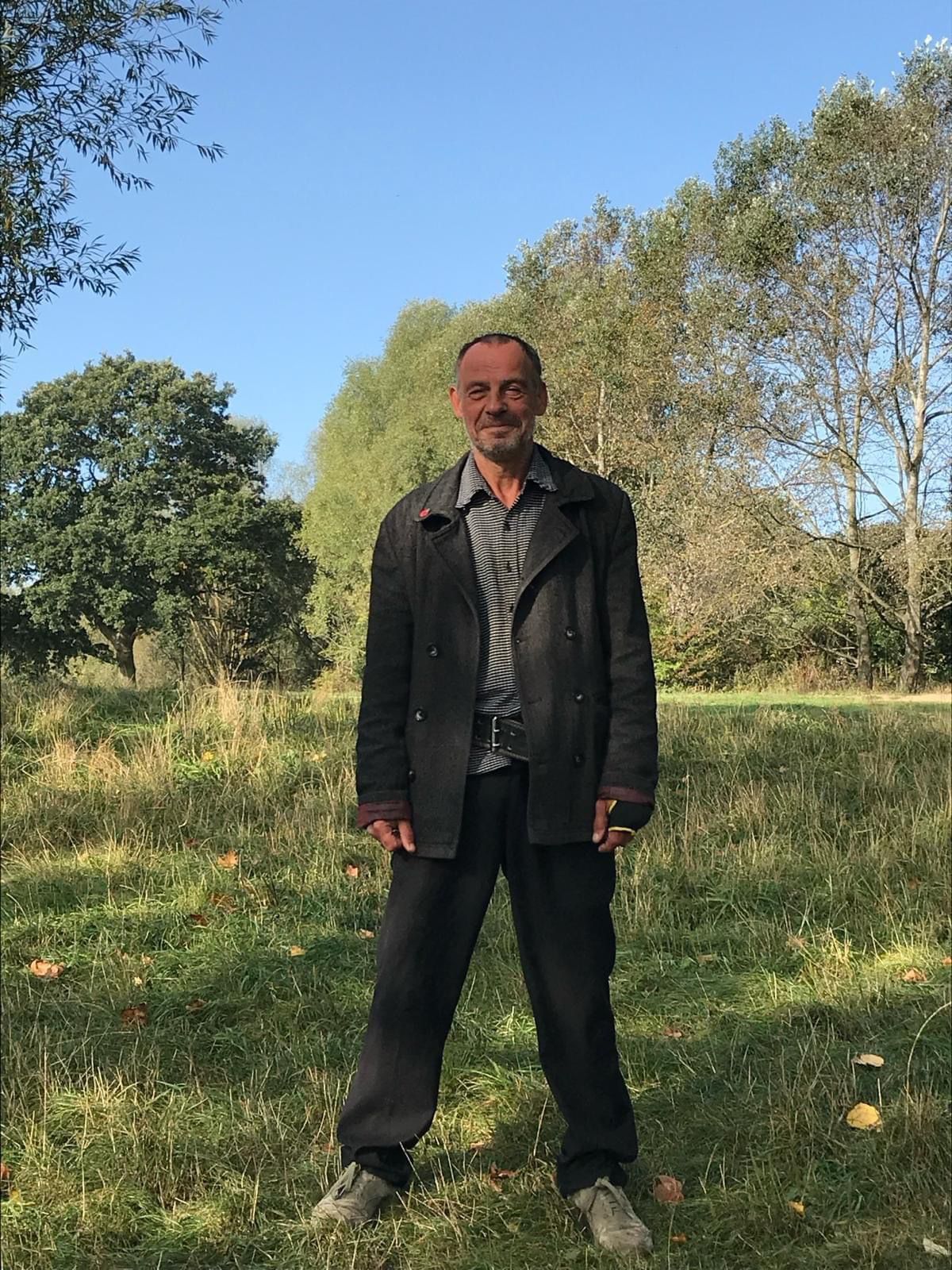
Mark Carroll was described as ‘one of the most giving people I knew’ by his daughter Ayisha (Metropolitan Police)
But other questions remain about the “worrying” attack, with charity Hundred Families, who are supporting Mr Carroll’s family, warning that institutions are repeatedly failing to stop unwell people from going on to commit violent crimes.
Rahman was known to Romford mental health services and had suffered from drug psychosis as a result of alcohol and drug misuse, a court was told.
Charity director Julian Hendy said: “It is a worrying case. A man was stabbed by a stranger in a London park and it should never have happened.”
Advertisement
It is unclear when Rahman first entered the UK, but he told officials he had come to Britain in a lorry through Calais, northern France. On his discovery, he claimed asylum as a child from Sudan and was granted temporary leave to remain in the UK until March 2028.
In the lead up to the fatal attack on Mr Carroll, Rahman had been told that he was due to move out of his flat, which was run by a private company offering supported housing for young people, on 11 April.
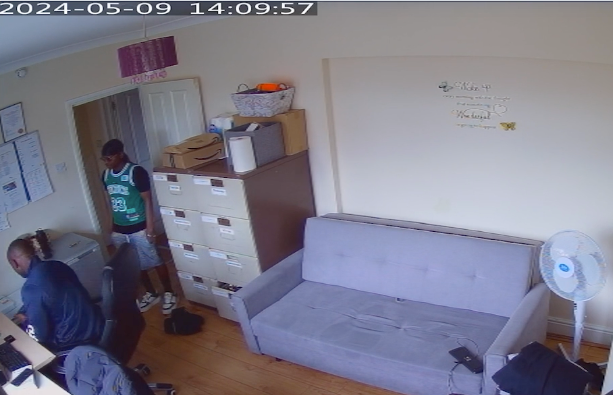
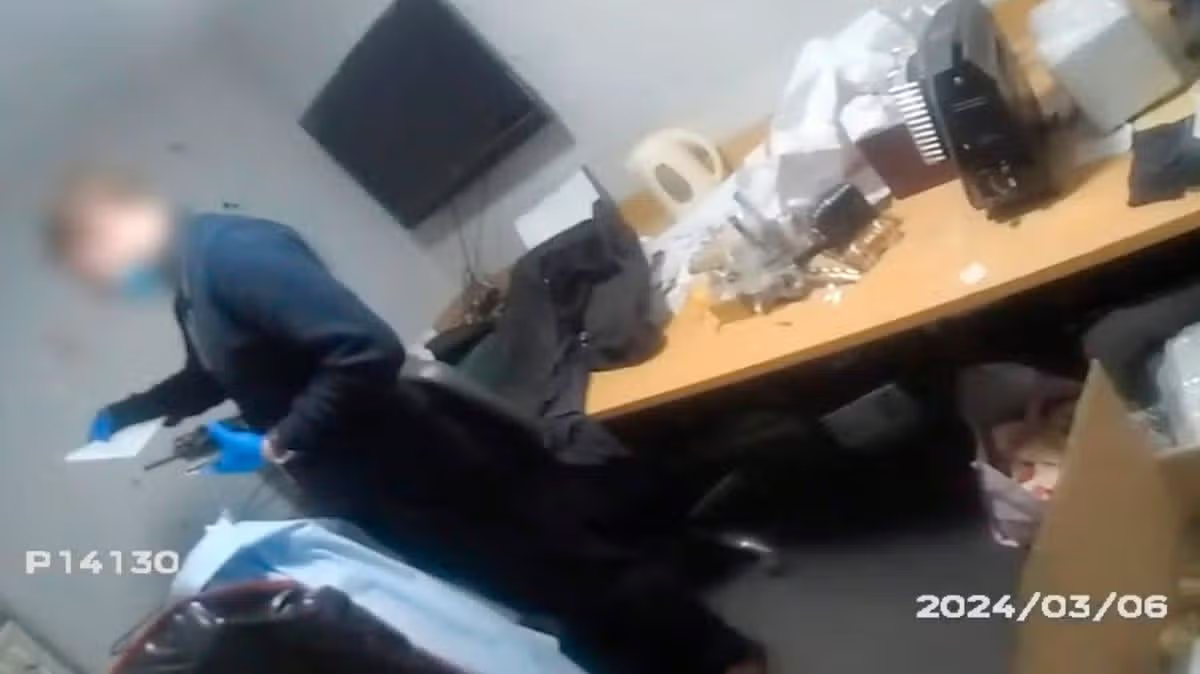
At around 2pm in the afternoon the day before the stabbing, Rahman, wearing a green basketball top, blue shorts and a black bandana, signed out a kitchen knife from an Asda set which was kept by the office at the five-bed property, with house manager Idris Bello making a note of it in the “sharp knives log”. Residents were not allowed to own sharp objects and had to have knives booked out if they wanted to cook.
But the knife was never returned. Instead, Rahman left his hostel that afternoon, taking the weapon into central London, and used it to kill Mr Carroll the next day.
Advertisement
Mark Carroll would frequent St Martins Gardens in Camden (pictured), where he would ultimately die at the hands of Rahman (Metropolitan Police)
Mr Carroll, known as Mogi to his friends, was a Camden local with a huge heart. He would always strike up conversations with people and would accept them as they were, without judgement, his family said.
One of his two daughters, Ayisha Carroll, told The Independent: “He was probably one of the most giving people I knew. He was such a kind person. He didn’t have very much himself but he would always be giving away to people. He was a very down to earth person as well, and accepting of people as they are.”
Referring to Rahman, Ms Carroll added: “I know that he suffered and struggled but that doesn’t entitle you to take someone’s life. I want my dad to be remembered for who he was.”
On the morning of the 10 April, Mr Carroll and his friend of 20-years James Nash were drinking inSt Martins Gardens, Camden – which they visited often – with Mr Carroll seen on CCTV from around 11am.
Over the next two hours, they chatted to other people, including some workmen on their lunch break. The pair had been drinking alcohol and gradually became more vulnerable.
Advertisement
During the murder trial at Wood Green Crown Court, Mr Nash said he was standing in front of Mr Carroll when someone came at him from behind. “That person was a distance behind him. I saw him lunge at him from behind. There was no argument, nothing,” Mr Nash said.
CCTV footage shown to the court showed Mr Carroll staggering into sight, trying to walk towards Mr Nash before he collapsed to the ground at around 13:11pm.
Ten minutes later, ambulances, paramedics and the police arrived, and he was taken to University College Hospital, where he was pronounced dead.
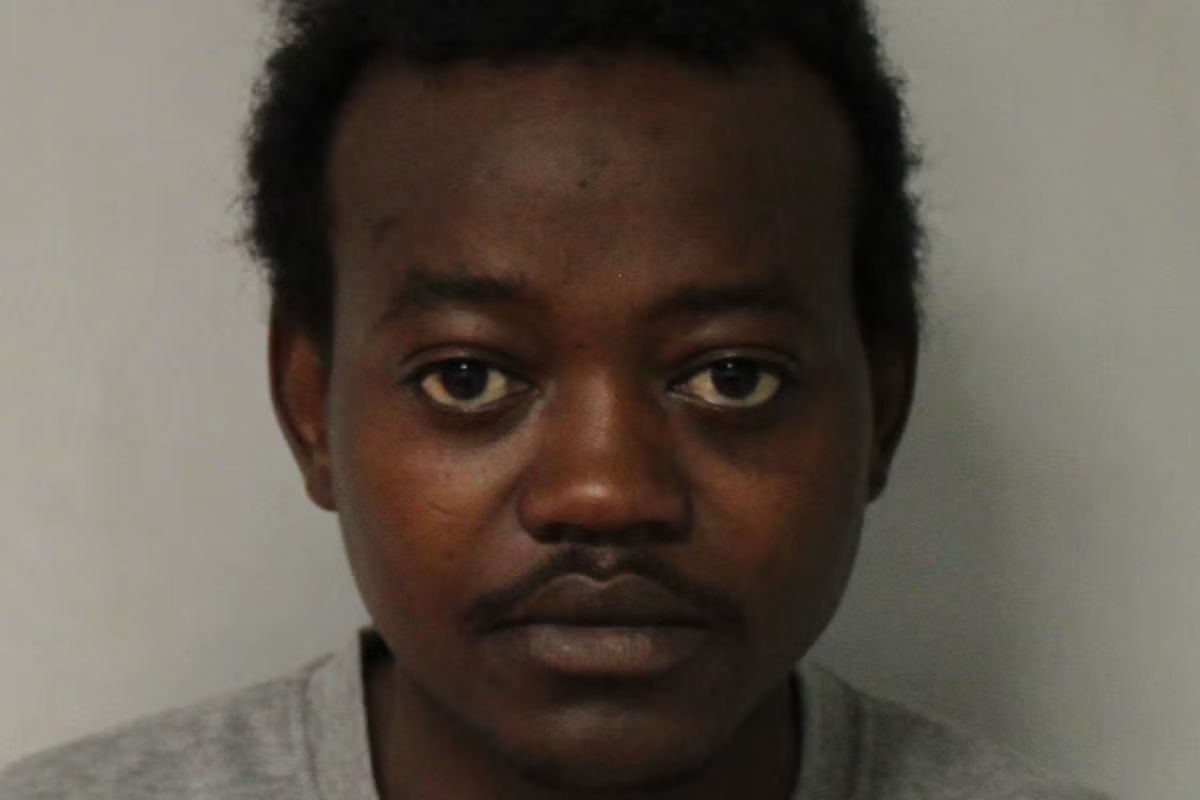
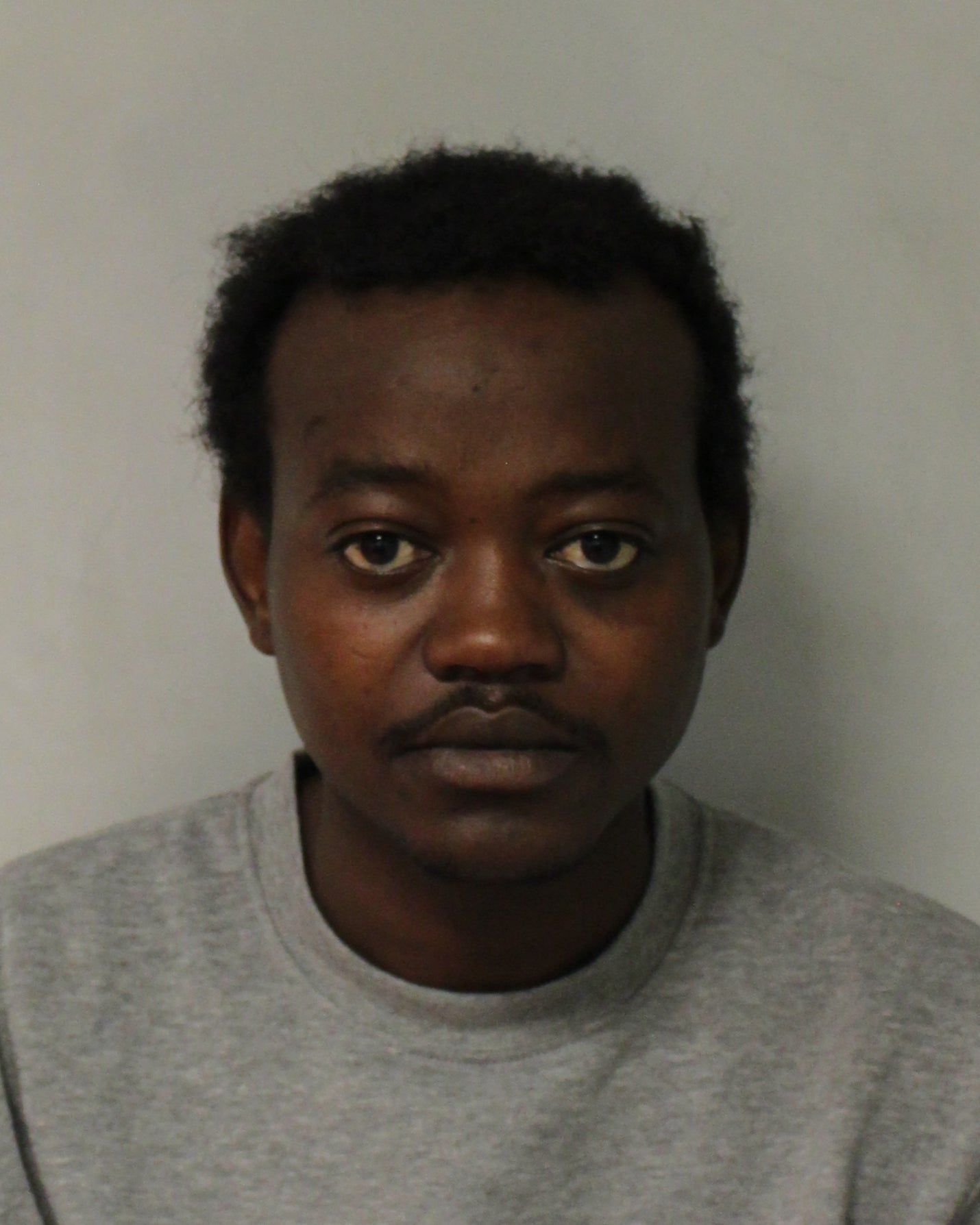
Rasheed Rahman was known to police before he killed Mark Carroll in April 2024 (Metropolitan Police)
Louis Mably KC, for the prosecution, told the court that a single fatal knife wound in his back had landed behind his heart, severing his aorta, the main artery in the body that pumps blood from the heart.
“The blade had gone into his back, gone downwards, and cut through everything it had come across… Because the aorta had been damaged, Mr Carroll had suffered massive internal bleeding. It was catastrophic and fatal.”
Advertisement
While friends and paramedics rushed to help Mr Carroll, Rahman was already walking through Camden, still armed with the murder weapon. A nine-minute walk away in Arlington Road, witness Kamran Khail found him, standing and staring at him, in front of the hostel where Mr Khail was living.
“When I see him staring at me, I thought something was wrong,” Mr Khail recalled. “He didn’t tell me anything at that time, just he was staring. I was in fear, so I thought I should return back to the hostel”.
He added: “When I was walking he was also walking, when I was stopping he was also stopping… as I turned [back] to the hostel, he told me to stop.”
Rahman pulled the knife from the pocket of his jacket and held the blade to Mr Khail’s body. “He was saying in English, come with me… I thought he was going to kill me.”
Advertisement
Mr Khail was able to escape, fleeing into the hostel, where he alerted police.
The murder weapon Rahman signed out from the kitchen of his accommodation (Metropolitan Police)
Rahman then made his way to Gloucester Avenue, where he approached Kamil Hamma and his friend who were about to dock their Santander bikes. Rahman demanded he take Mr Hamma’s bike instead.
Mr Hamma told the trial: “He was quite adamant, consistently asking me for the bike, obviously I said no. He was about a metre-ish away, that was when he started grabbing the bike and getting a bit closer to me.”
They had a tussle before Rahman pulled out a knife. “I just saw the blade and got very kind of scared. He just took it out and said ‘give me your bike now’, to which I obviously backed off and let him take it.”
Video footage shows Rahman cycling towards Camden market when the knife falls out of a pocket and hits the ground. He stops to pick it up – a moment spotted by a keen-eyed coach driver who phoned the police.
Advertisement
Just before 2pm, officers tracked Rahman down to Castle Haven park, just half a mile from where the killing took place. There, they found the knife, with Mr Carroll’s blood on it, hidden in a plastic bag in a nearby bush.
A CCTV grab shows Rahman being handed a knife from the set kept in the supported accommodation office. (Metropolitan Police)
Rahman was found guilty of murder, robbery and two other knife offences at his trial last month and will be sentenced at a later date.
He had previously pleaded guilty to affray and actual bodily harm over the events of the 7 April, with his sentencing yet to take place. Though he was charged with burglary over the incident on the 6 April, the Crown Prosecution Service offered no evidence against him.
Though Mr Carroll’s family are relieved they now have a guilty verdict, Mr Hendy said there were still questions to be answered about how Rahman was able to attack people with a knife.
He said: “This is happening far too often. We are seeing repeated problems with mental health support and other services, a lack of joined up working between agencies. Seriously unwell people are not being looked after well enough in the community and it is allowing tragedies to happen.”
Advertisement
The accommodation where Rahman lived houses young people transitioning from care, or who have complex needs or challenging behaviour, or who are unaccompanied asylum seekers. Rahman’s case did not involve any mental health defence.
Mr Hendy added: “There are certain questions to be asked of the accommodation provider; how was a man with apparently serious mental health illness able to access knives?”
He asked: “Does this warrant an offensive weapons review, and is there learning to be had from this to protect unwell people and members of the public?”
Meanwhile, Ms Carroll described her father as someone you could call on at a moment’s notice.
Advertisement
“He was always a message, a phone call away. He got up so early so, if I was on night shifts, he would give me a ring and we would have a chat,” she said.
“He had his own mental health difficulties, and I’ve been struggling knowing that he passed away when he should have had more support around him.”
She added: “There’s one Irish gentleman who he knew from the park, Tom, that dad would always go and check in on, when he was recovering from ill-health. Now whenever my sister and I visit the park to drop flowers there, the plants are always so well-kept by those who knew him.”
A grandfather, Mr Carroll loved the simple joy of visiting his eldest daughter, Danielle Morley, and her two children. And remained life-long friends with Ayisha’s mother, supporting her in periods of ill-health.
Advertisement
Ms Morley remembered his visits fondly, saying: “When dad came down to see me and the girls, the house was always full of laughter, love and happiness. Watching him with his granddaughters created memories that are so special and meaningful to me, and moments I will never forget.
“He absolutely adored them, and I could see how much joy they brought him every single time he was with them.”
She added: “Even though he’s no longer here, the warmth, love and happiness from those moments will always stay with me. The girls will always carry a part of their granddad with them through the stories, memories, and love he gave so freely.”
A Met police spokesperson told The Independent that it would be inappropriate to comment while the internal review is ongoing.
Advertisement
The force would not need to refer themselves to the regulator (The Independent Office for Police Conduct) over the murder as referrals are only mandatory if officers have had previous contact with the victim, not the perpetrator.
A Home Office spokesperson said: “Our thoughts are with Mr Carrol’s family and friends at this difficult time.
“All foreign national offenders who receive a prison sentence in the UK are referred for deportation at the earliest opportunity, with nearly 70,000 illegal migrants and foreign criminals removed or deported since the 2024 election.”
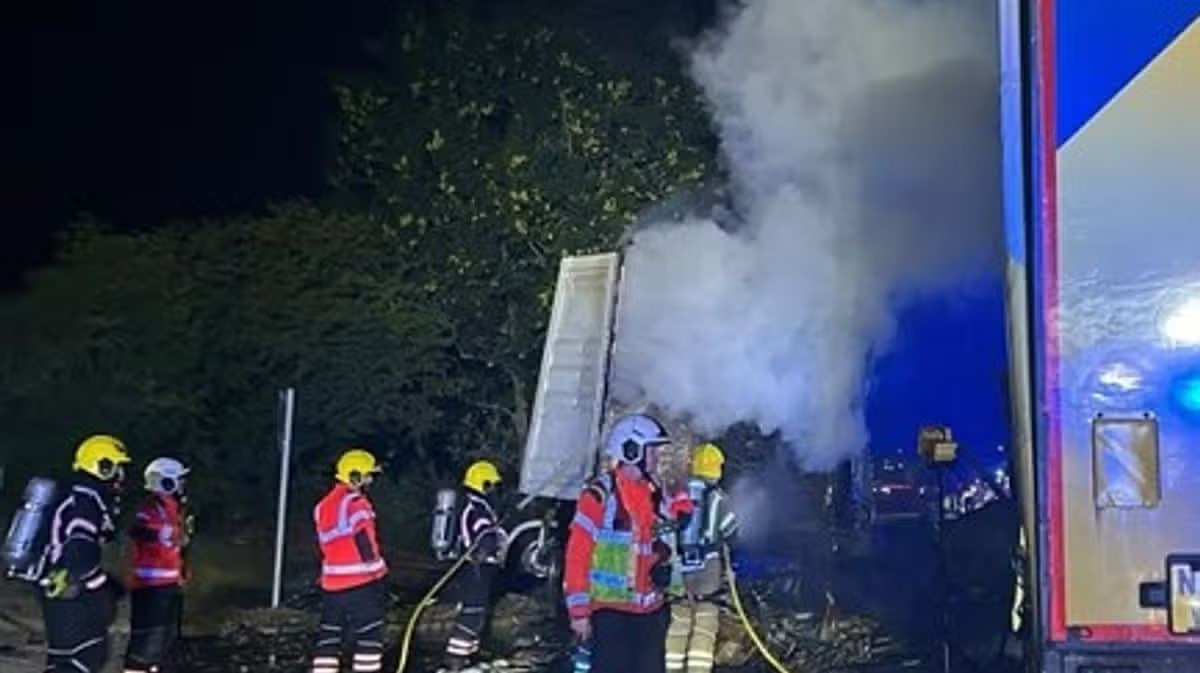
Firefighters were called to a record number of incidents over the last weekend
The fire service has said crews are working in ‘punishing conditions’ after a record number of incidents last weekend. Between Friday (July 24) and Monday (July 27), firefighters were called to more than 120 incidents – significantly higher than its three-year average of 94 incidents.
Advertisement
Assistant chief fire officer Stuart Smith said the hot weather is putting more pressure on the service. He said: “Our crews have been worked extremely hard by the conditions over the last few days. It is common to see an increase in fires during spells of hot weather, and we do plan for this. However, the temperatures we’ve experienced, for the length of time we have, make the conditions very tough.”
Peat fires have caused a significant issue for crews. Fires like the one at the Holme Fen Nature Reserve tend to burn over several days.
Stuart added: “Peat fires present significant challenges for us, as they are often unseen, being predominantly underground. It makes not only finding and containing the fire extremely difficult, but the heat on the floor makes it very dangerous for firefighters to tackle the fire.
“Not only this, but water supplies are also often an issue, meaning we have to commit several fire engines to ensure we have enough. Our crews have been maintaining regular presence at two separate peat fires, in Whittlesey and Holme Fen. These have been especially gruelling due to the amount of incidents crews are attending and the severe heat.”
Advertisement
Residents are being urged to stay fire safe. Stuart said: “We know during the school summer holidays, especially when the weather is hot like this, people want to make the most of it. We just want to highlight that everyone can do this safely just by thinking beforehand and following a few of our fire safety tips.
“Having a barbecue is a great way to get together with family and friends, but they can easily lead to a fire if people don’t follow some basic safety tips. Things like keeping the area supervised and lighting the barbecue away from fencing, buildings and garden furniture, keeping a bucket of water close by, and only disposing of the charcoal ashes once completely cooled.”
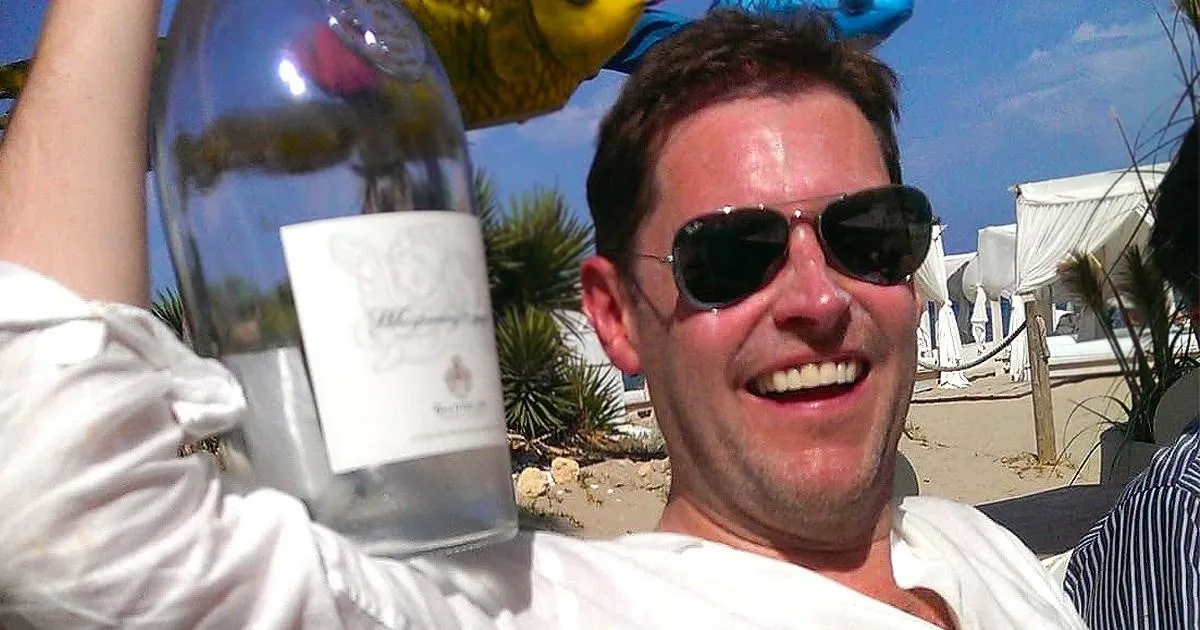
Tributes have flooded in for late entertainment publicist Neil Reading (Picture: PA)
Leading celebrity publicist Neil Reading, described as ‘quietly magnificent’ and a ‘one-off’, has died aged 56.
The entertainment PR to the stars, who founded Neil Reading PR,died after a short illness.
During his career, he represented a whole host of high-profile clients including comedians Dawn French, John Cleese, the late Victoria Wood, as well as John Bishop, Sir Lenny Henry, Paul McKenna and Jason Manford.
In a heartfelt tribute, the French and Saunders star said: ‘Neil Reading was a one-off, such a kind, decent, intelligent man, a proper gentleman in the old-fashioned way, quietly magnificent.’
Advertisement
Sharing how they built ‘a very real and trusting friendship’, she added: ‘He has been my ally and fierce protector through so much and for so long. I don’t quite know how I’ll manage without him. Sleep tight darlin’ heart.’
Meanwhile, Manford praised him as a ‘trusted friend of almost 20 years, a confidant and one of the most loyal, noble, brilliant men I have ever known.’
Reading died aged 56 after a short illness (Picture: Reading family/PA Wire)
Reading has built a well-respected reputation for himself across the TV industry since launching his agency in 1992. Neil Reading PR also launched a string of West End shows including High Society, Only Fools and Horses, and Fawlty Towers – The Play.
Bishop said: ‘Neil was a true gentleman. He was too humble to realise how much he meant to people and I know he will be greatly missed’ while McKenna called him ‘one of the finest people I’ve ever known’.
Another of his clients, Monty Python’s Cleese, called him ‘a very kind, protective, sensible and caring man, who looked after his clients with great skill’ and concluded he shall ‘miss him very much’.
Advertisement
He represented clients like Dawn French (Picture: PA Wire)
Jason Manford said he was ‘one of the most loyal, noble, brilliant men’ (Picture: Ken McKay/ITV/Shutterstock)
Piers Morgan shared that it was ‘incredibly sad news’. He continued; ‘Neil was a a brilliant PR man, one of the very best in the business who really cared about his clients.
‘He was also fantastic fun, I had so many great times with him over the years. My deepest condolences to all his family.’
‘Saddened to hear that Neil Reading has died, shockingly young, much love to his wife and daughter – he was so much more than a “PR guru” he cared so much about his clients and was decent and honest, a gentleman and a friend,’ BBC contributor David Yelland echoed.
‘Neil Reading was honest, hard working, loyal and a true professional. He was also great fun. Most of all he was devoted to his family,’ Keir Simmons shared.
Fellow PR man Neil Wallis called him ‘a brilliant, true, loyal, brave & wonderful friend’, sharing it was ‘so so sad. I’m bereft, as will be anyone who had the joy of knowing him & being his friend.’
Advertisement
He is survived by his wife Claire and daughter Rosa.
The number of people who have died after a powerful earthquake hit southwestern Japan has risen to 34, authorities in Kumamoto prefecturesaid on Thursday.
Rescuers are still working to find survivors after the magnitude 6.8 earthquake hit Kumamoto prefecture on Kyushu island on Tuesday, causing widespread damage to houses and power lines.
Several people died after part of a shopping centre collapsed and an explosion ripped through the mall about an hour later.
Thousands of displaced residents are now staying in evacuation centres – though the challenge is to keep them cool and hydrated as the region battles sweltering heat.
Advertisement
Temperatures could reach 39C in the prefecture in the coming days, according to forecasts, with officials urging survivors and rescuers to take precautions against heatstroke.
On Wednesday, Japan’s defence minister Shinjiro Koizumi announced the delivery of 300 air conditioners to Kumamoto, with 150 of the units bound for evacuation centres.
Around 9,000 displaced residents have been put up in evacuation centres, and more than 30,000 households were out of power as of Wednesday.
Yukiya Sanoue, who works at one of the centres, told the BBC that heat stroke was the biggest concern at his facility, which hosts about 1,000 people. About 30% of the people at his evacuation centre are senior citizens.
Advertisement
He said their electricity and water supplies had stopped since the earthquake, and the centre had been without air conditioning until Wednesday afternoon when they received a generator.
Quite a few people are suffering from conditions similar to heatstroke, and several have been taken to hospital, he said.
More than 100 aftershocks have been recorded since the initial quake, and many have taken to sleeping in their cars for fear of further tremors.
The man who stabbed and partially blinded author Salman Rushdie at a speaking event in 2022 could spend the rest of his life behind bars after being found guilty of terrorism.
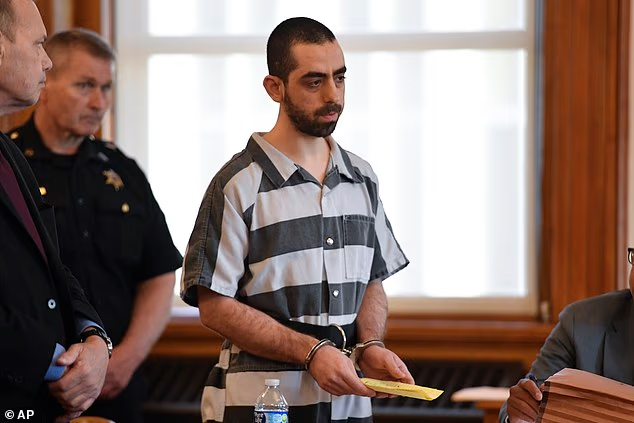
Hadi Matar, 28, already serving a 25-year prison term on state charges of attempted murder for the knife assault, faces the maximum penalty when he is sentenced on his federal conviction on November 3.
A US District Court jury in Buffalo, New York, deliberated for only two hours before finding Matar guilty on all counts on Wednesday — attempting to provide material support to Lebanon’s Iran-backed militant group Hezbollah, a US-designated terrorist organisation; engaging in terrorism transcending national boundaries; and providing material support to terrorists.
The verdict capped a trial that began last Tuesday and included prosecution testimony from Rushdie, 79, winner of the prestigious Booker Prize for his 1981 novel, ‘Midnight’s Children.’
Advertisement
Neither Matar nor anyone else was called to the witness stand by the defence.
At the time of the attack, Rushdie had faced threats on his life since the 1988 publication of his fourth novel, ‘The Satanic Verses.’
Ayatollah Ruhollah Khomeini, then Iran’s supreme leader, denounced the book as blasphemous, and in 1989 issued a religious edict, or fatwa, calling on Muslims to kill Rushdie and anyone else involved in the book’s publication.
Khomeini’s fatwa led to a multimillion-dollar bounty and several other acts of violence, including the 1991 murder of Rushdie’s Japanese translator, Hitoshi Igarashi.
Advertisement
Hadi Matar, pictured in 2025, has been found guilty of federal terrorism charges and could spend the rest of his life in prison
Author Salman Rushdie, pictured in 2025, was left partially blind after Matar stabbed him more than a dozen times during a speaking event in New York in 2022
This still image from video shows Hadi Matar, 24, of Fairview, N.J., at left, being escorted from the stage as people tend to author Salman Rushdie, center right, at the Chautauqua Institution, in Chautauqua, N.Y., Friday, Aug. 12, 2022
Advertisement
The Iranian government distanced itself from the fatwa in 1998. But the edict was endorsed in 2006 by Hezbollah’s secretary general and reaffirmed in 2017 by Khomeini’s successor, Ali Khamenei, according to the US Attorney’s Office.
According to evidence presented at his trial, Matar spent more than a year researching the fatwa before attempting to fulfil the edict with an attack on Rushdie while the author was on stage speaking at the Chautauqua Institution, an arts and education centre, in Mayville, New York, on August 12, 2022.
Rushdie, who spent the first decade of the fatwa in hiding, was stabbed more than a dozen times in the head, neck, torso and left hand.
The Indian-born author lost sight in his right eye and suffered damage to his internal organs. A second man also was wounded in the attack.
Advertisement
Audience members rushed onto the stage to subdue the attacker.
US-born Matar, who also has Lebanese citizenship, lived in Fairview, New Jersey, and was found guilty of attempted murder in a New York state court in February 2025.
He was sentenced three months later to 25 years in prison.
Rushdie, who was born into a Muslim Kashmiri family in India and later obtained British and US citizenship, spent most of the 1990s in seclusion under the protection of the British police but adopted a higher profile more than two decades ago, moving to New York City.
Modern life exposes us to a wide range of substances. While most exposures occur at low levels, researchers like me are increasingly interested in the potential cumulative effects of certain chemicals. These include synthetic compounds, indoor air pollutants and microplastics, which can disrupt our hormone and developmental systems. Scientists are still investigating the combined effects of different chemicals and the cumulative health effects they can have over time.
Consequently, many experts recommend a precautionary approach where practical and achievable. So when a chemical ingredient presents a plausible risk of serious harm, protective measures may be justified even before definitive scientific proof of harm is established.
Many chemicals found in household products have been identified as endocrine-disrupting chemicals, and research continues to investigate their potential effects on reproductive health, development and early-onset menopause. So if you are trying to conceive, undergoing fertility treatment, pregnant, going through perimenopause or breastfeeding, these guidelines may be particularly relevant.
Advertisement
The term “detox” tends to be associated with restrictive diets, expensive supplements and wellness trends that promise to cleanse the body of toxic substances. But rather than focusing on dramatic detox interventions, it’s possible to reduce unnecessary exposure to environmental contaminants by following a few simple and proven steps. Reducing environmental exposures does not require major lifestyle changes. Small, everyday habits can help create a healthier home environment.
Chemical cleaning products such as bleach or disinfectant were created for environments where sensitive procedures take place, such as hospitals – not our homes. Always wear gloves, open a window, and avoid breathing in the fumes directly as some cleaning products can irritate the skin, eyes, and respiratory system. Where appropriate, consider using milder alternatives or water-based cleaning solutions such as vinegar on greasy surfaces.
Microplastics are well researched as causing health damage. Reduce your exposure by replacing plastic chopping boards with oiled wooden ones where practical. Buying loose fresh produce without plastic packaging also helps reduce the risk of exposure to microplastics.
6. Dust with damp cloth
Household dust can contain a mixture of particles, allergens, and environmental contaminants, simply use a damp cloth to dust regularly. A 2025 study also found that participants who vacuumed regularly reduced the accumulation of dust and other indoor pollutants.
7. Streamline your beauty routine
Consider whether a complex, multi-step beauty routine is necessary. Personal care products can contain a wide range of synthetic and toxic ingredients, and some people may benefit from simplifying their routine, particularly if they experience skin irritation or sensitivity. Coconut oil can be used as an alternative to cleanser and moisturiser, for example.
Advertisement
8. Cook with care
When cooking, always switch on your cooker extractor fan, or open a window. Cooking can release particles and gases that may affect indoor air quality.
9. Store in jam jars
Avoid recycled plastics to store food as they are less regulated, especially black plastics which are commonly made from electrical waste, consequently containing chemicals that should not encounter our food, such as flame retardants. Use metal, ceramic or glass containers where possible.
Regular exercise and activities that promote sweating, such as sauna use, may also support some of the body’s natural processes for eliminating toxic chemicals.
Overall, try to be mindful of what you breathe in, apply to your skin, and consume. To help consumers choose lower-toxicity products, apps such as Detox Me and Think Dirty can be useful resources. Less is more: use fewer products, simplify your routine and be mindful of what you bring into your home. Often reducing unnecessary products can help “cleanse” your wallet, the environment and your body.
Police investigating Robert Bush’s Legacy Independent Funeral Directors in Hull found 35 bodies and bags of ashes among a back room of chaos
Lucy Thornton News Reporter and Adam Care
09:05, 30 Jul 2026Updated 09:05, 30 Jul 2026
Chilling footage released of police raid on Robert Bush’s funeral directors where 35 bodies were found
Shocking pictures show how a callous funeral director treated the deceased – and their grieving families – with utter contempt.
Advertisement
Some 35 bodies and the ashes of more than 100 people who Robert Bush was entrusted with sat among rubbish, scrap cars, motorbikes and wine boxes.
The public-facing areas of Hull’s Legacy Independent Funeral Directors featured a perfectly respectable waiting room and chapel. But behind the appearance of order and dignity lay a back room of horror and chaos. 17 of the bodies stored there had putrefied within a dirty cold storage area, reports the Mirror.
Bush, 48, has admitted 67 offences including fraud charges relating to giving families the ashes of strangers, and denying 30 people a decent and proper burial.
When police were called to the scene in March 2024 he boasted about his chapel, telling them: “It seats about 70 people, it’s got a lectern, the coffin sits at the front.” He also described how they had a vicar “the same as a crematorium” and a celebrant with a slide show on a screen.
But among the clutter in the back room, bodies were stored on shelves three racks high in an “undignified manner”. As Hull Crown Court heard from the prosecutor this week: “The vast majority were uncovered and in varying states of decomposition.
Advertisement
“There was a further naked body lying on a stretcher on the floor. In addition, there was one sealed wooden coffin and four sealed cardboard coffins. There was evidence of human putrefaction visible on the floor, and a mop and bucket in the corner of the room which contained further evidence of putrefaction.
“Many of the bodies had hospital ID bracelets on their wrists and/or ankles, some had biological hazard bracelets, while others had no identifying markers.”
The workshop, complete with slab and body gurney, also had a sink labelled “dirty area” full of waste and scissors. A Christmas tree was also among the rubbish.
Advertisement
A single comfy chair with a footrest sat in front of a screen in another room. Disturbingly, families have said they feared Bush was watching them as they visited their loved ones.
A book about a road trip to America was also found at the premises, along with motorbikes, four sets of motorbike leathers and helmets hanging neatly from the wall. They appeared to have been taken better care of than the bodies stored nearby or bags of ashes lined up on the floor.
Katie Woolston, 28, went to Legacy after her fourth miscarriage and now fears her child was dumped in a bin by Bush. She said: “People’s loved ones were in the building, so why on Earth was he storing motorbikes and cars in there?”
Advertisement
As well as conning around 200 families out of more than £550,000 through fraudulent pre-paid funeral plans, Bush – who spent £42,000 on holidays alone – also failed to pass on donations given by relatives and mourners to charity.
Bush’s sick deception – were uncovered by funeral directors who had been called in to collect a body for him while he was away in the US.
Gary Pickering and Steve Emmerson, of Evergreen Funeral Directors, took immediate action they were so disturbed. The prosecutor said: “Putting it simply, they were shocked by what they saw – but then saw a passing police car which they flagged down and they spoke to a PC.
Advertisement
“The officer described the witnesses as being shaken as they relayed the details to him.
“Three police officers then attended Mr Bush’s premises where they found a large number of human bodies within a cold storage area of the premises.”
The prosecutor added: “There was also evidence of personal possessions with some of the deceased and other personal effects on the floor and on shelving.”
Advertisement
Containers of ashes were found all over the premises, with most “stored in an undignified manner”, according to a report on the conditions in the premises.
Some were stacked chaotically on the floor where damp had caused mould to grow on the boxes. Ash was also found on desk surfaces, in empty and unidentified boxes and, in one room, strewn across the floor.
Many families had complained about a bad smell coming from the premises, with one man identifying mould on his gran’s coffin.
Advertisement
Photographs show one room full of wood cuttings after Bush started making his own coffins out of MDF, to save money.
He will be sentenced on Friday, after harrowing victim impact statements are read to the court.
One of Bush’s victims told the Mirror the funeral director went quickly from the “consummate professional” to “Frankenstein”.
Advertisement
Karen Dry said she is praying the fiend is served justice for his crimes. The mum-of-two said she may never know if she actually has her parents’ ashes.
Bush is being sentenced at Hull Crown Court for more than 65 offences spread over 12 years, with hundreds of victims and their grieving families impacted.
Ms Dry, of Cottingham, Hull, said: “He was charming. He was pleasant and very patient, he was a consummate professional. He had a certain pleasantness about him. He had a nice personality.
“But we realised he was actually a wolf in sheep’s clothing. The truth is you can’t DNA-test ashes. This man has affected hundreds of families. A small village full. There’s probably more Frankenstein’s elsewhere – hiding in plain sight.”
Ensure our latest stories always appear at the top of your Google Search by making us a Preferred Source. Click here to activate or add us as your Preferred Source in your Google search settings.
Some airports scrapped the 100ml rule for liquids, now allowing containers of up to two litres in hand luggage.
This change is due to new technology that allows passengers to keep liquids in their hand luggage.
However, this rule isn’t universal, with only seven UK airports implementing it so far.
Advertisement
Travellers are encouraged to check the latest rules and requirements for their destination, including luggage sizes and passport validity.
Can you pack more than 100ml containers of liquid in your hand luggage?
If you fly from the following airports, liquids are not limited to 100ml containers:
Heathrow
Gatwick
Edinburgh
Birmingham
Bristol
London Southend
Bournemouth
In fact, these airports now allow passengers to pack liquids in multiple containers up to two litres.
There is no limit on the number of containers, as long as they don’t exceed two litres.
ETIAS: What Brits need to know before travelling to Europe
Advertisement
Metal bottles must be emptied at all airports, so it’s worth using alternative containers for liquids to save you the job.
Which? adds: “The only caveat is that liquids in vacuum flasks must be poured out, as the new scanners can’t penetrate the double layer of insulation.”
Check your passport is valid for travel
Compare the Market has warned Brits who are going abroad to check more than their expiry date when it comes to passports.
That is because some countries operate a strict rule where passports must have a certain amount of time left on them to be accepted into the country.
Advertisement
Recommended reading:
Using HM Passport Office data, the comparison site said that 705,904 British passports have less than three months remaining before they expire.
Countries in the EU’s Schengen Area require UK travellers to have a passport that is valid for at least three months after their planned departure from the Schengen Area.
These passports are still valid, as they have not passed their expiry dates.
Advertisement
Still, some destinations ask visitors to adhere to additional validity requirements, so it’s crucial you know the rules before going away.
Do you prefer the new liquid rules at UK airports? Tell us what you think in the comments.
I’ve been accused many times of having ‘Trump Derangement Syndrome’, an insulting suggestion that I’m worried about the President of the United States because there’s something wrong with me.
But on the contrary, there’s something wrong with many people in the media, in politics and in the international world who will not stand up to this increasingly dangerous and worrying person.
Stop pretending Trump is a joke. It’s time to take it seriously.
Advertisement
Watch my full take in the video above.
Share or comment on this article:
PETER HITCHENS: I don’t have ‘Trump Derangement Syndrome’ – it is time the world finally stood up to this dangerous man
Clooney revealed that he and his wife had evacuated their home along with their nine-year-old twins, Alexander and Ella, in a letter to the mayor of Brignoles, Didier Brémond, his representative confirmed to People on Wednesday.
In the short but stirring letter, the actor reportedly vowed to support the French town, which is home to just under 18,000 people, regardless of the impact of the encroaching fires.
Advertisement
The Daily Mail has reached out to George and Amal Clooney for comment but has not yet received a response.
‘Dear Didier, At this point we have no idea whether our beautiful home makes it through this terrible moment,’ Clooney began.
George Clooney, 65, revealed Wednesday that he and wife Amal, 48, have been forced to evacuate their home in France as wildfires threaten the southern part of the country; pictured together in the South of France in May
Advertisement
Wildfires are affecting the southern part of Brignoles and threatening the village of Camps-la-Source, while the neighborhoods of Pelicon and Tombarel are subject to an evacuation order
The Clooneys moved to an estate near Brignoles, which is home to just under 18,000 people, in 2021; the town, which is located in the Provence-Alpes-Côte d’Azur region, is pictured that year
‘As we evacuate Brignoles we want to emphasise 2 things, first we hope you and the people of our city are safe and second that Amal and I are committed to making sure that whatever happens to our village, we are part of this community and we’ll be part of making it whole,’ he wrote.
‘We love Brignoles and our friends who live there.’
Advertisement
On Wednesday, Brémond shared a Facebook post with aerial photos snapped above Brignoles that showed the fires threatening the town.
‘The fire is less dynamic and is progressing slowly, especially thanks to the wind that has fallen,’ he wrote, via a translation.
The mayor added that evacuation orders remained in place for affected neighborhoods
The Clooneys announced their evacuation on the same day that the EU’s emergency response chief warned that wildfires could potentially engulf ‘all of Europe’ within days.
Advertisement
Greece, Italy and Central Europe are now expected to face the highest wildfire risk in the coming weeks, raising fears of fresh disasters even as firefighters continue battling major blazes across southern Europe.
Maria Zuber, head of the EU’s Emergency Response Co-ordination Centre, said the next few days would be ‘very difficult’ and warned the wildfire threat was shifting eastward after devastating parts of France and the Iberian Peninsula.
‘The next risk, it’s already moving to Greece and also Central Europe,’ Zuber told reporters.
‘Greece for the moment was spared, and now we see that it will go to Greece.
Advertisement
In a letter to Brignoles mayor Didier Brémond, Clooney shared that his family was evacuating but vowed to support the town as it recovered from the fires
‘As we evacuate Brignoles we want to emphasise 2 things, first we hope you and the people of our city are safe and second that Amal and I are committed to making sure that whatever happens to our village, we are part of this community and we’ll be part of making it whole,’ Clooney continued. ‘We love Brignoles and our friends who live there’
Helicopters have been deployed in an attempt to stem the fires by dropping water from above
Members of the Recherche des Causes et Circonstances d’Incendie – RCCI of the Var department (Fire Causes and Circumstances Investigation) unit are pictured at the site of a suspected reignition point of a wildfire in Ponteves
Advertisement
On Wednesday, Brémond shared a Facebook post with aerial photos snapped above Brignoles that showed the fires threatening the town. ‘The fire is less dynamic and is progressing slowly, especially thanks to the wind that has fallen,’ he wrote, via a translation; the town is seen in 2021
‘Italy will face risk at the beginning of August, and we will need to see what will happen with the Iberian Peninsula, because if [it is] there as well, we will have all Europe on fire,’ she added.
The forecast reflects weather conditions that help fires ignite and spread rapidly, such as high temperatures, dry air, wind and a lack of rain.
‘We have the potential that this is another record,’ she said.
The Associated Press reported on Wednesday that the wildfires in southern France have now swelled to four times the size of Paris.
More than 2,200 firefighters are battling the French fires, with 20 aircraft providing support to tamp down the flames.
Amid efforts to fight the international blazes, three firefighters were killed in Greece.
Advertisement
According to the CBC, more than 330,000 people have been forced to evacuate across France and Spain as of Tuesday.
George and Amal Clooney began eyeing Brignoles as a possible spot to settle down back in 2021, and they purchased their estate for around $9 million later that year.
The American screen star and the British–Lebanese lawyer went on to gain French citizenship for themselves and their children in 2025, even though Clooney had admitted that he was still ‘bad’ at speaking French.
The couple’s home in Brignoles is just one of their multiple European estates.
Advertisement
More than 20 years ago, Clooney purchased a mansion on Italy’s Lake Como, and he and Amal also have a manor in Berkshire in the United Kingdom.
The birth of their children in June 2017 was announced by Clooney on French TV, and he has frequently stated that he admires the country’s privacy laws.
The Clooneys announced their evacuation on the same day that the EU’s emergency response chief warned that wildfires could potentially engulf ‘all of Europe’ within days; firefighters battle the blaze near Mirabel-et-Blacons in southeastern France on Tuesday
More than 2,200 firefighters are battling the French fires, with 20 aircraft providing support to tamp down the flames; a plane dropping fire retardant is pictured on Wednesday near Gironde
Advertisement
The birth of his children in June 2017 was announced by George on French TV, and he has frequency stated that he admires the country’s privacy laws (Brignoles village pictured)
He told French radio in December 2024: ‘I love the French culture, your language, even if I’m still bad at it after 400 days of courses.
‘Here, they don’t take photos of kids. There aren’t any paparazzi hidden at the school gates. That’s number one for us.’
The couple downgraded their 25-bedroom Italian house with a tennis court on Lake Como to a ‘holiday home’ after purchasing the wine estate, Domaine du Canadel, near the village of Brignoles, in the South of France.
Advertisement
It comes with 425 acres, including an olive grove, vineyard, tennis court and boules pitch. And it seems the peace and privacy that comes with all that space has made it their favorite place in the world.
Clooney is friendly with the local mayor, Didier Brémond, and last year recorded a New Year message for the people of Brignoles which began: ‘Bonjour, Didier!’
It continued: ‘First of all, I would like to wish you all a very Happy New Year. I hope each of you had a wonderful holiday season. We want to thank all of you, because we love spending time in the Var and in Brignoles. And we are very grateful for your hospitality and for the friendship that Didier shows us.’
The couple’s vast property empire also includes homes in Kentucky and New York City.
Michael Owen leaves his daughters cringing with ’embarrassing’ behaviour as Gemma launches her jockey career in trailer for their Prime Video show – and son James makes a rare appearance
The first trailer for Michael Owen‘s fly-on-the-wall Prime Video series has been released, and it offers a glimpse at the former England player’s life as a busy father-of-four.
Since retiring from football, Michael has thrown himself into the world of horse racing, and the venture will take centre stage in their series, titled Meet The Owens.
The six-part docuseries follows a year in the life of Michael, his wife Louise, and their four children Gemma, James, Emily and Jessica, as they juggle a horse racing business while contending with a chaotic home life.
At home, he and wife Louise are preparing for life as empty nesters: youngest Jessica dreams of becoming a showjumping Olympic champion, while Emily, 18, is trying to become the first Owen to go to university, and James, 20, who has a degenerative eye condition, wants to join the family business.
Advertisement
Meanwhile, eldest daughter Gemma, a presenter and equestrian with millions of social media followers, is balancing her media career with an ambitious new challenge.
Training at her dad’s stables, the series sees her sights set on racing at Glorious Goodwood.
The first trailer for Michael Owen’s fly-on-the-wall Prime Video series has been released, and it offers a glimpse at the former England player’s life as a busy father-of-four
Advertisement
Michael’s son James also makes a rare appearance, having previously spoken about being considered clinically blind by age 13 after being diagnosed with a rare eye condition
In the trailer, Michael pokes fun at assumptions he is a ‘boring p****k’ while his wife Louise shares how they first met in primary school before going on to date and marry in 2005.
The sportsman’s daughters Gemma and Emily confess their dad can be ’embarrassing’ at times, as it shows his eldest rolling her eyes at her dad’s cheeky behaviour.
Advertisement
Gemma also begins her training to be a jockey ahead of her Goodwood debut, admitting her dad ‘wants’ her to try out the sport.
Michael’s son James also makes a rare appearance in the series, having previously spoken about being considered clinically blind by age 13 after being diagnosed with a rare eye condition called Stargardt disease.
The condition meant James was unable to follow in his dad’s footsteps to pursue a football career, with Gemma previously sharing how she is ‘very protective’ of her younger brother.
Gemma, who is an international dressage champion, is set to compete in the Markel Magnolia Cup on Ladies Day at Goodwood – a ladies-only charity race on Thursday.
Advertisement
‘I’m really looking forward to taking part in the Markel Magnolia Cup this year,’ Gemma said.
‘Believe it or not, I had never sat on a racehorse until a couple of months ago and the training so far has been humbling to say the least.’
The six-part docuseries follows a year in the life of Michael, his wife Louise, and their four children as they juggle a horse racing business while contending with a chaotic home life
Gemma, a presenter and equestrian with millions of social media followers, is balancing her media career with an ambitious new challenge – racing at Glorious Goodwood
Advertisement
The sportsman’s daughters Gemma and Emily confess their dad can be ’embarrassing’ at times, as the trailer shows his eldest rolling her eyes at her dad’s cheeky behaviour
All six episodes of Meet the Owens will be available to stream exclusively on Prime Video from 28th August 2026
‘Spending more time at Manor House Stables, seeing how a racing yard runs like clockwork and getting out onto the gallops, has been an incredible experience.’
‘It is an even bigger challenge than I initially expected but I’m excited to take part in such a prestigious fundraising event which raises so much money for charities supporting women and children.’
Advertisement
Michael, who played for Liverpool, Real Madrid, Newcastle United, Manchester United and Stoke City, set up Manor House Stables in 2006.
He converted an old arable farm into a state-of-the-art thoroughbred racing yard.
Meanwhile, Gemma unveiled her romance with Red Morgan last year, as she shared a photo of the pair joined by her father and her mother Louise Bonsall.
A source told The Sun at the time that Gemma and Red had known each other for a while after meeting through their shared passion of equestrian.
Advertisement
Per the 2024 Sunday Times Rich List, Red’s father Steve – who is the founder and chairman of housebuilder Redrow – has a net worth estimated at £915million.
All six episodes of Meet the Owens will be available to stream exclusively on Prime Video from August 28, 2026.


.png)
.png)



















































You must be logged in to post a comment Login