Connect with us
DAPA Banner
DAPA Coin
DAPA
COIN PAYMENT ASSET
PRIVACY · BLOCKDAG · HOMOMORPHIC ENCRYPTION · RUST
ElGamal Encrypted MINE DAPA
🚫 GENESIS SOLD OUT
DAPAPAY COMING

Politics

Politics Home | Andy Burnham Says He Is “Not Going To Hold Back” On “Early Change” To The House Of Lords

Published

on

Andy Burnham Says He Is “Not Going To Hold Back” On “Early Change” To The House Of Lords

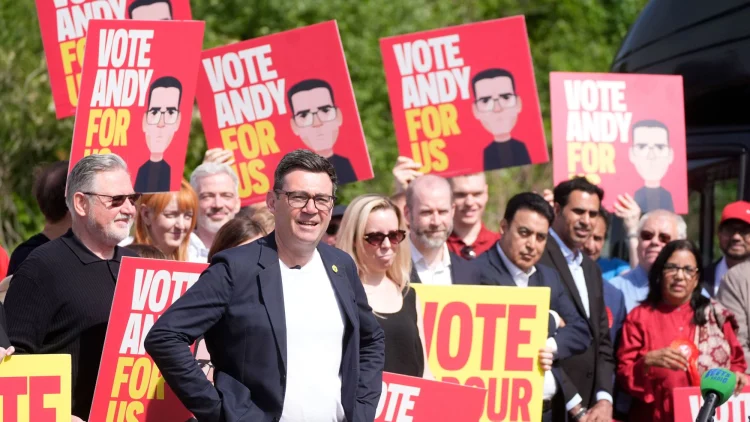
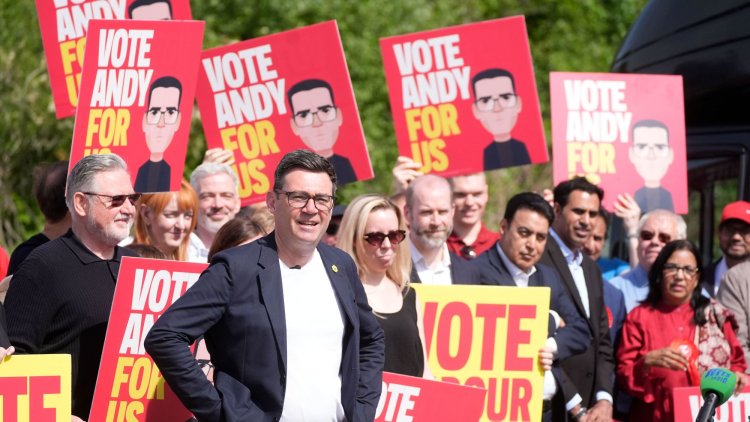
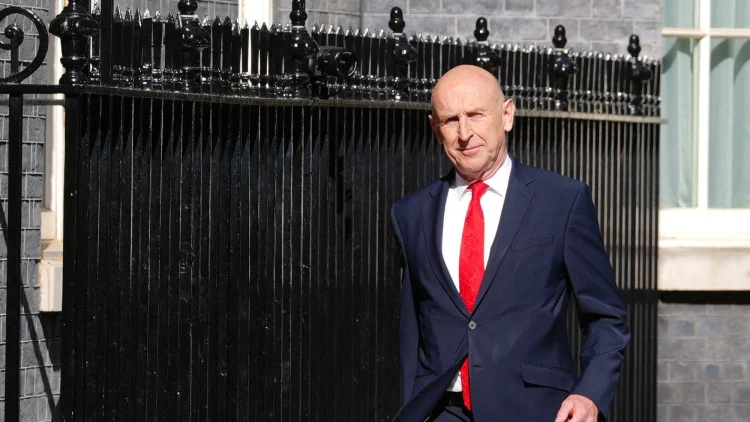
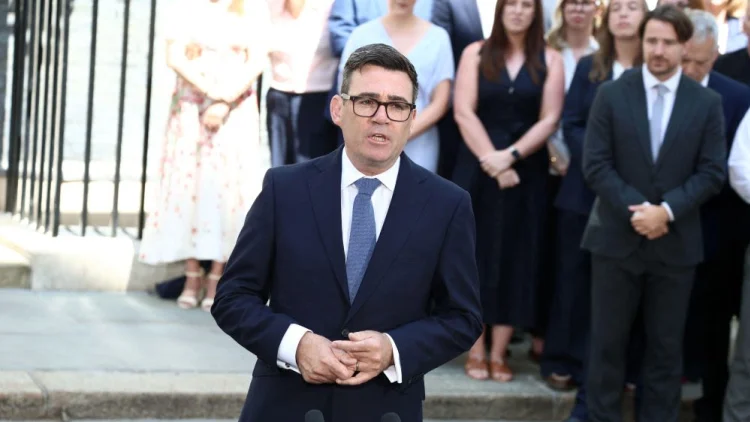
Andy Burnham at the launch of his campaign as Labour’s candidate for the Makerfield by-election, 22 May 2026 (PA Images / Alamy)


4 min read

Exclusive: Andy Burnham has told The House magazine that he would support “early change” to the House of Lords, with reform – including downsizing it – coming by way of the next general election.

Advertisement

The Greater Manchester mayor was speaking at a campaign stop on Friday in the Makerfield constituency, where he is Labour’s parliamentary candidate in a by-election. If he wins on 18 June, he has confirmed that he hopes to replace Keir Starmer in No 10.

Asked by The House whether he still backed turning the Lords into a ‘Senate of Regions and Nations’, with seats for metro mayors included in it, he stood by his support for overhauling the Upper Chamber and said it should be “the first place to look” for cutting “the cost of politics”.

“I wouldn’t rule out quite an early change, and possibly the 2029 general election or beyond, because I’ve long believed that there’s a first stage of Lords reform, which is indirect election that could be linked to a general election, and I just think we can’t delay this any longer,” Burnham said.

Advertisement

“I don’t think we can justify half of our national legislature being unelected. I think this is something that is, in many ways, quite scandalous.

“If you think about this constituency and the feeling here that Westminster looks past it – when you look at the flooding issues it’s got, the illegal tip, poor infrastructure, a whole host of other issues. Is it a surprise to people here that that might be like that when you have a House of Lords that’s largely drawn from within the M25?”

He added: “I can’t justify, personally, 800-plus members of the House of Lords. I don’t think – with great respect to many people in it, because I have true great respect, because there’s some incredible people in there – what the country spends on the House of Lords is actually justified by what the output is.

Advertisement

“I’m just being honest with you. I’m not going to hold back on it, actually, because I just think we’ve allowed this to persist for too long. If you want to cut the cost of politics, that’s the first place to look.”

In an interview with The House in November 2023, Burnham said reform of the Upper Chamber was urgent.

“I heard a narrative when I was in government a lot – that all that constitutional stuff, it’s not really a priority, we’ll get round to it at a different time. I’ve come around to the thinking that you can’t actually do that, that the wiring of the country is part of the problem,” he said before the 2024 general election.

Burnham also told The House on Friday that he maintains his support for changing Labour’s position on standing candidates in Northern Ireland. The party has a longstanding policy of not contesting elections in the devolved nation.

Advertisement

The leadership hopeful said his endorsement of electoral reform, which would introduce a switch to a more proportional voting system, could facilitate the change to Labour’s refusal to field candidates in Northern Ireland.

“Yes, I’ve had a position on that going back. But it would obviously require careful conversations with our sister party, the SDLP, and with other political parties in Northern Ireland. I wouldn’t want to blunder in and create an issue.

“But I do have an in-principle commitment that democracy should allow the range of parties to be represented, and personally I am in favour of more proportional systems, and that allows that approach, because in that type of system it’s not the case of one party not contesting where a sister party is involved. I just think it allows more collaboration between parties.”

Burnham was at a pub in Orrell announcing his call to cut business rates by 20 per cent for pubs and music venues and to remove small, family, high-street businesses, including hairdressers and cafes, from business rates altogether.

Advertisement

He said Labour had “got it wrong on small businesses” and the policy would be funded by raising rates on warehouses used by online tech giants and via action on empty retail spaces on the high street.

A Survation poll published on Thursday put Burnham 10 per cent ahead of his closest rival, Reform candidate Robert Kenyon (49 per cent to 39 per cent).


Source link

Continue Reading
Click to comment

You must be logged in to post a comment Login

Leave a Reply

Politics

FIFA water ban sparks fan backlash ahead of 2026 World Cup

Published

on

FIFA World Cup 2022 — Joel Campbell cools off

FIFA World Cup 2022 — Joel Campbell cools off

Fans attending the 2026 World Cup will not be allowed to bring reusable water bottles into stadiums. The latest restriction introduced by FIFA has sparked criticism and concerns about temperatures across the tournament’s hottest host cities. This year’s tournament features 48 teams for the first time. It will take place across the United States, Canada, and Mexico. As a result, several matches are expected to be played in high temperatures and humidity.

What has changed in stadium rules?

Under the new regulations, fans cannot bring reusable water bottles into venues. However, previously, spectators could carry transparent, empty plastic bottles up to one litre. The updated policy also bans cups, metal containers, and similar items.

FIFA says the move is part of a broader security framework. In a statement, the governing body explained that such objects could be used as projectiles, posing a danger to fans, players, and tournament staff. In a statement to Reuters, FIFA said it is committed to protecting:

the health and safety of all players, referees, fans, volunteers and staff.

FIFA also cited safety reasons, saying the ban is intended to reduce the risk of injury:

Advertisement

Outside bottles are already prohibited at several of these venues for safety considerations and FIFA is applying this ​consideration across its tournament stadiums.

Heat concerns at host cities

FIFA’s decision has raised concerns about conditions fans may face during matches in several host cities.

Temperatures in some locations are expected to reach the mid-20s Celsius, with periods of high humidity. Supporter groups and fan organisations have questioned whether restricting access to personal water bottles could make it harder for spectators to stay comfortable inside stadiums.

FIFA says it is working with local authorities and organising committees to put heat-management measures in place. They told Reuters that they’re work:

closely with each Host City Committee and local authorities on heat ​mitigation factors for fans ​traveling to ⁠the stadium, which can include resources such as misting stations, fans, hydration stations, cooling tents and more around ​the stadium footprint.

These include additional water stations, shaded rest areas, cooling fans, and spray zones positioned around stadium sites.

Advertisement

FIFA has also said that water prices inside stadiums will remain in line with those at other major sporting events.

FIFA fans hit back

Fan groups have slammed FIFA’s policy, including England’s “Free Lions,” who called the water bottle ban a blatant money grab so close to kickoff.

The group said they had previously been assured reusable water bottles would be allowed, and questioned the sudden reversal.

Advertisement

Advertisement

Speaking to the Guardian, Ronan Evain, director of Football Supporters Europe, called FIFA’s water ban “a real health risk,” warning that harder access to hydration raises the chances of heatstroke and dehydration. He also slammed the governing body for putting profits ahead of fan safety, calling the decision “appalling” and saying it:

shows the priority seems to be, again, to generate revenues. How immoral it is to [profit from] water in this situation when people’s health is at risk.

He also challenged the safety rationale, saying:

If they allowed it last year and originally for this tournament, I find the security argument a bit hard to believe […] water is unfortunately still seen as a commodity, but it’s not, it’s a matter of health. We don’t know how expensive a bottle of water will be inside the stadium because no prices have been published.

These scathing public remarks intensify the spotlight on FIFA’s handling of fan safety ahead of the tournament.
As the tournament kicks off, FIFA’s rules will take effect, as fans continue to accuse FIFA of putting profits before people.

Featured image via Dan Mullan / Getty Images

By Alaa Shamali

Advertisement

Source link

Continue Reading

Politics

Jewish anti-genocide activist Greenstein suffers second ‘de-banking’ attack

Published

on

de-banking

de-banking

Brighton-based Tony Greenstein is one of the best-known of the UK’s many Jewish anti-genocide activists. As a result, he is one of the most targeted by the Israel lobby’s attacks and smearsincluding by the UK government. And he has again been hit with one of the most insidious forms of financial attack: de-banking.

‘De-banking’ is a financial state and establishment terror weapon. It involves the summary closure of bank accounts, often under orders or pressure from government or influential groups. This is frequently used as a weapon to financially disable those who stand up for the Palestinian people against genocide, occupation and oppression.

Greenstein was first targeted in July 2025, when HSBC and one of its subsidiaries simultaneously decided to ‘review’ his account arrangements and unilaterally closed his accounts.

“Financial terrorism”

Now, both Greenstein personally and charities he helps run have been targeted simultaneously, by banking giant Santander. He told Skwawkbox:

Advertisement

Santander has just frozen my accounts and also that of the Brighton Trust and [of] Brighton Unemployed Workers Centre.

It is little short of outrageous and they haven’t even informed me what they are doing. It is financial terrorism

The bank provided no communication about its actions. Instead, Greenstein only found out the accounts had been frozen when he tried to access them. He does not know whether or how he or the charities will be able to access their funds.

Featured image via Getty/Leon Neal

By Skwawkbox

Advertisement

Source link

Continue Reading

Politics

Belfast human rights activist could be deported due to Home Office incompetence

Published

on

home office

home office

Never attribute to malice what can be explained by incompetence. In Belfast, Home Office incompetence is threatening Nina Briggs, head of the Migrant Workers’ Union Northern Ireland, with deportation.

They insist that Briggs’ active appeal against the unfair Home Office decision does not exist. That is despite an immigration tribunal confirming the department submitted documents in her case in December 2025.

Briggs has spent the last 14 years living in Britain or the North of Ireland. Born in the US, she came to Britain to study at St Andrews University in Scotland back in 2012, at age 16. She subsequently entered into a relationship in which, she told the Canary, her partner subjected her to terrible domestic abuse. This resulted in physical injuries and severe post-traumatic stress disorder, which a GP and therapist said caused “permanent disability”.

Home Office ignores conclusive evidence of domestic abuse

The abuse resulted in Briggs returning to the US to seek treatment between 2018-2019. By the time she had fully recovered, COVID had hit. Travel restrictions during this period meant she was unable to head back to Britain or the north of Ireland. She eventually came to Belfast in 2021, under another student visa, this time for a PhD in intergroup contact and mending conflict at Queen’s University Belfast.

Advertisement

Ordinarily, anyone who stays legally in Britain and North of Ireland for 10 years continuously can be automatically granted Indefinite Leave to Remain (ILR). This gives the holder most of the rights of a British citizen, but without full citizenship. Briggs’ reasonable claim is that the period of her medical care in the US, along with the COVID timeframe, should count towards that 10 year period, on compassionate grounds.

Here’s where the malice part of the Home Office enters the picture. The department, tasked by successive sadists acting as home secretary, tries to find any way it can not to grant people the right to stay. In this case, they deemed Briggs’ evidence “not compelling”. She told the Canary:

This is despite having evidence about the domestic violence from a GP, therapist, witness statements, and testimony from a domestic violence shelter.

Briggs appealed, and the Home Office now claims, implausibly, that her case does not exist. She has now been left in what she refers to as “3C limbo”. This is in reference to Section 3C of the Immigration Act 1971. Its terms should extend the rights of her last visa while her appeal is underway. However, because the Home Office say that appeal doesn’t exist, they have not granted her those rights. She said:

It means I can’t get housing. I can’t get health care, or legal aid. Nor can I self-employ or fundraise. I’m also facing a no-fault eviction, and Right to Rent checks prevent me from securing new accommodation.

Racist department prevent woman from attending family funerals

It’s a reminder of the cruelty inherent to Britain’s immigration system. That has been compounded by the rules preventing Briggs from leaving the country while stuck in this situation. If she did, the Home Office would rule that she had abandoned her case. This would effectively be an admission of guilt for the ‘crime’ of overstaying a visa. Such a finding would permanently affect her ability to travel.

Advertisement

During this period — which extends back to October 2024 — she has been unable to attend funerals for her grandmother, a cousin, an uncle, and several friends. Both her mother and stepmother have cancer.

Briggs has further grounds to request the right to stay. Despite being an accomplished data scientist who would be an asset to society here, the Home Office rejected her application for a skilled worker visa. She is bolstering her separate ILR application with evidence of her human rights work. This includes extensive efforts to combat human trafficking and modern slavery, areas the Police Service of Northern Ireland (PSNI) tends to fall short on.

‘High number of poor quality refusals’

As part of the efforts against modern slavery, Briggs has helped on investigations into children being dragged into criminality via racist pogroms led by loyalist paramilitaries. She told the Canary:

Unionist community leaders and politicians I’ve spoken to have been sympathetic to that work. It’s their community – they don’t want a whole generation of boys with their lives ruined due to getting a criminal record so early.

News of Home Office ineptitude won’t surprise anyone who follows the department closely. Free Movement have highlighted the “high number of poor quality refusals” as one of the “stand out problems of the asylum system”. The National Audit Office slated the Home Office for not having:

Advertisement

…a full understanding of how the Skilled Worker visa route is operating.

The department fails to trains its staff properly, and doesn’t have enough of them, resulting in huge backlogs on applications.

As a result of all this, combined with a dose of malice injected by the right, we risk losing the expertise and compassion of people like Nina Briggs.

Featured image via author

By Robert Freeman

Advertisement

Source link

Continue Reading

Politics

The biggest scorelines in World Cup history

Published

on

Senegal during the FIFA World Cup, Qatar 2022

Senegal during the FIFA World Cup, Qatar 2022

Most football matches are decided by small margins, but others are not. In fact, matches in the World Cup often feature remarkable scorelines not seen elsewhere. In such games, defensive structure can collapse, and goals accumulate quickly. Sometimes this happens through clear mismatches. At other times, it results from unusually open play. With the 2026 edition approaching in the United States, Canada and Mexico, a record 48 teams are taking part. This raises the bar. Uneven scorelines are all the more likely to appear, particularly when debut nations come up against established football powers.

Below are the highest-scoring matches in World Cup history, based on official FIFA records.

Nine-goal matches

Argentina 6–3 Mexico (1930) — This inaugural match showcased the drama that only the World Cup can deliver. Argentina defeated Mexico in a nine-goal contest.

Hungary 9–0 South Korea (1954) — Hungary produced one of the most one-sided wins in tournament history. They scored nine without reply.

Advertisement

West Germany 7–2 Türkiye (1954) — West Germany advanced comfortably with a seven-goal performance, during the play-off round.

France 6–3 West Germany (1958) — France finished third after a high-scoring match against West Germany.

Yugoslavia 9–0 Zaire (1974) — Yugoslavia recorded a nine-goal victory in the group stage. This stands as the most decisive result in any World Cup to date.

Ten-goal match

France 7–3 Paraguay (1958) — A ten-goal match played out during a tournament defined by Just Fontaine’s scoring record. Consequently, this World Cup fixture remains legendary.

Advertisement

Eleven-goal matches

Brazil 6–5 Poland (1938) — An open match ended narrowly in Brazil’s favour after a high-scoring contest typical of classic World Cup encounters.

Hungary 8–3 West Germany (1954) — Hungary’s attack overwhelmed West Germany in a group-stage meeting.

Hungary 10–1 El Salvador (1982) — Hungary recorded the largest winning margin in World Cup history. 

Twelve-goal record

Austria 7–5 Switzerland (1954) — The highest-scoring match in World Cup history remains the 1954 quarter-final known as the “Battle of Lausanne,” which produced 12 goals. World cup historians often cite this match for its non-stop action and drama. Austria came from behind in a match defined by constant swings in momentum.

Advertisement

Despite the expanded 2026 format, no match has yet rivalled Lausanne’s 12-goal record — 2026 will tell.

Featured image via Richard Heathcote / Getty Images

By Alaa Shamali

Source link

Advertisement
Continue Reading

Politics

Politics Home | Andy Burnham Says He Wants To Use Devolution To Bring Down Welfare Spending

Published

on

Andy Burnham Says He Wants To Use Devolution To Bring Down Welfare Spending


3 min read

Andy Burnham has said he would take a “much more devolved” approach to getting people into work and bringing down welfare spending.

Advertisement

Speaking to PoliticsHome in Makerfield on Friday, where he is standing as Labour’s by-election candidate later this month, the Greater Manchester mayor said: “We’ve all got to be concerned with getting the welfare bill down.

“I don’t think there’s any debate about that, to be honest, it’s how you do it.”

He argued that the best way to do so was through a more localised approach, rather than cuts made in Westminster.

“It’s an overhaul that the Whitehall system can’t really make,” he said. “It’s an argument actually for dealing with this in a much more devolved way than it is currently done.”

Advertisement

Burnham – who confirmed in a BBC debate on Thursday that he wants to replace Prime Minister Keir Starmer in No 10 if his bid to return to the House of Commons is successful – told PoliticsHome that local and regional authorities should be empowered to give out-of-work people the support they need for mental health problems.

“We don’t have a system that is set up to look and really get to the heart of why somebody isn’t able to sustain themselves in the labour market, and that’s been the journey that I’ve been on as mayor of Greater Manchester.

“But if you do give people what they’re looking for, I think you can support more people into work,” he said.

Advertisement

Welfare has emerged as a thorny issue for the Labour government since being elected in July 2024.

Starmer tried to introduce benefits reforms last year but was forced to abandon the plans by a major Labour backbench rebellion.

Private messages published by the government earlier this week showed Work and Pensions Secretary complaining to former US ambassador Peter Mandelson that “every meeting” he had with Labour MPs was a discussion about “who can we tax in order to pay benefits to others”.

A new report authored by former health secretary Alan Milburn found that the total annual cost to the taxpayer of just under one million young people not being in employment, education or training (NEET) is £125bn per year.

Advertisement

Speaking to PoliticsHome, Burnham described the report as a “very significant intervention”.

“I’ve contributed to it, and I think Alan is interested in what we’ve done because we’ve taken a different approach to supporting people into work.

“And this is the thing: The DWP (Department for Work and Pensions) system, I don’t think does do that, because it’s a very narrow approach in this day and age.”

He continued: “The reasons why people, particularly young people, may not be in work would be related to mental health or the housing situation or the debt they may be facing, a whole range of other things that are going on.”

Advertisement

Burnham criticised previous governments for encouraging more than 50 per cent of people to go to university.

“The obsession with the university route began with the Blair government, but then was very much continued by Gove in his reforms, [and] left 50 per cent or more of young people, particularly in an area like this [thinking], well, what about me?

In an interview with The House magazine in Makerfield, Burnham said he is “not going to hold back” on early reform to the House of Lords if he becomes prime minister.

“I can’t justify, personally, 800-plus members of the House of Lords. I don’t think – with great respect to many people in it, because I have true great respect, because there’s some incredible people in there – what the country spends on the House of Lords is actually justified by what the output is,” he said.

Advertisement


Advertisement

Source link

Continue Reading

Politics

Western politicians and media heaps tributes on the author of Persepolis

Published

on

persepolis author

persepolis author

Obituaries for Franco-Iranian artist and author of Persepolis Marjane Satrapi are pouring in from Western politicians and media following news of her death in Paris at age 56 on Thursday.

Western establishments’ obituaries revealed a pattern of appreciating Satrapi for opposing Iran’s government, reflecting their ever-present instinct of Islamophobia.

“Persepolis” was a bestselling graphic novel series by Satrapi.

Most of them admire her as CNN puts it as:

Advertisement

an outspoken critic of Iran’s ruling establishment and a prominent supporter of the ‘Woman, Life, Freedom’ movement.

Satrapi was married to Mattias Ripa, who helped translate ‘Persepolis’ into English. He died last year.

News agency Associated Press reported a “member of her close circle” as saying she had “died of sadness” following her husband’s death.

Persepolis author mourned

Associated Press reported that President Emmanuel Macron and his wife paid “tribute to a remarkable artist who transformed an Iranian childhood into a universal fable.”

Advertisement

Yael Braun-Pivet, President of the French National Assembly, posted a picture with Satrapi, captioning it that France had lost “an immense artist.”

French  politician Olivier Faure said the artist had given a “global echo” to the “victims of the mullahs.”

The Mayor of Cannes, David Lisnard, said  Satrapi lived through “repression and deprivation of freedom under the mullahs’ regime,” applauding her for defending women’s rights where they are “most endangered in the world.”

Western media

France’s Le Monde ran a few articles. They said:

Satrapi, an outspoken critic of Iran’s theocratic government, arrived in France in 1994 and gained French nationality in 2006. Persepolis recounts the story of Satrapi’s early life in Tehran, struggling under the restrictions imposed by Iran’s Islamic leadership after the 1979 revolution, before she is sent to Europe by her parents and begins a life in exile.

They also call her “a powerful and outspoken artist,” in another article, and “a brilliant, free and creative artist,” in a third article.

Germany’s Die Zeit said her comics were a means of political enlightenment.

The Washington Post, Times of Israel, and  Haaretz posted the Associated Press story on Satrapi, which called her “a prominent advocate for women’s rights.”

Advertisement

Satrapi had worked with Israel’s film industry in the past. She was reported “enamored” with Israeli directors like Ari Folman and “friendly” with Eran Kolirin, according to Israel’s Haaretz.

The Financial Times quoted a letter that Satarpi had written she in which she said she wanted to show Western readers that Iran was not just a “country of fanatics and terrorists.”

The New York Times said her novel “illuminated the struggles of Iranians” during the Islamic Revolution

In the end, the Western establishment’s embrace of Satrapi reveals more about them than her. These establishments love to canonise dissenters who serve their geopolitical narrative. Whilst many will mourn her art, it is no accident that the Western world chose to elevate her work.

Featured image via Getty/Gareth Cattermole

By The Canary

Advertisement

Source link

Continue Reading

Politics

Dawn French’s assisted-dying novel is as deathly awful as it sounds

Published

on

Dawn French’s assisted-dying novel is as deathly awful as it sounds

Alleged comedian Dawn French is back in the headlines. No, she has not produced another pompous clip downgrading Hamas’s 7 October massacre to a ‘bad fing’. Instead, she’s forced an entire novel on us advocating assisted suicide. The blurb to Enough markets the grim tale in hideously twee terms: ‘Joyfully human, darkly funny and unexpectedly life-affirming.’

But it is death, not life, that the story dwells on. Enough’s protagonist, Etta, like French herself, is a 68-year-old mother and grandmother with no serious health conditions or life complaints. Despite this, she gathers her nearest and dearest together for a cosy catch-up on her local beachfront, where she breaks shocking news to all of them that this will be her last 24 hours alive. She is opting for assisted suicide. French has described Etta in interviews as ‘mentally and physically fit’, but wanting to free her family ‘from the crap to come’. ‘Her choice. Her decision. She isn’t depressed, she isn’t traumatised’, French told the Daily Mirror.

French might be branding the book as a mere ‘conversation opener’, but its message is as subtle as a sledgehammer. Etta’s decision is seen as okay because it is just that: her decision.

Advertisement

Under the Terminally Ill Adults (End of Life) Bill, which ran out of parliamentary time in April to become law, Etta would not be eligible for assisted suicide, because she does not have a diagnosis of six months or less to live. However, we know that assisted-dying legislation invariably and rapidly expands in scope when it is introduced. How could it not, given that the argument of campaigners like French, and those sponsoring the UK’s failed assisted-dying bill, centres on ‘choice’ and ‘suffering’ – the definitions of which vary by person, and certainly are not limited to the terminally ill alone.

French’s novel arrives at a delicate political moment. Assisted-dying campaigners are putting pressure on MPs to revive the failed bill. There is even muttering that the Parliament Acts could be used in order to bypass the House of Lords, which effectively stopped the bill from passing through the sheer volume of amendments it proposed.

French seems suspiciously incurious about why many people oppose assisted suicide, framing the proposal as a ‘no-brainer’. Yet it wasn’t a no-brainer to the 350 British disability-rights groups who fiercely opposed the bill, or the many Royal Colleges and MPs who pointedly declined to back the proposed legislation.

Advertisement

Enjoying spiked?

Why not make an instant, one-off donation?

We are funded by you. Thank you!

Advertisement


Advertisement

Please wait…

Advertisement

Their scepticism was unsurprising, given how assisted-dying laws have already played out across the world. In Canada, where assisted dying was legalised in 2016, the Quebec College of Physicians is now wondering whether euthanasia should be permitted for newborn babies with disabilities. In Oregon, almost half of those who chose assisted suicide between 1998 (the year it became law) and 2022 said they did so because they felt they were a ‘burden’ on family, friends or carers. How can a decision to live or die influenced by social pressure or insecurity be regarded as simply another ‘choice’?

French also seems to sidestep the fact that all of us, regardless of our fluctuating physical and psychological states, can be a ‘burden’ on others. Life is not always pretty or fun, nor should it be. French is correct that ‘the idea of getting older, of being vulnerable, of no longer being independent… are all daunting’. But does this mean suicide ought to be an off-ramp? One of the most difficult, but beautiful, parts of being human is to love and help others – whether this involves caring for an ill relative or just picking up an iced coffee for a friend who has had a tough day at work.

Advertisement

In Mozart’s 18th-century opera, The Magic Flute, lead character Papageno is devastated after believing he has lost his beloved forever. He seeks suicide as an escape from his pain. Before he can act on these urges, three characters show him how to work through these issues and continue living. If only Mozart were still around to educate the likes of French. Both our politics and culture must do a much better job of showing people of all ages and circumstances that they deserve to live.

Georgia L Gilholy is a freelance journalist living in London.

Advertisement

Source link

Continue Reading

Politics

The police are not our ‘mates’

Published

on

The police are not our ‘mates’

‘I don’t think you have, mate.’ These were the words of the unidentified policeman who disbelieved the dying Henry Nowak when the boy told him that he had been stabbed. Every innocent word when added to the others is vile, but for me the ‘mate’ stands out – there’s the whole stinking world of contemptuous DEI-fuelled murderous smugness in it. 

Not since Sadiq Khan’s ‘Say Maaate To A Mate’ campaign of 2023 has this pleasant, everyday word sounded so atrociously inauthentic. You remember that one. If one young man says something sexist / sexy (shades of Spinal Tap’s poor bemused Nigel), then it’s the social responsibility of his ‘maaates’ to call him out on it. Along with this went untold public money spent on posters informing the innocent Tube-taker that cat-calling is an offence and that ‘Intrusive staring of a sexual nature is sexual harassment and will not be tolerated’. There were even sexy – sorry, old habits die hard – plain-clothes policewomen allegedly spotted in Redbridge, Surrey, hoping to ‘finger’ any louts daft enough to call them darlin’. And where has all this look-after-our-laydees palaver led us to? A judge letting three teenage gang-rapists go free last month, after telling them how well they had behaved – in court, if not towards the terrified girls, aged 14 and 15, whose lives they ruined.

But the ‘mate’ directed at Henry Nowak was a whole other level of wrong – sinister, not silly. We knew that the whole ruling regime was rotten. Even despite the endless policing of, arresting over and jailing for social-media posts, some of us free-speech maniacs had maintained a belief that the police force, being mostly of working-class origin, hadn’t really swallowed the excrement of wokeness. Now it appears that like a lot of hirelings of feudal lords, they’re even keener to carry out orders than their masters are to issue them. After all, what is the modern police force but muscle to protect the liberal establishment? Hence their frequent lack of anything approaching interest in solving crimes that happen to ordinary people.

Advertisement

Of course, some people join the police because they want to help people, and to see justice done. It’s important to say that a lot of us, including me, would never have the guts for this career. But increasingly one feels that the kind who wanted to wear scary uniforms and have the power to push others around are coming to the fore. This has always been the situation as regards sexual perverts, I’d guess. Met officer David Carrick committed 48 rapes over 17 years, while Wayne Couzens, killer of Sarah Everard, was affectionately known as ‘The Rapist’ by his Civil Nuclear Constabulary colleagues prior to being hired by the Met.

But these were old-fashioned monsters. With the new kind of callous functionary, wokeness (sorry, but there’s no better word) gives them the cloak of invisibility, whether it’s ‘protecting’ transvestites from feminists whose faces got in the way of their meaty fists or ‘protecting’ bogus victims of racism, like Vickrum Digwa, who played the race card to deflect from his murder of young Henry.

Advertisement

Enjoying spiked?

Why not make an instant, one-off donation?

We are funded by you. Thank you!

Advertisement


Please wait…

Advertisement
Advertisement

Once more that quote from Huxley’s Crome Yellow comes to mind, as it does with increasing frequency:

‘The surest way to work up a crusade in favour of some good cause is to promise people they will have a chance of maltreating someone. To be able to destroy with good conscience, to be able to behave badly and call your bad behaviour “righteous indignation” – this is the height of psychological luxury, the most delicious of moral treats.’

It’s funny to think of what those nutters who want to abolish the police – the ‘anti-carceral’ lot – must be feeling now. Quite confused, I’d wager. Are the police their friends now that they’ve adopted the crazed woke idea that being colourblind is wrong, and that the pure-hearted POC should always be believed over the inherently evil gammon? Or are the cops still lackeys of the ruling class? My own feelings about them change on a regular basis; personal experience generally good, high-profile cases jaw-droppingly generally awful. Like the old joke about prison food, they’re rubbish – and there’s not enough of them.

Advertisement

The police seem such an integral part of society that it’s strange to think that they’ve only existed for a relatively short time as we know them. In the 18th century, communities policed themselves with constables and night watchmen. No doubt the anti-carceral mob would consider this a desirable state of affairs, but it seems even more open to corruption than the current arrangement.

Who can forget the creepy alliance between the police and local mosques when ‘community leaders’ appeared to be calling the tune in Stoke-on-Trent in 2024, as a video emerged showing a police liaison officer telling a group of recently rioting young Muslims:

Advertisement

‘If there are any weapons or anything like that, then what I would do is discard them at the mosque. Don’t give anybody any reason to have any interaction with police. So if there are any weapons, get rid of them and we won’t have to arrest anyone.’

Letting ‘elders’ call the tune seems a sure way to mayhem – and imagine if white people tried it! ‘Okay boys, stand at ease – the Bowls Team have got the white youngsters calmed down. Nothing to see here!’

Then there was the time that a creepy West Midlands policeman insisted on opening and closing his address to offended Muslims with Arabic phrases. I do hope one of them takes the trouble to learn a few words of Hebrew next time the Jewish community are genuinely terrified. Probably not, though, the Jews being so well behaved. It’s the squeaky wheel that gets the oil. Or in this case, the oily copper.

Advertisement

Oh, for the old days before DEI, when cut-purses and grave-robbers roamed the land, and public executions were a regular weekend entertainment! Even by the start of the 19th century the population of London – one and a half million – were policed by 450 constables and 4,500 night watchmen. Then came the home secretary Robert Peel’s Metropolitan Police Act of 1829 and the police force as we know it was born. We’ve been through a few changes since then; the ones in popular culture are interesting. From the avuncular Dixon of Dock Green to the hard rotters of The Sweeney, we’ve somehow managed to keep believing that the British police are ‘the best in the world’ – an actual line from the Tom Robinson Band’s ‘Glad To Be Gay’ sung ironically, going on to detail how the British bobby is keen on ‘raiding our pubs for no reason at all / Lining the customers up by the wall / Picking out people, knocking them down / Resisting arrest as they’re kicked on the ground / Searching their houses, calling them queer.’

How much life has changed since the 1970s! Now, police dance gaily with barely-clothed fetish gimps at Pride parades, looking askance at any women who complain about children being present – and ‘queer’ is a compliment, one that many straight people adopt in an effort to appear cool. But of course this cleaving to queerness on the part of the police may well yet pose comical problems when it comes up against their slavish behaviour towards Islam, as detailed above and also seen both in the arresting of a man for being ‘openly Jewish’ and therefore potentially upsetting to a pro-Palestinian march, and in fabricating evidence against Maccabi Tel Aviv in order to ban their fans from Birmingham – the West Midlands police chief later blaming AI, of all the pathetic excuses.

And of course the terrible rapes of thousands of teenage children and girls by gangs of predominantly Pakistani Muslim men, which took place with the collusion of numerous police forces, some of whom ignored their horrific complaints and wrote them off as ‘slags’. White working-class girls are slags, white working-class boys are ‘mate’ – but they still count for nothing when the chance to get DEI brownie-points comes along. That Islam is the fastest growing religion in the world suggests that the fuzz are limbering up to serve their next masters as they see the power of the stale, pale kind receding. With such divided loyalties between the ‘queer community’ and Islamism, it would be amusing to see whose side they took now, should the incident from 2006 take place when Sir Iqbal Sacranie opined that homosexuality was a sin, and was promptly investigated by the cops.

Advertisement

What’s the worst crime that can be committed in the cause of DEI? The judge who let off the Traveller rapists of those teenagers was streets ahead when it came to who could win a prize for the most vile behaviour in the name of brotherly love. But those police officers who treated a dying young man like a lying nuisance in the name of being anti-racist are perhaps even worse – and calling him ‘mate’ as they did so was the chef’s kiss of utter and complete moral degradation on behalf of those who should have been helping him. Never mind, though – there’s bound to be something even worse a short way down the road, as the Danse Macabre of identity politics leads us towards something that looks very much like a civil war.

Julie Burchill is a spiked columnist. Follow her Substack, ‘Notes from the Naughty Step’, here.

Advertisement

Source link

Continue Reading

Politics

North of Ireland’s First Minister on the emerging ‘Celtic alliance’

Published

on

michelle o'neill celtic

michelle o'neill celtic

Michelle O’Neill doesn’t mince words: the first nationalist First Minister for the North of Ireland’s six counties sat down with Scottish paper the National. She had plenty to say about culture, reunification, Scottish independence, and the arrogance of Westminster.

Politics trickles through culture

Something huge is shifting in the North of Ireland.

You can feel it in the music, with establishment-baiting Belfast hip-hop trio Kneecap packing out venues across the world. You can see it on TV as Derry Girls made the six counties a cultural export. And you can measure it in the polling: 63% of people in the North now want a united Ireland inside the European Union.

Michelle O’Neill is not surprised. “Young people have it in spades,” she says of the new cultural confidence coursing through a nationalist Ireland.

Advertisement

That generation have a real, confident view of who they are, confident in their Irishness, very happy to assert it. They will not accept second-class citizenship.

Their parents endured it. Their grandparents endured it. This generation doesn’t plan on more of the same.

Unionists are losing the culture war

The confidence is undoubtedly real. But so is a hard, enduring, sometimes dangerous resistance to it.

O’Neill is unsparing about the forces lining up to suppress it. Political unionism, for example, she says:

blocked the Irish language at every turn.

The North still has no Irish language strategy. They fought for years just to get an Irish Language Act.

Advertisement

For those in political unionism trying to block that, they’re saying to young Irish Gaeilgeoirs [Gaeilge speakers] that you don’t have a place here.

What message does that send in 2026? It’s one of disrespect and intolerance and arrogance.

Young people, she says, have no truck with it. If Kneecap have done anything — they’ve certainly rocked the boat politically — it’s make Gaeilge very cool. And the new vibrancy on the streets is the proof.

British government fails yet another Palestine prosecution as Kneecap man goes free

Advertisement

Give us our Referendum

The cultural moment and the political moment are inseparable. When 63% of people in the North want reunification, the Good Friday Agreement’s constitutional logic demands a response.

Under its terms, the Northern Ireland Secretary holds the power to call a border poll when they believe a majority favours it. But Hilary Benn has refused. O’Neill is direct about what that refusal means.

Give us a referendum. If they’re so strong in the strength of the Union, what have they got to fear? Live up to the commitment.

She frames it, correctly, as a democratic right — one explicitly enshrined in the Agreement that ended thirty years of bloody conflict. Westminster signed that Agreement and should honour it.

An Ireland within Europe — that is the big prize.

(This is a sentiment certainly shared with the majority of SNP politicians and voters. Some 62% of Scots voted to remain in the EU, and that figure has likely only risen since. Brexit is still felt sorely in Scotland.)

Advertisement

But O’Neill knows the prosaic questions matter too. Taxes. pensions, healthcare, etc. She doesn’t want to simply dodge them. She flips them and, yes, perhaps weaponises them. But why shouldn’t she?

She’s right to point out, for example, that the six counties don’t have devolved fiscal powers of anything like the scope that Scotland has, which is still far below the scope of Westminster. (Although this scope is also limited by Rachel Reeves’ rigid OBR fiscal rules.)

Reunification, O’Neill argues, is an opportunity: a stronger economy, free education across the island, a roof over everyone’s head. The research backs her up too, where people in the Republic already earn more, have higher living standards, and face shorter healthcare waiting lists. (Not that the south is without problems, however — particularly Dublin’s notorious housing crisis.)

Advertisement

Untied Kingdom: anti-unionist parties take power across the Celtic nations

The new Celtic Alliance

O’Neill watched last week’s Scottish Parliament vote for an independence referendum with keen interest. She watched Westminster’s response with something closer to fury.

The very quick response from Whitehall was that they would completely disrespect and disregard that mandate. That’s a mandate from the people.

She sees Scotland, Wales, and the North of Ireland as part of the same story.

The recent elections in Scotland and Wales really add to that message. The people want self-determination, they want to take their future into their own hands.

The SNP and Plaid Cymru taking power in Edinburgh and Cardiff, in her words:

Advertisement

Demonstrates a real, seismic change in terms of our politics, collectively, here. …

The nations on the periphery of this broken union are moving. Westminster is not listening. That is no longer sustainable and it looks like major change is coming, sooner than later.

People are tired of the mess of Westminster. They’re tired of the disregard shown towards them. The austerity agenda, the revolving door of British prime ministers, Brexit — we have never been top of the agenda. We never will be. Our interests will never be served by Westminster.

That is not, despite SW1’s imagination, mere Celtic bitterness — it is serious political analysis. And it is shared, increasingly, from Belfast to Edinburgh to Cardiff.

O’Neill wants power-sharing in Stormont to work — she has even put her own party’s veto on the table to make institutions function. She can, she believes, make devolution work today while arguing unapologetically for constitutional change tomorrow.

But the direction of travel is clear. The nations are watching each other and drawing the same conclusions. Westminster’s continued disregard built this moment — it has no one else to blame.

Advertisement

Featured image via Getty/Charles McQuillan

By Cameron Baillie

Source link

Advertisement
Continue Reading

Politics

The Israel lobby’s toxic attempt to silence solidarity with Palestine in the NHS

Published

on

nhs israel

nhs israel

In a new review, notorious pro-Israel agitator John Mann has pushed for measures to silence NHS humanitarianism. The government and NHS have already pledged to implement them, including a crackdown on NHS staff members openly expressing solidarity with Palestinian people during Israel’s ongoing genocide.

This is about Israel, not about ending racism

Israel is a key junior partner to US billionaireimperialism. The UK is a junior partner too, so giving Israel political and material support is just part of the deal. And for British political elites trying to get away with this shameful behaviour, consistent and widespread public outrage over Israel’s genocide in Gaza has been a big problem.

This is why Keir Starmer’s regime has filled departments with pro-Israel lackeys, cracked down on citizens’ right to protest, and censored pro-Palestinian voices. So Mann’s review, calling for a ban on NHS staff wearing ‘political’ badges or wearing their uniforms at protests (with clear mentions of pro-Palestinian activism), is no surprise.

Meanwhile, years of UK governments backing genocide have helped to normalise far-right talking points. And in this context, racism against NHS workers has increased significantly – primarily targeting Black and Brown staff. There have even been examples of clear anti-Palestinian bias in the country’s main nursing union.

Advertisement

All forms of racism are vile. But Mann and other pro-Israel politicians have long prioritised and weaponised antisemitism allegations to try and smear or silence critics of Israel. The new review seems to be a continuation of that.

As we’ve reported previously, Mann is not Jewish himself. He’s just a person who has received tens of thousands of pounds from pro-Israel lobbyists and lobby groups over the years. He has also made many visits to Israel – one of which the Israeli government paid for itself.

Mann’s wife, meanwhile, is new MP Jo White. She isn’t Jewish either, but is a vice-chair of Labour Friends of Israel. Pro-Israel lobbyists and groups have happily donated to her. And one of these is Palace Yard Events Ltd, which the government has given over a million pounds to ‘tackle antisemitism’ in the education system.

Humanity-free zones

Countless genocide scholars, legal experts, and human rights groups call Israel’s actions genocide. Among the 70,000+ people it has murdered since 2023, over 20,000 are children.

Advertisement

You might have thought this would have shamed pro-Israel voices into piping down a bit. But they haven’t. They’ve just denied a genocide is happening and kept going, waging firm institutional efforts to suppress any resistance in public life to our government’s complicity in genocide.

As we’ve regularly reported, the UK government has deep links to the Israel lobby, arrested both Jewish and non-Jewish people for opposing genocide, and antisemitically sought to conflate the state of Israel and its crimes with the religion of Judaism.

In service of its commitment to US billionaire-imperialism and its Israeli allies, the government is increasingly trying to silence public expressions of humanity. This normalises the type of repression that the far right (which could very possibly gain power at the next election) won’t hesitate to weaponise even more intensely.

This is all incredibly dangerous. We need to firmly oppose it, and defend our right to fight for humanity.

Advertisement

Featured image via Getty/Leon Neal

By Ed Sykes

Source link

Advertisement
Continue Reading

Trending

Copyright © 2025