
Security teams log 54% of successful attacks and alert on just 14%. The rest move through your environment unseen.
The Picus whitepaper shows how breach and attack simulation tests your SIEM and EDR rules so threats stop slipping by detection.




The drive-in movie theater was born in New Jersey on June 6, 1933, which feels exactly right. Only this state could give America Sinatra, The Sopranos, the Pine Barrens, the Taylor Ham versus pork roll blood feud, Wawa parking-lot diplomacy, Friday the 13th, and the drive-in, then look at the rest of the country like it needs to merge faster or get out of the left lane.
Richard Hollingshead Jr. tested the idea in his own driveway with a Kodak projector, a screen, some cars, and the very American belief that almost any activity can be improved if you don’t have to leave your vehicle. By the late 1950s and early 1960s, thousands of drive-ins were scattered across the country, glowing in weird places that eventually became strip malls, storage facilities, car washes, vape shops, and urgent-care centers with suspiciously cheerful signage.
Today, the surviving number is somewhere between “fewer than 300” and “roughly 330,” depending on who is counting, which theaters are still operating, and whether anyone picked up the phone. That is a long fall from the glory days, but maybe inevitable. Land became too valuable, multiplexes got bigger, VCRs happened, and eventually someone decided the drive-in needed gourmet snacks, $11 coffee, artisanal pretzels, and the kind of concession menu that uses the word “curated” without shame.
No.
The real drive-in was not about prestige. It was not about black levels, Dolby Atmos, recliner seats, or a lavender oat latte served by a man with a tiny hat and a screenplay. It was about monster movies, fast cars, biker gangs, radioactive insects, beach-party nonsense, slashers, revenge, bad science, worse decisions, and movies loud enough to survive the speaker bolted to your window.
And yes, that speaker sounded terrible. Nobody cared. You were in a car. The windshield was the screen. The audio was an afterthought. Sometimes the movie was too.
Unless you were a movie nerd, and some of us were already broken that way, the drive-in was also a place where teenagers discovered that privacy was relative, bench seats were a design miracle, and horniness was not a gendered activity. Some people came for the movie. Some came for the date. Some came in the trunk, which used to be called “sneaking in” and in 2026 is probably an ICE raid.
But the films mattered. Not always because they were “great” in the respectable sense. Many were too cheap, too lurid, too strange, too violent, too stupid, or too poorly supervised to survive inside polite cinema. Outside, under the stars, with bad popcorn and worse judgment, they became something else.
They became drive-in movies.
Not every great movie is a great drive-in movie. And not every great drive-in movie is technically good.
That is not a flaw.
That is the business model.

The Rocky Horror Picture Show is less a movie now than a civic disturbance with fishnets, and Tim Curry’s Dr. Frank-N-Furter is the reason it still walks into the room before anyone else does.
It belongs here because it turned midnight screenings into participatory chaos: costumes, callbacks, rice, newspapers, toast, toilet paper, and behavior that would get you removed from most respectable theaters. At a drive-in, I’m still not sure how you hit the screen from your car with toast, but ambition deserves respect.
Scary? Not really. Essential? Absolutely.
Where to buy: $39.99 at Amazon
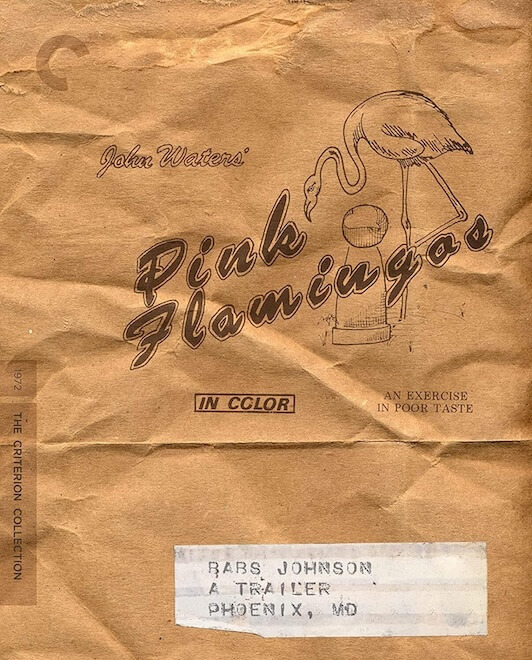
John Waters did not make Pink Flamingos to win approval. He made it to contaminate the water supply.
Divine stars as Babs Johnson, competing for the title of “filthiest person alive,” which is not exactly AFI Top 100 material unless the AFI was having a breakdown. It is gross, funny, aggressive, and proudly allergic to good taste.
This belongs in the drive-in conversation because midnight movie culture needed films that felt dangerous, transgressive, and slightly illegal even when you paid for the ticket. Bring disinfectant. Maybe a priest.
Where to buy: $39.95 at Amazon

David Lynch’s Eraserhead is what happens when anxiety gets pregnant and moves into an industrial apartment with no windows and worse plumbing.
It is not a monster movie, car movie, or exploitation picture in the usual drive-in sense, but midnight movie culture runs straight through it. The film is strange, funny in the way bad dreams are funny, and deeply unpleasant in ways that suggest your nervous system has filed a formal complaint.
This is not popcorn horror. This is “why is my soul making that noise?” horror.
Where to buy: $29.99 at Amazon
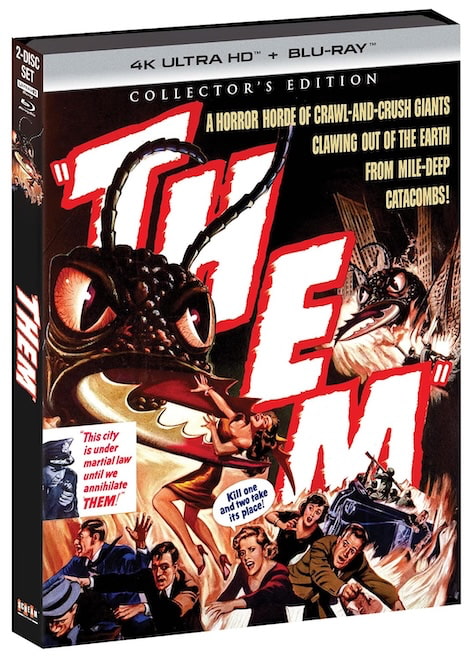
Before giant bug movies became easy punchlines, Them! did it properly.
Nuclear testing creates giant ants in the New Mexico desert, because apparently irradiating the planet had a few side effects. Imagine that. What makes Them! endure is that it plays the material straight. The ants are ridiculous if you are determined to be joyless, but the film treats the threat with real tension.
Personal favorite for a reason. Them! has legs. Six of them on the ants, and two rather memorable ones on Joan Weldon, who brings actual poise to a movie about irradiated insects eating their way through the Southwest.
And unlike Grease, which later turned the L.A. River basin into Thunder Road with leather jackets and hair product, Them! made better use of the city’s concrete nightmare fuel. The climax moves into the Los Angeles spillways and storm drain system, turning civic infrastructure into a giant ant colony. That is urban planning with mandibles.
Where to buy: $44.98 at Amazon

The Gill-man remains one of Universal’s great monsters because he is both ridiculous and elegant.
Creature from the Black Lagoon has everything the drive-in era needed: jungle atmosphere, underwater photography, scientists making poor choices, and a monster who clearly did not ask to be dragged into humanity’s nonsense. It is short, atmospheric, and visually strong enough to survive distance, bad projection, windshield glare, and someone walking back from the snack bar with fries.
A good drive-in monster needs a silhouette. The Gill-man has one.
Where to buy: $29.98 at Amazon
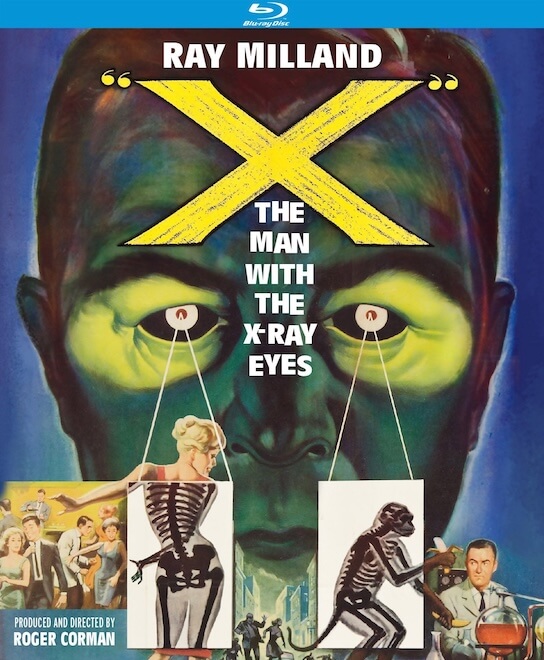
Roger Corman and Ray Milland give drive-in science fiction an unusually nasty philosophical edge.
Milland plays a doctor who develops eye drops that let him see beyond normal human vision. At first, it sounds useful. Then it becomes a curse, because in Corman’s world, knowledge is wonderful right up until it starts peeling your sanity like an onion.
X: The Man with the X-Ray Eyes has the title of a cheap exploitation picture, but it is smarter, stranger, and more unsettling than the poster suggests. Corman sold the sizzle and still delivered steak. Thin steak, but steak.
Where to buy: $43.98 at Amazon

Before Steve McQueen became the Cooler King in The Great Escape and made a motorcycle, a baseball glove, and solitary confinement look cooler than most actors’ entire careers, he was here fighting space jelly in small-town Pennsylvania.
The Blob is classic drive-in marquee bait: a monster from outer space, adults who refuse to listen, teenagers forced to save the day, and a creature that looks like dessert fighting back. The fact that the climax ends up around a diner only makes it more perfect. Of course the Blob attacked a diner. Even alien goo understands that late-night pie is where America lets its guard down.
The genius is that nobody overcomplicates it. Blob lands. Blob eats. Town panics. McQueen squints heroically. The diner gets involved.
Where to buy: $25.99 at Amazon

Carnival of Souls is proof that you do not need money to make something deeply unsettling. You need atmosphere, patience, and a face in the dark that looks like it has been waiting for you since birth.
Herk Harvey’s low-budget horror film follows a woman who survives a car accident and becomes drawn to an abandoned carnival pavilion. The plot is simple. The mood is everything.
This is not loud drive-in monster business. It is a ghost story with freezer burn, and it still feels like something you found on late-night television after everyone else in the house went to bed.
Where to buy: $39.95 at Amazon

Messiah of Evil is the kind of 1970s horror film that makes wallpaper feel suspicious.
A young woman travels to a coastal town looking for her missing father and finds locals who seem less like residents and more like people waiting for a signal from something awful. The film is dreamy, disjointed, and genuinely creepy, with a supermarket sequence that deserves more respect than it gets.
It feels like a nightmare taking place in a town that forgot to wake up. Explanation would only ruin it, and horror already has enough paperwork.
Where to buy: $22.16 at Amazon

Before Halloween, before the slasher rules hardened into formula, there was Black Christmas.
Bob Clark’s film is still one of the creepiest slashers ever made because it does not over-explain its killer. The obscene phone calls are vile, the sorority-house setting is claustrophobic, and the ending remains brutally effective.
And yes, this is the same Bob Clark who later directed Porky’s and A Christmas Story, because apparently one career could contain obscene phone calls, shower peeping, and Ralphie nearly shooting his eye out without anyone in Hollywood asking for a wellness check.
Porky’s also gave Kim Cattrall her infamous “Lassie” moment, which is probably not the scene you want to use when evaluating Mark Levinson electronics unless you enjoy explaining things to your neighbors and local law enforcement.
Where to buy: $39.98 at Amazon
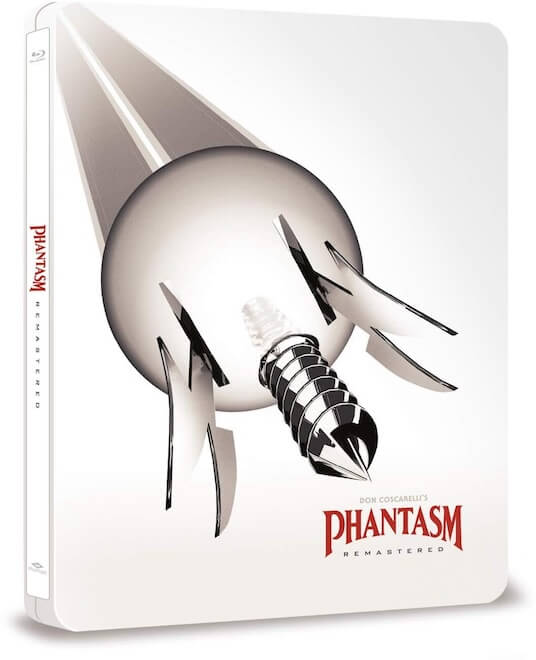
Phantasm does not explain itself.
Don Coscarelli’s cult horror classic has graveyards, alternate dimensions, flying silver spheres, Jawas from hell, and Angus Scrimm as the Tall Man, one of the great horror figures of the era. It operates on dream logic, which is a polite way of saying you may not know what is happening, but you will remember it.
A normal movie gives you plot. Phantasm gives you a chrome ball drilling into someone’s skull and dares you to complain.
Where to buy: $49.98 at Amazon

Russ Meyer’s Faster, Pussycat! Kill! Kill! is not subtle, polite, or especially interested in behaving itself. Good. Drive-in movies were not built for manners.
Three go-go dancers tear across the desert in sports cars, leaving violence, seduction, and bad decisions in their wake. Tura Satana’s Varla remains one of exploitation cinema’s great screen presences: dangerous, stylish, and fully aware that everyone else in the movie is already losing.
Personal favorite. Obviously. The title alone has better posture than most actors.
Where to buy: $39.95 at Amazon

Roger Corman understood the biker movie before polite culture knew what to do with it.
The Wild Angels stars Peter Fonda as Heavenly Blues, leader of a motorcycle gang that tears through California with nihilism, noise, and a general disregard for anyone’s insurance premiums. It is crude, influential, and essential because it helped turn biker films into a full-blown exploitation lane.
This is not romantic outlaw nonsense. It is ugly, chaotic, and half in love with the very thing it claims to critique.
In other words, very drive-in.
Where to buy: $11.54 at Amazon
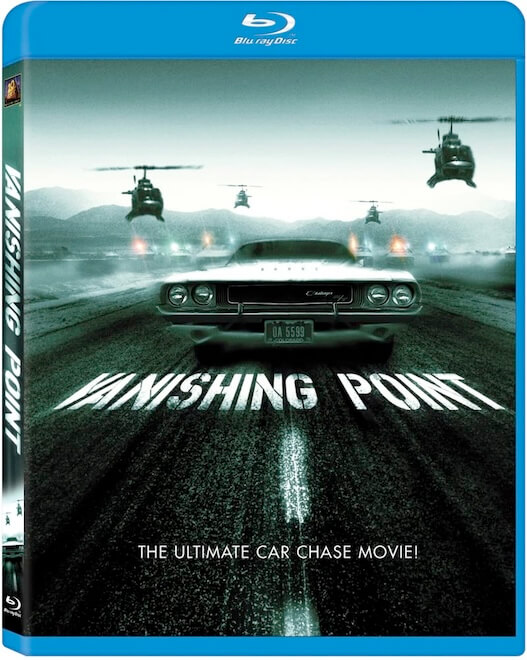
Barry Newman plays Kowalski, a former cop, race-car driver, and Vietnam veteran hired to deliver a white Dodge Challenger from Denver to San Francisco, because apparently FedEx was too emotionally stable.
Newman was never a household name, unless your household had strong opinions about Vanishing Point or watched Petrocelli in the 1970s, but that helps the movie. He looks less like a star and more like a man who has already accepted that speed, drugs, bad decisions, and state troopers are now the same problem.
The open road is not freedom here. It is a trap with better scenery and worse gas mileage.
Where to buy: $29.99 at Amazon
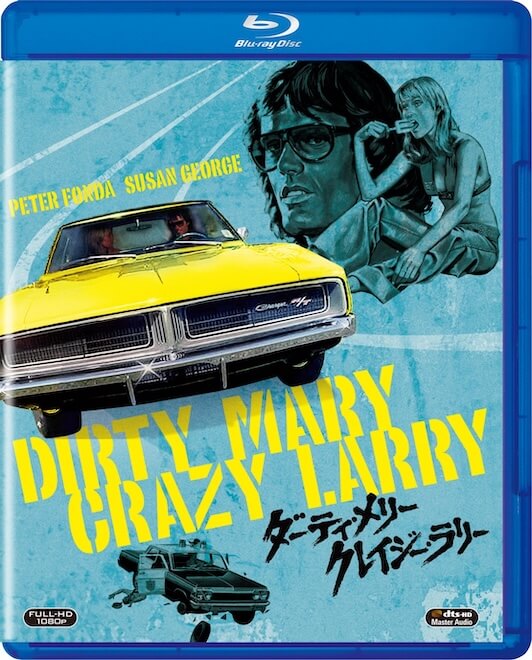
That title sounds like three nicknames found on a police blotter, which is exactly the point.
Dirty Mary Crazy Larry is drive-in car-chase junk food: loud, greasy, fast, and probably terrible for you if consumed too often. Peter Fonda and Susan George play criminals on the run after a supermarket heist, with Adam Roarke along for the ride and Vic Morrow chasing them down.
Morrow, best known for Combat! and later as Jennifer Jason Leigh’s father, brings some gravel as the lawman in pursuit. He was killed in 1982 during the filming of Twilight Zone: The Movie, along with two child actors, in one of Hollywood’s most infamous on-set disasters. Different helicopter tragedy than the one that killed Boris Sagal, Katey Sagal’s father, because apparently Hollywood needed two of those.
Where to buy: $34.28 at Amazon
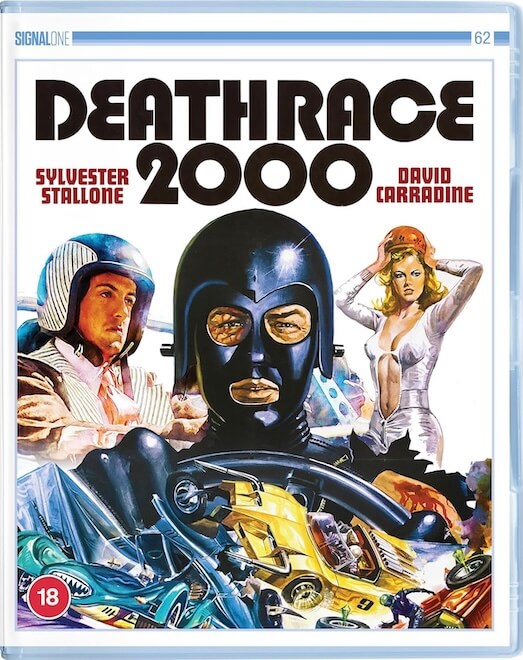
Roger Corman produced a movie about a future America where vehicular homicide is national entertainment, and somehow we still call it satire.
Death Race 2000 is cheap, nasty, funny, and smarter than it looks, which is the Corman sweet spot. David Carradine brings the cool as Frankenstein, Sylvester Stallone brings the volume as Machine Gun Joe, and the whole thing turns bloodsport into media spectacle with all the delicacy of a cinder block through a windshield.
Cars, violence, politics, jokes, and a title that screams poor citizenship.
Where to buy: $39.95 at Amazon

Troma’s most famous creation is a mop-wielding mutant from New Jersey, because of course he is.
The Toxic Avenger is disgusting, juvenile, violent, and frequently indefensible. It is also weirdly sincere beneath the sludge. A bullied janitor falls into toxic waste, mutates into a hideous hero, and starts cleaning up Tromaville with a level of force that would make most municipal agencies nervous.
This is not polished cult cinema. This is radioactive garbage with a cape.
It belongs here because sometimes the drive-in needed a hero who looked like a lawsuit.
Where to buy: $39.99 at Amazon
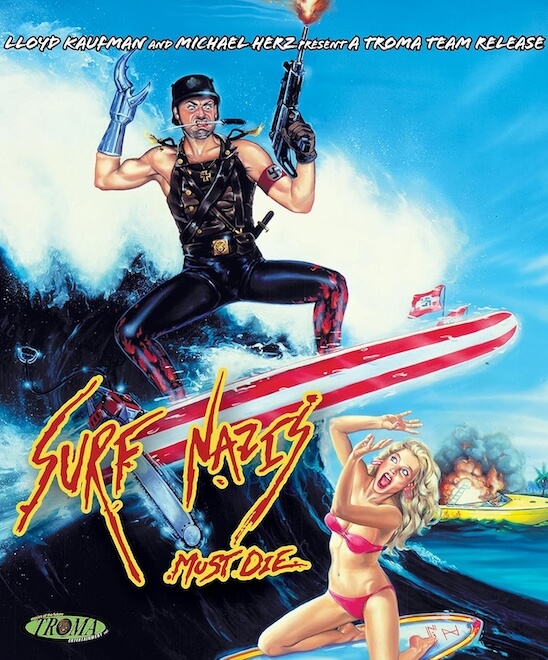
Surf Nazis Must Die is not here because it is great.
It is here because the title alone could sell tickets to people who had already made several poor decisions that evening.
A post-apocalyptic California coastline is overrun by neo-Nazi surf gangs, and revenge eventually arrives in the form of a woman who has had enough. It is a Troma-distributed artifact of bad taste, cheap anger, and exploitation marketing so blunt it practically hits itself with a folding chair.
The movie is clumsy. The title is immortal.
Sometimes that is enough to earn a parking space.
Where to buy: $39.95 at Amazon
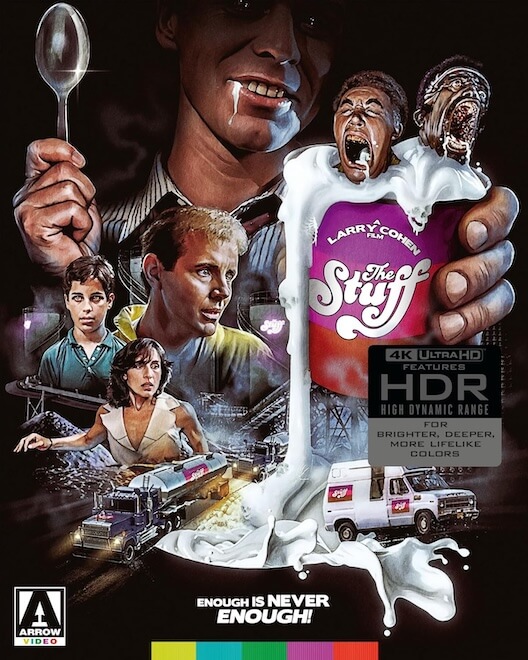
Larry Cohen’s The Stuff is one of the great junk-food horror satires.
A mysterious dessert-like substance bubbles out of the ground, gets marketed to the public, and becomes a national obsession. It is delicious, addictive, and possibly alive. Which, given the state of some supermarket shelves, feels less like fiction every year.
The film works because it turns consumer culture into a monster movie without losing the B-movie hook. The title is perfect. The premise is ridiculous. The satire has teeth.
If dessert climbs out of the earth, maybe do not build a brand around it.
Where to buy: $24.99 at Amazon

Pam Grier did not enter exploitation cinema. She kicked the door open and made the room behave.
In Coffy, she plays a nurse who goes after the drug dealers and criminals responsible for destroying her sister’s life. The movie is violent, stylish, angry, and built around Grier’s charisma. She is not just the star. She is the engine, the steering wheel, and the brick through the windshield.
The film is very much of its era, with all the complications that brings, but it remains one of the essential revenge films of the drive-in and grindhouse circuit.
Where to buy: $32.40 at Amazon

Jack Hill’s Switchblade Sisters is teen-gang melodrama with knives, betrayal, power struggles, and the kind of leadership problems that would make a school board meeting look serene.
The film follows a girls’ gang navigating loyalty, violence, and internal politics, and it has far more energy than polish. That works in its favor. It feels dangerous, theatrical, and proudly overheated.
This is exploitation cinema with attitude. Not realistic. Not respectable. Not asking for either.
A proper drive-in movie should occasionally make you wonder who approved this and whether they were later promoted.
Where to buy: $17 at Amazon
The best drive-in movies were not trying to impress critics. They were trying to get cars through the gate.
They had titles you could read from the road, posters that lied with confidence, monsters that wobbled but still worked, cars that sounded better than the dialogue, and revenge plots that required neither nuance nor a therapist. They were loud, cheap, weird, horny, scary, and occasionally brilliant by accident.
Today, you can buy craft coffee and gourmet popcorn at a “reimagined outdoor cinema experience” where nachos apparently need a mission statement. Good for them. I hope the margins are excellent.
Give me the old version: giant ants, murderous surfers, toxic waste, biker scum, go-go dancers with bad intentions, radioactive dessert, and a movie title that sounds like it was shouted by a man selling fireworks out of a van.
That was the drive-in.
Not respectable.
Better.


Fatal road accidents are tragically common on U.S. roadways. According to the National Vital Statistics System’s Mortality Data for 2024, 41,241 people were killed on U.S. roads that year alone. There’s one particular time of year that’s especially notorious for such traffic accidents among teenage drivers: The period between Memorial Day in late May and Labor Day in early September, the so-called 100 Deadliest Days of Summer.
According to the AAA, between the years of 2012 and 2021, traffic fatalities during this period reached “nearly half of the total number of those killed in teen-driver crashes for the entire rest of the year.” Armed with these sobering statistics, though, authorities can anticipate when such accidents tend to spike in frequency, and tailor campaigns and anti-speeding measures to try to help mitigate them. One major effort to do just that during this period is Operation Southern Slowdown, which returned for its ninth year and ran from July 13-18, 2026. It saw a group of five southern states (Alabama, Florida, Georgia, South Carolina, and Tennessee) embark on efforts to, as the Florida Department of Transportation put it, “reduc[e] speed-related crashes through a combination of increased enforcement and public education.” Speed limits vary a lot between U.S. states, but all must be obeyed.
The additional patrols during this campaign in 2025, Atlanta News First reported, resulted in “more than 13,000 speeding contacts in just one week” across Georgia. It was also just one part of a range of nationwide efforts to curb speeding during this deadly time of the year. Here are some more measures that different states are employing, as well as a closer look at why these 100 summer days are statistically so deadly in the first place.

A national campaign from the Federal Motor Carrier Safety Administration aims to increase public understanding of the dangers and encourage safer driving practices throughout the 100-day period. It’s called the 100 Days of Roadway Safety and focuses on providing digital resources, primarily blog posts, that underscore essential safe driving principles. Among them are reminders to be wary of unpredictable movements by children in school zones and that larger vehicles like trucks need to be given essential space at all times.
New York State’s Department of Health developed a Teen Driving Safety Toolkit to educate young drivers and their parents and guardians during this turbulent time of year. It highlights some particular risk factors, some resources that can be used by both the former and the latter for safety’s sake (such as the Parent/Teen Contract), and other ways these vital messages can be spread (morning high school announcements about driving safety being another).
Increased patrols, as we’ve seen, can have a big impact too. Tragically, though, it’s also vital to address the increased need for emergency responses during this time. In a Facebook post, Tennessee’s Fall Creek Falls State Park acknowledged that these 100 days can call for life-saving blood transfusions, sharing how they work and explaining the $25 eGift card incentives for doing so. Washington State, meanwhile, sees around one-third of its fatal traffic accidents during the three-month stretch beginning in June, which it calls the 90 Dangerous Days. In response, the Washington State Patrol shares the most common causes of accidents (speeding being key among them), some vital driving tips, including “always buckle up, adhere to posted speed limits, drive sober, and stay distraction-free.”

Road safety is paramount for drivers to bear in mind every journey they make. Nonetheless, as the National Road Safety Foundation points out, the summer is marked by an uptick in fatalities among teenage drivers. There are more vehicles on the road generally, for one thing, and during this period, younger drivers will typically have more free time to hit the road. Combine that with their lack of experience with safe driving habits and possibly with their vehicle itself, and it makes sense that this is a particularly dangerous time for them. After all, there are some common mistakes that even experienced drivers make on the road, and the risks are heightened with newer motorists.
During this time of year, there’s often more road maintenance and repair work taking place. All of these factors add up to busier roads that are more difficult and frustrating to navigate, which is also a very dangerous mix for those maintaining the roads and larger, less maneuverable vehicles like buses in particular.
A specific focus on safety measures during the 100 days of summer doesn’t mean that states across the country don’t prioritize these matters during the rest of the year, of course. Also in July 2026, Caltrans announced an enormous investment of approximately $2.5 billion, intended to “Strengthen transportation infrastructure and improve mobility across the state.” Including steps such as establishing more crossings and a sidewalk-widening program, it’s a strong signal that broader matters of road safety are vital across America year-round. Even so, the more attention that can be brought to the 100 days of summer, the safer motorists, pedestrians, and passengers may be.
Microsoft has shared manual mitigations to help IT administrators fix Windows Server Update Services (WSUS) servers affected by a known issue that causes Windows Update scans to fail or time out.
This known WSUS sync issue affects both client (Windows 10, version 1607 and later) and server (Windows Server 2012 and later) platforms.
On impacted WSUS servers, admins are not able to deploy the latest Windows updates via WSUS or Configuration Manager due to increased synchronization times or sync operation timeouts caused by a buildup of publishing metadata.

Microsoft rolled out a service-side mitigation on Saturday to address the issue for newly installed or rebuilt WSUS servers following heightened impact observed starting one week ago, on July 13.
“Synchronization times and sync operations on WSUS servers have been restored and are operating normally for new WSUS installations and rebuilds,” Microsoft said.
On Monday, Microsoft also shared a manual fix for customers who are still experiencing sync operation issues and timeouts to help admins return their WSUS servers to normal functionality.
“Organizations with existing WSUS server installations that are experiencing long sync times can benefit from manual steps in order to clean up unneeded metadata,” it noted in a Windows release health dashboard update. “This metadata is present in existing WSUS installations but can be safely removed.”
This requires them to back up each SUSDB database, run a cleanup query from SQL Management Studio against all SUSDB databases (including WSUS replicas), and update the MaxXMLPerRequest value to its default setting.
After the cleanup process, the first Windows Update scan may take longer than usual, but subsequent scans will return to normal timing.
“After the cleanup, reindex SUSDB, run the WSUS Server Cleanup Wizard, and then run IISReset or recycle the WsusPool application pool to clear cached catalog state,” Microsoft added. “The client-side DataStore.edb does not shrink automatically after the detectoids are removed. This is expected and does not affect scan performance.”
Microsoft has addressed similar WSUS issues that prevented admins from deploying the latest Windows updates in May 2025, July 2025, and August 2025.

Security teams log 54% of successful attacks and alert on just 14%. The rest move through your environment unseen.
The Picus whitepaper shows how breach and attack simulation tests your SIEM and EDR rules so threats stop slipping by detection.

It’s official: We’re getting a pickle emoji next year. On Tuesday, July 14, the Unicode Consortium announced the nine new emoji you’ll see on your device in 2027. One new emoji is the pickle, and that means the eggplant’s reign as the go-to emoji for male anatomy could be coming to an end.
Here are the nine new emoji you will see on your device next year.
The Unicode Consortium originally proposed a squinty face emoji in 2025. However, the Unicode Emoji Standard & Research Working Group recommended changing that emoji to a cracking face in January.
Honestly, the cracking face emoji feels more relevant to today than the squinty face emoji. The squinty face read as suspicious while the cracking face emoji screams, “I’m putting on a brave face in these trying times.” If that’s not the most relatable sentiment these days, I don’t know what is.
While the Unicode Consortium approved these emoji, companies like Apple and Samsung still need to design and then implement their versions of the emoji. Those companies usually add the emoji to devices as part of a software update in the spring, so you likely won’t see these emoji on your phone until 2027.
Before these emoji land on your device, the Unicode Consortium will begin fielding proposals for the next round of new emoji. Anyone can submit an idea for a new emoji, and the Unicode Consortium usually uploads proposed new emoji to a public document late in the year. For example, the upcoming emoji were originally accepted in October, 2025.
For more on emoji, here’s how to decipher every emoji and the newest emoji on your iPhone and Android.


It’s officially the second half of 2026, which is going to be all about Grand Theft Auto 6. Until then, Sony has a new selection of games coming to PS Plus in July that includes Avatar: Frontier of Pandora, Dying Light and a couple of classic PlayStation 2 games.
PS Plus, which is Sony’s version of Xbox Game Pass, offers a large, constantly expanding library of games. Subscribers can choose from the Essential, Extra and Premium tiers, each with unique perks and benefits. Starting at $11 a month, the plans give subscribers access to games and rewards, and each month, all subscribers can play a handful of new games at no additional charge.
If you’re a PlayStation Plus Extra or Premium subscriber, you can grab these games starting July 21.
Avatar: Frontiers of Pandora came out in 2023, a year after Avatar: The Way of Water released in theaters. Developed by Massive Entertainment – a division of Ubisoft – the open-world action-adventure puts players in the role of a Na’vi raised by the Resources Development Administration, or RDA, before returning to defend Pandora. Set in the previously unseen Western Frontier, the game emphasizes exploration, aerial traversal on an ikran and combat using both traditional Na’vi weapons and human firearms. While its gameplay shares many similarities with the Far Cry series, its lush environments and faithful recreation of Pandora earned praise from critics.
Avatar: Frontiers of Pandora will be available for PS Plus Extra and Premium subscribers starting July 21.
Team Ninja went a different direction than its usual Ninja Gaiden style with 2024’s Rise of the Ronin. Set during Japan’s turbulent Bakumatsu period in the late 19th century, the open-world action RPG lets players shape the story by siding with competing political factions. Combat combines fast-paced swordplay with firearms and other period weapons with the challenging gameplay the studio is known for. Its blend of historical events, exploration and player-driven choices helped distinguish it from Team Ninja’s previous action games.
Rise of the Ronin is now available for PS Plus Extra and Premium subscribers.
Firefighting Simulator: Ignite puts players in the role of a firefighter responding to emergencies across a large fictional city in the American Midwest. Whether playing solo with AI teammates or cooperatively with up to three friends, players battle dynamic fires, rescue civilians and use authentic firefighting equipment to contain increasingly dangerous blazes. Powered by Unreal Engine 5, the game features real-time fire, smoke and heat simulation designed to create a more realistic firefighting experience.
Firefighting Simulator: Ignite will be available for PS Plus Extra and Premium subscribers starting July 21.
Mighty Morphin Power Rangers: Rita’s Rewind is a true nostalgia bomb of a game. The side-scrolling beat-’em-up reimagines the classic 1990s TV series with pixel art visuals, cooperative multiplayer and familiar villains, including a robotic version of Rita Repulsa. Players battle through stages inspired by the show before piloting Dinozords and the Megazord in 3D action sequences that break up the traditional brawler gameplay.
Mighty Morphin Power Rangers: Rita’s Rewind will be available for PS Plus Extra and Premium subscribers starting July 28.
It’s been more than a decade since Dying Light was released, but it’s still a title that gamers fawn over. Players explore the zombie-infested city of Harran using a fast-paced parkour system that makes traversing rooftops as important as combat. Scavenging for supplies, crafting weapons and surviving a dynamic day-night cycle keep the tension high as more dangerous infected emerge after dark. Its fluid movement and intense survival mechanics helped make it one of the most acclaimed zombie games of its generation.
Dying Light will be available for PS Plus Extra and Premium subscribers starting July 21.
Citizen Sleeper 2: Starward Vector builds on its predecessor by sending players across a lawless star system as an escaped android searching for freedom. Rather than focusing on traditional combat, the game emphasizes dialogue, dice-based skill checks and resource management as players assemble a crew and take on dangerous contracts. Its choice-driven storytelling and tabletop-inspired mechanics make every decision feel meaningful, with multiple paths that shape how the story unfolds.
Citizen Sleeper 2: Starward Vector will be available for PS Plus Extra and Premium subscribers starting July 28.
Snow Bros. Wonderland revives the long-running arcade franchise with a fresh 3D isometric look while staying true to its classic action-platforming roots. Players freeze enemies into snowballs before kicking them across each stage to defeat other foes and rack up combos. Cooperative play, colorful environments and larger-than-life boss battles help modernize the series without losing the charm that made the original games fan favorites.
Snow Bros. Wonderland will be available for PS Plus Extra and Premium subscribers starting July 28.
Psi-Ops: The Mindgate Conspiracy was first released for the PS2 in 2004 and had a mix of interesting physics gameplay that was a big trend in gaming at the time. Players control Nick Scryer, a secret agent who combines traditional gunplay with psychic abilities like telekinesis, mind control and pyrokinesis to take down enemies. The game’s physics-based powers encouraged creative problem-solving and helped it stand out from other action shooters of its era, earning it a cult following years after its release.
Psi-Ops: The Mindgate Conspiracy will be available for PS Plus Premium subscribers starting July 21.
Before it made a name for itself with the games Heavy Rain and Detroit: Become Human, developer Quantic Dream first experimented with making the point-and-click adventure gameplay style a bit more action-oriented with Indigo Prophecy. The supernatural thriller follows several interconnected characters as they investigate a string of mysterious murders while uncovering a conspiracy that threatens humanity. Its cinematic presentation, branching narrative and quick-time events helped lay the foundation for the studio’s later interactive dramas.
Indigo Prophecy will be available for PS Plus Premium subscribers starting July 21.

For more on PlayStation Plus, here’s what to know about the service. You can also check out other games on PlayStation Plus and games on Xbox Game Pass.


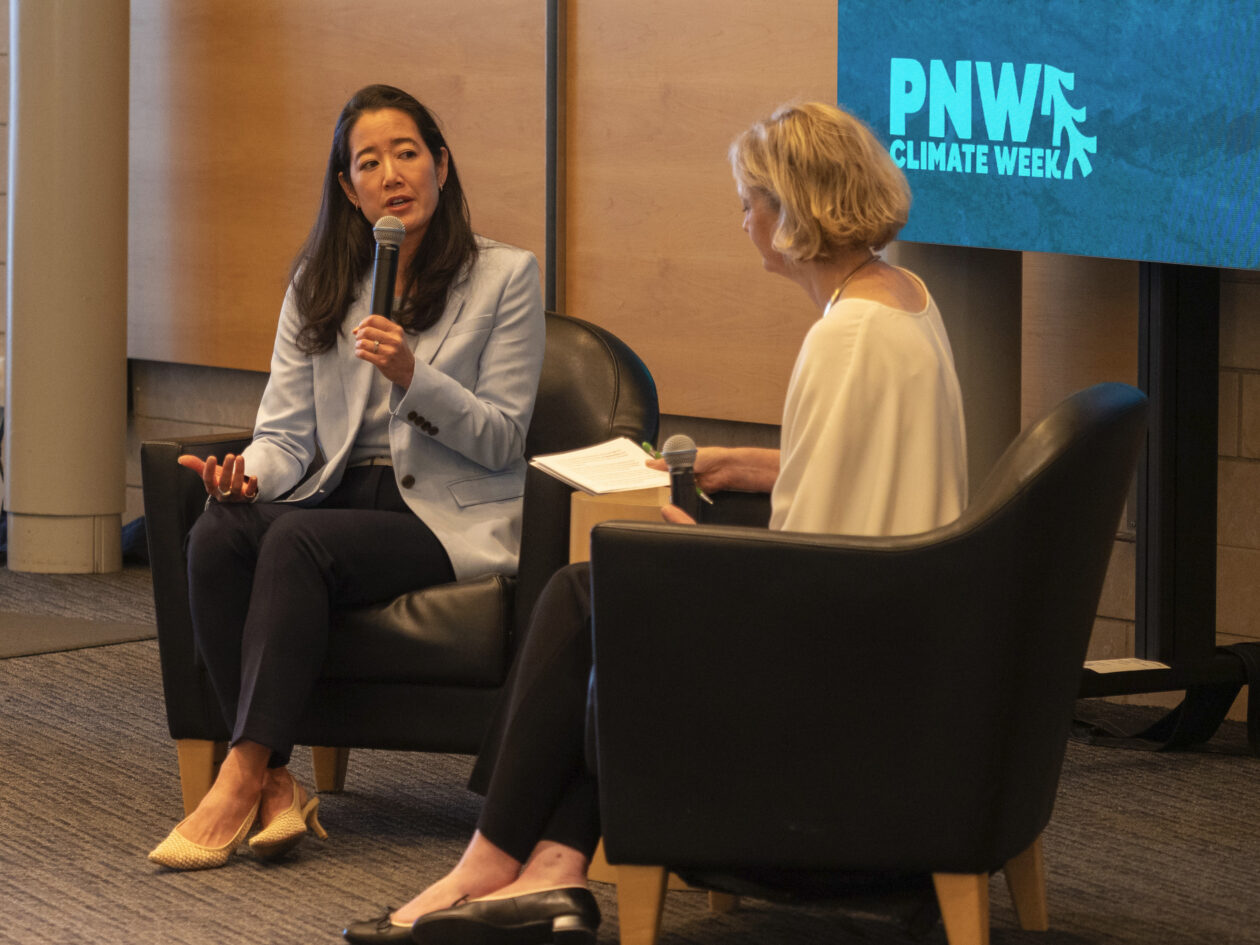
Microsoft Chief Sustainability Officer Melanie Nakagawa faced a barrage of pointed questions from the audience Friday during a session at the annual Pacific Northwest Climate Week in Seattle.
Protesters challenged Nakagawa through most of the 30-minute session held in a conference room at Seattle’s City Hall, calling out the company’s use of fossil fuel energy sources to power its AI data centers and challenging Microsoft’s commitment to climate goals set years ago.
As a reporter covering sustainability issues for GeekWire, I moderated the session. Many of the issues raised by the crowd were on my list of questions for Nakagawa. The disruptions also included chants from protesters seated among attendees, at times going beyond climate issues to condemn Microsoft’s technology deals with Israel.
Security guards ultimately ushered some protesters out of the space, while others remained. Interruptions from the audience continued for all but the final 10 minutes of the session.
The event capped off Pacific Northwest Climate Week, which included conversations around the city and region about climate change solutions, policies and innovations.
Microsoft has for many years been viewed as an environmental corporate leader, setting an ambitious goal in 2020 to become carbon negative within a decade. It created an internal carbon tax — one of the corporate world’s largest — that charges individual Microsoft divisions for emissions from sources like air travel to fund climate-friendly initiatives. The company is credited with helping create and sustain the carbon dioxide removal sector, among other roles.
But the rapid expansion of AI data centers and their huge energy demands are undercutting Microsoft’s standing. The company recently released its annual sustainability report, disclosing that its carbon footprint grew 25% last year, moving it further from its 2030 target.
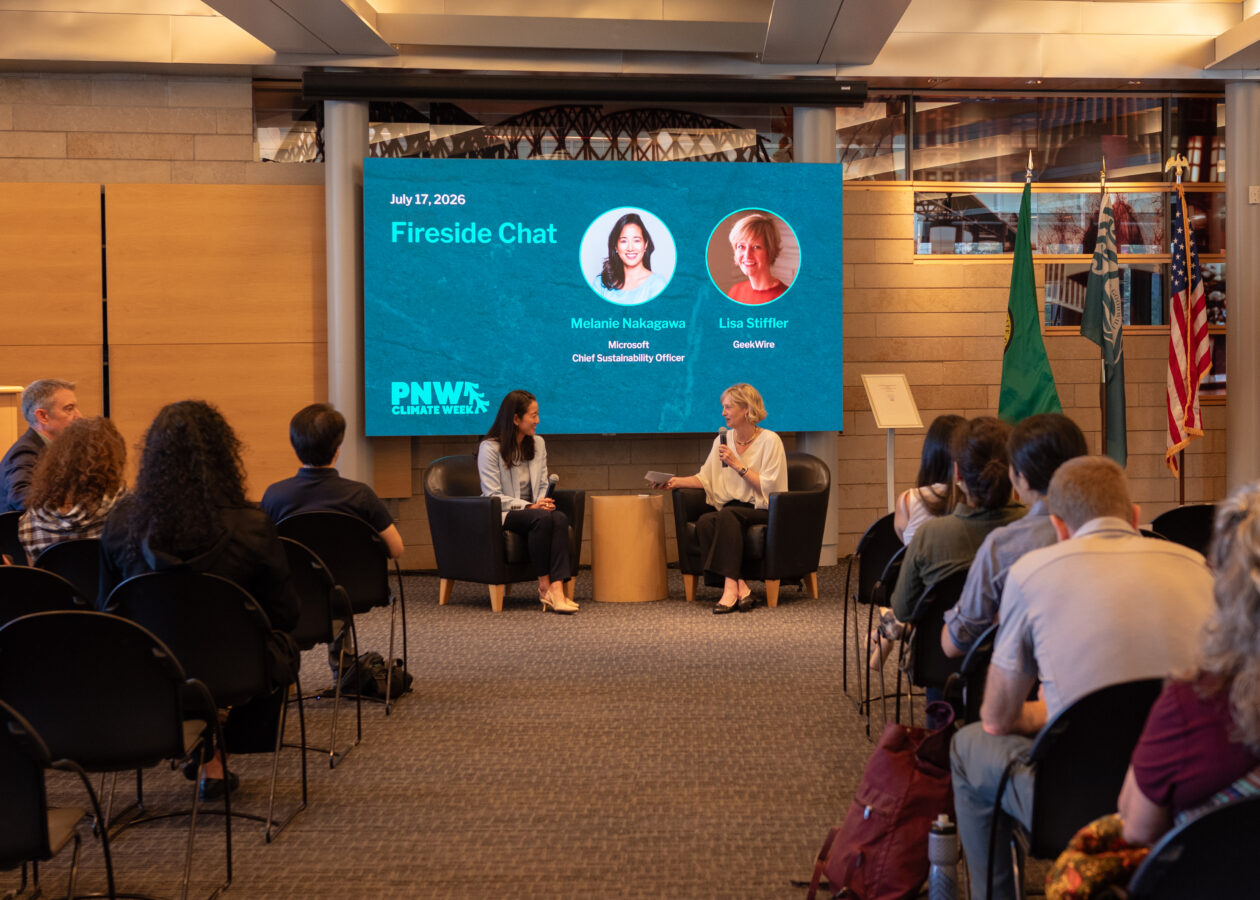
One protester’s question was about a deal announced earlier this year in which Microsoft is partnering with Chevron to build a 2.7 gigawatt natural gas facility to power a data center campus in Texas. I asked Nakagawa how the company defends the agreement, and she pointed to the 4.7 gigawatts of renewable energy that Microsoft has supported in the state. I followed up by asking about the Redmond, Wash.-based company’s commitment to carbon dioxide removal (CDR) projects given recent reports about a pause on new deals.
Nakagawa was unable to answer before the crowd drowned her out with a call-and-response chant: “Microsoft, you can’t hide. We can see your dirty side.”
Another protester criticized the escalating pursuit of AI. “You’re selling us a product that we don’t even need, and we never should ask for,” he said. “No one wants AI. You’re destroying the climate with AI.”
I brought up legislation proposed earlier this year in Washington to mandate clean energy use and bring transparency to data center impacts in the state. Microsoft opposed and helped defeat the bill, though the company says it wants to work with lawmakers to pass rules next year. I asked what needed to change in the legislation for Microsoft to support it.
Nakagawa didn’t provide specifics, but noted that this year, for the first time, the company shared facility-level information in its annual report on electricity and water use for data centers worldwide.
“People want to know more about the data, and we believe you can have an honest and candid conversation with transparency and access to that information and data,” she said.
Given the obvious public concerns, I asked Nakagawa, “Do you really honestly believe that by 2030, the company can hit that carbon-negative goal?”
Nakagawa pointed to wide-ranging initiatives that are starting to help curb specific emissions, including investments to make Xbox devices lower carbon and financial support for the recent opening of a production plant in Moses Lake, Wash., for sustainable aviation fuel company Twelve.
“There are a couple areas where we’re seeing a lot of promising progress,” she said. “Look, this is going to be a hard target. We’ve not been at all shying away from the fact that this is a difficult goal.”

Apple has quietly increased the price of Apple Music in the US, with individual subscriptions now costing $11.99 per month instead of $10.99.
The change also affects Family and Student plans. In addition, several Apple One bundles are impacted. The price rise comes almost four years after Apple last increased Apple Music subscription fees in October 2022.
The biggest jump is for the Apple Music Family plan, which now costs $19.99 per month, up from $16.99. The Student plan has also increased by $1, bringing the monthly fee to $6.99.
Apple has also adjusted pricing for two of its Apple One bundles. While the Individual plan remains unchanged, the Family tier now costs $27.95 per month, up by $2. Meanwhile, the Premier plan has increased to $39.95 per month. Apple has also confirmed similar price increases in Brazil.
In a statement to Music Business Worldwide, Apple said the latest changes are “the result of rising licensing costs,” suggesting that higher payments to rights holders and music labels are behind the increase.
The price hike means Apple Music now sits closer to many of its biggest streaming rivals. However, the service continues to distinguish itself with features such as Lossless Audio, Hi-Res Lossless, Spatial Audio with Dolby Atmos, live radio stations and a catalogue of more than 100 million songs.
For existing subscribers, the increase is relatively modest on the Individual plan, but families will notice a more significant jump. Moreover, an extra $3 each month adds up to $36 more per year. This makes it one of the largest increases Apple has introduced for the service.
Spotify, YouTube Music and other services have all introduced price increases in recent years. As a result, premium music subscriptions are becoming steadily more expensive across the board.
If you’re already subscribed, the updated pricing should appear on your next billing cycle. New customers signing up from today will pay the new rates immediately. Meanwhile, anyone considering Apple’s wider ecosystem may want to compare whether an Apple One bundle now offers better overall value than paying for Apple Music on its own.

Bats are remarkable creatures, able to fly at night or inside the confines of caves without light to guide their way. A team of researchers at Worcester Polytechnic Institute (WPI) has determined how to use low power ultrasonic sensors to guide drones in obscured environments.
While radar, lidar, and GPS are all great for navigation and sensing, they can run into issues when light is obscured or can take too much power to be practical for the limited battery life of a drone. The researchers found that a dual sonar array could be used to implement a much lower power sensing system for a drone that performs well in environments that would stymie a computer vision system.
A shield placed behind the array cuts down on the sound of the propellers that would otherwise drown out the signal, and further signal analysis via a neural net separates the echoes of objects in front of the drone from the background. The prototype could navigate in various simulated environments like forests, smoke, and snow. It looks like it even got a chance to go for a flight in the actual woods. All the code and hardware designs are Open Source, so have at it!
We’ve covered mosquito-inspired drone sensors before, and if you want to get into echolocation yourself, apparently humans can learn to do it too.

Chris Fall, the director of the Center for AI Standards and Innovation (CAISI), has resigned, the agency confirmed to multiple news outlets.
He was appointed just three months ago after the last appointee, Collin Burns, left in less than a week, The Washington Post reported at the time. Burns was reportedly “pushed out” of the job in April because he previously worked for Anthropic and the Trump administration had been battling with the company, sources told the Post.
No reason was given for Fall’s departure. Prior to leading CAISI, Fall was the director of the Department of Energy’s Office of Science during the first Trump administration and had been the acting director of the DOE’s Advanced Research Projects Agency-Energy. He worked in the DOE’s Office of Naval Research (ONR) prior to that.
Before Burns and Fall, the agency was led by venture capitalist David Sacks, whose title at the time was White House AI and crypto czar. Sacks stepped down in March.
CAISI, which operates under the National Institute of Standards and Technology, is the primary organization for developing technical standards and testing methods for AI models as well as assessing cybersecurity risks. Yet it was not the agency at the center of the most recent model-risk brouhaha.
That occurred in June when the U.S. Commerce Department invoked an obscure export control directive that effectively forced Anthropic to pull its Mythos and Fable models from the market. The ban was lifted by the end of the month, when Secretary of Commerce Howard Lutnick said he was satisfied with Anthropic’s safety plans.
Earlier this month, the White House also signed an executive order for a new AI safety oversight program called “Gold Eagle” that creates a clearinghouse for cybersecurity vulnerability coordination. A host of federal organizations were named as part of the program, including the Commerce Department and Department of Homeland Security. But, as CNBC pointed out, CAISI was not among the federal organizations mentioned.
Meanwhile, after Anthropic’s models were freed from the ban, Google DeepMind CEO Demis Hassabis began calling for the creation of an independent, industry-run standards body to regulate frontier AI modeled after FINRA — the same sort of mission that CAISI was formed to tackle.
Fall’s resignation also follows this weekend’s handwringing over Chinese AI lab Moonshot’s new version of its open model Kimi, which performed competitively against flagship frontier models. The administration was weighing efforts to somehow ban Chinese open models, Axios reported. This sparked immediate debate and outrage over the weekend, including from Sacks, who argued that regulations shouldn’t be used as a protectionism strategy for U.S. proprietary AI labs.
While CAISI has released a few reports on the capabilities of Chinese open-weight models Z.ai’s GLM-5.2 and DeepSeek V4 Pro, it hasn’t talked much about its processes for testing. (Open weight means these models can be publicly downloaded and run locally, but its training code and datasets are not available). Since July 9, TechCrunch has sent multiple inquiries to both the DoC and NIST about how its LLM evaluations work and has not received a response.
When you purchase through links in our articles, we may earn a small commission. This doesn’t affect our editorial independence.

Looking for a different day?
A new NYT Connections puzzle appears at midnight each day for your time zone – which means that some people are always playing ‘today’s game’ while others are playing ‘yesterday’s’. If you’re looking for Monday’s puzzle instead then click here: NYT Connections hints and answers for Monday, July 20 (game #1135).
Good morning! Let’s play Connections, the NYT’s clever word game that challenges you to group answers in various categories. It can be tough, so read on if you need Connections hints.
What should you do once you’ve finished? Why, play some more word games of course. I’ve also got daily Strands hints and answers and Quordle hints and answers articles if you need help for those too, while Marc’s Wordle today page covers the original viral word game.
SPOILER WARNING: Information about NYT Connections today is below, so don’t read on if you don’t want to know the answers.

Today’s NYT Connections words are…
What are some clues for today’s NYT Connections groups?
Need more clues?
We’re firmly in spoiler territory now, but read on if you want to know what the four theme answers are for today’s NYT Connections puzzles…
What are the answers for today’s NYT Connections groups?
Right, the answers are below, so DO NOT SCROLL ANY FURTHER IF YOU DON’T WANT TO SEE THEM.

The answers to today’s Connections, game #1136, are…
This happens very rarely to me, but I saw the hardest group immediately today, with PROMPTER and VISION helping me connect GRAM and KINESIS.
It felt like an easy purple, but maybe telegram caught a few people out seeing as they are now a fairly pointless form of communication.
Regardless, I was rewarded with my 50th Purple First badge — it has taken me a while to reach this milestone, with my haphazard play style instead being to just connect the first group I see, rather than looking for the most likely to be a purple. I can’t imagine being that tactical with Connections.
In truth, this felt like a game where any of the groups could have been yellow on any other day, although all of the groups did contain things that have largely disappeared.
NYT Connections is one of several increasingly popular word games made by the New York Times. It challenges you to find groups of four items that share something in common, and each group has a different difficulty level: green is easy, yellow a little harder, blue often quite tough and purple usually very difficult.
On the plus side, you don’t technically need to solve the final one, as you’ll be able to answer that one by a process of elimination. What’s more, you can make up to four mistakes, which gives you a little bit of breathing room.
It’s a little more involved than something like Wordle, however, and there are plenty of opportunities for the game to trip you up with tricks. For instance, watch out for homophones and other word games that could disguise the answers.
It’s playable for free via the NYT Games site on desktop or mobile.
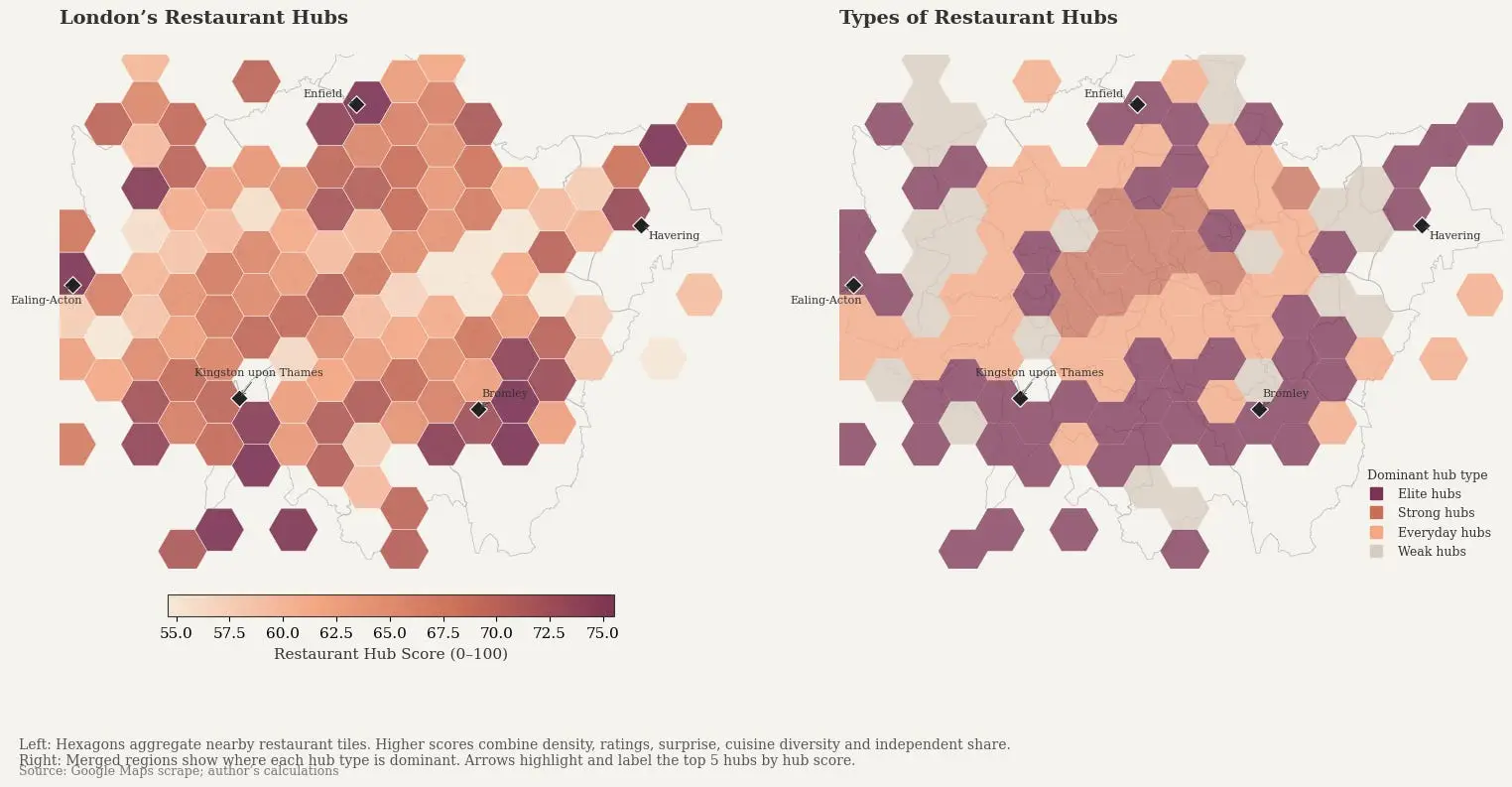
We all know that Google and other big players pick and choose what information people see, but we sometimes overlook it outside of the search and social media space. [Lauren Leek] decided to take a look at how Google Maps picks winners and losers in the restaurant scene in London.
Building a machine learning model to determine a new restaurant recommendation (as one does), [Leek] uncovered interesting, and perhaps concerning, elements of how Google Maps ranks restaurants. Broken down by relevance, proximity, and prominence, many new restaurants face the issue of not drawing traffic without reviews and vice-versa causing a vicious cycle. Relevance and proximity are fairly straightforward, but what goes into “prominence?”
[Leek] found that “it is not just what people think of a place – it is how often people interact with it, talk about it, and already recognise it.” This leads to chains and high foot traffic areas awash in reviews while more out-of-the-way places find it more difficult to draw traffic. Some of this is expected and would be happening even when word of mouth was the primary way to find out where to eat, but as with many things, the algorithm amplifies this, along with the undisclosed paid placement of restaurants in Maps results.
While still in its infancy, [Leek] built a public dashboard where people can sort restaurants in the city. The machine learning algorithm is designed to identify places that are hidden gems that punch above their Google Maps weight and may make you look like the trendy one (if you live in London).
Zooming out further, [Leek] found larger clusters that revealed restaurant “diversity, in other words, is not just about taste. It is about where families settled, which high streets remained affordable long enough for a second generation to open businesses, and which parts of the city experienced displacement before culinary ecosystems could mature.”
If you want to step outside the algorithm mayhem, how about a good old-fashioned Web Ring? We’ve also addressed what’s an AI versus an algorithm, and Cory Doctorow advised us on how to reverse course on the current wave of enshittification.




London Mayor Sadiq Khan handed a peerage by Keir Starmer alongside 15 other Labour figures… just days before the PM leaves No10


Weekend Open Thread – Corporette.com


The House | The City of London can help the new chancellor deliver growth in every postcode


Young campaigners urge incoming PM to act on outdoor junk food ads


CFTC blocks Kalshi from unwinding Michigan trades after court order

Two July Windows Left: The CLARITY Act’s Senate Fight and What Failure Means


Ripple Payments Joins MiCA With 14 Firms, Does It Mean Anything For XRP?


Nvidia Stock Slips After Big Tuesday Rally as Huang Confirms Vera Rubin Chip Is Now in Production Today


Democrats look to World Cup watch parties to register thousands of voters

Disney’s Most Ambitious Failed Star Wars Attraction Is Coming to SDCC


Ripple wins EU-wide access as ESMA adds it to MiCA register


Injective Submits SEC Transfer-Agent Registration to Onchain Ownership Records


Palantir Shares Rise After Expanded Nvidia Partnership and Fresh Analyst Upgrades Ahead of Earnings Day


Sail Virtually Aboard The “Itanic” With IA-64 Emulator
Turtle Beach Command Series KB7 review: a nifty screen-equipped gaming keyboard


Dark Secrets Emerge When Jailbreaking LLMs


XRP BOMBSHELL… XRP OMBOARDED FOR TRANSACTIONS!!!


Registration is now open for March for Men with Kev 2026


Unregistered fitter used Gas Safe logo on business flyers

New Cornerback Enters Vikings Trade Rumor Mill



You must be logged in to post a comment Login