

Crypto World
Saylor Says Bitcoin Needs Disciplined Expansion as Demand Resets

Strategy co-founder and executive chairman Michael Saylor said Bitcoin needs “disciplined expansion” through banks, companies, securities, credit and capital markets, laying out a path for the asset as spot exchange-traded fund (ETF) outflows and a broader market sell-off test institutional demand.
On Friday, Saylor published an essay, saying Bitcoin’s base layer should be treated as “sacred infrastructure,” with most innovation occurring through higher layers, applications, custody systems, credit instruments and financial infrastructure.
The comments frame Bitcoin’s next phase as a clash between two institutional channels: passive spot ETF exposure, which has broadened access but remains sensitive to redemptions, and the corporate and credit-market adoption model favored by Saylor’s Strategy.
Saylor argued Bitcoin should become embedded in the machinery of finance rather than depend only on spot buyers or ETF inflows. He said Bitcoin’s future requires balancing adoption, innovation and self-custody while preserving the network’s core properties.
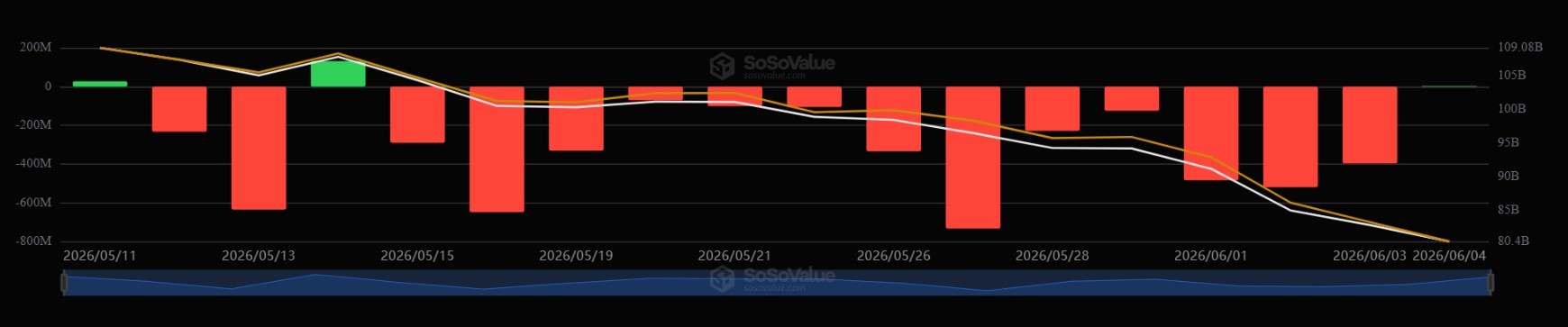
The essay comes during a sharp Bitcoin market sell-off that has put both major institutional channels under pressure. Spot Bitcoin ETFs posted weekly net outflows of $1.42 billion, $1.26 billion and $1 billion in the last three weeks of May, while the current week’s outflows have reached $1.4 billion so far.
Strategy also recently sold 32 Bitcoin to fund preferred stock dividends, its first sale since 2022, denting the “never sell” narrative that has long surrounded Saylor’s corporate Bitcoin strategy.
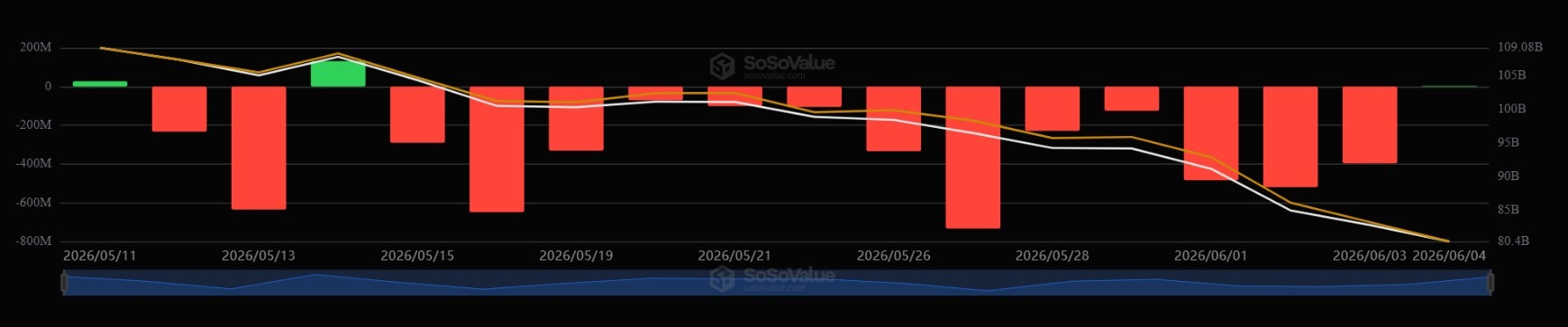
Spot Bitcoin ETF inflows and outflows in the last four weeks. Source: SoSoValue
Analysts split on demand reset
The pressure has sharpened a broader debate over whether Bitcoin’s recent decline is a temporary reset after excessive leverage, or a sign that institutional demand is weakening after months of ETF-led buying.
Lacie Zhang, research analyst at Bitget Wallet, said Bitcoin may already be closer to clearing the episode than equity markets after a $1.8 billion liquidation wave, deeply negative funding rates and a sharp reset in open interest. Zhang said a retest of $55,000 to $57,000 remains possible if outflows persist. She added:
“The key question is not just whether BTC holds $63K, but whether ETF flows stabilize, exchange reserves keep falling, and whale accumulation picks up.”
Nicolai Sondergaard, research analyst at Nansen, gave a more cautious view, saying exchange flow data suggests participants are using Bitcoin’s bounce from around $61,000 to reduce exposure rather than add to positions.
Sondergaard said Bitcoin’s ETF demand narrative has been unwinding since May, and that a durable recovery would require more than the removal of immediate market pressure. Without visible re-entry from institutional buyers, he said the market may struggle to rebuild momentum.
Related: Strategy’s leveraged Bitcoin model has faced its first stress test: Grayscale
Saylor argues for Bitcoin beyond ETFs
Saylor, in his essay, described four broad Bitcoin ideologies: maximalists, capitalists, technologists and fundamentalists. He said each group protects something important, but each can also go too far if its view becomes absolute.
The “disciplined expansion” thesis most closely fits the capitalist view, which treats Bitcoin as digital capital that can be integrated into balance sheets, securities, credit markets, banks, brokers, insurers and asset managers.
That framing differs from ETF-based exposure, where institutional adoption is measured largely through inflows and outflows.
Saylor’s preferred channel points to a more embedded model, where Bitcoin is used in corporate treasuries, collateral structures and capital markets rather than held only through spot investment products.
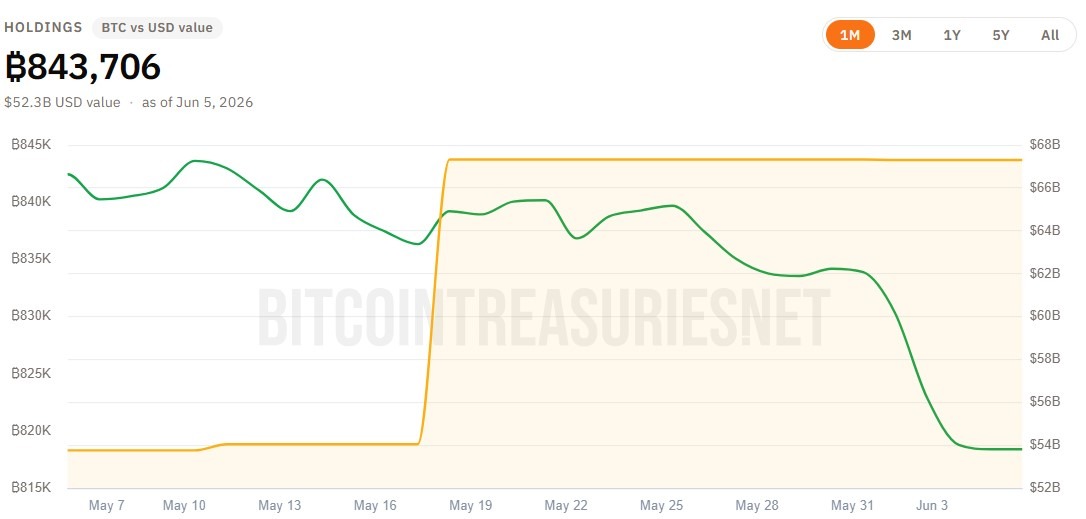
Strategy’s BTC holdings versus USD value. Source: BitcoinTreasuries.net
Magazine: Bitcoin miners are pivoting to AI, so why is the hashrate near ATHs?


The U.S. House Ways and Means Committee circulated seven discussion drafts of digital asset tax legislation ahead of a Tuesday hearing, signaling a concentrated effort to reshape how crypto activities are taxed under the Internal Revenue Code. The drafts tackle a broad range of topics, including stablecoins, mining, staking, and on-chain transactions, with an emphasis on easing compliance burdens while clarifying entitlement, classification, and reporting rules for market participants.
Specific proposals under consideration include reducing the tax paperwork for crypto holders, clarifying the tax treatment of mining and staking rewards, and potentially introducing a de minimis reporting threshold for smaller transactions. The seven drafts were released in advance of a formal hearing chaired by Republican Jason Smith, underscoring bipartisan interest in modernizing digital asset tax policy.
According to Cointelegraph, industry advocates have been pressing lawmakers to lessen reporting burdens for mining and staking activities and to create a de minimis exception to relieve small-value transfers from onerous tax documentation.
In parallel, a draft bill released by members of Congress in March and officially introduced in May as the Digital Asset PARITY Act proposed a $200 reporting threshold for stablecoin transactions, while explicitly excluding a similar threshold for cryptocurrencies such as Bitcoin. The aim, supporters say, is to introduce tax clarity that could encourage broader onshore activity in the diverse digital asset space.
Cody Carbone, CEO of The Digital Chamber, framed the debate around tax clarity as essential to the sector’s growth: “We need digital asset tax clarity or activity will never fully onshore.” His remark reflects a broader push from industry groups to align U.S. policy with how digital assets are traded and held in practice, rather than forcing all activity into existing traditional-asset tax constructs.
Despite momentum in the House, officials note that any bill or amendment addressing crypto tax policy will require bipartisan support in Congress before enactment. While the House hearing proceeds, Senate leadership has indicated that lawmakers will first advance a budget reconciliation package before turning to a separate digital asset framework, such as the CLARITY Act, as part of a broader policy workflow.
As policymakers refine their approach, related policy conversations continue in other jurisdictions and at the state level. For instance, a broader tax-policy debate around crypto has featured discussions of exemptions and thresholds that would lessen reporting for small-value transfers and reduce administrative friction for exchanges, mining operations, and staking services alike. In a related vein, discussions in Congress intersect with ongoing questions about how digital assets should be treated under securities and banking frameworks, as well as how they align with international regulatory standards.
Wyoming Senator Cynthia Lummis has publicly signaled that there is consideration in both the House Ways and Means Committee and the Senate Finance Committee of a de minimis threshold for Bitcoin transactions—an approach described in her own draft legislation released in July 2025 and cited in Congressional discussions. The idea would be to provide a clear, lower-cost compliance path for routine, low-value transfers, potentially harmonizing federal treatment with state-level efforts and market practice.
Key takeaways
- The Ways and Means Committee circulated seven draft bills aimed at digital asset taxation, covering stablecoins, mining, staking, and on-chain transactions, ahead of a Tuesday hearing chaired by Rep. Jason Smith.
- Proposals include reducing reporting requirements for crypto holders and establishing a de minimis threshold for small transactions, along with clearer guidance for mining and staking activities.
- The PARITY Act envisions a $200 reporting threshold for stablecoins but does not extend the same threshold to major cryptocurrencies such as Bitcoin, reflecting a tiered approach to governance across asset types.
- Legislative momentum in the House faces cross-chamber dynamics: the Senate is prioritizing a budget reconciliation package before pursuing a standalone digital asset framework such as the CLARITY Act.
- State-level developments are progressing in parallel. Illinois passed a budget that includes digital asset taxation provisions, with a planned 0.2% tax on brokered digital asset transactions pending signing by the governor.
National policy proposals and regulatory intent
The seven draft bills demonstrate an attempt to codify tax treatment for a broad array of digital asset activities. By proposing a lighter reporting burden for ordinary holdings and transactions, lawmakers appear to acknowledge the friction between tax administration and the practical realities of retail and institutional crypto usage. At the same time, the drafts seek to provide clearer classifications for mining and staking rewards, which have historically presented ambiguity under existing tax rules. This alignment could impact how exchanges, mining operators, staking-as-a-service providers, and other service entities structure their compliance programs and reporting workflows.
The Digital Asset PARITY Act’s focus on a $200 stablecoin reporting threshold highlights a deliberate split in policy design: stablecoins, as near-term payment rails with high on-chain usage, may warrant a lower reporting bar to minimize friction for everyday transactions. By contrast, the act does not extend a similar exemption to widely traded cryptocurrencies like Bitcoin, signaling a differentiated treatment based on perceived risk profiles and regulatory oversight needs. Industry observers have framed the PARITY Act as a stepping stone toward more comprehensive clarity, while critics caution that stability-focused thresholds could invite regulatory arbitrage or uneven enforcement across asset classes.
The inclusion of a potential de minimis exemption for small transactions—the so-called de minimis reporting cut-off—addresses a common pain point for users and intermediaries. If adopted, such thresholds could reduce the administrative burden on individuals who engage in modest crypto activity and on smaller exchanges that currently face disproportionate compliance costs relative to transaction scale. Yet, setting thresholds also raises questions about coverage—whether off-chain exchanges, over-the-counter desks, and cross-border transfers would be encompassed—and how authorities would verify and enforce exemptions without creating loopholes.
From an institutional standpoint, tax clarity is viewed as a prerequisite for broader onshore participation by wallets, custodians, miners, and staking providers. The industry push aligns with a broader regulatory objective: to foster a transparent and predictable tax environment that minimizes dispute resolution and improves the quality of tax data for enforcement and compliance workflows. While lawmakers weigh the balance between simplicity and precision, financial institutions and crypto firms will closely monitor the approach to reporting thresholds, asset classifications, and the scope of taxable events.
State-level developments and compliance implications
The Illinois General Assembly approved a state budget that allocates new digital asset tax provisions as part of the fiscal framework. If signed into law by Governor JB Pritzker, crypto users would face a 0.2% tax on transactions conducted through brokers registered with the state. The move underscores how state-level policy can shape the day-to-day operational posture of exchanges, custodians, and other market participants that interact with Illinois residents. For market participants with multi-jurisdictional footprints, state tax rules add another layer of complexity to tax reporting, client communication, and regulatory compliance programs.
These developments occur in a broader context where financial-services firms—ranging from traditional banks to crypto-native institutions—are assessing how digital assets should be integrated into their risk, AML/KYC, and licensing frameworks. Tax policy changes at the federal and state levels can influence licensing requirements, reporting expectations, and cross-border cooperation, particularly in an environment where enforcement priorities and regulatory interpretations continue to evolve.
Additionally, observers note the broader policy conversation intersects with international efforts and market structure considerations, including how U.S. tax policy aligns with global standards and regional frameworks. While the specifics of MiCA, SEC, CFTC, or DOJ enforcement strategies exist outside the immediate legislative drafts, the direction of U.S. policy can influence global capital flows, cross-border reporting, and the design of stablecoin regulation and banking integration for crypto firms.
Industry and policy researchers will be monitoring how the state and federal proposals unfold, particularly around threshold levels, the treatment of mining and staking, and the scope of which activities trigger taxable events. The working assumption remains that bipartisan support is necessary for any substantive reform to pass both chambers and gain presidential approval, given the mixed track record of crypto tax legislation in recent years.
Related context in other jurisdictions, such as Israel’s approach to voluntary crypto disclosures and tax reporting, underscores the global sensitivity around compliance and enforcement. These comparative developments illustrate the practical challenges that regulators face when balancing innovation with robust tax administration and consumer protection.
Meanwhile, discussions surrounding de minimis exemptions continue to anchor debates about how best to calibrate tax policy with market realities. Senator Cynthia Lummis’s de minimis proposal for Bitcoin, introduced as part of a broader policy effort, reflects a recognition that a nuanced approach—distinct from other asset types—may be necessary to address the realities of digital asset usage and reporting.
As the legislative process unfolds, practitioners should prepare for a future where tax compliance programs, reporting systems, and licensing strategies are redesigned to accommodate a more explicit and harmonized set of rules for digital assets. Financial institutions, exchanges, and miners alike will need to align internal controls with evolving definitions of taxable events, thresholds, and asset classifications.
Closing perspective: The pace and direction of crypto tax policy in the United States will hinge on cross-chamber consensus and the ability to translate policy goals into implementable rules that withstand judicial and regulatory scrutiny. Watch for developments around the CLARITY Act, reconciliation timelines in the Senate, and state-level actions that could foreshadow a broader national framework.

Visa is testing whether privacy-enabled blockchain networks can support institutional stablecoin settlement without exposing sensitive transaction data, in a proof of concept with stablecoin infrastructure company Brale and the Canton Network, a permissioned ledger backed by major Wall Street firms.
The project, announced Thursday, uses SBC, a US dollar-backed stablecoin issued by Brale, to simulate institutional payment flows on Canton as Visa evaluates whether SBC could become another stablecoin option in its settlement program.
The initiative extends Visa’s earlier experiments using stablecoins for settlement on public blockchains, which began in 2021 with USDC settlement on Ethereum but now target banks and market infrastructure providers that want onchain efficiency without broadcasting counterparties, positions or flows on a public ledger.
The push comes as policymakers and analysts anticipate a broader shift in how payment stablecoins are used.
S&P Global Ratings said in a Thursday report that global stablecoin issuance has already surpassed $300 billion across currencies, with most demand still tied to crypto trading.
Related: Solayer launches Visa-compatible card for USDC payments
US payment stablecoins that comply with the Guiding and Establishing National Innovation in US Stablecoins (GENIUS) Act are poised to expand into merchant remittances and certain types of commercial payments once rules are finalized, the report said, with one of the most promising near-term use cases being cross-border payments. However, such flows currently represent only a minimal, if growing, share of global international payment volumes.
Canton network at center of institutional privacy push
Canton, developed by Digital Asset, connects permissioned blockchain applications operated by institutions including JPMorgan, Goldman Sachs, BNP Paribas and the Depository Trust & Clearing Corporation.

Visa and Brale explore private stablecoin settlement. Source: Businesswire
Unlike public chains, Canton is designed so that only transaction participants and authorized regulators can see specific deal data, while still allowing atomic settlement across tokenized assets, cash-like instruments and other financial contracts.
The proof of concept will assess how Canton’s privacy architecture can support faster, more programmable settlement while allowing financial institutions and payment companies to retain strict control over the visibility of sensitive transaction and settlement data, Visa and Brale said in the release.
For banks, the stakes go beyond technology experimentation. Over time, S&P Global said stablecoins could threaten a portion of banks’ payments income and shift funding from insured retail deposits toward more concentrated wholesale balances.
Banks that issue stablecoins or tokenized deposits themselves may also capture new fee and funding opportunities, driving large financial institutions to test privacy-preserving settlement networks that can support GENIUS-style payment stablecoins and tokenized deposits, according to the report.
Cointelegraph reached out to Visa, Brale and Digital Asset, but had not received a response by publication.
Magazine: AI-driven hacks could kill DeFi — unless projects act now
Key takeaways:
- Ether derivatives metrics flip to a heavily bearish bias as cascading liquidations cut off a relief bounce.
- A critical ZCash bug discovered by AI triggers widespread fears of contagion, driving a contraction in Ethereum TVL.
Ether (ETH) plummeted to a 13-month low of $1,540 on Friday, following the bearish trend across the broader cryptocurrency market. Traders now fear a deeper price correction, given weakness in ETH derivatives metrics and heightened risk after a bug was found in the Zcash blockchain.
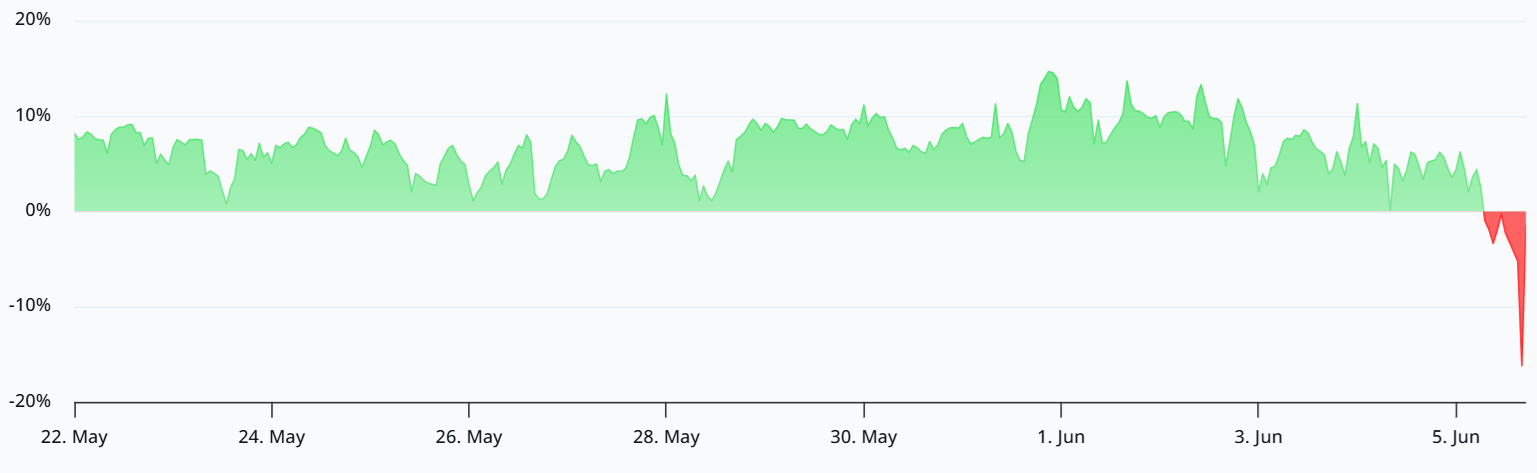
ETH perpetual futures annualized funding rate. Source: Laevitas
The Ether futures annualized funding rate flipped negative on Friday, indicating increased demand for short positions. Even with ETH trading 67% below its all-time high from August 2025, confidence among bulls has been shattered after $1.28 billion in leveraged longs were liquidated over 5 days.
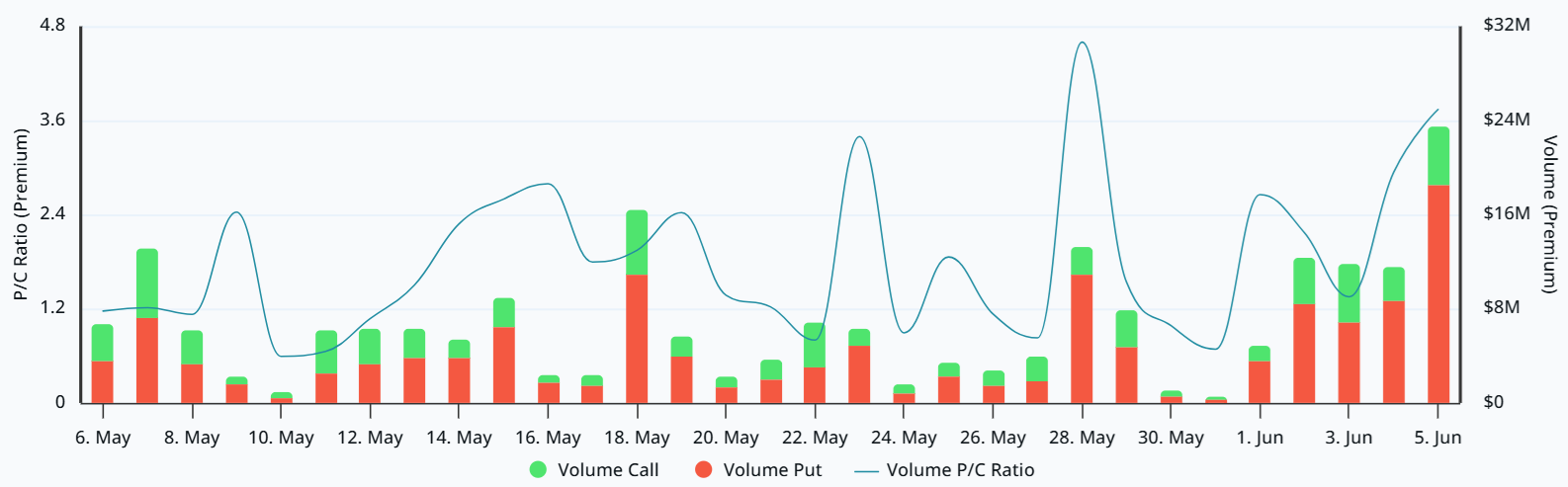
ETH options premium put-to-call ratio at Deribit. Source: Laevitas
Demand for downside price protection surged as the Deribit ETH options put-to-call premium spiked to 3.7 times on Friday. The indicator has consistently shown excess demand for put (sell) options since Monday. Low conviction among holders fuels uncertainty, giving bears an easy path to take control.
ETH price followed Zcash: Why?
The severe decline in Ethereum network Total Value Locked (TVL) to its lowest since February 2024 has also negatively impacted trader sentiment. Smaller deposits in decentralized applications (DApps) tend to reduce ecosystem revenue, ultimately reducing demand for ETH use in smart contracts.
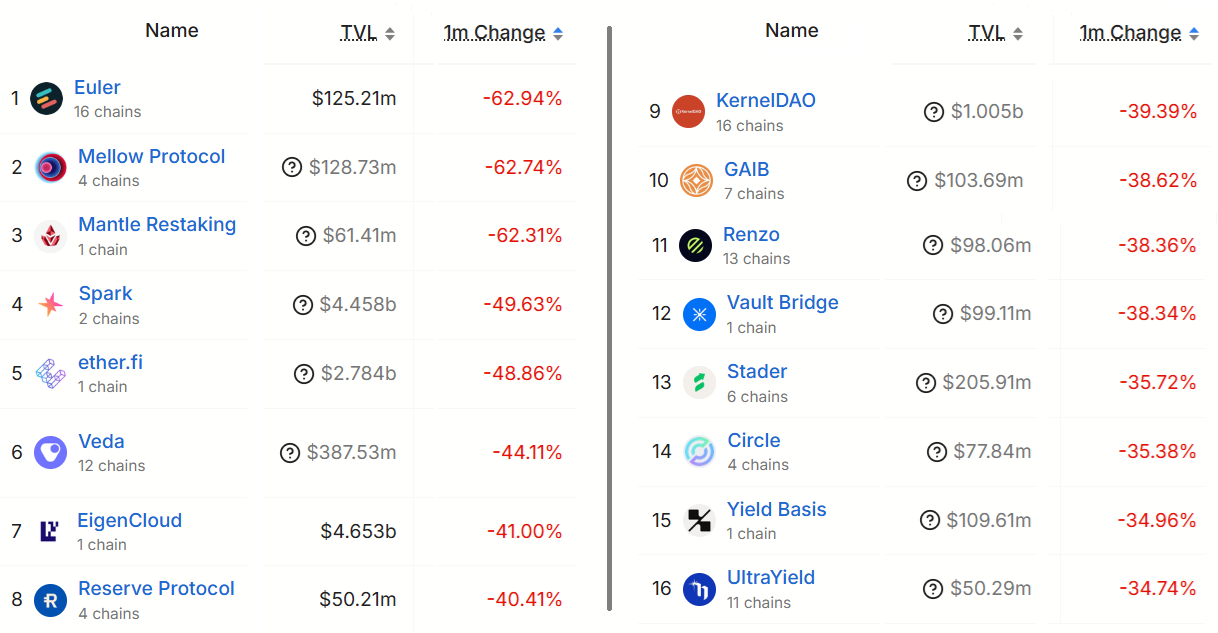
Ethereum network DApps Total Value Locked, USD. Source: DefiLlama
Some of Ethereum’s top DApps experienced severe TVL contractions, including Spark (-50%), Ether.fi (-49%), EigenCloud (-41%), and KernelDAO (-39%). Part of the exodus from smart contracts can be attributed to a critical vulnerability allowing unlimited ZEC minting in the largest ZCash zero-knowledge pool. The bug was found on May 29 using the Opus 4.8 AI model from Anthropic.
Given that the ZCash bug had existed since 2022 without anyone ever detecting it, traders fear that other blockchains and smart contracts could also be at risk. Advances in AI-driven security failure detection have put investors on high alert, especially after cryptocurrency hacks totaled $630 million in April.
KelpDAO’s $293 million hack and Drift Protocol’s $280 million exploit accounted for 82% of the monthly losses across 25 protocols, triggering panic across the decentralized finance (DeFi) industry. The hacks occurred across multiple networks, including Ethereum, Solana, Base, BNB Chain, Sui and PulseChain.
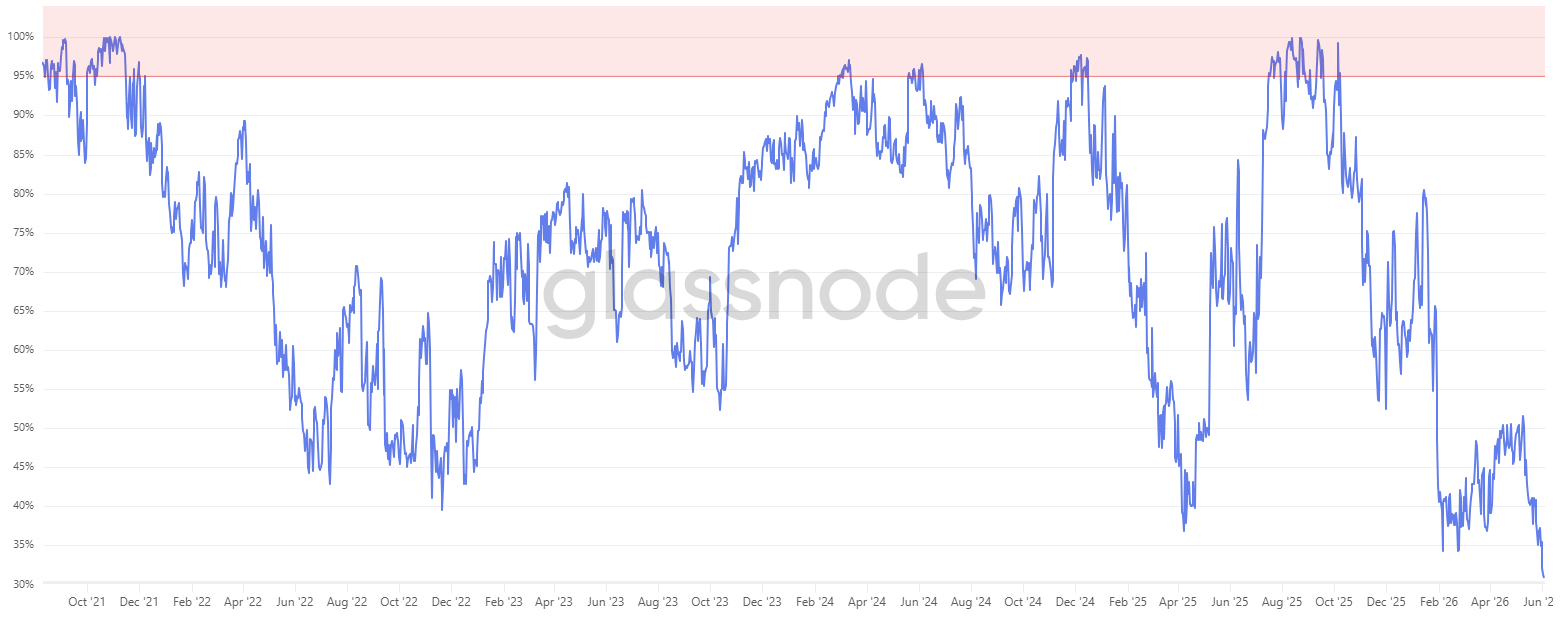
Percent of ETH supply in profit since they last moved. Source: Glassnode
Currently, only 30% of the ETH supply is profitable relative to when those coins were last moved. This setup has occurred only a few times in history, with the most recent instance being the mid-March 2020 COVID crash. Prior to that, this strong buy signal also emerged in mid-December 2019, preceding a 118% rally within 60 days.
Related: FG Nexus offloads additional $17.8M Ether as losses top $100M
With over $500 million in leveraged ETH long positions liquidated in 48 hours, there are no signs of a relief bounce. The largest Ethereum treasury firm, Bitmine (BMNR US), is sitting on an unprecedented $10.5 billion unrealized loss, as the company holds 4.5% of the entire ETH supply.
ETH could slide further below $1,550 as investor confidence deteriorates following multiple hacks across the DeFi industry and the inflationary bug found in the shielded Zcash protocol.


Cathie Wood says the biggest IPO opportunity now arrives before a company ever lists, with most investors missing the steepest growth while firms stay private.
The ARK founder framed SpaceX’s record filing as the start of a wider late-stage pipeline. Her firm holds six private companies it expects to list, each already at public-market scale.
Why the Growth Phase Now Happens in Private
ARK says the median US company waits 12 years to go public, up from five years in 1999.
Independent figures from University of Florida professor Jay Ritter confirm the same long climb. He has tracked IPO age for four decades.
Two structural shifts moved value creation earlier. The 2012 JOBS Act raised the shareholder cap that forces public registration from 500 holders to 2,000. Deep private funding then let firms delay a listing for years.
Cathie Wood pointed to three firms that reached scale while private. ARK’s report says:
- OpenAI crossed $25 billion in annualized revenue by early 2026, reached in about three years.
- Anthropic confidentially filed for an IPO on June 1 at a $965 billion valuation.
- Databricks is preparing its own listing.
Follow us on X to get the latest news as it happens
SpaceX filed for what could be the largest IPO in history, but ARK believes it is not the only one… The median age of a US company at IPO has reached 12 years, up from 5 in 1999. The window where the most value is created is increasingly happening before a company lists, Cathie Wood wrote in a post.
The Pre-IPO Opportunity ARK is Tracking
SpaceX filed for a $75 billion offering, which would rank as the largest IPO on record. That target is nearly triple Saudi Aramco’s $25.6 billion sale in 2019, the current record.
The company plans to debut on Nasdaq on June 12 at $135 per share, implying a valuation near $1.77 trillion. Aramco listed at roughly the same $1.7 trillion mark six years earlier.
ARK treats that debut as one entry in a longer queue. In a published guide, the firm said its Venture Fund holds six companies with active IPO timelines. Access starts at $500 through SoFi or Titan.
Readers weighing the math can review the broader SpaceX IPO valuation debate and the practical routes for investing before listing.
What ARK Expects to Come Next
Cathie Wood argues that venture exposure gives investors earlier access to disruptive innovation than public markets allow.
The thesis draws on ARK’s broader annual innovation research, which maps growth across AI, robotics, and digital assets.
That framing also touches crypto. ARK’s Big Ideas 2026 report pairs its pre-IPO case with a bullish Bitcoin forecast.
The post Cathie Wood Says the Biggest IPO Opportunity Happens Before Companies Go Public appeared first on BeInCrypto.
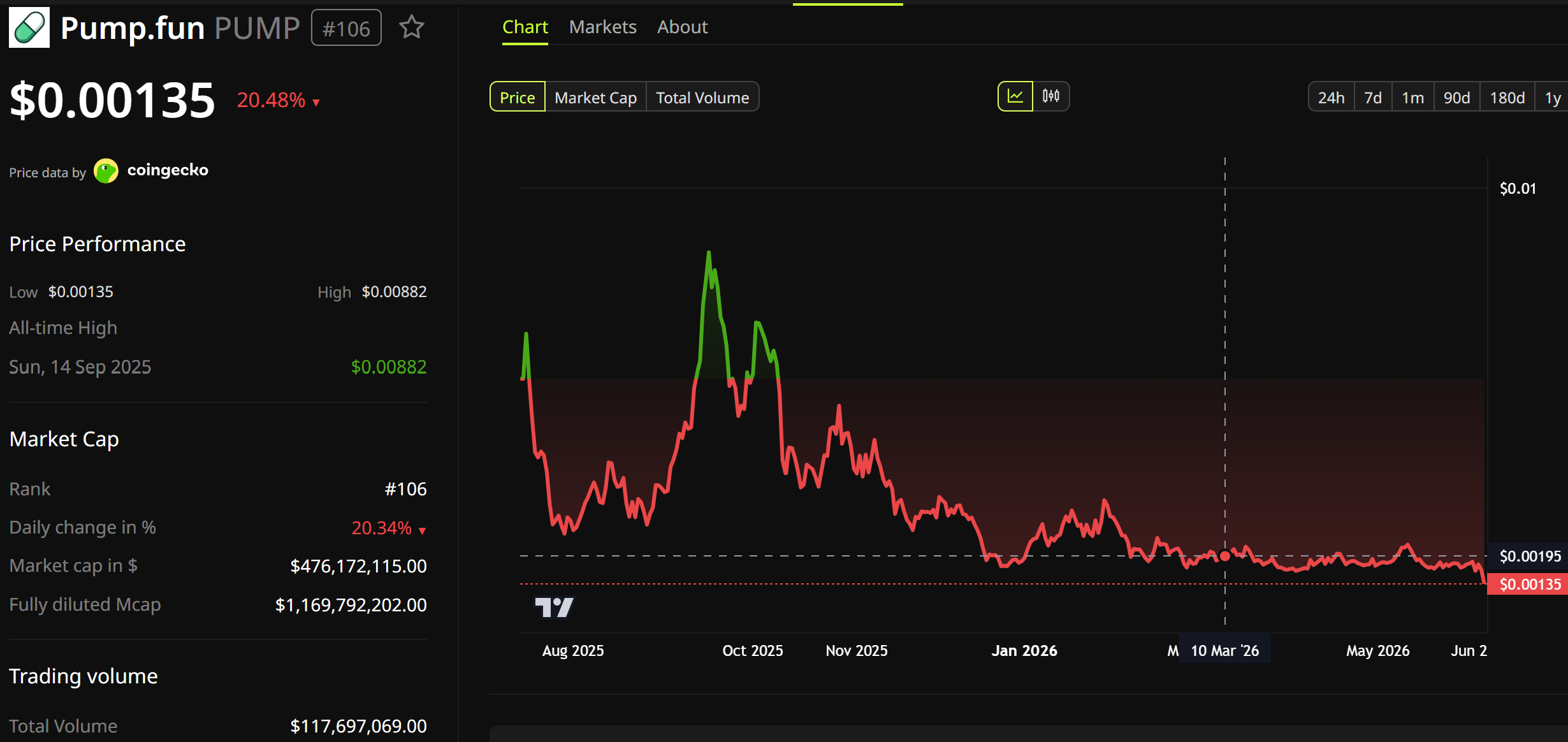
Pump.fun GO went live on June 4, a bounty marketplace that lets anyone pay crypto rewards for nearly any task. Within hours, listings ranged from forehead tattoos to filming a murder victim’s family.
The Solana meme coin platform holds rewards in escrow until moderators approve a submission. That open model has drawn sharp criticism over safety, harassment, and the kinds of stunts users are willing to fund.
How Pump.fun GO Works
Pump.fun pitched GO as a way to pay anyone to do anything for unlimited rewards. Creators set a reward, define the task, and lock funds until the bounty expires or a winner is chosen.
Bounty creators cannot withdraw rewards once a listing goes live. Pump.fun moderates submissions and decides which ones qualify, while creators can only recommend winners.
Unclaimed funds become reclaimable after a dispute window.
The launch followed Pump.fun’s shift toward utility tokens and a $350 million buyback campaign that has run since July 2025 without lifting the price.

The PUMP token set a record low near $0.00135 on June 5, down about 20% on the day and roughly 84% below its September 2025 peak.
Extreme Bounties Draw Criticism
Some of the highest listings offered roughly $57,000 to skydive into a 2026 World Cup match in a meme coin mascot costume and $2,762 for a forehead tattoo. The figures fed wider scrutiny of PUMP’s valuation.
“Humans & money are undeniably the most powerful tools on Earth. We’re combining both of them with GO: an all encompassing bounty platform where ANYONE can create or complete bounties for ANY task for UNLIMITED rewards,” Pump.fun added.
The top active bounty offered $24,584 to interview the family of a killer in the Henry Nowak case or the police officer involved. Trader Jeremy flagged the listing within an hour of launch.
The warning carries weight. Pump.fun suspended its livestreaming feature in November 2024 after users broadcast threats of violence and self-harm to inflate token prices. Similar abuse returned once the feature came back.
Pump.fun later leaned into the attention, posting a screenshot of a direct message to Michael Saylor asking for paid tasks. The stunt echoed the platform’s earlier token launch controversy.
One contract even baited suicide for a fee, attracting a payout as high as $690,000 or approximately 10,000 SOL tokens.
The roughly $57,000 skydiving bounty reportedly vanished after scrutiny. Whether Pump.fun can police a pay-anyone marketplace may decide how long GO survives in its current form.
“Offering a bounty on the first bill introduced to ban this dystopian nightmare,” said the 57th Governor of New York State, Kathy Hochul.
The post Pump.fun GO Bounty Platform Sparks Backlash Over Extreme Crypto Payouts appeared first on BeInCrypto.

TLDR
- XRP Ledger prepares version 3.2.0 with a software rebrand to XRPLd.
- Ripple engineer hints at performance upgrades, including reduced memory usage.
- Developers plan a playbook to guide operators through the upgrade process.
- The XRPL EVM Sidechain goes live with RLUSD integration for developers.
- RLUSD expands across chains using Wormhole NTT for native transfers.
XRP infrastructure is preparing for a new software release as developers confirm upcoming changes and a system rebrand. The update includes performance improvements and operational adjustments for network participants. At the same time, engineers have hinted at further refinements expected in the release cycle.
XRP Ledger Upgrade Signals Core Software Shift
The XRP Ledger operations account confirmed that version 3.2.0 will launch soon with system-level updates. The release also introduces a rebrand of the core software from Ripple to XRP Ledger. This change reflects a broader alignment with XRP Ledger naming standards.
Developers stated that infrastructure operators may need to adjust configurations during the transition process. Therefore, the team is preparing a structured playbook to guide node operators through the upgrade. The documentation will outline required steps and expected system changes.
XRP Gains Utility as RLUSD Expands Across Chains
Ripple’s stablecoin RLUSD continues to expand its reach through a multichain framework enabled by Wormhole’s NTT standard. This setup allows RLUSD to move natively across supported blockchains without relying on wrapped assets. As a result, users interact with a unified version of the stablecoin across networks.
The XRPL EVM Sidechain has also gone live, integrating RLUSD within its framework for broader developer access. The sidechain maintains compatibility with Ethereum-based tools while staying connected to the XRP Ledger. This approach supports developers building decentralized applications using familiar environments.
Payment integrations have also expanded as Mastercard confirmed support for settlement using regulated stablecoins, including RLUSD. The network spans platforms such as Ethereum, Solana, Polygon, and XRPL. Meanwhile, RedotPay added RLUSD support, allowing users to spend the stablecoin through its payment system.
Engineers continue to highlight improvements expected in the upcoming release, focusing on efficiency and system performance.
An XRPL validator stated, “This version has even more bangers, btw, like memory footprint reduction.”
This indicates efforts to reduce resource usage across nodes.
The development updates follow ongoing work to improve network performance and maintain compatibility across ecosystems. As the release approaches, developers continue to share updates through official channels. The upgrade timeline remains tied to internal testing and deployment readiness.



Chainlink’s Cross-Chain Interoperability Protocol (CCIP, the messaging layer that moves assets and data between blockchains) drew over $1.1 billion in token value this week, according to Chainlink, as Virtuals Protocol, Pleasing Market, and Zest Protocol announced integrations in the same seven-day… Read the full story at The Defiant


Pump.fun, the dominant meme-coin launchpad on Solana, launched GO on Wednesday, a bounty marketplace that lets users post paid tasks and pay anyone worldwide to complete them, with rewards held in escrow until the platform approves a submission. The platform generated its first controversy within… Read the full story at The Defiant
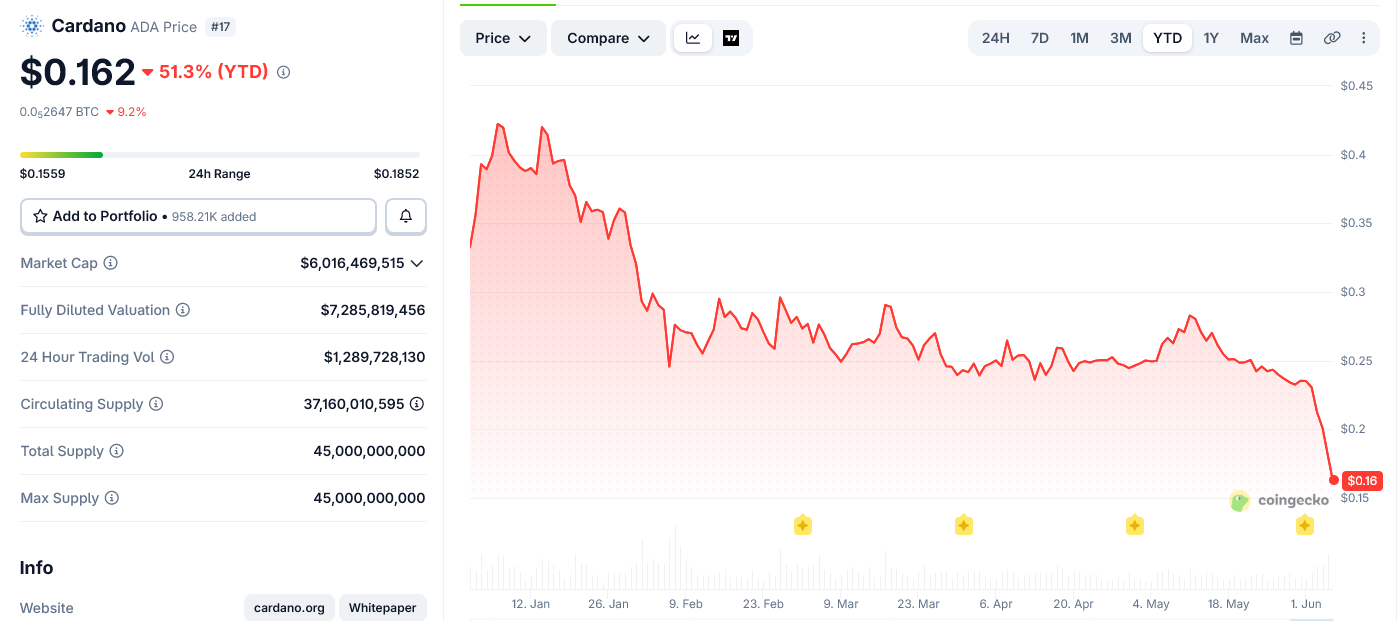
On June 3, 2026, Cardano founder Charles Hoskinson posted “I’m taking a break. TTYL” on X, triggering a fresh 10% ADA sell-off. This came just one day after he warned about a wave of failures in the ecosystem, following the collapse of analytics platform TapTools. The token sank to $0.15 for the first time in more than five years.
What is happening at Cardano is not a bad week in a down market. It is a full-scale network breakdown. And it is forcing uncomfortable questions about the structural health of other major blockchains, including XRP and Ethereum.
Governance Became the Real Emergency for Cardano
Cardano is facing a perfect storm of governance failures, project closures, treasury disputes, and a founder stepping back from public view. It all happened in a single devastating week.
ADA is down nearly 70% over the past year and more than 93% from its all-time high of $3.09, set in September 2021.

The collapse of TapTools was the match that lit the fire. Its shutdown was actually the second major exit in just six weeks. Earlier, NFT marketplace JPG.Store — the leading platform for Cardano NFTs since 2021 — had already entered restricted mode in April before shutting down entirely in May.
For many participants, the simultaneous loss of two flagship platforms raised a question that price charts alone cannot answer: is the Cardano ecosystem still capable of sustaining the infrastructure it needs to function?
Hoskinson addressed that directly and with unusual candor: “I don’t have any governance keys. I don’t have any ability to even initiate a hard fork. I don’t have access to the treasury.”
“I keep getting criticized relentlessly online. People every single day post on my Twitter feed the price of ADA and blame me for it collapsing. And I’d really like to know what my agency is here,” added.
Follow us on X to get the latest news as it happens
The market priced in those closures immediately. Everstake described the moment as one of the most severe downturns in the ecosystem’s history, noting that ADA had dropped to $0.15 — a level last seen in late 2020 — effectively erasing most gains from the previous cycle.
“As a reaction to this shocking news, both on-chain activity and social attention have spiked to historically high levels. The below chart shows $ADA reaching a 2026 high of approximately 0.52% social dominance, meaning more than one out of every 190 crypto-related discussions across social media has been focused on Cardano,” Santiment noted on X.
The Concentrated Risk of XRP
For XRP, the surface picture looks reassuringly different from Cardano’s. Ripple CEO Brad Garlinghouse has maintained a consistent and confident public message throughout 2026, framing XRP as neutral financial infrastructure for a world increasingly fragmented by sanctions and geopolitical tension.
There are no cascading project closures, no treasury standoffs, no co-founders warning publicly about ecosystem survival. By those measures, XRP appears structurally sound.
But stability and resilience are not the same thing. XRP’s governance is concentrated almost entirely within Ripple as a corporate entity. This structure minimizes internal friction but also creates a single point of failure that mirrors Cardano’s founder-dependency problem more than most XRP holders care to acknowledge.
“[…] XRP is even worse than Cardano,” one user pointed out.
At the height of the ADA collapse, Cardano was underperforming Bitcoin, Ethereum, XRP, and Solana simultaneously, confirming that macro conditions amplify rather than cause network-specific crises.
XRP is not immune to that amplification effect if Ripple’s leadership narrative ever breaks down.
The numbers underline the point: despite three major positive catalysts in 2026 — the CLARITY Act advancing through committee, a joint SEC-CFTC commodity classification covering XRP, and more than 1.42 billion dollars in cumulative spot ETF inflows — XRP is still down around 29% on the year. Institutional tailwinds matter.
They just do not override sentiment when the broader market turns, and they do nothing to address the governance concentration that sits quietly beneath XRP’s bullish narrative.
Ethereum: A Deliberate Restructuring With Open Questions
Ethereum’s situation is more structural than operational — and in some ways more instructive to examine. Vitalik Buterin recently announced that the Ethereum Foundation would pursue “longevity over breadth,” reduce its ETH sales, and narrow its focus to five core principles: censorship resistance, capture resistance, openness, privacy, and security.
The strategic shift signals a healthier long-term posture. But it also opens a question the market has not fully priced: who absorbs the influence gap as Buterin deliberately reduces his own centrality in the foundation’s decision-making?
Buterin noted that the Ethereum Foundation holds roughly 0.16% of all ETH — far below the 10% to 50% common in the central foundations of other blockchains. That restraint is genuinely healthy from a decentralization standpoint.
Yet the community’s reaction to the announcement — public questions about board composition, governance transparency, and who sets priorities going forward — showed that the market still equates Buterin’s personal involvement with Ethereum’s institutional credibility. That is a dependency, even if it looks nothing like Cardano’s.
Buterin has also flagged a structural technical concern: heavy reliance on Ethereum’s Layer-2 networks puts user funds at risk if those off-chain systems fail.
He argued that a consensus failure followed by a hard fork is “less bad” than users quietly losing money through broken L2 infrastructure.
That unresolved tension — between scaling through L2s and protecting users from their failure modes — is a real governance challenge with direct financial consequences, and it is one Ethereum has not yet answered definitively.
What Could be Next for Cardano, XRP, and Ethereum?
The critical difference between Cardano and both networks lies in ecosystem depth. Ethereum has thousands of active developers and the deepest DeFi liquidity in the market. XRP benefits from disciplined corporate messaging and regulatory tailwinds.
“It’s clear that the technological and market risks in the search for a better Bitcoin have proven the thesis absurd. Cardano was sold as the best dead BTC. Zcash: Best dead Bitcoin. Others missing: ETH, XRP, SOL, KASPA, etc”, crypto analyst David Battaglia highlighted.
Cardano has been losing foundational layers one by one: the NFT marketplace, the analytics platform, community trust in treasury governance.
When those layers erode simultaneously, no founder can hold an ecosystem together through social media alone. That is the warning the rest of the market needs to hear clearly.
Subscribe to our YouTube channel to watch leaders and journalists provide expert insights
The post After Cardano’s Meltdown, Could XRP and Ethereum Be Next? appeared first on BeInCrypto.
Crypto World
Altcoin Massacre Triggers $1.2B in Liquidations as ETH Tanks Below $1.7K and ZEC Gets Smashed
The wild cryptocurrency market moves continue as most assets have produced even higher fluctuations in the past several hours, which has inevitably harmed over-leveraged traders.
The most significant price fluctuation in the past day came from the recent high-flyer Zcash, which crashed after some community members found a vulnerability in its code. This prompted intense backlash including from popular crypto experts, such as Arthur Hayes, who said he had disposed of his entire ZEC position.
The combination of these factors led to a massive and immediate price crash for the privacy token. It went from over $630 yesterday to under $300 earlier today before it recovered some ground and reclaimed the latter.
Naturally, this intense price move led to substantial liquidations with $100 million worth of ZEC longs getting wrecked on a daily basis, according to CoinGlass.
However, ZEC is far from the only crypto asset affected by the overall market-wide wildness. Ethereum continues to underperform, especially since it lost the $2,000 support earlier this week. It plunged to under $1,650 earlier today, which became a new 14-month low.
SOL has dumped by over 7%, HYPE has plummeted by 9%, while ADA is down by another 16% after Cardano’s founder, Charles Hoskinson, said he would be taking a break.
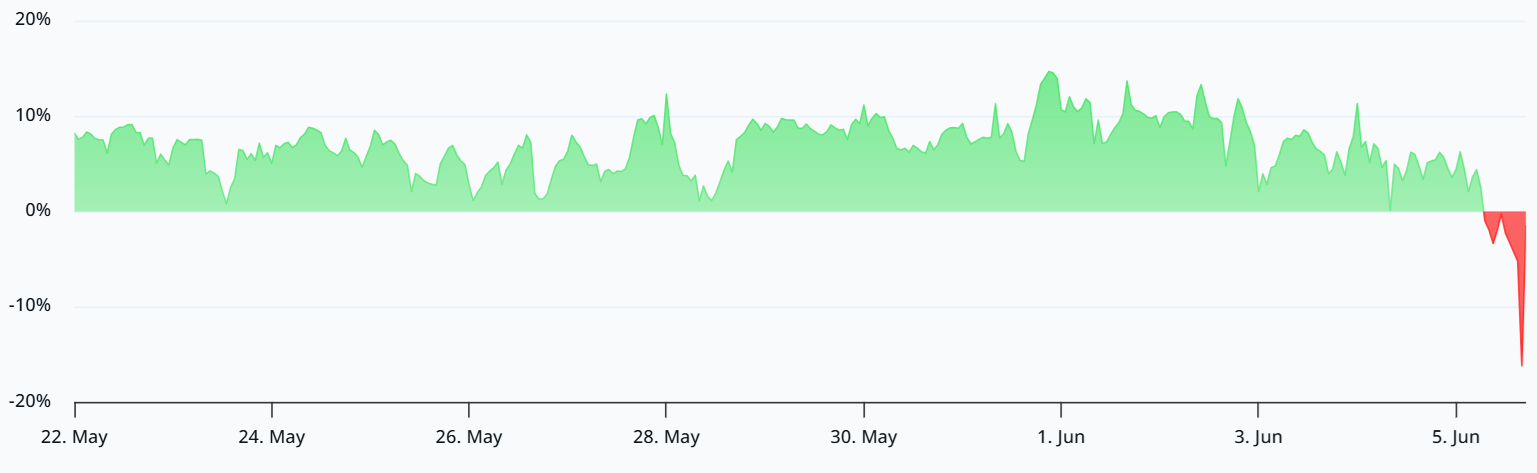
Bitcoin dumped to $61,000 earlier today, but managed to rebound by almost $2,000. The altcoins’ massacre, though, has helped its recovery in terms of market share.
Bitcoin’s dominance, the index that shows how much of the total market cap belongs to BTC, has risen by over 0.5% in just a day after it had dumped from 58% to 55.5% in a week.
The overall liquidation data shows that more than 255,000 over-leveraged traders have been wrecked in the past 24 hours, with total wipe-out value of $1.21 billion. Longs are once again responsible for the lion’s share with $935 million.

The post Altcoin Massacre Triggers $1.2B in Liquidations as ETH Tanks Below $1.7K and ZEC Gets Smashed appeared first on CryptoPotato.
Kevin O’Connell Starts Singing a Different Song with the Vikings’ QBs

As It Turns Out, There’s More Than One Cassette Mechanism Being Made After All

US shoots down four Iranian drones bound for Strait of Hormuz



-

 Business4 days ago
Jade Biosciences, Inc. (JBIO) Discusses Positive Interim Results From JADE101 Phase I Healthy Volunteer Study and Development Plans Transcript
-
 Tech7 days ago
SpaceX just won a second Golden Dome contract. This one is $4.16 billion.
-

 Sports3 days ago
French Open 2026 results: Alexander Zverev beats Rafael Jodar and will play Jakub Mensik in semi-finals
-
 NewsBeat7 days ago
FIRST NIGHT REVIEW: Take That bring the Circus back to life in spectacular sun-soaked style
-

 Business6 days ago
Is the Spurs Phenom Already Better Than Prime Diesel?
-

 Tech4 days ago
CryZENx Releases Fresh Playable Content Deep Inside Jabu-Jabu for His Ocarina of Time Remake
-

 Politics7 days ago
The House | Inside Andy Burnham’s Makerfield Campaign: “Nobody Thinks This Is In The Bag”
-
Crypto World14 hours ago
LBank Surpasses 25 Million Users Worldwide as AFA Partnership Continues to Drive Global Growth
-

 Business3 days ago
Trump Taps Housing Chief Bill Pulte as Acting Intelligence Director After Gabbard Exit
-
 Entertainment7 days ago
Weak ‘Supergirl’ Box Office Tracking Amid Milly Alcock Backlash
-
 Entertainment7 days ago
One of the Greatest Sitcoms of All Time Shoots Up Apple TV’s Charts 11 Years Later
-

 Business7 days ago
Demand Conditions Improve In Chemicals Sector In April 2026
-
 NewsBeat6 days ago
Everything you need to know as Cambridge’s Strawberry Fair returns after cancelled year
-
 Crypto World3 days ago
Seagate (STX) Stock Surges to Record High on AI Boom and Legal Settlement
-

 Fashion6 hours ago
Weekend Open Thread: Evereve – Corporette.com
-
 Entertainment7 days ago
Britney Spears Shares Troubling Update After Hard Year
-
 NewsBeat3 days ago
Republicans balk at Trump’s attempt to appoint a MAGA enforcer to lead National Intelligence
-
Crypto World3 days ago
EU AI Data Center Project Faces Delays as Funding Gaps Grow
-

 Business3 days ago
Aehr Test Systems Stock Soars 17% Amid Surging AI Demand and Conference Spotlight
-
 Business7 days ago
US-led AI investments risk capital destruction: Chris Wood
You must be logged in to post a comment Login