

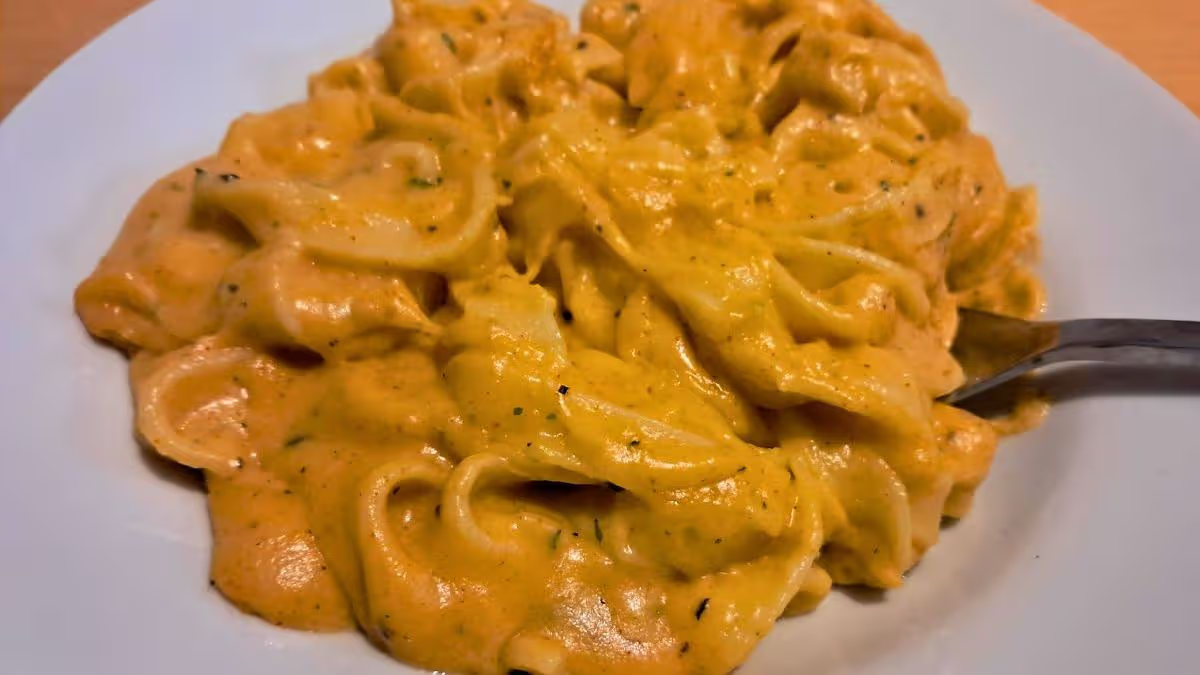
Cheesy pasta may seem very simple to make, but it can often be really plain and boring — unless you add a cheap ingredient most people have in their kitchen cupboard.
Cheesy pasta is testament to the fact that the most straightforward meals are the most satisfying. It’s an ideal dish for those cosy evenings when something hearty is in order. While it’s widely regarded as a simple recipe, the sauce can turn out rather bland without the correct components.
Milk and butter can form a creamy foundation, yet they risk diluting the natural taste of the cheese, meaning you can barely detect it. This can leave cheesy pasta tasting somewhat flat, prompting experimentation with ways to enhance it.
After trialling smoked paprika, chilli flakes, garlic and even jalapeños, it turns out that a few drops of Worcestershire sauce can produce the finest cheesy sauce imaginable.
Cheese sauce is renowned for being indulgent, yet it can also taste slightly one-dimensional and uninspiring due to its high dairy content.
Worcestershire sauce, however, helps redress this balance by introducing acidity, which cuts through the richness of the butter, milk and cheese, preventing the sauce from becoming overly heavy.
It simply sharpens the overall taste, rendering the sauce more savoury, well-rounded and considerably cheesier.
Worcestershire sauce contains fermented ingredients that contribute a touch of saltiness and a subtle heat, meaning your cheesy pasta will be considerably more flavoursome using just everyday kitchen staples.
Cheesy pasta is such a wonderfully simple dish, and incorporating a dash of Worcestershire sauce has transformed it into a firm favourite comfort dinner that takes fewer than 10 minutes to prepare.
How to make better cheese pasta
Ingredients
- 200g of pasta
- One tablespoon of flour
- 25g of butter
- Two cloves of garlic (chopped)
- 300ml of milk (room temperature)
- 100g of cheddar cheese
- 100g of Emmental cheese
- One tablespoon of Worcestershire sauce
- One tablespoon of Dijon mustard
- Black pepper
- Any other seasonings you wish to use (such as smoked paprika, chives, parsley, etc)
Notes:
Should you prefer to skip any cooking preparation, simply substitute the garlic and butter for garlic butter instead.
I’d also recommend removing the milk and butter from the fridge in advance, as cold dairy is more likely to clump up when heated. For a silkier sauce, ensure your ingredients are at room temperature.
Cheddar is the go-to cheese for a pasta dish owing to its robust flavour and excellent melting properties, though used alone it can become overpoweringly rich if too much is added.
It’s preferable to combine cheddar with a milder variety for a more balanced flavour profile. Emmental works particularly well, though mozzarella or Parmesan are equally suitable alternatives.
No additional salt has been incorporated into this recipe, given that the Worcestershire sauce already provides sufficient seasoning.
Method:
- To start, place your pasta into a pan of salted boiling water and cook following the packet instructions. Remember to reserve a small mugful of pasta water prior to draining.
- While the pasta is cooking, melt the butter in a saucepan over a medium heat. Add the garlic and allow it to cook for approximately 60 seconds before it begins to colour.
- Incorporate the flour and combine it thoroughly with the butter until you achieve a smooth paste, otherwise known as a roux.
- Gradually introduce the milk in small amounts, stirring continuously until a sauce forms. Take great care here, as the most frequent error is adding excessive milk, resulting in a thin, watery consistency.
- Lower the heat and incorporate the Worcestershire sauce and Dijon mustard. Should you wish to include any additional seasonings, introduce them at this point.
- Take the pan off the heat and add the cheeses. Gradually add small amounts until they’ve completely melted and you’ve achieved a silky sauce.
- Should your sauce appear overly thick, incorporate a touch of the reserved pasta water, but if it looks too runny, then add slightly more cheese.
- Season the sauce generously with black pepper, but refrain from adding salt as the Worcestershire sauce is already rather salty.
- Your cheese sauce should now be intensely cheesy and considerably more flavoursome than usual.
























































You must be logged in to post a comment Login