
Business
Top 10 Euronext Stocks to Consider Buying in 2026 for European Exposure

European equities on Euronext exchanges have shown resilience in 2026 amid policy support, technological leadership and sector rotation, with the CAC 40 and AEX indices reflecting steady gains despite global uncertainties. As of early June, investors are focusing on blue-chip names listed on platforms spanning Paris, Amsterdam, Brussels and beyond, driven by AI infrastructure, luxury recovery, energy transition and industrial strength.
Euronext, home to major companies with a combined market capitalization exceeding €6 trillion, offers diversified access to Europe’s largest firms. Analysts highlight opportunities in semiconductors, luxury goods, energy and defense, supported by EU initiatives and corporate earnings momentum. Here are 10 notable Euronext-listed stocks drawing attention for the remainder of 2026.
1. ASML Holding (ASML, Amsterdam): The Dutch semiconductor equipment leader dominates extreme ultraviolet lithography, essential for advanced chips powering AI. With strong order backlogs and global demand, it remains Europe’s largest company by market cap, often exceeding $500 billion.
2. LVMH Moët Hennessy Louis Vuitton (MC, Paris): The luxury conglomerate, encompassing brands like Louis Vuitton and Dior, benefits from brand strength and potential recovery in key markets. Its scale and diversification provide stability amid cyclical pressures.
3. TotalEnergies (TTE, Paris): The integrated energy major balances traditional oil and gas with accelerating renewables and low-carbon investments. Strong cash flows, dividends and adaptation to the energy transition appeal to income and growth investors.
4. Airbus (AIR, Paris/Amsterdam): The aerospace giant competes effectively in commercial aviation and defense, with a robust backlog of aircraft orders. Supply chain improvements and global travel recovery support its outlook.
5. Schneider Electric (SU, Paris): A leader in energy management and automation, it capitalizes on digitalization, electrification and sustainability trends. Its solutions for data centers and green infrastructure align with long-term megatrends.
6. Novo Nordisk (NOVO, Copenhagen via Euronext links): The Danish pharmaceutical powerhouse drives growth through innovative treatments for diabetes and obesity. Its pipeline and market leadership in GLP-1 drugs position it for sustained expansion.
7. L’Oréal (OR, Paris): The world’s largest cosmetics company maintains premium positioning and innovation in beauty. Emerging market growth and e-commerce strength underpin its defensive growth profile.
8. Hermès International (RMS, Paris): Known for exceptional craftsmanship and exclusivity, this luxury icon delivers consistent high margins and resilience. Its timeless appeal supports premium pricing power.
9. BNP Paribas (BNP, Paris): One of Europe’s largest banks, it offers exposure to retail, corporate and investment banking across the continent. Rising rates and wealth management provide tailwinds.
10. Siemens (SIE, via Euronext access): The German industrial and technology conglomerate spans mobility, energy and digital industries. Its focus on infrastructure and smart solutions aligns with European priorities.
These selections blend established leaders with exposure to high-growth themes. Euronext’s integrated markets facilitate trading across borders, with strong liquidity in flagship indices like the CAC 40 and AEX.
Broader market dynamics include European Central Bank policy easing, fiscal measures and corporate reforms enhancing shareholder returns. While challenges such as geopolitical risks and slower growth persist, valuations in many sectors appear attractive relative to historical levels and U.S. peers.
ASML stands out for its critical role in the global semiconductor supply chain, with AI demand providing a secular tailwind. Luxury names like LVMH, Hermès and L’Oréal offer defensive qualities amid potential consumption recovery. Energy and industrials, represented by TotalEnergies, Schneider Electric and Airbus, benefit from the green transition and infrastructure needs.
Pharmaceutical innovation via Novo Nordisk and financial stability through BNP Paribas round out diversification. Many of these firms boast robust dividends, strong balance sheets and global revenue streams, mitigating purely regional risks.
International investors access Euronext stocks via direct trading, depositary receipts or ETFs tracking STOXX Europe 600 or country-specific indices. Corporate governance improvements and sustainability focus have drawn renewed interest.
As of June 2026, market sentiment reflects cautious optimism. The largest Euronext constituents continue to lead performance, though sector rotations favor those aligned with policy priorities like energy security and digital sovereignty.
Risks include currency fluctuations, trade tensions and sector-specific headwinds, such as luxury demand softness or chip cycle volatility. Long-term investors emphasize fundamental strength, competitive moats and alignment with structural trends like decarbonization and technological advancement.
Euronext’s ecosystem supports innovation alongside blue chips, with growing listings in tech and cleantech. For 2026, selectivity remains paramount, favoring companies with proven execution and adaptability.
Analysts project moderate European equity gains, with potential outperformance in quality names. Diversification across the 10 highlighted stocks, or broader indices, offers balanced exposure to Europe’s economic engine. Professional advice and due diligence are recommended given market volatility.
In summary, Euronext-listed companies provide compelling opportunities in 2026 for investors seeking quality European exposure. From ASML’s tech leadership to LVMH’s luxury dominance, these names embody strengths in innovation, brand power and strategic industries. As Europe navigates its growth path, disciplined investment in such leaders could yield rewards amid evolving global dynamics.


Boy Wirat | Istock | Getty Images
A version of this article first appeared in CNBC’s Inside Wealth newsletter with Robert Frank, a weekly guide to the high-net-worth investor and consumer. Sign up to receive future editions, straight to your inbox.
Even high-net-worth clients who can afford top-notch advisors are asking artificial intelligence chatbots like Claude for portfolio recommendations and tax advice, wealth management leaders told CNBC.
“My personal opinion is that ChatGPT is the single largest investment advisor in the world right now,” said Matthew Fleissig, CEO and cofounder of Pathstone, a registered investor advisory with $185 billion in assets.
Asking AI for a second opinion can help clients come up with informed questions and have deeper conversations with their financial advisors, according to firm leaders. That said, the practice comes with risks, such as getting incorrect advice or having personal information leaked.
“I think for a client who’s dealing with something that’s very technically complex and doesn’t have that grasp, it may be harder to differentiate between a hallucination or an error of fact versus a good insight that the engine has,” said Michael Zeuner, managing partner at WE Family Offices.
Moreover, as these large language models get more sophisticated and popular, wealth advisories – especially those that target the mass affluent — will have to do more to justify their fees, according to Morningstar’s Sean Dunlop. He told CNBC that wealth management stocks have already pulled back as AI has encroached on the industry, such as an AI tax planning tool by Altruist released in February or a personal finance feature launched by OpenAI in May.
Dunlop said it’s unlikely that AI will wipe out traditional wealth managers — but they will do more than help advisors become more efficient.
“I think the truth’s probably somewhere in the middle where the service level is going to get better. You probably need fewer advisors to serve the pool of assets, which might itself expand a little bit, and there’s going to be some group of customers that are willing to do it themselves that weren’t before,” said Dunlop, director of equity research at Morningstar.
“At a minimum, it ought to raise the floor. Like, if you’re an advisor and you’re keeping half your client’s balance in cash in an IRA, then this really ought to be a wake up call,” he added.
AI enters the chat
Pamela Lucina of Northern Trust said she first noticed clients using AI to double-check the firm’s advice about 18 months ago and that it has become a more frequent occurrence since.
“We’ve had clients tell us directly that they’re going to ask AI the questions that they’re going to ask us,” said Lucina, the firm’s chief fiduciary officer and leader of its trust and advisory practice. “I think what they’re often testing us for is not the answer, but having more specifics or evidence that we’ve actually done these things before.”
Many prospective clients also use LLMs to help them decide whether to work with Northern Trust, she added. Before the rise of AI chatbots, typically only billionaire clients would ask the firm to submit a formal proposal for managing their wealth, according to Lucina. Now she estimates about half of clients send requests for proposals, even those with as little as $100 million in assets. Some have told the firm that they used ChatGPT or other LLMs to formulate their highly specific questions, she said.
This process can save time and make client meetings more efficient, Lucina said.
“Less of our conversation is about information sharing and more about focusing on the outcome they are trying to achieve and how it actually applies to families,” she said. “The fact that there’s more information out there is not a threat. It can take a conversation to the next level.”
Zeuner said he first noticed clients talking openly about feeding portfolio recommendations into LLMs about five months ago. It has become so common that his firm is considering whether to run every recommendation in Microsoft Copilot so advisors can prepare for questions clients may ask.
He said he views the use of LLMs as a second set of eyes and a positive trend.
“The AI is enabling and empowering them to get involved, to learn, to ask questions, to get a second opinion,” he said. “Whether they challenge us or validate, it doesn’t matter; they’re engaged.”
The pitfalls of AI advising
Still, Zeuner said he’s concerned about clients not catching AI-made mistakes. For instance, he said, if a client uploads a trust document into a LLM and asks a question about it days later, the chatbot might hallucinate details of the document in its answer.
Zeuner also said he’s seen LLMs make simple mistakes, such as ChatGPT telling a client that two ETFs in his portfolio appeared to be identical. While the ETFs tracked the same index, one was equal weight and the other was cap-weighted, he said.
When Lucina asked an LLM for examples of how clients could save on capital gains taxes, it got the math completely wrong, she said.
“I generally use AI to poke holes, to try to find criticisms in a way of thinking, and I think it is good for that,” she said. “But more often than not, especially on the advice side, it’s wrong.”
More crucially, clients risk exposing identifying information if they use a personal account, even if they spring for a paid plan. Financial institutions, including wealth advisories, typically pay for enterprise plans that come with strict data protections. For instance, WE Family Offices has an agreement with Microsoft Copilot that data the firm enters is never used to train public AI models, according to Zeuner.
“We talk to [clients] about general best practices for using these LLMs, given their high profiles and wealth,” he said. “If you have an AI assistant capture every meeting, where is that transcript going? Do you know how it is stored? Who has access to it and how secure is it?”
Lacking a human touch
Fleissig said that while AI chatbots like Anthropic’s Claude and OpenAI’s ChatGPT are capable of great analysis, that’s not the same as actionable advice.
He described LLMs as “semi-objective tools” that aren’t always equipped to make subjective decisions. A trusted advisor can guide clients to make the choice that’s right for them based on a variety of factors, he said.
“There is value in human-to-human interaction from a relationship standpoint because there’s so much nuance to it,” he said.
And though an LLM could make an argument for investing in pre-initial public offering Anthropic, for example, it can’t put that advice into practice and get you access to a funding round.
“You get access because of relationships that you have, and you also have all these experiences that you’ve had with clients,” Fleissig said. “Deals today are still not getting done via AI.”
Vince Lumia, a Morgan Stanley veteran of 27 years, said that the value of human touch is more easily overlooked during bull markets. That changes during times of crisis or uncertainty, said Lumia, who oversees Morgan Stanley’s 16,000-plus financial advisors.
“The world sort of starts to think that it’s actually easy. The one guarantee I could have is that the markets will be volatile, and they won’t go up in a straight line, and there’ll be disturbances,” he said. “And when those disturbances happen, larger clients tend to want advice.”

The UK has struggled with weak productivity growth for more than a decade, and economists say wider adoption of robotics will be essential if businesses are to become more efficient.
In its 2026 report SME Technology Adoption in the United Kingdom, the Organisation for Economic Co-operation and Development (OECD) said technologies like robotics would be key to improving productivity.
According to the OECD, Britain’s low adoption of robotics is “surprising” given its manufacturing heritage, noting that while UK firms have embraced mature digital technologies, they lag behind in robotics and automation.
That presents an opportunity for companies such as Geek+. The UK has one of Europe’s largest e-commerce and logistics sectors, but many warehouses are still in the early stages of automation.
Britain has already become Geek+’s biggest European market, with UK partner MotionTech deploying more than 2,000 robots across 10 warehouse sites.
“Customers want fast deployable solutions,” says Barry Pemberton, Account Director at MotionTech. “They want high volume, high storage, fast picking… ultimately on a smaller footprint with a reduced headcount.”
“We seem to have a very big shortage of labour in the UK at the moment. These technologies are really important to keep businesses thriving and meet demand.”
The Trades Union Congress (TUC), which represents almost 6 million UK workers, says robotics should be used to raise productivity and improve jobs, rather than simply cut labour costs.
In its response to the government’s consultation on a new AI and innovation strategy, it urged ministers to ensure workers are involved in decisions about automation and that employers invest in retraining.
“Working with technologists, workers and unions can help steer the UK’s research and innovation towards workers’ priorities for automation… avoiding job-cutting, low-productivity automation,” the TUC said in its report.

Yes. Corporate subscriptions are available for teams and organisations, with discounted rates as user numbers increase. Pricing starts from $1,625 + GST per user.
Get in touch
to discuss the right option for your organisation.
Business News subscriptions are used by executives, investors, consultants and professionals who need to stay informed and make better decisions about the WA market. When you subscribe you’ll get
- Unlimited access to WA’s most trusted business journalism
- Data & Insights — detailed profiles of WA companies, people, projects and deals
- MyBN — a personalised feed based on the companies, people and sectors you follow
- Special publications and industry reports
- Daily and weekly email newsletters
Data & Insights is a research tool built specifically for the WA market. It draws on more than 30 years of Business News reporting, updated regularly to reflect what’s happening now. Use it to:
- Look up detailed profiles of WA companies, including financials, directors and ownership
- Find decision-makers and track their career movements
- Research live and completed projects across WA industries
- Monitor deals, appointments and market activity
- Access industry rankings and league tables
Data & Insights is updated daily by our dedicated research team, which uses the latest announcements, ASX filings and editorial coverage to keep our person, company, list and project records up to date.
Business News welcome all opportunities to make our dataset accurate, complete and current, so if you have an update request, please email the team at
general@businessnews.com.au, and we’d be happy to assist.
MyBN
is part of every subscription. It’s your personalised view of Business News. You can follow the companies, people, sectors and projects that matter to you, and get a news feed and alerts tailored to your interests. You can save articles to read later and retain only what you need.
Only subscribers have full access to all content on the Business News website.
If staying informed about the WA economy is part of your job, and/or you’re looking for networking opportunities in WA, Business News is built for you.
Business News subscribers are:
- Executives and directors tracking competitors, clients and market movements
- Investors and advisers researching companies, deals and industry trends
- Consultants and professionals staying across sectors relevant to their clients
- Business owners looking for leads, context and market intelligence
Most Business News publications cover national or global markets. Business News is focused entirely on Western Australia, which means the journalism, the data and the intelligence are all built around WA companies, people and projects — not adapted from a national feed. Data & Insights, included with every subscription, combines more than 30 years of WA-specific editorial research with live business data. There’s no comparable product for the WA market.
The Morning Digest Email provides a comprehensive wrap of the major headlines, relevant to WA business, and includes with a snapshot of the overnight news covering oil, gold and ASX-listed companies.
The Afternoon Wrap Email focuses on the news covered by our team of journalists during the course of the working day, including exclusive stories and analysis, all of which relates to WA business and the local economy.
The BN Weekender Email contains a wrap of the Business News from the week that was, highlighting the top stories in each area of WA business.
Sign up for free.
We’re happy to help.
Get in touch
and our team will come back to you.

Speaking to former political adviser Jimmy McLoughlin on his podcast Jimmy’s Jobs of the Future, Burnham said he was concerned that the use of technology was not making recruitment processes “fairer”.
“How do you get over some of your personality, your passion?” he asked, referring to virtual interviews. “It seems to me to then work against people who have that side to their character and work for those who are just giving the more formulaic answer.
“I do worry about that and I’ve seen that in relation to my kids and their situation.”
More than one million 16-25-year-olds are not in education, employment or training – the highest level in more than 12 years, official figures show.
A major review by former minister Alan Milburn found job and career opportunities for young people are “not growing, they’re shrinking” with one in six set to be out of work, education or training in five years unless action is taken.
“We are at risk of a lost generation” with young adults facing a “perfect storm” of challenges, Milburn warned in May.
Business
FIFA Admits Controversial VAR Call in Argentina-Switzerland World Cup Quarterfinal Broke the Rules of Game

Football’s international rule-making body has effectively confirmed that one of the most disputed video assistant referee decisions of the 2026 World Cup should never have been made, reigniting scrutiny over Argentina’s contentious run through the tournament even as a separate FIFA disciplinary investigation into the team’s conduct continues.
The finding centers on Argentina’s quarterfinal victory over Switzerland, a match in which Swiss striker Breel Embolo was shown a second yellow card and sent off after appearing to go down under a challenge from Argentina midfielder Leandro Paredes. Replays suggested there had been no contact between the two players, with Embolo accused at the time of simulation, commonly known as diving, in an attempt to win a foul. The match referee reviewed the incident using the tournament’s revised “mistaken identity” protocol before issuing the red card, a decision that proved decisive as Switzerland went on to lose the match after extra time.
The International Football Association Board, known as IFAB, which writes and governs the laws of the game that FIFA competitions are required to follow, has since confirmed that the review should not have taken place under the current rules governing VAR reviews. In a statement, IFAB said: “A yellow card (caution) other than a second yellow card can only be reviewed to identify the player who committed the sanctioned offence; the offence itself cannot be reviewed or amended.” The organization added that while the use of the mistaken identity clause to address simulation during the tournament “was well received and will be included in the detailed review of the VAR protocol,” it “may not be used as such until that review is concluded,” an acknowledgment that the interpretation applied during the Argentina-Switzerland match fell outside the rules as they currently stand.
FIFA pushed back firmly against the characterization that an error had occurred, defending its handling of the situation in a statement posted to social media through its official FIFA Media account. “FIFA’s interpretation of Mistaken Identity was consistently applied during the FIFA World Cup,” the organization wrote. “There were two instances in which a player was mistakenly identified as having committed a yellow card offence and the VAR advised the referee to correct the factual error caused by the opponent’s simulation.” FIFA argued that the underlying act of simulation itself could not be disputed under the review, and that it “should not result in a disciplinary sanction against an opponent that may then lead to further consequences, such as a sending off for a second yellow card or a match suspension for accumulated cautions.”
FIFA went further in disputing that any rule had been broken, stating: “We do not consider this to have been a referee or VAR error and the decision restored justice.” The organization said it had remained in contact with IFAB throughout the process and that the governing body had confirmed the interpretation used during the tournament was valid, describing it as having been “well received” and noting it would inform ongoing discussions about revisions to the VAR protocol following the tournament’s conclusion.
The dispute has added fresh fuel to broader controversy surrounding Argentina’s path through the 2026 World Cup. Lionel Scaloni’s side faced intense scrutiny throughout the knockout rounds before ultimately losing the final to Spain, with multiple contentious refereeing moments prompting separate FIFA reviews and fueling online speculation, without supporting evidence, that officiating had favored the South American team during the tournament.
Switzerland manager Murat Yakin was outspoken in his criticism of the officiating decision immediately following the quarterfinal loss, arguing that the dismissal had unfairly denied his team a place in the semifinals. “We were punished for a rule that is completely unacceptable,” Yakin said. “I don’t understand. It is very painful we are eliminated that way. I don’t think we deserved it and in my opinion our boys are the real heroes.” Yakin went on to criticize the specific mechanism used to overturn the call. “The referee makes that one decision that he interfered, it is completely misunderstandable. That is a situation that happened many times previously. He awarded a yellow card. This rule destroyed our game today.”
The clarification from IFAB arrives as FIFA’s separate disciplinary investigation into Argentina’s conduct during the World Cup final against Spain remains active. That investigation was launched after chaotic scenes broke out following the final whistle, with several Argentina players and coaching staff members alleged to have confronted match officials in a post-match confrontation. FIFA has appointed a prosecutor to examine the incidents from that match, and potential penalties under consideration include player and staff suspensions as well as financial sanctions against the Argentine federation. The investigation is also examining additional flashpoints involving Argentina from later stages of the tournament, according to FIFA.
With both the VAR protocol dispute and the ongoing disciplinary investigation still unresolved, the fallout from Argentina’s turbulent 2026 World Cup campaign continues to generate scrutiny well after the tournament’s conclusion, as football’s governing bodies work through questions about how officiating rules were applied during some of the competition’s most consequential matches.
Enterprise Products beats second quarter earnings estimates

Logitech: Q3 2027 Supply Risk Creates Too Much Uncertainty (Rating Downgrade)
Yes. Corporate subscriptions are available for teams and organisations, with discounted rates as user numbers increase. Pricing starts from $1,625 + GST per user.
Get in touch
to discuss the right option for your organisation.
Business News subscriptions are used by executives, investors, consultants and professionals who need to stay informed and make better decisions about the WA market. When you subscribe you’ll get
- Unlimited access to WA’s most trusted business journalism
- Data & Insights — detailed profiles of WA companies, people, projects and deals
- MyBN — a personalised feed based on the companies, people and sectors you follow
- Special publications and industry reports
- Daily and weekly email newsletters
Data & Insights is a research tool built specifically for the WA market. It draws on more than 30 years of Business News reporting, updated regularly to reflect what’s happening now. Use it to:
- Look up detailed profiles of WA companies, including financials, directors and ownership
- Find decision-makers and track their career movements
- Research live and completed projects across WA industries
- Monitor deals, appointments and market activity
- Access industry rankings and league tables
Data & Insights is updated daily by our dedicated research team, which uses the latest announcements, ASX filings and editorial coverage to keep our person, company, list and project records up to date.
Business News welcome all opportunities to make our dataset accurate, complete and current, so if you have an update request, please email the team at
general@businessnews.com.au, and we’d be happy to assist.
MyBN
is part of every subscription. It’s your personalised view of Business News. You can follow the companies, people, sectors and projects that matter to you, and get a news feed and alerts tailored to your interests. You can save articles to read later and retain only what you need.
Only subscribers have full access to all content on the Business News website.
If staying informed about the WA economy is part of your job, and/or you’re looking for networking opportunities in WA, Business News is built for you.
Business News subscribers are:
- Executives and directors tracking competitors, clients and market movements
- Investors and advisers researching companies, deals and industry trends
- Consultants and professionals staying across sectors relevant to their clients
- Business owners looking for leads, context and market intelligence
Most Business News publications cover national or global markets. Business News is focused entirely on Western Australia, which means the journalism, the data and the intelligence are all built around WA companies, people and projects — not adapted from a national feed. Data & Insights, included with every subscription, combines more than 30 years of WA-specific editorial research with live business data. There’s no comparable product for the WA market.
The Morning Digest Email provides a comprehensive wrap of the major headlines, relevant to WA business, and includes with a snapshot of the overnight news covering oil, gold and ASX-listed companies.
The Afternoon Wrap Email focuses on the news covered by our team of journalists during the course of the working day, including exclusive stories and analysis, all of which relates to WA business and the local economy.
The BN Weekender Email contains a wrap of the Business News from the week that was, highlighting the top stories in each area of WA business.
Sign up for free.
We’re happy to help.
Get in touch
and our team will come back to you.

UK vehicle production fell 7.5 per cent in the first half of 2026, with factories building 385,979 cars and commercial vehicles, according to figures published today by the Society of Motor Manufacturers and Traders.
Output stabilised in the second quarter, dipping by 128 units, or 0.1 per cent, year on year, as exports strengthened and car production returned to marginal growth.
Production for export reached 294,222 units over the six months, down 5.6 per cent on the same period last year. Output for the domestic market fell 13.2 per cent to 91,757 units. In the second quarter, exports rose by 5,075 units, or 3.9 per cent.
Car exports rose in June for the third consecutive month, up 4.5 per cent, while commercial vehicle exports rose 54.3 per cent, which SMMT said came from a weak base. Total June output eased 1.2 per cent to 68,200 units, following a rise in May.
Exports accounted for 76.2 per cent of all vehicles built in the year to date, which SMMT said underlined the importance of free and fair trade with global markets. The EU remained the sector’s biggest customer and supplier, taking 58.3 per cent of car shipments, up 3.4 per cent year on year to 166,801 units. The US was second with 45,162 units, or 15.8 per cent of exports, although volumes fell 4.6 per cent. China, the third biggest market, took 12,323 units, down 44.7 per cent on the first half of 2025.
Model changes at several manufacturers continue to affect volumes, particularly for electrified cars, SMMT said. Those vehicles accounted for around four in 10 cars built in the first half, with output 8.6 per cent behind last year.
Citing product transitions and trade and investment uncertainty, the latest independent production outlook anticipates total UK car and light vehicle output will be broadly flat this year at 740,000 units, before returning to growth in 2027. SMMT said the potential to pass one million units still exists, but would require output to grow by some 40 per cent and depends on securing further new model investment by making the UK more globally competitive for manufacturing.
With major investment decisions being taken now and a new government in place, SMMT is urging rapid implementation of the Modern Industrial Strategy. It said that, given energy price volatility, the UK’s uncompetitive industrial electricity prices must be addressed even after the introduction of the British Industrial Competitiveness Scheme, which cuts electricity costs for eligible electricity-intensive manufacturers from April 2027.
The trade body also said reform of the ZEV Mandate is vital. Manufacturers are investing billions in zero emission technologies, SMMT said, but regulation remains ahead of demand, making the cost of selling in the UK untenable and undermining any case for local manufacturing investment.
On trade, SMMT said ‘Made in Europe’ and rules of origin issues arising under the UK-EU Trade and Cooperation Agreement threaten cross-Channel trade and supply chains. Left unresolved, it said, they threaten an €80 billion-a-year trading relationship as well as Europe and the UK’s wider automotive competitiveness.
Mike Hawes, SMMT chief executive, said: “Global vehicle production remains under intense pressure, and the UK is no exception. Global market weakness, trade pressures and uncompetitive costs are taking their toll. But decline is not inevitable. Urgent action on energy costs, reform of market regulation and improved trading arrangements with our global partners would ensure the sector can return to growth. And given that growth would be across every region in the UK, there is every reason for the new government to get behind the sector.”
According to SMMT, automotive manufacturing turns over more than £85 billion, adds £18 billion in gross value added and employs 188,000 people. Across the wider sector, including retail and service, maintenance and repair, automotive is worth nearly £400 billion, contributes more than £75 billion in GVA and supports 830,000 jobs. It accounts for 10 per cent of all UK goods exports, worth almost £40 billion, and £111 billion in total automotive trade. SMMT analysis identifies a further £4.6 billion domestic sourcing opportunity by 2030.

Amy Ingham
Amy Ingham is a reporter at Business Matters, covering UK business news with a focus on breaking news, business policy, late payments and insolvency. She joined the magazine in 2026 after completing the NCTJ Diploma in Journalism at Harlow College’s journalism school. Her recent reporting includes British Steel’s nationalisation and its impact on SME suppliers, the decline in late payments by large firms, and Insolvency Service director disqualifications. Reach her at aingham@cbmeg.co.uk.
Business
LA Clippers Vow to Fight Salary Cap Allegations in Kawhi Leonard Case All the Way to Arbitration if Needed
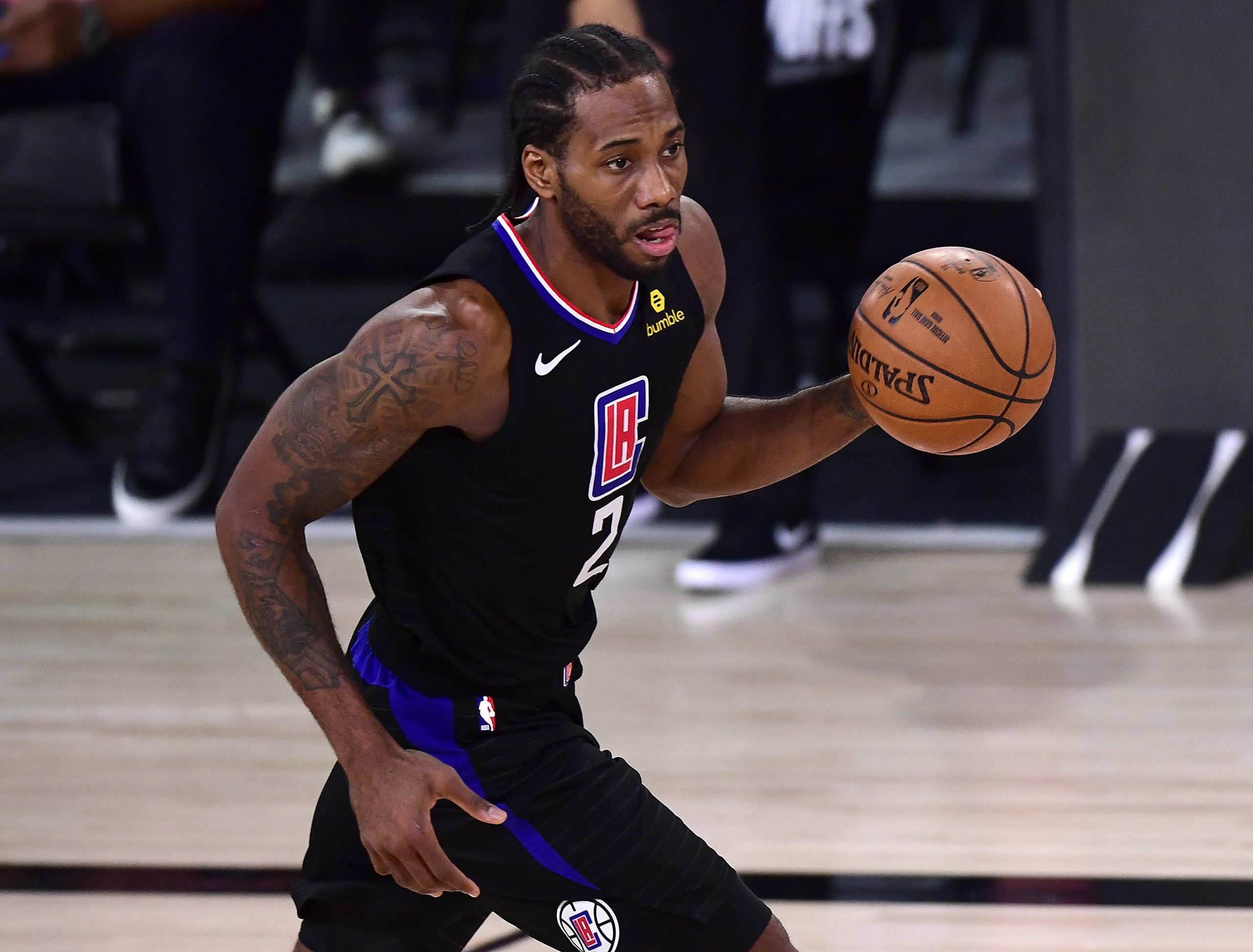
The Los Angeles Clippers are digging in against allegations that the franchise circumvented the NBA’s salary cap to pay star forward Kawhi Leonard, with a source close to the organization saying the team is prepared to fight the claims through arbitration if necessary as an NBA-commissioned investigation continues.
The controversy centers on Aspiration, a now-collapsed sustainability-focused financial company that investigative reporter Pablo Torre has alleged the Clippers used to funnel payments to Leonard beyond what the league’s salary cap rules permit. Torre’s reporting first brought the allegations to widespread attention last season, and his continued coverage has kept pressure on both the team and the league to address the claims.
The dispute has taken on added significance in recent weeks after a planned trade sending Leonard to the Toronto Raptors was paused amid the ongoing NBA investigation into the allegations. Speaking to Baxter Holmes of ESPN, a source associated with the Clippers organization said the team continues to firmly reject the allegations of salary cap circumvention. According to the source, the team’s determination extends to a willingness to pursue the matter through formal legal channels rather than accept any findings without a fight. “The Clippers remain adamant that they did not funnel money to Leonard through Aspiration, and one source close to the team with knowledge of the investigation said that it would ‘fight that to the end,’ including through arbitration,” according to the report.
The NBA has hired Wachtell Lipton, a prominent New York-based law firm, to conduct the formal investigation into the allegations against the Clippers. Should the investigation ultimately find the organization violated league salary cap rules, the Clippers could face significant sanctions from the NBA, with league officials widely expected to seek penalties severe enough to serve as a deterrent against similar conduct by other franchises.
The length of the ongoing investigation has itself become a subject of speculation among fans and league observers, with some interpreting the extended timeline as a potential signal about what investigators may or may not have uncovered. A separate anonymous source with close ties to Wachtell Lipton pushed back directly against that kind of speculation, according to the same ESPN reporting. “One source with knowledge of the investigative process cautioned against the idea of any outside parties having inside knowledge of Wachtell Lipton’s findings to date — or of anyone trying to speculate as to whether the length of the investigation signals what the law firm has or hasn’t found,” the report stated.
Wachtell Lipton has been investigating the Clippers and the allegations surrounding Leonard’s compensation since September of last year, according to the reporting. Investigations of this nature are typically conducted with a significant degree of confidentiality, a practice generally intended to prevent potentially implicated parties from taking steps that could compromise the integrity of the inquiry or withhold relevant information before investigators have completed their review.
The scrutiny facing the Clippers comes at a particularly high-profile moment for the broader NBA offseason, with the league’s attention largely consumed by other major storylines, including LeBron James’s high-profile decision to sign with the Philadelphia 76ers after a lengthy free agency process. That move has generated its own wave of coverage and fan reaction, including one Sixers supporter who went viral this week after intentionally sunburning a tribute to James onto his back while waiting for an official jersey to arrive. Speaking to the Philadelphia Inquirer about the stunt, the fan, identified as Joey Abel, explained his unconventional approach. “I was just like, ‘How can I get a LeBron James jersey as fast as possible?’ And for some reason, that’s where my mind went,” Abel said.
Even amid the broader offseason attention on player movement across the league, the Clippers’ ongoing legal exposure over the Leonard allegations represents a significant institutional risk for the franchise, given both the financial penalties that could follow a finding of wrongdoing and the reputational damage that would come with a formal determination that the team violated the league’s competitive balance rules. NBA salary cap regulations are designed to maintain a level playing field among franchises by limiting how much any single team can spend on player compensation, and violations are treated as serious infractions given their potential to distort competitive fairness across the league.
The Clippers’ ownership, led by Microsoft co-founder Steve Ballmer, has not issued extensive public comment on the specifics of the Aspiration allegations beyond the organization’s general denials relayed through sources close to the team. Ballmer has been a prominent and hands-on owner since purchasing the franchise in 2014, and any finding of wrongdoing in the Leonard case would represent a significant setback for an ownership group that has invested heavily in building the Clippers into a consistent championship contender, including the construction of the team’s dedicated Intuit Dome arena.
With the trade that would have sent Leonard to Toronto still paused pending the investigation’s outcome, and no clear timeline for when Wachtell Lipton’s review might conclude, the situation is likely to remain a significant storyline for the Clippers organization heading into the coming NBA season, even as the broader league shifts its attention toward training camps and the on-court product following a summer dominated by star player movement across multiple franchises.

Man seriously injured after blows to head as police called to ‘large-scale disturbance’

Can AI Eliminate Impermanent Loss?

Wealth managers face a new challenger: their clients’ AI chatbots


-

 Fashion6 days ago
Weekend Open Thread: Brooks Brothers
-
 Sports4 days ago
Commonwealth Games boxing: Jadumani Singh seals dominant 5-0 win over Pakistan’s Sumama Rehman to enter quarter-finals | Commonwealth Games News
-

 Business15 hours ago
Why Trees Belong on the Risk Register
-

 Tech3 days ago
Intel is reversing course and bringing hyper-threading back to its server chips
-

 Politics3 days ago
Luke Littler dismantles Gerwyn Price to retain title in Blackpool
-

 Crypto World5 days ago
Ripple bought a bank in pieces. The $4 billion audit
-

 Politics2 days ago
The Part of the Electric Transition Nobody Wants to Discuss
-
 Entertainment6 days ago
A New Post-Apocalyptic Gundam Anime Series Blasts Into SDCC
-

 News Videos4 days ago
BITCOIN JUST ENTERED THIS CRITICAL ZONE…
-

 Fashion6 days ago
16 Dresses for the High Summer Event
-

 Sports6 days ago
2026 3M Open leaderboard: Scottie Scheffler finds putter in Round 1, sits three back
-

 News Videos7 days ago
The Peugeot Family: How 200 Years of an “Old Money” Dynasty Died in A Boardroom
-

 Business1 day ago
Major shareholder moves on Canyon
-

 Crypto World4 days ago
XRP Ledger adds $2.6B as RWA inflows rank second
-

 Politics4 days ago
Spain sweeps the board at 2026 World Cup with individual awards
-

 Crypto World7 days ago
Uniswap (UNI) pushes deeper into tokenized RWAs with permissioned trading pools
-
 Entertainment2 days ago
‘Stargate’ Creator’s New Sci-Fi Series Returns for Season 3 Tomorrow
-

 Tech5 days ago
Anthropic launches Claude Opus 5, a cheaper AI model for coding, agents and enterprise workflows
-

 Entertainment4 days ago
Sara Gilson Killed By Husband After Viral “Pedophile” TikTok Video
-

 Crypto World2 days ago
Kraken Enables Retail Access to Jersey Mike’s IPO via Tokenized Shares
You must be logged in to post a comment Login