You might have heard of the seven ancient wonders of the world, some of the planet’s most magnificent creations chosen and compiled into a list by Hellenic travellers passing through lands thousands of years ago.
The list, created as early as the fifth century BC, venerated landmarks like the Hanging Gardens of Babylon in ancient Iraq, the domineering bronze statue of the Greek sun god Helios known as the Colossus of Rhodes, and the Lighthouse of Alexandria, a magnificent navigational beacon for voyagers in ancient Egypt.
However, the passage of time was not kind to these wonders, with many damaged or destroyed by natural disasters or by humans. The only survivor on the list is the 4,600-year-old Great Pyramid of Giza, which once stood for thousands of years as the tallest manmade structure in the world.
While some of these wonders now only exist in history books and legends, a foundation called the New7Wonders sought to unite the world by honouring heritage across the globe and naming seven other sites the ‘New Seven Wonders of the World’. More than 100 million votes were cast worldwide, and a new list was born.
Advertisement
From the ancient Roman Colosseum in Italy to the grand and domineering presence of the Taj Mahal in India, the new seven wonders were chosen to become symbols that respect, honour, and celebrate the world’s cultural diversity.
Sometimes its harder to visit some sites than others. Conflict in the Middle East meant that for months, the UK government advised against non essential travel to Jordan, where the ancient settlement of Petra is found in the southwestern desert. A recent lifting of the travel advisory, however, means that travellers are free to visit this colossal structure once again.
To marvel at the seven wonders in the flesh, we have compiled the best travel tours to experience them for yourself.
The seven new wonders of the world and how to see them
Advertisement
1. Roman Colosseum, Italy
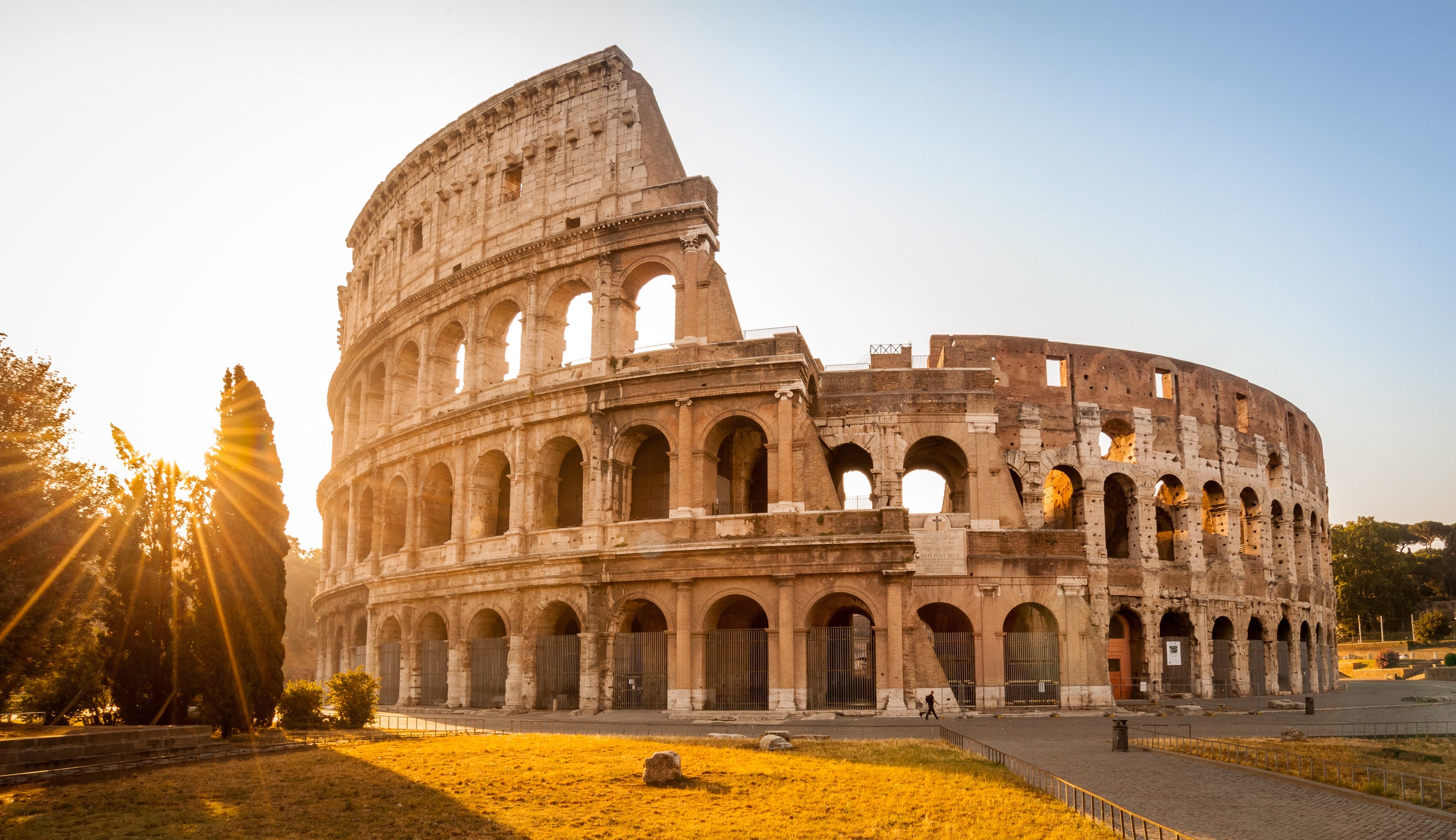
The Colosseum is the largest amphitheatre ever built (Getty Images)
Found in the centre of Italy’s historic capital, Rome, the Colosseum remains one of the city’s most important monuments, representing thousands of years of history and a symbol of ancient Roman life and legacy. The Colosseum was built in the 1st century AD at the request of the Flavian dynasty emperors, becoming a venue for large spectacles, including animal hunts and gladiator battles. Like the games it used to hold, the amphitheatre remains a marvel that attracts droves of visitors from around the world every year.
How to do it
Trailfinders offers a four-day city break to Rome from £799 per person, depending on the departure date. The itinerary includes exploration of the city’s historic streets, piazzas and architectural wonders, visiting the Vatican Museums, the Sistine Chapel, the Trevi Fountain, the Colosseum and the Pantheon Roman temple. The tour offers private return transfers from the airport, three nights in four-star accommodation, three breakfasts and a street food tour in Trastevere.
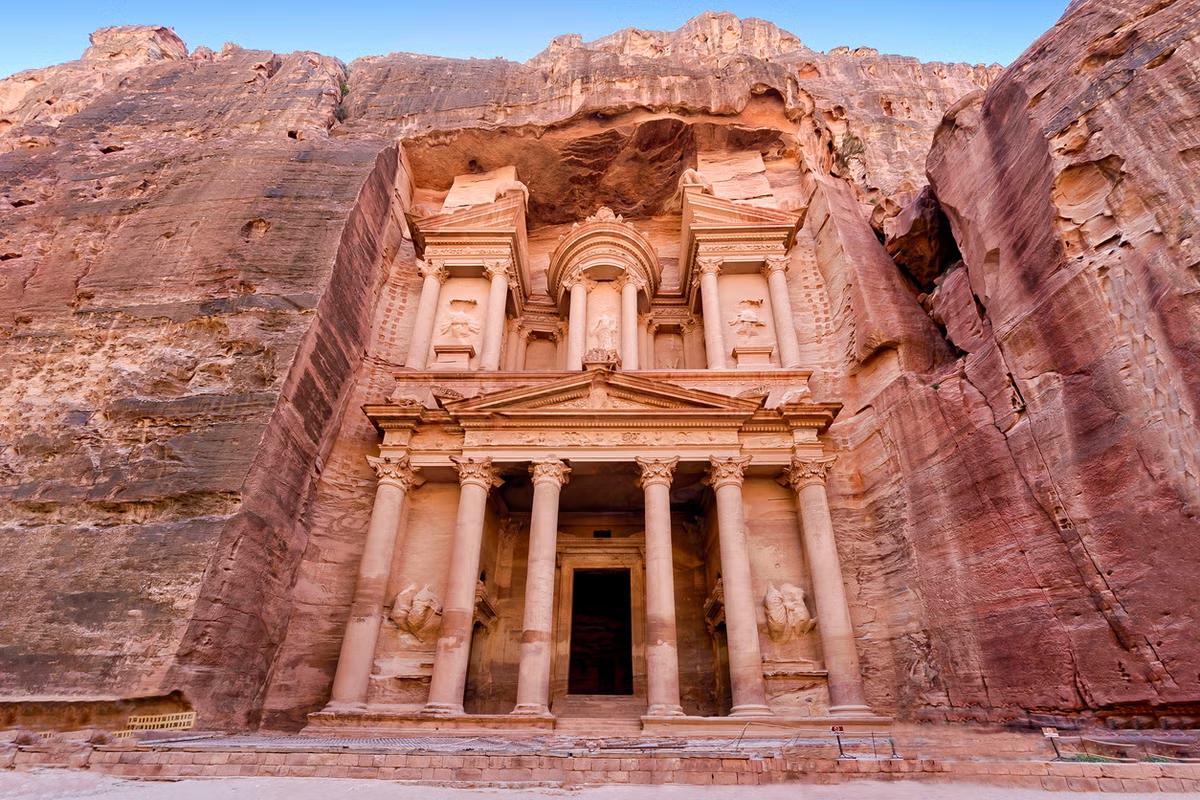
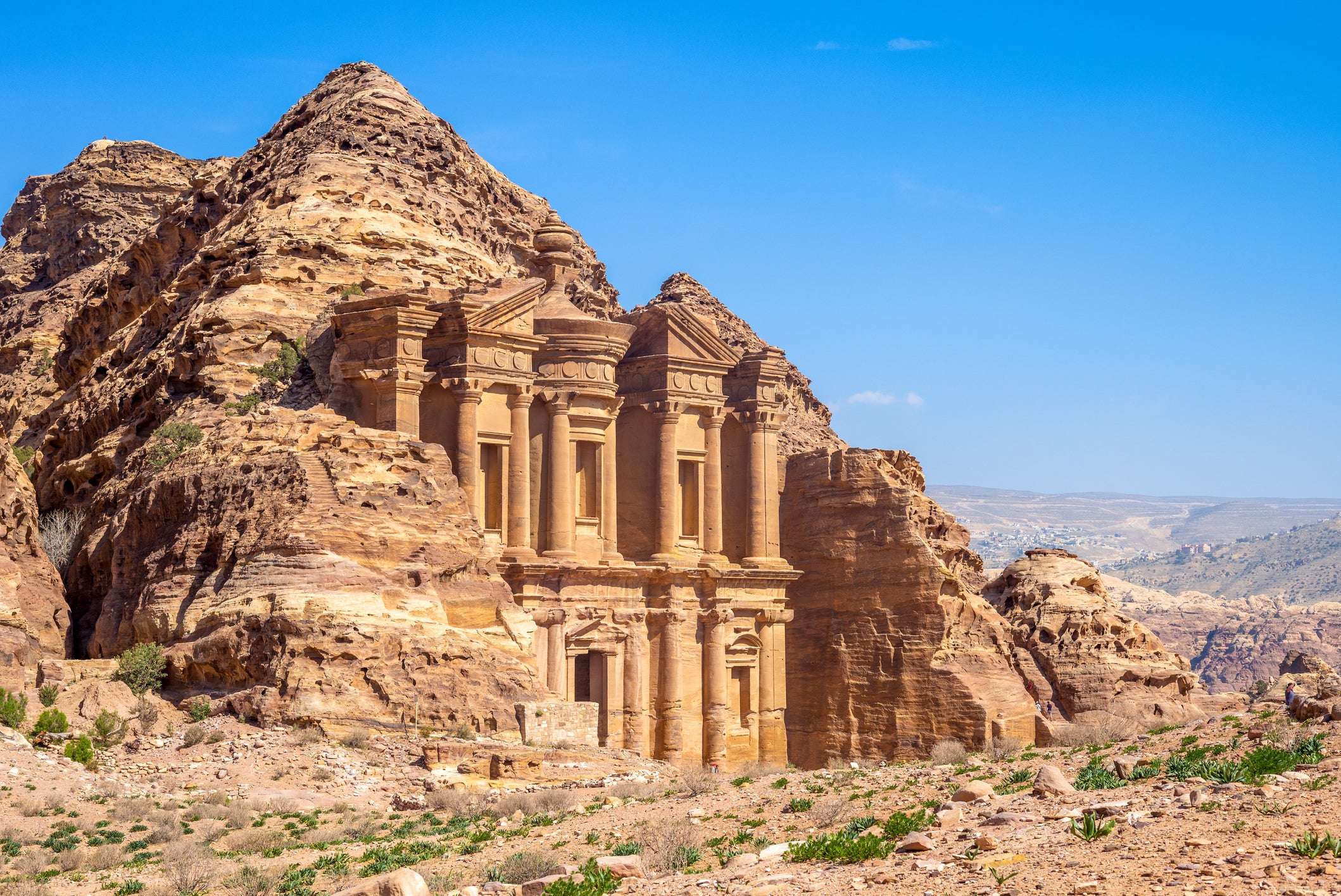
Known as the ‘Rose City’, Petra is carved into the blush-coloured sandstone (Getty Images/iStockphoto)
One of Jordan’s most prized national treasures is the ancient city of Petra, a half-built, half-rock-carved settlement that was an important crossroads between Arabia, Egypt and Syria-Phoenicia. An industrious Arab people called the Nabataeans resided in Petra more than 2,000 years ago, and it then became a settlement for the Romans and the Byzantines. Now Petra stands as one of the most famous archaeological sites on the planet, giving visitors a glimpse of ancient Eastern tradition and Hellenistic architecture.
How to do it
Intrepid runs an eight-day trip through Jordan, starting and ending in the capital Amman (full of ancient ruins itself), journeying over to the Dead Sea before heading down to Petra to explore the archaeological site for two entire days, including an optional visit to the wonder by night. The itinerary also includes a trip further south down to Wadi Rum, a protected desert wilderness famous for its red sand dunes, which have drawn many a science fiction film director due to its likeness to Mars. The package includes meals, hotel accommodation, and arrival airport transfer, and can be booked from £1,748.
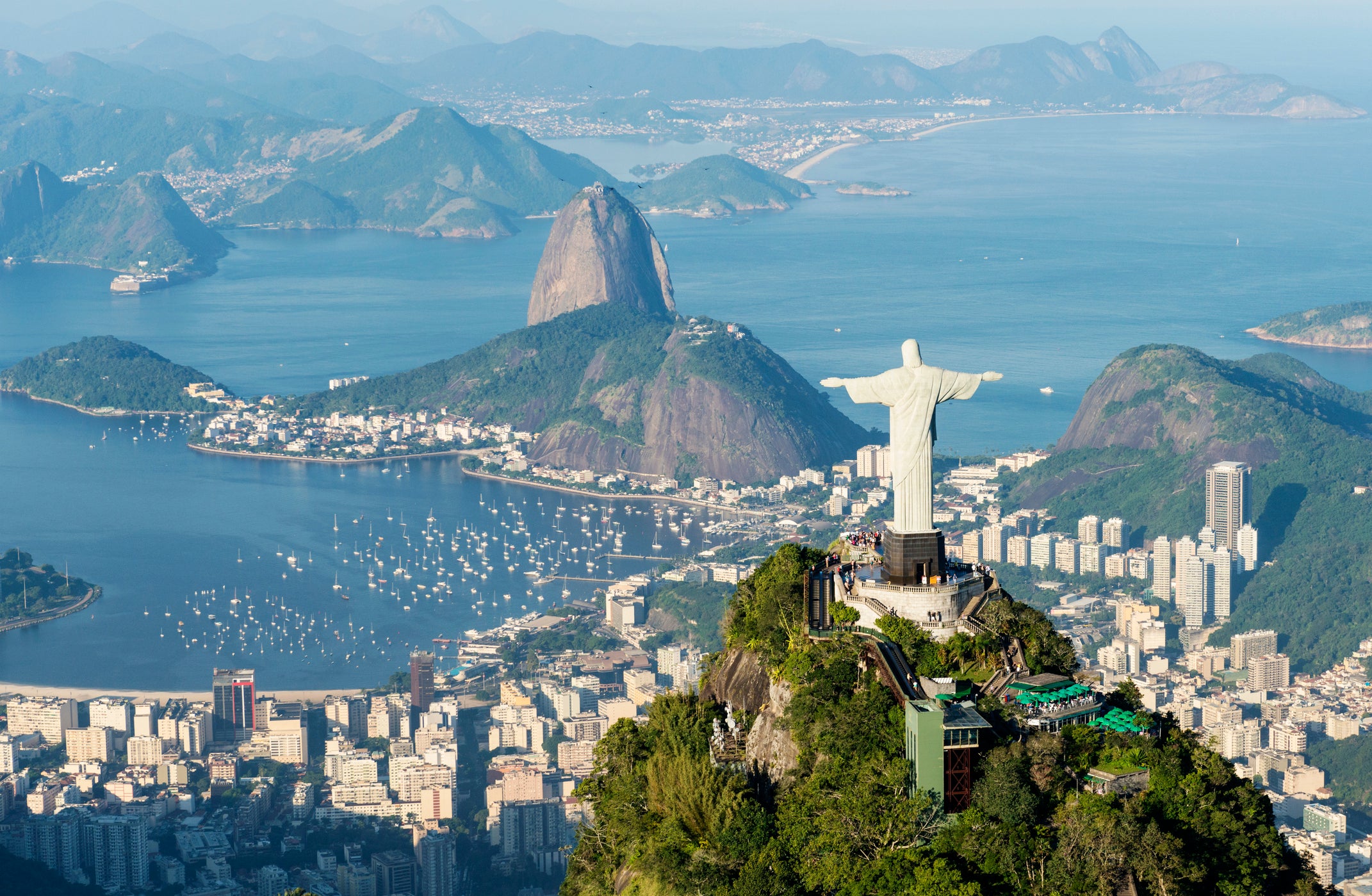
Christ the Redeemer is the most recently created of the seven wonders (Getty Images)
This 98-foot symbol of Christ was completed in 1931, having taken nine years to construct. Over 93 years later, Christ the Redeemer has become one of the most recognisable statues in the world, a key emblem of Rio De Janeiro’s landscape and a cultural icon for Brazil. While ideas for a Christian symbol to be built in Rio had been floated previously, it was not until a push from the Catholic Circle of Rio that the plan was put into action. The statue, made out of reinforced concrete with a soapstone veneer, was created by French-Polish sculptor Paul Landowski and built by Brazilian engineer Heitor da Silva Costa, in collaboration with French engineer Albert Caquot, while Brazilian artist Carlos Oswald also helped with the design. The statue sits atop Corcovado Mountain overlooking the bustling city below, as many visitors each year continue to make the pilgrimage up the mountain to see Christ the Redeemer up close in all its grandeur.
How to do it
Advertisement
For a whistle-stop tour of some of the country’s best sights, Intrepid is offering an eight-day exploration of the best of Brazil. Starting in Rio De Janeiro, travellers will be able to soak up the lively atmosphere and breathtaking views this city has to offer, before moving on to three days of travelling around Paraty, traversing rainforest trails in the surrounding national park, heading out on a boat trip or visiting Trindade, which boasts some of Brazil’s best beaches. A trip to the largely untouched paradise of Ilha Grande is squeezed in before heading back to Rio de Janeiro for free time to hit up Copacabana beach, admire the peak of Sugarloaf Mountain and, of course, stand at the feet of Christ the Redeemer. This eight-day trip includes four breakfasts, hotel accommodations and transport. Prices start from £576.
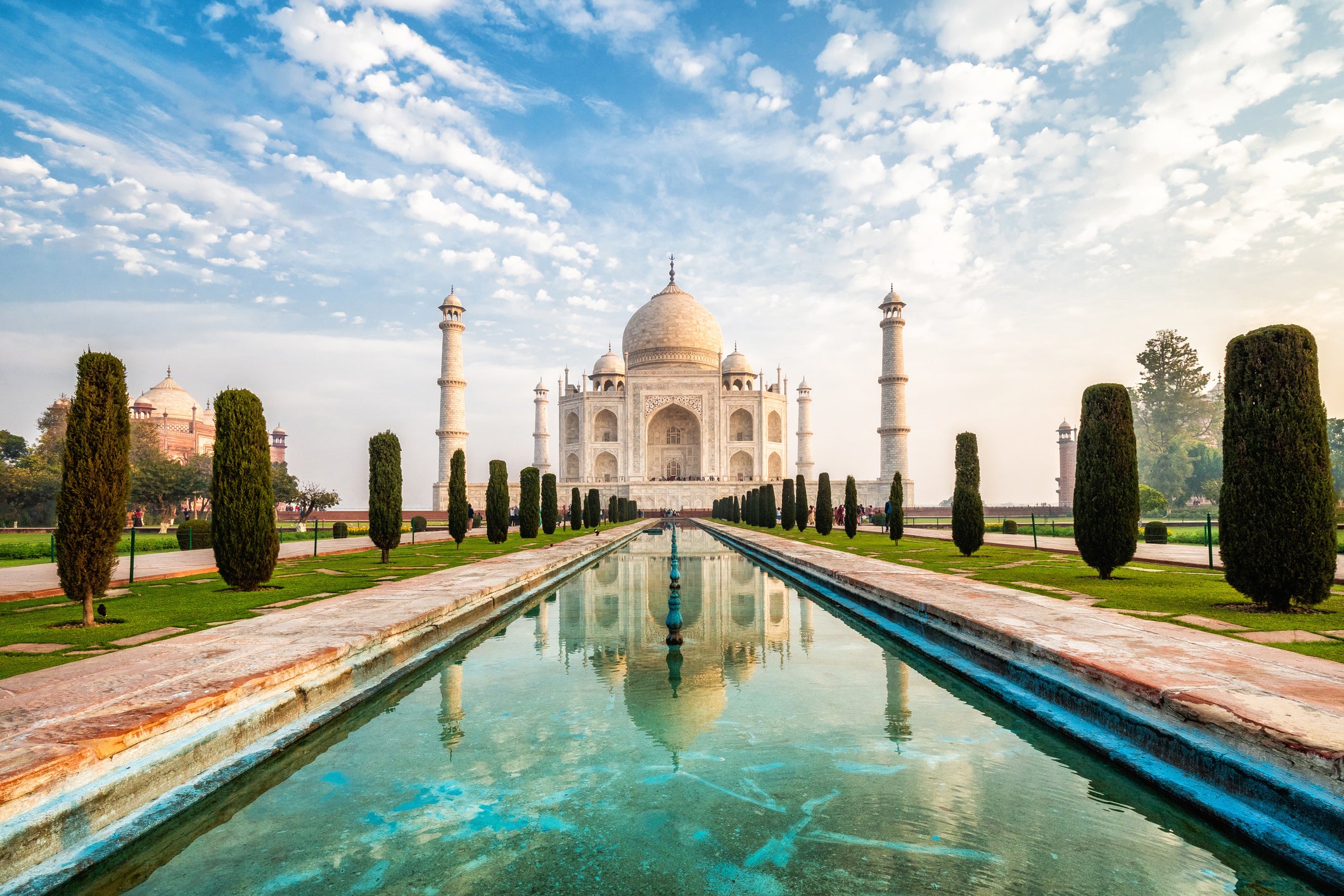
The Taj Mahal was designated as a Unesco World Heritage Site for being ‘the jewel of Muslim art in India and one of the universally admired masterpieces of the world’s heritage’ (Getty Images/iStockphoto)
One of the most spectacular mausoleums in the world, the Taj Mahal was built over the course of 17 years by the order of the Mughal emperor Shah Jahan to keep the memory alive of his favourite wife, Mumtaz Mahal. Made out of white marble and recognisable for its pronounced arches and striking domes, the Taj Mahal is situated on the banks of the Yamuna River and is thought of as one of the greatest architectural achievements of Indo-Islamic architecture. With the mausoleum completed in 1648, the grand structure has stood for over 300 years.
How to do it
Intrepid is running an eight-day tour of India’s Golden Triangle, a popular circuit that connects the cities of Delhi, Agra, and Jaipur. On this trip, you will be able to explore India’s Pink City, Jaipur, by visiting its bazaars and taking part in tours of the Palace of the Winds, the royal residence of City Palace, and Jantar Mantar, a giant stone observatory. The tour will then head to Agra, where travellers will be able to lay their eyes on the marvel that is the Taj Mahal, as well as a grand Mughal emperor’s marble tomb, Akbar’s Mausoleum. The tour will start and end with a trip around Delhi, visiting places such as Jama Masjid, one of the largest mosques in India, and busy marketplaces like Chandni Chowk. The price includes transport in and between cities and seven nights’ accommodation. Prices start from £480 per person.
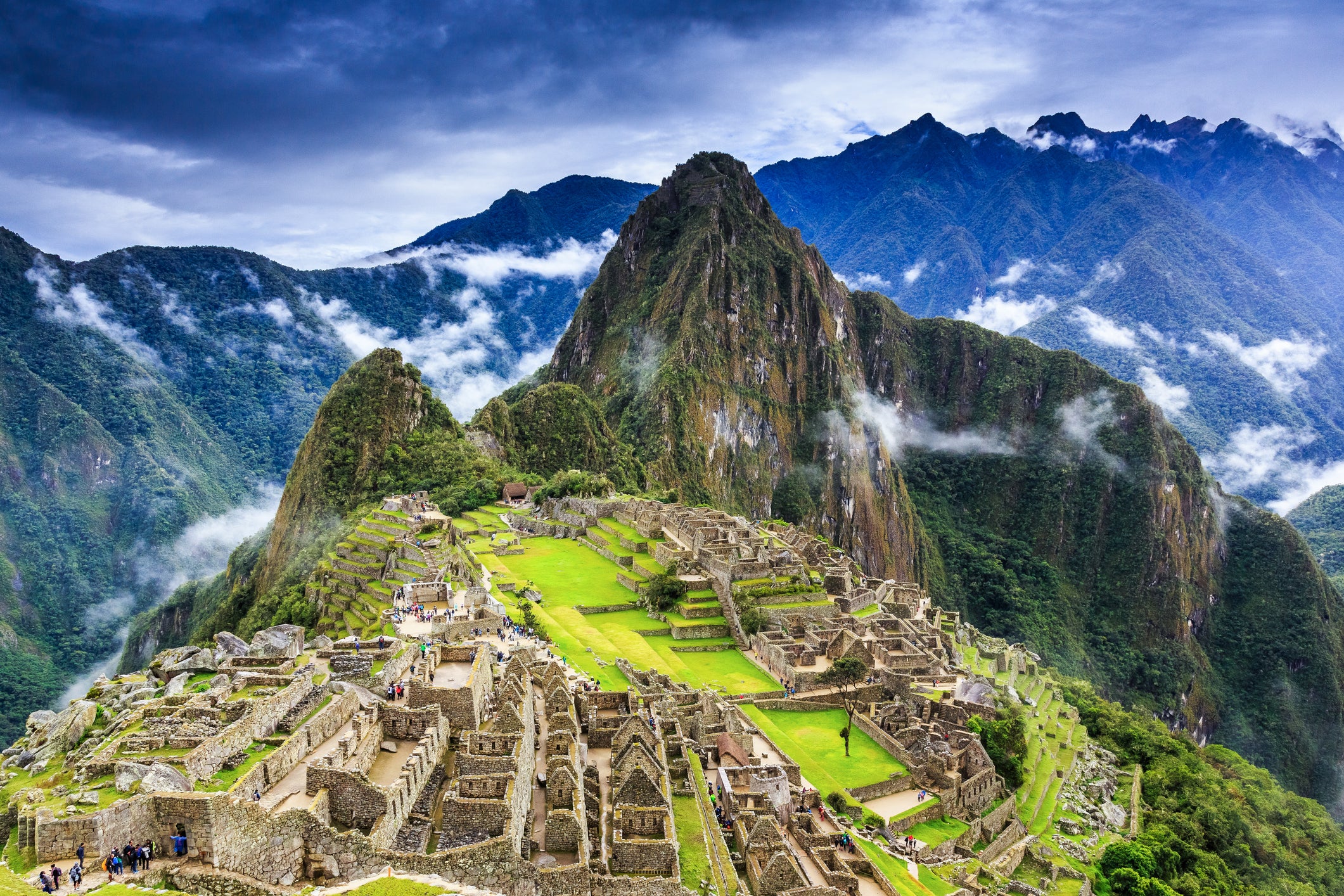
Macchu Picchu is a series of structures making up a religious, ceremonial, astronomical and agricultural centre (Getty Images/iStockphoto)
This 15th-century Incan citadel, situated high in the heart of a mountain forest, has established itself as one of the most familiar and lasting legacies of the Inca Empire. The citadel was abandoned only a century after the Spaniards conquered the empire and was not publicly promoted again until 1911. Machu Picchu is embedded in a powerful landscape where the Peruvian Andes meet the Amazon Basin, with its structure cut naturally into the rocky slope and diverse flora and fauna meandering throughout the remains. It’s still unclear how important the role of this magnificent blend of the natural and manmade world played for the Incas, but on average, the site receives thousands of visitors a day to experience this wonder of the world first-hand.
How to do it
Intrepid offers various opportunities to hike the Inca Trail, but if travelling by other modes is best for you, company holds a nine-day experience through Peru, touring ancient Inca sites. The trip starts in the capital city, Lima, before heading over to Cusco, a remarkable mix of ancient ruins, colonial architecture and natural beauty. From there you will head over to Machu Picchu for a guided visit of this astonishing Incan citadel, traversing the many temples, astronomical artefacts and living quarters. The trip will end back in Lima, but not before a two-day excursion to Puno, located on the edge of Lake Titicaca, known for its folk heritage and traditional customs. The trip will include some meals, transport, accommodation and the Machu Picchu guided tour. Prices start from £1,535 per person.
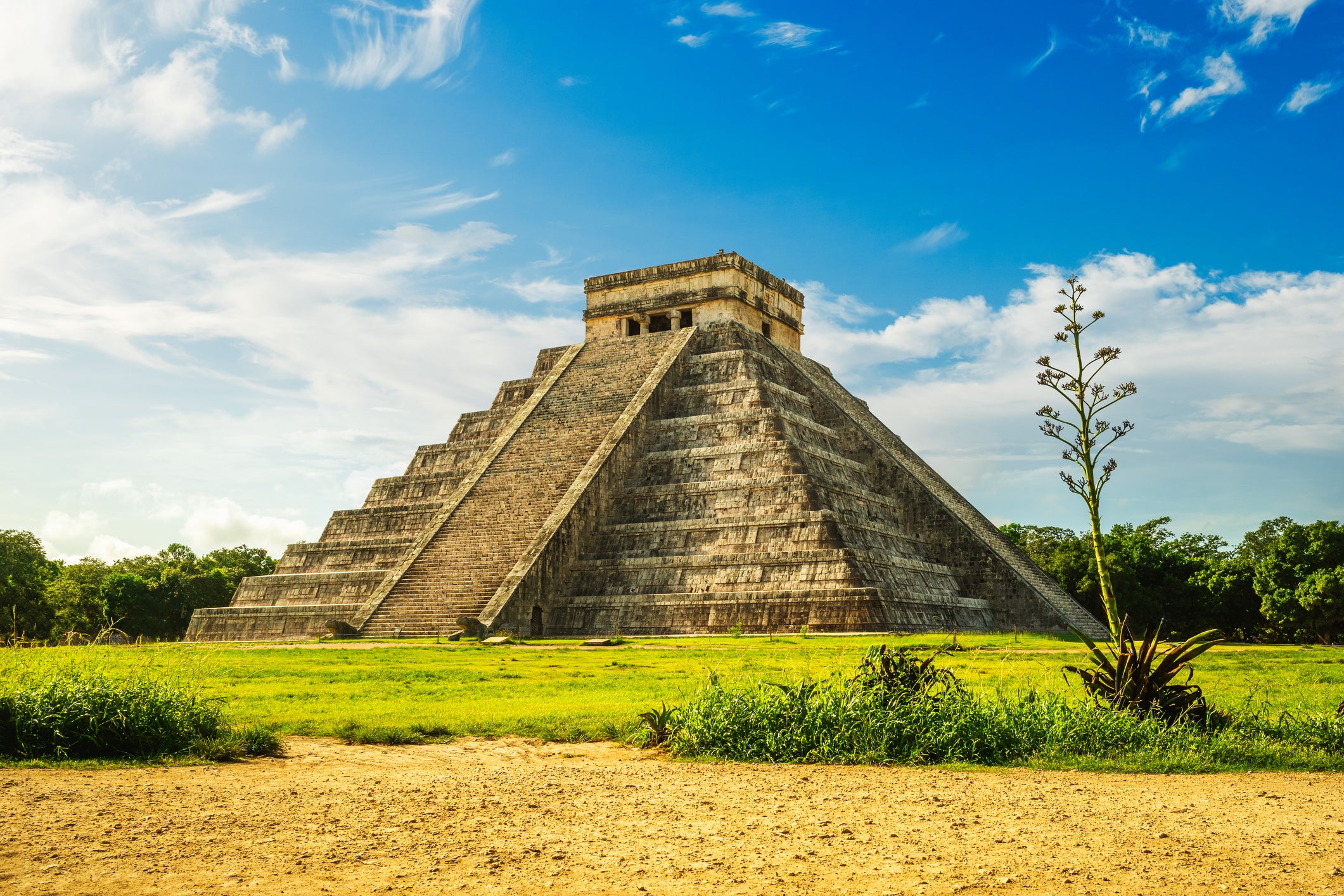
El Castillo served as a temple to the god Kukulkan (Getty Images)
The sacred site of Chichén Itzá dates back to pre-Hispanic America, standing for over 1,000 years, and is one of the most prominent lasting symbols of the Mesoamerican Mayan civilisations. One of its most famous surviving buildings is El Castillo, also known as the Temple of Kukulcan, a step pyramid that dominates the centre of the archaeological site and is the tallest, standing at 98 feet tall. Throughout the ancient city, remnants of the Maya and Toltec civilisations can be seen within the stone monuments, constructions and artistic works it has left behind.
How to do it
Hop onto a five-day tour with Trailfinders, meandering through Mexico’s most famous Mayan sites and spending a few days in the vibrant city of Merida that reflects various historic ages, from colonial-era churches to museums honouring Mayan culture. On day two, you will rise early for a morning tour of Chichén Itzá tucked away in a dense rainforest, allowing you to immerse yourself in the history and importance of these ancient ruins. The rest of the tour allows you to stop by the ancient city of Uxmal, the Palace of Masks at Kabah and the Celestún Biosphere, home to thousands of pink flamingos. The tour includes a private vehicle and driver, four breakfasts, three lunches and four nights in hotel accommodation. Prices start from £1,585 per person.
The entire wall measures 21,196 km (Getty Images/iStockphoto)
Over 13,000 miles long, the Great Wall of China is the largest manmade project in the world that spans over two thousand years of Chinese history. The wall first came into being when sections of earlier fortifications were connected in 220 BC to create a large, unified defence system against invasions in the north. The wall is a representation of collisions and exchanges between the agricultural and nomadic civilisations that lived in ancient China. The political and military landscape and technological advances in architecture of the time are immortalised in this powerful, grand structure. Construction of the wall continued up to the Ming dynasty in the 17th century, and it now stands as one of China’s greatest cultural symbols, embodying the continued labour over hundreds of years through different dynasties and historical periods.
How to do it
Advertisement
Intrepid runs a ‘China highlights’ trip over eight days starting in Shanghai and ending in Beijing, packing in some of the country’s most beautiful and culturally significant sites. During the trip there will be an walking tour of the Huishan Ancient Town Scenic Area, Xi’an, known for being the imperial centre and start of the Silk Road, before arriving in Beijing via high-speed train. Travellers will then stay at a family-run guesthouse right near the Great Wall, allowing them to go for a short hike to the wall for an incredible sunset scene. A whole day will also be dedicated to the Wall, where you can explore the ancient wonder, learn about its history and take in the sprawling landscapes that surround it. The trip includes three breakfasts, transport and accommodation. Prices start at £1,062.
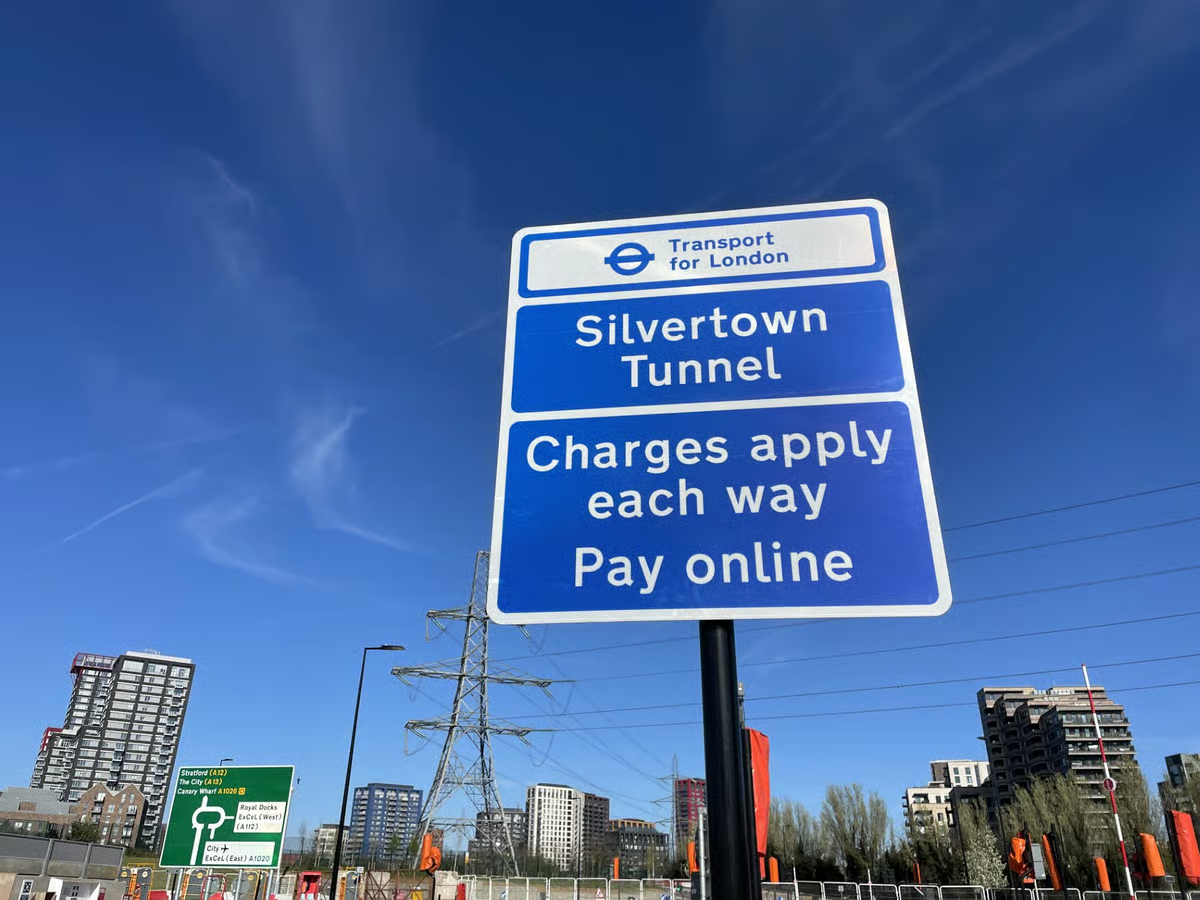
Christina Calderato, Director of Strategy at Transport for London (TfL), said: “The tunnel user charges are designed to manage traffic demand – which then enables wider objectives like improving the road network’s performance and resilience, encouraging use of public transport and active travel, and supporting economic growth. Without the tunnel user charge, there would be more traffic and congestion, with negative impacts on air quality and journey times.
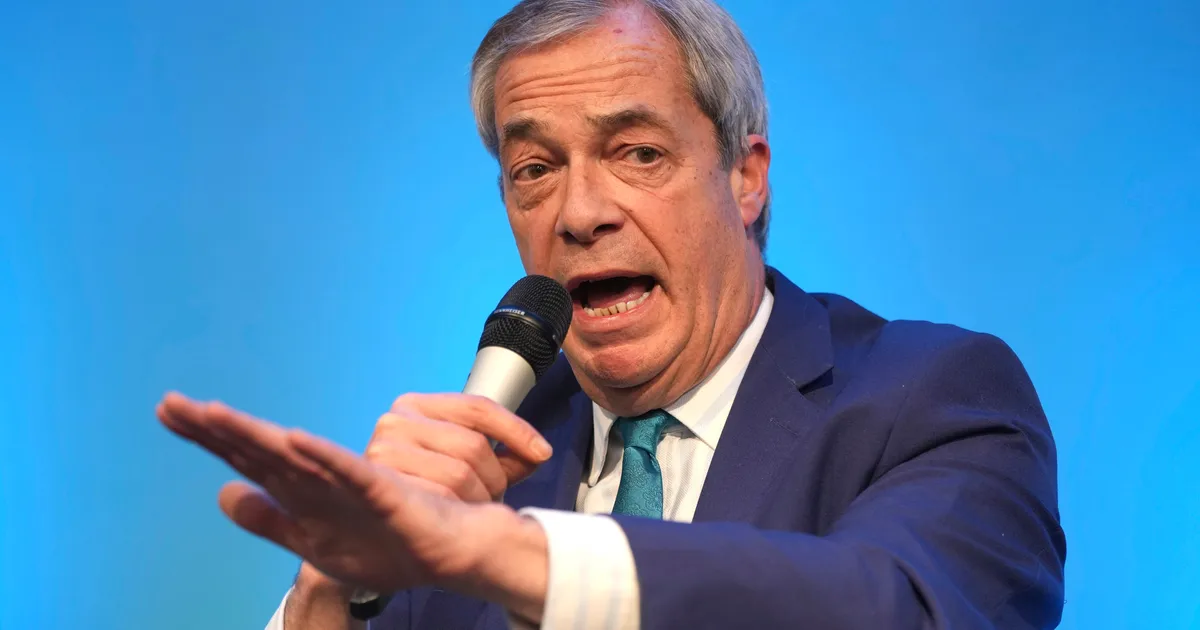
Nigel Farage’s approval rating has plummeted to its lowest level since the 2024 general election, according to a new poll.
More in Common put the Reform UK leader on -32, which is a drop of approximately 10 points in just a fortnight.
It follows a wider trend suggesting the right-wing party is declining in popularity despite having led in the opinion polls for more than a year.
The think tank also found new prime minister Andy Burnham is now at +19 after a two-week policy blitz.
Advertisement
That rating is higher than the +11 Keir Starmer achieved just after he was voted into office in July 2024 – though he dropped to -49 late last year.
Meanwhile, the Tory leader Kemi Badenoch is on 0 while her Lib Dem counterpart Ed Davey sits at -11.
Green leader Zack Polanski is on -24, having taken a sharp downward turn in recent weeks.
More in Common’s UK director Luke Tryl wrote on X: “We pointed out last week Burnham’s positives were in part because he had higher unknowns.
Advertisement
“That changed this week as the number of neither/don’t know declined and he also now has highest gross approval.
“For Reform what may worry Farage is less the rise in disapproval, he’s always been polarising and more the decline in raw approval, suggesting some previous fans wavering.”
Latest leader approvals 🌹Burnham bumps up to +19, 8 higher than Keir’s high of 11. 🌳Badenoch down slightly to break even 🔶Davey drops back to -11 💚Polanski is at -24 ➡️Farage drops to another low, by far his lowest since the election at -32. pic.twitter.com/FYLoxJr2dW
The researchers also reported earlier this week that Reform had lost its 16-month lead in the polls.
Advertisement
It put Labour on 28%, up four percentage points from last week, while Farage’s party was put on 24%, having lost two points.
YouGov, meanwhile, put the two parties neck-and-neck on 22% on Monday, with Reform losing one percentage point and Labour gaining one.
More in Common is not the only organisation noticing a decline in support for Reform.
Survation found this week that Labour were now in the lead in the opinion polls on 26% – up one point from last week – while Reform lags slightly behind on 24%, having lost two points.
Advertisement
That is the first time the governing party has taken the lead in a Survation poll since May 2025, with their highest vote share in over a year.
Polling by YouGov from last week found that just 22% of British voters now have a favourable opinion of the Reform UK leader.
That is the lowest figure recorded by the pollsters’ approval rating tracker since 2020.
At the same time, more than two-thirds of the country (68%) now view Farage negatively, including 56% who see him very unfavourably.
Advertisement
His net approval rating of minus 46, which is the joint-lowest ever recorded for him by YouGov is even worse than the minus 41 recorded for Boris Johnson after partygate and Keir Starmer’s minus 45 when he resigned as PM.
Farage is facing intense scrutiny after failing to declare a £5 million gift from crypto-billionaire Christopher Harborne when he became an MP for Clacton.
In a dramatic move earlier this month, he resigned as the MP for Clacton to trigger a “people versus the establishment” by-election, which will be held on August 13.
Advertisement
However, none of the main parties are putting up candidates, meaning his main rival is Count Binface.
Listen to Commons People, the podcast that makes politics easy. Every week, Kevin Schofield and Kate Nicholson unpack the week’s biggest stories to keep you informed. Join us for straightforward analysis of what’s going on at Westminster.
The ex-Love Islander, TV presenter, showjumper and daughter of footballer Michael Owen took part in the annual Goodwood event featuring 12 part-time riders
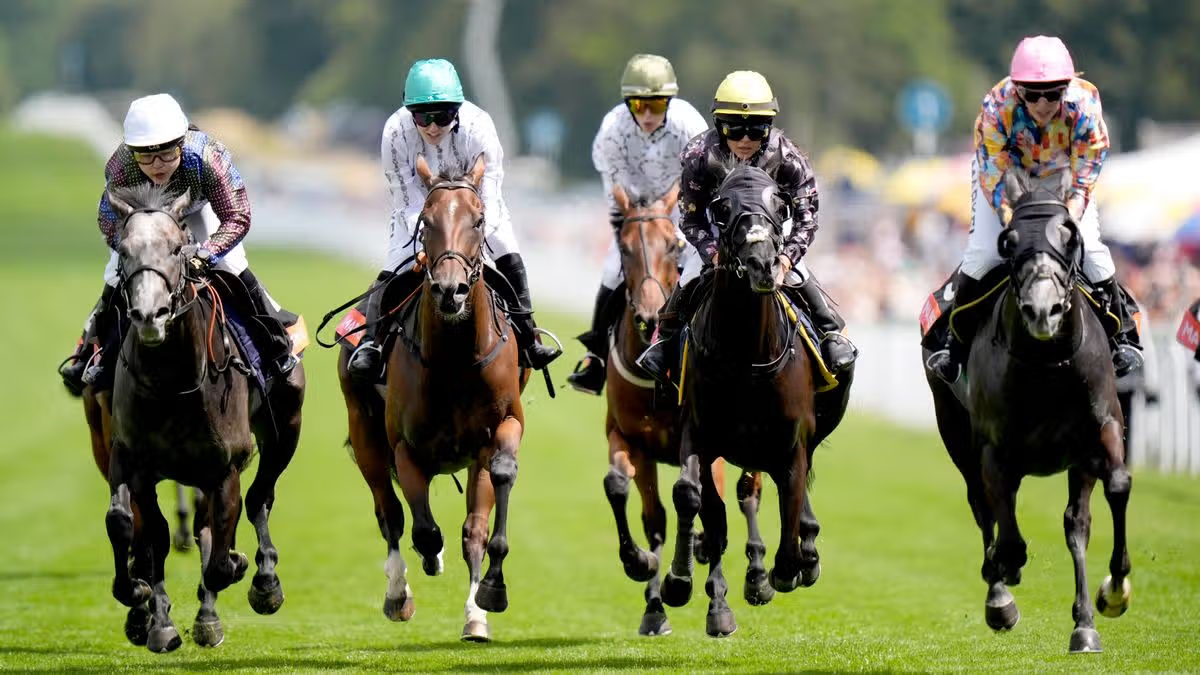
Gemma Owen finished fourth on her jockey debut when she took part in the Markel Magnolia Cup on Thursday, the annual charity race run at Goodwood.
Advertisement
The influencer, international dressage rider and daughter of former England and Liverpool striker Michael Owen was one of the star names among the dozen women chosen for the popular event.
Owen prepared for the race at her Dad’s Manor House racing stables in Cheshire, guided by the former top professional jockey Franny Norton. Manor House’s trainer Hugo Palmer supplied her mount who was named Turbo Trotter for the day. But when the race started Gemma was left behind and by the time she got going, she had too much ground to make up on the leaders as she finished fourth.
“It was an amazing experience from start to finish,” she said. “He was an angel and he really looked after me, but that flag start is different as everyone’s bunched together and cutting each other up.
“My start wasn’t great; I got boxed in, but he travelled well, made up some good ground and finished strong. If I’d have a better start, it’d have been a different result.”
Advertisement
She added: “I think I’ll go again. I want to win now, and I’ll probably end up doing another race so I can get that first place.
“Dressage is very concise and slow, and that was the complete opposite. Everything happened so quick, but I don’t know which one I prefer.
“I’ve loved the training and riding out, and seeing what goes on behind the scenes makes you appreciate the hard work that goes into it. I’ve a new found respect for jockeys, and I appreciate the sport a lot more since doing it. I’m never happy not winning, so you’ll see me back.”
Advertisement
Victory was claimed by Imaam Rasul-Healer on Khor Al Adaid, trained by Scott Dixon. The 26-year-old who works at Kia Joorabchian’s Amo Racing yard in Newmarket only got a place in the race six days earlier after Molly Hunter, a reporter for the Press Association, was ruled out by illness.
“I had not done too much prep, got on him for the first time last Friday,” she said. “I’ve been in the process the whole way but at every single fitness test I seemed to be ill, or something was wrong.
“Then I fell off a two-year-old filly, hit my head, got a concussion and wasn’t allowed to do my final fitness test. I got the call last week and thankfully was fit to step in.”
Advertisement
The race has raised more than £75,000 for Education Above All Foundation, a global education non-profit.
She added: “I’m only the second Muslim to win this and charity is a huge focal point of our religion.”
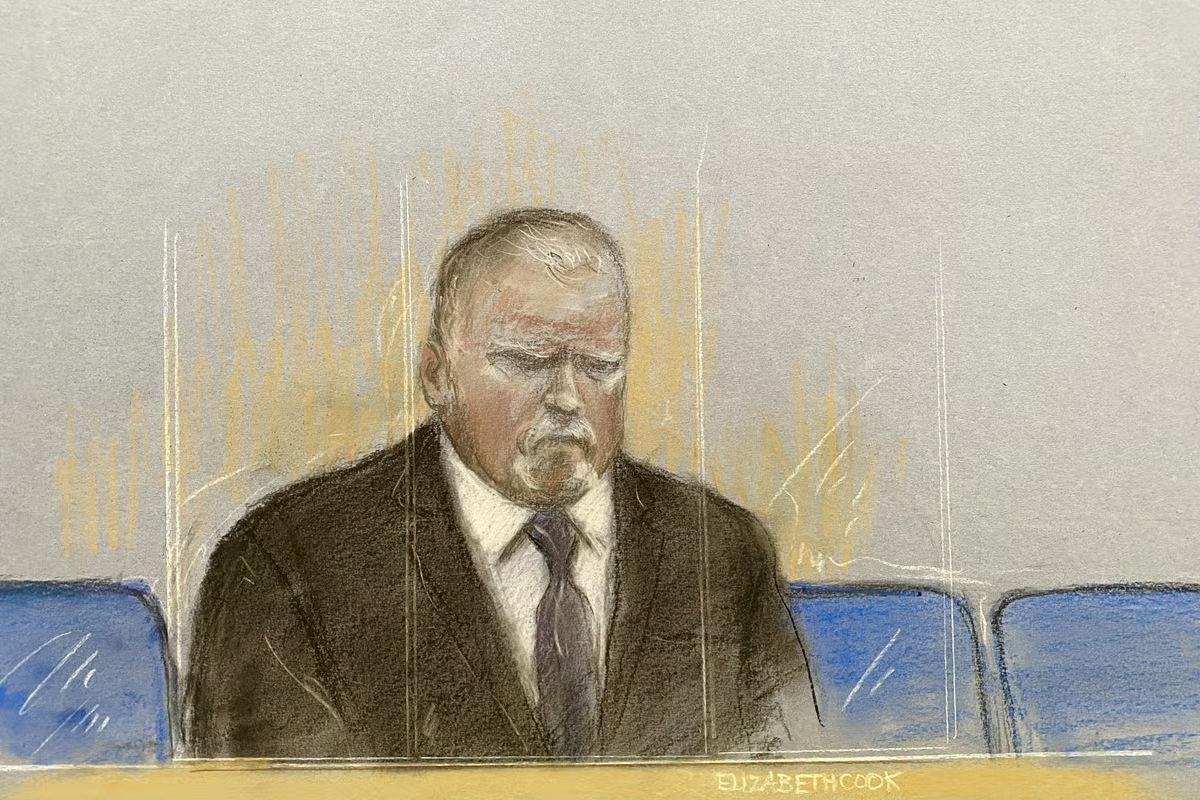
A court has heard Bush breached the trust placed in him by grieving families “on an almost industrial scale”, by keeping bodies for months after they should have been cremated, giving out the wrong ashes, taking money for funeral plans without making any of the arrangements, and stealing charity donations collected at services.
Some victims of disgraced undertaker Robert Bush have not been refunded for fake funeral plans he sold to them, a court has heard.
The 48-year-old defrauded 172 people over 11 years to the tune of £562,000, Hull Crown Court was told.
He previously admitted 67 offences in relation to his business, Legacy Independent Funeral Directors in Hull, including failing to bury and cremate people, theft from 12 charities, fraudulent trading in funeral plans, and fraud.
On the fourth day of his sentencing hearing, one woman said her parents, who paid £2,649 each for funeral plans, were not alive “to see the justice they deserved”. Another said she had not been refunded £5,000 for two policies.
Advertisement
This story contains details some might find distressing.
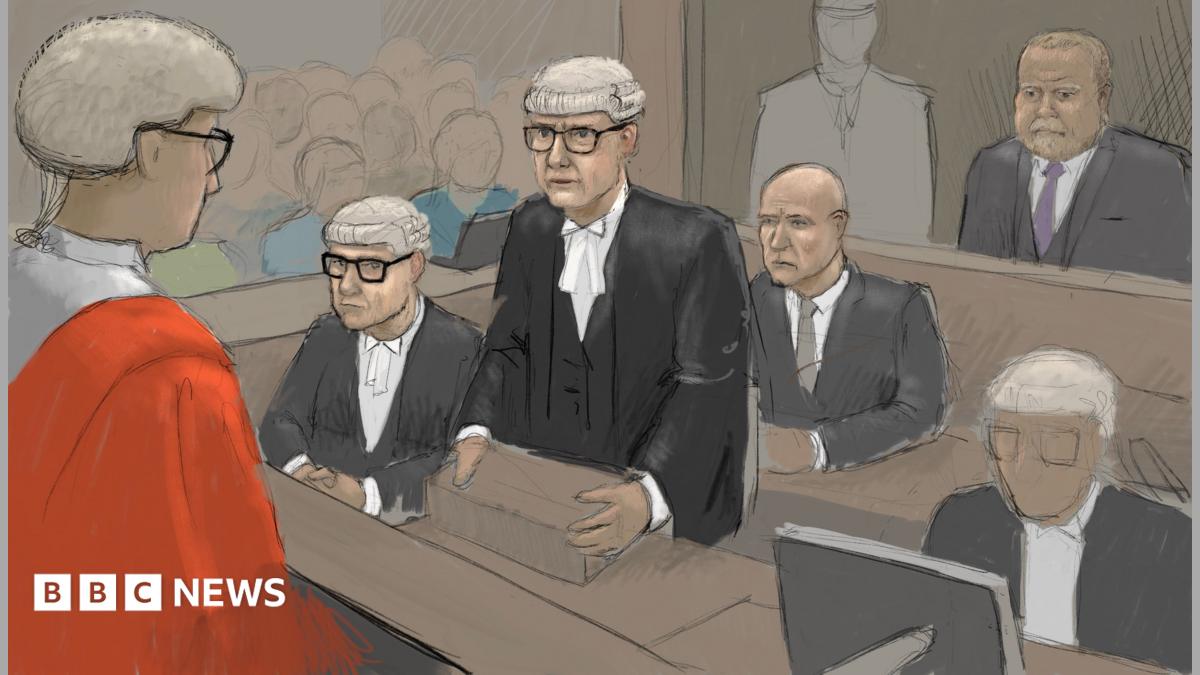
Wiping her eyes with a tissue, Maxine Hill told Mr Justice Hilliard the bank refused to refund the money fraudulently taken by Bush, whom she knew personally.
Bush visited both her parents, Margaret and John, in their own home and issued a handwritten receipt to her mother who paid him in cash.
The bank initially refunded the amount paid by Hill’s father but 90 days later, the bank took the money back saying “there was no evidence that he hadn’t received a product”, the court heard.
Advertisement
Both have since died – Margaret in May 2024 and John in June 2025.
If you’re looking for a curve-friendly wedding guest dress, Alison Hammond has answered with her latest This Morning outfit – a £65 polka dot maxi dress that ‘feels luxurious’
This article contains affiliate links, we will receive a commission on any sales we generate from it. Learn more
Advertisement
The search for a great wedding guest dress can be a tricky one, especially if you fall into the plus size category, but more high street brands are now expanding their sizing range to be inclusive. A perfect example is Next, which now offers most of its clothes in sizing ranging from six to 26.
The Next Satin Maxi Dressis available in sizes six to 26, as well as sizes 10-20 in the tall range – although some sizes are selling out quickly. As well as Alison’s chocolate brown polka dot print, it also comes in champagne, navy blue and dark green, and it’s just the right combination of luxurious and elegant without being too extravagant.
To make the dress more daytime TV-friendly, Alison paired her dress with a pair of chocolate brown and bronze Anais Pointed T-Bar Flatsfrom Air & Grace, but for evening events and formal occasions, a pair of metallic heels and a statement clutch bag would instantly elevate it. You could even pack it for your next holiday, styling it with some gladiator sandals and a statement necklace for evenings out.
It comes in a lightweight satin material with a hammered finish, which gives it a luxe-look, and features a ruched knot detail around the waist which creates a flattering silhouette. The Next Satin Maxi Dressalso has wide, flared sleeves for some added drama, and a rounded neckline.
Advertisement
There are some other beautiful occasion dresses to shop right now too, including this £129 Green Diamond Print Toria Dressfrom Never Fully Dressed which is available in sizes six to 28, with a gathered front and draped sleeves. Alternatively, ASOS’ Draped Long Sleeve Cross Front High Neck Satin Maxi Dresswhich comes in a beautiful green shade for £65, with cape-style sleeves and a draped column silhouette.
However Alison’s Chocolate Brown Spot Satin Maxi Dressis a hit with shoppers, with one person saying: “Gorgeous dress, feels very luxurious and will be perfect for the wedding I’m attending this autumn.”
Another agreed: “The style is very flattering to the “fuller figure”, whilst a third added: “I bought this dress to attend an awards dinner & ceremony and it was great. A lovely rich colour and very flattering and elegant.”
Advertisement
One Next shopper did say, however: “This is a beautiful dress, but really quite heavy weight. More suitable for a autumn/ winter party, not 30 degrees plus summer evening, so regretfully returned.”
And another complained: “Very disappointed for a dress of this price I would have expected better. The design was large polka dots but the were not matched properly and this was very noticeable at the front.”
However, others loved it, saying: “These dresses are beautiful, flattering, drape beautifully, lovely material, lovely colour (navy) and best of all a really good price, look far more expensive than they are.”
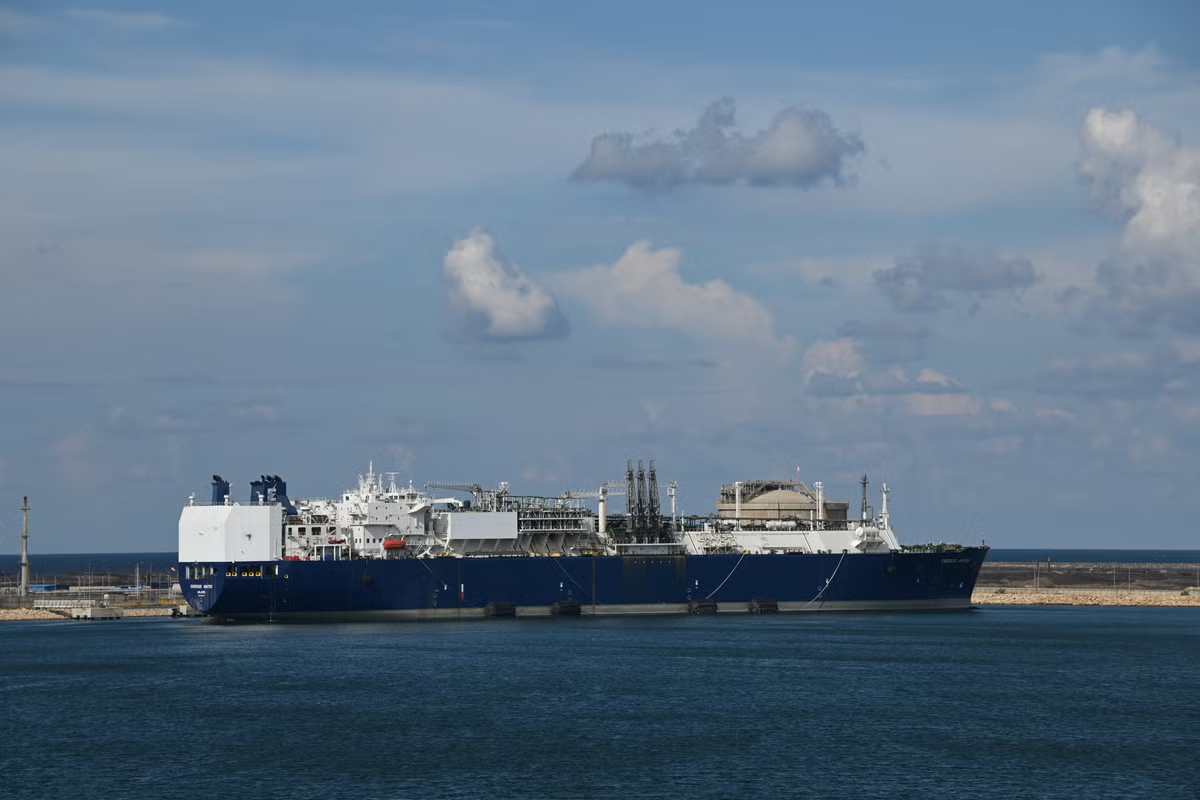
A drone strike ignited a fire that engulfed two gas vessels at Egypt’s Mediterranean port of Damietta, the Egyptian cabinet confirmed on Thursday, stating the blaze was the result of an attack rather than an accident.
The incident, which occurred near the strategically vital Suez Canal – a crucial evacuation route for Saudi oil to global markets – has yet to be claimed by any party.
Authorities have launched an investigation and are implementing measures to safeguard Egypt’s national security. British maritime security firm Ambrey had initially assessed on Wednesday that a drone struck a US-owned gas storage tanker at the port, raising concerns about a potential escalation of conflict across the Middle East.
Trading sources familiar with the event identified the affected vessels as the floating storage tanker Energos Winter and the Gaslog Salem, with the fire reportedly starting on the starboard side of the Energos Winter before spreading.
Advertisement
The drone attack unfolded shortly after Iran launched a missile strike against US forces in Jordan, and following retaliatory actions by Washington and Saudi Arabia against Iran-backed paramilitary groups in Iraq.
President Donald Trump had threatened retaliation against Iran after they launched a missile strike against US forces (AP)
US president Donald Trump had threatened retaliation against Iran, while Yemen’s Houthi group declared a naval blockade on Saudi Arabia, indicating a widening of the conflict since the US and Israel began bombing Iran in February.
Egypt’s petroleum ministry confirmed on Wednesday that the fires were swiftly brought under control by firefighting and security teams, with no injuries or fatalities reported. Petroleum Minister Karim Badawi visited the site to oversee the response efforts.
The Energos Winter, a floating storage and regasification unit, is owned by US-based Energos Infrastructure and managed by Wilhelmsen Ship Management, a Singapore-based subsidiary of Norway’s Wilhelmsen Group.
The incident arrives at a sensitive juncture for Egypt’s gas market. Having become an LNG exporter following the development of the giant Zohr offshore gas field, Egypt has recently reverted to being a significant LNG buyer due to declining domestic production and surging demand. Any prolonged disruption could significantly impact LNG traders, affecting demand and spot prices.
Advertisement
Sources indicate that the vessels are expected to remain out of service for an extended period, with one reporting a breach in a tank on the Energos Winter, potentially prolonging repair work.
The Energos Winter possesses a regasification capacity of approximately 450 million cubic feet per day, which accounts for roughly 7 per cent of Egypt’s daily gas consumption and 16 per cent of its total LNG receiving and regasification capacity, according to Egyptian consultancy ElAdl Studies.
While the outage is not anticipated to create an immediate supply gap, given Egypt’s alternative import facilities and fuel options, it will reduce spare capacity during a period of peak summer demand.
Potential mitigation strategies include maximising other regasification units, increasing the use of fuel oil as a backup, tapping into renewable energy capacity, and, as a last resort, temporarily reducing gas supplies to certain industrial sectors.
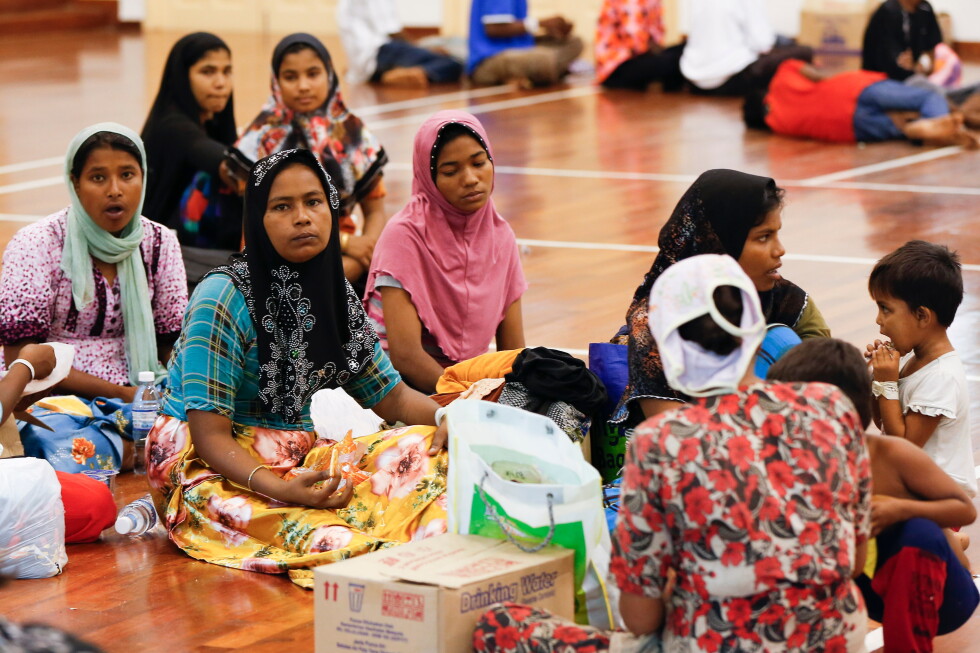
KUALA LUMPUR, Malaysia (AP) — Malaysia has started documenting and screening thousands of detained Myanmar nationals as part of a repatriation program agreed with Myanmar, Home Minister Saifuddin Nasution said Thursday.
Saifuddin said Myanmar had committed to accept up to 5,000 of its citizens currently living in Malaysia and an unspecified number currently in Cox’s Bazar, a town in south east Bangladesh.
Malaysia had identified up to 4,000 Myanmar nationals in its 19 detention depots, who will be moved to a single site for security screening and documentation purposes, he said.
“We will certainly meet the target of 5,000 individuals once this process is complete,” Saifuddin told to reporters, adding that the foreign ministry will handle the next stage of the repatriation process with Myanmar.
Advertisement
Prime Minister Anwar Ibrahim had said Wednesday that those being repatriated were Rohingya refugees.
“People ask why we do not simply send them back. Send them where? Myanmar had refused to accept them before. Now, because of our good relations with Myanmar, they have agreed to take back 5,000 from Malaysia,” Anwar was cited as saying by the New Straits Times.
However, Saifuddin, who did not explicitly identify the 5,000 individuals as Rohingya, said only Myanmar nationals with refugee status were being repatriated.
Foreign ministry officials could not be immediately reached for comment.
Advertisement
Mohammed Mizanur Rahman, a commissioner for refugee, relief and repatriation in Cox’s Bazar, told The Associated Press by phone that he was not aware of any repatriation of Rohingya from Bangladesh.
In Naypyitaw, the capital of Myanmar, officials also rejected reports that the government would accept Rohingyas.
Han Win Aung, director-general of the ASEAN department at Myanmar’s Foreign Affairs Ministry, said the repatriation program was focused solely on verified Myanmar nationals currently held in detention centers in Malaysia.
Myanmar, formerly known as Burma, does not recognize the Rohingya as one of the country’s 135 lawful ethnic minorities, instead referring to them as Bengalis to imply they are natives from Bangladesh and are illegally settled in Myanmar.
Advertisement
“This is not about bringing back Bengalis. There are Myanmar nationals who are being held in detention centers in Malaysia for various reasons,” Han Win Aung told the AP. “Both sides are still at the stage of coordinating to repatriate only those whose identity as genuine Myanmar citizens has been verified.”
Advertisement
Sign up for Morning Wire:
Our flagship newsletter breaks down the biggest headlines of the day.
He said the plan follows earlier repatriation operations in 2021 and 2022, when Myanmar received more than 1,100 of its nationals stranded in Malaysia.
Advertisement
Han Win Aung said the number of people to be repatriated and the timeline for transfer remain under discussion.
Malaysia is home to about 215,600 refugees and asylum seekers registered with the U.N. refugee agency, including about 126,000 Rohingya who make up one of Southeast Asia’s largest refugee community. Despite hosting them, Malaysia is not a party to the U.N. Refugee Convention and treats refugees as undocumented migrants.
______
Journalists Julhas Alam in Bangladesh and Grant Peck in Bangkok contributed to this report.
Money worries can keep us up at night, but could decades of financial stress leave a lasting mark on the brain itself? That’s the question my colleagues and I set out to answer in a new study – and the answer, it turns out, is yes.
Most research on money and brain health looks at people’s financial circumstances at just one point in time. This makes it hard to know whether a few difficult years have the same effect as decades of enduring struggle. For our study, published in the journal Innovation in Aging, we tracked the same people throughout their adult lives to find out.
We used data from the MRC National Survey of Health and Development, also known as the 1946 British birth cohort study. A cohort study follows a group of people born in the same period throughout their lives. This is the world’s longest continuously running study of its kind, tracking thousands of people born in one week in March 1946 – participants who celebrated their 80th birthdays earlier this year.
The study’s origins go back to the economic anxieties of the 1930s, when the Great Depression left many families worrying about money and the cost of raising children – making it a fitting dataset to revisit those same questions decades later. Using this rich resource, we examined the financial circumstances of 2,759 participants at multiple points across adulthood.
Advertisement
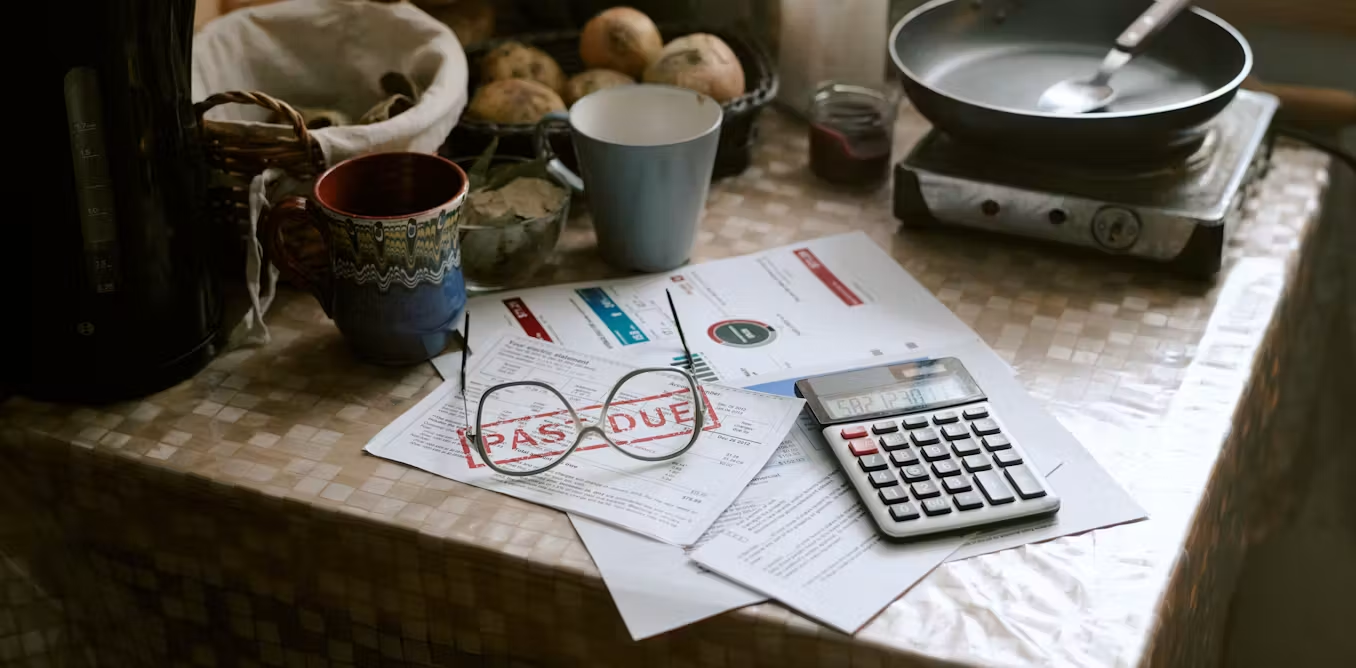
Participants reported their household income at ages 26, 43 and 53. We classed those in the bottom 20% of the group on at least two of these occasions as having persistent low income – about one in six people. Separately, we measured financial hardship by asking whether people struggled to manage on their income or had trouble paying bills, at least twice between ages 36 and 53. This applied to about one in eight.
At age 53, participants took tests of verbal memory and processing speed. A smaller group also had brain scans between ages 69 and 71, which let us measure brain atrophy (shrinkage) and ventricular expansion – the widening of fluid-filled cavities within the brain, a recognised marker of poor brain health.
We found that people who had experienced more financial hardship and low income scored lower on the cognitive tests at age 53. These links held even after we accounted for their childhood thinking skills, education and childhood disadvantage. Among those who had brain scans, persistent low income was linked to greater brain shrinkage in later life.
People who had faced more financial hardship tended to perform worse on cognitive tests. Microgen/Shutterstock.com
When we looked at how memory changed from age 53 to 69, those who had faced persistent hardship actually showed slower decline over that period. We believe this is because they had already lost more ground by age 53 – they started from a lower point, so there was less left to lose.
Advertisement
We also found that the link between financial adversity and brain shrinkage was stronger for men, for those who grew up in disadvantaged homes, and for carriers of a gene that raises the risk of developing Alzheimer’s disease.
For men of this generation – born in 1946, when the male breadwinner model was the norm – the pressure of being the main earner may have made financial stress more acute. Disadvantaged men also had higher rates of smoking and drinking than disadvantaged women.
The finding on genetic risk suggests that people who are already biologically vulnerable may be more susceptible to the effects of financial strain. These subgroup findings are based on smaller numbers within our sample, so we are treating them as suggestive rather than conclusive.
We acknowledge that our study cannot prove cause and effect, and the results, drawn from a single generation of British adults, may not apply directly to other populations or countries. But following the same people over many years gives us a clearer picture than studies that only look at a single moment in time.
Financial hardship is increasingly recognised as one of several factors – alongside things such as hearing loss, smoking and physical inactivity – that may shape our risk of cognitive decline in later life. Our findings suggest that reducing chronic financial hardship among working-age adults, wherever they live, could help protect brain health and potentially reduce dementia cases in the future.
PRAGUE (AP) — Keepers at Prague Zoo used tons of ice on Thursday to give its animals some much-needed relief as yet another heat wave hit Europe.
Polar bears Aleut and Gregor wasted no time and were rolling in the beds of ice cubes after entering their outside enclosure.
The twins looked to have fun with the ice treat that was meant to keep them cool amid the extreme temperatures forecast to soar to 38 degrees Celsius (100.4 degrees Fahrenheit) later in the day.
“The bears cool off with it and at the same time it’s an enrichment of their life in the zoo,” said zoo spokesperson Filip Mašek.
The polar bears, who were born in Nuremberg, Germany, 16 years ago and have adapted to the European climate, were the ones who enjoyed it the most.
This year, the plan was to order ice for the animals in July and August, which are traditionally the hottest months. But the first heat wave struck early and the Czech Republic experienced its hottest day ever with 41.9 C (107.4 F) on June 28.
“The weather keeps surprising us,” Mašek said. He said the ice will be ready sooner next year. “We’ve been taught a lesson.”
Advertisement
Other animals that have benefited from the provision of ice to keep cool in previous years include otters, elephants and parrots.
Some animals in the zoo are used to heat, others could stay in the shade or inner enclosures and use various pools to keep cool. Gorillas were given pieces of ice with frozen fruits in the previous years.














































You must be logged in to post a comment Login