

Politics
A Tale of Two Interviews – Streeting v Burnham

Last night at around midnight I was flicking through Youtube and came across the latest Newsagents podcast, in which Lewis Goodall interviews Wes Streeting for 90 minutes. Wow. What an interview. Wes Streeting was in 100 per cent honest mode and gave Lewis so many newslines that I lost count. It was a perfect example of how the long form interview can be an utter revelation. Apart from giving some very blunt assessments of Keir Starmer’s capabilities (or lack of them), he laid out very clearly some of his priorities if he were to take over. You were left with the impression that he believes something and has a real grounding.
Contrast this with the (admittedly shorter) interview Andy Burnham did with Victoria Derbyshire on Thursday’s Newsnight. He was tetchy and failed to answer some pretty basic questions. Victoria was clearly frustrated by his constant failure to address any subject she asked him about. Deflect, prevaricate, ignore. He clearly didn’t even know what Rachel Reeves’ fiscal rules are. Admittedly, he is in a tricky position because he can’t go full tonto on wanting to be PM for fear of giving the impression that he is taking the voters of Makerfield for granted. Even so, it was a pretty poor show from Burnham. His basic trouble is similar to the one which afflicts Keir Starmer. He has no basic ideological grounding. He’s like a cushion that bears the impression of the last arse that sat on it. He will be whatever you want him to be, and have no qualms about saying the exact opposite to the next person that shows any sign of supporting him. His flip-flopping is legendary. This is the man who bangs on about the power of the state and seems perfectly happy to nationalise anything in sight, yet suffers memory loss when he is reminded of the fact that he is the only Health Secretary ever to launch a plan to privatise an NHS hospital – Hinchingbrooke, lest we forget. Andy Burnham is a nice bloke. He’s amiable and a good salesman. That gets you a long way in politics, but it is not the main qualification for the top job.
In my view, it is abundantly clear that if Labour party members have a choice of Streeting, Burnham and Starmer, and if they are voting with the country’s best interests at heart, then Wes Streeting is the best choice.
That is not, however, how party members vote, as evidenced by Tory members voting for Liz Truss over Rishi Sunak.
Wes Streeting admitted to Lewis Goodall that he is the underdog, but as I remember only too well, the underdog sometimes prevails – remember David Cameron in 2005.
If Burnham wins the by-election and Starmer refuses to quit, we are in for a two month long leadership election, which will be great for people in my profession, because it will be two months where the frontrunner could well self combust. Burnham will be knackered by polling day in Makerfield. Starmer already is. Since his resignation, Streeting has had time to rejuvenate and energise himself. He’s lost weight, got fit and is clearly relishing the fight ahead.
If Labour wants to play safe it will stick with nurse for fear of worse. Both Streeting and Burnham shoot from the hip and have a tendency to overshare. Starmer will no doubt be hoping they both do just that.
As I write this, Andy Burnham looks as if he is the most likely to triumph, but many a slip twixt cup and lip.

Among the sweeping tent of President Donald Trump’s winning coalition in 2024, there’s a niche that’s often overlooked despite the potency of its role in the burgeoning young right: conservative women.
It’s these women, like Christian conservative influencer Savanna Faith Stone, who say “we’re not really identifying with the MAGA party anymore.”
“Promises that were made have not been delivered on at all, and I think young women are realizing that,” Stone said in an interview with POLITICO. “They’re realizing, ‘Hey, you promised lower gas prices. You promised the economy would be better. Like, that’s why we voted for you.’”
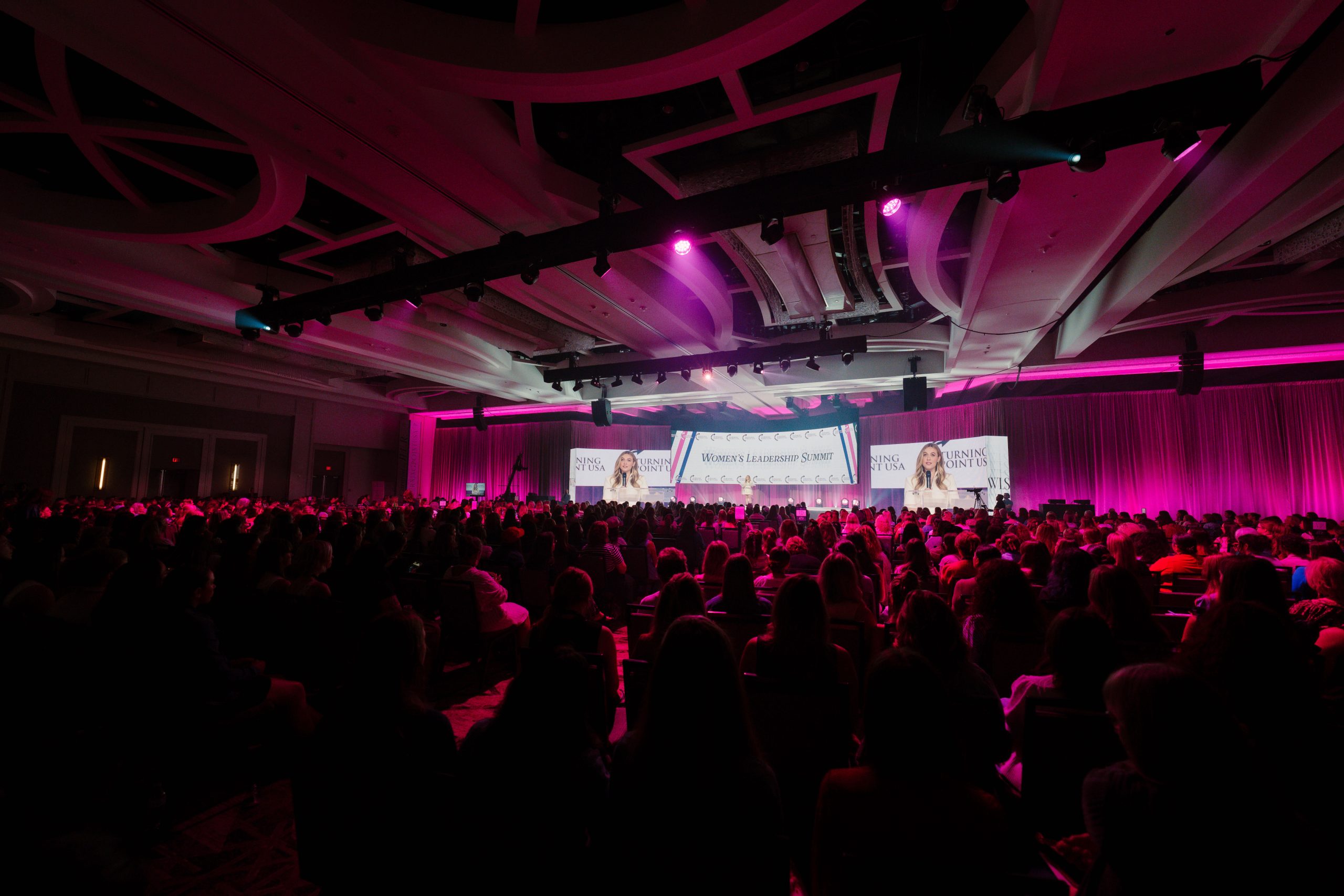
Stone, who turns 21 this week, is one of a flurry of influencers who flocked to San Antonio this weekend, young families in tow, to gather under a bevy of bright pink lights at Turning Point USA’s Women’s Leadership Summit. It’s the biggest gathering of its kind for the young female right — a space for a collective disdain for “woke” culture, a love for God and kinship under the theme of “faith, family and freedom.”
But bubbling under the surface are divisions within the GOP that have enveloped the online voices of the young right and a budding disillusionment among young women with the politics of the second Trump administration. It’s all part of a growing divide between being “MAGA” in 2026 and being “America First.”
Trump is “not America first,” Stone said. She voted for a president who promised no new wars, who was pro-family and would bring down costs. “It’s harder than ever for a young couple to be able to buy a home,” she added.
Young women moved from 33 percent for Trump in 2020 to 40 percent in 2024, while recent polling has shown the partisan gender divide is more stark than ever. Now less than six months out from the midterms, the young female right’s biggest voices are warning women could sit out the midterm elections.
“I cannot express to you the level of alarm bells that should be ringing for the GOP,” as women consider not voting, conservative influencer Alex Clark told POLITICO, adding that young women are looking at everything from the ongoing war in Iran to the persistence of pesticides and it’s breaking their trust.
Clark is a Turning Point darling, a 33 year-old podcaster with half a million followers who grew under the tutelage of the late Charlie Kirk. She’s built a MAHA-focused health and wellness platform that she calls an “unaggressive way to share conservative ideals” with a loyal following. (“You’re trailing my show!” she recalled Kirk telling her in 2024. “Yeah, you better watch out!” she responded.)
She hasn’t shied away from sharing her criticism of the administration. “I straight up told [the White House], ‘People want ‘fight, fight, fight Trump.’ They don’t want ‘ballroom Trump,’’” Clark said. “I feel like some of the magic and the spark that helped us win 2024 is missing.”

Along with other voices like Isabel Brown or Riley Gaines, they’ve become emblems of the Turning Point faction of Gen-Z and millennials. They believe women’s biology will push them to follow strong men — part of what they credit for some young women’s embrace of the GOP in 2024 as the party penetrated the manosphere. Stone drew controversy for saying voting should be one vote per household. Clark told POLITICO she doesn’t think a woman should be president.
But the universe of female influencers is vast and oftentimes at odds. Raquel DeBono, the self-proclaimed NYC conservative of “Make America Hot Again” fame, said in an interview that she “would not be caught dead” at Turning Point’s summit and rejects the rigidity of the online faction that has cast out figures like Megyn Kelly. “If you want to let women into the tent and you want more women to vote conservative, you need to be less cringe and horrible,” DeBono said.
And then there’s influencers like Emily Wilson, of “Emily Saves America,” and Priya Patel, conservatives living in West Hollywood who embrace traditional values but often find an audience in women who don’t. “I read my Bible. I want to get married young. I’m saving myself for marriage,” Patel said. But the pair who co-host “Pretty Political” have followers that are “girls that do Only Fans, makeup artists, graffiti artists” who all “love America,” Wilson said.
Whether city conservatives or Turning Point young moms, they agree on key issues — including around foreign policy or accountability for the Jeffrey Epstein files — that they say are diverting them from MAGA or the White House. And with young voters already a turnout challenge in midterm years, they’re all concerned many young conservative women simply won’t show up come November.
The White House, in response to a request for comment, touted the “most pro-woman agenda in American history” — pointing to women’s sports, decreasing violent crime, expanding the child tax credit and cutting food dyes, as well as “creating the most renter-friendly market we’ve seen in years,” in a statement from spokesperson Anna Kelly.
The administration, Kelly says, has “achieved win after win on issues women care about most — and we’re just getting started. The MAGA coalition is stronger than ever, and women continue to play a powerful role in the movement.”
But GOP women politicians know it’s “100,000 percent” a problem. “It’s something that I have spoken to the White House about, ” Rep. Kat Cammack (R-Fla.) — who co-chairs the Republican Women’s Caucus — said in an interview. She added the GOP has to be “laser focused” on delivering on affordability, “and if we don’t, we’re failing at earning their trust and support in the election.”
And the Republican Party made the mistake before of not messaging directly to women, Arkansas Gov. Sarah Huckabee Sanders told POLITICO. “Women want a lot of those same things. We want safe neighborhoods. We want the opportunity to make decisions about how we raise our families,” she said.
Yet there’s skepticism about whether the GOP will take these concerns seriously, Marjorie Taylor Greene, the former congresswoman who appeared with Turning Point more than once, texted. “I think about all the single mothers and women out there trying to make it, and it is extremely difficult, with inflation continuing to rise and overall cost of living continuing to rise,” she said. She also called Trump’s tone and language “a major turn off to women.”
These young conservative women — some clad in florals, others still donning their ruby-red Trump hats — don’t regret their vote, and many expressed a desire for the administration to succeed.
But any future for the growth of the budding female right has a bridge of trust to re-build.
“After Trump in 2028, if we want to see this energy continue that we had in 2015 and 2024, if we want that to have any sort of life after 2028 — it has to become an America First movement,” Clark told Playbook. “That is the cry of the base right now.”
There are trips where you pack every waking moment full of sightseeing, activities and excursions. And then there are trips you spend mostly horizontal: laying in a lounge chair, reading a book, sipping on a cold beverage and occasionally getting up for a dip in the ocean or pool.
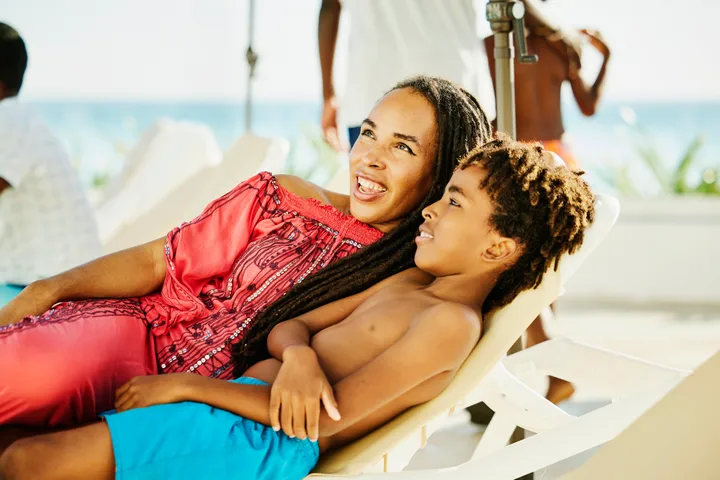
The latter is what cookbook author and mum-of-four Caroline Chambers aptly refers to as a “plop vacation.”
A “plop” holiday is one in which you “wake up in the morning and pack a pool or beach bag, and literally plop by the pool or beach for the entire day,” Chambers explained in a comment on an Instagram post from a Mexico trip she and her family took earlier this year.
It’s similar to what folks in the travel world call a “fly and flop,” Chambers, author of the forthcoming What to Cook When You Don’t Feel Like Cooking: Make It Fast, told HuffPost.
“My sister is a luxury travel agent, and I often see her talking about this type of vacation where you fly to a destination and then basically flop down and don’t leave for the rest of the week,” she said. “Some people call it ‘flop.’ I call it ‘plop.’”
Certain travellers might look down on trips that don’t maximise time away by trying to see more, do more, learn more. And that kind of perspective-widening travel does have its benefits. Chambers herself loves “really, really adventurous travel where you are getting off the beaten path, seeing a local community in a way that you never could otherwise,” she said.

Thomas Barwick via Getty Images
But there are also some notable upsides to holidays of the plop variety.
“Sometimes you just need to completely reset your nervous system and not have to deal with any logistics,” Chambers said. “There is no better balm for the soul that is overtaxed by all the daily logistics of running a career and having a house full of kids than plopping down by a pool and having a waiter come take your drink order and bring you lunch by the pool.”
Plop vacations are great for anyone who just wants to rest and recharge their battery. But they can be particularly enjoyable and (relatively) low-stress for people with young kids. Just pack a bag with everything your family needs for the day: “snacks, diapers, toys, all of it, minimising schlepping as much as possible,” said Chambers.
“It allows the parents to actually feel relaxed afterwards because our needs are being taken care of too,” Chambers said. “We can sit by the pool and have a margarita and order our kids’ lunch.”
Kelsey Pomeroy is a content creator who specialises in parenting and travel with kids, and has two young children of her own. When she hears the term “plop vacation,” she pictures “setting it all down and letting it all go, a rare treat in the life of parents to young kids,” she told HuffPost. It’s appealing because “schlepping stuff around is “the bane of [her] existence,” Pomeroy said.
Plopping with little kids in tow is not going to be as tranquil as plopping child-free. But it can still be pretty relaxing.
“A plop vacation is what people imagine when they think of the word ‘vacation,’ and I love the idea that even if it isn’t the same as a vacation was pre-kids, you can still plop and achieve pockets of peace throughout the day,” Pomeroy said.
As Chambers wrote in a post on her Substack, even though your kid is “spilling half of your margarita before you can even take a sip,” she still finds it “very restful and fun.” And if you need some grown-up plop time, you can sign the kids up for camp at the resort or book a local sitter, she said.
As parents and caregivers know, it can sometimes feel intimidating to leave the house – let alone leave the country – with young kids.
“So whether the beat of your family is to run around all day or plop, I love seeing easy frameworks like ‘plop vacations’ making traveling with little kids feel more accessible,” Pomeroy said.
If anal sex is on the menu tonight, you might be worried about what you ate beforehand. After all, if letting one rip embarrasses you in yoga class, then getting intimate with a partner can feel even more anxiety-inducing.
Maybe you’re wondering whether that chili and beans for dinner was a terrible idea before a roll in the hay.
And while certain foods can make things a little less comfortable – like, say, chili and beans – experts say there’s also a huge misconception around the idea of being “perfectly prepared” for anal sex.
“There’s this idea that you can be perfectly clean for anal play, but the anus is where poop exits the body,” Javay Frye-Nekrasova, a sex educator at We-Vibe, tells HuffPost. “Mess is to be expected, regardless of how you prepare, because we are human, and that’s life. And that’s OK!”
She adds, “Trust me, even as a sex educator I still have instances where the realities of a booty happen.”
In other words, you don’t need to obsessively restrict food or try to achieve some impossible standard of being ready “back there”.
“The rectum, the part of the body involved in most anal play, is not a storage chamber. For most people, most of the time, it’s actually empty,” Dr. Jenni Skyler, a sex therapist, says. “Stool is stored higher up, in the colon, and only moves down when your body is preparing to have a bowel movement.”

LSOphoto via Getty Images
“This is good news,” she continues. “It means that with reasonable preparation, anal play is far less messy than most people fear.”
Still, certain foods can increase bloating, gas, digestive urgency or discomfort, which can make people feel less relaxed and confident during anal play.
Here are the foods experts say are best to avoid before anal sex – and a few suggestions of what to eat instead.
Very spicy foods
According to Skyler, spicy foods can irritate the digestive tract and speed up digestion, which may lead to looser or more unpredictable bowel movements.
“Spicy foods are not fully broken down during digestion,” she says. “They irritate the digestive tract on the way in and out.”
Registered dietitian Kristen Kuminski adds that capsaicin – the compound responsible for heat in spicy foods – “passes through the digestive tract and causes irritation on the way out.”
If you already know spicy foods tend to upset your stomach, experts say the hours before anal play probably aren’t the time to test your limits with hot wings or extra chili oil.
Greasy or fried foods
Heavy, oily foods can sit heavily in the stomach and may contribute to bloating, sluggishness and loose stool.
“Being ‘stuffed’ – pun intended – only makes it more uncomfortable,” Frye-Nekrasova says.
Skyler adds that greasy foods are harder to digest overall, which can make people feel “sluggish and bloated – the opposite of relaxed.”
Gas-causing foods
Beans, lentils, broccoli, cabbage, cauliflower, Brussels sprouts and onions are all healthy foods, but they can also increase gas production.
Kuminski says high-fibre foods eaten in large amounts right before anal sex are some of the biggest offenders when it comes to bloating and digestive discomfort.
Skyler stresses that passing gas is completely normal and nothing to be ashamed of, especially when it happens in the bedroom. But if someone is already anxious about anal sex, feeling bloated or gassy can make it harder to relax and stay present.
“These foods are great,” she says. “Just maybe not at lunch on the day of.”

Dairy (if you’re sensitive to it)
Even mild lactose intolerance can trigger bloating, gas or digestive upset.
“If you know dairy sometimes disagrees with you, the hours before anal play are a good time to skip the cheese plate and the ice cream,” Skyler says.
Kuminski notes that even mild lactose sensitivity can lead to “bloating and urgency that is badly timed”.
Artificial sweeteners
Sugar alcohols like sorbitol, xylitol, erythritol and mannitol – commonly found in sugar-free gum, protein bars and “diet” snacks – are well known for causing bloating and digestive distress.
“This one surprises people,” Skyler says, noting they can sometimes trigger loose stool “quite dramatically”.
Excess alcohol
Sure, that bottle of wine at dinner might have loosened your inhibitions, but that’s not the only thing it loosened. Alcohol can irritate the digestive tract, while also loosening stool and contributing to dehydration.
But Skyler says there’s another concern, too: drinking heavily can make it harder for people to stay aware of discomfort or pain during anal sex.
“In large amounts we struggle to be present and can override our pain receptors,” she says.
Kuminski similarly notes that alcohol “loosens inhibitions but also loosens gut motility,” which can create unpredictable bowel behaviour.
Huge meals before sex
Even if you haven’t eaten any of the foods above, experts say timing still matters. “A huge meal eaten right before play can trigger the urge for a bowel movement at an inconvenient time,” Skyler says.
Kuminski recommends giving yourself three to four hours after a meal before anal play, adding that “timing matters as much as what you eat.”
So what should you eat?
Experts generally recommend sticking to foods that support predictable digestion and well-formed bowel movements.
- soluble fibre
- lean proteins
- cooked vegetables
- bananas
- lots of water
Kuminski also suggests low-fibre, easy-to-digest foods in the hours beforehand, including:
- white rice
- eggs
- plain chicken
- bananas
“It’s basically the same logic as eating before a long run or race where you don’t want any GI surprises,” she explains.
But Frye-Nekrasova says people shouldn’t become obsessive or restrictive around food before sex.
Instead, she recommends simply paying attention to your own digestion and giving yourself enough time between eating and anal play.
“A good rule of thumb I follow is to try to stop eating at least three hours before planned anal play,” she says. “Just to give my body enough time to digest food so I can have a bowel movement beforehand.”

Artem Peretiatko via Getty Images
She adds that everyone’s digestion works differently, so there’s no perfect formula.
“If you are more regular with your digestion and bowel movements, shorter timeframes could absolutely work for you,” she says.
Rather than stressing over eating “perfectly,” Frye-Nekrasova suggests planning ahead in realistic ways – especially on date nights involving heavier meals.
“If you’re going to dinner and it’s going to be something heavier, then planning an activity afterward to give yourself enough time to digest the food before sex would be a good move,” she says.
Most importantly, she stresses that relaxation and communication matter more than perfection.
“Bodies are weird,” Frye-Nekrasova says. “I know that being told to relax doesn’t actually help anyone relax, but I do want to say it because being relaxed helps our bodies function in the typical, expected way (aka digestion and bowel movements) a lot easier than if we are stressed.”
Frye-Nekrasova adds, “And stressing about being perfectly prepared is actually the opposite of what helps people relax.”
Recently, while hanging out at my friends’ houses, I’ve gotten to listen in as their teens talked about everything from the best new music (who exactly is Yeat?), trending phrases (is 6-7 actually going anywhere?) and their behavioural habits.
Then I asked, for example, where they would go to search for a restaurant recommendation, homework help or advice. The answers to all of these were their friend Chat – as in ChatGPT or similar artificial intelligence chatbots.
Now I knew I was cooked (did I use that right?) years ago when I was still using Google for answers the teens had moved on to TikTok for, but I didn’t fully appreciate – until these conversations – just how all-consuming the use of Chat was in their everyday lives.
So I was also surprised to find out they are overwhelmingly using Chat as not just a friend, but a mental health provider.
As a clinical psychologist, this hits me especially hard. I’ve worked for years to translate information from my studies and the field of psychology to young people in entertaining and easy to understand ways. I have developed programs that help clinicians to work with families and young people to talk through life’s biggest stressors. But at the end of the day, they’d rather go to a bot that doesn’t really know them as a person, just as a data point.
My friend’s children showed me exactly how quickly this generation, very quick to get, well, anything, wanted relief for symptoms of depression and anxiety. They would tell Chat they weren’t feeling well and want to know what could be done about it – all before breakfast.
They said that they didn’t want to schedule an appointment for later or couldn’t hold their distress for a longer period; they wanted to use something that gave them some support in a literal blink of an eye.
As a millennial, I grew up in the “Microwave Generation,” a group of kids known for their desire for instant gratification and having their needs met instantly. What, then, do we need to do to prepare for a generation that not only gets it instantly, but doesn’t even have to move off the sofa to do so? Their expectation that results would be easy to attain and accurate and personalised runs afoul of our current mental health model.
There have been several hit pieces on (and defaced NYC billboards for) the “Friend” device. An orb that goes around the user’s neck, Friend can give unfettered, curated advice throughout the day, accompanying the user through life’s mundane or noteworthy experiences. Many of us have scoffed at it – myself included – but now that I hear what the young people are saying about wanting support after a decade of declining mental health, is it so far-fetched to imagine that they just want to be quickly heard, seen and validated?
Tech companies have spent considerable time and resources to figure out what keeps young people hooked. But young people’s mental health is at stake – they already see themselves less positively, feel more isolated and have learning gaps relative to generations preceding them. Interactive AI – with its capacity to be responsive to youth – may seem like a clear solution.
Except early research hints at what the headlines already show: Great opportunity for “connection” may also come with great danger through compliance. Young people are also less likely to discuss the advice from Chat with loved ones, leading to potentially deadly consequences, such as in cases where teen suicides have been linked to AI chatbots.

Photo Courtesy Of Dr. Riana Elyse Anderson
These consequences, to say nothing of the known and racial biases of chatbots for Black youth, can lead to greater disparities in mental health outcomes. If Black youth are exposed to high incidents of daily online racism and are engaging in higher rates of suicidal thoughts and behaviours relative to their peers and other times in history, the guidance from internet-culled resources may be dire for that population.
So as adults, we need to think about ways we can support the young people in our lives.
Since Chat, Chatty or any other nickname for the chatbot, is here to stay, how can we learn from what our youth are searching for and be a part of that solution – together? How can we ensure our phones are down long enough for us to actually hear what they are saying? How can we support them knowing that life is in fact filled with ups and downs, not just the most clean or perfect versions of output or editing that we present to the world?
By modelling behaviours that we want to see in them, we can show that it is natural to not know, to ask others, to wrestle with frustration. Show them how you may decide between two choices, or, better yet, use technology to work out a problem together. Use video chat to call someone to talk through a challenging situation so they can hear what conversation skills look, sound and feel like.
Finally, ask them directly about chats with, well, Chat, using questions that open up conversation and invite inquiry and analysis instead of yes or no questions that may close off further discussion.
My hope is that I can intentionally strengthen my relationship with mentees and niblings this year. I might start by asking some simple questions to kick off our discussion: What are the latest songs I should listen to (and will I understand them)? Where did you get those jeans (the back of my storage)? And, most relevant to our conversation here, what are you asking Chat about today?
This latter question may just be the thing that helps one child know they have a friend that is real, all ears and willing to provide steady feedback to life’s tough stuff.
Dr. Riana Elyse Anderson is a licensed clinical and community psychologist, associate professor at Columbia University’s School of Social Work, and affiliate with Harvard’s Hutchins Center for African & African American Research and FXB Center for Health and Human Rights. She is a Public Voices Fellow of The OpEd Project in Partnership with National Black Child Development Institute.
Do you have a compelling personal story you’d like to see published on HuffPost? Find out what we’re looking for here and send us a pitch at pitch@huffpost.com.
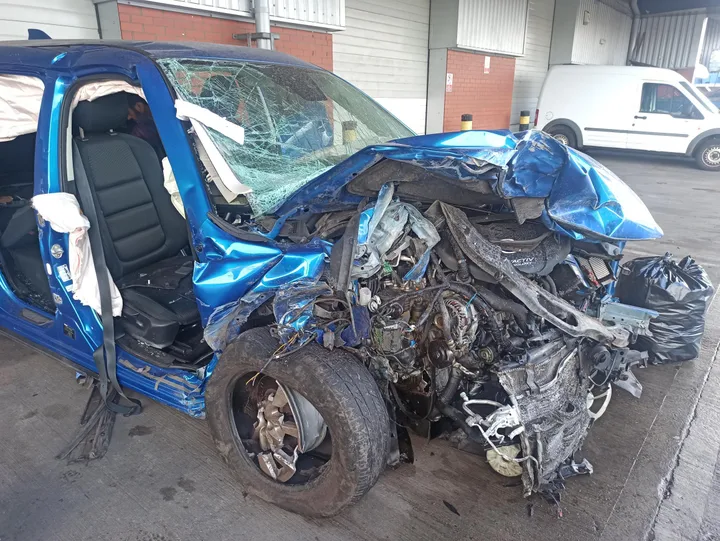
Parents in the UK are being urged to keep their children rear-facing in car seats until they’re at least four years old.
Rear Face For Safety said children are up to five times safer travelling rear-facing than forward-facing and is trying to raise awareness of this to save lives and prevent life-changing injuries.
Jenny Everson has firsthand experience of the power of rear-facing. She was driving along a 50mph road in December 2023, when a speeding driver crossed through a gap in the central reservation and collided head-on with her car.
Jenny and her mother, who was travelling in the front passenger seat, were both knocked unconscious by the impact and suffered serious injuries which required lengthy rehabilitation in hospital.
But Jenny’s son Marlo, who was almost three at the time and travelling in a rear-facing car seat, escaped with only minor injuries.

“Had it not been for Marlo’s rear-facing seat, I was told by emergency services he likely wouldn’t be here now,” Jenny said.
“I will be forever grateful I did my research as I’m sure his seat saved his life, or at the very least saved him from serious injury.”
She is now on a mission to raise awareness of the importance of rear-facing seats, adding that “if telling our story helps save just one child’s life, then it’s worth it”.

Why is rear-facing safer?
In the UK, it’s a legal requirement for babies under 15 months of age to travel rear-facing. This is because infants’ heads are proportionally heavier than older children’s compared to their bodies, so their necks are more delicate.
According to Halfords, having the car seat in a rear-facing position protects them better in the event of a crash. Yet a 2024 survey by the retailer found nearly a quarter (22%) of parents are breaking the law by having their infant forward-facing.
Some parents switch to forward-facing once their children’s legs become longer or when they become toddlers. But experts want to challenge this view.
They stress that in a frontal collision, rear-facing seats offer enhanced protection for a child’s head, neck and spine by distributing crash forces across the back of the child car seat.
The NHS-run Bedfordshire Luton Children’s Health Service recommends for children to use a rear-facing seat until they’re four years old as they have “less developed skeletons”.
Dr Maria Klingegård, traffic safety researcher at Folksam, said: “Children are not just small adults. They need extra support. A rear-facing child restraint system provides robust protection that is forgiving for misuse, offers synchronised support for the head and torso, and protects the neck.”
She highlighted how Sweden has “among the lowest fatality rates for small children in cars”, which she claimed is “largely because most parents use rear-facing restraints for older children up to four or five years of age, or longer”.
Data suggests around 22% of UK children aged two to four travel rear-facing, compared with 83% in Sweden.
Dr Neale Kinnear, a leading UK behavioural scientist, road safety expert and father-of-two, said: “Many families in the UK remain unaware of the safety benefits or assume that turning children forward-facing earlier is the norm internationally.
“What matters is making sure parents have access to clear, consistent and evidence-based information so they can make informed choices.
“Rear-facing travel is one practical and evidence-informed step that can help better protect children.”
The whole world has been waiting for Christopher Nolan’s The Odyssey with bated breath ever since the project was announced in 2024.
Nolan’s first film since Oppenheimer’s Oscars sweep, The Odyssey is an epic tale of war, love and loss with a stacked all-star cast, and marks the director’s first movie shot entirely with IMAX cameras.
At last, the years-long wait for the British filmmaker’s 13th movie is almost over, with its release now less than two months away.
Excitingly, plenty about The Odyssey is still shrouded in mystery, but here is everything we do know about one of this year’s most talked-about movies…
What is The Odyssey about?
The Odyssey is based on an epic poem by the ancient Greek writer Homer, which follows the King of Ithaca, Odysseus, on his harrowing 10-year journey home after the Trojan War.
Over the course of his voyage, Odysseus battles numerous mythical monsters, including a cyclops as well as sirens and deadly sorceresses, before finally making it back to his homeland and family.
The story predominantly explores the drive to protect one’s family, loyalty and the use of brain over brawn to succeed.

Which stars are in the cast of Christopher Nolan’s The Odyssey?
It’s no great surprise that A-listers are queuing up to work with Christopher Nolan, and the cast of The Odyssey is a real who’s who of Hollywood.
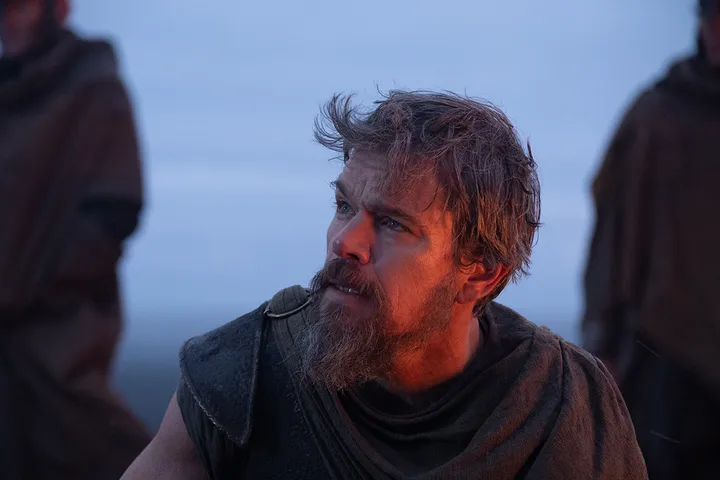
Matt Damon is taking on the lead role as Odysseus, with Anne Hathaway playing his wife Penelope and Tom Holland appearing as his son Telemachus.
Robert Pattinson will play Odysseus’ rival Antinous, a suitor for Penelope, and is joined by his Dune and The Drama co-star Zendaya, who will be playing the Greek goddess Athena.

Also playing pivotal characters are Charlize Theron as the sea witch Calypso, and Lupita Nyong’o, who is also set to play both Helen of Troy and her sister, Clytemnestra.
Rapper Travis Scott also appears in the film, playing a poet figure, with Mia Goth portraying the maidservant Melantho, John Leguizamo appearing as Odysseus’ friend Eumaeus, The Bear’s Jon Bernthal playing Spartan king Menelaus and The Smashing Machine director Benny Safdie taking on the role of Menelaus’ brother Agamemnon.
Rounding out the cast are Minority Report’s Samantha Morton as the mythical Circe and Yesterday’s Himesh Patel as Odysseus’ second-in-command, Eurylochus.
Logan Marshall Green and Elliot Page are also in the film, although neither’s role has been officially revealed.
Christopher Nolan fans will know the director has a penchant for working with the same actors across different projects, and many of his The Odyssey actors have appeared in his past movies.
Anne Hathaway starred in both The Dark Knight Rises and Interstellar, while Matt Damon also appeared in Interstellar, as well as Oppenheimer.
Robert Pattinson and Himesh Patel both appeared in Tenet, while Elliot Page worked with the filmmaker back in 2010’s Inception and Benny Safdie had a minor role in Oppenheimer.

What has Christopher Nolan said about The Odyssey?
Compared to many of his peers, Christopher Nolan is known for his love of practical effects and shooting out in the real world, rather than relying on CGI and green-screen technology.
The Odyssey will be no different, with the cast shooting in locations as varied as Scotland, Morocco, Italy and Iceland.
“By embracing the physicality of the real world in the making of the film, you do inform the telling of the story in interesting ways,” the Dunkirk filmmaker told Empire in November last year. “Because you’re confronted on a daily basis by the world pushing back at you.”
During a recent appearance on The Late Show back in May, Christopher told Stephen Colbert that he considered The Odyssey to be the original Marvel movie.
He claimed: “Even comic book culture, whether you’re talking about Marvel or D.C. or all the rest, a lot of it comes directly from the Homeric Epics.
“The thing about Homer is, nobody knows if that was a person. Homer, in a way, is the sort of George Lucas of his time.”

When asked what made him want to adapt The Odyssey for the big screen, he admitted that a subplot involving Odysseus’ dog Argos had really stood out to him.
He explained: “I’m a new dog owner. I’d never had a dog growing up. I didn’t have a dog when my kids were young. We denied that, and then as soon as they left for college, we got a dog.
“They love the dog, too, when they get to visit. I decided to do The Odyssey because it’s the ultimate dog story.”
What has the cast of The Odyssey said about the new movie?
Lead actor Matt Damon teased to Empire back in November that The Odyssey is “exactly what you want [from] a summer movie”, describing shooting it as “the best experience of my career”.
In a more recent interview with GQ, he shared how the film felt more like the big-budget films he made in the early years of his career.
He explained: “It was a really weird movie for me personally in the sense that I had almost a nostalgic feeling the entire time I was making it, because it felt like the movies when I started working. And I know that that’s going away.”
Matt theorised that, because of the way that the industry is headed, The Odyssey could well be the last of its kind.
“I knew that this was the last chance I was going to have to do something like this,” he claimed, adding: “I don’t think people are going to be given the resources to shoot movies that way for much longer.”
Tom Holland also called The Odyssey his “proudest achievement” in an April interview with GQ.

“I can tell you that it is an absolute masterpiece, and I’m taking myself out of that equation. Chris Nolan’s movie is fantastic,” the Spider-Man actor said. “It’s unlike anything that I’ve ever seen before.”
Tom promised fans they are going to be “blown away by the set pieces and sequences,” thanks to the scale of Nolan’s film.
“I was absolutely blown away by the scale, the scope, his ability to navigate such an intricate and heartfelt story in the middle of this insane kind of action movie,” he enthused.
Charlize Theron also backed up Matt and Tom’s comment about the filming experience.
The Oscar winner told Elle that making the Greek epic was “one of the best experiences that I’ve ever had”, stating: “All of us had a certain personality of wanting to push harder. And when you put a group of those kinds of people together, it’s pretty amazing what they can accomplish.”
And rewarding though the experience might have been, the stars have made no secret of the fact that the shoot was an especially tough one.
Matt admitted to GQ in June: “Every time we’d go somewhere, we’d be like, ‘Well, Iceland will be easier’. And then it’s raining sideways and it’s fucking freezing. Iceland was like, ‘Yeah, easy? Hey, hold my beer’.
“I’ve never seen people look so exhausted,” Robert Pattinson added about the experience in the same GQ article. “And this was only a third of the way.”
He continued: “I started a third of the way through the movie, and they’d already been to [two] countries by that point and people just looked like… I mean, at the end of every day people were broken.”
Some critics have already taken issue with The Odyssey’s historical accuracy

As soon as The Odyssey’s first trailer dropped in December, sceptics wasted no time pointing out how historically incorrect they felt the armour and costumes looked.
In a Time interview from May, the director responded to his detractors, insisting that his research was thorough when putting together The Odyssey, and pointing out that our knowledge of the Bronze Age is based on “very fragmentary archaeological records”.
He said of the cynics: “Hopefully they’ll enjoy the film, even if they don’t agree with everything. We had a lot of scientists complain about Interstellar. But you just don’t want people to think that you took it on frivolously.”
There was also some discourse during filming, when the director’s location choices were met with backlash.
Matt Damon and Zendaya were reported to be filming a sequence in Dakhla, a city in the Western Sahara that has been under Moroccan occupation for the last 50 years.
María Carrión, the executive director of Western Sahara International Film Festival, accused the director, his actors and his crew – whether knowingly or unknowingly – of “contributing to Morocco’s repression of the Sahrawi people and to the Moroccan regime’s efforts to normalise its occupation of Western Sahara” by filming in the region.
While the filmmaker has not directly responded to these comments, The Guardian has claimed that The Odyssey’s shoot in Dakhla was completed in around four days, and was already over by the time the festival organisers raised their concerns.
Although some were concerned with the costume and location choices of The Odyssey, there’s also been a separate backlash centred on its casting.
Some online commentators have questioned why a movie based on Homer’s Greek epic appears to have no Greek actors confirmed in the principal cast.
Greek City Times even published an open letter which argues that Greek people are being ignored in a story so deeply rooted in Greek culture, history and identity.
Similarly, the decision for all of the characters to speak in American accents was one that raised eyebrows.
Unfortunately, The Odyssey has also been met with racist backlash over its casting

Meanwhile, certain right-wing parts of the internet regrettably exploded when it was revealed that Lupita Nyong’o would playing Helen of Troy, described in mythology as “the most beautiful woman in the world”.
One such critic was Elon Musk, who has spent the last few months complaining on social media about Lupita’s inclusion.
“Casting a Black woman to play a White woman in a foundational work of European literature is no more right than casting a White man to play Shaka Zulu!” the X owner claimed, referring to the South African king, while also Elon branding Nolan “an anti-White racist”.
Right-wing commentator Matt Walsh claimed in another X post that “not one person on the planet actually thinks that Lupita Nyong’o is ‘the most beautiful woman in the world,’” despite the star being named People’s Most Beautiful Woman after first rising to fame.
Lupita has since addressed the racist backlash, reminding those who have an issue with her casting that The Odyssey is a “mythological story”.
“Our cast is representative of the world. I’m not spending my time thinking of a defence,” she told Elle in May 2026. “The criticism will exist whether I engage with it or not.”
She added: “It spans worlds. So that’s why the cast is what it is. We’re occupying the epic narrative of our time.”
Nolan praised the Oscar-winning actor during the same article, enthusing: “The strength and the poise were so important to the character of Helen. And Lupita makes it look effortless.
“I’m sure there’s a tremendous amount of discipline and training that goes into projecting that kind of poise and feeling the emotion bubbling beneath the character, the layers of the character right there underneath.”
Has The Odyssey been adapted for the screen before?
While Christopher Nolan’s take isn’t the first adaptation of Homer’s The Odyssey, it looks to be the biggest and most epic adaptation to date.
Kirk Douglas previously starred in an Italian version of the story in 1954 called Ulysses, while the Coen brothers’ 2000 musical-comedy O Brother, Where Art Thou? turned Odysseus into an escaped prisoner in the American South.
The most recent adaptation of The Odyssey came in 2024, with the film The Return.
Starring Ralph Fiennes and Juliette Binoche, the movie covered only the last act of the story, depicting Odysseus pretending to be a suitor to win his wife back – and killing the men trying to pursue her.
When will The Odyssey release in cinemas?
Mark your calendars – Christopher Nolan’s take on The Odyssey will hit theatres on July 17 2026.
Is there trailer for The Odyssey?
There certainly is. Give it a watch for yourself below:

Trump Trump Trump Trump Trump Trump Trump (Trump!)
Everywhere I go, they love Donald Donald Trump
Down in Mexico, they love Donald Donald Trump (Trump!)
Flew to Italy, they love Donald Donald Trump (Donald, Donald Trump!)
In the Middle East, they love Donald Donald Trump (Trump!)
Met some Africans, they love Donald Donald Trump (Trump!)
Even in China, they love Donald Donald Trump (Trump!)
Man, these Indians, they love Donald, Donald Trump (Donald, Donald Trump!)
Trump, Trump, Trump, Trump, Trump, Trump, Trump (Trump!)
Everywhere I go, they love Donald Donald Trump (Trump!)
Trump, Trump, Trump, Trump, Trump, Trump, Trump (Trump!)
Everywhere I go, they love Donald Donald Trump (Donald, Donald Trump!)
Man, I gotta say, I love Donald Donald Trump (Trump!)
Might be president one day, just like Donald, Donald Trump (Just like Donald Trump!)
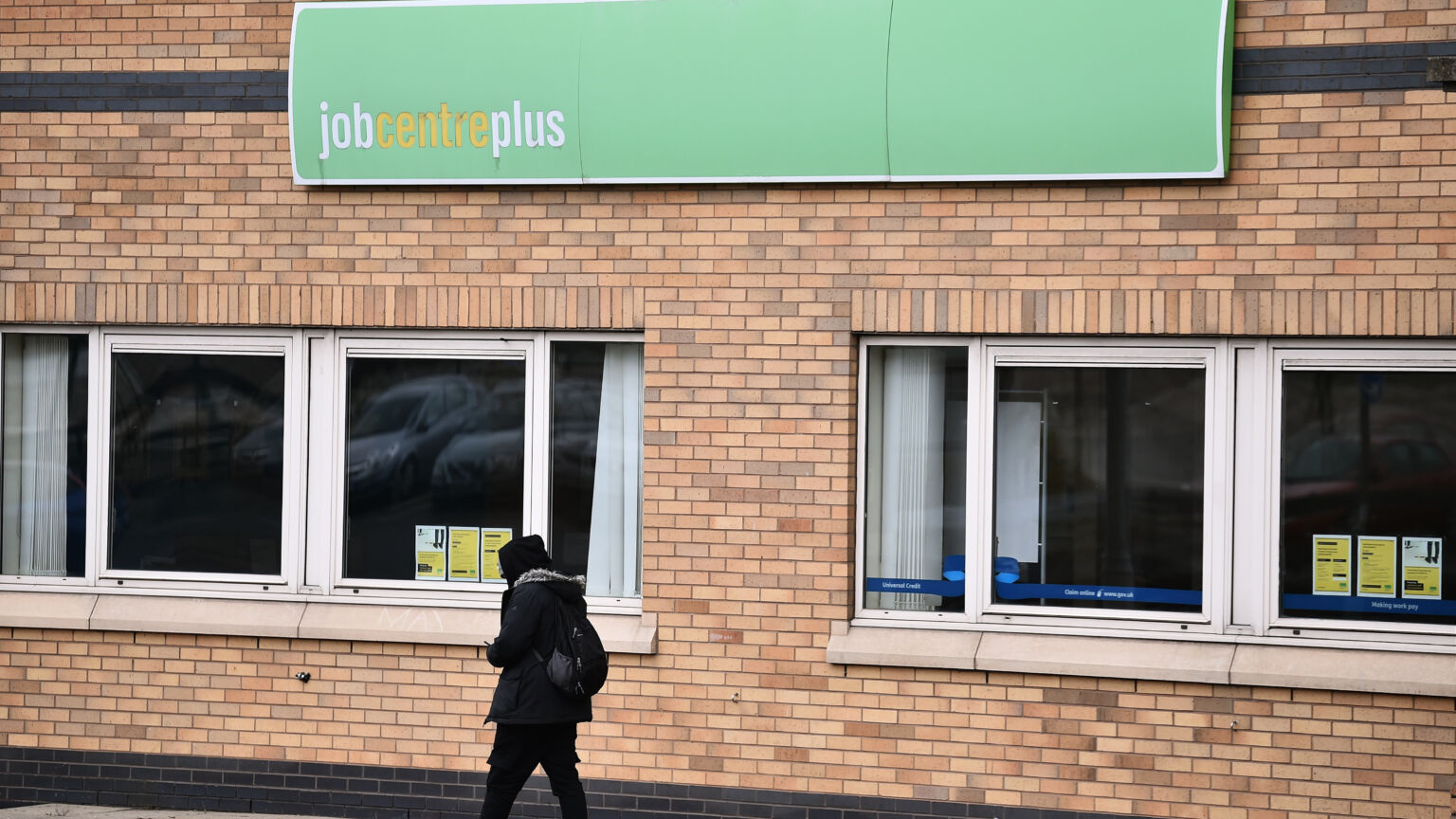
Alan Milburn’s recent report on youth unemployment in the UK makes several worrying observations. A health secretary under Tony Blair’s government, Milburn was commissioned by the current government to lead an investigation into the soaring rates of young people who are not in education, employment or training (NEET). The 220-page interim report – ‘Young people and work’ – was the result.
Milburn tells us that the number of NEETs has risen to more than one million – the highest level in 12 years – and that 60 per cent of all NEETs have never worked. This rise is costing the UK taxpayer an estimated £125 billion a year. These shocking figures are attributed to a mental-health epidemic among the youth and the changed world of work. Therefore, Milburn argues, the government needs to provide less onerous pathways into work.
The diagnosis and solution offered by Milburn are both wrong. Today, youth unemployment stands at between 12 and 16 per cent, depending on how you calibrate the figures. When I began work as a careers adviser in the early 1980s, in many parts of the UK, this figure was 50 per cent. Although today far more school leavers go on to higher education, making it difficult to draw direct comparisons, what is incontestable is that of the one million NEETs, over 600,000 are classed as ‘not actively looking for work’. In the 1980s, this category was unheard of, as the young had no choice but to take up the offer of a place on the Youth Opportunities Programme or Youth Training Scheme, or risk having their payment of between £14.30 and £20.55 a week (age dependent) withdrawn indefinitely.
The other significant change is that today’s NEETs are claiming that they cannot work because of one or a variety of mental illnesses. Milburn says that those who say they are NEET due to a ‘work-limiting health condition’ – such as anxiety, depression and stress – has risen by 70 per cent in a decade. Although he acknowledges that the welfare state pays disability benefits that are higher than the minimum wage, he resists the obvious conclusion that such an arrangement incentivises claiming to have disability at the expense of taking work.
Instead, Milburn says that there are not enough jobs for the young, and those that do exist are difficult to get or too demanding for this cohort. Essentially, it is taken for granted that this generation is less resilient and less competent than their predecessors. Milburn ignores the growing evidence that shows the increasing difficulty employers have in getting many young people to show any kind of commitment or work ethic at all.
Many of the 705,000 jobs currently being advertised are in areas that do not pay well, such as social care and retail. It is also reported that the applicants for these jobs are overwhelmingly from non-EU countries. It seems that those who were educated differently, in more traditional cultures, have a better work ethic than British youth.
Numerous employers have also testified to the low number of applicants or the high proportion of no-shows for interviews – not only for entry-level jobs, but also for apprenticeships and other training opportunities. Others insist that many young people lack initiative, drive and resilience, and too often cite mental-health concerns when faced with the demands of the workplace.
This is not entirely the fault of today’s youth. It is largely a result of how they have been brought up and the values of modern society. Education’s focus on pupils’ mental health and wellbeing is a root cause of our failing work ethic.
The current generation of 18- to 24-year-olds is the first full cohort to be educated wholly under the changes made to school education in Scotland through the Curriculum for Excellence and the Social and Emotional Aspects of Learning in the rest of the UK. Under these changes, education has become much more about validating a pupil’s emotional outlook than giving them the knowledge, and with it the confidence, to go out into the world and make something of themselves.
These developments in the curriculum were underpinned by a cultural change in society where psychological fragility was celebrated. This ethos of frailty has become a central facet of how young people now understand themselves and the relationships they build with the wider world. In Scottish schools, a record 299,445 pupils are registered with Additional Support Needs, equating to 43 per cent of the total student population. In education, as in work, personal vulnerabilities have become the primary consideration.
The accommodation of vulnerability is reflected in the welfare state. The Personal Independence Payment in England and Adult Disability Payment in Scotland are awarded to claimants who can show they have lowered living or mobility functionality. Benefit penalties only really apply to those who are actively looking for work and receiving the Job Seekers Allowance, the value of which has dropped – in 2010 it was worth £98 per week, but now is only worth £91 per week in real terms. In short, claimants get more money and less hassle by not looking for a job. Working is actively disincentivised.
None of this is to deny that there is a significant lack of good quality jobs in the UK – red tape, regulations and high tax rates have certainly led to a lack of entry job opportunities for the young. Yet the question remains – even if there were good jobs, would today’s youth bother to do them?
That is the heart of the issue – and the question Alan Milburn’s report fails to answer.
Dr Linda Murdoch is a retired director of careers at the University of Glasgow.
The mysterious new horror film Backrooms hasn’t just been a hit at the box office and with critics, it’s also one of the most talked-about films in the world right now.
Kane Parsons’ directorial debut stars Chiwetel Ejifor as a disillusioned man who stumbles upon an alternate universe through the basement of a furniture store, and tries desperately to get his therapist, played by Renate Reinsve, to see things his way.
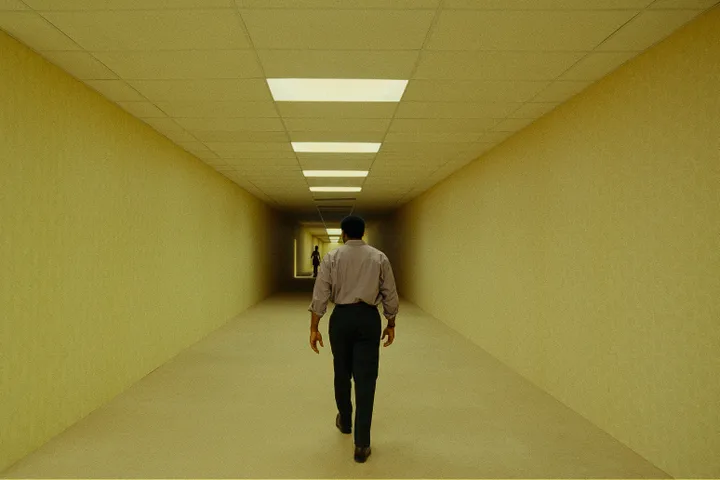
Backrooms has a completely distinct visual style that has made it immediately iconic, and considering how many people on both sides of the Atlantic have been flooding cinemas to see it, many will no doubt be contemplating exactly how the movie came to be.
Here are 17 facts you probably didn’t know about the making of Backrooms…
1. Backrooms’ journey to the big screen was a surprisingly long and winding one
Rather than being an adaptation of a book, TV series or even video game, Backrooms started life as a viral photo.
Back in 2019, 4chan members asked fellow users to submit “disquieting images that just feel ‘off’”, with one response featuring an image of an environment similar to the one seen in the film Backrooms, showing a sprawling empty space in the back of a furniture shop.
Shortly afterwards, an anonymous user in the same thread submitted a potential origin story for the space, which read:
“If you’re not careful and you noclip out of reality in the wrong areas, you’ll end up in the Backrooms, where it’s nothing but the stink of old moist carpet, the madness of mono-yellow, the endless background noise of fluorescent lights at maximum hum-buzz, and approximately six hundred million square miles of randomly segmented empty rooms to be trapped in.
“God save you if you hear something wandering around nearby, because it sure as hell has heard you.”
The photo and accompanying text then became widely shared across message boards like 4chan and Reddit, becoming its own “creepypasta” (a term that basically refers to a viral meme that’s more scary than funny).
People then began putting their own spin on the concept of the “backrooms”, with Kane Parsons starting a hugely successful YouTube series created using the design software Blender, which is how he caught the eye of production company A24.
One other key adaptation of the “backrooms” trend came in 2024, when an episode of the stand-alone anthology series American Horror Stories brought the concept to the small screen.
2. When A24 first began speaking to director Kane Parsons, it wasn’t a film that he had in mind
“Initially, the hope on my end was TV,” Kane told YouTuber Patrick Tomasso.
He also shared that the “TV show I would have been pitching is not at all the same narrative that this movie is”, and made it clear that he’d still be up for pursuing that previous idea for a series in the future.
3. To create the world of Backrooms, Kane Parsons created that seemingly endless set of rooms for real

First designed using Kane’s go-to tool Blender, the production design team then put together a veritable maze of generic, mono-coloured rooms that spanned a whopping 30,000 square feet.
“I always maintained that I want to go as practical as possible, and we did,” the director told Interview magazine.
“So the vast majority of what you see in the film is built sets. Anytime a character is physically walking on the floor, it’s a real floor. Anytime they’re physically touching a wall, that’s a real wall.”
He added: “Most of the time, if you were on the set, you could stand in the middle of it, do a 360-degree turn, and not see any blue screen and not see anything that breaks the facade of actually being there.”
Production designer Danny Vermette compared the process of piecing each of the rooms together on set to a game of Tetris, telling IndieWire: “We had to go in and measure every square inch of all four sound stages to make sure that we had the room to build and then figure out the Tetris plan of how those sets are gonna fit.”
4. Apparently, Kane Parsons originally wanted the set to be even bigger than 30,000 square feet
Danny told Architectural Digest that when Kane sent his original Blender plans over “it was something like 100,000 square feet”.
“It crashed my computer,” he then admitted.
5. Being in a physical space on set helped the Backrooms cast really get into their characters’ mindsets

“We wanted it to be awkward and to throw our actors into a world of discomfort, in a sense,” Danny told IndieWire. “Whether it’s crawling through a small space or crawling up a ramp and really sell that we’re in the middle of levels, that there’s multiple levels.”
Clearly it worked, with Chiwetel telling Playlist that being on set was “a kind of psychological torment”.
“You can definitely feel that disconnect with reality and that creeping dread when you’re in there, and that sense that if you were in here endlessly, just what that would mean to your mind,” he recalled. “It’s not a place that is very forgiving for your psychology.”
6. And yes, the cast and crew often got lost while trying to navigate the Backrooms set
Chiwetel told YouTuber John Feitelberg: “We had a huge set, and we were wandering around, getting lost, trying to figure our way through it. It was great to have it as a physical space.”
In his IndieWire interview, Danny also recalled: “On some of the stages there’s five or six sets. So, it was day to day. It wasn’t just the first day people getting lost.
“They’d been out shooting in the real world, and then they come in [on the sound stage], and the sound guy hadn’t been there, and the camera crew hadn’t been there. And sure enough, you hear ‘Hello? Hello?’. Like, the sound guy’s lost, and he went in the wrong entrance…”
7. Finding the perfect shade of yellow for the Backrooms set was no mean feat
“We did a lot of tests there to make sure we were getting the general tone that people expected [from] Backrooms,” Kane admitted to Creative Bloq. “We did 50 wallpaper tests to get the right shape of yellow.”

8. As the shoot went on, certain parts of the Backrooms set could be dismantled and rearranged for other scenes
“We started cannibalising parts from other sets and reshaping one of our main stages and adding extra walls,” Kane told Interview. “So it took on a new form and a new layout.
“By the last day, most of the sets were butchered and a lot of the walls were gone and it was in disarray.”
Conversely, other rooms never got used in scenes at all, but they were still important as they would loom in the background, adding to the overall eeriness of the piece.
“There’s definitely areas in the sets that are not used, although technically, each set is at least somewhat shot,” the filmmaker revealed to the horror outlet Dead Meat.
9. With Kane Parsons preferring to lean on practical effects rather than computer-generated imagery, VFX was mostly used only in the film’s ‘found-footage’ sections
“By and large, what you see in the film is what it felt like to be there,” he told Interview.
“The only places where we do run into VFX would be the stuff that is obviously impossible to build, some of the massive spaces and whatnot.”
He added: “I do love VFX, so I don’t consider it a weakness to leverage them to a certain extent. And then, in the found footage sections, a decent bit of that was done in Blender.”

10. The idea of incorporating generative AI was never really in the question
“I would never lean in a generative AI direction, and I’m personally in opposition to the use of it in the creative workforce, outside of automating menial tasks,” Kane relayed to Interview.
Elaborating further to Variety, he claimed: “[Like] most well-adjusted people […] if I could snap my fingers and make generative AI disappear forever, I probably would. Creatively, I get no enjoyment from using those tools. It defeats the purpose entirely for me.”
Some viewers have suggested that parts of Backrooms are actually an analogy for AI, though Kane has never made this intention clear directly.
11. How exactly did they pull off that ‘noclipping’ effect?

Well, it turns out it was more practical than you might have realised.
“We have a portal for the camera and a portal for the actor [and] we have a plug that goes back in, so once the actor’s through, the wallpaper plug goes back up with a seam,” Danny told IndieWire. “It’s fixed in post, there’s seam repair there…”
He continued: “And to rotoscope that, when their hands are going through, moving at a slow pace, that’s incredibly challenging, but they did such a great job with it.”
By the way, “noclipping” is a gaming term that refers to a glitch or cheat code that allows users to pass through walls and other obstacles, which is featured in the original backrooms “creepypasta”.
12. Backrooms is set in Southern California, but was shot in Vancouver, which did raise some issues for the team
During an interview with BuzzFeed Canada, Kane claimed that “the zoning” of Vancouver made it a unique setting for his film.
“I don’t know if ‘liminal’ is the right term for Vancouver, it might actually be the opposite,” he said. “I find [the city] very compelling and interesting [visually], but also horrible when it comes to casting the location as Southern California, when ever single building in the suburbs is a completely different architectural trend and design.
“There’s no consistency in any given neighbourhood for the most part. So, you get a brick castle next to a 2016 YouTuber mansion next to just a cube.”
13. There’s a very sensible reason Kane wanted the Backrooms film to be set in the 90s, as was his YouTube series
He told Dazed that being in the 90s makes Backrooms feel “far away in time”.
But also, on a more practical level, he needed it to take place in a pre-internet time, because “it would be far easier to uncover the nature of this place” if the characters had access to iPhones.
14. Backrooms’ ‘camcorder’ scenes definitely feel realistic – but they were actually all shot on modern tech
Kane told Patrick Tomasso that he and his team “do authentically run [what they’ve recorded] through a VCR” to give it a 90s feel, but “it’s all digital”.
“There’s a version that exists where it’s all crystal clear, 4k high quality,” he revealed. “But then after the fact, we reconform the footage to become more fitting of the actual vehicle.”
Elsewhere in the interview, he shared: “Generally speaking, the conversion process is true to the camera – I would never go and do a VHS filter on top of things. We colour grade a lot before and after the conversion, to play into the cultural expectation of that media.”
15. ‘Lore’ was something Kane Parsons was careful not to be too wrapped up in when it came to bringing Backrooms to the big screen, but he did have a few simple rules for keeping things consistent

Speaking to Dead Meat, Kane noted that “because the backrooms is obviously a pretty public concept”, there are “a lot of different interpretations”, some he feels are not as “effective” as others.
He particularly takes issue with the “inclusion or over-reliance on non-euclidean geometry and whatnot”.
Kane explained: “That’s a preference – you can pull it off and it can be great, but I feel as though there’s something I like quite strongly about the backrooms feeling like a building built by people and then it’s just the certain construction choices that don’t make a lot of sense.
“[That could be] a hallway that’s slightly too narrow or a crevice that you couldn’t even fit a desk in, so why is it there in the first place? Stuff like that. It [should get more] absurd and impossible through your continued exploration and probing of it, rather than an immediate ‘walk this way and walk back and shit this is a different room’.”
“I think it’s scarier to me thinking that you end up getting lost in there wandering for a while, knowing that you can backtrack,” he continued. “I feel like if the environment is immediately changing all around you, you lose the game too quickly.”
16. What was that seagull all about?
Forbes has pointed out that in the olden days, seagulls were considered a bad omen among sailors, and that it was particularly bad luck to kill one. This, of course, plays up to the sailing iconography scattered throughout the film, most notably in Clark’s furniture store.
Offering a more vague explanation, Kane told Polygon: “I would say there’s a significance to picking seagulls. Birds evoke a certain kind of imagery that we wanted to be evoking.
“But without explaining the thought process fully — logically, there’s nothing that would prevent anything from getting in there. Logically, literally anything that could walk through a wall could end up in that place. Birds and flies and humans just so happened to be some of the more unfortunate ones in this film.”
“The implication inside the film — I’m not going to be cute about that for a second — the implication when we see the birds is yes, they came from outside,” he added, although he added it “very well could be” a backrooms creation, too.
17. There is a good reason why there’s so much pirate imagery in the film…

Unfortunately, Kane just doesn’t feel like sharing it right now.
“It was a pirate from the beginning,” Kane told Dead Meat. “I won’t say more, but I think people will dig into it. I think symbolism can be a crutch a lot of the time, and I wouldn’t ever lead with it… but there’s some specific reasoning behind the pirate steering wheel and ocean and all that.
Backrooms is in cinemas now.

Pete Hegseth has been condemned after he used a D-Day commemoration to accuse Nato countries of not doing enough to tackle illegal immigration.
The US defence secretary was branded “an absolute bum” after saying “European beaches are [being] stormed by different, dangerous ideologies”.
Critics said his comments, at the Normandy American Cemetery in north-west France on the 82nd anniversary of the D-Day landings, were disrespectful to the memory of those who died in the Second World War.
Nearly 4,500 Allied troops were killed attempting to liberate Nazi-occupied France on June 6, 1944.
Hegseth said: “Sadly, today, different European beaches are stormed by different, dangerous ideologies. Beaches in Spain, Italy, Greece and Bulgaria, boats and men arrive.
“When will European capitals do something about that invasion or is it too late? I pray not, and I believe not.”
But his comments sparked a furious backlash on social media.
Former Labour MP Jamie Reed said Hegseth was “a bum with wet hair and a suit that doesn’t fit”.
The row comes after US vice-president JD Vance sparked anger by blaming “the mass invasion of migrants” for Henry Nowak’s murder.
The 18-year-old was handcuffed and arrested by police as he lay dying after being wrongly accused of racism by his killer, Vickram Digwa.
Digwa, who is Sikh, was jailed for life with a minimum term of 21 years at Southampton Crown Court last Monday.
Responding to Vance’s comments, a No.10 spokesperson said: “In recent days we have seen people trying to interfere in our democracy and seeking to stir up division on our streets.
“The Nowak family are grieving after Henry’s horrific murder. They have said they do not want his death to be used to create further division, hatred or tension. We should be respecting their wishes.
“Our politics should bring people together even in the most terrible of circumstances. That is who we are as a country.”
Subscribe to Commons People, the podcast that makes politics easy. Every week, Kevin Schofield and Kate Nicholson unpack the week’s biggest stories to keep you informed. Join us for straightforward analysis of what’s going on at Westminster.

17 Loose Zara-Style Dresses on Amazon for Women Over 40

Predator EXPOSED On Financial Audit
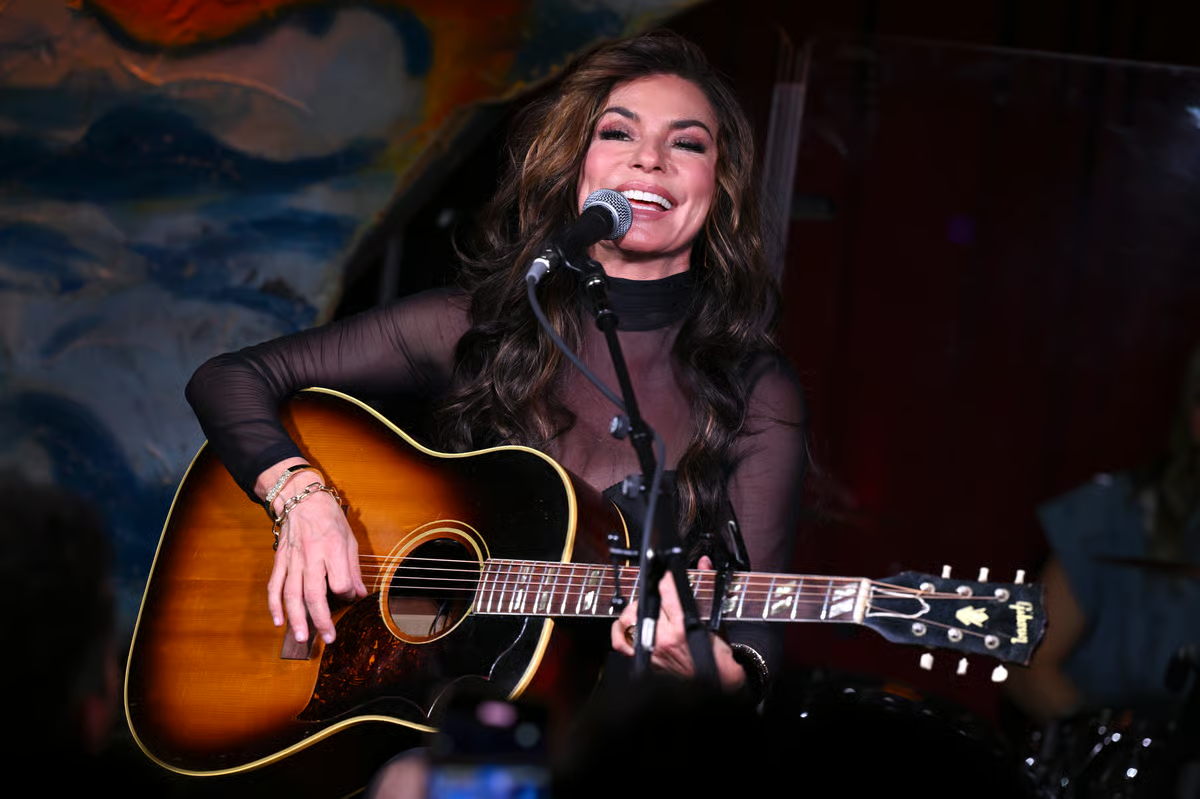
That did impress me much: Shania Twain stuns fans at intimate east London pub gig



-

 Fashion2 days ago
Weekend Open Thread: Evereve – Corporette.com
-

 Business6 days ago
Jade Biosciences, Inc. (JBIO) Discusses Positive Interim Results From JADE101 Phase I Healthy Volunteer Study and Development Plans Transcript
-
 Crypto World2 days ago
Jensen Huang Approves Samsung, SK Hynix, and Micron for NVIDIA (NVDA) HBM4 Memory Supply
-
 Sports5 days ago
French Open 2026 results: Alexander Zverev beats Rafael Jodar and will play Jakub Mensik in semi-finals
-

 Tech5 days ago
CryZENx Releases Fresh Playable Content Deep Inside Jabu-Jabu for His Ocarina of Time Remake
-

 Business5 days ago
Trump Taps Housing Chief Bill Pulte as Acting Intelligence Director After Gabbard Exit
-
Crypto World2 days ago
LBank Surpasses 25 Million Users Worldwide as AFA Partnership Continues to Drive Global Growth
-
 NewsBeat5 days ago
Republicans balk at Trump’s attempt to appoint a MAGA enforcer to lead National Intelligence
-

 Tech2 days ago
RCS Messages Between iPhone and Android Get End-to-End Encryption With iOS 26.5
-
 Crypto World5 days ago
Seagate (STX) Stock Surges to Record High on AI Boom and Legal Settlement
-
 Business15 hours ago
The Pain Points Taking a Fragile Tech Rally Down a Notch
-

 Tech2 days ago
Microsoft launches MXC, an OS-level sandbox for AI agents, with OpenAI and Nvidia already on board
-
 Crypto World5 days ago
EU AI Data Center Project Faces Delays as Funding Gaps Grow
-

 Entertainment5 days ago
Did The Mandalorian And Grogu Already Ruin The Next Star Wars Movie?
-

 Business5 days ago
Aehr Test Systems Stock Soars 17% Amid Surging AI Demand and Conference Spotlight
-
 Business5 days ago
Claude AI Down Today Reason: Why Anthropic’s AI is not working today? What’s the latest quota update
-

 Tech2 days ago
Meta steals a tactic from Tesla and builds data centers in tents
-
 Crypto World2 days ago
Merlin (MRLN) Stock Soars 32% on Major USSOCOM Autonomy Milestone
-
 Tech5 days ago
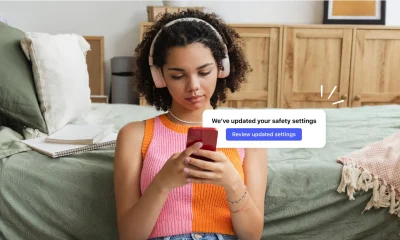
Instagram will stop bombarding teens with the same kind of obsessively unhealthy content
-

 Business5 days ago
Relay Therapeutics Shares Surge 20% on ASCO Momentum for Zovegalisib Breast Cancer Program
You must be logged in to post a comment Login