

Politics
A ‘Plop’ Holiday Could Be A Game-Changer If Travelling Feels Stressful

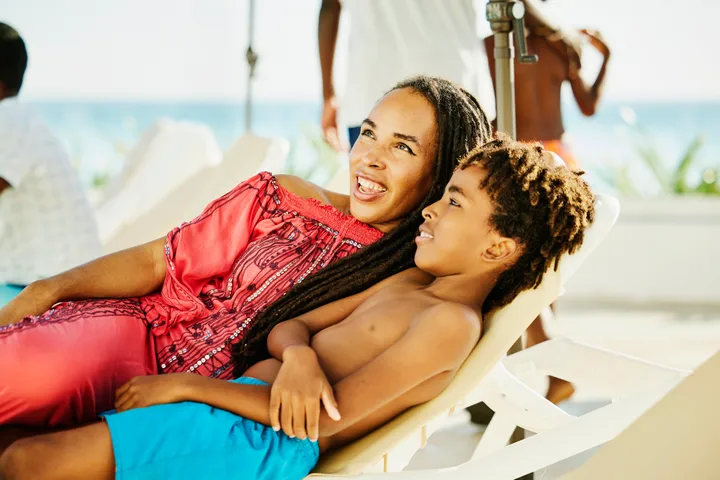
There are trips where you pack every waking moment full of sightseeing, activities and excursions. And then there are trips you spend mostly horizontal: laying in a lounge chair, reading a book, sipping on a cold beverage and occasionally getting up for a dip in the ocean or pool.
The latter is what cookbook author and mum-of-four Caroline Chambers aptly refers to as a “plop vacation.”
A “plop” holiday is one in which you “wake up in the morning and pack a pool or beach bag, and literally plop by the pool or beach for the entire day,” Chambers explained in a comment on an Instagram post from a Mexico trip she and her family took earlier this year.
It’s similar to what folks in the travel world call a “fly and flop,” Chambers, author of the forthcoming What to Cook When You Don’t Feel Like Cooking: Make It Fast, told HuffPost.
“My sister is a luxury travel agent, and I often see her talking about this type of vacation where you fly to a destination and then basically flop down and don’t leave for the rest of the week,” she said. “Some people call it ‘flop.’ I call it ‘plop.’”
Certain travellers might look down on trips that don’t maximise time away by trying to see more, do more, learn more. And that kind of perspective-widening travel does have its benefits. Chambers herself loves “really, really adventurous travel where you are getting off the beaten path, seeing a local community in a way that you never could otherwise,” she said.

Thomas Barwick via Getty Images
But there are also some notable upsides to holidays of the plop variety.
“Sometimes you just need to completely reset your nervous system and not have to deal with any logistics,” Chambers said. “There is no better balm for the soul that is overtaxed by all the daily logistics of running a career and having a house full of kids than plopping down by a pool and having a waiter come take your drink order and bring you lunch by the pool.”
Plop vacations are great for anyone who just wants to rest and recharge their battery. But they can be particularly enjoyable and (relatively) low-stress for people with young kids. Just pack a bag with everything your family needs for the day: “snacks, diapers, toys, all of it, minimising schlepping as much as possible,” said Chambers.
“It allows the parents to actually feel relaxed afterwards because our needs are being taken care of too,” Chambers said. “We can sit by the pool and have a margarita and order our kids’ lunch.”
Kelsey Pomeroy is a content creator who specialises in parenting and travel with kids, and has two young children of her own. When she hears the term “plop vacation,” she pictures “setting it all down and letting it all go, a rare treat in the life of parents to young kids,” she told HuffPost. It’s appealing because “schlepping stuff around is “the bane of [her] existence,” Pomeroy said.
Plopping with little kids in tow is not going to be as tranquil as plopping child-free. But it can still be pretty relaxing.
“A plop vacation is what people imagine when they think of the word ‘vacation,’ and I love the idea that even if it isn’t the same as a vacation was pre-kids, you can still plop and achieve pockets of peace throughout the day,” Pomeroy said.
As Chambers wrote in a post on her Substack, even though your kid is “spilling half of your margarita before you can even take a sip,” she still finds it “very restful and fun.” And if you need some grown-up plop time, you can sign the kids up for camp at the resort or book a local sitter, she said.
As parents and caregivers know, it can sometimes feel intimidating to leave the house – let alone leave the country – with young kids.
“So whether the beat of your family is to run around all day or plop, I love seeing easy frameworks like ‘plop vacations’ making traveling with little kids feel more accessible,” Pomeroy said.


We’ve written before at HuffPost UK about the fact that cloves and capers are both technically flower buds, while figs are technically inverted flowers.
(Don’t even get me started on their horrific historic relationship with wasps).
So, what about vanilla, which comes in a pod? I’ve never quite been sure whether it counts as a fruit, a vegetable, bean, or something else – never mind how it’s actually grown.
Where does vanilla come from?
Vanilla beans are not actually beans – they’re really the unripe fruit of an orchid. So, vanilla itself is a fruit.
The pods grow on the climbing plant of the flower’s vine. This long, thin fruit can grow up to 20cm long and can take up to nine months to mature.
They aren’t harvested when they’re fully ripe, though; vanilla is usually picked when its base turns golden-green.
These fruits barely have any smell when they’re picked. The famous vanilla scent comes from enzymatic reactions in the fruit as it’s cured.
Traditionally, the pods were steamed and cured in the sun for about 10 days before five to six months of drying. This process leads to tiny crystals called vanillin – responsible for that sweet smell and taste – forming on the surface of some pods.
The higher the grade of vanilla, the more of these crystals it may have.
Something similar happens to capers; when they’re cured and/or salted, they release mustard oil and rutin. That leads to their signature tang and the little white spots you sometimes see on their skin.
Why is vanilla so expensive?
The vanilla orchid is hand-pollinated, even to this day.
While they can be pollinated by insects, too, only one tiny species of bee is designed for the task. These don’t live in all the countries that produce vanilla, either.
And it’s not like the bees (or hand-pollinators) have got a huge window to do their jobs, either. Vanilla flowers tend to stay open for just six to eight hours at a time and usually only do so once a year.
Hand pollination is “an extremely tricky process done with a slim toothpick,” Kew Gardens explained.
After that’s done, you have to wait almost a year for a usable fruit.
The long curing process, along with “the practice of manual pollination, makes vanilla one of the most expensive spices (after saffron),” spice and extract company McCormick’s Science Institute said.
Is there fake vanilla?
Yes, lots of it. In fact, I’m now convinced I’ve never eaten real vanilla in my life.
Imitation vanilla is a far cheaper, though arguably less delicious, version of the flavour made from manufactured extracts.
Less than 1% of the world’s vanilla flavour (vanillin) comes from vanilla orchids, Scientific American said.
Other ways to achieve a similar taste involve guaiacol, a fragrant liquid made by distilling wood-tar creosote or tree resin. That’s responsible for about 85% of the world’s vanilla flavour.
And manufacturers use lignin for the rest, a substance found in things like cow manure and wood pulp.
So, Kew Gardens explained, “much of the ‘vanilla essence’ commonly used today is actually made from wood pulp or coal tar”.
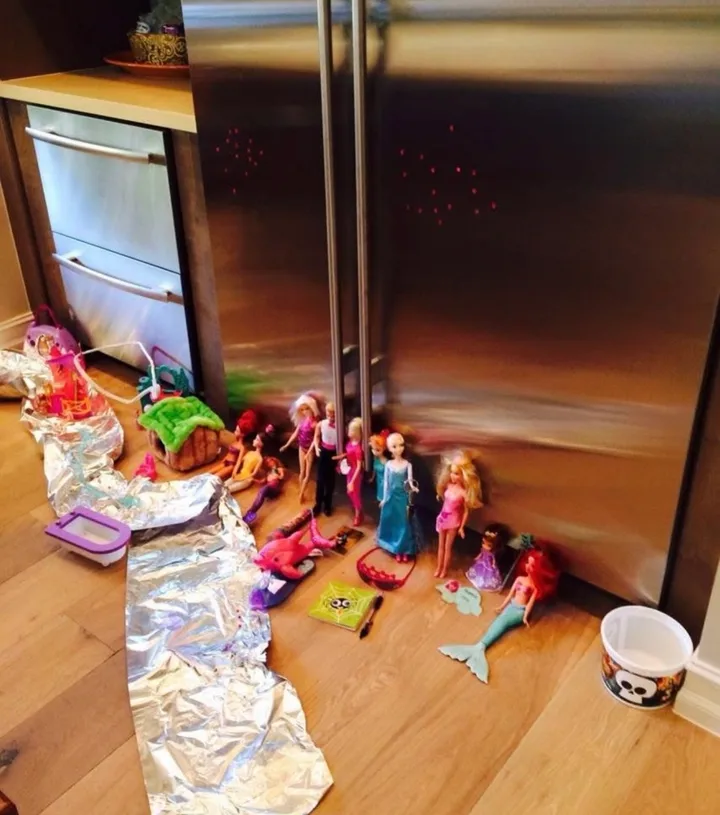
When our daughter was preschool-aged, Princess Ariel dolls littered every room. Our once tranquil interior – a blend of coastal and cottage design – looked like an ill-kept aquarium full of plastic ornaments but no actual fish.
Our child dressed the part, too: Whether headed for the playground or grocery store, her tiny toes poked out beneath a sparkling green fishtail.
As a former clinical social worker, I knew imaginative play served an important role in child development, but I worried about the degree of fantasy we were helping her cultivate. I was also exhausted. While she twirled in a red wig, I was miscast in the role of Prince Eric. My throat ached from forcing a deep voice each day.
One evening, I found rose petals scattered around plastic doll furniture and knew a wedding ceremony was imminent, but I couldn’t bear another moment of make-believe. I begged my husband, Tomer, to take over.
“No way,” our daughter said. “Daddy’s no good at dolls. Mommy’s the best.”
It was a contest I wanted to lose, but never did. Tomer insisted he lacked creativity, but I suspected he was feigning incompetence to gain more personal time. When would I reclaim an adult life? His career was thriving, but I’d traded mine for full-time parenting.
Tomer tried to help out, but when left alone with our kid, he took her shopping for more toys. It was a strategy he employed to avoid actual playtime.
“I can’t sit on the floor,” he said. “It hurts my back.”
One morning, I found scissors beside a life-size styling head and followed a trail of synthetic hair into the bathroom, where red clumps clogged the toilet.
As I plunged the bowl, guilt churned my stomach. After all, I depended on their shopping sprees to catch a break. Determined to change course, I insisted Tomer try something new – maybe an art project – while seated comfortably at the table.
Later that afternoon, laughter echoed from the dining room. Were they crafting? Yes. It seemed a miracle until I looked up and saw toilet paper, probably three rolls of it, dangling from the chandelier.
“It’s a coral reef,” they explained.
Tomer winked. “I did the parts she couldn’t reach.”
Our daughter jumped around. “I did the rest all by myself.”
The “rest” amounted to stacked paper cups and piled pillows. A roll of alluminum foil covered our wood flooring to achieve water’s reflective quality. In the middle of the table was a silver-plated fork.
She beamed. “That’s Ariel’s hairbrush.”
I frowned. “That’s fancy cutlery.”
“That we never used,” Tomer said.
What could I say? The man had done as I’d asked. I went to bed feeling a mix of hope and dread.
By morning, the coral reef had grown. Paper cups climbed the stairs; alluminum foil lined the banister. I could’ve cleaned up or made them do it, but I lacked energy, so the reef kept expanding.

Photo Courtesy Of Jen Gilman Porat
Whatever our daughter didn’t own, she created from found materials. For a mermaid carnival, she sprinkled sugar on lint gathered from the clothes dryer and called it cotton candy. I couldn’t help but feel proud of her resourcefulness; moreover, since the mess was homemade, I thought things were improving.
Then, Disney released a new movie. Tomer took our daughter to see it, and when they returned, she ran straight to the chandelier and ripped off the toilet paper. As Scott Tissue drifted down, our kid shouted, “Let it snow!”
By nightfall, a new cast of characters moved in. For every Queen Elsa, there was also a Princess Anna. A single snowman named Olaf seemed to reproduce despite having no mate. Ariel’s ocean turned to ice, but our daughter still invited mermaids to every “Frozen”-themed event.
When I complained about the new purchases, Tomer pushed back. “It makes me happy to see her happy, and nothing makes her happier than another doll.”
But there was one night that Tomer seemed to share my concern. He came home hungry, peered into the refrigerator, and found nothing but dolls, apple juice and faux food.
“Olaf is hosting an ice cream social,” I explained.
“This is out of control,” he said.
“But look at her creativity.” I pointed at the bottom shelf, where she’d placed a sea monster molded from Play-Doh and green Jell-O.
Tomer sighed and ordered a pizza.
Our marriage dynamic resembled a seesaw. When one of us overindulged, the other would try and contain the madness. Then, we’d swap places all over again. Meanwhile, we never conquered the clutter, and I worried the mess amounted to worse than aesthetic harm.
“What if she ends up caring more about material possessions than human relationships?”
“She’s not going to care about toys forever,” Tomer said.

Photo Courtesy Of Jen Gilman Porat
Time proved him right. In late 2019, our daughter stopped playing. It seemed sudden and felt sad. Then, the Covid-19 pandemic arrived, and we got stuck at home with all those abandoned toys. Like everyone else, we ran low on toilet paper, too. Oftentimes, I caught myself gazing at the chandelier, longing for the backup supply that had once draped down.
Another month into lockdown, I learned through Facebook that a local family’s home had caught fire. Everyone survived, but they’d lost all their possessions.
Our daughter made an announcement. “Those kids need toys, and my toys need kids. I want to give everything away.”
Together, we moved her playthings outside the front door. Our daughter used ribbon to tie makeshift masks over every miniature mouth. She hid lollipops and Post-it notes inside Queen Elsa’s ice castle. “Enjoy! Stay safe!” Tears leaked from my eyes as she kissed each Olaf goodbye.
We watched from the window as a truck pulled into the driveway. Out popped the parents and their three kids. They ran toward the mountain of toys, and what had seemed like too much for one child instantly transformed into the perfect amount to share.
Our daughter grinned. “Look. They’re so happy.”
Her empathy exposed my foolishness. I’d wasted precious years worried that our daughter’s attachment to toys amounted to selfishness, but our daughter had always demonstrated kindness in all of her imagined scenarios. No doll was ever bullied or left out. I’d been focused on the cluttered surface and missed the deeper level where our child had been developing interpersonal skills and moral character all along.
Regret overwhelmed me. I wanted to go back, but of course, time kept moving forward.

Photo Courtesy Of Jen Gilman Porat
More recently, our daughter celebrated her Sweet 16. Before we started decorating, she insisted on removing the final traces of the coral reef: three plush mermaids were still hanging from the chandelier. They’d watched over our holiday meals for longer than a decade.
Today, the mermaid trio sits in my office. Maybe a future grandchild will spark generosity, but for now, they’re all mine. A source of inspiration whenever I’m facing a new challenge, I notice the pastel plushies decorating my bookshelf and am reminded to search for deeper meaning in whatever seems to be taking up too much time and space.
Do you have a compelling personal story you’d like to see published on HuffPost? Find out what we’re looking for here and send us a pitch at pitch@huffpost.com.
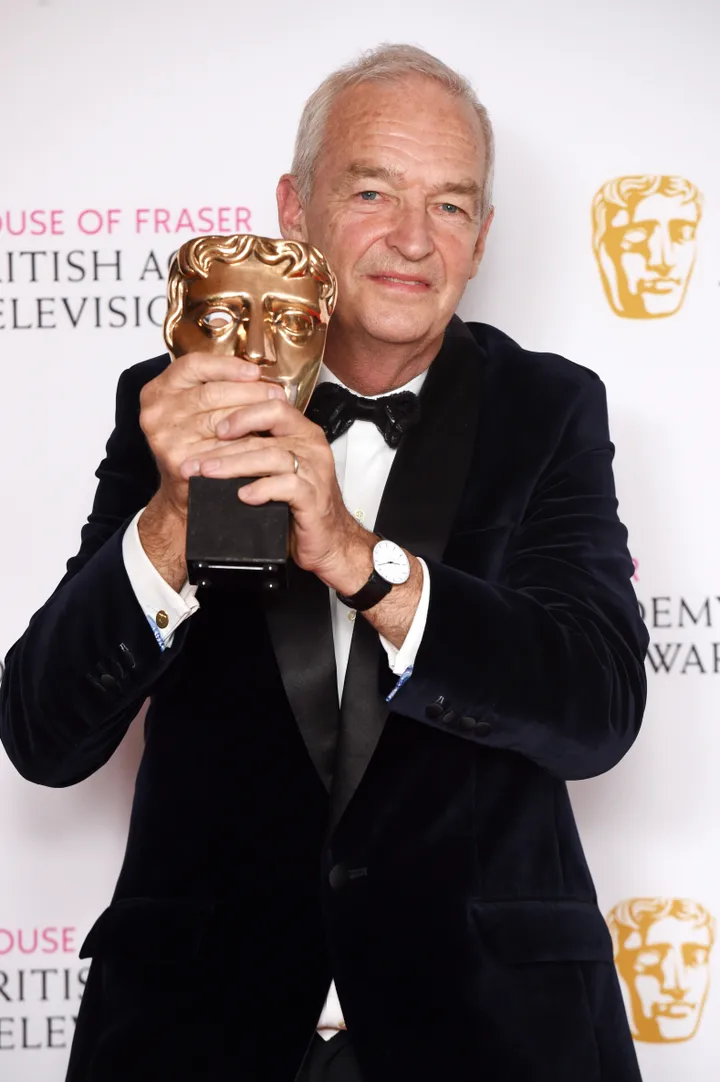
Veteran news presenter Jon Snow has disclosed that he has been diagnosed with Alzheimer’s disease.
The 78-year-old shared during a new interview with the Daily Mail that he was told he had the disease, which is the most common form of dementia, four years ago.
He explained that he wanted to go public with his condition to raise awareness around Alzheimer’s, saying: “If I don’t speak out, who will?”
Jon will dive deeper into living with Alzheimer’s in a new film, Jon Snow: A Last Big Story, which will air on Channel 4 on Saturday 20 June.
Having stepped down from Channel 4 News in 2021, after more than 30 years with the broadcaster, he came out of retirement for his latest project, which saw him investigating the aftermath of a mining disaster in Zambia.
In the film, Jon is heard saying: “At the beginning I wanted to hide [my diagnosis], there’s so much prejudice. Any sort of hint of mental decay, you’re sort of dead.
“There are moments when it pops up but it’s not an all day every day condition, and that’s what I cling onto.”

David Fisher/Shutterstock
Jon’s wife, Dr Precious Lunga, said: “Life doesn’t end with an Alzheimer’s diagnosis, but it changes dramatically. You can have Alzheimer’s and still be a valuable member of society but you need support to navigate it.”
The Bafta Fellowship recipient began his career in journalism at LBC in the 1970s, before he moved to ITN, serving as its Washington correspondent and diplomatic editor.
In 1989, he then made the jump to Channel 4 News, where he remained until the early 2020s.
The CEO of Alzheimer’s Society, Michelle Dyson, said: “Jon’s decision to talk publicly about his dementia diagnosis is a real act of courage and his story will resonate with so many.
“His support for Alzheimer’s Society will help spark a national conversation about dementia that we so desperately need. Despite being the UK’s biggest killer, dementia is still not treated with the same urgency as other major health conditions like cancer.
“Alongside his wife Precious, Jon is shining a light on the need for faster, fairer access to diagnosis. An early diagnosis can unlock vital support, help families plan ahead and potentially open the door to participation in clinical trials.
“Yet too many people across the country are still waiting far too long for a diagnosis. We look forward to working with Jon, whose long-standing commitment to speaking out against injustice will help ensure the harsh realities of dementia cannot be ignored by the UK Government and the NHS.”
On 2 June, Nigel Farage gave a speech in which he called on Britons to react with “pure, cold rage”. He said this in response to the conviction of Sikh murderer Vickrum Digwa, and to a recording of how the police treated his victim Henry Nowak. On the same day that Farage made his speech, a white riot erupted in Southampton; since then, Sikhs have face increased harassment.
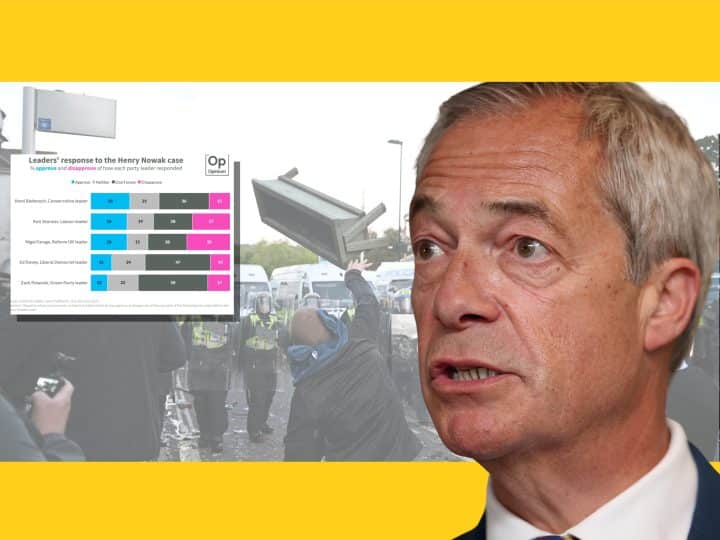
Clearly, Farage is banking on more Britons than not buying into his violent rhetoric. According to a new poll, however, things aren’t going how he planned:
Kemi Badenoch received the most positive ratings for her response to the Henry Nowak case (+12 after rounding). Yet perhaps most striking is how many voters remain undecided or don't know. pic.twitter.com/3ACVaCBT91
— Opinium (@OpiniumResearch) June 6, 2026
 Latest Opinium @ObserverUK poll
Nigel Farage received the lowest (-6).
Farage — Incitement
After the initial backlash, Farage warned that the white riots we saw in Southampton were “just the beginning”. Obviously, those who thought Farage incited the riots saw this as a threat, and with clear reason. His argument for it being “just the beginning” was this:
large numbers of young white males think the police are prejudiced against them.
Oh, do they?
And why do they think that?
Is it because you’re telling them that, despite all evidence pointing to the opposite being true?
The police officers who handcuffed the stabbed Nowak committed the grossest of gross misconduct, but suggesting this one incident completely invalidates decades of evidence on racist policing is willful incitement.
Farage’s cynical reasons for riling up the far right are obvious. In the Makerfield by-election, Reform UK is facing a challenge from its right – specifically from Restore Britain. Reform politicians are trying to neutralise this challenge by presenting themselves as even more far-right than their rival.
Response
In the Opinium poll, more people than not disapprove of Keir Starmer’s response too. Starmer’s response was fairly measured, but it’s predictable that the public would react negatively, because he’s a polarising figure.
Zack Polanski also attracted more disapproval than approval, albeit with a significantly lower levels for each. This is likely because Polanski didn’t make an obvious play for political capital, and with good reason. After all, this is what the father of Henry Nowak said following the conviction of Digwa:
Henry Nowak’s father said the following earlier:
“We want to use Henry’s heartbreaking story to make change for the better. We do not want his death to be used to create further division, hatred or tension. We want his story to help make our streets safer for everyone.“
These…
— Simon Harris (@SimonHarrisMBD) June 1, 2026
The fact that Farage ignored these words no doubt added to the negative response against him.
The only politician above to attract more approval than disapproval was Kemi Badenoch. As we reported, though, Badenoch was every bit as dishonest as Farage; she was simply less violent with her rhetoric.
Specifically, we took issue with Badenoch saying she’s tired of people arguing about ‘whether Black or white lives matter more’:
Of course, this was never the message of the Black Lives Matter movement. Badenoch is suggesting otherwise because she — like Farage — is a liar and an opportunist.
The Black Lives Matter movement sprung up in response to racist policing in the US. These police officers were responsible for a disproportionate number of Black deaths, giving the impression that Black lives were less important than white lives in the eye of the American state. The slogan, then, was created to state that Black people’s lives do matter – not that they matter more than anyone else’s.
The fact that Badenoch was able to make this case without being corrected shows how effective the anti-Black propaganda has been since the 2020 BLM marches. And make no mistake; it’s precisely this sort of propaganda which has driven voters towards Reform UK.
As Opinium also notes, the majority of voters ticked ‘neither’ or ‘don’t know’. This suggests many simply aren’t tuned into the culture wars which are raging every day on social media.
Polarising
According to one poll, Reform and Restore currently occupy the second and third places in the Makerfield by-election. Obviously it’s grim that so many Britons are willing to offer their support to the far-right. At the same time, the people who don’t support Reform really don’t support Reform. Farage’s big challenge, then, isn’t going to be any one party; it’s going to be tactical voting.
We’ve become accustomed to thinking Reform is doing ‘well’ despite appealing to fewer than a third of all voters:
Via @findoutnowUK, 4 June (+/- vs 27 May) pic.twitter.com/ME032l3BiA
— Stats for Lefties
 POLL | Reform lead by 10pts
 Ref: 27% (+2)
 Grn: 17% (-2)
 Con: 17% (-1)
 Lab: 15% (-1)
 Lib: 11% (-1)

 (@LeftieStats) June 5, 2026
Many of the 70%+ who can’t stand Reform are going to be working to keep the party out. And the more Farage doubles down on white supremacy, the truer that will be.
Featured image via Ryan Jenkinson (Getty Images) / Finnbarr Webster (Getty Images)
By Willem Moore
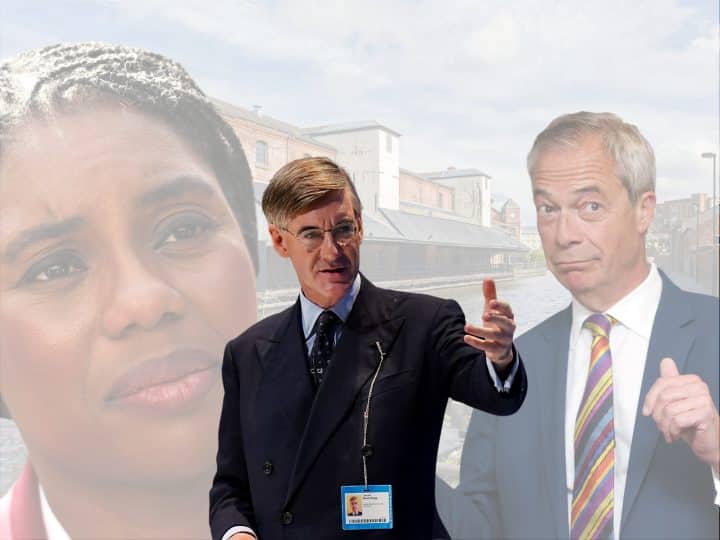
Speaking to Laura Kuenssberg, Jacob Rees-Mogg has argued that the Tories should step down for Reform UK in the Makerfield by-election. The problem with his argument is that Reform seemingly wants to replace the Tories, and so any attempt to work with them will just benefit Farage:
Jacob Rees Mogg says the right needs to work together, and a vote for Restore in Makerfield will lead to Burnham winning (who he describes as a hard left semi-Corbynista!) pic.twitter.com/SctCXo1iRA
— Saul Staniforth (@SaulStaniforth) June 7, 2026
Reform, Restore, replace
In the clip above, Kuenssberg puts the following to Rees-Mogg:
Nigel Farage had a big fallout with a man called Rupert Lowe, who was a reform MP, and he set up [Restore Britain]. Do you think there’s a risk that Reform might lose because of that fallout and the right splits?
Kuenssberg was referencing the fact that Restore could be the difference between Reform or Labour winning the Makerfield by-election:
Via @Survation, 1 June (+/- vs 22 May) pic.twitter.com/IXTHwUTabh — Stats for Lefties
POLL | Burnham expands lead in Makerfield:
Lab: 49% (+6) Ref: 39% (-1) Res: 8% (+1) Grn: 2% (-1) Lib: 1% (-3) Con: 1% (-1)
(@LeftieStats) June 5, 2026
Res: 8% (+1) Grn: 2% (-1) Lib: 1% (-3) Con: 1% (-1)
(@LeftieStats) June 5, 2026
The right split isn’t happening because of a personal beef between two men; it’s happening because of the growing contradictions between Reform UK’s rhetoric and its actions.
As an example of this, take Zia Yusuf. Yusuf is one of Reform’s most prominent politicians, and he’s constantly arguing that white people are the most oppressed group in the UK:
Structural anti-white racism is embedded in British policing pic.twitter.com/kGAiu5PDnT
— Zia Yusuf (@ZiaYusufUK) June 3, 2026
If you’re a far-right voter who buys into this, why would you vote for the party with Zia Yusuf and Suella Braverman in it? Why wouldn’t you vote for the all-white Restore Britain, which is more obviously following through on Reform’s propaganda?
If you are that sort of voter, no doubt you’ve been trained to believe every prominent Black or Muslim person in the UK got where they are at the expense of a more qualified white person. Yusuf has literally made the argument himself:
The NHS will shortly be more than 50% staffed by ethnic minorities.
So the army of DEI officers on princely salaries – presumably their sole focus is to hire more white people?
What am I missing?
We need a return to merit based hiring, and anything other than that must be made… — Zia Yusuf (@ZiaYusufUK) January 29, 2025
How did Yusuf not understand how easily this would be turned against him?
Reform politicians have also argued that the sight of Black and Asian people on the TV should make a person apoplectic:
Sarah Pochin MP: “It drives me mad seeing adverts full of black and Asian people.”
Caller Stuart in London asks the Reform MP if her party will do anything about the 'representation of demographics in TV adverts'.@petercardwell | @SarahForRuncorn pic.twitter.com/RivnW1tusj
— Talk (@TalkTV) October 25, 2025
Reform think they can create an environment in which voters are hopping mad at the sight of prominent non-white people, but also that they’ll gleefully vote for Yusuf and Braverman.
Restore have realised this isn’t wholly the case.
And this is why the British far-right has split.
Delusional
Back to the interview, Rees-Mogg responded:
Well, I keep on banging on that the right should come together. We need to work out how we can cooperate to win elections like this. There’s a by-election in Aberdeen South going on at the same time. What I suggested is the Tories should help reform in Makerfield in return for reform helping us in Aberdeen South. That If we could win both of those, that would be very positive for the small C Conservatives in British politics.
And I think Restore, Restore vote is a wasted vote. I mean, it is not helping anybody.
First things first, Reform UK clearly aren’t “small C Conservatives”. We’re talking about a party which threatened to build detention centres in the constituencies of those who refused to vote Reform; not a party which is looking to rein-in the deficit a bit.
Secondly, Rees-Mogg is off his penny farthing if he thinks this idea is going to benefit the Tories. The reason Reform is doing well is because the party has done to the Tories what Restore is now doing to Reform. Successive Tory prime ministers talked a big game on being anti-migration while simultaneously increasing migration. This created space for a party to their right to call out the contradictions and to capitalise on them.
While the Tories are greatly diminished, the reason they’ve retained any sort of vote share is because not every Tory vibes with the uncouth Farage or the army of shitheads who worship him. Should the Tories start validating Reform by entering into electoral pacts, they’d be at risk of losing what voters they have left.
In other words, Rees-Mogg is either considerably less intelligent than his education might suggest, or he’s working to promote Farage’s interests. And there are other signs that he is indeed Farage’s man:
Just Jacob Rees-Mogg making excuses for Nigel Farage's words which led to rioting in Southampton after the death of Henry Nowak pic.twitter.com/Kvym4Th2g5
— Farrukh (@implausibleblog) June 7, 2026
Divide and divide again
It’s worth noting that the contradictions which have become glaringly apparent in the Tories and Reform aren’t unique to them. Restore is also facing criticism for failing to follow through on its promise of ‘blood and soil’ white supremacy – specifically for working with the Pakistani-born Ben Habib:
I love it when nazis have a meltdown.
They're kicking off because Rupert Lowe invited Ben Habib to campaign with him https://t.co/qntI6ZxMvB
— Mukhtar (@I_amMukhtar) June 6, 2026
Reactionary right-wing politics are just that – a reaction to whatever’s happening. And in their cynical attempts to rile up voters, all of these parties are at risk of collapsing in on themselves.
The duty of anyone who actually cares about this country is to help ensure the collapse happens sooner rather than later.
Featured image via Ian Forsyth (Getty Images) / Alishia Abodunde (Getty Images) / Ryan Jenkinson (Getty Images)
By Willem Moore

OnlyFans launched in 2016 as a social media platform designed to help influencers, musicians and other creators connect directly with their fans through paid subscriptions.
Adult content creators, in particular, flourished on the platform, with some earning six figures annually – and others bringing in that much in a single month.
While that kind of money may sound enticing in a “should-I-quit-my-day-job-and-give-it-a-shot?” kind of way, the work isn’t easy.
OnlyFans creators say that building a fan base, streamlining your workflow and maintaining a content calendar takes far more strategy and consistency than many people realise.
Plus, the platform itself can be unpredictable: in 2021, OnlyFans announced plans to ban sexually explicit content, only to reverse course days later following intense backlash.
What does it take to make bank on the site? What kind of explicit content are they offering, exactly?
Below, OnlyFans adult content creators who are making it work delve into that, and what they think of the recent controversial Euphoria storyline involving Sydney Sweeney’s character, Cassie, joining the site.
Responses have been edited and condensed for clarity.
Skylar Mae: “I’m making roughly over $1 million dollars a month right now.”

“I got into OnlyFans while I was in dental school. My family was struggling with medical bills after Covid, and I wanted a way to help support them financially. At first, I saw it as a side hustle, but it quickly became my full-time career. The growth happened really fast. My first month was honestly mind-blowing, and by the second month, I realised this was something real that I needed to fully focus on. Eventually, everyone at my dental job found out, and I ended up getting fired.
When I first started on OnlyFans, I was only posting bikini and lingerie content. There was no nudity at all in the beginning. Over time, my content naturally evolved month by month into more suggestive content, and years later, I eventually released my first boy-girl video.
Across all my platforms, I have around 9 million social media followers total – 4.5 million on Instagram, over a million on TikTok, and another 1 million on Twitter. Building that audience has taken years of consistency and hard work. I’m making roughly over $1 million dollars a month right now, which still feels surreal to say out loud. But I’ve worked incredibly hard to build this business and make it successful.
One of the biggest misconceptions is that this job is somehow easier than a traditional 9-to-5. In reality, I work constantly – holidays, birthdays, weekends, all of it. When you run your own business and want to succeed at a high level, you’re always ‘on.’
Another misconception is that success on OnlyFans only comes from doing extreme or outrageous content. I completely disagree with that. I’m one of the top creators on the platform, and I’ve built my business by creating content I’m personally comfortable making. If your audience connects with what you create, you can absolutely be successful without constantly pushing boundaries.
As for Euphoria, I actually think it’s great publicity when mainstream shows reference OnlyFans because it opens the door for people to better understand how the platform works. Of course, some portrayals are exaggerated or unrealistic, but overall I think it helps normalise conversations around creators and online work.” ― Skylar Maye
Jessica Barton: “You go from 9-to-5 to 24/7.”

“I was working in a strip club during Covid and we immediately shut down, so I had to pivot. Who knew that pivot would change my life forever? I started off more Playboy style: very clean and basic but sensual and sexy. Legs closed.
Then I have gotten more sexually comfortable with myself and exploring new things, so my levels have increased to toy play, but I keep things solo. I have 550,000 subscribers, and I make about $175,000 to $225,000 a month. A bit over $2 million a year.
Content creation is no joke, and it kind of sucks that it’s hard for normal people to understand that, but you go from 9-to-5 to 24/7. We never sleep. We never stop, and we are always hunting for the next creative idea, which can also be draining.
I think that people never understand the business side of it [and think] you can just do this for fun or quick money. That’s not how it works, and you will not succeed, and this will be all over the internet forever. You dive in headfirst, or don’t dive at all. It can be life-changing in both ways, good and bad.” ― Jessica Barton
Jade Vow: “I jumped straight in at the deep end and started filming content with my partner.”

Photo courtesy of Jade Vow
“In 2018, I jumped straight in at the deep end and started filming content with my partner Josh. The majority of my content is filmed in a super amateur style, leaving in all of the awkward and funny moments. I don’t shy away from showing as much personality as possible, and I pride myself on my content feeling relatable and authentic.
Over the years, I’ve managed to curate a strong brand and build a loyal following, so now I have a steady income and a relatively chilled workflow, but it took a lot of hard work and consistency to get here. On OnlyFans alone, I tend to make anywhere between $10,000 to $40,000 per month. It varies a lot. There are also other platforms where I make a few thousand a month as well – it all adds up.
I’ve worked 9-to-5s where I’d come home and collapse out of exhaustion at the end of the day, so I know how hard it can be. But there are times where I actually miss that. And it can also be quite challenging knowing that your entire income could change overnight and be completely out of your control if an account gets deleted or if a rule changes. It was only a few years ago that OnlyFans themselves said they were banning adult content on their platform altogether. Scary times. Luckily, they quickly backtracked on that, but these are the kinds of life-changing decisions that are out of our control.
[Before], if someone asked what you did for a living and you said ‘OnlyFans’ or ‘amateur porn,’ people were shocked, curious and entertained. Nowadays, if you tell someone what you do, it’s more like, ‘Ah yeah, so does my aunt.’
– Jade Vow
I’m not keen on the Euphoria plot line. Firstly – and this is a little selfish – but I like sex work feeling taboo. Before lockdown, when so many new people joined and it became more well-known, if someone asked what you did for a living and you said ‘OnlyFans’ or ‘amateur porn,’ people were shocked, curious and entertained. Nowadays, if you tell someone what you do, it’s more like, ‘Ah yeah, so does my aunt.’ It’s not a dirty little secret anymore – it’s mainstream – and as someone who got into the industry because they have a true love for the naughty things in life, that takes away a bit of the appeal.
Secondly, popular non-sex-worker-run shows tend to paint OnlyFans in a bad, or at least inaccurate, light. Wearing a diaper and dressing up as a baby, as Cassie does, is massively against the rules, for example. There are already so many negative opinions surrounding sex work – we don’t need shows like Euphoria creating new harmful stereotypes and damaging opinions of the industry even more.” ― Jade Vow
Majesty Nasty: “Sex work has taught me how to fully live in my truth.”

Photo courtesy of Majesty Nasty
“I got into OnlyFans when I was about to be engaged but I didn’t know my partner had already exposed our home videos to the world. I decided not to be sad but just embrace it. When I decided to join, Covid had just hit and I was tired of working three jobs. I was working at a club bartending, working as a home aid and I was serving at a restaurant. In 2022 I finally decided to quit all my jobs and do OF full time. I make $200,000 to $400,000 per year, depending on the economy and my energy that year.
When I first started, I was only shooting solos and randomly dropping tapes that me and my ex had together. Once I decided to make it full-time, I started to explore more into women. I decided to finally live in my truth about the love I have for women. My content now is [broader] than it was when I first started.
After actually locking in with it, I felt more open and free. Sex work has taught me how to fully live in my truth. My fans honestly love my personality and humour. I have fans who ask me to do story times, and then I have fans who just want me to just exist. My favourite request I have ever gotten has to be the time I had to do a karaoke video. The fan knew I liked to sing, so he just wanted to see me happy. Sex work has helped me be able to finally feel liberated about my body. As someone who has dealt with sexual assault, it has helped me gain my feeling of power.
But I hate the way TV depicts sex workers, because they make it seem like we’re just girls who were fucked up and decided, ‘let me do porn.’ With Euphoria, I feel like some points in the show were valid, but it doesn’t depict the industry as a whole. I am a Black woman in this industry, so I get treated a different way than others. On the show, Cassie was praised by the internet and people love her, but I don’t get that love fully. I get mainly hate, with a few dashes of love. I’m labeled as a whore, whereas if you’re white, it’s labelled as liberating. ” ― Majesty Nasty
Holly Johnston: “I was excommunicated from the Mormon church” because of OnlyFans.
“I started OnlyFans in the summer of 2021 after my husband passed away. I was trying to support three kids on a middle-income salary while working in HR hiring nurses, and I was drowning in medical bills my husband had acquired before he passed. I also wanted to be present for my kids and be there when they got home from school. One day I was sitting on the couch watching TV when I saw a news segment about another OnlyFans model. The media highlighted how much money she was making, and she was around my age. I thought, ‘That could be me.’ At the time, I didn’t even know what OnlyFans was, but I immediately started researching, building social media accounts, creating a business plan, and launched a few months later.
My first month was good, and within a few months, things were going so well that I quit my job. With content, I started slow. At first, it was more Playboy-style content and tease videos, but over time, it evolved into full adult content. That transition was more about business strategy than comfort. During my first year, I was making over $50,000 a month, and by the next year, I had reached seven figures. This was not luck. It was hard work. And I was excommunicated from the Mormon church, which I grew up in, after I was outed as an OnlyFans creator. But you couldn’t pay me any amount of money to go back to working for someone else.
Today I have over 4 million followers across multiple social media platforms, and it took about two years to build that audience. That growth came from consistency and work ethic. I posted four times a day across platforms, constantly created content, engaged with followers, studied algorithms and built relationships online. Most people think the money comes from OnlyFans itself, but the reality is that the majority of the work happens outside the platform through marketing, social media strategy, content creation, editing, messaging and behind-the-scenes admin work. I regularly work 80-hour weeks.” ― Holly Johnston
Kit Barrus: “If it was so easy, the average girl on OnlyFans wouldn’t be making like $200 a month.”

“In early 2022, I was unable to really pay my bills at the time working as a personal trainer and going to school, so I made an OnlyFans to make ends meet. I have now left the traditional job market to do OnlyFans exclusively, although I did choose to finish my degrees.
I started off immediately making vanilla content. It was really just me masturbating and interacting with my audience and with the camera. I was really good at talking, so I did a lot of JOIs [jerk off instructions] and just really worked on interfacing and creating this rapport with my audience, so it was a lot of talking, a lot of storytelling, that kind of thing. My content has evolved, it now includes other people, although I’ve maintained that theme of storytelling and trying to really talk and establish some intimacy with the audience, but nowadays I offer girl-girl, boy-girl, fantasy, funny stuff, role playing, like all kinds of different things.
I make anywhere between $250,000 to $360,000 a month, depending on the month, and I have made that for the last six months or so. Doing this is definitely easier for me than a standard job, but it’s… I wouldn’t say that it would be easier for most people. I have really bad ADHD, so this kind of job allows me to hyperfixate, but then back off a little bit. It’s constantly changing, constantly evolving, and that fits in with my brain and how my brain works.
But I think that, like, for most normal people, they’d find it very stressful and they would find it very difficult to establish any kind of rhythm or consistency. If it was so easy, more people would be doing it and the average girl on OnlyFans wouldn’t be making like $200 a month. If it were so easy, everybody on OnlyFans would be making thousands and thousands of dollars, but that’s just not the case. I’ve met girls who are grinding, grinding, grinding and not necessarily making very much money.” ― Kit Barrus
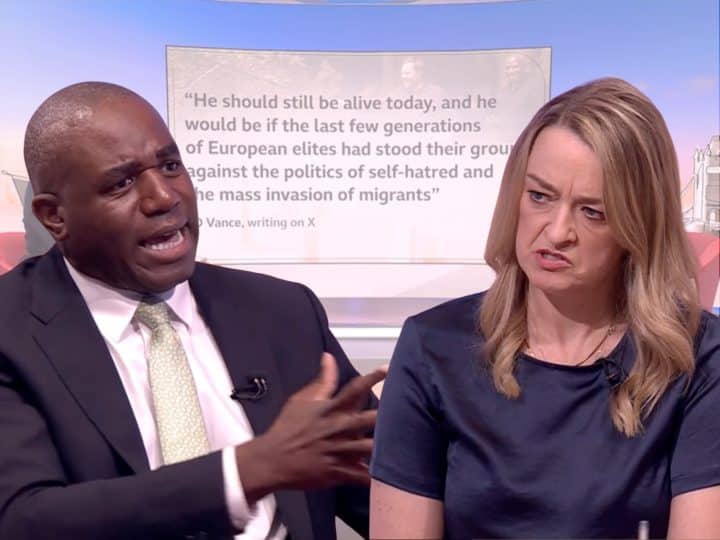
Speaking to Laura Kuenssberg, David Lammy has denied that the police are institutionally racist. In doing so, he referenced the Casey Report — a report which found evidence of institutional racism in 2023. Lammy claimed the force has moved on since then, which is surprising to hear, because the Met refused to accept the findings of the report:
And when the report was published the head of the Met police refused to accept the finding that the force was institutionally racist.https://t.co/WA6oTjcQGW
— Saul Staniforth (@SaulStaniforth) June 7, 2026
David Lammy — Left in the past
Justice secretary and deputy PM David Lammy was speaking to Laura Kuenssberg, who asked him:
Do you think that the police are institutionally racist?
Lammy responded:
I actually think we’ve moved on from that period of institutional racism that was very real in the Stephen Lawrence era. That’s not my experience when I see policing. Of course, there are problems. But as a result of the work that Louise Casey did a few years ago, I do, I have seen seen a response from the police here in London.
Because this was within her world view, Kuenssberg accepted this response, and asked Lammy to be even clearer in his agreement with her:
And so the problem is not of the scale that it used to be. And that phrase “institutionally racist” shouldn’t, in your view then, be applied to 2026?
Lammy responded:
I don’t personally recognise that as the appropriate description today.
So, what did the Casey review actually find?
The Casey Report
This is what Maryam Jameela wrote for the Canary when the Casey Report was released:
A review into the Metropolitan police has found the force to be institutionally racist, sexist and homophobic. The report, written by government official Louise Casey, was commissioned after serving Met police officer Wayne Couzens was charged with the kidnap, rape, and murder of Sarah Everard. Since then another officer, David Carrick, has also been jailed for life for dozens of rapes and sexual assaults stretching back two decades. Furthermore, many other Met scandals have emerged.
Without hinting at how bad things were a mere three years ago, Lammy suggested that the Met have now rid themselves of their many prejudices – prejudices which have tainted them for decades. Contrary to this opinion, our own recent reporting has covered:
- December 2025, the BBC uncovered that the Met failed to “adequately investigate a gang that was blackmailing people on Grindr, a gay dating app“.
- November 2025, the Independent Office for Police Conduct (IPOC) found that two detective constables had a ‘case to answer for gross misconduct‘ following the murder of a victim of domestic violence.
- October 2025, Panorama published an undercover report which documented a “a vast array of truly heinous and discriminatory remarks and actions from… officers“.
Additionally, as Rachel Charlton-Dailey reported for the Canary:
There’s also the fact that the police are already massively biased towards disabled people within the Met. In the Casey review, it was found that 33 per cent of staff with a disability or long-term illness had been bullied by other officers. The report stated
disability discrimination is the most frequent claim type brought against the Met. But there is no willingness to learn from these cases.
Unasked questions
The evidence we have suggests UK police forces are still institutionally racist, sexist, ableist, and more. And this evidence doesn’t go away because Nigel Farage found a single case which might suggest an anti-white bias (if you ignore the actual details).
If Kuenssberg was a competent interviewer, she would have drawn attention to the continuing allegations of institutional bigotry that the police attract (particularly the Met). Because she isn’t — or because Lammy’s answer supported her worldview – these points went unmade.
Featured image via BBC
By Willem Moore
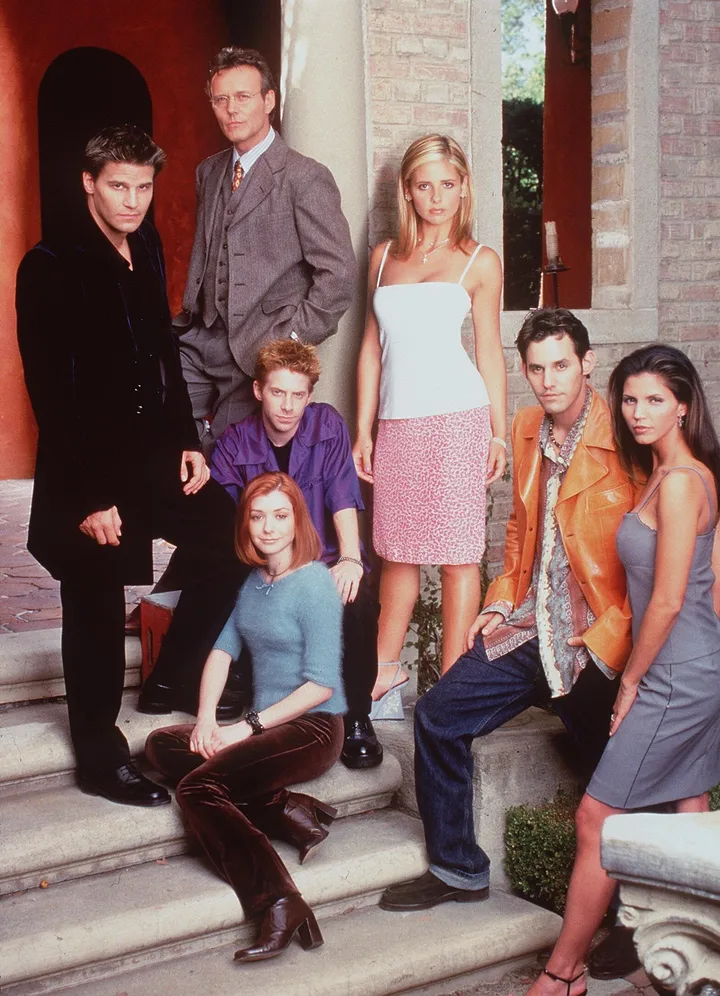
Buffy the Vampire Slayer actor Sarah Michelle Gellar has paid her respects to her former co-star Anthony Head in a touching tribute.
Shortly after the news broke on Friday that Anthony had died at the age of 72, Sarah Michelle, who worked with him on Buffy for many years, took to Instagram to publish a bittersweet post.
Quoting the show’s heartbreaking season five finale, in which Buffy gives a tear-jerking monologue about why she had decided to sacrifice her own life to save her sister Dawn and the world, the post began: ”Tell Giles I figured it out and I’m OK.”
Giles, Anthony’s character in the show, was Buffy’s “Watcher” or mentor on all things slaying, before eventually becoming the titular character’s father figure over the course of the series.
She continued: “Well I don’t have it figured out and I’m not OK.”
“But I know I’m the lucky one because I knew you,” Sarah Michelle wrote, before giving a shout-out to Anthony’s daughters, Daisy and Emily.
“Thank you to Daisy and Emily who not only shared their dad with me, but with the world.”

Getty Images via Getty Images
rah Sarah Michelle’s post included a slideshow of backstage photos of herself and Anthony.
The last slide showed screenshots from an exchange Buffy had with Giles in the season two episode Lie To Me, in which a character Buffy thought was a childhood friend ended up double-crossing her in an attempt to become a vampire.
After Buffy realised she’d been conned by her friend, she turned to Giles for some guidance and comfort.
“Does it ever get easy, life?” Buffy asked Giles, to which he responded: “What do you want me to say?”
“Lie to me,” Buffy then said, prompting Giles to tell her: ”Yes, it’s terribly simple. The good guys are always stalwart and true. The bad guys are easily distinguished by their pointy horns or black hats.
“And, uh, we always defeat them and save the day. No one ever dies and… everybody lives happily ever after.”
Check out Sarah Michelle’s post for yourself here.
Outside of Buffy, Anthony made quite an impact on the small screen, especially here in the UK.
The British actor was well known for playing Rupert Mannion, the smarmy former owner of A.F.C. Richmond, in Ted Lasso, in addition to roles in Little Britain, Merlin and an iconic string of Nescafé ads that aired in the 1980s.

The latest batch of Peter Mandelson’s emails proved to be less explosive than expected. While they certainly told us more about what we already knew, they didn’t tell us much else. This is why the real controversy ended up being what wasn’t there.
Downing Street would later claim the Met asked the government to hold back certain messages. Now, the Met have disputed this claim.
Starmer and McSweeney's project is a governance nightmare addicted to dishonesty. The glaring, unmitigated conflicts of interest re: Palantir are scandalous. As I wrote in the preface to The Fraud: this is a lawless and reckless project that threatens British democracy. https://t.co/UTEfIgq4Ev
— The Fraud (@StarmertheFraud) June 6, 2026
Mandelson — Missing messages
The above post from Dan Hodges reads:
* Downing Street briefed journalists the messages relating to the 5 September reshuffle had been withheld at the request of the Metropolitan Police. But today the Met have told the Mail on Sunday this is untrue, and they did not ask for the messages to be held back
* Two of the unpublished messages from Mandelson to McSweeney reportedly relate to Darren Jones and Peter Kyle. Both of them were subsequently promoted in that reshuffle
As Jody McIntyre reported for the Canary:
Despite his “stolen phone” account, McSweeney had stated when questioned by the Foreign Affairs Select Committee on April 28th that text messages he had received from Mandelson would be included in the files. In one newly-released exchange, Mandelson confirms that he is talking to McSweeney “a lot”, but further detail of their correspondence is notably missing.
In other words, it looks like we’re witnessing a cover up of a cover up.
Of the missing messages, there is some hope we might see them. With other messages, though, they’re seemingly gone for good.
As we also learned this week, Starmer had his phone set to routinely delete messages. According to him, this was within guidelines. We can’t confirm this, of course, because the messages no longer exist to check – demonstrating why deleting messages should be illegal for government ministers.
Palantir
Hodges also reported:
* On 27 February Mandelson accompanied Keir Starmer to a meeting at the Washington offices of Palantir. No minutes were kept of the meeting, and it was not included in Starmer’s official schedule. The Mail on Sunday has learnt that a week after Starmer returned from Washington Cabinet Ministers received an instruction from No.10 to meet with Palantir representatives.
The latest Mandelson emails provided further evidence that Mandelson was working to connect his former client Palantir to his then-boss Keir Starmer. The UK has awarded Palantir NHS contracts despite it being a controversial defence and spyware contractor with links to a genocide. It continues to win other contracts too, as Joe Glenton reported for the Canary on 5 June:
This time the genocide-linked company’s software will manage guns, explosives, and even poisons held by the British state. The news comes as the UK’s tech committee urged the government to pull the plug on Palantir’s takeover of vast areas of UK infrastructure.
Missing inaction
Very simple question that now needs to be answered. Downing Street have claimed the Mandelson/McSweeney messages were withheld at the request of the Metropolitan Police. The Met say this isn’t true. So who’s lying. And why haven’t the messages been published.
Given that both the Met and Starmer are notoriously dishonest, this may not be an easy question to answer.
Featured image via WPA Pool (Getty Images) / Leon Neal (Getty Images)
By Willem Moore
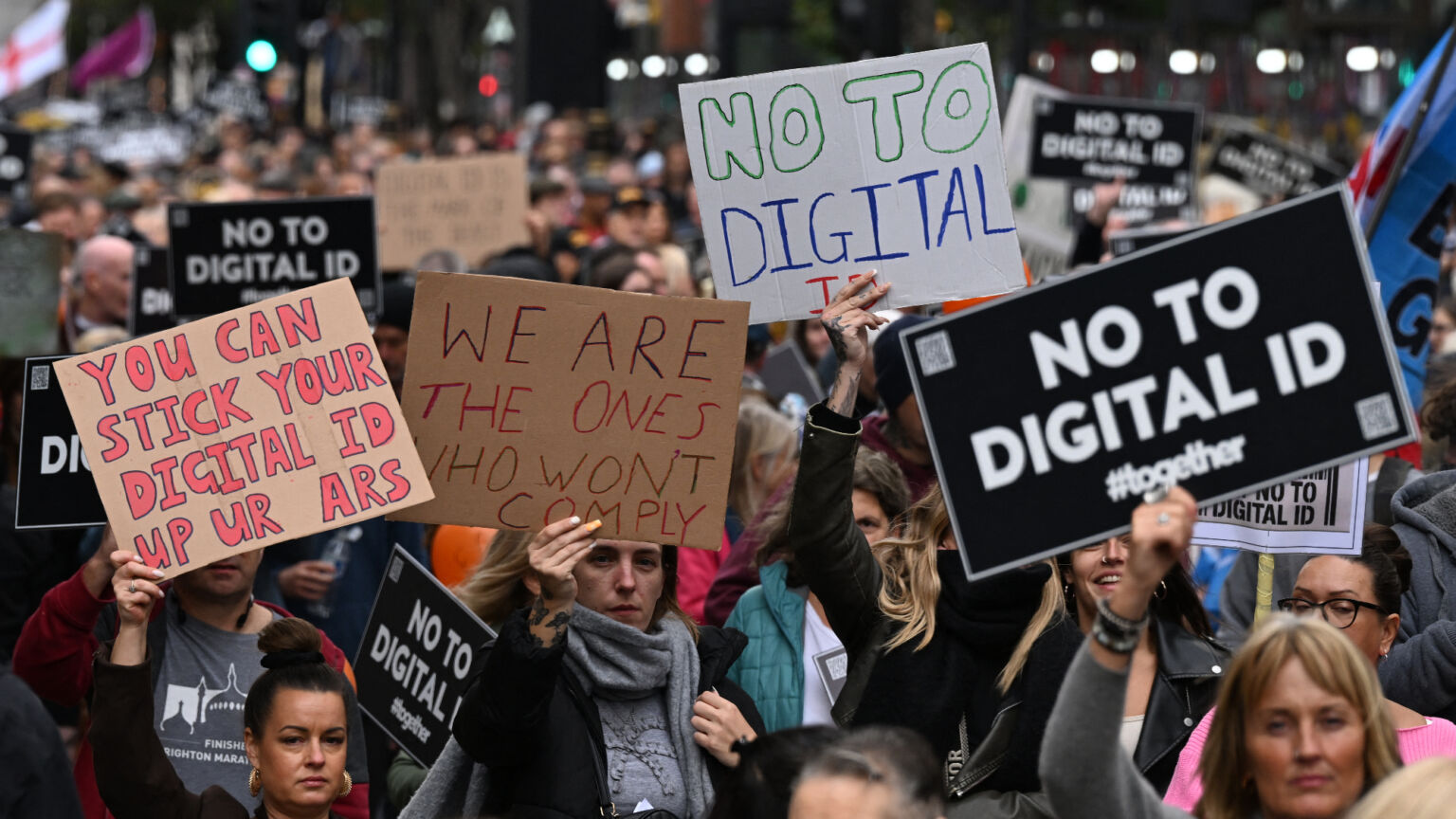
Beyond the immediate political drama surrounding prime minister Keir Starmer’s future, a far more unsettling development in the British state is quietly gathering pace. The King’s Speech last month confirmed that Labour intends to press ahead with digital ID.
The concept of a digital ID has been lurking in the background of British politics ever since physical ID cards were first pitched by the Blair government in the mid-2000s. Voters hated the idea, and it was one of the first things ditched by David Cameron’s Tory-Lib Dem coalition in 2010. Yet Starmer, following in the footsteps of his New Labour technocratic forebears, has resuscitated the deeply unpopular policy under the new title of ‘BritCard’.
Digital ID is in many ways the essence of Starmerism, and the misguided belief that the state can manage away the country’s myriad problems by bureaucratic means. It speaks to a philosophy that views the population not as citizens with inherent rights, but as passive datasets to be administered. As the recent introduction of the government’s ‘UK Wallet’ app shows, the British public is also being encircled by an encroaching system of state surveillance by more means than digital ID.
Ministers have naturally sought to assuage public fears regarding digital ID by framing its introduction as a matter of administrative efficiency and even a means of reducing illegal immigration. But the reality is far more ominous: if introduced, it will herald the inversion of our entire legal tradition. In Britain, the individual has historically been free to act unless expressly forbidden. Under an expanding digital ID regime, however, this will be turned on its head. The long-term implication of this policy is a society where some form of digital approval is a prerequisite for healthcare, housing and employment – and where an opaque algorithm could effectively flag or delete a ‘user’ from the British economy. We will become a ‘papers, please’ society for the first time in our history.
This creeping authoritarianism is already clear in other areas of society. Across the UK, police forces are now routinely using biometric cameras to scan passers-by in real time – and erroneously arresting individuals as part of the process. Such surveillance has never been subjected to a parliamentary mandate.
While the government presents digital ID as a necessary step for security, centralising the personal data of the entire population is fraught with risk. It creates a valuable target for criminals and foreign intelligence services. It is baffling that, instead of mitigating exposure through decentralisation, Labour seems intent on building something that bad actors will inevitably hack or leak.
These external risks, though, pale in comparison to the expansion of state oversight and control it represents. Government departments are wittingly or inadvertently creating a system where those who cannot, or will not, engage with the digital state are relegated to a second-class existence. The setup would allow for a level of social control previously unthinkable. And all of it would be done by a series of unnoticed, incremental software updates.
With the architecture for such a system now formally in play, MPs and peers have an opportunity to stand with the public in opposition and to reassert the role of parliament as a vital check on executive overreach.
Having missed previous opportunities to curtail the scaling of a ‘Big Brother’ state, members of both houses should put aside their party differences and come together to insist on red lines regarding surveillance architecture. This could be achieved through coordinated amendments to legislation, alongside the introduction of separate, standalone bills that provide definitive vetoes on the use of such technology.
There is also a case to be made for a statutory ‘right to be anonymous’ in public spaces. This would legally define the biometric signature of the face as a private asset, and ensure that it cannot be used without explicit, individual consent. It would also mean greater checks and full transparency on the deepening integration of Big Tech into the NHS, Home Office and other government departments. Among the most important considerations must be a legal guarantee that no citizen can be denied essential services for choosing to remain ‘offline’.
Without a decisive intervention, the UK risks drifting into a digital panopticon where liberty ceases to be an inherent right and instead becomes a conditional privilege granted by the state. The British constitutional tradition, which is defined by the hard-won freedom of the individual, should serve as a guiding star for both houses in the coming period.
David Yorath is a communications professional and a former advisor to a Member of Parliament.

Ex-Liverpool FC star ‘dreaming of sensational Anfield return’ as contract termination talks underway

Virtus Large Cap Growth SMA Q1 2026 Commentary

PiggyBank Takes a 15% NAV Hit After Unwinding a Failed LAB Hedge Trade



-

 Fashion2 days ago
Weekend Open Thread: Evereve – Corporette.com
-

 Business6 days ago
Jade Biosciences, Inc. (JBIO) Discusses Positive Interim Results From JADE101 Phase I Healthy Volunteer Study and Development Plans Transcript
-
 Crypto World2 days ago
Jensen Huang Approves Samsung, SK Hynix, and Micron for NVIDIA (NVDA) HBM4 Memory Supply
-

 Sports5 days ago
French Open 2026 results: Alexander Zverev beats Rafael Jodar and will play Jakub Mensik in semi-finals
-

 Tech5 days ago
CryZENx Releases Fresh Playable Content Deep Inside Jabu-Jabu for His Ocarina of Time Remake
-
 Business5 days ago
Trump Taps Housing Chief Bill Pulte as Acting Intelligence Director After Gabbard Exit
-
Crypto World2 days ago
LBank Surpasses 25 Million Users Worldwide as AFA Partnership Continues to Drive Global Growth
-
 Business17 hours ago
The Pain Points Taking a Fragile Tech Rally Down a Notch
-
 NewsBeat5 days ago
Republicans balk at Trump’s attempt to appoint a MAGA enforcer to lead National Intelligence
-

 Tech2 days ago
RCS Messages Between iPhone and Android Get End-to-End Encryption With iOS 26.5
-
 Crypto World5 days ago
Seagate (STX) Stock Surges to Record High on AI Boom and Legal Settlement
-

 Tech2 days ago
Microsoft launches MXC, an OS-level sandbox for AI agents, with OpenAI and Nvidia already on board
-
Crypto World5 days ago
EU AI Data Center Project Faces Delays as Funding Gaps Grow
-

 Entertainment5 days ago
Did The Mandalorian And Grogu Already Ruin The Next Star Wars Movie?
-

 Tech2 days ago
Meta steals a tactic from Tesla and builds data centers in tents
-

 Business5 days ago
Aehr Test Systems Stock Soars 17% Amid Surging AI Demand and Conference Spotlight
-
 Business5 days ago
Claude AI Down Today Reason: Why Anthropic’s AI is not working today? What’s the latest quota update
-
 Crypto World2 days ago
Merlin (MRLN) Stock Soars 32% on Major USSOCOM Autonomy Milestone
-
 Tech5 days ago
Instagram will stop bombarding teens with the same kind of obsessively unhealthy content
-

 Business5 days ago
Relay Therapeutics Shares Surge 20% on ASCO Momentum for Zovegalisib Breast Cancer Program
You must be logged in to post a comment Login