Today’s WWDC 2026 conference has given Apple fans something they’ve craved for years: a powerful, agentic version of Siri, with its own dedicated app. The new Siri AI is designed to work across the entire suite of Apple tools, from powerful Macs to the smallest watch. But the AI health features we did see were lacking compared to Google’s.
One of last year’s headline Apple Watch features, Workout Buddy, has been improved: users can now get guidance and encouragement in their ears during exercise while just wearing a watch, and they don’t need to bring their phone, as they did in watchOS 26. Plus, new insights, such as heart rate zones, will be built in.
Other expanded health and fitness features include the inclusion of menopausal and perimenopausal conditions in cycle tracking (a significant and helpful addition for many women) and improved accuracy of treadmill metrics. Siri AI’s health capabilities were also shown off on the watch, using its ability to look for healthy recipes and describe stretching routines based on its broad intelligence.
Advertisement
Latest Videos From
However, despite rumors saying an AI model specifically dedicated to health and fitness was in the works, nothing materialized this year. Which is a shame, as I’ve already been using the Google Fitbit Air and its accompanying AI health coach, and I’ve seen how powerful such a feature can be.
Watch: Marques Brownlee gives his verdict on Siri AI
Despite existing Fitbit fans bemoaning their loss of community features, I ended up liking Google’s Health Coach. Unlike the Apple Watch, the Google Fitbit Air is screenless, with all chatbot interaction taking place on the phone in the Google Health app.
To be honest, this works well: if you’re going to read reams of text about stretching or your metrics, you want to do it on a proper 6-inch screen oriented specifically for readability, not a 1.9-inch squircle as was demonstrated in Apple’s keynote speech.
Advertisement
What’s more, the Google Health Coach works with its own library of Fitbit workout and meditation content, allowing you to custom-build workouts just by asking the chatbot, and getting demonstrable, video instruction rather than just a block of text. It also takes your illness or injuries into account, as I found out when I got sick, and the Coach changed my workout plan to recommend rest days and shorter runs.
Sign up for breaking news, reviews, opinion, top tech deals, and more.
Apple already has a vast library of fitness content through its premium Apple Fitness+ service, and I expected a health coaching feature to be rolled into that subscription as part of the Siri AI revamp. Maybe that’s a feature we’re more likely to see at WWDC 2027. But its absence wasn’t quite as much of an own goal as Apple’s decision to only roll out watchOS 27 to a handful of modern watches.
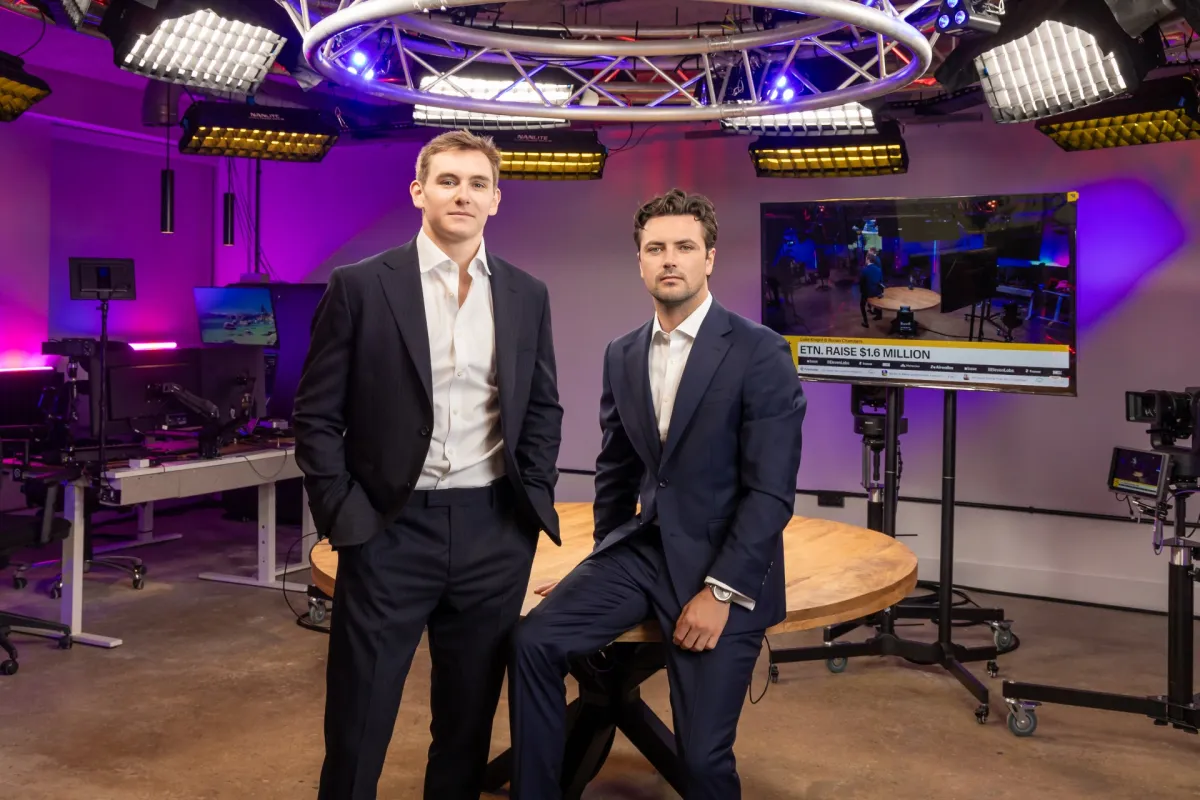
The European answer to TBPN is here and ready to go live five days a week, starting June 27.
Luke Knight and Ronan Chambers first launched the London-based European Technology Network (ETN) last October, breaking down tech trends and news during a two-day-a-week live stream. Right now, the show is live-streamed on X and YouTube and has garnered more than 5 million views.
On Monday, the network announced a $1.6 million seed round from top players in the media ecosystem, including Powerhouse Capital, Axel Springer SE (which owns Business Insider and Politico), the popular media publication LadBible, and angel investors from OpenAI and DeepMind. With this fresh capital, the network is announcing its largest expansion yet.
It’s now moving into a big studio in Kings Cross (where all the hot London AI startups are situated), expanding the team (right now of just eight), launching a newsletter, and is, starting today, moving into a five-day-a-week live show schedule, which will soon see Knight and Chambers interview the likes of George Robson (a partner at Sequoia) and Rishi Sunak (former UK Prime Minister and senior advisor to Anthropic and Microsoft).
Advertisement
Speaking to TechCrunch, Knight and Chambers said ETN has already become a hot stop on the press tour for European startups — they’ve spoken to the founder of Syntheisa, the CFO of Legora, the founder of Granola, and Kanishka Narayan, the UK’s first AI Minister. They’ve even had American investors stop by the show when they are in town, including one from Andreessen Horowitz.
“ETN was born out of a gaping hole in the industry,” Chambers told TechCrunch. “It’s centered around pace.” He said the current media ecosystem in the UK cannot keep up with how fast the tech scene is moving. For example, so far this year, London startups have raised $14.7 billion according to Dealroom. Six companies have raised more than $500 million: Wayve, Superintelligence, ElevenLabs, Recursive, Ineffable Intelligence, and Isomorphic Labs, the latter three of which were founded by DeepMind alumni.
“These are things that have never happened in Europe before,” Chambers continued, referring to the speed at which capital is flowing through the ecosystem. As the show became more popular, Chambers said they were getting around 70 pitches a week from guests looking to come on the show. They would try and cram 12 interviews into two hours, twice a week, but eventually it got too much. “We needed an outlet that could move at the pace of that,” he said of both the interest in the show and how fast Europe’s tech ecosystem is moving, “which is the reason we’re going from two days a week to five days a week.”
The five-day format will look quite similar to the two-day format. There will be a live show from 12 p.m. UK time to 3 p.m., breaking down trending stories, and then for two hours, they will have guests on the show talking about whatever they want. Chambers said they also want to start hosting debates, roundtables, and a Shark Tank-style pitching session on the show.
Advertisement
“We want to make it as useful as we can for the ecosystem,” Chambers said. “There needs to be more discourse around AI in Europe. There needs to be more discourse around venture capital and cash flowing into the ecosystem. There needs to be more discourse around the amazing things that are happening in the tech ecosystem, and our role is to be the stage in which people can shout about all the amazing things they’re doing.”
The show makes its money from ad dollars, like most media publications, and big-name sponsors already include prediction market Polymarket, blockchain company Base, and the AI audio darling ElevenLabs.
When asked about the influence TBPN has had on them, Knight and Chambers said they indeed do look at John Coogan and Jordi Hays, founders of TBPN (which recently sold to OpenAI for what some say was a nine-figure sum), as pioneers of this new tech media ecosystem. The show became a place for tech guests to appear and chat with friendly faces, announcing new product releases, hires, or funding news. “My thinking was, if we can have an ITV and a BBC, why wouldn’t we have a regional version of this?” Chambers continued.
Europe is a big place, though, with more than 40 different countries and over 200 languages spoken (24 of which are recognized by the European Union). Chambers said that although ETN will report from London, he and Knight are making an effort to bring on guests from across the continent. Aside from bringing guests into the studio, they also travel to the hottest tech conferences around Europe. For example, they’ve broadcast from the Panathenaea Conference in Athens and from inside the Louvre in Paris for the RAISE AI Summit.
Advertisement
“You have all these different cultures, these different minds coming together and creating different products,” Chambers said. “You get a taste of what makes [Europe] a superpower.”
With all this, they said they would never turn an American founder away should they want to come on the show. “It’s a European technology network, but we think there’s massive [global] opportunities,” Chambers said. Knight added to that, noting how often conversations pit the European tech ecosystem against that of the U.S.
“We are globally optimistic,” Knight said. “We are pushing global prosperity from Europe. Wherever you want to go and build your company, wherever is the best place to go and build that company, go and do that, and we will shout for you to go and do that.”
He and Chambers also don’t necessarily see themselves as journalists; rather, they consider themselves tech insiders curious about what is going on and why. They also don’t see themselves as replacing traditional media and instead intend to work in tandem with those publications. “We rely on traditional media,” Chambers said, adding that is how they find much of the news that they to talk about on ETN.
Advertisement
Overall, the duo hopes to help document the stories coming from the new wave of European success, from ElevenLabs in London to Lovable in Stockholm, to help the upcoming generation understand that technology is one way to drive a nation forward.
Discussing the impact of European success stories, Chambers said, “It riles up the next generation to the point where it’s no longer cool to finish university and go into banking or consulting. People want to leave university and go straight into building a startup, and I think that’s an amazing thing.”
When you purchase through links in our articles, we may earn a small commission. This doesn’t affect our editorial independence.
As the worlds of networking and security increasingly collide, the role of network engineers is also evolving. IT teams are now on the frontlines of an organization’s cybersecurity, monitoring what’s happening across traffic, users, devices to spot issues and threats early, and act before they escalate.
Laura Lehman
Director of Digital Experience Product Management at GTT.
Advertisement
When network and security architectures are integrated well, complexity decreases while performance increases, security gets stronger and latency lowers; and overall, day-to-day operations become simpler.
With better visibility and AI-driven automation, organizations can spot and contain threats even faster, improve oversight across users, devices and applications, and build a more agile platform for digital transformation, including cloud adoption, branch modernization and hybrid working.
Latest Videos FromTechRadar
Advertisement
Perhaps the most significant evolution is that the old “detect, diagnose, fix” workstream for a network engineer is being replaced with a more proactive model. Aided by AI, networks can now learn from past behavior, flag early warning signs and trigger preventative actions automatically.
The payoff is more resilient infrastructure, a stronger security posture, and IT teams spending less time firefighting and more time moving the business forward.
Advertisement
From hardware-first to intelligent, software-defined experiences
Legacy enterprise networks were static and complex. Each organization had its own complicated mix of hardware, stitched together via multiple management tools that generally didn’t communicate very well with each other.
Diagnosing a network problem meant going through the process of elimination to isolate the failed system, then coordinating with multiple vendors to resolve it, which was often a time-consuming and error-prone affair.
Sign up to the TechRadar Pro newsletter to get all the top news, opinion, features and guidance your business needs to succeed!
Virtualization and automation have done much to improve upon that process already, helping today’s distributed enterprises achieve speed, scale and security across hybrid cloud environments, global data centers and remote workforces. However, AI is rapidly accelerating and opening up new avenues for this continual transformation.
Advertisement
AI-driven analytics provide visibility and context that traditional network tools never could. This allows IT teams to see patterns such as traffic flows, user behavior and performance metrics across siloed systems, all in real time. With this depth of continuous insight, networks can be fine-tuned dynamically rather than through manual and static configurations.
These capabilities reflect the move from static infrastructure to intelligent systems that can continuously adapt to the needs of the business.
Advertisement
Adaptive networking as the new normal
The traditional incident response sequence is well-worn: detection, diagnosis, escalation, and remediation. Even with automation, the process still depends on significant human intervention after the incident.
AI networking can predict potential disruptions before they happen by continuously analyzing telemetry data across the network. This is true whether it’s a failing device, an unexpected change in latency, or an issue due to environmental factors such as weather events. With the visibility provided by AI, IT teams have a comprehensive view of highly complex, multi-vendor network environments.
And once a potential problem is identified, an AI-driven network management platform can automatically recommend configuration changes to address the issue. While past reactive approaches focused on ‘the fix’, adaptive network management is preventative. AI enables IT teams to not only respond to problems faster, but to prevent them altogether.
Advertisement
What this means for network engineers
With AI-powered network management, IT teams are no longer spending their time chasing alerts or manually reviewing logs. Instead, they are interpreting insights and validating recommendations produced by AI systems.
This partnership between human expertise and AI marks the beginning of the “adaptive network era.” AI surfaces patterns, predicts needs and makes recommendations, while IT teams remain firmly in control with more context and foresight at their disposal than they’ve ever had before.
The business cases and practical benefits of AI network management stack up across a few key areas:
Efficiency: Routine diagnostics, reporting and configuration updates are automated, freeing IT staff to focus on more strategic priorities.
Cost Savings: In industries such as retail, finance and manufacturing, every minute of downtime means loss of revenue. Reducing outages and maintaining uptime directly impacts the bottom line.
Security: By continuously monitoring patterns and anomalies, AI enhances network defense and can help spot early signs of compromise that traditional systems may overlook.
More broadly, AI tools will bring a level of speed, reliability, and security that will reshape the networking experience. Complex network environments will be easier to manage, decision-making will be faster and more informed, and the process as a whole will be smoother and more reliable.
Advertisement
Of course, turning promise and potential into reality is more than just deploying new tools. AI is as good as the data it learns from. Enterprises need to ensure that their data pipelines are accessible and clean, and IT teams need visibility into how AI makes its recommendations and human-in-the-loop governance practices. High-quality data and trust are key, especially when automation affects live network traffic and security posture.
Building networks around people
Organizations are beginning to realize the value of networks that can adapt and recover from issues with minimal intervention. As AI is woven further into service provider operations, the tools enterprises receive will be redesigned to fit the day-to-day needs of the people using them.
Longer term, this points to a more user focused operations model, where dashboards tailor what they show and bring the right insights to the surface for each group, from administrators to business stakeholders and C level decision makers.
Advertisement
The most effective approach will blend human judgement with AI-powered analysis and recommendations.
This article was produced as part of TechRadar Pro Perspectives, our channel to feature the best and brightest minds in the technology industry today.
The views expressed here are those of the author and are not necessarily those of TechRadarPro or Future plc. If you are interested in contributing find out more here: https://www.techradar.com/pro/perspectives-how-to-submit
Spanish deeptech company that shrinks large language models wants investors to bet that efficiency, rather than sheer scale, is where the next stretch of AI money gets made.
Multiverse Computing, based in San Sebastián in Spain’s Basque Country, has opened a Series C round targeting up to $570m (€500m), the company said on July 27.
The raise would value the startup at roughly $1.7bn (€1.5bn) before the new money arrives, which the company put at about five times its previous valuation.
The pitch rests on CompactifAI, a tool Multiverse says can compress a large language model by up to 95% with what it calls immaterial accuracy loss. It borrows tensor networks from quantum physics to strip redundancy out of a model, cutting the memory, cost, and energy each query burns.
Advertisement
The 💜 of EU tech
The latest rumblings from the EU tech scene, a story from our wise ol’ founder Boris, and some questionable AI art. It’s free, every week, in your inbox. Sign up now!
The technique sits inside a broader compression race that has pulled in far larger players.
In practice, the company sells slimmed-down versions of open models such as Meta’s Llama, packaged to run on cheaper hardware or on-premises rather than inside a hyperscaler’s data centre.
Advertisement
That edge-to-cloud framing is the heart of the Series C pitch. As inference, the cost of actually running a model, overtakes training as the dominant expense for many buyers, the argument goes, they will pay for the same output at a fraction of the compute and power.
It is not the only use Multiverse has found for the maths. The firm, which began in quantum software, has applied the same methods to other problems, including a system to predict floods. The through line is squeezing more out of less, whether the target is a neural network or a river.
The round is co-led by Forgepoint Capital International, the BNPP Solar Impulse Venture Fund, and Bullhound Capital, according to the company. If it closes at the top of the range, Multiverse’s total funding would reach about $800m across all rounds.
The company has not said when it expects to finish raising, nor disclosed the terms attached to the lead investors’ stakes. A round that is announced while still open can also close below its target.
Advertisement
In June 2025 the firm closed a Series B worth €189m, or about $215m, led by Bullhound with backing from HP Tech Ventures, Toshiba, Forgepoint, SETT, and Spain’s CDP Venture Capital. Bloomberg reported in February that Multiverse was in talks at a €1.5bn valuation, the same figure now attached to the Series C.
Multiverse was founded in 2019 by chief executive Enrique Lizaso, a former banker, and chief scientific officer Román Orús, a physicist whose work on tensor networks underpins the product. Both the compression business and its quantum tools sit inside a wider European quantum push that has drawn heavy public funding.
Its customer list, per the company, runs to Iberdrola, Bosch, Telefónica, Allianz, Bank of Canada, Indra, and PwC.
Multiverse also reported steep growth to match its ambitions, claiming a tenfold rise in annualised revenue since the last round and first-quarter sales up 96 times year on year. Those figures are self-reported and have not been independently audited.
Advertisement
The bet is a distinctly European one. As models grow more expensive to run, a cluster of the region’s startups is chasing the inference bill rather than the frontier.
Data-centre electricity demand has become one of the industry’s hardest constraints, and trimming the energy a model burns per query is one of the few levers a startup can pull without owning chips or power stations.
Multiverse is selling the opposite trade. If the future of AI is smaller, cheaper, and closer to the edge, a compression startup on the Basque coast would rather own that corner than chase the frontier it is quietly trying to cut down to size.
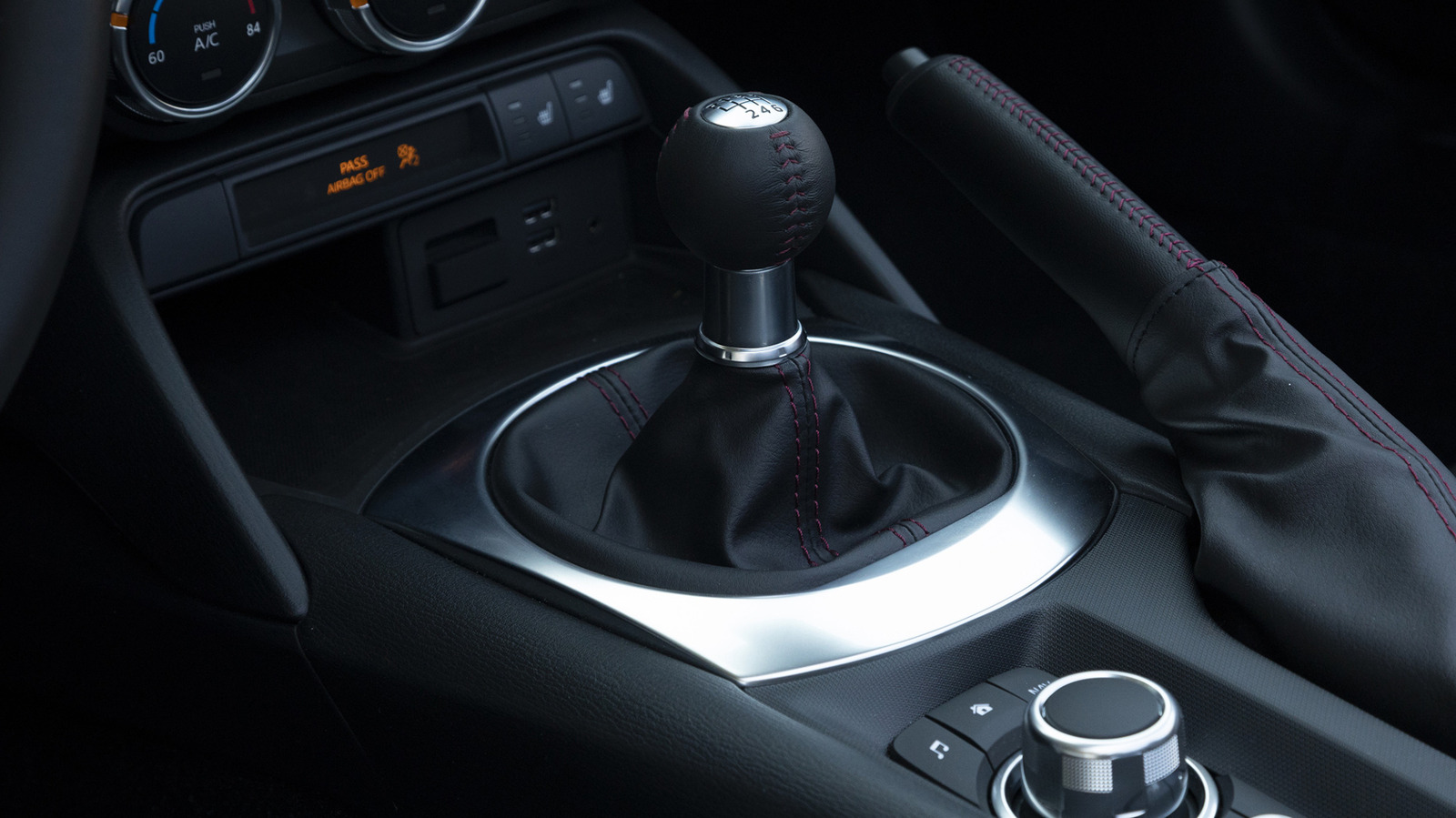
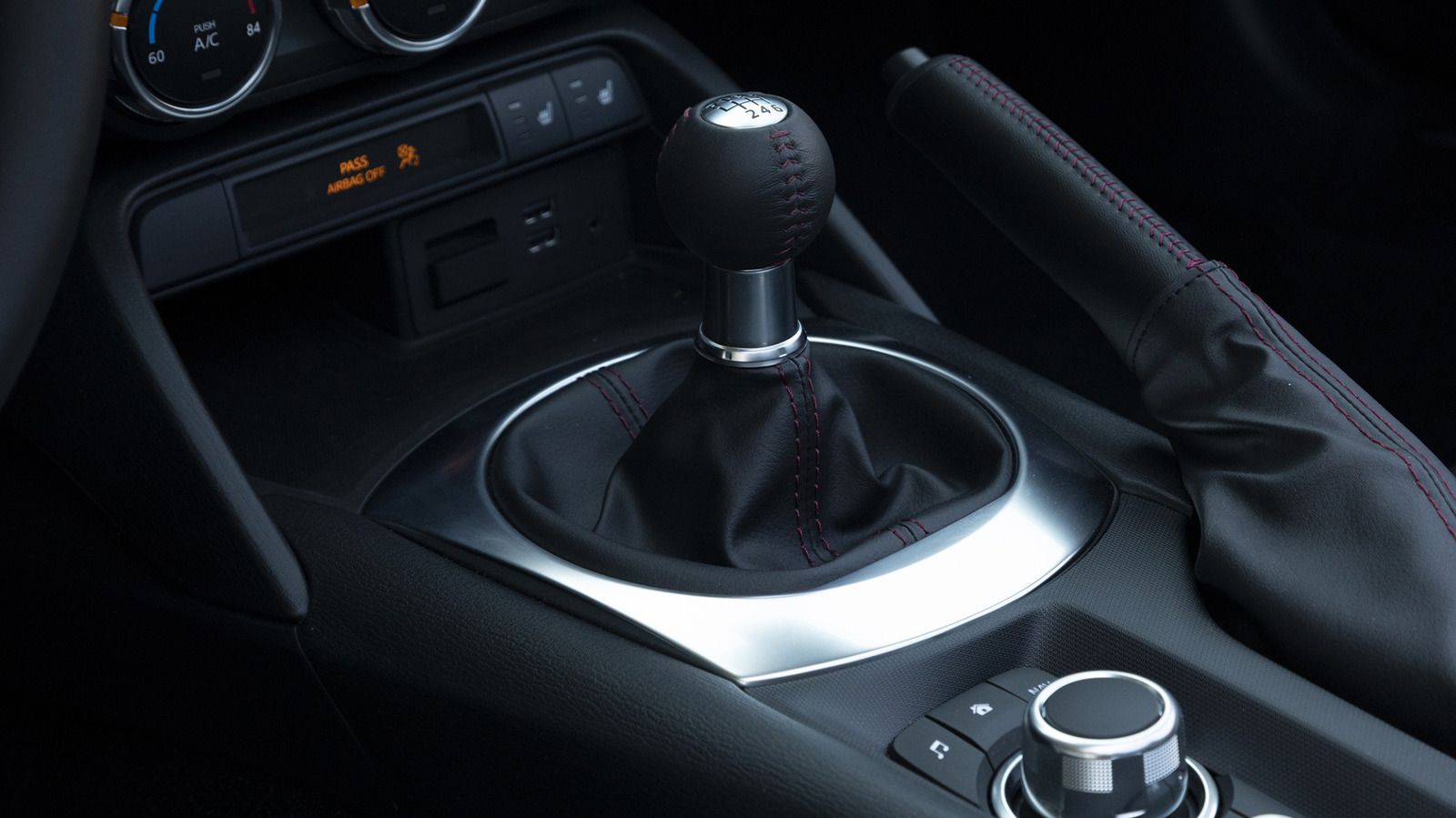
The manual transmission occupies a strange, almost contradictory position within modern car culture and the auto industry itself. On one hand, car enthusiasts adore the manual transmission for its fun factor and added engagement, so much so that there are entire communities dedicated to “saving the manual.” On the broader industry side, however, things are not so rosy for the manual gearbox, with a decreasing list of manual cars available each year and the vast majority of them coming in niche sports models.
There has, however, been some sense of the manual transmission making a comeback recently, with some attributing this to the increasing popularity of manuals among Gen Z drivers. Is this actually happening though? Are young drivers leading a surge in demand for new manual vehicles that’s causing automakers to rethink their product strategies? That part isn’t so clear.
Advertisement
There may be strong interest in manuals from some Gen Z drivers, but the actual market size of this group, and the influence it has on the industry, might be a bit overstated. The trend highlights the importance of distinguishing between the vocal online commentariat and real-world car buyers. It also underscores the distinction, no matter the age group, between niche car enthusiasts and the mainstream auto market.
Advertisement
Why Gen Z Is Drawn to Manual Transmissions
For decades, a manual transmission with a clutch pedal was default equipment on a huge portion of cars, trucks, and SUVs sold in America. In fact, because of this,some people even called them “standard transmissions.” Many buyers would pay extra for the convenience of an automatic, but as recently as the mid-2000s, it was still fairly common to see manual transmissions on a lot of normal cars and trucks. Gradually, though, the manuals became a niche option that had to be specifically sought out by drivers who wanted to row their own gears.
With the decline of mainstream manual-equipped vehicles, many younger drivers grew up without ever needing to learn how to drive one. Car enthusiasts, though, are different from your average driver, and for them, the decline in manual options has brought an increased reverence for the market’s stick shift models.
It makes sense that Gen Z might be driving recent interest in manual transmissions in ways that older generations didn’t when you consider they’ve grown up in a world full of automatic cars and EVs, the latter of which have single-speed transmissions rather than a multi-speed gearbox. There is, however, a difference between a group showing interest in manual cars and having the means to go out and buy brand-new ones in significant numbers.
Advertisement
Manual Enthusiasm Doesn’t Equal a Market Comeback
The exact degree to which the manual is or isn’t making a comeback is hard to discern, especially when you factor in new car sales. While there is strong demand at times for manuals among enthusiasts, that interest isn’t always enough to sustain mainstream offerings. For example, manual Volkswagen Golf GTI take rates in the U.S. surged to 41% of the hatchback’s orders in 2024. Still, these take rates weren’t enough to make Volkswagen change its mind about bringing back the manual Golf GTI after axing the stick option for the 2025 model year. On the other hand, you have Subaru planning to add three manual cars to its 2027 lineup.
A 2023 article from the Wall Street Journal highlighted growing manual interest among younger drivers, but some of the enthusiasts profiled in the story were driving older ones. The article also brought up the manual share of the new car market rising from 0.9% to 1.7% from 2021 to 2023. However, according to The Washington Post, preliminary government data shows an all-time low of 0.6% of new vehicles manufactured for the U.S. featuring stick shifts. These numbers reinforce the idea of niche manual enthusiasm (especially among younger drivers) versus a broad market transformation.
Advertisement
It’s unlikely we ever return to the days when Camrys, CR-Vs and F-150s came standard with manual gearboxes, but continued interest from young enthusiasts should help keep today’s dwindling number of manual cars from disappearing completely.
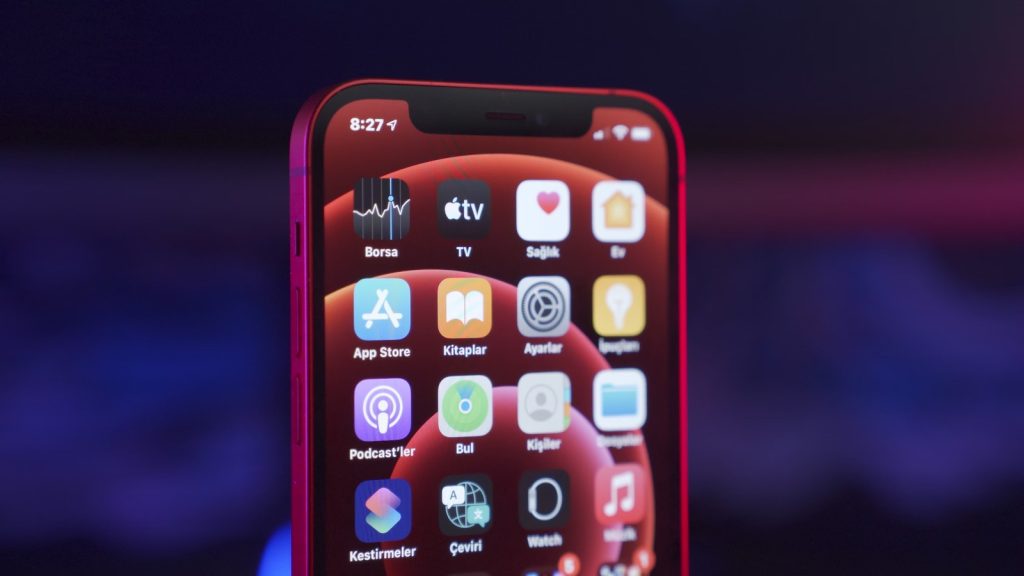
According to reports, Apple plans to introduce its new Apple Upgrade leasing plan in the United States next week. The program aims to spread the cost of eligible devices into monthly installments. It may also act as an alternative to the existing iPhone Upgrade Plan offered by Apple.
Apple is expected to launch the Apple Upgrade Program in partnership with Klarna. Customers will reportedly need to complete a soft credit check before enrolling. According to reports, the Apple Upgrade Program is expected to work just like a subscription. Customers have the option of paying for their device in full before the end of their lease period.
Customers can also retain the device after paying off the entire amount. If the customer is no longer interested in the device, they can give it back when the lease expires. The customer gets more freedom compared to a one-time purchase. Apple is likely to offer various lease deals depending on the device. iPhones and Apple Watch can be leased for 24 months. Macs and iPads will have a 36-month lease.
Eligible Devices, Exclusions, and Changes for Buyers
Image: Onur Binay
The plan is said to cover eligible iPhones, iPads, Macs, and Apple Watches. But not all Apple products are set to be covered by the new lease plan. This is because some products will be excluded from the list, among them the iPhone 16, Apple Watch SE, budget iPad, and MacBook Neo. Apple also plans to exclude business and education purchases.
Unlike the current iPhone Upgrade Program, the new service is not expected to offer AppleCare coverage. Reports also suggest Apple will stop accepting new customers for the existing iPhone Upgrade Program after Apple Upgrade launches. The new leasing option may make premium Apple devices easier to afford. Customers can spread payments over several months instead of paying the full price upfront.
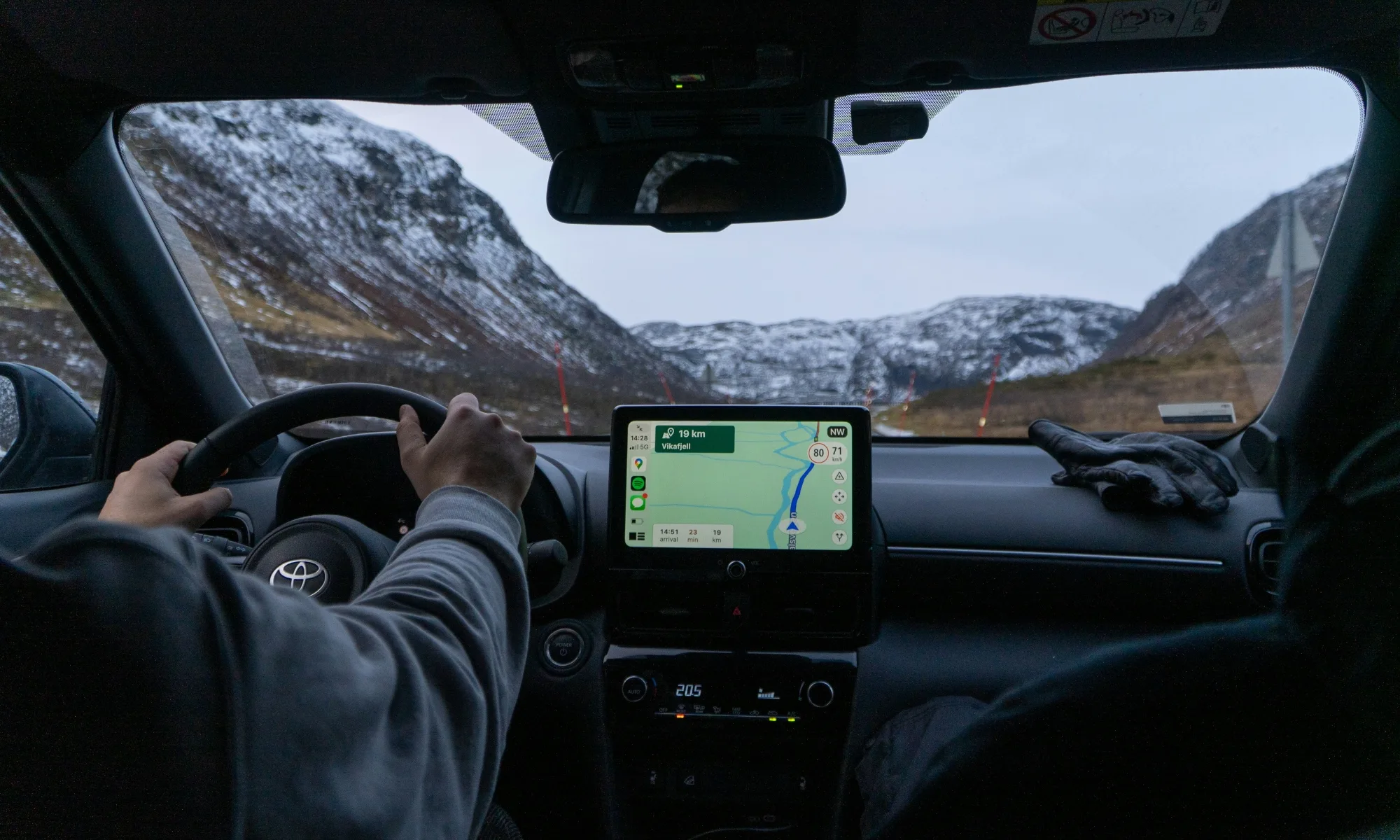
Google is widening the rollout of two long-awaited Google Maps features for Android Auto users: Immersive Navigation and a built-in live speedometer. After months of limited availability, reports suggest both features are now reaching a broader group of users, including people running stable versions of Google Maps instead of beta builds.
The update is part of Google’s ongoing effort to modernize the Android Auto navigation experience. While the company unveiled Immersive Navigation earlier this year as one of the platform’s biggest upgrades in years, the feature has been trickling out slowly, leaving many users without access. That appears to be changing, with more devices now receiving the update through a server-side rollout.
The rollout is still gradual, and availability may vary depending on region and device, but it signals that Google is becoming more confident about deploying the new experience at scale.
Maps becomes more visual while Android Auto gains a useful driving tool
Immersive Navigation makes Google Maps easier to follow while driving by displaying richer road layouts, clearer lane guidance, and more detailed intersections. The updated interface is designed to present navigation information in a way that’s easier to interpret with a glance instead of requiring drivers to study the map.
Advertisement
Unsplash
Alongside the redesigned navigation view, Google is also expanding the rollout of a live speedometer inside Android Auto. Unlike speed limit warnings, the feature displays the vehicle’s current speed directly within Google Maps, reducing the need to switch attention between the infotainment display and the instrument cluster in vehicles where that information isn’t readily visible.
Users receiving the update will also notice another interface change. On Android phones, the Gemini icon has replaced the Google Assistant shortcut in the top-right corner of Google Maps, continuing Google’s transition from Assistant to Gemini across its ecosystem.
A server-side rollout means patience is still required
Although more users are reporting access, Google has not released the features through a standard app update. Instead, the rollout appears to be happening server-side, meaning installing the latest version of Google Maps or Android Auto does not necessarily guarantee immediate access. Reports also suggest the features are appearing on stable builds rather than remaining exclusive to beta users, making them accessible to a much wider audience over time.
Google
For Android Auto users, this update is less about adding flashy new capabilities and more about refining the everyday driving experience. Better lane visualization, more detailed navigation guidance, and an integrated speedometer are incremental improvements individually, but together they make Google Maps feel more complete as an in-car navigation system. As the rollout expands, more drivers should begin seeing those upgrades without needing to join Google’s beta programmes.
It’s been two years since the last total solar eclipse, but another one is coming in a few weeks — and with it, a special addition that rarely happens. Some people will get to see the solar eclipse during sunset, giving them an extraordinary view. The only problem is, you may have to jet off on a summer vacation to see it.
The total eclipse will only grace the shores of a few countries. According to NASA, the total eclipse on Aug. 12 will hit Greenland, Iceland, the northern half of Spain and one corner of Portugal. Spain is at the tail end of the eclipse, and as such, it will occur later in the day at around sunset, giving viewers in Spain a spectacular sight.
Other countries in Europe and Africa will also get quite a show. Most of Europe and a sizable portion of northern Africa are still getting a partial solar eclipse, which will happen around sunset. That means tens of millions of people will be in the right place to see a partial or total solar eclipse at sunset.
Russia is the luckiest country this time around. The eclipse starts at sunrise near the uninhabited Taymyr Peninsula, streaks across the world all day, and then Russians on the other side of the country are in the path for the partial solar eclipse at sunset, making Russia the only country that will see the eclipse at both sunrise and sunset.
Advertisement
How often do sunset eclipses happen?
Sunset eclipses don’t occur very often, at least where people can see them. There are two reasons for this.
The first is that solar eclipses usually only last for a few hours, and the timing for that being right at sunset isn’t terribly common.
The other reason is that solar eclipses have long paths, and sometimes those paths cut through the ocean or places where people don’t live. In the last 15 years, only a handful of total eclipses sit in that Venn diagram of occurring late enough in the day to happen at sunset, while also taking place where humans can see it.
The most recent sunset eclipse in North America was in 2014, but it was only a partial eclipse. South America’s most recent one was in July 2019, where people in Chile and Argentina had the best view of a total solar eclipse happening at sunset, while most of the rest of the country had a partial view. Asia’s most recent was in December 2019.
Advertisement
In short, this is a once-in-a-decade event for most of the world.
The path of this year’s solar eclipse takes it across the northern portions of Earth before ending in Europe. North Americans won’t see much.
NASA
Will this eclipse be visible in North America?
North America is pretty far from the main action, but a few states are in the path. The math is a little complicated, but if you look at a map of the US and draw a line from Alaska to North Carolina, all the states north of that line will get a little bit of an eclipse (less than 20% coverage), and all the states south of that line are sitting this one out.
Apple is reportedly testing its September 2026 Apple Watch lineup, but the new models are expected to be minor updates while more substantial changes are much further off.
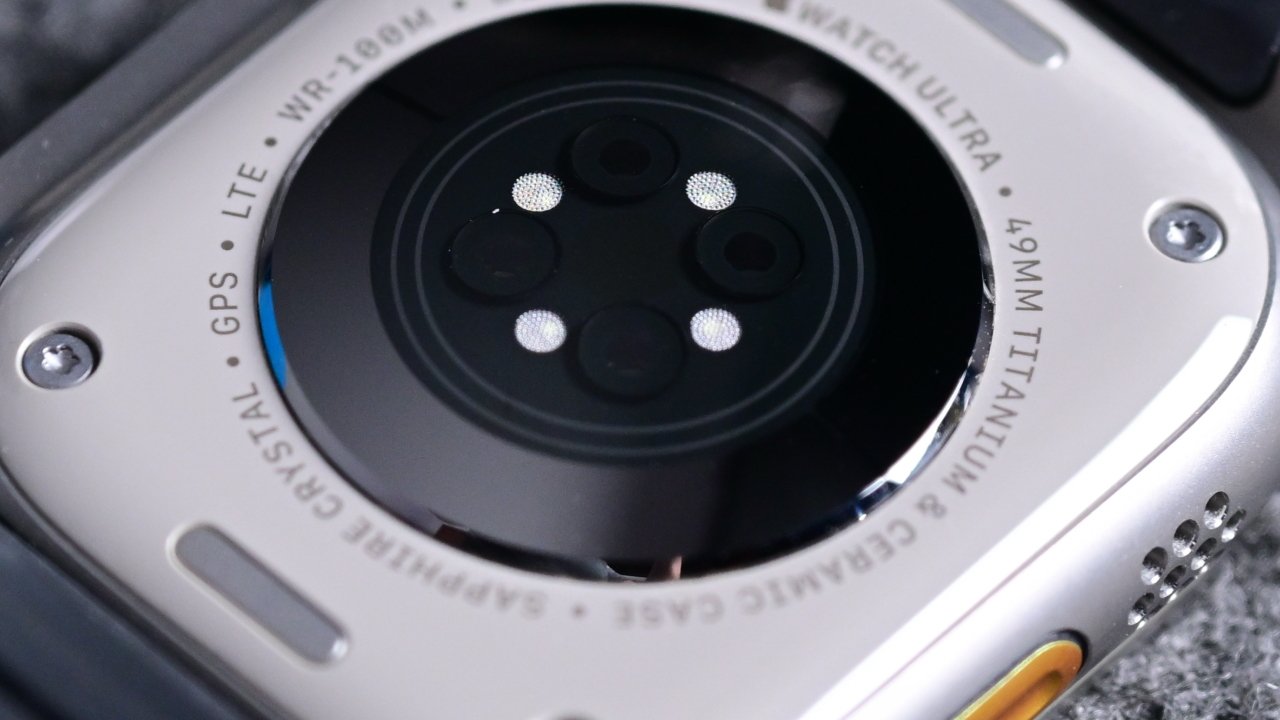
Most recent rumors have claimed that the forthcoming Apple Watch Series 12 will not feature any hardware improvements over its predecessor. Now backing up those reports, Bloombergsays that neither the Apple Watch Series 12 nor the expected Apple Watch Ultra 4 will get visible upgrades to their design.
Instead, the updates will be concentrated on giving the new Apple Watches a significant performance boost through a new processor. There may also be health and fitness tracking improvements, though previous reports have claimed that there won’t be new sensors, so this may be a software update.
The new lineup has the codenames N237 and N238 for the Wi-Fi and cellular versions of the Apple Watch Series 12 while the Apple Watch Ultra 4 is codenamed N240. All three models are said to now be in late-stage testing.
Advertisement
It’s claimed that these are the only three models due to be launched in September 2026, and specifically that there will not be a new Apple Watch SE released at this time.
There’s no indication of when an upgraded Apple Watch SE may come, but the report says that work is being done on a significant redesign for the regular Apple Watch. That’s not expected to result in a new device for at least a couple of years, however.
Separately, a recurring rumor has claimed again that the 2026 Apple Watch models will feature a new system for attaching bands. It remains as possible yet unlikely, though, as it has for the last several years that the rumor has circulated.
Also, while this new report predicts no noticeable changes to the Apple Watch Ultra, a rumor in May 2026 suggested that there may well be a significant update. Supply chain sources claimed that the Apple Watch Ultra 4 could double its number of sensors over the previous models.
“The rise of TikTok, Instagram Reels and Amazon storefronts has created a new kind of white-collar exit strategy,” reports Bloomberg. Workers ditch office jobs not to become celebrities, necessarily, “but to piece together an income online through brand deals, affiliate links and highly personal videos documenting everyday life.”
In many cases, the followers necessary to sustain a living are smaller (and more attainable) than people might assume. A small but loyal audience can now generate enough income to rival a midlevel salary. Welcome to the middle-class creator economy. Last year, 25-year-old Abi Platock balanced a corporate marketing job in New York while posting online in her spare time. She built her audience by posting one or two videos a day, offering career advice, beauty tips and daily vlogs. “I signed my first brand deal in the four-figure range, and for me that was just such a big eye-opening moment,” Platock says of her partnership with deodorant brand Secret. She had 8,000 followers on TikTok at the time. “You can totally make it work without having hundreds of thousands of followers.” Platock, who now has roughly 25,000 followers across platforms, has signed about $25,000 in brand deals so far this year and expects her annual creator income to reach around $50,000 by yearend.
Her experience reflects a broader shift in advertising. Brands are increasingly moving money toward so-called microinfluencers — smaller online personalities who have less than 100,000 followers. “They are hiring a bunch of microcreators at scale instead of hiring a handful of macrocreators for what could potentially be the same cost,” says Ali Grant, co-chief executive officer of the Digital Department, a creator management company. And they perform where it matters most: engagement. An engagement rate of 3% is considered strong, and some microinfluencers exceed 10%, Grant says of the closely watched metric that tracks how often followers interact with content through likes, comments, shares and saves. Microinfluencers average a 3.2% engagement rate, almost triple the 1.1% rate for macroinfluencers (more than 1 million followers), according to growth marketing agency ATTN… A TikTok partnership with a creator who has around 50,000 followers can run a brand more than $3,500 for a single post, Grant says; with 10 times the followers, that fee might just triple, to around $10,000….
The influencer marketing economy ballooned to a projected $33 billion in 2025 up from $1.7 billion in 2015. The segment gained momentum after the COVID-19 pandemic, as dissatisfaction with traditional work pushed many to reconsider conventional career paths, says Brooke Duffy, a professor of communications at Cornell University. “They realized the trade-offs in terms of the investments of time, energy and human capital were not necessarily worth sacrificing so much of one’s personal self for,” she says. Success online can bring greater freedom — and even higher pay than many traditional office jobs, which have a median US salary of $69,000, according to Glassdoor. But the middle-class hustle still requires constant effort to maintain. The career has no promise of lifetime longevity. And unlike traditional workers, creators have no predictable paycheck or job protections, making career stability elusive. Roughly 57% of 3,000 surveyed full-time creators earn below a living wage from content creation, according to a report last year from Influencer Marketing Hub. Income from social media can fluctuate wildly from month to month, driven by shifts in algorithms, sponsorship cycles and platform trends.
Advertisement
“You could have a month where you make zero dollars, or you could have a month where you make $10,000,” Platock says. The article cites Gallup Poll data released last year that found employee engagement in the U.S. had fallen to its lowest level in a decade [with engagement defined as “the psychological attachment workers have to their work/team/employer]. “Among the hardest-hit groups were Generation Z and workers in finance and technology. Broader workplace challenges, including rapid organizational change, hybrid and remote work transitions, and rising employee expectations are considered drivers of the overall trend.”
“For many workers, influencing can seem like a better deal; flexible schedules and independence wrapped in a veneer of creativity and fun. Almost 60% of Gen Zers say they’d become an influencer if given the opportunity, according to a 2023 survey from Morning Consult.”
Previously exclusively in the US, AppleCare One is now launching in the UK, France, Germany, and Australia, with Apple’s best insurance deal for users with multiple devices — as long as you’re careful in selecting what’s covered.
A year after it launched in the US, AppleCare One is expanding outside of the US. It’s only going to four more countries, and they’re countries you’d expect it to launch in, but that’s a start.
“At Apple, we’re focused on creating and delivering exceptional experiences,” Bob Borchers, Apple’s vice president of Worldwide Product Marketing, said in a statement to AppleInsider. “With AppleCare One, customers in the UK can now enjoy the trusted protection of AppleCare+ in a way that’s simpler and more flexible than ever before — one plan, one price, and the peace of mind that comes with knowing all their eligible products can be covered.”
Full details of the terms, conditions and all pricing have yet to be published, but based on the details provided by Apple UK, the program will cost around the same as it does in the US. It will also offer the same befits, which are:
Advertisement
Up to three products covered
Theft and Loss Coverage (for iPhone, iPad, and Apple Watch)
Unlimited repairs for accidental damage
Free battery replacement
Priority access to Apple support
There are limits in that, for instance, AppleCare One users may only make up to three claims of theft or loss per year. But then there are also extra benefits in that iPad accidental damage from handling (ADH) coverage can include an associated Apple Pencil or Apple-branded iPad keyboard.
Who this does and does not work for
Users who have any single device, such as one iPhone or one iPad, should not take up the new AppleCare One option. They should use AppleCare+, which Apple has also improved.
That AppleCare+ plan used to only feature theft and loss coverage for the iPhone, but it now extends this to the iPad and Apple Watch. AppleCare+ prices vary depending on the model of device, but for example the monthly cost in the US at time of writing is:
iPhone: from $9.99 to $13.99
iPad: from $5.49 to $11.49
Mac: from $3.99 to $17.99
Apple Watch: from $2.99 to $5.99
Apple Vision Pro: $19.99
Each of these comes with an annual version which is roughly equivalent to 10 months at the monthly rate. Note that AppleCare+ only allows annual payment for insuring displays, Apple TV, HomePod, or AirPods.
Those items can, though, be paid for monthly via the new AppleCare One. Again, non-US details will not be fully available until AppleCare One launches on August 4, but the US version does allow adding headphones, for example.
Nonetheless, users who want to insure single devices get no financial benefit from the new AppleCare One. Users who have two devices will definitely benefit if those devices include the Apple Vision Pro.
Advertisement
Covering the Apple Vision Pro by itself with AppleCare+ is exactly the same price as covering it via AppleCare One. So that would be like getting coverage for a second and even third device for free.
Devil in the details
There are ways in which AppleCare One’s coverage of three devices is more than the price of insuring them each with a separate AppleCare+ plan. It depends on if the devices include a Mac, which on its own ranges from $3.99 per month for a Mac mini, to $17.99 per month for a Mac Pro.
Or with the iPhone, the separate monthly cost is $9.99 for an iPhone 17e, rising to $13.99 for an iPhone Air, iPhone 17 Pro, or iPhone 17 Pro Max.
It naturally gets more complicated if you have both an iPhone and a Mac in the equation. For example, if the three devices to be insured consist of an iPhone 17e, Mac mini, and an Apple Watch SE, the total individual cost is $16.97 where AppleCare One is $19.99 and you shouldn’t go near it.
Advertisement
But then if the devices are, say, an iPhone 17 Pro Max, an M5 13-inch iPad Pro, and a Mac Studio, you’d save a startling $12.48 per month by going to AppleCare One. In that case, that’s a hell of a deal.
That’s if you stick to just the basic AppleCare One and its coverage of three devices. It’s possible to add a fourth or any number of more devices, for $5.99 per month each.
Do that by adding, say, an Apple Vision Pro to the example with the iPhone 17 Pro max, 13-inch iPad Pro, Mac Studio and your monthly cost goes up to $25.99. The cost of doing these separately is more than double at $57.46.
One more huge benefit
Not long ago, all of this comparison of coverage costs would be moot because you were limited to which devices could get any AppleCare. It was typically a new device, or a device bought in the last 60 days.
Advertisement
Now with AppleCare One, the coverage is not only cheaper for most people in most circumstances, it is broader. Instead of solely being for new devices, AppleCare One can potentially be used for Apple devices that are up to four years old.
Those devices have to be in good condition, and during online registration users are prompted through questions regarding potential damage. It’s also possible that Apple will require the device to be brought to a store for a visual inspection.
If a user is starting with a new device, then instructions for signing up to AppleCare One will be displayed in Settings. Otherwise it can be done via the Apple website using the user’s Apple Account.
Those users who already have AppleCare plans will be able to switch to AppleCare One. Apple says that their existing plans will be cancelled and a new AppleCare One plan put in place.
Advertisement
Apple’s best deal
As long as you check out the pricing differences between AppleCare+ and AppleCare One, this new program can represent a very significant saving. So it’s unquestionably worth examining the details once Apple has published them for the UK, France, Germany, and Australia, on August 4, 2026.
Note, though, that the US service had some teething problems with eligible devices not always being displayed. If that happens again with the new countries, there are steps you can take to get the correct coverage.






















































You must be logged in to post a comment Login