

Politics
Sacking of Mossad chief reveals that ‘uprising’ in Iran was Israeli op


The Israeli regime’s sacking of deputy Mossad chief – known only as ‘Aleph‘, Hebrew for ‘Alpha’ – is an admission, Skwawkbox believes. Aleph was removed, according to Israeli media reports, “over failed Iran regime change efforts”.
Not that there was any doubt to any honest observer that Israel and the US were directly behind the mobs that rampaged through Iran, murdering police officers and their own rioters. Senior Israeli and US figures publicly congratulated themselves and each other on arranging the riots. Yet the official claim – and state-corporate media narrative – continued to be that the riots were a grassroots uprising. And the supposed popular uprising was supposedly brutally crushed by Tehran.
Stronger than before (not Mossad)
In fact, Iran used its own intel and assistance from China to roll up vast Israeli and US spy networks and the whole operation failed. Just as with the criminal US-Israeli war on Iran, the cost to the aggressors was enormous yet it left Iran stronger than before. Now ‘Alpha’s career head has rolled and the new director of Mossad has zero intelligence experience.
And the reason for the removal puts beyond any doubt that there was no popular revolt in Iran, only a Mossad op. Which is no doubt why the UK and other western ‘mainstream’ media have opted to ignore it entirely. Just as they have with Israel’s 7 October 2023 slaughter of hundreds of its own people.
Featured image via the Canary
By Skwawkbox


Today the UK government has confirmed it will implement a long-anticipated ban on social media use for under-16s in the UK. As Maddison Wheeldon wrote for the Canary, this move does little for young people while letting big tech companies off the hook.
And girls’ rights charity Plan International UK has added that the ban won’t keep girls safe. Because it fails to tackle the underlying causes of misogyny online.
Morgan Griffith-David is senior influencing lead for UK Girls’ Rights at Plan International UK. Reacting to the confirmation of the ban on under-16s using social media in the UK, he said:
Banning children does nothing to tackle the dangerous misogyny and sexism that has become so rampant across social media.
Harmful gender norms are being constantly reinforced by social media algorithms and addictive features driven by profit, not safety – and blocking access for children lets tech companies off the hook by not forcing them to address these issues.
We all want children to be safe online, but under this ban, one day a young person will have no access to social media, and the next they turn 16 and find themselves in online spaces with no experience, preparation, or safeguards.
The ban also risks pushing children towards dangerous and unregulated corners of the web, potentially exposing them to far more harmful content.
Instead of removing access for young people, the government should focus on ensuring social media companies are properly regulated and held responsible for creating safe spaces for children online. Girls deserve to feel joyful and safe online, not shut out of the spaces that help them learn, connect and belong.
We await the details but proper regulation, not an outright ban, of social media – with the safety of children at the forefront of any decision making – is the most appropriate way to keep young people safe online.
Featured image via Adrian Dennis – WPA Pool / Getty Images
By The Canary
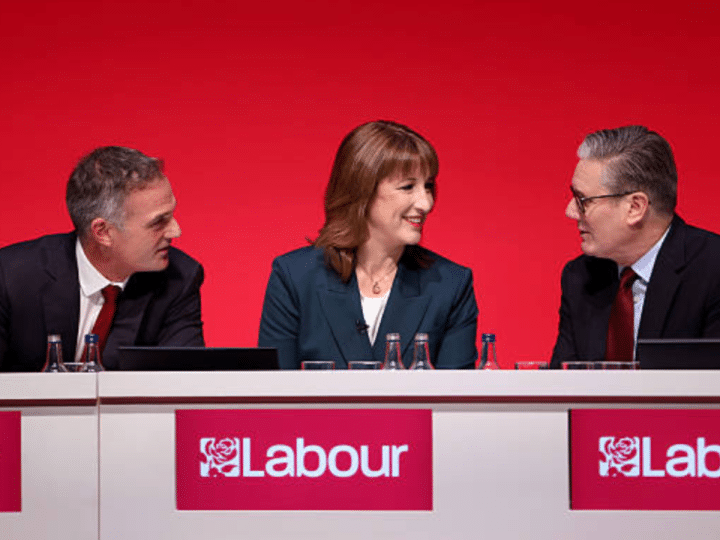
Starmeroid MP Peter Kyle and state prosecutors have been humiliated today after a constituent resoundingly defeated Kyle’s attempt to criminalise her for emailing him about Israel’s Gaza crimes.
Claire Kerrison had copied Kyle — her constituency MP — in on emails to Keir Starmer and his ministers about Israel’s criminal abduction of humanitarian volunteers trying to sail aid to Gaza during Israel’s illegal starvation blockade. Kyle took exception to this and complained to Sussex Police. Following the regime’s usual pattern, the police arrested Kerrison in a 4am raid.
The state charged Kerrison with ‘persistent misuse of a communication system to cause annoyance, inconvenience or needless anxiety’, for emailing her MP. She told Skwawkbox that Kyle knows who she is, as she has previously emailed him for help with standard ‘local MP’ issues. Kyle, a ‘Labour friend of Israel‘, clearly took exception to emails about Israel’s appalling crimes.
But the case has ended in failure, much worse than failure, in fact. Magistrate Paul Goldspring is no friend of the left. He has controversially released a neo-nazi on the basis of his A-level results and been disciplined for appearing to endorse “contentious” political views during a case. But he sent the crown’s lawyers away with a flea in their ear over the prosecution of Kerrison.
Litany of failure
In a “litany of failure’,” the prosecution failed to prepare its case properly in time and begged Goldspring for an adjournment. Goldspring refused and the crown presented no case. Goldspring dropped the charge. And as the icing on the cake, he ordered the prosecution to pay Kerrison’s legal costs.
Ms Kerrison said after the result that the case had been “lawfare,” “disingenuous at best” and brought by an MP with an appalling record of “support[ing] and assist[ing] Israel” in its genocide in Gaza. And she ended by bringing attention back to the people of Palestine facing Israel’s genocide and ethnic cleansing:
To suggest that my emails were sent for any other reason than to express my absolute disgust and horror at what is happening in Gaza and the Middle East is disingenuous at best.
Peter Kyle MP and the UK Government have supported and assisted Israel throughout the Gaza Genocide with little or no regard for the lives of Palestinians or indeed any of the victims of Israel’s murderous activities throughout the Middle East.
Lawfare is increasingly being used to silence our voices and quell our dissent. This is not only a waste of time and public money, it is also an infringement of our rights and freedom of speech.
Palestinians continue to be terrorised, dehumanised and murdered every day at the hands of the Israelis. The very least we can do is raise our voices in each and every way possible to let them know: ‘We see you’
“FREE PALESTINE!”
One small justice for Gaza
Her lawyers, Doughty Street Chambers, said in a bulletin about the result:
Brighton woman acquitted on charge of persistent emails to cause annoyance to Prime Minister, Foreign Minister and local MP about Israel’s conduct in Gaza
A Brighton woman, CK, was charged with a single offence under s. 127(2)(C) and (3) of the Communications Act 2003, for emails she sent on 10 and 11 June 2025 to senior politicians. The charge concerned emails sent by CK to the Prime Minister, Foreign Minister, and her local MP Peter Kyle MP, expressing concerns about the conflict in Gaza.
By 17 June 2025, the office of Peter Kyle MP had alerted the police in Brighton about the above emails, triggering the arrest and detention of CK at 04:33am. A skeleton argument was filed on behalf of CK, denying the emails were persistent or that their purpose was to cause annoyance, and that her communications were protected by her rights under Article 10(1) of Schedule 1 of the Human Rights Act 1998.
On 15 June 2026, the date of trial, the prosecution applied to amend the charge to include additional emails between 12 and 16 June 2025. On submissions on behalf of CK, the Chief Magistrate refused the prosecution application, and a further application to adjourn. The prosecution offered no evidence. The case against CK was dismissed.
One small justice to celebrate on a day in which the legal system has completely failed the people of Palestine and betrayed the rights of British people.
Featured image via Dan Kitwood / Getty images
By Skwawkbox


A new report by Mona Deely — CEO of Reform Initiative for Transparent Economies (RITE) — lays bare how support for Israel’s settler-colonial aggression in Palestine depends on disregard for international law by Israel and its allies.
Deely, also a UK-certified lawyer, presents a detailed account of how unconditional support for states engaged in genocide is compromising systems. Moreover, she underscores the acceleration of this beneath state-of-the art surveillance systems. In addition, she highlights the marriage of convenience with Big Tech.
The military support, legal interference, and lobbying across international institutions underpinning these alliances provide Zionist Israel with a political safety hammock. Together, they underscore the failure of democracy as an obligation states are legally bound to deliver.
The account is as damning as it is terrifying — a sullied portrait of the ‘free’ world careering towards the abyss. Deely also presents an analysis of media coverage after October 7 highlighting skewed reporting, exposing the ‘two-sider’ narrative, and the glib sanitisation of Israeli violence. The anti-Palestinian bias within the British media landscape stinks! Speaking of her motivations, Deely told the Canary:
[the report] raises the alarm on one of the most consequential issues we all face as well as pointing to the solutions.
The litmus test for all democracies
The report is an important contribution to the growing body of evidence intended which calls out the violation of international law.
Continuing down this path, Deely warns, means we’re moving towards a world in which the law is irrelevant and redundant. Instead, actions are motivated by the desperation to preserve the status-quo. This status-quo favours Israel at the expense of everyone else.
Take British courts for instance. They’ve shown themselves completely toothless, unable to halt the tide of illegal military exports to a country waging genocide on a captive population.
Commenting on the broader trend, Deely described Gaza as a “test” for “democracy, the rule of law and political integrity.” She explained that the report:
evidences how the same logic that permits the selective application of rights and law internationally is being applied at home to suppress legitimate dissent.
It shows a post-law environment that is incompatible with democracy and that is being entrenched through technological surveillance, misinformation, and poor governance.
The report presents a full-throated rendition of this:
democratic erosion in the US, UK and Germany has accelerated over the past two years, with the Gaza war acting as a magnifier […] it traces the links between disregard for international law and the decline of civil rights and identifies pathways to restore them.
It also raises serious questions about how technology is being weaponized in Gaza — reducing combat to a kill switch. Companies like Amazon, Google, Microsoft and Palantir are the cogs and strings of this genocidal, killing machine.
They are also embedded in the UK. Peter Thiel’s Palantir, for example, has access to identifiable NHS patient data. As a result, this raises serious and ongoing concerns about oversight and control.
People need to start doing their jobs
The report makes 12 policy recommendations, imploring politicians and civil servants to scrutinise policies that undermine international law and diminish democratic accountability.
Others recommendations include the call to suspend arms sales, severing military cooperation, and sanctioning Israeli war criminals and their colonial-settler apparatus, not just illegal settlers. Consequently, this clear-eyed roadmap should redirect the UK. In addition, others governments that may have lost their moral compass can benefit from it.
Deeley also makes recommendations to the media, whose failure to be impartial has been starker since October 7. The lawyer emphasised the need for media production that “reflects legal norms rather than normalising its violations.” In addition, journalists are duty-bound to investigate the facts — not to actively ignore, excuse, or play political ball.
Attempting to remind Western media outlets of their inherent responsibility to provide unbiased reporting, with an accurate understanding of the relevant legal positions. Additionally, media should center stories which are in the public interest,
Crackdown on dissent
Whilst political leaders continue to shield Israel and provide diplomatic cover like an obedient lapdog, citizens around the world have taken to mass protests, petitions, BDS campaigns and direct action.
However, rather than confronting their own failures, governments — especially in the UK — have doubled down, cracking down on dissent. Furthermore, they are restricting speech, criminalising forms of protest, and targeting campaigners advocating for Palestinian rights. They are also targeting those seeking adherence to international law.
Once again, ordinary people are paying the price.
In the UK specifically, we have seen the revocation of visas, the deportation of a Palestinian law student, the weaponisation of the Terrorism Act and pro-Israel groups repeatedly pressure and intimidate governments into suppressing valid criticism of Israel and racist Zionism.
One example noted in thee report circles back to Wes Streeting and his support for the IHRA definition of antisemitism, while criticised for stifling expressions of solidarity for Palestine — Gaza included.
Policymakers should act on this report’s recommendations, and the public should pay attention. Staying informed isn’t optional — we must collective in order to push back against an authoritarian and dystopian direction of travel. It impacts each and every one of us.
Featured image via Barold / the Canary

When David Hockney died last Thursday, Guido Fawkes ran with the headline ‘Anti-nanny state campaigner David Hockney dies aged 88’. It was a little light trolling, firstly by omitting to mention that he was one of the most popular and significant painters of the past hundred years, and secondly by highlighting his age. Dying a month short of his 89th birthday, the chain-smoking Hockney lived longer than most anti-smoking campaigners ever have or ever will.
Hockney beat the odds, but that is not the point. He was here for a good time, not a long time. His critique of the nanny state was not based on questioning ‘the science’ or warning of unintended consequences. He did not appeal to economics. He did not rely on sophisticated philosophical arguments about rights and liberty. For Hockney, it was a battle between beauty and ugliness, individualism and conformity, freedom and regimentation. While the ‘public health’ lobby only wanted to talk about death, he talked about life. As he said in 2004, ‘the opposite of fear of death is love of life.’
Hockney’s celebrity status meant that he was one of the few critics of the nanny state to be given a fair hearing by the media. Awed by the presence of a national treasure, the BBC gave a rare platform to someone who was not just tolerant of tobacco but actively pro-smoking. Hockney was so obviously not an industry lobbyist or right-wing libertarian that his opponents did not know how to deal with him. He was not there to say, ‘smoking is terrible, but…’. Instead, he went for the jugular. ‘I think you are too bossy, chum’, he told a hapless Labour MP in a debate about the smoking ban on Radio 4. ‘You are absolutely dreary. Some people want to live and they don’t want to live like you do. It doesn’t matter if I die early.’
‘Dreary’ is a word Hockney used a lot when he spoke out against lifestyle regulation. For him, dreariness was the antithesis of the ‘Bohemian’ lifestyle that he said he enjoyed and wanted other generations to enjoy. On the issue of tobacco, two things particularly irked him. As an artist and aesthete, he was repelled by the state-sanctioned vandalism of cigarette packs that culminated in plain packaging. When millions of ‘No Smoking’ posters went up in the summer of 2007, Hockney said: ‘The uglification of England is underway by people with no vision. I detest it.’ As a tobacco consumer, he loathed the ‘comprehensive’ smoking bans that gave him nowhere to go. Having lived for decades in California, he was no stranger to smoking restrictions, but the weather was sunny enough for him not to be inconvenienced too much. The prospect of a ban in every ‘public’ place in cold, rainy England was, he said, ‘the most grotesque piece of social engineering’ and would leave him nowhere to go. ‘Why must every place be suitable for you?’, he asked his tormentors on Radio 4, ‘What about me? Can’t there be some place suitable for me? You destroy Bohemia.’
Hockney had better things to do than engage in politics. Beholden to no one and in no need of money, he shot from the hip. Tony Blair couldn’t be trusted, he said, because he had been in a rock band but had never smoked cannabis. Hillary Clinton couldn’t be trusted because she banned smoking in the White House. Gordon Brown was ‘grotesque’ and did not ‘understand life’. Public-health minister Dawn Primarolo was ‘as naive as the Women’s Christian Temperance Union’. Rishi Sunak was ‘humourless’ and a ‘bossy boot’. David Cameron, Nick Clegg and Ed Miliband collectively represented ‘a meanness of spirit that pervades everywhere in England. Pettiness, meanness, dreariness.’
Much of Hockney’s defence of smoking was of the ‘you could get hit by a bus tomorrow’ variety. His critics accused him of being an addict trying to rationalise his habit. But he had legitimate fears about the regimentation of society and saw smokers on the frontline in a battle for freedom of choice. A billion people still smoke tobacco. It is not, in itself, a mark of Bohemianism. Of all Hockney’s quirks, it seems the least remarkable and yet, by the end of his life, it had become genuinely subversive to be a proud smoker.
The world changed and Hockney refused to change with it. When he came out as gay in the early 1960s, homosexual acts were illegal and cigarettes were advertised on television. He could scarcely have imagined that he would die while the government was celebrating Pride Month shortly after having an advertisement for an exhibition banned on the Paris Metro because his self-portrait depicted a cigarette. For some ‘liberals’, this was all part of the march of progress, but by this time, liberalism meant whatever they wanted it to mean. For Hockney, the crucial difference was that the gay-rights movement added to the sum of human freedom while the anti-smoking movement took freedom away.
For those who fondly remembered the Swinging Sixties, Hockney was like Banquo’s ghost, a constant reminder of their betrayal of liberal ideals. The Guardian, in particular, did not know what to do with him. Transgressive, gay, working-class artists were supposed to share the values of its readers, and yet Hockney kept lecturing them on their prissiness and it touched a nerve. He did it all with a laugh, a lightness of touch and a West Yorkshire accent that half a lifetime in America could not soften. It was not enough to talk about joie de vivre. You had to flaunt it. You do not fight the dreary by being dreary. Hockney wore a badge that said ‘End bossiness soon’ and explained that he had considered using the slogan ‘End bossiness now’ but thought that would be too bossy. There is a wonderful photo of him standing in front of the perennial protester Stuart Holmes (whom Hockney admired as a fellow eccentric), who is holding a placard calling for a complete ban on the sale of tobacco. Hockney is smoking impishly and holding a much smaller piece of paper on which he had written ‘DEATH awaits you even if you do not smoke’.
The contrast between the playfulness of Hockney’s bouts of libertarian activism and the po-faced outrage he received in response only served to underline his point. After Hockney sent the Guardian a piece of art criticising ‘anti-smoking fanatics’ in 2012, its readers responded by making drawings of their own – the artistic equivalent of bringing a knife to a gun fight – to whine about how ghastly smoking is. Unsurprisingly, they were the height of cringe.
After the Guardian ran a sycophantic interview with the Australian anti-smoking academic Simon Chapman, Hockney wrote a letter to the newspaper explaining why it would have been better off talking to him. Hockney listed all the things that he was and Chapman wasn’t, including being ‘a good and satisfied customer of the tobacco companies’, ‘not a professional agitator’ and ‘someone who prefers the centre of Bohemia to Australian suburbia’. As Chapman’s flaccid reply showed, it was the charge of not being Bohemian that stung him the most. It was hard to believe that a septuagenarian living in Bridlington was more edgy than a sociologist living in Melbourne, and yet we all knew it to be so.
The puritans and killjoys of ‘public health’ had no answer to him. He was a living legend and they weren’t. Spending all day painting and smoking is not everybody’s idea of a fulfilling life, but it sounded better than whatever Chris Whitty was doing. By shifting the debate from the risks of death to the joys of life, Hockney had taken them out of their comfort zone. All they could do was ignore him. It must have pained them to see him live too long for them to say, ‘I told you so’, but he was bound to die eventually. And now he has, and the world is a drearier place for it.
Christopher Snowdon is director of lifestyle economics at the Institute of Economic Affairs and the co-host of Last Orders, spiked’s nanny-state podcast.

A car-sized Pret chicken wrap with a whole “frankenchicken” stuffed inside, feathers and all, has appeared outside Pret A Manger in Oxford Circus. It marks the start of animal welfare charity Anima’s week-long tour of 15 Pret cafés throughout the city.
Pret is the target of a £1m public campaign as a response to the high-end café chain breaking its commitment to stop selling fast-growing chickens by 2026.
In 2018 Pret promised to stop selling fast-growing chickens by this year. It has now delayed that to 2032 and not switched a single bird to a slower growing breed.
Connor Jackson, chief executive of Anima, said:
Pret’s so-called commitment is simply a cover for its continued inaction. Contrary to customers’ expectations, Pret is selling the exact same fast-growing chickens as KFC, Nando’s and Burger King, and there’s no reason to believe this will change.
In the 8 years since Pret committed to phasing out frankenchickens, it has not transitioned one single chicken to a higher welfare breed. We’ve tried to solve this with Pret behind the scenes, but instead they have simply kicked the can down the road.
So we’ve now taken it upon ourselves to inform Londoners on Pret’s behalf, with the launch of the FrankenwrapTM- a monstrous but honest edition of Pret’s iconic chicken sandwich.
From today, frankenchicken ads will also plaster the London Underground, and there’ll be full page ads about Pret’s chickens in several newspapers throughout the week.
Anima is encouraging members of the public to pledge to take a break from Pret until the café chain starts phasing out fast-growing chickens.
Featured image Tom Woolard / Anima
By The Canary
Politics
Politics Home | Gen Z Labour MP Says Social Media Ban Will “Create More Problems” For Young People
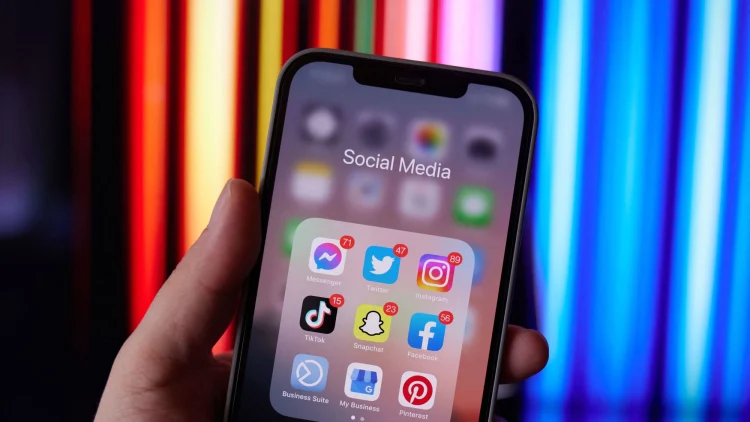
The government has announced it will ban under-16s from accessing certain social media platforms (Alamy)

5 min read
Labour MP Josh Dean, one of the UK’s youngest MPs, has said the government’s ban on social media for under-16s is going to “create more problems” for young people rather than making them safer.
The MP for Hertford and Stortford told PoliticsHome that young people would inevitably find a way to circumvent the new laws, which Starmer said would be in place by spring 2027, and warned that harmful new websites would be created as alternatives to platforms impacted by the ban.
Prime Minister Keir Starmer confirmed on Monday morning that the government will ban certain major social media platforms for under-16s, after months of building pressure from campaigners and some Labour MPs. The opposition Conservative Party had also been pushing for a ban.
“I will not be prepared to compromise on the safety and happiness of our children,” the PM said in a Downing Street press conference.
At 26 years old, Dean is the second-youngest MP serving in Parliament, having been elected in the 2024 general election aged 24. He told PoliticsHome he was “disappointed” in the government’s announcement, as he believes that a social media ban for under-16s is “missing the point” on how to protect young people.
“We’re missing an opportunity to regulate these platforms and hold the tech companies to account,” he said.
“My fear is, as it’s always been, that we’re putting the onus, the responsibility for the harms of the online world onto young people.”
He said that the vast majority of parliamentarians can remember a time before social media, while today’s generation of young people cannot.
“They’ve grown up with their lives intertwined with it, and I’m one of the few MPs that has as well,” he said.
“So much of this has become about people in Parliament deciding what childhood should be and not engaging young people on how we find the right balance for them.”
PoliticsHome understands that several online safety advocacy groups are frustrated that they spent significant time feeding into the consultation, only to then feel that the government has rushed out an announcement for political reasons. The consultation ran from early March to late May.
There are questions over how much longer Starmer has in No 10, with Greater Manchester Mayor Andy Burnham expected to launch a bid to replace him if he wins the Makerfield by-election on Thursday.
Dean described the consultation as “positive” but said that the views of young people hadn’t been given enough attention.
“We need to be listening to the young people who are telling us that they don’t think this is going to work and that there are other measures that we can be taking to get this right.”
Dean said he was concerned that digitally literate young people would find their way around platform-specific bans, and poorly regulated alternatives would start to pop up to fill the space left by the larger platforms.
“It’s going to leave the regulator desperately struggling to catch up and close them down,” he said.
“I’m worried that this approach is actually going to create more problems for those of us who want to keep young people safe rather than actually solve the problems that we’re concerned about.”
As one of the few current MPs who grew up with social media, Dean said he wants to work “constructively” with the government to “really engage with this issue, to reset young people’s relationships with the online world and hold the big tech companies to account in a way that I haven’t seen in my lifetime before”.
“We need to go after the features and functionalities, which I think is where the real action is, and we need to bring young people with us, so I want to work with the government to make sure we take advantage of that opportunity.”
The proposals for the ban will include restrictions on specific platforms for under-16s, including Snapchat, TikTok, YouTube, Instagram, Facebook and X, as well as restrictions on gaming services, live streaming platforms, and stranger communication. Messaging services such as WhatsApp and Signal will not be banned for children.
Further announcements are expected about night-time social media curfews for 16-and 17-year-olds in the coming weeks.
Starmer said the ban, similar to the one implemented in Australia last year, was “not something I do lightly” and isn’t “cost-free”. He said the government would “move at speed” to introduce the necessary legislation with the aim of the ban coming into effect in the early part of next year.
While Starmer was believed to have been initially sceptical about hardline measures like Australia’s ban, he told reporters on Monday that he had reached this decision “having looked at the evidence, having gone through the consultation, having looked at what happened in other countries, having listened to parents, listened hard”.
The government has said that nine in ten parents who responded to its consultation backed a minimum age of 16 for accessing social media platforms. Around 83 per cent said they believed the risks presented by social media outweighed the benefits.
At the same time, opinion polling has consistently found strong public support for an under-16 social media ban.
Starmer said he did not accept the argument that an under-16 social media ban is not worthwhile because some children will get around it, saying it would be like opposing drinking laws because underage people sometimes drink alcohol.
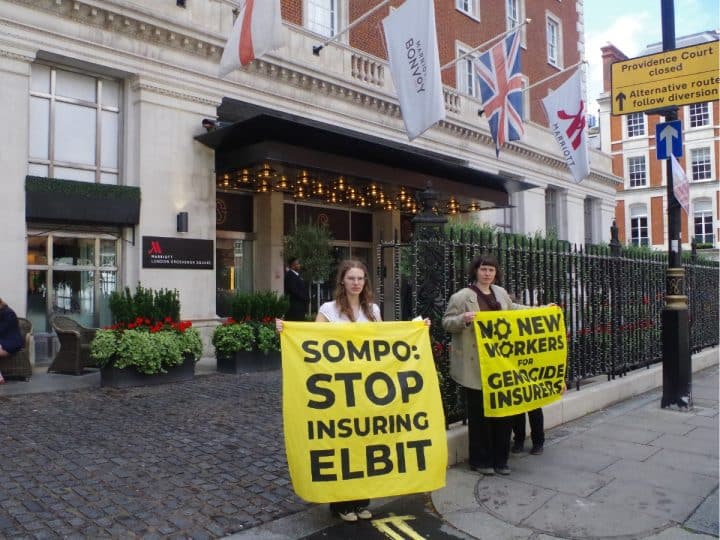
Student protesters have released footage and delivered letters to Sompo Insurance headquarters, defying attempts by event organisers to cover up the violent removal of activists from a major London financial conference.
The incident occurred at the Insurance Linked Securities Conference, hosted by Insurance Insider, where four activists, including a 17-year-old student, were pushed and dragged from the venue by security.
Security guards manhandled the 17-year-old student out of the event, as she shouted: “I’m just 17” and “Stop insuring genocide”.
Activists accuse insurance company of ‘complicity’
The students had attended the event to demand that Sompo, a key sponsor, drop its business with Elbit Systems. Elbit is an Israeli arms manufacturer which many have accused of complicity in war crimes and genocide in Gaza.
Rather than engaging in dialogue, event organisers attempted to suppress the evidence. They initially refused to return a phone used to film the protest, which they’d seized during the activists’ removal. They called police to the scene, who conducted full searches, and eventually recovered the personal property.
Following the incident, organisers approached the students to negotiate the release of the footage. The students allege that organisers “begged and tried to bribe” them to conceal the events.
In defiance of their requests, the activists released the footage today. And they visited Sompo’s London offices on Leadenhall Street to deliver letters to four senior executives.
Miriam Price, a student at LSE, said:
We were shocked by their treatment of peaceful protesters. We requested a dialogue by submitting a letter and were shoved and dragged from the room for our efforts.
All this fuss rather than accepting a simple demand: if you want new graduate recruits, don’t underwrite imperialist industries massacring communities and devastating ecosystems.
Shana Sullivan, a PhD student and spokesperson for the protest group No New Workers, condemned the insurance company’s stance:
We cannot compromise when insurers like Sompo are complicit in ongoing war crimes and genocide by taking on clients like Elbit Systems. There must be a hardline for anyone with a conscience, and it disgusts us that it is the young and less powerful who must point this out.
We want insurers to take their responsibilities to keep people and our planet safe seriously, and we vow to continue our campaign until we see real change.
The escalation coincides with a significant legal moment for anti-arms activism in the UK. It comes on the same day as the verdict of an appeal for Palestine Action, a direct action group known for targeting Elbit’s manufacturing plants, and just three days after four Palestine Action activists were sentenced to a total of over 20 years in prison for terrorism-related charges connected to weapon damage.
No New Workers continues to campaign for total divestment from the arms industry. The group argues that London’s financial sector mustn’t profit from the devastation of Gaza and the destruction of global ecosystems.
Featured image supplied
By The Canary

In an ideal world, we’d all be able to tell our partners exactly what we’re feeling, as soon as we’re feeling it.
But real life often falls short of that. Maybe it feels too vulnerable to express a need outright; maybe you’re worried about being dismissed, ignored or met with hostility if you do.
That’s where passive aggression can often come into play.
“Passive aggression is an indirect expression of emotions or unmet needs,” explained Tara Rullo, a trauma and couples therapist and owner of Middle Way Psychotherapy.
“Underneath passive-aggressive comments are vulnerable emotions like sadness, loneliness, overwhelm, fear, or longing.”

PhotoAlto/Frederic Cirou via Getty Images
As an example, Rullo described a couple where one partner has been retreating into their phone: “Instead of their partner saying, ‘I’m feeling ignored,’ or ‘I want to connect with you,’ the bid may come out sideways through comments like ‘Don’t let me interrupt your phone’ or ‘Must be something really important on there,’” she said.
“Underneath these comments is a natural longing for connection, but because the need is wrapped in irritation and sarcasm, the receiving partner hears criticism, contempt or undefined emotional distress instead,” Rullo continued.
Below, relationship experts describe some of the most common passive-aggressive phrases they hear used with significant others, then break down how to turn those moments into a genuine opportunity for connection instead.
‘It’s fine’ / ‘I’m fine’
This is one of those examples where the words mean one thing, but “your partner can clearly pick up on a tone,” Alexandra Solomon, a clinical psychologist and the author of Love Every Day, told HuffPost. “If the tone doesn’t match, the tone is all your partner’s gonna focus on.”
They’ll sense your distress, but have no way of knowing what’s wrong – only that you’re upset with them.
If you catch yourself saying this, Elizabeth Earnshaw, a licensed marriage and family therapist and author of Til Stress Do Us Part, recommended that you do your best to catch yourself in the moment and try to name the real feeling instead. A quick script might look like: “Actually, I’m not fine. I don’t know why I said that. I am feeling [angry/sad/etc].”
‘Must be nice’
Rullo flagged this kind of comment as one of the most concerning patterns she sees. “Must be nice” – as in, “must be nice to have zero responsibilities” or “must be nice to relax while I do everything” – can veer into contempt, which she said “is considered the single strongest predictor of relationship breakdown”.
What contempt signals, Earnshaw said, is that “you’re not only frustrated but have also lost a fundamental sense of respect for the other person.” The sarcasm in this kind of comment allows you to disguise it as humour, but the underlying message is loud and clear.
‘I guess I just can’t do anything right’
“Your partner gives you feedback or raises a concern, and you say, ‘Well, I guess I can’t do anything right then,’” Solomon said. “It’s passive-aggressive because you’re not addressing your partner’s concern and you’re generalising.”
It’s also a form of what Earnshaw called “chronic victim-playing”.
Instead of engaging with the specific issue – or taking a second to acknowledge that you’re feeling criticised and having a response to that – you turn the moment into a referendum on your worth.
It shuts down the conversation your partner was trying to have and takes it to a much more global and less productive place.
‘I shouldn’t have to ask’
Couples therapist Zach Brittle described “should” as a common tell that there’s some passive aggression at play: “I shouldn’t have to ask” and “you should know” are both common culprits.
Ideally, Brittle said, the speaker would communicate “from a place of desire (rather than demand).” This might look like reframing “you should” statements as “I would really like…”
Earnshaw also gave the example of a partner who’s feeling neglected and snaps at their significant other, saying, “If you cared, you’d know.” Instead, that partner might try saying, “I’m feeling lonely, and I’d love it if we could plan a date night soon.”
‘Wow, look who finally decided to help’
This is another comment that can be defended as a joke if it lands badly – but the person on the receiving end will find it almost impossible not to respond to the cutting tone underneath.
As with the “must be nice” genre of comments, this kind of comment can communicate “superiority, disgust, disrespect, ridicule or disdain,” Rullo said. “Instead of ‘I’m upset with you,’ the message becomes ‘I’m above you’ and ‘there is something fundamentally wrong with you.’”
That kind of atmosphere – where one or both partners “consistently feel looked down on, mocked or dismissed” – can be hard to repair.

DejanMilic via Getty Images
‘Someone else’s partner always does this / never does this’
This kind of comment can take a few forms: “My sister’s husband gives the kids a bath every night” or “Dave’s wife never asks him to help with the laundry.” Instead of directly communicating something you wish your partner would do, you use comparison to express your unhappiness.
The subtext, as Solomon explained, is always the same: “Why can’t you?” Your partner is put in the position of either asking you directly why you’re bringing that up, or – more likely – reacting defensively to the way you’ve just put them down.
‘I’m just the kind of person who likes to focus on what other people need’
Again, the subtext is the issue here. Solomon said that this is an example of “describing yourself in a particular way that’s positive, and the subtext is you’re describing your partner in a negative way.” In other words, “I’m the kind of person who likes to focus on what other people need – unlike you.”
The more honest version, she said, would sound something like, “I’m feeling troubled by the fact that I feel like there’s an imbalance here,” or, “Sometimes I don’t understand the choices that you make, because they’re so different than the choices that I make.”
‘Whatever you want’
This comment, when intended passive-aggressively, is often accompanied with a “heavy tone or eye roll,” per Earnshaw. Like “I’m fine,” it’s a form of stonewalling, what Earnshaw described as “withdrawing emotionally while making it obvious something is wrong.”
If you’re feeling the urge to say something like “whatever you want” about a suggestion you’re clearly not happy about, Earnshaw recommended two things: first, taking whatever time you need to cool down and communicate more clearly; and second, being honest that you aren’t satisfied with the current plan. You might try saying something like, “I’m not excited about that option. Let’s keep looking for a solution that works for both of us.”

Jacob Wackerhausen via Getty Images
The damage passive aggression can do is all too real
Because these kinds of comments don’t directly address an emotion or unmet need, they can provide a cover for the speaker: If the comment is received badly, they can pretend they were just joking or accuse the other person of reading too much into it. But this kind of retreat doesn’t negate the harm that these comments can cause.
“Passive-aggressive comments aren’t like yelling and screaming and name-calling,” Solomon said. “But they chip away at connection, they erode connection, and they erode intimacy. It is a big deal.”
There’s harm in both the passivity – the listener is left confused about what’s actually being communicated – and the aggression, which leaves the listener feeling defensive.
Earnshaw described passive aggression as “corrosive” over time: “the giver feels chronically unheard; the receiver feels constantly criticized but can’t respond cleanly.”
When that becomes a pattern, that’s where communication really starts to break down.
These kinds of comments can also be used as a defensive strategy in equally harmful ways – if one partner feels attacked, they might say something like “I guess I’m just a bad person” or “I guess I can’t do anything right” as a way to deflect criticism or otherwise derail the conversation. The effect is the same: The listener is left confused, defensive and ill-equipped to respond, since the real emotion driving the comment is never named.
At the core of the problem is how passive-aggressive comments can reframe the way couples tackle challenges.
“Whenever there’s conflict with our partner, there’s always an opportunity to put the problem in front, to move into a side-by-side stance and look together with our partner at the problem,” Solomon said. “Passive-aggressive comments reflect and reinforce this idea that it’s me versus you instead of you and me against the problem.”
There is a better way to communicate
All the experts polled here shared similar advice on how to communicate rather than resorting to passive aggression: Take the time to figure out what’s really going on with you, then do your best to communicate that directly, using “I feel” and “I need” statements as much as possible.
For both the person making passive-aggressive comments and the person on the receiving end, suggesting you pause the conversation until you can communicate more clearly and gently calling out the behaviour that you’re seeing can be good ways to set the conversation back on track.
For the person engaging in passive aggression, that might mean saying something like, “I notice that I tend to move into passive-aggressive behaviour when I feel overwhelmed. I’m really trying to change that behaviour.”
For the listener, that might mean saying something like, “When you say ‘whatever,’ I feel shut out. Can we talk about what’s actually going on?” In both scenarios, it acknowledges the aggression that was previously masked, and it tells your partner that you’re committed to communicating more directly.
If you’re recognising these passive-aggressive comments from your own relationship, don’t be too hard on yourself – and don’t take it as a sign that all is lost.
“[Passive aggression] is not like a personality trait,” Solomon clarified. “The vast majority of us grew up not seeing conflict handled well, and so we come into our intimate partnerships with legitimate skill deficits. The good news is that this is all something that can be learned.”

Ultra-processed foods, or UPFs, have been linked to everything from gut disruption to “hedonistic hunger”. The Royal College of Physicians has even expressed concern about some UPF ingredients’ possible links to cancer.
But not all experts agree on why they might be detrimental to our health.
Some, like Chris Van Tulleken, author of Ultra-Processed People, seem to argue that the ultra-processing itself causes harm. Others, like psychologist Professor Eric Robinson, said this hasn’t been proven. Then there are those who think issues, when they arise, are probably largely due to UPFs’ nutritional content.
A new review of studies published in the journal Science, which asked whether the adverse effects of UPFs are caused by ultra-processing or nutritional properties, may have an answer.
What is a UPF?
The Food Safety Authority pointed out that there isn’t a single definition for UPFs.
The Royal College of Physicians describes them as being “characterised by their long list of ingredients that are not typically found in freshly prepared homemade food,” including additives and colourings.
But the definition most experts reach for is set by the NOVA system.
This describes UPFs as foods which contain “formulations of ingredients, mostly of exclusive industrial use, typically created by a series of industrial techniques and processes”.
The nutritional content and even texture of UPFs, not their manufacture, may be the issue
Researchers looked at five randomised controlled trials that linked UPFs to obesity. These were conducted in different countries, including the USA, UK, Denmark and Japan.
After reviewing those studies, co-author Professor Eric Robinson (you might remember his earlier comments on UPF risks, mentioned above), said: “Collectively, available randomised controlled trials provide weak support for an ultraprocessing-specific effect of UPFs on body weight regulation and cardiometabolic function that is independent of established nutritional determinants”.
In other words, this review didn’t find enough evidence from the trials they looked at to suggest processing itself made UPFs a risk factor for weight gain or heart issues.
It tracks with what the British Nutrition Foundation (BNF) previously said, that UPF studies are “largely based on observational studies that, by design, cannot demonstrate cause and effect”.
There’s a lot more evidence, though, that the typical nutritional profile of many UPFs could be an issue, the Science paper suggested.
Why are some UPFs bad for us?
The research found that lots of UPFs had four possibly problematic nutritional qualities:
- A soft texture, which might make people eat UPFs faster,
- High calorie density,
- High levels of saturated fat and salt,
- Low fibre and low protein content.
Dr Suzanne Wylie, GP and medical adviser for IQdoctor, previously told HuffPost UK that some UPFs, like tinned beans, can be good for us.
In this study, researchers suggested that nutritional guidelines should focus less on whether foods are technically UPFs and more on whether they’re nutritionally poor, calorie-dense, and easy to eat quickly.
The BNF has previously warned against steering people away from UPFs based on the controversially “broad” NOVA classification system alone.

We hope you love the products we recommend! All of them were independently selected by our editors. Just so you know, HuffPost UK may collect a share of sales or other compensation from the links on this page if you decide to shop from them. Oh, and FYI — prices are accurate and items in stock as of time of publication.
Shorts for summer? Groundbreaking. It’s not like shorts are a completely new phenomenon, women have been wearing them for around a century now, because, duh, it’s only natural to want to get your legs out when the sun makes a rare appearance.
Of course, us humans have gotta keep things fresh by switching up the length and style of shorts we wear each year.
Back in the late 19th century it was only acceptable for women to wear shorts – or rather, long bloomers – while playing sports.
Jump forward to the 1920s and 30s, though, and short hemlines rose into mini french knickers. Towards the end of the century and early noughties, baggy shorts and jorts dominated.
The point being that now, we have the choice of every kind of short under the sun, which can make it tricky when it comes to buying a new pair.
To help you out, we’ve consulted Pinterest’s summer trend report to find out what trends are in style right now, and found the best long, mini, and micro shorts to shop ahead of the heatwave.
In 2026, the DIY trend has made its way to our shorts. According to Pinterest’s summer report, searches for ‘bedazzled jorts’ are up 212%, while searches for ‘diy micro shorts’ are up 186%. Plus, cargo and baggy shorts are making a comeback, alongside long linen shorts.

Why Every Woman Needs Financial Independence

World Cup 2026: Spain v Cape Verde Highlights – 15th June 2026

SpaceX IPO raised $10bn more than thought


-

 Business1 day ago
No Jackpot Winner as $257 Million Prize Rolls Over to $269 Million Monday Draw
-

 Crypto World4 days ago
Oppenheimer backs SpaceX as $70 billion retail frenzy builds
-

 Crypto World4 days ago
Markets Rally as SpaceX IPO Looms Amid Iran Tensions and Inflation Surge
-

 Fashion3 days ago
Weekend Open Thread: Tuckernuck – Corporette.com
-
 Crypto World19 hours ago
Zimbabwe Requires Crypto Businesses to Register Annually Under New FIU Regulations
-

 Entertainment6 days ago
The Ryan Gosling True Crime Thriller On Netflix That Gets Even Stranger, Stream It Now
-
 Sports6 days ago
Bangladesh beat Australia after 20 years in ODIs, register only their second win over six-time world champions | Cricket News
-

 Tech3 days ago
NanoClaw integrates JFrog registries to secure AI agent downloads
-

 Tech3 days ago
This Week In Security: Microsoft On Microsoft, Register Your Domains, Linux On ARM, And FreeBSD Joins The File Cache Club
-

 Crypto World3 days ago
Bitget enters Argentina’s regulated crypto market through PSAV registration
-

 Politics4 days ago
Politics Home | Healey Resignation Is “Colossal Failure Of Government”, Says Former Labour Defence Secretary
-
 Tech4 days ago
Dutton Ranch star claims they ‘didn’t see any disruption’ on set following Chad Feehan’s exit from Yellowstone spinoff fueled by Taylor Sheridan clash rumors
-

 NewsBeat4 days ago
El Nino has formed in the Pacific and could set records, forecasters say
-
 Tech5 days ago
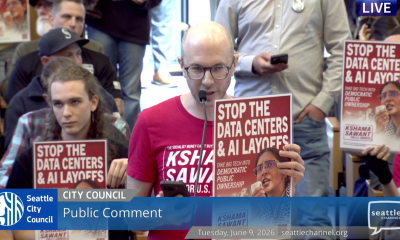
‘This is Seattle’s position on AI’: City Council votes unanimously to pause big new data centers
-
 Entertainment4 days ago
Donnie Wahlberg & More Heat Up Las Vegas at Circa’s Barry’s Downtown Prime
-

 Sports4 days ago
First Time Since 1971: Australia Register Historic Low In ODI Cricket
-
 Tech4 days ago
Opendoor Ends India Operations, Fueling a Bigger Conversation About AI and Outsourcing
-

 Politics4 days ago
Belfast burns, while Met chief points finger at Iran and Russia
-

 Business6 days ago
Thailand Ranks Second Worldwide for AI Adoption Growth, Microsoft Reports
-

 NewsBeat3 days ago
FBI searches office of Ohio voter registration group
You must be logged in to post a comment Login