

Politics
ICC prosecutor suspended over alleged sexual misconduct in ‘politically motivated smear campaign’

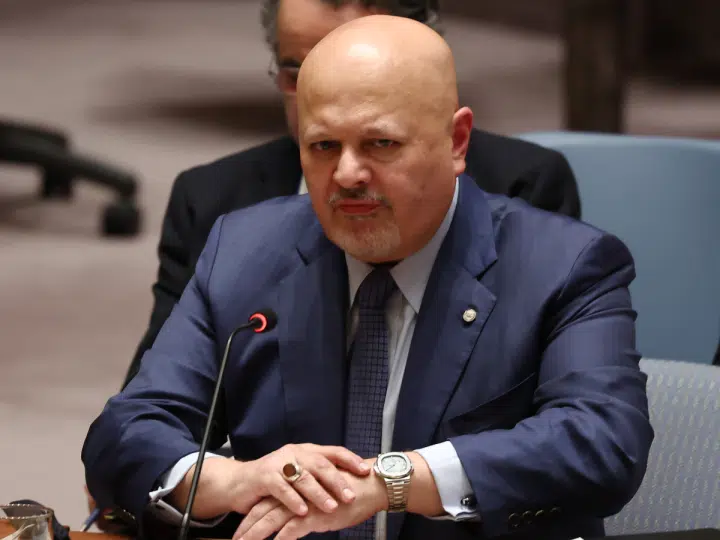
The International Criminal Court’s (ICC) chief prosecutor Karim Khan has been suspended from his duties following an investigation into allegations of sexual misconduct. Khan has now been referred to disciplinary proceedings which will see a vote by all 125 ICC member states, with the upcoming vote set to decide his fate.
However, prior reports regarding the investigation suggested that three judges found that the evidence was not conclusive, despite a UN probe initially finding a “factual basis” for the allegations of sexual misconduct raised by a female aide.
Khan has refuted the allegations levelled against him as a “politically motivated smear campaign,” stating:
The decision is unlawful, procedurally unfair and unsupported by evidence.
As a result, fresh concerns are raised as to why this has now resulted in a member-state vote which could kick Khan out of the ICC.
Moreover, this grows particularly concerning in light of threats and sanctions imposed by Western states towards Khan and the court itself following his decision to issue arrest warrants for genocidal Israeli leaders.
BREAKING: ICC chief prosecutor Karim Khan has been suspended pending a vote by member states after a probe found he committed serious misconduct.
Khan denies the allegations and faces a possible removal vote.
— Al Jazeera Breaking News (@AJENews) June 8, 2026
 More on https://t.co/5H0QqpfIYw pic.twitter.com/mmSG5phi1t
ICC: Khan denies any wrongdoing, and evidence is inconclusive
Khan will now face a vote by all 125 member states, but further disciplinary action will require at least 65 states to decide against him. Nevertheless, prior reports surrounding the allegations, which prompted Khan to take a voluntary leave of absence when first raised, suggest that there is not conclusive evidence to prove beyond a reasonable doubt that the claims are valid and legitimate.
Despite that lack of evidence, the bureau – the executive committee of the court’s oversight body – has chosen to refer to a member state vote after making its own decision regarding Khan’s disciplinary proceedings. Frustratingly, the executive committee has not offered an explanation for why it chose to formally suspend Khan, despite reports from Reuters and the Associated Press that a three-judge panel selected to assess the case found that the evidence was not conclusive enough to support the allegations.
However, any faint prospect of understanding the rationale behind such a strong rebuke of the ICC prosecutor will be challenging, given that the Bureau has stated:
The decision of the Bureau and the related documentation will remain confidential.
In contrast, Khan has come under significant pressure, receiving threats and sanctions by leaders of Western states following his principled decision to issue arrest warrants for genocidal Israeli leaders, PM Benjamin Netanyahu and former minister of defence Yoav Gallant. Since charging the pair with war crimes and crimes against humanity seen in Gaza, the ICC and its prosecutor have faced widespread political pressuring to withdraw the warrants.
Defiantly, and in keeping with his stated commitment to upholding international law, Khan has stood by his position and resisted attempts by pro-Zionist governments and political actors in the West to pressure him into silence.
ICC prosecutor Karim Khan remains defiant and set on justice for victims of genocide, as US sustain sanctions on him and his family
By @MaddisonW92 https://t.co/xF9OGt5Hlu — Canary (@TheCanaryUK) June 3, 2026
Sanctions and threats from Western pro-Zionist leaders
Khan has condemned the decision taken as a politically motivated smear campaign. A majority of 21 diplomats sitting on the executive committee recommended the finding of ‘serious misconduct’ despite three judges finding no real evidence of wrongdoing. Given the lack of evidence and the strong position taken by this executive body, the suggestion of sinister political motivations being at play is hard to discount.
After all, we know that then-foreign secretary David Cameron threatened Khan in an attempt to intimidate him into refraining from issuing arrest warrants, saying that the UK would withdraw from the ICC if he didn’t. Khan did not back down, and we are still a member of the ICC – but resistance to holding Israel accountable for its flagrant war crimes, abuses, and crimes against humanity is still going strong as the UK’s Foreign, Commonwealth and Development Office (FCDO) ‘lost’ all recorded evidence of Israel’s crimes.
Furthermore, and likely relevant to his subsequent character assassination, a British-Israeli lawyer acting on Netanyahu’s behalf reportedly warned Khan in May 2025 that, unless the ICC abandoned the case against the Zionist, genocidal leader, they would “destroy” both the prosecutor and the court itself. Such a warning is surely designed not merely to influence a legal proceeding, but to intimidate the very institution charged with upholding international law.
This state-led intimidation should be illegal
The law rightly treats the intimidation of jurors as a serious offence because it undermines the integrity of the judicial process. In the same way, attempts to pressure or coerce an international court and its officials should bring equal criminality. But that principle only holds if Western leaders are, in practice, prepared to defend the rule of law consistently and without fear or favour.
Nonetheless, this principled, moral leadership certainly won’t come from the US. We wrote recently about Khan’s dogged resistance to the US’ abusive, maligned pressure – which saw unfair, and arguably illegal, sanctions applied against himself and his children by US President Trump:
Khan opened up about the coercive agenda at play to intimidate him as he pursues justice and accountability for the tens of thousands of victims of flagrant war crimes and crimes against humanity.
In response, Khan defiantly centered those who have lost everything as a result of imperialist aggression, saying:
“.. it’s not about us. It’s about victims and their right to justice.
They’re not worthless. They’re not numbers. They’re not abstract concepts.
They’re people that have lost their babies, their wives, their husbands, their grandparents.”
Sanctions didn’t work – now they’re weaponising disciplinary processes
Therefore, Khan argues that this may be yet another attempt at intimidation and silencing by the powers he believes dominate the West—Israel and its closely aligned allies in the United States and the United Kingdom.
Regardless of the cynical and potentially subversive agenda that may be driving these actions against him, the member states will ultimately decide any further steps through a vote. International law must matter. Without it, the world risks descending into barbarism, where the most powerful actors remain untouchable and can act with complete impunity. In such a status quo, no one can truly be safe.
Featured image via Getty/Michael M. Santiago


Great news for fellow Rivals fans: Disney+ just confirmed the show has been given the go ahead for a third season.
That means the Rutshire drama will continue past this year’s November release, when we get to witness the second half of season 2.
But what do we know so far about the coming series?
When will Rivals season three come out?
We don’t know yet, though HuffPost UK has asked Disney and will update if we hear back.
The gap between Rivals season one and Rivals season two was about a year and a half.
What’s Rivals season three about?
According to a Disney press release, the franchise’s third season will be “shocking”.
In a teaser, they said: “As the dust settles post the scandalous revelations in Season Two, we see the stakes become higher and the alliances more fragile, with nothing staying buried for long.
“New romances blossom, old flames rekindle and shocking secrets will be spilled in this third series which takes everyone’s favourite rivalries to the next level. In a world of power, passion and betrayal, everyone has something to lose.”
Lee Mason, vice-president of scripted at Disney+ Europe, Middle East, and Africa (EMEA), added in a release: “Expect more ambition, more romance, more rivalries and, of course, more scandal as we return to Rutshire for another irresistible chapter.”

Is there a trailer for Rivals season three?
Why was Rivals renewed for a third season?
The first half of Rivals season two heralded the biggest original Disney+ premiere of 2026 in the Europe, Middle East, and Africa (EMEA) region.
It’s also gotten rave reviews, which we can’t imagine hurts.
Lee Mason, vice-president of scripted at Disney+ Europe, Middle East, and Africa (EMEA), said: “The phenomenal response to Rivals is a credit to the bold, irreverent and endlessly entertaining world created by Dame Jilly Cooper, our cast, creative team and production partners at Happy Prince.”
Who will star in Rivals season three?
The second series marked the additions of Hayley Atwell, Rupert Everett, Maxim Ays, Bobby Lockwood, Jonny Weldon, Eliot Salt, Holly Cattle, Olive Tennant, Oliver Dench, Amelie Child-Villiers, and Amanda Lawrence to the cast.
HuffPost UK asked Disney whether any cast changes are expected for the third season of the show. They haven’t responded immediately, but again, we’ll let you know if anything changes.
Who’s producing Rivals season three?
The third series will be produced by:
The production company behind Rivals is Happy Prince.

Shrek, the little ogre that could, is set for his fifth movie in the DreamWorks franchise.
Shrek 5 has been confirmed since 2024, and provides a welcome end to the movies’ 16-year hiatus.
Mike Myers will play the titular role, while Cameron Diaz and Eddie Murphy will reprise their roles as Fiona and Donkey, respectively. Originally set to come out in 2026, the flick is now due for release on 30 June, 2027.
Still, at least fans can console ourselves with the just-released trailer, despite its notable omission. Universal had previously released a 2025 teaser, though this was an animated cast announcement rather than a glimpse at the contents of the film.
“It’s happening – it’s really happening!” star Cameron Diaz said in an Instagram post above the new preview.
Universal Pictures’ 81-second-long teaser shows yet another adventure for the donkey and Shrek, as well as what seems to be a worn-out pastiche of Frozen’s Olaf, who growls, pipe in hand: “Wanna date a snowman?”
(In the Disney film, Elsa’s sister Anna famously sings, “Do you wanna build a snowman?” before the princesses meet their animated snowman companion).
The family, including Donkey, Fiona, Shrek, and their children Fergus and Fakle end up imprisoned in the clip, too.
But Shrek and Fiona’s other child, Felicia, who is voiced by Zendaya, doesn’t appear once in the trailer, despite her name appearing under Cameron’s, Myers’, and Murphys’ in the title card at the end of the video.
The first Shrek 5 cast announcement, released in 2025, did feature Zendaya’s voice and character.
Zendaya, whose partner, Tom Holland, seems to have recently confirmed his marriage to the Euphoria star, has a history with Shrek.
After her role in the movie was announced, fans brought up a 2017 X post of hers which read, “I watch Shrek too often in my adulthood”.
“This aged well,” fans said at the time.

Photos of the back of the eyes could offer a way to predict some of the common risk factors linked to Alzheimer’s disease, which is the leading cause of dementia.
That’s according to a new study, which used AI to analyse retinal photographs from more than 40,000 UK patients.
Alzheimer’s disease is thought to be caused by the abnormal build-up of proteins in and around brain cells. It impacts more than 520,000 people in the UK.
Some of the risk factors for developing the condition include: old age, genetics, history of head injury, smoking, obesity, diabetes, high blood pressure, high cholesterol, hearing loss, untreated depression, loneliness, drinking too much alcohol and not exercising enough.
In the latest study, researchers were able to identify regions of the retina associated with Alzheimer’s risk factors.
Lead author Ruogu Fang, a professor of biomedical engineering at the University of Florida, said most of the existing diagnostic tools for Alzheimer’s disease focus on later in life, “when it is too late to intervene”.
But by looking at retinal health earlier on, “we offer new opportunities to identify patients at risk, offer appropriate tests and encourage them to develop healthy lifestyles to mitigate their risk”, she said.
Retinal photos are a relatively easy and cheap way to assess health
Many patients routinely have pictures of their eyes taken – whether because they have diabetes or glaucoma, or for routine eye examinations.
That means analysing retinal photographs could be a simple and low-cost way to spot Alzheimer’s risks factors compared to more expensive technologies, like MRI scans.
Co-author Seowung Leem, a doctoral student at University of Florida, said with the assistance of AI, they were able to identify subtle retinal variations that were previously overlooked across thousands of subjects – and these variations “may function as reliable indicators of future disease risk”.
Their AI model accurately predicted biological characteristics like sex or blood pressure as well as lifestyle factors associated with developing Alzheimer’s, such as smoking, alcohol use and even insomnia.
While these factors might be captured in patients’ medical charts, researchers noted those records are often incomplete. For example, people might not reliably report alcohol consumption or smoking.
Retinal photographs may provide another, more objective way to detect these risk factors, they said. Plus, they can capture damage accumulated over the years. The findings were published in the Journal of Alzheimer’s Disease.
Prof Fang’s group has already shown how retinal photographs can detect active cases of Alzheimer’s disease.
They suggested identifying early risk factors via retinal photos could better identify patients who might respond to earlier interventions – including protective lifestyle changes, some medications or brain training – before irreversible damage takes place.

We hope you love the products we recommend! All of them were independently selected by our editors. Just so you know, HuffPost UK may collect a share of sales or other compensation from the links on this page if you decide to shop from them. Oh, and FYI — prices are accurate and items in stock as of time of publication.
If there’s one thing you don’t want to mess around with, it’s your kid’s sleep.
From newborn through to primary school age, what gets them to sleep and keeps them comfy through the night is a delicate balance.
Whether they’re still being swaddled, or have graduated to pyjamas with actual sleeves and legs, naturally, you only want what’s best for your little one.
If your whole house is tired of sleepless nights, we’ve found the sleepwear solution to keeping your kids safe and itchy skin-free.
Australian brand ergoPouch uses all organic cotton and natural fibres to create sleepwear for kids up to six years old that’s as comfortable for your them as it is reassuring for you.
From practical swaddles, to preschool pyjamas, each item is made with their skin comfort in mind, and comes in a range of cute colours and patterns. Its sleepwear is even TOG-rated, so you know they’re the right temperature throughout the night.
Right now, they have 25% off some of their bestselling items. If you’re looking to stock up on breathable, organic kids pyjamas or bedding, we’ve rounded up our top picks from the ergoPouch sale to shop now.
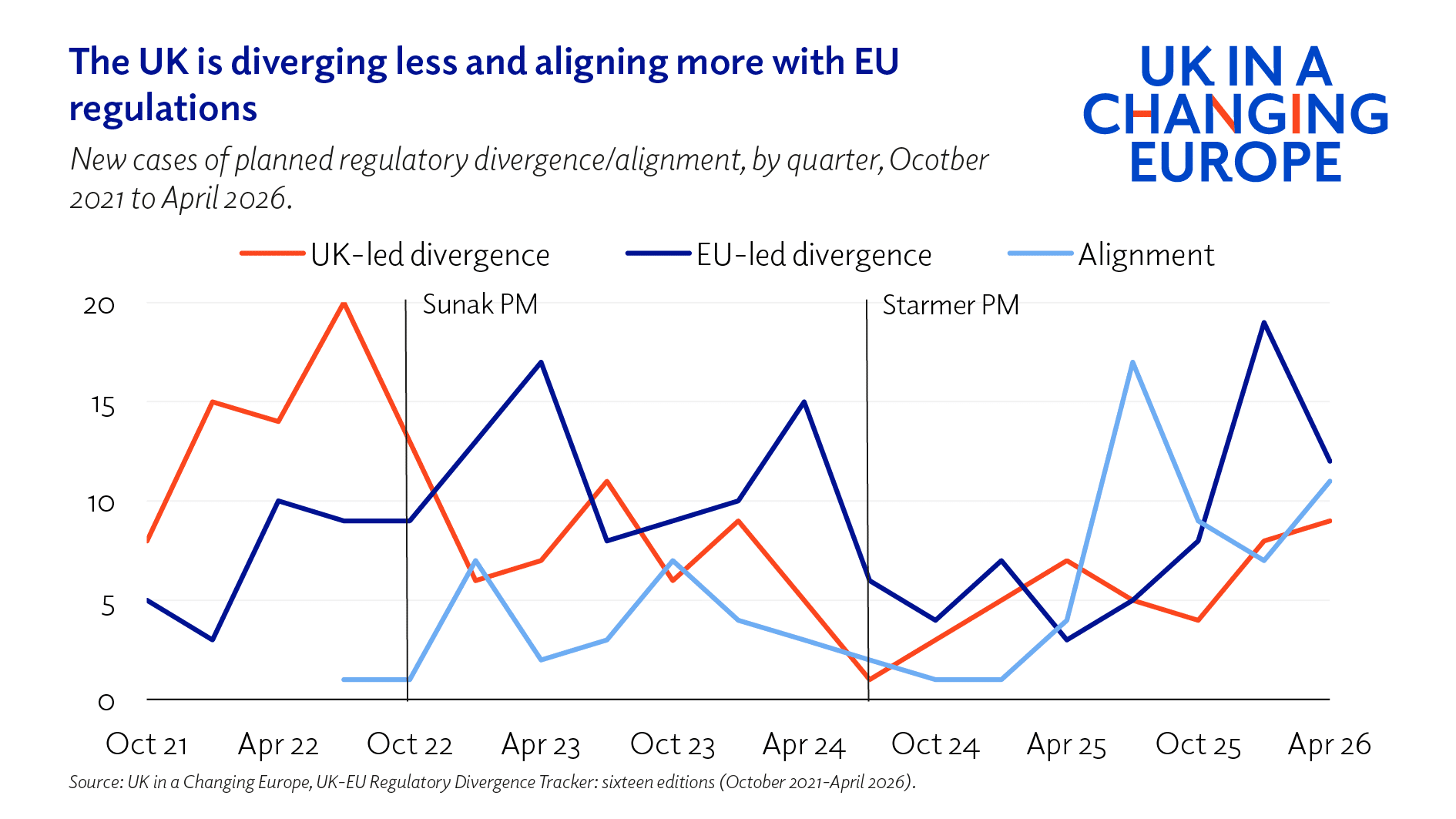
Ahead of the ten year anniversary of the EU referendum on 23 June, UK in a Changing Europe experts have written a short series of blogs reflecting on some of the issues at the heart of Brexit then and now. Here, Joël Reland reflects on Brexit and regulation.
The Leave campaign’s central slogan – ‘Take Back Control’ – evoked the idea of EU rules preventing the UK from looking after its own best interests. Boris Johnson bemoaned Brussels “telling us how powerful our vacuum cleaners have got to be, what shape our bananas have got to be” while a Leave campaign briefing claimed that EU regulations serve ‘a small number of large multinationals’ and ‘crush entrepreneurial competition’.
Against that backdrop, Theresa May quickly decided that regulatory freedom would be central to her Brexit agenda, using her first Party Conference speech to promise that “our laws will be made not in Brussels but in Westminster”.
But it soon became apparent that this would both add major costs to EU trade – due to leaving the single market – and create a regulatory border with Northern Ireland (which had to remain aligned to EU law to keep the Irish border open).
This realisation was, according to Philip Hammond, “like a light bulb going on” – leading May to develop the ‘Chequers deal’, under which the entire UK would continue to adhere to all EU regulations necessary to maintain frictionless trade in goods. Boris Johnson and David Davis resigned at this “semi-Brexit” and May ultimately failed to get her plan through Parliament.
Johnson subsequently won an election promising to use ‘post-Brexit freedoms to transform the UK for the better’ and accordingly negotiated a Brexit deal which gave Great Britain near-total control over its law-making, at the cost of new trade frictions with the EU and – despite his denials – Northern Ireland.
Yet Johnson’s administration consequently struggled to develop a plan for unpicking EU red tape. A 105-page paper called ‘The benefits of Brexit’ outlined a long list of options for regulatory reform, but gave no sense of prioritisation or how policy would be delivered.
The strategy – if there was one – focused on the quantity, not quality, of reform. In 2022, the newly-installed Minister for Brexit Opportunities, Jacob Rees-Mogg, announced plans for a ‘Brexit freedoms bill’ – officially titled the Retained EU Law (REUL) Bill – under which all REUL (i.e. EU-derived law) would expire by default, except where ministers chose to retain specific pieces. It was accompanied by a Retained EU Law Dashboard, to provide live data on the proportion of REUL which had been abolished.
The highly performative approach was heavily criticised, especially by business, for creating a deeply uncertain regulatory horizon which prevented long-term planning and risked citizens losing vital legal protections – especially as officials did not even seem to know how much REUL was out there in the ether.
The plan was eventually abandoned under the Sunak government, with then-Business Secretary Kemi Badenoch stating “we are not arsonists… I do not think a bonfire of regulations is what we wanted”. Since then, the rate of plans for divergence has slowed significantly.
A glance at the REUL dashboard today might make you think that a bonfire of EU red tape has, nevertheless, been lit. It shows that 37% of REUL has been reformed – with 23% repealed and 13% amended or replaced (the other 1% has expired).
But this, in fact, amounts to little more than a glorified regulatory spring clean: the vast majority of ‘reformed’ REUL has either been subject to technical amendment (e.g. restated in a new legislation) or is no longer of relevance (e.g. legislation relating to the 2001 foot-and-mouth crisis or EU regimes which the UK is no longer part of).
Moreover, our series of Divergence Tracker reports, shows that successive UK governments have delivered little in the way of substantive divergence from EU law.
There have been a smattering of changes to financial services regulations, such as lifting the cap on bankers’ bonuses, while rules on the use of genetic editing techniques have been liberalised. Several ‘freeports’ have been established; the export of live animals for fattening and slaughter has been banned; and certain alcohols are now taxed by strength, not quantity. There have also been some symbolic changes, such as permitting the sale of Champagne in pint-sized bottles and new guidance on selling groceries in imperial measures.
Given regulatory control was so central to Brexit, what explains this lack of action? One reason was that the government never set a clear strategy for divergence, while the civil service – overwhelmed with a wide range of new post-Brexit regulatory functions – had little capacity to focus on strategic ideas for reform.
But the most fundamental reason is that divergence, more often than not, adds costs to trade. The government argued that regulation could be better ‘tailored’ to UK interests (rather than being a cross-EU ‘compromise’). But, from a trade perspective, regulation is all about compromise: creating common standards between parties which reduce trade frictions.
‘Tailoring’ regulation to a single country therefore increases frictions, and several marquee plans for divergence – including on data protection, medical devices and conformity assessments – were abandoned for this reason.
British companies have made it more than apparent that they prefer to avoid divergence where possible. Across multiple sectors – from vehicles to products to food – they have voluntarily opted to adhere to new EU rules, even though they do not apply in Great Britain, because it is necessary to maintain access to the EU market. This is the reason why Rachel Reeves now argues that divergence “should be the exception, not the norm”.
One final curiosity is that the UK has repeatedly used its regulatory freedom to move in a similar direction to the EU. It has set higher emissions reduction targets and has an earlier phase-out date for combustion engine vehicles. Its new rulebooks on online safety and digital markets bear an uncanny resemblance to the EU Digital Services and Digital Markets Acts. And employee protections have increased, despite earlier promises to scrap the Working Time Directive.
Even the few notable cases of divergence often serve to strengthen the hand of the state – increasing animal welfare protections and alcohol taxes – while a fully-fledged UK-US trade deal remains elusive, not least because of public opposition to any watering down of food standards.
Brexit has revealed the UK’s regulatory instincts to be much more European than many assumed.
By Joël Reland, Senior Researcher, UK in a Changing Europe.
1 Lauren Sullivan LAB 2 Frank McNally LAB 3 Sarah Owen LAB 4 Matt Vickers CON 5 Debbie Abrahams LAB 6 John Whitby LAB 7 Beccy Cooper LAB 8 Ayoub Khan IND 9 Louie French CON 10 Bradley Thomas CON 11 Yuan Yang LAB 12 Josh Babarinde LIB 13 Anna Gelderd LAB 14 Chris Vince…
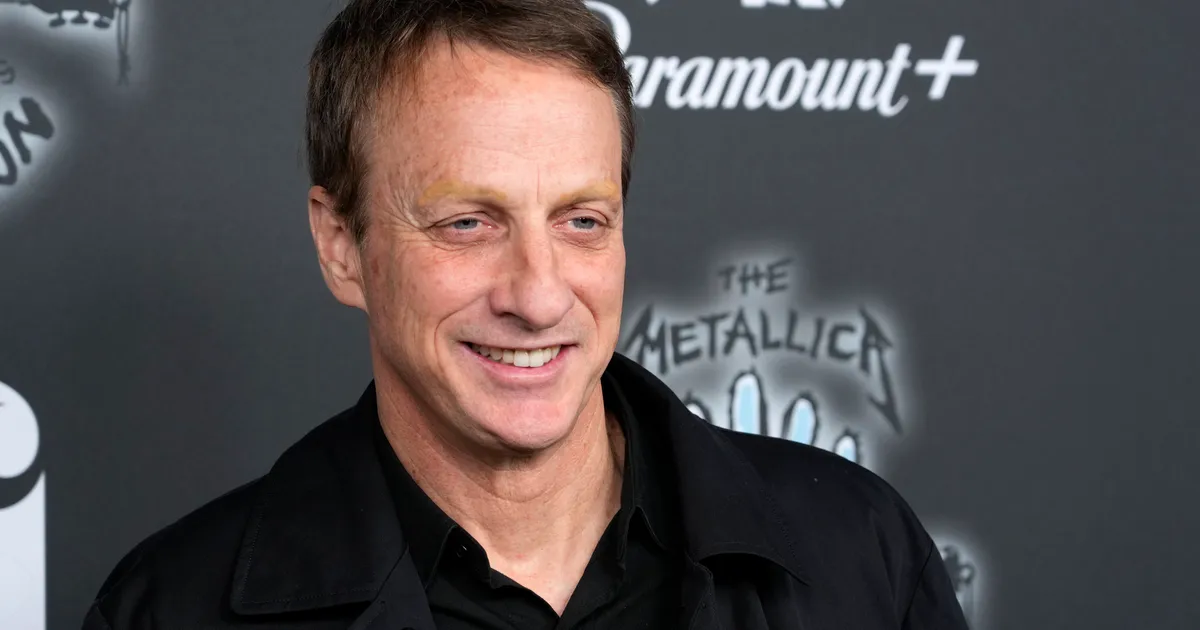
Skating legend Tony Hawk recently shared details of an abandoned Space Jam sequel on Netflix’s The Pete Davidson Show.
The 58-year-old pro skater said he was approached for Skate Jam, a follow-up to the 1996 film starring Michael Jordan.
“The way that the whole story went down was I got a call saying, ’Hey, Warner Brothers is really interested in doing Skate Jam. And I was like, ‘That is the most amazing thing I’ve ever heard,’ right?
“My oldest son, when he was very young, watched Space Jam endlessly, and had to get Space Jam shoes, would quote it,” he added on the video podcast.
“And so, just being a father, I was, like, I know how much those movies resonate. To make it about skating would just be like the ultimate dream. They said they really want to get on this.
“They’re about to release Back In Action. That is the vehicle to reintroduce Looney Tunes, Warner Brothers back to the movies, and then we’re going to hit him right back with Skate Jam,” he claimed.
Tony said that the team were so keen, he met them in a restaurant in LA’s airport to discuss details of the project.
“I was leaving for Australia, and they said, ‘We really need to secure this – make sure you’re interested, make sure you like the outline of it,’ and so they met me at that LAX restaurant, and they presented me with storyboards, in the airport, in that restaurant.”
He recalled: “It was wild. My agent flew from New York to be there, to be in the airport. This thing was happening, right? They’re showing me all the stuff. I’m, like, ‘Yeah, it looks super cool’… I approved everything there.”
Tony claimed he was offered a million dollars for the deal. But, he said, things fell apart after his return from Australia.
“My sister was my business partner and my agent at the time. She’s like, ‘They’re not calling us back,’” he said.
“I thought we were like, this is all happening. And then, finally, the word came back that Back in Action didn’t do the numbers they’d hoped for. They didn’t want to pour anything else into Looney Tunes. So you can’t do Skate Jam.”
He also stated “that was the one that got away, though, like, in my life”.
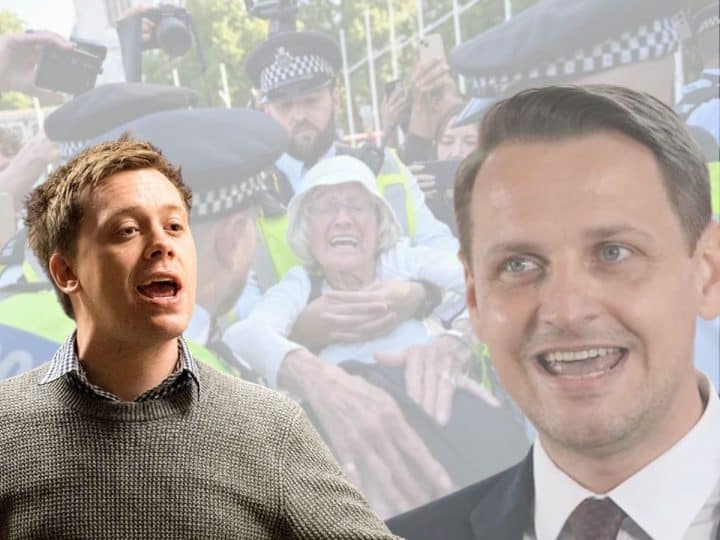
On 15 June, we reported that Labour minister Mike Tapp was gloating about the decision to maintain Palestine Action’s ‘terrorist’ proscription. A day later, we reported he was trying to ensnare Zack Polanski into saying he supports Palestine Action – something which would have landed him with a lengthy prison sentence. In other words, he’s a nasty piece of work. And the nastiness has only continued:
Grow up. Homophobic innuendo isn’t going to get you out of this one.
Neither is pretending you’re a victim of antisemitism, which you conflate with opposing genocide.
You’re a government minister trying to get your political opponent arrested https://t.co/yAsyFBNjNB — Owen Jones (@owenjonesjourno) June 16, 2026
Palestine Action ‘debate’
The Tapp tweet above was in response to this:
I’m more disturbed that you spent the night thinking about me.
The antisemitism I’ve woken to from the extreme left over night is utterly unhinged, shameful and disturbing.
— Mike Tapp MP (@MikeTappTweets) June 16, 2026
The “unhinged law” in question has led to scenes like the following:
More than 100 Palestine Action supporters are arrested outside the Royal Courts of Justice after judges ruled the ban on the group was lawful https://t.co/1E9SiT2b6W
— Daily Mail (@DailyMail) June 15, 2026
In the UK, it’s now a terror offence to peacefully sit down holding a sign.
Do you feel terrified by the above images?
No?
Because Mike Tapp does, as he made clear with the tweet that kicked it all off:
Supporting Palestine Don’t support terrorists.
— Mike Tapp MP (@MikeTappTweets) June 15, 2026

Supporting Palestine Action 
And as many have pointed out:
labour mps love to say this and then not support palestine either https://t.co/u4EuFi6mxS
— adam (@resurrecti0ns) June 15, 2026
Tapp is a flagrant example of this, because – as Skwawkbox reported:
Labour Friends of Israel made Tapp an honorary vice chair. This group exists to forward Israel’s interests in the UK, which is a problem, because Israel’s interests include:
- Subjecting Palestinians to decades of apartheid.
- Committing genocide.
- Doing everything possible to break the ceasefire between the US and Iran, pushing the world ever closer to a fuel crisis that crashes the global economy.
When the non-Jewish Tapp says he’s faced ‘antisemitism’, what he means is people called out his political affiliations. This is how Zionist propaganda works. You can’t say a politician takes money from Israel’s backers – even if they do – because it sounds like ‘Jews control politics’. It’s a ‘get-out-of-jail-free card’, in other words; a way of using the sins of the past to obscure the sins of the present.
I just scrolled through maybe a few hundred comments (not all tbf) under Mikes heavily ratioed Palestine Action post and didn’t see a single one that could be antisemitic. Unless the definition has now broadened to calling him a dickhead. pic.twitter.com/Z1MFVTUbE1
— Razor Marone (@Streettough) June 16, 2026
Yes or no?
In response to Tapp’s ‘yes or no, do you support Palestine Action?’ question, PhD researcher Thanos Angelopoulos asked the following:
nine questions. Each yes or no.
1) Did the International Criminal Court issue arrest warrants on 21 November 2024 against Benjamin Netanyahu for war crimes and crimes against humanity in Gaza, including the use of starvation as a method of warfare? Yes or no.
2) Is the United Kingdom a state party to the Rome Statute, legally obligated to arrest Netanyahu if he enters British territory? Yes or no.
3) Has the UK government continued to license arms exports to the State of Israel since those warrants were issued? Yes or no.
4) Has the UK government continued diplomatic and political cooperation with the government headed by Benjamin Netanyahu since those warrants were issued? Yes or no.
5) Does the United Kingdom’s existing criminal legislation, including the International Criminal Court Act 2001, contain offences applicable to those who provide assistance to persons under ICC arrest warrant for war crimes? Yes or no.
6) Could a UK government minister who has personally and publicly endorsed the continuation of arms exports and political cooperation with a government headed by an ICC indictee face individual legal exposure under those same provisions? Yes or no.
7) Is it the case, as documented by the Campaign Against Arms Trade and Transparency International UK, that the United Kingdom maintains an extensive and ongoing revolving door between government and the arms industry, including the movement of former ministers and senior Ministry of Defence officials into companies that profit from continued UK arms exports to the State of Israel? Yes or no.
8) Does Section 53 of the International Criminal Court Act 2001 require the consent of the Attorney General, a political officer of the government, before any prosecution under that Act can be brought? Yes or no.
9) Does the availability of procedural or constitutional defences to government ministers acting in their official capacity alter the underlying factual conduct of those ministers? Yes or no.
If the answer to each of the above is yes, the following should be happening under the United Kingdom’s own legal and policy framework.
The Strategic Export Licensing Criteria requires the government not to issue or maintain licences where there is a clear risk that the items might be used to commit or facilitate serious violations of international humanitarian law. The government has already made that assessment for around thirty licences.
The ICC arrest warrants, and the charges they contain, materially strengthen the case that this risk applies more broadly. Full suspension of the remaining relevant licences is the only position consistent with the UK’s own published rules.
Continued authorisation of exports in these circumstances also raises serious questions about potential ancillary liability under the International Criminal Court Act 2001. An investigation by the Attorney General into ministerial decision-making, with knowledge of the ICC warrants, would be the appropriate next step.
Parliament has a duty to hold individual ministers to account for these decisions.
None of this is happening.
Tell us, Tapp, why none of this is happening?
There are always receipts, aren't there, Tapp?https://t.co/GbUQLZiKgL pic.twitter.com/y39qH0ZqJO
— Thanos Angelopoulos (@Th_Angelopoulos) June 16, 2026
No politics here!
Tapp also accused his critics of ‘student politics’:
No, I preach politics like “stop murdering Palestinian kids”.
Oh: and “don’t attack pensioners and disabled people.”
You’re a glorified internet troll serving in one of the most despised governments in history. https://t.co/FChhEupN0W
— Owen Jones (@owenjonesjourno) June 16, 2026
Under Keir Starmer’s sensible, grown-up politics, the party has gone from winning a substantial majority to this:
Via @FindoutnowUK, 11 June — Stats for Lefties
 POLL | Reform lead by 7pts
 Ref: 25% (-2)
 Con: 18% (+1)
 Grn: 17% (-) Lab: 16% (+1)
 Lib: 13% (+2)
—
(+/- vs 4 June) pic.twitter.com/80wDdFEmQ0
 (@LeftieStats) June 11, 2026
We’ll stick with the student politics thanks, Mike.
Featured image via the Canary
By Willem Moore
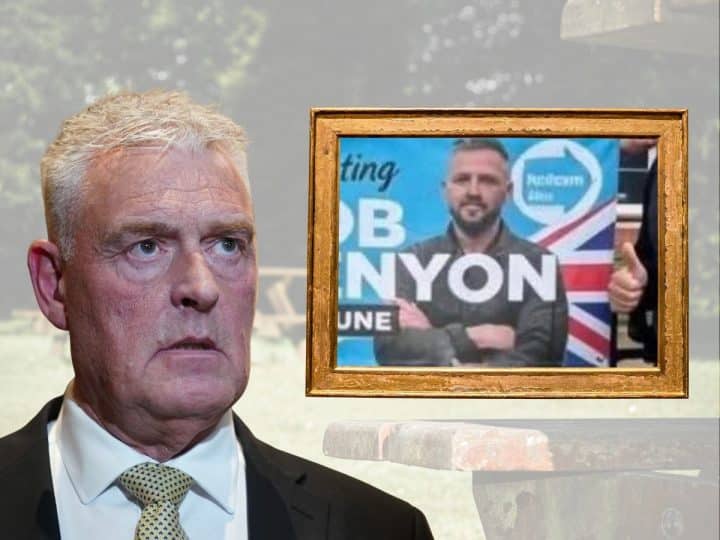
On 16 June, we reported on a grim story from the Makerfield by-election concerning Reform. Local Reform councillors posted a picture which suggested they’d vote for Jimmy Saville if it allowed them to replace Keir Starmer. The problem is this means they would vote for Jimmy Saville – one of Britain’s most notorious sexual predators.
Since then, Reform have done what they can to distance themselves from the controversy. The problem is their attempts only made things worse. This is why a defensive post from Lee Anderson now looks like this:

Reform distraction tactics
As we reported on 16 June, Saville was a serious offender:
450 people accused him of sexual abuse. 82% of the victims were female; 80% of them were children. Saville used his position as a children’s entertainer to get away with this, as well as his connections within the media and charity sectors. He was a plague on this country, and no one should forget that.
It’s one thing for private individuals to make edgy jokes about paedophiles; it’s quite another for a political party which is arguing that the establishment doesn’t take issues like ‘grooming gangs‘ seriously.
The offending image from Reform UK was this:
Reform UK’s #Makerfield campaign team for @RobKenyonReform, including 2 Wigan councillors Gemma Painter and Lilian Rogers.
Photo ops with Jimmy Saville jokes.
Sick.@reformparty_uk and Kenyon, anything to say? Share this, make sure everyone in Makerfield sees it. pic.twitter.com/GHT3TFWCHj
— Reform Party UK Exposed
 (@reformexposed) June 15, 2026
While the defensive post from Reform chair Lee Anderson is now deleted, we can still get an idea of what he posted from the replies:
Lee Anderson now complicit in a lie.
Look at the one you’ve posted.
It’s not Rob Kenyon, and the logo is AI warped. Plus look at the union flag.
Why did your councillor Gemma Painter delete it and then her Facebook?
Because it was real. Here’s also images by Stephen… pic.twitter.com/MZr7MxKiyd
— Reform Party UK Exposed
(@reformexposed) June 16, 2026
There’s also this post from Reform North Liverpool making the same claim as Anderson (screengrabbed in case they delete):
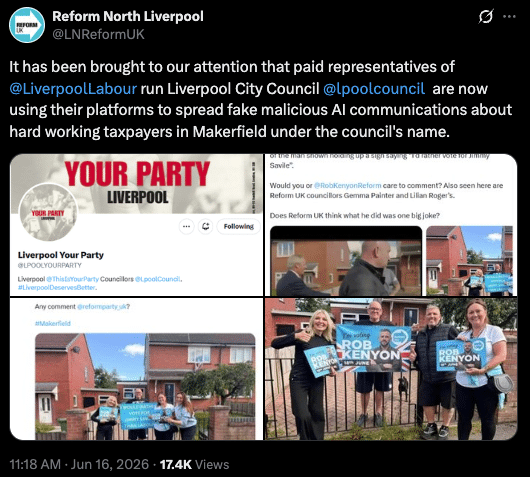
Here’s a closeup of that AI Rob Kenyon. As you can see, he’s running for a party which seems to be called ‘Rafcvim *INDECIPHERABLE*’:
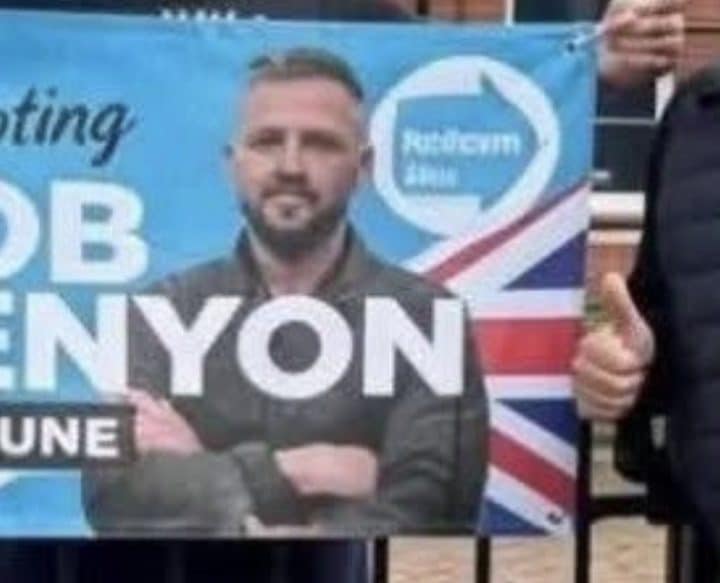
Almost as robotic as the real thing.
Reform Party Exposed UK said this following the deletion:
Reform UK’s Chairman @LeeAndersonMP_ has deleted his post claiming the Councillor Gemma Painter photo of her with a man holding a sign saying “I’d rather vote for Jimmy Savile” was a fake.
He’s a head of the party and he’s clearly realised he’s posted a faked attempt to… pic.twitter.com/ZjpveEkpMd — Reform Party UK Exposed
(@reformexposed) June 16, 2026
And they captured Anderson’s tweet for posterity:
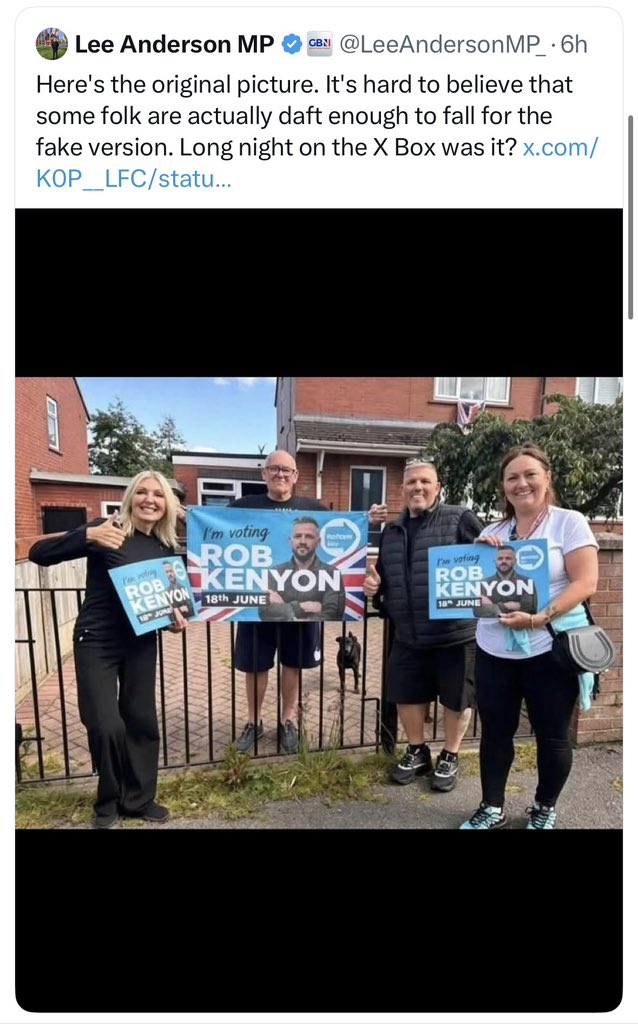
Knowing how the right-wing mind works, we assume this means Anderson was up all night playing “X Box”.
Reputational damage
Reform politicians have tried to paint themselves as protectors of women while simultaneously not taking crimes against women seriously. We saw this when Farage insulted grooming gang survivors, and they demanded an apology from him. We saw it when Reform politicians pushed to end no-fault divorce, which would trap many women in abusive marriages. And we’ve seen it with the accusations of sexism in the party, which come from Reform politicians themselves.
Given all this, it’s unsurprising Reform councillors would think Saville is a big joke. Their whole party is a joke, so why not make it obvious to everyone?
Featured image via the Canary
By Willem Moore
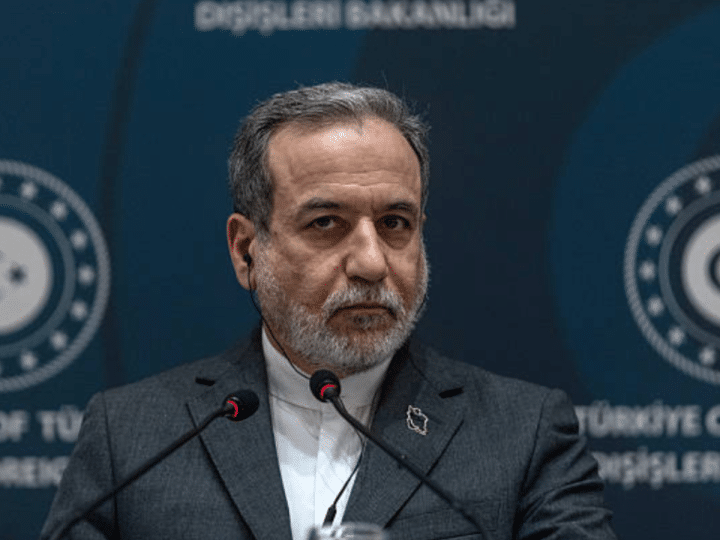
Iran foreign minister Abbas Araghchi has responded to Israel’s attempts to reject Donald Trump’s supposed ceasefire ‘memorandum of understanding‘ with Iran. Araghchi warned Israel – and Trump – that there is no prospect of any agreement to end the illegal US-Israel war unless Israel gets out of Lebanon completely:
The end of the war will not be complete without the withdrawal of Israeli forces from the territories they occupied in Lebanon. Any military attack by Israel on Lebanon and the continued occupation of Lebanese territories from now on, in our opinion, is a violation of the MoU.
Araghchi continues to warn Israel that any attacks on Beirut will be punished by heavy missile and drone bombardment of the northern occupation. Israel continues to slaughter civilians in southern Lebanon while the occupation military takes a pounding from ‘first-person view’ drones.
Iran are in control
The ‘MOU’, even if the Iranians agree to it, has sent the US Israel lobby into a meltdown with Israel-firsters accusing Trump of surrendering to Iran.
Featured image via the Canary
By Skwawkbox

Three Fed signals that could make the bitcoin (BTC) price pop: Crypto Daily

Rivals Season 3: Everything We Know So Far

Fantasy baseball waiver wire: Zack Gelof thriving despite looming regression concerns


-

 Business3 days ago
No Jackpot Winner as $257 Million Prize Rolls Over to $269 Million Monday Draw
-

 Crypto World6 days ago
Oppenheimer backs SpaceX as $70 billion retail frenzy builds
-

 Fashion5 days ago
Weekend Open Thread: Tuckernuck – Corporette.com
-

 Crypto World6 days ago
Markets Rally as SpaceX IPO Looms Amid Iran Tensions and Inflation Surge
-
 Crypto World2 days ago
Zimbabwe Requires Crypto Businesses to Register Annually Under New FIU Regulations
-

 Tech4 days ago
NanoClaw integrates JFrog registries to secure AI agent downloads
-

 Tech5 days ago
This Week In Security: Microsoft On Microsoft, Register Your Domains, Linux On ARM, And FreeBSD Joins The File Cache Club
-

 Crypto World4 days ago
Bitget enters Argentina’s regulated crypto market through PSAV registration
-
 Tech6 days ago
Dutton Ranch star claims they ‘didn’t see any disruption’ on set following Chad Feehan’s exit from Yellowstone spinoff fueled by Taylor Sheridan clash rumors
-

 NewsBeat6 days ago
El Nino has formed in the Pacific and could set records, forecasters say
-

 Politics6 days ago
Politics Home | Healey Resignation Is “Colossal Failure Of Government”, Says Former Labour Defence Secretary
-
 Entertainment6 days ago
Donnie Wahlberg & More Heat Up Las Vegas at Circa’s Barry’s Downtown Prime
-
 Tech6 days ago
Opendoor Ends India Operations, Fueling a Bigger Conversation About AI and Outsourcing
-

 Sports6 days ago
First Time Since 1971: Australia Register Historic Low In ODI Cricket
-

 Politics6 days ago
Belfast burns, while Met chief points finger at Iran and Russia
-

 Business6 days ago
AT&T: Verizon's 27% Outperformance Sets Up A Solid Entry Point
-

 NewsBeat5 days ago
FBI searches office of Ohio voter registration group
-
 Tech5 days ago
Anthropic is spending $150M to embed 1,000 AI fellows inside nonprofits. No degree required.
-
 Politics6 days ago
Modi thanks Trump for wishes as US attacks Indian seafarers
-
 Entertainment5 days ago
‘The Pitt’s Fan-Favorite Doctor Confirms Noah Wyle Gave His Blessing to Return [Exclusive]
You must be logged in to post a comment Login