

Politics
Poll: Voter cynicism remains a potent threat to incumbents across the globe



Voters punished ruling parties across the globe in 2024. They are doing it again now.
The same voters who rejected their rulers without mercy on both sides of the Atlantic — throwing out Britain’s Conservatives after 14 years in power and humbling Democrats in the United States — are now poised to deliver resounding defeats to the very leaders they elected two years ago.
British Prime Minister Keir Starmer faces the prospect of being ousted later this year if a key rival in Manchester can pull off a win in a special parliamentary vote next week. President Donald Trump, while locked into power until January 2029, appears to be barreling toward lame duck status with Democrats growing increasingly bullish about their midterm prospects in November — particularly in winning back the U.S. House.
And The POLITICO Poll suggests Western voters’ desire for political bloodletting hasn’t abated.
Building on previous work by Public First, the London-based firm that conducts the survey, a new analysis of May POLITICO Poll results show large shares of voters in both the United Kingdom and United States express deep cynicism about politics and a constant desire for radical change — suggesting the forces behind the backlash may still be potent, and that power switching hands this year may not be enough to quell them.
In America, 71 percent of adults say politicians only look out for themselves, including 79 percent of those who backed former Vice President Kamala Harris in 2024 and 71 percent who voted for Trump. In the U.K., voters are similarly angry at politicians, who they blame for being unable to address a variety of issues, including cost of living and immigration. New results from The POLITICO Poll, conducted over the weekend, show a 56 percent majority of U.K. adults said the bigger problem with politics in the U.K. is the politicians who do not do the right thing, while just 15 percent blame the system itself.
That deep dissatisfaction has metastasized into a perpetual anti-incumbent frustration in recent years. In Germany, Chancellor Olaf Scholz’s Social Democratic Party had its worst result in a national election in several decades, and Canada’s Justin Trudeau stepped down amid growing voter frustration. Just since February of last year, the rulers of Germany, Hungary, the Netherlands and the Czech Republic have all been ejected at key elections.
Now the U.K. is watching the vote in Makerfield next week, which may determine whether Starmer gets to keep his job amid public outrage at his handling of fallout from the Epstein scandal, and voter concerns about immigration, the economy and law enforcement. If Andy Burnham, the mayor of Greater Manchester, succeeds in being elected back to Parliament next week, it will almost certainly trigger a series of events that could end in the removal of the deeply unpopular Starmer as the head of the Labour Party — and prime minister.
The result could ripple across the Atlantic as Republicans face their own political headwinds ahead of the crucial November midterms in the United States.
“What we’re seeing is a cross-Atlantic disconnect between voters and electeds,” said Kevin Madden, a longtime GOP communications strategist in Washington and senior partner at Penta, a consulting firm.
“Voters in the U.S. are squarely focused on at-home domestic priorities and kitchen-table concerns like food, health care and housing costs. So when the headlines are focused on foreign conflict and disruptions to global markets, those will reinforce the disconnect.”
Deep cynicism in the UK spells trouble for Starmer
In 2024, the rejection of incumbents came amid a growing frustration over the cost of living and broader economic anxieties. Whether that backlash was a temporary response — or reflects an engrained dissatisfaction with political institutions — is a question now confronting leaders on both sides of the Atlantic, as affordability concerns continue to spiral.
In the U.K., the analysis from Public First finds a deep sense of political disillusionment. The firm developed a series of measures to understand that feeling of “anti-politics”, and cynicism stood out: Voters who believe politicians are self-serving, that political talk rarely leads to real action and that the public has little influence over what politicians actually do.
Nearly half of British adults — 45 percent — scored high on Public First’s cynicism scale; so did 37 percent of U.S. adults.
The findings underscore the challenge facing Starmer. New results from The POLITICO Poll conducted last weekend show nearly two-thirds of U.K. adults — 64 percent — said they don’t think Starmer will remain as prime minister until the next general election.
The center-left U.K. leader has suffered the most dramatic plunge in popularity of any prime minister in British history. Since winning a landslide victory just under two years ago, Starmer has seen his Labour Party fall to historic lows in opinion polls, while the nationalist right-wing Reform U.K. of Nigel Farage has stormed into the lead in polls and local elections, mirroring the success of insurgent populists across Europe.
Three-quarters of highly cynical voters in the U.K. hold an unfavorable view of Starmer, the Public First analysis of a May POLITICO Poll found — far higher than the national average.
The Makerfield by-election on June 18 will determine whether Burnham, Starmer’s chief internal rival, is elected as Labour’s representative, giving him the chance to challenge Starmer for the party leadership and potentially replace him as prime minister. Burnham’s main rival in the by-election is the Reform U.K. candidate — whose victory would likely end Burnham’s leadership ambitions, plunge Labour into unprecedented turmoil and send the national government into fresh disarray.
But Makerfield looks likely to be terrible for Starmer, whoever wins. Either it will be Burnham, who will then go to London to try to oust the prime minister, or it will be Reform U.K. — fuelling claims that Starmer has toxified his own party beyond repair.
Why Trump should be watching closely
It’s a cautionary tale for Trump, the Public First research found.
As Starmer confronts dropping favorability ratings, Trump’s own numbers have also plummeted — and the segment of cynical Americans may be as dangerous for the president as their British cohort is for the prime minister.
Among this group, 57 percent hold an unfavorable view of Trump and his agenda, compared with 48 percent nationally.
That could pose a challenge for Republicans heading into the midterms. Elections in the U.S. historically punish the party in power, and many Republicans are bracing for an even more difficult than anticipated midterm landscape, fueled by the mounting economic concerns and an unpopular war in Iran.
“The biggest mood shift is taking place among voters in the big middle,” Madden said. “These are the same voters that migrated toward Trump and the GOP in 2024 because they were nostalgic for a Trump economy and they rallied around a message focused on tackling inflation.”.
Sizable shares of cynical Americans hold negative views about the economy. Among these respondents, 52 percent say their financial situation has worsened since Trump took office in 2025 and 59 percent say Trump has spent too much time focused on international affairs rather than domestic issues.
Trump, who rode to power in 2024 in large part over voter dissatisfaction to the economy during the Biden administration, is now confronting a similar challenge. Recent polling finds voters increasingly blaming Trump for their financial pressures, even as he continues to cast blame to his predecessor.
Part of the problem for incumbents is that many people blame politicians — not the broader system — for their dissatisfaction, underscoring the challenge for the leaders as voters begin to turn on them. Nearly half of British adults, 45 percent, say the country keeps changing prime ministers “because none of them are any good,” while just 26 percent blame “big problems that not even a good PM could solve.”
As soon as leaders are elected by a frustrated, dissatisfied electorate to turn things around — as both Starmer and Trump were in 2024 — the clock begins to tick.
“Elections are so often now about which candidate can channel the frustrations of a cynical electorate,” said Seb Wride, head of polling at Public First, POLITICO’s polling partner.
“Republicans and Democratic candidates alike should pay attention to what is happening in the U.K.,” he said. “It is far harder to win over an antipolitical voter base when you represent the ‘politics,’ and given how fast Britain is working through Prime Ministers cynical voters seem to be getting more common and less patient.”

Ahead of the ten year anniversary of the EU referendum on 23 June, UK in a Changing Europe experts have written a short series of blogs reflecting on some of the issues at the heart of Brexit then and now. Here, Nicola McEwen reflects on Brexit and devolution.
The UK voted to leave the European Union a decade ago while Scotland, along with Northern Ireland, voted to remain. Those divergent choices marked a shift not just in the UK’s relationship with its European partners, but in the political and institutional relationships between the constituent parts of these islands.
The implications of Brexit for Northern Ireland dominated Brexit negotiations. Accommodating its distinctive status has been a key aspect of the Trade and Cooperation Agreement. Considerably less effort went into accommodating Scotland’s distinctive preferences. Early proposals to facilitate a special relationship with the EU, including within the EU internal market, were quickly dismissed without much consideration. And over the past decade, the politics and process of leaving and living outside of the European Union have contributed to a weakening of the authority of the devolved institutions and perhaps of the Union itself.
EU law provided a regulatory architecture that supported devolution in the UK, limiting the likelihood of policy divergences producing market distortions. As a political community in which sovereignty was explicitly pooled, the EU also helped to reconcile the doctrine of Westminster parliamentary sovereignty with the principle of sharing political authority across the UK’s constituent units, while facilitating the plurality of political and territorial identities on these islands. The Brexit drive to reassert ‘national sovereignty’ and to ‘take back control’ sat uneasily alongside these shared sovereignty norms and self-government claims that underpinned devolution.
One manifestation has been a weakening of the Sewel convention. This convention held that, although its sovereignty was not affected by devolution, the UK Parliament would not normally legislate on devolved matters without the consent of the devolved legislatures. The corresponding process of securing legislative consent became a routine feature; consent was rarely withheld, and when it was, it was usually temporary pending a negotiated compromise.
That was until the Brexit referendum. When the UK government passed the EU (Withdrawal) Act 2018, it did so without the Scottish Parliament’s consent, which Lord Thomas of Cwmgiedd, former Lord Chief Justice of England and Wales, described as ‘a terrible precedent’. Breaching the convention became much more frequent as the Brexit process got underway. Then Welsh First Minister, Mark Drakeford noted: “The Sewel convention was never breached, not once, by Conservative Governments, as well as Labour Governments, for nearly 20 years… we now see… the breach of Sewel becoming almost normalised.”
Perhaps the most blatant breach was also the most controversial of the Brexit legislation introduced by the UK government. The four administrations had been working together to explore whether and how they might develop ‘common frameworks’ in some areas where EU law intersected with devolved law, to avoid unnecessary divergence after the UK left the EU. That cooperative process contrasted with UK government legislation to underpin the UK internal market.
The UK Internal Market Act (2020) was passed in the face of fierce opposition from the devolved institutions. It introduced two Market Access Principles (MAPs). The first ensures that goods and services that can be legally sold/provided in one part of the UK can be sold anywhere in the UK, without having to meet further requirements. The second protects businesses and professionals from being subject to direct or indirect discrimination that favours local goods or service providers.
The effect has been to erode the legal authority of the devolved parliaments and inhibit their ability to introduce distinctive legislation that regulates goods and services. A process was established to permit exclusions from the MAPs, but this delays law-making, creates uncertainty, masks accountability, and has, in effect, given the UK government a veto over devolved legislation that falls within the MAPs’ scope. ‘In effect’ because the UKIM Act does not explicitly curb the competence of the devolved legislatures to pass laws that regulate the market in distinctive and divergent ways, but in restricting the application of such laws to goods and services that originate in local markets, it renders them unworkable.
The most notable example of this process disrupting policy making emerged when the Scottish Government legislated for a deposit return scheme (DRS) to boost recycling. In so doing, they sought to move faster than similar schemes elsewhere in the UK and with a broader scope that included glass bottles. When the requested exclusion from the MAPs was eventually offered by the UK government, it was on a temporary basis and excluded glass, citing powerful business concerns about interoperability of DRS schemes and ‘unnecessary barriers to trade’. The Scottish Government subsequently put its scheme on hold, the company set up to administer it collapsed, and the waste firm, Biffa, sued the Scottish government – unsuccessfully – for £50 million in damages. These Brexit-related developments led to a significant deterioration in relationships between the UK government and its Scottish and Welsh counterparts.
As part of its ‘reset’ of intergovernmental relationships, Keir Starmer’s government has worked more cooperatively with the devolved governments in the implementation of the Sewel convention, despite negotiations to agree a new Memorandum of Understanding on how it should operate failing to reach agreement thus far.
The Labour government also brought forward the statutory review of the UKIM Act, softening some of its hard edges. Exclusion requests should now be considered within the cooperative common frameworks process, with evaluations of environmental protection and public health benefits to be weighed up against the economic costs of regulatory divergence.
But the government is committed to retaining the Act, despite it remaining deeply controversial and a barrier to strengthened relationships.
The Brexit referendum also had the immediate impact of reigniting the issue of Scottish independence. Its 62% Remain vote led to claims that Scotland was ‘being taken out of the EU against our will’, which then-First Minister Nicola Sturgeon said was a ‘significant and material change of the circumstances in which Scotland voted against independence in 2014’. Brexit also increased discussion among the ‘indycurious’ in Wales.
The recent election victories for Plaid Cymru and the Scottish National Party, the devastating defeats for the Labour Party, and the emergence of Reform UK as an electoral force are testament to some of the political legacies of Brexit. Though neither the Scottish nor Welsh parliaments have the constitutional competence to pursue the SNP and Plaid’s self-government ambitions, the vote to leave the European Union a decade ago continues to test the resilience of the UK Union today.
By Nicola McEwen, Professor of Public Policy and Governance, University of Glasgow Centre for Public Policy.
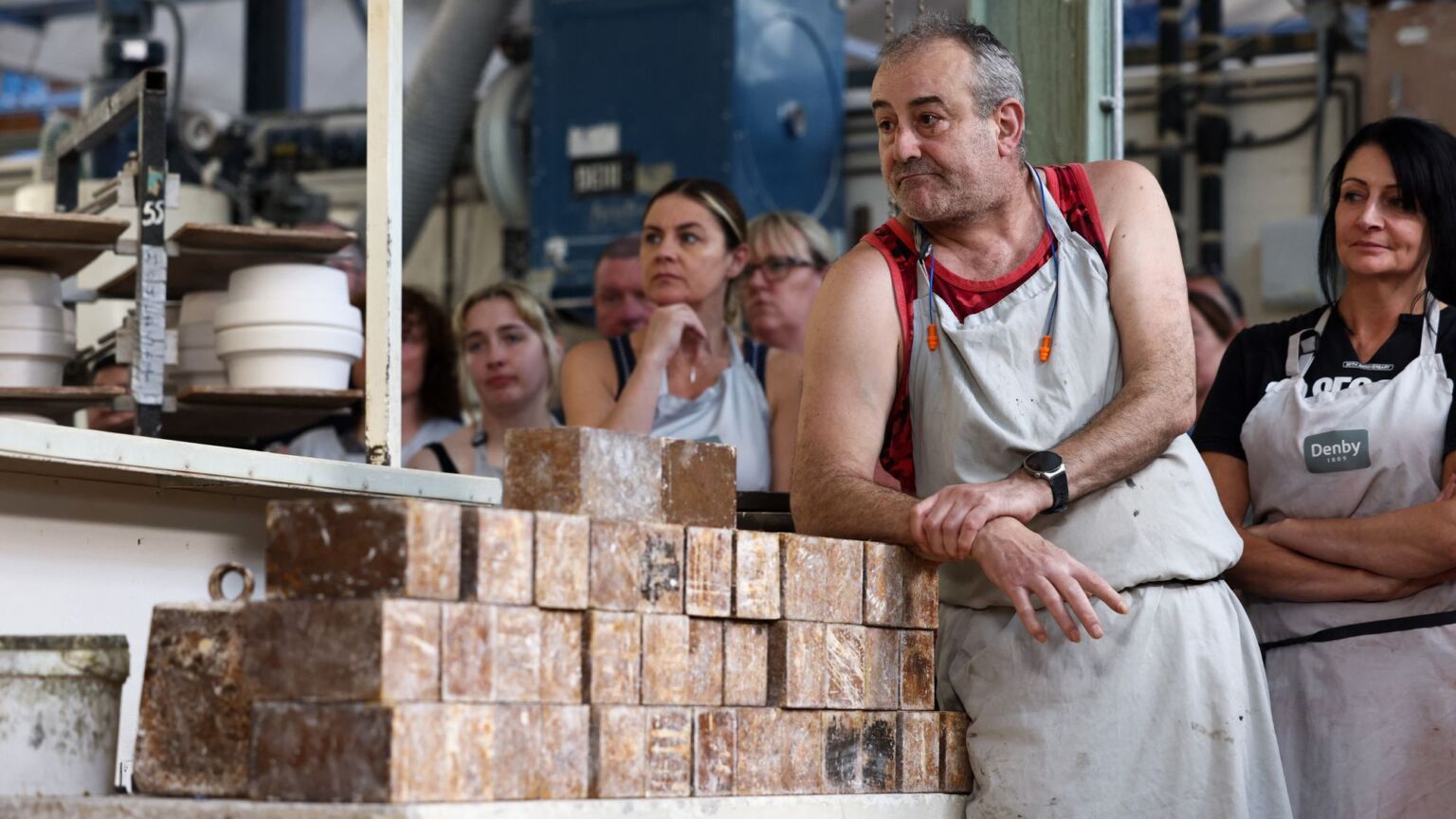
Denby Pottery has survived more than its fair share of economic turmoil in its 217-year existence. But nothing it seems on the scale of the industry-destroying policies of the current Labour government. This week, the famed Derbyshire company closed its doors for the final time, citing soaring energy and labour costs. Around 600 workers have lost their jobs.
The pottery firm took its name from the village where, in 1809, it first began turning local clay into stoneware bottles, before expanding to homewares. It went on to furnish dining tables in Britain and across the world for 10 generations. But, in June, work at its kilns ceased. No doubt weak consumer demand for upmarket housewares was partly to blame. Clearly, too, chancellor Rachel Reeves’ hikes in the national insurance taxes haven’t helped. Yet make no mistake: the real culprit in all of this is energy secretary Ed Miliband.
In March, when administrators were appointed for the floundering company, Denby was perfectly clear what the problem was – ‘soaring industrial energy costs’. This is an insurmountable problem for a ceramics business because, to get a finished product, kilns must run at a temperature of about 1,200 degrees Celsius for hours at a stretch. And it’s here that Westminster’s depressing ignorance of science, combined with its dogmatic loyalty to Net Zero, has taken its toll.
Denby isn’t the first British victim of Net Zero. In November, hundreds of jobs were lost when ExxonMobil closed the Fife Ethylene Plant in Scotland. In 2024, 2,000 jobs vanished when the Port Talbot steelworks in Wales closed its last two blast furnaces to meet decarbonisation targets. Later that year, Vauxhall shut its 120-year-old van factory in Bedfordshire, shedding more than 1,000 jobs. Only a last-ditch intervention by the government prevented British Steel’s Scunthorpe plant – and its 2,700 employees – from facing the same fate.
These tales of economic devastation have one thing in common: Net Zero. It has led to Britain having the highest industrial energy prices in the developed world, and made it all but impossible to make or produce anything.
We can expect many other of Britain’s famed potteries to go the way of Denby. According to Rob Flello, CEO of industry body Ceramics UK, for kilns to reach the same temperatures with electricity as they do with gas is four or five times more expensive. Now, as with steelmaking, those of an environmentalist persuasion talk up new electrical technologies as an alternative to heat supplied by gas. In principle, future technologies, including low-carbon ones, are always worth exploring. But with ceramics, electric methods of heating will not supplant gas ones for years.
Britain’s Trade Union Congress has published a very balanced report about decarbonising high-temperature ceramics production through electrification. It notes that while electric kilns may make for better glazes, their components degrade rapidly and do not distribute heat as uniformly as gas. To retrofit existing kilns is a big, expensive hassle, and to scale up electrical heating technologies and power supply for industrial purposes will be no easy business, either.
So why does the government dogmatically insist that electrification is the way to go for UK ceramics factories? After all, Miliband himself states that 30 per cent of UK power generation is still based on gas. His figure is debatable, but clearly full decarbonisation of British ceramics factories is decades away.
Oblivious to all this, Miliband, the messiah of Net Zero, demands that industry abandon the cheap gas it currently depends on for some of the dearest electricity on Earth. Worse, a byzantine system of energy-relief schemes for business, first introduced by the previous Conservative government and now made still more complicated by Labour, only softens costs for firms that rely on electricity, not gas. A summary of the reliefs contains not a single mention of gas.
Looking forward, a relief system for gas-intensive industries could prevent future bankruptcies like that of Denby. Moreover, future UK governments should celebrate ‘heritage’ manufacturing for its design merits. That is not nostalgia – it is entirely in the UK’s interests. Denby outlets in America, China and South Korea are still operating.
It isn’t just Labour that is to blame for Denby’s closure. Tory bigwig Tom Tugendhat has claimed that ‘energy policies that have pushed prices higher in search of a carbon ambition at home’ are the culprit at Denby. This is rich, given that, in 2022 he (along with other candidates for the leadership of the Conservative Party) made an unreserved commitment to uphold Net Zero.
What makes Denby’s closure all the more galling isn’t only the jobs that have now vanished. We have lost something of British history, too. In 2024, it was reported that Denby Pottery Village welcomed 300,000 visitors a year.
This is the cost of Net Zero. Thousands of jobs and livelihoods lost. Factories that were once the lifeblood of a community decommissioned. And the memory of all of the remarkable things our nation once produced, vanishing without a trace.
James Woudhuysen is visiting professor of forecasting and innovation at London South Bank University. Follow him on X: @jameswoudhuysen.
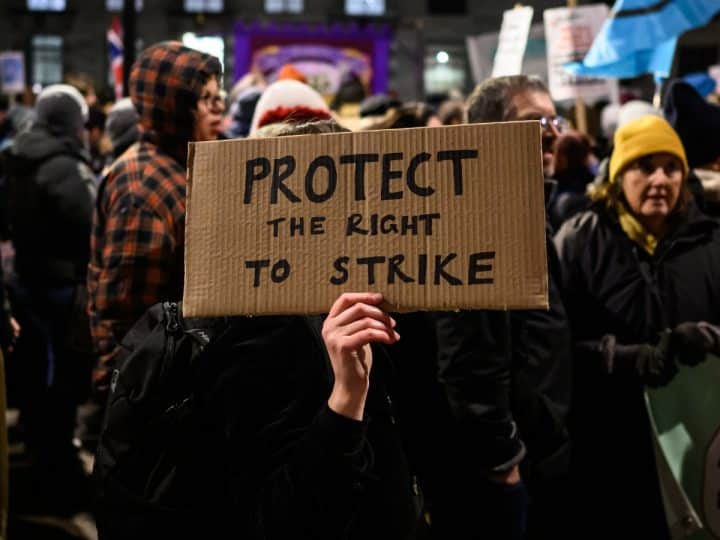
The number of working days lost to strike action plummeted by almost two thirds during Labour’s first year in power. This is according to new analysis from the GMB union.
The 12 months leading up to July 2024, when Labour won power, saw 1,406,000 working days of strikes.
During the year following Labour’s win, there were 559,000, a huge drop of more than 60%.
The GMB will discuss the figures, which come from analysis of Office of National Statistics data, at its annual congress in Blackpool.
Lifting the wages of millions of low paid workers and improvements to employment rights, such as day one sick pay, help explain the drop, the union said.
Ross Holden, GMB head of research and policy, said:
Workers go on strike when work doesn’t pay and bad bosses don’t listen.
It’s no wonder we saw the biggest strike disruption in decades under the Tories who took the side of bad bosses and left our economy in chaos.
This drop in strike days shows that employers have nothing to fear in Labour’s plan to Make Work Pay. It must be delivered in full.
Featured image via Leon Neal / Getty Images
By The Canary

The UAE-backed Rapid Support Forces (RSF) have been accused of genocide, massacres and sexual violence. Sudan’s civil war has raged for three years with the backing of foreign and regional powers. Now survivors have filed the first war crimes complaint in Kenya.
Twelve victims backed by a Swiss legal NGO urged Kenya’s chief of prosecution to pursue the case. Associated Press (AP) reported on 9 June:
It is the first attempt to prosecute members of the Rapid Support Forces, or RSF, the paramilitary group fighting against the Sudanese military for over three years, outside Sudan.
The group, which has been accused by rights organizations of committing atrocities amounting to war crimes and crimes against humanity, has ties with Kenya’s government.
AP said:
Kenyan President William Ruto has previously hosted RSF leader Gen. Mohamed Hamdan Dagalo for talks that he said were aimed at advancing peace efforts in Sudan, a move that sparked diplomatic tensions.
The twelve survivors are working with the Switzerland-based NGO Legal Action Worldwide. Their testimony details:
torture and sexual violence committed by RSF members at various locations in and around Khartoum between April 2023 and March 2025 when the Sudanese capital was controlled by the paramilitaries.
The charges against RSF included that their victims:
were held in inhumane conditions, with little or no food, limited access to water, and inadequate sanitation facilities. They allege that they were beaten, burned, suffocated, subjected to electric shocks, and sexually abused, including through rape.
Some were reportedly forced to transport dead bodies from detention facilities.
RSF is backed by the UAE but many other nations have made the war worse through active participation or through humanitarian inaction.
Rapid Support Forces and Sudan’s ongoing foreign-backed civil war
The RSF, backed by the UAE, is fighting the Sudanese government, with gold interests and regional influence at stake.
Numerous foreign actors, including the UK, have caused the war to fester through active participation and/or outright passivity. Israel, too, is a player in the war.
The war in Sudan is theoretically between the Arab-majority RSF and the Sudanese government. But foreign states pursuing their own interests are backing the combatants.
Turkey, Egypt and many more countries are pursuing their own interests in Sudan too. British military components have also shown up on the battlefield in RSF hands. The UK is a major arms supplier to UAE.
The RSF has killed Sudanese civilians in vast numbers. Some estimates say 150,000 people have died and more than 10 million civilians have been displaced by fighting.
Sources have also claimed the UK downgraded the situation in Sudan to avoid “pissing off the Emiratis”.
Drone war over Sudan
Drones have been a major feature of the war. Both RSF and Sudanese government forces have deployed them. On 9 June government forces engaged RSF drones over the capital Khartoum. The Sudan Tribune reported:
Military sources said a Rapid Support Forces (RSF) drone attempted to bomb military sites northwest of Omdurman before ground defences intercepted it and prevented it from reaching its targets.
The same sources said air defences also engaged strategic drones in East Nile, with no casualties reported.
A recent UN report said drones were a serious threat to life and limb in the war:
Drones caused more than 80 per cent of civilian deaths in Sudan’s war during the first four months of 2026, killing at least 880 people.
UN High Commissioner for Human Rights Volker Türk condemned both sides for their use of unmanned aerial weapons:
Armed drones have now become by far and away the leading cause of civilian deaths.
And the Ayin investigative network reported that clashes between local people and RSF allies in Sudan’s south have resulted in a village being burned:
violence last month killed at least 61 civilians, including women and children, who were targeted during clashes between the [RSF-aligned] SPLM-N, led by Abdel Aziz al-Hilu and the Ottoro tribe in Kauda.
Part of the conflict is due to:
the Ottoro’s refusal to allow the SPLM-N-allied Rapid Support Forces (RSF) to mine in their area.
The submission of a first official war crimes complaint is a good sign. Yet lawyers say allegations are hard to corroborate in a country gripped by war and devastation. A semblance of peace and justice for Sudan in this foreign-backed war may still be a long way off.
Featured image via Jeff J Mitchell/Getty Images
By Joe Glenton
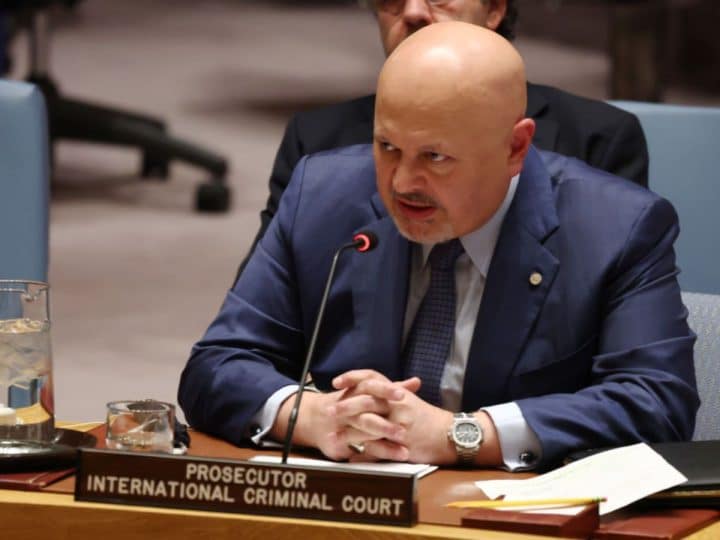
US vassals have banded together in a vote of the International Criminal Court’s 21-state ‘Bureau’ to suspend ICC chief prosecutor Karim Khan. Khan has been driving the ICC’s issuance of arrest warrants for Israeli war criminals, including Benjamin Netanyahu and former ‘defence’ minister Yoav Gallant.
ICC — Shameless political stitch-up
Israel and the US have previously circulated allegations against Khan – a standard Israel lobby tactic – of improper behaviour. Now Khan has been suspended by the Bureau on a supposed ‘no indication of guilt’ basis. But as former UK ambassador Craig Murray points out, the move is a shameless and politically-driven stitch-up:
The rest of the world should impose sanctions against the 21 criminal states. Just as the ANC encouraged sanctions against their own country (apartheid South Africa) we should encourage sanctions against our own imperialist or client countries.
— Mark Howell
(@markhowell7) June 9, 2026

The US, Israel and their allies will now be working overtime to pressure other ICC signatory nations to try to secure the votes required to take down Khan at the coming “special session of the Assembly of States Parties”.
Featured image via Michael M. Santiago/Getty Images
By Skwawkbox
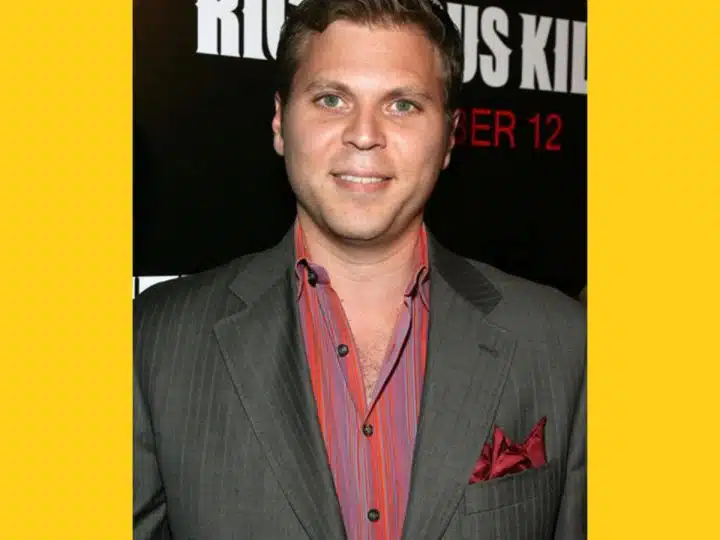
The Israeli occupation regime has hired a Hollywood producer for $900,000 to run its attempts to influence US citizens. Support for Israel has plummeted in the US across the political spectrum, especially among young people including Jewish young people:
New Jewish Voter Resource Center poll finds “nearly half of young American Jews are functionally anti-Zionist”
A recent Washington Post poll found that 61% of Jewish adults said Israel had committed war crimes against Palestinians in Gaza, while 39% said it was guilty of… pic.twitter.com/yQcvQYXbO1
— Max Blumenthal (@MaxBlumenthal) May 28, 2026
Daniel Rosenberg, who produced Spike Lee’s Inside Man, has been appointed to produce pro-Israel content for social media channels. He and his firm will also hire a director and an acting cast. Payments are being routed through German firm Havas, the same company that funnels payments to so-called influencers in return for pro-Israel posts. Unlike most Israel lobbyists in the US, the contract is being registered under ‘FARA‘, the US ‘Foreign Agents Registration Act.
Israel — Murder project
The project is being run by Eran Shayovich, the Israeli foreign ministry’s chief of staff. Israel has massively increased the amount it is spending on propaganda. Its genocide in Gaza, slaughter of children, its assassinations of journalists, peace negotiators and medics, continue to shred its global standing and expose the racist murder-project it really is.
Featured image via MUBI
By Skwawkbox

Israel fanatic Bari Weiss is set to take over the running of CNN’s editorial operations when Paramount Skydance’s planned purchase of Warner Bros Discovery is approved as expected. Weiss was imposed on CBS’s news operation in 2025 by its new, Zionist owners, despite no newsroom experience — with a naked pro-Israel agenda. The move has ruined the reputation of CBS as a serious news organisation, lost it some of its best-known faces and seen them replaced by pro-Israel mouthpieces.
Weiss — spreading the plague
Although the $110bn deal is not yet signed, both Paramount and CNN have said they expect it to go through in late summer to autumn of 2026. While a number of other names are said to be in line to run commercial operations, Weiss is favourite for news and editorial.
When your ideology is murderous racism, buy the media
The move is the latest in a series of acquisitions by Zionist ultras of media and social media platforms that have exposed Israel’s genocide in Gaza. The main figure in these buy-outs – helped ruinously in the case of TikTok by US government manoeuvres to force the sale — is Oracle founder Larry Ellison. Ellison and his family also control Paramount Skydance.
The billions spent on buying information channels to prevent the public hearing about Israel’s crimes are a clear indication that Israel and its lobbyists know their racist ideology has nothing to recommend it. That means that control of what people hear is their only hope of minimising the damage Israel’s mass murder and endless crimes against humanity continues to do to its global standing.
Regardless, the terror state must be made a pariah. Instead, politicians bought up like news stations continue to collude in genocide, racist land-theft and war.
Featured image via Kevin Dietsch/Getty Images
By Skwawkbox
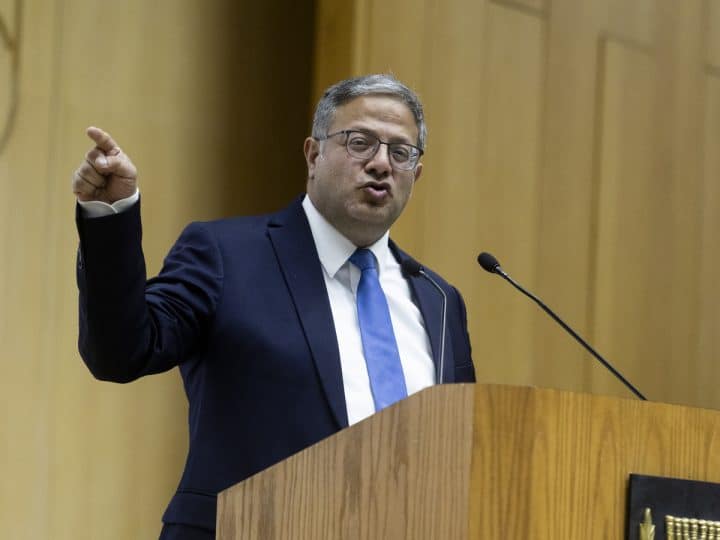
Itamar Ben-Gvir, a genocidal terrorist and Israeli Minister of National Security, has suggested that Israel kidnap Lebanese women and children to “break Hezbollah’s morale”.
That’s right, after he spent two years pleading with the world to help release the Israeli hostages and using it to justify carpet-bombing Gaza, Ben-Gvir now wants Israel to take even more hostages than it already has in its prisons.
By his own standards, that gives Lebanon the right to flatten the whole of Israel.
During a security cabinet meeting, where several officials backed escalating its illegal attacks in Lebanon, Ben-Gvir said:
Let’s start thinking outside the box about Hezbollah.
Conquering territory and killing many terrorists, but also detaining their women and youth and taking them to terrorist prisons.
That’s what hurts them the most.
Of course, there are two problems here.
First of all, Israel is not just targeting Hezbollah, like they keep claiming. The settler-colonial state has been systematically wiping out entire towns in Southern Lebanon for months.
Secondly, even ‘targeting Hezbollah’ is against international law, given that anyone living in occupied territory has the right to armed resistance under international law.
But of course, openly genocidal, convicted criminals such as Ben-Gvir do not give a rat’s arse about international law.
Ben-Gvir himself has been convicted of supporting Israeli terrorist organisations and having a portrait of the Israeli terrorist — Baruch Goldstein — in his office.
Ben-Gvir is also the man behind the new law, which allows the death penalty only on Palestinians.
Only recently, Ben-Gvir joined a group of fellow illegal settlers to raid the Al-Aqsa Mosque in occupied East Jerusalem.
Basically, Ben-Gvir is an all-around top bloke who really deserves a seat in government.
Ben-Gvir — ‘Most moral army’
Netanyahu repeatedly bangs on about Israel having the most moral army in the world.
What sort of ‘morals’ involve kidnapping women or children?
Here’s the most moral army in the world. Wanting to kidnap women and children so they can be tortured and raped in an Israeli death camps https://t.co/roVGJCiWvt
— newoods (@newenglans007) June 9, 2026
We already know that Palestinian prisoners are repeatedly raped and abused in Israeli prisons. Israelis have a strange definition of the word ‘moral’.
You know which other army regularly took hostages, and then raped and abused them? The Nazis.
But if we point that out, it’s aNTiSeMITiSm.
Since Israel and the US’s illegal attacks on Lebanon in 2024, Israeli forces have abducted several Lebanese civilians. The exact number remains unknown.
They are among 1,316 people that Israel is currently holding under the “unlawful combatant” law, including Palestinians from Gaza and Syria. This law essentially legalises incommunicado detention and enables enforced disappearance. Whilst this concept is not technically illegal, that is because international law does not formally recognise it as a distinct legal status. Instead, international humanitarian law states that:
every captured individual in a conflict must be classified strictly as either a prisoner of war (POW) or a civilian.
According to Amnesty International:
While international humanitarian law allows for the detention of individuals on imperative security grounds in situations of occupation, there must be safeguards to prevent indefinite or arbitrary detention and torture and other ill-treatment. This law blatantly fails to provide these safeguards. It enables rampant torture and, in some circumstances, institutionalizes enforced disappearance.
However, it is well recorded that Israel detains people indefinitely. This means that, like most things that Israel does, the whole concept of ‘unlawful combatants’ breaks international law.
It is clear that the only solution to end Israel’s genocidal regime is disarmament, isolation, and sanctions.
Israel is a terrorist organisation and should be sanctioned, isolated and disarmed at once https://t.co/dgEAqnpyYm
— StanleySau (@StanleySau1) June 9, 2026
Because, let’s face it, if any other country, minus the US or Israel, behaved in the same way, the rest of the world would have a serious issue with it.
When Israel does it the US govt and US media doesn’t call it terrorism.
Israel and America are #1 terrorists in the world. But are you too weak to break out of that fairytale they sell you on the daily about this country?
https://t.co/NfCI9wQPyp
— L.A. Raider
Imagine saying ‘kidnap women and children’ in the same sentence as you call someone else a terrorist. It doesn’t really work, does it?
Ben-Gvir belongs in the Hague, along with the rest of his murderous colleagues.
Feature image via Amir Levy/Getty Images
By The Canary
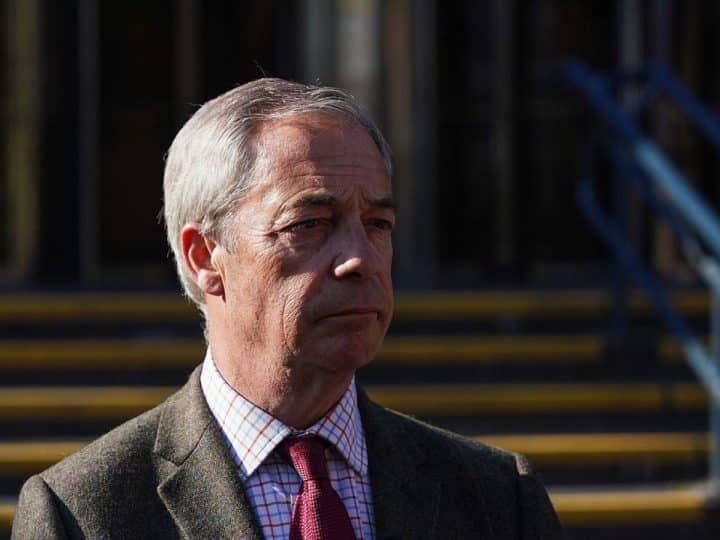
Reform — The trade unions have hit back against Farage’s recent pitiful appeal to try to bring the UK labour movement over to the far-right. Quite unsurprisingly, they’ve seen through his ridiculous claim that:
Reform is now the party of workers.
Farage also invited unions to apply for affiliation, and welcomed union leadership to attend the party conference. However, those same leaders have now told him where to shove it in reply.
‘Let’s be crystal clear’
On 8 June, the Times published an interview with Nigel Farage, trying to lure trade unions into affiliation with Reform UK.
The fascist rag highlighted plummeting support for Starmer’s Labour among union members — hardly surprising in itself. However, that drop was accompanied by growing support among the membership base for Reform UK.
Unfortunately for Farage, the unions themselves haven’t conveniently forgotten all the time his party have spent bashing workers’ rights. Nor, for that matter, are they in the mood to overlook the fact that Reform UK rests firmly in the pocket of big business.
Responding to the Reform leader’s two-faced appeal, Trades Union Congress (TUC) general secretary Paul Nowak said:
Let’s be crystal clear: Reform are no friends of working people.
If they were, they wouldn’t be planning to rip up workers’ rights like day one sick pay and protection from fire and rehire and zero-hours contracts.
And they wouldn’t have a leader who backs privatising the NHS.
Add to that Reform’s repeated calls to scrap the Equality Act — the foundation stone of protections from discrimination in the workplace.
Reform cosplaying as the workers’ friend
Reform can cosplay as champions of workers all they like. But the reality is they’re bankrolled by corporate interests and crypto billionaires who want the rules rigged even further in favour of the rich and powerful, not working people.
And let’s not forget many of their leading voices have shown contempt for trade unions – the very organisations that won the rights and protections they want to strip away.
Reform will say whatever they think it takes to win votes. But their record – and their agenda – tells the real story.
The TUC highlighted that, just last year, Farage boasted that Reform would “go to war” with “leftwing teaching unions”. He even went so far as to accuse union members of:
poisoning the minds of young people, not just against Reform, but against everything this country has ever stood for.
We at the Canary prefer the term ‘history lessons‘.
‘A threat to the working class’
Of course, it wasn’t just the TUC that shut the door in Farage’s smug face. Even those that have — with good cause — cut down on their affiliation with Labour gave short shrift to Reform. Unite general secretary Sharon Graham, for instance, said:
If I had a pound for every politician who said they are the party of workers I’d be a rich woman. Reform have shown absolutely no evidence that they are friends of workers. Not signing up to the Employment Rights Act, inferring privatisation of the NHS and threatening local authority pensions seems the exact opposite.
What needs to happen now is for the Labour party to stop dithering and be the voice of workers. A little less conversation – a little more action.
Likewise, the Fire Brigades Union recognised the Reform leader for the Thatcherite waste of space that he is. The spokesperson added that:
Firefighters and other workers will see this ludicrous stunt for what it is by a party led by multimillionaires that is a threat to the working class.
The same also goes for the Transport Salaried Staffs’ Association. General secretary Maryam Eslamdoust branded Farage’s invite as a “desperate gimmick” that wouldn’t succeed in conning her organisation’s members.
Reform ‘Don’t believe in basic rights’
Of course, Labour’s closer allies in Unison also gave Farage the middle finger. Andrea Egan, the union’s general secretary, said:
It’s a con to think Nigel Farage and his rich cronies are interested in unions for anything but cold, hard cash. They don’t believe in basic rights or fair pay and consistently voted against every measure to improve them.
Gary Smith, GMB’s general secretary, highlighted the fact that Reform is a refuge for Tory turncoats — hardly the workers’ friend. Speaking to the Guardian, he stated that:
Mr Farage and his Reform MPs say one thing to workers and do another.
They voted against sick pay and other essential safeguards. They even want to prevent people organising to make work better at places like Amazon. We see them for what they are – rebadged Tories after union members’ basic rights.
The unions stand together
However, the most damning vote of no-confidence of all was probably that from Community. The union represents numerous different trades, including a significant share of UK steelworkers.
Not to be taken in, Community’s assistant general secretary, Alasdair McDiarmid, simply said:
The Reform party has consistently voted against the interests of working-class people while under his leadership.
It is clear Farage will say whatever it takes to win votes, but workers will see through his misrepresentations.
Reform UK recently made a big song and dance about offering a ‘redress scheme’ for steelworkers’ pensions in an attempted appeal to a tokenised symbol of British industry.
However, what far-right scum like Farage and his cronies don’t understand — what they can’t understand — is the ‘union’ part of trade unions. Reform don’t get to play divide-and-conquer with worker’s rights, trying to woo steelworkers with one hand whilst bashing teachers with the other.
The labour movement stands together — and it stands firmly opposed to Farage, Reform, and the rest of the UK’s fascist wannabes.
Featured image via Ian Forsyth/Getty Images
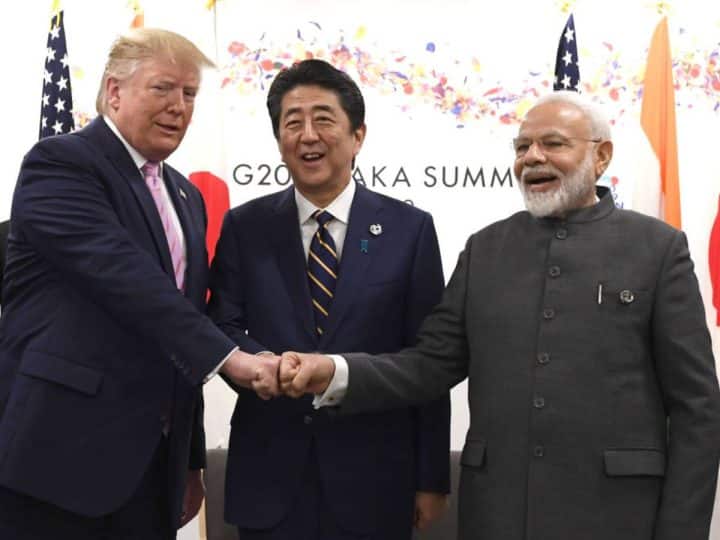
The Trump family pocketed at least $100 million from India’s richest dynasty, the Ambanis, through a secret stake in an obscure Texas refinery startup.
A pattern also seen with another billionaire, Gautam Adani, reveals a consistent U.S. strategy: first, threaten tariffs, sanctions, or prosecution; then, after money flows from Indian billionaires toward the U.S., make the legal and trade problems disappear.
In exchange for the Indian investment in the Texas refinery startup, the White House delivered a string of major policy wins for the Indian energy conglomerate, including a Venezuelan oil license, according to a ProPublica investigation published Tuesday.
NEW: Earlier this year, an obscure startup in Texas announced that it had received at least $100 mil from one of the richest men in Asia.
We dug into the backstory. We discovered a saga involving Donald Trump Jr., Russian oil, and an Indian billionaire family’s private zoo. pic.twitter.com/wqusoBA0e5
— Josh Kaplan (@js_kaplan) June 9, 2026
According to the article, these policy wins were a trade deal that slashed tariffs on Indian goods from 50% to 18%, a license for Reliance to buy sanctioned Venezuelan oil, and an early waiver for India to buy Russian crude after the Iran war began (a waiver later expanded to all countries).
The ProPublica article implied that hawks like Peter Navarro had to be sidelined or overruled once the Ambani money flowed in.
Before the investment, Navarro publicly attacked “India’s politically connected energy titans” for “funding Putin’s war machine” — a clear jab at the Ambanis, who own refineries in India.
The White House denied any conflicts of interest, and Reliance said there was “no connection” between the investment and these outcomes.
Timeline of events
According to the article, in August 2025, the U.S. doubled tariffs on India to 50% to force India to stop buying Russian oil. The
The US had said India’s imports of Russian oil undermined US efforts to counter Russia’s activities in Ukraine.
Then in November 2025, Donald Trump Jr. visited India, where he toured the Ambanis’ private zoo with Anant Ambani.
Then, in February 2026, the U.S. struck a trade deal with India, slashing tariffs from 50% to 18%. That same month, the U.S. also reportedly gave Reliance a license to buy sanctioned Venezuelan oil.
In March 2026, America First Refining announced it had received at least $100 million from Reliance. Trump Jr. had secretly acquired a stake in the start-up.
After the US attacked Iran, India received an early waiver to buy Russian crude, a waiver later expanded to all countries.
“Bizarre” flow of money
One could ask why a developing country like India is sending money to the United States instead of the other way around.
Last month, the Financial Times posed exactly that question, noting that India has “committed” to purchasing $500 billion worth of American goods over five years during Rubio’s visit to India.
The FT called the arrangement “bizarre,” noting that negative net foreign direct investment, more money leaving India than entering, is already weakening the rupee.
India’s bizarre $500bn ‘commitment’ in trade deal with US https://t.co/Ev0ouYcrAc
— FT World News (@ftworldnews) May 26, 2026
The FT said it would be “foolish” for Modi to accept a trade deal currently being negotiated that is not favourable to India. It said:
The Modi government has been on the defensive about a trade deal with Washington since Trump came into office. The expectation in New Delhi was that India would be among the first to secure one, but things soured, and India ended up among the most heavily tariffed countries. There has been considerable pressure on the commerce ministry to deliver a deal. But the fundamentals have changed. And it would be foolish for India to sign an agreement that appears to take far more than it gives.
A final trade deal still hasn’t been signed.
Talks were supposed to wrap up in March, but then the U.S. Supreme Court ruled many of Trump’s tariffs illegal, throwing everything into chaos. Now, even as negotiators meet, the U.S. is proposing new tariffs on India, including an extra 12.5% on Indian exports over forced labour concerns.
Trump said last week he’s confident a deal will get done soon because he likes Modi.
Trump confident of India trade deal despite new tariff threat https://t.co/BYAHz4z4sZ
— BBC News (World) (@BBCWorld) June 5, 2026
Trump — Identical playbook with Adani
The Justice Department, in November 2024, had charged Adani with paying $265 million in bribes to Indian officials. The Treasury Department was investigating alleged Iran sanctions violations.
Then, in April 2026, Adani’s attorney, who also happens to be a personal attorney for President Trump, said his client wanted to invest $10 billion in the United States but could not do so while the cases proceeded.
The Trump administration on Monday moved to dismiss criminal fraud charges against Indian billionaire Gautam Adani, while also settling alleged Iran sanctions violations involving one of his companies. https://t.co/TVIVTmsKxR
— Reuters Legal (@ReutersLegal) May 18, 2026
Soon, the Trump administration moved to dismiss the criminal fraud charges. The Treasury settled the sanctions case for $275 million, a fraction of the $10 billion investment promise. The SEC also settled its civil case.
In both instances, a confrontation with the Trump administration — over Russian oil, over Iranian oil, over bribery allegations — was resolved after dollars flowed toward the United States from India.
What is clear is the pattern by the US — pressure, payment, pardon, and repeat.
Featured image via Carl Court/Getty Images
By The Canary

AI The Truly Environmentally Friendly Way

Nasdaq 100 Analysis: Is This The Beginning of a Deeper Correction?

Doctor Who’s Greatest Creator Just Admitted He Lied To Fans



-

 Fashion6 days ago
Weekend Open Thread: Evereve – Corporette.com
-
 Crypto World6 days ago
Jensen Huang Approves Samsung, SK Hynix, and Micron for NVIDIA (NVDA) HBM4 Memory Supply
-
 Entertainment4 days ago
The Best Mystery Series of All Time Is Surging on Streaming 30 Years After It Ended
-

 Crypto World3 days ago
Anatomy of the June crypto crash: Fed, Iran, Saylor
-

 NewsBeat3 days ago
Alexander Zverev wins the French Open to finally earn a 1st Grand Slam title
-

 Tech5 days ago
Suspicious Polyfill login prompts pop up on Toshiba, Muji websites
-
 Crypto World5 days ago
Senator Cynthia Lummis Calls CLARITY Act the Most Consequential Financial Legislation of This Generation
-

 Tech4 days ago
Microsoft unveils seven homegrown AI models in new bid for ‘long term self-sufficiency’
-

 Tech6 days ago
Microsoft launches MXC, an OS-level sandbox for AI agents, with OpenAI and Nvidia already on board
-

 Business6 days ago
(VIDEO) Justin Bieber Delivers Surprise Happy Birthday Serenade to Diners at Los Angeles Mexican Restaurant
-
 Business4 days ago
The Pain Points Taking a Fragile Tech Rally Down a Notch
-
 Crypto World3 days ago
Eli Lilly (LLY) Stock Surges 4% Following Breakthrough Sleep Apnea Trial Results
-

 Business3 days ago
High Stakes for Wembanyama as New York Pushes for 3-0 Lead
-

 Tech5 days ago
Von der Leyen’s AI envoy pick draws conflict-of-interest fire
-
Crypto World6 days ago
LBank Surpasses 25 Million Users Worldwide as AFA Partnership Continues to Drive Global Growth
-

 Tech5 days ago
Hackers now exploit SolarWinds Serv-U flaw to crash servers
-

 Tech6 days ago
Meta steals a tactic from Tesla and builds data centers in tents
-

 Crypto World4 days ago
Trump’s AI Ownership Plan Could Benefit Anthropic at OpenAI’s Expense
-
 Sports2 days ago
Bangladesh beat Australia after 20 years in ODIs, register only their second win over six-time world champions | Cricket News
-
 NewsBeat4 days ago
Alexander Zverev conquers demons and outlasts Flavio Cobolli to win French Open for first major title
You must be logged in to post a comment Login