Connect with us
DAPA Banner
DAPA Coin
DAPA
COIN PAYMENT ASSET
PRIVACY · BLOCKDAG · HOMOMORPHIC ENCRYPTION · RUST
ElGamal Encrypted MINE DAPA
🚫 GENESIS SOLD OUT
DAPAPAY COMING

NewsBeat

Transfer news LIVE: Arsenal FC target Williams, Vinicius Jr decision; Anderson bid; Man Utd, Liverpool latest

Published

on

Transfer news LIVE: Arsenal FC learn Kroupi fee; Alvarez bid; Wharton to Man Utd; Chelsea, Liverpool latest

Arsenal, Chelsea, Liverpool and Manchester United have run out of time to get business done before the World Cup begins this evening, though they are all working hard behind the scenes with the summer transfer window fast approaching. The Premier League champions, Arsenal, hold an interest in Morgan Rogers, Eli Junior Kroupi and Sandro Tonali, are in talks for wonderkid Jeremy Monga and have been linked with a stunning swoop for Vinicius Junior as well as Nico Williams.

Source link

Continue Reading
Click to comment

You must be logged in to post a comment Login

Leave a Reply

NewsBeat

Hegseth calls for Europe to take lead in revamping NATO

Published

on

Hegseth calls for Europe to take lead in revamping NATO

BRUSSELS (AP) — U.S. Defense Secretary Pete Hegseth said Thursday that America’s allies in Europe must take the lead on the defense of their own continent and help turn NATO into “a read hard-line military alliance.”

At a meeting of NATO defense ministers, Hegseth called for a reboot of the 32-nation organization to turn it into a “NATO 3.0” capable of deterring any threat.

His remarks came a few weeks after the United States told its allies that it would no longer supply certain warships and aircraft if one of them comes under attack. European allies and Canada are trying to work out how to plug the gaps.

“NATO 3.0 is post-Cold War recognition that (NATO) needs to go back to a real hard-line military alliance that has real military capabilities capable of deterring right here on the continent and taking the lead for the conventional defense of Europe,” Hegseth said.

Advertisement

As part of that, he told reporters, the United States would be investing $1.5 trillion in its own defense in 2027, sending “a message to the world” that America is building an “arsenal of freedom.”

Hegseth said that this arsenal “first and foremost protects America and American interests but also backstops the strength of NATO and our allies.”

He said he would tell U.S. allies they “have to be willing to stand up and do something in a strong way about” the defense of their own continent.

NATO’s supreme allied commander, an American, is working on backup plans to defend Europe after the U.S. signaled on June 3 that it would no longer supply an aircraft carrier and support ships, aerial refueling planes and dozens of fighter jets, among other military assets, in a crisis.

Advertisement

The Trump administration insists that it needs to be able to plan for two simultaneous conflicts and wants more military resources at hand should a conflict break out with China in the Indo-Pacific region.

Under NATO’s collective security guarantee – Article 5 of its founding treaty – the 32 allies pledge that an attack on one of them will be considered an attack on all. It does not oblige them to provide military support, although many likely would.

In essence, the United States is scaling back how it might help should an ally trigger Article 5. The U.S. has by far NATO’s biggest armed forces. It does not intend to withdraw its nuclear weapons in Europe, which are key to NATO’s deterrence.

Advertisement

Source link

Continue Reading

NewsBeat

Calls for changes to PIP rules for people with diabetes

Published

on

Cambridgeshire Live

A new online petition is calling for changes to Personal Independence Payment (PIP) assessment standards to better recognise the impact Type 1 diabetes can have on daily life

A new online petition is urging reforms to Personal Independence Payment (PIP) assessment criteria to better acknowledge how Type 1 diabetes affects everyday living. Over 14,400 individuals have already backed the petition, posted on the Petitions Parliament website, meaning it has now secured the right to a written response from the UK Government.

The petition contends that those living with the condition face a “relentless, 24-hour responsibility” encompassing blood glucose monitoring, insulin management and meticulous planning around diet, physical activity and stress levels, yet frequently fail to meet the criteria for disability benefits.

Advertisement

Launched by Emily Jones, the petition calls on the UK Government to revise PIP assessment criteria to explicitly encompass people with Type 1 diabetes and alleges there is insufficient understanding of the condition which may influence assessment results.

The petition states: “Managing Type 1 Diabetes is a relentless, 24-hour responsibility that requires frequent blood glucose monitoring, insulin adjustments, and careful planning around food, activity, and stress.”

It adds that the demands of managing the condition alongside full-time employment can lead to physical exhaustion and mental burnout, reports the Daily Record. Campaigners argue that broader access to PIP could enable people with Type 1 diabetes to fund technology not routinely supplied by the NHS and assist those who need to cut their working hours due to the condition.

PIP is a benefit designed to assist with the additional costs linked to a long-term health condition or disability. Eligibility is determined by how a person’s condition impacts their daily living and mobility requirements, rather than a particular diagnosis.

Advertisement

This means that having Type 1 diabetes does not automatically entitle someone to PIP, though those with the condition may still receive the benefit if they satisfy the assessment criteria. New figures from the Department for Work and Pensions (DWP) reveal that at the end of April, some 43,986 people were in receipt of PIP.

The petition remains open for signatures until 2 December and should it reach 100,000 signatures, it would be considered by the Petitions Committee for a parliamentary debate. The petition can be viewed in full on the Petitions Parliament website.

Source link

Advertisement
Continue Reading

NewsBeat

Phil Harding finds earlier version of Stonehenge three miles from world-famous monument

Published

on

Phil Harding finds earlier version of Stonehenge three miles from world-famous monument

Just three miles from Stonehenge, archaeologists have made a remarkable discovery which sheds new light on the history of prehistoric religion.

For decades, it has been known that solar alignments formed a crucial part of the design of Stonehenge – but now, excavations near the world-famous monument have revealed that sun worship was a significant part of the Stonehenge area’s religious practice at least 450 years before the main phase of Stonehenge was constructed.

The discovery at Bulford in Wiltshire shows that by 3000 BC, prehistoric Britons were celebrating the midsummer sunrise and midwinter sunset.

Now archaeologists are beginning to wonder whether similar rituals and celebrations may have been going on at the site of Stonehenge centuries before the famous stones were erected.

Advertisement

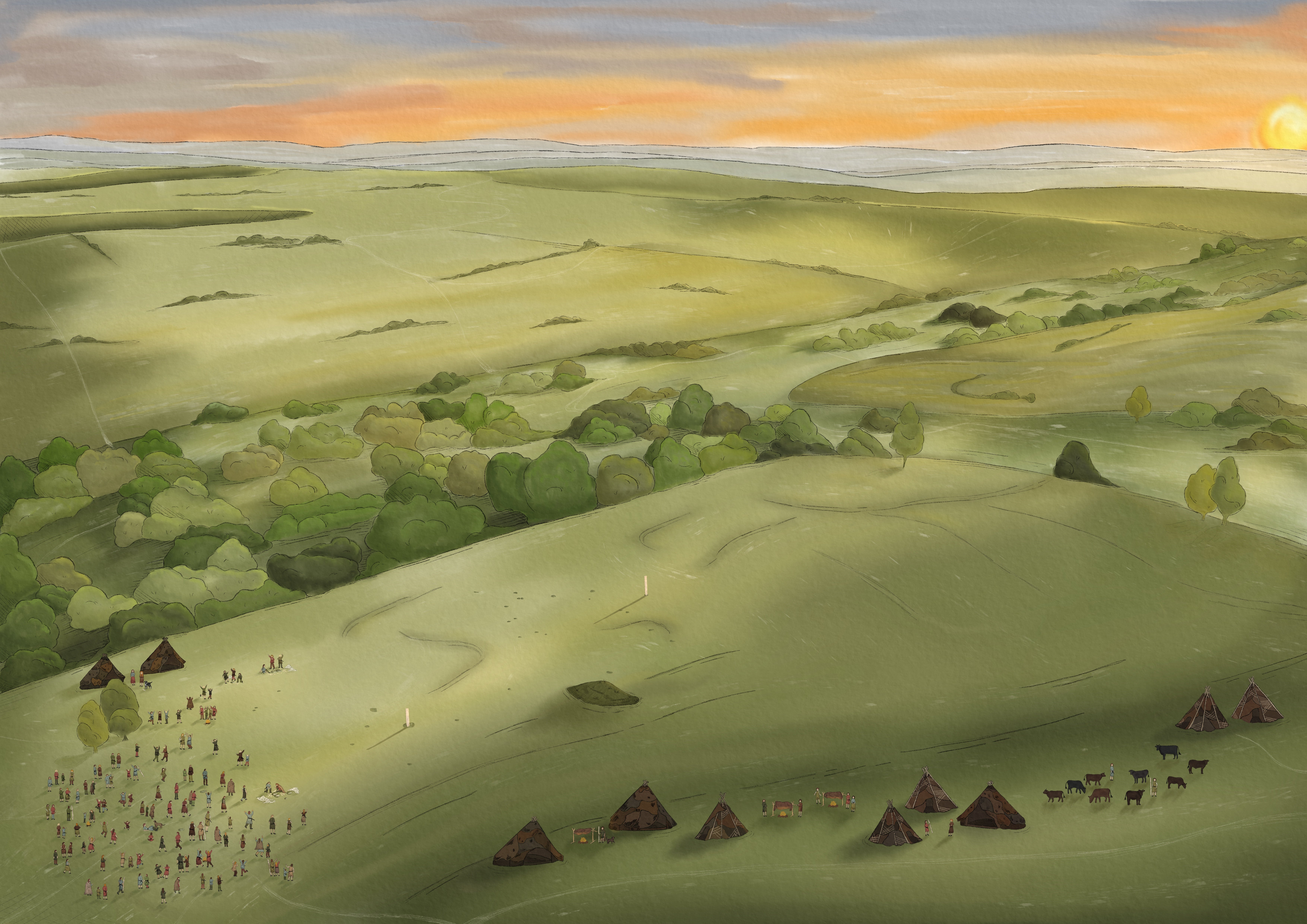
At Bulford, archaeologists, directed by a leading expert on the Neolithic era, Phil Harding of Wessex Archaeology, have unearthed a complex religious site consisting of 50 ritual pits – and what were almost certainly two timber monuments, exactly 120 metres apart, which were deliberately aligned with the summer and winter solstices.

The pits (ritually filled with feasting debris) and the timber monuments (probably 3.5-metre tall 50-centimetre diameter potentially highly decorated wooden posts) were dug and erected around 5000 years ago – and the posts prefigure what was to be constructed in stone 450 years later at Stonehenge itself (when the key stones at that famous monument were specifically positioned to mark the summer and winter solstitial alignments).

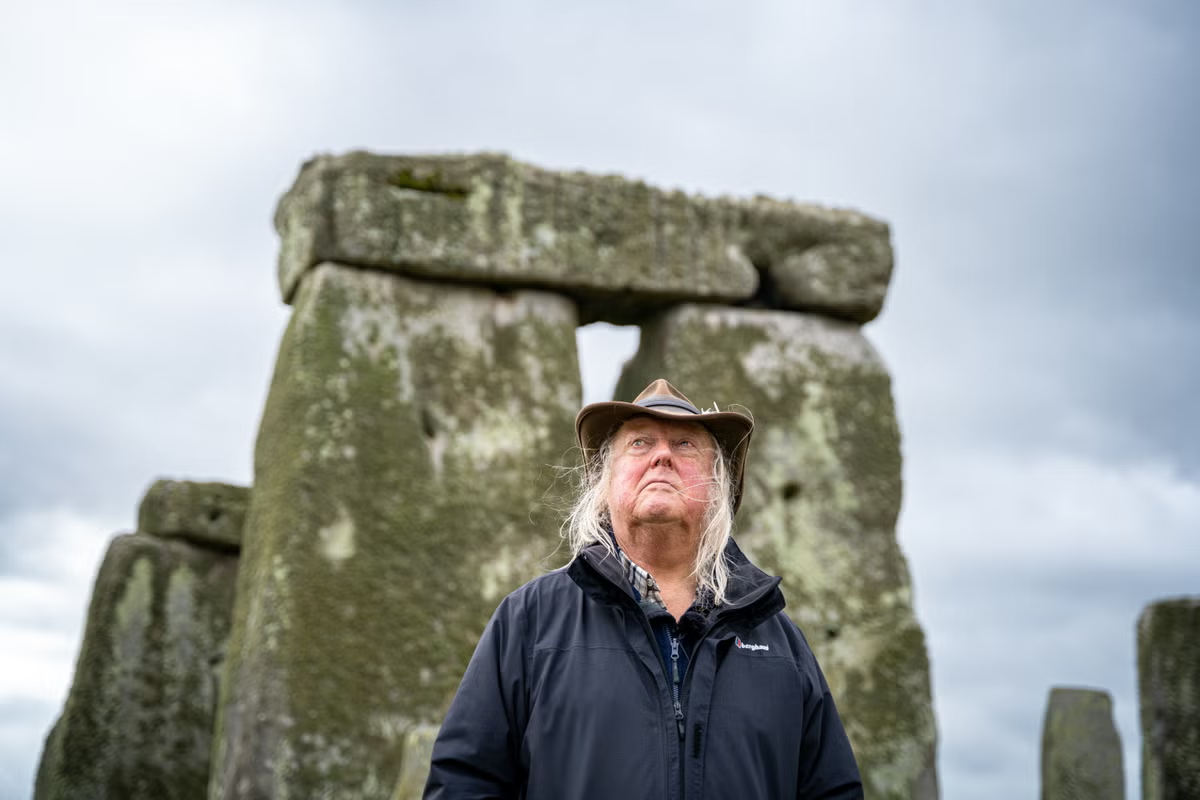
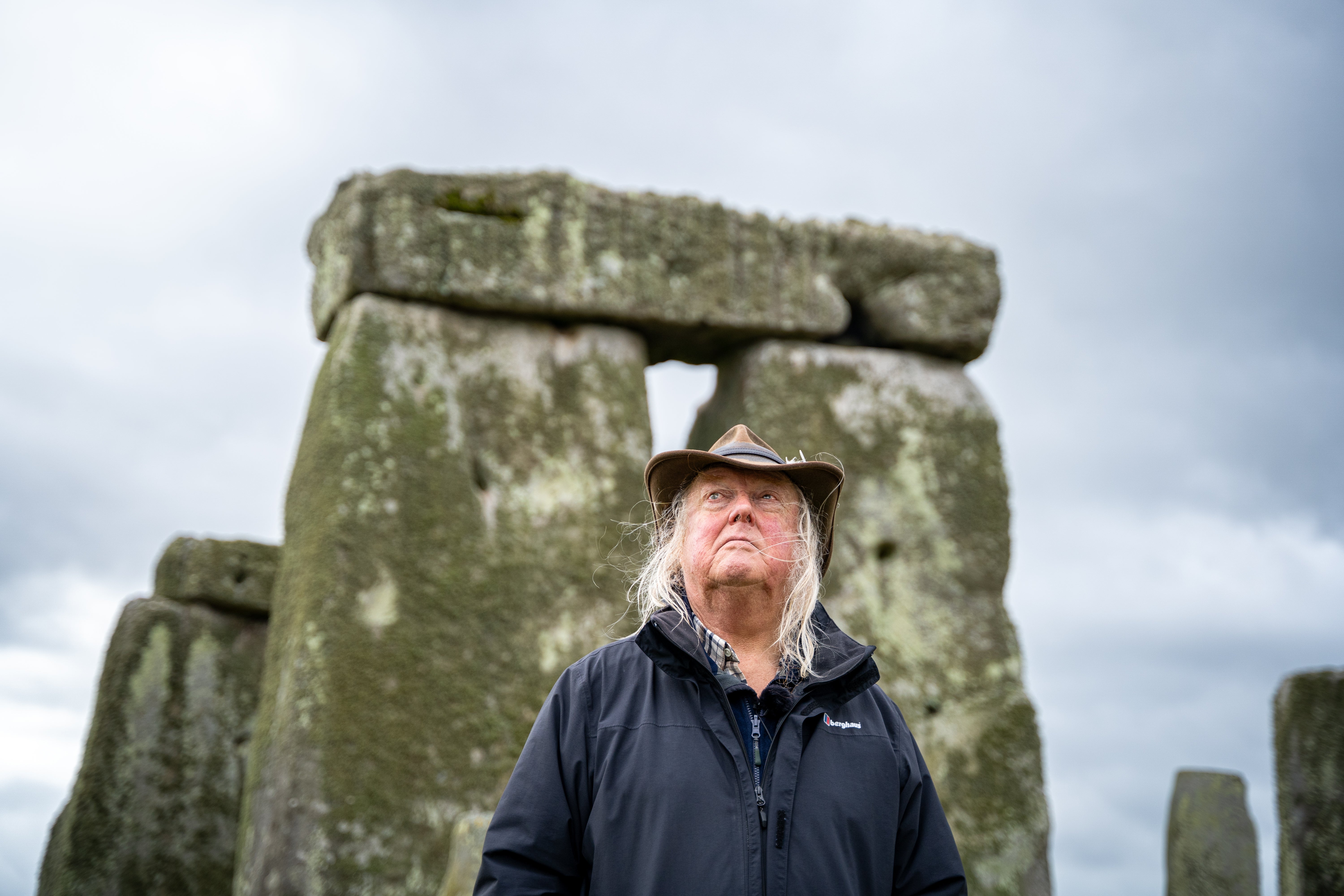
Archaeologist Phil Harding at Stonehenge on Salisbury Plain
Archaeologist Phil Harding at Stonehenge on Salisbury Plain (Wessex Archaeology)

What’s more, Stonehenge’s circular earthen bank, built long before the famous still-surviving stone monument, but at the same time as the newly-discovered Bulford site, is roughly 115 metres in diameter – so it is now conceivable that early Stonehenge may have had similar solstice-marking’ totem poles’ externally on opposite sides of its still extant earthwork circle (Stonehenge’s original ‘henge’).

Apart from Stonehenge and Bulford, the only other precisely solar aligned monuments (of identical or older vintage) known in Europe are at a giant tomb in Ireland and in at least two temples in Malta.

Now scientists are likely to start redoubling efforts to search for such alignments at other sites.

Advertisement

“The solstitial alignment discovered at Bulford is likely to help encourage archeoastronomers to investigate whether there are similar solar alignments in even older monuments in Britain, Ireland, western France and elsewhere,” said archeoastronomer Dr Fabio Silva of Bournemouth University.

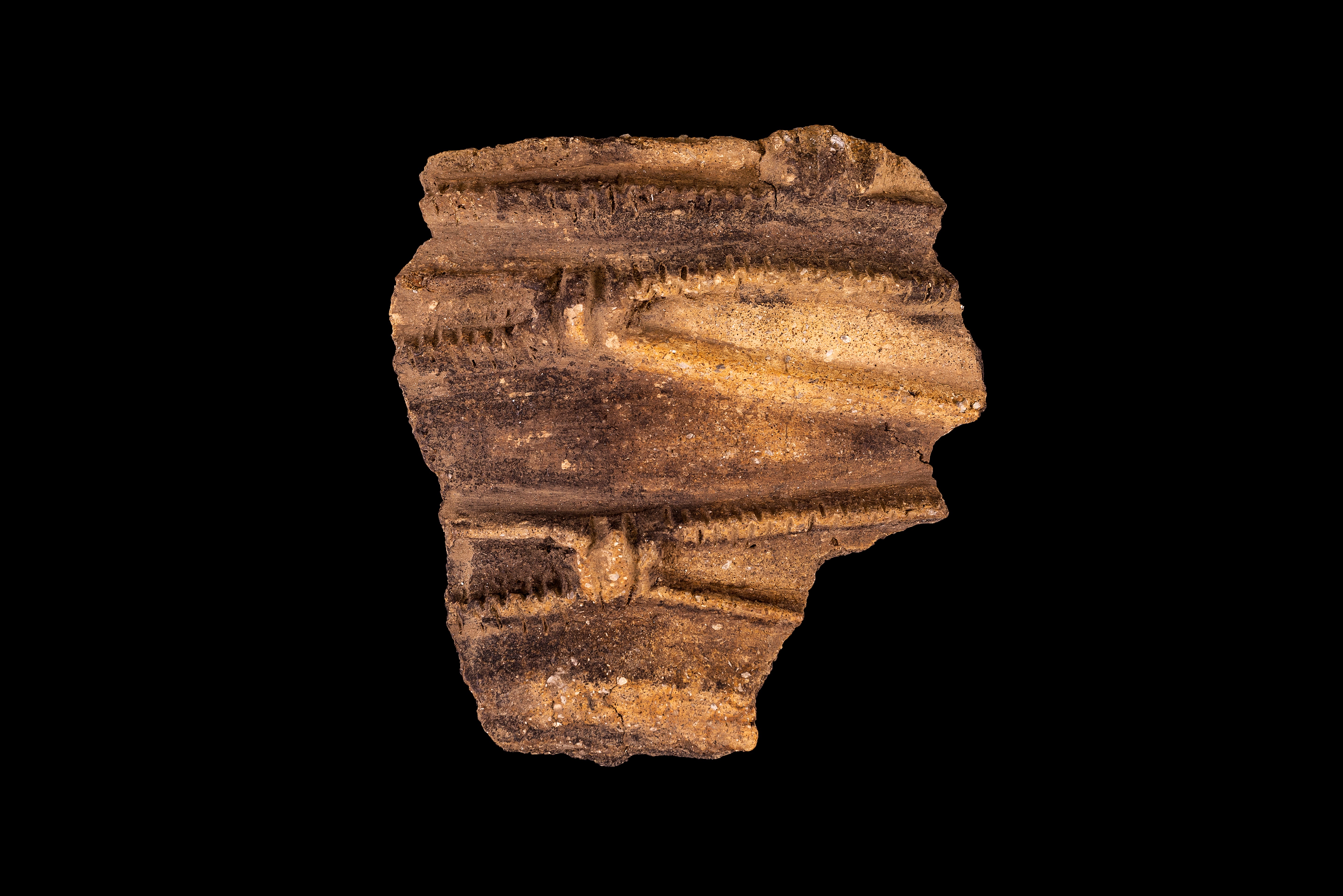
Neolithic woodlands pottery Found in Bulford, Wiltshire
Neolithic woodlands pottery Found in Bulford, Wiltshire (Wessex Archaeology)

Interest in heavenly objects – stars, planets, the moon and the sun – were of immense importance to early civilisations and cultures. Yet, counterintuitively (within at least Europe and the Middle East), very early respect for the sun seems to have been a mainly Western European phenomenon, with early tombs often very roughly oriented towards the east, ie., towards the rising sun. Early sunrise-oriented tombs in Britain for instance date back to roughly 3700 BC.

While in the Middle East, where civilisation originated, huge respect for the sun and sun worship itself did not happen, on the whole, until slightly later – indeed, in ancient Egypt, not until around 2700 BC. But, significantly, star worship (rather than sun-worship) appears to have been equally important in both early prehistoric Western Europe and the Middle East.

The Bulford research is still in progress and will help archaeologists to understand the importance of cosmology in prehistoric religions.

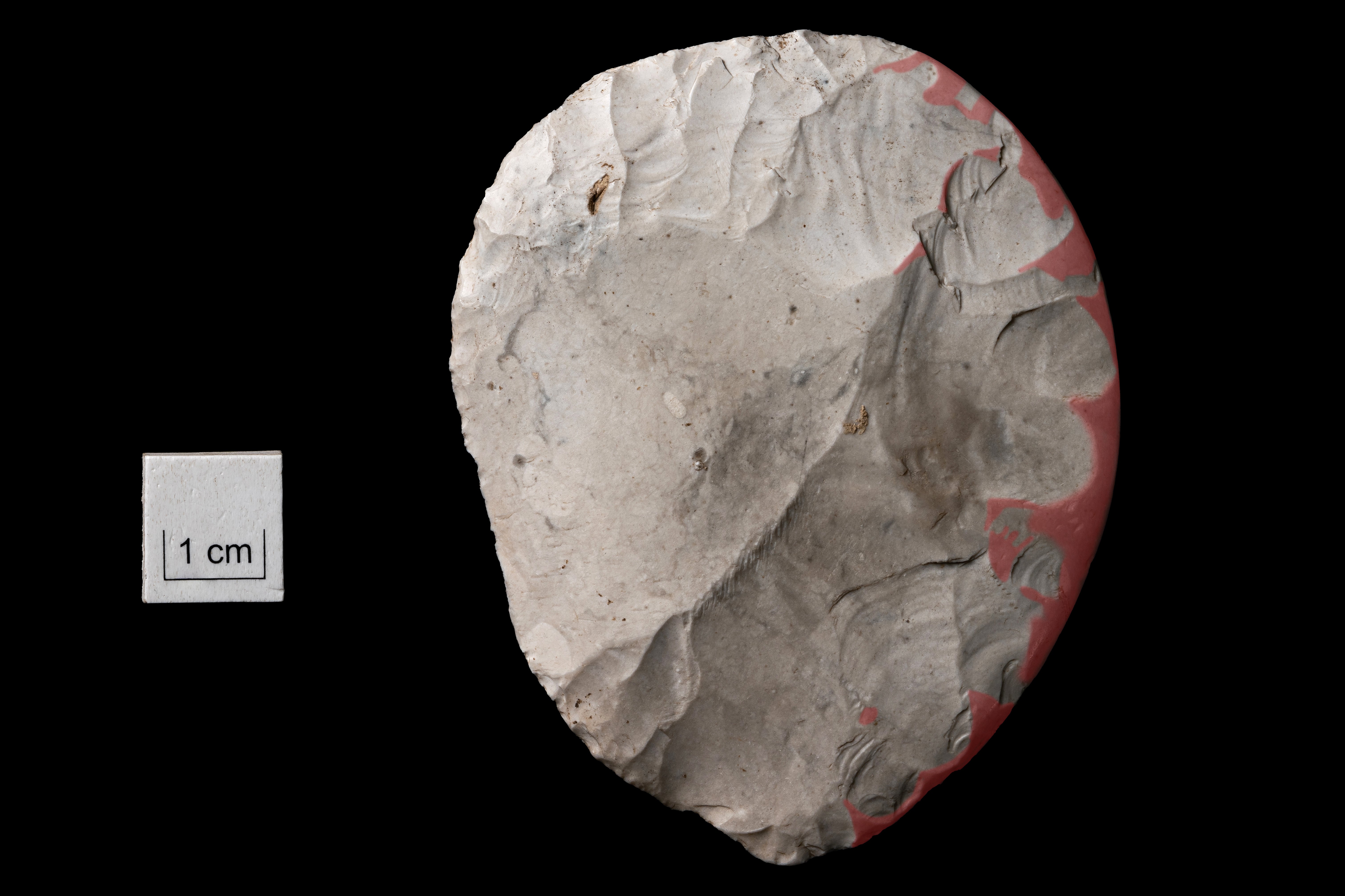
A disc-shaped flint knife found at Bulford by Phil Harding of Wessex Archaeology
A disc-shaped flint knife found at Bulford by Phil Harding of Wessex Archaeology (Wessex Archaeology)

Some of the ritual pits at the newly discovered site may, in some way, be connected to the solar alignment celebrations. It’s likely that those events featured communal feasting – and the pits certainly show evidence of that. Each of them is filled with feasting debris, broken pottery, goat/sheep and pig bones and flint artefacts.

But a cluster of them have more unusual contents – bones from giant wild cattle (aurochs) and red and roe deer, and in one specific pit, a very rare high status roughly circular flint knife (possibly symbolising the Sun) which had been placed in a deliberately vertical position, its now no-longer-extant wooden handle buried in the ground and its circular blade pointing upwards.

Advertisement

It is conceivable that the area around this pit was used by key people (potentially priests or others) to witness the crucial solstitial alignments.

The apparently extremely limited distribution of such neolithic era precise solar alignments in the world is as yet an unsolved mystery. As far as is known, they only occur in the Stonehenge area, a very major monument in Ireland (a huge tomb at Newgrange), in at least two very important temples on the small Mediterranean island of Malta and in a tiny number of locations elsewhere in the world.

An illustration issued by Wessex Archaeology of a reconstruction of summer solstice celebrations as they might have appeared at Bulford 5,000 years ago
An illustration issued by Wessex Archaeology of a reconstruction of summer solstice celebrations as they might have appeared at Bulford 5,000 years ago (Wessex Archaeology)

In virtually all the areas they occur, they tend to be associated with extremely high status prehistoric sites and locales. That suggests that any highly developed prehistoric – and often probably un-connected – solar cults may well have been elite-associated and relatively uncommon (though high profile), rather than common and widely distributed.

The ongoing Bulford research is likely to shed further light on the nature of at least the Stonehenge area’s solar alignment tradition.

“The Bulford and other discoveries reveal that precise prehistoric solar alignments were very important in the Stonehenge area. Bulford itself pushes that phenomenon in that ritual landscape back by several hundred years,” said archaeologist Dr Amanda Chadburn, co-author of Stonehenge – Sighting the Sun.

Advertisement

Source link

Continue Reading

NewsBeat

Hero or fall guy? Vance becomes face of Trump’s tentative Iran deal

Published

on

Hero or fall guy? Vance becomes face of Trump's tentative Iran deal

WASHINGTON (AP) — JD Vance was supposed to be spending the week promoting his new book, the kind of event a potential presidential candidate like the vice president typically uses to speak to a wide audience about his life and values ahead of a campaign.

Instead, the rollout of Vance’s second book, “Communion: Finding My Way Back to Faith,” has been largely crowded out by something else he’s put his name on: the tentative deal to end the Iran war.

The Republican vice president has embraced the role of chief defender of the agreement he and President Donald Trump signed with Tehran, giving a series of interviews touting the memorandum of understanding as a success and releasing a video championing it.

It’s a striking emergence for a politician who was known for his skepticism of foreign military interventions and who seemed reluctant to speak on the conflict when Trump launched it in late February.

Advertisement

The vice president is poised to yoke himself further to the conflict’s outcome on Friday, when he’s expected to travel to Switzerland to kick off a new phase of negotiations with Iran. He was originally expected to attend a formal signing ceremony for the deal, but Trump formally signed it on Wednesday instead.

Vance becoming a hype man for the agreement seems to be an all-in gamble that, should he decide to seek the White House in 2028, voters will reward him for being the face of ending an unpopular conflict.

It’s also setting Vance up as the presumptive fall-guy should the deal with Iran falter.

Trump joked about such a possibility on Wednesday.

Advertisement

“If it works out, I’m going to take the credit. If it doesn’t work out, I’m blaming JD,” Trump said.

Officials release text of the deal after backlash

The White House in a statement called Vance the president’s “right-hand man and an invaluable member of the President’s talented national security team.”

“That’s why the Vice President was trusted to lead these negotiations alongside Special Envoy Steve Witkoff and Jared Kushner,” White House spokeswoman Olivia Wales said. “What President Trump and his team achieved on the battlefield and at the negotiating table is nothing short of remarkable and will strengthen American security for years to come.”

But backlash, including from conservatives, began growing this week after the U.S. digitally signed the memorandum of understanding with Iran on Sunday.

Advertisement

Luke Schroeder, a spokesman for the vice president, said in a statement: “It’s unfortunate that some Republicans are attempting to undermine the President’s efforts to achieve peace in the Middle East and ensure Iran never has a nuclear weapon.”

Officials gave shifting answers about when they would release the text, but leaked copies of a draft were quickly met with anger and skepticism from Democratic and Republican U.S. lawmakers, as well as Israel and pro-Israel advocates. Their criticisms included concerns that the deal, meant to open a two-month negotiating period, seemed to offer Iran wins up front while guaranteeing little in return, and that Trump’s stated reason for launching the conflict, to prevent Iran from obtaining a nuclear weapon, remains unresolved.

Vance has reiterated that Iran must meet its obligations.

“If they don’t behave properly, they don’t get any of the benefits of this bargain,” he said Tuesday on Fox News Channel’s “Fox & Friends.”

Advertisement

In response to the backlash and mounting questions, the U.S. on Wednesday provided the text of the agreement to journalists.

The agreement states that Iran’s stockpile of highly enriched uranium, which is believed to be buried under rubble, must at minimum be diluted under international supervision. It also states that Iran shall not procure or develop nuclear weapons — a commitment it has made previously. But beyond stating that the U.S. and Iran will negotiate over Iran’s nuclear program, other commitments still need to be worked out.

Criticism on the right persisted after the text was released.

Conservative radio host Erick Erickson, a hawk who has defended the war, said Wednesday: “This is an American surrender.”

Advertisement

Texas Republican Sen. Ted Cruz, a potential 2028 presidential candidate, criticized the agreement and said to reporters, “I think the president, unfortunately, is receiving bad advice.”

Trump’s ‘Operation Epic Fury’ has angered wings of his movement

The conflict, which has stretched into its fourth month, has cleaved Trump’s broad Make America Great Again coalition and angered both those who favored a harder line against Iran and those drawn to Trump’s “America First” foreign policy underscored by a message of “no new wars.”

Critics, including Republicans, have already started pointing fingers in Vance’s direction, questioning whether the deal resembles the 2015 nuclear agreement struck by Democratic President Barack Obama and whether this new agreement achieves Trump’s stated objectives for launching the war.

Republican Sen. Lindsey Graham of South Carolina, a Trump ally and Iran hawk, had been skeptical of the agreement and referred to Vance on social media as “the architect of the deal.”

Advertisement

After the agreement was released, Graham issued a tepid statement of support, saying, “Whether or not the United States can reach an acceptable, verifiable deal with Iran regarding its nuclear program and other issues is yet to be determined, but I see little downside to trying.”

Ben Domenech, The Daily Wire’s opinion editor, said on Fox News that everything he was hearing about the deal “seems bad” and appeared to cast blame on Vance by alluding to his first book, “Hillbilly Elegy.”

“Are we going to backslide into being some kind of ‘hillbilly Obama’ kind of GOP?” Domenech said.

GOP allies say Vance can navigate the politics

The Trump administration has not offered formal briefings to Congress on the details of the memorandum, but Vance has quietly started doing outreach to some Republican senators on Capitol Hill.

Advertisement

Sen. Bernie Moreno, R-Ohio, a close ally of Vance’s, said the vice president would be able to assuage even critics within his own party who are skeptical of the deal because “JD is just the president’s messenger, and the president’s going to prove them all wrong.”

Sen. Kevin Cramer, R-N.D., said the deal “certainly adds to the national security and geopolitical chops” of Vance, who spent two years as a U.S. senator for Ohio before ascending to the vice presidency.

But Cramer acknowledged the risks if the agreement goes awry.

“I guess the nice thing is, if you’re not the No. 1 person, you can take credit and avoid risk, avoid the criticism, but probably not so easily,” Cramer said.

Advertisement

Vance argues Iran is not a quagmire like the Iraq war

In interviews this week, Vance has sought to speak directly to the skeptics in his party, a preview of the difficult explanations he may be pressed to make as a candidate on the war.

On Megyn Kelly’s show, the vice president said the critics “believe Iranian propaganda” about the deal. But he acknowledged some of the frustrations on the hawkish right while trying to reassure the anti-interventionists that the Iran conflict isn’t the war in Iraq, where he served as a Marine.

“We were never going to get the quagmire that a lot of people were worrying about because Donald Trump is just not George W. Bush,” he said.

Democrats have stressed that even as Vance becomes the face of the Iran deal, the fate of any administration official who harbors presidential aspirations — particularly hawkish Secretary of State Marco Rubio, who has largely been quiet in the agreement’s final phases — will be tied to its outcome.

Advertisement

“I think any member of this administration is going to rise or fall on the basis of the Iran war and the handling of the economy, and I don’t think there are exceptions,” said Sen. Brian Schatz, D-Hawaii.

___

Associated Press writer Will Weissert contributed to this report.

Advertisement

Source link

Continue Reading

NewsBeat

What makes the ideal digital icon? A psychologist explains

Published

on

What makes the ideal digital icon? A psychologist explains

Digital icons are everywhere – and usually, we interpret these visual symbols in the blink of an eye. Who today doesn’t know that a wastebasket means “delete” and a magnifying glass means “search”?

Yet icons’ meanings can be deeply shaped by culture, experience and technological history. So what seems obvious to one person may be confusing to another.

They were originally designed to make computers look friendlier and less intimidating to the few people who had access to them. For example, the icons below first appeared in 1975 in the Pygmalion visual programming system.

Years later, they attained much wider visibility thanks to the Xerox Star 8010, a pioneering office computer that introduced many graphic interface concepts that are still used today.

Advertisement

The Xerox 8010 Star’s icons.
stardock.com

Research my colleagues and I conducted examines how people perceive, understand and evaluate digital icons – including which visual characteristics make icons easier to learn and use. Pygmalion’s pioneering icons worked because they relied on existing knowledge of the office world.

This meant they reduced cognitive effort by relying on recognition rather than recall. The icons looked like the physical objects they were representing – and critically, objects the computer’s users were already familiar with.

Five secrets of a good icon

The designer Susan Kare, creator of many of the original Macintosh icons, said a good icon should either be instantly recognisable or so easy to remember that a user only needs to learn it once.

Advertisement

To Kare, designing icons was about solving “the little puzzle of making an image fit a metaphor”. More than 40 years later, that challenge remains.

Research, including work by my colleagues and me, suggests the most successful icons tend to share key characteristics that guide us from seeing to understanding almost instantaneously. Here are five of them.

1. They depict things we already know

Early computer icons worked because they borrowed from the office world that people already knew: folders, bins, documents, calculators, floppy disks. Psychologists refer to those as “concrete” icons because people to use their knowledge of the everyday world to interpret them.

Advertisement

However, only a limited number of functions can be represented as identifiable objects, and getting a close fit between pictures and functions is not always easy. The more complex the meaning becomes, the harder it is to design concrete icons.

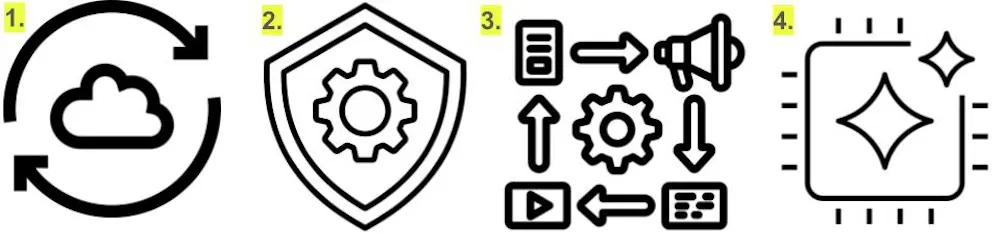
To test this, can you guess the meaning of these four icons? (Answers at the end of the article.)

Alt text

Icon credits:
Freepik/Flaticon; Kartini 1/The Noun Project; Elzicon/Flaticon; IconPai/The Noun Project.

2. They mean what we think they mean

Psychologists talk about “semantic distance” – how closely an image matches its intended meaning. An abstract symbol for “privacy settings” or “cloud syncing” has a much larger semantic distance than using a bin to mean “delete”.

Advertisement

As digital functions become more complex, designing icons that communicate their meaning quickly becomes increasingly difficult.

3. They feel familiar

Another important feature of successful icons is consistency of use over time – which leads to familiarity. The icons shown below are widely used even though the objects depicted are no longer so widely in use. This highlights the point that icons are partly informative signs and partly shared learned conventions, whose success is based on collective familiarity.

Take the floppy disk “save” icon (below left). Younger users recognise the meaning without ever having seen the physical object that the icon originally represented. The same is true of traditional telephone handsets and perhaps even envelopes (now widely used to denote “email”). While the objects have been superseded, the icons remain.

Advertisement
Alt text


Icon credits: Yogi Aprelliyanto/Flaticon

4. They look good

A well-designed object can have a positive effect on our behaviour – and the digital world is no different. Well-designed icons are more likely to attract downloads, help us perform tasks more efficiently, and learn better and faster. They even make digital environments feel more pleasant to use.

Think of the difference between an app icon that feels cluttered and amateurish and one that looks clean, balanced and professional. Even before we know what the app does, the icon’s design can influence expectations of how well the app will work.

5. They are tested with real users

Advertisement

Although icons and symbols are on the rise as a global visual language, it’s important not simply to assume that icons work globally – and to understand what makes a good digital icon across languages, cultures, ages and digital experiences.

This is why the International Standards Organisation (ISO 9186) demands comprehensibility testing – because symbols should be understood without explanatory text whenever possible.

A bridge between perception and meaning

As we spend more of our lives in digitally mediated environments, icons do two jobs simultaneously. They help us interact with technology more efficiently, and shape how we feel about the experience.

A digital icon is not simply a small picture. It is a bridge between perception and meaning. The best icons make interfaces feel less intimidating, more intuitive and more approachable – creating a global visual language that crosses barriers of language and culture.

Advertisement

In other words, good icons do more than help us find our way around a digital world. They help make that world feel understandable, welcoming and human.

Icon quiz answers: 1. cloud syncing; 2. privacy settings; 3. algorithmic recommendations; 4. generative AI.

Source link

Advertisement
Continue Reading

NewsBeat

Bid for ‘permission in Principle’ for Blackrod houses vote

Published

on

Bid for 'permission in Principle' for Blackrod houses vote

The proposal is seeking permission in principle to build the two new houses on land off Little Scotland in Blackrod.

According to a Bolton Council planning report, the land is on the green belt, but meets the definition of “grey belt”, meaning previously developed land.

The report said: “The Green Belt assessment states that the Green Belt parcel in which the application site is located makes a strong contribution to this purpose, as the parcel plays an essential role in preventing the merging or erosion of the visual and physical gap between settlements of Blackrod and Horwich in particular as well as Aspull and Westhoughton.

“The parcel also plays a role in preventing the merger of Blackrod and Adlington to the north.”

Advertisement

The bid is seeking permission in principle to build two houses (Image: Bolton Council)

But the report said that the site represented only a small gap between Blackrod and Aspull.

As many as 35 letters of objection from 30 households were received about the plans raising concerns about biodiversity, ecology, infrastructure and the loss of green belt land.

They also said they were concerned the new houses, if they came to be built, would be out of keeping with the character of the area.

Cllr Peter Wright, of Horwich South and Blackrod, asked that the bid be heard by Bolton Council’s planning committee raising concerns about the use of green belt land.

Advertisement

He also said there could be traffic issues on a narrow road.

Blackrod Town Council also objected to the plan saying that the land has previously been used for grazing horses.

But the report put before Bolton Council recommended that permission in principle be approved.

It said: “Inappropriate development is, by definition, harmful to the green belt and should not be approved except in very special circumstances.

Advertisement

“‘Very special circumstances’ will not exist unless the potential harm to the green belt by reason of inappropriateness, and any other harm resulting from the proposal, is clearly outweighed by other considerations.”

Bolton Council’s planning committee is expected to meet to consider the plans at town hall on Thursday June 18.

Source link

Advertisement
Continue Reading

NewsBeat

Drug smuggler jailed after collecting drugs from airport

Published

on

Drug smuggler jailed after collecting drugs from airport

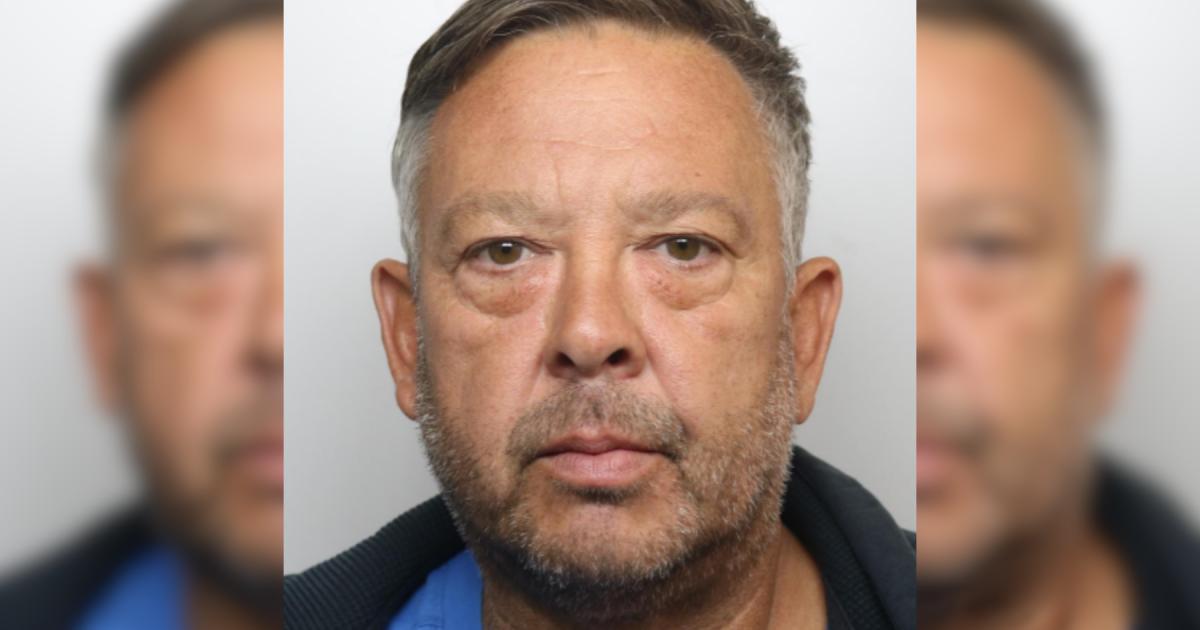
Dale Hosker, 50, from Bury, appeared before Bolton Crown Court following an investigation by the National Crime Agency into two organised crime groups collecting the drugs.

The dog breeder is the last offender from the group to be jailed.

Last month, his partner, from Walkden, Dale Creen, 35, was jailed for 11 years along with two men from a different organised crime group – Albanians Elton Hallaci and Artur Iseberi, who were respectively sentenced to 21 years and seven months and 18 years.

Advertisement

Last year, seven US citizens who acted as the couriers were jailed for collecting the cocaine at Manchester Airport and transferring it to Hallaci, 32, and Iseberi, 27, of Liverpool, and Hosker and Creen.

The Americans flew into Manchester from the United States on 11 May 2024 without any luggage and waited until bags containing cocaine arrived from Cancun, Mexico.

Eight suitcases arrived at the airport and the couriers followed text message instructions from a US offender called ‘Nate’ to collect specific suitcases containing hundreds of kilograms of the Class A drug before transferring it to the four men who were waiting at nearby locations.

After collecting the suitcases from the carousels, they were wheeled outside and caught taxis to a nearby hotel, where they passed two to Hosker and five to Hallaci and Iseberi.

Advertisement

However, one of the couriers left a case behind, which Border Force officers opened and discovered 20 one-kilogram blocks of cocaine.

The NCA investigation showed that on that day, Hosker collected 40kg of cocaine and the Albanians collected 100kg.

A few weeks later, on May 31, 266kg of high-purity cocaine with a street value of around £24m was smuggled into the airport.

Despite seven couriers being sent to collect them, the drugs were seized, and only one courier was successful and directed to a Bury address to hand over the 20 kg to Creen.

Advertisement

The other suitcases were seized, each contained between 22 and 24 blocks of cocaine and a tracking device.

Hallaci, Iseberi, Hosker and Creen were arrested on 17 June 2025 by NCA officers.

Jon Hughes, NCA Branch Commander, said: “The Class A drugs trade is inextricably bound up with extreme violence which can have devastating consequences, we have seen entirely innocent victims caught in the cross-fire of feuding drugs gangs.

“But offenders like Hosker are driven by greed and don’t care about the trail of misery and harm from source countries in South America to the streets of our towns and cities.

Advertisement

“The NCA works with partners at home and abroad to protect the public from the threat of Class A drugs.”

Evidence against them was damning.

The offenders were captured on CCTV at Manchester Airport on the days of the importations. And one courier took a photograph of Hosker loading cocaine-filled suitcases into his car following the 11 May handover.

Inside Hallaci’s home, officers found keys to a Jaguar car parked outside.

Advertisement

It had a professionally fitted hidden compartment between the rear seats and the boot used for smuggling drugs.

Officers also discovered a treasure trove of notepads with detailed ledgers of cocaine importations. They featured references to handovers that both Hallaci and Iseberi were involved in on 11 May.

The notebooks, which were written in Albanian and contained the fingerprints of Hallaci and Iseberi, indicated how the drugs would be divvied up, with 30kg going to Bradford, 35kg going to London, 8kg to Birmingham.

As part of the investigation, NCA investigators also seized two other Jaguar cars belonging to the Albanian OCG, which were fitted with after-market hides.

Advertisement

On the day the offenders were arrested, Iseberi tried to escape along the roof of his home, and an axe, a knife and a machete were uncovered in Creen’s bedroom.

Hallaci, Iseberi and Hosker pleaded guilty to smuggling cocaine and possession of cocaine with intent to supply.

Creen was convicted by a jury of possession of cocaine with intent to supply but acquitted of smuggling cocaine.

Advertisement

Source link

Continue Reading

NewsBeat

Which shows are getting scrapped as part of the BBC’s cuts?

Published

on

Daily Mirror

Need to know

A number of high profile shows have been affected after the new director-general announced cuts

The BBC announced new cuts(Image: Mike Kemp/In Pictures via Getty Images)

Everything you need to know about the BBC’s £80 million cuts including Breakfast shake-up

  • The new director-general of the BBC, Matt Brittin, has announced plans to cut £80 million from programming on TV, radio and news, as part of huge cuts across the corporation. That’s not all, as Licence Fee payers will also notice a reduction in services and choices as part of the £40 million-a-year cuts.
  • The former Google executive unveiled his plans in a staff email on Wednesday (June 17), where he said that the BBC must be “simpler and faster” going forward and must try to avoid duplication.
  • Amongst the confirmed changes announced, BBC Breakfast will no longer air on Sunday mornings from September, whilst the production teams making Sunday with Laura Kuenssberg and Newsnight will merge. Radio 4’s The World Tonight will also end from September, and the number of permanent presenters on Today will be cut from five to four, with a single anchor on the show on Saturdays, and World Tonight is being replaced by Newshour.
  • Several other Radio 4 programmes will also end during the next year, including the Midnight News, Money Box Live, AntiSocial, The Law Show, Crossing Continents, On the World Service, The Inquiry, The Conversation and The Fifth Floor.
  • Between 1,800 and 2,000 roles are expected to go across the British broadcaster in the coming months, including 550 jobs in the BBC’s news and nations divisions.
  • In the email to staff, Brittin explained that there could also be a reduction in dramas going forward, as they are “expensive” for the BBC to make.

READ THE FULL STORY: BBC Breakfast shake-up and shows scrapped as part of £80m cuts

Source link

Continue Reading

NewsBeat

‘Complex’ Wisbech investigation explored in Channel 4’s ‘best ever’ documentary

Published

on

Cambridgeshire Live

24 Hours in Police Custody is back on Channel 4 tonight with a gripping episode following Cambridgeshire Police

A groundbreaking Channel 4 documentary series is returning to television screens with another gripping instalment – and audiences won’t have to wait much longer.

24 Hours in Police Custody has established itself as a viewer favourite throughout the years, immersing audiences in authentic investigations within a local constabulary. Since launching in 2014, devotees of the programme keenly anticipate fresh episodes as they track Bedfordshire and Cambridge Police force working against time.

Advertisement

Chronicling cases from the moment a distressing 999 call is received, through to a possible court appearance, officers are shown uncovering shocking and harrowing truths while examining serious and major offences that shake a community.

From homicide and sexual violence to drug networks, the award-winning series doesn’t hold back from the intense realities confronting detectives. Another hard-hitting episode is scheduled to broadcast this evening (June 18) at 9pm on Channel 4, which audiences won’t want to miss.

Entitled The No Body Murder, this evening’s episode is a repeat that draws viewers into a complicated investigation when one man vanished, reports Wales Online.

Advertisement

A synopsis reads: “Cambridgeshire Police have a big problem: a murder hunt without a body. A complex search for clues takes them into the woods and across Europe, and features a mysterious post on Facebook.”

Writing on Facebook this week, the Policing Fenland page stated: “When a Wisbech man went missing in 2015 a murder investigation was launched – but it was far from straightforward.

“On Thursday (18 June) at 9pm Channel 4 will show a repeat of 24 Hours in Police Custody ‘the no body murder’.

“The investigation involved some unbelievable revelations along the way and uncovered suspected exploitation and modern slavery. We’re working hard to tackle modern slavery, but we need your help. Please know the signs to look out for and report any concerns.”

Advertisement

One commenter responded: “Seen this programme, truly a staggering case with an ending nobody could have predicted. If you haven’t seen it dont Google what happened, its mind blowing.”

24 Hours in Police Custody continues to attract glowing reviews, with viewers declaring it the “best” programme of its type on television.

On IMDb, one viewer previously commented: “This is a rare reality show that makes all others look like bad tv.”

Advertisement

Another noted: “It’s true crime, at its most honest and also most horrific; I like to believe in the basic good of human nature, but these episodes tell some pretty grim stories, and also show quite how hard it can be to secure a conviction.”

A third remarked: “Gripping, unpredictable, shocking. A fantastic insight into the Police in Beds/Cambs. Unmissable TV.”

Earlier instalments of the programme have left audiences appalled, with episodes also available to watch via Channel 4’s streaming platform. One viewer took to social media to write: “I saw both parts of this investigation and was sickened beyond belief.”

24 Hours in Police Custody returns to Channel 4 tonight at 9pm

Advertisement

Source link

Continue Reading

NewsBeat

Channel 4’s 24 Hours in Police Custody returns with chilling episode tonight

Published

on

Wales Online

The landmark documentary will return to television screens tonight with a chilling instalment

A landmark Channel 4 documentary will return to screens with yet another chilling episode – and viewers don’t have long to wait.

Advertisement

24 Hours in Police Custody has become a firm favourite over the years, plunging viewers into real life investigations within a local police force. Since its release in 2014, fans of the show eagerly await new instalments as they follow Bedfordshire and Cambridge Police force in a race against the clock.

Following a case from the minute a harrowing 999 call is made, right through to a potential court visit, detectives are seen uncovering horrific and brutal truths as they investigate serious and major crimes that rock a community.

From murder and sexual assault to drug gangs, the award winning programme does not shy away from the tense realities faced by detectives. Another brutal episode is set to air tonight (June 18) at 9pm on Channel 4, which viewers will not want to miss.

Advertisement

Titled The No Body Murder, tonight’s instalment is a repeat episode that takes viewers into a complex investigation when one man disappeared from his home.

Ricardas Puisys vanished from his home back in 2015, but a murder investigation was launched after police suspected foul play. But with no body, detectives were stunned to uncover unbelievable revelations.

A synopsis reads: “Cambridgeshire Police have a big problem: a murder hunt without a body. A complex search for clues takes them into the woods and across Europe, and features a mysterious post on Facebook.”

Taking to Facebook this week, the Policing Fenland page wrote: “When a Wisbech man went missing in 2015 a murder investigation was launched – but it was far from straightforward.

Advertisement

“On Thursday (18 June) at 9pm Channel 4 will show a repeat of 24 Hours in Police Custody ‘the no body murder’.

“The investigation involved some unbelievable revelations along the way and uncovered suspected exploitation and modern slavery. We’re working hard to tackle modern slavery, but we need your help. Please know the signs to look out for and report any concerns.”

One person replied: “Seen this programme, truly a staggering case with an ending nobody could have predicted. If you haven’t seen it dont Google what happened, its mind blowing.”

Advertisement

24 Hours in Police Custody continues to bring in rave reviews, with fans saying it is the “best” show of its kind on TV.

Over on IMD, one person previously said: “This is a rare reality show that makes all others look like bad tv.”

Another added: “It’s true crime, at its most honest and also most horrific; I like to believe in the basic good of human nature, but these episodes tell some pretty grim stories, and also show quite how hard it can be to secure a conviction.”

A third echoed: “Gripping, unpredictable, shocking. A fantastic insight into the Police in Beds/Cambs. Unmissable TV.”

Advertisement

Previous episodes of the show have left viewers disgusted, as they are also available to stream on Channel 4 online. One viewer wrote on social media: “I saw both parts of this investigation and was sickened beyond belief.”

Another penned: “That was GRIM #24hoursinpolicecustody.”

24 Hours in Police Custody returns to Channel 4 tonight at 9pm

Source link

Advertisement
Continue Reading

Trending

Copyright © 2025