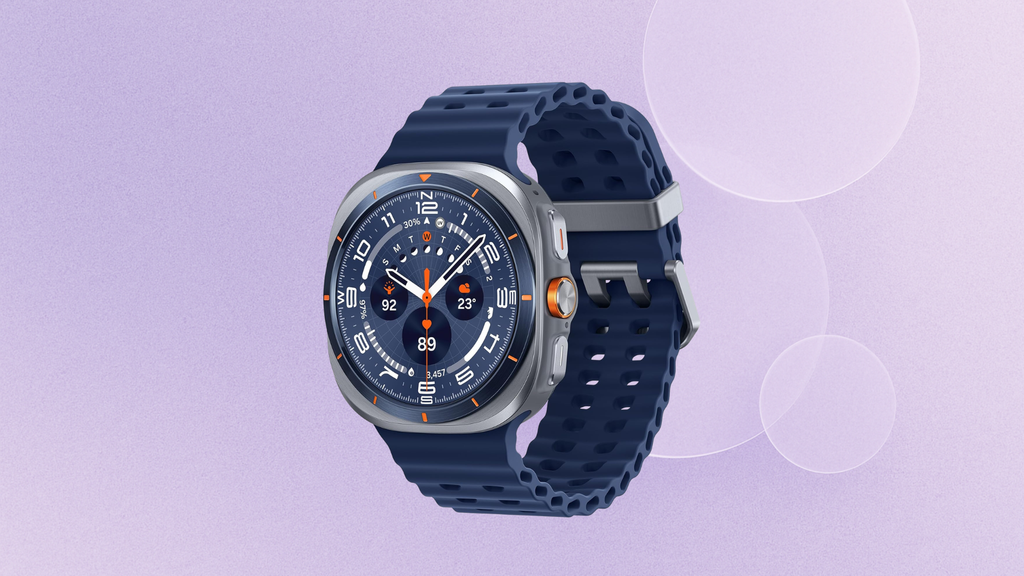
Samsung’s next rugged smartwatch could be getting one of the biggest battery upgrades we’ve seen on a Wear OS device.
According to a new report, the Galaxy Watch Ultra 2 will feature a battery with a rated capacity of 784mAh. This would likely be marketed as an 800mAh cell when the watch launches. If accurate, that would represent a jump of more than 30% over the current Galaxy Watch Ultra’s already sizeable 590mAh battery.
Battery life has become one of the biggest battlegrounds for smartwatch makers. This is especially true in the Wear OS world, where many devices still struggle to make it comfortably through multiple days of use. That’s what makes this rumoured upgrade stand out.
For comparison, reports suggest Samsung will equip the upcoming 40mm Galaxy Watch 9 with a 382mAh battery. Meanwhile, Google’s latest Pixel Watch 4 models pack 325mAh and 455mAh cells, depending on size. On paper at least, the Galaxy Watch Ultra 2 would offer almost double the battery capacity of many mainstream Wear OS watches.
Advertisement
Of course, battery size doesn’t automatically translate into battery life. Factors such as display efficiency, software optimisation and processor performance all play a major role. However, the original Galaxy Watch Ultra already ranks among the better-performing Wear OS watches for endurance. As a result, a larger battery could make its successor even more appealing for users who prioritise longevity over slim designs.
Advertisement
The report also suggests Samsung will pair the new watch with Qualcomm’s Snapdragon Wear Elite platform. This platform will power several upcoming flagship smartwatches. If the chip delivers meaningful efficiency gains alongside the larger battery, Samsung could be looking at a substantial real-world improvement.
It’s also shaping up to be the first major refresh of the Ultra line since the original model launched. While last year’s update focused largely on refinements, the Galaxy Watch Ultra 2 is beginning to look like a more significant upgrade. This could be especially true if battery life becomes its headline feature.
Advertisement
Samsung is widely expected to unveil the Galaxy Watch Ultra 2 in July alongside the Galaxy Z Fold 8.
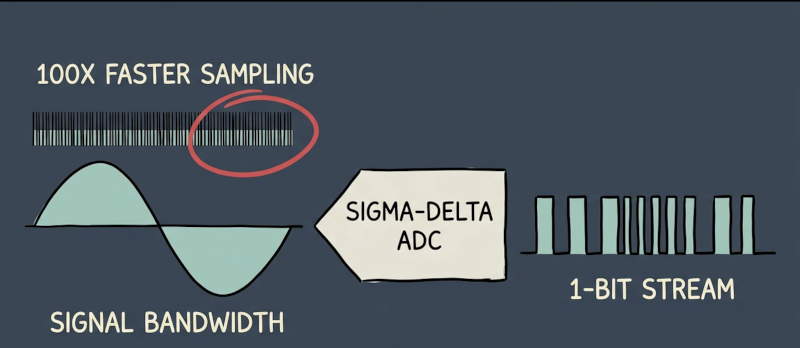
An old algebra teacher used to say, “You have to take what you know and use it to get what you don’t know.” You might say the same thing about converting analog signals into digital. Computers know how to count and keep time. [Eric Explains] has a video purporting to explain “every type of analog-to-digital converter.” We aren’t sure he got every possible method, but there’s still a lot of information in the video, which you can see below.
From the flash ADC, using a ton of comparators to the successive approximation converter, which essentially plays a game of hi/lo, guessing the answer and figuring out if the real answer is higher or lower.
Those are pretty common, but the video also covers things like the Wilkinson ADC and other more exotic techniques. Each method, of course, has its advantages and disadvantages. For example, the flash ADC is fast, but requires a lot of components and power.
Advertisement
Sometimes, the method you use depends on how you are building. For example, you probably wouldn’t use a charge system on a breadboard since precision capacitors are finicky. But on an integrated circuit, capacitors made with photolithography may not be very precise, but the ratio between capacitors is super precise, making that a common technique in that domain.
Even if you never need to design your own converter, understanding the different architectures will let you make a better selection among alternatives. Then again, you can design your own. We’ve seen most of these architectures in past projects.
‘AI Overviews can no longer just be helpful summaries. Now, they must be legally defendable outputs,’ said Forrester principal analyst Nikhil Lai.
A landmark German ruling has determined that Google’s AI Overview are its own words, holding the company liable over statements Overview generated about two German publishers.
The Regional Court of Munich found that the AI Overview search tool was generating false claims about the two plaintiffs, including that they committed fraud and lured customers into subscription traps.
The court hit Google with a temporary injunction, banning the company from spreading false claims about the plaintiffs. Google has been ordered to pay 80pc of the legal costs, while the plaintiffs will each pay 10pc of the costs.
Advertisement
The court pinned responsibility on the search giant, reasoning that the AI used by Google independently compiles and summarises information, creating search results that go beyond just links.
It ruled that only Google has influence over the AI used in Overviews, as well as the algorithms with which it operates – meaning it must be held accountable for its results. It also said that the Overview search results about the plaintiffs included statements not even made in the search results.
“We invest deeply in the quality of AI Overviews to ensure that the overwhelming majority of responses provide accurate information, and they are designed to reflect the information that exists on the web. We’re carefully reviewing this decision, which is not yet final,” Google told Android Authority in a statement.
The Munich regional court’s ruling went a step further, examining existing rulings from Germany’s Federal Court of Justice (BGH), which gave search engines and autocomplete limited liability.
Advertisement
According to the BGH, search engines are only liable as indirect infringers because they disseminate information already created by third-party content publishers.
However, the Munich court said that this doesn’t apply to AI Overviews, as it “makes independent, new and substantive statements based on an evaluation and linking of content from various third-party websites” – rather than a traditional search engine which points to external sites.
Google argued in proceedings that users should not blindly trust information generated in AI Overviews. While the court agreed that users can check links and ensure the validity of the information they receive, it said that that shouldn’t relieve the company of liability.
“AI Overviews can no longer just be helpful summaries,” said Nikhil Lai, a principal analyst at Forrester. “Now, they must be legally defendable outputs.
Advertisement
“I think we’ll see fewer assertive, highly confident claims and more hedging, including language like ‘according to…’ and ‘some sources suggest…’.”
Lai also expects that fewer queries searching for sensitive information such as financial, health or legal advice would result in AI Overviews.
“This is not a Google-specific problem. I think this will lead to the value of defensible AI, where information’s verifiability and traceability become more valuable than its polish.”
Last week, the UK’s competition regulator ordered Google to let publishers opt out of having their content used to power AI features in search, including AI Overviews.
Don’t miss out on the knowledge you need to succeed. Sign up for the Daily Brief, Silicon Republic’s digest of need-to-know sci-tech news.
It costs $200 and integrates with the $46 InkSense Plus.
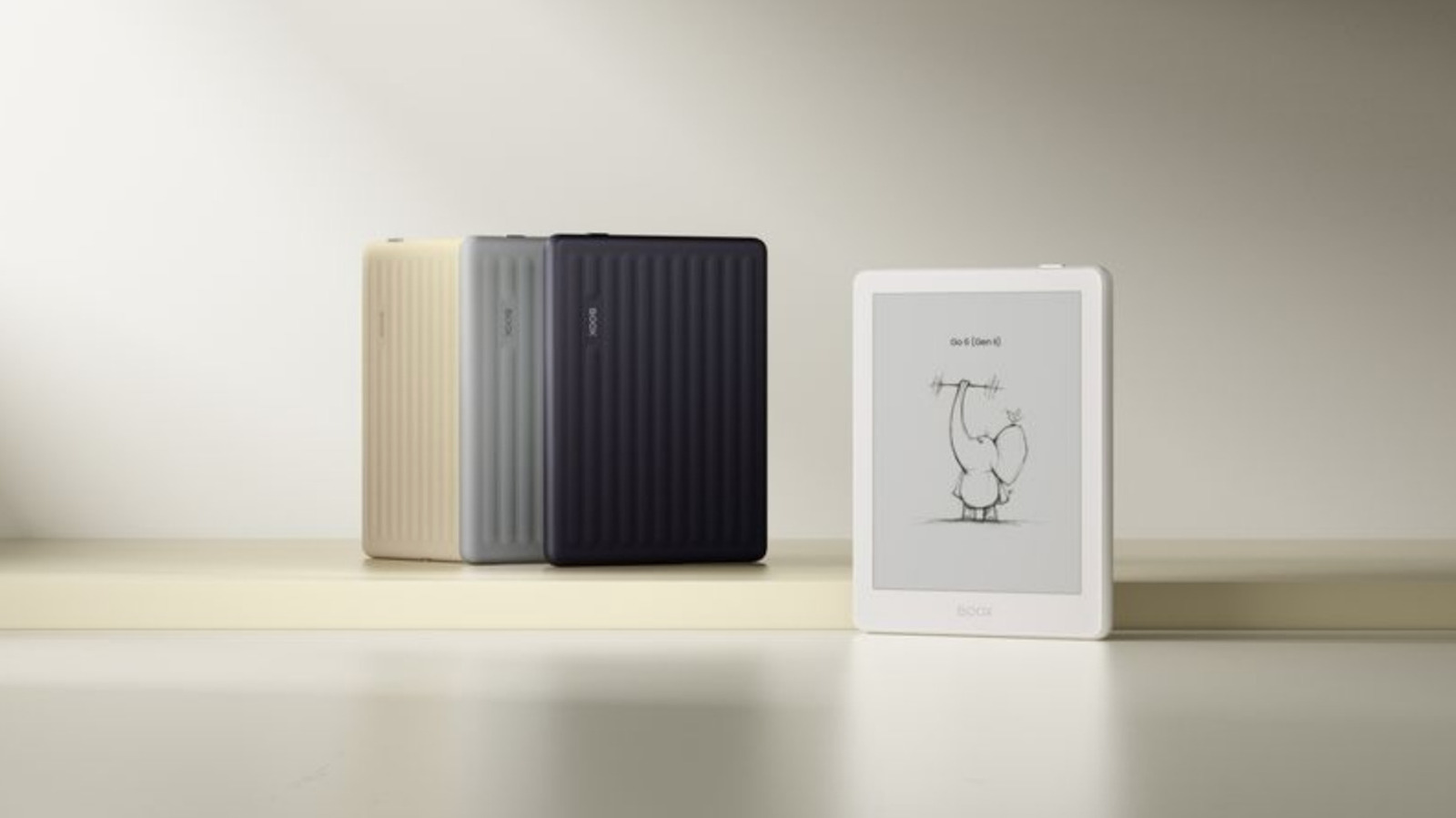
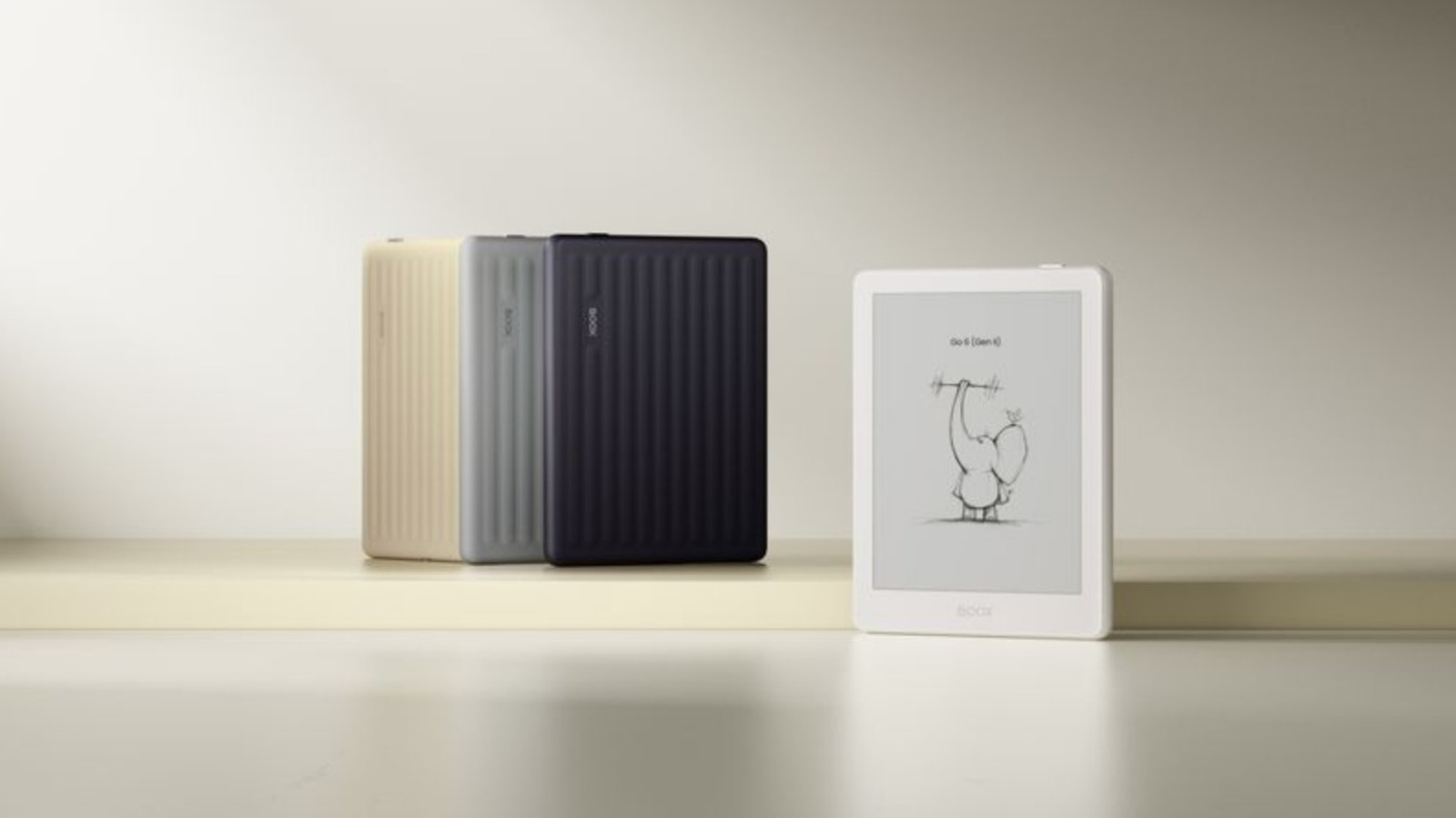
Boox just announced a refresh of its popular Go 6 ereader, and this one offers stylus support for note-taking. The 6-inch E Ink reader integrates with the company’s pre-existing InkSense Plus stylus. The tablet costs $200 and the stylus costs around $45, so that totals $245 for the whole package. Preorders are open now and shipments go out on June 17.
There’s more here beyond stylus support, though that’s pretty useful. The updated Go 6 is available in four new colors and ships with a native note-taking app, which can be used with the stylus to “mark up books, underline passages and capture handwritten notes and to-do lists.”
Advertisement
There’s also been an uptick in RAM, up to 3GB, which should make everything a bit more responsive. The ereader features adjustable front lights, a 300 PPI monochrome ePaper display, 32GB of storage and a microSD slot. It’s on the smaller side, with a thin form factor and a weight of just over five ounces.
It runs on Android, so users have access to the Play Store. However, running apps on an ereader can often be frustrating, due to the low frame rate. Results will vary depending on the app. Like most modern ereaders, the Go 6 should last days on a single charge with regular use.
This isn’t the first time Boox has introduced stylus support to one of its products. The Go 7 E Ink tablet got the feature last year.
As tech giants pack generative AI capabilities into our phones and their camera software, the line between what is a real image and what isn’t continues to blur. Phones from Google and Samsung, for example, now come with features that let you drastically alter a photo by erasing people, moving people around in the shot, and even adding new objects to the scene.
Apple is getting in on the action by adding new generative features to its Photos app, though the company’s iPhone camera chief, Jon McCormack, stresses that Apple is taking a more measured approach than its competitors and isn’t “doing AI for the sake of AI.”
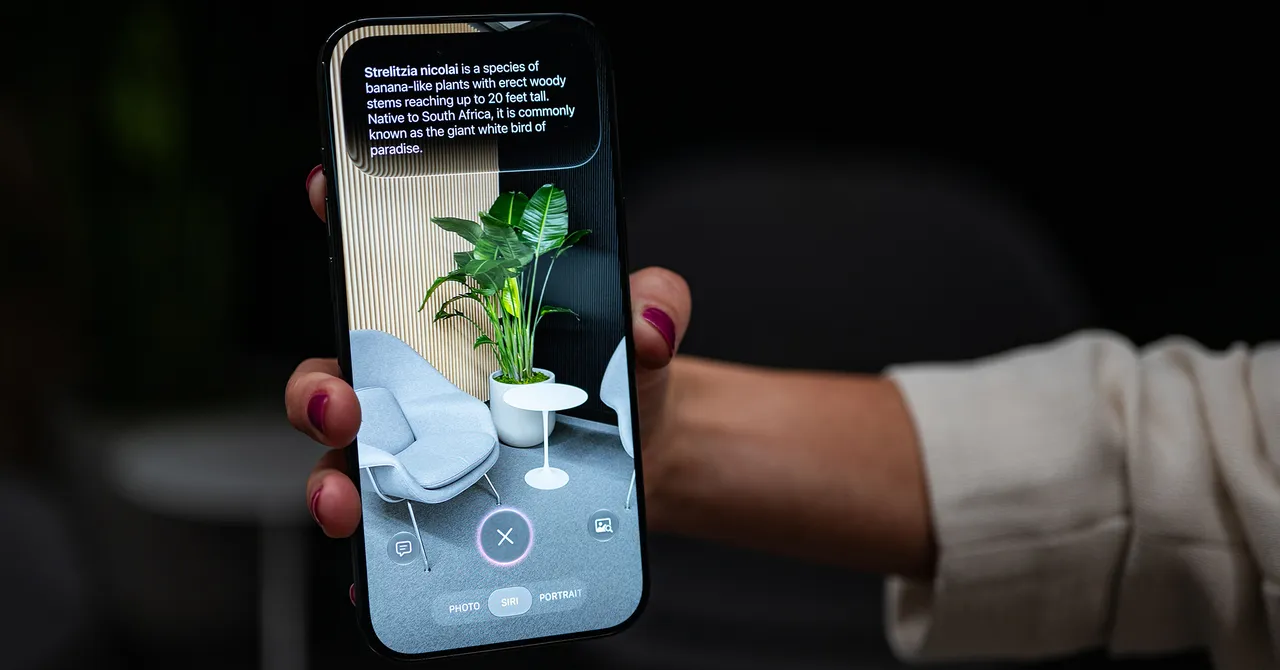
While the iPhone’s Photos app already has the Clean Up tool, which lets you erase unwanted objects in pictures, it’ll perform even better in iOS 27 thanks to its access to Apple’s improved AI models. However, there are two new features—called Extend and Spatial Reframe—that let you expand the space around your photo or change the perspective of an image, all while generating fake pixels. The camera “thinks” about what should be there, then draws it in.
McCormack says there’s a giant backlog of unsolvable issues that AI is now helping to address and that these new features are very deliberate. “You don’t have to know all the details of how to do something in Photoshop or something else—it gives normal people these absolute superpowers,” McCormack says.
Apple’s new Extend feature lets you add more space to your original image. The Photos app will generate fake pixels around the subject based on what it believes should be there.
Advertisement
Courtesy of Apple
Apple doesn’t want to let you run wild with your images and generate all kinds of fakery, though. (At least not in the Photos app; the App Store offers plenty of tools for making photorealistic slop.) The fake pixels the Photos app generates are restricted to what’s in the background. It won’t alter the pixels of the main subject’s face. With Clean Up, for example, you cannot remove the primary subject in the image. The Extend function only works once and expands the image by 25 percent—you can’t save, edit the image again, and infinitely extend it with AI.
McCormack also says Apple will integrate Google DeepMind’s SynthID technology later this year to add an invisible watermark indicating these images have been altered with generative AI. Any platforms where you share the photo may be able to flag it as AI-edited. (Just know that researchers have shown that digital watermarks aren’t foolproof.)
“A photograph is of something that actually happened,” McCormack says. “We really do believe in this idea of authentic journalism to your own life—when you’re capturing photographs, you’re making these memories, you’re putting moments of your life in a bottle that you can go back to. It’s really important to us that we create tools that keep the sanctity of that moment.”
Apple used WWDC 2026 to roll out its next wave of software updates, and tvOS 27 received the kind of brief stage time Apple usually reserves for products that are important but not quite the main attraction. The update is expected this fall and will help shape the next Apple TV 4K experience, but the bigger story may be what Apple didn’t launch: new Apple TV hardware.
With Siri AI and Apple Intelligence still looking like complicated pieces of the puzzle, the next Apple TV 4K appears to be waiting for Apple’s living room strategy to catch up with its AI ambitions.
What We Know About Apple tvOS 27 So Far
If Apple Intelligence with Siri is fully fleshed out for the next Apple TV 4K, tvOS 27 could bring some meaningful upgrades to the platform. Keep in mind that the following information remains tentative.
Expected improvements include faster app launches, possibly by up to 30%, faster AirPlay connections to Apple TV and HomePod, and support for smaller app downloads through localized language packages.
Advertisement
Control Center in tvOS 27 is also expected to become more responsive, with faster navigation, quicker app switching, and improved game controller settings included in the controls menu.
AirPlay connectivity to Apple TV and HomePod should also improve, along with faster Apple Music playback startup. Compatibility with Hi-Res Lossless audio playback up to 24-bit/192kHz is also expected.
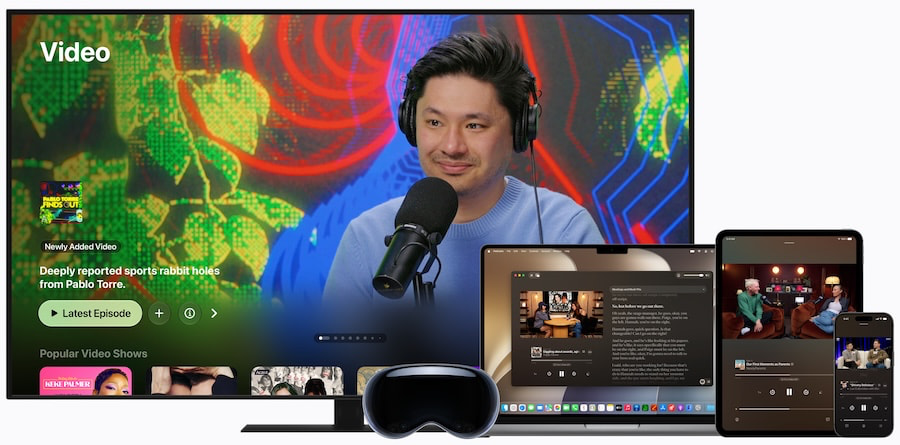
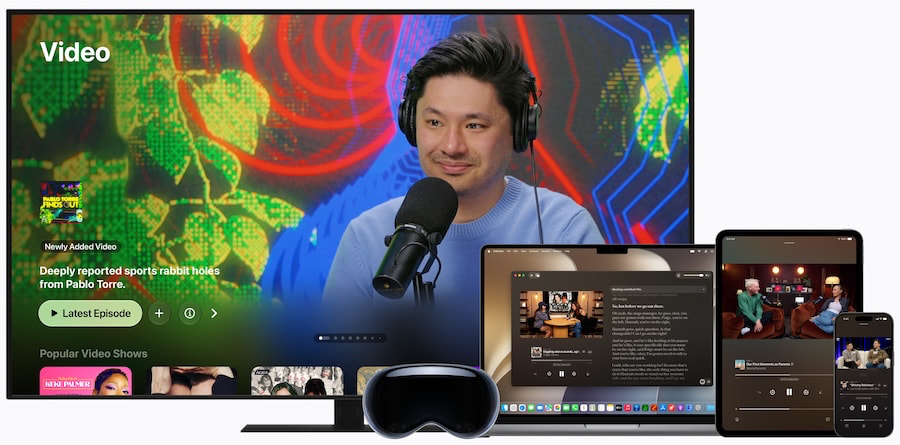
The Podcasts app for tvOS has reportedly been redesigned, with support for both audio and video podcasts.
Apple Home is expected to add support for 4K camera recordings, including HomeKit Secure Video recordings processed on-device, with Private Cloud Compute used for descriptions and search.
Advertisement
Users should also be able to view AppleCare coverage details directly in the Settings menu.
New accessibility upgrades are also expected in tvOS 27.
Users should gain the ability to adjust text size across tvOS and supported apps, making menus, labels, and on-screen information easier to read.
Advertisement. Scroll to continue reading.
Advertisement
Auto-transcription support in English is also expected, allowing spoken dialogue to be converted into subtitles automatically. Apple is also expected to add automatic subtitle translation support for additional languages.
Expanded support for Made for iPhone hearing aids is also reportedly on tap, making it easier to pair them with Apple TV and switch between devices in a way that works more like AirPods.
Apple TV 4K Pro: New Hardware for Apple’s AI Push?
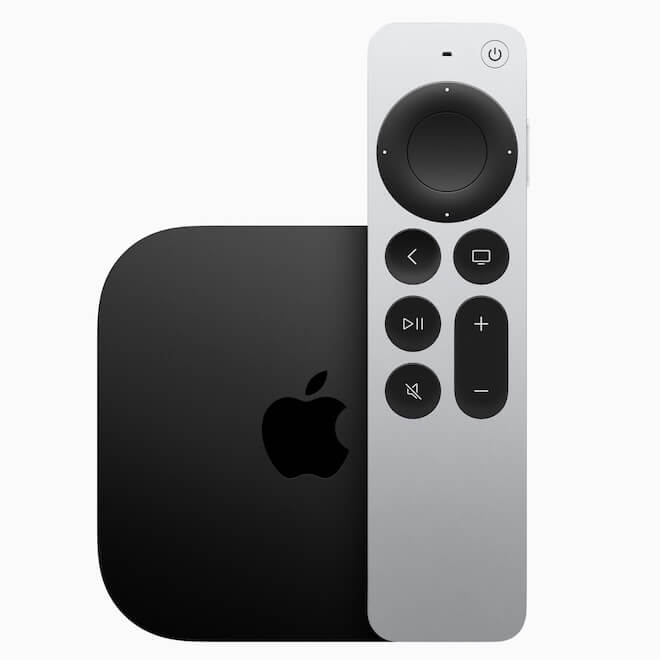
In addition to tvOS 27 on the software side, Apple is expected to time the update around the release of its next-generation Apple TV 4K box. The rumored “Apple TV 4K Pro” name may not be final, but the idea is clear: Apple needs new hardware that can get more out of tvOS 27, Apple Intelligence, and a more capable version of Siri.
Advertisement
The next Apple TV 4K is expected to include either an A17 Pro or A18 Pro chip. Connectivity upgrades could include Wi-Fi 7 and Bluetooth 6, while a redesigned remote may add easier access to Siri AI, along with a U1 Ultra Wideband chip for improved Find My support. Because apparently losing the Apple TV remote remains one of civilization’s most reliable traditions.
Pricing is expected to start at $149 for the higher-end model, with a more budget-friendly version possibly landing at $99. At this point, it is not clear what Apple would remove or scale back from the lower-cost version.
The Bottom Line
tvOS 27 matters because Apple TV 4K has never really been about throwing the most apps on a screen. Its strength has been speed, polish, privacy, ecosystem integration, and not making the living room feel like a casino lobby with a remote. If tvOS 27 delivers faster app launches, quicker AirPlay, better accessibility tools, improved Apple Music and Podcasts support, and deeper Siri AI integration through Apple Intelligence, Apple TV could become a more useful hub for streaming, music, smart home, and accessibility.
What makes this unique is not any single feature. Roku, Amazon, Google, and Samsung all have streaming platforms. Apple’s advantage is how tightly Apple TV can connect with iPhone, AirPods, HomePod, Apple Music, Apple Fitness+, HomeKit, FaceTime, Apple Arcade, and potentially a smarter Siri. For households already invested in Apple gear, that kind of integration matters more than another cheap plastic puck with ads stapled to every menu.
Advertisement
That said, nothing is final until Apple releases tvOS 27 and confirms the next Apple TV 4K hardware. The rumored “Apple TV 4K Pro” could be the box that finally gives Apple’s living room strategy the AI upgrade it needs, but pricing, specs, naming, and feature support remain unconfirmed. For Apple users who want a faster, cleaner, more privacy-focused streaming device that can also serve as a music, smart home, and accessibility hub, tvOS 27 could be a meaningful step forward. Just don’t retire the current Apple TV 4K until Apple shows the actual box.
Looking for the most recent Mini Crossword answer? Click here for today’s Mini Crossword hints, as well as our daily answers and hints for The New York Times Wordle, Strands, Connections and Connections: Sports Edition puzzles.
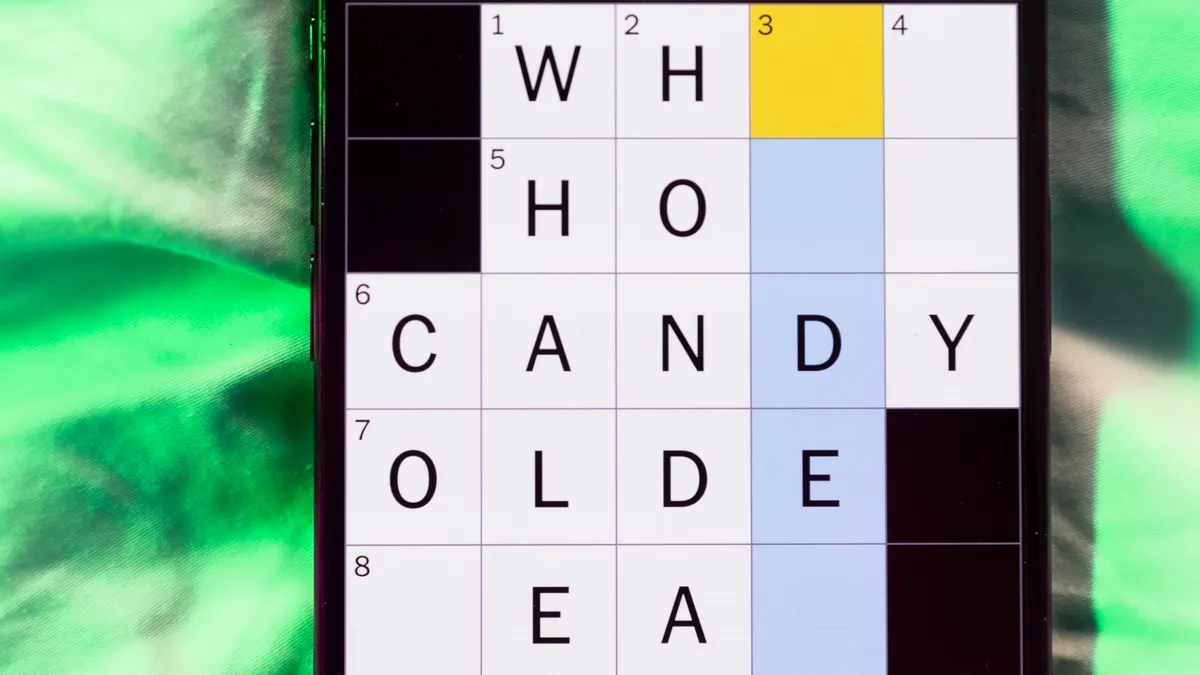
Need some help with today’s Mini Crossword? I admit, 7-Across threw me for a bit, but I figured it out eventually. Read on for all the answers. And if you could use some hints and guidance for daily solving, check out our Mini Crossword tips.
If you’re looking for today’s Wordle, Connections, Connections: Sports Edition and Strands answers, you can visit CNET’s NYT puzzle hints page.
After teasing the newest addition to the lineup of colorful characters in its team shooter earlier this week, Blizzard has released the gameplay trailer for another new damage hero. Shion will join Overwatch when its next season, the third since the Reign of Talon reboot, kicks off on June 16. This character won’t do anything to change the impression that Blizz is leaning hard on making hot heroes or that it’s starting to suffer same-face syndrome with its female lineup. But at the very least, Shion is one of the team’s most dramatic creations in a while, looking very stylish in an all-white suit paired with petite red horns and cybernetic red eyes.
Advertisement
Appearance-wise she might call to mind the moody Reaper character, but Shion’s kit actually feels more reminiscent of Tracer. She’s dual-wielding semi-automatic pistols as her base weapon, but can focus fire in a more powerful burst to finish off a low-health opponent. Mobility also seems core for this hero, since she has both a dash move and can ride actual motorcycle in-game. The bike seems especially satisfying, since it looks like there’s an ability for Shion to jump off and launch the vehicle forward into a rival. Her ultimate ability turns Shion into a damage-dealing vortex that can dash toward enemies.
Considering the big Overwatch reboot aims to emphasize a bigger narrative tying together the characters, it seems likely that the next lore drops will highlight story threads surrounding the Hashimoto clan where Shion is a boss. So expect more background on support heroes Kiriko and Mizuki as part of the larger drama about Vendetta’s efforts to take over the world as Talon’s new villain-in-charge.
There are existing methods to collect water from the ambient air, but most of them are large or cumbersome. Recent research by the University of Texas at Austin is taking that concept and transforming it something you could have on hand at all times. Or more literally, on your back at all times. In a study published in Scientific Advances, the team used a special textile to create a jacket capable of atmospheric water harvesting.
“We wanted to rethink the form of the technology,” said UT Austin’s Guihua Yu, one of the authors on the latest study. “If the fabric itself can collect water from air, it opens a new direction for personal and portable water access.”
The jacket used a special fabric designed to collect moisture from the air and gather it in detachable harvesting units rather than simply having the textile absorb the water. “That transport design is what allows the material to work not just in a small lab test, but in a wearable system,” added co-author Keith Johnston, also of UT Austin. The harvesters are then placed in a foldable collector piece and heated to produce drinkable water.
University of Texas at Austin
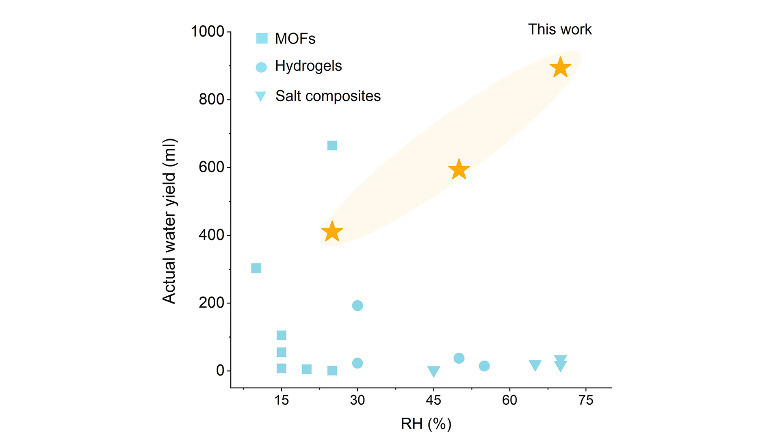
Depending on humidity levels, the jacket produced between 400 and 900 milliliters (about 14 to 30 ounces) of drinkable water per day in testing. The form factor created for this particular study was a jacket, but the investigators suggested that the same textile could be used to manufacture other objects, such as a backpack or a tent, to lend them water-collecting capabilities. The technology could have applications for medical response teams or during emergencies, particularly in remote places. On the commercial side, it could also make for some pretty useful hiking and extreme sports gear.
We areresearchers affiliated with Arizona State University’s scientist opinion panel survey, known as SciOPS, a 5-year research program designed to monitor, understand and improve how scientists communicate with the public. We wanted to know more about the reality inside today’s universities as researchers grapple with Trump administration policies.
Advertisement
Alongwithourcolleagues, we fielded a survey of randomly sampled members of the academic science community participating in the SciOPS panel. We obtained responses from 280 scientists from several fields, including biology, chemistry, civil and environmental engineering, computer and information science engineering, geography and public health from 131 universities.
Our results show dramatic, mostly negative, effects of federal policy changes on researchers, the research system and American competitiveness.
Declines in federal funding have had knock-on effects. Around one-quarter of scientists reported that state and local and university internal funding have also declined. Another 9% reported that internal funding has increased, presumably as universities have provided emergency funds to researchers to support critical studies.
According to the scientists who responded to our survey, Trump administration policies have also affected the scientific workforce pipeline, hampering their ability to recruit internationally and domestically.
We hypothesize that these hiring issues can be related to visa and immigration policies, which make it difficult for international graduate students and postdocs to work in the U.S. or attend international conferences. Just over half of scientists in our survey reported that international students or postdocs have expressed concerns to them about deportation.
Advertisement
Concerns about longer-term career impacts are also to blame for trouble recruiting the next generation of researchers. Over 80% of surveyed scientists reported that graduate students or postdocs on their research team have increased concerns about future job prospects.
These impacts have taken a toll on scientists’ professional work environment and overall outlook. Over two-thirds reported more work-related stress and almost half reported increased workloads since January 2025. About half reported decreased work motivation.
How are scientists and engineers reacting?
We found scientists’ responses to be a mixture of resilience, acquiescence and considering an exit.
Advertisement
While many scientists said they were less motivated at work, most reported no change in their efforts to obtain federal research funding. Small proportions did report successfully increasing their efforts to obtain funding from non-federal sources.
Our survey also asked scientists whether they had taken any self-censoring actions since January 2025 due to concern over potential negative consequences for their work or career. Over half reported having reviewed or adjusted key words in research proposals, and almost half said they’d reframed research topics. Forty-three percent had also cautioned students or collaborators to be careful what they say publicly and more than a third had abandoned plans on one or more research topics.
Although scientists are adopting strategies to cope with the new challenges, nearly two-thirds of the scientists in our sample appear to be considering one or more other career options.
Advertisement
Scientists look to the long term
Scientists and engineers in our sample have strong opinions about the impacts of current U.S. science policy. A large majority (87%) believe the administration’s actions have influenced research priorities more than previous administrations. Most scientists in our survey had a negative opinion of the Trump administration’s overall changes to science policy.
Scientists in our sample believed that administration policies have had a negative effect on the future scientific workforce and the ability of scientists and engineers in the U.S. to produce breakthroughs and discoveries and contribute to national welfare.
Advertisement
Large majorities believe these policies have harmed public perceptions of the integrity of U.S. scientists (85%) and hurt public trust in science (84%).
Academic scientists’ reactions to the Trump administration’s changes to science policy are perhaps not surprising given the perceived level of threat these actions represent to the research community. What is less certain is whether the dramatic changes we are currently witnessing – cuts to grant funding, politicization of research, downsizing of federal agencies, restrictive immigration policies, attacks on the autonomy of higher education and more – are temporary or if they represent the initial phase of a transition to a new research environment with less federal support for American science.
Looking for the most recent regular Connections answers? Click here for today’s Connections hints, as well as our daily answers and hints for The New York Times Mini Crossword, Wordle and Strands puzzles.
Today’s Connections: Sports Edition features a fun soccer topic that World Cup watchers might appreciate. If you’re struggling with the puzzle but still want to solve it, read on for hints and the answers.
Connections: Sports Edition is published by The Athletic, the subscription-based sports journalism site owned by The Times. It doesn’t appear in the NYT Games app, but it does in The Athletic’s own app. Or you can play it for free online.
Hints for today’s Connections: Sports Edition groups
Here are four hints for the groupings in today’s Connections: Sports Edition puzzle, ranked from the easiest yellow group to the tough (and sometimes bizarre) purple group.
Yellow group hint: You might build a house with them.
Advertisement
Green group hint: Hoops stars.
Blue group hint: Start your engines.
Purple group hint: World Cup wonders.
Answers for today’s Connections: Sports Edition groups














































You must be logged in to post a comment Login