Connect with us
DAPA Banner
DAPA Coin
DAPA
COIN PAYMENT ASSET
PRIVACY · BLOCKDAG · HOMOMORPHIC ENCRYPTION · RUST
ElGamal Encrypted MINE DAPA
🚫 GENESIS SOLD OUT
DAPAPAY COMING

Tech

Cable Lobbyists Show How Trump FCC’s Extortive ‘Foreign Router Ban’ Isn’t Workable

Published

on

from the going-great,-thanks-for-asking dept

Back in March I noted how the Trump FCC under Brendan Carr had announced a “new ban” on all routers made overseas (which is pretty much all of them). At the time we also noted how this was less of a ban and more of a shakedown, with router manufacturers required to beg the Trump FCC for conditional waivers (fees, favors, whatever) to continue doing business in the States.

Several router manufacturers (like Amazon’s Eero and Netgear) have subsequently received exemptions from the Trump administration, but because there is zero transparency to the process, we have no idea what they agreed to. Did they pay the Trump administration a bribe? Did they agree to surveillance backdoors for ICE operations? Who knows? Great stuff.

Now the cable lobby appears to be balking at the purported foreign router ban. In a petition filed with the FCC last week (spotted by Ars Technica) NCTA (The Internet & Television Association) — the cable industry’s biggest lobbying org — asked for a massive exemption from the restrictions, noting that they’re simply not practical in real-world practice:

“NCTA requests an expedited grant of this waiver to enable its members and their suppliers to navigate unavoidable supply chain shortages and prevent disruptions in the availability of broadband for NCTA members’ customers, while still fulfilling the rules’ national security and public safety purpose.”

So basically you’ve got a ban on foreign routers that is more about extortion than protecting national security. Which the cable industry says it can’t adhere to because AI hype, tariffs and unnecessary wars have driven up the costs of many internal router components, making adherence expensive if not impossible. Great stuff, very savvy policymaking by people who definitely know what they’re doing.

Advertisement

Part of the “foreign router ban” was supposed to involve forcing hardware manufacturing to return to the states. But because Trump and much of his administration have a fourth-grader-level understanding about how this stuff works (like his desire to suddenly have smartphones built in the U.S.), the cable industry’s filing notes that the “onshoring” of manufacturing and supply chains isn’t realistically possible either:

“Like AT&T, NCTA members are encouraging their suppliers to quickly pursue required onshoring, and, in the meantime, seek Conditional Approvals for Covered Routers as necessary. However, unavoidable supply chain shortages in critical substrate material and memory modules (including both volatile and nonvolatile memory) significantly constrain the industry. AT&T’s suppliers are not unique; the same impediments they are experiencing impose inevitable limitations on NCTA’s suppliers. Accordingly, NCTA seeks the same relief on behalf of its suppliers. Given the immediacy of these issues and the concrete harms that would result from disruptions to the availability of broadband to large swaths of US consumers and businesses, the grant of this Petition is warranted.”

These companies, many of which supported and enabled Trump, now have to pretend this all makes sense as they navigate a costly minefield of weird bullshit that won’t accomplish any of its purported goals.

This is all exceptionally chaotic and dumb, and it’s unlikely that Brendan Carr, who spends most of his time trying to censor comedians and whining about “wokeness,” is capable of managing the scale of this sort of overhaul — even if it were practical, which it isn’t.

When you read most press coverage of this router ban, they don’t really make it clear to readers that this is all very unworkable and stupid. Trump and his administration are given undeserved credit on competency and policy, as the press, companies, and policymakers all try to trip over themselves to normalize the sheer pointless stupidity and expense of it all.

Advertisement

If the country cared about national security we’d focus on corruption. We’d pass a meaningful modern internet privacy law. We’d shore up, staff, and properly fund cybersecurity regulators. We’d regulate data brokers. Instead we get a giant pile of unworkable extortion slop being overseen by weird zealots.

Filed Under: brendan carr, hardware, national security, onshoring, privacy, router ban, routers, telecom

Companies: ncta

Source link

Advertisement
Continue Reading
Click to comment

You must be logged in to post a comment Login

Leave a Reply

Tech

Glue-in Hinge Design Tries Something Different

Published

on

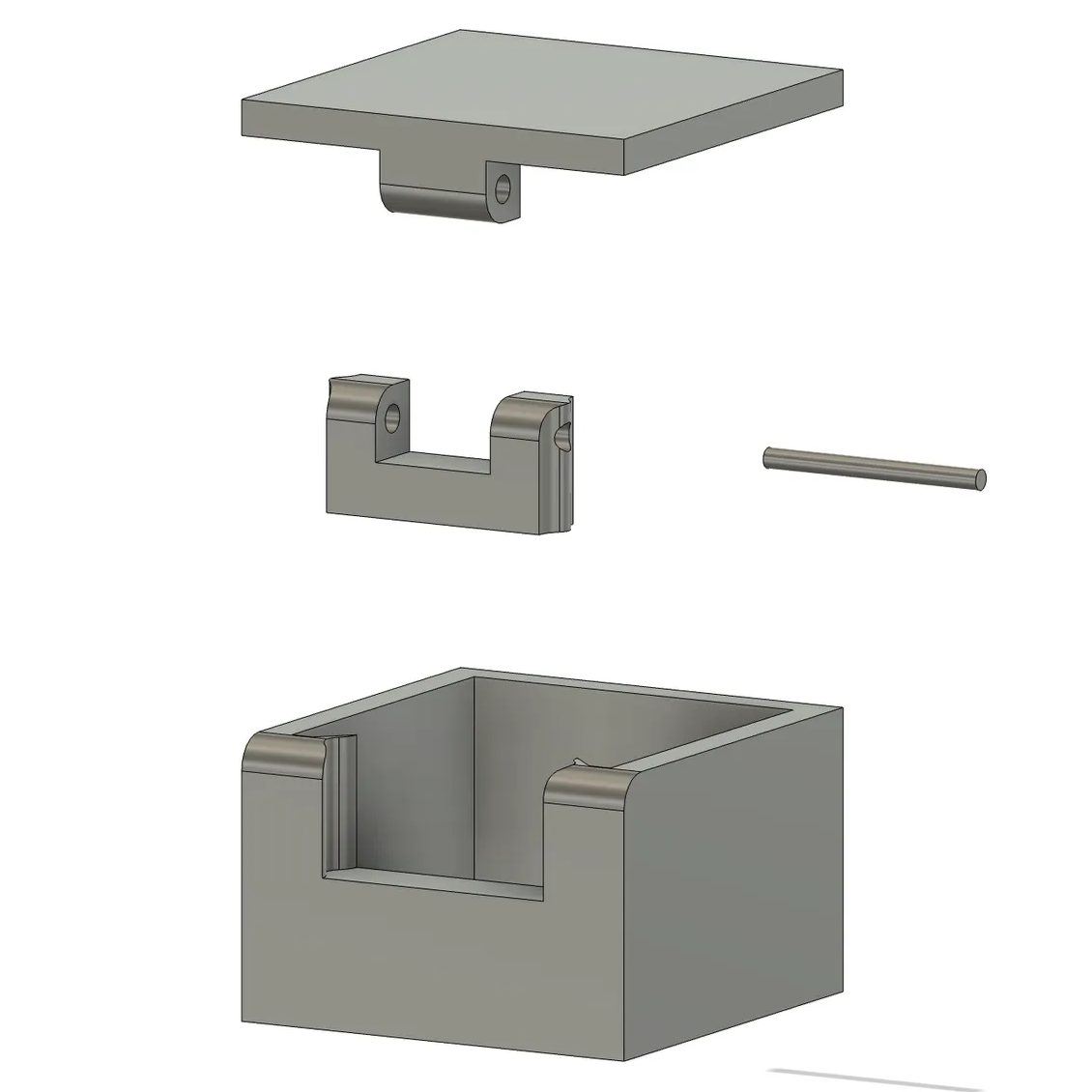
Need a hinge in your 3D printed design and would prefer not to re-invent the wheel? You may find [Alex Krush]’s glue-in filament hinge useful.

This design (shown in this simple box as an example) makes a very close-fitting hinge point.

This design prints half the hinge as a separate piece — the u-shaped one in the picture to the side — that must be glued into the target object after printing. It’s a bit of extra work, but doing it this way has a couple advantages.

One is that printing some of the hinge elements separately means one no longer needs to choose between a print orientation that best suits the object, and a print orientation that works best for the hinge. Also, the length of 1.75 mm filament used as a hinge pin is held captive after assembly so there’s no need to glue the hinge pin itself.

[Alex] helpfully provides the parts in STEP format, which makes CAD tweaks and adjustments easy. While incorporating the design should be doable even if one is just using .stl or .3mf files because boolean subtraction and merging is all that’s needed, having the model in STEP format is so much better.

Advertisement

Should you need some pointers on incorporating either into FreeCAD, we have you covered.

Source link

Advertisement
Continue Reading

Tech

Sam Bankman-Fried Loses Bid To Overturn Crypto Fraud Conviction

Published

on

Sam Bankman-Fried lost his appeal to overturn his FTX fraud conviction and 25-year sentence. Reuters reports: In a unanimous decision, a three-judge panel of the Manhattan-based 2nd U.S. Circuit Court of Appeals said prosecutors’ evidence against Bankman-Fried “was, conservatively stated, robust.” “While he was publicly reassuring customers, investors and regulators that FTX customer funds were safe, he was simultaneously using FTX as his own personal piggy bank, spending customer funds on real estate, political contributions, and investments,” Circuit Judge Barrington Parker wrote on behalf of the panel.

Bankman-Fried’s lawyers did not immediately respond to a request for comment. They may next ask all the active judges on the 2nd Circuit to hear the case, or ask the U.S. Supreme Court to take up the case. Bankman-Fried is also seeking a pardon from President Donald Trump, according to the Justice Department’s Office of the Pardon Attorney. Bankman-Fried was sentenced to 25 years in prison in 2024 for “masterminding one of the largest financial frauds in American history,” wrote US District Judge Lewis Kaplan. He was convicted on all charges, including wire fraud, conspiracy to commit securities fraud, commodities fraud, and money laundering.

Source link

Continue Reading

Tech

Bowers & Wilkins 801 D5 First Listen @ High End 2026: New $65,000 Flagship Loudspeaker Makes A Statement

Published

on

Bowers & Wilkins used High End Vienna 2026 to make a serious statement with the new 801 Diamond D5. It’s the British speaker maker’s flagship floorstanding loudspeaker in the 800 Series Diamond line-up, now in its fifth generation. The company has not been seen at this particular show for several years, but they thought it would be the most appropriate venue to unveil their new top dog. And it certainly made an impression.

Our Bowers & Wilkins 801 D5 launch preview covered the core changes, including the updated Diamond Dome tweeter implementation, revised cabinet architecture, upgraded internal bracing, new crossover network, and the broader refinements B&W says are designed to lower resonance, lower distortion and improve resolution, dynamics, and imaging.

But how do all of these refinements actually sound? Pretty damn good.

We got to hear the Bowers & Wilkins 801 D5 in a proper demo room in Vienna, which matters because show-floor impressions are usually about as reliable as hotel Wi-Fi during press day. Listening in a controlled room to a handful of songs does not turn a trade show demo into a full review, but it does give us a much better sense of what the loudspeaker can do. And this is particularly relevant when the product in question costs $65,000 per pair and sits at the top of one of the most recognizable high-end loudspeaker families in the world.

Advertisement

The 801 has always carried more weight than just its physical footprint. You might say it’s the core of Bowers & Wilkin’s’ identity. The original 801 (known then as the Series 80 Model 801) arrived in 1979 — for just $2,850/pair in those ancient dollars. It quickly became closely associated with Bowers & Wilkins’ studio-monitoring reputation, including its long connection with Abbey Road Studios. The new 801 D5 continues that lineage with an improved Diamond Dome tweeter with newly designed mesh grill, first seen in the company’s even more expensive D4 “Signature” line. In fact, many of the advancements in the D5 series first debuted in the company’s Signature line-up.

Bowers & Wilkins 801 Diamond D5 Loudspeaker in light walnut at HIGH END Vienna 2026
The Bowers & Wilkins 801 D5 loudspeaker in new light walnut finish, moments after being unveiled in Vienna at HIGH END 2026.

Other notable design features include Bowers & Wilkins Continuum midrange driver, distinctive tweeter-on-top and turbine-head enclosure, and substantial low-frequency architecture. From the outside, the D5 series does not look like a radical reinvention. That is not really the point. Bowers & Wilkins is playing the long game here: refinement, mechanical control, lower cabinet noise, lower resonance, better integration, and a more polished version of a formula that had already worked quite well, thank you very much.

In our first listen at High End Vienna last week, the 801 D5 sounded like a flagship speaker should: large in scale, extended, yet controlled in the bass, precise yet delicate in the highs and supremely present in the midrange. Bowers & Wilkins best sonic trick — the ability to disappear entirely and let the singers and instruments be there with you in the listening room — is still apparent in the D5 series. At least it is in the flagship, but likely in the rest of the line as well, since they share so much in technology, parts and design.

Bowers & Wilkins 800 Diamond D5 Series Loudspeakers at HIGH END Vienna 2026
In addition to the 801 D5, Bowers & Wilkins 800 Series D5 line-up also includes (from left to right), the 802 D5, 803 D5, 804 D5 and 805 D5.

The 801 D5 sounded clean, composed, and physically effortless, with the kind of low-end authority that reminds you why full-range loudspeakers still matter when they are engineered properly. No subwoofers here. You won’t need one.

The Bottom Line

While many of the revisions in the Diamond D5 Series are invisible to the eyes, they were audible to the ears. It takes the already excellent D4 version and makes everything just a little bit better: a little cleaner, a little tighter, a little more transparent. We certainly saw (and heard) many speakers at HIGH END 2026 that cost more than the 801 D5 (some more than 10X more), but few could come close to it in sonic transparency and realism. And that’s saying something.

Advertisement

Price & Availability

The most recent previous generations of the 800 Series may still be available while supplies last:

  • 801 D4 (2021) – $46,000/pair in Gloss Black, Satin Rosenut, Satin Walnut, or White
  • 801 D4 Signature (2023) – $60,000/pair in Midnight Blue Metallic or California Burl Gloss
  • 801 Abbey Road Edition (2025) – $70,000/pair in Vintage Walnut (limited to 140 pairs)
  • 801 D5 (2026) – $65,000/pair in Stealth Black, Light Walnut, Warm White, or Dark Walnut

For more information: bowerswilkins.com

Advertisement. Scroll to continue reading.

Source link

Advertisement
Continue Reading

Tech

KPMG’s AI report turns into a demo of AI hallucinations

Published

on

ai and ml

GPTZero claims only 5 of the report’s 45 citations matched their sources, raising questions about how the Big Four’s AI study was assembled

KPMG’s October 2025 report on the wonders of agentic AI has been accused of demonstrating one of the tech’s less desirable talents: making things up.

Research outfit GPTZero claims a forensic review of the Big Four firm’s October 2025 report, “Total Experience: Redefining Excellence in the Age of Agentic AI,” found that only five of its 45 citations correctly pointed to the cited source; the rest ranged from mangled and misleading to partially fabricated or too vague to verify.

Advertisement

The consulting industry has form here. Last year, Deloitte ended up refunding the Australian government after AI-generated content slipped into a taxpayer-funded report. 

GPTZero dubbed the phenomenon “vibe citing” – the citation equivalent of vibe coding – where generative AI appears to stitch together fragments of real sources, invent titles, or otherwise produce references that look convincing until someone actually clicks them.

GPTZero alleges that roughly half of the report’s factual claims were false, unsupported, or attributed to the wrong source. Several case studies highlighting supposedly cutting-edge deployments of agentic AI appear to have been particularly creative.

Among the examples highlighted by GPTZero were purported agentic AI deployments at UBS, Swiss Federal Railways, and Transport for London. According to GPTZero, the sources cited to support those case studies either did not substantiate the report’s claims or contained alterations and paraphrasing that undermined their reliability.

Advertisement

“These factual errors are not confined to the report’s footnoted passages,” GPTZero said. “On page 42, the authors claim that Emirates airline has adopted a mobile chatbot named Sara (false) that can converse directly with passengers (partially true) and change their flights (false). In fact, Sara is a robot assistant introduced by Emirates in 2023 (not a chatbot) that lacks the ability to alter flight bookings.”

Not all of the alleged problems involved external sources. GPTZero noted that the report appears to contradict KPMG’s own research, citing a figure of 55 percent of CEOs ranking AI as their top investment priority. KPMG’s 2025 CEO Outlook, released the same month, put the number at 71 percent.

KPMG has since removed the report from some of its websites while it investigates how the publication made it into the wild, according to the Financial Times.

A spokesperson at KPMG told The Register

Advertisement

KPMG International takes the accuracy and integrity of its published content seriously. The report has been removed and we are reviewing the circumstances surrounding its publication. We expect all our people to follow our guidelines on the responsible use of AI, including human oversight to validate content and verify independent sources.”

Consulting firms have spent years warning clients about AI hallucinations. According to GPTZero, KPMG may have just provided a live demonstration. ®

Source link

Advertisement
Continue Reading

Tech

LGBTQ+ Youth Mental Health Is Suffering, but Schools Are Poised t

Published

on

Bullying. Isolation. Stress.

Everyone experiences these on the journey from adolescence to adulthood, but new data on the mental health of LGBTQ+ youth shows the additional pressures they face increases their risk of suicide compared to their peers.

The Trevor Project, a nonprofit focused on suicide prevention for LGBTQ+ youth, has released its most recent survey of 16,000 LGBTQ+ young people 13 to 24. Among the most concerning figures was one in 10 participants reporting that they had attempted suicide during the previous year. And more than one-third seriously considered suicide.

Experts also tell EdSurge that the strain of mental health issues and unwelcoming school settings directly harm students’ ability to thrive in, or even attend, their classes.

Advertisement

Despite the sobering results of the survey, the data also reveals solutions — including a role for schools.

“One of the most important findings is that when adults, institutions, and communities become more affirming, the suicide risk of LGBTQ+ young people goes down,” Ronita Nath, the Trevor Project’s vice president of research, says. “Schools play a life-saving support by creating environments where LGBTQ+ young people feel safe, accepted and supported.”

Feeling the Pressure

With 2026 on track to be another record-breaking year for anti-LGBTQ+ bills introduced at the state and federal levels, a vast majority of survey respondents said they felt stressed, anxious or unsafe due to the policies and the debates surrounding them.

When those young people are caught in the crossfire of heated political debates, Nath says the negative rhetoric that trickles down has real consequences. Youth who reported experiencing victimization due to their gender identity or sexual orientation — like bullying, physical harm or exposure to conversion therapy — were three times as likely to attempt suicide as their peers.

Advertisement

Those risks dropped among survey participants who said their school affirmed their identity. Support can look like adopting curriculum that counters anti-LGBTQ+ bias and increasing access to mental health services.

NEWSLETTERS

STAY AHEAD IN EDUCATION.

Sign up for EdSurge newsletters for timely news, insights and analysis.

Forty-four percent of survey participants said they couldn’t access the mental health services they needed. Some of the barriers to those services were tangible, like not being able to afford transportation to see a counselor. But many were not: they cited fear of their mental health problems not being taken seriously, not being understood by a mental healthcare provider, or past negative experiences that made young people hesitant to seek services again.

Advertisement

Nath encouraged schools to offer gender and sexuality alliances (GSAs), ensure anti-harassment policies were in place and provide professional development for educators to help ease students’ discomfort. “We know [that] not only improves mental health and well-being for LGBTQ+ youth, but for all their peers,” she says.

Strain on School Success

Research shows that well-being, engagement and a sense of belonging go hand-in-hand with students’ ability to thrive in school, according to Megan Pacheco, executive director of Challenge Success. The group is a nonprofit focused on increasing student well-being, engagement and belonging that’s based in Stanford’s Graduate School of Education.

The stress that gender-diverse students — including transgender, non-binary and gender-queer youth — experience can become an obstacle to their academic success. If they feel their identity is threatened or lack a sense of belonging, Pacheco says, they’re less likely to reach out for help.

Advertisement

“It’s going to affect their participation, how they show up in the classroom, and it’s going to affect their well-being,” she says.

Challenge Success’ large trove of survey data on the school experiences of middle and high school students reveals that students who identify as transgender, non-binary or gender diverse report more stress than their peers who identify as boys and girls, says Sarah Miles, director of research for Challenge Success.

“Instead of two or three sources of stress — family pressure, or peer relationships, or social media — it is just all the above,” Miles says. “In order to be able to function, use your working memory, be present, be engaged … if you have all those things on board that you’re worrying about, you’re just not able to attend to school in the same way.”

Among LGBTQ+ youth who are in school, about 85 percent said they had at least one adult at school who is affirming of their identity, according to the Trevor Project data. More than half of respondents said school was an affirming place, second to online spaces.

Advertisement

Matthew Rice, who chairs the science department at a New Jersey high school, tells EdSurge that students don’t judge safety by a school’s mission statement — they judge it by how adults respond to situations like harassing comments made in the hallway, classroom jokes, pronoun use and whether discipline is applied consistently among varying groups of students.

Rice has published research on the experiences of transgender and nonbinary educators, but the overall lessons gleaned from his work apply to students as well.

“Students notice who is allowed to exist authentically in schools,” Rice said via email. “Representation is not symbolic: It changes students’ perception of what futures are possible and who belongs in intellectual spaces. For many students, the first openly LGBTQ+ adult they meet is an adult at school.”

When it comes to supporting gender-diverse students, Miles of Challenge Success says she wants to dispel the belief that helping them thrive is a zero-sum game.

Advertisement

“I think there’s sometimes a misconception that if we give these students support, then other students aren’t getting support,” she says. “What’s really important is that, by giving students who identify as gender diverse support, everyone benefits, because all students then feel safe to show up — whatever their identities.”

Source link

Continue Reading

Tech

A Peek Inside The Secret Lagercrantz Suitcase Radio

Published

on

What counts as portable is somewhat a matter of opinion, especially over the years. [Helge Fykse] has a portable spy radio of Swedish origin. For its time, it was considered very portable, crammed into a good-sized suitcase.

You can see the large crystal that sets the transmit frequency and a key to send Morse code. The receiver has a VFO, so it was more agile. Based on the regenerative knob, it appears the receiver was of the regenerative type. The suitcase had its own battery, and with tubes, it could probably put out some kind of signal if connected to anything metal, like bedsprings, a clothesline, or anything. There was a lightbulb to let you see when you were transmitting maximum power.

Speaking of tubes, there were five inside, two for the transmitter and three for the receiver. The radio had storage for spare tubes, and the agent could maintain the radio in the field.

Advertisement

You not only get a peek inside the suitcase, but a look at the schematic. The radio is a model of simplicity, but we are certain it did its job.

We love looking at exotic spy gear, especially radios.

Advertisement

Source link

Continue Reading

Tech

Hackaday Podcast Ep 373: GPS, Danger In Space, And Robby The Robot

Published

on

Last week, Elliot got his foot stepped on by a 1.5 metric ton draft horse, and boy is he glad to be back to the relative safety of podcasting! Joining him today is Jenny List, no stranger to farm life, who has been trodden by a cow. It’s going to be one of those podcasts, folks.

Another thing the two hosts have in common is a love for the mystery of the numbers station. But did you know that GPS satellites, for the last 20 years, have broadcast literally millions of secret messages to everyone on the earth with a receiver? After that bombshell, we have an ATtiny85 emulating an 8080, a primer on how to embed magnets in 3D prints, definitive proof that more than one cassette mechanism is still being manufactured, and a look at what makes home automation enthusiasts tick.

Check out the links below if you want to follow along, and as always, tell us what you think about this episode in the comments!

Advertisement

Download in DRM-free MP3 and play it in space.

Episode 373 Show Notes:

News:

  • No news is good news.  No Mailbag, on the other hand, is no fun!  Write or mail in a question to mailbag@hackaday.com.

What’s That Sound:

Interesting Hacks of the Week:

Quick Hacks:

      • Elliot’s Picks:
      • Jenny’s Picks:

Can’t-Miss Articles:

Source link

Advertisement
Continue Reading

Tech

AI Won’t Replace Educators. But It is Changing How Students Learn

Published

on

Recently, my kindergartner climbed onto the scale and asked me what dinosaurs also weighed 50 pounds. Thanks to Claude, we quickly learned, to my son’s delight, that he is the size of a juvenile velociraptor.

Artificial intelligence helped me with a question I couldn’t have answered on my own. But it didn’t replace me as a parent or my son’s role as a learner. A few weeks later, I had forgotten the answer, but my son didn’t. He was the keeper of knowledge, and I was the conduit.

Something like this is happening in schools and colleges, too. Information is more easily accessible than ever before. Anyone anywhere can ask an AI tool a question and receive an answer that seems reasonable, at least on the surface. It’s not surprising, then, to see predictions of the demise of traditional schools and colleges.

But education has never been only about access to information. Students need much more to become capable members of society. They need the ability to assess the quality of information, recognize strong work, and connect ideas. Students also need to grapple with the reality that not everyone agrees, and that’s ok. This kind of learning requires human relationships that expose students to the friction of life that sycophantic AI models tend to obscure.

Advertisement

The big question is how to know when AI supports real learning and when it leads to the “cognitive surrender” of accepting AI-generated answers with minimal scrutiny. Recent research findings shed some light on that.

Learning by AI Type

First, learning varies significantly based on the type of AI used. The dangers of cognitive surrender are greater when students use the standard, free versions of LLMs. Those models are designed to be helpful and therefore simply provide answers to the questions they are asked. Brain activity and retained learning are lower when students are working with AI in this way.

In contrast, tools that scaffold learning and support in-person instruction can produce outcomes even more impressive than my son’s memory of the size of teenage dinosaurs. One study of an introductory undergraduate physics course found that students using a carefully designed AI tutor had twice the learning gains of those receiving active, in-person instruction.

Advertisement

Learning Process Matters

Second, the role that AI plays in the learning process matters, and it should be off-limits at times. The authors of the physics course study cautioned that structured AI tutoring may not be appropriate for tasks “requiring complex synthesis of multiple concepts and higher-order critical thinking.” In a larger-scale example, Estonia’s education minister—who is overseeing the country’s ambitious partnership with OpenAI to provide a custom AI platform in upper secondary schools—has described a blended model. Students use handwriting to form memories early in the learning process and, later, use digital tools for feedback and AI-assisted learning. Estonia is not introducing AI in earlier grades so that students can build foundational knowledge and skills first.

Support for Educators Needed

Third, because the outcomes are so far apart between good and bad AI use in learning, educators need support to add AI to their teaching toolkit responsibly. In one study from Sierra Leone, secondary school educators completed a one-day training before adding AI tools in the learning process and only then saw math learning gains equivalent to more than a year of additional schooling.

Advertisement

Google, OpenAI, and Anthropic all offer learning modes and other supports built on these ideas. Still, those features are typically opt-in and getting harder to find for non-enterprise users. OpenAI, for example, launched “study mode” in July 2025 but quietly removed it from the standard ChatGPT interface this spring. The feature remains available to schools and systems with enterprise contracts. These contracts are expensive but drive demand for the types of AI that educators actually want, especially when leaders collaborate across systems and make similar asks of tech companies in procurement.

Schools, colleges, and educators should not be alone in navigating these waters. Philanthropy can help, for example, by supporting training that respects teachers’ expertise, conducting independent research on what works, and advancing advocacy work that counterbalances the size of tech firms. They can also help make enterprise contracts more affordable and support the development of procurement standards that protect learning, student data, and educational institutions’ sovereignty over their own systems.

This fits with philanthropy’s history of helping the benefits of new learning approaches reach everyone. For example, as compulsory schooling laws were passed at the turn of the 20th century, communities benefited from Andrew Carnegie’s 2,509 libraries (many of which served as classrooms) and Julius Rosenwald’s 5,000 schools that educated a third of Black children in the rural South.

Looking even further back in time gives me confidence that humans can weather tech-driven transitions and come out in a better place. German apprenticeship programs are strong today in part because, during the Industrial Revolution, German guilds adapted their models to fit an evolving economy rather than resisting change outright.

Advertisement

Today’s overflowing supply of information began with the printing press, which expanded access to texts and eventually reshaped who could claim expertise. I can capture and share these thoughts with you in part because, very long ago, writing transformed curriculum, credentialing, and information exchange.

Humans may not be as cool as velociraptors, but we have incredible agency and potential to evolve to meet the moment. All of us—including tech providers, educators, and philanthropy—can play an active role in shaping what’s next for students.

Source link

Advertisement
Continue Reading

Tech

Apollo Go robotaxi wins Level 4 approval in Switzerland

Published

on

Baidu’s robotaxis are heading to the Alps. AmiGo, a venture between the Chinese giant’s Apollo Go robotaxi unit and Swiss Post’s PostBus, has won a special permit from Switzerland’s Federal Roads Office for Level 4 autonomous driving, Baidu said.

Level 4 means the vehicle drives itself within a defined area. Open-road trials began on 1 June across about 80 square kilometres of eastern Switzerland, in the cantons of St Gallen and the two Appenzells. For now, a safety operator still rides in each car.

What AmiGo is

AmiGo pairs Chinese self-driving technology with a Swiss public-transport operator. PostBus runs the country’s distinctive yellow postal buses; Apollo Go supplies the autonomous driving system. Riders book trips through the AmiGo app.

The cars are Apollo Go’s RT6: fully electric pods that carry up to three passengers and pack more than 30 sensors. The steering wheel is built to be removed once the service goes fully driverless. “With AmiGo, we are making automated mobility in public transport tangible,” said PostBus chief executive Stefan Regli.

Advertisement

Why the Apollo Go robotaxi permit matters

The 💜 of EU tech

The latest rumblings from the EU tech scene, a story from our wise ol’ founder Boris, and some questionable AI art. It’s free, every week, in your inbox. Sign up now!

Europe has almost no robotaxis, and the few efforts are early. Riders still cannot hail one across most of the continent. Uber is only now starting a programme in Munich, and most pilots remain just that.

A Chinese operator winning a European Level 4 permit is a notable first. It also extends Apollo Go’s reach beyond China, where it ran into trouble in Wuhan when a fleet froze in traffic.

Advertisement

The numbers behind the push

Apollo Go is scaling fast. Baidu says the service delivered 3.2 million fully driverless rides in the first quarter of 2026, peaking above 350,000 in a single week in March. Cumulative rides passed 22 million by April, across 27 cities.

That scale is the pitch to European regulators and partners alike. But the Swiss permit is narrow and the trial zone small. The partners are clear about the path: a closed user trial, then rides with no safety operator, then regular service from 2027, in what they call the largest planned automated public-transport operation of its kind in Europe. Chinese rivals are expanding too, and Europe’s patchwork of national rules still makes every market a fresh fight. The question is whether a careful Swiss pilot becomes a template, or stays a postcard.

Source link

Advertisement
Continue Reading

Tech

The security problem AI leaders actually agree on

Published

on

AI company CEOs Sam Altman (OpenAI), Demis Hassabis (Google DeepMind), and Dario Amodei (Anthropic) disagree on a lot, like how fast the technology should develop, the best way to regulate it, and how to prepare society for smarter-than-human AI, among other things.

That makes it all the more remarkable that they — along with 85 other experts in tech, biology, and national security policy — recently signed on to an open letter calling for more robust regulations around gene synthesis. They’re all concerned that AI systems might be used to help develop and even deploy dangerous biological weapons designed through gene synthesis, which is used to chemically build custom DNA sequences in a lab, rather than relying solely on existing natural DNA templates.

The simple fact of multiple CEOs of fiercely competitive AI companies aligning on anything is remarkable. But to understand how they came to this agreement, we have to take a step back to understand what gene synthesis is, how it works, and why the possibility of AI-assisted misuse of the technology generates so much fear.

Modern microbiology owes a lot to gene synthesis. Researchers can order synthetic genes from commercial DNA providers to develop new vaccines, drugs, and gene therapies for inherited diseases like hemophilia; produce human insulin, boost agricultural output, and more. Gene synthesis is a foundational technology for successful CAR-T cell therapies for cancer and many diagnostic tools. The demand for synthetic DNA is growing globally, and it’s never been cheaper or simpler to write genetic code.

Advertisement

But for all its power, gene synthesis also carries substantial risk. The same technology that can enable life-saving new gene therapies can also assist in the creation of deadly pathogens by assembling some of the same nucleotides — the genetic building blocks that create the code for all of life — in a different order.

Most US companies that provide gene synthesis services screen orders for genetic sequences of concern, such as those that can make a pathogen more dangerous or transmissible, and to verify that customers are legitimate. They do so voluntarily, well aware of the potential dangers.

But not every provider does so. “As long as screening remains voluntary, some companies will not do it,” Becky Mackelprang, the director for security programs at the Engineering Biology Research Consortium, told me over email. There’s a real risk that bad actors could find a gene synthesis company with more lax standards, and that might mean disaster.

We’ve been fortunate so far. “This technology has been commercially deployed for more than 20 years and has never been misused to cause harm,” James Diggans, the vice president of policy and biosecurity at gene synthesis company Twist Bioscience, told me over email.

Advertisement

But AI threatens to complicate matters, opening up new frontiers of risk.

Both large language models (LLMs) and AI biodesign tools enable scientists to design entirely novel genetic sequences. This is a boon for industrial and medical applications — and a challenge for current screening systems, which use similarity to known pathogenic or toxic sequences in order to detect risk. A screening system should catch someone trying to order sequences of a known dangerous virus like Ebola, for example, but it might miss a new sequence that could still be risky. Last year, a study published in Science demonstrated that our screening systems have kept pace with AI capabilities so far. “But the industry clearly understands this will not be the case forever,” Diggans said.

Mackelprang is worried that AI could reduce the knowledge barriers that have historically prevented bad actors from developing bioweapons. Frontier AI systems, for example, seem to already outperform expert virologists on questions about performing complex laboratory procedures.

But there is knowing and there is doing, and biological lab work is still hard. “Researchers spend years trying to make a protocol work even after consulting directly with others who have perfected that exact same protocol. I think AI can help someone ‘level up’ their laboratory skills, but I do not think AI can enable someone without any biological training to create a serious hazard,” Mackelprang told me.

Advertisement

That means that gene synthesis companies are still a primary chokepoint for anyone trying to produce a novel genetic sequence. Mackelprang’s main concern is that aspiring bioterrorists might use AI to generate harmful genetic sequences that can evade current or future screening systems. “In the near term, I think the likelihood of these types of misuse are quite low. But when the potential consequences are severe and technologies continue to develop rapidly, we have a responsibility…to develop reasonable prevention and mitigation options,” she said.

Maximizing the benefits of gene synthesis while minimizing the risks is difficult, but not impossible. That’s why Diggans and Mackelprang — along with Altman, Hassabis, and Amodei, as well as other gene synthesis providers, tech entrepreneurs, life science executives, and national security experts — signed the open letter calling for mandatory gene synthesis screening and recordkeeping of orders.

Co-organized by the think tanks Institute for Progress and the Foundation for American Innovation, the open letter also calls for providers to record synthesis orders and sequence data to support biosecurity investigations “so that any threat that might evade initial screening can be traced back to its source…Awareness of traceability itself deters misuse.” This would, ideally, address Mackelprang’s concern that AI might eventually help bad actors evade existing screening protocols.

“Screening every DNA synthesis order before it’s manufactured is the kind of unglamorous, common-sense step that prevents a much bigger problem later,” DJ Kleinbaum, the co-founder of the biotech startup Emerald Cloud Lab, an automated lab scientists can access remotely, and one of the signatories, said.

Advertisement

But Altman, Hassabis, and Amodei’s shared signatures may be the most meaningful evidence that the letter matters. For all their disagreements, they are well aware that their tools can be used for tremendous — even catastrophic — harm.

AIxBio risk: A thing on which we can all agree

While it’s far from the first time frontier AI companies have spoken to AI-enabled biological risk, the open letter is the first place they’ve come together to do so in a single voice. “Support for screening does not depend on any particular view of AI,” the letter reads. “This is a rare moment of agreement across stakeholders that are often at odds.”

The letter calls for Congress to act now. “We applaud the legislative efforts currently underway,” the letter says, alluding to the bipartisan Biosecurity Modernization and Innovation Act, a bill that gives the Department of Commerce a year to develop new gene synthesis screening rules. The letter also suggests that US states should implement screening requirements based on federal and industry guidelines to create a unified national standard rather than an inconsistent set of laws.

Advertisement

The letter isn’t about applying biosecurity regulations to the AI companies themselves, which likely would have limited the number of tech signatories. (Though major companies do actively try to prevent their models from giving away dangerous biological knowledge, albeit not always successfully.) Focusing on screening is tractable, has the buy-in of several gene synthesis providers, and provides a concrete example of how AI can lower the barrier to doing both great and terrible things. And of course, it’s ultimately something a human being has to do at this point.

The AI companies are actively thinking about the catastrophic risks that their technologies might enable. Anthropic is hiring a technical chemical, biological, radiological, and nuclear threat investigator for its threat intelligence team. In May, after launching GPT-Rosalind, a frontier model to accelerate life sciences research and drug discovery, OpenAI introduced Rosalind Biodefense, a program that allows trusted developers to use GPT-Rosalind to build biodefense tools. On June 4, the day after the open letter went live, security specialists at OpenAI and Anthropic served as panelists at the Bipartisan Commission for Biodefense’s meeting on AI and biological threats.

But according to Twist Biosciences’s Diggans, the best way to defend against misuse of AI models to design harmful pathogens is to use AI models as defense. These defensive models can be used to detect attempted misuse before anything happens. DNA synthesis companies can employ these models to ensure orders for highly-engineered sequences are given the same scrutiny and evaluation as orders for naturally occurring sequences.

“[Gene synthesis] companies have to agree to have their order screened not just against a list of sequences but by an AI that people agree is smart enough to recognize and thwart an adversary who’s trying to build a deadly pathogen,” David Haussler, the scientific director of the UC Santa Cruz Genomics Institute and a signatory of the open letter, told me.

Advertisement

Using AI to protect against AI

The good news is that this work is already underway. Last year, I reported that OpenAI provided $30 million in seed funding to biodefense startup Valthos, which develops frontier AI systems to detect biological threats and create medical countermeasures. Valthos’s co-founder Kathleen McMahon signed the open letter.

In September 2025, the Coalition for Epidemic Preparedness Innovations (CEPI) and philanthropic nonprofit Sentinel Bio created the Pandemic Preparedness Engine AI platform (sometimes referred to simply as “the Engine”). They’re taking a biosecurity-by-design approach, considering biosecurity risks from the outset. “This includes a multi-layered approach to biosecurity: from protecting biosecurity-sensitive data needed to train the AI to carefully managing who has access to the Engine and monitoring how they use it,” Sarah Carter, a biosecurity consultant at CEPI, told me over email.

Users of the Pandemic Preparedness Engine would use AI prompts to interact with the system, similar to how people use consumer platforms. User prompts could be monitored in real time by a specialized AI agent built to assess the risk of misuse potential or attempts to “jailbreak” an LLM to get it to generate prohibited content, such as the “recipe” for assembling a deadly virus.

Advertisement

Still, even commercially available technologies may present problems of their own. This week, Anthropic launched Claude Fable 5, a version of its highly powerful and restricted Mythos model that the company has aimed to make safe for public use. Claude automatically stops use of Fable if it detects requests involving cybersecurity, biology, chemistry, or distillation (attempting to extract Claude’s capabilities to train competing AI models), shunting those requests to a less powerful model. Users have complained that trying to discuss biology for legitimate purposes with Fable 5 results in the model refusing to engage or defaulting to less capable models instead. The Fable example shows that it’s possible to overcorrect, limiting the potential upside of using AI for the life sciences.

“The major providers of LLMs are doing their best to prevent the models from answering questions that would enable somebody to do something dangerous,” Haussler told me. “[But] the end product of jailbreaking an LLM that’s capable of teaching you how to build a deadly virus is that you now have an LLM that’s capable of teaching anybody how to build a very dangerous virus. And we don’t want that to happen.”

It’s here that the letter’s signatories hope they can stop a still-simmering problem before it comes to a full boil. “Mandatory synthesis screening is that rare case where a threat is clearly visible and substantial prevention clearly achievable before any crisis has occurred,” said Richard Danzig, a natural security expert who served as the 71st Secretary of the Navy under former President Bill Clinton. “Opportunities to act in advance are unusual in this field. I think we should take this one.”

Source link

Continue Reading

Trending

Copyright © 2025