Professional services firm KPMG has pulled a report titled, “Redefining excellence in the age of agentic AI,” after numerous organizations said the report’s claims about their AI usage were untrue.
Research group GPTZero identified a number of inaccuracies in the report, which was published in October 2025. GPTZero told the FT that the inaccuracies stemmed from AI hallucinations. In other words, the professional services firm appears to have used AI to help write a report about AI.
UBS, the UK’s National Health Service, Swiss Federal Railways, and Transport for London all told the FT that the report’s claims about their AI usage were either untrue or misleading. A KPMG spokesperson said the firm removed the report from its websites while conducting its own investigation.
“We expect all our people to follow our guidelines on the responsible use of AI, including human oversight to validate content and verify independent sources,” the spokesperson said.
With delivery by Father’s Day and a 90-day low price, you’ll want to grab Amazon’s weekend Mac mini deal before inventory runs out.
With increased demand for a headless machine to run AI agents and a budget-friendly price tag, Apple’s M4 Mac mini has been sold out for much of Q2 2026. But Amazon has the 16GB/512GB configuration back in stock, and it’s on sale for $769.99 (a $30 discount off retail).
Now priced at a 90-day low, Amazon has repeatedly shown stock levels of 20 or fewer units left today, indicating stock is limited.
Advertisement
You can also find early Prime Day deals on dozens of Apple devices, including $299 iPads, $499 AirPods Max 2, and 2026 MacBook Airs from $949 in our early Prime Day Apple deals roundup.
Nintendo is introducing a new account-history requirement for Switch 2 purchases in Japan to keep consoles away from resellers. The move targets the multi-language Nintendo Switch 2 sold through the official Japanese Nintendo Store, which scalpers have been buying in bulk because it can be bought for less in Japan and resold abroad.
The price difference explains why scalpers are interested. In Japan, the multi-language Switch 2 is considerably cheaper compared to some other markets. That gap gives resellers room to import units and mark them up overseas, especially while official stock remains limited. The Japan-exclusive model, which only supports Japanese text and characters, is not affected by the new rule.
Nintendo is using account history as a filter
Nintendo said on X that it had found multiple orders linked to suspected resale activity and temporarily paused sales of the multi-language model. When sales resume, buyers will need to meet stricter conditions. Their Nintendo Account must show at least 50 hours of playtime on the original Nintendo Switch by 11:59 PM on May 31, 2026. Playtime from demo titles and free software will not qualify.
Nintendo StoreにおけるNintendo Switch 2(多言語対応)の販売につきまして、買い占め等の疑いがある注文を複数確認しましたので、一時的に販売を停止しておりました。…
The company is also limiting purchases to one console per Nintendo Account. That gives Nintendo a way to reduce repeat buying while making fresh accounts less useful for resellers.
Nintendo takes a page out of Valve’s playbook
The Switch 2 has become one of the most practical handheld gaming console options, especially after Valve’s Steam Deck price hike made PC handhelds a bigger expense for many buyers. Still, Nintendo’s console will not stay immune to higher pricing for long, with its own price increase expected soon.
Nintendo Switch 2Unsplash
Scalpers have been a thorn in the side of gamers for years. Valve faced a similar issue with the recent Steam Controller launch, where units quickly sold out and appeared on resale sites at inflated prices. Valve responded with a reservation queue, purchase-history checks, and a one-controller-per-account limit.
Nintendo is now applying a similar idea to the Switch 2. Fresh accounts will have a much harder time passing the check, which could reduce bulk buying through the Japanese store.
A few weeks ago on a bike ride “inspiration struck” for Dave Eggers, reports SFGate…
Without a pen and paper handy, he was stuck texting the idea to himself. The problem? Eggers doesn’t own a smartphone. “It takes 20 minutes to write a sentence,” Eggers said… It’s a funny predicament for Eggers, given that he’s arguably the city’s biggest proponent of the written word… Now age 56, Eggers’ latest book is called “Contrapposto“…
On writing days, Eggers bikes to his sailboat docked near the Golden Gate Bridge. He writes using a hefty 1998 Mac that has never been connected to the internet. On the boat, he keeps “banker’s hours,” working 9 to 5 without any meetings or interruptions except for the occasional wildlife visit. “You’re there with the cormorants and the occasional porpoise and sea lions and seals, and when you want to take a break, you walk around and you’re in the thick of it, one of the most beautiful spots on Earth,” he said. “Especially coming from the Midwest, it never gets old.”
Given Eggers’ decidedly low-tech existence, it’s not surprising that the current state of San Francisco gives him pause, but there’s a streak of hope that underlies his concerns. He abhors the growing surveillance technology that’s gripping the city, refusing to get into Ubers that use recording devices, but he feels a well-written ballot measure about Flock cameras could potentially save our dwindling privacy. ChatGPT’s effects on the art of writing are demoralizing, but he welcomes that teachers are re-embracing pencil and paper, with cursive making a big comeback. The wave of artificial intelligence ads blanketing bus stops imploring companies to stop hiring humans are so over the top, they’d sound cliché if he were to include them in one of his dystopian tech industry novels like “The Circle” or “The Every,” but tech philanthropy has helped many of his projects flourish.
Advertisement
Case in point, Art + Water, a new art space scheduled to open next year on Pier 29 funded largely by art world donations… Co-founded with the artist JD Beltran, the space is slated to operate as an old-school apprenticeship system, hosting 10 artists in residence mentoring 20 students, all free of charge… The ultimate goal is to break down the financial barriers that keep students from pursuing art.
Thanks to Slashdot reader destinyland for sharing the article.
Slashdot reader BrianFagioli writes: Shutterstock has unveiled what it calls a “human-led, AI-powered” creative platform that combines its massive library of [human] contributor-created content with AI image and video generation, AI editing, conversational search, prompt enhancement, and automated model selection tools. The company says the goal is to help creators move from idea to finished work faster [in a single application] while maintaining commercial licensing protections and contributor royalty payments… While Shutterstock repeatedly emphasizes human creativity, much of the platform’s future appears centered on AI-generated and AI-modified content. An article at Nerds.xyz suggests Shutterstock’s AI tools let users “transform existing content into something new,” while noting Shutterstock’s repeated references to human creativity “almost feel defensive.”
But it points out other companies including Adobe and Canva “and countless startups are all racing to integrate AI into creative workflows.”
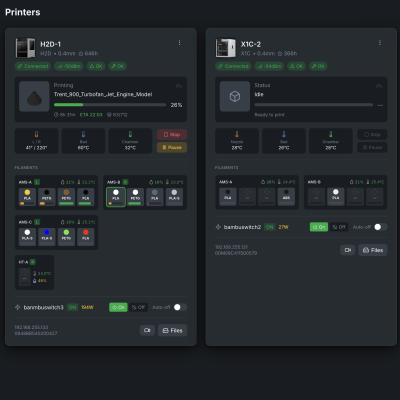
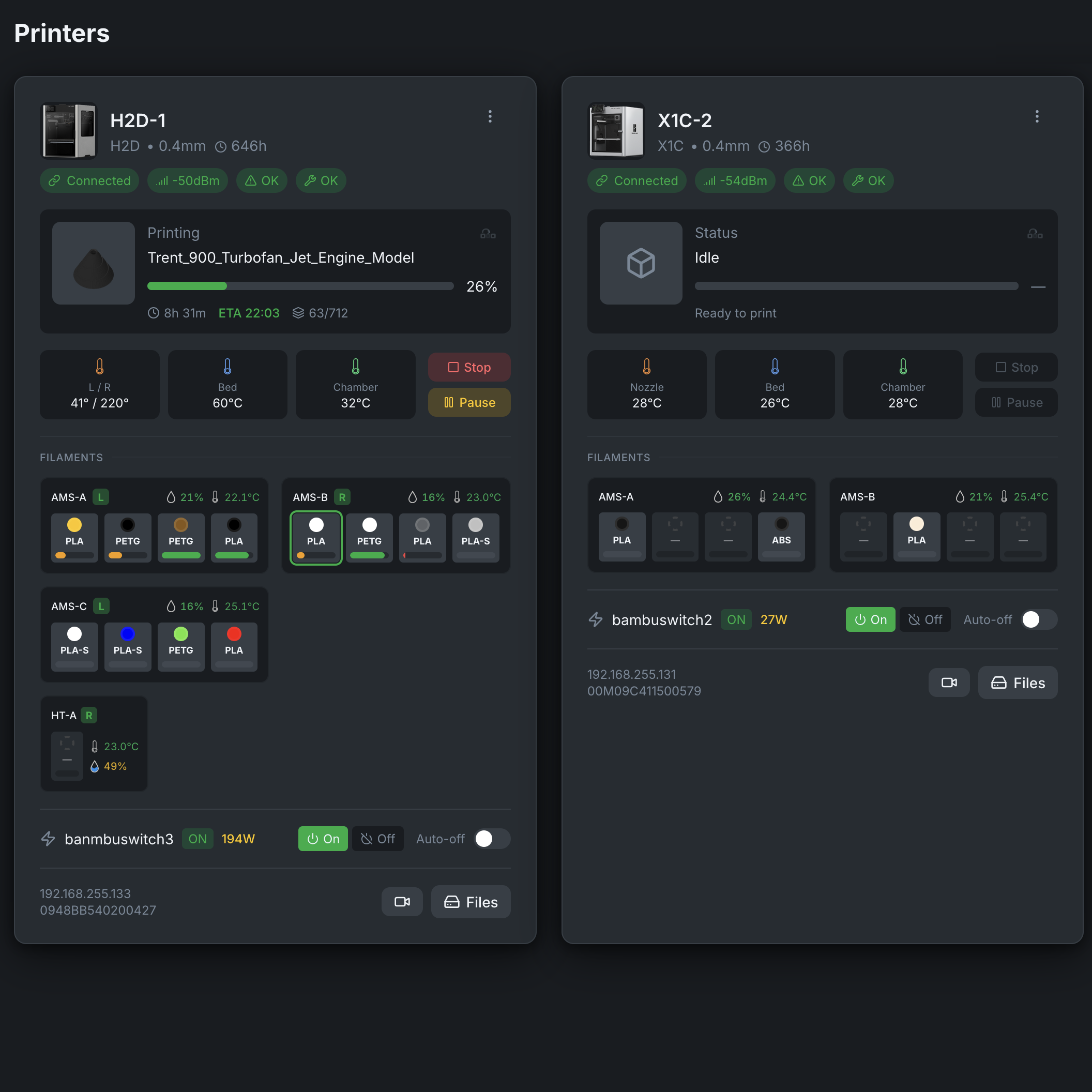
If you have a Bambu Labs printer and aren’t keen to send your files to Bambu’s servers with each print job, then check out Bambuddy, an open-source, self-hosted, cloud-free central command that offers a local alternative for managing Bambu Labs printers. It acts as a replacement for the official cloud services, allowing you to slice, print, and monitor with full local control and zero reliance on Bambu Labs’ servers.
Bambuddy offers full control over one to forty printers.
To use it, one installs Bambuddy, then puts their printer(s) into LAN-only mode. Doing this disables cloud functionality, including remote access. Then one enables Developer Mode, which allows external software to control printer functions via a machine API. Once that’s done, the printers can be added to Bambuddy.
Bambuddy then acts as a full-featured control panel and management center for anywhere from one to forty printers. It runs on Linux, macOS, or Windows, and a Raspberry Pi is a common install target.
Bambu Labs makes indisputably high-quality printers, and using their software and official app is certainly convenient. But the fact that every print job goes through Bambu’s servers, and a software architecture that frustrates home-grown solutions? Not so much. Add AGPLv3 violations and some heavy-handed legal behavior to the mix, and it’s easy to understand the motivation for an alternative to the factory software.
Bambuddy has a huge number of features — including an integrated slicer and proxy mode for remote access — and it may look a little intimidating at first. Fortunately, the project’s website offers a live sandbox demo with simulated printers, which should be right up the alley of those who prefer to learn by clicking around in a consequence-free environment.
Meta has begun dismantling its $2 billion acquisition of Manus, completing an operational separation from the Chinese-founded AI startup and halting data sharing between the two companies. This is the most concrete step yet toward complying with a divestiture order Beijing issued roughly two months ago on national security grounds.
Meta has cut Manus off from its internal systems, Bloomberg reported, preventing employees from using Manus tools for internal projects as the two companies move toward a full separation.
Meanwhile, according to May reports, the co-founders of Manus have held preliminary discussions about raising approximately $1 billion from outside investors to reclaim the startup from Meta, a move that could pave the way for a Chinese joint venture structure and an eventual listing in Hong Kong, a venue that has seen a surge in AI listings this year for Chinese AI startups like MiniMax and Zhipu.
What was supposed to be a landmark exit for Chinese AI is quickly unraveling. The move underscores Beijing’s determination to retain control over strategically sensitive technology, regardless of a company’s offshore incorporation.
Advertisement
In addition to the forced divestiture, Chinese authorities have since expanded travel restrictions to researchers and executives at private firms, requiring government approval before heading abroad. China is also tightening its grip on foreign capital, with reports indicating that top AI firms, including Moonshot AI, StepFun, and ByteDance, will need government sign-off before accepting U.S. investment, adding another layer to Beijing’s sweeping effort to control its AI sector.
Even as Meta moves to sever ties with Manus, the agentic AI startup has continued to ship new features, rolling out integrations with Similarweb and Shopify.
Manus drew widespread attention with a viral agent demo relocated its staff to Singapore in mid-2025 before announcing a $2 billion acquisition by Meta in December. Chinese regulators moved to scrutinize the transaction earlier this year, citing potential violations of technology export controls and foreign investment rules.
Manus investors, including California-based venture firm Benchmark, have already received their proceeds from the acquisition, while Asian backers, including Tencent, HSG, and ZhenFund, have indicated they will cooperate with the unwinding process, according to the WSJ.
Advertisement
Manus’ Chinese origins with parent company Butterfly Effect drew scrutiny on both sides of the Pacific, with Senator John Cornynquestioning whether American capital should flow to a Chinese-linked firm.
Meta and Manus did not immediately respond to a request for comment outside regular business hours.
When you purchase through links in our articles, we may earn a small commission. This doesn’t affect our editorial independence.
Washington state Gov. Bob Ferguson on Tuesday announced that banning cellphone use in kindergarten through 12th grade throughout the school day will be one of his top priorities when lawmakers convene in January.
“More than half of states across the country are moving in one direction, and one direction only. They’re passing laws to keep cell phones out of classrooms,” Ferguson said. “Washington state is not one of them, and that must change in the next legislative session.”
Despite mounting concern, Washington has moved cautiously on the issue. Legislators passed a law in March requiring the Office of the Superintendent of Public Instruction to study district phone policies, review research and gather student input for an analysis due at the end of 2027.
Ferguson is urging faster action, seeking all-day bans on the devices in public schools by the start of the 2027-28 academic year. Superintendent of Public Instruction Chris Reykdal also supports a ban and is proposing a similar policy.
A study published in January from the University of Washington School of Medicine and others found that U.S. adolescents ages 13-18 spend more than one hour per day on phones during school hours, with “addictive” social media apps accounting for the largest share of use. Newly released documents reveal strategies employed by social media companies that aim to increase student use of the apps.
Advertisement
At the same time, the impact of phone restrictions are less clear. Recent research found that test scores did not improve at schools where cellphones were put away all day, but teachers observed fewer distractions and students reported a greater sense of personal well-being, per the New York Times.
Support among teachers is strong. At the Washington Education Association’s annual meeting in April, nearly 1,000 educators passed a resolution almost unanimously to ban cellphones during school.
“We support a statewide ‘away for the day’ cellphone policy, so that students can focus on learning, growing, and reaching their full potential,” said Larry Delaney, president of the WEA. “We owe it to our students to make this happen.”
The push comes as local districts are already acting. Last month, Seattle Public Schools instituted a district-wide policy requiring K-8 students to put phones away for the entire school day. High schoolers must store them during instruction time but have access during lunch and passing periods. Exemptions exist for health and educational needs.
Advertisement
Tuesday’s announcement was made at Robert Eagle Staff Middle School, one of the first in the district to institute an all-day phone ban. The speakers included Zoe Taggart, a seventh grader at the school.
Taggart said that while she sometimes misses her phone, the benefits to students are clear. “We spend more time talking to each other, building friendships and relationships in the present day,” she said. “Instead of texting someone who’s right down the hall, we actually go down and find them and have a real conversation.”
The Phone-Free Schools State Report Card, which rates school cellphone policies nationwide, gives Washington and three other states a failing grade for lacking statewide regulations.
Four states have earned “A” grades for requiring phones to be fully inaccessible during the entire school day, or “bell-to-bell.” Twenty states plus Washington, D.C., have “B” grades for all-day restrictions, though in those cases devices are stored in lockers or backpacks, keeping them potentially within reach.
Amazon’s Jassy reportedly told the government that researchers used Fable 5 for cyberattack info. That triggered the order to shut down Fable 5 and Mythos 5.
Amazon CEO Andy Jassy was reportedly the source of security concerns that led the US government to force Anthropic to shut down Fable 5 and Mythos 5 for every customer on Friday. The Wall Street Journal reported that Jassy told Treasury Secretary Scott Bessent and other officials that Amazon researchers used Fable 5 to obtain information that could be used in cyberattacks. The government then imposed an export control ban on both models.
The revelation adds an uncomfortable dimension to the story. Amazon is one of Anthropic’s largest investors, having put in billions and receiving a $100 billion cloud spending commitment in return. The company that bankrolls Anthropic’s infrastructure is also the one that told the government its models are dangerous.
An Amazon spokesperson said it is “not uncommon for governments to seek our counsel on potential security risks” but declined to share details of the discussions. The spokesperson also pointed to an AWS status update confirming that Amazon’s own cloud platform was affected by the model shutdown.
Advertisement
David Sacks, Trump’s former AI czar who now co-chairs the President’s Council of Advisors on Science and Technology, offered a different account. He said “a highly credible trusted partner of both Anthropic and the USG came forward with a jailbreak.” Sacks added: “The Admin asked Dario to fix the jailbreak or de-deploy the model. Dario refused.”
Anthropic’s version is different. The company said it reviewed the jailbreak technique and found it surfaced “a small number of previously known, minor vulnerabilities.” It called the government’s response disproportionate and said the capabilities causing concern are already available in other publicly accessible models. The shutdown affected every customer globally because Anthropic cannot filter foreign nationals from US users in real time.
The sequence matters for the AI industry. Amazon invested billions in Anthropic. Anthropic built models on AWS. Amazon’s CEO told the government those models pose security risks. The government used export controls to force them offline. AWS was then affected by the shutdown. It is an ouroboros of corporate dependency and regulatory blowback.
For Anthropic, the immediate question is how quickly it can restore access. For the broader industry, the precedent is what matters. If a major cloud provider can trigger an export control action against its own portfolio company by raising concerns with the Treasury Secretary, the competitive dynamics of the AI market just gained a new weapon. Mythos is used by banks and government agencies for vulnerability discovery. Every one of those customers lost access because of a dispute between Anthropic’s biggest investor and the government its CEO has been lobbying for more regulatory power.
For all the things that Formula 1 has changed over the years, from the powertrains, drivers, and safety equipment, some aspects always stay the same. One of the most vital of these is communication. Bear in mind that, unlike in video games, drivers don’t have convenient heads-up displays telling them what position they’re in, where their opponents are in relation to them, and other vital pieces of information. That’s the job of the race team in the pits, which usually relay such information over the radio. But what if the radio fails, it’s difficult to understand, or any number of other scenarios occur? Then it’s time to go old school.
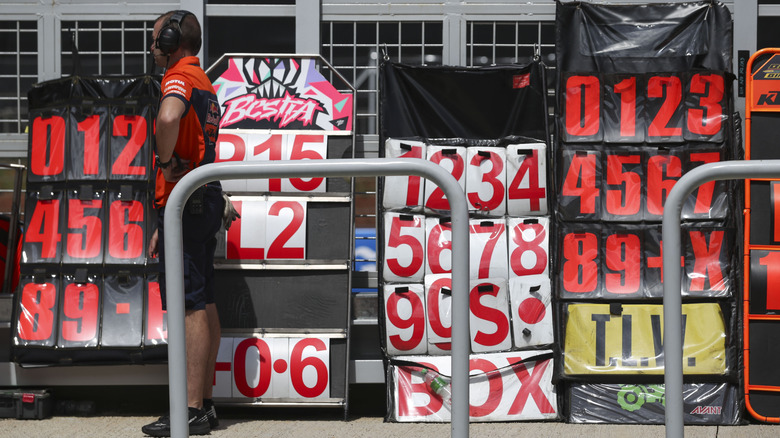
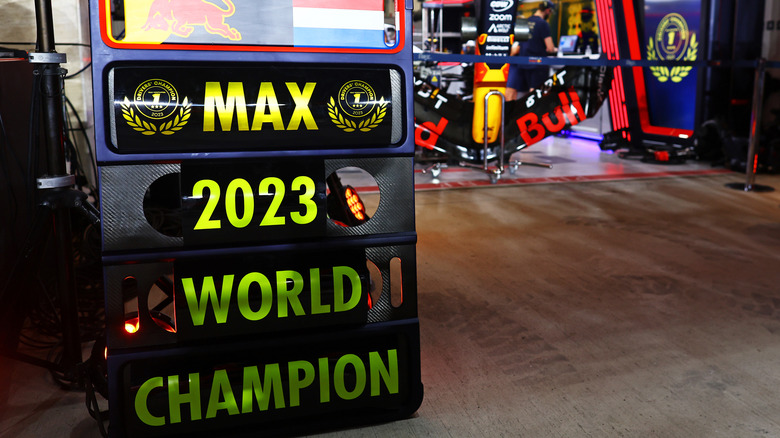
Enter the traditional pit board: A large, easy-to-read board filled with numbers and letters. There’s no specific set language, but everything is concise and carries specific meanings — it’s designed to be read as the driver passes the start-finish line at racing speeds, after all. It’s never going to be as involved as actual radio calls or presenting the information on a steering wheel display, of course. But it’s a system that will never break down due to electronic or mechanical failure, which is why it’s still just as valid today as it was yesteryear.
F1 teams use pit boards to eke out every last possible advantage in a championship race and to avoid losing time and position. When points are on the line, a team doesn’t want to be forced to retire because of something like a radio failure. Auto racing is a brutal and unpredictable sport; that’s why these redundancies exist. Much like an aircraft flying on one engine, it may not be the most efficient, but using pit boards to communicate can still get you across the finish line.
Advertisement
What do Formula 1 pit boards say?
Gold & Goose Photography/Getty Images
This is the biggest question for onlookers especially newbies just getting into F1, and the simplest answer is that it depends. Pit boards are designed to convey information, pure and simple — what that information precisely says varies depending on the team and what needs to be said. Generally, a pit board contains one or more of several points: Driver position, gap between cars, pit orders, sector cautions and other safety information, and general one or two-word commands can all be conveyed on a pit board.
There’s no real accepted “style,” per se. How many letters are used, what color the font is, what information is placed where on the board — it all varies. But you’ll often find that it’s usually based on common sense; you won’t place “BOX,” shorthand for “come in for a pit stop,” in the middle of two driver positions, for instance. Ultimately, it’s a form of coaching, and like the coaches themselves, there’s no set “right” or “wrong” way to convey the information as long as it’s clearly conveyed.
Advertisement
Let’s use an example. Imagine you’re leading on lap 10 and Verstappen is behind you by a little over 2 seconds. The pit board may say something like, “P1 – VER +2.1 – L10”, meaning you’re in Position 1, Verstappen is 2.1 seconds behind, and it’s Lap 10. Again, there’s no set language — different boards will have different formats. Sometimes they will spell out words like “LAP” or someone’s top message will be someone else’s bottom message. Because it has to be read at speed, presumably the order is committed to memory so it’s quickly legible at a glance. As a driver, it could potentially mess you up if your board’s format suddenly switches.
As for the traditional pit board, it still has its uses outside of the radio or electronic equipment being broken. Sometimes it’s used because of personal preference or to keep from distracting the drivers. Bear in mind that top-level motorsport is incredibly demanding on drivers’ concentration, especially when racing in packs, which results in many compilations of drivers angrily shouting into their radios mid-race (much to our amusement). But let’s be honest — how many of us miss important pieces of information when we’re in high-stress environments? Something like a pit board might be more useful, even if just to repeat this sort of information.
In its purest sense, the pit board is a low-tech solution to the modern problem of information overload. With today’s F1 cars being faster than ever, coupled with the rising prevalence of automation and software on the racetrack, the sport has arguably become just as much a technical showcase as it is about the drivers’ skills. A pit board is a simple and effective method of getting information across to drivers without having to use words or other distractions, a point no less valid today, which is why it’s been crucial to motorsport since the dawn of the discipline.
Jon Scholes, president and CEO of the Downtown Seattle Association, cuts the ceremonial ribbon on an IKE Smart City digital kiosk at First Avenue and Pike Street in Seattle on Tuesday, alongside current and former officials from the city, DSA and Orange Barrel Media. (GeekWire Photo / Kurt Schlosser)
The iconic neon sign at the Pike Place Market in Seattle manages to attract a lot of attention, but a glowing new structure across the street will likely turn a few curious heads, too.
The first of dozens of IKE Smart City digital wayfinding kiosks planned for downtown and around Seattle was unveiled on Tuesday at the busy intersection of First Avenue and Pike Street. It’s the realization of a years-long effort to bring the information many people access on smartphones straight to giant interactive screens at street level.
“Seattle is a tech town, and we finally have a 21st-first century modern wayfinding system,” said Jon Scholes, president and CEO of the Downtown Seattle Association, the organization that spearheaded the effort to get the kiosks approved and installed.
The IKE Smart City kiosk sits across First Avenue from Pike Place Market — a major tourist destination in Seattle. (GeekWire Photo / Kurt Schlosser)
The devices are a product of Columbus, Ohio-based advertising company Orange Barrel Media, which is partnering with DSA on the experience. IKE devices are already deployed in more than 25 cities nationwide.
A total of 50 kiosks are planned for Seattle in two phases. The first 30 will be installed in the downtown Metropolitan Improvement District footprint, with 20 more to follow in business improvement areas including Ballard, SoDo, the University District and West Seattle.
The first four downtown units include Tuesday’s unveiling as well as another that’s operational at Fourth Avenue and Pine Street. Units at Second Avenue and Stewart Street and Third Avenue and Virginia Street are next.
Advertisement
Each unit stands just over 8 feet tall and 3 feet wide, with a 12½-square-foot touchscreen that functions like a giant smartphone — letting users scroll through maps, nearby restaurant listings, transit routes and city apps. The kiosks are ADA-compliant and connect to the Seamless Seattle program for real-time multimodal navigation directly from each location.
Beyond wayfinding, each kiosk serves as a free public Wi-Fi hotspot, lists nearby businesses at no charge, and includes a 911 emergency call button. At least 25% of annual screen time is reserved for non-commercial content promoting events, nonprofits and civic initiatives. An ongoing digital public art program, curated with local and national artists, is also part of the offering.
The kiosks are loaded with a suite of apps designed to help people navigate the city and assorted services. (GeekWire Photo / Kurt Schlosser)
The kiosks will not include video cameras for surveillance. They do include a selfie camera that is part of a “Photo Booth” application, where users can interact and snap pictures to send to themselves. But IKE says photos are not stored on the kiosks or retained by the company.
The devices and effort to install them ultimately prevailed over those who expressed concern during Seattle Design Commission meetings about visual clutter in the city’s landscape, oversaturation of advertising, and light pollution.
The devices are maintained by Orange Barrel and come at no cost to the city or to DSA, and are sustained entirely through advertising revenue. DSA anticipates the kiosks will generate approximately $1.1 million per year, money the organization says it will reinvest into downtown programming.
Advertisement
Scholes said it’s a “long-term investment,” with a permit between Orange Barrel and the city that’s good “for about 20 years.”
“We believe that great downtowns make it easy for you to discover what’s happening, to take part in events, to take part in arts and cultural gatherings and attractions,” Scholes said before cutting a ceremonial ribbon cutting alongside Orange Barrel officials, and current and former City of Seattle officials.
Jessica Burton, development director at Orange Barrel Media, gives a demo of the IKE Smart City kiosk. (GeekWire Photo / Kurt Schlosser)
Former Seattle City Council President Sara Nelson was in attendance to celebrate — and interact with — the devices she had long championed.
“This is the city at your fingertips,” Nelson told GeekWire. “Not only is there important information for emergencies, but it also supports our small business community — it is a focal point, it’s a gathering spot, and that is what we need more of downtown.”
The rollout of the kiosks has been in the works for more than a year. The Seattle City Council gave final approval in June 2025 by a 6-2 vote, and former Mayor Bruce Harrell — a supporter of the project — signed the legislation.
Advertisement
DSA had hoped to have more up and running before the start of the FIFA World Cup next week and the onslaught of expected visitors to the city. The remaining 28 planned for downtown will be installed over the next several months, Scholes said.
The IKE Smart City kiosk is located next to a public plaza on Pike Street at First Avenue in downtown Seattle. (GeekWire Photo / Kurt Schlosser)























































You must be logged in to post a comment Login