Coverage of Scotland’s World Cup group opener against Haiti was disrupted on Sunday morning with fans taking to social media to complain in the aftermath
02:49, 14 Jun 2026Updated 03:12, 14 Jun 2026
The BBC were forced to apologise for a loss of picture during Scotland’s World Cup opener against Haiti.
Midway through the first-half, viewers lost coverage of the match held in Boston due to a world feed issue with a ‘ESF USD C’ message appearing, which lasted around five seconds.
Though no incidents were missed, the loss of action would have caused distress across Scotland and the rest of the world as the issue was put down to a world feed issue. The problem meant that it wasn’t just viewers in the United Kingdom that saw their coverage halted.
Advertisement
Commentator Liam McLeod said: “Apologies again if there’s a loss of picture, it’s a World Feed problem so everyone suffered it. But you’re back with us now.”
Meanwhile, a message at the top of the screen read: “Sorry for the loss of picture.”
It would have been a heart-in-mouth moment for Tartan Army supporters watching outside the stadium in Massachusetts, having endured a nervy opening exchange with the FIFA-ranked 83rd team in the world.
The livewire Ben Gannon-Doak saw his effort saved by Johny Placide before Scott McTominay rose highest and headed over from Andy Robertson’s cross.
But the CONCACAF side were no pushovers with Sunderland’s Wilson Isidor proving to be tough to handle for the Scotland backline.
Meanwhile, Louicius Deedson was a tricky prospect for captain Andy Robertson to deal with down the left-hand side.
But by the time the disruption came during the BBC’s coverage, Scotland were one-up thanks to John McGinn.
Advertisement
The 31-year-old was in the right place at the right time to finish after a flowing move from the Scot’s. Ben Gannon-Doak and Che Adams combined, only for Adams to be denied by Placide. However, the save fell as far as McGinn, who fired into the ground and his effort deflected home.
A win for Scotland would see them go top of Group C after the opener after Brazil were held by Morocco in New York.
It was a difficult afternoon for Carlo Ancelotti’s side as their weaknesses were exposed by the hungry and energetic AFCON winners.
Advertisement
The record World Cup-winners fell behind after just 20 minutes when Brahim Diaz carved open the backline with an incisive pass for PSV Eindhoven’s Ismael Saibari. However, their lead was cut-short when Vinicius Jr equalised before the break.
Brazil had the lion’s share of possession in the second-half but almost found themselves on the end of a 2-1 reverse but Liverpool goalkeeper Alisson Becker kept them at bay with a double save.
Join our new WhatsApp communityand receive your daily dose of MirrorFootballcontent. We also treat our community members to special offers, promotions, and adverts from us and our partners. If you don’t like our community, you can check out any time you like. If you’re curious, you can read our Privacy Notice.
SAN FRANCISCO (AP) — Nara Organics recalled its organic baby formula sold nationwide in Target stores and online Saturday after a multistate outbreak of infant botulism, federal authorities said.
Three babies between 2 and 5 months became ill in April and May in California, Pennsylvania and Washington after consuming Nara Organics Whole Milk Organic Powdered infant formula, which is also sold on Nara.com, the U.S. Food and Drug Administration said.
They were hospitalized and treated with the FDA-approved treatment for infant botulism, the agency said.
Infant botulism is a rare but serious illness that occurs in babies under age 1, whose gut microbiomes are immature. It is caused when infants consume bacteria with spores that produce a toxin in the gut.
Advertisement
Symptoms include constipation, poor feeding, drooping eyelids, weak muscle tone, difficulty swallowing and breathing problems, among others.
Babies who develop those symptoms need immediate medical attention. The sole treatment is BabyBIG, an IV medication made from blood plasma of people immunized against botulism.
Nara Organics Whole Milk Organic Infant Formula makes up less than 1% of all infant formula sold in the United States, and the outbreak does not create shortage concerns for parents and caregivers, the FDA said.
People who have the formula are urged to stop using it immediately, the U.S. Centers for Disease Control said in a statement. The formula is manufactured in Europe but sold only in the U.S., it added.
Advertisement
The CDC recommended that anyone with an opened can take a picture, record the lot number and use-by date and watch their infants for symptoms.
“Label it ‘DO NOT USE’ and keep it stored in a safe place away from other items you feed your baby for at least a month,” the CDC said. “If no symptoms appear after a month, throw the leftover formula away.”
But the journey behind The Castle of Stories, released on June 4, began much closer to home.
Long before he became a bestselling novelist, journalist, broadcaster and MBE recipient, the Bury-born, Bolton-raised writer was a book-loving boy making regular trips to libraries across the town and dreaming of a future he could not quite see.
His mum was a passionate reader and rarely missed an opportunity to take him to local libraries.
From Tonge Moor and Harwood to Bolton Central Library, their shelves became the starting point for a lifelong love of stories.
Advertisement
Matt said: “I loved reading and I loved telling stories, but I didn’t know how to do it.
“I was from quite a working-class background. My mum and dad were both from council estates and we didn’t know anybody who earned a living from writing or creativity.”
Matt joined by husband Harry Glasstone, mum Lynda Cain and sister, Ruth Dunphy, receiving his MBE. (Image: Matt Cain)
Today, Matt is one of Britain’s best-known LGBTQ+ authors.
Yet as he celebrates the release of his latest novel and prepares to return to Bolton Library this weekend for a special talk, he still remembers a time when a career in books felt impossibly far away.
Advertisement
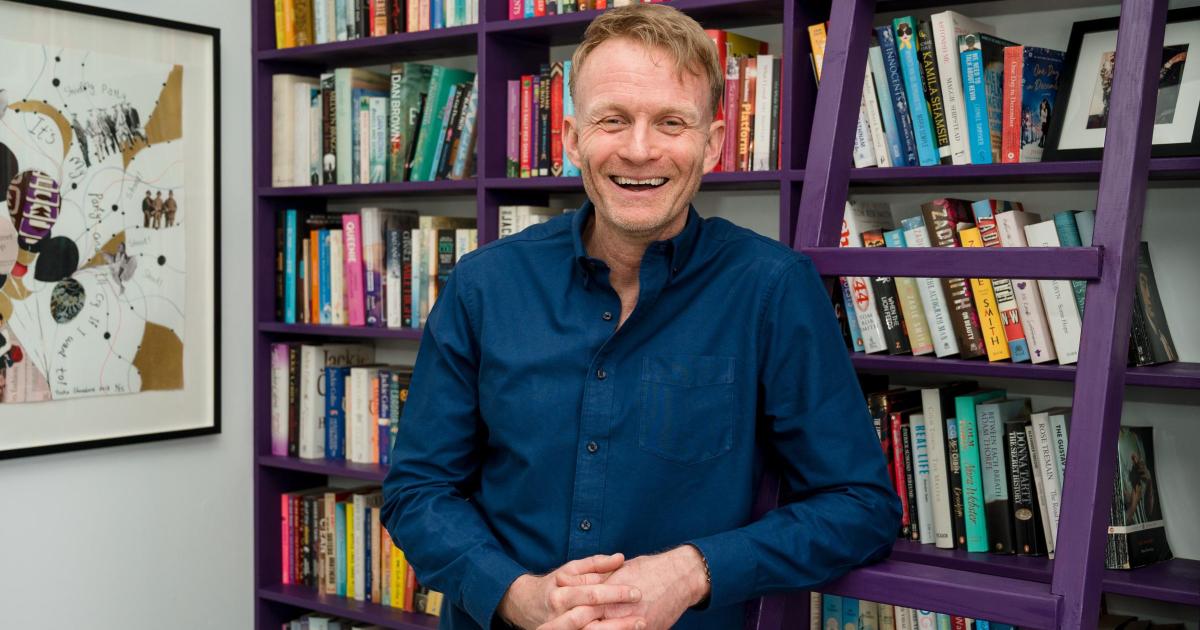
Matt Cain in Bolton Waterstones (Image: NQ)
After attending St Columba’s Primary School in Tonge Moor, St Gabriel’s CE High School in Bury and later Bury College, Matt gained a place at Cambridge University.
For the first time, he found himself surrounded by people whose families worked in publishing, television and the arts, opening his eyes to possibilities he had never encountered growing up.
“When I was at Cambridge, I met lots of people from different backgrounds, often people who had grown up with parents or relatives in the creative industries,” he said.
“I started to see that it was a possibility.”
Advertisement
Even then, finding a way into those industries proved anything but straightforward.
When he graduated, Matt wrote 211 letters applying for jobs across the creative industries – physical envelopes sent out in the hope that somebody, somewhere, might give him a chance.
Only one company replied.
“That was from a TV production company in Manchester,” he said.
Advertisement
And it was enough. The opportunity launched a career in television production and eventually journalism, where Matt built a reputation as an arts and culture specialist, later becoming Culture Editor at Channel 4 News and Editor-in-Chief of Attitude magazine.
Yet despite carving out a successful career in media, becoming a novelist proved even more difficult.
His debut novel, The Madonna of Bolton, was inspired by his own experiences growing up gay in the North West. But when he tried to get it published, he repeatedly encountered the same response.
“The Madonna of Bolton was rejected over 50 times,” he said.
Advertisement
“What I kept being told was, ‘it’s too gay for a mainstream audience. This is too niche. People won’t connect with it’.”
Having experienced homophobic bullying growing up, hearing that stories like his were not commercially viable, reopened old wounds.
He said: “It rips open those wounds again.
“From when I was growing up and had homophobic bullying and people didn’t like me because of who I was.
Advertisement
“But I never stopped believing in the book.”
Still, he refused to give up and that determination eventually paid off.
Released in 2018, The Madonna of Bolton was successfully crowdfunded and launched the writing career he had dreamed about since childhood.
Since then, Matt has built a devoted readership and become one of the country’s most recognisable LGBTQ+ authors.
Advertisement
His novel The Secret Life of Albert Entwistle became his biggest-selling book, and five years after publication, readers are still contacting him about it.
“I still get messages every day from readers about that book,” he said.
“A lot of women tell me it reminds them of their gay brother or gay uncle who’s not with us anymore.”
Despite its critics, Matt believes social media has played a major role in helping writers connect directly with audiences.
Advertisement
In fact, he believes his career may never have happened without it.
“I crowdfunded my first novel and a lot of that interest happened online,” he said.
“If it wasn’t for social media, I don’t think I’d actually have a career as a writer.”
His latest novel, The Castle of Stories, continues many of the themes that have run throughout his work: family, belonging, identity and the journey towards self-acceptance.
Advertisement
Matt and his husband Harry Glasstone, and dog, Teddy. (Image: The Author’s Lounge)
The story follows 45-year-old Adam, who unexpectedly inherits a farmhouse and castle in Tuscany from a relative he never knew existed.
Leaving Manchester behind, he moves to Italy with his boyfriend Theo and, unexpectedly, Theo’s children in tow.
As renovations begin, Adam uncovers long-buried secrets that force him to confront his past and rethink what family, belonging and queer joy can look like.
The inspiration came from Matt’s own life. His husband, Harry Glasstone, owns a centuries-old farmhouse in Tuscany where the couple regularly spend time with family.
Advertisement
Cain said: “It’s gorgeous and beautiful. It’s falling apart, but it’s so romantic.
“Some of the stones are a thousand years old.”
“When I’m there, I always think about people walking around a thousand years ago and thinking about their own dreams and dramas and passions,” he said.
Family holidays there involving relatives from Bolton and Bury helped shape much of the novel’s emotional heart.
Advertisement
“When I’m there, I always think about people walking around a thousand years ago and thinking about their own dreams and dramas and passions,” he said.
Yet despite the Tuscan setting, Matt insists the story remains rooted in the same themes that have always interested him.
“I always like to write about working-class northern characters,” he said.
“It’s about self-discovery and the journey towards self-love.
Advertisement
“It’s somebody going away thinking they’re escaping, but actually that escape brings them closer to who they really are.”
Alongside promoting the novel, Matt is now focusing on helping other writers find opportunities he once struggled to find.
This week, he opened submissions for Pansy Books, an independent publishing house dedicated to LGBTQ+ authors.
Created in response to what Matt sees as a continued lack of attention given to queer novels for mainstream audiences, Pansy aims to champion LGBTQ+ authors whose stories resonate far beyond a single community.
Advertisement
Husband and business partner! (Image: The Author’s Lounge)
Publishing, he says, can still feel like an exclusive world.
“I’d often be the only person in the conversation who hadn’t gone to a private school,” he said.
“The only person in the conversation with a regional accent.
“I always felt like an outsider.”
Advertisement
Now he hopes to make the path easier for others and his advice to aspiring writers is simple.
“Find out everything you can. Read. Show your work to people you trust. Listen to feedback.
“Don’t let anybody talk you out of it.
“Keep the faith and believe in yourself.”
Advertisement
On Sunday, June 14, Bolton Library will host the author and copies of the book will be available to purchase on the day, with Matt signing books for readers afterwards.
For the boy who once wandered the aisles of Bolton’s libraries wondering how writers became writers, it is a fitting full-circle moment.
There was a time when he could not see a route into the creative industries.
Today, his hope is that others might see that path a little more clearly than he did.
Advertisement
After all, as Matt Cain puts it: “If you can’t see it, you can’t be it.”
Book free tickets on Eventbrite.
The ticket guarantees a seat, but walk‑ins are welcome too.
Andy Burnham will almost certainly launch a campaign to replace Sir Keir Starmer, writes Sunday Mail Opinion.
If Andy Burnham wins the Makerfield by-election on Thursday it will have ramifications well beyond the north-west of England.
Advertisement
The Manchester mayor will almost certainly launch an immediate campaign to replace Sir Keir Starmer and could even sweep into Downing Street unopposed.
Former ministers Wes Streeting and Al Carns are desperate to challenge for the job and Starmer has vowed to fight to stay in post but it is far from clear any of them have the necessary support.
Starmer’s premiership has been an unmitigated disaster from the beginning.
He has never recovered from a botched attempt to cut the winter fuel allowance, the appointment of Peter Mandelson, and failing to fully condemn Israel’s slaughter of tens of thousands of Palestinians in Gaza.
Advertisement
But there is no guarantee that replacing the PM at this point will make things better – and a real risk they will get worse.
Just ask the Tories how replacing Boris Johnson with Liz Truss and then Rishi Sunak worked out.
Burnham is an astute political operator with bags of ministerial experience but without carrying the baggage of association with Starmer’s crumbling administration.
Advertisement
He is viewed as being on Labour’s soft left with notable success in sticking up for Manchester during the pandemic and delivering a publicly operated bus service.
There is a suspicion however that he is a political chameleon who may not have the backbone to see a programme of real reform through when the going gets tough.
He previously backed voting reform, abolition of the House of Lords, sweeping nationalisation of utilities and devolution across the UK with more mayoralties.
From a Scottish perspective, John Swinney will be keen to know whether Burnham still believes – as he told the Sunday Mail in 2022 – that blocking indefinitely a second referendum is not credible.
At Westminster, there will be questions over how pushing power out of London – when many local authorities are controlled by Reform – will improve public services.
A drive to bring utilities back under public ownership is a long term plan which could be transformative but it is unlikely to result in tangible benefits in the short term.
Winning the top job could be the easy part for Burnham.
Advertisement
Convincing the country he is the man for the job and defeating the dark rise of the far right with a message of hope and optimism will be a far bigger challenge.
Get Daily Record Premium for just £1 per month in exclusive offer to celebrate the world cup. Click HERE.
Get more Daily Record exclusives by signing up for free to Google’s preferred sources. Click HERE.
Cambridgeshire Fire and Rescue Service has been told they haven’t ‘made enough improvement’
Cambridgeshire Fire and Rescue Service must do more “to keep people safe and secure” despite improvements, an inspection report has said.
Advertisement
Inspector Lee Freeman said they were satisfied with some areas, such as “how the service provides its protection activities and identifies risks”, but there are “areas in which the service needs to improve”.
Ten areas of performance were looked at – down from 11 in previous years – with each graded on a scale from outstanding to inadequate. CFRS was graded good in two areas – understanding fire and risk and public safety through fire regulation, adequate in five and requires improvement in three.
Mr Freeman said the service had improved on six of the eight areas they identified at the last inspection in 2023, but “despite this progress, it hasn’t made enough improvement”.
Though the service was found to meet response time targets, with the first fire engine on scene faster on average than other comparable services, they were told to improve the availability of on-call fire engines. Mr Freeman said the service had introduced “crews of three” where on-call staff respond to all incidents when only three firefighters are available.
Advertisement
The service said “a three-person crew could deal with a wide range of incident types” but “in the less common situation where someone was trapped inside a burning building, firefighters would only enter the building when at least four crew members were present”.
Mr Freeman said: “Firefighters reported experiencing moral pressure when they arrived at a house fire where someone may be trapped but they were unable to enter until a second fire engine arrived. To address this, the service should strengthen the training and guidance provided to on-call firefighters.”
The service was also found to have taken only “limited positive action to diversify its workforce” and “still needs to do more to increase staff diversity”. He said the service “continues to have strong financial management” but senior leaders must make sure “there are effective oversight arrangements in place”.
He said they showed “strong intent, effective practices and significant commitment” but “didn’t always maintain effective strategic oversight of important organisational functions”.
Advertisement
The service was told to improve their performance in responding to fires and emergencies, ensuring fairness and diversity and leading people effectively.
Mr Freeman said: “Overall, there is a clear commitment from staff and senior leaders to improve. The foundations for an effective fire and rescue service exist.”
Chief fire officer Matthew Warren thanked the inspectorate for their assessment and said “the majority of the areas highlighted for improvement are things we are already aware of and are working towards improving.”
He said: “We are a small fire and rescue service and we prioritise our areas of focus based on risk and resources, knowing we cannot do everything at once.
Advertisement
“Having an independent team come in and look at what we do, recognise what we do well and suggesting where they think we can improve, ensures we continue to deliver the best service we can to the communities we serve. I am confident our plans to improve the highlighted areas will see positive outcomes over the coming months.”
There is one lakeside destination I have visited a few times now that I think has a lot to offer adventurous visitors and travellers who love a slice of luxury.
This article contains affiliate links, we will receive a commission on any sales we generate from it. Learn more
Advertisement
I love a weekend away in Wales’ most scenic spots, and we certainly have plenty to choose from. There is one lakeside destination I have visited a few times now that I think has a lot to offer adventurous visitors and travellers who love a slice of luxury.
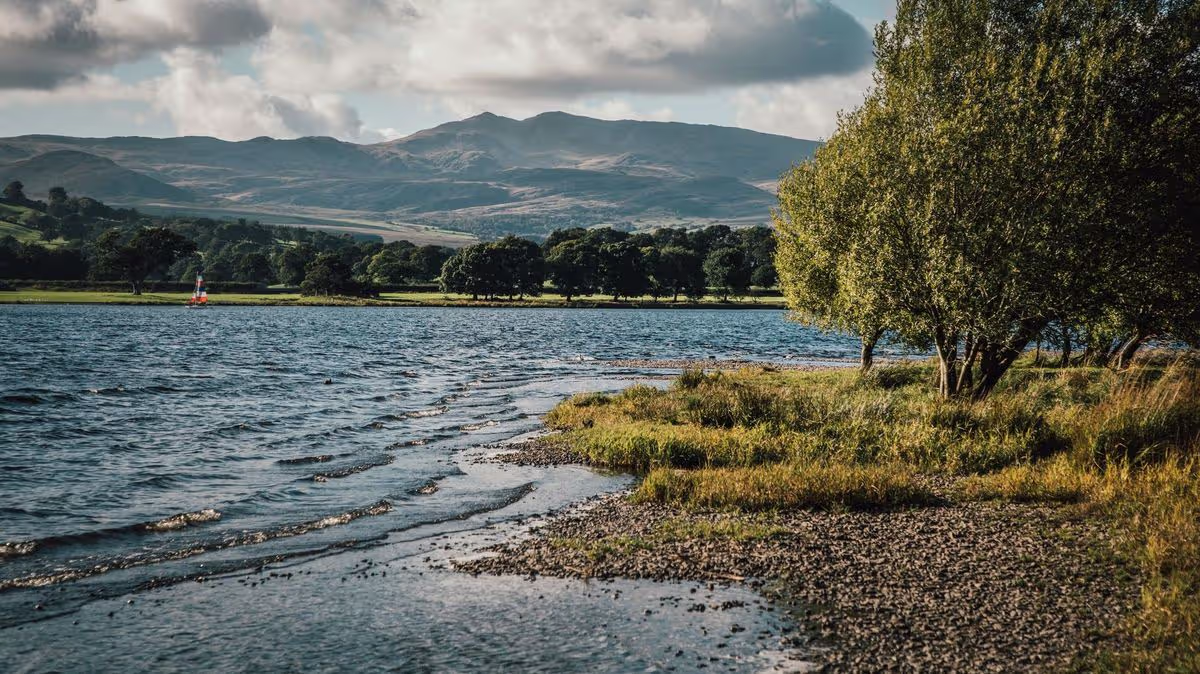
Bala is perched on the northern edge of Llyn Tegid, a freshwater glacial lake surrounded by the soaring peaks, and it is where you’ll find Palé Hall Hotel, the proud recipient of a MICHELIN Star key, which recognises hotels for outstanding stays.
This new way of recognising the best hotels in the world includes three properties in Wales, including Grove of Narberth, Penmaenuchaf and Palé Hall, which are named in The MICHELIN Guide as must-visit destinations.
On October 8, inspectors also revealed the new “Key” distinctions, which, like Michelin Stars for restaurants, highlight the most outstanding hotels in the UK and Ireland.
Advertisement
Palé Hall has long been one of my favourite hotels in Wales, and I’ve stayed several times. With its illustrious history and lavish décor, this 18-room Victorian mansion is the perfect setting for a swanky escape on the edge of Eryri National Park (Snowdonia), with access to trails, lakes, and adventure activities.
Bala is perched on the northern edge of Llyn Tegid, a freshwater glacial lake surrounded by the soaring peaks of Aran Benllyn, Arenig Fawr, and the Berwyn Mountains. The lake here is renowned for its impressive mountain scenery, wildlife, and opportunities for fishing and swimming.
This historic market town brims with charm and strong Welsh culture, with a high percentage of Welsh speakers. While the lake is the obvious draw, the town is also worth exploring for speciality shops, local pubs, and cafes.
Advertisement
Along with its scenic surroundings, Bala has a long history. It was founded by Royal Charter around 1310 by Roger de Mortimer of Chirk Castle. In 1485, Henry Tudor’s army marched through the area on its journey to the Battle of Bosworth.
In the 18th century, the town was a hub for manufacturing flannel, stockings, and gloves. It’s since become a tourist hotspot, drawing visitors from all over the UK and beyond.
Bala has a surprising religious connection as documented in the Mary Jones Pilgrim Centre, which tells the story of a Welsh girl on a holy mission.
In 1800, after saving money for six years, 15-year-old Mary Jones walked 26 miles from Llanfihangel-y-Pennant to Bala to buy a much-yearned-for Bible. Her faith-driven journey inspired the establishment of the British and Foreign Bible Society.
Advertisement
At the Grade II-listed centre, you can follow Mary’s pilgrimage and explore what happened through multimedia and interactive displays, exhibits, and activities.
For train lovers, the Bala Lake Railway is a must-visit for history lovers and train nerds (enthusiasts). This delightful narrow-gauge railway line runs along the southern shores of Llyn Tegid, offering an enchanting hour-long journey from Llanuwchllyn to Bala on a retro choo-choo. Blimming marvellous.
Local enthusiasts lovingly restored the line after the original Ruabon-Barmouth railway closed in the 1960s.
Advertisement
It uses vintage locomotives that once transported slate from the region’s quarries, adding a touch of historical delight to your rail adventure.
This nine-mile cruise runs from the village of Llanuwchllyn to the outskirts of Bala, four and a half miles away. Kick back, relax, and enjoy lush views of the lake, surrounding woodland scenery, and the nearby mountains Arenig Fawr, Aran Benllyn, and Aran Fawddwy.
For outdoor lovers, Bala is a hub of adventure, offering a range of activities, including rafting, fishing, swimming, and sailing.
The National White Water Centre, based in Bala, is a must-do for thrill seekers. Here, thundering water is regularly released from a dam into the River Tryweryn – a steep, fast-flowing mountain waterway that creates predictable rapids all year round.
Advertisement
Rafting is an adventure activity where you navigate a fast-flowing river in an inflatable raft, usually with a small team and a guide who (thankfully) knows what they are doing.
Armed with paddles, helmets, and nerves of varying steadiness, you work together to steer through swirling currents, drops, and foamy “rapids”, which are graded from gentle bobbing to a full-on rollercoaster ride through frothing waters.
Bounce and tumble along world-class grade three-to-four rapids on a river course impressive enough to have hosted international whitewater events.
Advertisement
To safely experience the rush of rafting, take a guided rafting trip and enjoy the adrenaline of paddling through surging rapids with your boat buddies.
If you love hiking, Bala is a gateway to Wales’ most epic landscapes. To the west, the towering peaks of Eryri (Snowdonia) offer rugged, dramatic trails, while the quieter Berwyn Mountains to the east provide a sense of wild, untouched beauty.
For families, there are several easy trails, including the Treasure Trail, which is suitable for pushchairs and slow scenic walks. You can also take a lakeside stroll along a marked path.
If you are interested in history and culture, there are heritage walks including the Town Trail, the Mary Jones Walk, and the Betsi Cadwaladr Trail.
Advertisement
If you’re looking for wild lake adventures, the legend-filled Llyn Tegid has the clearest water for outdoor swimming.
The lake is connected to the legend of Tegid Foel, the wicked husband of Ceridwen in Welsh mythology, known for his cruelty and opulent lifestyle. You can read more about this curious Welsh legend here.
In the vast waters of the mysterious lake, you can paddle, splash, or take an icy dip during the colder months.
Advertisement
For confident swimmers, the Big Bala Swim allows you to participate in an organised swim event with Love Swim Run.
The main open-water swim route is 4.5km, but if you want a bigger challenge, there is a 9km swim that covers two lengths of the 4.5km course.
After a day of adventure, there are several independent pubs and cafes for a big feed and a pint. The historic Plas Coch Hotel, originally built as a coaching inn around 1780, serves Welsh dishes using fresh local produce.
White Lion Royal Hotel Restaurant is another former coaching inn. It has a large dining room, log fires, and a selection of Brains real ales.
Advertisement
Where to stay
There are many lovely B&Bs, guest houses, and inns in the town and surrounding area. You can search for accommodation on sites like Sykes Cottages, holidaycottages.co.uk,and booking.com.
If you want a swanky stay in the area, I really recommend Palé Hall. With its illustrious history and lavish décor, this 18-room Victorian mansion is the perfect setting for a swanky escape, with access to trails, lakes, and adventure activities.
Advertisement
A member of Relais & Châteaux, Pride of Britain Hotels and Celebrated Experiences, swish Palé Hall is independently owned by Anthony and Donna Cooper-Barney, who took over the hotel in 2024.
The ambitious pair plan to add a spa and a second restaurant and potentially expand the number of bedrooms. They have also invested £200,000 to create exquisite Welsh art galleries.
Arriving at this large countryside hotel is an experience in itself. The historic exterior, framed by gardens, woodland and a backdrop of rolling hills, creates an immediate sense of occasion.
Inside is a curious mixture of grandeur and décor I would describe as a hipster fever dream. Imagine a grand staircase, chandeliers, and roaring fireplaces paired with patterned wallpaper and abundant taxidermy.
Advertisement
Spacious rooms and suites are individually styled with thoughtful touches, and some even have unique features like a stained-glass roof light, gorgeous baths, and antique beds.
Take a moment to chat with staff, and you’ll soon discover that dog-friendly Palé Hall is more than just your standard countryside escape. Its history is as captivating as its architecture, tracing back to the 15th century when the original house was first built.
Constructed in 1871 by the esteemed railway engineer Henry Robertson, the house oozes character and class. Known for his ambitious railway projects across Wales, Robertson spared no expense in creating a home that mirrored his success.
Advertisement
The hall, designed by architect Samuel Pountney Smith, is a beacon of elegance and grandeur with its honey-coloured stone and eclectic Jacobean style.
Over the years, Palé Hall has also hosted an impressive list of guests, including royalty. Queen Victoria visited in 1889, captivated by the house and its scenic surroundings. During her stay, she used a magnificent bath and slept in an ornate bed, both of which remain in the now aptly named Victorian Room, one of the many luxurious suites available if you want to splurge.
My favourite room is the Churchill suite, named after the man himself. In the 1950s, the hall became a favourite retreat for Winston Churchill, who often stayed while hunting on the estate’s expansive grounds. The Churchill Room preserves this historical connection, allowing guests to sleep in the grand room that once hosted the wartime leader.
Advertisement
Food-wise, you’re in great hands. For a truly special dining experience, the hotel’s Henry Robertson dining room is a must-visit. This elegant space, with its marble fireplace, ornate plaster ceilings, and chandeliers, sets the perfect scene for a fine dining feast.
As an AA three-rosette and Michelin Green Star establishment, Palé Hall takes pride in delivering impeccable cuisine that celebrates the finest British and Welsh produce.
“If this is you, we are asking you to come forward to police now.”
18:53, 13 Jun 2026Updated 18:57, 13 Jun 2026
Police have issued an appeal to identify a man they wish to speak to following serious public disorder in Newtownabbey.
Issuing two photographs a PSNI spokesperson: “Can you identify the following individual? Police would like to speak with the person in these images in connection with serious public disorder on 9th June 2026 in the Newtownabbey area.
“If this is you, we are asking you to come forward to police now. Anyone who can assist in identifying this person, please contact police.
Advertisement
“If you have any information or wish to submit photos and footage, including CCTV, mobile phone or dash cam footage please contact police.
An unrecognisable woman who spent years trapped in addiction, homelessness and dangerous situations says she is lucky to be alive after turning her life around.
Jodie Davies, from Tonyrefail, has gone from sleeping in tents, on friends’ sofas and in drug dens to rebuilding her life, raising her children and supporting others through her own experiences.
Advertisement
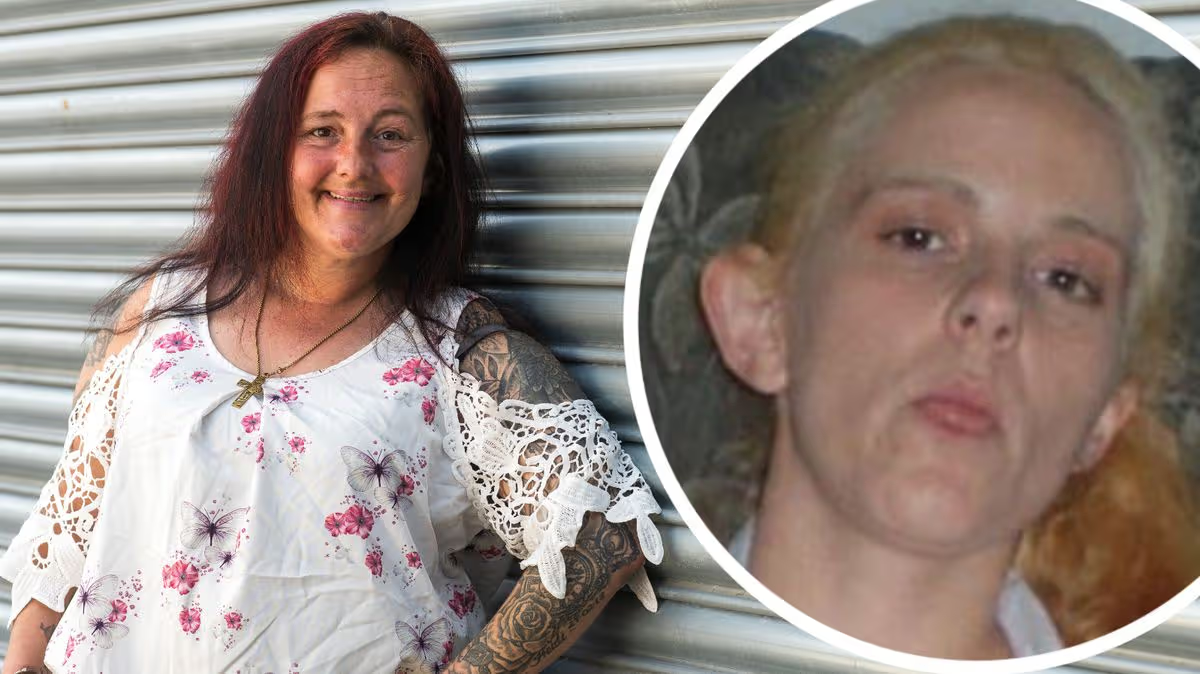
She has shared a picture of herself taken in the depths of her drug taking, not only to show how far she has come, but also in the hope that it will inspire others to get help.
Jodie’s journey into addiction began when she was still a child, after struggling with experiences that she says left her trying to escape from what was happening around her.
“I started using it just before my 13th birthday,” the now 44-year-old said. “I went through a lot as a child and I ended up losing myself to substances; and when I say losing my way, I mean badly. My two daughters went to live with my mother and sister.”
Jodie’s drug use eventually spiralled into an eight-year period where heroin and crack cocaine dominated her life. “For eight years then I ended up really bad on heroin and crack cocaine. Loads of things,” she said.
She describes that time as less about chasing a high and more about trying to shut out everything she was carrying.
“I managed to stop doing drugs when I had my two daughters but then I split with their dad and I crumbled,” she said.
“Mentally I was so stressed and it was about blocking out, forgetting everything. I didn’t want to speak to anyone. It wasn’t the case that I wanted the drugs because I was going out all the time. It was a blocking out mechanism.”
Advertisement
During those years, her addiction took her into situations she says she never should have been in as a young woman.
“I got into loads of dangerous situations,” she said. “I went from Rhondda as far as London and places. I was a young girl in situations which I should never have been in. I’ve been attacked; I’ve ended up with black eyes, broken ribs. I was attacked by men and women. In the drug world, they don’t discriminate.”
The reality of addiction became a daily cycle of finding money, finding drugs and trying to avoid withdrawal.
Advertisement
“I’ve had to wake up every single day just wanting to use. Having to find the money, needing to find all these different things to make myself feel better.
“It was hell. You only have two jobs as an addict: finding money to score, and scoring. I know it sounds easy, but trust me, even with all the dealers from here to the moon, it’s still hard when you need it. You feel like hell and you’re sweating and shaking, you’re back and forth to the toilet being sick.”
Her health suffered as her addiction continued, with Jodie describing a period where she became dangerously thin and withdrawn.
Advertisement
“I’m five foot seven and I went down to about seven stone at one point. I was really, really, skinny and withdrawn. I would turn over in bed and I would bruise on my shoulders on the springs I was that bad.
“I work for a foodbank 1781408560. Back then all I thought about was getting drugs, I didn’t think about eating. People saw how skinny I was, but I didn’t. I just saw myself in the mirror. When I would get completely starving, that’s when I would go to the foodbank.”
The turning point came when she discovered she was pregnant with her eldest son. “But then I found out I was pregnant with my eldest boy. That was enough for me. I didn’t want to keep on living the life I was living. I decided to sort my life out. Now I’m going into my 17th year heroin free.”
With support from what is now Barod, Jodie began the long process of recovery. “I had a fantastic drug and alcohol worker who basically told me that if I was going to mess her around she would sit there and go: ‘Yeah, yeah yeah,’ but if I wanted to put the work in she would put the work in with me.
Advertisement
“She put me on medication Buprenorphine – but it was the intervention as well [that worked].”
By the time her son was born, Jodie says she was able to start experiencing a normal family life again. “I was able to become a mother straight away. By the time my son was born I was able to get up and cope with having a normal life again.”
That recovery became the foundation for the work she does today. Jodie trained as a peer mentor and began using her own story to show people that change is possible.
“[I tell] my story to people that actually need to see that there is hope,” she said. “People who are trying to get out of things but haven’t been able to, but then see me and what I used to look like. It shocks them.”
Advertisement
She now runs Families Supporting Families, a community support group and warm hub based in and around Tonyrefail, helping people access support and connect with services.
She said: “Through that voluntary work I work with different agencies, therapists, drug and alcohol counsellors and people with housing. If someone wants to speak to me one on one, I do that as well. If someone rings me at 4am and I’m awake, I will answer their call.”
Detailing some of the workshops she runs and facilitates, she said: “I run Families Supporting Families on Monday morning at Rethink Reuse Tonyrefail, and then I take a team to learn self defence for domestic violence with Counter Force, then Narcotics Anonymous Wales on Wednesday at Rethink Reuse, all others days I’m helping with Dinas TRA community centre and Friends of St John’s Tonyrefail.
Advertisement
“[Then] my therapist Janine not only helps me with my childhood trauma but runs group sessions to help people in my Monday sessions too.”
Jodie also campaigns around hepatitis C after contracting the virus during her addiction, encouraging others not to avoid treatment because of shame.
She said: “Yes it’s embarrassing when you find out you have it, especially when you were the cleanest of clean like I was – I would give everyone clean needles – but at the same time you don’t want to die of liver cancer. You don’t want to not have treatment because you feel so ill. Now it’s just one tablet a day for 8 to 12 weeks.”
She said the treatment today is far less invasive and unpleasant than the treatment she was prescribed many years ago: “Previously I had to take two tablets a day and I had to do an injection in my stomach once a week. Once I took that injection I couldn’t take my head off the sofa for three days; I was really ill with it. I lost my hair and my appetite.”
Jodie said that although there are great resources out there for people struggling with addiction today, she particularly worries about the rise of certain dangers associated with drug taking.
“The people who start using drugs these days are seeing them as fun,” she said. “They aren’t seeing it from my eyes of having lost everything.
“Today people are using ketamine, people are using spice and it’s scary, Nitazenes (a group of highly potent, synthetic opioids) are being mixed into the drugs [including cannabis].
Advertisement
“If this was my life now, I probably would be dead because I was the greedy one who would look for the stronger stuff. And that’s the truth. I’m surprised that I’m still here now because I would be the one that if I heard there was stronger stuff out there, I would look for it. There is no doubt.”
For all her hard work helping people in the community, it is unsurprising that Jodie recently won Tonyrefail’s Citizen of the Year 2026. Despite her efforts, she said it’s a real pinch me moment.
“To go from the girl that I was to the girl I am now, even being nominated I tell everyone it feels surreal,” she said. “Even now I never would never have thought I would get nominated. People hated me and they had every right. I hadn’t done anything to them personally, but I was in the circles with people who had.”
Advertisement
Jodie said there is one huge reason behind all of the work she does to try and make her community a safer and happier place.
She said: “It’s for my children, and for my children’s children. Because it’s even worse with the drugs now, it’s not getting better.”
Her message to anyone struggling is to seek support from people who understand. “I tell everyone to reach out and get a peer. Reach out to someone, this day and age the services have people like us. Ask for a lived experience peer straight away because it helps a lot.”
The DWP has outlined the process for stopping State Pension and Universal Credit payments when a claimant dies, including how Government departments are notified via the Tell Us Once service and when payments are brought to an end
The Department for Work and Pensions (DWP) has outlined what happens to State Pension and Universal Credit payments following a claimant’s death, detailing how government departments receive notification and when payments cease.
Advertisement
DWP minister Andrew Western set out the procedure in Parliament after being questioned about what measures the Government was implementing to enhance the speed and accuracy of death notifications across public services. Mr Western described how the Government’s Tell Us Once service enables bereaved families to notify multiple departments of a death through one single communication, helping to ease the administrative load during a challenging period.
The service operates across all local authorities in England, Scotland and Wales and is intended to ensure official records are amended quickly once a death has been formally registered, reports the Express.
Speaking in Parliament, Mr Western said: “The service allows recently bereaved citizens, at a very stressful time in their lives, to inform participating Government departments of a registered death.
“The choice of who is informed of the event of death and the supplementary information regarding the deceased is also dictated by citizen choice – thus providing the best possible experience with fairness, respect, compassion and dignity.”
Advertisement
He noted that participating organisations are usually notified by the next working day after a death is reported through the service. Once notification has been received, the DWP is informed so it can halt payments including Universal Credit and State Pension, and update its records accordingly.
The Tell Us Once service also notifies HM Revenue and Customs (HMRC), allowing it to handle tax matters and cease payments such as Child Benefit where necessary.
Further organisations contacted through the service include the Passport Office, which cancels British passports, and the Driver and Vehicle Licensing Agency (DVLA), which revokes driving licences and can remove the deceased as the registered keeper of vehicles.
Local councils are additionally notified so they can terminate Housing Benefit, Council Tax Reduction and Blue Badge entitlements.
Advertisement
Meanwhile, Veterans UK is alerted regarding Armed Forces Compensation Scheme payments, while Social Security Scotland receives notifications to cease devolved benefits, including Scottish Child Payment.
The Government states that the service is designed to make the process as straightforward as possible for bereaved relatives by reducing the number of organisations they need to contact individually.
Tell Us Once can be used when the deceased person resided in England, Scotland or Wales. It may also be available if the person passed away while temporarily abroad, such as during a holiday or a work trip.
However, the service is unavailable when the deceased was residing in Northern Ireland at the time of their death. In such instances, families are encouraged to contact the relevant departments individually via NI Direct.
Advertisement
Those who had been living permanently abroad are also ineligible for the scheme, and deaths must instead be registered through the appropriate authorities in the country where they were residing.
Government guidance indicates that once a death has been reported, HMRC and the DWP may reach out to relatives or representatives to address any outstanding tax matters, benefits, overpayments or entitlements connected to the deceased person’s estate.
Families registering a death can either complete the Tell Us Once process with the registrar during their appointment, or be issued a unique reference number enabling them to access the service online or by telephone.
The scheme will charge utility companies and contractors for occupying sections of the road network during peak traffic periods, encouraging them to complete work more quickly and schedule projects outside the busiest times.
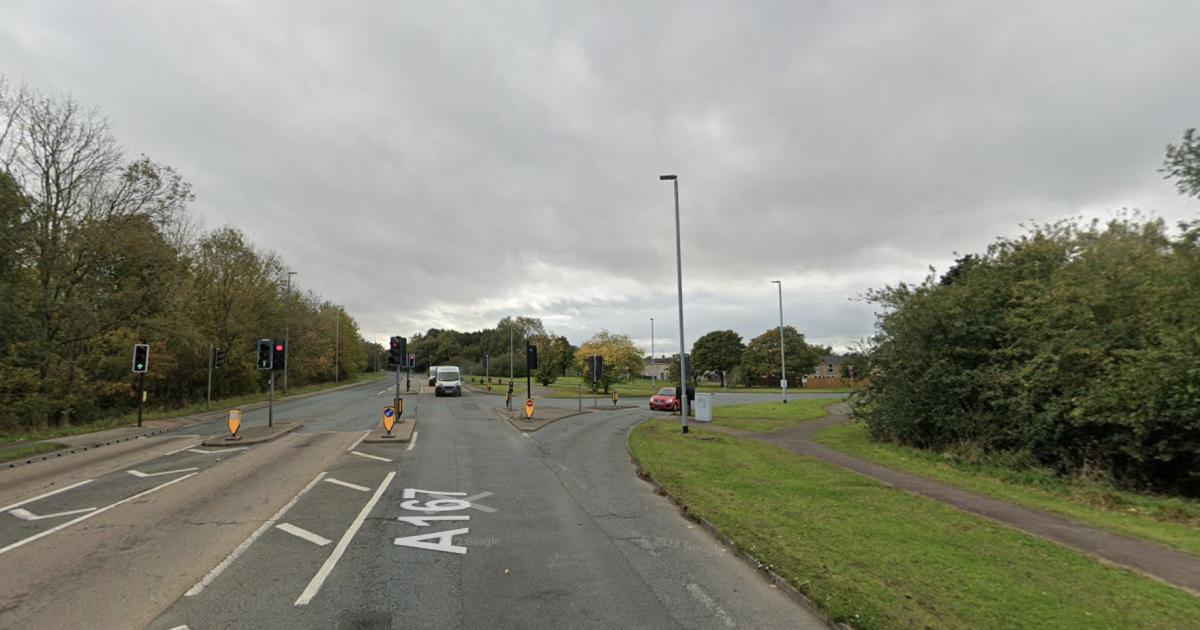
The scheme will focus on major routes and key junctions where congestion is most severe, including roads in Durham City, Bishop Auckland and Newton Aycliffe.
Durham County Council estimates suggest the programme could generate around £2.3 million a year, with annual operating costs of approximately £337,000. Any surplus income would be reinvested in maintaining and improving the county’s road network.
Advertisement
Stephen Gray, cabinet member for transformation, efficiency, digital and procurement, said the proposal was intended to minimise disruption for road users.
He added: “This scheme is designed with one clear priority: keeping our network moving, especially for motorists at peak times.”
Cllr Gray said the charges would create a financial incentive for utility companies and contractors to plan works more efficiently, avoid peak-hour road closures and complete projects as quickly as possible.
The council said that the scheme would encourage greater co-operation between organisations carrying out highway works, reducing repeated excavations and improving coordination between projects.
Advertisement
“The scheme will ensure works are delivered more efficiently with a focus on getting on and getting out as quickly as possible,” Cllr Gray said.
He described the approach as “practical” and “proven”, adding that it would help reduce delays and improve journey reliability for road users.
Under the scheme, charges will only apply during peak traffic periods, with incentives available for companies that work during off-peak hours or complete projects ahead of schedule.
If approved by the government, Durham will join a growing number of local authorities across England using lane rental schemes to manage disruption from roadworks.
Angus Gunn – Very fortunate not to concede after spilling a fairly routine shot. Otherwise, Haiti’s erratic finishing meant he was not overly tested. 6
Aaron Hickey – Lapse in concentration early on almost cost Scotland dear, but one vital intervention to deny Ruben Providence. 6
Jack Hendry – Great bit of defending to prevent Wilson Isidor from heading home. Largely restricted Haiti to efforts from long range. 7
Grant Hanley – Solid display from the big centre-back. Great ball over the top to Adams which led to McGinn’s goal. 7
Advertisement
Andy Robertson – Some outstanding deliveries from wide on the left could have brought more goals. Linked-up well with McGinn. 7
Ben Gannon-Doak – Pace and directness caused alarm bells in Haiti backline every time he got the ball. Final delivery can still frustrate, but he has become Scotland’s chief creative force. 9
Scott McTominay – Unlucky to see a curling effort come crashing off a post. Robbed of possession in dangerous areas on a couple of occasions. Short of his imperious best. 6
Lewis Ferguson – Anticipated and cut out the danger on numerous occasions as the Haitians broke at pace. 8
Advertisement
John McGinn – Scored Scotland’s first goal at a men’s World Cup since Craig Burley’s strike against Norway at France ’98. Missed a huge chance for a second. 8
Lawrence Shankland – Did his defensive work, but struggled to get into the game. Unable to find the sort of form in his goalscoring displays in the warm-up games against Curacao and Bolivia. 6
Che Adams – Great run and exquisite first touch in build-up to McGinn’s opener. Partnership with Shankland did not quite click. 6

















































You must be logged in to post a comment Login